

Why Good Coaching Starts with Space — and the Thinking That Happens There
In this wellbeing podcast conversation, educational psychologist and coach Sarah Philp explores the link between thinking, action, and the spaces that make transformation possible. Perfect for anyone curious about coaching or feeling lost, burned out, or disconnected from themselves.
What if you can’t rush a thought into something useful.
That’s one of the learnings that emerged in my recent short-form podcast conversation with Sarah Philp, an educational psychologist and coach who’s built her work on the belief that:
“The quality of everything human beings do depends on the quality of the thinking that we do first.” — Nancy Klein
It sounds simple. But think about your week so far — how often have you given yourself, or someone else, uninterrupted space to follow a thought to its end?
For many of us, the answer is almost never.

On why coaching isn’t advice — it’s space
If you’ve ever wondered what coaching really is, just know that it’s not someone telling you what to do.
Good coaching is the art of creating space — a physical, mental, and emotional container where you can think more deeply than you might on your own. It’s presence without pressure. It’s being witnessed in your thinking, without being hurried toward a solution before you’re ready.
In Sarah’s words, it’s “following the thread” of a thought. And in our busy, interrupted lives, that’s a rare thing.
Why thinking and action need each other
Coaching is often misunderstood as being only about action — setting goals, hitting targets, ticking boxes. But action without clear thinking can be reactive, scattered, even counterproductive.
On the other hand, thinking without movement can keep us stuck in loops of over-analysis.
The power is in the relationship between the two. The right kind of thinking — spacious, supported, fully explored — naturally leads to clearer, more aligned action. And action, in turn, gives thinking something to respond to.
The role of space in wellbeing
Space isn’t just about coaching sessions. It’s also about the environments and practices that help you reset — whether that’s a walk in nature, a few minutes of stillness before starting your day, or, in Sarah’s case, cold water swimming and time on the Isle of Skye.
These moments aren’t indulgences; they’re essential to wellbeing. They give you a vantage point outside the noise, where you can reconnect to yourself and what matters most.
If you’re feeling lost, burned out, or disconnected
You don’t have to fix everything at once. Sometimes, the first step is simply to create a little more space — in your day, in your conversations, in your head.
That’s where coaching can help. It’s not about having all the answers. It’s about having the time, attention, and support to find the ones that fit you.
If that sounds like something you need, we think you’ll love this latest episode of A Thought I Kept. It’s thoughtful and full of insights that might just shift the way you think — and act.
Listen now to on Substack, Spotify or wherever you get your podcasts.

It’s Summer… So Why Do I Still Feel Low?
Feeling flat even though the sun’s out? You’re not alone. Here’s why summertime sadness happens, what it means, and how to care for yourself through the summer blues.
You wake up to sunshine.
Your friends are away on holiday.
Your social feed is full of Aperol spritzes, sea swims, and sun-kissed skin.
But inside? You feel flat. A little off. Maybe even anxious.
And you can’t help but wonder: why doesn’t summer fix me?
Shouldn’t this be the season where everything feels lighter?
Why does it sometimes feel heavier instead?
If you’ve been feeling the pressure to be “living your best life” right now and can’t quite match that vibe — this post is for you.

We tend to associate sadness with winter — dark nights, long months, heaviness.
But there’s actually a summer-pattern Seasonal Affective Disorder:
Instead of low energy, this one shows up as
restlessness
irritability
trouble sleeping
a kind of persistent unease, even with blue skies above you
As the Mayo Clinic explains: Summer-pattern seasonal affective disorder affects about 10% of people who experience SAD. It often includes anxiety, poor sleep, and a sense of emotional disconnection.
3 Ways to Care for Yourself Through Summer Sadness
Summer-pattern SAD brings with it a unique kind of disorientation. Unlike the winter version that has us reaching for more light, this one asks us to manage too much of it. Too much brightness, heat, stimulation, and expectation.
So if you're feeling off right now, here are three expert-backed, compassion-led ways to care for yourself:
1. Cool the Light, Not Just the Room
Longer days and hotter nights can disturb our sleep — and when sleep is off, everything else follows.
Try this:
Blackout blinds or a soft sleep mask to help your body clock recalibrate
Fans, AC or whatever you need to to regulate the temperature of your room and your body.
Keep your sleep and wake times steady, even at weekends — your nervous system loves consistency
2. Say No to Overstimulation (and Over-Expectation)
Between heatwaves, social invitations, school holidays and the “go out and enjoy it!” pressure — summer can feel emotionally loud.
Instead:
Choose cooler, quieter places: libraries, art galleries, shaded walks
Hydrate. (Truly. Even slight dehydration affects your mood.)
Give yourself permission to opt out. Not every invitation is a requirement. It’s okay to not feel like BBQs and festivals. You’re allowed slower scenes.
You don’t owe the season anything.
3. Build a Gentle Structure That Holds You
One of the hidden challenges of summer is the loss of structure. Schools close. Routines dissolve. Life loosens. For some, that’s freeing. For others, it's destabilising.
Try:
Light anchors: regular mealtimes, morning stretches, a bedtime wind-down
Bookending your day with small, grounding rituals
Seeking support if the sadness sticks — therapy, especially approaches like CBT, can be a powerful guide back to steadiness
And if needed: medication and professional support are valid summer tools, too. You don't have to wait for it to pass.
That’s one layer…
Then there’s this: the emotional dissonance that comes from the pressure to feel good.
Happiness is expected in summer.
So when we don’t feel it, we add shame to the sadness.
This hedonic mismatch — the gap between what we think we should feel, and what’s really going on inside — can make us feel even more alone..
You might find yourself asking:
Is something wrong with me?
Am I wasting the season?
Why can’t I just feel better?
Even sunshine can’t override what you’re feeling.
What if we stopped treating summer like a performance?
What if instead of chasing happiness, we let ourselves be curious about what’s really here?
Your emotions don’t operate on a school calendar.
Your nervous system doesn’t care what month it is.
And while we love a good swim or iced coffee moment, they might not break familiar thoughts or feelings.
Which is where something powerful comes in: self-compassion.
According to Dr Kristen Neff, self-compassion involves treating yourself with the same kindness and care you’d offer a friend. It helps us hold pain and joy together..
Instead of asking “how do I fix this?”, ask:
What do I need more of right now?
What have I been carrying through every season?
What’s a gentle step I can take today?
A Different Kind of Summer Is Possible
When we drop the myth that summer should save us, we make space for something more nourishing:
A season of possibility, not pressure
A slower rhythm that matches our inner world
A deeper emotional honesty, rather than forced joy
You can feel more anchored in yourself this summer — not by doing more, but by being more honest about where you are.
This might be the season where you don’t reinvent yourself, glow up, or hustle through.
It might be the one where you rest, reset, and listen
That counts too. Maybe even more.
What’s summer bringing up for you this year?
Are there emotions lingering beneath the surface — even when everything looks “fine”?
If you want support to move through summer with more care, creativity, and calm — our Summer Wellcation was made just for this.
It’s a self-paced, self-supporting guide to feeling better in everyday life.
Image created with Freepik

Are Your Strengths Helping You… or Draining You?
Discover how to identify strengths that truly energise you, why being good at something isn’t the same as loving it, and how this connects to your sense of purpose.
If you’ve ever been told you’re really good at something but secretly wished you never had to do it again, you’re not alone. Many of us mistake competence for calling — and that can leave us stuck in roles that don’t energise us or move us closer to the life we want.
Being good at something doesn’t always mean it’s a strength worth building your career or purpose around.
This is exactly what we explore in the latest episode of our podcast, A Thought I Kept, where I speak with my friend Irena Meštrović Štajduhar about rethinking strengths and finding joy in the things that truly light you up.

Rethinking What “Strength” Means
Traditionally, strengths are defined as the skills and qualities you excel at — often reflected back to you by teachers, managers, and peers. This sounds straightforward, but it’s flawed:
It prioritises what’s visible to others over what’s valuable to you.
It can trap you in roles or habits that no longer fit.
Research by Marcus Buckingham, a leading strengths researcher, flips this definition on its head. He defines a strength as:
“Any activity that strengthens you. Before you do it, you look forward to it. While you do it, time flies. After you do it, you feel energised and you’ve learned something new — even if you’re not yet good at it.”
This shift matters. It means a true strength isn’t just about performance — it’s about energy, engagement, and personal fulfilment.
Why We Get Stuck in the Wrong Strengths
Irena describes this as a byproduct of internalised capitalism: the belief that our value comes from producing measurable outcomes. If a skill can be easily quantified — spreadsheets balanced, deadlines met, reports delivered — it’s more likely to be praised, promoted, and prioritised, regardless of how it makes us feel.
Over time, we start identifying with these externally recognised strengths, even when they leave us flat or burnt out.
This isn’t just anecdotal. Gallup’s State of the Global Workplace 2024 report found that only 21% of employees worldwide are engaged in their work — and one key driver of engagement is the opportunity to “do what you do best” regularly. But if “what you do best” isn’t aligned with what you love, engagement and purpose both suffer.
How to Identify Your Energising Strengths
If you’re wondering whether your strengths are the right ones to build your next career step around, start here:
1. Notice your “energy spikes.”
Over the next two weeks, jot down activities you look forward to, lose track of time doing, or feel energised by afterwards.
2. Separate skill from joy.
List the things you’re good at — then circle only the ones that also make you feel alive. (The others may be “competencies,” but they aren’t necessarily strengths to nurture.)
3. Test your curiosity.
If you weren’t paid for it, would you still choose to do it? If the answer’s yes, you’ve found a clue to your real strengths.
4. Look for patterns.
Are your energising strengths about creating, connecting, problem-solving, teaching, organising, or something else? These patterns can point toward your purpose.
5. Connect them to your future.
Ask: “How could I bring more of these strengths into my current role — or into the next chapter of my career?”
Strengths, Purpose, and Career Next Steps
Finding your strengths isn’t just about self-knowledge — it’s about creating a more purposeful direction in your work and life. According to Harvard Business Review, people who use their strengths daily report higher job satisfaction, resilience, and overall well-being.
That doesn’t mean quitting your job tomorrow to chase a passion project. It might mean redesigning parts of your role, volunteering for projects that energise you, or exploring side ventures that let you lean into these strengths.
Over time, the more you align what you’re good at with what you love, the closer you get to a career and life that feel both meaningful and sustainable.
Listen to the Full Conversation
In our latest podcast episode, Irena and I go deeper into:
Why personality tests can limit rather than liberate you
How to spot the difference between learned skills and true strengths
The role of internalised capitalism in shaping our self-worth
Practical ways to reconnect with joy in your work
Listen to The Strengths Paradox: What We Love Vs. What We’re Good At on Substack, Spotify or wherever you get your podcasts.

The Anti-Bucket List: A Summer To-Don’t List for a Gentler Season
What if this summer didn’t need a glow-up, but a lie-down? Tired of the pressure to do more this summer? Discover a slow, mindful approach with our Anti-Bucket List — a gentler way to feel better, not busier
It’s that time of year when everything tells you to do more.
Summer is framed as a season of upgrades:
Get the glow. Book the trip. Make the memories. Maximise the daylight.
But what if your body, your heart, your nervous system… don’t want more?
What if what you actually crave is less?
Less planning.
Less pressure.
Less pretending.
There’s another way to do summer — and it doesn’t need a passport or a productivity plan.

The Myth of the Summer Glow-Up
Scroll any feed this time of year and you’ll find it: the subtle pressure to transform into summer mode.
We call it “hot girl summer,” or talk about seizing the season, ticking off experiences, and finally becoming that more radiant, organised, tanned and toned version of ourselves.
But what if your version of summer doesn’t look like that?
What if you’ve been quietly exhausted since April?
What if you’re healing something no one can see?
What if your greatest summer wish is… space?
This is your permission slip.
Not to do more, but to let go.
Enter: The Summer To-Don’t List.
Because wellbeing doesn’t start with optimisation.
It starts with honesty.
A Different Way to Do Summer
Instead of asking:
What can I fit in?
Where should I go?
What should I achieve?
Try asking:
What could I remove?
What would I decline?
What no longer serves me in this season?
The anti-bucket list isn’t about deprivation — it’s about freedom.
About clearing enough space that you can breathe again.
Here’s what a Summer To-Don’t List might include:
Don’t say yes to every invitation
Don’t pretend you’re fine when you’re not
Don’t feel guilty for not making memories every day
Don’t follow someone else’s summer routine
Don’t overbook your weekends
Don’t believe productivity equals worth
Don’t aim for “perfect” — aim for present
There’s no medal for squeezing the most out of your summer.
But there is relief — and reward — in choosing what matters.
A slow summer can still be a meaningful one.
You might find joy in smaller, quieter moments:
A shady bench with your book
An early bedtime
A swim without counting laps
A walk without a destination
The gentler path is still a valid one.
In fact, it might be the one that allows you to come home to yourself again.
What’s Going on Your To-Don’t List?
What are you releasing this summer?
Where are you creating more space to just be?
If your heart is craving something softer, simpler, and more spacious — our Summer Wellcation is made for you.
It’s a low-pressure, self-guided programme designed to support your wellbeing in small, creative, and caring ways. So you can create the summer that you need.

How to Reignite Creative Joy When You're Burnt Out
Feeling burnt out or disconnected from your creativity? Discover how reconnecting with joy and creating for love—not likes—can restore your sense of purpose, peace, and play. Featuring insights from our podcast conversation with Emily Charlotte Powell on new wellbeing podcast A Thought I Kept.
If you’re feeling creatively numb, worn down by algorithms, or like you’ve lost your way with the work you used to love — you're not alone. So many of us are asking how to keep going when creativity feels like just another demand, another item on the to-do list, another thing to optimise.
Recently, I had a conversation with artist and illustrator Emily Charlotte Powell on the A Thought I Kept podcast that helped me remember something essential — something I didn’t even realise I’d let slip:
“I will create what I love. I will love what I create. And that will be enough.”
What would shift if that were your starting point too?

Why Burnout Can Sneak Up on Creative People
Creative burnout doesn’t always look like collapse. Sometimes it shows up quietly — a reluctance to return to the page, a growing resentment of the posting schedule, a dullness where there used to be a spark.
We start out making something because we feel something. But over time, it’s easy to swap that inner compass for external cues:
What performs well
What grows fastest
What’s currently trending
In the episode, Emily and I unpack how this shift slowly disconnects us from our original why. We move from making things we love, to making things we think we should.
And that’s when joy leaves the room.
Joy Isn’t Frivolous — It’s Can Be Fuel
This conversation reminded me that joy isn’t a luxury or a frivolous extra — it’s part of the glue that holds our creative selves together.
It’s what makes us want to sit down again tomorrow.
It’s what helps us navigate the rejection, the unread work, the projects that didn’t quite land.
It’s what keeps us tethered to the core of why we started.
Emily speaks about making things she genuinely enjoys and how reconnecting with this playful spirit helped her fall back in love with her practice.
She didn’t wait for permission. She didn’t check what the market wanted first. She just let herself love what she was making.
Creating for Your Wellbeing — Not Just Your Feed
There’s so much content telling us how to create for growth. But what if your creativity was a tool for wellbeing?
What if:
Writing a paragraph you love is its own reward
Drawing something softens your day
Re-reading an old blog post and smiling at your own words is reason enough
Creating what you love and loving what you create can be an act of care — not just for the audience, but for you
It’s okay to pause. It’s okay to make what delights you, even if no one ever sees it. And it’s more than okay to step away from “relevance” to reconnect with resonance — that feeling that this matters to me and that’s enough.
What If Joy Was the Point?
After this episode, I’ve been asking myself:
What would I make if no one else ever saw it?
What would I love to return to?
What kind of work makes me want to begin again?
If you’re burnt out, blocked, or just quietly bored, maybe don’t start with a productivity tip. Start with a feeling. Start with joy. That could be your way back in.

Want More?
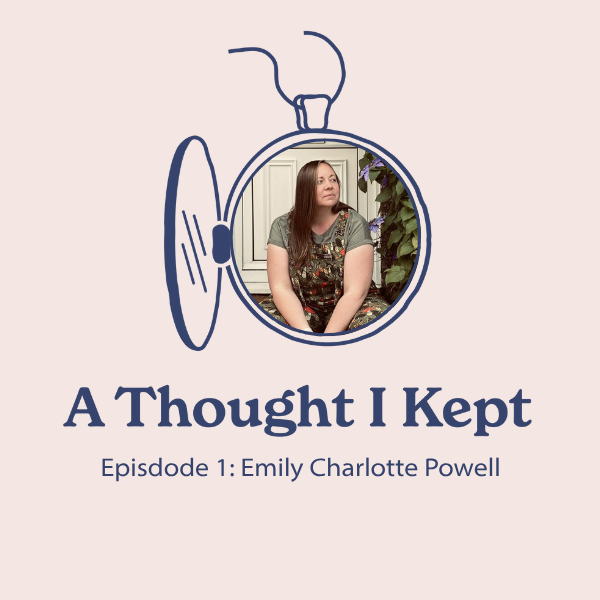
This journal post was inspired by my conversation with the wonderful Emily Charlotte Powell on the latest episode of A Thought I Kept.
Listen in for more on:
How to navigate creative pressure without losing your spark
Why feeling something while you create matters
How to protect joy as part of your process
The emotional reality of being a creative person in a content-driven world
Listen now on Substack with bonus video content or find us wherever you get your podcasts.
Let this episode be the quiet nudge that helps you find your way back to what you love.
Sign up for my Substack More Good Days, where I share gentle thoughts on creativity, emotions, and everyday wellbeing — always with the aim of helping you feel better, not more pressure.
Or check out our wellbeing courses designed to help you reconnect with what matters to you.

A Curiosity-Fuelled Summer Bucket List
Looking for an easier way to enjoy summer? This curiosity-fuelled bucket list offers 20 low-pressure, wellbeing-inspired ideas to help you slow down, reconnect, and find joy in the everyday.
You might love the idea of summer—the long days, the looser schedules, the promise of some sunnier days.
And yet, somewhere between school holidays, the laundry pile, and the pressure to “make the most of it,” it’s easy to feel like you’re falling behind on even the fun stuff.
Enter the summer bucket list.
What starts with good intentions—picnics, beaches, fire pits—can quickly turn into another list of things you should be doing.
For years, I made summer lists like they were contracts with joy. But by the end of July, I’d be half-ticked-off and half worn-out.
Somewhere in the middle of trying to have a good time, I forgot to notice whether I actually was.
Here’s what changed everything:
I stopped treating summer like something I had to conquer… and started following my curiosity instead.
Curiosity doesn’t ask you to rush. It doesn’t compare. It doesn’t have a checklist or a destination.
It simply asks, what if I noticed this? or what happens if I try that?
And in doing so, it gently pulls us out of overwhelm and back into presence.
Because when you feel stretched thin, curiosity doesn’t demand energy—it offers it.
It’s the gentle restart your nervous system might need when you feel like you have to be and do all the things just because “it’s summer”..
Try not to see this as a list of goals. Rather reframe it as a list glimmers—small, no-pressure invitations to help you reconnect with yourself, your surroundings, and even your sense of play.
You don’t need to do them all. Or do them “right.”
Just follow your interest. Let yourself wonder again.

The Curiosity-Fuelled Summer Bucket List
Pick one today. Come back tomorrow—or don’t. This is yours to shape.
Walk a route you’ve never taken
Lie on the grass and look at the sky for 5 minutes
Text someone just to say you’re thinking of them
Buy yourself a magazine you used to love
Eat something slowly, outside if you can
Leave your phone behind for a short walk
Watch the sunset or sunrise, on purpose
Rearrange one corner of your home
Draw something badly (no erasing allowed)
Take a 5-minute ‘holiday’—window open, feet up
Write a one-line diary entry for 3 days in a row
Make a playlist that sounds like sunshine
Sit on your front step with a cold drink
Do something with your hands (paint, knead, cut, fold)
Say no to something that doesn’t feel like a yes
Visit a local place you’ve never set foot in
Gift something to someone for no reason
Stand still in nature and count 3 things you can hear
Wear your favourite clothes for no occasion at all
Try one thing from our Summer Scavenger Hunt
This is how summer gets to feel now:
A little less effort. A little more ease. A little more *you.
When we let curiosity lead, we find joy in unexpected places: on front steps, in ordinary walks, in the sound of birds.
We don't have to make it epic—we can find some joy in the smaller, more thrown together things.
If this list gave you ideas, here are 2 ways to follow the feeling:
1. Download our free Summer Scavenger Hunt – 28 curiosity-fuelled prompts to keep you exploring all that summer can be for you
2. Join the Summer Wellcation – A self-guided, 4-week invitation to feel better in the season you love
If you’re craving a slower, more intentional season, that’s exactly what Summer Wellcation is created for.
When the Garden Teaches You How to Grow
How I learned that tending a garden is like attending to my emotional wellbeing. Discover why gardening might just be the gentlest teacher of all and the life lessons it might hold for you.
We often talk about personal growth like it’s something we can hack or schedule: an efficient morning routine here, a life-affirming listicle there. But growth—real, emotional, soul-deep growth—doesn’t always work like that.
What if the better metaphor isn’t a staircase going ever upwards… but a garden?
Because while we search for clarity, balance, or simply a day that feels like “enough,” we forget that the slow, subtle tending we do matters too. And nowhere has that been more apparent to me than in my garden.
When I first began gardening, I thought I was there to grow flowers. I didn’t realise I’d be unearthing something else entirely.
The spinach bolting too soon mirrored parts of myself I’d neglected. The alliums blooming after months of dark reminded me that beauty often requires quiet persistence. And the mess? That was its own kind of magic.
My garden began teaching me the lessons more often held in books on self-improvement
That manifesting without doing is like planting without watering.
That completion is hard—not because we can’t finish things, but because we forget to savour when we do.
That wildness isn’t chaos—it’s aliveness.
That rhythms matter, and sometimes staying still is part of tending too.
Most surprisingly, I learned that I didn’t have to get everything right. Not in the garden. And not in myself.
Sue Stuart-Smith wrote, “The mind needs to be gardened too.” And once I read it, I couldn’t stop thinking about how true that is.
Gardening asks us to:
Observe without rushing.
Accept mistakes without shame.
Work with the seasons, not against them.
Let go of perfect outcomes.
And return, again and again, to the same patch of ground.
In other words—it’s the same practice that wellbeing demands of us.
You don’t need to own a garden to live this way. But you do need to notice what’s already growing.
If the garden has taught me anything, it’s this:
There will always be weeds. You are not failing because things still need clearing.
Rest counts. Sitting in your garden is still tending to it.
Growth doesn’t announce itself. Often it’s quiet, a cucumber hidden behind a leaf, a shift in mindset you barely notice.
You don’t need to be the expert. Just the one who shows up.
This is the version of wellbeing I believe in: imperfect, seasonal, and rooted in presence rather than performance.
So tell me—what’s growing for you right now?
What do you notice when you look at your days not as tasks to complete but as something to tend?
Let’s start a new kind of growth together: slower, kinder, and more alive.
If this resonated with you, sign up for the newsletter for our take on personal growth (hint: we never call it personal growth outside of a gardening metaphor). Or explore our wellbeing courses where we start, not with goals, but with grounding.
We can cultivate a different kind of wellbeing together: one that feels messy, but real, and offers its own kind of beauty..
Image: made with Freepik
Announcing A Thought I Kept: A Podcast About the Ideas That Shape How We Live
Looking for a wellbeing podcast that can fit your everyday life? A Thought I Kept explores the single ideas that stay with us — and how they continue to shape us, long after we’ve forgotten the rest. Listen now.
If you're looking for a wellbeing podcast that feels like a conversation around a kitchen table, this is for you.
A Thought I Kept is a short-form podcast about the single ideas that stay with us — the ones that shape how we live, long after we’ve forgotten the rest.
Each week, I speak with a different guest about the one thought they’ve carried with them through life. Sometimes it’s a quote that landed at just the right moment. Other times it’s something said by a loved one that needed to be heard.
These are the ideas we live. Or try to. We return to them again and again. We test them, challenge them, adapt them. These are the ideas that stick, stay, and sometimes even shift everything.
A Wellbeing Podcast That Meets You Where You Are
In a world full of self-help lists, must-try methods and wellbeing how-tos, A Thought I Kept is about how we notice (and hold onto) the ideas that resonate, that mean something, and that — in their own way — shape who we’re becoming.
This is a podcast for people who are curious about what makes life feel better — more connected, more livable, more of what you need. Whether you're deep into self-improvement or simply looking for a new idea to carry through your week, you'll find something here that’s worth remembering.
What You’ll Hear
Every episode features a single guest — creatives, coaches, therapists, or just thoughtful humans — sharing the one idea they couldn’t let go of. We explore:
A moment that shifted their perspective
How the thought has shown up again and again
What it’s taught them — or is still teaching them
How they’ve made it their own
These aren’t polished life lessons. They’re lived ideas. Carried from books and stages, podcasts and conversations, into real days. The ones we try to live up to — or sometimes fall short of — but keep returning to anyway.
Why These Conversations Matter
We’re not short on inspiration these days. But we are short on meaningful, reflective spaces where we can explore how we actually integrate the ideas we hear into our daily lives.
A Thought I Kept is one of those spaces. It honours aha moments and imperfections both, small moments of clarity and the kind of emotional intelligence that grows slowly, over time.
These conversations are for anyone navigating change, searching for clarity, or wanting to feel more grounded in how they move through the world.
Where to Listen
A Thought I Kept is available wherever you get your podcasts, with bonus videos and content found over on Substack.
New episodes drop every Monday — perfect for starting your week with a fresh perspective.
If you’re looking for ideas that stay with you, you love wellbeing podcasts and you often choose meaningful conversations over monologues — this podcast is for you.
Subscribe to A Thought I Kept and join a community of people collecting the kind of ideas that make everyday life feel a little more livable.

How to Move Through Creative Self-Doubt and Reconnect With Your Purpose
Feeling stuck or creatively disconnected? Here's how to rebuild your confidence, find meaning in the uncertainty, and return to the creative work that matters.
Have you ever felt like you’ve lost your spark?
Like the ideas that once lit you up have dimmed, or that the thing that used to matter doesn’t quite land the same way anymore?
Maybe you’ve asked yourself: What am I doing this for?
If you're here, chances are you’re navigating your own season of doubt. And if that’s true, then let me offer you this:
You’re not doing it wrong. This is part of it.
The creative process isn’t linear. It’s a stretch and a return. A leap, and then a grounding. A brave “yes” to something new, followed (often quietly) by the decision to come back home to what really matters.

What’s for you won’t go by you.
That phrase—shared by brand designer and creative mentor Sarah Robertson on a recent episode of A Thought I Kept—has been looping in my head since we spoke. It was something her Scottish grandmother used to say, sometimes just in passing. But it landed.
It became an anchor for Sarah in all kinds of moments:
When her business changed direction
When launching a new product stirred up old fears
And when self-doubt made her question whether she was going in the right direction
In each of those moments, that phrase whispered back to her: If it’s for you, it won’t pass you by.
What happens when creativity starts to feel fragile?
Sarah spoke about the delicate emotions that come up when we make something new—especially something that asks a lot of us. When she launched her Brand Seasons card deck (a beautiful, soul-filled strategy tool), it wasn’t just a product launch. It was a creative stretch.
She worried about whether she still had it. She worried whether it was worth it. And in all of that, she still trusted enough to try.
Because sometimes, the bravery is just in showing up for what might be possible.
If you're in a stretch season...
...it might look like saying yes to something that scares you. A project you’re not sure will land. A conversation you don’t feel ready for.
But then there’s the other half of the rhythm—the return.
Sarah shared how, after all the brave leaping, she’s now back in her creative comfort zone: working one-on-one with clients, doing deep brand work, mentoring creatives who are trying something new.
And she’s realised:
It’s okay to let go of the things that aren’t for you too.
Even the things you poured your heart into.
This is permission to release the pressure to make every project the thing.
It can just be a thing. A moment. A stretch.
Then you come back to what fills you up.
If you're in a return season...
...let it be enough.
You don’t have to reinvent everything. You don’t have to push.
Returning to what feels good—what feels like you—can be the most creative act of all.
As Sarah put it:
““There’s definitely been something about learning that the creativity is always there. I can access it, I can tap into it.””
So how do you find your way back to creativity?
Here’s what this conversation reminded me of (and maybe it will help you too):
Self-doubt doesn’t mean you’re not creative. It means you care.
You don’t have to push all the time. Sometimes the letting go is the power move.
A creative pause doesn’t erase your purpose. Your creativity is still there.
The process matters as much as the outcome. Trust what you're learning in the doing.
Not everything is yours to carry. What’s truly for you will stay. What isn’t, can go.
Want to feel more connected to your creativity again?
Take a breath. Come back to yourself.
And ask: What feels like mine to hold right now?
Not what’s trending. Not what’s shiny. Just… what’s true?
If it’s for you, it won’t go by you.
Let that be the anchor.
Want more like this?
Listen to Sarah’s full episode on A Thought I Kept on Substack, Spotify or wherever you get your podcasts

Summer Self-Care Checklist for Overwhelmed Days
Feeling stretched thin this summer? Here’s a gentle, practical self-care checklist to help you pause, reset and feel better—without adding on any more pressure.
You love the idea of summer—the long evenings, the slower mornings, the breezy dresses and flip-flops and maybe even a road trip or two.
But here you are, somewhere between the second heatwave and the eighth load of washing, feeling low-key exhausted and wondering: Isn’t this supposed to be the relaxing season?
Summer can be a swirl of too-muchness: too much expectation, too many people to keep happy, too little time to yourself.
That’s why we created a short checklist to help on overwhelming days—not to add more, but to gently guide you back to what you need today.
Because here’s what I’ve learned (the hard way): self-care in summer doesn’t always look like bubble baths or beach escapes.
Sometimes it looks like sitting on the garden step for five minutes with your phone inside the house.
Or letting the kids watch one more episode so you can be alone in silence and remember what your own voice sounds like.
I’ve coached women through every kind of season, and summer—while beautiful—has a sneaky way of stealing our energy.
We keep trying to "make the most of it," but no one talks about how much it can take out of us, especially when we’re already carrying so much.
This checklist isn’t about self-improvement. It’s about self-preservation. And maybe even a little more joy.

Summer Self-Care Checklist for Overwhelmed Days
For when you feeling wobbly, weary or just a bit lost in the swirl of summer...
Try one or two. You don’t need to do them all.
1. Move to a cooler room—emotionally and literally.
If you’re overheating, physically or mentally, step into shade. It can be a room, a car, a headspace. Give yourself that pause.
2. Have a "bare minimum" day.
Pick 3 things: eat something, drink water, send one message. That’s enough.
3. Use your senses to re-centre.
Run your hands under cold water. Notice the texture of grass under your feet. Inhale something fresh—lavender, mint, citrus. Let your senses bring you back to the present.
4. Draw a boundary shaped like a hammock.
Say no to something, kindly. Then rest in the space it creates.
5. Write a tiny list of what’s working.
Even in the mess: the good coffee this morning, your kid’s laugh, the breeze through the window.
6. Reach for real connection.
One message to someone who sees you. Not for advice. Just for being seen.
7. Put your phone in a different room for 20 minutes.
Not forever. Just long enough to change the rhythm.
8. Move your body to move the moment.
Step outside. Stretch your arms overhead. Walk to the end of the street and back. A shift in motion can soften the stuckness.
9. Let something go half-done.
It can still be there tomorrow. And there’s something ok about that. Let it wait.
10. Ask yourself one kind question.
What would feel good right now? Then honour the first answer that comes.

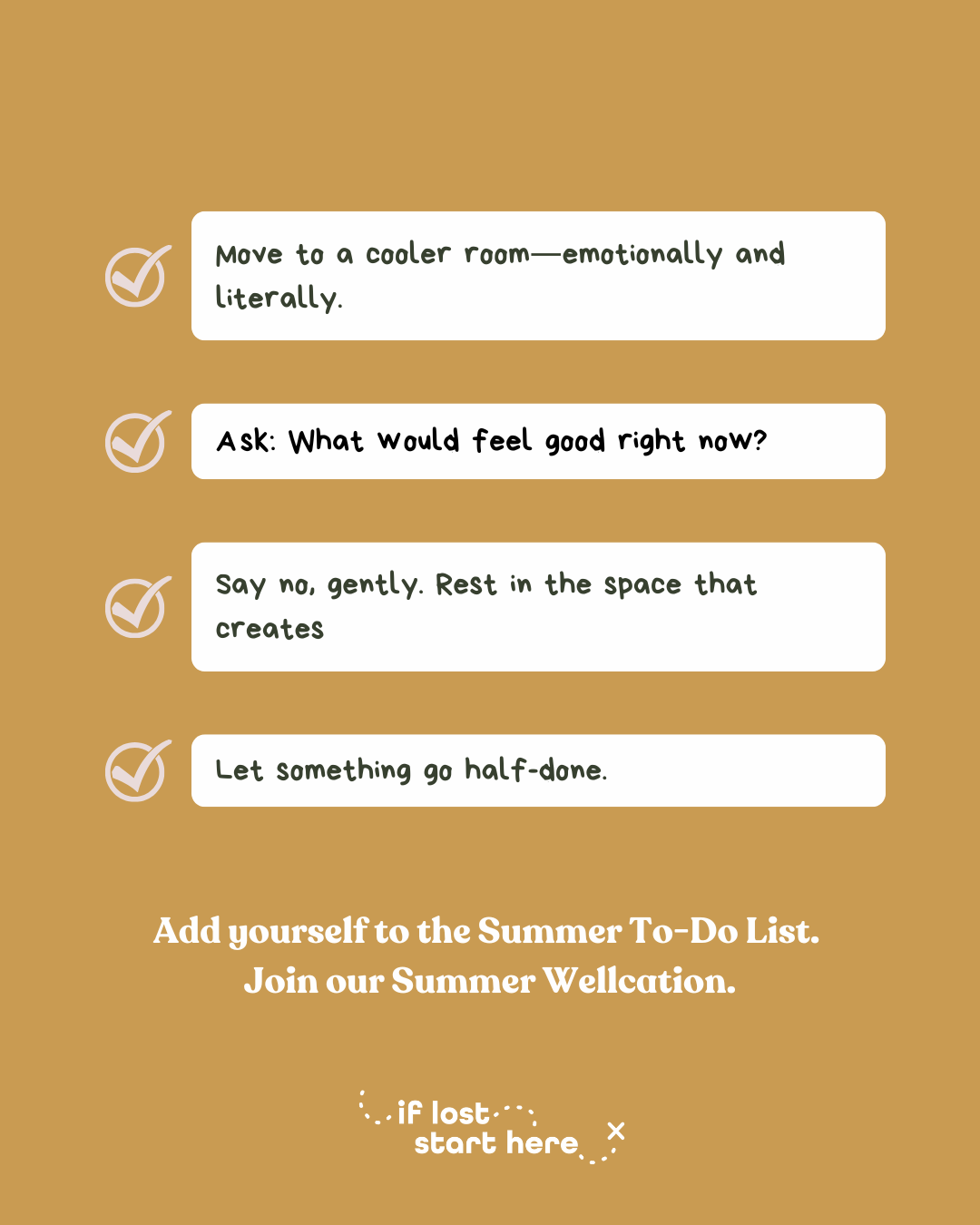
Even one of these actions can shift your day, your breath, your summer.
What’s on your personal self-care checklist right now?
Which one of these would feel best today?
If this resonated with you, here are 3 ways to go deeper:
Join our Summer Wellcation – a 4-week self-guided online reset to reclaim your season.
Subscribe to our newsletter – for more ideas, inspiration and emotional support.
Browse our guide to overwhelm — for more ways to navigate the days when it all feels too much.
Let’s create a summer that feels like yours.
Made image by Freepik

Walking for Wellness: How Daily Walks Brought Me Back to Myself
Discover the emotional and mental health benefits of walking with five mindful ways to walk, inspired by personal experience and wellbeing research.
It wasn’t until the pandemic that I discovered walking — not as a way to get from A to B, but as a way to come back to myself. Like many people, I found myself locked down, overwhelmed, and restless. My only escape was a daily walk.
It became essential. A bowl of milk to the day’s dry cereal. The thing that made everything else make sense.
Each morning, after waking to another repeat of the same uncertain day, I’d lace up my trainers and head out. Sometimes I went uphill, breath catching as I climbed towards the high view that held the San Francisco Bay and Mount Diablo in the distance. Other times, I turned down the trail, earbuds in, passing neighbours who had become companions in this strange shared stillness.
My walks weren’t about fitness. They were about sanity. A way to breathe again before returning to home-schooling, back-to-back video calls, and the quiet chaos of a household running on edge.

The benefits of walking for mental health
I wasn’t alone. According to the Mental Health Foundation, 59% of UK adults said that taking a walk helped them cope with the stress of the pandemic. In the UK, where I spent round three of lockdown, walking was considered so essential that the government protected it — up there with grocery shopping and filling your car with petrol.
These daily walks weren’t just good for our bodies. They were medicine for our minds. For many of us, walking helped re-establish a link between physical movement and emotional stability. And for some, it was the beginning of a new relationship with wellbeing altogether.
Why I kept walking (even when I didn’t have to)
I’ve kept walking. Not out of obligation, but because I now understand what it gives me.
I take a short walk before I collect my daughter from school — a simple mental reset after a day of coaching, writing, and running a business. I walk after dinner, letting the last of the day’s light touch my skin. I park further away than I need to when heading into Bath, giving myself that extra stroll in silence before a meeting.
It’s not always about the steps or the stats. I’ve let walking become part of how I design my day — like eating lunch, brushing my teeth, or drinking coffee. It gives me time to think. Time to feel. Time to stop being just a brain at a screen.
And the dog walkers I pass seem baffled that I walk alone — no dog, no Fitbit, no real purpose.
But here’s the thing: walking is the purpose.
5 mindful ways to walk when the world feels heavy
When I feel unmotivated, overwhelmed, or too busy to walk — I remind myself it doesn’t have to look a certain way. These are five gentle ways to walk that have helped me stay connected, curious, and calm.
1. Take a Colour Walk
This morning, I followed the colour pink.
It was a choice that made me look. Brash pinks and soft blushes showed up in unexpected places — roses in front gardens, foxgloves leaning into the road, a pair of pyjamas flapping on a washing line, and even the warm tone of a village pub sign. The pinks softened the streets I thought I knew.
Try this: Choose a colour before you leave the house. Follow it with your eyes. Notice the tones, textures, placements. Photograph them, sketch them, or just observe. You’re not documenting your walk — you’re getting more into it.
2. Walk Without an Agenda
“Take a walk without an agenda,” said Margaret Heffernan in her TEDx talk on thinking like an artist.
Leave your phone at home. Head out with no destination, no task list. Let the walk shape itself.
Can you hear the difference after the rain? Have the leaves turned? What’s blooming this week? Let your attention wander, gently.
The only cost is your attention. The gift is being where you are.
3. Try an Awe Walk
An awe walk invites you to look at the world with child-like eyes.
Research from the University of California found that regular awe walks can reduce stress, increase joy, and expand our sense of connection to something bigger than ourselves. Participants even began taking smaller selfies — a literal shrinking of the ego.
This week, I walked a slightly different route and was caught by wildflowers pushing through tarmac, a castle glowing yellow under a blue sky, and a pile of painted stones stacked on a gravestone by a child’s hand. Nothing grand, but all quietly wonderful.
Try this: Look for something vast or something tiny. Either way, let it move you.
4. Take a 12-Minute Brisk Walk
If time is the thing getting in your way, keep it short and purposeful.
In 52 Ways to Walk, Annabel Streets encourages a simple 12-minute brisk walk. That’s all it takes to shift your mood, alter your blood chemistry, and reconnect with your body.
Try this: Set a timer for 12 minutes. Walk like you mean it. Breathe deeply. Notice the shift.
5. Bring Company (Human or Otherwise)
Sometimes I take a friend. A quick lunchtime loop before school pickup. Sometimes I take a podcast — lately I’ve been walking with themes like overwhelm or emotional fatigue, choosing episodes that help me think differently.
There’s evidence that some of the emotional benefits of walking come not just from movement, but from connection. The nod of a neighbour. A chat with a friend. The quiet rhythm of shared silence.
Try this: Invite someone to walk with you. Or pick a podcast that feeds your mind as your feet move. Make it feel like a companion.
Let walking be whatever you need it to be
You don’t need to count steps or measure your worth in minutes. Walking is a practice — and like all good practices, it adapts to you. It can be fast or slow, quiet or sociable, structured or loose.
Let it meet you where you are.
If you need to ground yourself: walk.
If you feel cloudy-headed: walk.
If you want to think, or not think at all: walk.
You don’t need a goal. You just need to begin.
So…
What kind of walk are you craving today?
Which of these walking practices might you try?
Or do you have your own that sustains you?
We’d love to hear your stories of why you walk — and what you’ve found along the way.
Your next steps
If something here resonated, here are three gentle ways to keep exploring with us:
Subscribe to our Newsletter
Get weekly wellbeing notes — full of small, real-life ways to feel better, think differently, and live with a little more ease and curiosity. Sign up here.Explore Our Wellbeing Remedies
Discover our bespoke prescriptions for everyday life. Whether you're feeling lost, overwhelmed or just want to explore more of what matters to you — we’ve designed gentle tools to support you. Browse our remedies here.Visit Our Mind–Body Library
Practical, non-performative ways to reconnect with your body — whether you're walking, resting, stretching or simply breathing. It’s about being in your body in a way that feels good, not forced. Explore your mind-body connection here.

What If Overwhelm Isn’t the Emotion? Why We Sometimes Feel Too Much, Yet Not Enough—and How the Body Can Help
Feeling overwhelmed but not sure why? You might not be feeling “too much”—you might be disconnected from what your emotions are actually trying to say. Here’s how to make sense of overwhelm through the body.
You feel overwhelmed.
But if someone asked you why, or what exactly you’re feeling… you might not know. You just feel off. Foggy. Wound up. Flooded. Blank. Wired and tired at the same time.
It can feel like too much is happening inside you, without a clear signal or message to follow.
But what if overwhelm isn’t the emotion you really need to deal with?
What if it’s what shows up when you haven’t been able to feel what’s beneath it at all?

The Moment I Realised Overwhelm Was a Cover Story
For a long time, I treated overwhelm as a standalone state. A sign that life was “too busy,” my nervous system was overloaded, or I needed a break. Sometimes that was true.
But what I’ve come to realise—through training, through coaching, and through my own lived experience—is this:
> Overwhelm can also be a symptom of emotional disconnection, not emotional excess.
It’s what happens when we intellectualise our feelings, or try to manage them from a distance—without ever letting them land.
We might think:
“I know I’m feeling something, but I can’t get to it.”
“I can name the emotion, but it doesn’t feel real.”
“I should be able to cope with this, but I feel flooded anyway.”
Sound familiar?
This is a pattern that many people (especially high-functioning, thoughtful people) fall into: you process emotions with words, not with your body. You understand emotions cognitively, but don’t always experience them somatically.
And over time, all the un-felt, un-integrated emotion starts to pile up. It doesn’t go away—it just gets noisier. Messier. Louder.
Eventually, it spills over—not as anger, grief, fear, or sadness—but as overwhelm.
When the Body Tries to Speak and We Stay in Our Heads
From a neuroscience perspective, this makes perfect sense.
Emotions aren’t just thoughts. They’re bodily experiences—changes in breath, tension, heat, posture, heart rate.
When we ignore those signals—or lose access to them—we lose our in-built self-regulation system.
If you don’t feel the emotion as it comes, your body doesn’t know how to process or release it. It just keeps holding it.
Without that physical experience, your brain can’t fully complete the emotional loop. So it stays half-finished. Repeating. Piling on top of the next.
Eventually, all those unfelt emotions swirl together into a kind of emotional static—a sensory overload without clarity.
We call that overwhelm.
But maybe we’re naming the storm, not the weather patterns underneath it.
What to Do When You Don’t Know What You’re Feeling
So if overwhelm isn’t the emotion—what is?
It might be grief. Or fear. Or anger. Or a layered, messy mix of all three. But if you’re disconnected from your body’s signals, you can’t access them clearly.
Here’s how you can begin to shift that:
1. Start with the body, not the story
Don’t ask, “Why do I feel overwhelmed?”
Instead ask, “Where do I feel something in my body right now?”
You might notice:
A tightness in your chest
A fluttering in your stomach
A pressure behind your eyes
Let that be your starting point.
2. Give the emotion a safe place to land
The goal isn’t to solve or fix the feeling. It’s to feel it enough that your body recognises it, processes it, and releases what it can.
This might look like:
Breathing into the part of the body where you feel sensation
Moving (gently, freely, without agenda)
Letting sound, tears, or stillness come through
3. Use overwhelm as a cue, not a verdict
When overwhelm shows up, treat it as a signal, not an endpoint.
It might be saying:
“You’ve ignored this too long.”
“There’s something here that needs feeling.”
“You’re carrying more than you realise.”
What if overwhelm wasn’t the problem?
What if it was your body’s last attempt to get your attention?
So the next time you feel overwhelmed, pause.
Ask yourself: “What might I be feeling beneath this? What hasn’t had space yet?”
And instead of trying to “cope” better or “think” your way out—what if you tried simply feeling your way in?
You might find that you’re not feeling too much…
You’re just not yet feeling what’s really there.
Want more support like this—gentle, science-backed, and full of things you can try?
Join our newsletter to better understand all life’s emotions.

You’re Not Anti-Social. You’re Burnt Out
Struggling with connection? You’re not anti-social — you might just be overwhelmed. Here’s how burnout impacts relationships, and what to do about it.
You might be wondering why connection feels harder than it used to.
Why even replying to a message takes energy you don’t seem to have.
Why the idea of making plans — or keeping them — feels less like joy and more like effort.
Maybe you’ve told yourself you’re becoming anti-social. Or that something’s wrong with you.
But have you thought that you might just be burnt out?
And when we're burnt out, overwhelmed, or overstimulated, it's not that we don’t want connection — it’s that we don’t have the capacity for it in the ways we used to.
Let’s take a gentler look at what’s really going on — and how you can find your way back to the people in your world, slowly and on your terms.

1. It’s Not You. It’s Your Nervous System.
When you’re overwhelmed, your body isn't just stressed; it enters a primal survival mode. From a neuroscience perspective, this triggers your sympathetic nervous system, flooding your system with stress hormones like cortisol and adrenaline, preparing you for 'fight, flight, or freeze.'
In this state, your brain shifts activity away from the logical prefrontal cortex towards more reactive areas like the amygdala. This deprioritises connection because it perceives it as 'extra' or even a vulnerability.
Even if your conscious self longs for company, your autonomic nervous system might be screaming: 'too much!' – interpreting social interaction as additional cognitive load or sensory input when resources are already depleted.
Ultimately, this isn't a rejection of other people; it's a powerful, often unconscious, form of self-protection, as your system attempts to conserve vital energy and reduce stimulation until it can recalibrate.
2. We’ve Normalised Overstimulation
Constant scrolling. The news cycle. Notifications. Everyone needing something from you.
It’s no wonder that community starts to feel like another demand.
You’re not avoiding people because you don’t care. You’re avoiding people because you haven’t had a moment to care for yourself.
We’ve got so used to being “on” all the time, that we can start to judge ourselves when we want to, or need to, switch off.
3. Social Exhaustion Looks Like Disinterest
Here’s the trick: burnout mimics disconnection.
You cancel plans.
You ghost the group chat.
You forget to reply.
You assume it means you’re withdrawing.
But what if it’s just that your tank is empty?
You still love your friends and value your community, but there’s so little left in you to attest to this.
4. Connection Heals Burnout — But It Has to Feel Safe
Meaningful connection can help regulate your nervous system.
But forced connection — with people who drain you or settings that overstimulate you — only adds to the fatigue.
Start where it feels safe:
Someone who gets you, no performance needed
A place that feels calm and familiar
Time limits: 15-minute walk, one cup of tea, one reply
Slow, steady, in the relationships you value most.
5. Choose Micro-Connection, Not Big Energy
You don’t need a group. You don’t need to “make new friends.”
Try one of these instead:
Chat to your barista
Smile at the person on your usual dog walk
Send a funny reel to someone you love
Sit near others in a shared space (library, coworking space, café)
These “small things” are not small to your brain.
They restore trust. They regulate stress. They count.
You are in the world connecting in a way that fits your capacity right now. You’re restoring a sense of self-confidence, even self-trust.
6. Community Doesn’t Have to Be Loud
You’re allowed to build a quiet community. One that fits your energy and rhythm.
Your version of community might be:
An email thread with one friend
A book club where you just listen
A garden you share with neighbours
A quiet nod from someone who recognises you in the queue
Going to the same cafe each week
Showing up to an exercise class where you know the name of one other person
If it feels good and welcoming to you, that might be enough right now.
7. Connection Isn’t a Fix. It’s a Practice.
The point isn’t to solve your overwhelm with people.
The point is to slowly remind your system that you’re supported.
That people can be kind.
That you don’t always have to do it alone.
That you’re still part of something — even if you’ve been quiet for a while.
Find ways to remind yourself of how good, even restorative, connection can feel.
You're Still Social. You're Just Tired.
Let that idea shift something in you.
Let it lower the pressure.
Let it be the reason you reach out — even just a little.
Not to prove you’re okay.
But because connection might be part of what helps you feel more okay again.

If you’re looking for something that fits your pace:
Join our email community for soft encouragement, kind reminders, and gentle guidance
Book a wellbeing coaching session if you’re not sure where to begin. We cover all aspects of life including social connection and we’ll help you explore what this needs to look like for you to feel happier.
Join our community The Wellery on Substack where we figure out how to do life together.

Understanding Midlife Emotions: A Toolkit for Women in Perimenopause and Menopause
Explore why midlife feels so emotional — and learn science-backed, compassionate tools for navigating perimenopause, menopause, and the mental load of midlife.
Midlife is emotional. So emotional.
Not in the dramatic, dismissive way we’re told.
But in the quietly profound, messy, layered, deeply human way no one warned us about.
For some of us, midlife emotions feel like an ambush.
For others, like a fog that won’t lift.
You cry at the school newsletter. Snap over the dishwasher. Feel nostalgic, flat, elated, invisible, and uncertain — sometimes in a single afternoon.
Here’s the thing:
You’re not going mad.
You’re not failing at life.
You’re not the only one.
The emotional shifts in midlife are real, and they are biological, cultural, social, and psychological. And once you understand what’s happening beneath the surface, it all starts to make a little more sense.

Why Midlife Feels So Emotional
Here’s what the research shows:
Hormones are real players. During perimenopause and menopause, estrogen — a key mood-regulating hormone — fluctuates wildly. This can destabilise serotonin and trigger mood swings, irritability, anxiety, and even depression.
Sleep suffers. Hot flashes and night sweats disrupt sleep, which worsens emotional resilience. It's not just tiredness — it’s emotional sensitivity fuelled by exhaustion.
Life doesn’t pause. Career shifts, aging parents, empty nests, grief, relationship changes — all pile on at once. It’s not just one thing; it’s everything, all at once.
We’ve been socially trained to ignore ourselves. We’ve been told to stay upbeat, productive, and agreeable — so when emotions hit, they feel foreign, shameful, or ‘too much’.
And the world doesn’t always see us. Many women report feeling invisible, devalued, or dismissed — especially in work and public spaces.
This is biology + life + culture colliding in one highly stressful moment.
But here’s where it also gets hopeful:
An Emotional Toolkit for Midlife Women
You don’t need to ‘get over’ your emotions.
You need tools, space, and information. Here are five small but powerful shifts you can start today:
1. Name what’s happening — without judgement
Mood swings, anxiety, flatness, brain fog… they’re not weakness. They’re signals. Naming what you’re feeling reduces shame and increases clarity.
Try: “Today I feel... because... and that’s okay.”
2. Sleep is sacred
If you’re not sleeping, you’re not thriving. Manage sleep disruptions (hot flashes, anxiety) with gentle bedtime routines, calming rituals, and support if needed.
Consider: Magnesium glycinate, low evening light, and no emotional emails after 8pm.
3. Move — gently, often
Movement isn’t just about physical health. It’s emotional regulation in disguise. A walk. A stretch. A playlist you can dance to. Move your body to move your mood.
Try: Even five minutes counts for shifting your emotional energy.
4. Talk to people who get it
Because right now you probably also need validation. Your feelings aren’t ‘too much’. You’re not broken. Talk to someone who has walked this path — or is walking it too.
To do: This is your sign to call or text that friend you’ve been thinking about.
5. Challenge the crisis narrative
What if midlife wasn’t a crisis — but a moment to reevaluate? Research shows women who see midlife as a time for growth fare better emotionally. You can rewrite the script.
Ask: What part of me might be growing right now — even if I can’t see it yet?
Something’s Coming...
This is why we created So Emotional
A retreat for your emotional life.
We’re not opening enrolment just yet, but the waitlist is open.
If you're craving real tools and real talk,
If you want to understand yourself better — and feel less alone in the process…
join the waitlist for So Emotional
Be the first to know when we open our doors.
Let’s make space for your emotions — in a way that feels good to you.

If you’re struggling with all the feelings in midlife, download our free guide for five ways to better manage your emotions right now.

Feeling Like You’re Not Coping in Midlife? You May Just Be Burnt Out
If you feel like you're losing control of your emotions in midlife, you might be experiencing emotional burnout. Here's what it looks like — and what can help.
You used to be able to handle everything. Deadlines. Family logistics. The never-ending inbox. The emotional temperature of the people around you.
But lately?
It’s taking more energy just to get through the day. You lose your temper at things that never used to bother you. You forget words mid-sentence. You wake up already tired. The tears are always closer to the surface than you’d like.
You keep thinking: “What is wrong with me?”
Here’s what we may need to acknowledge — “this isn’t just the usual stress. This could be emotional burnout.”

When You’re Doing It All — and Still Feel Like You’re Falling Apart
For many women, midlife arrives not as a calm plateau, but as a crash of emotional noise.
You’re managing more than ever — ageing parents, growing children, workplace pressures, your own changing body. All while still holding up the emotional scaffolding for others.
And somewhere in all that care and competence, your emotions started to feel less like signals and more like symptoms.
Emotional burnout doesn’t always look like falling apart. Sometimes it looks like holding it all together — until one day, you just can’t
What Emotional Burnout Looks Like (Even If You’re Still “Functioning”)
Emotional burnout in midlife often shows up as:
Feeling numb or detached from things you used to enjoy
Mood swings that feel sudden, sharp, and disproportionate
Overwhelm that hits out of nowhere
Irritability and guilt in equal measure
A loss of confidence in your emotional responses
And yes — hormonal changes can absolutely cause and intensify these experiences. Once you’ve checked this out with a medical professional and you’re still feeling burned out, years of emotional labour, invisible caregiving, and the pressure to keep being “fine”, might also be contributing.
When we’re always trying to fine, we lose contact with what’s real. And emotional steadiness starts with giving yourself the space to see what’s really going on.
There’s a Way Back to Yourself — One Feeling at a Time
Your emotions don’t need to be your enemy — even when they feel messy and out of control. They can also be information. And with the right tools, you can begin to steady them again.
That’s why we created a free resource designed just for women navigating this exact moment.

Download the Free Guide: Feel Better in the Middle of Everything..
This contains five practical tools to help you:
Understand why your emotions feel so intense right now
Reclaim your energy and focus, one moment at a time
Shift the emotional stories you’ve been carrying
Feel less alone, more steady, and more like yourself again
Sometimes you don’t need to overhaul your life — just start with a clearer understanding of what’s really going on.
Download the free guide now and start feeling more like yourself again.

Navigate summer with ease | Your guide to a joyful, stress-free season
Feeling overwhelmed by summer pressures? Discover our (Stay-at-home) Wellcation program: a 4-week guide to creating a meaningful and stress-free summer with self-care, connection, and exploration - all from the comfort of your own home.
Ah, summer. The very idea of it can conjure up visions of sun-kissed beaches, lazy afternoons with a good book, and get-togethers in pub gardens.
We picture carefree days spent reconnecting with loved ones and making memories that last a lifetime. But for many of us, summer brings a different kind of pressure.
The Summer Juggle: Balancing Work, Family, and Expectations
As we transition from the dark days of winter to hopefully a sun-filled summer, we can often find ourselves caught in so many expectations. From planning family vacations to managing work commitments, the pressure to make every moment count can feel overwhelming. For many, summer isn't just a time of relaxation; it's a high-stakes game of juggling various aspects of life.
Each year both of us eagerly anticipate how we’ll create magical summer memories for our kids. Yet, as the summer progresses, we often find ourselves exhausted and financially stretched, feeling like we’re the only ones who haven't had a break.
Feel familiar? The pressure to have the "perfect" summer can transform this joyful season into a stressful one, making it hard to maintain our well-being amidst the chaos.
Introducing Our Summer Wellcation
But what if we told you that this summer could be different? At If Lost Start Here, we've designed something to help you navigate these pressures with ease and create the summer you’ve been longing for.
Introducing our first-ever Summer (Stay-at-Home) Wellcation — a unique 4-week online course that brings the vacation to you, wherever you are.
Over the course of four weeks, we'll deliver short, inspiring postcard lessons straight to our app and/or online platform. These lessons are designed to help you create a summer that's both meaningful and manageable, allowing you to connect deeply with yourself, your loved ones, and the world around you.
Embrace a Balanced Summer: Inner and Outer Adventures Await
So, how does the Summer (Stay-at-Home) Wellcation work?
1. Inward Journeying
Each week, we'll provide you with tools to connect with yourself on a deeper level. Whether it's through a journaling prompt, a self-coaching exercise, or an audio note, these activities will help you stay grounded and attuned to your own needs. You'll learn to prioritize self-care and cultivate a sense of self-connection, making it easier to handle the external pressures of summer.
2. Outward Exploring:
Alongside your inward exploration, we'll encourage you to step outside your comfort zone with fun and engaging activities. From local scavenger hunts to mini-adventures in your neighborhood, these tasks will help you see your surroundings with fresh eyes and rediscover the joy of simple pleasures. It's about creating moments of joy and connection, no matter where you are.
3. Balanced Days:
By balancing these inward and outward approaches, you'll find some equilibrium this summer. You'll learn to manage your time and energy more effectively, reducing stress and increasing your overall sense of well-being. This balanced approach ensures that you can enjoy the season without feeling overwhelmed or stretched too thin.
Make This Summer Different: Join Our Wellcation Now
How will your summer be different this year? Come choose your own summer adventure with us and connect with what truly matters while the sun is hopefully shining.
Ready to start your Wellcation? Visit here to learn more and register now!

Losing Control of Your Emotions at 48? Here's What's Really Going On (and What You Can Do About It)
Feeling like you’re losing control of your emotions at 48? Here’s why midlife hits hard emotionally, what it means, and how to steady yourself again.
You’ve always been the one who kept it together.
At home. At work. In the moments when other people fall apart, you’ve been the calm one. The capable one. The one who handles things.
But lately, something’s changed. You find yourself snapping over small things. Crying in the car. Waking up with dread or feeling foggy-headed in meetings. You’re asking yourself:
“Why can’t I control my emotions anymore?”
And maybe even, “Am I going crazy?”
You’re not. You’re in midlife — and what you’re feeling is incredibly common. But that doesn’t mean it isn’t deeply disorienting. And it definitely doesn’t mean you have to keep silently pushing through.

“I’ve Always Held It Together — Until Now”
Midlife is often described as a "second puberty" for good reason. For many women in their mid-to-late 40s, it’s the first time that emotional stability — something we’ve prided ourselves on — starts to feel elusive. You may feel like you’ve become a different person almost overnight.
The truth is, this shift isn’t just in your head — and it isn’t a sign of weakness. It’s a combination of biological, emotional, and psychological factors that hit at once:
Changing hormone levels can affect mood regulation and cognitive function.
Long-held emotional patterns (like bottling things up to stay professional or strong) begin to break down under pressure.
The stress of managing work, relationships, and caregiving responsibilities compounds everything.
It’s no wonder you feel like you’re holding on by a thread. And it’s no wonder you're asking: When will I feel like myself again?
What’s Really Going On with Your Emotions in Midlife
The good news is: there are ways to make sense of all this.
Understanding why your emotions feel so intense or unpredictable right now is the first step to feeling more steady.
You don’t need to meditate for hours or do a total life reset. You just need the right kind of support — practical, grounded, and designed for your life stage. Not one-size-fits-all advice. Not something that makes you feel broken or too much.
You need:
Language to understand what’s going on internally
Tools to respond to your emotions with clarity, not panic
Support that respects your intelligence, your capacity, and your lived experience
How to Feel Like Yourself Again (Even If You’re Not There Yet)
Imagine having a framework that explains what’s happening beneath the surface — so your emotions feel less scary and more manageable.
Imagine learning how to respond to your feelings without judging yourself, spiralling into shame, or snapping at the people you love.
Imagine feeling like yourself again — but with a deeper understanding of who that is now.
That’s exactly why I created So Emotional — a midlife course and community that helps women like you stop feeling out of control and start feeling informed, equipped, and understood.
So Emotional: A Course + Community for Women in Midlife
This is a four-week, expertly guided course to help you:
Understand why your emotions feel different in midlife
Learn tools for emotional regulation that actually make sense
Build emotional resilience without pretending nothing’s wrong
Reconnect to the steady, capable self you know is still in there
Join the waitlist now to get first access to enrolment and early bird bonuses.

Why You Feel Emotions in Your Body—And What to Do About It
Emotions aren’t just in your head—they live in your body too. Here’s what science and experience say about embodied emotions, and how reconnecting with your physical self can help you understand and manage your feelings better.
Your Emotions Live in Your Body Too
You probably know what anxiety feels like—not just the thoughts. The racing heart. The clenched jaw. The fluttery stomach.
Or how sadness can settle like a heaviness in your chest.
That’s not coincidence. That’s embodied emotion—and understanding it can completely change how you relate to your emotional life.
I didn’t always know this.
For years, I thought of myself as someone who was “good with emotions.” I could explain them, write about them, coach others through them. But it wasn’t until I started training in emotions coaching that I realised: I was living almost entirely in my head.
I could name a feeling. I could even quote research on it. But I wasn’t feeling it. Not really. Not in my chest, or my belly, or my breath. It was a cognitive experience. One that left me overwhelmed by emotions I wasn’t actually letting myself process.
That’s when I discovered what embodied emotion really means—and why it matters.

So… What Does ‘Embodied Emotion’ Actually Mean?
It means this:
You don’t just think emotions. You feel them.
Literally. Physically. In your body.
This isn’t just poetic—it’s backed by science:
Embodied cognition
Your brain and body work together to create emotional experiences. Your brain reads signals from your body (called interoception)—like muscle tension, heart rate, posture—and uses those to help you feel an emotion.
"I feel sad" = Your brain integrating body signals (slumped posture, shallow breath, heaviness) + memory/context.
Emotions as energy
Emotions are energetic experiences. Crying, laughing, shaking, sighing—these are physical discharges of emotional energy. If you don’t let it move through, it stays stuck in your system.
Why This Matters (Especially If You're Often in Your Head)
When we don’t allow emotions into the body—when we only talk about or think them—we disconnect from key tools of self-regulation and emotional clarity.
That disconnection might show up like this:
You overanalyse emotions instead of feeling them.
You get overwhelmed by “too many” emotions at once.
You struggle to explain how you feel, or can’t connect to the physical experience of it.
You feel exhausted, tense, or foggy without knowing why.
10 Ways to Reconnect with Your Emotions Through the Body
You don’t need to master this. You just need to start noticing. Try a few of these to begin:
1. Ask your body where the emotion is
Try:
“Where do I feel this in my body?”
“What’s the sensation—tightness, warmth, tension, fluttering?”
2. Breathe into it
Gently breathe into the area where you feel something. Let yourself stay with it for a few slow breaths, without judging it or needing it to change.
3. Name it—but stay curious
Instead of “I am anxious,” try “I’m feeling some anxiety in my chest right now.”
Let it be a process, not an identity.
4. Try movement as a release
Shake out your arms. Stretch. Walk. Sometimes the body needs to move emotion through before your mind makes sense of it.
5. Be aware of what you avoid
Ask: “Which emotions do I avoid because of how they feel in my body?”
Sometimes it’s not the thought—it’s the sensation we resist.
6. Don’t force clarity
Emotions don’t always show up with neat labels. Stay present to the feeling—even if it’s messy.
7. Use temperature and touch
Try a warm drink, a weighted blanket, a gentle hand on your chest. These can anchor you in your body when emotions feel too big.
8. Connect the dots
When you’re tense or tired, ask: “Is there an emotion I haven’t allowed myself to feel today?”
9. Use memory
Think of a time you felt confident, joyful, at peace. Remember how that felt in your body. Let that memory guide you back to that state.
10. Know this is a skill, not a flaw
If this feels unfamiliar, that’s not failure. It’s a sign you’re learning something new.
Three Things We Hope You’ll Take Away
Emotions are physiological, not just psychological.
When you feel cut off from your emotions, reconnecting with your body can help.
Small practices—like breath, movement, curiosity—can build emotional connection over time.
Join the Emotions Newsletter
Want more support as you explore your emotional world—both mind and body?
Sign up for our newsletter for practical prompts, gentle reflections and real ways to feel better in your everyday life.
You don’t need to think your way through everything.
Sometimes the answer is already in your body.

Is This Anxiety or Just a Lack of Magnesium? (And Other Mind-Body Mysteries)
From nervous system signals to gut health and breathwork, this playful, science-backed post explores how emotional and physical wellbeing are deeply connected — and how to listen when your body is trying to tell you something.
Ever feel off and have no idea why?
In this Q&A, we explore the messy space where your mind and body talk to each other — often in whispers, occasionally in yells. From gut feelings to breathwork to mystery symptoms, here’s what your body might be trying to say.

Q: Why do I feel weird today?
A: That’s the eternal question, isn’t it?
It might be:
Hormones
A fight with your sister
A missed meal
Perimenopause
Not enough sunlight
Too much coffee
Something someone said in passing that burrowed into your heart like a tick
Or… it could be magnesium. (We’re only half-joking.)
Q: How do I know what’s a mental health thing and what’s a physical thing?
A: The honest answer? You probably don’t — and neither do most of us.
That’s because your mind and body aren’t separate departments. They’re in constant conversation. That anxious feeling in your chest might be your nervous system gearing up. That foggy brain could be dehydration. That random wave of sadness might be emotional, hormonal, or both.
Here’s what science tells us:
The gut-brain axis means what you eat can affect your mood (yes, even that kombucha matters)
The nervous system can be soothed by breath, warmth, and gentle movement
Inflammation is increasingly linked to depression and fatigue
Sleep is your brain’s emotional housekeeping service
The more curious you are about your whole self — not just your thoughts — the more empowered you become.
Q: Is it just me, or does anxiety show up in the body first?
A: Not just you.
Many of us feel anxiety in our bodies before we ever identify it mentally. Your jaw tightens. Your breath shortens. Your stomach flips. Your hands fidget. Then — if you pause long enough to ask — you realise: oh, I’m anxious.
Learning to read those signals can help you intervene earlier and more kindly.
Q: So what helps?
A: Here are a few research-backed ways to support the mind-body connection — and your emotional state:
Movement (the kind you don’t dread)
Even gentle walks boost serotonin and dopamine. Pick movement that matches your mood.
Breathwork
A few long, slow exhales can activate the parasympathetic nervous system and calm stress.
Gut Health
Emerging science suggests your microbiome is deeply linked to your mood. Fermented foods, fibre, and reducing ultra-processed food might help.
Nervous System Regulation
Touch something warm. Take a shower. Rock gently. Even humming helps. All these stimulate the vagus nerve.
Being Seen
Talk to someone — a therapist, a coach, a trusted friend. Co-regulation (the sciencey term for calming down in the presence of another) is real.
Q: What if I still feel unsure about what’s going on?
A: That’s okay.
Sometimes the kindest thing you can do is notice, without needing to diagnose. Treat your body like a friend you’re just getting to know again. Ask it questions. Listen. Try something small. Then listen again.
This isn’t about mastering your biology. It’s about living in it .
Your body isn’t the enemy. It’s the messenger.
So when things feel a bit off — don’t rush to fix. Get curious.
Could it be anxiety? Yes.
Could it be magnesium? Maybe.
Could it be both? Absolutely.
Let’s keep figuring it out — gently, curiously, together. Have you ever had a mind-body mystery? What helped you understand it better?

Need more ways to well? Subscribe to our newsletter for a weekly dose of inspiration.

Dancing Into Emotional Wellbeing: A Year of Living Well-ishly Begins
Discover the science-backed emotional benefits of dance and join Claire’s “Year of Living Well-ishly” — a playful, accessible journey into movement, connection, and micro-adventures in wellbeing.
When was the last time you truly moved — not just walked or exercised, but swayed, spun, or laughed your way across a room?
For me, it was at a Friday morning disco class. I showed up, a little nervous, wearing all black but with bright turquoise trainers — a quiet nod to that day’s theme. My body, after a couple of midlife years of feeling rigid and cautious, was ready (though uncertain) to wake up again.
That class, led by the radiant Cheryl Sprinkler, became more than just a workout. It became a micro-adventure into reconnecting with my body, my emotions, and my life — and a surprising beginning to the year-long experiment I’m calling A Year of Living Well-ishly.
This month, we’re focusing on how our bodies might be speaking to us — and how we can learn to listen. One powerful way to start? Dance.

Why Dance? The Science Behind the Joy
Dance isn’t just fun; it offers a range of benefits for our emotional wellbeing. Here’s why moving to music can transform not only your body but also your mood and mind:
Emotional Regulation & Mood
Mood Lift & Stress Relief
Dancing to your favourite tunes releases endorphins, dopamine, and serotonin — the “feel good” chemicals that lift your spirits. Research shows that even a short dance session reduces stress, lowers cortisol, and boosts mood.
Processing Difficult Emotions
Sometimes, words just aren’t enough. Dance gives us a non-verbal way to express feelings like grief, frustration, or joy, helping us process what’s been sitting unspoken in our bodies.
Combating Depression & Anxiety
Structured dance programmes (even as short as six weeks) have been shown to significantly reduce symptoms of depression and anxiety — sometimes even outperforming other forms of exercise in emotional benefits.
Embracing Yourself: Confidence, Growth & Body Positivity
Boosting Self-Esteem
Learning a new move or simply letting go in a dance class offers a real sense of achievement, building confidence and emotional resilience.
Body Acceptance
Dance encourages us to notice what our bodies can do, rather than focusing on how they look. Moving freely fosters self-compassion and a healthier body image — especially important for those in midlife navigating shifts and changes.
Resilience Through Movement
By reconnecting with your body, reducing stress, and staying present, dance helps you better manage life’s challenges and bounce back from emotional setbacks.
The Power of Connection: Dancing Together
While dance can be deeply personal, it’s also beautifully communal.
Belonging & Community
Dancing in a group — whether in a church hall, at a party, or even a Zoom class — creates a shared rhythm, a sense of togetherness that fights isolation and fosters connection.
Shared Joy & Laughter
In that Friday disco class, it wasn’t just the music or the moves; it was the glances between women, the laughter when someone went right instead of left, the quiet understanding that we were all there for something bigger.
Your Invitation: Join Me on This Well-ish Journey
This year, I’ll be sharing weekly (or so) micro-adventures — small but powerful experiments in feeling better, reconnecting with ourselves, and making wellbeing more playful and accessible.
This month’s theme: How are you listening to your body?
This week’s invitation: Try dancing — wherever and however you like. Take a class, dance in your kitchen, or just put on a song that makes your shoulders shimmy. To read more about how why I’m starting out with dancing click here.
Let’s do this together. Share your stories on Substack or socials, tell me what music moves you, and let’s build a community of women exploring what wellbeing means for each of us — imperfectly, joyfully, together.
Want extra support? Join The Wellery and join one of our two Co-Wells where we explore these themes in community.