

“I’m Fine” in Midlife
In midlife, “I’m fine” can mask burnout, hormonal shifts, and emotional overload. Explore why this response changes and how to reconnect with what you really need.

You wake before the alarm, not because you’re rested but because your mind has already started. There’s a list forming before your eyes are fully open — things to organise, respond to, remember, hold together. The day begins before you’ve even stepped into it.
By mid-morning you’ve answered messages, kept something running that might otherwise have stalled, smoothed over a moment that could have turned into conflict, and made sure everyone else is more or less where they need to be. When someone asks how you are — and they do, in passing, in between everything else — you say, “I’m fine,” and keep moving.
And in many ways, you are. You’re functioning. You’re managing. You’re doing what needs to be done. But somewhere underneath that, something feels different to how it once did.
The pace is the same, or even faster, but your capacity to keep absorbing it without cost has shifted. Sleep doesn’t restore you in quite the same way. Small things feel harder. Your body speaks more loudly, even if you’re not always sure how to listen. Emotions can feel closer to the surface — or, at times, more difficult to access altogether. And yet, the expectation — internal as much as external — is often that you should still be able to carry it all.
This is where “I’m fine” in midlife can take on a particular weight. It becomes the thing that holds together a life that has grown fuller and more complex over time — work, relationships, children, parents, friendships, the quiet accumulation of responsibility, the invisible labour that sits beneath it all.
It can also hold together an identity that has been built over years. If you’ve been the capable one, the one who gets things done, the one who can be relied on, then not being fine can feel like more than just a feeling — it can feel like a fracture in who you are. So “fine” keeps you inside something familiar, even if it’s starting to feel tight.
At the same time, midlife brings its own particular pressures.
Changes in the body — hormonal shifts, disrupted sleep, anxiety that arrives without clear reason, irritability that feels out of proportion.
Changes in relationships — renegotiations, distance, new dynamics that require different conversations.
Changes in perspective — a growing awareness of time, of what has been, of what might still be possible.
And alongside all of that, a question that can be hard to ignore:
Is this still working for me?
“Fine” often steps in right at that point.
Not because nothing is there, but because what’s there feels too big, too layered, or too disruptive to fully open. It protects you from the immensity of it — grief for versions of life that didn’t happen, anger at loads that feel uneven, fear of what change might bring, longing for something more spacious or more aligned. It also protects your nervous system when things have been too much for too long.
So instead of anxiety, you might feel a kind of flatness. A functional steadiness that keeps everything moving, but leaves little room for rest, pleasure, or connection.
You can cope, but you can’t receive.
You’re productive, but not nourished.
You’re calm on the outside, but internally braced.
And over time, that can begin to feel like the place you live.
But midlife also has a way of gently interrupting that pattern. Not necessarily with a dramatic breaking point, but with a steady accumulation of moments where “fine” no longer quite fits.
Where your body asks for something different.
Where your capacity reaches a limit.
Where your desires, long held at the edges, become harder to ignore.
And this is where something else becomes possible. Not a complete reinvention, and not a rejection of everything that has brought you here, but a gradual renegotiation.
Of what you carry.
Of what you expect of yourself.
Of what you allow yourself to need.
Questions begin to surface that cut through the automatic nature of “fine”:
What am I responsible for that I shouldn’t be?
What expectations am I meeting that no one has actually asked of me?
Where have I become the only one holding something together?
What would change if I believed my needs were legitimate?
These aren’t questions to answer all at once. They’re invitations. Because “fine” in this season of life isn’t something to get rid of. It’s something to listen to. A signal that something is asking for attention, for care, for adjustment. And alongside it, there can be another version of fine — one that feels different in the body. A steadier kind of okay.
Where your mood is mostly stable, even if life is full.
Where problems feel solvable, and support feels possible.
Where you have access, even in small ways, to rest, to pleasure, to connection.
Where your yes and your no feel real.
Midlife doesn’t remove the need for “fine.” But it does offer the chance to reshape it. To let it become less about holding everything together, and more about being in relationship with yourself as you actually are — changing, adjusting, becoming.
And from there, something opens. Not all at once. But enough to feel the difference between coping… and being here, in your life, with a little more space to breathe.
Identify the hidden emotion under “fine”
Common ones in midlife:
Grief (for time, body, dreams, parents, versions of self)
Anger (from unfair load, invisibility, broken agreements)
Fear (change, aging, being alone, being trapped)
Longing (for rest, intimacy, freedom, meaning)
Shame (for needing, for not coping “better”)
Prompt:
If ‘fine’ had a feeling, it would be?.
If ‘fine’ had a message, it would be?
Find the right kind of support
If it’s hormonal/body-based: track symptoms, consider talking to a clinician, consider sleep support and nutrition.
If it’s relational: practice direct asks, therapy/couples work, boundary setting.
If it’s nervous-system burnout: prioritize downshifting (rest, somatic work, less stimulation).
If it’s meaning/identity: coaching/therapy/journaling around values and your “next chapter.”
How to talk to people when you’re FINE
Scripts to try out:
“I’m a bit depleted. I don’t need fixing, just you to listen.”
“I’m not ready to talk details, but I’m not okay.”
“Can we do a low-energy hang? I need company.”
“I’m overwhelmed. Can you take one thing off my plate this week?”
“I’m not fine, but I’m ok.”
If “fine” has become the place you’re living from more often than you’d like, this might be a moment to have a different kind of conversation.
In coaching, we explore what’s shifting in this season of life — your needs, your energy, your direction — so you can move forward in a way that feels more sustainable and more yours.
Book a free discovery call and begin to find your way from here.

When Midlife Feels Like More Than You Expected
Many UK women in midlife are struggling with mental health, overwhelm and emotional exhaustion. Today we’re exploring why and what kind of support can help.
For many women, midlife can arrive with a sense that life isn’t quite as straightforward as it once was. The responsibilities we’ve carried for years — at work, within families, in our friendships and community roles — haven’t disappeared, and yet something in the background changes. Sleep feels less restorative. Thoughts feel a little foggy. Tasks that once felt manageable now feel heavier. It can be hard to put a name on it, but you feel it: a sense that there’s more to life than you can easily juggle, even when nothing obvious has fallen apart.
A recent survey of women aged 50 and over in Britain has given words to many of these experiences. Almost two in three women in this age group say they are struggling with their mental health as they navigate the changes that come with midlife — from menopause and sleep disruption to relationship shifts, caring for ageing parents and adjusting to children leaving home. For many, this is accompanied by anxiety, poor sleep, “brain fog” and a loss of the zest for life they once took for granted.
Perhaps most striking is how quiet this struggle often is. The survey found that almost nine out of ten women dealing with these challenges don’t seek help. Many feel they have to cope alone, or minimise how they’re feeling because the idea of asking for support feels somehow like giving in — even when the weight of it all is real.
What’s Underneath Overwhelm
This isn’t just about menopause. It’s about transitions that happen gradually and simultaneously: shifts in our bodies; shifts in our roles; evolving relationships; changes in energy and emotional resilience. Each of these on its own can feel manageable, but woven together over years they can create a deep and exhausting pressure that’s easy to overlook until it becomes hard to ignore.
Many women simply don’t talk about this. Society still tends to treat emotional struggle — especially in midlife — as something that should be handled quietly, or something to “power through”. But the survey reminds us that these experiences are common and human, not a personal failing.
The Cost of Keeping It Quiet
When emotional strain isn’t acknowledged, it doesn’t disappear — it accumulates. It affects sleep, concentration, relationships and the simple joy of everyday moments. It becomes harder to notice when you’re depleted, because you’ve become accustomed to pushing through. And without space to reflect on what you’re actually feeling and why, it’s easy to blame yourself rather than understand that what you’re experiencing is a response to real emotional load.
That’s why finding the right kind of support matters.
What Support Looks Like — Beyond a Quick Fix
For some women, support might be practical — medication, hormone therapy, lifestyle adjustment, or changes in work or caregiving arrangements. For others, it’s about having someone to talk things through with — not someone who offers quick answers, but someone who helps make sense of experience and emotion in a grounded, non-judgmental way.
This is where emotions coaching can fill a gap that many traditional services overlook. It isn’t therapy in the clinical sense, and it isn’t a promise to “fix” everything overnight. Instead, it’s a space designed to help you:
notice what’s been building beneath the surface
make sense of emotional patterns rather than dismissing them
recognise what’s reasonable to expect of yourself — and what isn’t
develop a clearer sense of how you’re feeling rather than just that you’re overwhelmed
For women whose lives are woven with responsibility and care — often for others — having someone who listens deeply and reflects back what you’re actually experiencing can offer clarity and grounding rather than pressure to perform better or be more resilient.
You’re Not Alone in This
The survey’s findings are a reminder that many women are living with these feelings — often quietly and without support. That doesn’t make your experience any less valid. It makes it human.
If this resonated, you might like our occasional reflections and conversations on emotional life, wellbeing and what it really feels like when life feels like a lot.
And if you feel ready to explore your feelings with someone — not to fix you but to understand your experience more clearly — learn more about emotions coaching and how I might support you through midlife.
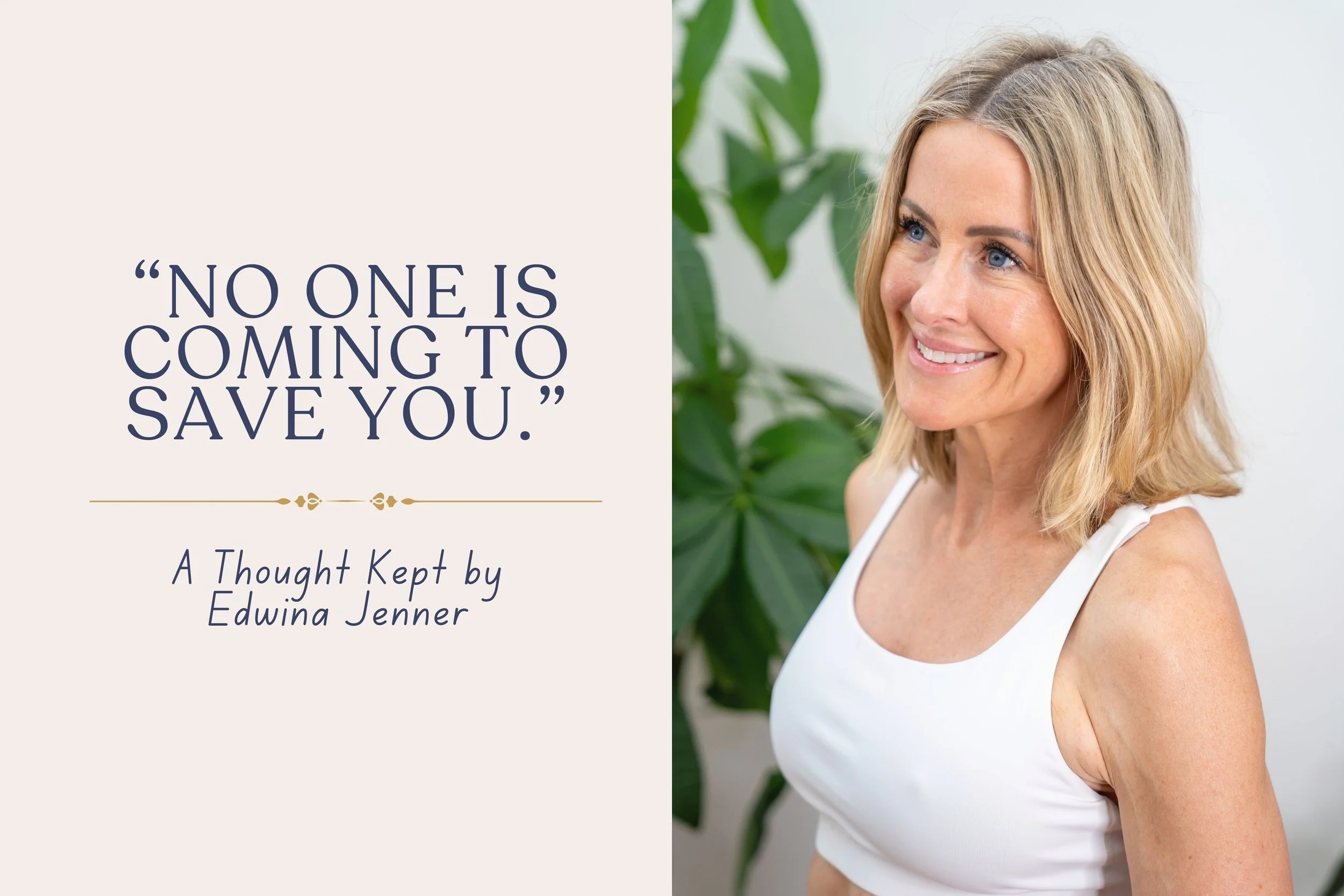
When No One Is Coming to Save You: Finding Self-Trust in Midlife
Often we can feel lost in midlife without knowing why. This week we’re exploring self-trust, confidence, and what might be keeping you stuck.
Sometimes feeling lost doesn’t look as dramatic as we think it might.
Rather it looks like getting through the day, doing what needs to be done, being relied on — and still having a sense that you’re not quite where you thought you’d be. Or that life feels oddly paused, even though everything is moving. You might not be unhappy, exactly. Just a little unheld. A little disconnected from yourself.
I notice this often when I talk to women in midlife. There’s competence there. So much experience. Caring for everyone and everything. And underneath it all, a feeling that something is meant to shift but absolutely no clear sense of how or when.
That feeling came up strongly for me in a recent conversation on A Thought I Kept with Edwina Jenner. As we talked, Edwina shared an idea that had stopped her in her tracks because it named something she hadn’t realised she was carrying.
The sense that, quietly, she had been waiting.
Waiting for things to feel easier. Waiting for confidence to arrive. Waiting for someone — or something — to step in and make life feel more manageable, more certain, more settled.
When she finally noticed that belief, it wasn’t crushing. It was clarifying.
Because alongside it came another realisation: no one else was coming to save her. She already had more agency than she’d been giving herself credit for.
Many of us arrive here having spent years responding to what’s needed — children, work, relationships, family, emotional labour. We learn to be capable. Reliable. Adaptable. And somewhere along the way, it can become easy to lose touch with our own pull. Not what’s expected of us, but what matters now.
Waiting can feel sensible. Responsible. Even kind. We tell ourselves we’ll come back to ourselves when things calm down. When there’s more space. When we feel more confident. When life gives us a clearer signal. But often, that signal never arrives.
Instead, what we notice are small signs of disconnection. Putting off caring for our bodies because we’re tired. Dismissing creative ideas because they feel indulgent. Ignoring rest, curiosity, or desire because other things seem more important.
In the conversation, Edwina spoke about strength, not as something performative or punishing, but as something built slowly, through attention and consistency. She talked about learning to trust herself again by doing what she said she would do. By listening to what pulled her, even when it felt uncomfortable. By recognising that motivation comes and goes, but self-trust is built through action.
What struck me most was how impactful this actually was.
Believing that no one is coming to save you doesn’t have to mean doing everything alone. It doesn’t mean hardening yourself or becoming self-sufficient at all costs. It can mean releasing an expectation that has unconsciously kept you waiting and turning back toward yourself instead.
There can be a kind of relief in that. Relief in realising you don’t need to become someone else to move forward. You don’t need a dramatic overhaul or a better version of yourself. You need permission to take yourself seriously. To listen more closely to what your body, your energy, and your inner life are already telling you.
When self-trust begins to rebuild, it rarely announces itself loudly. It shows up in small decisions. In boundaries that feel steadier. In caring for your body not as a project, but as a relationship. In choosing what supports you, even when it doesn’t look impressive from the outside.
If you’re feeling lost right now, it might not be because you’re “behind” or “broken”. It might be because you’re between ways of being. No longer able to live on autopilot, but not yet clear about what comes next.
That in-between can feel uncomfortable. But it’s also where attention returns. Where curiosity starts to replace pressure. Where you begin to notice that you already know more than you think.
At If Lost Start Here, we don’t believe that confidence or wellbeing come from fixing yourself or forcing change. They come from reconnecting — slowly and openly — with what matters to you now. From trusting that the things pulling at you are worth listening to.
If this resonates, you might like to listen to the full conversation with Edwina on A Thought I Kept.
And if midlife feels like a threshold you’re standing in — unsure, but ready for something to change — we’ve created a great resource to support that moment.
You can download our free midlife resource here.

Understanding Midlife Emotions: A Toolkit for Women in Perimenopause and Menopause
Explore why midlife feels so emotional — and learn science-backed, compassionate tools for navigating perimenopause, menopause, and the mental load of midlife.
Midlife is emotional. So emotional.
Not in the dramatic, dismissive way we’re told.
But in the quietly profound, messy, layered, deeply human way no one warned us about.
For some of us, midlife emotions feel like an ambush.
For others, like a fog that won’t lift.
You cry at the school newsletter. Snap over the dishwasher. Feel nostalgic, flat, elated, invisible, and uncertain — sometimes in a single afternoon.
Here’s the thing:
You’re not going mad.
You’re not failing at life.
You’re not the only one.
The emotional shifts in midlife are real, and they are biological, cultural, social, and psychological. And once you understand what’s happening beneath the surface, it all starts to make a little more sense.

Why Midlife Feels So Emotional
Here’s what the research shows:
Hormones are real players. During perimenopause and menopause, estrogen — a key mood-regulating hormone — fluctuates wildly. This can destabilise serotonin and trigger mood swings, irritability, anxiety, and even depression.
Sleep suffers. Hot flashes and night sweats disrupt sleep, which worsens emotional resilience. It's not just tiredness — it’s emotional sensitivity fuelled by exhaustion.
Life doesn’t pause. Career shifts, aging parents, empty nests, grief, relationship changes — all pile on at once. It’s not just one thing; it’s everything, all at once.
We’ve been socially trained to ignore ourselves. We’ve been told to stay upbeat, productive, and agreeable — so when emotions hit, they feel foreign, shameful, or ‘too much’.
And the world doesn’t always see us. Many women report feeling invisible, devalued, or dismissed — especially in work and public spaces.
This is biology + life + culture colliding in one highly stressful moment.
But here’s where it also gets hopeful:
An Emotional Toolkit for Midlife Women
You don’t need to ‘get over’ your emotions.
You need tools, space, and information. Here are five small but powerful shifts you can start today:
1. Name what’s happening — without judgement
Mood swings, anxiety, flatness, brain fog… they’re not weakness. They’re signals. Naming what you’re feeling reduces shame and increases clarity.
Try: “Today I feel... because... and that’s okay.”
2. Sleep is sacred
If you’re not sleeping, you’re not thriving. Manage sleep disruptions (hot flashes, anxiety) with gentle bedtime routines, calming rituals, and support if needed.
Consider: Magnesium glycinate, low evening light, and no emotional emails after 8pm.
3. Move — gently, often
Movement isn’t just about physical health. It’s emotional regulation in disguise. A walk. A stretch. A playlist you can dance to. Move your body to move your mood.
Try: Even five minutes counts for shifting your emotional energy.
4. Talk to people who get it
Because right now you probably also need validation. Your feelings aren’t ‘too much’. You’re not broken. Talk to someone who has walked this path — or is walking it too.
To do: This is your sign to call or text that friend you’ve been thinking about.
5. Challenge the crisis narrative
What if midlife wasn’t a crisis — but a moment to reevaluate? Research shows women who see midlife as a time for growth fare better emotionally. You can rewrite the script.
Ask: What part of me might be growing right now — even if I can’t see it yet?
Something’s Coming...
This is why we created So Emotional
A retreat for your emotional life.
We’re not opening enrolment just yet, but the waitlist is open.
If you're craving real tools and real talk,
If you want to understand yourself better — and feel less alone in the process…
join the waitlist for So Emotional
Be the first to know when we open our doors.
Let’s make space for your emotions — in a way that feels good to you.

If you’re struggling with all the feelings in midlife, download our free guide for five ways to better manage your emotions right now.

Feeling Like You’re Not Coping in Midlife? You May Just Be Burnt Out
If you feel like you're losing control of your emotions in midlife, you might be experiencing emotional burnout. Here's what it looks like — and what can help.
You used to be able to handle everything. Deadlines. Family logistics. The never-ending inbox. The emotional temperature of the people around you.
But lately?
It’s taking more energy just to get through the day. You lose your temper at things that never used to bother you. You forget words mid-sentence. You wake up already tired. The tears are always closer to the surface than you’d like.
You keep thinking: “What is wrong with me?”
Here’s what we may need to acknowledge — “this isn’t just the usual stress. This could be emotional burnout.”

When You’re Doing It All — and Still Feel Like You’re Falling Apart
For many women, midlife arrives not as a calm plateau, but as a crash of emotional noise.
You’re managing more than ever — ageing parents, growing children, workplace pressures, your own changing body. All while still holding up the emotional scaffolding for others.
And somewhere in all that care and competence, your emotions started to feel less like signals and more like symptoms.
Emotional burnout doesn’t always look like falling apart. Sometimes it looks like holding it all together — until one day, you just can’t
What Emotional Burnout Looks Like (Even If You’re Still “Functioning”)
Emotional burnout in midlife often shows up as:
Feeling numb or detached from things you used to enjoy
Mood swings that feel sudden, sharp, and disproportionate
Overwhelm that hits out of nowhere
Irritability and guilt in equal measure
A loss of confidence in your emotional responses
And yes — hormonal changes can absolutely cause and intensify these experiences. Once you’ve checked this out with a medical professional and you’re still feeling burned out, years of emotional labour, invisible caregiving, and the pressure to keep being “fine”, might also be contributing.
When we’re always trying to fine, we lose contact with what’s real. And emotional steadiness starts with giving yourself the space to see what’s really going on.
There’s a Way Back to Yourself — One Feeling at a Time
Your emotions don’t need to be your enemy — even when they feel messy and out of control. They can also be information. And with the right tools, you can begin to steady them again.
That’s why we created a free resource designed just for women navigating this exact moment.

Download the Free Guide: Feel Better in the Middle of Everything..
This contains five practical tools to help you:
Understand why your emotions feel so intense right now
Reclaim your energy and focus, one moment at a time
Shift the emotional stories you’ve been carrying
Feel less alone, more steady, and more like yourself again
Sometimes you don’t need to overhaul your life — just start with a clearer understanding of what’s really going on.
Download the free guide now and start feeling more like yourself again.

Losing Control of Your Emotions at 48? Here's What's Really Going On (and What You Can Do About It)
Feeling like you’re losing control of your emotions at 48? Here’s why midlife hits hard emotionally, what it means, and how to steady yourself again.
You’ve always been the one who kept it together.
At home. At work. In the moments when other people fall apart, you’ve been the calm one. The capable one. The one who handles things.
But lately, something’s changed. You find yourself snapping over small things. Crying in the car. Waking up with dread or feeling foggy-headed in meetings. You’re asking yourself:
“Why can’t I control my emotions anymore?”
And maybe even, “Am I going crazy?”
You’re not. You’re in midlife — and what you’re feeling is incredibly common. But that doesn’t mean it isn’t deeply disorienting. And it definitely doesn’t mean you have to keep silently pushing through.

“I’ve Always Held It Together — Until Now”
Midlife is often described as a "second puberty" for good reason. For many women in their mid-to-late 40s, it’s the first time that emotional stability — something we’ve prided ourselves on — starts to feel elusive. You may feel like you’ve become a different person almost overnight.
The truth is, this shift isn’t just in your head — and it isn’t a sign of weakness. It’s a combination of biological, emotional, and psychological factors that hit at once:
Changing hormone levels can affect mood regulation and cognitive function.
Long-held emotional patterns (like bottling things up to stay professional or strong) begin to break down under pressure.
The stress of managing work, relationships, and caregiving responsibilities compounds everything.
It’s no wonder you feel like you’re holding on by a thread. And it’s no wonder you're asking: When will I feel like myself again?
What’s Really Going On with Your Emotions in Midlife
The good news is: there are ways to make sense of all this.
Understanding why your emotions feel so intense or unpredictable right now is the first step to feeling more steady.
You don’t need to meditate for hours or do a total life reset. You just need the right kind of support — practical, grounded, and designed for your life stage. Not one-size-fits-all advice. Not something that makes you feel broken or too much.
You need:
Language to understand what’s going on internally
Tools to respond to your emotions with clarity, not panic
Support that respects your intelligence, your capacity, and your lived experience
How to Feel Like Yourself Again (Even If You’re Not There Yet)
Imagine having a framework that explains what’s happening beneath the surface — so your emotions feel less scary and more manageable.
Imagine learning how to respond to your feelings without judging yourself, spiralling into shame, or snapping at the people you love.
Imagine feeling like yourself again — but with a deeper understanding of who that is now.
That’s exactly why I created So Emotional — a midlife course and community that helps women like you stop feeling out of control and start feeling informed, equipped, and understood.
So Emotional: A Course + Community for Women in Midlife
This is a four-week, expertly guided course to help you:
Understand why your emotions feel different in midlife
Learn tools for emotional regulation that actually make sense
Build emotional resilience without pretending nothing’s wrong
Reconnect to the steady, capable self you know is still in there
Join the waitlist now to get first access to enrolment and early bird bonuses.

How to Deal with Emotional Burnout in Midlife
Feeling emotionally burned out in midlife? Learn why you feel this way, how hormones play a role, and get practical tools to move forward with more clarity.
Have you ever caught yourself thinking, Why am I so tired, so emotional, so unlike myself lately?
You’re not just “moody.”
You’re not just “failing to cope.”
You may be experiencing emotional burnout — and if you’re a woman in midlife, you’re far from alone.
Emotional burnout happens when your emotional reserves have been stretched thin for too long. You’ve been holding space for everyone else — your kids, your partner, your parents, your workplace — and slowly, silently, your own needs have slipped off the radar.
What makes this even more intense in midlife are the hormonal shifts happening under the surface. Perimenopause and menopause bring changes in estrogen, progesterone, and testosterone, which directly impact your body and brain — affecting mood, energy, focus, and resilience.
You’re not imagining this. You’re not weak. You’re human, and your body is asking you to pay attention.

Why You’re Feeling So Emotionally Burnt Out Right Now
For years, you’ve been the glue:
Keeping the family running.
Holding the emotional weight of relationships.
Being the one everyone relies on.
But now? You’re snapping or withdrawing. You feel guilt and shame after emotional outbursts. You can’t figure out why you’re so exhausted or why small things set you off.
This is emotional burnout.
It shows up as:
Constant tiredness, even after rest.
Feeling numb, flat, or disconnected.
Increased irritability or sadness over small triggers.
A sense of “losing yourself” or wondering if you’ll ever feel balanced again.
And here’s the thing: hormonal shifts amplify all of this. Fluctuating hormones can disrupt serotonin and dopamine levels, making you more vulnerable to mood swings, anxiety, and emotional overload.
Getting the right support — including exploring options like HRT (hormone replacement therapy) where appropriate — can be part of the picture, alongside emotional tools and understanding.
How to Start Moving Through Emotional Burnout
So, how do you begin to navigate emotional burnout in midlife? Here’s what we know from emotions coaching and recent research:
Understand the narratives you hold about your emotions.
Many women have been raised to believe that anger, frustration, or sadness are “bad” or “selfish.” But these emotions are signals — not flaws. Learning to recognise, name, and work with them (rather than push them down) is the first step toward healing.
Bring the body into the process
Emotions aren’t just in the mind; they live in the body. Gentle body scans, breathing exercises, or even mindful movement can help you reconnect with what you’re feeling — and release some of the emotional tension you’ve been carrying.
Separate yourself from your emotions
You are not your anger. You are not your exhaustion. These are experiences you are having, not identities you are becoming. This small shift can help you move from drowning in feelings to navigating them with more clarity.
Get the right support
Whether it’s therapy, HRT, emotions coaching, or a guided programme, you don’t have to figure this out alone. There is nothing to be gained for pushing through solo — and finding the right help can bring immense relief.
When you start to untangle what you’re feeling, why you’re feeling it, and how your body is playing a role, you begin to see:
You are not broken.
You are not failing.
You are in a transition — one that’s asking for more understanding, more care, and better support.
With the right tools, you can move through emotional burnout toward a steadier, more resourced version of yourself.

Join the Waitlist: So Emotional — A Midlife Feelings Reset
We’ve designed this 4-week online course and community for women in midlife who want to better understand their emotions, reconnect with themselves, and gently shift how they carry their emotional weight. You’ll get to explore your emotional patterns and learn practical tools to manage overwhelm with other women going through it too and expert guidance from a Certified Emotions Coach.
Join the waitlist now to be first in line for early access, exclusive bonuses, and the support you deserve.
You don’t have to stay stuck in emotional burnout. Let’s find a way forward — together.

What it means to be the centre of your own life again
Exploring identity, emotional invisibility and the quiet process of returning to yourself in midlife — not through reinvention, but reconnection.
There’s a quiet ache that often settles into the middle years.
You’re not lost in a crisis. You haven’t collapsed or broken down.
You’re functioning. Showing up. Managing things. Keeping everything afloat.
But somewhere inside it all, you’ve started to feel a little… peripheral.
Not just to others. But to yourself.
You wake up and step straight into roles — parent, partner, colleague, caretaker, decision-maker. You’re helpful. You’re dependable. You’re steady.
But you’re also tired. Not just physically — existentially tired.
Tired of being the background architecture for everyone else’s lives while quietly wondering where yours went.
And maybe you’ve begun to feel it — that subtle pull to come back to yourself.
To remember what you need, what you love, what you want (even if you’re not quite sure yet what those things are anymore).
Not in a dramatic, take-back-your-life kind of way.
But in a quieter, deeper way. A way that says:
> I get to take up space in my own life again.
Not just as a caretaker or facilitator or fixer — but as a human. A whole person. A centre.
Because for too long, many of us have lived around the edges of our own lives.
Making things work for everyone else. Being what was needed.
Fitting ourselves in between the gaps.
And that’s not wrong. But it’s not the whole story, either.
At some point, something inside you will ask — gently but firmly — to be seen again.
Not just by others. But by you.
You’ll want to feel more than functional.
You’ll want to feel tangible.
You’ll want to feel present.
You’ll want to stop passing yourself in the mirror like a stranger.
And that longing — that call back to centre — isn’t selfish. It’s sacred.
It’s a sign that something in you is still alive and still hopeful.
That there’s still a part of you that remembers who you are — or who you could be — if you gave yourself permission to come home again.
So what does it mean to become the centre of your own life again?
It means asking yourself what you want, not just what others need.
It means showing up for yourself in small, everyday acts — not just in emergencies.
It means tending to your inner world, even if it’s messy or unfamiliar.
It means letting your feelings matter.
It means letting your voice be heard — not because it’s louder, but because it’s yours.
It means saying: I matter here. I belong to myself, too.*
Try this:
This week, ask yourself this one simple question each day:
> What’s one small thing I can do today that brings me back into focus?
That helps me feel real, visible, human — not just helpful?
Let the answers be small. Gentle. Imperfect. But yours.

Midlife Coaching Sessions
Midlife can be a challenging time for women as we navigate through a multitude of changes.
As things – sometimes it feels like all the things – shift in this midpoint, so too does how we see ourselves, how we think about our lives, and how we consider what’s next.
If you’re in midlife, these sessions will help you have a better relationship with this time.
You’ll discover how to navigate midlife and beyond in ways that feel more intentional and positive.
If you’re feeling like you are no longer in your own story, subscribe to our newsletter about all things midlife. Discover how to show up in your life again.

“I Feel Disconnected from Myself”: What That Means and How to Gently Reconnect
Feeling disconnected from yourself? Learn why it happens, what it feels like, and how to gently start reconnecting.
What does it mean to feel disconnected from yourself?
If you’ve ever caught yourself saying, “I don’t even know who I am anymore”, you’re not alone.
Maybe you’re functioning, showing up to work, replying to texts, putting dinner on the table. But something feels off. It’s like your life is happening around you, not with you in it. You feel like a background character in your own story.
You might be:
Forgetting what used to bring you joy
Snapping at the people you love and not knowing why
Looking in the mirror and barely recognising the person staring back
Feeling emotionally flat one minute, anxious or overwhelmed the next
Wondering if this is burnout… or just how life is now
These feelings are hard to articulate and even harder to admit. But they might be signs that you’ve lost connection with yourself. And that can be more common than we think.

Why it happens
Disconnection often creeps in quietly. You get busy. You keep going. You take care of the people around you. You do what needs to be done. And somewhere along the way, you stop asking:
What do I want?
What matters to me now?
How do I feel, really?
Life piles up. Responsibilities grow. Your attention goes everywhere but inward. Over time, you become more like a to-do list than a person. You might still smile and perform, but inside, something is missing. You’re exhausted — not just physically, but emotionally. And the idea of pausing to tune into yourself? That feels overwhelming too.
You are not broken but maybe you are worn thin
Feeling disconnected doesn’t mean you’re doing life wrong. It doesn’t mean you need to start over, or reinvent yourself, or fix everything overnight. It might mean though that you’ve been surviving, not thriving.
And it’s entirely possible, with kindness and support, to shift from that place of disconnection into one that feels more engaging, more anchored, and more you.
Small ways to begin reconnecting with yourself
Here are some practical ways to start rebuilding that connection:
1. Name what you’re feeling
It might be sadness, confusion, frustration — or all of it. Putting words to emotions can reduce their hold over you. Try journaling a few lines without pressure. Start with: “Right now, I feel…”
2. Take one small “self” moment a day
Not bubble baths or detox teas (unless those truly help you). Think: a quiet coffee, standing in the sun, turning your phone off for ten minutes. Reclaim tiny moments of stillness that are yours.
3. Reconnect with your senses
When you feel numb or distant, grounding through the senses helps. Step outside and notice five things you can hear. Light a candle you love. Put on music from a time when you felt more like yourself.
4. Talk to someone who can help
Sometimes we need another person to hold up a mirror A coach can help you explore where you are, what matters to you now, and what’s possible from here.
What would it feel like to feel more like yourself again?
I work with women in midlife who are navigating burnout, low self-esteem, anxiety, and a deep disconnection from themselves. Through warm, non-judgemental coaching, we create a way back to your confidence, energy and emotional wellbeing, one step at a time.
Book a free 20-minute discovery call to see how we might work together or learn more about our Lost Sessions here.
Even if you’re not sure what you need, reaching out could be your first moment of reconnection.

What if feeling is the way through, not the problem?
If you're feeling emotional exhaustion or disconnection in midlife, maybe your feelings aren’t the problem but rather a path back to yourself.
For a long time, I thought the goal was to feel less.
Less overwhelmed. Less anxious. Less reactive.
Less emotional, less sensitive, less tangled up inside.
Because that’s the message we so often receive — that feelings are inconvenient, messy, indulgent, or something to be managed, tidied, improved.
We learn to ask: What’s wrong with me? Why can’t I just feel better? Why do I keep reacting like this?
We get good at staying composed.
We learn how to keep the peace, keep the plates spinning, and keep functioning — even when something inside us is quietly aching, aching, aching.
And yet… the more I tried to control how I felt, the more disconnected I became.
Not just from other people, but from myself.
Because somewhere along the way, I’d started treating my feelings as problems. Something to get past. Something to rise above. Something to fix.
But what if they weren’t?
> What if feeling is the way through, not the thing to push past?
What if that low hum of irritation has something important to say?
What if the teariness isn’t weakness, but a signal that something in you still longs to be seen?
What if the numbness isn’t failure, but the body’s way of saying this has been too much for too long?
What if our feelings aren’t dysfunctional — but direction?
What if they’re maps, not mess?
And what if the only thing we need to do is listen?
Not fix. Not perform. Not perfect.
Just pause long enough to name what’s actually there.
I’ve started doing that more often. Just naming the emotion — even quietly to myself.
Not the surface-level one (“I’m stressed”), but the real one underneath.
I use a simple practice: naming the layers of what I’m feeling.
Sometimes what I call “busy” is really anxious.
Sometimes what I call “flat” is actually grief.
Sometimes what I call “nothing” is just too much noise in too many directions.
And every time I name it, something softens.
I don’t suddenly feel amazing.
But I feel real. I feel here. I feel true to myself, even if I’m still in the middle of something I can’t quite explain.
And maybe that’s the point.
Not to get rid of our feelings.
But to walk through them, with gentleness, and find our way to ourselves again.
Because you don’t need to be less emotional.
You just need to be allowed to feel — in your own time, in your own language, in a life that’s allowed to be complex and layered and messy and still deeply beautiful.
You’re not broken because you feel everything.
You’re not behind because you feel nothing today.
You’re not wrong for needing more softness, more space, more time.
You’re human. And you’re allowed to feel all of it.
That’s not weakness. That’s wisdom.


Our Emotions Coaching for Midlife Sessions
Unsure of what you’re feeling in midlife? Our 1:1 emotions coaching session offers a supportive space to explore all your emotions — whether that’s anxiety, sadness, or something else.
Learn how a greater understanding of your emotions can help with shifts in relationships, career, self-identity, and more.
Discover how our emotions coaching sessions for midlife can help you make sense of all you’re feeling, or even resisting, right now.
If you’re struggling with all you are feeling in midlife (or trying not to feel), subscribe to our newsletter for practical skills and new perspectives on navigating this time of your life.




How to Find Your Way Back to Something That Feels Like Wonder
Rediscover joy, curiosity, and meaning in midlife — even when life feels flat. For anyone longing to feel more alive in their own lives again and revive their sense of wonder.
There’s a part of you — a quiet, flickering part — that still wants to feel something.
It’s not loud. It doesn’t shout. It doesn’t demand attention.
But it’s there. Beneath the routines, the responsibilities, the relentless noise of everything that needs doing. A small ache. A soft whisper. A sense that life could feel… more alive again.
Not bigger. Not busier. Not more impressive.
Just with more of you in it.
I know that feeling.
I’ve stood in the middle of my life and wondered where my curiosity went.
Where my joy went.
Where my sense of play or possibility or even lightness had gone.
And I’ve looked at my full calendar, my full shelves, my full days — and felt strangely empty inside them.
It’s not that anything was wrong. It’s just that something had quietly dimmed. Something I hadn’t even noticed slipping away.
And for a long time, I told myself I just needed a break. Or a holiday. Or a good night’s sleep. But what I was really missing was something else that I’d been overlooking for a while:
Wonder.
Not in the magical, childlike, fireworks-and-miracles kind of way (though maybe sometimes that too).
But in the sense of being moved by something again.
Touched. Stirred. Lit up, even momentarily, by something that reminded me I was still human, still noticing, still capable of feeling something beyond obligation or exhaustion.
And slowly — gently — I began to find my way back.
Not through anything big or profound. Just small shifts in attention.
Small moments.
I started capturing tiny glimmers each day. Nothing curated or worthy or remarkable — just things that made me feel something, even briefly.
A painting that enlivened something in me.
A phrase that landed well.
The smell of toast.
A pop song on the journey to school.
The sound of rain on the roof while I lay in bed on a Sunday morning.
These weren’t dramatic changes. But they were enough to soften something.
They were enough to remind me that I could still feel.
That I could still find beauty in things.
That I could still belong to my own life.
Because that’s what wonder does — it brings you back.
Not just to the world, but to yourself.
So if you’ve been feeling flat, a little grey around the edges, a little disconnected from the feeling of joy or inspiration or spontaneity — start smaller.
Don’t search for a grand purpose or a huge transformation — ways to blow up your life or burn it down.
Search for texture. For moments. For anything that catches your breath or relax your shoulders or makes you pause and think: Yes. That.
That’s enough.
That’s the beginning.
That’s wonder — quietly making its way back to you.

How Might Wonder Show Up In Your Well-being Prescription?
If you’re curious about how to bring more awe and wonder back into your days, book one of our sessions to create your tailored well-being plan.
You can opt to look at how wonder could show up more in your life, how to follow curiosity wherever it leads you, and how to seek out the interesting during these midlife days.
Learn about our wonder pathway here and how our well-being prescriptions work here.
Subscribe to our special midlife newsletter for tailored advice about navigating this part of your life with more curiosity and wonder.





Grieving the Self You Haven’t Met Yet
How identity loss and emotional burnout are connected to the quiet grief in midlife — and how to reconnect with the version of you that’s still waiting to be seen.
There’s a grief no one really prepares you for. It doesn’t come after a loss you can name. It doesn’t have rituals or casseroles or sympathy cards. No one asks how you’re doing, because, on the surface, everything looks fine. But inside, you know something’s missing. Something quiet. Something tender. Something hard to articulate.
It’s the grief of the self you haven’t met yet.
The version of you that never had enough space to fully arrive. The one who got set aside while you held everything together for everyone else. The one who existed in flickers — in daydreams, in glimpses, in brief moments before someone needed something again.
Maybe you’ve felt her before — in the quiet that rises when you’re alone for a rare hour, or the sudden ache that comes when someone asks, what do you want for yourself?
Maybe you’ve spent years being who you needed to be — for your family, your work, your roles, your responsibilities — and somewhere along the way, forgot how to hear the parts of you that weren’t being asked for.
Maybe it’s only now, in midlife, that you’re beginning to notice the gap. The ache for a version of yourself you never fully became. The unspoken longing for the life you didn’t live — not because you weren’t capable, but because you were busy surviving. And that ache… it’s grief. Quiet, invisible, valid grief.
Not because something went wrong. But because you’re human. And somewhere deep inside, you’re still holding a hope for the woman you haven’t quite become yet — but still might.
We often talk about burnout like it’s purely exhaustion. But so often, it’s this:
Grief for the self who’s been muted. Hidden. Delayed. Postponed.
And the most painful part? You might not even be sure who she is. You just know you miss her. You miss feeling like yourself — even though you’re not sure what that means anymore. You miss desire — even though you don’t know what you want. You miss joy — even though you can’t quite remember how it felt. You miss being inside your own life, not just managing it.
And that’s not something for a quick fix or a rushed to-do list. That’s something only nurturing can touch. Only time. Only honesty.
So what do we do with this grief?
We don’t solve it. We honor it. We let it speak. We let ourselves write the letters we didn’t know we needed to write. We let our tiredness be a message, not a flaw.
We stop asking how to fix ourselves and start asking how to meet ourselves — here, in this middle part of life, where things are not broken, but simply asking for attention.
And in doing that, maybe we begin to create space — not to become someone new, but to finally become ourselves. The version of you that’s been waiting in the wings, quietly. Not perfect. Not fully formed. But real. Ready. Whole in her own unfinished way.
And that’s not the end of something.
It’s the beginning.

Our Midlife Coaching Sessions
If you’re wondering how to reconnect with yourself when you feel like you’ve forever lost your way, let’s talk.
Learn more about how our midlife coaching sessions can give you the time and space to hear yourself again.
Midlife can be a challenging time for women as we navigate through a multitude of changes.
As things – sometimes it feels like all the things – shift in this midpoint, so too does how we see ourselves, how we think about our lives, and how we consider what’s next. Discover how our midlife coaching sessions can help you.
If you’re not sure what you’re looking for or if this is for you, let’s talk.
Curious about how to reconnect with yourself more in midlife? Subscribe to our newsletter.

Finding Joy in the Middle of a Life That Feels Flat
What’s going on with joy in midlife? How to approach a sense of flatness by noticing tiny sparks of meaning in everyday life — even when everything feels muted.
There’s a particular kind of quiet ache that often shows up in midlife.
It doesn’t arrive like grief or crisis. It doesn’t make a scene.
It’s just… flatness. A greyness. A sense that life has become slightly muted at the edges.
You still do the things. You get up, make the coffee, keep things moving.
You’re not falling apart. But you’re not quite in it, either.
It’s like the colour has drained a little from your days — and you’re not even sure when it happened.
I’ve been in that place, too. I still dip in and out of it, if I’m honest.
And for a long time, I thought something must be wrong with me. That I wasn’t trying hard enough. That I’d lost my spark and needed to find some big solution to get it back.
But eventually I realised: maybe this wasn’t a crisis.
Maybe I didn’t need to fix it.
Maybe I just needed to notice it.
That’s when I started paying attention — not to what was missing, but to what was still quietly present.
Not to fireworks. But flickers.
A particular slant of light in the kitchen.
The sound of a friend in a voice note.
A good sentence in a book.
The way my child’s curls are ever unruly.
The scent of the first-morning coffee.
Tiny joys. Real ones. Ones that belonged to my life, not to someone else’s morning routine or Instagram reel or version of “feeling better.”
And slowly, something shifted.
Not dramatically. Not overnight. But gently.
Life started to feel a little more textured again. A little more mine.
What I’ve learned — and keep re-learning — is this:
> Joy doesn’t always arrive as fireworks. Sometimes it’s a flicker. A soft landing. A quiet something emerging beneath the surface.
And when we’re tired, it’s easy to miss it.
Because joy rarely shouts. It whispers. And if we’re rushing, striving, over-efforting — we won’t hear it.
And those reminders?
They’re everywhere — if you begin looking for them gently, without pressure.
So maybe the question isn’t just: Where did my joy go?
Maybe it’s: Where might I find it hiding in the edges of the life I already have?
Try noticing one small thing today that brings the faintest flicker of something — a pause, a softness, a breath, a second of connection. That’s enough. That’s the beginning.
Maybe you don’t need to feel the biggest of feelings right now. You just need to feel a little more here.

Our Emotions Coaching for Midlife Sessions
Curious about how to revive joy in your life, bring the spark back, and reconnect with what makes you happy (even excited again), check out our emotions coaching sessions.
These sessions can be as much about nurturing perceived positive emotions such as joy, love, and happiness, as managing perceived negative ones like grief, sadness, and anger.
Want to try it? Learn more about our starter sessions here.
Feeling all (or maybe even none) of the things as you navigate midlife. Sign up for our newsletter to learn more about how to feel better as you move through these years.


How to Live Through These Middle Years Without Losing Your Mind
How to navigate midlife, identity transitions, and future fear — and discover why you don’t need answers to find your way through this season of change.
No one really prepares you for this part of life.
The middle.
The not-yet and not-anymore. The quiet unraveling of who you used to be, and the awkward, slightly blurry sketch of who you might become.
It doesn’t come with fanfare. There’s no clear rite of passage, no guidebook, no “welcome to the middle” sign. It just arrives one day — gently, slowly, imperceptibly — and suddenly you’re standing in your own life, wondering why everything feels slightly unfamiliar.
You’ve done all the things. You’ve built, carried, supported, managed, held.
You’ve grown careers, raised children, maintained relationships, paid bills, and kept things going.
But now there’s a low hum underneath it all. A quiet ache. A restlessness you can’t quite explain. A whisper: Is this it? Is this what it’s meant to feel like now?
You still care, but you feel slightly outside of your own life.
You’re still showing up, but something in you is shifting.
You’re not unhappy — but you’re not lit up either. You’re not falling apart — but you’re not fully yourself.
Welcome to the middle.
And if you’re wondering how to live through this part without losing your mind, here’s what I want to tell you:
> You don’t have to have a plan.
You don’t have to reinvent yourself.
You don’t have to rush toward answers.
You’re allowed to be in between.
You’re allowed to feel unsure.
You’re allowed to move through this part slowly, gently, with your hands outstretched in the dark, feeling your way into something new — even if you don’t know what it is yet.
Because these middle years aren’t about fixing.
They’re about listening.
To your longing.
To your boredom.
To your fatigue.
To your desire for something you can’t yet name.
To honor the parts of you that are tired of performing.
To grieve the parts of you that no longer feel like home.
To create space — even a tiny bit — for the version of you that’s quietly trying to emerge.
You don’t need to know what’s next.
You just need to know what you want more of.
What you want less of.
What you’re done pretending about.
What you’re ready to start tending to — even if it’s only a flicker.
Sometimes that’s all the direction you need.

Try this:
Make a list — no pressure to get it right.
>Write two headings: More of this / Less of that. And then brainstorm your response.
Like:
More reading. Less rushing.
More compassion. Less proving.
More trust. Less noise.
That’s how we live through the middle.
Not by mastering it.
But by recognizing ourselves here — fully, imperfectly, honestly.
And maybe, just maybe, finding that this part of life — the messy, in-between part — holds more meaning than we were ever taught to expect.

Book a Midlife Coaching Session
Our 90-minute Midlife Mapping Session is for you if you’re feeling uncertain, overwhelmed, or in need of a reset. It’s designed to help you:
Identify where you are now, where you want to be, and what’s in the way
Explore your values, needs, and evolving priorities
Gain immediate insights into patterns that may be keeping you stuck
Leave with practical next steps tailored to your needs
Who is this for?
This session is ideal if you want clarity and direction but aren’t ready for a long-term coaching commitment. Book here.
Not sure if coaching is for you? We get it; it took us experiencing coaching to understand what it really is. That’s why we offer a free coaching consultation to see how talking through where you are might help with where you want to go.
Need more support as you navigate midlife and figure out what’s next? Subscribe to our newsletter for practical ways to move through this period with more clarity and intention.

When Trying to Feel Better Starts to Feel Like Pressure
Learn more about midlife wellbeing, emotional burnout, and why real self-care starts with less pressure and more kindness.
There’s a strange irony in midlife:
You start trying to take care of yourself just at the moment you feel most disconnected from yourself.
You read the books. You save the Instagram posts. You sign up for the newsletters, download the meditation apps and promise yourself that this week you’ll really do it.
You’ll stretch. Journal. Eat better. Rest more. Be present. Meditate. Cut out caffeine. Maybe even finally take those supplements you bought months ago and keep forgetting to open.
You try.
But somehow, even the trying feels heavy. Like it’s yet another thing you’re not doing quite right.
You start to wonder if self-care is just another version of self-judgment — a performance you’re meant to keep up, while secretly wondering if you’ve missed some essential instruction manual that everyone else seems to have read.
And maybe, beneath all the pressure, you start to feel something even harder to admit:
> That trying to feel better is making you feel worse.
I remember a moment — not so long ago — when I stood in the kitchen staring at half-opened supplements and wondering if I even had the energy, or time, to blend that green smoothie I believed would help. I was tired. Not just physically, but soul-tired. And somewhere in me, a voice whispered: What are you doing this for, really? Who are you trying to be right now?
Because the truth was — I didn’t want a smoothie (even though I really love them).
I wanted stillness.
I wanted to feel something again that didn’t feel like a task.
I wanted to feel myself again — not the version of me who ticked all the boxes, but the one who could sit down in the quiet and still recognize her own thoughts.
And that’s what I’ve come to believe:
Wellbeing isn’t something we’re meant to achieve.
It’s something we can tend to. Gently. Kindly. Imperfectly.
Not through someone else’s morning routine or a podcast’s list of non-negotiables. But through our own noticing. Our own honest relationship with ourselves. Our own tiny, ordinary acts of kindness — not as a means to optimize ourselves, but simply to meet ourselves where we actually are.
Some days that might look like journaling.
Some days it might look like making toast and sitting down for five minutes while it’s still warm.
Some days it might look like doing nothing at all.
And that’s enough. Truly.
Because you don’t need the perfect wellness plan.
You need more permission to be human in your own life.
You’re not failing at self-care.
You’re just exhausted from trying to do it in a way that was never designed for your actual days.
So here’s a suggestion, if you need one today:
> What if well-being didn’t need to be a routine you follow, but a relationship you build — slowly, kindly, intuitively?
One that’s shaped by your own rhythm. Your own energy. Your own life as it actually is — not the life you wish you were living.
Maybe it starts with making a really great coffee before you check your email.
Or choosing that latest fiction blockbuster over one more scroll.
Or simply asking yourself: What do I need today — not in theory, but in reality?
Maybe you don’t need more effort.
Maybe you just need less pressure.
And maybe, just maybe, that’s the beginning of feeling better — not as something you achieve, but something just to keep you connected to yourself even in the most wobbly of days.


Well-being Prescriptions for Midlife
We don’t believe that well-being is one thing to all people. We’ve found that we all need something different from it — some of us to feel calmer, others more energized; some to deal with the overwhelm, others with the disconnection; and some of us to reach for our purpose, others for a paintbrush.
Learn more about our well-being prescriptions here. Find out more about what you need it to be, and do, for you.
Midlife can look different for each of us. Write your own plan for a way through it that works for you.
Not sure if coaching is for you? We get it; it took us experiencing coaching to understand what it really is. That’s why we offer a free coaching consultation to see how talking through where you are might help with where you want to go.
Curious how to find your own way to well during these midlife days? Subscribe to our newsletter here.

What Coaching Really Is (and Isn’t): A Q&A for Curious People
Curious about coaching but not sure what it actually is? A gentle, myth-busting Q&A that explains what coaching really means — and how it can help you reconnect with yourself.
Maybe you’ve been reading along for a while now. Nodding, recognising something in yourself, slowly starting to feel seen again. And maybe, you’ve wondered: Would coaching help me? Is it for someone like me? Do I even know what it really is?
We hear those questions a lot. So here are our non-sales-speak answers (because there’s already too much hustle in this industry).
Q: Is coaching just life advice?
Not at all. In fact, coaching isn’t advice-giving. It’s not someone telling you what to do. It’s not a checklist or a five-step plan or a quick fix.
Coaching is a conversation where you get to hear yourself more clearly. It’s space to think. It’s being asked the kinds of questions that help you untangle what’s really going on beneath the surface, in a way that feels safe, not exposing.
Q: But I’m not trying to “transform my life.” Would coaching still be useful?
Absolutely. Coaching doesn’t have to be about big reinventions.
In fact, the most powerful work often starts in the smallest moments: when you notice what you’re tired of carrying, or what you’ve been quietly craving, or what part of you you’ve been ignoring.
Q: I’ve seen a lot of shiny coaching online. I’m not sure that’s for me.
Us too. And this isn’t that. Our coaching isn’t about perfection or even performance. It’s about being human, and finally having a space where you don’t have to keep holding it all together.
There’s no hype here. No positive vibes only. Just grounded, clear, thoughtful support for the real version of you, the one who’s doing her best, even when she’s unsure what that looks like anymore.
Q: Do I need a goal to bring to coaching?
No. You just need to bring yourself. You don’t need a mission statement or a project plan. Sometimes the goal is simply: to feel like yourself again. To hear your own thoughts. To name your own needs. To feel something.
That’s more than enough to begin.
Q: What even happens in a session? What do we actually do?
We talk. We pause. We ask better questions. We listen.
Sometimes there are tears. Sometimes laughter. Sometimes we sit in silence for a moment because something lands, and that alone is a shift.
We might name what you’re carrying. We might explore what’s underneath the overwhelm. We might simply ask: Where do you want to feel more like yourself again?
It’s not therapy. It’s a gentle, guided space for self-connection at your pace.
Q: Who is this really for?
It’s for the woman who’s wondering what happened to her spark.
The one who feels emotionally full but strangely flat.
The one who wants to feel seen, not just by the world (that would be nice too), but by herself.
It’s for the woman who’s quietly tired of being the person everyone relies on… but doesn’t know where to put her own feelings.
It’s for you, if something in you has whispered:
I want more space. I want to feel more real. I want to come back to myself.
It’s for you if you have questions and you’re living in the space between.
It’s for you if you just need to press pause on life for an hour.
If this sounds familiar, we think you’ll find these sessions exactly what you need right now.
There is nothing we love to do more then hold the space for you and to ask the big questions that hold the shifts you need.


The Weight You’re Carrying Isn’t Just Yours
Navigating the emotional labour, burnout and midlife overwhelm — and understanding why the load you’re carrying might not be all yours to hold.
There’s a kind of tiredness that doesn’t go away with rest.
You can sleep, hydrate, do your yoga, take your magnesium, go for a walk.
And still, it lingers — that low, heavy weight that sits behind your eyes or beneath your ribs. The kind that doesn’t show up in test results, but feels like it’s etched into your bones.
It’s not just physical. It’s not just emotional.
It’s a kind of invisible load — one that builds quietly over time.
And so many of us are carrying it.
Especially in midlife, especially as women, especially in lives that look “fine” on the outside.
We carry the decisions. The dynamics. The moods. The mental load. The silent remembering. The keeping-track-of-everything-and-everyone.
We carry the birthdays and the groceries and the dentist appointments.
We carry the emotional climate of our homes.
We carry what’s going on with the kids, what might be going on with our partners, what we’re starting to see happening with our parents.
We carry our friends, when they’re falling apart. We carry their fears, gently, quietly, alongside our own.
We hold it all. And then we wonder why we’re tired.
For a long time, I didn’t realise I was carrying anything extra.
I thought I was just tired because I wasn’t getting enough done.
I thought I needed to be more organised, more balanced, more productive.
I thought maybe I was weak. Even lazy. Possibly undisciplined.
But I wasn’t. I was just human. I was just heavy with things no one could see.
It wasn’t until I stopped — properly stopped — that I realised just how much I’d been holding. How much space it had taken up inside me. How much I’d quietly internalised as mine to carry.
The emotional labour. The mental noise. The weight of trying to be all the things to all the people, all of the time.
And the truth is: it wasn’t all mine.
It never was.
Some of it belonged to expectations I didn’t set.
Some to roles I inherited, but did not choose.
Some to a culture that praises women for being tireless, generous, and self-sacrificing — but never asks what it costs them to keep showing up that way.
And some of it, most painfully, was weight I carried simply because no one else thought to hold it for me.
If any of this feels familiar, I want you to know this:
You’re not imagining it.
The weight is real.
And you don’t have to keep carrying it all.
You are allowed to lay something down.
You are allowed to ask for help.
You are allowed to stop trying to be the steady one, the good one, the one who always has it together.
You don’t need to earn rest.
You don’t need to justify your tiredness.
You don’t need to explain why it feels so hard — even when your life looks okay.
Sometimes the most radical act of care is simply to say: This is too much for me.
And let that be reason enough.
There’s no perfect solution. No five-step fix.
But there is a beginning.
And it starts with naming what you’ve been holding — gently, kindly, without judgment.
Because once you can name it, you don’t have to carry it alone anymore.
Our Midlife Coaching Sessions
If this resonates, learn more about our coaching sessions for midlife and beyond. Explore everything from emotional labour to midlife burnout, and discover small ways to feel more connected again.
If you’re in midlife, these sessions will help you have a better relationship with this time. You’ll identify your needs and desires, bridge any gaps between where you are and where you want to be, and cultivate strategies for making it all that much better.
You’ll discover how to navigate midlife and beyond in ways that feel more intentional and even positive.
Need more guidance as you navigate midlife? Subscribe to our newsletter about the messy bits in the middle.

You’re Not Lost — You’re Just In The Middle Of Something
On feeling stuck in midlife — and why you’re not broken, just in a quiet in-between.
I used to think there were two main states of being:
You were either together or falling apart.
That’s the narrative we’re sold, isn’t it? You’re thriving or you’re in crisis. You’re either fine or you’re flailing. You’re either lit up by life or you’re struggling to breathe through it.
But what about the space in between?
What about that strange middle place where you’re not exactly unhappy… but not quite yourself either? Where you can still laugh, still function, still tick off the to-do list — but quietly, you feel like you’ve slipped out of your own skin a bit?
That’s the place I found myself in during my own midlife.
Nothing catastrophic had happened. In many ways, things were “fine.” But I’d lost my footing. I couldn’t hear myself clearly. I wasn’t sure what I wanted anymore — or even what I needed. I’d look at my calendar, my inbox, the stack of supplements I’d meant to take, and feel like I was watching a version of myself go through the motions, while another part of me stood on the edges whispering, Is this still you?
For a while, I didn’t talk about it. I thought maybe I was just being ungrateful. Maybe I needed to meditate more. Journal more. Try harder. Optimise better.
But then I started noticing something. The women around me — the ones I admired most — were saying the same thing, in different ways.
“I feel like the years are passing, and I’m not quite in them.”
“I don’t know what I’m supposed to want anymore.”
“I used to be passionate about things. Now I just feel… dulled.”
And so many of us thought we were alone in it. That we’d missed some essential life skill. That we were failing at midlife.
But what if we’re not?
What if this isn’t failure at all — just a kind of reorientation? A necessary pause. A space between who we’ve been and who we’re becoming.
A middle.
A tender, necessary, often overlooked middle.
In the natural world, there’s a term called the liminal space — a threshold, a transitional place where one thing hasn’t fully ended, and another hasn’t quite begun. It’s where the caterpillar has melted in the chrysalis, but isn’t yet a butterfly. It’s uncomfortable, undefined, and invisible from the outside. But it’s where real change begins.
I think midlife is its own kind of chrysalis.
Not a crisis. Not a decline. But a quiet restructuring. An unlearning. A becoming.
And like all middles, it takes time. It takes permission. It takes gentleness.
So if you’re here too — in this strange in-between place — know this:
You’re not lost (though if you are this might help).
You’re just in the middle of something.
And it’s okay if you don’t know what that something is yet.
Just keep paying attention.
Not to what you should be doing. Not to what everyone else is shouting about. But to what quietly feels like you. To what softens your breath. To what stirs a small flicker of feeling.
This isn’t about becoming a new person.
It’s about slowly remembering the one you already are — the one you’ve always been.
Even in the middle.
Especially in the middle.

Midlife is a pivotal time for many women—a stage of life where everything feels like it's shifting. You might find yourself reflecting on how much has changed, wondering if you're on the right path, or even questioning who you’ve become.
It’s natural to feel overwhelmed or unsure about what comes next, but you don’t have to navigate it alone. If midlife feels like uncharted territory, we're here to support you.
Find out more about our Midlife Coaching Sessions here.

Hi There, About Those Emotions You’ve Been Putting Off...
Feeling emotionally overwhelmed but too busy to process it? Learn why emotional postponement may not be working for you—and how to start paying attention to what you’re feeling again.
…You meant to get to them, didn’t you? The tightness in your shoulders, the lump in your throat, the exhaustion you can’t quite name. But there were emails to send, dinner to cook, a child to reassure, a parent to check in on. There was a day to get through.
So, you did what you always do. You told yourself: later.
Later, when things slow down. Later, when work isn’t so demanding. Later, when the kids don’t need you as much. Later, when there’s finally space for you to feel whatever it is that’s been hovering in the background.
But here’s the thing about later: It keeps moving.
The Habit of Emotional Postponement
Somewhere along the way, we started treating emotions like a luxury—something we’ll get around to when everything else is handled. We file them away under “To Be Dealt With", telling ourselves that now isn’t the right time. We think we’re being practical, responsible, even strong.
And yet, emotional postponement might not be doing all the things we hope it is.
The feelings don’t disappear. They show up in different ways:
In the way your body holds tension that no amount of stretching seems to release.
In the numbness when someone asks how you really are, and you don’t even know where to start.
In the way small inconveniences—traffic, a forgotten password, a misplaced set of keys—feel like the last straw.
Even though we’re too busy to acknowledge all we’re feeling, often our emotions are there anyway, just under the surface coming out in other ways — we’re just not noticing.
And sometimes, when we’re too busy to feel what’s really happening is that we’re afraid to. Because what if we start feeling and don’t know how to stop? What if we unravel? What if it’s just… too much? What if we don’t have the time to deal with all that comes up?
Midlife, Overwhelm & The Fear of Feeling
This emotional deferral becomes particularly acute in midlife. By now, we’ve learned the mechanics of coping: We smooth the edges, take the sting out, keep ourselves functioning. But at what cost?
The cost of feeling emotionally disconnected—not just from others, but from yourself.
The cost of waking up one morning and realizing you don’t quite recognize the person you’ve become.
The cost of knowing something needs to change, but not knowing how to start.
Women in midlife often find themselves in a paradox: feeling overwhelmed, yet somehow also feeling numb. The weight of responsibility, constant decision-making, and emotional caretaking leaves little space for their own emotions. The more they push them aside, the more distant they feel from their true selves.
And emotions? They don’t disappear. They wait. They show up as tension, exhaustion, irritability, or a vague sense that something is missing.
As Dr. Sharon Blackie writes, midlife is “a profoundly alchemical process, designed to transform us from the inside out.” But we can’t transform if we don’t allow ourselves to feel.
So, Where Do We Begin?
Maybe the answer isn’t about finding more time for emotions, but recognizing they’re already here. Woven into our everyday moments. They’re in the tightness of our breath, the way we move through our days, the things that irritate us, the things that bring unexpected tears to our eyes.
Maybe the question isn’t whether we can afford to feel.
Maybe it’s whether we can afford not to.
If you’ve been feeling emotionally overwhelmed, disconnected, or stuck, emotions coaching can help you navigate this phase with clarity and confidence.
Find out more about this month’s Midlife + Emotions Sessions here.

Feeling Everything and Nothing: How to Navigate Midlife Emotions
Feeling emotional (or emotionless) in midlife? Learn why midlife emotions can be overwhelming, how to navigate them, and how emotions coaching can help you find clarity and ease.
One moment, you’re fine. The next, you’re in tears because you can’t find your car keys. Or you’re suddenly furious at the way someone chews. Or you feel nothing—disconnected from the world, as if you’re watching your life from the outside.
If you’re somewhere in the middle of life, chances are you’ve Googled things like:
Why am I feeling so emotional in midlife?
Why do I feel numb and disconnected?
Why am I crying over nothing?
Why am I suddenly so angry?
Welcome to midlife emotions. They are real. They are complicated. And they are absolutely worth paying attention to.
Why Midlife Feels Like an Emotional Rollercoaster
Midlife isn’t just a chapter—it’s an entire genre of feelings. This stage of life brings with it shifts in hormones, identity, responsibilities, and relationships. It’s a time of reevaluation, a moment where what once felt certain can suddenly feel shaky. And all of this shows up in our emotions.
Here’s what you need to know about emotions in midlife:
1. Your Emotions Are Not Random (Even If They Feel That Way)
If you’re feeling more emotional—or even less emotional—than usual, there’s a reason. Midlife is full of hormonal shifts (hello, perimenopause), life transitions, and deep-seated reflections on who you are and where you’re headed. Your emotions are responding to these changes, not appearing out of nowhere.
2. It’s Not Just Hormones—It’s Identity, Too
Yes, perimenopause and hormonal changes can impact emotions, but midlife is also a time of identity shifts. You might be reassessing your career, your relationships, your purpose. This kind of deep questioning can bring up feelings of uncertainty, grief, or even restlessness.
3. You Might Feel More Everything or More Nothing
Some people describe midlife as feeling emotionally raw, like everything is too much. Others describe it as feeling emotionally disconnected, like they’re floating outside their own lives. Both experiences are valid. Neither means something is wrong with you.
4. Anger and Grief Are Common (Even If You’re Not Sure Why)
Midlife has a way of unearthing unprocessed emotions. You might feel anger at things you once tolerated. You might grieve past versions of yourself, old dreams, or relationships that no longer feel aligned. These emotions aren’t here to derail you—they’re here to show you what matters.
5. You Don’t Have to “Fix” Your Emotions—You Need to Understand Them
Midlife is not about erasing difficult emotions; it’s about making space for them. The goal isn’t to feel happy all the time but to better understand why you feel what you feel, and what those emotions might be asking of you.
So, How Do You Navigate This Emotional Terrain?
You don’t have to figure it all out alone. There are practical ways to move through this:
Journaling or Co-Journaling: Writing down your thoughts can help untangle emotions and bring clarity. Sharing reflections with a trusted friend can add an extra layer of insight.
Moving Your Body: Emotions aren’t just thoughts in your head—they live in your body, too. Gentle movement, walking, or even stretching can help process feelings.
Talking It Through: Whether it’s with a coach, therapist, or friend, speaking emotions out loud helps release their intensity.
Letting Go of the ‘Shoulds’: Midlife is a time to stop carrying expectations that no longer serve you. Feel what you feel, without judgment.
How Emotions Coaching Can Help
If you feel like midlife emotions are overwhelming, confusing, or leaving you feeling stuck, emotions coaching can offer a way through.
Here’s how it can help:
It gives you space to explore and understand your emotions. Instead of pushing emotions away or feeling lost in them, you’ll learn to get curious about what they’re telling you.
It helps you work through emotional blockers. Maybe it’s self-doubt, fear, or guilt that’s holding you back. Coaching helps you recognize and navigate what’s keeping you stuck.
It deepens your relationship with specific emotions. Whether it’s anger, anxiety, or joy, coaching helps you understand how emotions impact different aspects of your life.
It supports you in midlife and perimenopause. This is a stage of profound change, and coaching helps you navigate the emotions that come with it, rather than feeling at their mercy.
It acknowledges that wellbeing is messy and imperfect. You don’t need to have it all figured out. You just need a way to move through this chapter with more understanding, more ease, and more self-compassion.
Ready to Feel More Grounded in Your Emotions?
Midlife emotions don’t have to be something you battle against. They can be something you work with. If you’d like support in making sense of them, our emotions coaching sessions can help.
Find Out More About Emotions Coaching Here.
If you’re local to Bath, check our Events Page for in-person midlife emotions coaching at either the Somerset Rooms or SoulSpa.
Midlife is a time of change—let’s make it a time of possibility. Sign up for our mailing list to receive insights, tools, and guidance to help you navigate midlife with more clarity, confidence, and ease. Because this chapter is yours to shape. Join us here
In midlife, “I’m fine” can mask burnout, hormonal shifts, and emotional overload. Explore why this response changes and how to reconnect with what you really need.