

Well-being Series: What to do about all the pressure to be happy
Happiness and well-being are interrelated but sometimes our pursuit of it can make us unhappier. Discover how toxic positivity might be impacting you and how you can learn to be ok when you're not ok.
Right now, you might be feeling the pressure to be happy all the time. And if you’re not quite there, you may feel like you're in constant pursuit of happiness. You might even feel like you’re failing at happiness.
Our relationship with happiness has become something entangled with ideas of toxic positivity. So let’s find out what distinguishes good positivity from bad positivity, as well as how to reset our relationship with the very idea of happiness.
What is toxic positivity?
Positivity involves things like gratitude, optimism, and positive reappraisal and you may have heard that positivity is good for well-being.
On the flip side, maybe you’ve felt annoyed, angry, or uncomfortable when positivity was forced on you. Indeed, positivity can be good for well-being...as long as we’re not using it to avoid or suppress negative emotions. Then, it can become toxic.
Toxic positivity is defined as the act of rejecting or denying stress, negativity, or other negative experiences that exist (Sokal, Trudel, & Babb, 2020).
It can sometimes be difficult to distinguish positivity from toxic positivity.
For example, if someone tells us, “Hey, look at the bright side,” we might feel like they are diminishing or denying our negative feelings. Because negative emotions are tools we use to get important needs met, we don’t just want to be shoving them away without acknowledgment.
So, seemingly positive advice from friends can often feel like toxic positivity to the person receiving it.
Here are a few more examples of toxic positivity:
● I say: “I’m having a bad day.” Toxic response: “But you have so much to be grateful for.”
● I say “I don’t know if I can have a relationship with my sister. She doesn’t treat me with decency and respect.” Toxic response: “She’s family. You should love her no matter what.”
● I say: “This job sucks.” Toxic response: “You’re lucky you even have a job.”
In these examples, someone is using positivity to get rid of our true or negative experiences.
On the other hand, say a friend tells us, “Hey, it’s okay not to be okay. ” This shows acceptance of our negative emotions as well as compassion and gratitude. This approach is not toxic because it doesn't deny our emotions and force us to feel something we don’t want to feel.
When does positivity become toxic?
One study showed that looking for silver linings is only beneficial in uncontrollable contexts. For example, if we lose our job, we might benefit from thinking about our future opportunities. But if we try to use positive reappraisal in controllable situations—or situations that we could change—we might actually be worse off (Troy, Shallcross, & Mauss, 2013).
Some research suggests that it is inappropriate to use positivity (positive reappraisal) when our identities are being threatened. For example, when people experience racial oppression, looking for silver linings appears to actually lead to worse well-being (Perez & Soto, 2011).
If people encourage us to use a specific emotion regulation skill that we’re not good at, it could actually leave us worse off. And for many people, positivity can be a difficult skill to develop and implement. So if you’re not good at being positive, optimistic, or reflecting on your situation to find the silver lining, it could actually be bad for you (Ford & Troy, 2019).
Most people think of positive emotion as a good thing, and more is better, right? Well, it turns out that too much positive emotion may actually be a bad thing. Too much positive emotion has been shown to be a risk factor for mania (Gruber, Johnson, Oveis, & Keltner, 2008). So, too much positive emotion actually can be a bad thing.
Being obsessed with happiness and focusing excessively on getting happy has also been shown to be bad for well-being (Ford & Mauss, 2014). It’s thought that this may create a discrepancy between how we feel now and how we want to feel. Indeed, having ultra-high expectations for happiness tends to be bad for our mental health.
Toxic positivity can be tricky. The benefits of positivity are very real and impactful, but at the same time, it can be easy to get positivity wrong.
Hopefully, the guidance here will help you take what you can from the field of positivity psychology and our ever-returning pursuit of happiness while still being able to prevent positivity from becoming toxic.
Take the next step to better mental and emotional well-being
Join our course ‘Find Your Way’ to create your own way to well (that includes happiness and so much more)
This online, self-guided well-being course is designed to give you the space, time, and resources to explore more of what you need. Over 12 weeks you’ll get to create your own well-being practice that draws on the latest science but is still shaped by your core values, beliefs, and needs. Discover how you can get beyond happy to feel better in your everyday life.
References
● Ford, B., & Mauss, I. (2014). The paradoxical effects of pursuing positive emotion. In J. Gruber & J. T. Moskowitz (Eds.), Positive emotion: Integrating the light sides and dark sides (pp. 363–382). Oxford University Press.
● Ford, B. Q., & Troy, A. S. (2019). Reappraisal reconsidered: A closer look at the costs of an acclaimed emotion-regulation strategy. Current Directions in Psychological Science, 28(2), 195-203.
● Gruber, J., Johnson, S. L., Oveis, C., & Keltner, D. (2008). Risk for mania and positive emotional responding: Too much of a good thing? Emotion, 8(1), 23–33.
● Perez, C. R., & Soto, J. A. (2011). Cognitive reappraisal in the context of oppression: Implications for psychological functioning. Emotion, 11, 675–680.
● Sokal, L., Trudel, L. E., & Babb, J. (2020). It’s okay to be okay too. Why calling out teachers’“toxic positivity” may backfire.
● Troy, A. S., Shallcross, A. J., & Mauss, I. B. (2013). A person-by-situation approach to emotion regulation: Cognitive reappraisal can either help or hurt, depending on the context. Psychological science, 24(12), 2505-2514.

Well-being Series: What is eudaimonic well-being and how can you cultivate more of it in your everyday life?
Discover how well-being and happiness overlap as well as seven practices that can help you cultivate eudaimonic well-being for a more fulfilling life.
Many of us are aiming to be more happy in our lives. But we can find the pursuit itself falling short.
One way to reframe how we understand happiness is through the concept of eudaimonia. This combines eu (good) and daimon (spirit) and can be defined as a life well-lived, or human flourishing.
To access eudaimonia in your everyday life, four core elements have been found to be needed (Huta & Waterman, 2014):
● Authenticity
● Excellence
● Growth
● Meaning
So how can you shift to increasing your eudaimonic well-being rather than focusing wholly on happiness? These wellbeing tips will help you cultivate this experience of eudaimonia in your life and discover how it connects with your sense of happiness.
Ways to Increase Eudaimonic Well-Being
Here are a few actionable steps that you can take to promote eudaimonia for better mental health and emotional well-being.
1. Express your values and stay close to them
We all have different values. If something is truly important to you, try your best to stand by it, even when others don’t agree. This will also help you feel true to yourself (see #6).
2. Write down your biggest goals
This isn’t your usual career goal or where you want to see yourself in 20 years. These are goals that reflect your core values. Sure, they can be related to your career, but think about it at a broader level. For example, some of your big goals could be ‘to help people who are struggling’ and ‘to stand up for marginalized groups’.
3. Develop and refine your skills and capabilities
No matter who you are, you are good at something (or many things). You have traits that can help you achieve your goals (re: #2). Maybe you’re good at giving advice, or you're detail-oriented, or you have an ear for music. Whatever it is, focus your efforts on developing the skills that bring you joy.
4. Focus on the quality, not quantity, of your relationships
This might seem obvious, but social connections play a major role in well-being. Of course, you’ll form new relationships as you start different chapters of your life, but remember not to neglect the people you cherish and truly care about. This can be as simple as expressing gratitude or calling your favorite people now and then to check-in. Also, sometimes we may realize that relationships are no longer serving us, which may mean it’s time to reassess how those show up in our lives.
5. Do the things you genuinely want to do
We engage with things for different reasons: sometimes it’s because it’s personally rewarding (i.e., intrinsic motivation) or externally rewarding (i.e., extrinsic motivation). Find things you love to do, and not only have to do. Yes, life is full of responsibilities and activities that are extrinsically motivated, but even a few side hobbies that bring you joy can be helpful in the long run.
6. Be authentic and true to yourself
Have you ever felt not quite like ‘yourself’ after saying or doing something? We all have those moments. It’s not a comfortable feeling because it feels like you’re lying to yourself. It’s no wonder that authenticity is such a big part of eudaimonia.
7. Do Positive Activities
What are some things you can do in daily life to promote eudaimonia? A study by Steger and colleagues (2008) outlined the following eudaimonic activities:
● Volunteering one’s time
● Giving money to someone in need
● Writing out one’s future goals
● Expressing gratitude for another’s actions
● Carefully listening to another’s point of view
● Confiding in someone about something that is of personal importance
● Persevering at valued goals despite obstacles
As you consider how to be happier, try to shift more towards how to cultivate eudaimonic well-being.
Which of these well-being tips will you try?
Take the next step to better mental and emotional well-being
If you’re curious to know more about what better well-being means to you, and how to navigate your way through life when you’re feeling lost, lonely, uncertain, or overwhelmed explore our personalized coaching options. Find your way to more good days.
References
● Hursthouse, R. (1999). On virtue ethics. Oxford University Press.
● Huta, V., & Waterman, A. S. (2014). Eudaimonia and its distinction from hedonia: Developing a classification and terminology for understanding conceptual and operational definitions. Journal of Happiness Studies, 15(6), 1425–1456.
● Steger, M. F., Kashdan, T. B., & Oishi, S. (2008). Being good by doing good: Daily eudaimonic activity and well-being. Journal of Research in Personality, 42(1), 22–42.

Well-being Series: How to boost your digital well-being
What is digital well-being and how can you boost your own? Discover how tech is impacting your mental health and emotional wellbeing.
Although people define digital well-being in different ways, this is generally thought to be the extent to which our digital lives help or hurt our well-being. This can involve the physical tools we use to manage the amount of time we spend online, the behaviors we decide to engage in while online, and the emotional tools we use to manage our experiences online. Discover what better digital well-being might look like to you.
Physical Tools for Digital Well-Being
First, discover how much time you spend online and how you might want to disconnect more often with a tool like Google's Digital Well-Being App or Apple’s Screen Time. These can show you how often you use different apps and check your phone. They can also allow you to set limits that can help protect your sleep and focus. Knowing your current digital habits is a good step in understanding yourself.
And setting limits can indeed be helpful for well-being. But if a digital well-being tool's primary purpose is to help us be on our phones less, this means that we’re working with an inherent assumption that more digital interactions lead to worse well-being. And the research doesn’t quite support this assumption.
Although movies like The Social Dilemma point to clear problems with how Internet apps are being developed, these leave out important information that can help you better improve your digital well-being. Indeed, app designers are trained in psychological techniques that get users addicted and reliant upon these apps for a sense of connectedness, emotion regulation, and just survival in the modern world. This can be especially problematic for those prone to addictions and can significantly hurt the well-being of some people.
However, the research shows that some apps improve the well-being of some people in some circumstances. Hopelab published a fascinating study showing that youth who suffer from depression benefited from accessing other people’s health stories through blogs, podcasts, and videos. Overall, research reviews suggest that technology use is not bad for all and not bad in all circumstances.
Behavioral tools for digital well-being
Given the research, behavioral and emotional tools are likely also useful for enhancing digital well-being. In other words, we need to choose to avoid apps or experiences that make us feel bad and instead choose to engage with apps and experiences that make us feel good.
This means growing our understanding of how different apps affect our well-being, self-reflecting on how our digital time is spent, and making the right decisions for us.
Emotional tools for digital well-Being
Many of the emotional tools we need for digital well-being are the very same emotional tools we need for real life. We just need to apply them in our digital lives. Here are some specific tips:
1. Be more mindful
When we're more mindful of how we live our digital lives, we pay more attention to our experiences and emotions, and also to others. This heightened awareness can help us make decisions that help us better appreciate the good and manage the bad.
2. Focus on others
When we are on social media, we tend to focus mostly on ourselves — our feelings, opinions, and experiences. But heightened self-focus can amplify negativity. The research shows that other-focus and prosocial behavior (kindness towards others) are fantastic ways to boost well-being. So when you're online, try to focus more on doing kind activities.
3. Find the good things
While online, try to look for the good things or the silver linings. If you find something positive, consider sharing it with others (#SilverLinings). Practicing this skill both on and offline can help you improve your well-being.
4. Practice gratitude online
Gratitude is fantastic for well-being. And we can practice it both on and offline. Practice gratitude with gratitude journaling apps, share your gratitude in texts, or create a gratitude collection on Pinterest. Our digital lives are a great place to practice gratitude.
5. Cultivate self-esteem
The messages people post on social media can sometimes make us feel bad about ourselves. Maybe we don't feel attractive enough or popular enough. To fight these negative messages, try to spend more of your digital life doing things that boost self-esteem (like learning skills or making content) and less time pouring over what everyone else is doing.
Digital well-being for everyday life
Digital well-being is now an important part of overall well-being. Knowing how to improve it and taking action to improve digital well-being is essential.
If you’re curious about how your digital life is impacting your overall well-being, explore our course Find Your Way where we cover how untethering from tech can help you feel better.
References
Rideout, V., & Fox, S. (2018). Digital health practices, social media use, and mental well-being among teens and young adults in the US.
Verduyn, P., et al. (2017). "Do Social Network Sites Enhance or Undermine Subjective Well‐Being? A Critical Review." Social Issues and Policy Review 11(1): 274-302.
Ingram, R. E. 1990. “Self-Focused Attention in Clinical Disorders: Review and a Conceptual Model.” Psychological Bulletin 107 (2): 156–176.

How to create your emotional and mental well-being plan for happier days
Learn how to create an emotional and mental well-being plan tailored to you. Discover how our new online well-being course can help you feel better in your everyday life.
In today's fast-paced world, just finding your way to feel better can be daunting. That’s why our online well-being course, "Find Your Way," offers a distinct approach to navigating through all the noise.
Our mission is to guide individuals toward enhanced emotional and mental well-being, acknowledging the uniqueness of each person's experience. "Find Your Way" provides inclusive and empathetic personalized support, while drowning out all the messages of what we should be doing with our time, bodies, life.
Here's how you can integrate "Find Your Way" into your daily routine and create an emotional and mental well-being plan that feels good to you.
How to incorporate our well-being course into your daily life
We've structured the course content into easily digestible segments — whether through video, audio, or workbook components. These daily lessons seamlessly blend into your schedule, each lasting approximately 10-20 minutes.
This manageable timeframe ensures you can seamlessly integrate our guidance into your daily rituals, be it during your morning coffee, a work break, or before bedtime. Consistency is key, so find a time that suits you best and make it a dedicated part of your day.
How to tailor our well-being course to your pace
One of the unique features of “Find Your Way” is its flexible duration. Whether it takes you 12 weeks or 12 months to move through the program, the important thing is to progress at your own pace. Set your own rhythm: there's no pressure to rush through the material. Instead, focus on fully absorbing the insights and applying them to your life. This flexibility allows for a truly personalized exploration of your well-being, one based on curiosity rather than anxiety.
How to cultivate a personal connection for support
As co-founders of If Lost, Claire and Amanda act not only as your guides but as companions on your wellness journey. Interact with the content as if engaging in a heartfelt conversation with a supportive friend.
This personal connection forms the cornerstone of the program, providing direct support and empathy. Remember, you're not alone in this; there's a real person, with genuine thought and expertise, guiding you every step of the way.
How to embrace the social purpose behind If Lost
At the core of our course lies a commitment to collective well-being. By participating in "Find Your Way," you contribute to a broader movement towards a more inclusive and supportive wellness culture.
Keep this purpose in mind as you progress through the program, allowing it to inspire and motivate your engagement.
Feeling lost, uncertain, overwhelmed, directionless, or something else? Discover how we can help you create an emotional and mental well-being plan that helps you find your way through life.
You can start this online well-being course anytime. Click on the link below to learn more.
A glimpse into “Find Your Way”
Discover where this course will take you. How can it help you create an emotional and mental well-being plan of your own making? One that will help you feel better in your everyday life?

Studio Pottery
Reconnect with the practice of making in this light-filled and spacious pottery workshop located in the heart of Belgravia.
Go here if: You are seeking a break from the noise of the city and are looking to connect with the practice of making.
What is it: Founded by Lucy Attwood and Gregory Tingay in 2019, Studio Pottery London is a light-filled and spacious workshop for all who are attracted to making with clay, from absolute beginners to more experienced potters.
Why you need it: Uniquely located in central London in the heart of Victoria as part of the Eccleston Yards development, the studio has been created as a place of calm and community. A carefully curated working studio and gallery space provides a perfect environment for city-dwellers to come together to learn and create.

Photo: Yiki Dong, Studio Pottery, London

What they offer: Intimate classes across the two teaching classrooms with six wheels in each as well as a dedicated area that has been carefully designed to give members premium space. The central area, with its library, kitchenette and facilities, gives opportunities for the community to socialize.
Members and students are also welcomed by a resident potter into their private studio for one-to-one throwing and mentoring sessions, while an evolving teaching team and an in-house technician — who monitor the studio kilns and glazing room — provide support for the studio community.
For inspiration, take a look at the curated windows and displays of historic and contemporary ceramics (some of which are also for sale to visitors).
We asked Directors and Co-Founders, Lucy Attwood and Gregory Tingay what makes Studio Pottery different:
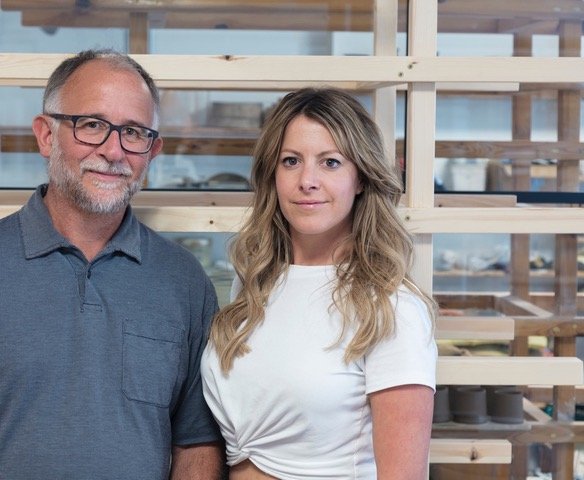
“Our focus is throwing – working with clay on the wheel. The studio also provides space for hand-building. This traditional craft provides a counterbalance to the hyperactive, mechanised, and technologically saturated metropolis.
The hands-on practice of throwing opens dormant creativity and encourages therapeutic transformation. Engaging with clay, the practitioner slows down, assimilating technique and mastering knowledge through careful repetition. It is a holistic, gradual and joyous experience, connecting the potter to a living history of human making.
Our lineage flows directly from Bernard Leach and the 20th Century revival of studio pottery – enshrined in our name. At the heart of Studio Pottery London is the desire to form a community around a shared ethos and love of pottery in all its forms.”
— Gregory Tingay, Co-founder
“Pottery can be a wonderfully social activity, as well as a solitary path of meditative practice. Our studio respects both.
We provide group taster introductions, 5 week foundation courses, and run a regular schedule of ongoing mixed ability classes that you can book according to your availability.
Our expert teachers not only lead our group sessions, they offer on-one-on tuition, which is an excellent way to learn and grow in confidence on the wheel. If you would like the flexibility of coming in your own time you can become a member, enjoying exclusive access to our members area, equipped with several wheels and workspaces.
Our studio is also available for private hire, and our team has a wealth of experience arranging workshops for private functions and one-off experiences.”
— Lucy Attwood, Co-founder

Turning Earth Ceramics
"Like a gym membership for potters", discover four pioneering London studios cultivating craft both as an accessible hobby and as a viable career.
Go here if: You want to learn a new skill, make work in ceramics, be part of a community, find new ways to relax and unwind, nurture your creativity, or even develop your career.
What is it: Turning Earth's pioneering ceramics studios are for everyone, from beginners to part-time professionals, and can now be found in four London locations: Hoxton, Leyton, Tottenham and Highgate. They offer classes and open-access membership, "like a gym membership for potters".

Turning Earth Hoxton

Turning Earth Highgate
Why you need it: Turning Earth's mission is to cultivate craft both as an accessible hobby and as a viable career (they offer a full-time professional studio, In Production, in Leyton). They want to contribute towards a broad adult curriculum that will improve the quality of life in the city.
What they offer: All the ways to try making and develop skills: Tasters, 8 or 12-week beginners courses, intermediate courses, week-long courses, weekend-long courses, private workshops, and monthly membership.
For members, they also organise improvement workshops, like their very popular raku parties, and they have exclusive access to their quarterly ceramics markets.

Turning Earth Leyton

Turning Earth Tottenham
What makes it different: The community and atmosphere are unique to each of their studios. Someone might join for the craft and end up staying for the friends and a 'second home' discovered.
What else do you need to know: They are open every day till late except on Mondays. If you’re not local you can see the wide diversity of skills and techniques on their Instagram which is often updated with pots made by their members in the studio.
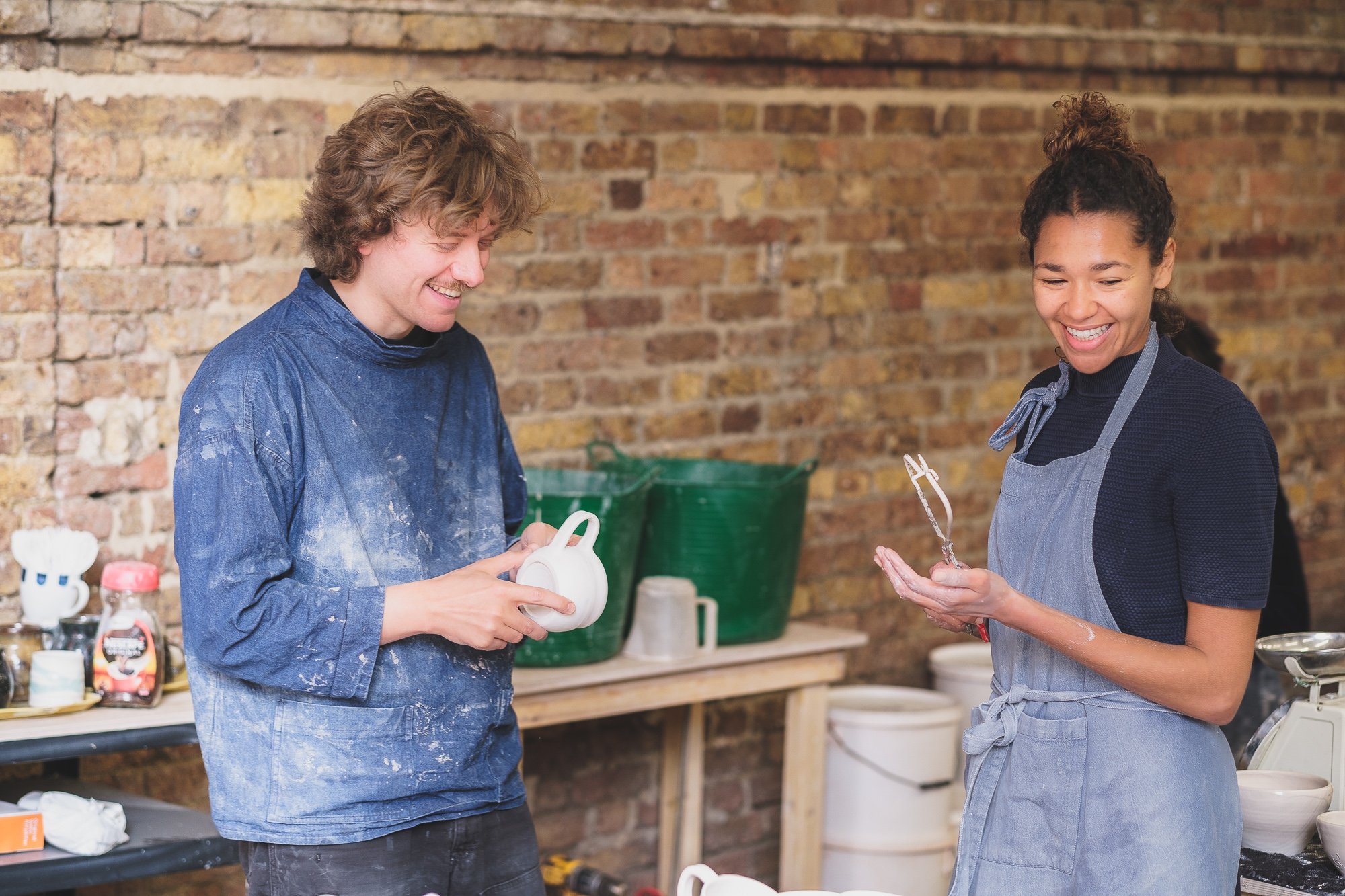

In their own words: Turning Earth was founded by Tallie Maughan. Their first studio, Turning Earth Hoxton, opened in December 2013. Following a model popular in the US, it was the first dedicated open-access ceramics studio in London.

“Turning Earth is indebted to the Arts and Crafts movement at the beginning of the 20th century, which suggested that there should be no separation between utility and art.
Our vision rests in the intuited feeling that we will naturally make life more beautiful when we take our aesthetic awareness, our right-brained feeling for things, as seriously as we take our rational understanding of the world.
We exist to enable people to make beautiful physical objects, and in so doing to make their lives more beautiful: more centred, more fulfilled, more present to what they truly care about.
We feel that in making this movement, we are encouraging a broader social shift towards living with care in our world.”


Women Outdoors
Discover a community of friendly and fun-loving women of all ages, backgrounds and fitness levels based in the UK. With Women Outdoors, founder Emma Winters has created an environment where you can be your authentic self, develop outdoor skills, connect with like-minded women and go home with a big smile on your face.
Go here if: You are seeking outdoor events across the UK and abroad to inspire you and connect with nature and other people.
What is it: Women Outdoors is a community of friendly and fun-loving women of all ages, backgrounds and fitness levels based in the UK. They create an environment where you can be your authentic self, develop outdoor skills, connect with like-minded women and go home with a big smile on your face.


Why you need it: Getting into nature is about more than just beautiful views. It also brings significant mental and physical benefits such as:
Increased self-esteem
Reduced stress, anxiety and depression
Improved fitness
Increased feelings of connection and belonging
Even more joy and fun
What they offer: All of Women Outdoors’ events are led by certified guides and instructors in the Peak District, Snowdonia, Yorkshire Dales, the Lake District or abroad. Events include hiking, wild swimming, paddleboarding, climbing, navigation courses and wellness retreats.
What else do you need to know: To ensure all women have access to life-enhancing outdoor opportunities, they organise one free hike a month and provide concessionary tickets for paid events.

In their own words: We asked founder Emma Winters to tell us her story
Hey, I’m Emma, I’m 38 years old and I’m a qualified Mountain Leader & SUP Instructor from Hull, Yorkshire.
I have a huge passion for exploring nature and outdoor activities. Over the last 15 years I have travelled to 47 countries to absorb different landscapes and cultures, meet many diverse people and try lots of fun outdoor hobbies.
The whole of my working career has been as a Procurement professional in the corporate world but in December 2021 I decided to change my life forever. I handed in my notice and hit the road travelling for one year.
This gifted me with time and space to think and reflect on what I’m passionate about and where I want to spend my time and energy.
It was during this time that I founded Women Outdoors with the mission to break down confidence and financial barriers that prevent women from getting outside, trying new things and meeting new people.
Women Outdoors creates a safe space for all women, provides financial support where required and teaches the community about conservation, flora & fauna & outdoor skills.
If you would like to know more about my journey and creating Women Outdoors go here.
Women Outdoors
For UK events go here. For trips abroad go here.
For private events contact emma.winter@womenoutdoorsuk.com


Navigating Well-being Your Way
Discover a personalized, maybe even messier, path to well-being with our 12-week course, Find Your Way.
Ever feel like well-being is just this elusive concept that's supposed to magically fix everything? We get it. The struggle is real when it comes to navigating the overwhelming sea of advice, scientific jargon, and endless to-dos just to feel a little better.
Picture this: You're drowning in information, constantly questioning where to start. You know you need something, but exhaustion kicks in before you even begin. And let's not even talk about the time factor – it's like there's a conspiracy against finding a moment for self-care in our hectic lives. Cue the self-judgment.
Then there's the inevitable feeling of failure. That trendy meditation or journaling practice that's all the rage? Nope, doesn't work for everyone. And suddenly, what's meant to be a source of well-being becomes a guilt trip because you can't seem to fit the mold.
Oh, and don't get us started on the 'magazine wellness' fantasy. Breakfast bowls? Try a rushed piece of toast. Herb-infused waters? More like a constant drip of caffeine to survive the daily grind.
But here's the thing: Well-being isn't one-size-fits-all. There's no right way to do it. What works for you might not work for someone else. And that's perfectly okay.
Enter Find Your Way – our 12-week course designed to redefine well-being. No more unattainable perfection, just a messy, fun, and sustainable journey back to yourself. Whether you crave calm or excitement, or need to tackle overwhelm or burnout, we've got you covered.
We've put in the work to create a course that respects your values, beliefs, and the unique shape of your life. It's not about conforming to stereotypes; it's about finding what truly feels good for you.
Starting on January 29th, this course is your personal roadmap to more of what matters – without the pressure. Join at your own pace, with access to our course hub, weekly meet-ups (if you fancy some company), and insights from amazing guest speakers.
Excited to embark on this curiosity-led journey with us? Register now, and let's make well-being your own unique adventure.
Check out our new video for a sneak peek into the course – trust us, you won't want to miss it!
Can't wait to see your faces and connect on a deeper level. Let's make positive mental health a reality, together.

Wellbeing Series: How (and Why) to Practice Acceptance
In the first in our Wellbeing Series, today we’re exploring the benefits of acceptance and how cultivating this practice can be a helpful tool in feeling better over all the days of 2024.
What if this January you started not with change and transformation and self-improvement, but with a sense of acceptance?
You’re probably already having some response to this.
This is not to say don’t try to work towards something you need or value. And it’s definitely not to say accept the systemic injustices that impact how you feel and that might show up in your life on a daily basis.
So what are we talking about?
We all have a general sense of what it means to “accept” something. There are many aspects of life that we could simply “accept” — financial circumstances, unhealthy relationships, unfulfilling jobs, etc.
However, in psychology, acceptance means “taking a stance of non-judgmental awareness and actively embracing the experience of thoughts, feelings, and bodily sensations as they occur”. (Hayes et al., 2004)
One of the key ideas underlying acceptance is that difficult emotions are an inescapable part of life: at different times we will find ourselves sad, angry, disappointed, bored, frustrated, grieving, heartbroken, etc. No one, not even the most outwardly steady people, is free of these emotions.
When these emotions inevitably do arise, there are two ways that we can react: resistance or acceptance.
For many of us, resistance is our default reaction. After all, these emotions are not necessarily “pleasant” to experience.
However, psychologists have found that trying to resist or avoid certain difficult experiences can cause further psychological harm. (Hayes et al., 2006)
As Dr Julie Smith says. “Emotions are neither your enemy nor your friend… Emotions are your brain’s attempt to explain and attach meaning to what is going on in your world and your body.”
Why Acceptance Is Important
Studies suggest that acceptance is the healthier option. For example, Tara Brach writes, “believing that something is wrong with us is a deep and tenacious suffering” (2004).
Your experience of yourself consists largely of your emotions, thoughts, and actions, and so learning to accept these (even when they seem difficult or undesirable) is a helpful tool for our well-being.
To be more accepting, it can be helpful to reflect on your habitual attitude towards yourself. Ask yourself:
Do you ever speak harshly to yourself about a perceived mistake you made or an embarrassing thing you said?
Are you ever feeling overwhelmed with emotion, and on top of everything, frustrated with yourself for feeling this way?
How might you be able to take a more understanding and gentle attitude towards yourself?
How To Be More Accepting
1. Cultivate acceptance by noticing your resistance
How do you tend to resist your experience?
Do you snack to stave off boredom, or binge TV when you are sad?
Most of the ways we resist our experiences are unconscious—we do not always understand why we do certain things at certain times. So, resistance can become habitual. The first step towards changing any habit is simply becoming aware of its existence.
2. Cultivate acceptance by questioning your patterns
Once you have started to notice when and how you resist your experiences, try to dig a little deeper to consider why these patterns might exist.
When you were sad or angry as a child, how did the adults in your life react?
Did they allow you to work through these emotions, or did they (perhaps with the best intentions) tell you to put on a brave face or stop throwing a tantrum?
Do you think these experiences might have influenced the way you process emotions today?
It might be helpful to write out some of these reflections to remind yourself of your habitual patterns. It can also be a good opportunity for self-acceptance in that you can see that formative experiences, outside of your control, may have shaped your current patterns. The good news is that any pattern is open to change, as long as you are aware of it.
3. Cultivate acceptance by being mindful
So how can we even become aware of our habitual patterns? One way is with mindfulness.
Mindfulness involves both awareness and acceptance of our experience.
A traditional method of practicing mindfulness is through meditation, which involves dedicating some time to simply observing experiences nonjudgmentally. However, you can bring mindful moments into your everyday life, even without meditating.
4. Cultivate acceptance by thinking of your inner child
We are often our own harshest critics.
Accepting ourselves can be difficult because we are most likely so used to judging ourselves for thinking, feeling, and acting certain ways. You would rarely judge a loved one as harshly as you judge yourself.
One helpful technique in the meantime is to think about yourself as a child. This can help remind you of your most innocent and vulnerable self, which may make it easier to be gentle and understanding when your experience is difficult.
5. Cultivate acceptance through practice
Acceptance is just like any other skill: it takes practice. People who are accepting of themselves and others have made acceptance a mental habit by continuously choosing a more accepting mindset over and over again.
After a while, these repeated mental choices become habitual and natural and do not require as much effort.
So, next time you find yourself struggling with difficult emotions, try to use this as an opportunity to practice acceptance.
Remember, acceptance is not the same as resignation. Acceptance refers to acknowledging and allowing your present experience — not necessarily your life situation. Through awareness and practice, you can increase acceptance in your own life and enjoy the benefits that it may bring.
Further Reading
Brach, T. (2004). Radical acceptance: Embracing your life with the heart of a Buddha. Bantam.
Hayes, S. C., Luoma, J. B., Bond, F. W., Masuda, A., & Lillis, J. (2006). Acceptance and commitment therapy: Model, processes and outcomes. Behaviour Research and Therapy, 44(1), 1-25.
Hayes, S. C., Strosahl, K. D., Bunting, K., Twohig, M., & Wilson, K. G. (2004). What is acceptance and commitment therapy? In A a practical guide to acceptance and commitment therapy (pp. 3-29). Springer, Boston, MA.
If you’re curious about how to bring more acceptance into your life this year, we have a couple of options for you right now.
Join our 12-week Find Your Way course where together we’ll learn real wellbeing practices that can better serve our everyday needs, from acceptance practices like these to building a life based on what matters most to us.
Discover how emotions coaching can support you in bringing more acceptance to your emotional life and rewrite some of those feelings scripts that hold you in check (and probably back from your needs). What could accepting all your feelings open up for you?

Almost ready to think about 2024? What if next year we chose acceptance over transformation?
Embrace self-acceptance and even imperfection by seeking a more compassionate and authentic approach to the New Year.
“Discovering ways to feel better doesn’t have to lead to feeling worse. It doesn’t have to be another area in which we fall short. It can be something else entirely different.”
We think we're done with the idea of transformation. We just want self-acceptance. Not in a yes, bring-it-all-on-way, but more putting a boundary around what we're supposed to be doing (i.e. more and more and more) and releasing ideas that no longer serve us. Think more about exploring possibilities and alleviating some of that pressure.
We're tired of constantly evaluating ourselves, tethered to ideas of productivity or the need to conform to an ideal life.
We've been guilty of living life according to a checklist, believing that fixing ourselves is just a matter of following the latest trend.
No longer do we want to project a future, better version of ourselves, neglecting the present reality. Perfection is no longer our goal; embracing life's messiness is what we strive for.
If any of this resonates with you—if you're tired of trying to optimize every aspect of your life—join us in embracing 2024 with a tone of acceptance, compassion, and curiosity.
As we approach January, what if we reconsider the age-old tradition of radically changing ourselves? What if, instead of aiming for drastic transformation this New Year, we embraced a more enduring and impactful approach?
One that helps us remember that our worth isn't defined by what we eat or how many exercises we complete. It's okay if our morning routine isn't picture-perfect and that struggling with meditation for more than a few minutes doesn't equate to failure.
We've designed two incredible approaches to ease into 2024. Choose the one that resonates with you. Both create much-needed alternatives to those resolutions that often fade away.
Say hello to self-acceptance this year and goodbye to all those resolutions

Rediscover Emotional Well-being This Holiday Season: Craft Your Unique Well-being Practice.
Amidst the holiday rush, prioritize your emotional well-being. Explore personalized practices with us to thrive during this festive season.
As the holiday season shimmers into view, it's time for joy, merriment, and connection. Yet, for many of us, it can also mean a rush of overwhelming to-dos, bustling crowds, and a whirlwind of expectations. Amidst this festive fervor, have you found yourself yearning for something else? Maybe even a way to reset and reach for better emotional well-being in your life?
Right now though it might feel like any well-being practices are drowned out by the clamor of daily life. You have no capacity to do more, stretching yourself even thinner; any wellbeing practices that you usually rely on can slip through the cracks of your busy schedule.
But what if this holiday season, we could approach taking care of ourselves differently?
Imagine if you had a set of well-being practices crafted exclusively for you—a bespoke prescription designed to fit into your life, your values, and your unique needs. Sounds intriguing, right?
Here at If Lost we’ve made it our focus to curate personalized well-being practices that can fuel curiosity, build self-acceptance, and bring a sense of play to our everyday lives.
This isn’t about conforming to preset ideals or adding more 'must-dos' to your list. It's about rediscovering what well-being needs to mean for *you*—finding tranquility in nature, fostering deeper connections with those in your life, or simply carving out moments amidst the holiday hustle.
In these 1:1 online personalized sessions, you’ll get to:
🌟 Dive into the Science of Well-being—unpacking the significance of such areas as nature, connection, and giving back—and understand how these elements can attainably weave into your everyday life.
🌟 Discover what drives your curiosity—what brings you joy and what lights that spark of excitement, as well as what's ready to be released.
🌟 Create a sturdy foundation within your routine, offering steadfast anchors to turn to when life feels uncertain.
Your takeaway? A tailored well-being practice that aligns with your daily life—a plan designed to rejuvenate your spirits during this bustling season.
Imagine savoring the holidays with renewed calm, energy, and curiosity. It's not just about surviving the festivities; it's about thriving amidst them.
Ready to make this holiday season about rediscovering your emotional well-being? Reach out to us and let's craft your unique well-being practice today.

Holiday Gift Guide | Twelve gifts we love for better wellbeing this holiday
This season we’re moving from giving for the sake of giving to giving for connection, self-awareness and curiosity. Discover our Holiday Gift Edit for products that help us feel good this Christmas.
This season we’re moving from giving for the sake of giving to giving for connection, self-awareness, love, acceptance, curiosity, and creativity.
We’ve pulled together our Holiday Gift edit with gorgeous products from independents that can help us feel better. Whether that’s stepping into our emotional mess — and being okay with it — or finding the perfect notebook to accompany us through our days, we have something for you.
We hope you find the perfect gift from the selection below for someone in your life (or for yourself if you want to give yourself a sneaky something too).
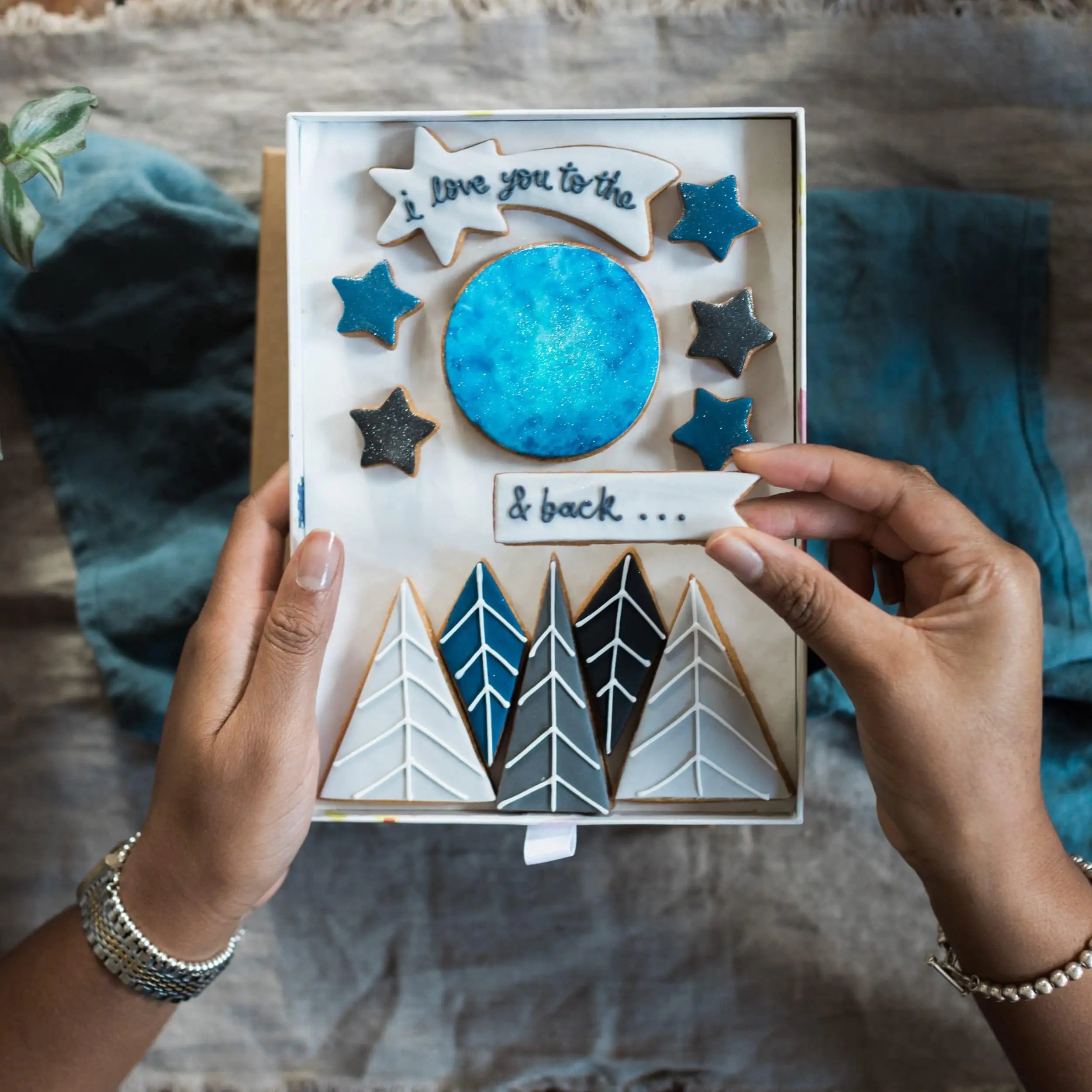
I Love You to the Moon and Back Biscuits from Honeywell Bakes

Happyish: An Oracle Deck with Nora McInerny from Em and Friends

A Stupid Candle for My Stupid Mental Health from Self Space

A5 softback French link stitch notebook from Inky Square
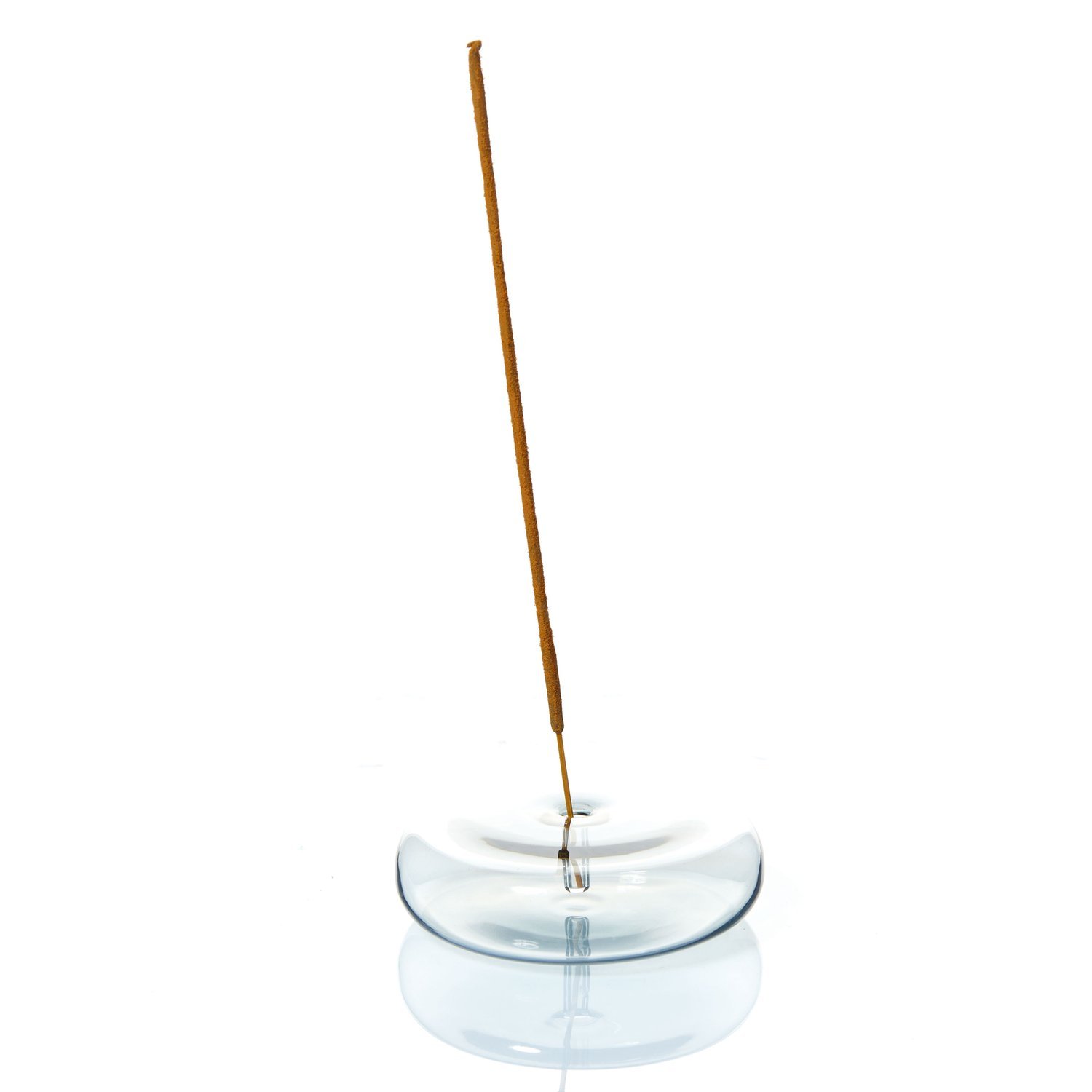
Dimple Incense Holder from Maegen

A bottle of Human Kindness from Vinegar and Brown Paper

Words of Wisdom Embroidery Hoop Sign from Make & Mend

Journal Gift Box from Walter & May

Jammy Dodger Keyring from Dunked

Places to Shop and 91 Magazine Bundle from 91 Magazine

Affirmations for a Better Future Carter Move Mug by People I’ve Loved


Our Guide to Small Businesses We Love
This Colour Friday we’re celebrating the independent shops that we love. Find the perfect Holiday Gift from one of our favourite places.
How are you supporting independents this Black Friday?
We’re joining Holly Tucker’s campaign to boycott Black Friday on 24th November and support small businesses instead. These stats are directly from the Colour Friday campaign:
£12.3 billion on Black Friday is spent with businesses like Amazon
Despite the fact that 80% of it ends up in landfill
And nearly 60% of UK small businesses fear closure in the coming year
As an antidote to this, and to help us all shop small, please support your favourite local shop or buy a longed-for Christmas gift from an independent.
Help spread the love and the colour that independents bring to our high streets, our lives and each other.
To get you started, here’s a round-up of some of our favourite UK Independents.

Present and Correct, London: A beloved stationary shop to quiet the mind and spark your creativity

Hoxton Street Monster Supplies: this store has everything the monster in you needs (and a not-so-secret cause behind it all).

Labour and Wait, London: Timeless designs having a contemporary moment, this shop will make you think differently about your dish brush.

Meticulous Ink, Bath: A tiny print studio and store that creates human-centered designs for all of us.

Find Ubiety, Bath: A haven for your wellbeing that gives back to others too

The Bristol Artisan, Bristol: A home for local craftsmanship and creativity, that embodies the city’s spirit of community and sustainability.

Folde, Shaftsbury: connecting people with nature through beautiful books, prints and gifts
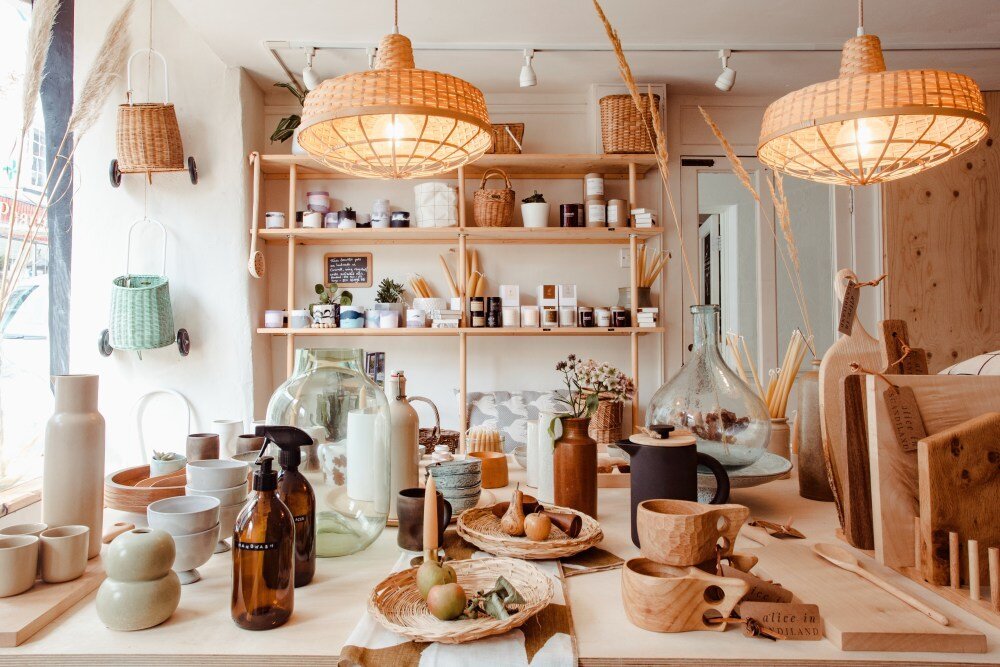
Alice in Scandiland, Cornwall: Scandinavian design comes to Cornwall courtesy of award-winning style blogger Alice Collyer.

The Department of Hope, Joy and Wonder, Cheltenham: An uplifting place to browse and meet friends that spreads joy and wonder in Cheltenham and beyond

The Poetry Pharmacy: poems (and more) for all your emotional ailments and the best range of surprising and delightful gifts

Something Good, Newcastle: a sustainable living store with a plastic-free pantry and a refillery
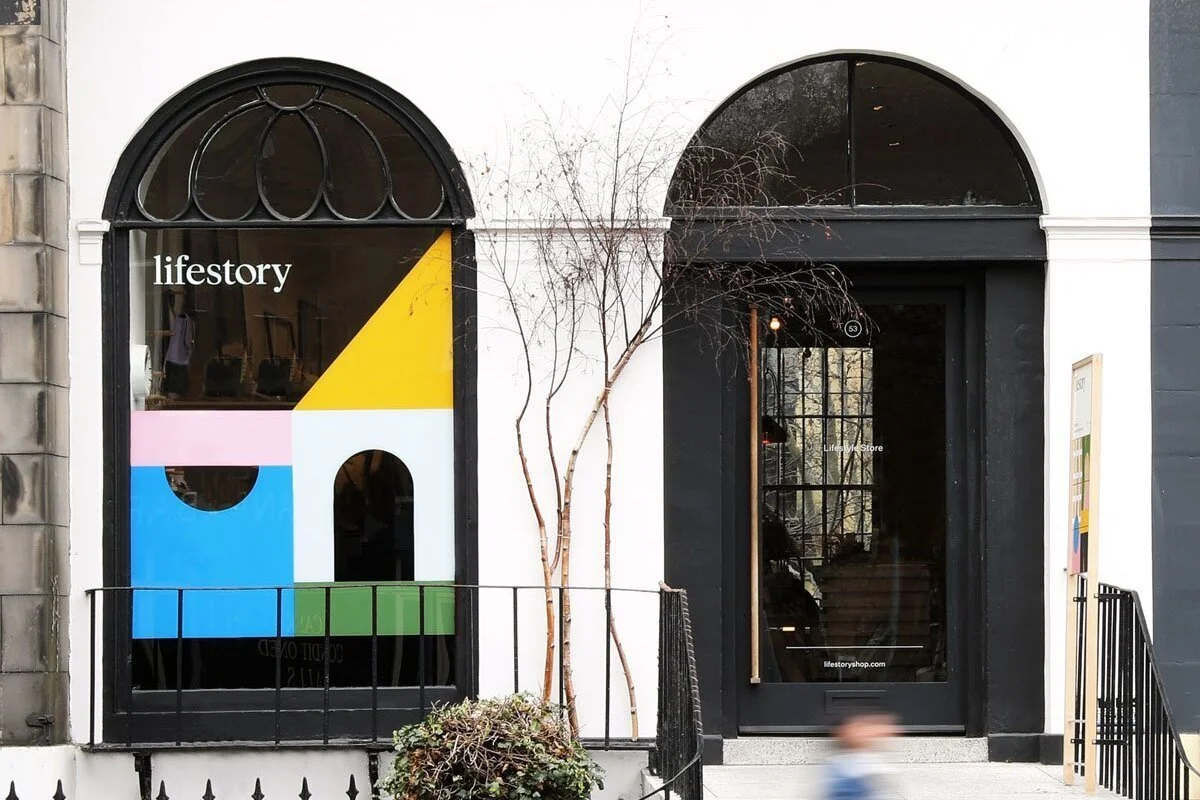
Lifestory, Edinburgh: Scandi inspired concept store that has everything you could possibly need for gift giving this holiday season
We’ll be adding more independent shops over the coming weeks so let us know your favorites so we can include them here too.

Shop Small Special: The Bristol Artisan
A home for local craftsmanship and creativity, The Bristol Artisan embodies the spirit of community and sustainability of the city.
Go here if: you love contemporary design and craft, supporting local makers and feeling like you are truly in Bristol.
What is it: A home for local craftsmanship and creativity, The Bristol Artisan in Clifton is a charming shop that stands as a testament to the city's vibrant community of artists, designers and makers.
Why you’ll love it: Showcasing a curated collection of handmade homewares and gifts from independent makers from Bristol and across the UK, you’re sure to find something to take home. From ceramics, jewelry and original prints, to vegan beauty, living plants and dried flower bouquets, each piece tells a story of skill, passion, and dedication.
The Bristol Artisan embodies the spirit of the city. It encapsulates Bristol's ethos of creativity, community, and sustainability.
How to bring this into your life: The online shop is extensive so you can shop from home. Check out the gift guides for all seasons and occasions (we have our eye on cozy hot water bottles and the perfect ceramic ramen bowls). If you do get to visit, stop at Burra next door for coffee (Bristol’s Cafe of the Year 2022).
In their own words: “The Bristol Artisan is a curated space for contemporary handmade design and craft with a focus on homewares and gifts, supporting over 60 independent makers from Bristol and beyond.”

Shop Small Special: The Department of Hope, Joy and Wonder
An uplifting place to browse and meet friends that spreads joy and wonder in Cheltenham and beyond
Go here: for an uplifting experience, you love colour and sweary cards, or you are looking for the perfect gift, stationery or homeware for yourself or someone else (also to secretly meet friends)
What is it: Cheltenham, a town known for its history and charm, holds a hidden gem — The Department of Hope, Joy and Wonder. Nestled within the heart of Tivoli, an easy walk from the centre, since spring 2021 Catherine Colebrook’s shop has been spreading joy and wonder through its selection of homeware, gifts, and sweary cards.
Why you’ll love it: When we heard the name we just had to visit. It’s a fun place to wander from the first room which is a riot of colour to the more calming monochrome spaces beyond, but we particularly loved discovering The Secret Coffee Shed at the back. Tucked away in a courtyard it feels like the perfect hideaway for locally roasted coffee (by Gloucester-based Rave) and cake by local bakers Creme De La Em and S Bakes.
How to bring this into your life: Visit if you can and attend one of the creative workshops from modern calligraphy to paper decorations (details for which you’ll find on their Instagram). If you can’t get there, play with colour in your own home by making a rainbow of your bookshelves.
In their own words: “Catherine's aim was to create an inspiring space where you can browse and catch up with friends over a coffee. A place where people can reconnect or just come in & have a good laugh at our selection of thoroughly rude & sweary cards.”


Shop Small Special: Find Ubiety
Discover a haven for your wellbeing in Bath that gives back to others too
Go here if: You’re looking for a high-street independent with a social mission, to take care of yourself while taking care of others too and to follow your curiosity through a wide range of vintage finds and locally sourced makers.
What is it: This is the first concept store from the people behind Dorothy House and Ubiety, a vegan body care and fragrance brand that gives 100% back to end-of-life care. Situated next to the charity’s furniture shop, you’ll find inside a serene space centered on nature where mindfulness meets curated selections, promoting mental well-being and holistic self-care.
Why you’ll love it: Find Ubiety carries a thoughtful and ever-changing range of products. From soothing scented candles to handmade dinnerware, every item lining the shelves is chosen with one singular goal: to nourish the mind, body, and soul.
In a world characterised by hustle and bustle, Find Ubiety offers a calming sanctuary — a place to pause, breathe, and prioritize our personal and collective mental wellness. The products offered here help support our self-care rituals — whether it's a calming bath soak or an aromatic essential oil — while reflecting the holistic care and nurturing surroundings of the hospice it supports.
How to bring this into your life: Visit the shop or try out one of their therapeutic sessions at another local favourite, SoulSpa (where you’ll also find our sessions to feel better). Not local to Bath, you can shop Ubiety products online as well.
In their own words: “Themed around nature, it stocks carefully curated second-hand curios and bric a brac, unique fashion, locally sourced products and eco finds. The shop is created to support personal wellbeing and help customers create their own calm, unique & definitive space at home.”


How to navigate midlife and (peri)menopause with Edwina Jenner
Are you experiencing the challenges of midlife and the menopausal transition? Health coach Edwina Jenner helps us navigate this time with more confidence, intention and self-compassion.
The journey through midlife and perimenopause can be a challenging and transformative time for many women. The myriad of physical and emotional changes during this phase can often leave us feeling overwhelmed and uncertain. That's why we invited Edwina Jenner, an experienced health coach specializing in menopause, to shed light on this often misunderstood stage of life.
Understanding Perimenopause
Perimenopause is the transitional period leading up to menopause when the body begins to produce less estrogen. This phase can last for several years and is characterized by a variety of symptoms, including hot flashes, mood swings, sleep disturbances, and menstrual cycle changes. Understanding these bodily changes is crucial to ease symptoms and maintain a high quality of life during perimenopause.
Navigating Midlife
Midlife represents a significant transition, both physically and emotionally. It's a time when women often re-evaluate their lives and contemplate their future. It can also be a period of increased stress, as women juggle the demands of work, family, and personal health. However, with the right strategies and support, midlife can also be an era of personal growth, self-discovery, and renewed vitality.
Edwina Jenner's Expertise
Edwina Jenner has dedicated her practice to guiding women through the complexities of midlife and perimenopause. Her extensive knowledge and compassionate approach have empowered numerous women to better understand their bodies, manage symptoms effectively, and embrace the changes that come with this life stage. Edwina's insights and coaching can support you in approaching midlife and perimenopause with confidence and grace.
What’s next?
Whether you're in the midst of perimenopause or just embarking on your journey through the shifts of midlife, remember that you're not alone. With the guidance of experts like Edwina Jenner and the support of a community of women going through similar experiences, you can navigate this transition with strength and resilience. Embrace the changes, cherish the journey (where you can, because it’s hard), and look forward to the wisdom and fulfillment that this stage of life can bring.
Find out more about Edwina Jenner on Instagram and Facebook.
Find out more about midlife and menopause coaching at If Lost

Ready to be found? How to find your way when you’re lost in life.
Discover the key to nurturing your mental health and enhancing your emotional wellbeing. Explore effective strategies and expert insights to support your mental health journey and cultivate a lasting sense of emotional balance and wellness.
In recent years, we’ve noticed that more and more of us are finding ourselves lost, struggling with our mental health and emotional well-being. Sometimes this manifests within ourselves, sometimes in our own lives, and sometimes out in our interconnected world.
We’ve seen it in our clients as they grapple with an indescribable unease, feeling adrift, disconnected from their days, in search of a destination but unclear about where that would even be.
We’ve seen it in our friends, our families, and the people in our communities. It's evident in the small moments - in the eyes of parents dropping off their kids, where conversations about the weather have transformed into discussions about inflation, war, and environmental challenges.
And we're not exempt from this experience. We've had our own days of uncertainty, thoughts slipping through our fingers, and goals that felt elusive. The constant "what now" and "what next" can be deafening
It's a shared feeling, a collective yearning for solid ground in a world that seems ever-changing.
Perhaps you're right in the middle of it all, juggling countless responsibilities, and trying to make sense of it. You're in the mix of obligations, losing sight of your own desires and even your true self.
You might be battling feelings of uncertainty, overwhelmed by the chaos, feeling disconnected, and anxious. Maybe you've lost your footing, even your way.
But the question lingers: where do you begin? Which path should you follow? Where do you want to be if not here, at this moment?
We’re here to guide you through the process. We'll explore the steps you can take when you find yourself in this state of being lost. Together, we'll help you reconnect with yourself, reignite your curiosity, build confidence, and find presence in your life.
Think of us as your mental health and emotional well-being guides. We're here to support you in finding your way.
STEP 1: LEARN HOW TO REGULATE YOUR NERVOUS SYSTEM
Learning about the sympathetic and parasympathetic nervous systems helped us orientate ourselves. The former responds to (perceived) danger and triggers our fight or flight response, the latter helps us feel calm and restored by activating our 'rest and digest' system. To shift from one to the other, find an embodiment practice that you like, such as breathwork, dancing, or grounding in your five senses.
STEP 2: IDENTITY WHAT SAFETY LOOKS LIKE TO YOU
Find a safe place, whether it's a person, environment, thought, or belief. Recognize cues in your surroundings and know where to seek help when needed.
STEP 3: BRING IN SELF-COMPASSION
Remember, feeling lost is not your fault. Practice self-compassion and reframe negative thoughts that bring judgment or shame. Acknowledge your courage in trying, even when things don't go as planned.
STEP 4: KNOW YOUR BOUNDARIES, YOUR HARD NO’S
Understanding your boundaries is essential. Honor what you can or cannot tolerate, even if it may seem unconventional to others.
STEP 5: TALK IT OUT
Give yourself the space to reflect on your priorities and struggles. Consider booking a one-on-one session to gain clarity and confidence in navigating life's challenges.
By following these steps, you can find your way and regain a sense of purpose in your life. We understand the feeling of being lost, and we hope that these strategies will help you move closer to better mental health and emotional well-being.

Explore a Month of Feel-Good Prompts
Explore a month of well-being treats and discover the magic that October offers.
As we ease into a new month and a shift in seasons, we made a little something to help. Download our month of well-being prompts that weave little glimmers through your days.
From discovering a new creative practice or wandering down a new path, these prompts are designed to give you something to try, explore or connect with as the leaves fall and the nights draw in.


Lost in... Books | A Podcast Playlist
Discover the best podcasts on books. Our favourite podcasts to read more, discover new books, and talk about the latest great read.
We’ve made a Podcast Playlist for you to take on your next walk, to accompany you on your drive, and to make tidying the house just a little less tedious.
This month we’ve curated a podcast playlist about our most favourite thing: books.
This round-up includes our favorite podcasts and episodes that:
help us find the next great read,
give us a fresh perspective on the one we can’t put down,
or go searching on our shelves for the one we read ages ago and have been inspired to read again.
This playlist covers all the ways we need and want books in our lives.
We hope you enjoy it as you go trampling through the autumn leaves.
Let us know what your favorite bookish listens are. Which podcasts and episodes would you add?