
When Everything Becomes Something You Should Be Doing
Feeling overwhelmed by everything you should be doing? Discover how questioning expectations and replacing should with could can create more space, choice and joy.
What happens when the things we're doing to make our lives better start making them feel harder instead?
I should go for a walk. I should be more present with my children. I should be doing more exercise. I should see my friends more often. I should be better at switching off. I should spend less time on my phone. I should really try meditating again.
And that's before we've even got to all the things we should be doing at work, in our relationships, with our money, or with the rest of our lives. All the things we should have achieved by now, the people we should be more like, the ways we should be spending our time. Even the things we do for pleasure can start to feel like another thing we're supposed to be getting right.
The strange thing is that many of these are perfectly lovely things to want. Some might make our lives better. But somewhere between wanting to do something and feeling that we should, something changes. What might have been enjoyable becomes another obligation, another expectation, another thing to add to a list that was already rather long.
I've been thinking about this since my conversation with graphic designer, speaker and podcaster Liz Mosley on A Thought I Kept. Liz brought a thought she'd first heard from joy coach Sophie Cliff on her own podcast, Building Your Brand:
"Should is the killer of joy."
It's a thought that has stayed with her ever since, and one that has made her notice just how many shoulds are quietly shaping her own life.
Whose shoulds are we following?
When I started A Thought I Kept, there were all these shoulds I thought I had to follow. How I should introduce a podcast, how I should have a conversation with someone, even how I should introduce myself. I'd listen to advice, look at what other people were doing and try to work out what the right way was. But the more I followed these rules, the more I felt something quietly disappearing inside me. The creativity, the enjoyment, the very reasons I'd wanted to make a podcast in the first place.
I'd experienced something similar when I moved from working in museums and galleries into the wellbeing world. Suddenly there was a whole new language to learn and a seemingly endless number of ways I was supposed to be doing things. There were courses to take, marketing funnels to build, emails to send and strategies to follow. I remember opening emails about marketing and feeling slightly dead inside. This wasn't who I was, and yet there I was, following the breadcrumbs towards a version of success that I wasn't even sure I wanted.
Liz recognised this immediately. She talked about looking at successful men in her industry and assuming that she should be marketing herself, sharing her work and running her business in the same way. It took a conversation with a friend to make her realise that she didn't have to do any of those things. She could find her own way, even if she didn't yet know exactly what that looked like.
And I wonder how often we're doing something similar in other parts of our lives. Following ideas about what makes a good mother, a good partner, a successful woman, a healthy person, a happy person. There are so many versions of how we're supposed to be living, and so many places to find them, that it can become so difficult to hear what we might actually want underneath all the noise.
What happens when should becomes could?
One of the things I loved most about Liz's response to Sophie Cliff's thought is how simple it is. She's started replacing should with could. Not only in the things she tells herself, but in the advice she offers other people too.
She noticed that when she spoke to friends, she'd often say things like, "Oh, you should try this." It was coming from a good place. She'd found something interesting or useful and wanted to share it. But she began to realise that she might also be adding another thing to someone's already rather long to-do list, something that might not even be right for them. So now she tries saying, "You could try this" instead.
It's such a small change, but there's something quite extraordinary about how differently those two words feel. Should comes with an expectation. It suggests there's a right way, and perhaps we're not doing it. Could offers a possibility. There's room to consider it, to try it, to decide it isn't for us, or to discover something entirely different.
I think about this particularly in relation to wellbeing. We know so much more now about the things that can support us emotionally, mentally and physically, and I'm fascinated by all of it. But I also wonder whether, in trying to feel better, we sometimes end up creating more pressure for ourselves. We should be walking, sleeping, journaling, exercising, meditating, connecting, resting. And if we're not doing those things, perhaps we're getting wellbeing wrong too.
What if we could approach some of these things with a little more curiosity instead? We could go for a walk because we fancy being outside. We could try journaling because there's something on our mind. We could say no to something because we'd rather have an evening at home. Or we could decide that none of those things are what we need today.
What if joy isn't something we have to earn?
Another part of our conversation that stayed with me was Liz's relationship with joy. I asked her whether we sometimes treat joy as though it isn't quite enough. As though enjoyment isn't a sufficient reason to do something, particularly when it comes to work, where we're often encouraged to value productivity, achievement and consistency above almost everything else.
Liz talked about how important play and fun have been in building a business she can sustain. She's tried lots of different approaches to marketing, but the thing she's been most consistent with is her podcast. Not because she's particularly disciplined about it, but because she loves doing it. She loves the conversations, the people she meets and the things she learns along the way. There are parts of the process she doesn't enjoy, of course, but there's enough that she does to keep her coming back.
I recognised this immediately. For years, I'd been telling myself that I wasn't particularly consistent. I wasn't posting often enough, launching things in the right way or following the strategies that seemed to work for everyone else. And yet I've been making a weekly podcast for over a year and a half. I love these conversations. There's an aliveness in them, and they connect with my values and how I want to spend my time. As Liz put it, the joy brings the consistency rather than the should bringing the consistency.
And I wonder whether we've got something rather backwards. We so often imagine joy as something we'll get to eventually. When the work is finished, when the children are older, when we're less busy, when we've achieved whatever it is we're working towards. Perhaps we'll find it on holiday next year, or over a weekend when there's nothing else to do. But what if joy could be part of how we do things in the first place, rather than something waiting for us at the end?
Liz was careful to distinguish this from the idea that we should be happy all the time. She talked about joy as something foundational, something that comes from living and working in ways that reflect our values. That doesn't mean there won't be difficult days, mistakes, frustrations or things we really don't want to do. In fact, she spoke beautifully about how those experiences can be part of finding our way towards something that matters to us.
I think that's an important distinction, particularly when we're already feeling overwhelmed. Because the last thing any of us needs is to turn joy into another should. Another expectation to feel something we're not feeling, or to make every moment meaningful or enjoyable. Perhaps joy is less about how we feel all the time and more about whether there's room in our lives for the things that make us feel like ourselves.
Making a little more room for ourselves
Towards the end of our conversation, I asked Liz about saying no. She described herself as a recovering people-pleaser and talked about turning down opportunities that looked wonderful from the outside but weren't right for her or her family. The sort of things other people might think she was crazy to refuse. But rather than feeling she'd missed out, she found those decisions surprisingly empowering.
What I loved was how she described the experience. Saying no wasn't simply about protecting her time or setting a boundary. It was about making space for something else. Something that might be more interesting, more enjoyable or simply more right for her.
And perhaps that's what questioning our shoulds can offer us too. Not a completely different life or another self-improvement project, but a little more room to notice what we want, what matters to us and what we might be ready to let go of. Because if we're spending so much of our time trying to meet expectations that aren't really ours, I wonder how much space is left for the things that are.
Liz's thought has made me more aware of the shoulds that slip into my own thinking, often without me noticing. And I'm curious about what happens when I start to question them. Not because every should is wrong, or because we can simply abandon all the things we need to do, but because perhaps we have more choice than we sometimes realise.
So the next time you catch yourself thinking, "I should be doing that," perhaps you could wonder where that thought came from. Whether it's something you actually want. Whether it fits with the life you're living, rather than the one you think you're supposed to be living.
You might discover it's something you still want to do. But you might also find there's something else you'd much rather make room for. And perhaps that's where a little more joy begins.
Listen to the conversation
In this episode of A Thought I Kept, I talk to graphic designer, speaker and Building Your Brand podcast host Liz Mosley about the shoulds we inherit, finding our own definitions of success, creative confidence, rejection, people-pleasing and what happens when we begin doing things our own way.
Explore more with If Lost, Start Here
If you've been feeling overwhelmed, anxious or uncertain about where you are in life, our book If Lost, Start Here: Wellbeing for the anxious, disconnected or uncertain offers creative ways to explore what you need, what matters to you and where you might want to go next.
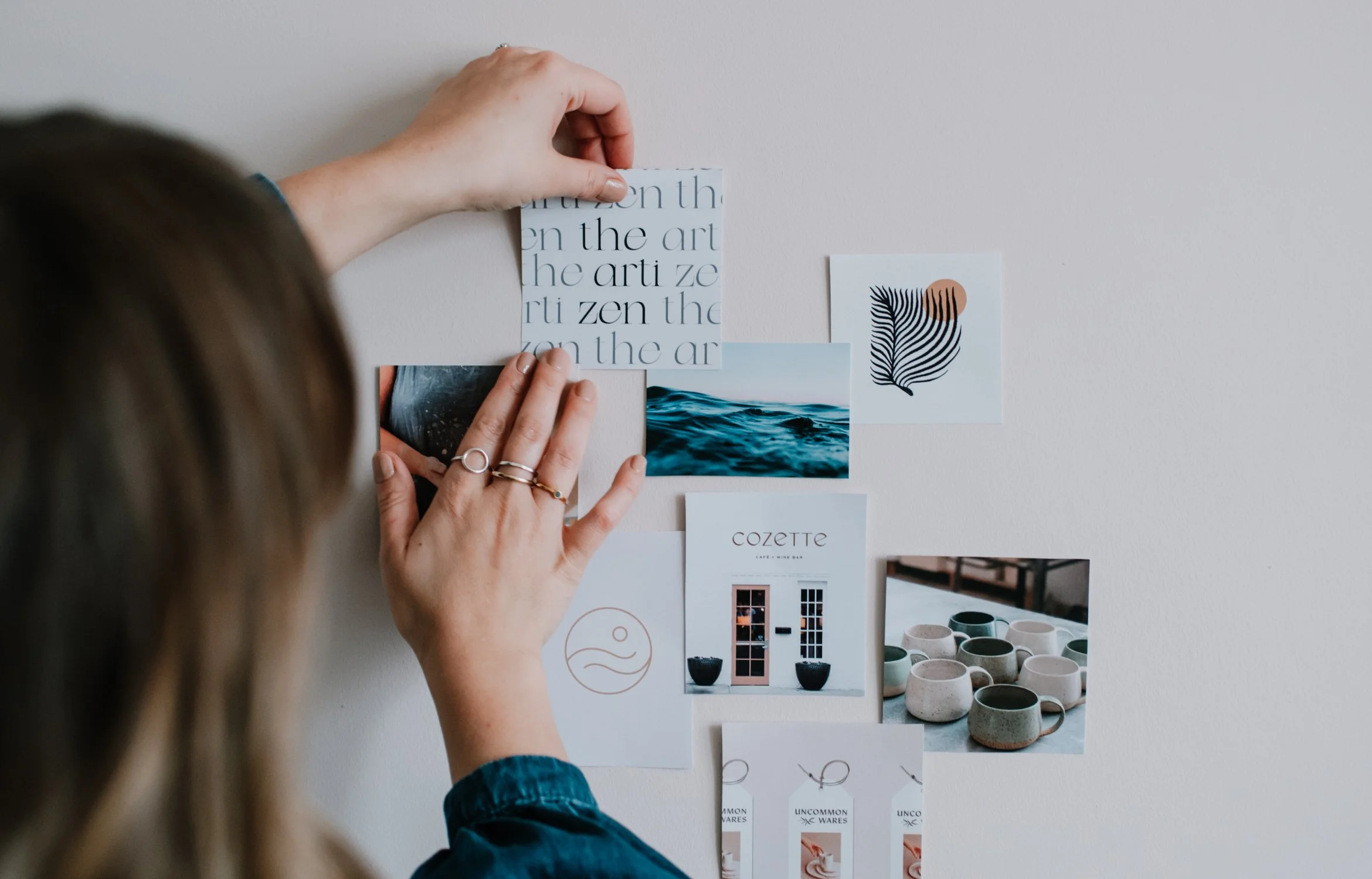
Finding presence through tactility by Sarah Robertson
How sensory activities and physical objects can bring us home to ourselves.
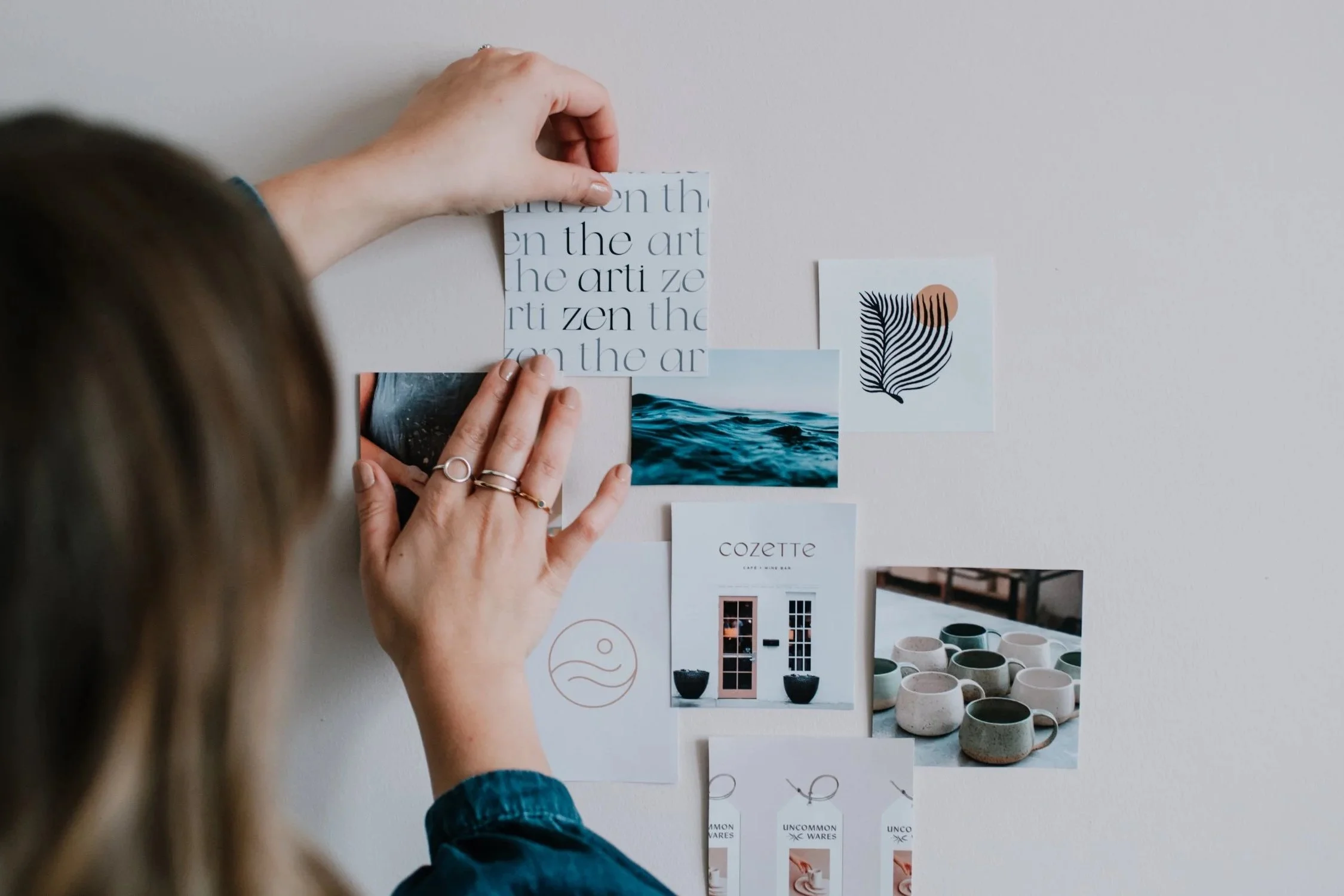
All photos courtesy Sarah Robertson
We are increasingly living in a state of digital abstraction, consuming stories and making connections through the blue light of our screens.
Yet we often finish a session of scrolling feeling strangely detached, as if we’ve travelled miles without ever having moved. So how do we find our way back?
How do we ground ourselves when the digital world pulls us toward endless distraction or when the rhythms of our own lives feel chaotic and overwhelming?
For me, the answer lies in tactility.
“The hands are the instruments of man's intelligence.”
— Seneca
Sensory rituals
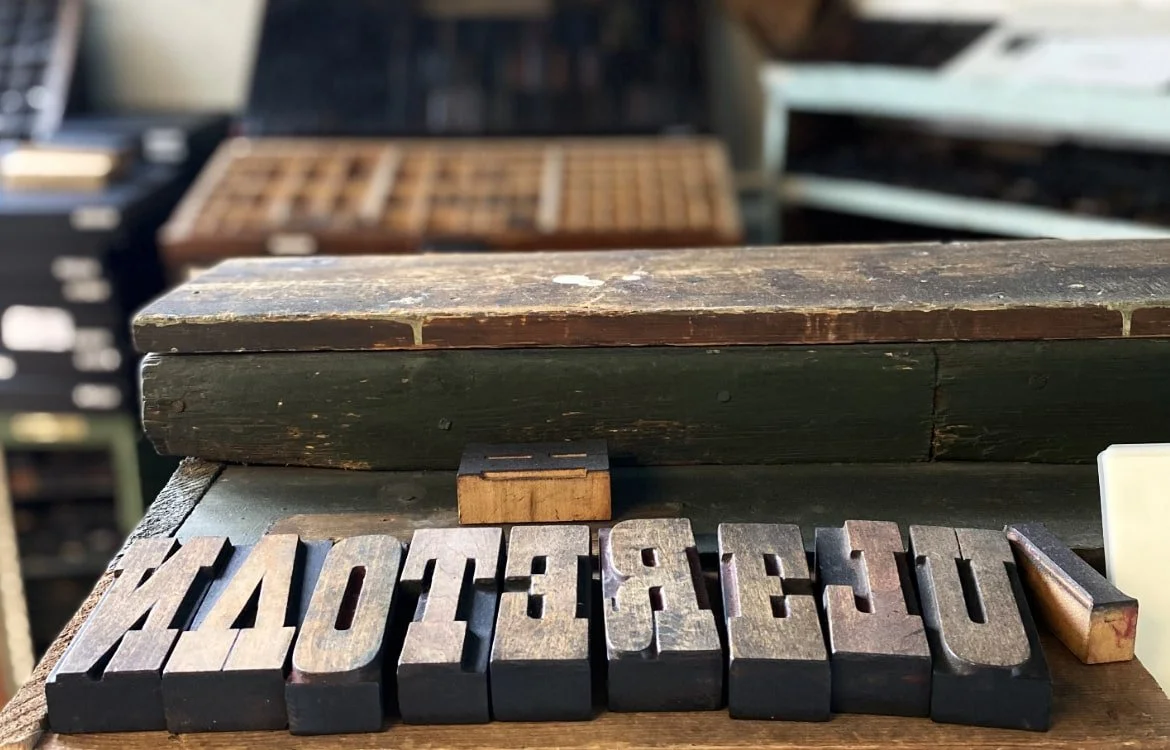
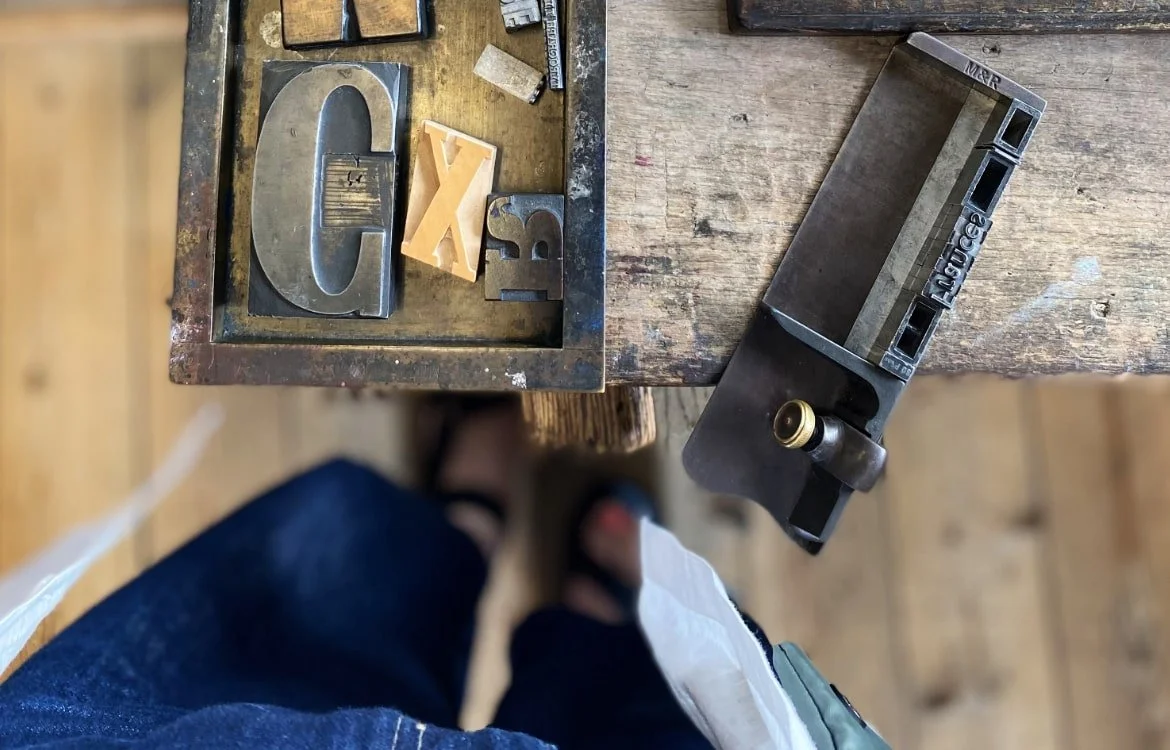
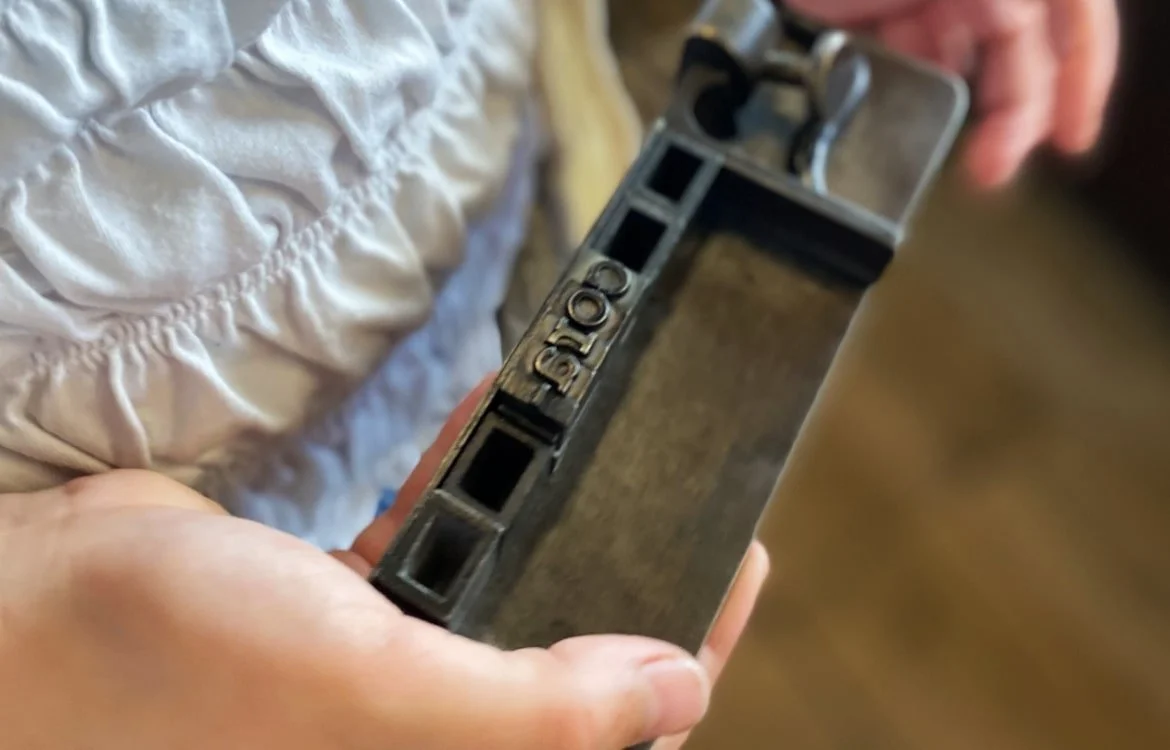
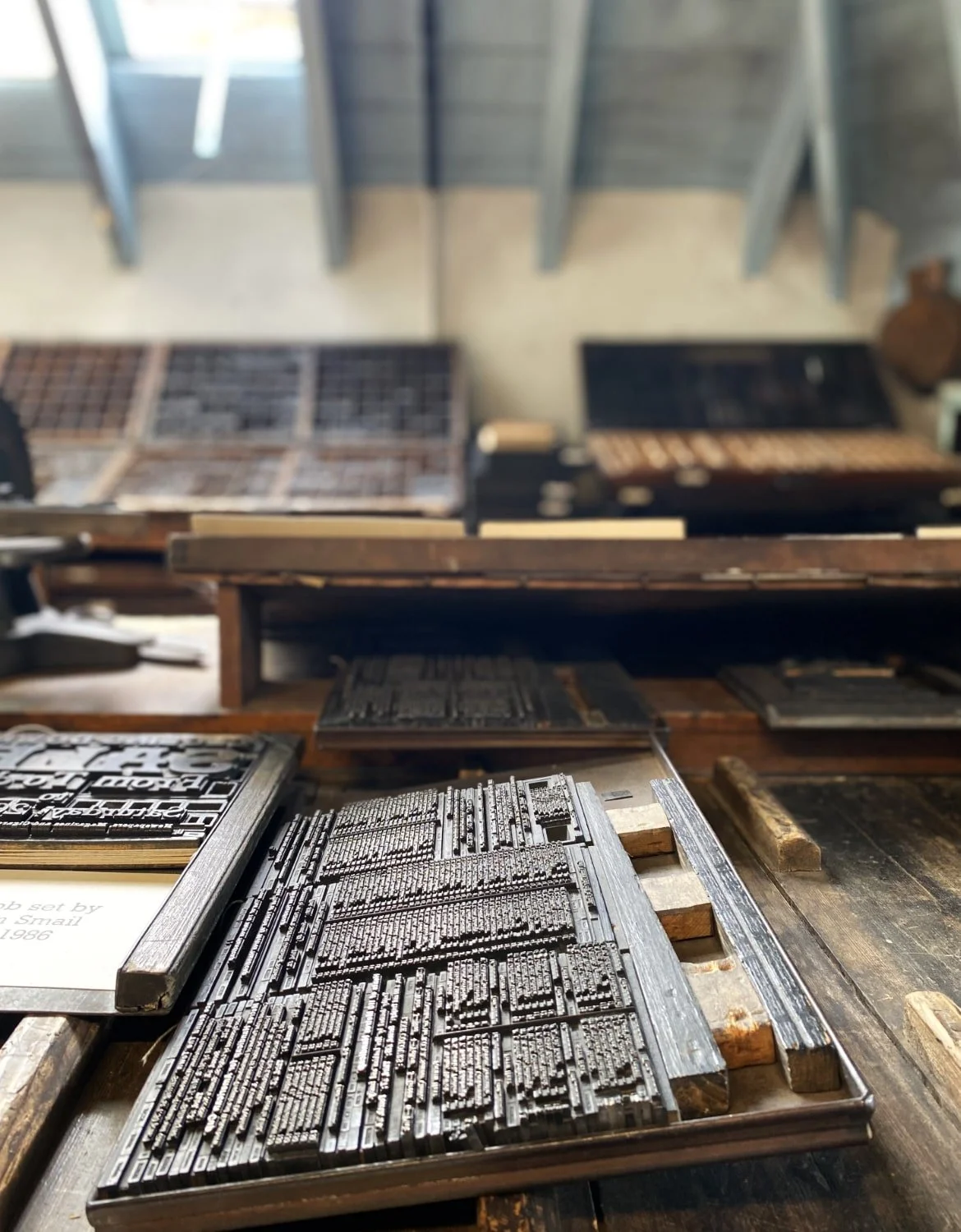
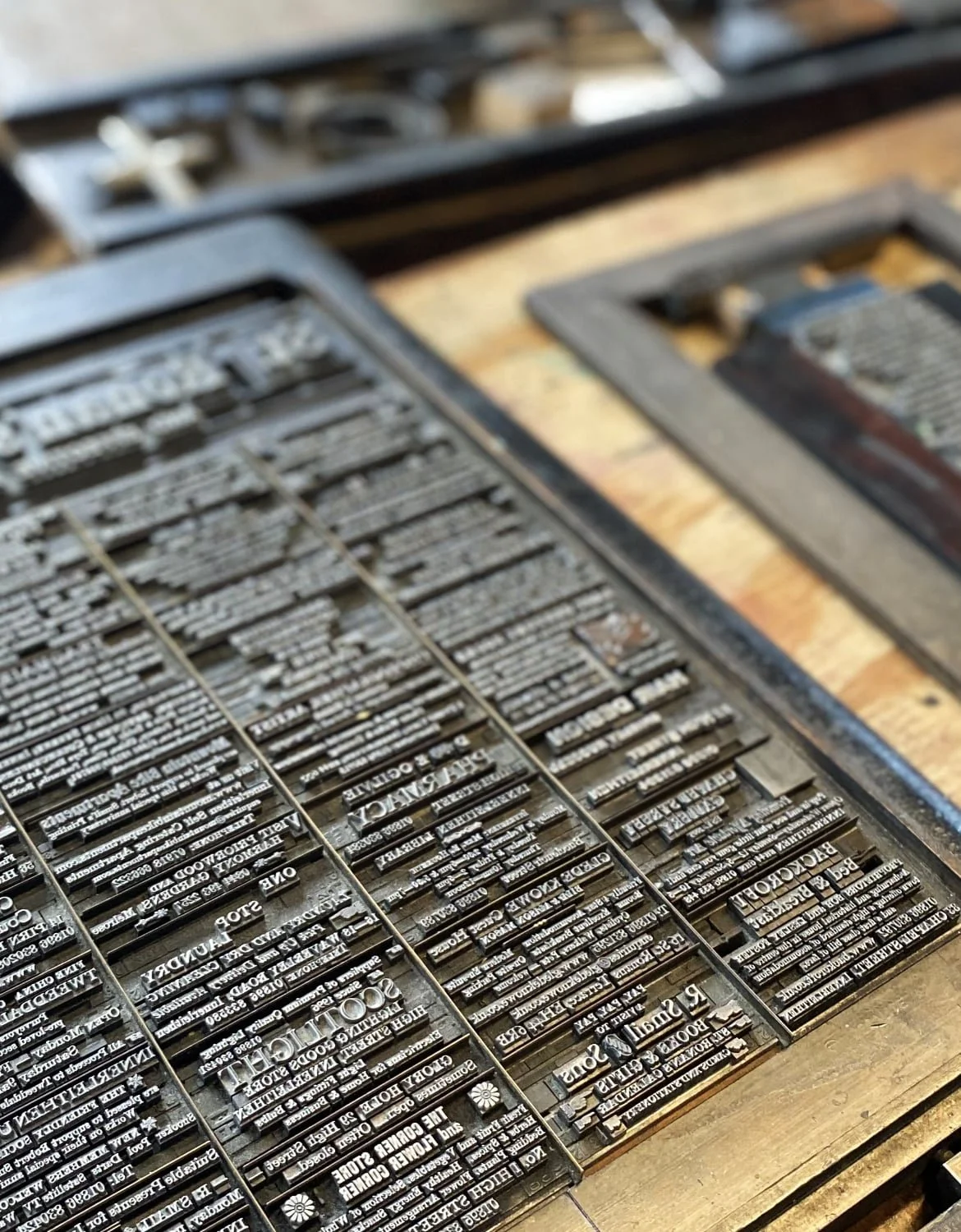
I recently took my daughter on a creative pilgrimage to Robert Smail’s Printing Works, one of the few remaining Victorian letterpress printers in the UK. It’s a quiet place, filled with the scent of ink and the rhythmic clunk and whirr of cast-iron machines.
Watching the type being laid one character at a time, I was struck by how much patience and presence are required in the physical act of making. As my daughter made her own bookmark, it struck me that there’s a profound magic in things that have weight, texture and even scent
The feel of paper, the impression of a letterpress print, the resistance of a pen as we write — these aren't just aesthetic preferences. They’re sensory signals, acting as anchors, pulling our attention away from the infinite expanse of the internet and back into the immediate, physical moment.
Objects as anchors
When we engage with a physical object — be it a beautifully bound book, a ceramic mug held in both hands or a wellbeing journal like those created by If Lost Start Here or Saorsa Psychology — we engage in ritual. We’re choosing a medium that requires us to slow down.
I’ve come to realise that these sensory moments aren’t about productivity; they’re about protection. They create a soft space for our thoughts and ideas to arrive. In a busy world that asks us for polish and perfection, the tactile world offers us permission to be messy. There’s a grace in imperfect action…the scribbles, the ink stains, the sketches. These moments signal to our nervous system that it is safe to land, to be.
This sense of ritual is something I used to enjoy exploring through the concept of the "Artist Date", a weekly practice of seeking out sensory, playful experiences to refill our creative wells, popularised by The Artist’s Way by Julia Cameron. Of course, it doesn't have to be an excursion to a printing works; it can be as simple as choosing a specific notebook for your morning reflections or finding joy in turning the pages of a new magazine.
Returning to self
The tools we use to care for ourselves matter. In seasons where our capacity feels limited, or life feels loud, these tactile anchors become even more vital.
For me, it’s a reminder that creativity and connection don't always require grandeur; they require mindfulness, maybe even playfulness. And I’ve learned that the value of these rituals isn't in the "finish line" or the end result. It’s in the returning; the decision to show up for ourselves and our curiosity, even when we feel uninspired.
By choosing the tactile, we choose the real. By choosing the moment, we choose to be here.
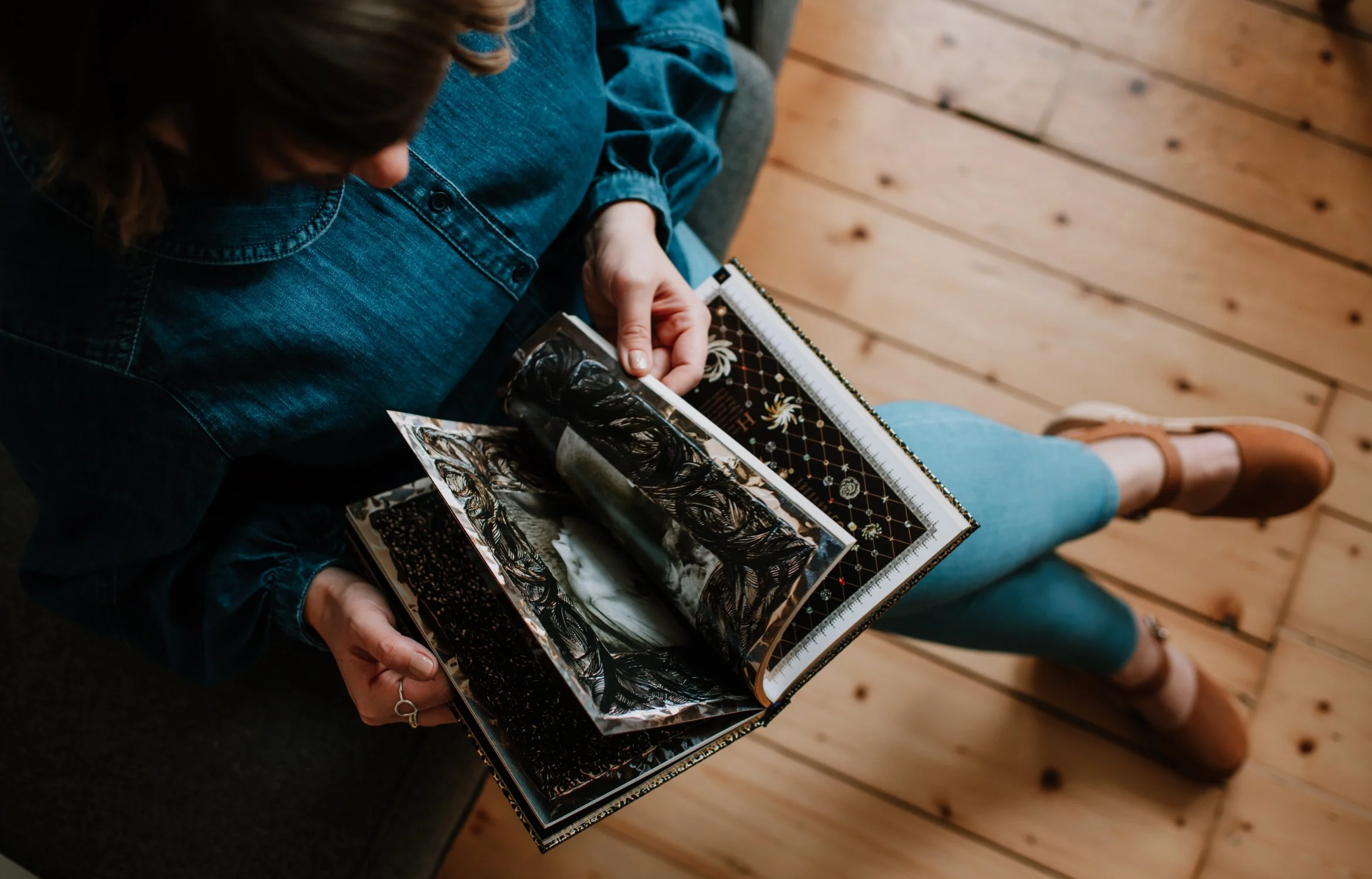
This love for the sensory is woven into the very fabric of my upcoming book, Shape Your Brand Story. This tactile companion for founders, makers and creatives is a beautifully crafted hardback — complete with gold foiling and accents — something to be held and enjoyed as you navigate the cycles of your branding and business journey.
Do you have a tactile ritual that helps you transition from the digital world into a more intentional space? Whether it’s the scratch of a fountain pen on paper or the ritual of opening a fresh journal, I’d love to know what helps you slow down enough to notice.
Sarah Robertson is the creator of the Brand Seasons® Method, a cyclical approach to branding and business that inspired the Brand Seasons® Playdeck and Playbook.
Through her storytelling studio, Fonn, she helps founders, makers and creatives define their vision, craft beautiful visuals and discover their voice. You can find more reflections on intentionality and creativity on her Substack publication, This Creative Life.
Sarah’s first book, Shape Your Brand Story, is being published with 91 Editions this autumn and is now available to pre-order.
How Creativity Helps When You Feel Lost, Overwhelmed, or Disconnected
Creativity isn't just for artists. Discover how creative practices can support wellbeing, reduce overwhelm, and help you reconnect with yourself when life feels noisy or uncertain.
Sometimes the problem isn't that we don't know what to do. It's that we've heard so many voices telling us what we should do that we can no longer hear our own. The productivity experts. The wellbeing experts. The people on social media who seem to have figured it out. The friends with strong opinions. The endless stream of advice arriving through podcasts, newsletters, books, and algorithms. None of it is necessarily wrong. In fact, much of it may be thoughtful, useful, and well-intentioned. But there comes a point where all of that input can begin to drown something out.
Our own voice.
We stop noticing what we think because we're busy collecting what everyone else thinks. We stop paying attention to what we need because we're trying to keep up with what everyone else appears to need. We become disconnected. Not dramatically. Not all at once. Just gradually. A little further away from ourselves than we realise.
This was one of the themes that stayed with me from a recent conversation with Claire Venus, founder of Creatively Conscious. Although we talked about creativity, online life, burnout, visibility, trust, and self-expression, underneath all of it was a question that feels increasingly important:
How do we stay connected to ourselves in a world that is constantly competing for our attention?
The Cost of Overriding Ourselves
One of the most powerful ideas in the conversation was surprisingly simple. Claire talked about paying attention to what feels uplifting and what feels tightening. What expands us and what contracts us. What feels like ours and what feels like something we've absorbed from somewhere else.
It's easy to dismiss this as a small thing.
But many of us have become remarkably skilled at overriding those signals. We push through exhaustion. We say yes when we mean no. We follow advice that doesn't fit. We continue with projects that drain us because we've already invested so much time. We force ourselves to be consistent when what we really need is rest. Eventually, we stop asking ourselves a very important question:
How does this actually feel?
Not how it looks. Not whether it's impressive. Not whether someone else would approve.
How does it feel?
Because our bodies often know something long before our minds catch up.
Creativity Is Sometimes a Form of Reconnection
When people hear the word creativity, they often think of art: Painting. Writing. Music. Design. But creativity can be something much broader than that. It can be the act of making space for yourself again.
A notebook opened at the end of a difficult day.
A walk without headphones.
A garden.
A sketchbook.
A conversation.
A few quiet minutes spent wondering what you actually think about something.
Creativity creates room. And for people who feel overwhelmed, burnt out, anxious, or disconnected, room can be surprisingly healing. Not because it fixes everything. But because it allows us to hear ourselves again.
What If The Goal Isn't To Push Harder?
Many of us have absorbed the idea that if something isn't working, we simply need to try harder.
Be more disciplined. More productive. More consistent. More efficient.
Yet Claire challenges that idea in a way I found refreshing. She describes consistency as one of the biggest myths of modern creative life, arguing instead that what matters is understanding your own creative practice and your own rhythms.
That feels relevant far beyond creativity.
Because perhaps the question isn't:
"How do I make myself keep going?"
Perhaps the question is:
"What do I need in order to thrive?"
Those are very different questions.
One asks us to override ourselves. The other asks us to listen.
Finding Your Way Back
If you've been feeling disconnected lately, maybe the answer isn't another strategy. Maybe it isn't another expert. Maybe it isn't another thing to optimise. Maybe it's simply paying closer attention.
To what lifts you up.
To what drains you.
To what feels alive.
To what feels like yours.
Sometimes finding our way back to ourselves begins with noticing what we've stopped noticing. And perhaps that's what being creatively conscious really means. Not becoming a different person. Just becoming more aware of the one who's already here.
Listen to my full conversation with Claire Venus on A Thought I Kept: How We Stay Creatively Conscious.
And if you're feeling lost, overwhelmed, creatively stuck, or unsure what you need next, our wellbeing sessions offer space to explore what might help you reconnect with yourself. Creativity often becomes part of that conversation.

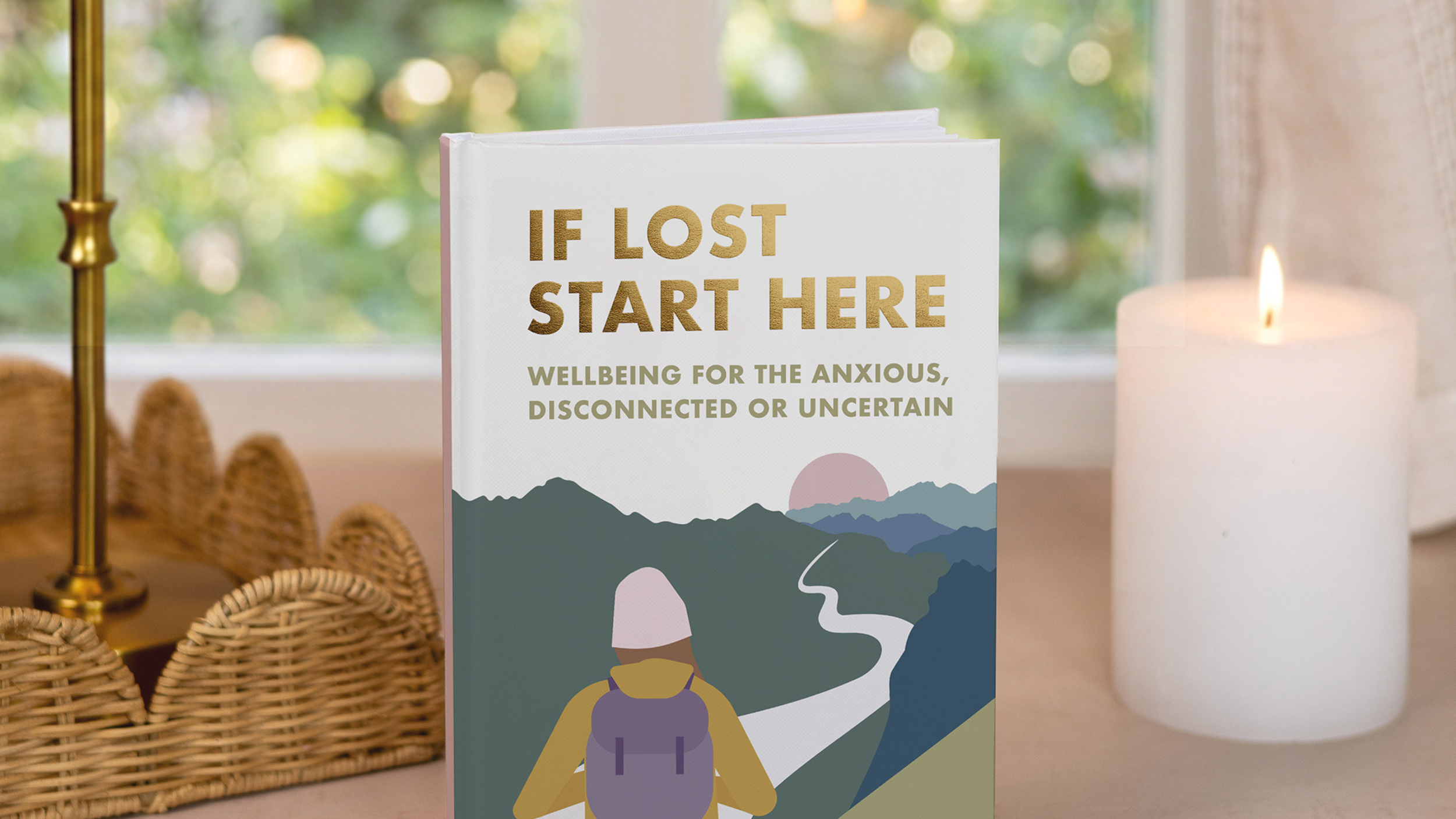
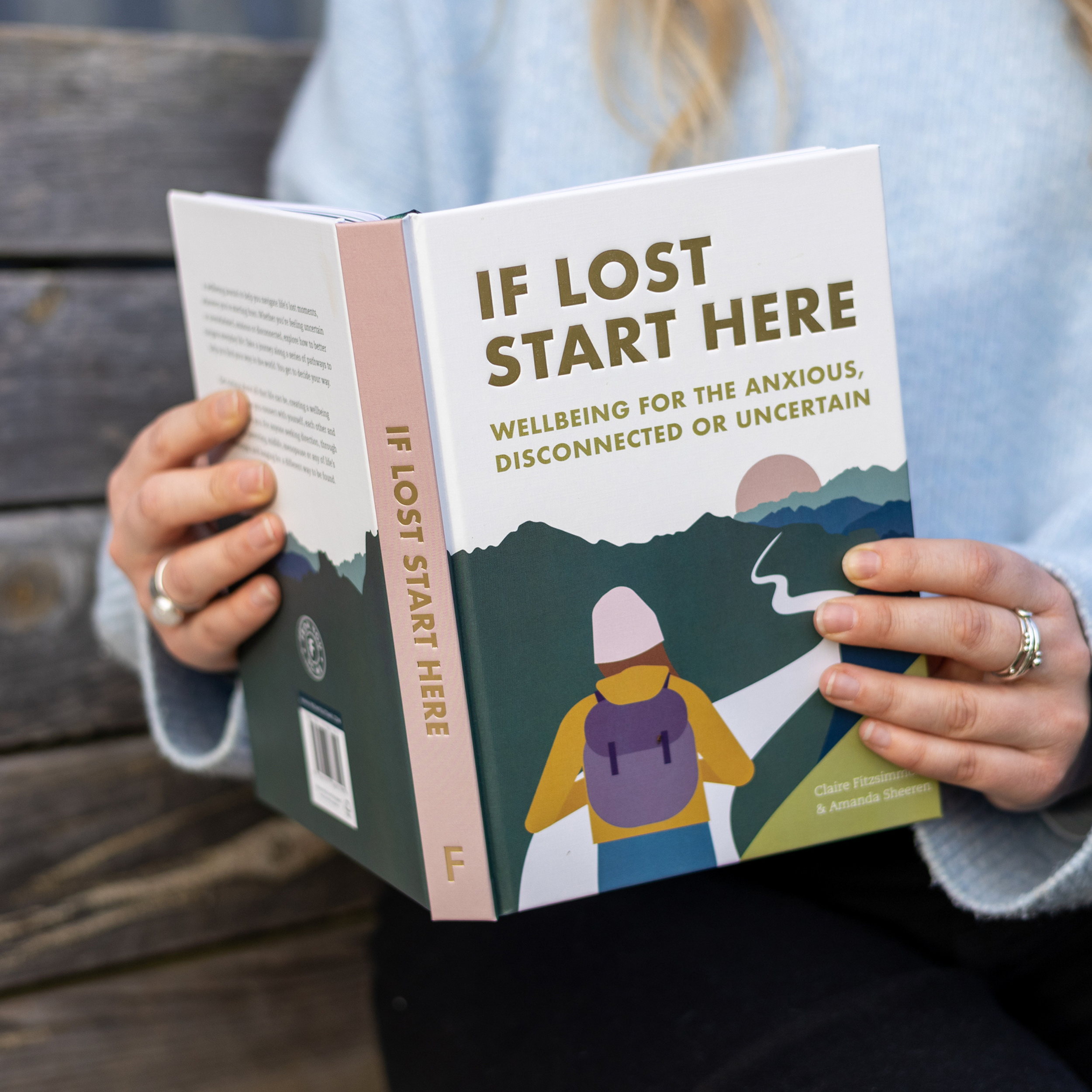
If Lost, Start Here: Our Book Is Here
If Lost, Start Here is a wellbeing journal designed for real life. Explore simple, practical ways to feel better, reconnect with yourself, and find your own way to well.
Ten years ago, we were sitting on a living room floor. Two friends, babies crawling around us, talking about all the ways we felt a bit… lost. Untethered. Overwhelmed.
And more than anything, we were talking about how hard it was to know where to start to just feel better. Not because there weren’t options. Because there were too many.
Everything we turned to—books, advice, tools—often left us feeling worse than we anticipated. Like we were somehow getting it wrong before we’d even begun. And there was a version of life we were meant to be living, and we were slightly off-track from it.
So we started asking different questions.
What do people actually need when they feel like this?
What helps when you’re tired, or overwhelmed, or uncertain?
What still counts when life doesn’t look like the version wellbeing advice assumes?
That was the beginning of If Lost, Start Here. And now, our book.
What This Book Is (And Isn’t)
This isn’t a book that asks you to overhaul your life. It’s not built on the idea that there’s a better version of you waiting on the other side of a perfect routine.
It’s more a guide for when you don’t know where to begin. A place to come back to when things feel off, or unclear, or just a bit flat.
It’s grounded in research, but it doesn’t feel like work. It’s designed to be easy to pick up, easy to move through, and importantly easy to make yours.
There’s no point in this book where you should feel like you’re failing at it. Instead, it’s about exploring.
Exploring yourself, yes, but also exploring your life. The world around you. The things that bring you back into it.
Because one of the things we kept coming back to was this: So much of wellbeing focuses on going inward.
But what about everything that happens when we go outward too?
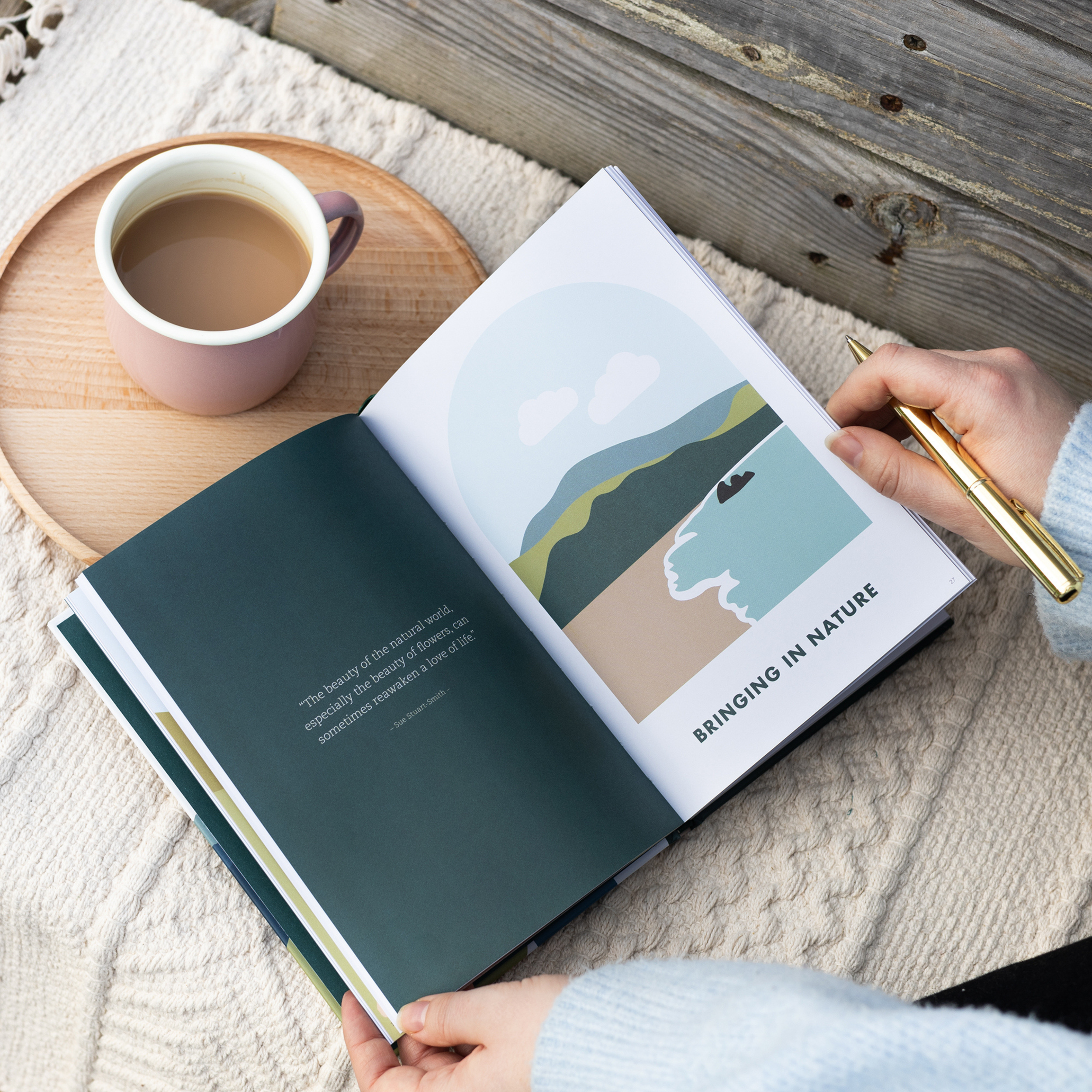
A Guide to You And the World Around You
This book moves through ten different wellbeing pathways. Some will feel familiar like connection, creativity and nature. Others might feel like something you’ve lost touch with, or haven’t quite found your way into yet.
And that’s kind of the point.
We hear this a lot from people: “I’ve never really thought about my life this way before.”
About play, for example. Or awe. Or having a creative practice as an adult that isn’t tied to being “good” at something.
Each pathway is there as a way in. Not something to master. But something to try. Something to notice. And something to come back to when you need it.
You Don’t Have to Do It All (Or Do It Properly)
One of our favourite things about this book is that it doesn’t need you to use it in a particular way.
You can dip in and out. You can follow it month by month. You can skip around entirely and follow whatever catches your attention.
If you’re someone who likes to think things through, you might spend longer with the essays and reflections. If you’re more of a doer, you might go straight to the activities and try things out in your day-to-day life. If you’ve got very little energy, you might just read a page and leave it there.
All of it counts. It’s much more of a “choose your own way through” than a step-by-step plan.
Built for Real Life (Not Ideal Life)
A lot of this started with a very practical question:
What does wellbeing look like when you’re too exhausted, too uncertain and too overwhelmed to do alll the things.
We started looking at each area of wellbeing not as something you either do or don’t do but as something that exists on a spectrum.
So instead of:
“Go for a walk in nature.”
It might be:
“Can you look out of the window?”
Instead of:
“Build a strong social life.”
It might be:
“Who feels like an easier person to text today?”
We found research that backed up the fact that even very small moments still matter. That they still count. That they can still shift how we feel in meaningful ways.
And more than anything, we wanted to build something that worked with people’s lives as they actually are. Not as they think they should be.
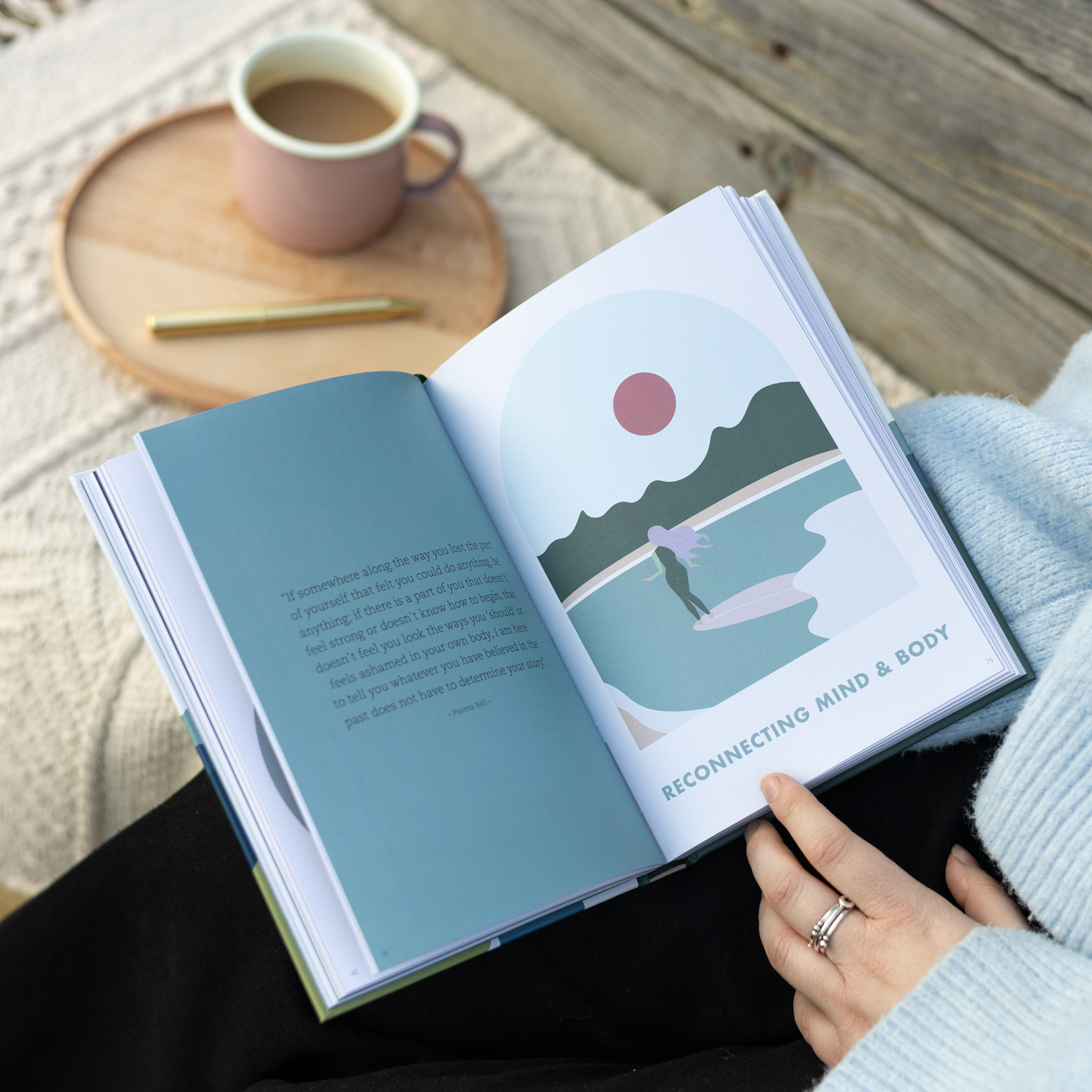
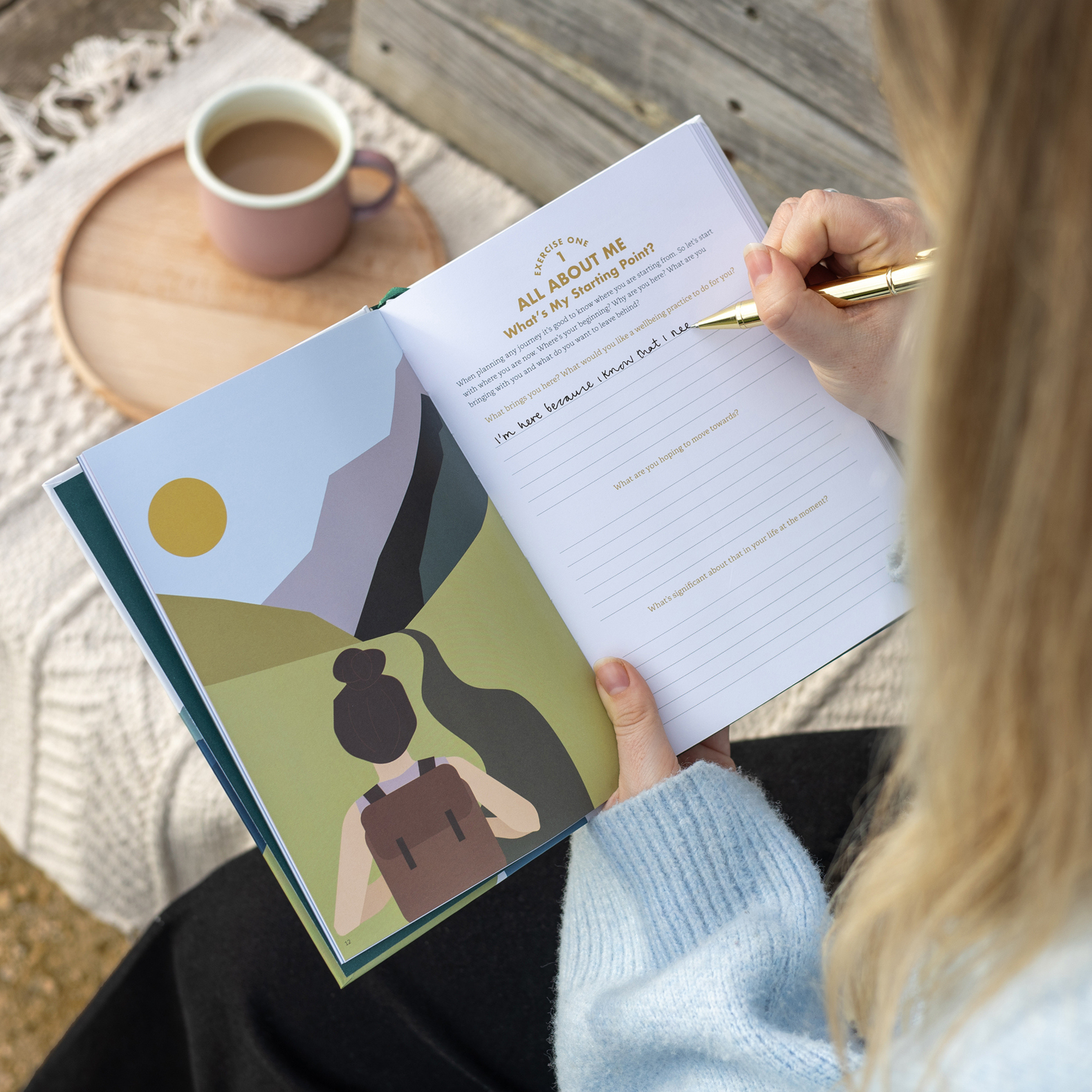
A Different Way to Think About Wellbeing
There’s a lot of pressure in this space now. To get it right. To do more. To optimise. And it can quietly turn wellbeing into another thing on the list.
We wanted this book to sit slightly outside of that. To say: there isn’t one right way to well.
For some people, it might be running, wild swimming, green juices. For others, it might be going to a museum, painting at the kitchen table, watching live music, or finding small ways to be part of the world again.
This is about finding your way. Not following someone else’s.
Something You Can Come Back To
Over the years, this became something we used ourselves.
When things felt off, we’d come back to it. Run through the pathways. Notice what had slipped. What we needed more of. Not in a critical way—more like a check-in.
“Oh, I haven’t so much as touched my toes this year. Maybe mind-body could use a bit of attention.”
It’s that kind of relationship we hope this book becomes. Something you return to. Something that helps you find your footing again.
If You’re Not Sure Where to Start
That’s okay. That’s exactly where this begins.
Also available on Not on the High Street and Amazon.

Creative Self-Care For When No-one is Watching
Feeling stuck or disconnected from yourself? Discover how creative self-care can restore emotional wellbeing — and why creativity might be exactly what you need during life transitions.
I used to think being creative meant having the right aesthetic. Saying the right things. Looking the part.
It was the '90s, and I wanted to be like Maggie O’Connell from Northern Exposure — all-black wardrobe, self-contained, mysterious. When I landed an internship at New York’s Museum of Modern Art, I leaned into that persona hard. Black turtlenecks, boots, cynicism. I belonged. Or at least, I looked like I did.
But the longer I stayed in the art world, the more disconnected I felt. I was writing gallery texts and walking through exhibitions before they opened, surrounded by creativity but somehow far away from it. I had become someone who performed creativity — without actually feeling it.

Then I remembered my mum and what real creativity looked like for her. My mum didn’t care about art-speak or curation. Her creativity was visceral, chaotic, healing. It was hers.
She made clocks, hundreds of them. Covered in sparkles, stars, pinks, purples. Scribbled on with felt-tip pens. For three years, she attended creative wellbeing sessions at our local town’s Art Room, a space a long way from sleek museums. Those mornings were her reset. Her way back to herself.
When she died, she left us the clocks. They’re in wardrobes, on bedroom walls — small reminders of making something just because you need to.
I didn't realise it then, but the idea of creativity was shifting for me too. I wasn’t calling it burnout at the time. I wasn’t saying I was “lost.” But things were shifting. I was tired. Flat. Uncertain. The things that used to light me up didn’t anymore. I kept pushing forward — working, parenting, managing but underneath, something was fraying.
That’s when I started to wonder if creativity could help me find my way back to myself too. Not the polished, performative kind, but the one you do when no one’s watching.
The Link Between Creativity and Wellbeing
What my mum knew instinctively, science now confirms: creative expression can be a powerful tool for wellbeing.
Even simple acts like doodling, journalling, taking photos, and collage can reduce stress, increase positive emotions, and help us feel more like ourselves. Studies in the field of positive psychology link creative practices to improved emotional regulation and resilience.
And the best part? You don’t have to be “creative” to benefit from creative self-care. You just have to make something. Or start.
5 Ways to Reconnect with Creativity During a Life Shift
If you’re in a season of change, burnout, overwhelm, or confusion — here are a few small ways to begin again:
Create something without a plan — a collage, a playlist, a scribble.
Take a creative walk — snap one photo every 5 minutes.
Try a “morning pages” style journal — three uncensored pages first thing.
Colour outside the lines — literally. Get all the pencils and get messier.
Find your kitchen-table creativity — the kind where you get to play.
The Wellery: A Space for Creative Self-Care and Collective Living
Inside The Wellery, our group space for curious, compassionate wellbeing, we’re currently exploring creative self-care as our theme.
Each quarter, we meet for a Co-Well: a group experience to anchor yourself with others through small, doable, reflective practices including creative ones.
If you’d like to explore what creativity might mean for your own version of wellbeing, you’re invited to join us.
Or subscribe here to follow this month’s theme.
Prefer Personal Support? Try a Wellbeing Prescription
If you’d rather explore this one-to-one, I offer Wellbeing Prescriptions: one-off, personalised sessions where we gently map out a plan that supports your energy, creativity, and wellbeing — based on where you are now.
Book your session here.
Make Something That Doesn’t Have to Mean Anything
You don’t need to wait until you feel inspired. Or healed. Or ready. Sometimes, the making is the way.
And in a season of life that feels uncertain, flat, or like you're standing in the hallway between who you were and who you're becoming — creating something just for you might be the most radical act of self-care there is.

How to Reignite Creative Joy When You're Burnt Out
Feeling burnt out or disconnected from your creativity? Discover how reconnecting with joy and creating for love—not likes—can restore your sense of purpose, peace, and play. Featuring insights from our podcast conversation with Emily Charlotte Powell on new wellbeing podcast A Thought I Kept.
If you’re feeling creatively numb, worn down by algorithms, or like you’ve lost your way with the work you used to love — you're not alone. So many of us are asking how to keep going when creativity feels like just another demand, another item on the to-do list, another thing to optimise.
Recently, I had a conversation with artist and illustrator Emily Charlotte Powell on the A Thought I Kept podcast that helped me remember something essential — something I didn’t even realise I’d let slip:
“I will create what I love. I will love what I create. And that will be enough.”
What would shift if that were your starting point too?

Why Burnout Can Sneak Up on Creative People
Creative burnout doesn’t always look like collapse. Sometimes it shows up quietly — a reluctance to return to the page, a growing resentment of the posting schedule, a dullness where there used to be a spark.
We start out making something because we feel something. But over time, it’s easy to swap that inner compass for external cues:
What performs well
What grows fastest
What’s currently trending
In the episode, Emily and I unpack how this shift slowly disconnects us from our original why. We move from making things we love, to making things we think we should.
And that’s when joy leaves the room.
Joy Isn’t Frivolous — It’s Can Be Fuel
This conversation reminded me that joy isn’t a luxury or a frivolous extra — it’s part of the glue that holds our creative selves together.
It’s what makes us want to sit down again tomorrow.
It’s what helps us navigate the rejection, the unread work, the projects that didn’t quite land.
It’s what keeps us tethered to the core of why we started.
Emily speaks about making things she genuinely enjoys and how reconnecting with this playful spirit helped her fall back in love with her practice.
She didn’t wait for permission. She didn’t check what the market wanted first. She just let herself love what she was making.
Creating for Your Wellbeing — Not Just Your Feed
There’s so much content telling us how to create for growth. But what if your creativity was a tool for wellbeing?
What if:
Writing a paragraph you love is its own reward
Drawing something softens your day
Re-reading an old blog post and smiling at your own words is reason enough
Creating what you love and loving what you create can be an act of care — not just for the audience, but for you
It’s okay to pause. It’s okay to make what delights you, even if no one ever sees it. And it’s more than okay to step away from “relevance” to reconnect with resonance — that feeling that this matters to me and that’s enough.
What If Joy Was the Point?
After this episode, I’ve been asking myself:
What would I make if no one else ever saw it?
What would I love to return to?
What kind of work makes me want to begin again?
If you’re burnt out, blocked, or just quietly bored, maybe don’t start with a productivity tip. Start with a feeling. Start with joy. That could be your way back in.

Want More?
This journal post was inspired by my conversation with the wonderful Emily Charlotte Powell on the latest episode of A Thought I Kept.
Listen in for more on:
How to navigate creative pressure without losing your spark
Why feeling something while you create matters
How to protect joy as part of your process
The emotional reality of being a creative person in a content-driven world
Listen now on Substack with bonus video content or find us wherever you get your podcasts.
Let this episode be the quiet nudge that helps you find your way back to what you love.
Sign up for my Substack More Good Days, where I share gentle thoughts on creativity, emotions, and everyday wellbeing — always with the aim of helping you feel better, not more pressure.
Or check out our wellbeing courses designed to help you reconnect with what matters to you.

How to Move Through Creative Self-Doubt and Reconnect With Your Purpose
Feeling stuck or creatively disconnected? Here's how to rebuild your confidence, find meaning in the uncertainty, and return to the creative work that matters.
Have you ever felt like you’ve lost your spark?
Like the ideas that once lit you up have dimmed, or that the thing that used to matter doesn’t quite land the same way anymore?
Maybe you’ve asked yourself: What am I doing this for?
If you're here, chances are you’re navigating your own season of doubt. And if that’s true, then let me offer you this:
You’re not doing it wrong. This is part of it.
The creative process isn’t linear. It’s a stretch and a return. A leap, and then a grounding. A brave “yes” to something new, followed (often quietly) by the decision to come back home to what really matters.

What’s for you won’t go by you.
That phrase—shared by brand designer and creative mentor Sarah Robertson on a recent episode of A Thought I Kept—has been looping in my head since we spoke. It was something her Scottish grandmother used to say, sometimes just in passing. But it landed.
It became an anchor for Sarah in all kinds of moments:
When her business changed direction
When launching a new product stirred up old fears
And when self-doubt made her question whether she was going in the right direction
In each of those moments, that phrase whispered back to her: If it’s for you, it won’t pass you by.
What happens when creativity starts to feel fragile?
Sarah spoke about the delicate emotions that come up when we make something new—especially something that asks a lot of us. When she launched her Brand Seasons card deck (a beautiful, soul-filled strategy tool), it wasn’t just a product launch. It was a creative stretch.
She worried about whether she still had it. She worried whether it was worth it. And in all of that, she still trusted enough to try.
Because sometimes, the bravery is just in showing up for what might be possible.
If you're in a stretch season...
...it might look like saying yes to something that scares you. A project you’re not sure will land. A conversation you don’t feel ready for.
But then there’s the other half of the rhythm—the return.
Sarah shared how, after all the brave leaping, she’s now back in her creative comfort zone: working one-on-one with clients, doing deep brand work, mentoring creatives who are trying something new.
And she’s realised:
It’s okay to let go of the things that aren’t for you too.
Even the things you poured your heart into.
This is permission to release the pressure to make every project the thing.
It can just be a thing. A moment. A stretch.
Then you come back to what fills you up.
If you're in a return season...
...let it be enough.
You don’t have to reinvent everything. You don’t have to push.
Returning to what feels good—what feels like you—can be the most creative act of all.
As Sarah put it:
““There’s definitely been something about learning that the creativity is always there. I can access it, I can tap into it.””
So how do you find your way back to creativity?
Here’s what this conversation reminded me of (and maybe it will help you too):
Self-doubt doesn’t mean you’re not creative. It means you care.
You don’t have to push all the time. Sometimes the letting go is the power move.
A creative pause doesn’t erase your purpose. Your creativity is still there.
The process matters as much as the outcome. Trust what you're learning in the doing.
Not everything is yours to carry. What’s truly for you will stay. What isn’t, can go.
Want to feel more connected to your creativity again?
Take a breath. Come back to yourself.
And ask: What feels like mine to hold right now?
Not what’s trending. Not what’s shiny. Just… what’s true?
If it’s for you, it won’t go by you.
Let that be the anchor.
Want more like this?
Listen to Sarah’s full episode on A Thought I Kept on Substack, Spotify or wherever you get your podcasts

How to cultivate a creative mindset in your daily life for better well-being
Learn how to bring a creative mindset to your well-being practices.
What would happen if you cultivated a creative mindset in your everyday life? If you’re well-being practices came from a perspective of play, curiosity, and openness?
This mindset isn’t just limited to engaging in creative activities; it’s also about fostering an environment and attitude that encourages creative approaches to human flourishing.
How could you get creative with your life?
Key strategies to cultivate a creative mindset:
1. Embrace Curiosity:
Curiosity drives exploration and fuels the desire to learn, which are essential for creativity.
Make a habit of asking questions, seeking new experiences, and learning new skills. Studies show that curious individuals tend to be more creative because they are constantly seeking new knowledge and experiences.
When you bring a creative mindset to your well-being practices you’ll be more open to exploring ideas that can help you feel better. You’ll also remove some of the self-judgment that can accompany either not getting to or even believing you're failing at the self-care practices that you’ve chosen.
2. Practice Mindfulness:
Mindfulness enhances focus and awareness, allowing you to fully engage with the present moment and your creative process.
Incorporate mindfulness practices such as meditation, mindful walking, or mindful art-making into your routine. Mindfulness has been linked to increased creativity and problem-solving abilities.
When you apply this to your well-being practices, you can find ways to connect more with your needs in the present moment. Not who you’ll be when x happens or when you reach a certain goal, but who you are now, how you feel in this moment, how you experience life right now. You’ll find ways to feel better in the practice of your everyday life rather than in some distant future.
3. Create a Stimulating Environment:
Your physical and social environment can significantly influence your creativity.
Surround yourself with inspiring objects, art, and people who encourage and challenge your creative thinking. Design your workspace to reflect your creative aspirations and ensure it is conducive to creative activities.
Create an environment that supports your well-being; beautiful things that help you feel good, books that hold the epiphanies you need, reminders of happy moments and future goals. Define what living within a context of creative well-being looks like to you.
4. Adopt a Growth Mindset:
A growth mindset, the belief that abilities can be developed through dedication and hard work, fosters resilience and the willingness to take risks.
Embrace challenges, learn from criticism, and persist in the face of setbacks. Carol Dweck’s research shows that individuals with a growth mindset are more likely to pursue creative endeavors and persist through difficulties.
As you embark on new well-being practices hold onto the idea of ‘not yet’. You may not have reached the place you want to be, but that doesn’t mean you’ll never get there. It just hasn’t happened yet.
5. Engage in Regular Reflection:
Reflecting on your experiences helps you understand your creative process and identify areas for improvement.
Keep a creativity journal to document your ideas, inspirations, and reflections on your creative activities. Regular reflection can help you recognize patterns and develop new strategies for fostering creativity.
Take time out to connect with your thoughts and feelings, to have a regular dialogue with yourself, so that you can understand what you need that day from your well-being practices and what you’d like to most focus on in your everday life.
6. Balance Structure and Freedom:
A balance between structure and freedom provides a framework for creativity while allowing for flexibility and spontaneous ideas.
Set aside specific times for creative activities while also allowing for unstructured, free-flowing creative sessions. Studies suggest that having some structure can help in organizing thoughts and ideas, while freedom allows for exploration and innovation.
You’ll need both as you bring a creative mindset to your well-being. Define the framework in which you’ll be approaching your life, and then meander in all kinds of directions within it.
Approaching your well-being with a creative mindset might open up new possibilities for feeling better. You might also find that you start to enjoy all those practices you currently believe you have to do. Bring play and possibility to how you approach your everyday life.
By focusing on cultivating a creative mindset, you can integrate creativity into your daily life more effectively, enhancing both your well-being and your creative output.
Further Reading and Resources:
Books:
Mindset: Changing the Way You Think to Fulfil Your Potential by Carol Dweck
Big Magic: How to Live a Creative Life and Let Go of Fear by Elizabeth Gilbert
The Creative Habit: Learn It and Use It for Life by Twyla Tharp
Discover a Better Way to Well
Sign up to our newsletter to receive five ways to approach your well-being so that it works for you. Discover how to create your unique way to well.

The Creativity Cure | How creativity can positively impact your well-being
Learn how to fold more creative activities into your everyday life, so that you can feel happier.
In the moments when we feel most stuck or disconnected, we can overlook how turning to creative practices could help us feel better.
Engaging in creative activities has been found to boost mental health, improve our mood, and help us feel more connected to ourselves and the world around us.
Sometimes though the routine of work, chores, and responsibilities can leave little room for creativity and self-expression. We can get caught in a cycle of endless tasks and relentless deadlines.
If we also have a natural interest in creative pursuits, we can find this lack of an outlet leads us to feel blocked and uninspired. We can start to miss the joy of creating for the sake of creating.
5 Ways to access the well-being benefits of creativity
If you’re curious about exploring your own creativity for well-being purposes, or you long to reconnect with your artistic side, here are some steps to get you started.
1. Try New Creative Outlets:
Experiment with different creative activities, such as painting, writing, dancing, or playing a musical instrument. Trying new things can spark your creativity and open up new possibilities.
2. Set Aside Creative Time:
Make time for creativity in your daily routine. Set aside a specific time each day or week for creative activities, and treat it as a non-negotiable part of your schedule.
3. Join Creative Communities:
Connect with others who share your creative interests. Join local art classes, writing groups, or online communities where you can share your work and get inspired by others.
4. Embrace Imperfection:
Don't worry about creating something perfect. Allow yourself to experiment, make mistakes, and have fun with the creative process. The goal is to enjoy the activity itself, not just what it produces.
5. Seek Inspiration:
Surround yourself with inspiration by visiting museums, attending concerts, reading books, or exploring nature. Inspiration can come from anywhere, and exposing yourself to new experiences can fuel your creativity.
Creativity offers numerous ways to reconnect with yourself, other people, and the world around you.
How could you fold more creative activities into your everyday life, so that you can feel happier?
Find your way to more creativity
Creativity is one of our company’s core values. It’s also one of the areas of our lives that we explore in our online well-being course Find Your Way.
Here’s just a glimpse into how we’ll help you explore more creativity in your everyday life so that you can feel good.
If you’re curious about how to bring more creativity into your life for better well-being, learn more about Find Your Way here.

How journaling can positively impact your well-being
Discover how expressive writing can boost mental health and creativity. Learn how this simple practice helps deepen awareness, process emotions, and unleash imagination. Explore key exercises for immediate well-being benefits.
I recently attended a Writing Workshop for Well-being at The Write Place in Frome led by Christina Sanders, an educator, poet, and fiction writer. During a Saturday morning session, both seasoned writers and complete beginners explored how the simple act of putting words on a page can help us connect with the wonder of life, slow down, deepen our awareness, and unleash our imagination.
James Pennebaker, a social psychologist, was one of the first to highlight the emotional benefits of expressing our thoughts and feelings through writing. His studies, along with those of others, have demonstrated that expressive writing can help us feel less isolated, identify our emotions, and connect with our needs. Moreover, it can assist in processing trauma and alleviating depression.
Writing is a powerful, generative practice. It helps us make sense of our thoughts and feelings, allowing us to write to understand, to get unstuck, and to be curious. Writing encourages us to pay attention to what’s happening inside us as well as in the world around us. And importantly, it can be a source of fun, enabling us to play with our imaginations and give our minds the freedom to roam—even into silliness!
One of the most remarkable insights from the workshop was how quickly writing could create a positive shift. Although the workshop lasted three hours, the actual exercises were just 5 to 10 minutes long. Even these brief exercises were enough to bring about a sense of well-being.
Below, I’ve included five short exercises adapted from Christina’s prompts. These combine freewriting—where you keep writing without stopping, letting whatever comes up flow onto the page—with journaling exercises.
Five Short Writing Exercises for Well-being
Five-Minute Freewrite:
Set a timer for five minutes
Start writing and don’t stop until the timer goes off.
Write whatever comes to mind without worrying about grammar or structure. Just let your thoughts flow.
Write a dialogue:
Take as your subjects the different parts of yourself (e.g., your anxious self and your calm self). This can help you explore inner conflicts and find resolutions. This can also support you in better understanding your inner dynamics and find balanced solutions.
Identify two aspects of yourself that are in conflict.
Write a conversation between these parts, allowing each to express its perspective.
Gratitude Journaling:
Spend five minutes writing about things you are grateful for.
Focus on the details and how these things make you feel.
Imaginary Journey:
Imagine a place where you feel completely at peace.
Spend ten minutes describing this place in as much detail as possible.
Allow your imagination to take over and enjoy the process of creating your peaceful haven.
Visual Prompts:
Using images as prompts can stimulate creativity and emotional expression. This exercise can help you explore emotions and uncover hidden thoughts.
Find a photograph or piece of artwork that resonates with you.
Spend 10-15 minutes writing about what you see, how it makes you feel, and any memories or thoughts it evokes.
Try these exercises and see how writing can enhance your well-being. Remember, the key is not to self-edit as you go along. No one else needs to read what you write—not even you. The goal is simply to get your thoughts and feelings down on the page, no matter how messy or meandering they may seem.
Try to write regularly, even if it’s just for a few minutes each day.
You might be surprised by what emerges from your scribbles. Give it a try, and you’ll see the benefits for yourself.
Happy writing!

Ways to discover your creativity for better emotional well-being
Bring more creativity into your everyday life. Discover how creativity can positively impact your emotional well-being and mental health.
Creativity can mean very different things to different people. You might consider it to be the moment you sit down with your Morning Pages before the day gets started. You might also consider it to be having a studio and being a ‘proper artist’. Whatever you consider your creativity to be, you are both right and not right.
Creativity weaves throughout our lives. It shows up in all places (in creative practice, but also our workplaces, our homes, our relationships) — if we allow it. And that’s the key. Your ideal of creativity might be the very thing that’s pushing away your ability to even make space for it in your life.
With the links below, there are ideas to get you thinking about that gap — between how you imagine creativity to be, and what you need it to be to feel good in your life. Particularly if you want to access its benefits for your emotional wellbeing and mental health.
Read through articles about the new science of neuroaesthetics, try a noticing workout, watch an inspiring talk on Imposter Syndrome (hint that’s often what’s in the gap) or get to a Sketchbook Skool. Just explore where creativity takes you, not where you think it should be taking you.
You’ll learn some of the ways creativity can positively impact your emotional well-being and mental health.
To read:
How improv can impact not just your creative expression but also your wellbeing
How music loops make me feel more present
Self-care knits and ‘reminders of how to care for oneself through challenging times’
What we actually make when we listen to ChatGPT
What if we could reframe regret as pretending
How Banksy’s work is bringing hope to Ukraine
To do:
6 ideas to fill your sketchbook
Put on an art night at home
Try an app that combines music therapy and neuroscience
Rediscover the well-being benefits of playing with Lego as an adult
To watch:
To discover:



What sparks your interest, your creativity? How do you see creativity as something that affects your emotional wellbeing and mental health?
Let us know how you navigate this aspect of your everyday life.

First Art Kit: A Conversation with author & illustrator Boo Paterson
On the publication of her new book First Art Kit, we caught up with Boo Paterson to talk about how therapy and paper crafting can come together, why using our hands can help our brains, and how sometimes peace can be found in a paper Gramophone sitting on our bedstand.
“Hope comes from working to overcome your problems, so they no longer have a detrimental effect on your life. The first step is in identifying what’s going on — which is where I think First Art Kit can help.”
Over the past year of uncertainty, many of us have been searching for that something that works for us. We’ve had to go looking for that thing that can ground us. We’ve had to develop new strategies to contend with our anxieties and our struggles. For many of us, what we’ve found to help ourselves is Creativity.
As our world shifts and shifts again, watercolor sets have been opened, easels purchased, and sketchpads taken on daily walks. Some of us have picked up a pencil for the first time, some have returned to a lost passion long abandoned in school art class. A few have even managed to nurture a hobby into a profession.
Creativity has now staked its place firmly within the realm of mental health. We’re becoming accustomed to it being something to reach for when we’re lost, lonely or anxious. For journalist, illustrator and book sculptor Boo Paterson art has long been a cure for her soul and with her soon-to-be-released book First Art Kit we all get to benefit from her learnings.
In this book of modern creative remedies, Boo brings together common emotional and psychological ailments, from anxiety to insomnia, with paper crafting projects that have helped her navigate her life and that might help each of us in our own. With each paper trace and fold, each twist and tear, Boo takes us step by step through possible antidotes, with projects that get us into a state of flow, signpost changes in our own behaviour and give hope for whatever our situation might be.
Recently awarded the prestigious American Illustration Awards 2021, we caught up with Boo to talk about how therapy and paper crafting can come together, why using our hands can help our brains, and how sometimes peace can be found in a paper Gramophone sitting on our bedstand.
In First Art Kit, you pull together a few strands that we’re often used to seeing separately, the craft of paper-cutting, the practice of therapy, your own story and mental wellness more widely. How did you come to bring them together in this way?
I had a traumatic upbringing and consequently suffer from severe depression. A few years ago, I was going through another black-dog episode and began to think ‘you’ve had loads of therapy — why don’t you make a first aid kit for your brain from the advice you’ve had?’
Then I thought I could make things out of paper that were connected to each psychological cure as reminders for me to do the work because therapy *is* hard work!
I’ve been making things out of paper since I was a very young child and this later became what I was known for as an adult. It’s my go-to material for expressing myself. I knew almost instantly that the idea would make a cool book that could potentially help other people, and this spark of ingenuity actually lifted me out of the depression. I came up with the title and the design within the first 5 minutes: I wanted it to look like a vintage first aid kit.
The crafts in First Art Kit aren’t just papercutting, they’re all different types of paper creations; collage, book sculpture, construction, and colouring. I chose paper because it’s easily accessible to all, inexpensive, and recyclable. Also, paper is unintimidating; many people who think of themselves as ‘bad at art’ are put off by paints and other media, feeling that they have no skills and that they’ll somehow embarrass themselves. But people handle paper every day. It’s seen as something that everyone can use.

Header image: Photo Alex Robson
I love how the book normalises everyday life — the moments we feel we have low self-esteem, or experience anger, or struggle with family members for instance. It universalises our emotional and mental wellbeing. How did you choose the 25 ailments covered in the book? What’s the balance between what you’ve experienced in your own life and how you understand the experiences of others?
I’ve had 23 years of different types of therapy — and every type I’ve tried has benefited me in some way. The last treatment I had was Schema Therapy plus EMDR for trauma, which I have found to be the most useful of all, as it rewires your brain so you no longer default to problem coping strategies. It does seem to have cured my depression and PTSD.
Each chapter tackles a different problem, such as insomnia or anxiety, for example. I’d say I’ve personally dealt with about 18 of the 25 problems and I started writing about those first because, remember, the book was initially created to cure me!
I then began to think of friends’ struggles — such as hoarding or eating disorders — which I’ve never had, but have been on the periphery of. So that’s what I researched next.
The crafts themselves are therapeutic, allowing people to get into a ‘flow state’ of deep concentration. It’s a state that children are frequently in through play, but that adults hardly ever experience. It’s incredibly relaxing and allows the chatter of your brain to be switched off. Making things with your hands also gives people a sense of mastery, which is very important for self-esteem.
As my shrinks never tired of telling me, it’s normal to have a range of emotions. No one is happy all the time, and it wouldn’t be ideal if you were. For those who don’t have problematic behaviours, there is still something here for you — if you’re on a downer, you can read the advice, and relax by doing the crafts.
For those rare people with no problems at all, it can just be used as a craft book!
What’s your hope when someone picks up this book?
I hope that people who’ve never been to therapy and who have little experience of psychology can get a little insight into what the real reason for their unhappiness might be and that it leads them on a journey to find out more and even seek treatment. I also hope that people can get some light relief from doing the crafts, relaxing into the flow state, picking up new skills and learning to incorporate these into their daily life.

Photo: Alex Robson
I like how some of the projects feel like talismen almost, as reminders of some learning, others as meditative exercises, and others as ways of processing something. Some of them are funny and whimsical, others heartbreaking, or heady/conceptual. How did you connect the ailments to the projects; what purpose are you hoping they’ll serve and did that shift as you developed this book?
I wanted them to be beautiful — that’s always a given for me. And I wanted them to be linked in some way to the psychological work that people would have to do. You have to practise therapeutic cures repeatedly to make them stick. I thought if they were unusual, in whatever manner, then that would make users have a connection with the objects.
I guess the reason they came out as they did — with this range of emotions associated with them — is just how my brain works. I reckoned that if I wanted a mini-gramophone made out of paper on my mantlepiece, then probably other people would too!
You mention your own experience with therapy in the preface and you’ve mentioned elsewhere that you’ve been in therapy for 23 years. I’m curious about your relationship with therapy now. This book feels very open to the practice and brings in advice from your own sessions, so you seem therapy-curious still?
My Schema Therapy and EMDR finished in January and its effect on me has been amazing, so I don’t actually need therapy anymore. I exhibit completely different behaviours now.
My parents were alcoholics, so were emotionally absent, and I couldn’t rely on them to meet my needs. As is typical of children who never had their needs met, I continued to put myself in situations where they would not be met as an adult, because that is what is comfortable.
I was face-palming myself all during Schema Therapy, at each realisation that I was inflicting these cruelties on myself.
A good example is this: I have Raynaud’s Syndrome, so I’m always cold unless it’s about 25 degrees. But I wouldn’t switch the heating on unless it was below about 5 degrees. I would sit in the house in my coat — or sometimes two coats — and a hat and scarf, saying it was because I couldn’t afford the heating.
But keeping myself poor was also one of my problem behaviours. I felt I didn’t deserve to have financial security or warmth, or enough food; just the bare minimum, as I’d grown up with emotional deprivation.
As I was undergoing the Schema Therapy, I suddenly noticed that I was starting to turn the heating on as soon as I felt even slightly cold — it made me laugh, actually, as it was so unusual. It became automatic and over-rode the original problem behaviour. So much so that I started meeting my needs all over the place! Now I not only turn the heating on, but buy nice food, and treat myself as I treat others.

Photo: Alex Robson
Why do you think so many people are now turning to creativity as a tool to think about and manage their relationship with themselves and their lives?
Well, it’s completely enjoyable for a start. But there are also numerous studies showing how it alleviates anxiety, depression and stress. I mean, art therapy isn’t a highly skilled profession for nothing.
How do you hope First Art Kit might help in our current moment, of increased loneliness and disconnection, and our collective need to heal from the past year (and keep hopeful in the coming months)?
I think that there’s an element of kismet in First Art Kit coming out at a time of worldwide collective trauma. Many people — who could distract themselves in normal times — were left for the first time to have a good hard look that their problems and their personal situations. People realised what they did and didn’t need. Emotional needs were actually talked about in public discourse, which rarely happened before.
People who have considered the subject of mental health to be embarrassing or un-macho are now verbalising their problems.
Hope comes from working to overcome your problems, so they no longer have a detrimental effect on your life. The first step is in identifying what’s going on — which is where I think First Art Kit can help. Most people have no idea why they act the way they do.
Could you tell me a little about the process of making this book over the 6 months of the first lockdown? I was sorry to learn that you lost loved ones.
I had started writing the words in December 2019 and started conceptualizing and creating the crafts by February 2020. My aunty died around the time of the first lockdown in March, my mum in May, my uncle in August, my friend of 30 years in October and another great friend the day after my birthday in January 2021.
It was like a grenade going off in my face every couple of months. I have actually had a year like this before though: I lost six loved ones in seven months in 2016. So that experience helped somewhat, in that I knew it was normal to feel absolutely abnormal most of the time. I knew that it would take years to process, because — for me anyway — after 3 deaths you don’t have the capacity to grieve for any more people. You kind of put them on a mental back-burner and the grief for them hits you later — sometimes years later.
As for doing the book at the same time, well this is where a dysfunctional childhood really comes into its own! If it doesn’t completely break you, it makes you highly resilient; to the extent where you can cope with almost any trauma and also hold down a full-time job. You’re so used to having no one to rely on that you just get on with it. So I did.
You’ve long used art as an escape. What did that look like for you as a child and how did it help you?
Well, the ‘artist as a tortured soul’ isn’t a cliche for nothing. In childhood, as in adulthood, art allows you to funnel emotional pain out of you and onto a page, where you can process it. Sometimes it’s beautiful, sometimes it’s ugly, but it’s always meaningful.
Personally, I like to create beauty out of suffering, then I feel I’ve converted pain into something worthwhile that others can enjoy.

Photo: Alex Robson
What drew you to paper cutting in particular as a child and why does it continue to be something that you do in your life?
One of my earliest memories was watching an episode of Me and You with my mum — I was probably 3 or 4. They showed you how to make a birdcage out of paper and so I followed along and was amazed that I could make something flat into something 3D.
I also had a ‘play box’, which was a big cardboard box filled with Fairy bottles, loo-roll tubes, and scrap paper; I think we’d now call it ‘the recycling’, but we made our own fun in the 70s. Luckily, there was a plentiful supply of scrap paper as my dad was an author, as well as being a fireman, so all his manuscript pages that didn’t make the cut went into the play box.
I suppose if there had been oil paints and canvas lying around, I would have been into that.
You’ve experienced first-hand the surge in popularity of paper cutting? What do you attribute this to?
I suppose I’m partly responsible for this, as I created Papercut This Book to allow people with no artistic experience to get really nice results papercutting using templates. But aside from that, it’s the case of paper being cheap and available to all — so paper cutting is really a democratic art and craft.
Departing from the book, can you tell me a little about your book holiday course and how this came about?
I’m a book sculptor and created a 15-day e-course to let people immerse themselves in the joy of books and related arts and crafts, and like First Art Kit, its main thrust was to improve overall wellbeing.
I came up with the idea when I was incredibly stressed, and a friend told me to take a week off and do nothing but read books. I loved that idea of taking a vacation from life to be creative with books, and so Book Holiday was born. And, of course, I didn’t take a week off to read books — I got stuck in creating the course instead!
Last question, where do you go when you are lost, lonely, anxious or curious?
Books for when I’m lost, lonely or curious; either reading them or making things out of them.
I’ve been doing Transcendental Meditation for several years now, so I no longer experience anxiety.

Boo Paterson is an artist, illustrator, and journalist whose papercuts and book sculptures have been exhibited at the prestigious Royal Scottish Academy and short-listed for the World Illustration Awards twice. She is a regular cultural commentator for the BBC, and extensive coverage of her artwork has appeared in publications across the world, including the Guardian, the Week, and the Sunday Times. Boo divides her time between New York and the UK.
To learn more about Boo, visit her online.
Boo Paterson, First Art Kit: 25 Creative Papercraft Remedies for What Ails You
Published by Simon & Schuster.

How creativity can improve your wellbeing during uncertain times and beyond
The many ways that creativity can make you feel better wherever you are, and whatever your creative practice.
“Unused creativity is not benign. It metastasizes. It turns into grief, rage, judgment, sorrow, shame. We are creative beings. We are by nature creative.”
Creativity is an important aspect of life, but many people are currently struggling to feel creative. Months of isolation have left many of us feeling lonely and uninspired.
However, some people in the past and present have found that uncertainty and crisis can actually spark creativity and innovation. From trying new crafts like knitting to renovating your home, undertaking creative projects can help boost your mood, bring some joy during these difficult days, and also help you cope during periods of isolation, especially if you live alone.
What is creativity?
Creativity can be channeled, honed, and expressed in tonnes of different ways, not just on canvas or through arts and crafts. It could be through a board game, party planning, or even coming up with solutions to a business problem.
Everyone is creative, but many of us choose to not explore, express or appreciate it, for a variety of reasons, so it goes down the pecking order of priorities and/or the benefits aren’t felt.
Sam had the perception for years that being creative involved painting a masterpiece, like Van Gogh, or writing and performing a song. Both of which he felt he couldn’t do; his creativity was locked in a box or didn't even exist. He’s now come to realise that creativity just needs an outlet that works for you, like many things in our lives.
Similarly, when we think of creativity, many of us still think of painters and musicians, rather than architects, interior designers, warehouse managers, founders, accountants, and all the other people who need to be creative regularly and may not realise they are.
We’ve found that being more creative, however, you choose to access it, is a superpower that can positively impact your life and business. Don't forget - you are creative, it is in you just waiting to come out.

Being more creative boosts your mental health
Here are seven ways that creativity can help us negotiate uncertain times and get through periods of isolation.
1. Creativity reduces stress, anxiety, and mood disturbance
The pandemic has created a lot of doubt and uncertainty, and for many people, this can create feelings of negativity — but you can help mitigate this negativity by doing something creative. Whether you make something beautiful for yourself (such as a pair of earrings) or use your creativity to help someone else (for instance, you could help a small local business with advertising), this focus on doing something and bringing an idea to life will give you a sense of purpose and productivity — giving more meaning to your days in isolation.
The Connection Between Art, Healing, And Public Health — a Review of Current Literature (2010) concluded that “creative engagement can decrease anxiety, stress and mood disturbances.” Another study Everyday Creative Activity as a Path to Flourishing similarly concluded that engaging in a creative activity just once a day can lead to a more positive state of mind.
[A creative activity can be simple, don’t worry. You may be doing it regularly already. It could be doodling in a journal, crafting, playing the guitar, redesigning your kitchen, or business planning. These are things everyone can do and just acknowledging it can give you a boost.]
Back to the study. The results surprised the researcher Tamlin Conner, who didn’t think the findings would be so definitive. Conner said...“Research often yields complex, murky, or weak findings…But, these patterns were strong and straightforward: Doing creative things today predicts improvements in well-being tomorrow. Full stop.”
During the pandemic, your local council might offer creative workshops. For example, the creative sector in Bradford has come up with a host of creative ways for locals to improve their mental health; they are providing virtual classes for both adults and children, including drawing classes, yoga classes and writing classes.
2. Creativity Can Improve Your Personal Space
Lockdown created a whole host of DIY clichés and for good reason! Being stuck inside your house for months isn’t much fun, especially if you don’t find your home relaxing or pleasant — but up-cycling is an easy way to improve your surroundings.
From up-cycling old chairs to give them some personality, repainting some cupboards to breathe new life into them, or turning old cups and bowls into planters for flowers and shrubs this is a simple way to stay occupied (and it is also great for the environment!).
If you are looking for some upcycling inspiration, we can recommend these Instagram Accounts:
@maiseshouse for beautiful upcycle furniture inspiration
@restoringlansdowne for moody interiors and Victorian home renovations
@linsdrabwell for some budget-friendly upcycle hacks
You can start small on something like a plant pot or a mirror and work your way up to something bigger.
This leads to another benefit of creativity; it gives us a feeling of pride, that "I did that, yeah, me”. It’s really nice spending an hour or more creating something, and then et voila. It’s done, it’s there, something that reflects your inner creativity and personality. An expression of you. It feels very empowering and never gets old.

3. Creativity Allows You To Connect With Other People – Close to Home & Around The Globe
Creativity allows you to connect with other people. One of the hardest things about isolation is limited socializing, but you don’t have to be creative alone.
When lockdown first started, and we were on furlough when our studio M.Y.O had to close, we launched #createsolation. This was a series of almost daily challenges trying a new craft from macramé to string art and even fork calligraphy! This helped bring some structure to our days especially and keep us connecting with our audience and regular studio guests virtually. It was so great to see many guests try out the challenges we were doing and share their tips and creations with us.
There are now a whole range of classes that you can take online with friends, as well as hundreds of forums for specific creative interests (such as designing jewelry or knitting) that meet virtually. This allows you to connect with new people who have the same passion as you so that you can collaborate and have fun together. It also opens up borders enabling you to connect with people around the world, who you may not normally meet!
Closer to home, Sam has been sending his mum a range of creative kits from calligraphy to watercolours and even candlemaking for them to do together and to bring back her creative spark. She has been cocooning for a few months as a vulnerable person and having retired was looking for projects to keep her busy. It’s been amazing to see how much it has helped brighten her mood and give her a sense of achievement — from lino printing 50 Christmas cards to decorating her lampshade and upcycling her furniture, her creations have definitely inspired us!
Humans are social creatures, we crave company, connections, and being around other people. Social interactions are still a vital part of who we are — but it is possible to build connections virtually.

4. Creativity increases our sense of self-awareness and opens up expression
Dabbling in being creative produces an output, which is basically an expression of you — even if you don’t think it is! Over time and with a little practice, you can feel a lot more able to express yourself as you become more comfortable in yourself and the different techniques that you are drawn to.
5. Creativity can slow you down (in a good way) and give you an expanded sense of time
Time slows a little in the sense that your thoughts slow and it’s easier to stay focused on the task at hand and feel a little more present. This can be referred to as being in the flow.
Ever feel like your weeks are just absolutely flying by and you don’t know how and what you’ve done? Slowing that right down can really help, and arts and crafts can make that happen. Having such easy access to technology means our brains are constantly whirring, but not necessarily about the right things.
6. Creativity can help you think better
Experiments have shown that being creative, which can trigger mindfulness, boosts your general creativity as it can enhance your ability for divergent thinking — a thought process or method used to generate creative ideas by exploring many possible solutions. But, many of the qualities associated with convergent thinking are also enhanced by mindfulness. Convergent thinking is basically the opposite of divergent thinking. It generally means the ability to give the “correct” answer to standard questions that do not require significant creativity. Creativity helps with both.
7. Become a better problem solver
Short and sweet here. You can become a little more resourceful and creative with figuring things out, much like you need to be when creating something. Part of this comes from having more confidence to think creatively, as you will naturally think harder and come up with more possible solutions to problems, rather than latching onto the first two you think of.
There are so many times when very quick decisions are made on big challenges, without really looking for all possible solutions. When we can come up with more options, we can assess each one and decide on the one that increases our chance of success.

But how can I be creative?
We know that starting any creative practice can be intimidating, even when the benefits to us are increasingly evident. Here are a few ideas for getting you started on your creative adventure.
Start small
If you feel you are never creative, that’s fine. Maybe try it once this month and make a mental note of how you feel after. Try something you can quickly do like an adult colouring book, doodling, or painting by numbers. Do that a couple of times in the next few months, then maybe try more often… you may end up doing it daily — but don’t put pressure on yourself to do that from the outset. Small, incremental changes can become habits.
From a creative thinking perspective, think back to times where you were creative. This will give you a confidence boost to do it more often when you are looking at challenges in life and business. There is always option a, b and c but what about option z?
Next time you have a challenge you need to overcome, write down ten possible solutions to it. You'll be surprised with what you come up with.
Start with someone else
We always find a bit of peer pressure helps and keeps you in check. Get a friend or colleague who you think would equally benefit from having a creative practice, explain the reasoning and get them on board — they don’t have to do it with you, it’s fine to do it solo, but at the least, they can check-in to see how it went, increasing the chances of you doing it! Try making something for each other or teasing out a life or business problem together.
Check out resources for creativity and find the ones that appeal
Our creative space for grown-ups has many classes (both online and off), you can check out our kits (and podcast!) on Creative Jungle and of course If Lost, Start Here has advice on where to go to seek out creativity. However, you start, make it something that works for you, whether that's pottery or welding... the options are huge. Go play.
So, stay creative, stay inspired, and make sure to regularly reach out to your loved ones for a chat whatever your creative life looks like.


The Saviors We Never Knew We Needed
But the beauty in this moment, if there is any to be found, is that we’re beginning to accept that mental health isn’t just something to be addressed within the stark walls of our therapist’s office. We’re beginning to look to more than the typical health care provider to carry us through. We’re beginning to see that, maybe, there is healing to be found elsewhere? Maybe there are solutions and connections and answers in our everyday lives? Maybe music is here to save us, after all.
The sun is setting in San Francisco and I’m roaming the streets barefoot (again).
It’s the summer of 2004 and I’ve just lost my shoes for the fourth time. Seeing as I’ve spent the last hour fighting to stay alive amidst a sea of people, rioting and screaming, it feels like a relatively small casualty.
You might be imagining that I’d just witnessed a burgeoning political movement take shape, that I was standing (shoeless) at the precipice of some groundbreaking revolution (and, now that I think of it, maybe I was...but I certainly didn’t realize it at the time). You may *also* be thinking I was very drunk, tripping my way down the crowded streets of the Tenderloin (which is certainly a strong possibility, but I honestly can’t recall the details.) In reality, I was simply ambling back to my car after a night at The Fillmore...manically happy (albeit a bit bruised)...feeling more alive than I’d ever felt.
I often think back to this time, the early 2000s, coming of age just as the California music scene was coming alive with a new wave of emotionally-charged sounds. (Emo, Screamo, Pop-Punk, Hardcore ... whatever the distinction, there were lots of feelings, and everyone was yelling.)
While I’ve never fully fleshed out the true impact, this much, I know, is true: Packing into a small, hot venue, with all the focus and intensity funneling in one direction is a powerful, communal experience and arguably more cathartic than most other experiences we’re afforded as adults. (Truly, if you have never been allowed to push someone really hard and then sob next to that *same person* whilst swaying, let me tell you, friends: It does NOT disappoint!)
For someone lacking any sort of formal religion, rock shows became my church.
If you were to create a Venn-diagram outlining the commonalities between the two, there probably is a pretty sizable overlap.
(you should draw this)
It makes sense, then, that, in moments of struggle, we look to these idols for direction and guidance, that we take their words as gospel and apply them to our lives; that we pour over their lyrics in search of answers; that we try to align our experiences with their teachings; that we seek connection with other believers; that we stand and chant, screaming their words back to them hoping, this time, that we’ll finally hear them.
Because the truth of the matter is, the reason that we love music is that it offers us a safe place to process and feel—a necessity we’ve, historically, been completely starved for.
We’re a nation of young people being ravaged by mental health issues. Suicide rates and depression and anxiety are all on a steady rise.* But the beauty in this moment, if there is any to be found, is that we’re beginning to accept that mental health isn’t just something to be addressed within the stark walls of our therapist’s office. We’re beginning to look to more than the typical health care provider to carry us through. We’re beginning to see that, maybe, there is healing to be found elsewhere? Maybe there are solutions and connections and answers in our everyday lives? Maybe music is here to save us, after all.
For teens, specifically, there is a power in seeing the people we idolize, respect and trust bringing a vulnerability and openness around these difficult conversations.
Emerging at the same time as this early 2000s emo and punk scenes, To Write Love on Her Arms (TWLOHA) was established to reach this demographic of young people.
“TWLOHA is a non-profit movement dedicated to presenting hope and finding help for people struggling with depression, addiction, self-injury, and suicide. TWLOHA exists to encourage, inform, inspire, and also to invest directly into treatment and recovery.”
Traveling with The Warped Tour, TWLOHA brought mental health awareness to a massive audience and served as a springboard for other similarly impactful initiatives. “Wanting to support existing professional help organizations rather than replace them, TWLOHA has invested directly into causes such as Hopeline, InTheRooms.com, S.A.F.E. Alternatives, Minding Your Mind, and (in Australia) Kids Helpline."
The incredible thing about TWLOHA was seeing how it affected not just the fans, but the bands as well. It became clear that fame and success were no more protective against mental illness than anything else. The truth that we all struggle was brought fully, and literally, to center stage.
Working in the music industry over the last few years, I’ve noticed an uptick, not just in the vulnerability bands bring to their live shows, but in the intentional messaging that is expressed, both through their lyrics and through their on-stage admissions. There is a real drive to reach out and let listeners know that they are not alone.
This year alone:
We saw Lovely The Band frontman Mitchy Collins open up about losing friends to suicide , encouraging listeners to reach out, find help, and check in on one another.
We watched K.Flay release an entire album full of deeply personal stories from her childhood with topics ranging from her ever-present mental health struggles to her strained relationship with her father.
Blue October frontman Justin Furstenfeld’s Open Book tour exposed us to his addiction, how he found hope, accepted help and eventually saved himself.
Rainbow Kitten Surprise floored us with their groundbreaking video for “Hide” (please go watch it immediately) and their resolve to secure equal rights and protections for LGBTQ community members by donating a portion of ticket sales directly to Equality NC.
Billie Eilish took the world by storm by bringing an entirely new sound to the world of alternative and pop music, but she also brought stories of living with Tourette’s syndrome, normalizing the condition for sufferers across the world.
Whether they realize it or not, these bands are shifting the way we orient ourselves to mental health.
I remember the early days of attending shows, being lost in a sea of people, hoping, simply, to hold on to my shoes. I remember the days when “HOW THE FUCK ARE YOU GUYS?!” was the requisite level of interest a band was expected to pay you. I remember how, sometimes, I’d find myself being crushed against the barriers in front of the stage, how the band would stop playing to say something about loving and protecting each other before launching back in to their set. I remember, in that moment, however brief, after fighting for space and gasping for breath, the palpable feeling of relief.
Today’s bands are doing more than offering brief moments of reprieve from the pain... they’re creating a space where the pain can sit and live as we breathe our way through, creating a space where we can come together in recognition of our brokenness and in awe of our strength, creating a space where, yes, we might lose some shoes...but one where we might find some hope, as well.
* In the United States, the suicide rate has jumped 24 percent since 1999, to 13 per 100,000 people, with the steepest growth in the years since 2006, according to a new report from the Centers for Disease Control and Prevention.

NOIR CITY | Dark City Wanderings
It’s like a religious revival tent meeting, but for cynics. Instead of their Sunday best, they wear their vintage 1940s finest. Rather than speaking in tongues, they wax on and on about who played what character in whatever desperately underrated classic. And Communion comes in the form of a big dose of black and white on the Castro Theatre’s massive screen.
It’s like a religious revival tent meeting, but for cynics. Instead of their Sunday best, they wear their vintage 1940s finest. Rather than speaking in tongues, they wax on and on about who played what character in whatever desperately underrated classic. And Communion comes in the form of a big dose of black and white on the Castro Theatre’s massive screen. You’ll leave sated, exhausted, but you’ll be back tomorrow night for another double feature, day-job alertness be damned. If you’re a true acolyte, you’ll see all twenty-some movies over the ten days of NOIR CITY, the annual film festival of the Film Noir Foundation.
I’ve always loved film noir. My parents apparently never thought it odd that an eleven-year-old couldn’t get enough of The Maltese Falcon; was inviting her (probably confused but at least good-humored) friends over to watch Rear Window; and once VCRs became a thing was trotting home from the movie rental shop with whatever sounded dark: Double Indemnity, Out of the Past, The Third Man. My dad had a particular soft spot for Philip Marlowe and Sam Spade, and together we tried in vain to piece together the plot of The Big Sleep, which even having read the book multiple times is incredibly hard to follow (Raymond Chandler himself allegedly said the same). But it looks superb.
Eddie Muller, founder of the Film Noir Foundation and organizer of NOIR CITY since its inception, has summarized film noir thus: “The men and women of this sinister cinematic world are driven by greed, lust, jealousy, and revenge—which leads inexorably to existential torment, soul-crushing despair, and a few last gasping breaths in a rain-soaked gutter. But damned if these lost souls don’t look sensational riding the Hades Express.”
So... Did noir make me a cynic, or did something already in Young Me gravitate toward this material, finding there something that made sense of the Evil That Men Do (or, in my case, that mean junior-high-school girls do)? My experience in the music world leads me to suspect the latter—that I was born this way, and that noir gave my imaginings form. And what a form!! Colossal glamour, pithy wit, underworld allure... Who wouldn’t want to live in a world where you could be sparklingly eloquent, successfully self-employed, adept in a fistfight, and irresistible to the ladies even if on the looks scale you’re more Fred MacMurray than Kirk Douglas?
Seeing these movies at the Castro Theatre, alongside fourteen hundred fellow travelers, takes the thing to a whole new dimension. Each evening opens with live music on the fabulous Castro Wurlitzer (recently replaced with an even more elaborate pipe/digital hybrid organ), then an acutely articulate, written-note-less introduction by the Czar of Noir (the aforementioned Mr. Muller), then the dramatic opening of the curtain to start the first feature. Each year has a theme (my personal fave so far was “international noir”), and Muller and his fellow programmers do their best to balance a few better-known titles that most people still will never have seen on the big screen, lesser-known titles that extremely few will have witnessed on the big screen, and one or two that have been saved from actual oblivion, often through a restoration directly funded by last year’s festival ticket sales. This is the goal of the nonprofit that is the foundation: to save noir films on 35mm, as they were meant to be seen. Say what you will about the viability of actual film as a medium for mass exposure to “film”—Eddie’s got a counterargument ready for you.
At this point there are numerous satellite NOIR CITY fests around the country, but San Francisco is where it all started, and where Muller grew up. He still lives here, and treats the SF iteration as the mother ship that steers the rest of the fleet. I’ve read Muller’s introduction to film noir, Dark City: The Lost World of Film Noir (1998), and have for the last couple of decades made little pencil checks next to the titles I’ve personally seen. Dark City Dames: The Wicked Women of Film Noir (2001) is the clearest manifestation of Muller’s career-long vendetta to bring the femmes of noir, fatale or otherwise, from the clichéd sidelines into the spotlight. I dutifully enrolled in Muller’s “continuing studies” course at Stanford University, “The Politics, Passions, and Personnel of Film Noir,” and I even successfully muscled my way into the gang’s inner circle, helping with the ticketing for the annual SF fest.
But at the end of the day, after you’ve completed all the reading and pondered all the theorizing and copied all the fashions and cut way too much school to watch Dialing for Dollars, the point is the theater experience. This is the “why” of the foundation: to save the films, and to show the films, at venues like the Castro. There’s got to be a really compelling reason why we keep coming back to a joint that holds 1,400 seats, puts on shows that last four or five hours, and has less than ten toilets total.
I’ve got a lot of NOIR CITY memories, but a couple stand out. The first is actually from NOIR CITY XMAS, a teaser show that happens a couple of weeks before the holidays, also at the Castro, as a kind of appetizer for the main fest coming in January. It usually features a bleak Christmas movie (I know, right?!) but this year it was Holiday Affair, a mostly-comedy with the odd bleak moment. I remember laughing so hard I was crying, right along with the crowd, fully realizing that if I’d been watching the thing at home on DVD, I would have been bored, maybe even wouldn’t have finished. I described it to Eddie the next day and he said of course that was right, that’s the power of experiencing movies in the theater. You’re physically, logistically committed, which makes you give yourself over to the larger emotive sense in the room. Sadness, injustice, intrigue, romance, glamour, and, yes, comedy are massively, massively magnified. See my religious-revival-tent metaphor that opened this piece.
This is what will be lost if the old-fashioned moviegoing experience evaporates.
Another very powerful memory of NOIR CITY is not even of being in the theater, but of reviewing the pictures taken by the photographer one year. I scrolled through crowd shot after crowd shot—hipsters, non-hipsters, old people, the occasional celeb (Chris Isaak and Jello Biafra have been noted attendees), and views of the stage showing Muller doing his thing. What stopped me in my tracks was a shot of what Eddie sees from the stage. There must be no sight on earth more satisfying than an ocean of folks who’ve paid their money and made the trek to love and support your dream, and gain something soul-satisfying that could be delivered, for us dark cynical believers, no other way.


Photographs by Rachel Walther © 2019
To find out more: website www.noircity.com / Instagram @Noir.City / Facebook @filmnoirfoundation / Twitter @noirfoundation

MARFA | Land of the Lost
The great irony of Marfa is that it isn’t really trying to be anything other than what it is: a tiny, dusty Texas town. The city of Marfa website pitches it as “more than just a place. . . . It’s a state of mind,” but my mom and I agreed that that gives the wrong idea.
“Don’t drop it!!” I yelled in mock alarm.
I’d just mentioned to the proprietor of Many Stones, the rock shop in Terlingua, Texas, that my mom and I had driven down from Marfa. Mostly in good fun, but also with a healthy dose of genuine mockery, he was holding up a work of contemporary art for our admiration and possible purchase—which was, of course, imaginary. He’d likely perfected the joke over many years: a rock shop owner, selling empty air! These rubes will believe anything!
Grizzled locals ribbing the art crowd who helicopters in, lingers just a while, and jet-sets out: Is it a cliché if that’s what they genuinely think? And who are art tourists to fling around words like “cliché,” hmm?
My mom and I spent three days in Marfa, and we saw most of what it has to offer the out-of-towners. Most tourists come to see the art—expansive installations by Donald Judd, Robert Irwin, Dan Flavin, and other confrères of 1960s minimalism, most of the works permanent and overseen by Judd’s Chinati Foundation. Almost everything is advance-ticketed in order to keep the crowds similarly minimalistic. Other tourists come to see the famous Marfa Lights, a ghostly atmospheric effect. Yet other tourists, for instance Anthony Bourdain, come for the food and continue on to Big Bend National Park, which is even deeper in, on the Mexico border. Bourdain would be dead before that episode aired. Judd died before his time, too.
The great irony of Marfa is that it isn’t really trying to be anything other than what it is: a tiny, dusty Texas town. The city of Marfa website pitches it as “more than just a place. . . . It’s a state of mind,” but my mom and I agreed that that gives the wrong idea. The folks who run the town and the art foundation really do want to keep Marfa a smallish, authentic (in the true-to-itself sense of the word, not the external-culture-police sense) place where tourism doesn’t make life insufferable for the locals. Donald Judd left New York for Marfa because he dug it as it was: small, remote, cheap. It’s the outsiders who insist on projecting onto it all sorts of loco imaginings.
My initial trip research turned up these two young ladies who sought it out as a backdrop for their fashion show:
http://livvyland.com/2017/02/02/texas-road-trip-marfa-big-bend-national-park/
Then there’s this, which makes me think “ugh”:
I have no words for this:
I mean, if you’ve spent many a summer in tiny midwestern towns, as both my mom and I have, there’s nothing . . . magical and transformative about being back in one. In fact, it’s familiar, comfortable. People wave at you when you’re out for a run. Shop owners have time to chat.
And now that we’re on the subject, I’m actually highly suspicious of art people who profess too much astonishment at experiencing a remote place. How many art hotshots in New York or L.A. or San Francisco actually grew up in the metropolis, hmm? And indeed, while waiting around for our tour of The Block, Judd’s former home/compound, I struck up a conversation with a guy, who turned out to be a Local Kid Made Good: grew up nearby, cut his teeth as a Chinati tour guide, now is employed at the Smithsonian in DC, and was back in town for the holidays to see his family. He was taking the tour as an excuse to jaw with old coworkers.
Of course now that I’ve debunked the place, it’s time to admit that I did have a transcendent moment in Marfa. As a lifelong James Dean acolyte (who even made the long, lonely drive to Cholame on one milestone death anniversary to linger at the fateful spot on the highway, at the exact time of day of the crash, with the similarly besotted), I’d known for years that his last film, the epic Giant, was filmed in Marfa. He died just days after principal photography wrapped. What I hadn’t realized was that the Hotel Paisano, where my mom and I stayed, was where the cast had lived for the month-plus of on-location filming. Massive production stills plastered the lobby, and the hallways were filled with little gems for the inquisitive guest with time on her hands, for instance a photo essay by some guy who’d visited the remains of the train station in Maryland where Elizabeth Taylor’s character was shown embarking for Texas with Rock Hudson, her new husband.
It was decrepit now, and that made him sad.
At least there was still something to see. Nothing at all remains of the Reata mansion, which was only ever a facade to begin with—time and tide, fires and looters have disappeared it all—but the spirits of those film legends, all gone now, hovered everywhere for me in Marfa.
As you leave town, for sure stop to take a photo at Elmgreen & Dragset’s Prada Marfa (I bet the rock shop guy secretly loves the idea of that place! so snarky!). But also linger a while in the desert just outside of town and commune with the ghosts of the big ones—and I’m talking about Judd and Bourdain here, too—who likewise stayed a moment or longer, and for some of whom it was more or less a last stop.