

Mood & Moves Dance Co.
Explore your mood through dance at Mood & Moves, a creative studio in San Francisco. Founded in 2020 by Marcella Palazzo, the studio promotes creativity, self-expression, and well-being through empowering and fun dance experiences.
Go here if: You’re curious about exploring your mood through dance and having fun as you do so.
What is it: Mood & Moves is a dance studio and creative space in the heart of San Francisco founded in 2020 by Marcella Palazzo. They offer dance classes and host monthly workshops as well as pop-up classes in various styles of dance. They also provide 1:1 and group private lessons for a customized experience.
Why you need it: Mood & Moves inspires creativity and individuality. Classes are empowering and promote dancing as self-expression, passion, and self-enjoyment for better overall well-being
What else do they offer: Their studio is a blank canvas for creatives of all kinds to bring their vision to life. Whether you're a photographer, dancer, artist, or filmmaker, the studio is a big open space for you to turn your idea into reality. Studio rentals are available 7 days a week for all things creative! You can rent the space by the hour for rehearsals, photoshoots, video shoots, fitness, workshops, and more.


What makes it different: Whether you're renting the studio space or taking a class, you will feel like a star. The facilities are inviting, stylish, and clean. Need a costume change? Step into their Hollywood-themed dressing room. Hosting an event with refreshments? Take advantage of the kitchenette. Ready for your video? Take one in front of their marquee letters. Dancing for the first time ever? Their instructors are ready to take your hand!
How Mood and Moves Dance Co can inspire you, wherever you are: Founder Marcella Palazzo and her group of advanced dancers create concept videos in all styles of dance. The Mood & Moves signature style is featured in these videos, and can be enjoyed by people watching anywhere in the world! You’ll get to experience their passion for creating a performance that makes you feel something, and hopefully become inspired to dance/create as well wherever you may be!
Behind the space
We asked Founder Marcella Palazzo for the story behind Mood and Moves Dance Co.
“Before opening my studio, dance has always been my passion and form of self-expression. I always feel the most like myself when I'm dancing.

As I got older I developed an even greater passion for choreography and watching the ideas in my head come to life. It is my main goal to provide a space for other creatives to dance and bring their visions to life in a world that doesn't always prioritize the arts.
At the end of the day, I lead my art and business with my heart. Whether I'm creating choreography, teaching a class, or prepping for a rental, I give it my all.
If something doesn't feel authentic, I won't do it. I care about the quality of learning my students are receiving, choreography that reflects who I am, and a studio that is always ready to make other people's visions happen.
I hope that through my videos, classes, and studio people can feel my passion for the industry and the art!”
Where inspires you?
“When I'm not feeling like myself I take a break from creating and allow myself to just be.
I usually spend time in nature, read a fictional book, watch a new movie, or go see an artistic performance. I let my mind wander and become inspired by something I experienced doing these activities.”
Mood and Moves Dance Co.
264 Dore Street
San Francisco, CA 94103
USA
The monthly Heels/Burlesque Workshop takes place every second Sunday of the month.
Pop Up Classes with guest instructors are always updated/posted on the website, Instagram, & newsletter
The studio is available for rent 8 am-10 pm 7 days a week.

Okay Humans
With Okay Humans, founder and LMFT Christy Desai is modernizing and destigmatizing therapy to help more people feel better, stronger, and more alive.
We are constantly on the lookout for modern therapy that holds great design with great practice. We’ve sat in one too many uncomfortable waiting rooms, following frustrating booking systems, that came after equally as frustrating searches for someone we actually wanted to work with.
When we discovered LA’s Okay Humans, we knew we’d found a way of offering therapy that made sense to us, and how we live our modern lives. Founder (and LMFT therapist herself) Christy Desai tells us how she has designed a new client experience and environment around therapeutic practice. (We now just need one on every High Street and in every neighborhood).
Tell us about Okay Humans:
Okay Humans is a modern therapy practice from the founders of Drybar. We have a group of qualified and diverse therapists with degrees from places like Pepperdine, USC, Smith College, and more.
We’re all about making it easier to get to therapy. Before you even visit Okay Humans, we've simplified the process for you. Finding your therapist, booking your session, and filling out "paperwork" is all done at your fingertips through our industry-leading app or on okayhumans.com.
It was important to us that Okay Humans be on a visible street so we opened our flagship location in the Brentwood neighborhood of Los Angeles on 11710 San Vicente Blvd.
When you arrive at our brick-and-mortar location, you'll notice we've designed a space that makes you start to feel okay the minute you walk through the door – beautiful architecture, a wellness shop, mentali-tea bar, and sound diminishing therapy suites to ensure a feel-good experience from start to finish. We also built an industry-leading app that makes scheduling, booking, and paying a seamless experience.

What inspired you to start this space and app?
After unsuccessfully trying to outrun the stress of life, I finally looked for a therapist in hopes of catching my breath. What started as “3-5 sessions” turned into years of deep inner work. I learned how to be okay with conflict, curveballs, and growth, just to name a few things. My own experience turned into a personal mission to help other people feel better, stronger, and more alive so I went back to school to get my master’s in clinical psychology and become a licensed marriage and family therapist.
From my experience on both sides of the couch, I realized how antiquated and prohibitive the entire experience around therapy was. I knew that changes needed to be made to remove the barriers of entry so therapy could be more readily available and accessible.
Prior to becoming an LMFT, I was the franchise owner of a kids’ indoor playspace where I learned the ins and outs of building and operating a small business. Coupling these two experiences together, the idea of Okay Humans was born.
What do you offer?
We have a brick-and-mortar location where we see teens, adults, and couples for in-person therapy sessions and have a virtual option available for California residents.
To take even more of the headache out of the experience, we’re now in-network with Aetna & Cigna to help guests save up to 100% of their session costs. Even if guests aren’t covered by our in-network partners, we’ll submit insurance claims on their behalf so they can still save up to 80% on session costs, without the hassle.


What makes Okay Humans different?
We know therapy works. It changes lives and helps people thrive. The magic that happens between you and your therapist in session and the relationship you build together is key in accomplishing that. Our therapists at Okay Humans will provide a framework and a safe space, but there is no right or wrong way for the session to go - the important part is showing up. We make it easier for people to do that, and that’s what I’m most proud of.
With insurance benefits, an app-based booking and payment platform, qualified therapists, and a beautiful, safe space - it's the best way to prioritize your emotional wellbeing.
Our long-term goal is to continue modernizing and destigmatizing therapy so more and more people can reap the benefits. We plan to expand across the country to reach even more people and make going to therapy feel okay in every way.
What keeps you motivated?
The impact that we’re making on people’s lives each and every day is what keeps me excited about building Okay Humans. Building a business is certainly not easy but if you can wake up every morning and know that you’re making a meaningful difference in the world, then it’s worth it. You don’t need to be the smartest, loudest, or most educated person in the room to build a successful business. But you do need to believe wholeheartedly in what you’re doing. If you’re doing something you love and something you’re passionate about, the triumphs supersede the trials.
Next (or first) steps?
To book an appointment, download the Okay Humans iphone app or go to okayhumans.com. To stay in the loop and access mental wellness tips, follow @okayhumans on social media.


Queer LifeSpace
Discover San Francisco’s Queer LifeSpace which offers safe, affordable and accessible support for the queer community. We invited them to tell us about their approach and how people can access their services from wherever they are.
“Evidence-Based Training & Mental Health Services for the LGBTQ+ Community. For Queer People. By Queer People.”
What is it? We are a small, mental health non-profit based in the Castro neighborhood of San Francisco. We specifically focus on providing low-cost therapy to people in the queer community.
Why do people need it? There is a huge need for mental health support in the queer community. We also recognize that the cost of living in the Bay Area is challenging for many so we strive to create a safe, welcoming, and affordable place for our fellow queer people to find the help they need to navigate life's challenges.
What do you offer? We often participate in community events such as the Castro Street Fair. Our website has descriptions of our services, including individual, couples, and group therapy sessions. We just celebrated our 10-year anniversary with a fundraising daytime brunch and drag show Gala.
What makes it different? Our rates are sliding scale and start at $30 for an hour-long session, which, in the Bay Area, is very hard to find. Our organization is also a training site for emerging queer therapists. Because we are a small nonprofit, we have the freedom to create and run our own programming as we see fit. For example, we have a brand new program called EQUARTY, which supports up-and-coming queer artists in the Bay Area. We have another program called Rural Youth Outreach which offers free therapy to queer youth in remote and rural areas of California who may not have easy access to therapy due to their location. There are more plans to expand our programming beyond just therapy.
What do people need to know? We are now seeing clients on Zoom or in person, depending on client preference and therapist availability.
Tell us a little about your story: We understand how important it is to cultivate a space where people can be themselves. As a result, we make great efforts to pair our therapists with clients that share similar life paths. Because of the way we are structured, we aren't limited to a certain number of therapy sessions per client. Clients can attend sessions at QLS for as long as they need.
How can people be inspired by your space wherever they are? Queer mental health could always use more attention in mainstream society. We encourage anyone to talk about the need for mental health support, whether personally or as a culture.
Where inspires you? The strong queer community of the Bay Area is an incredible source of support. We draw upon the wisdom of the queer ancestors who have paved the way for us to do what we do today.
Main Image: Photo by Shingi Rice on Unsplash

Getting High: The Power of Nature in Early Sobriety
Maybe the problem is less about who we are and how we escape and more about the walls we try to contain ourselves within.
A friend once told me that when life got hard, the secret was to get high...like, on a hill, or in a tree...maybe even in a small plane? (I’m not totally sure about the details.) While I never clarified how high, the sentiment behind this philosophy, I’ve come to understand, is that when life is feeling overwhelming, sometimes what we need is simply a shift in perspective.
1000 days ago, I set out on a journey to become sober. (Or, more aptly, 1000 days ago was the last time I set out on a journey to become sober.) For me, chasing a new and natural way to get high was a pursuit born less out of curiosity and more out of necessity.
I started questioning my relationship with alcohol when I realized how much I clung to my experiences of intoxication. How I pushed to keep those blurry nights going. How the evening wasn’t a success until I’d climbed to the top of a batting cage fence and balanced along the edge singing “Don’t Stop Believin” to whoever would listen; until I’d shut down the bar and become best friends with the bartender; until I’d climbed a tree and called to profess my love to every friend I’d ever made. And it was really not over until I stumbled through my door, passed out on my bed, and sunk fitfully into a familiar depression.
Maybe this persona, which only felt accessible when drunk, represented youth and freedom...maybe it represented recklessness and bravery. (Maybe those were the same thing to me?) Whatever it was, there were pieces of this version of myself that I cherished. And the truth was, I knew I would never grant myself this type of freedom in everyday life. I could never square who I was in sobriety with the freer version of myself I could conjure when drinking. Or maybe the problem was, I’d never stopped to try.
1000 days ago marked what I assumed was the beginning of some sort of infinite and unbearable tedium.
But, as it turned out…that’s not what happened at all.
Early Sobriety
So much of early sobriety was defined by not knowing what to do with my hands, or my thoughts, or myself — so afraid of judgment that I could hardly stand to exist in the same room as other people, let alone myself. Here I was, fully lucid, but unable to connect to my body or emotions or anyone around me in any real way.
A huge part of sobriety, for so many of us, is learning to live within the confines of our own minds, processing traumas and regrets, and fears, and finding a way to accept who we once were and redefine who we’re still becoming. We go to therapy and find support groups and lean on our most trusted friends. We take all the big steps, but we sometimes fail to know how to take the small ones, how to move through our daily lives.
When you’ve constructed a world around yourself that relies on your ability to escape it, removing the easiest exit can be terrifying.
Maybe though, the problem is less about who we are and how we escape and more about the walls we try to contain ourselves within.
So many of the things I was running from, so many of my fears, stemmed from this idea that I was not enough. That I had to shift and contort to fit into some preconceived mold, that who I was did not fit within the context of the walls I’d found myself trapped behind.
I wondered, then, what would happen if I removed the walls, and attempted to exist in a different setting? What would happen if I let go of control (of myself, my environment) and embraced something messier? Maybe the problem wasn’t mine to hold...maybe it was mine to set free.
Finding Nature
I can still remember the first time I stripped down to my underwear and plunged into the freezing Pacific. I was six months sober and desperate for something I couldn't name. My decision was made before I’d had time to second guess it (and before I’d seen the sign that said “Don’t go in here, you’ll die.”) This was the type of behavior that I’d assumed was relegated to my college years - the years of invincibility and low-stakes, when you could get drunk and jump in a fountain at midnight and it was mostly just funny; When your ideas were the only prompts needed to move you to action. In sobriety, I assumed that this spontaneity would die.
There is still something that calls me to live on the edge of recklessness, at times, some nearly-forgotten piece of myself that begs to be brought to life. I’ve found though, that at its root, this is not a calling to destroy myself, or even risk anything, it’s more of a call to move and live, to find joy and adventure. This is not a call to push myself to the brink of disaster, it’s simply a call to act.
The waters of Northern California answer the call. The cold hits like a punch to the face, but there is something about the way the shock is met with the lull of the waves. Something about the feeling of being alive, and not wanting to escape.
Being in nature offers us the chance to put our minds and bodies at ease by forcing them to adapt to new and changing conditions, by presenting us with opportunities to be present, without the fear that our minds will run away with us.
Today, plunging into violent waves, jumping into October rivers, and floating in lakes created from newly melted snow are the highlights of my life, a chance to feel alive and in awe. Today hiking and biking and exploring are regular practices and every time I climb a tree or attempt some made-up yoga position atop the highest boulder I can find, I feel a connection, not just to myself and within my body, but to something bigger...something I can’t explain.
When I first stopped drinking, the idea of connecting to some power greater than myself was touted as one of the many necessary stages to recovery. And while I don’t know that it is the same as believing in God or an afterlife or some other whimsical notion, nature is certainly bigger than I am, and full of as many mysteries as anything else. If there were ever a power I felt compelled to respect, this was it.
Rediscovering Ourselves
I can still recall the feelings of drunkenness. The weightless moments that lived somewhere between my anxieties and regrets. For a long time, I missed the feeling, longed for it. But it never occurred to me that there could be something in the world of sobriety to rival that feeling.
This ease of being in nature was enough to get me thinking: what is it that we get from drugs and alcohol that is mimicked here? Why do so many of us feel free and restored? Seen and accepted? Safe and held? I began to wonder if maybe everything we had deluded ourselves to believe we were running towards by drinking, was actually available to us in the natural world.
While there are so many paths to addiction and alcohol dependency, and no simple solutions or quick fixes, I can’t help but wonder if many of us, in addition to our deeper issues, are also starving for feelings of awe and wonder, for some presence of magic in our everyday lives.
For me, drinking had been largely about escape. Less from the problems in my life and more from the incessant hum of my brain, the voices in my head that ran the same narratives, filled with the same lies, over and over and over again, no matter how much I tried to drown them out. As anyone who has ever drunk alcohol knows, the voices can only be quieted for so long, and in the end, they always seemed to come back louder.
I remember being newly sober and in therapy (for anxiety that had shifted to panic attacks and near-constant paranoia). I remember speaking to my therapist about all the things I’d wished I could do but was too afraid to try. At the top of the list were always the same few things: hiking alone, surfing, camping with my kids. I couldn’t shake the feeling that who I was and who I wanted to be, would never coincide.
I’m not sure if it was something she said or some slow realization that progressed over months, but I began to push myself to spend time outside in ways that were uncomfortable. I had to face fears of murderous wildlife and even more murderous humans, fears of sharks and undertows, of snakes, and being alone with my thoughts. In time, the life I imagined for myself, the life I longed for and needed in sobriety, became the life I was leading. In some sort of magical gift of synchronicity, “who I wanted to be” suddenly became much closer to “who I actually am”.
Honesty and Acceptance
I feel like I should be holding a crystal and beating some sort of handmade drum as I expound on the purity and honesty of nature, but despite the painfully cliche trope, I can’t help but believe it is true. With nature, there is no facade. Sure from a distance it is pristine. A snowy mountain top. An alpine lake. The sun setting slowly into the sea...but get up close and you’ll find that it is an entirely different story.
One of my favorite settings is a grassy hillside dappled with cows. You’ve seen it before: The bright green hills set against a perfect blue sky, 7 wispy clouds peacefully poofing by. (It is possible that the Windows XP background, circa-2001, has brainwashed me.) But what happens when you get up close? What happens when you park your car and hop the fence and head up that perfect hill?
Here’s what happens: It’s literally covered in shit.
Truly, just shit. Everywhere.
Rocks. Thorns. Snakes. Shit. Not one square foot of grass that looks suitable for sitting on. Just the luckiest version of factory-farmed cows with their sweet big eyes and dangling little ear tags looking at you like: “Why the fuck are you here? This is our poop hill. Can we not find peace anywhere? Please go away.”
Because here’s the thing. Anything can look beautiful from far away, but pretty much everything is a mess if you look closely enough.
Take any natural wonder and I’ll show you the murky underside. This is the duality of life...the very nature of existence. There is no black and white, there is no perfection. Everything is all of it, all of the time.
1000 days ago I did not understand what it meant to be all of it, all of the time. I didn’t understand the complexity of the mountain that sat before me, could not grasp the nature of the climb or the difficulty of the landscape. 1000 days ago clouds were just beginning to part so that I could finally see the sun.
Today, I am somewhere on the mountain but with the understanding that I’ll never get to the top. I climb because I need the freedom to explore and the space to be myself and the air that is fresh and new. I climb because the alternative is to tumble off of the cliffside and plummet to the river and drown. I climb for the clarity and the perspective and the views. I climb because I can feel the earth beneath my feet and it reminds me of being a child, reminds me that I’m connected to something I cannot understand, reminds me that there is mystery and adventure waiting for me. I climb not because I am headed toward a destination, but because I’m learning to revel in the challenge of the never-ending journey, because there is joy here, and beauty. Because everything I’d ever longed for - freedom and escape, peace and chaos, honesty and connection - all reside here.
I used to think life was about shutting all of the bad parts of myself out so that the beauty could shine. Now I understand that it was that manner of thinking that led me to drink in the first place. The trick isn’t to suppress who you are to be something else, it’s to see the beauty in every piece of yourself, even when it’s a total disaster, to build a life free from the confines of our shallow judgments, to recognize our shortcomings, and love ourselves anyway.
In sobriety, we are forced to grapple with every version of ourselves, who we’ve been through every season, forced to sit with whatever shame or guilt or sadness we’ve spent our lives amassing and running from. Here, there is no running. We are the beautiful shit-covered hillside. We are the mud beneath the melting snow. We are the seagull choking on cigarette butts as the sun slips slowly into the sea. (Someone please find a way to put this on my headstone.)
There is an honesty in nature not because it’s perfect, but because despite its inherent chaos, it’s still beautiful... awe-inspiring...worthy of our love and admiration.
I’m beginning to wonder if maybe we love nature not because it represents something more pure than us, but because it is just like us: a total fucking mess—-and it’s beautiful.

The Lake Shrine
Neuroscientist Dr. Daya Grant discovers a sanctuary in Los Angeles for reflection and a moment of respite from it all.
“Live each present moment completely and the future will take care of itself. Fully enjoy the wonder and beauty of each instant.”
What is it: The Lake Shrine is a sanctuary in the heart of Los Angeles. The beautiful grounds have a small lake (with turtles, koi fish, and two exquisite swans) surrounded by a walking path, pristine plants, flowers, and trees, as well as benches for reflection.
Why You'll Love It: As soon as you step onto the grounds, you can't help but exhale. It is peaceful and inclusive, and every time I visit I can't help but feel that "All is OK". The setting is absolutely gorgeous, but there's also an energy there that is grounding, uplifting, and hopeful. It's a place where you're encouraged to slow down and take your time.
What They Offer: Pre-COVID, the Lake Shrine offered beginner meditation classes in the charming windmill chapel right on the lake. Now, all inspirational presentations and meditations have shifted online. At the Lake Shrine itself, there is a small gift shop with gifts from India, as well as a small bookstore with thoughtful readings.
What Makes It Different: The Lake Shrine invites you to just be — to breathe deep and surrender to the present moment and the beauty all around. While it is on the grounds of a spiritual organization, inclusivity is paramount.
What You Need to Know: During COVID, reservations are required. A limited number of parking permits are available and can be reserved (for free) at a particular time the week prior. It does sell out each week within five minutes, so jump on your computer early and prepare to hit refresh! It is open from Wednesday to Sunday from 1 pm to 4 pm.
In Their Words: "Lake Shrine is part of Self-Realization Fellowship founded by Paramahansa Yogananda. Dedicated in 1950, he envisioned a spiritual environment where people from all over the world could come and experience peace of heart and mind. Today, Lake Shrine offers a lakeside Meditation Garden with shrines and waterfalls, a hilltop Temple with weekly inspirational services and meditations, a retreat for silent renewal, and an ashram for monks of Self-Realization Fellowship."
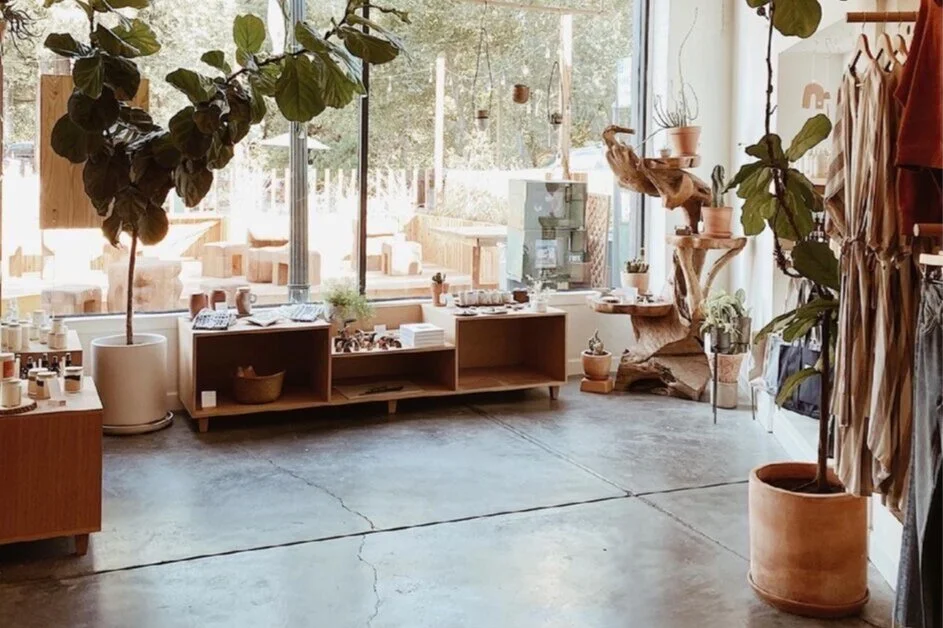
Longway California
Slow fashion meets community and connection at this California-based clothing store and cafe.
“We celebrate slow creation. The people who make things and ideas. The people who spend their lives imagining and dreaming in the same way that we do. We look to take the road with more curves, but also more thought - where a difference can be made and adventures found.”
For: anyone who values taking the backroads, those who cherish slow and thoughtful. This is the anti-thesis of fast fashion.
What is it: A California-based sustainable clothing brand and coffee shop whose dedication to building community rests at the forefront of their mission.

What you need to know: Originally opened under the name Neve and Hawk (a moniker inspired by the first and middles names of their daughter and son, respectively) Longway was, at one time, nothing more than a master bedroom turned screen printing studio. Founder Kris Galmarini and husband Bob took a passion for graphic tees and turned it into one of the most beautifully designed and highly sought-after clothing brands in California, featuring small-batch and handmade pieces that appeal to the dreamer in all of us.
How to bring this into your life: Bay Area locals can stop by their San Anselmo storefront to peruse their collection of women’s, men’s, and children’s clothing along with home goods, books, and gifts, featuring a curated selection of treasures from other artists, designers, and small businesses. While there, be sure to head to the back to find the hidden gem of Marin— an adorable cafe serving SF’s own Lady Falcon Coffee and a selection of seriously delicious treats. We cannot stress enough that this is THE BEST COFFEE IN MARIN COUNTY.
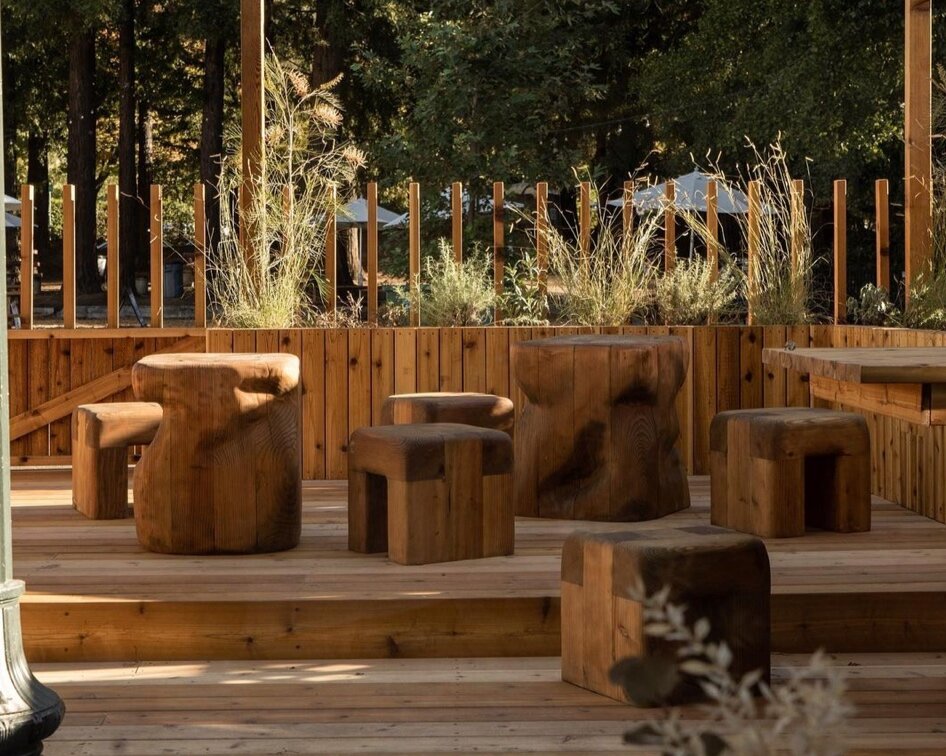
In addition to ample inside seating, which will remain closed/limited through the duration of the covid-pandemic, Longway has partnered with Orca Living to expand their dreamy vibe with the creation of a front patio that is straight out of our Pinterest dreams. Carved wooden stools and thoughtful corners designed for community, connection, and fresh air, greet visitors as they sit to sip on their coffee and give in to the feeling of slow.
For anyone who is not California-based, the Longway Instagram is a great place if you’re looking to redefine your relationship to fashion and start building towards a slower more thoughtful wardrobe, or life, in general. As a bonus, founder Kris Galmarini often graces us with her incredible dance moves and we are very much here for it! She also pops on to give followers a behind-the-scenes look at how the brand is built and the relationships she holds with the people who work so hard to bring her beautiful designs to life. From seamstresses in San Francisco and Peru to her in-store team, to her late-night stories delving into setbacks (both personal and production-related) you cannot help but feel connected to Longway. Their mission to foster community and sustainability shines through everything they do.
We can still recall when the pandemic hit and Kris jumped on Instagram to say something to the effect of. “People are struggling and it feels ridiculous to ask you to buy a new sweater right now.” There was something to her realness and understanding of privilege, that made us love Longway just a little more. At the end of the day, this is the type of brand and space we want to see existing in the world. This is the type of place we are dedicated to supporting in any way we can because it’s the type of place that pushes our world to operate at a higher standard, to value people over profit, to help us redefine consumerism.
Why we think it’s different: Longway’s storefront goes beyond just selling something (though we totally want to buy EVERYTHING they create), to actually building something. “We want it to be a place people want to come,” says founder Kris Galmarini. “We want people to come into the store, and feel better than when they walked in. We want them to interact, to feel inspired, to leave the store feeling better about shit. We’re in this community and we want people to feel good.”
In their own words: “We celebrate slow creation. The people who make things and ideas. The people who spend their lives imagining and dreaming in the same way that we do. We look to take the road with more curves, but also more thought - where a difference can be made and adventures found.”

Something to inspire: Whether fighting for racial justice or the end to family separations at the border, or the normalization of mental health struggles, or the value of slow fashion, Longway is a brand that is not afraid to speak out or to take action, raising awareness, funds and the vibrations of a community who look to them for inspiration. We appreciate Longway for their beautiful selection of goods, but we stay because we know at their heart, they are not a brand, they are a family, one that grows and changes overtime to ensure that they continue to push forward towards a kinder, more just world.
Also their Denim Sunset Jumper is literally the perfect item of clothing. (Don’t even try to change our minds.)
HausWitch
Think you know witchcraft? Think again with this space in Salem redefining Witchcraft for modern times.
Go here if: you are seeking strategies for self-care, are ready to push against some social boundaries, and want to make your home the sanctuary you need it to be.
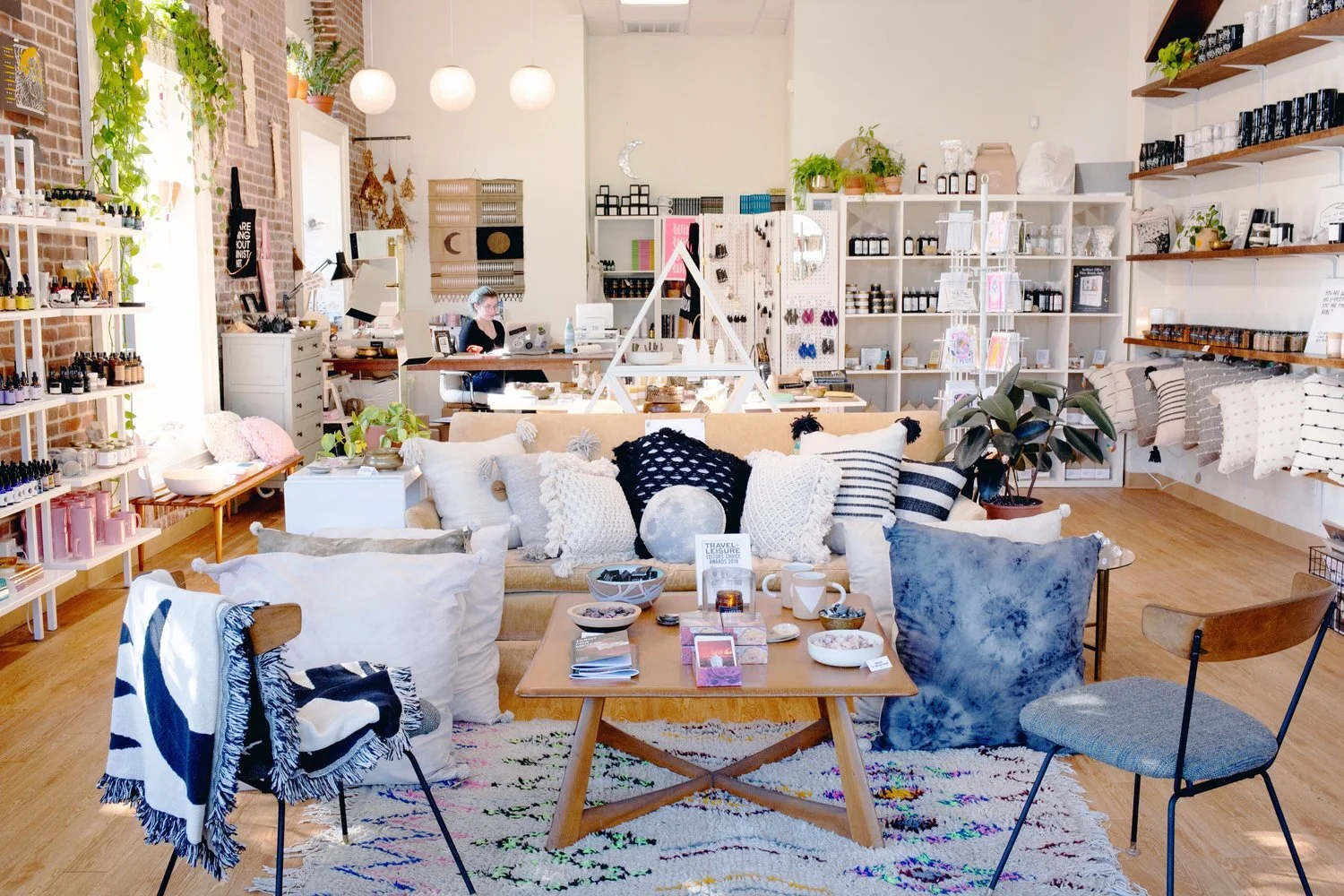
What is it: A metaphysical lifestyle store for the modern witch, or those curious about what that even means, in Salem – yes, that Salem.
Why you’ll love it: Founder Erica Feldmann opened HausWitch in 2015 after completing her graduate studies in the sacred feminine and witchcraft at Simmons College and as a positive space to bring magic into our everyday lives and homes. This isn’t the version of witchcraft told in fairytales or Halloween stories or even those witch trials: it’s not black peaked hats, cauldrons, and evil incantations. Rather its more Scandi design and modern twists: the storefront is light-filled, combining a keen eye for interior decoration with products that reframe witchcraft for contemporary times, bringing in ideas of self-knowledge, empowerment, healing, intuition, mindfulness, and nature-inspired spirituality.
What you need to know: The Treasure Palace as Feldmann refers to the storefront holds minimally designed items for the modern witch (some serious, some playful): incense, spell kits, candles, and potions as well as throw pillows, cleaning products (from own brand LightHaus) and ceramics (‘Witches are the Future’ ). HausWitch also hosts workshops for developing intuitive skills, such as tarot reading or astrology, and that offer safe spaces for women to share, learn and support one another.
How to bring this into your life: HausWitch has just opened up again after a year of being closed due to the pandemic but you can still shop the collection from wherever you are, attend an online workshop or even bring in some magic to your home with Feldmann’s book, HausMagick.
Why we think it's different: Witchcraft is being reframed; we’re increasingly curious about what it represents, what it can provide, and how we can bring it into our lives. In a moment when we’re struggling to live within the constraints of our modern-day world, for the curious and the seekers, witchcraft offers alternative ways into healing and reflection. Its rituals can ground our days, its practices offer self-care to orientate us in spiraling lives. But witchcraft is also about empowerment, about resistance. HausWitch offers ways to slow down, tune in, recognize, but it also offers ways to push against, make space, be heard.
When you get beyond the narrative that has represented witches as outsiders, you get to one that reveals that witches are often those who have pushed against patriarchy, social norms and spiritual expression denoted narrowly. As Feldmann has said: "It's more about feeling empowered, wanting to change the world and connecting to your own intuition."
Witchcraft here sits closely with feminism, with women no longer silenced, reclaiming their powers and making space for themselves in a world that better reflects who they really are (Also shop: “A simple spell against the cis hetero white supremacist patriarchy”. ) For Feldmann, the meaning of witch is ‘Women in Total Control of Herself’ — with women here meaning all gender identities. HausWitch is an intersectional space that is consciously open to “all genders, sexualities, ethnicities, abilities, and anyone who feels like they are in need of a truly supportive and safe environment in this ever-changing world.” Feldmann’s wife Melissa Nierman teaches workshops here (currently offering Past Life and Clairvoyant Energy Readings) and runs NowAge Travel.
In their own words: “HausWitch Home + Healing is a modern metaphysical lifestyle brand and shop, providing Salem locals and visitors with a selection of witchy and handmade products from independent makers from around New England and the US! HausWitch combines the principles of earth magic, meditation, herbalism, and interior decorating to bring magic and healing into everyday spaces.”
Inspired to: We’ve all been tied to our homes this year in ways that may have made us love our spaces slightly less than usual. This spring, find a way to reconnect to where you are. In her book HausMagik, Feldmann suggests rebuilding our relationship to our own space by decluttering, being attuned to what feels good and what doesn’t, bringing in greenery and crystals, and burning sage to reset the energy of a room. Our homes are the spaces that can hold and sustain us through the less cozy outer world; this spring find a way to make it your own again, restorative and replenishing for whatever comes next.

SoberIRL | In Conversation wtih Karla Carolina
In conversation with soberIRL founder Karla Carolina on the power of connection in sobriety.
We spoke with SoberIRL founder Karla Carolina about her journey to sobriety and her realization about the role connection can play in helping people to maintain their alcohol-free lifestyle (and overall mental well-being).
How long have you been sober? Can you tell us a bit about yourself and your journey?
I celebrated 2 years on 12/31/20. I started drinking at 19 when I was studying abroad in college and knew I was a problematic drinker from the get-go. Binge drinking was normal in my circle of friends so even though I was blacking out and acting in ways I didn't like, they were too so it was normal. I also was getting great grades, got into a master’s program, and started my career so it was easy to rationalize away my fears that I had a problem. After 13 years and seeing how much my life was changing for the worse because of drinking, I finally accepted sobriety was the right choice for me.
What is the most important component to maintaining your sobriety and overall well-being?
Community is everything to me, which feels so odd because I felt very strongly against socializing with other sober people in the beginning. I was 8 months in when I started feeling lonely and mourned the loss of my party buddies. I decided to go to a sober retreat and holy guacamole — I felt myself come alive! I made deep connections with people I still talk to regularly. Having a network of people who get me, who understand what I've gone through, and don't judge me for it, is incredibly healing. I have people I can count on when I need some encouragement, need to vent, or want to celebrate. Essentially my real, true, authentic friendships keep me going.
What was the catalyst behind starting soberIRL? Did you ever struggle to be social without alcohol? If so, how have you worked to move past that?
When I went to a sober retreat at 8 months, I became friends with so many amazing people but they lived all over the country. I also made great connections with people I met through Instagram but they didn't live near me either. I struggled to find where I could meet other women locally who were also sober/sober-curious in a casual setting. Since I couldn't find it I decided to create what I wanted. I was equally part scared shitless and excited about the possibilities!
Alcohol had always been part of the equation when I socialized and the idea of meeting new people without it terrified me. What I learned at the sober retreat is: the awkwardness lasts for a short time and as long as you push past it, everything will be ok. Each time I put myself in a situation to socialize without alcohol it has gotten easier, like any other skill.
How has COVID affected your mission?
After doing 2 meetups pre-pandemic, I was heartbroken when we couldn't meet up anymore especially when IRL is part of the name! The coolest thing happened though — I started getting DMs and messages from people asking if we could just do virtual meetings in the meantime. By keeping the virtual meetups for local people, we were still able to foster our connections so when we could do social-distanced hangouts outside. We were so excited to be in each other's company!
COVID has also made me think through what virtual offerings I'd like to make permanent for soberIRL, especially for people with accessibility concerns or those who don't live nearby. A virtual community is still important and can bring lots of value to someone's life. I think after being cooped up for a year, people will want to socialize more than ever but also want to be very intentional about who and what they spend their time on.
What is your dream for soberIRL? How has it been going starting new chapters?
I want to get lofty with this, I'd love for soberIRL to be as ubiquitous as AA! For a long time, it's been the main resource people know, even if they don't have issues with alcohol. I am doing my part to co-create a world where people understand there are multiple pathways to recovery and they have the opportunity to choose what feels right for them. And for those who want to explore what it’s like to socialize and participate in life without alcohol, soberIRL will be there.
After a year of hosting meetups in San Francisco and sharing it with people through Instagram, I decided to partner with women to bring soberIRL to their local community. Right now my biggest challenge is spreading awareness that soberIRL is no longer just a Bay Area thing. I almost feel like I'm getting people set up to start their own franchise! It's been great as a forcing function to be very clear about the mission, vision, and vibe of the community.
What are some of your favorite sobriety resources? Products?
The resources I am forever grateful to:
Podcasts: Recovery Happy Hour and Recovery Elevator
Books: This Naked Mind by Annie Grace and Quit Like A Woman by Holly Whittaker
NA Drinks: CLEAN Cause, Curious Elixirs, Siren Shrubs
Places: Ocean Beach Cafe
What would you say to someone who might be sober-curious but afraid to take the leap?
You know where alcohol leads you, why not see where cutting it out for a bit takes you? Part of what kept me stuck was feeling I had to quit forever and to make that decision on Day 1. Because I couldn't commit to forever I kept drinking. You don't have to worry about forever right now.
The other thing I would say is...get first-hand experience of what sober life is like. Just imagining it (like I did for years!) is not sufficient. Immerse yourself in it. Read some quit lit, listen to podcasts, check out some blogs, and/or scroll through sober IG for inspiration — it will help you see people who are empowered by their sobriety, not ashamed of it.
What are some of your favorite quotes?
“I understood myself only after I destroyed myself. And only in the process of fixing myself, did I know who I really was.” ― Sade Andria Zabala.
"I would rather go through life sober, believing I am an alcoholic, than go through life drunk, trying to convince myself that I am not" -unknown
You can learn more about SoberIRL, find a local chapter or sign-up for a virtual meet-up by reaching out on instagram or their website!

Arium Botanicals
A plant shop in Portland that does it all just that little bit differently, from the plants they stock to how they think about the environment.
Go here if: you are a collector or seeker of botanical curiosities no matter your existing knowledge about houseplants.
What is it: As much for plant lovers as curiosity seekers, Portland’s Arium has become known for its wide variety of different species and types of plants. In a city that has an abundance of plant stores and a fervent plant community, you’ll find here special interest and rare plants that you may not be familiar with or haven’t seen before, as well as the advice and information that makes you confident about taking them home (they may be unusual but that doesn’t necessarily make them hard to care for).
Partners in business and life Anthony Sanchez and Tylor Rogers started Arium online before finding their forever home in a former Land Rover repair shop. They transformed the garage into a bright open space with white walls and a garage door that opens to let in the light, and brought in wall-to-wall foliage, with hanging displays, moss column growing plants, and greenery seemingly everywhere.
Why you’ll love it: We’re in the midst of a houseplant boom that’s been tied to social media posting millennials who understand the wellbeing benefits of bringing plants indoors: four in five 16 to 24-year-olds own at least one houseplant, with a fifth of plant owners buying them for their wellness benefits. One-third of new gardeners are millennials.
With leaves of subtle colors or unusual shapes, decorative patterns, and broad textures, Arium steps into the space that owner Tyler Rogers grew through his own wildly popular Instagram account, @Urlocalplantboy. The space celebrates ornamental horticulture and searches out truly unique specimens while making them approachable, if not coveted.
Each plant is given its botanical name, from the huge leaves of the Alocasia “Regal shield”, a sweet Ficus Altissima, and cork growing Hoya Obovata Mount. When you go there might be Begonia “Cracked Ice”, Philodendron “Pink Princess” and Alocasia “Silver Dragon”.
What you need to know: The name ‘arium’ is a play on terrarium (earth + container); here the store is given its Latin meaning: ‘a space or vessel that contains something’. It’s rather magical to think of Arium as the container of the green world owners Rogers and Sanchez have conceived to inhabit it.
How to bring this into your life: Currently Arium is open to the public with COVID-care measures in place, though workshop programs, book signings, and events are not yet back up and running. Look out for announcements on social media for when they begin again. They also ship within the US.
Why we think it's different: A vegan and queer-owned business, which the owners have declared a safe space for “all sexual orientations, gender identities, religions, and races” and that also takes its conservation standards seriously. Arium donates monthly to Conservation International and doesn’t stock plants on the IUCN Red List of Threatened Species. All their plants are ethically sourced from certified U.S. nurseries, and they use their space to educate about plants that face extinction or habitat loss, condemning the poaching of plants or wild collection. Beyond horticulture, they also support the local creative community in Portland by stocking a selection of ceramics made by local makers.
In their own words: “We initially started Arium as a means of making unusual plants that can be implemented in design and in the home. We firmly believe there is a plant for everyone and that no question is dumb or illegitimate. Like us, we all started somewhere. Making our space welcoming, a place for learning, and geek out about plants. We are proud to be a space for beginners all the way to avid collectors.”
Something to do: Our plant parenthood journey started small – as many with a single succulent. Choose a plant that you love to cultivate and bring into your home (doesn’t have to be the celebrity Fiddle Leaf Fig). Build up your gardening muscle slowly. It's ok not to have a collection of 60, start with one and see how it makes you feel. Do you like owning a plant, do you like looking after it, does it make you feel good? If it's too much pressure, feel free to abandon your houseplant journey. But if it incites something positive, bring in plant number 2.

Cafes for Life
Which cafes do more than get you started in the morning? Here we’re featuring a handful of cafes that go beyond coffee to our communities, our planet, even our minds.
Although our equivalent of lockdown bread baking was making a half-decent latte, we’ve been missing cafes. Today we’re looking at a handful that give us a place to think about the world differently, whether that’s giving back to our communities, raising money for charities that matter, working to save our planet, or even redefining their role in mental wellness. As we’ve come to realize as we steam oat milk in our kitchens, there is more to cafes than the drinks they serve; they are the hubs that bring a neighborhood together and offer a framework in which to explore what matters in life.
Pink Owl Coffee, Marin, CA
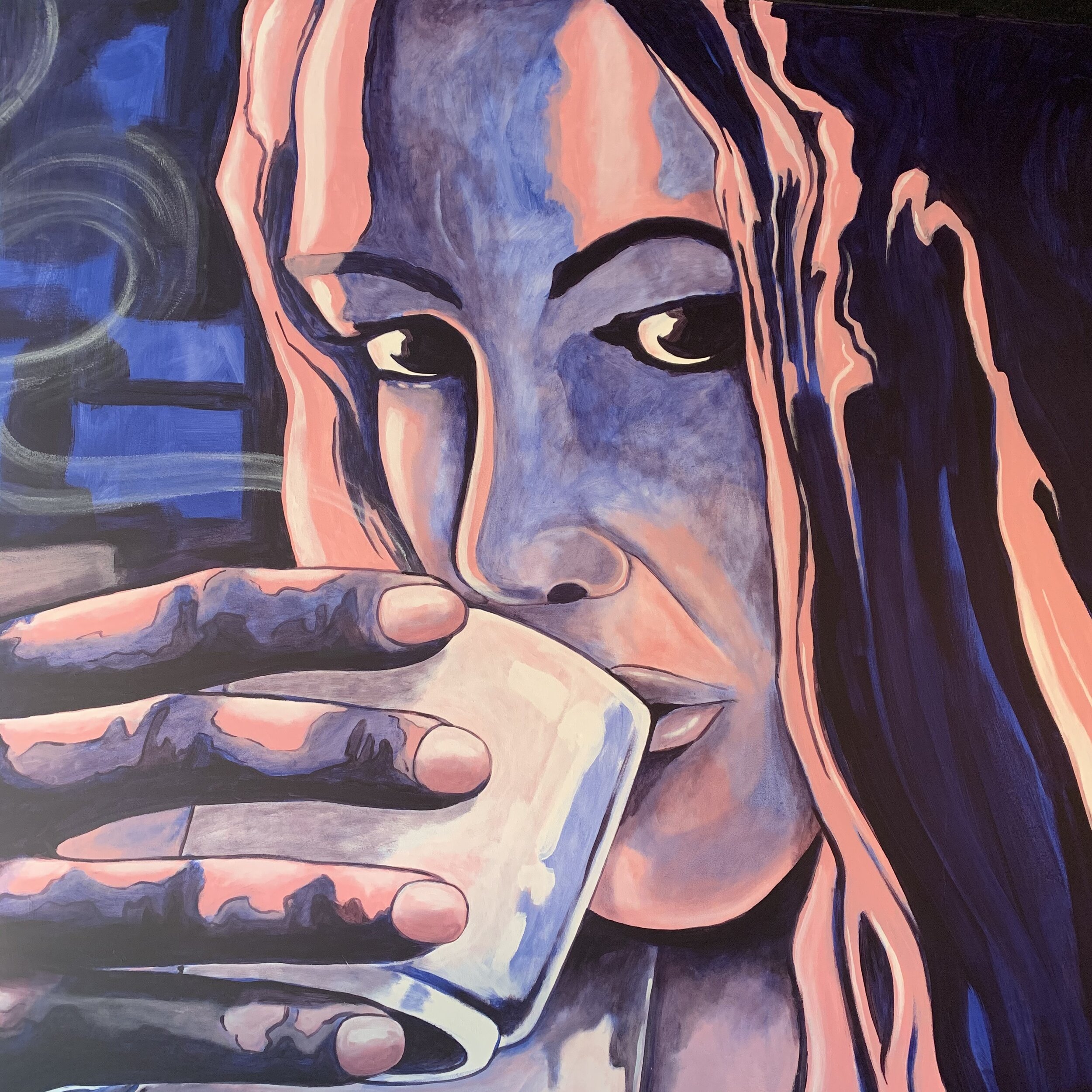
Before the pandemic, this was our place to head for early morning work meetings, chosen because of its friendly owners, great coffee, and cozy lounge. But the reason we’re including it here is the café’s mission to support breast cancer charities, with 10% of profits going to research and awareness initiatives. Founded by breast cancer survivor Saandra Bowlus and her partner Joe Carlo, the café puts its support front and center, from the name (the Owls are just because they like them), the pink inflected décor, and the savvy branding — as their new retail coffee bags say “Because breast cancer sucks”. When you buy their vanilla lavender oat milk latte made with the on-site roasted blend, or a mochi donut from Third Culture Bakery, or even a puppucino, you get to support a great cause too. Once the space reopens for inside coffee drinking, we recommend you seek out a spot by the fireplace or a window seat, grab a board game or a book on coffee, and settle down with a friend or listen to one of the live music sessions. A local with heart.
Back of the Yards Coffeehouse, Chicago
A womyn and Latinx-owned community-focused coffee company established in 2016 based in the Back of the Yards neighborhood on the south side of Chicago. In one of the city’s most historic districts – many European immigrants came to work on the stockyards, which has most recently seen an influx of Mexican migrants – that has become associated in the news with gun violence, Marya Hernandez and Jesse Iniguez, who grew up in the neighborhood, wanted to establish a different narrative and new opportunities for locals. Working against a belief that “Mexicans don’t drink coffee” and in a place where independent coffee shops weren’t going, Back of the Yards Coffeehouse has become a popular spot – awarded the 2018 Time Out Chicago Love Award for Most Loved Coffee Place. Its drinks menu includes Cafe de olla (with cinnamon and spices), Ojo Rojo (a shot of espresso added to drip), and Café Con Leche. But it is how the cafe supports ethical coffee production and the neighborhood that makes it stand out: The café sources its beans directly from farmers including those in the Chiapas region paying a fair price, directs 95% of waste to compost, everything from coffee cups to used beans, and hires locally, training up interns to be fully qualified baristas. For each purchase of a bag of their 47th Street blend, Back in the Yards Coffeehouse gives $1 to a Social Impact Fund that works to support programs for peace and education in the neighborhood. And those red mugs on the wall, represent all the people who pulled together to make this cafe happen for the community.


Trouble Coffee, San Francisco
We’ve written about how cafes have helped our own emotional wellbeing, but this Outer Sunset coffee shop was started 13 years ago to help the owner, Giulietta Carrelli, manage her own mental health. Many first came to Carrelli’s story on This American Life which relays how she founded the business to give her the order and routine she needed to manage her schizophrenia. Trouble Coffee reads like an autobiography, a stand-in for Carrelli herself, particularly its idiosyncratic menu which features cinnamon toast (for comfort and which is also attributed with starting San Francisco’s high-end toast craze), coconuts (for survival, containing everything needed for nourishment), and coffee (representing speed and communication). This tiny outpost by the ocean — which was created out of the driftwood found on the beach — also gave Carrelli the loose connections she needed to feel safe, to know that as people began to recognize her, she’d be known and understood within this community. Opening a coffee business is not a natural remedy for a mental health condition, but Trouble Coffee allowed Carrelli to make space for herself in ways she hadn’t been able to before and that saved her. As Carrelli/ Trouble says, “trouble is not only a coffee co it is a community of people and power that kept me alive.”
IXV, Brooklyn
In a city where, pre-pandemic, New Yorkers were going through 100,000 disposable coffee cups every half hour, IXV is the sustainably-minded coffee shop and brand that’s needed. It was founded by Jenny Cooper, former J.Crew/ crewcuts designer (the company is named after her grandfather) in the garage of her Boerum Hill, Brooklyn home, to make “life less trashy”. When she started just over a year ago, Cooper had a simple idea to bring sustainability and community together — making coffee for people in the neighborhood who could bring a mug to be filled and drop it off to be cleaned, with the cycle beginning again the next morning. Aiming for zero-waste, IXV encourages customers to bring their own cups (there’s a .25 cent charge for paper cups to cover composting and recycling charges), reduce waste and compost where possible (it’s all the detail here: cold drinks are served in algae lined paper cups which compost better than PLA compostable plastics). IXV also serves as a store with plastic-free household goods, ceramic espresso cups, and refillable hand sanitizer available, a vintage clothing upcyler aiming to counter the environmental impacts of fast fashion through reworking preloved pieces, and a location for a CSA food box that supports local growers and makers, in this instance New York’s Norwich Meadows and givebacks via donations to a local shelter and soup kitchen ChiPS. IXV is giving locals a better way of getting their caffeine and a different model for how our neighborhood coffeeshops might operate. More widely it can inspire us all to carry our keep cups while adjusting daily habits that trash the environment.

Tell us which cafes matter to you and could matter to other people too? Which cafes are helping our minds, our bodies, our communities and our planets function better? You can nominate them for our guide here.
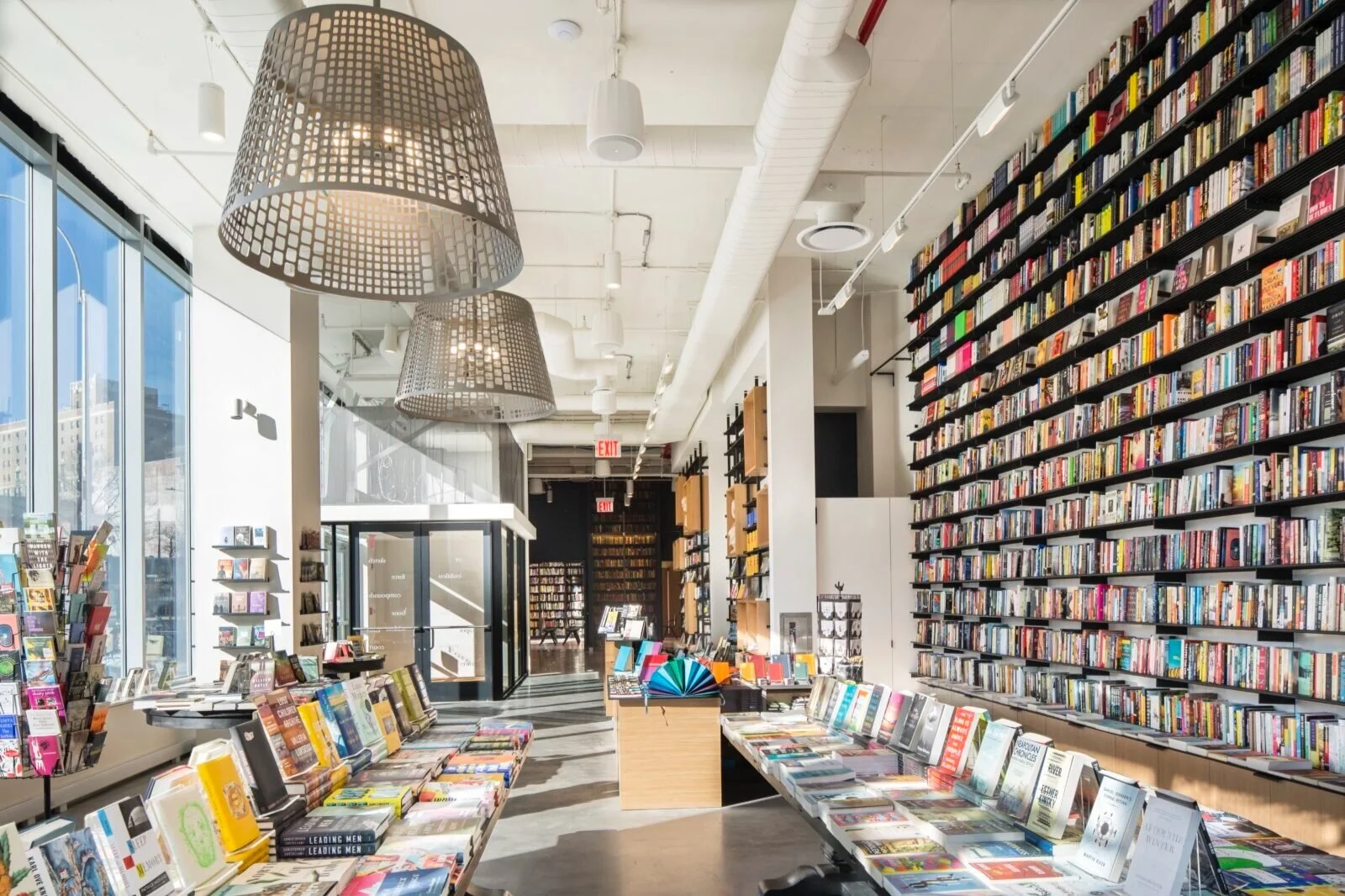
The Center for Fiction
A space dedicated to bringing fiction into the world, that supports our real lives as it does so.
What is it: For book lovers of all ages, whether those who love to read or those who love to write, The Center for Fiction celebrates fiction in all its stages, from first imaginings to beloved reads. Over 200-years after it was founded — originally as the Mercantile Library — the non-profit moved into its public-facing home in Brooklyn’s Cultural District in February 2019. Over 18,000 square feet across three floors, architects BKSK have created the conditions to make words come alive and to enter our lives in a multitude of ways.
Why you’ll love it: Browse the independent bookstore (with a focus on fiction, works in translation, and independent publishers), chat books in the café and terrace bar, attend workshops, events, writing groups, and seminars, or sit at a writing station to get down to the actual work of crafting your own story.
The Center is a living organization that grows both readers, from the youngest kids exposed to its workshops (see its Kids Read and Kids Write programs), and writers, from the earliest stages of their careers, such as the Emerging Writers Fellowship and First Novel Prize. Within its quote-strewn walls, books can be experienced at every point in their realization.
What you need to know: The Center is also home to a circulating library of over 70,000 books focused entirely on fiction, including a prominent crime fiction collection that goes back to the early twentieth century.
How to bring this into your life: Recently retired Executive Director Noreen Tomassi started a bibliotherapy program, that is still going strong, called A Novel Approach, which prescribes a year’s worth of fiction reading depending on your situation, your interests, your longings.
Why we think it matters: Though books are read alone, often they come alive when experienced together. The Center pivots on this duality. It offers a place of solace and reflection, a retreat, or maybe just a pause, from the noise and encroachments of modern living. And it sets up the connections between readers, to not just enliven narratives through discussion but to offer an antidote to our loneliness, and a comfortable excursionon for introverts. Books can take us inwards while opening up our worlds. We can hold fiction in our minds, and those stories can have a life that exists in conversation. The Center for Fiction attests to the importance of making physical space in the world that supports our imaginary one, bringing people together over words that connect.
In their own words: “The Center for Fiction, founded in 1820 as the Mercantile Library, is the only organization in the United States devoted solely to the vital art of fiction. The mission of The Center for Fiction is to encourage people to read and value fiction and to support and celebrate its creation and enjoyment.”
Something to inspire: How can you lift words off the page and live them in company, wherever you are? Seek out a writing community, a book club, an author’s talk, a book festival, an independent book store, a library. The Center is a one-stop-shop for the craft of fiction, but parse out its functions and you’ve got a version of your own making, slightly spread out but highly tailored to your world.

Rochester Brainery
A community classroom space in Rochester teaching what really matters in life.
Go here if: you’re a seeker, of knowledge, skills, experiences, and connections.
What is it: A community classroom and event space in Rochester’s Neighborhood of the Arts founded by local Danielle Raymo.
Why you’ll love it: Rochester Brainery is a classroom driven by curiosity. Since it launched in 2013, it has hosted over 2500 classes. Before the pandemic, 70-80 classes were being held each month. Subjects are not limited but roam widely across interests from hand lettering to cocktail making, improvisation to mindfulness. Many of the lessons are co-created with local community partners, makers, artists, authors, and entrepreneurs reflecting everything and anything that someone would want to teach and someone would want to learn.
How to bring this into your life from wherever you are: At the time of writing the Rochester Brainery is open for in-person classes – a Shibori dye workshop, a History Happy Hour, and blacksmithing caught our eye. Outdoor classes have been added with popular geology field trips planned for the spring. If you are based outside the area, the Rochester Brainery is also offering its classes on zoom – a business development class for makers and creatives, and macaroon making looked particularly interesting and fun.
Why we think it matters: Learning sustains us, connecting to new subjects can expand our days, whether that is picking up a new skill or finding a life-long passion. Often as grown-ups, we forget this impulse for discovery; if we follow our curiosity it can be into the rabbit holes of scrolling, rather than meaningful searches in our analog lives. The Rochester Brainery makes it ok to learn again, to connect with subjects that just pique our interest, from history to cooking, and to make space for pursuing something just because we want to. It does so by bringing people together to share new experiences, enabling connections beyond the material and to those with one other. Within this classroom, new friendships have evolved, new business concepts tested (in events and pop-ups), and a community educated in what makes life most important, the people we get to share it with.
In their own words: “Learn from local authors, actors, artists, chefs, graphic designers, distillers, and more who share their smarts in single and multi-session classes.”
Something to try: Push your learning boundaries. We tend to sit within the subjects we feel comfortable with: maybe it's psychology for you, maybe it’s the arts. We may find it hard to wander into a different section of the bookstore, a different theme in podcasts, a different field to our own. Look outside of your world, try on another one. Even if just for a moment. The awe and wonder that can come with being somewhere else, might make it ok to be wherever you are again.
Photo: Rachel Liz Photography

How therapy is being redesigned for modern times
Therapy has changed. We’ve rounded up some of the new places and platforms bringing this practice into our modern world.
Finding a therapist can be difficult, particularly in a moment when people are feeling most anxious or lost. Figuring out who to see, and then checking in with yourself about whether they are the right fit, can feel bewildering, even exhausting.
We’ve been there: looking over lists of names, arranging the first meet-up, wondering whether something was off in your relationship or whether it was just your material, ending an ill-fitting arrangement, and then having the energy to find someone new to work with. Many times we gave up until the issue that pushed us to seek therapy could no longer go unheeded and we tried again. We knew when we’d found the right therapist, we knew who we wanted to work with, but there were some dead-ends and frustrations on the way there.
Often it's exactly this match-making piece that is the barrier to entry for someone seeking help. There are others — around cost, cultural sensitivity, access, and belief systems — but here we’re going to focus on how you can find the right therapist and how they can find you. Over the last few years entrepreneurs, mental health practitioners, and even the tech industry have noticed this issue too. Below we’ve pulled together some of the new services that have been emerging, ones designed to get you to the right person when you most need it, and in ways that feel very different to what has gone before.
Frame, Los Angeles
“Therapy looks different on everyone. We help you find your fit.”
Based out of Los Angeles, recent start-up Frame is approaching therapy with a modern consumer in mind. Forbes has called it the Bumble of Therapy. Long-time friends and founders Kendall Bird, a tech marketer, and Sage Grazer, a licensed clinical therapist, launched Frame to both serve the therapy-curious and the therapists themselves. Frame matches people with therapists through an algorithm, asking ten questions to best identify the six therapists that they could work with. These matches then each offer an introductory session. There’s no wasted money or awkward endings as you try to find the right person to work with. Frame is also currently offering digital workshops for the therapy-shy or for people who aren’t quite ready to commit to the one-on-one work of the therapeutic relationship. For therapists, Frame figures out all the back-end stuff too (therapists are effectively small business owners) — like billing and appointments, which in turn helps clients (who wants to take out cash and calendars at the end of a session?). Currently based in Los Angeles, Bird and Grazer plan to expand the service to San Francisco, New York, and Chicago within the next year.
Alma, New York

“Alma makes it easy to find high quality, affordable mental health care.”
New York-based Alma, approaches modern therapy from a completely different angle, that of the therapist. As founder Dr. Harry Ritter has said, “Great therapists need to be taken care of too.” Alma’s first space opened in 2018 in Manhatten’s midtown as a co-practicing space — or what CNN has called “WeWork for therapists” — providing a carefully designed environment in which mental health professionals – which also includes acupuncturists and nutritionists — can practice, a community in which their own learning and wellbeing is supported, and a suite of digital tools to make the business side of things easier. But the experience on the client-side is similarly thought through. Alma offers a searchable — including in terms such as race, ethnicity, gender, and sexuality — of its member therapists and a Client match-making team for more advice on finding the right person. Alma’s space is also not the environment of your typical therapy session with meditation stations in the lobby that offer Headspace while you wait for your appointment, check-in on iPad stations, chairs carefully positioned so clients can feel comfortable seated next to one each other, and a member’s library of books for browsing. Each therapy room also shares identical décor to make the experience consistent should sessions need to move spaces. Venture capitalist funded, named one of the most innovative companies of 2019 by FastCo, and with Ester Perel as a clinical adviser, Alma is in the process of expanding nationally. See their announcements for further cities in the US.
Black Female Therapists, USA

“Black Female Therapists (BFT) is the #1 lifestyle and empowerment platform for women of color.”
After Licensed Professional Counsellor Amber Dee struggled to find a therapist for herself, she established Black Female Therapists as a safe space to support the work of other black female therapists and to create a positive site for exploring mental health, self-care, and #blackgirlmagic for women of color more widely. The resulting Directory connects people across the US with therapists of color for both in-person and online sessions. It’s searchable in terms that include specialty, insurance, and Loveland coupons. With its focus on positivity and cultural sensitivity, BFT goes beyond just therapy though to include a range of wellbeing resources that aim to break the stigma around the practice of therapy within the black community. By promoting tools for thinking about mental wellness including the podcast 15 Minutes on the Couch, a daily affirmation service, and weekly classes, BFT also helps those not quite ready for therapy but in need of support through their everyday lives.
Additionally, try:
San Francisco and New York. The Silicon Valley funded one.
New York. Specializes in gender, sexual and racial issues

Online while NY space on hold.“The Wing of mental health”

You can also check out our conversation with San Francisco-based Two Chairs and our feature on Therapy for Black Girls.
As we’re all about the face-to-face, we’ve favored the in-person piece here, but there’s also a handful of digital therapy resources to explore like Talk Space, The Circle Line, Wysa and Mindler (now in the UK).
We’d love to hear your experiences of finding therapy online or off. Have you tried the new digital platforms or found someone to work with in analog spaces?. Let us know your experiences, what you’ve loved, what you haven’t, how things have improved, and what’s still missing. And if there are other resources that you’ve been turning to, tell us about those too, so we can include them in our guide for life and share with others who need them too.
The person who can help you is out there. Hopefully, these resources will help you find them.

The DEN Meditation
Los Angeles’ DEN Meditation helps find a way to make guided meditation part of your everyday life.
Go here if: you are looking for a space to deepen your understanding of meditative practices.
What is it: A drop-in studio for guided meditation with two Los Angeles locations founded by Tal Rabinowitz, former VP of Comedy Development at NBC (think The Mindy Project and Unbreakable Kimmy Schmidt).
What you need to know: Burned out on the entertainment business, Rabinowitz started meditating for all the reasons we now associate with the practice like destressing and finding calm. But she also found that it helped her get to know herself better and brought clarity about decisions going forwards. When Rabinowitz struggled to find the time to fit in her daily practice, she looked for a place that she could go – where she could be held accountable, experience the social benefits of a community, and learn a range of practices. When she couldn’t find the space that she needed, she started The DEN Meditation to be that place for herself and others.
What they offer online and off: During closed times, live and on-demand classes and workshops can be found at DENAnywhere. You can also listen to the DENtalks Podcast in which Rabinowitz hosts conversations with inspiring guests who share their experiences of how they found their way.
Why we think it’s different: Amongst the first of LA’s guided meditation studios, The DEN Meditation is designed to make the practice accessible to everyone and to make it easier to bring into people’s everyday lives. Classes are designed to fit within daily routines, many are just 30 minutes long. The studio feels universal, it's secular in its approach, with guided meditations from all styles and no specific lineage or spiritual practice. The space is intended to feel more like a home, comfortable for whoever walks through the door, as welcoming as a living room. That means brick walls, chenille, natural floors, and fabrics from India, rather than buddhas, lotus flowers, and mandalas. As Rabinowitz has said: “No one should feel they have to be a certain way to show up.”
In their own words: “Whether you want to learn how to meditate, find a home for your meditation practice, or just want to give yourself peace of mind in this fast-paced world, join us at The DEN. Come as you are. Leave feeling better.”
One piece of advice: Meditation can be intimidating, particularly if our idea of it might be 3-day silent retreats in monastic settings. But start small, really small, if you are new to the practice. Like two minutes. Be kind to yourself. Go slowly. Build up to 10 minutes, then 20-minute daily sessions. Make meditation an Atomic Habit – try it at the moment before you wake up and before you check your phone, or when you’re about to get into bed and have just brushed your teeth. Find ways to stack it on another habit, it will make finding the time to meditate easier.
To find out more: Website / Instagram / Facebook / Twitter
Additionally, try: Re:Mind / Spirit Rock

The Civic Kitchen
A civic-minded kitchen classroom in San Francisco to get you cooking whether it scares or excites you.
What is it: A purpose-built kitchen classroom in the city of San Francisco designed for home cooks to master culinary skills. The Civic Kitchen will get you cooking.
What you need to know: Co-founders Chris Bonomo and Jen Nurse opened The Civic Kitchen in 2018 with a belief that anyone can learn to cook. Their Mission Street space has a program of accessible cooking classes taught by knowledgeable local chefs in a supportive and welcoming environment. The roster of classes, which in person never go about 14 attendees, cover the basics like knife skills and baking, through to more in-depth studies like a recent evening on sweet and savory souffles. The schedule goes beyond just making food though, to also talking about it (with Salt + Spine Cookbook Club), documenting it (with lessons on food styling and photography), and writing about it (a current offering is how to pitch a Cookbook of your own).
Why you’ll love it: This is not your typical classroom. This light-filled space feels like a home cook’s playground, from its brightly colored 20ft long floor-to-ceiling Cookbook Library through to a fully kitted out kitchen with its three ranges, double oven, and all the ingredients you could possibly need. The Civic Kitchen is all about practical hands-on learning and connecting with others as you sharpen those skills. During class, you’ll don an apron, get chopping and mixing, and make a meal to be enjoyed with your classmates on its central communal table.
What they offer online and off: Refresh those cooking skills during the pandemic with online workshops and wine tastings. Rather than the one-way of YouTube, learning from a kind person who is there with you in your own kitchen (albeit via a screen), can help instill more confidence and even joy in your cooking.
Why we think it matters: Vulnerability binds, but food connects us. With a motto of “Kindness in the kitchen”, The Civic Kitchen makes preparing a meal as much about bringing us together as about assembling ingredients. Co-founder Nurse encourages civility in all encounters with cooking, from learning about other cultures — along with the respect that must go with that — and finding a common language in preparing a shared meal. By taking the fear factor out of food, and giving us a much-needed alternative to food delivery apps, The Civic Kitchen is also creating a path back to nourishing ourselves and supporting a better ecosystem around food and how and where we get our daily meals.
In their own words: “We have built The Civic Kitchen from the ground up to be the perfect place for home cooks to learn.”
What next: Learn one meal that you can prepare for yourself, and one meal you can share with others. Something that you love to eat, and something you think others will. Two meals. That’s a start. Then keep going. A brunch for Sunday mornings. A lunch to break up WFH days. A grabbable snack as you race out the door. Something to make with kids, or grandparents. A classic that you’d choose in a restaurant. A dish to pack in a picnic basket. We much prefer this approach to selecting starters, mains, and desserts that you find in typical cookbooks. Give life boundaries around the food you make to make it relevant, accessible, and meaningful again.
To find out more: Website / Instagram / Facebook / Twitter
Additionally, try: 18 Reasons / Bite Unite

Emma's Torch
A beacon of light for refugees in Brooklyn is forging a way forwards through culinary education.
What is it: A not-for-profit Brooklyn restaurant and culinary school offering paid training and job placement for refugees, people granted asylum, and survivors of human trafficking.
What you need to know: Founded by Kerry Brodie in 2016 after she completely shifted her career focus from public policy — she previously worked at the Human Rights Campaign and has a Masters degree in government from John Hopkins University — to the restaurant industry, completing her studies at the Institute of Culinary Education in New York.
The impetus for this shift and the inspiration for Emma’s Torch: the possibility of food to do more than nourish, an idea that came to Brodie while she was volunteering in a Washington homeless shelter. Food can connect disparate people, bringing them together around the table, while the cultures that shape our understanding of food remain foundational no matter where people find themselves. But Brodie also saw a way to solve the difficulty that restaurants had of hiring line cooks in New York and the struggles of people newly arrived in the US to find employment.
Brodie now works with refugee resettlement agencies, homeless shelters, and social service providers to identify candidates for Emma’s Torch’s signature 10-week training program for refugees that covers everything from knife skills to job readiness. After graduation, Emma’s Torch has placed 97% of job-seeking graduates and as many as 100 trainees have secured permanent employment in the restaurant industry since it was founded.
With the COVID pandemic and the devastating impacts on the hospitality industry, Brodie has pivoted to a new partnership, becoming a Rethink Food certified organization with the aim of reducing food insecurity by donating 600 meals a week to the Nutrition Kitchen Food Pantry.
What they offer online and off: During pandemic closures, take a virtual cooking class, buy pantry provisions made by students and partners – there’s also own-brand goods such as Hawij Hot Cocoa Mix – or order pick-up and delivery. Donate to secure the future of this organization, if you are able.
Why we think it matters: Emma’s Torch has at its heart a belief that refugees can be welcomed into their new home country. Its name is taken from the poet Emma Lazurus, whose famous line is etched into the Statue of Liberty: “Give me your tired, your poor / Your huddled masses yearning to breathe free”. But this historical precedent stands in contrast with present-day experiences of xenophobia and prejudice around refugees, the difficulties displaced people have of finding employment or housing, and the fatigue and barriers that come with negotiating an ever-evolving political context that often characterizes them as a burden. But Emma’s Torch builds on the positive impacts of NYC’s large population of refugees, their contribution to the local economy, particularly in the borough of Brooklyn where it is located. As Brodie has said: "We engage in this work not simply because our students are people less advantaged than ourselves; we do this because, as Americans, we believe that when we are at our best, this is how we behave, simply because it’s the right thing to do. There is no ‘us’ and ‘them’, but if there was, I would argue that ‘they’ make ‘us’ stronger and better. What our students bring to the table has value, and we are fortunate to be able to work with them to ensure that they are welcomed by their new community."
In their own words: “We find comfort in the diversity in our classrooms and kitchens. Refugees, asylees, and survivors of human trafficking from over 35 countries have passed through our kitchen. Not only has this pushed us to be more sensitive and aware of culinary traditions from across the world, but it also reaffirms that there is so much binding us all together. Our menu reminds us of this common ground, and draws from both our students’ cultures and our team’s culinary upbringing. As we grow, we hope our menu continues to not only be a learning tool for our students, but also a unique conversation between the almost 100 students and graduates who now have a home at Emma’s Torch.”
We’re inspired to: As the hospitality industry is severely impacted by the consequences of the pandemic, support your local restaurants if you are able and you’ll be supporting the jobs that they provide. Whether that’s a burger night that your local café has pivoted to, a finish-at-home delivery box, or eating in the cold outside, find ways to support the independents so they, and the people they in turn support, can get through this time. As Emma’s Torch can attest, what you eat goes beyond food.
To find out more: Website / Instagram / Facebook
Additionally, try: Social Bite / Brigade Bar + Kitchen / Luminary Bakery
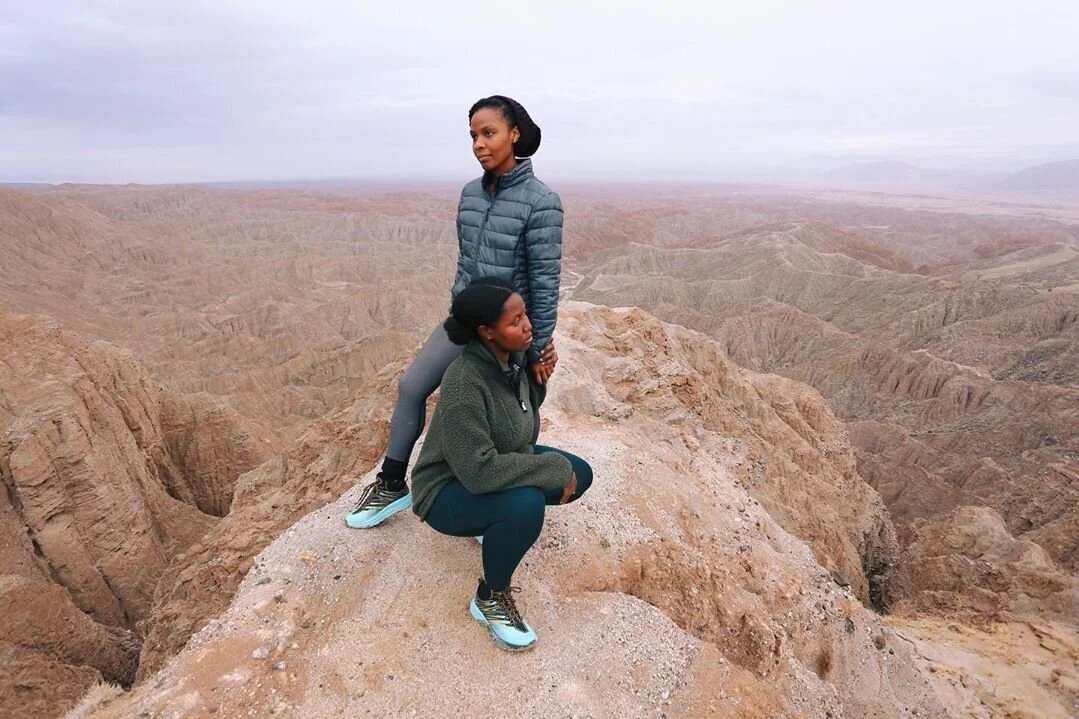
Black Girls Trekkin
How two friends in Los Angeles are working to make the outdoors more diverse.
What is it: A community and advocacy organization based in LA with a goal of making the outdoors more inclusive.
What you need to know: Friends Tiffany Tharpe and Michelle Race started the group three years ago with the goal of increasing the representation of Black women in the outdoors. Both share a love of hiking the trails around their home city of Los Angeles — a way to escape the urban hustle and a form of wellbeing in their everyday lives — which they wanted to share with other like-minded Black women and girls while shifting the narrative of who gets to even be outdoors. From inclusive group hike meet-ups to a range of outdoor activities like camping, backpacking, and nature adventures (kayaking, rock climbing, outdoor yoga) as well as education and conservation programs that focus on caring for the planet as much as understanding its history (particularly that of displaced native Americans), Black Girls Trekkin is making the outdoors safe, accessible and inclusive.
How to bring this into your life: Though it’s on pandemic pause, BGT’s group hikes around LA will hopefully be back soon. In the meantime, BGT is continuing its support of hiking for everyone in its online spaces.
Why it matters: We’ve written often of the benefits of nature for our wellbeing (there’s a whole category dedicated to the impacts of our green and blue worlds on our mental health), but we’re also conscious that access to nature is neither equitable, in how it is accessed or received. An understanding of the natural world, what it represents, who gets to connect with it and how, and its impacts on our psychological health, is deeply woven with issues of racial injustice.
Just a handful of studies that attest to this fact: A study of the 4,600 photos of people within Outside Magazine from 1991-2001, depicted just over 100 images with Black Americans. Data from the National Parks tell a story of deep racial inequality: with non-White Hispanics comprising between 88 and 95% of visitors to national lands and African Americans 1 to 1.2 percent. While another study showed that people of color were three times as likely to live in nature deprived neighborhoods.
Black Girls Trekkin works against the stereotype that Black girls and women don’t go outdoors. The co-founders' experience speaks to the biases that came with their own experience of the natural world: As a kid, Tiffany’s understanding of nature came from watching PBS, Discovery, and Animal Planet – exploring was just something that her family didn’t do. When Tiffany did start hiking in her twenties, she realized how few other Black people were on the trails, an insight shared by a Yosemite National Park Ranger. Similarly, Michelle was the only Black person to graduate in her class of marine biologists, a subject and area of interest that wasn’t “something black people do”. The narrative of who gets to explore our natural world has been primarily focused on the experiences of white people.
BGT also works against the judgment and condescension that can occur when Black women do head onto the trails, from stares to offers of help to outright hostility, advocating safety and respect for everyone who enjoys the outdoors. Alluding to a history of the natural world entangled with persecution in the minds of black people, Michelle has said this of the perceived barriers to the outdoors: “It might also come from the story we inherited, from a time when venturing out into the woods alone could end in violence and when certain spaces were literally off-limits due to racial segregation. As these well-founded words of caution have been passed down, the aversion has persisted even as the original reason has fallen out of the story we tell.” BGT is shifting this narrative, creating new stories of the Black experience of the natural world.
In their own words: “We’re here to show the world that not only do black girls and women hike, we also run, climb, swim, and have a thirst for adventure that is too often underrepresented or unacknowledged. We’re beautiful, black women who trek it out in the great outdoors!”
Something to inspire: Interested in forming a local chapter, reach out to BGT or seek out one of the other organizations listed below:
Outside the US? Let us know about other groups active in making access to nature more equitable and diverse.
To find out more about Black Girls Trekkin: Website / Instagram / Facebook

Freedom Apothecary
A holistic wellness space and boutique for radical self-care in Philadelphia puts women at the center of all it does.
What is it: A holistic wellness boutique in the Northern Liberties neighborhood of Philadelphia that’s all about empowering women.
What you need to know: Co-founded and led by women, the inspirational Morissa Jenkins and Bonkosi Horn, Freedom Apothecary stocks female-owned brands that they trust and that share their same values around clean living, many of which are by women of color.
Why you’ll love it: Opened in the summer of 2019, Freedom Apothecary reflects Jenkins and Horn’s shared aim of a place that goes beyond just products, to one that also holds women in community, fostering connections, and sustaining relationships, with themselves and others. The light-filled corner store space with its calming arrangement of products on natural wooden shelves, dried moss wall behind the register over which the words FREEDOM are set, and the abstract mural by local artist Dora Cuenca, set a tone of welcome and openness, a space for self-care and in which to pause.
How to bring this into your life: We all need some self-care right now. During closed times when their in-person treatments and their blend bar for personalized products are on hold, you can still shop Freedom Apothecary’s selection of skincare, cosmetics, and wellness products. Favorites include the Green Tea Body Butter, Gleaux Body Balm, and Rose Face Oil – all made by Morissa – as well as brands Botnia and Noto. Or book an at-home botanical customizable facial. During open times, Freedom Apothecary offers a range of workshops in its event space that make wellness an attainable priority in our everyday lives.
Why we think it matters: Morissa and Bonkosi take the idea of “radical self-care” – in short (there’s a long history here – see below) caring for yourself first before you care for others — and gives it foundational support in holistic wellness and a physical space. Freedom Apothecary is targeted at “anyone who has skin”, with the belief that anyone can practice self-care, including black women and women of color for whom the concept of their own healing has historically (and still) been pushed aside for their healing and support of others in their family and community. Wellness here is a political act, one of resistance and empowerment.
Morissa and Bonkosi set out to consciously create a place of support and safety, to extend inclusivity in concepts of wellness and the industry that supports it (often itself whitewashed), and to provide access to clean, non-toxic products (shifting who has access to them and who gets to make them). Freedom Apothecary is ultimately about helping all women find themselves, to give space for whoever they can be, and allowing for whatever it is they need.
Freedom Apothecary contains in its name the ethos they hope to promote, both freedom from toxic products that actually harm our bodies, our selves and our planet, and freedom as it pertains to choice, to live our lives in our own way, one that allows ourselves to be nurtured and to support ourselves in ways that we need.
In their own words: “ We create space for women to empower women. We are women-founded, women-led; we provide a platform for female-founded brands; and ultimately, we foster dynamic, inclusive and brave healing spaces for all women.”
Inspired by Freedom Apothecary to: Read activist and feminist writer Audre Lorde’s A Burst of Light: “Caring for myself is not self-indulgence, it is self-preservation, and that is an act of political warfare.” Wellness means something very different from wherever it is we are standing, it's affected by race, gender, and class. Even the idea of self-care has become shaped by privilege and inflected with insta quotes and spa days. Reconnect with its activist history: How people (and particularly people of color) are able to look after ourselves is navigated within how the world allows us to do so and the importance it puts (or doesn’t put) on our own health and wellbeing.

Cafe Con Libros
A feminist bookstore making vital space for the stories of women and girls.
What is it: An intersectional feminist independent bookstore and coffee shop in Brooklyn’s Crown Heights neighborhood.
Why you’ll love it: Café Con Libros was founded by Kalima DeSuze in December 2017 when she made real the space that she wanted to see in the world, one that could hold the stories of womxn and girls – stories which have overwhelmingly been sidelined in favor of those of male voices – for those who want, need and are open to hearing them. Though intimate, the reach of the store is wide, bringing together on its physical and virtual shelves an abundance of books by female authors (99% of the selections are books by, for, or about womxn), including those beyond the continental US and by LGBTQAI+ writers.
Why we think it matters: During normal times, Café Con Libros is very much a community space for female-identifying folx; it's somewhere to hang out and be as much as it’s a bookstore. As Kalima says, the spaces that we create are political. Who holds physical space, what that space is used for, and even the stories these places are allowed to tell has meaning on a personal and collective level. Bookstores like Café Con Libros hold not just the stories within pages that we need to hear, but stories within a place that allow for all possible futures, for nurturing relationships, for community action, and for extending our learning together. As Kalima notes: “It’s time that womyn’s stories be prioritized and that a space exists explicitly for and about womyn. So many of our spaces are male-dominated; even the ones that are created solely to be for and about womyn. My womyn only spaces have served as a healing tonic and, a reminder of whose shoulders I stand on. It’s important that more of our girls and womyn have access to such warmth and mirroring.”
How to bring this into your life: As mothers of young daughters, we’re excited by the monthly subscription boxes, which include an option for baby feminist board books for the zero to fives and emerging feminist books for kids aged five to nine. There are also subscription boxes focusing on womxn of color and for the feminists among us. You can also join one of two book clubs that meet monthly (on zoom during shut-door times): either the Feminist Book Club which focuses on a book by, for, and about womxn, or The Womxn of Colour Book Club, a reading space and conversation for womxn of color. There are also virtual read-a-longs and a monthly podcast Black Feminist & Bookish, hosted by Kalima.
In their own words: “ We value: family. community. justice. art. transparency. accountability. equity. equality. authenticity. joy. solidarity. earth. the brilliance and possibility of imperfection. love.
We respect and value the contentious history womxn of color have with the word "feminist;" the tension hold us to account to live our Black Feminist and Womanist principles in real and measurable ways. We were born from and are guided by the lush cannon of Black Feminist thought producers and activists; the space endeavors to be intersectional, inclusive and welcoming of all who stand with and on behalf of the full human rights of womxn and girls. We seek to advance and uplift stories of womxn and girls around the globe who are redefining the word feminist and feminism with every day, ordinary culturally informed acts of resistance and love.
Something to inspire: Try a reading challenge: purchase, support, and read books only by womxn, or womxn of color, or by LGBTQIA+ writers for 3, 6, or 12 months. Change your knee-jerk choices in what you’d ordinarily see or consume. Extend this challenge even further to include podcasts, TV shows, films, and music that are by, for, and about womxn. This not only helps our own understanding of the ongoing pursuit for gender equality but the choices you make in where you put your attention and your money indicates to the industries behind them – the entertainment, publishing, and culture industries – what it is you really want to see.

Black Bird Bookstore
San Francisco’s Black Bird Books sits on the edge of the world while being resolutely of its place.
“a community bookstore for all”
What is it: Black Bird Bookstore is exactly how an independent bookstore located a couple of blocks from the Pacific Ocean should look. It brings the outdoors very much in. Hinting at Cali Cabin chic, Black Bird is wooded out (in reclaimed oak and cypress) coziness — perfect for a neighborhood that in San Francisco is known for its non-warming fog blanket. There’s even an indoor treehouse reading nook complete with a twisting oak branch that our kids love to spend time in.
Why you’ll love it: Opened by Kathryn Grantham, formerly the owner of feminist bookstore Bluestockings in New York, this is a place driven by curiosity: all titles face out, are regularly changed, and tightly curated from an inclusive selection of writers. It’s all about discovery with thought out selections made from the 1000 titles across just 900 square feet of space.
What they offer (online and off): Even during shifting times, this sense of discovery is still there, only its also happening online: chose from a monthly box of curated picks such as the Bay Area Box, Poetry Box, or Cooking Box. You can also currently book a 30-minute appointment to shop alone (from 6 pm to 8 pm), which sounds like a book lover's fantasy date.
Why we think it's special: Opening an independent bookstore feels counter to all the claims that both storefronts and books don't work anymore. But Black Bird makes the case that as our lives are pushed to be experienced more and more online, physical spaces for books and people matter. It’s a bookstore driven by both curiosity and community. Leading book lovers through its titles while supporting those who share this community.
Black Bird is so much an expression of its neighborhood (there’s a high-end garden shed by local artist Jesse Schlesinger and the shelving and counter space have been designed by Luke Bartels). Even the name was inspired by one of Kathryn’s kids who noted the awe-inspiring presence of Black Birds in the neighborhood. Books connect us to worlds on the page; the bookstores that contain them to the wider world outside their doors.
In their own words: We’re borrowing the words from Ocean Vuong that Kathryn has quoted: “The way I see it, whenever someone walks into a bookstore, they are walking into the future of their cultural and intellectual life… Amazon, with its algorithms, can only show you where you’ve been, can only give you a calcified mirror of your past. In a bookstore, you get a human being who is also a mapmaker of possibility. As booksellers, you are practicing, to my mind, one of our species’ oldest arts, the art of fostering, sharing and shepherding our most vital stories into the future.”
Something to do: Be driven by curiosity about where you live. Now is the moment to spend time in one place – the place where you are. Books can take you there in ways that go beyond your local commute, your working days, the school drop off. We recently sought out guidebooks to our county, and though it's hard for us to visit the places we’re learning about, we’re layering on history that we probably wouldn’t have connected with if we didn’t need to live hyper-locally. Our block is holding our world: our social connections, our daily outings, new discoveries and narratives that haven’t involved us. What’s really around you? Who has shaped your community and how is it evolving. Where are you really? Even when doors close, lives are still open.
While there: Black Bird Bookstore sits in the middle of our favorite SF block: Stop by Trouble next door for toast and coffee, the General Store, Case for Making, and Outerlands. Then head to the sand dunes for fast runs down to the ocean.