
Feeling Stuck and Don’t Know What to Do Next? 5 Ways to Start
Feeling lost, restless or stuck and unsure what to do next? Here are five ways to find direction, build confidence and start moving before you feel ready.
You know there’s something else. That might actually be the most frustrating part because if you were perfectly happy with your life as it is, perhaps you could settle into it. But instead you keep having ideas. You look at jobs you could do, courses you could take, places you could move to, things you could make or start or write. One day you think you’ve figured it out. By the next morning, you’re not so sure.
You talk yourself into something and then straight back out again. Underneath all those ideas is this restlessness, a feeling that you want more from your life, or perhaps simply something different from it, but you can’t work out what that something is. So you stay where you are.
This is the not particularly fun version of feeling lost. It doesn’t feel like freedom or possibility or a wide-open road. It feels constricting. Your world can start to feel smaller because you can’t work out how to make it bigger, and the longer you stay there, the more your confidence can disappear too.
Maybe you tell yourself you’ll make a decision when you’re more certain. You’ll start when you have more energy. You’ll apply when you feel more qualified. You’ll put the idea into the world when you believe in it — and yourself — a little more. Except the confidence doesn’t come, and without it, you don’t move.
I was thinking about all of this during my conversation with Victoria Phipps MBE on A Thought I Kept. Victoria describes emerging from COVID and the intense early years of motherhood feeling as though she had “fallen out of the world.” Before children, she had spent more than a decade running a charity with her father supporting Second World War veterans alongside a successful wedding photography business. Her life had felt big. She had felt capable. She had purpose and work she loved.
Then suddenly her life looked very different. She talks in our conversation about the “grief over my own capacity” — going from happily working a lot to finding that even sending an email could become a mission with two small children around her. But the ideas hadn’t disappeared. If anything, there were too many of them. Victoria estimates that she had over a thousand ideas about what she could do next.
This gets at something we don't always understand about feeling lost. You don't necessarily have no idea what you want. You can have far too many. So how do you start moving when you have all that restless energy but absolutely no idea where to put it?
1. Stop trying to find the thing
When you're lost, it's very easy to become obsessed with finding the answer. What should I do with my life? What's the right job? Which idea should I pursue? What am I meant to be doing? Victoria was asking versions of these questions too. She knew she couldn't simply return to the life she'd had before children, but she couldn't see what should replace it either.
Eventually, she stopped trying to recreate the thing and started thinking about the feelings underneath it. What had she loved about her old life? Connection. Community. Creativity. Conversation. Purpose. The feeling that how she was spending her time was making some kind of difference. She couldn't have her old life back, but perhaps those feelings could show up somewhere new.
I think that's such a useful place to start when you can't see a direction. Instead of asking yourself to name the job, business, project or life you want next, try asking what you want to feel more of. Perhaps you want to feel interested again. Useful. Connected. Creative. Free. Challenged. Calm. You still might not know what to do, but you've given yourself a direction to look in.
2. Follow the energy, even if you don't know what it means yet
There’s a moment in our conversation when Victoria describes having all this mental energy for the “adult world” while living almost entirely in the baby world. She was physically exhausted, but creatively restless. Those two things can exist together, and you might recognise that feeling too: you're tired of thinking about what comes next and simultaneously unable to stop thinking about it.
Maybe you keep returning to the same idea. Maybe there’s something you could happily talk about for an hour. Maybe you feel completely different after you've spent an afternoon writing, gardening, volunteering, making something or being around a certain group of people. Don't immediately ask any of these things to become your new career. Just notice them.
I think restlessness gets a bad reputation. We can treat it as something to calm down or get rid of, but sometimes restlessness contains information. Your energy might know something before the rest of you has caught up.
3. Don't wait to feel confident
Victoria eventually had an idea she really liked. She wanted to start a podcast. She told a trusted friend about it and her friend thought it was a great idea. And then Victoria did nothing with it for several months because she didn't feel ready.
She wasn't a podcaster. She didn't know how to edit audio. She worried about what people would think. She'd spent several years feeling as though she'd fallen out of the world and her confidence had taken a knock. So she waited, and then this thought kept following her around: “Ready is a decision, not a feeling.”
Eventually she had to consider the possibility that perhaps the feeling of readiness wasn't coming. I think this is where we can get really stuck. We assume confidence comes first: When I feel confident, I'll apply. When I'm certain, I'll leave. When I know I'm good enough, I'll start.
But confidence often doesn't work like that. Sometimes we have to do something while feeling decidedly unconfident about it and allow the doing to change how we feel.
4. Make the decision that helps you find out more
Shortly after her 40th birthday, Victoria announced that she was starting a podcast. And then she had to learn how to make one. The decision didn't suddenly make Victoria certain. It gave her something to do.
She learned the technology. She found guests. She figured out what she wanted the podcast to be about. She made an episode and then another one. She learned what she liked, what she was good at and what she wanted to change. The first decision created the next one, and the next, until gradually there was something that looked a lot more like a direction.
When you're feeling lost, you can put enormous pressure on yourself to make the right decision. It's as though you should somehow be able to stand where you are now and accurately predict how every possible version of your future will turn out. Perhaps the decision doesn't need to do that. Perhaps it just needs to help you find out something you don't know yet.
5. Be willing to be a beginner
This might be especially difficult if you've spent years getting good at what you already do. Changing direction means becoming new at something again, and being new at something can be uncomfortable. You don't know the terminology. You don't know how everything works. Other people seem much further ahead. The first version of what you make might not be particularly good.
Victoria talks about discovering at 40 that she could be a beginner again. She could learn how to podcast. She could create her first online course. She could change the way she worked as a photographer. She could learn on the job and, importantly, she could do those things imperfectly.
When she first launched her podcast, she tried to have everything ready: the website, the branding, the social media, four episodes in the first week. She remembers editing until 3am when she had two small children and absolutely did not need to be sacrificing sleep. A year later, she launched a rebrand differently. Not everything was finished. She did it anyway.
Somewhere along the way, she'd stopped needing to know that she could do everything before allowing herself to begin. And maybe this is the kind of confidence that matters when you're lost. Not I know exactly what I'm doing, but I trust myself to find out.
By the end of our conversation, Victoria describes herself as feeling “expansive.” It's so different from where she began: small, stuck, frantic, looking at everyone else moving forward while feeling as though she'd fallen out of the world herself.
She didn't get from one place to the other because she finally figured out exactly what she should do with her life. She noticed what she missed. She followed some of her energy. She made one decision and learned from it. Then she made another.
So if you're feeling utterly stuck right now — restless, knowing there must be something else but unable to see it clearly — perhaps you don't need to answer What am I going to do with the rest of my life? That is a lot to ask of yourself on a Tuesday afternoon.
Maybe there are smaller questions: How do I want my life to feel? What gives me energy? What am I waiting to feel ready for? What could I do that would help me find out more? Where could I allow myself to be a beginner?
You don't need all five answers today. You don't even need to know where you're going yet. Perhaps you just need one of them to make your world feel a little bigger again and give you somewhere to start.
You can listen to my full conversation with Victoria Phipps MBE on A Thought I Kept, where we talk about feeling lost, motherhood and identity, ambition, creativity, perfectionism, visibility, becoming a beginner again and the thought that helped Victoria begin moving: “Ready is a decision, not a feeling.”
And if you're feeling lost yourself, our book If Lost, Start Here was made for exactly these kinds of moments: when you don't necessarily need someone to give you the answer, but you could do with somewhere to begin.
How Poetry Can Help When You’re Feeling Lost
Feeling lost or uncertain? Discover how poetry can help us live with uncertainty, find meaning, notice what matters and reconnect with possibility.
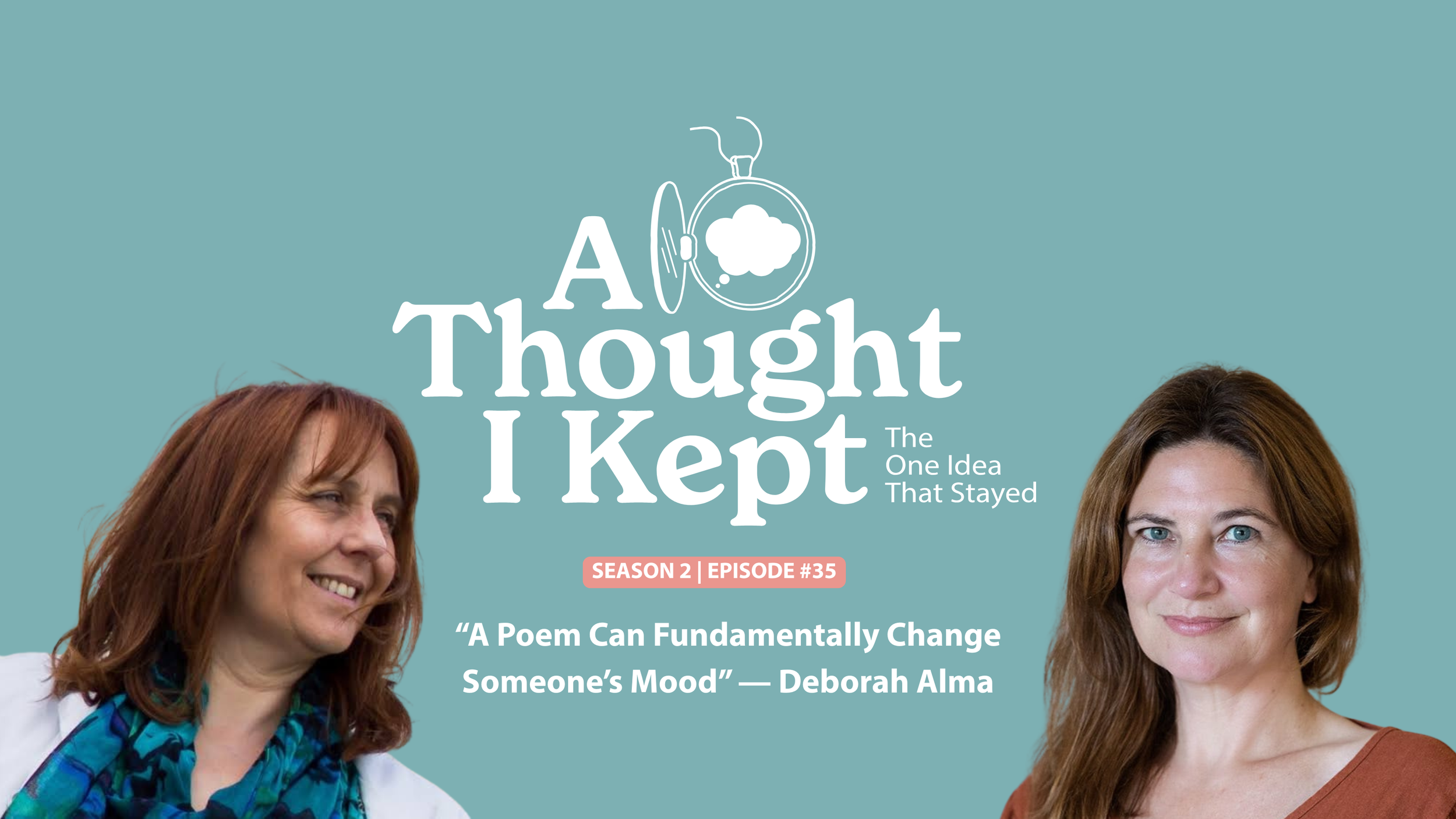
When we’re feeling lost, we tend to go looking for answers. We ask what we should do next, which direction we should take, what needs to change. We make lists. We ask other people what they think. We search online. Sometimes we search so hard for a way forward that being lost starts to feel like another problem we ought to be able to solve. But what if, sometimes, we didn’t need an answer? What if we needed a poem?
I’ve been thinking about this since my conversation with Deborah Alma, poet, editor and founder of The Poetry Pharmacy, for A Thought I Kept. Deborah has spent years prescribing poetry for the emotional ailments of everyday life, and the thought she brought to our conversation was beautifully simple:
“A poem can fundamentally change someone’s mood.”
Deb first understood the power of this while working with people living with profound dementia. Through a poem, she could take someone to the sea, fly a kite with them or go on an imaginary picnic. They might not remember afterwards where the poem had taken them, but Deborah saw that the feeling it created could remain for hours.
I love this idea of a poem as somewhere we can go. That we can seek them out to experience something different for a moment as well as to find answers. To step outside the moment we’re in. To remember the sea. To notice sunlight. To find ourselves somewhere else in our imagination when our actual lives feel particularly difficult to navigate. Perhaps that is also why poetry can help us when we feel lost.
Deborah told me that increasingly the people coming to her for poetry prescriptions are living with a more general anxiety about the world. They’re trying to work out how to live with uncertainty. And poetry, she believes, is particularly good at this because uncertainty is a place poets already know how to inhabit.
So much of feeling lost is about wanting to get out of where we are. We want certainty back. We want to know what happens next. We want the new job, the decision, the relationship to resolve itself, the grief to become more manageable, the sense of possibility to return. We want to find ourselves again. Poetry doesn’t necessarily give us any of those things. Instead, it can help us stay for a moment with what we don’t yet know.
There is something almost spiritual in that for me. Not spiritual in the sense that we have to believe anything in particular, but in the way poetry asks us to pay attention to what it means to be here.
Deborah talked about this beautifully. She believes we all have the poetic in us. We notice a bird landing in a tree while we’re grieving and wonder if, somehow, we’ve been visited by the person we’ve lost. We see that the sea is exactly the same colour as a flower in front of us. We notice strange coincidences, beauty, juxtapositions, things that seem to mean something even when we can’t quite explain what. For Deborah, those moments are already poems. We just haven’t written them down.
Maybe poetry is akin to a spiritual practice in this way: a practice of noticing. A way of interrupting the scrolling, doing and busyness long enough to see what is actually around us. A way of making contact with beauty, meaning, mystery and our own humanity without needing to pin any of it down.
I know that I have reached for poetry most instinctively when I haven’t had the words myself. When my mum died, I found myself looking through the Norton anthologies I had studied at university. I have a literature degree and a longstanding love of John Donne, so perhaps I thought I was supposed to find something suitably literary and profound. But my mum would never have chosen John Donne. She loved Pam Ayres.
So at her funeral I read Ayres’ poem These Hands, about all the often invisible things a mother’s hands have done throughout a life. It managed to hold something I couldn’t quite hold myself: what we had overlooked while Mum was here and what her absence now meant. The poem didn’t resolve my grief but it filled a space where my own words failed me.
Towards the end of our conversation, I asked Deborah to prescribe a poem for someone feeling lost. She thought about lostness as uncertainty and stuckness, but also as losing contact with possibility and hope.
The poems that came to her were about stillness, finding your own centre and noticing the small and beautiful things around you. One was Lost by David Wagoner, which imagines being lost in a forest and, rather than continuing to wander frantically in search of the way out, becoming still. She also suggested Denise Levertov’s Variation on a Theme by Rilke and Esther Morgan’s Grace, poems that offered her a sense of hope and possibility.
Perhaps this is what we so often miss about being lost. We assume our task is to find the path as quickly as possible. But perhaps there are moments when we need to become still enough to notice where we already are.
A poem can help us do that. You don’t need to understand all of it. You don’t need to analyse it as you once did at school. You don’t even need to become someone who “reads poetry.” Deborah’s invitation is much simpler: find a poem. Sit with it. Notice what happens.
Maybe it changes your mood. Maybe it gives you words for something you couldn’t name. Maybe it makes you notice the light coming through the window or remember somewhere you once felt more like yourself. Maybe it offers no answers at all, but makes the uncertainty a little easier to inhabit.
And when you’re lost, that might be somewhere to start.
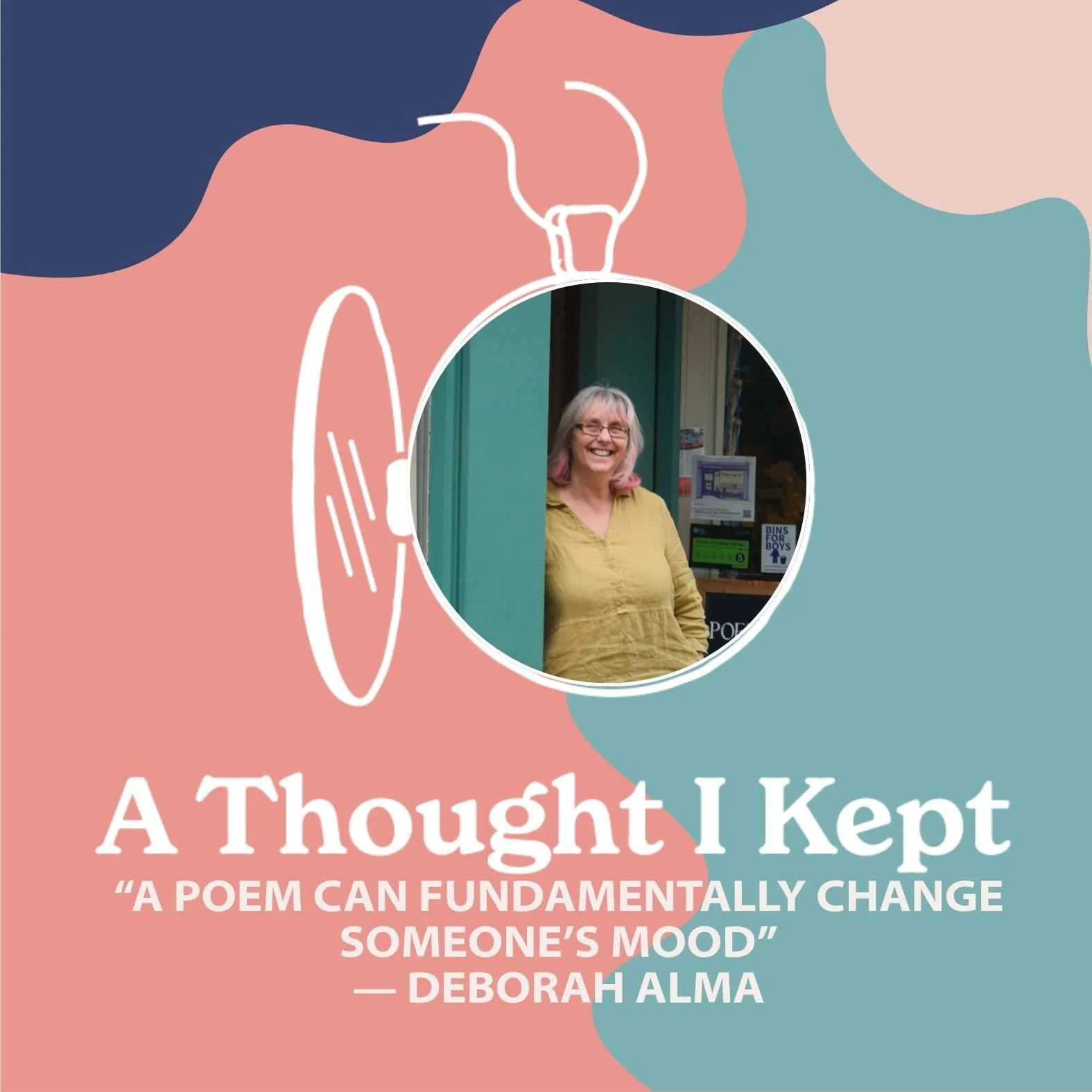
Listen to my full conversation with Deborah Alma on A Thought I Kept: “A Poem Can Fundamentally Change Someone’s Mood.”
And if you are feeling lost, explore emotions coaching with me.
What If Being Lost Is Part of Finding Your Way?
Feeling lost can feel uncomfortable, but it doesn’t mean you’re doing life wrong. Anne Ditmeyer explores uncertainty, detours, play and finding your own way.
When we feel lost often we want to get out of it as quickly as possible. We want the answer, the map, the five-step plan. We want to know where we’re going and preferably how long it will take us to get there.
I understand this. I have spent enough of my own life in uncertain moments to know how uncomfortable it can be not to know what comes next. And it’s something I see all the time in my coaching work too. We arrive at these moments in our careers, relationships, families and lives when the route we thought we were following suddenly stops making sense. We feel stuck, uncertain or overwhelmed and assume that somewhere, somehow, we’ve gone wrong.
But what if getting lost isn’t necessarily the problem?
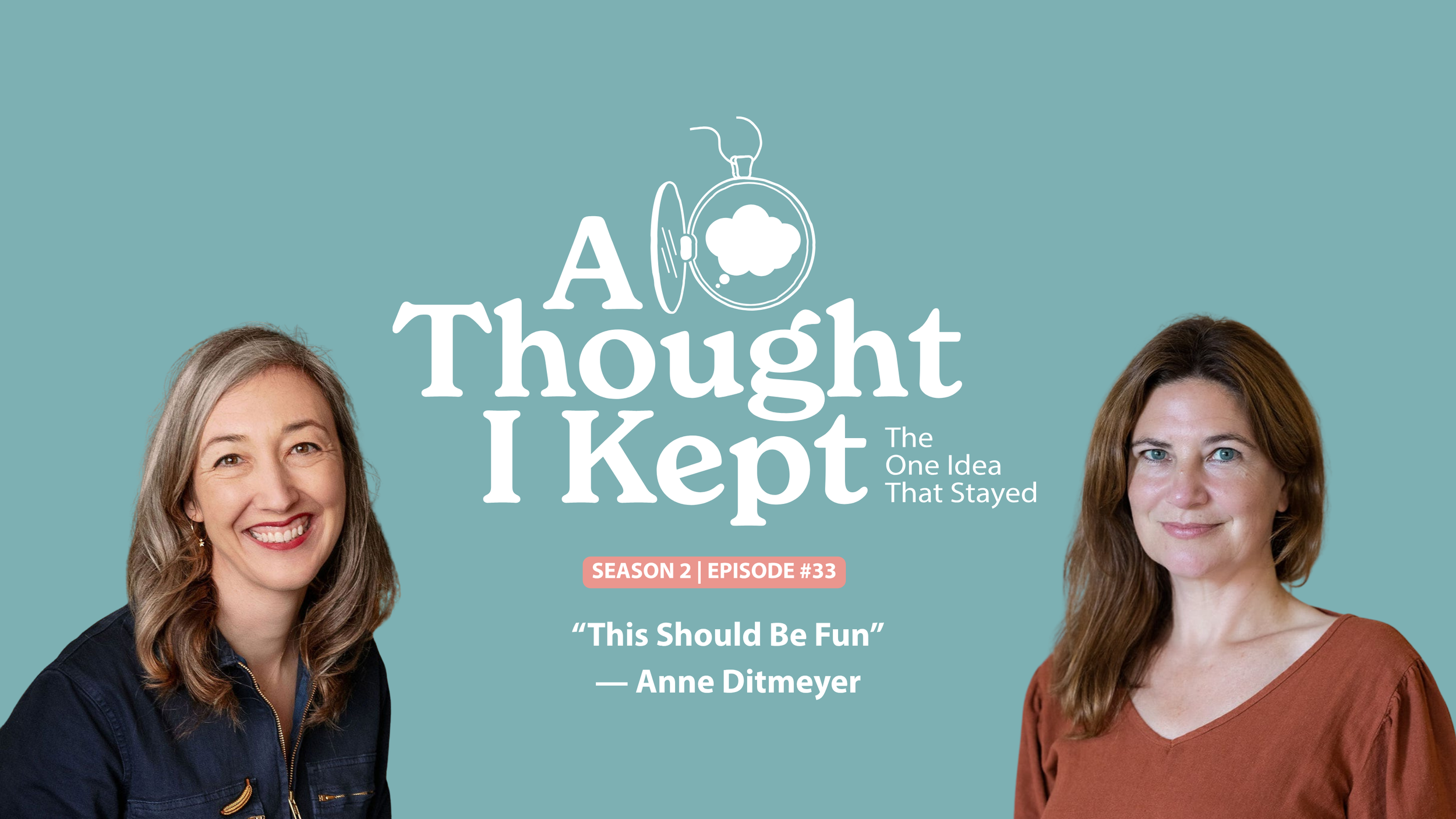
That was one of the ideas I kept returning to during my conversation with Anne Ditmeyer on A Thought I Kept. Anne is a writer, creative coach and workshop facilitator living in Paris, and much of her work is about giving people the confidence to explore, experiment and, quite literally, get lost.
Anne’s thought kept is: “This should be fun.”
It was a mantra used by her grandfather, Charles Stark Draper, the scientist and engineer whose work on inertial guidance systems helped navigate the Apollo missions to the Moon and back. Anne was only six when he died and discovered the phrase much later, after the death of her mother prompted her to start finding out more about him.
Rather than simply following the official paper trail, she began talking to the people who had known him. It became, as she describes it, a scavenger hunt. And through their stories, she discovered not only the scientist she had grown up hearing about, but a man who danced, flew planes, built relationships and approached extraordinarily difficult problems with curiosity and enjoyment.
There was something else that struck Anne too. Her grandfather’s work had been about navigation and exploration. In a very different way, hers was too.
What if you don’t need the whole map?
We tend to talk about lives as if they should be linear. You work hard at school, choose the right university, find a job, progress, settle down, achieve the milestones and keep going. Even when we know intellectually that life rarely happens this neatly, it can still feel unsettling when ours doesn’t.
Anne describes how her grandfather didn’t begin with a perfectly formed plan to help get humans to the Moon. One thing led to another. There were people he met, things he learnt, questions he followed and opportunities he couldn’t possibly have predicted at the beginning.
Our lives can work like this too.
Anne talks about the “messy middle”: the part we often wish we could skip because it doesn’t yet make sense. But sometimes, she says, we need that mess to meet the right person, gain an insight, have an experience or build the skill that takes us somewhere else.
Perhaps feeling lost can be a little like this. It can be the space between the life that made sense before and whatever is emerging next.
That doesn’t necessarily make it comfortable. Anne talks beautifully about “dancing with discomfort”, rather than treating discomfort as evidence that we are doing something wrong. In one of her workshops, she asks people to draw lobsters partly because most of us have absolutely no idea how to draw one. The lobster also gives her a wonderful analogy: as they grow, lobsters have to leave one shell before a bigger one can form.
There is vulnerability in that in-between place. But there is growth too.
What if you followed the detour?
One of my favourite parts of our conversation was Anne’s invitation to think differently about detours.
We’re so accustomed to believing that the quickest, most direct route must be the best one. But Anne talks about rerouting, taking the scenic route and opening the door “just a teeny bit” to another possibility.
This is where being lost starts to feel less like something we have to solve and more like something we might explore.
What happens if, instead of immediately asking How do I get out of here?, we become curious about where we actually are? What assumptions have we been carrying about what our lives should look like? Which expectations still belong to us? What tiny nudges or ideas have we been overriding because they don’t fit the route we thought we were supposed to take?
Anne has a lovely way of describing this as our “internal guidance system”. Her grandfather worked with gyroscopes and inertial navigation systems, and she sees a parallel in our own ability to return to ourselves when the world shakes us around.
After Anne’s mother died, she found a letter her mother had written to her as a teenager. It was addressed to her daughter “born with her own special guidance system”.
I found that incredibly moving because perhaps the work isn’t always to find a completely new direction. Sometimes it’s to hear again what has become very quiet underneath all the noise.
What if being lost could contain possibility?
Of course, not every lost moment feels playful. Sometimes we are lost because somebody has died, a relationship has ended, work has become unbearable or a version of our life we depended upon is no longer available to us.
Anne is very clear that “this should be fun” isn’t about false positivity. Her own story contains profound grief. Instead, she talks about allowing multiple things to be true: that something can be hard and there can still be beauty; that we can grieve and connect; that we can be uncertain and occasionally delighted by what we discover.
Maybe we can be lost and finding our way at the same time.
I think that is what I took most from this conversation. We don’t always need to respond to feeling lost by gripping the map more tightly. We might need to wander. To take one small step before we understand where it leads. To notice what interests us. To follow an unlikely connection. To draw something badly. To go for a walk. To let ourselves admit, as Anne sometimes does, I’m not really sure right now, while trusting that something will come.
Because clarity, as Anne reminds us, doesn’t always come from thinking harder about our lives. Sometimes it comes from moving through them.
Listen to my full conversation with Anne Ditmeyer on A Thought I Kept: “This Should Be Fun”.
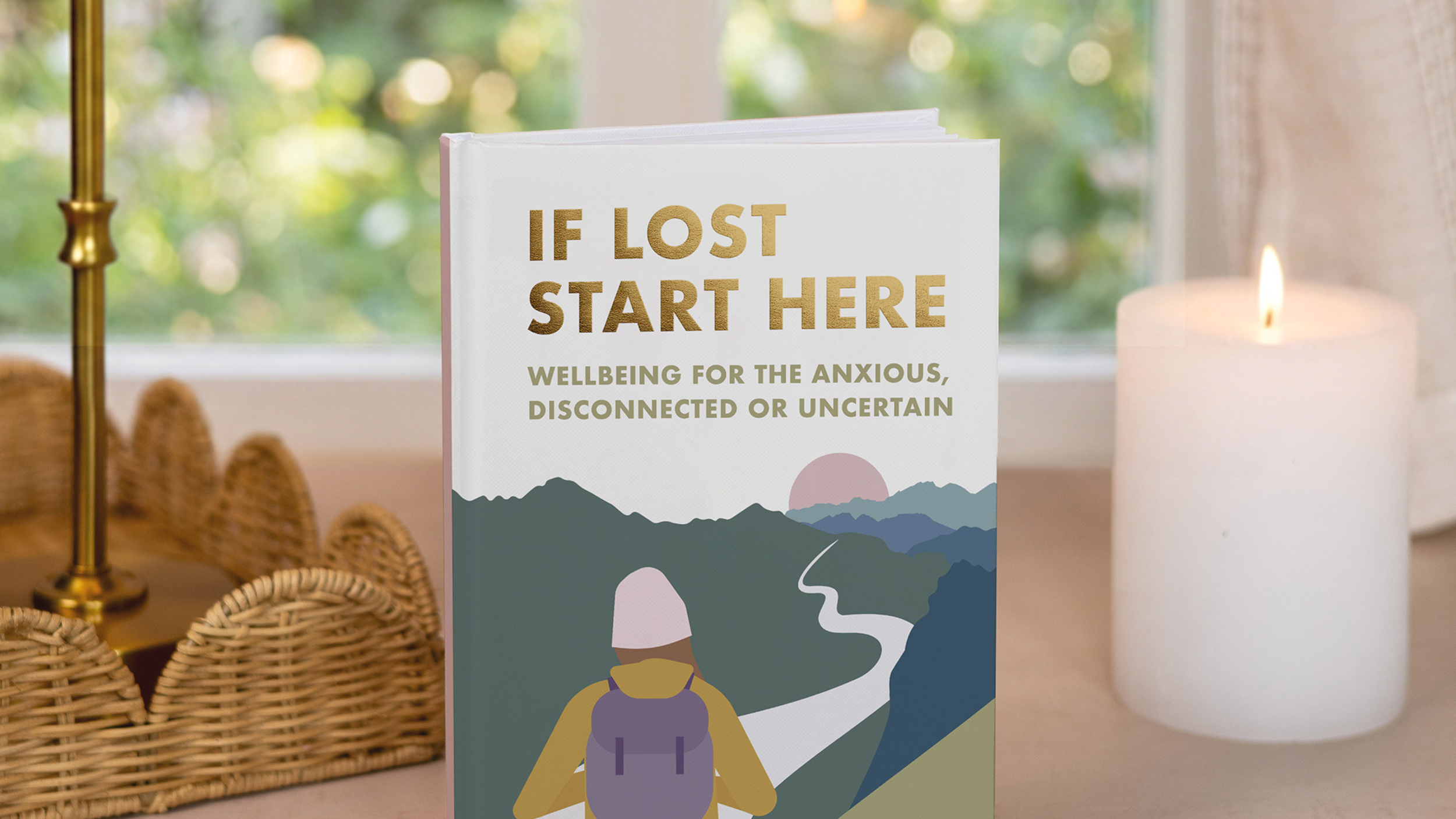
And if you’re feeling lost yourself, our book If Lost, Start Here: Wellbeing for the Anxious, Disconnected or Uncertain was created for exactly these moments. Rather than giving you another prescribed route to follow, it offers ten different pathways through wellbeing — including creativity, play, connection, nature, purpose and awe and wonder — so you can start with whatever feels possible or interesting to you right now.
You don’t have to know where it will lead. Sometimes you just need somewhere to start.

If Lost, Start Here: Our Book Is Here
If Lost, Start Here is a wellbeing journal designed for real life. Explore simple, practical ways to feel better, reconnect with yourself, and find your own way to well.
Ten years ago, we were sitting on a living room floor. Two friends, babies crawling around us, talking about all the ways we felt a bit… lost. Untethered. Overwhelmed.
And more than anything, we were talking about how hard it was to know where to start to just feel better. Not because there weren’t options. Because there were too many.
Everything we turned to—books, advice, tools—often left us feeling worse than we anticipated. Like we were somehow getting it wrong before we’d even begun. And there was a version of life we were meant to be living, and we were slightly off-track from it.
So we started asking different questions.
What do people actually need when they feel like this?
What helps when you’re tired, or overwhelmed, or uncertain?
What still counts when life doesn’t look like the version wellbeing advice assumes?
That was the beginning of If Lost, Start Here. And now, our book.
What This Book Is (And Isn’t)
This isn’t a book that asks you to overhaul your life. It’s not built on the idea that there’s a better version of you waiting on the other side of a perfect routine.
It’s more a guide for when you don’t know where to begin. A place to come back to when things feel off, or unclear, or just a bit flat.
It’s grounded in research, but it doesn’t feel like work. It’s designed to be easy to pick up, easy to move through, and importantly easy to make yours.
There’s no point in this book where you should feel like you’re failing at it. Instead, it’s about exploring.
Exploring yourself, yes, but also exploring your life. The world around you. The things that bring you back into it.
Because one of the things we kept coming back to was this: So much of wellbeing focuses on going inward.
But what about everything that happens when we go outward too?
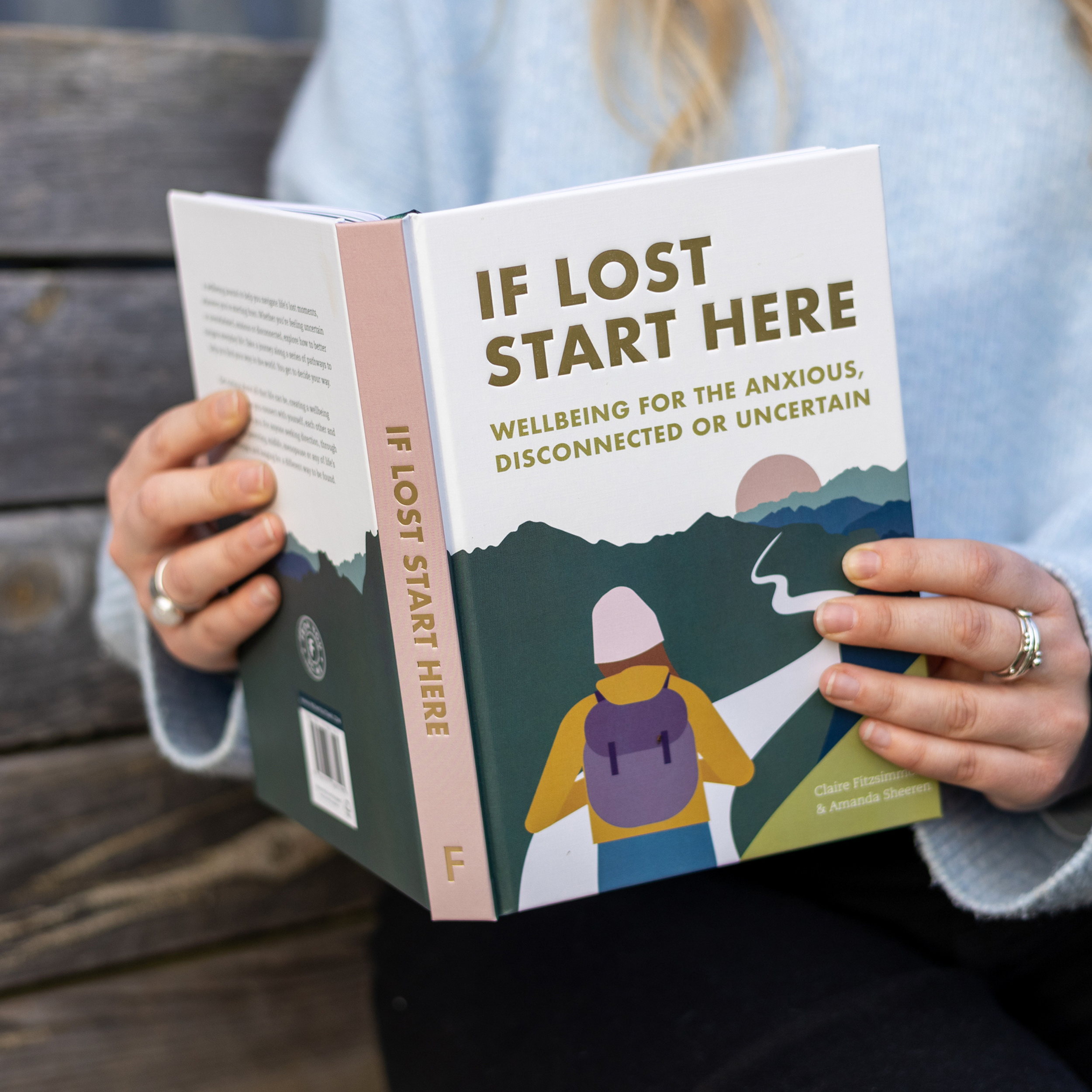
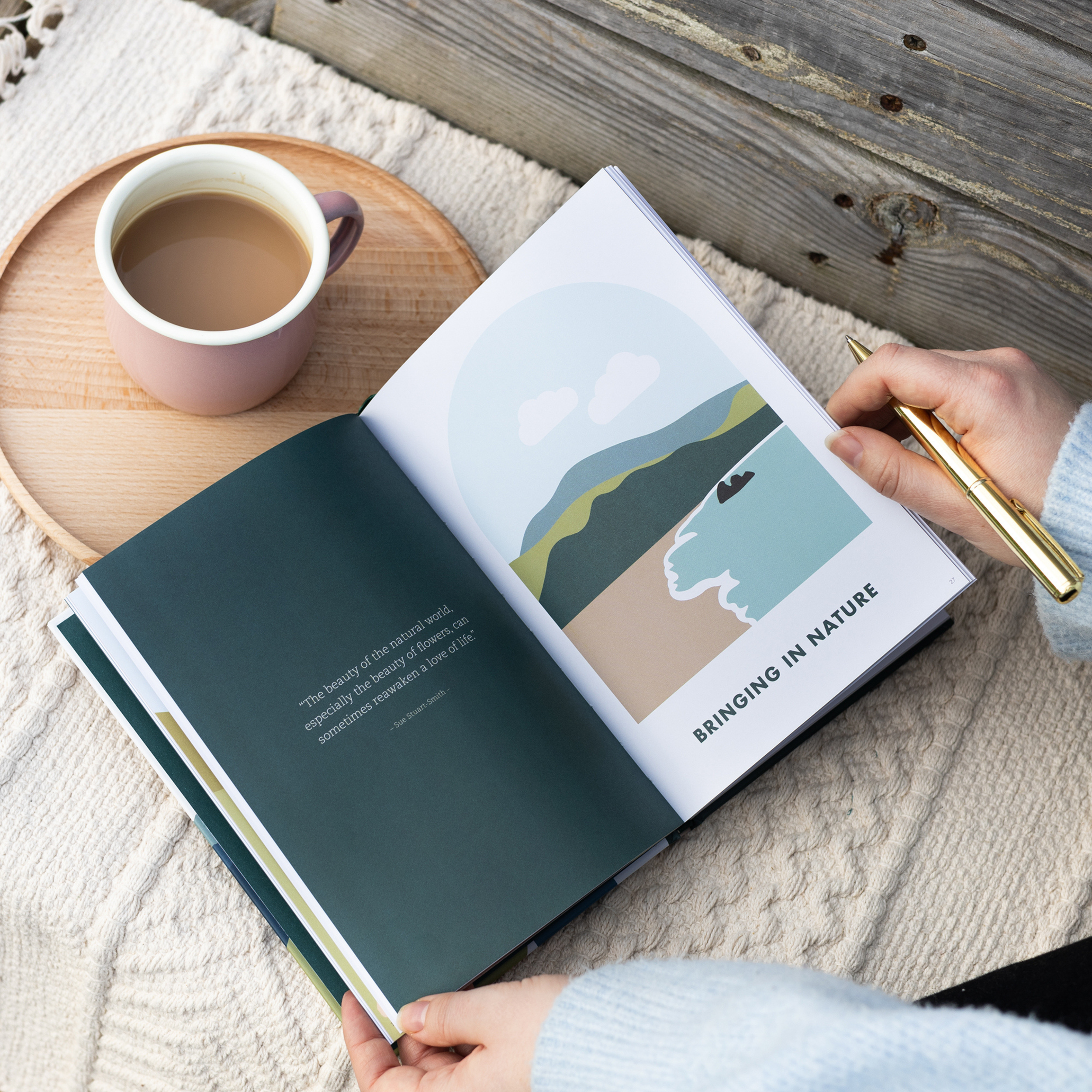
A Guide to You And the World Around You
This book moves through ten different wellbeing pathways. Some will feel familiar like connection, creativity and nature. Others might feel like something you’ve lost touch with, or haven’t quite found your way into yet.
And that’s kind of the point.
We hear this a lot from people: “I’ve never really thought about my life this way before.”
About play, for example. Or awe. Or having a creative practice as an adult that isn’t tied to being “good” at something.
Each pathway is there as a way in. Not something to master. But something to try. Something to notice. And something to come back to when you need it.
You Don’t Have to Do It All (Or Do It Properly)
One of our favourite things about this book is that it doesn’t need you to use it in a particular way.
You can dip in and out. You can follow it month by month. You can skip around entirely and follow whatever catches your attention.
If you’re someone who likes to think things through, you might spend longer with the essays and reflections. If you’re more of a doer, you might go straight to the activities and try things out in your day-to-day life. If you’ve got very little energy, you might just read a page and leave it there.
All of it counts. It’s much more of a “choose your own way through” than a step-by-step plan.
Built for Real Life (Not Ideal Life)
A lot of this started with a very practical question:
What does wellbeing look like when you’re too exhausted, too uncertain and too overwhelmed to do alll the things.
We started looking at each area of wellbeing not as something you either do or don’t do but as something that exists on a spectrum.
So instead of:
“Go for a walk in nature.”
It might be:
“Can you look out of the window?”
Instead of:
“Build a strong social life.”
It might be:
“Who feels like an easier person to text today?”
We found research that backed up the fact that even very small moments still matter. That they still count. That they can still shift how we feel in meaningful ways.
And more than anything, we wanted to build something that worked with people’s lives as they actually are. Not as they think they should be.
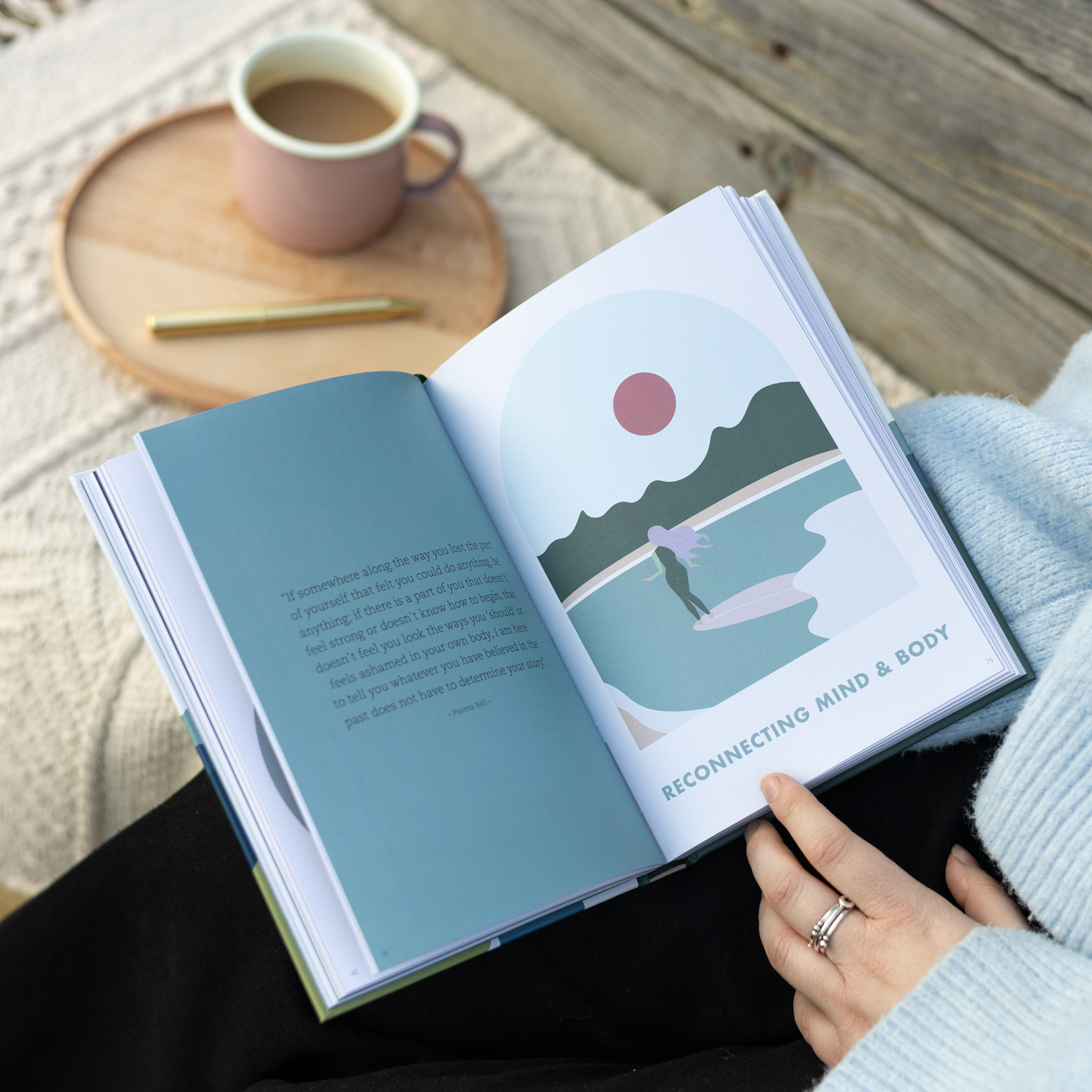
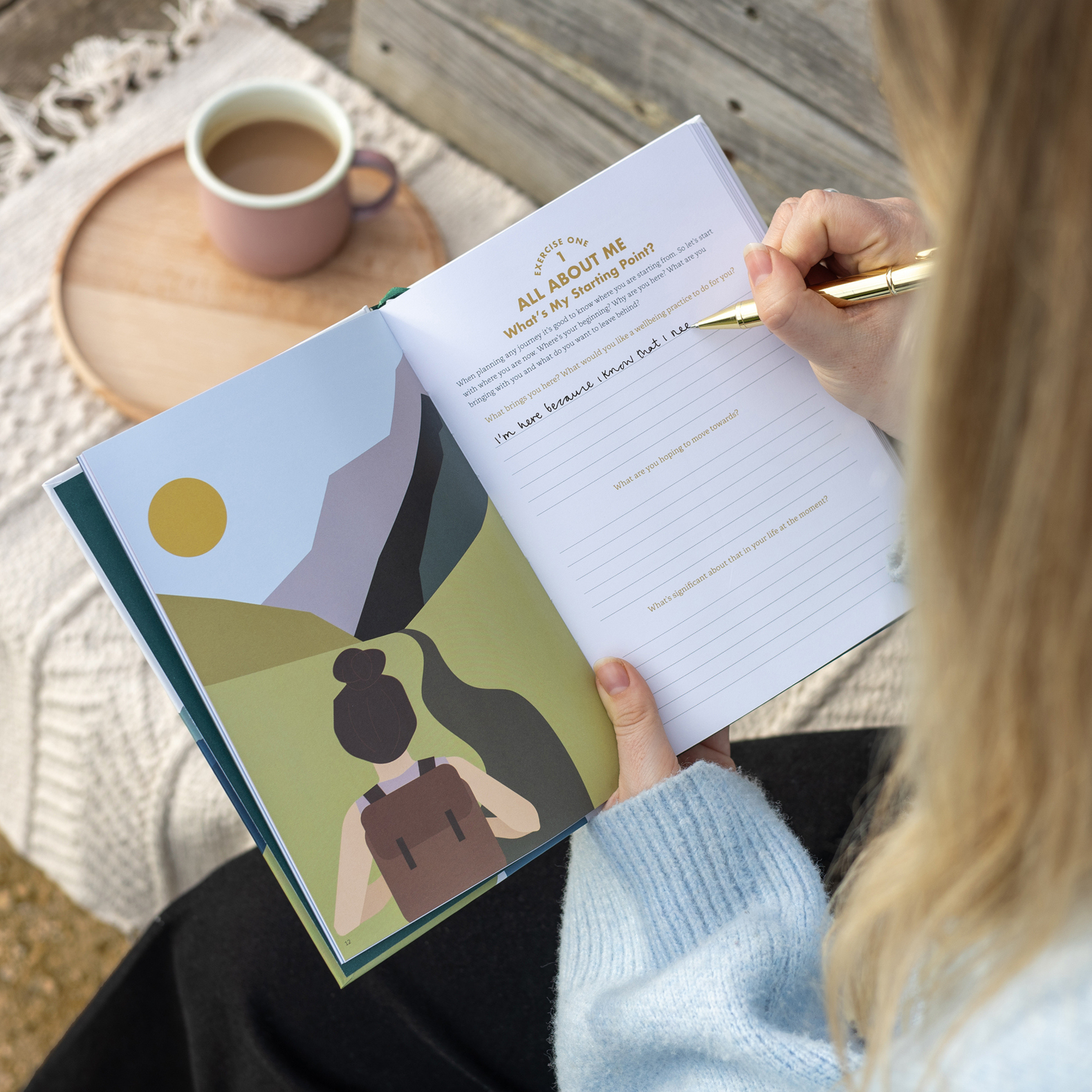
A Different Way to Think About Wellbeing
There’s a lot of pressure in this space now. To get it right. To do more. To optimise. And it can quietly turn wellbeing into another thing on the list.
We wanted this book to sit slightly outside of that. To say: there isn’t one right way to well.
For some people, it might be running, wild swimming, green juices. For others, it might be going to a museum, painting at the kitchen table, watching live music, or finding small ways to be part of the world again.
This is about finding your way. Not following someone else’s.
Something You Can Come Back To
Over the years, this became something we used ourselves.
When things felt off, we’d come back to it. Run through the pathways. Notice what had slipped. What we needed more of. Not in a critical way—more like a check-in.
“Oh, I haven’t so much as touched my toes this year. Maybe mind-body could use a bit of attention.”
It’s that kind of relationship we hope this book becomes. Something you return to. Something that helps you find your footing again.
If You’re Not Sure Where to Start
That’s okay. That’s exactly where this begins.
Also available on Not on the High Street and Amazon.

Grief Disco
Discover Grief Disco, a welcoming and uplifting space for anyone living with loss. A place to heal, connect and feel grief through music, movement and community.

Perfect For
Grief Disco is for anyone living with loss and looking for a different kind of space to hold it. It’s for people who don’t always have the words, who feel isolated in their grief, or who want to be around others who understand without needing everything explained. It’s for the heartbroken and the hopeful, for people who want somewhere gentle, human and a little unexpected to go with what they’re carrying.
You do not need to be good at dancing. You do not need to be ready to talk. You do not need to arrive in any particular state. You just need permission to come as you are.
Why You’ll Love It
Grief Disco offers something many grieving people are missing: a place to feel less alone without being forced into conversation or expected to “do grief” the right way. Through music, movement and a sense of shared understanding, it creates room for sadness, joy, memory, release and connection to exist together.
This isn’t about dancing to forget. It’s about dancing to remember, to honour and to reconnect. For some people that might look like tears on a dance floor. For others, it might be a small exhale, a moment of laughter, or the relief of being in a room where no one needs grief explained to them.
What Makes It Special
So much of grief can feel isolating. People don’t know what to say, or they say nothing. We can start to feel cut off from ourselves, from our bodies and from other people. What Grief Disco understands is that grief does not only live in words. It lives in the body too.
That’s what makes this space so powerful. It offers people a way to process loss through movement, music and presence, rather than through talking alone. There is no pressure to perform, no expectation to be upbeat and no fixed script for how you should feel. Everything is an invitation.
Grief Disco also holds something many of us forget is possible: that joy and grief can coexist. That a person can cry and dance at the same time. That love, memory, heartbreak and laughter can all be in the room together. In that sense, it doesn’t just offer support for grief. It offers a more human way of being with it.
The If Lost Take
There is something quietly radical about creating a place where grief is allowed to move.
So many of us are more familiar with the language of coping than the experience of actually feeling. We know how to keep going, keep functioning, keep answering “fine” when we are anything but. Grief Disco interrupts that. It offers something softer and, for many people, more freeing: a chance to let grief be alive in the body, not just managed in the mind.
What we love most is that this doesn’t turn grief into a problem to solve. It doesn’t rush people towards silver linings or ask them to package their pain into something neat and shareable. Instead, it makes room for what is true. Sometimes that truth is sorrow. Sometimes it is love. Sometimes it is a song that opens something you didn’t realise you were still carrying.
And sometimes healing looks less like fixing and more like finding a room where you can be fully human again.
Founders Story | Co-founded by Georgina Jones and Leah Davies
Grief Disco was born from lived experience of loss and a belief that grieving people deserve spaces that feel connecting, warm and real. Co-founders Georgina and Leah created it as a response to the loneliness that grief can bring and to the sense that many of the places available to grieving people do not always make room for the body, for joy or for community. Their approach is shaped by the understanding that no one should have to grieve alone, and that music and movement can help us find our way back to ourselves and each other.
Founder’s Go-To Wellbeing Advice
“Look for the love.
Look for the tiny moments of joy that are still here, even in the hardest seasons. Keep a playlist that helps shift your energy. Let music help you move what words can’t always reach.
And remember that grief is not something to fix or get over. It is something to feel, and you don’t have to feel it alone.”







Some Practical Details
Grief Disco is a space where people can come together around grief through music, movement and optional sharing. Some events happen in person and there are also online grief discos for people who would rather join from home. The atmosphere is invitational rather than intense: you can dance, sit, cry, talk, stay quiet, turn your camera off or simply witness. There are also small ritual elements, such as dedications and moments to remember the person or people you are dancing for.
If you are grieving and looking for support, this may be one of those rare places that helps not by asking you to explain your loss, but by giving you somewhere to bring it.
You Don’t Have to Change Who You Are to Move Forward
If you’re feeling lost, overwhelmed or unsure, today we’re exploring self-trust, ADHD, and why you don’t need to change who you are to move forward.
Sometimes the feeling of being lost doesn’t announce itself loudly. It slips in quietly, disguised as self-doubt or restlessness. You find yourself wondering why the things that seem to work for everyone else don’t quite stick for you. Why your energy rises and falls. Why you can be so capable one week and so uncertain the next. Why the common advice about confidence or consistency feels faintly misaligned, as though it were written for someone else.
Many of the people who arrive here are not looking to reinvent themselves. They are looking for steadier ground. They are tired of trying to fix what might not be broken.
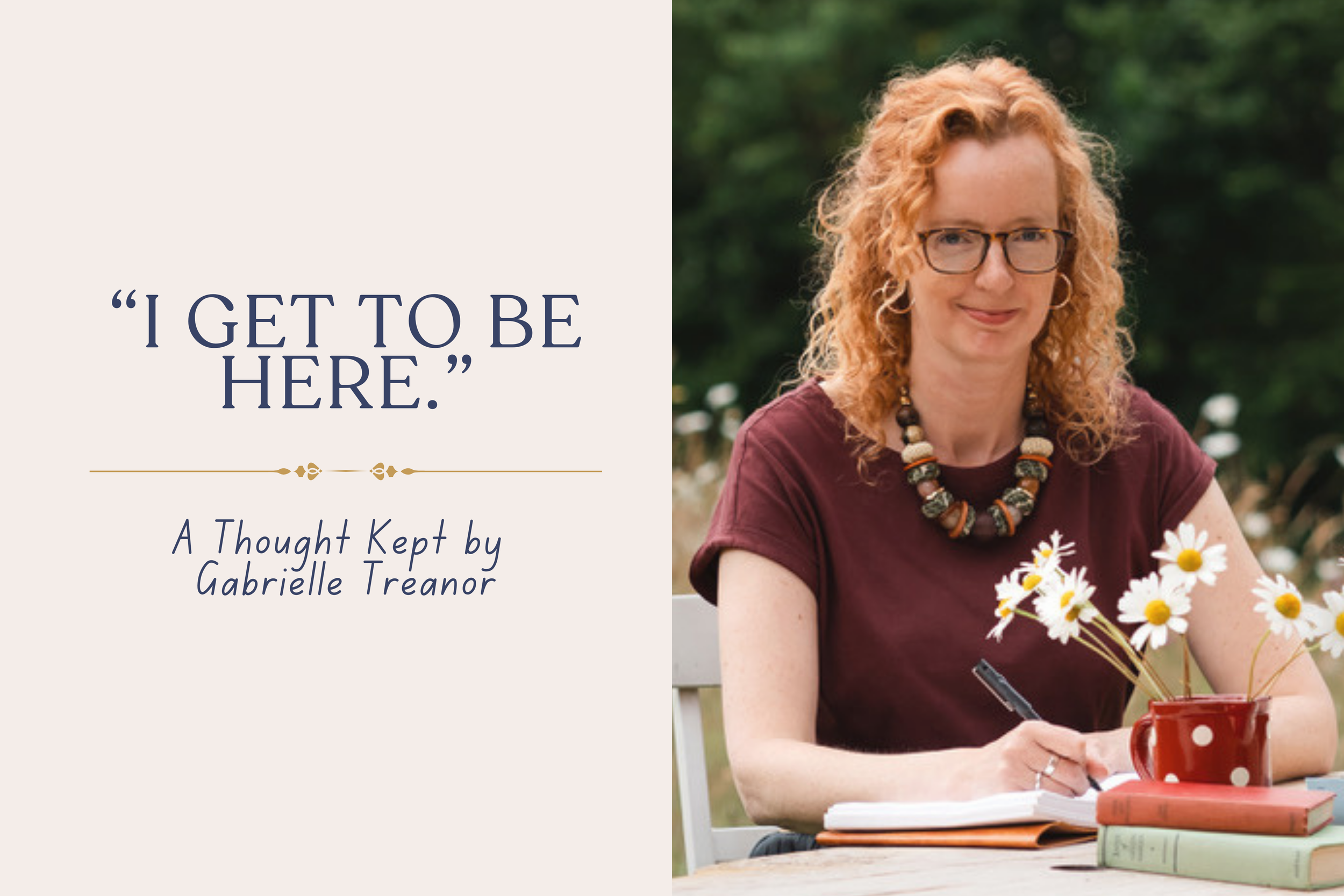
In a recent episode of A Thought I Kept, I spoke to writer and ADHD coach Gabrielle Treanor about a thought that had quietly reshaped her life: “I get to be here.”
When she said it, it wasn’t defiant. It wasn’t triumphant. It was calm. Considered. Almost surprised.
Gabrielle was diagnosed with ADHD in her late forties. For years she had assumed that her fluctuating motivation, her sensitivity, her tendency to procrastinate meant she simply wasn’t disciplined enough. She had tried to follow the prescribed routes to wellbeing — the routines, the systems, the ways of doing things “properly.” When she couldn’t sustain them, she thought the fault lay with her.
What changed was not her personality, but her understanding. Her brain worked differently. The expectations she had internalised were not neutral; they were shaped by a culture that prizes steadiness, productivity and linear progress. Realising this did not give her a new identity so much as a new understanding. A new willingness to stop apologising for the way she was wired.
I get to be here.
It is such a simple sentence, but it carries weight. It suggests that your presence is not conditional on becoming more efficient, more certain, more contained. It does not demand that you take centre stage; it simply reminds you that you belong in the room.
Many of us have been taught to make ourselves smaller in order to move through the world more smoothly. To temper our sensitivity. To soften our opinions. To be grateful for what we have and not ask for more. Even the language of wellbeing can subtly reinforce this shrinking — as though if we could only master the right practice, wake earlier, focus harder, meditate longer, we would finally become the sort of person who functions without friction.
But what if friction is not evidence of failure? What if it is simply information?
Gabrielle’s approach to wellbeing is rooted in experimentation rather than compliance. Instead of asking, “Why can’t I stick to this?” she asks, “What might work for me right now?” The difference is small but profound. It shifts the emphasis from self-criticism to curiosity. It acknowledges that we are not static creatures. Our energy shifts. Our capacity changes. The practices that nourish us in one season may not suit us in another.
For those of us who feel overwhelmed by self-improvement culture, this can be a relief. It allows us to step out of the exhausting cycle of starting and stopping, trying and failing, promising and abandoning. It invites us to pay attention to who we actually are, rather than who we think we ought to be.
If you are feeling unsure of your direction, it may not be because you lack ambition or courage. It may be because you have been trying to travel using someone else’s map.
To say “I get to be here” is to begin from your own coordinates. It does not solve everything. It does not remove uncertainty. But it offers a place to stand. From there, you can notice what feels steady and what does not. You can experiment gently. You can allow for inconsistency without interpreting it as collapse.
This is not an argument against change. Growth still happens. We still learn, adjust, stretch. But growth that begins from self-rejection rarely feels sustainable. Growth that begins from recognition — from a quiet acknowledgement of your temperament, your history, your rhythms — tends to be kinder.
If you are questioning whether the usual wellbeing advice works for you, that questioning may be wisdom rather than resistance. If you are tired of feeling behind, it may be because you have been measuring yourself against a timeline that was never yours.
You get to be here. As you are. With the brain you have, the experiences you carry, the particular mix of steadiness and fluctuation that makes you you.
If you’d like to hear the full conversation with Gabrielle, you can listen to the episode of A Thought I Kept where we explore this idea in more depth — including what it means to discover ADHD in midlife and how experimentation can replace striving.
And if you’re feeling especially untethered, our coaching sessions are here to help you explore these questions at your own pace.
There is no rush to become someone else. Sometimes the first step forward is allowing yourself to be exactly who you are.
When the Story You’re Living No Longer Feels Like Yours
Sometimes life looks fine on the outside, but something feels off. Explore what self-trust can look like and what it means when the story you’re living no longer fits — and how to find your footing again.
You might be standing in the kitchen, making packed lunches. Nothing dramatic is happening. No argument. No crisis. Just the familiar rhythm of the morning — coffee cooling on the side, toast popping up, your phone lighting up with emails you already feel behind on.
You might catch yourself thinking, I’m good at this. At holding things together. At anticipating what everyone else might need. At getting through the day without making too much noise. And then, almost immediately, another thought follows: But I don’t remember choosing this version of myself.
It’s not that you dislike your life. You’re capable, loved, respected. From the outside, things look fine. But there’s a growing sense that you’re performing a role you’ve learned very well — one shaped by expectation, responsibility, and what once felt necessary — rather than living from a place that feels true to you now.
When you try to put words to it, they’re hard to find. You don’t want to sound ungrateful. You don’t want to blow things up. You just know that something about the story you’re carrying feels outdated, like clothing that once fit perfectly but now restricts your movement in small, tiring ways.
This is often how it begins. Not with a bold decision or a clear turning point, but with a quiet noticing. A moment where the life you’re living feels slightly misaligned with the person you’re becoming. Where the way you’re seen — dependable, easy-going, capable — no longer matches how you feel on the inside.
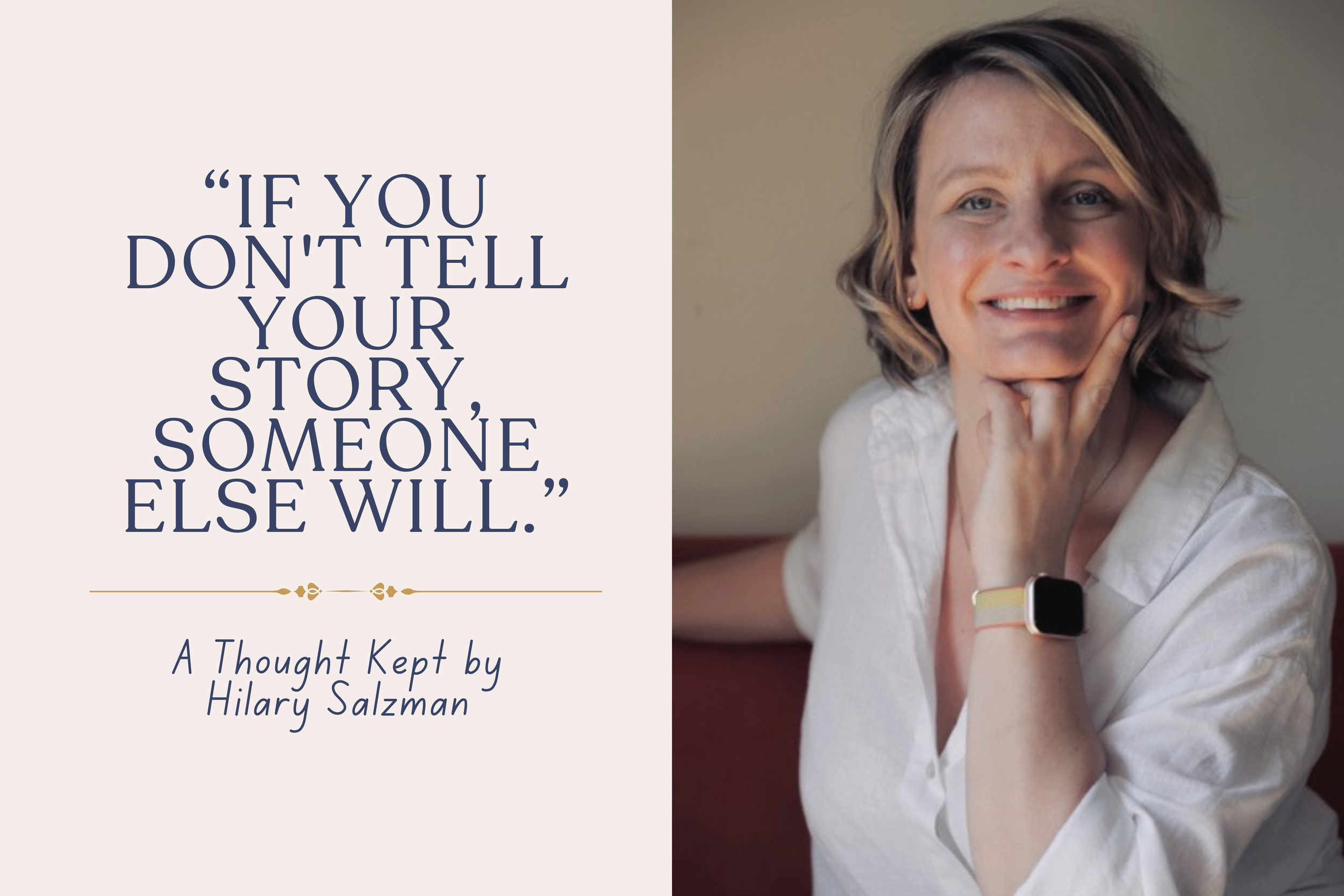
I’ve been thinking about this a lot since my recent conversation on A Thought I Kept with Hilary Salzman. We talked about storytelling, voice, and self-trust — not as something polished or performative, but as something deeply everyday. The stories we absorb, repeat, and live inside, often without realising we’re doing it.
Hilary shared a thought that has stayed with her for years: if you don’t tell your story, someone else will. It isn’t a warning or a call to action. It’s more like a lens — a way of noticing what happens when we stop authoring our own lives and allow habit, expectation, or other people’s assumptions to fill in the gaps.
Most of us aren’t consciously choosing to live someone else’s story. It happens gradually. We adapt. We respond. We take on roles that make us legible and useful. We learn how to be good — good at work, good in relationships, good at coping. And for a long time, those stories can be protective. They help us belong. They help us get through.
But protection can quietly turn into distance. From ourselves. From our feelings. From the sense of aliveness that comes from knowing why we’re doing what we’re doing.
In the conversation, Hilary spoke about the discomfort that arises when the way the world sees you no longer matches how you see yourself. That mismatch can show up as anxiety, restlessness, or a low-level dissatisfaction that’s hard to explain. You might feel unsettled or unsure, even though nothing is obviously “wrong”.
What stays with me is how rarely this is about needing a better plan or a more confident version of yourself. More often, it’s about noticing. Becoming curious about the stories you’re living inside. Asking gentle questions, not to fix or optimise, but to understand.
Whose expectations am I carrying here?
What version of myself am I maintaining?
What would it mean to tell this story in my own words?
We live in a culture that treats uncertainty as something to overcome — as though clarity must arrive quickly, and confidence comes from having answers. But what if uncertainty is simply information? A sign that something is shifting. A signal that the story you’ve been living has reached its limits.
Hilary talked about how clarity often doesn’t arrive as an answer, but as a feeling in the body — a sense of constriction or ease. A quiet knowing that something no longer fits. And noticing this doesn’t require dramatic change or brave declarations. It can begin by allowing yourself to feel what’s already there, without rushing to make sense of it.
This is where self-trust comes in — not as confidence or self-belief in the motivational sense, but as a willingness to stay present with your own experience. To let your emotions inform you rather than embarrass you. To trust that discomfort isn’t a personal failure, but a reasonable response to living inside a story that’s outgrown its usefulness.
Many people arrive at If Lost Start Here feeling overwhelmed, behind, or unsure why familiar wellbeing advice isn’t helping. Often, that’s because what’s needed isn’t another strategy, but orientation. A way of standing still long enough to feel where you are, and what might be asking for attention.
Living your own story doesn’t mean having a perfectly articulated narrative. It doesn’t require sharing everything or knowing exactly who you are becoming. It’s less about broadcasting and more about authorship — about being able to come back to yourself and say, this is who I am, for now. This is what matters. This is what I’m no longer willing to override.
The stories we tell ourselves shape our nervous systems, our relationships, our sense of belonging. When those stories are borrowed, inherited, or outdated, it makes sense that we feel unsettled. And when we begin to gently reclaim them — not by rewriting our lives overnight, but by listening more closely — something steadies.
You don’t need to force a new story into existence. You don’t need to perform authenticity or prove your voice. Sometimes it’s enough to notice the gap. To recognise the feeling of misalignment without judging it. To stay curious about what’s trying to emerge.
If this resonates, you might want to listen to the full conversation with Hilary on A Thought I Kept. It’s a thoughtful exploration of voice, identity, and what it means to feel more at home in your own life.
And if you’re in a season of questioning — unsure, overwhelmed, or quietly ready for something to shift — there’s support here too. Not to fix you, but to help you find your footing, in your own time, and in your own words.
You’re allowed to pause. You’re allowed to question the story you’re in. And you’re allowed to take your time deciding what comes next.
Feeling Stuck Until You’re “More Confident”? Curiosity Might Be a Better Place to Start
If you’re waiting to feel confident before making a change, curiosity can help you move forward.
“I’ll do this when I feel more confident.”
We tell ourselves we’ll speak up, make the change, apply for the role, take ourselves seriously, or move forward once confidence arrives. Once we feel braver, clearer, more certain about who we are and what we want.
But confidence has a habit of staying just out of reach.
Not because there’s something wrong with us, but because confidence is rarely the starting point we imagine it to be. For most people, confidence grows through experience, not before it. The problem is that waiting to feel confident can keep us stuck, circling the same questions, postponing decisions, and quietly reinforcing the idea that we need to become someone else before we’re allowed to act.
This is where curiosity offers a different way in.
Curiosity doesn’t ask you to believe in yourself. It doesn’t require certainty or bravery. It simply invites you to explore. What would happen if you tried this? What might you notice if you took one small step, not to prove anything, but to learn?
When you approach change with curiosity, the stakes are lower. You’re not asking yourself to succeed; you’re allowing yourself to gather information. A conversation becomes an experiment rather than a test. A new direction becomes something you’re exploring rather than committing to forever.
This shift matters because it changes how we relate to ourselves. Instead of measuring every move against an imagined ideal, curiosity keeps us in contact with our actual experience. Each step, however small, offers insight rather than judgement. Over time, that insight builds self-trust — and confidence follows.
Many people who want to feel more confident are really looking for something deeper: a sense that they can trust themselves, that they’re allowed to make choices without constant second-guessing, that they don’t need to have it all worked out in advance. Curiosity supports that kind of confidence because it stays close to what’s real. It helps you learn what fits, what doesn’t, and what feels meaningful in your own life.
If you’re feeling stuck, unsure, or waiting for confidence before you move forward, curiosity can be a more accessible starting point. It allows movement without demanding certainty. It gives you permission to begin where you are, rather than where you think you should be.
If confidence, decision-making, or feeling stuck are recurring patterns for you, coaching can be a supportive space to explore them more deeply. Coaching isn’t about fixing you or telling you what to do; it’s about understanding what’s going on beneath the surface and finding ways to move forward that feel steady, realistic, and impactful.
You don’t need to wait until you feel confident. You can start by getting curious.
How to Handle Your Emotions When You’re Feeling Lost or Overwhelmed
Feeling lost or overwhelmed by your feelings? Learn how to handle your emotions when you struggle to understand them.
There’s a moment many of us might recognise.
You’re trying to make a decision, move something forward, or simply get through the day — and your emotions feel louder than you’d like them to be. Anxiety edges in. Frustration bubbles up. Self-doubt has an opinion. And suddenly it feels harder to think clearly, trust yourself, or know what the next step might be.
When that happens, it’s easy to conclude that the problem is your emotions. That you’re feeling too much, or handling things badly. That if you could just calm down, be more confident, or stop overthinking, everything would be easier.
But what if the issue isn’t having emotions — it’s that most of us were never taught how to handle them well?
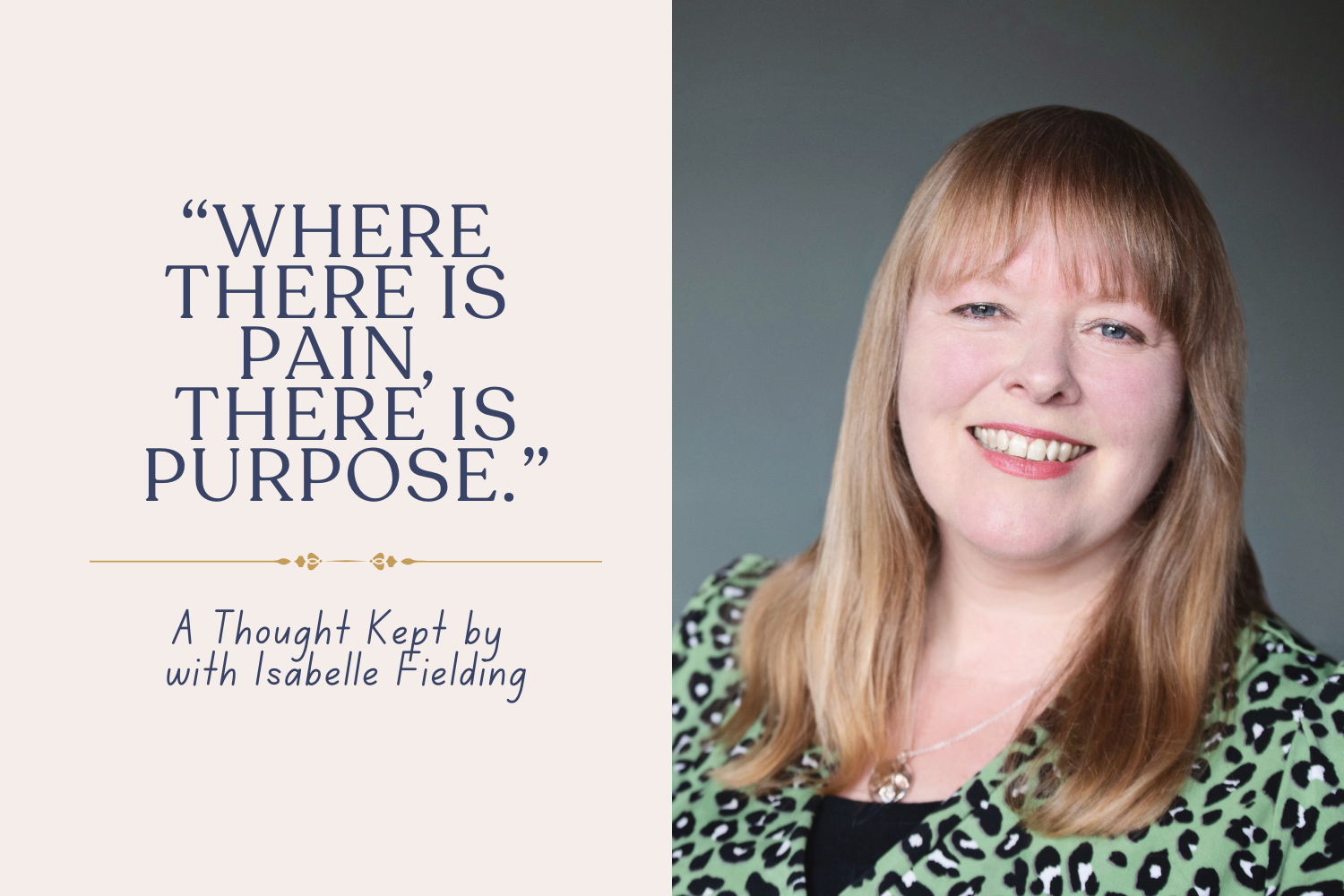
This question sat at the heart of a recent conversation on our podcast A Thought I Kept, with Isabelle Fielding. Isabelle works with individuals and organisations navigating change and uncertainty, and her work is grounded in a simple but often overlooked idea: emotions are part of being human, and learning how to relate to them is a skill — not a personality trait.
One of the key ideas Isabelle shared was this: Where there’s pain, there’s purpose. Not pain as something to glorify or push through, but pain as a signal. An indication that something matters, that a value is being touched, that attention is needed.
For many people who arrive here feeling lost, this is already a reframe. Because when emotions feel uncomfortable, our instinct is often to control them, deny them, or move away from them as quickly as possible. We tell ourselves we shouldn’t feel this way. We judge the feeling. We add a second layer — frustration, shame, self-criticism — on top of the original emotion.
Very quickly, things escalate.
Isabelle spoke about how emotions often stack like this. You feel anger, then feel ashamed of feeling angry. You feel anxious, then criticise yourself for being anxious again. Before long, it’s hard to know what you’re actually feeling — just that it’s too much.
Handling emotions better doesn’t mean stopping that first feeling from arising. It means learning how not to pile everything else on top.
In the conversation, Isabelle used an image that makes this easier to picture. Imagine being in the sea, trying to hold a beach ball underwater. It takes constant effort. Your arms ache. And eventually, no matter how determined you are, the ball bursts back to the surface — often catching you off guard. That’s what it can be like when we try to suppress or ignore our emotions. They don’t disappear; they resurface later, often louder and harder to manage.
A more sustainable approach is to let the ball float.
To allow emotions to be present without pushing them away — but also without letting them take over. Isabelle described this as learning to carry emotions lightly, rather than holding them right in front of your face. They’re there, but they don’t get to drive every decision.
This is where handling emotions becomes less about control and more about relationship.
Instead of asking, How do I get rid of this feeling? we might ask, Can I notice this without being overwhelmed by it?
Instead of assuming emotions make us unreliable, we can start to see them as information — not instructions.
Anxiety might be signalling uncertainty that needs time. Frustration might be pointing to a boundary or a mismatch. Self-doubt often appears where we care deeply about doing something well. None of these emotions tell us exactly what to do next but they can help us understand what’s going on inside us.
For people feeling lost, this can be grounding. Because it means you don’t have to wait until you feel calm, confident, or certain before you’re allowed to move forward. You don’t need to change who you are to begin handling things better.
Another important distinction Isabelle made was between experiencing an emotion and becoming it. Feeling anxious is not the same as being an anxious person. Feeling unsure doesn’t mean you can’t be trusted. Emotions are states — they come and go — even when they feel sticky or familiar.
Learning to handle emotions better often starts with noticing this difference.
It might mean pausing long enough to name what you’re feeling, without immediately reacting or analysing it. It might mean recognising when a second emotion — shame, irritation, self-judgment — has joined the first. It might mean allowing yourself to feel something without demanding that it resolve straight away.
This isn’t about emotional mastery. It’s about emotional steadiness.
At If Lost Start Here, we often talk about finding your footing rather than finding answers. About orientation rather than certainty. Learning to handle your emotions is part of how to navigate life. Not because emotions give you a perfect map, but because they help you stay connected to yourself as you move through change.
You may still feel unsure. You may still feel conflicted or overwhelmed at times. But handling emotions better doesn’t mean eliminating those experiences — it means being less knocked off course by them.
And that can make a real difference when you’re trying to move forward gently, in your own way.
If you’d like to explore this further, the full conversation with Isabelle Fielding is now available on our podcast A Thought I Kept.
And if you’re feeling lost or unsure and want support in understanding and handling your emotions, explore our coaching sessions.
The Thought That Changed How I End the Year
End the year with more clarity and less pressure. Discover one powerful question to reset your mind and start the new year with intention
Every year around this time, I feel a quiet tension building.
It’s not just the pressure to finish things, though that’s part of it — the projects left undone, the goals half-met. It’s something deeper. A low-grade noise, humming underneath the productivity tools and Pinterest-perfect vision boards.
That voice that says:
“You should be reflecting.”
“You should be setting goals.”
“You should be figuring out how to make next year better.”
And often, if I’m honest, I try to oblige. I sit down with the journal. I make the lists. I try to “get clear.”
But I don’t always feel clear. I just feel… tired.
So this year, I’m trying something different. Something softer.
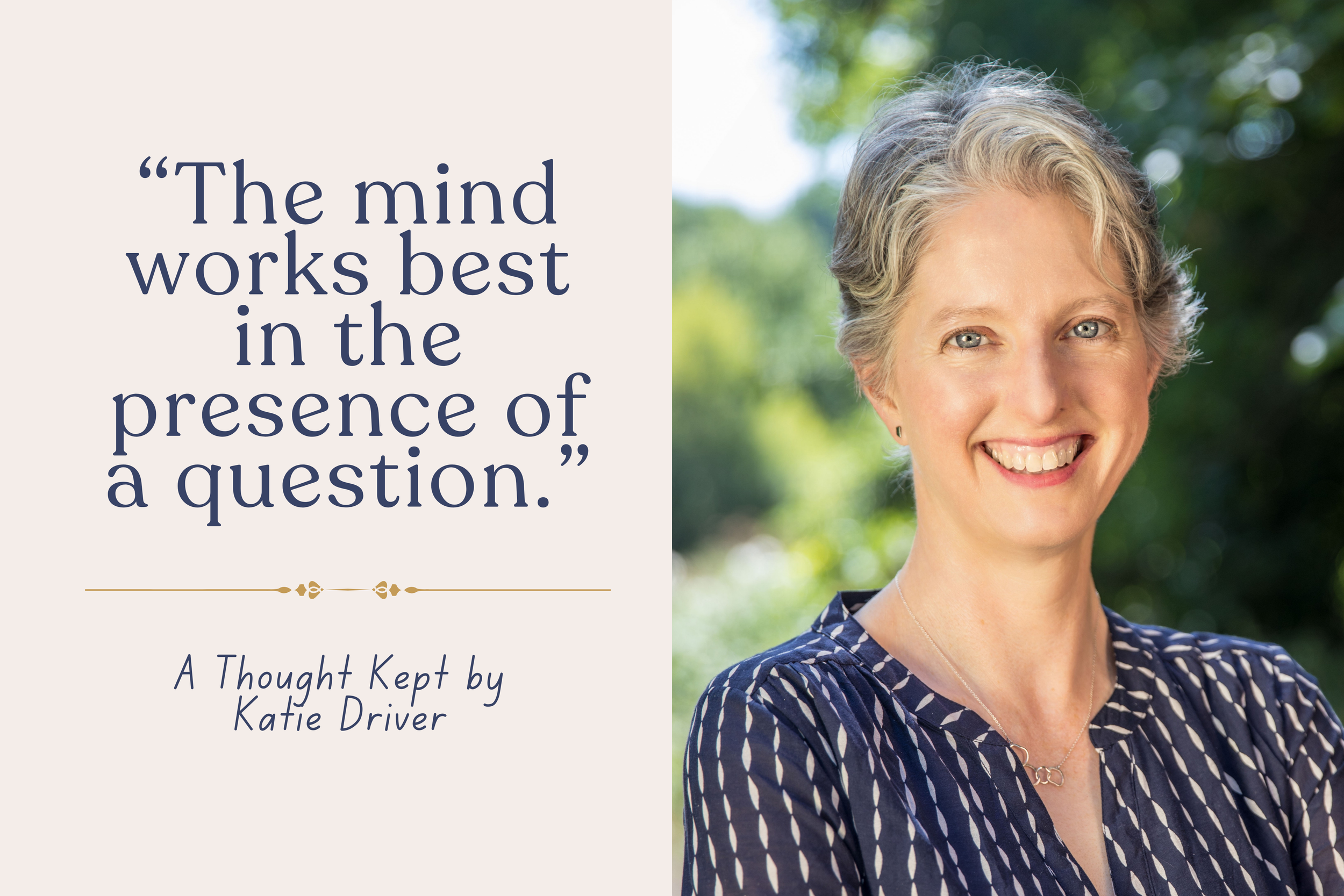
And it started with one sentence from a conversation I had with coach and facilitator Katie Driver:
“The mind works best in the presence of a question.”
It landed so gently, I almost missed it. But the more I sat with it, the more it felt like a key — not just to better thinking, but to a better ending.

What if clarity doesn’t come from pushing — but from asking?
Katie’s work centers around helping people think for themselves — particularly those who feel like their minds are “buffering” or stuck in mental noise loops. In our episode of A Thought I Kept, she talks about the value of attention, the importance of quiet, and what can shift when we stop trying to force insight, and start trusting the questions.
As someone who has historically tried to think my way to control — to logic, list-make, or out-journal the overwhelm — this idea felt like an exhale. What if I didn’t need the answer yet? What if I didn’t need a 12-step plan? What if I just needed the right question?
So I tried one.
The question that helped me end the year differently
On a particularly messy-feeling day, I sat down with this:
What would make this a good ending — for me?
Not a successful one. Not a productive one. Not an impressive one.
A good one. For the person I actually am.
And quietly, without fanfare, an answer rose:
Letting go of something I never really wanted.
Finishing one small thing I care about.
Taking a walk in silence, no headphones.
Choosing presence over performance.
Not exactly a 10-point strategic vision. But honest.
True. Grounded. And — perhaps most importantly — doable.
Another question I’ve come to love:
“What do I need right now?”
It’s one Katie shared in the episode, and I’ve returned to it often.
When the list is long. When my brain feels foggy. When I’m tempted to sink into distraction instead of meeting myself gently.
Sometimes the answer is small — a cup of tea, a stretch, a text to someone I love. Sometimes it’s “nothing right now.” But just asking reminds me I have needs, and they’re worth listening to.
In a season that often prioritizes output — what did you accomplish, what are you planning next — this simple question helps me reorient inward. To listen. To care. To remember that ending well isn’t always about tying everything up. Sometimes it’s about releasing what no longer fits.
A better ending is possible. But it starts with presence, not pressure.
So if you’re feeling behind or burnt out or like your brain is caught in a loop —
If you’re wondering how to reset without overhauling everything —
Here’s what I learned:
You don’t need to fix it all.
You don’t need to reinvent yourself.
You don’t even need to reflect perfectly.
You just need one honest, open question.
And a little space to answer it.
Listen to the episode: What to Do When You Can’t Think Straight with Katie Driver
And if you need the space to think then explore our online and in-person coaching sessions. You can still book for the end of this year, or get a session in your calender for the start of 2026.
How to End the Year with Intention (Before the New One Begins)
December doesn’t have to be a sprint to the finish line. Here's a slower, more intentional way to reflect on the year behind you and quietly begin the next one with clarity and care.
December is often framed as a finish line: A final push. A test. A moment to evaluate everything and rework yourself before the clock strikes midnight. But what if we made space for something different?
What if the end of the year wasn’t a judgment point but a waypoint?
A natural pause to notice, gather, and begin again, without rushing?
This isn't though about anticipating resolutions. It’s more about recognising what this year asked of you and how you met it. It’s about taking stock of what mattered, what’s changed, what still hurts, and what you want to carry forwards (or quietly leave behind).
So here’s an invitation to end the year on your terms, whatever that means to you.

Step 1: Reflect Without the Pressure to Perform
This time of year can stir up all kinds of emotions — joy, grief, gratitude, burnout — often tangled together. So the first thing to do is simple:
Pause and notice. Instead of listing wins or judging what you “did enough of,” try asking:
What did I learn about myself this year?
Where did I feel most like me?
What surprised me, softened me, challenged me?
These are the kinds of reflections that grow self-trust, rather than self-criticism.
You could:
Write a “reverse bucket list” — things you experienced, even if small, that mattered
Map your year by seasons or quarters and list one lesson or moment from each
List three things you coped with or made space for, even if they don’t “look impressive” on paper
Growth isn’t always visible. This is the season to witness it anyway.
Step 2: Begin Again Without Reinventing Yourself
January can come with a lot of noise. New habits. Fresh starts. Big goals. But most meaningful change is quiet and ongoing.
So instead of asking, “What do I need to fix about myself?”, try this:
What do I want to protect, grow, or honour more in the year ahead?
A few questions that can help:
What helped me feel steady this year and how can I make space for more of that?
What small boundary, rhythm or mindset actually worked?
What’s something I’m curious about right now?
And one of our favourite ideas:
Choose a word — not as a resolution, but as a companion. Something that gently anchors your direction, without pressure. Words like ease, play, curiosity, rooted, or enough can be guideposts.
Yours doesn’t need to be “clever”. It just needs to feel like a hand on your shoulder, reminding you of what matters.
Step 3: A Gentle Reflection Practice (That Won’t Overwhelm You)
If you’re unsure where to start, try this 10-minute reflection ritual:
→ Write a letter to yourself from the end of next year.
Write as if it's already happened.
What moments are you grateful for?
What did you let go of?
What surprised you in the best ways?
What would you thank yourself for doing (or not doing)?
This isn’t about setting fixed goals. It’s about listening to what your life might want to become.
You can keep the letter, hide it in a book, or revisit it this time next year.
Or Try This: Your End-of-Year Clarity Toolkit
If journaling isn’t your thing, try choosing one of the following prompts to explore this December — in a voice note, a walk, or a conversation with a friend:
What are you proud of that no one else saw?
What helped you come back to yourself this year?
What do you know now that you didn’t in January?
Where did your energy feel most alive and how can you follow that in 2025?
Sometimes clarity doesn’t come through strategy but through honesty.
When This Season Feels Tender
Not everyone loves this time of year. For some, December brings exhaustion. Loss. Isolation. Or the sense that you’re not where you “should” be.
So here’s your permission slip:
You don’t have to optimise December.
You don’t have to write a perfect wrap-up post or choose a guiding word.
You are allowed to be in progress — unfinished, unsure, still becoming.
A different year is coming. But you don’t need to earn it. You only need to arrive in it as yourself.
This year has already shaped you. You’ve likely grown in ways you didn’t expect. And the new year? It’s not a blank slate you have to earn — it’s just the next page.
Take what you need from this season. Leave the rest. You’re already enough to begin again.
Want to Step into the New Year With Support?
If you're ready to approach 2025 with more clarity, confidence, or simply a better relationship with yourself, I’m now opening up a small number of coaching spots for the new year.
This isn’t about fixing you. It’s about creating space to explore:
What you actually want next — beyond the noise
How to hold boundaries without guilt
How to reconnect with energy, meaning and emotional steadiness
And how to live your life in a way that works for you, not just around you
We’ll work at your pace, with tools and reflections tailored to you.
If that sounds like something you're curious about, you can read more here and book a free discovery call here or drop me a message with any questions.

What Coaching Really Is (and Isn’t): A Q&A for Curious People
Curious about coaching but not sure what it actually is? A gentle, myth-busting Q&A that explains what coaching really means — and how it can help you reconnect with yourself.
Maybe you’ve been reading along for a while now. Nodding, recognising something in yourself, slowly starting to feel seen again. And maybe, you’ve wondered: Would coaching help me? Is it for someone like me? Do I even know what it really is?
We hear those questions a lot. So here are our non-sales-speak answers (because there’s already too much hustle in this industry).
Q: Is coaching just life advice?
Not at all. In fact, coaching isn’t advice-giving. It’s not someone telling you what to do. It’s not a checklist or a five-step plan or a quick fix.
Coaching is a conversation where you get to hear yourself more clearly. It’s space to think. It’s being asked the kinds of questions that help you untangle what’s really going on beneath the surface, in a way that feels safe, not exposing.
Q: But I’m not trying to “transform my life.” Would coaching still be useful?
Absolutely. Coaching doesn’t have to be about big reinventions.
In fact, the most powerful work often starts in the smallest moments: when you notice what you’re tired of carrying, or what you’ve been quietly craving, or what part of you you’ve been ignoring.
Q: I’ve seen a lot of shiny coaching online. I’m not sure that’s for me.
Us too. And this isn’t that. Our coaching isn’t about perfection or even performance. It’s about being human, and finally having a space where you don’t have to keep holding it all together.
There’s no hype here. No positive vibes only. Just grounded, clear, thoughtful support for the real version of you, the one who’s doing her best, even when she’s unsure what that looks like anymore.
Q: Do I need a goal to bring to coaching?
No. You just need to bring yourself. You don’t need a mission statement or a project plan. Sometimes the goal is simply: to feel like yourself again. To hear your own thoughts. To name your own needs. To feel something.
That’s more than enough to begin.
Q: What even happens in a session? What do we actually do?
We talk. We pause. We ask better questions. We listen.
Sometimes there are tears. Sometimes laughter. Sometimes we sit in silence for a moment because something lands, and that alone is a shift.
We might name what you’re carrying. We might explore what’s underneath the overwhelm. We might simply ask: Where do you want to feel more like yourself again?
It’s not therapy. It’s a gentle, guided space for self-connection at your pace.
Q: Who is this really for?
It’s for the woman who’s wondering what happened to her spark.
The one who feels emotionally full but strangely flat.
The one who wants to feel seen, not just by the world (that would be nice too), but by herself.
It’s for the woman who’s quietly tired of being the person everyone relies on… but doesn’t know where to put her own feelings.
It’s for you, if something in you has whispered:
I want more space. I want to feel more real. I want to come back to myself.
It’s for you if you have questions and you’re living in the space between.
It’s for you if you just need to press pause on life for an hour.
If this sounds familiar, we think you’ll find these sessions exactly what you need right now.
There is nothing we love to do more then hold the space for you and to ask the big questions that hold the shifts you need.


Finding Your Way Back: How Your Values Can Guide You in Uncertain Times
Feeling lost or overwhelmed? Your personal values can guide you back. Discover how values provide clarity, stability, and connection during uncertain times—and simple ways to align your daily life with what truly matters.
Everything feels like too much. Life shifts unexpectedly: work changes, relationships evolve, priorities get rearranged. And suddenly, you feel unmoored. The things that once made sense don’t anymore, and you’re left wondering: Where do I go from here?
When everything feels chaotic, it’s tempting to grasp for quick fixes. More lists. More productivity hacks. More distractions. But what if the answer isn’t found in doing more but in coming back to what’s already inside you?
That’s where your values come in. Not as abstract concepts, but as a compass that can help you find clarity, stability, and connection, even in the most challenging times.
1. Values Provide Direction When You Feel Lost
When you’re standing at a crossroads, uncertain about which way to go, your values act as an internal GPS. They remind you of what truly matters, not what society says should matter, not what the world expects of you, but what’s meaningful to you.
If you feel disconnected or overwhelmed, ask yourself:
Which decision aligns with my values?
What would I choose if I weren’t afraid of disappointing others?
How do I want to feel at the end of this?
Values create clarity. They help you cut through the noise and make choices that feel true to who you are.
Try This: Next time you're struggling with a decision, write down your top three values and weigh each option against them. Which choice best aligns with them? That’s your answer.
Not sure what your values are? Read on to find out.
2. Values Keep You Grounded When Life Feels Uncertain
We live in a world that is constantly shifting, and uncertainty can feel exhausting. But here’s the thing: circumstances change, your values don’t.
When life feels overwhelming, grounding yourself in your values can help you regain stability. If you value creativity, carve out space for small creative moments each day. If you value family, prioritize time with loved ones. If growth is important to you, focus on learning something new rather than trying to control the uncontrollable.
Try This: Identify one small action you can take daily that reflects your core values. It doesn’t have to be grand.
3. Values Help You Build Deeper, More Authentic Connections
When you live in alignment with your values, you naturally attract people and communities that reflect them. If you’ve ever felt disconnected from those around you, it may be because you’re engaging in spaces that don’t align with what truly matters to you.
Values create belonging. They help you find people who see the world in a way that resonates with you.
Try This: If you feel isolated, seek out groups, events, or communities that center on your values. Love social impact? Join a volunteer project. Value creativity? Find a writing or art group. Want more adventure? Sign up for that outdoor retreat. Connection follows when you align your actions with what matters.
How to Discover Your Core Values
Values aren’t always something we name—they’re something we live. But if you want to understand yours more deeply, try this:
Observe Your Actions: Where do you naturally spend your time and energy? What do you prioritize, even when life is busy?
Listen to Your Stories: The moments that made you proud, the experiences that frustrated you, the things that bring you deep joy—these all reveal what you truly care about.
Ask Reflective Questions: What would you do if money weren’t an issue? What do you want to be remembered for? What feels deeply fulfilling?
Living Your Values: Small Shifts That Make a Big Impact
Start Your Day with Intention
If creativity is a value, spend 10 minutes sketching or writing. If growth is important, read a few pages of an insightful book. Start the day in alignment, even in small ways.
Use Your Values for Decision-Making
When faced with a choice, ask: Which option best aligns with my values? If learning is a core value, say yes to that workshop over another evening of mindless scrolling.
Make Daily Micro-Connections
If family is a value, send a quick text or voice note to a loved one. If community matters, reach out to someone you admire and start a conversation.
Prioritize Tasks That Reflect Your Values
Instead of tackling your to-do list at random, organize it based on your values. If you value excellence, focus on quality over quantity. If integrity is key, prioritize honest conversations and meaningful work.
End Your Day with Reflection
Each night, write down one way you lived your values. It could be something as small as choosing kindness over frustration or speaking up when something felt misaligned.
Why Coaching Can Help You Align With Your Values
Values work isn’t a one-time thing, it’s a lifelong practice. An ethical and certified coach can help you:
Discover What Truly Matters: Through guided exploration, coaching helps you uncover your values and how they show up in your life.
Turn Insight into Action: Knowing your values is one thing, living them daily is another. A coach helps you create practical strategies to integrate them into your routine.
Stay Accountable: Values shift over time, and having a coach ensures you stay connected to what’s most important as life evolves.
Your Values Are Your Guide Home
If you’re feeling lost, overwhelmed, or disconnected, come back to your values. They are the steady foundation beneath you, the quiet voice reminding you of who you are and what truly matters.
What values are guiding you right now?
Discover your values in our 1:1 online and in-person coaching session.

How to Know It’s Time for a Change: Understanding Avoidance vs. Approach Motivation
Feeling stuck in life? Learn how to recognize if you're running away from something (avoidance motivation) or moving toward something better (approach motivation) and what to do next.
Something needs to change. But what?
Maybe you’ve been circling the same thoughts for weeks, months, years even. You know something isn’t working, but the specifics feel murky. Should you quit the job? End the relationship? Finally book the trip, sign up for the course, or move to that city you can’t stop thinking about?
Or maybe it’s more subtle. A feeling of restlessness. A quiet dissatisfaction. You keep going through the motions, but a part of you knows: this isn’t it.
So how do you know when it’s time to change?
One of the most powerful ways to understand your desire for change is through the lens of “avoidance motivation” and “approach motivation”— two psychological forces that shape every decision we make.
And once you understand which one is driving you, the next step becomes clearer.
Are You Running Away or Moving Towards?
Every decision we make is guided by either avoidance motivation or approach motivation.
Avoidance Motivation is about moving away from something that feels bad—pain, stress, burnout, dissatisfaction.
Approach Motivation is about moving towards something that feels good—fulfillment, excitement, joy, purpose.
Both are valid. Both are powerful. And both can be the spark for real change. The key is knowing which one is currently guiding you and whether it’s enough to propel you forward.
Avoidance Motivation: When You Just Can’t Anymore
Avoidance motivation kicks in when you hit your limit.
It’s when:
You can’t face another Sunday night dread before Monday.
The relationship is more draining than supportive.
Your body is exhausted from stress, but you keep pushing through.
You feel trapped, uninspired, disconnected from yourself.
It’s the feeling of enough is enough.
And yet, while avoidance motivation can push us to act, it doesn’t always lead to intentional change. It can be reactive: quitting impulsively, burning bridges, retreating without a plan.
If avoidance is your main driver, pause. Ask yourself: What do I actually want instead? Not just what you want to escape, but what you want to move toward.
Because that’s where approach motivation comes in.
Approach Motivation: When You Feel Pulled Towards Something More
Approach motivation feels different.
It’s when:
You get a spark of excitement thinking about what could be.
The idea of a new path feels energizing, not just like relief.
You’re drawn towards something, even if it’s uncertain.
You start imagining a version of your life that fits better.
Approach motivation is about expansion rather than escape.
When you make a change based on what excites and compels you, rather than just what you’re running from, you’re more likely to create something lasting and meaningful.
But here’s the challenge: many of us wait until avoidance motivation is unbearable before we take action.
We wait until we’re drowning in burnout before we rethink work. Until a relationship is completely broken before we acknowledge it’s not right. Until we hit rock bottom before we start listening to ourselves.
What if we didn’t wait? What if we started paying attention the moment we felt that first pull towards something better?
Where Are You Right Now?
If you’re standing at the edge of change but feeling unsure, ask yourself:
Am I more focused on what I want to leave behind, or what I want to move towards?
Is this decision based on desperation, or is there something I’m genuinely excited to create?
If I gave myself permission to change, what would I step into?
And if the answers feel unclear, that’s okay. This is the work we do.
Your Next Step: Let’s Find Your Direction
Change doesn’t have to be something you have to struggle with alone. Whether you’re running away from something that no longer fits, or being pulled towards something you can’t quite name yet, we can help you navigate this moment.
Our coaching sessions are designed for this exact stage of life. The one where you know something needs to shift, but you’re not sure what or how.
The first step isn’t about having all the answers. It’s about deciding that you’re ready to explore what’s next.

Feeling Everything and Nothing: How to Navigate Midlife Emotions
Feeling emotional (or emotionless) in midlife? Learn why midlife emotions can be overwhelming, how to navigate them, and how emotions coaching can help you find clarity and ease.
One moment, you’re fine. The next, you’re in tears because you can’t find your car keys. Or you’re suddenly furious at the way someone chews. Or you feel nothing—disconnected from the world, as if you’re watching your life from the outside.
If you’re somewhere in the middle of life, chances are you’ve Googled things like:
Why am I feeling so emotional in midlife?
Why do I feel numb and disconnected?
Why am I crying over nothing?
Why am I suddenly so angry?
Welcome to midlife emotions. They are real. They are complicated. And they are absolutely worth paying attention to.
Why Midlife Feels Like an Emotional Rollercoaster
Midlife isn’t just a chapter—it’s an entire genre of feelings. This stage of life brings with it shifts in hormones, identity, responsibilities, and relationships. It’s a time of reevaluation, a moment where what once felt certain can suddenly feel shaky. And all of this shows up in our emotions.
Here’s what you need to know about emotions in midlife:
1. Your Emotions Are Not Random (Even If They Feel That Way)
If you’re feeling more emotional—or even less emotional—than usual, there’s a reason. Midlife is full of hormonal shifts (hello, perimenopause), life transitions, and deep-seated reflections on who you are and where you’re headed. Your emotions are responding to these changes, not appearing out of nowhere.
2. It’s Not Just Hormones—It’s Identity, Too
Yes, perimenopause and hormonal changes can impact emotions, but midlife is also a time of identity shifts. You might be reassessing your career, your relationships, your purpose. This kind of deep questioning can bring up feelings of uncertainty, grief, or even restlessness.
3. You Might Feel More Everything or More Nothing
Some people describe midlife as feeling emotionally raw, like everything is too much. Others describe it as feeling emotionally disconnected, like they’re floating outside their own lives. Both experiences are valid. Neither means something is wrong with you.
4. Anger and Grief Are Common (Even If You’re Not Sure Why)
Midlife has a way of unearthing unprocessed emotions. You might feel anger at things you once tolerated. You might grieve past versions of yourself, old dreams, or relationships that no longer feel aligned. These emotions aren’t here to derail you—they’re here to show you what matters.
5. You Don’t Have to “Fix” Your Emotions—You Need to Understand Them
Midlife is not about erasing difficult emotions; it’s about making space for them. The goal isn’t to feel happy all the time but to better understand why you feel what you feel, and what those emotions might be asking of you.
So, How Do You Navigate This Emotional Terrain?
You don’t have to figure it all out alone. There are practical ways to move through this:
Journaling or Co-Journaling: Writing down your thoughts can help untangle emotions and bring clarity. Sharing reflections with a trusted friend can add an extra layer of insight.
Moving Your Body: Emotions aren’t just thoughts in your head—they live in your body, too. Gentle movement, walking, or even stretching can help process feelings.
Talking It Through: Whether it’s with a coach, therapist, or friend, speaking emotions out loud helps release their intensity.
Letting Go of the ‘Shoulds’: Midlife is a time to stop carrying expectations that no longer serve you. Feel what you feel, without judgment.
How Emotions Coaching Can Help
If you feel like midlife emotions are overwhelming, confusing, or leaving you feeling stuck, emotions coaching can offer a way through.
Here’s how it can help:
It gives you space to explore and understand your emotions. Instead of pushing emotions away or feeling lost in them, you’ll learn to get curious about what they’re telling you.
It helps you work through emotional blockers. Maybe it’s self-doubt, fear, or guilt that’s holding you back. Coaching helps you recognize and navigate what’s keeping you stuck.
It deepens your relationship with specific emotions. Whether it’s anger, anxiety, or joy, coaching helps you understand how emotions impact different aspects of your life.
It supports you in midlife and perimenopause. This is a stage of profound change, and coaching helps you navigate the emotions that come with it, rather than feeling at their mercy.
It acknowledges that wellbeing is messy and imperfect. You don’t need to have it all figured out. You just need a way to move through this chapter with more understanding, more ease, and more self-compassion.
Ready to Feel More Grounded in Your Emotions?
Midlife emotions don’t have to be something you battle against. They can be something you work with. If you’d like support in making sense of them, our emotions coaching sessions can help.
Find Out More About Emotions Coaching Here.
If you’re local to Bath, check our Events Page for in-person midlife emotions coaching at either the Somerset Rooms or SoulSpa.
Midlife is a time of change—let’s make it a time of possibility. Sign up for our mailing list to receive insights, tools, and guidance to help you navigate midlife with more clarity, confidence, and ease. Because this chapter is yours to shape. Join us here

Reset Your Wellbeing for 2025: 8 Gentle Ways to Thrive This Year
Transform your approach to self-care with 8 simple, sustainable wellbeing principles. Start your 2025 with self-compassion, curiosity, and connection.
The start of a new year is full of promise—a fresh notebook ready to be filled with your story. Yet, the pressure of resolutions can feel overwhelming.
What if this year, instead of striving to fix yourself, you focused on nurturing your wellbeing? This New Year, step away from the hustle of perfection and explore 8 simple ways to reset your relationship with self-care and mental health.
Whether you’re feeling lost, overwhelmed, or simply curious, these principles are designed to help you reconnect with yourself in a way that feels sustainable and authentic to you.
1. Stop Trying to Fix Yourself
You are not broken. Wellbeing isn’t about becoming someone new—it’s about embracing who you already are and creating space for self-discovery.
Journal Prompt:
- What would it feel like to stop fixing myself and start exploring who I am?
2. Focus on Acceptance Over Transformation
Instead of chasing grand transformations, focus on small, compassionate changes that honor where you are now.
Journal Prompt:
- What is one thing I can accept about myself today?
3. Start with Tiny Actions
Big changes aren’t necessary. Tiny, consistent steps—like journaling for 5 minutes or stepping outside to breathe—are powerful.
Journal Prompt:
- What is the smallest action I can take today to feel better?
4. Embrace Imperfection
Wellbeing doesn’t have to be polished. Messy yoga, scribbled journal pages, or a walk in mismatched socks all count.
Journal Prompt:
- How can I let go of perfection in my wellbeing practice?
5. Tune Into Your Feelings
Feelings guide us, yet we often ignore them. Start noticing your emotions and invite them into your days for better wellbeing.
Journal Prompt:
- Which emotion have I been avoiding, and how can I make space for it?
6. Skip the Trends
Wellbeing trends can be fun, but they’re not always right for everyone. Choose practices that resonate with your values and lifestyle.
Journal Prompt:
- What trends don’t work for me, and what practices feel more authentic?
7. Accept Wellbeing’s Ebb and Flow
Your relationship with wellbeing will change over time, and that’s okay. Give yourself permission to adapt.
Journal Prompt:
- What does wellbeing mean to me right now, and how might it evolve this year?
8. Expand Your Definition of Wellbeing
Wellbeing isn’t just physical—it includes emotional, relational, and even spiritual aspects. Think of it as a whole-life approach.
Journal Prompt:
- What parts of my life—emotional, spiritual, relational—need more attention?
Your 2025 Wellbeing Reset Starts Here
What part of this manifesto speaks to you the most?
Ready to approach this year differently? Join New Year, New Approach to find a better way to well for all the days of 2025.
Let’s create a year of small, meaningful shifts that truly feel good to you.

How to Start 2025 in a Better Place: A New Approach to Wellbeing
Discover 3 alternatives to New Year’s resolutions and learn how to start 2025 in a better place. Focus on emotional wellbeing, micro-resolutions, and meaningful connections.
Are you ready to rethink how you start the New Year?
If you’re tired of setting resolutions that don’t stick, feeling the pressure to change everything about yourself, or just want a gentler way to approach 2025, this guide is for you.
Why Traditional Resolutions Don’t Work
Most people abandon their resolutions by February. Here’s why:
1. Resolutions Are Overwhelming: They demand huge changes at a time when our energy is already low (hello, January blues).
2. They Focus on Perfection: If you slip up, it feels like failure.
3. They Ignore What Really Matters: Resolutions often target surface-level changes while neglecting our emotional and relational needs.
This year, let’s start differently.
How to Start 2025 in a Better Place
Instead of aiming for a total reinvention, focus on sustainable, meaningful practices that align with your values. Here are three alternative ways to begin 2025:
1. Start Small with Micro-Resolutions
Micro-resolutions are tiny, actionable steps that feel manageable and build momentum.
Example: Replace “I’ll exercise five times a week” with “I’ll take a 10-minute walk on most days.”
Why it Works: Small actions are easier to stick to and help you build habits over time.
2. Make Emotional Resolutions
Instead of focusing on what you need to do, think about how you want to feel.
Ask yourself: “What emotions do I want to invite into my life this year?”
Examples: Replace “I need to lose weight” with “I want to feel energised.” Replace “I need to be more productive” with “I want to feel balanced.”
This approach shifts the focus from fixing yourself to creating a life that feels aligned with your values.
3. Focus on Connection-Based Goals
Wellbeing isn’t just about what you do alone—it’s about the relationships that sustain you.
Try: Scheduling a monthly catch-up with friends. Joining a community group. Setting boundaries to prioritize quality time with loved ones.
Why it Works: Strong connections improve mental health, reduce stress, and foster a sense of belonging.
A Simple Practice to Reflect and Reset
Before setting any goals for the year, take a moment to pause and reflect:
Look Back Without Judgment. What did 2024 teach you about yourself? What habits or experiences brought you joy or peace?
Reframe the New Year as a Continuation. Instead of asking, “What do I need to change?” ask, “What do I want to nurture?”
Write a Letter to Your Future Self. Imagine it’s December 2025. What would you thank yourself for? What moments would you hope to have experienced?
Rethink Wellbeing in 2025
If you’re looking for a better way to well this year, join our New Year, New Approach mini-course. This self-guided experience will help you:
Understand why resolutions fail and how to avoid the guilt cycle.
Explore 12 creative ways to approach the New Year.
Discover three flexible alternatives to resolutions that can guide you through 2025.
Why This Matters
Starting 2025 with a focus on curiosity, connection, and compassion can help you:
Reduce the overwhelm of traditional resolutions.
Feel more aligned with your values.
Build a sustainable foundation for your emotional and mental well-being.
Sign up for New Year, New Approach today and start 2025 in a better place—one that supports who you are, not who you believe you have to be.

How to Check In With Yourself (And Why It Matters): A Holiday Reflection Guide
Stay grounded this holiday season with easy self-reflection prompts. Make this season meaningful with a few mindful minutes each day.
The holidays can be a whirlwind of events, gatherings, and to-do lists. With so much happening, it’s easy to get caught up in the rush and lose sight of our own needs. But amidst the holiday hustle, checking in with yourself can be one of the most powerful ways to stay grounded. A few minutes of self-reflection each day can make a huge difference in managing stress, staying connected to what matters, and enjoying the season fully.
In this guide, we’ll explore why checking in with yourself is so valuable and provide simple, supportive prompts to help you find peace and balance.
Why Self-Check-Ins Matter (Especially During the Holidays)
The practice of checking in with yourself is about taking a moment to recognise what you’re feeling and what you need. During the holidays, emotions can run high, from joy and excitement to stress and overwhelm. When we pause to acknowledge these feelings, we’re better equipped to handle whatever comes our way.
Studies show that regular self-reflection can reduce stress and improve emotional resilience. Taking time to listen to yourself helps you identify your needs, make healthier choices, and ultimately enjoy a more balanced holiday season.
Daily Prompts to Guide Your Self-Check-Ins
To make self-reflection easy, here are three simple prompts you can use throughout the season. Each prompt is designed to help you tune into your emotions, connect with what brings you joy, and find gratitude.
1. Start with “What Am I Feeling Right Now?”
This question is simple but powerful. By asking yourself what you’re feeling, you give yourself a moment to pause and acknowledge any emotions that may be under the surface. Naming your feelings – whether they’re positive, neutral, or challenging – can help you process them more effectively.
Why It Helps: Research shows that naming our emotions helps reduce their intensity and brings a sense of clarity. When we recognise our feelings without judgement, we become more present and less reactive.
Try This Prompt: “What am I feeling right now?” – Take a minute to write down any feelings that come up, without filtering or judging. If you’re feeling both joy and stress, for example, let both emotions exist together. This honesty allows for a more grounded experience.
2. Reflect on What Brings You Joy and Ease
During the holidays, it’s easy to get swept up in activities that might not truly bring us happiness. Reflecting on what genuinely brings you joy and ease can help you prioritise those moments and find ways to make them part of your routine.
Why It Helps: Research shows that reflecting on positive experiences helps create a more balanced mindset. By focusing on what’s working, you’re more likely to build a holiday season around things that feel nourishing.
Try This Prompt: “What small moments have I enjoyed most this week?”* – Reflect on simple things that made you feel good, whether it’s a quiet evening with a book, a cup of tea, or time with loved ones. Let these moments guide how you spend your time in the coming days.
3. End the Season with Gratitude
Gratitude can be a powerful tool for closing out the holiday season on a positive note. By focusing on what you’re thankful for, you can create a sense of closure that leaves you feeling content and fulfilled.
Why It Helps: Gratitude has been shown to improve mental health, increase happiness, and strengthen relationships. When we end the season with gratitude, we’re more likely to carry those positive feelings into the new year.
Try This Prompt: “What am I most grateful for this holiday season?” – Think about what’s brought you joy, connection, or peace over the past few weeks. This could be a special moment, a relationship, or even something as simple as a quiet morning. Reflecting on these moments helps you appreciate the season fully.
Create Your Own Check-In Rituals
In addition to using these prompts, try creating a few check-in rituals to help make self-reflection a natural part of your day. Here are some ideas for easy rituals that fit seamlessly into a busy holiday schedule.
1. Morning Journal Moment
Start your day with a short journal entry using one of the prompts above. Even a few lines can help set a positive tone for the day and keep you connected to yourself.
2. Midday Pause
Take a short break midday to check in with how you’re feeling and what you need. This could be a quick breathing exercise, a walk outside, or simply a moment of stillness. By giving yourself space to pause, you can recalibrate and approach the rest of the day with a clearer mind.
3. Evening Gratitude Reflection
Before bed, jot down one or two things you’re grateful for from the day. Reflecting on these moments helps you wind down, promotes better sleep, and encourages a sense of appreciation.
Holiday Self-Check-In: Finding Ease in Simplicity
Checking in with yourself doesn’t have to be complicated. In fact, the beauty of these prompts is their simplicity. The goal is to reconnect with what truly matters to you – your feelings, your joys, and your moments of gratitude. By taking just a few minutes each day, you’re nurturing a sense of calm, presence, and balance throughout the season.
A More Mindful Holiday
This holiday season, make time for what truly matters – starting with yourself. By using these prompts and creating check-in rituals, you can stay connected to your well-being and approach each day with a sense of peace. Self-reflection is one of the best gifts you can give yourself, allowing you to enjoy the season in a way that feels both meaningful and manageable.
If you’re ready for more tips on finding ease and joy this holiday season, sign up for our free Well-ish Guide to Feeling Better this Holiday Season! With simple, grounding ideas for a more balanced holiday, it’s the perfect companion for a season that feels just right.

5 Simple Shifts for a Calmer, Happier Holiday Season
Create a holiday season that feels calm and joyful with these five easy shifts. From setting daily intentions to savouring small moments, discover practical ways to stay grounded and enjoy each day.
The holiday season can be a time of joy, connection, and warmth. But let’s face it – it can also be a time of stress and overwhelm, as we try to keep up with the endless to-do lists and holiday “shoulds.” Sometimes, the pressure to make everything “just right” leaves us feeling more frazzled than festive. This year, instead of aiming for perfection, why not try a few tiny shifts that can make a big difference?
Small, intentional changes can help you create a season that feels lighter, more balanced, and genuinely enjoyable. From setting daily intentions to savouring little moments, these simple shifts can help you feel grounded and at ease, even on the busiest days. Here’s how to get started.
1. Start Your Day with a “Holiday Intention”
How we start each day can set the tone for how we experience the whole season. Rather than diving straight into the holiday hustle, try beginning each morning with a quiet moment to set an intention for the day. This doesn’t need to be anything big or elaborate – just a simple feeling you want to focus on, like “peace,” “connection,” or “joy.”
How It Works
Intentions are powerful because they shift our focus from what we have to do to how we want to feel. Research on mindfulness shows that setting daily intentions can improve mood and reduce stress. By choosing a specific feeling to guide your day, you’re creating a mental framework that prioritises your well-being, not just productivity.
Try This Action Prompt
Each morning, pause and ask yourself: “What feeling do I want to cultivate today?” Write it down or simply say it out loud to yourself. For example: “Today, I want to feel calm.” Let this intention gently guide your choices and responses throughout the day..
Small Reminder
Even if things don’t go as planned, try returning to your intention. Whether it’s taking a breath or pausing for a moment of gratitude, small steps can bring you back to the feeling you want to create.
2. Create a “Pause Ritual” for When Things Feel Busy
Holidays tend to come with a natural uptick in busyness. From last-minute errands to unexpected guests, it’s easy to feel swept up in the momentum. That’s why having a go-to “pause ritual” can be such a helpful tool. When you have a simple, calming activity that you can use anytime, it becomes easier to slow down, reset, and approach each moment with more mindfulness.
How It Works
Pause rituals act like mini “time-outs” that let us step back from the chaos. Studies suggest that taking short breaks throughout the day improves mental clarity and overall well-being. Even a quick minute can help you re-centre, helping you approach each task with renewed calm and focus.
Try This Action Prompt
Choose a small ritual that feels calming to you, like a breathing exercise, stretching, or enjoying a warm drink without distractions. Whenever you feel overwhelmed, take one minute to pause and focus on this ritual.
Example Pause Rituals
- Breathe Deeply: Take three deep breaths, inhaling through your nose and exhaling slowly through your mouth.
- Savour the Warmth: Sip a cup of tea or coffee slowly, noticing the warmth, taste, and aroma.
- Look Around: Take a quick look outside or around the room, noticing something that brings you a sense of peace.
By building a pause ritual into your day, you’ll create small moments of calm that can help you manage even the busiest days.
3. Keep a Small Wins List
During the holiday rush, it’s easy to lose sight of the small things we accomplish each day. But recognising these “small wins” can create a surprising sense of achievement and joy. Keeping a daily list of even the tiniest wins can remind you of your progress and help you appreciate your efforts, no matter how big or small.
How It Works
Celebrating small achievements has been shown to boost mood and increase motivation. A small win could be something as simple as finishing a task, spending a quiet moment with a loved one, or enjoying a peaceful walk. Noticing and acknowledging these wins helps reinforce that you’re moving forward, even in small ways.
Try This Action Prompt
At the end of each day, write down one small “win” you experienced. It could be anything from a completed task to a pleasant conversation. Focus on moments that made you feel good.
Examples of Small Wins
- Enjoyed a quiet moment with a hot drink
- Finished a task you were putting off
- Took a five-minute walk outside
- Received a kind message or sent one
Reflecting on these moments at the end of the day can leave you with a sense of satisfaction and gratitude, making the holiday season feel fuller and more meaningful.
4. Embrace “Micro Moments” of Gratitude
Gratitude doesn’t need to be a grand gesture or a once-a-year Thanksgiving tradition. Instead, consider practicing gratitude in “micro moments” throughout the season. Taking a few seconds to pause and appreciate something small can help you feel grounded and connected to the present.
How It Works
Studies show that gratitude improves mental health, fostering resilience and reducing stress. Practising gratitude in small, frequent doses lets you capture the benefits without needing to set aside large chunks of time.
Try This Action Prompt
Look for one small thing each day that you’re grateful for, whether it’s a cozy blanket, a loved one’s smile, or the smell of holiday treats. Take a few seconds to pause and savour it.
Examples of Micro Moments of Gratitude
- Appreciating a beautiful sunset or holiday lights
- Enjoying the first sip of your morning coffee
- Noticing the warmth of a cozy blanket
- Pausing to listen to a favourite holiday song
These small gratitude pauses add up, helping you experience the season with a greater sense of presence and joy.
5. Let Go of One “Should” This Season
Sometimes, the stress of the holidays comes from feeling like we “should” do everything: we should host, we should bake, we should buy the perfect gifts. But holding onto these “shoulds” can make the season feel heavy. This year, try letting go of just one “should” that doesn’t feel right for you. It could be a tradition that no longer serves you, or an expectation that adds stress rather than joy.
How It Works
When we let go of unnecessary obligations, we make room for what genuinely matters. Letting go of a “should” can feel freeing, helping you create a holiday season that aligns with your true values.
Try This Action Prompt
Identify one “should” that doesn’t serve you and commit to letting it go. Think of it as a small holiday gift to yourself!
Examples of “Shoulds” to Let Go
- Hosting every gathering yourself
- Buying expensive, elaborate gifts for everyone
- Decorating every inch of your home
- Making complex holiday meals from scratch
By releasing one “should,” you’re giving yourself permission to make the holiday season simpler and more enjoyable.
A Calmer, Well-ish Holiday Season
This holiday season, tiny shifts can make a big difference. Setting daily intentions, creating small moments of calm, celebrating small wins, and practicing gratitude can help you find joy in simple ways. Letting go of just one “should” gives you the freedom to create a holiday that feels balanced and meaningful.
If you’re ready for more simple ways to create a joyful, well-ish holiday season, sign up for our free Well-ish Guide to Feeling Better this Holiday Season! It’s the perfect companion to a holiday that feels good to you.

Lost in the Middle: Why Midlife Feels Like a Blur (And How to Find Yourself Again)
Feeling lost in midlife? Discover why midlife can feel overwhelming and how midlife coaching can help you rediscover yourself. Learn actionable tips here.
Are you feeling lost in midlife?
Between managing work, caring for family, and navigating the emotional weight of daily life, midlife can feel overwhelming. You’re busy, but not fulfilled. You’re doing all the things, yet wondering, “Is this it?”
Many women in their 40s and 50s experience this phase of life as a “messy middle.” It’s a time of change, uncertainty, and self-doubt—but also an opportunity for rediscovery and creativity.

What Makes Midlife Feel So Overwhelming?
Midlife often brings unique challenges that can leave women feeling stuck or disconnected. Here’s why:
1. The Sandwich Generation Struggles
Juggling the demands of aging parents and growing children leaves little time or energy for yourself.
2. Emotional Labour Overload
From managing schedules to meeting everyone’s emotional needs, the invisible work of midlife women often goes unnoticed—and it’s exhausting.
3. Shifting Identity
As roles change, many women ask themselves, “Who am I now?” This can lead to feelings of uncertainty and loss.
While these challenges are real, they’re also part of what makes midlife a powerful turning point.
Midlife as a Time for Rediscovery
The messy middle isn’t just a period to endure—it’s a chance to reconnect with yourself. Here’s how you can begin to navigate midlife with clarity and confidence:
1. Ask Small, Meaningful Questions:
Start by exploring what truly matters to you. Reflect on questions like:
What moments bring me joy?
What do I want more (or less) of in my life?
What makes me feel most like myself?
These inquiries can reveal what you value and where to focus your energy.
2. Prioritise Yourself (Even in Small Ways):
It’s easy to put everyone else’s needs ahead of your own, but creating even five minutes a day for yourself can make a difference. Use this time to journal, take a podcast walk, or even turn off your phone.
3. Get Support from a Midlife Coach:
A certified coach can help you identify what’s holding you back, clarify your goals, and take meaningful steps forward. Midlife coaching is about more than solving problems—it’s about rediscovering who you are and what you want from this next chapter.
How to Find Yourself Again in Midlife
Are you ready to explore what’s next? Midlife coaching can help you:
Reduce overwhelm and reconnect with yourself.
Gain clarity on your values and goals.
Create a life that feels meaningful and aligned.
Click here to learn more about midlife coaching and take the first step toward finding yourself again.
If you’re local to Bath, check our Events Page for in-person midlife emotions coaching at either the Somerset Rooms or SoulSpa.
Midlife is a time of change—let’s make it a time of possibility. Sign up for our mailing list to receive insights, tools, and guidance to help you navigate midlife with more clarity, confidence, and ease. Because this chapter is yours to shape. Join us here