
When Movement Starts Feeling Like Something You Have to Earn
If chronic pain, ageing or wellbeing overwhelm have left you disconnected from your body, discover how everyday movement can help you rebuild confidence, self-trust and wellbeing.
There was a point in my life when I no longer entirely trusted my body. It happened slowly, through a period of chronic pain and fatigue that changed the way I moved through the world. Without consciously deciding to, I found myself becoming more cautious. I was restricting what I did, avoiding certain movements and quietly absorbing some of the messages about ageing and decline that seem to surround us.
At the same time, I was consuming all the usual wellbeing advice. Walk more. Strength train. Improve your mobility. Increase your step count. Some of it was undoubtedly useful, but much of it left me feeling as though wellbeing had become another job, another set of expectations to meet, another area of life where I wasn't quite doing enough.
That's why I was so relieved when I came across Wendy Welpton's work. Wendy is the founder of Reclaim Movement and author of Move Well for Life. When she joined me on A Thought I Kept, she brought a simple idea that has stayed with her for more than a decade: everyday movement is just as important as exercise.
At first, that might not sound particularly radical. Yet the more we talked, the more I realised how much of our thinking about movement has become tied up with workouts, achievements, measurements and goals. We have become so accustomed to counting, tracking and optimising that we can easily forget movement exists outside of exercise altogether.
Many of us have come to believe that movement only counts if it looks a certain way. A walk becomes something to optimise rather than enjoy. Exercise becomes something to complete rather than experience. We start looking for the ideal routine, the perfect number of steps, the optimum pace, the right time of day. Somewhere along the way, movement stops being something we do naturally and becomes something we perform.
Wendy's story began there too. She was doing all the things she thought she should be doing. Running. Exercising. Ticking every box. Yet she found herself living with chronic pain for four years. It was only when she began paying attention to how she moved during the rest of her day that something started to shift.
That distinction feels important because when most of us say we want to move more, what we often mean is that we think we should be exercising more. Those are not necessarily the same thing. One of the things I loved most about this conversation was Wendy's invitation to widen the frame. Movement is not just a run, a gym session or a yoga class. It is getting up from the floor. It is reaching for something on a shelf. It is taking the stairs. It is changing position after sitting for too long. It is walking because you enjoy walking rather than because your watch tells you to. It is all the small interactions we have with our bodies throughout the day, many of which have become so automatic that we barely notice them anymore.
The more we talked, the more I found myself wondering whether the problem is not that we are moving too little, but that we have narrowed our definition of movement so dramatically. We celebrate the workout while ignoring the twenty-three hours around it. We count the walk but overlook the ways we have stopped bending, reaching, balancing, squatting and playing.
And perhaps most importantly, we forget that movement affects much more than our physical health. It influences our mood, our confidence, our sense of capability and our relationship with ourselves. For Wendy, the journey out of pain was not about forcing her body to do more. It was about rebuilding trust. It was about becoming curious again, playful again and gradually rediscovering a sense of confidence in what her body could do.
If this conversation resonated, you can listen to my full episode with Wendy Welpton on A Thought I Kept, where we explore chronic pain, ageing, body trust, self-compassion and why everyday movement might matter just as much as exercise.
And if you're feeling anxious, disconnected, uncertain or simply stuck in a pattern that no longer feels helpful, our wellbeing sessions and wellbeing prescriptions offer space to understand what's really going on beneath the surface. Together, we explore where you are, what you need and the small shifts that can help you move forward with more confidence, clarity and ease.
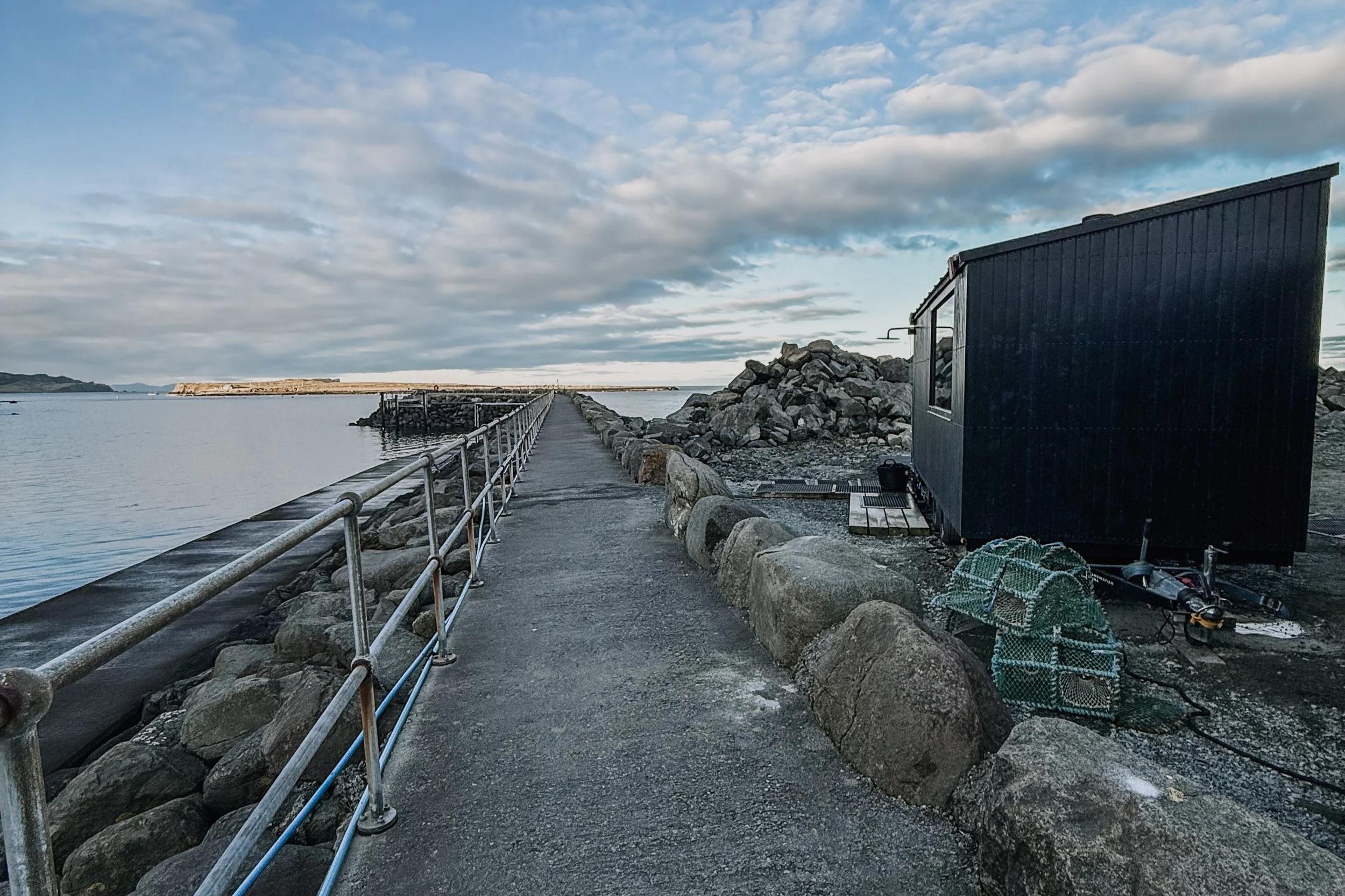
Scotland's Wild Saunas: A Wellbeing Guide to Heat, Stillness and Place in Scotland
Discover Scotland’s wild sauna movement through this wellbeing guide to outdoor saunas in St Andrews, Skye, Edinburgh, East Lothian, Cromarty, Fife and Aberdeen. From sea dips to wood-fired heat, explore the places helping people slow down, reconnect and experience Scotland differently.
At the start of this year I made myself a promise: each month, a new sauna. Alongside a photograph a day, it's a way of noticing the rhythm of the year, not just the headline seasonal shift but the smaller turns. Scotland is in the middle of something of a sauna revolution, with wood-fired wild saunas springing up along sea-edges, nestled in foothills, in walled gardens and by sea lochs. Each one belonging to its place - shaped by the landscape it sits within and the community around it, its own personality, its own story.
Why sauna matters for wellbeing
A sauna can feel like a treat, but the more I go, the more it reveals itself as so much more – a wellbeing practice rather than an event. There's the body: the heat soothing tense muscles, the cold sharpening focus, the cycle of expansion and contraction settling the nervous system back to its baseline. Research suggests the heat triggers a cascade of repair in the body, and the cold builds resilience in a way that ripples out into the rest of the week.
There's also the social side, for one, the unique and often inspiring conversations that happen in a hot wooden box where no one has their phone, where the usual scaffolding of who-we-think-we-are falls away. And there's the pause afterwards. The cup of tea. The slowing. The way you sit with flushed cheeks and notice the sea, or the trees, or the smoke rising from the stove and feel properly here. In Scotland, where the dark months are long, that small ritual of warmth and presence can feel like medicine. And as the energy rises in the spring and summer the sauna is still a magical experience – more than you might imagine.
The landscape, whether that’s the cold sea, hillside or loch isn't a backdrop, it's the other half of the cycle. Sauna here is inseparable from the place that holds it. It’s about the heat and the cold but it’s also the wind, the water, the long northern light, the weather doing whatever it pleases.
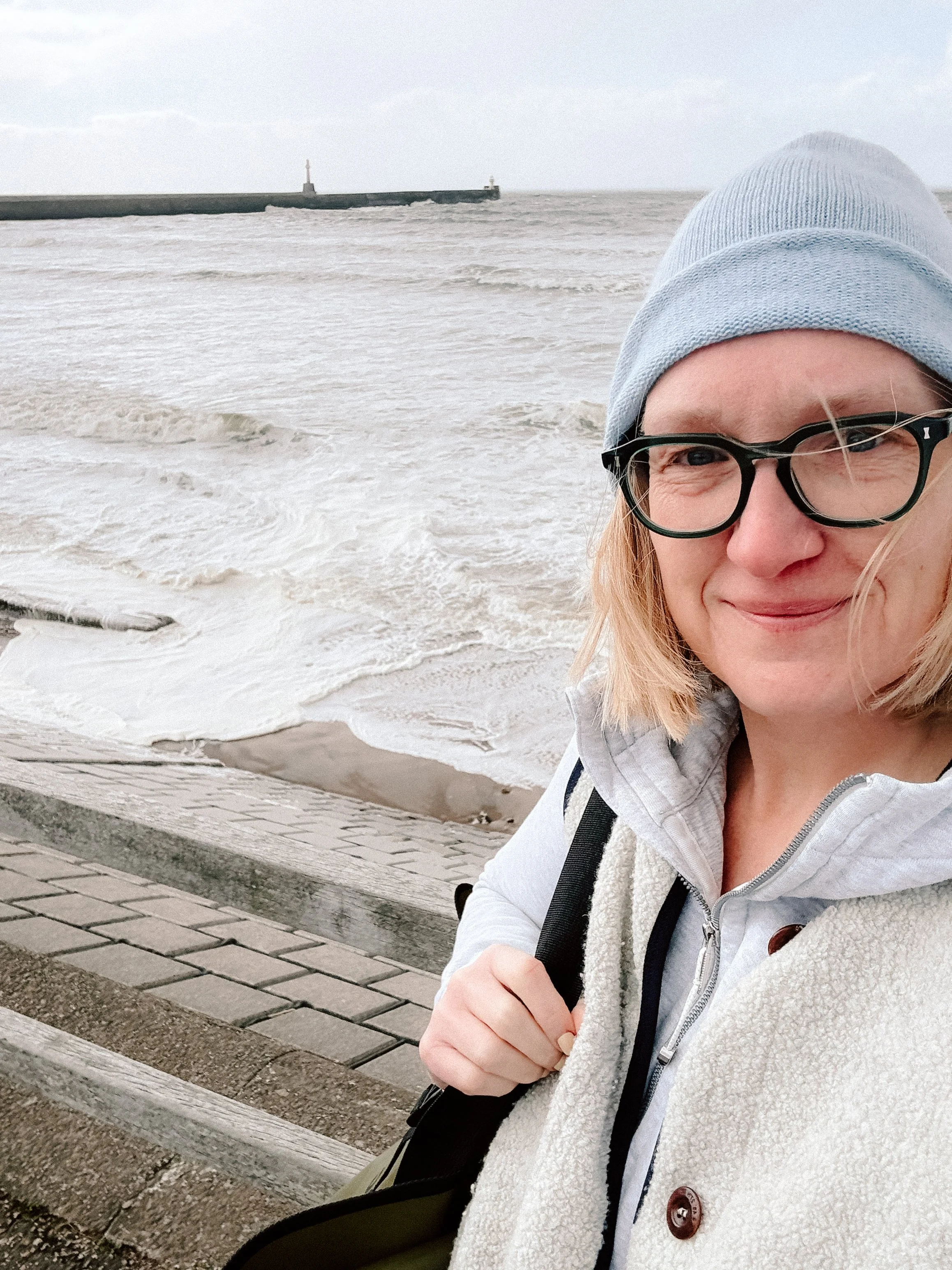
Sarah Philp getting sauna ready
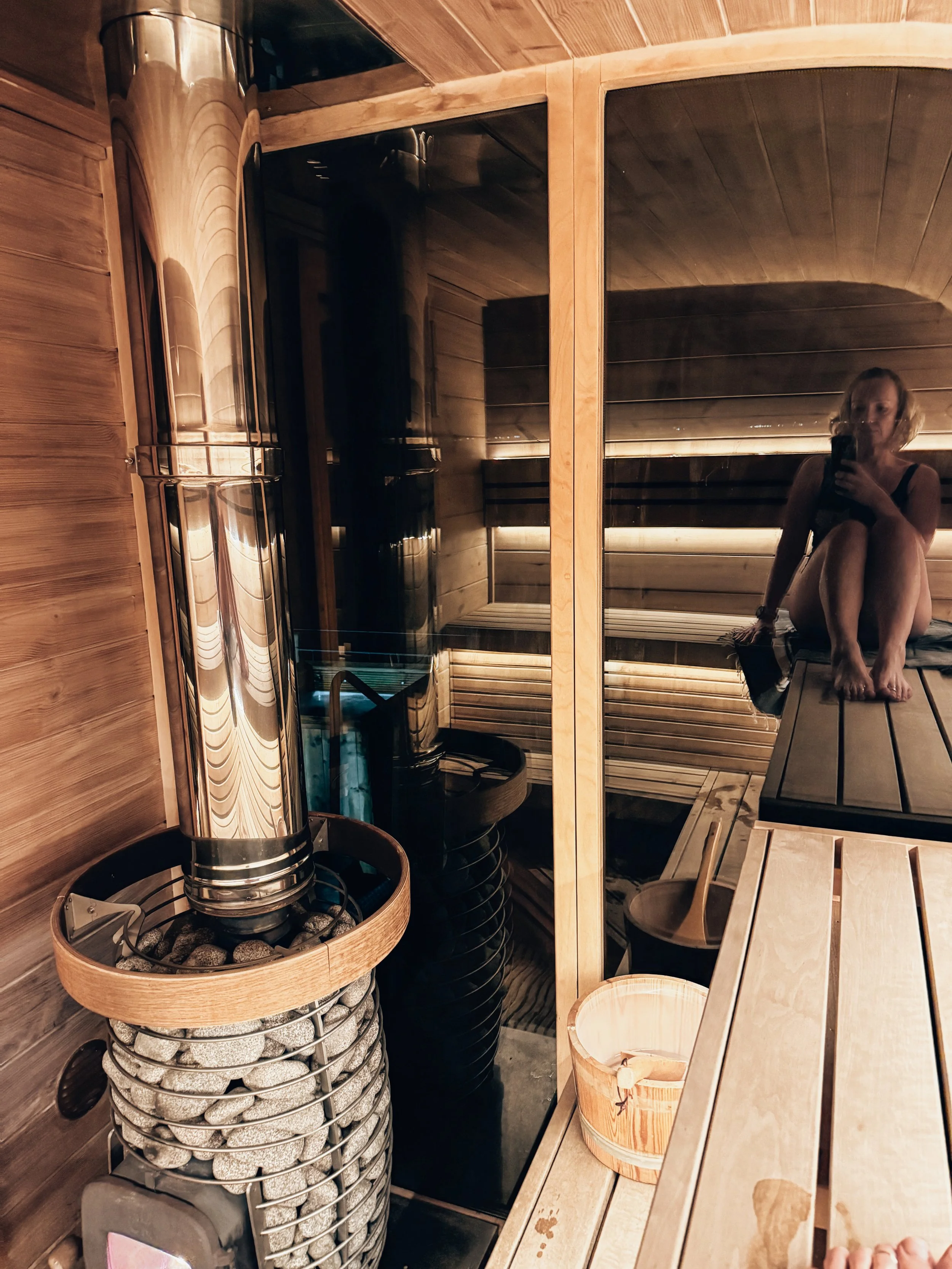
Sarah Philp in the sauna
Following the heat
Start with what's near you, you might be surprised at how many saunas are nearby. Here are the ones I've been to so far this year, beginning at the edge of the sea in January and moving through the seasons with curiosity and being in the moment.
Wild Scottish Sauna at West Sands, St Andrews
On a particularly wild January day, the only place to begin was West Sands in St Andrews. A wood-fired sauna tucked behind the dunes of the West beach, with the North Sea opening out in front and the famous old links curving away beyond. The air was sharp, the sky was wide, the waves were enormous and inside, the heat held me steady. There's something fitting about starting a year-long practice somewhere this elemental. You leave with salt on your skin, cheeks burning and the feeling of having properly arrived in the new year.
Suilanu Sauna at Croft 4, Isle of Skye
February took me west to Skye, and Suilanu turned out to be a mini retreat. A handcrafted sauna on a Broadford croft, sitting beneath a picture-perfect view of Bla Bheinn - the kind of view that does something to your shoulders before you've even stepped inside. I joined a day retreat of restorative yoga, shared lunch with a circle of brilliant women finishing the day in the sauna. Slower, softer, the heat held against the wildness outside. The day felt like being properly looked after, by the place and by each other.
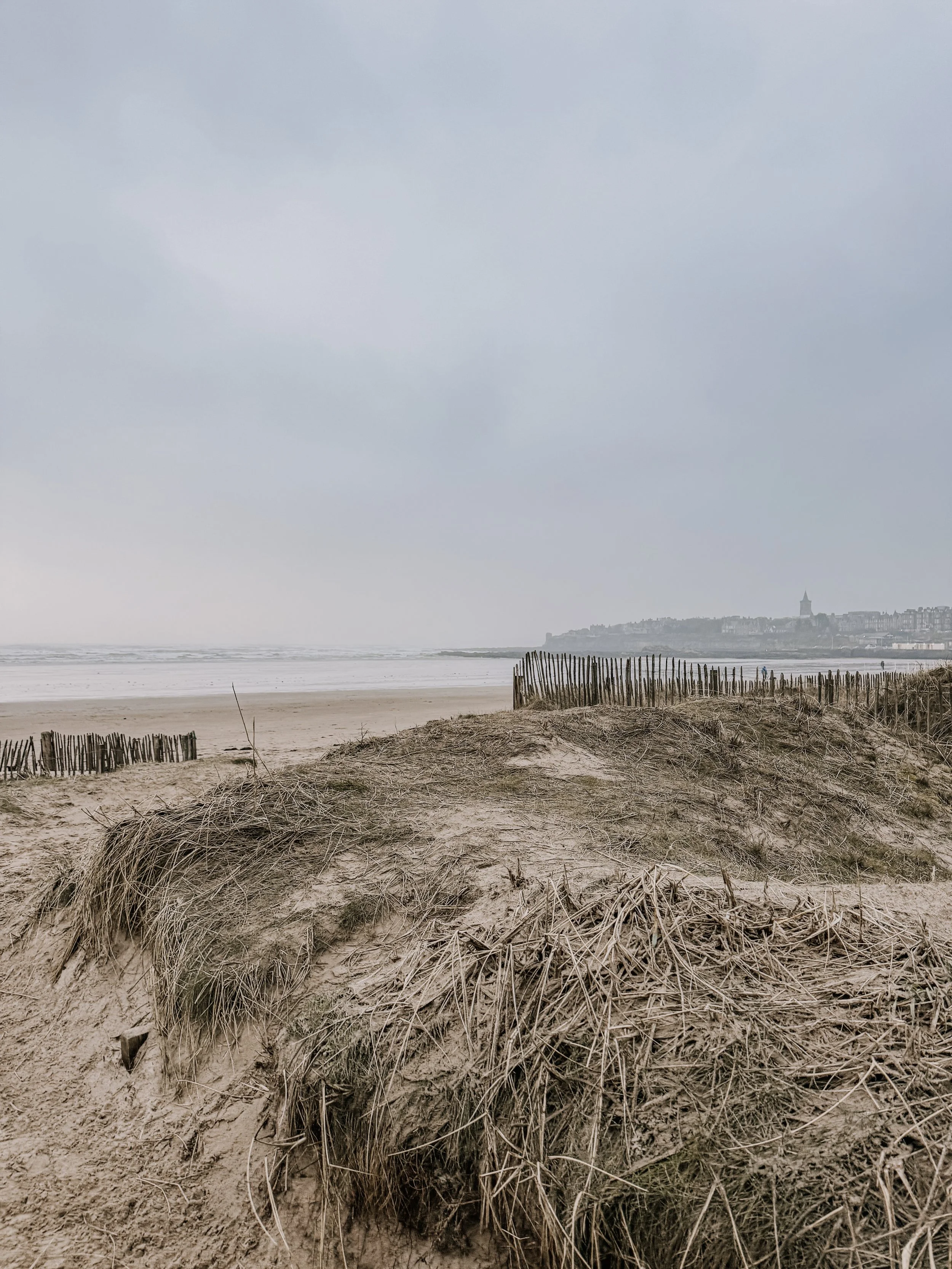
West Sands, St Andrews
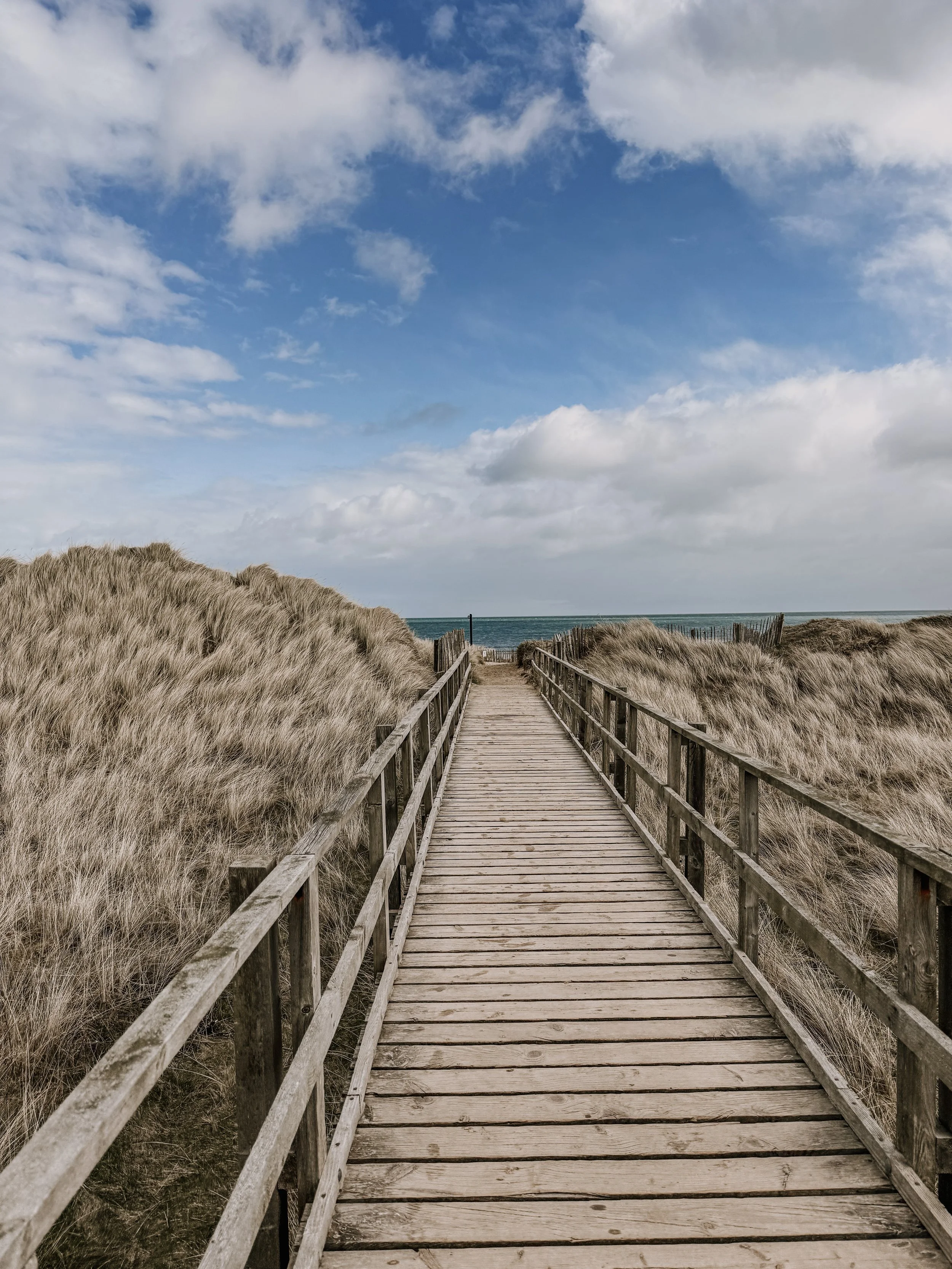
West Sands, St Andrews
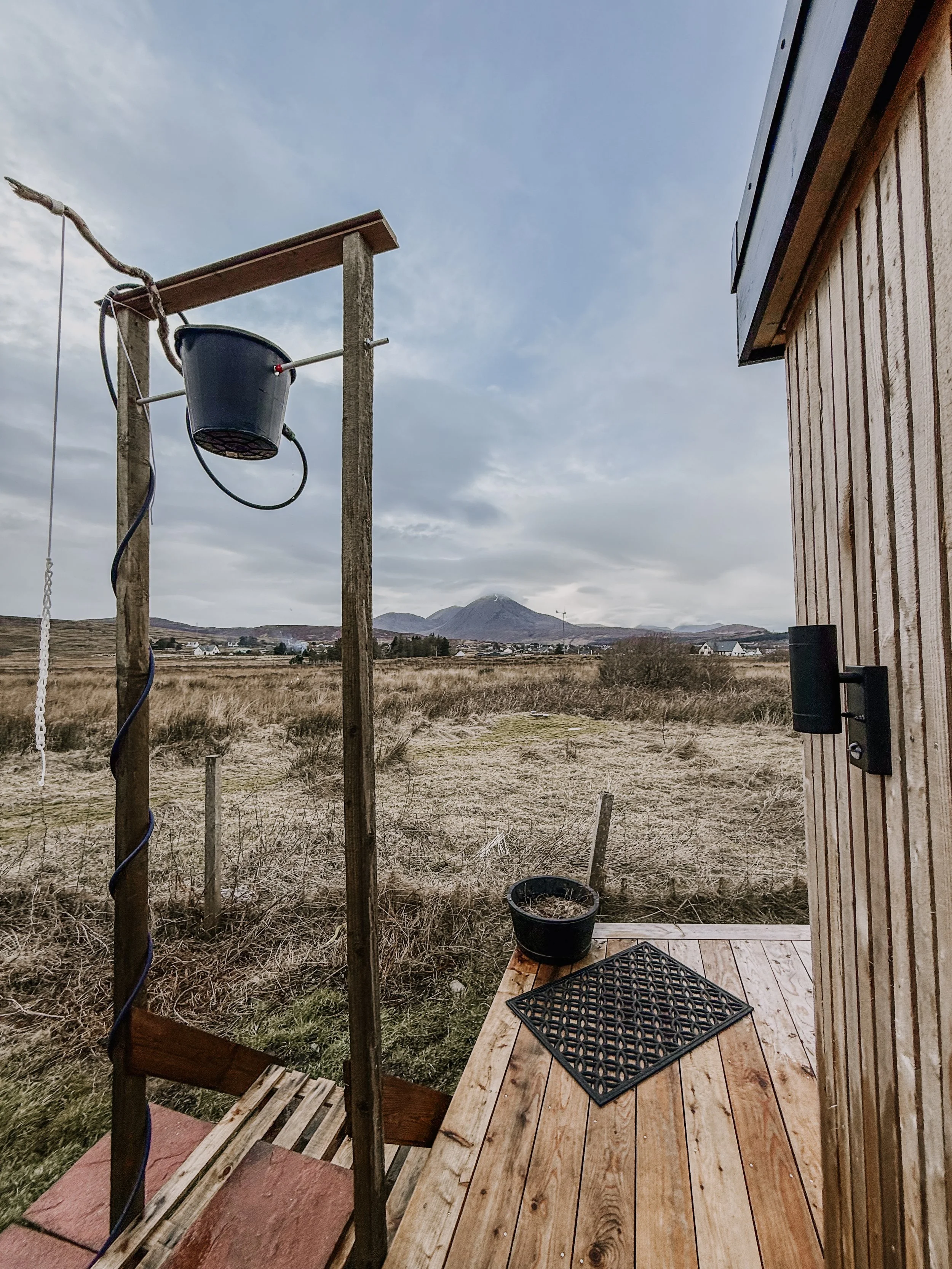
Suilanu, Skye
Staffin Sea Sauna, Isle of Skye
February also meant a return visit to Staffin, the OG of Skye saunas and still one of the most beautifully placed I know. A wood-fired Scandinavian sauna at Staffin Harbour, looking out toward Staffin and Flodigarry Island and, on a clear day, Harris and Lewis beyond. Steam, plunge, repeat, with the elements doing much of the work. Coming back to a sauna you've already loved is its own kind of reset. A reminder that practice often means returning, not just discovering.
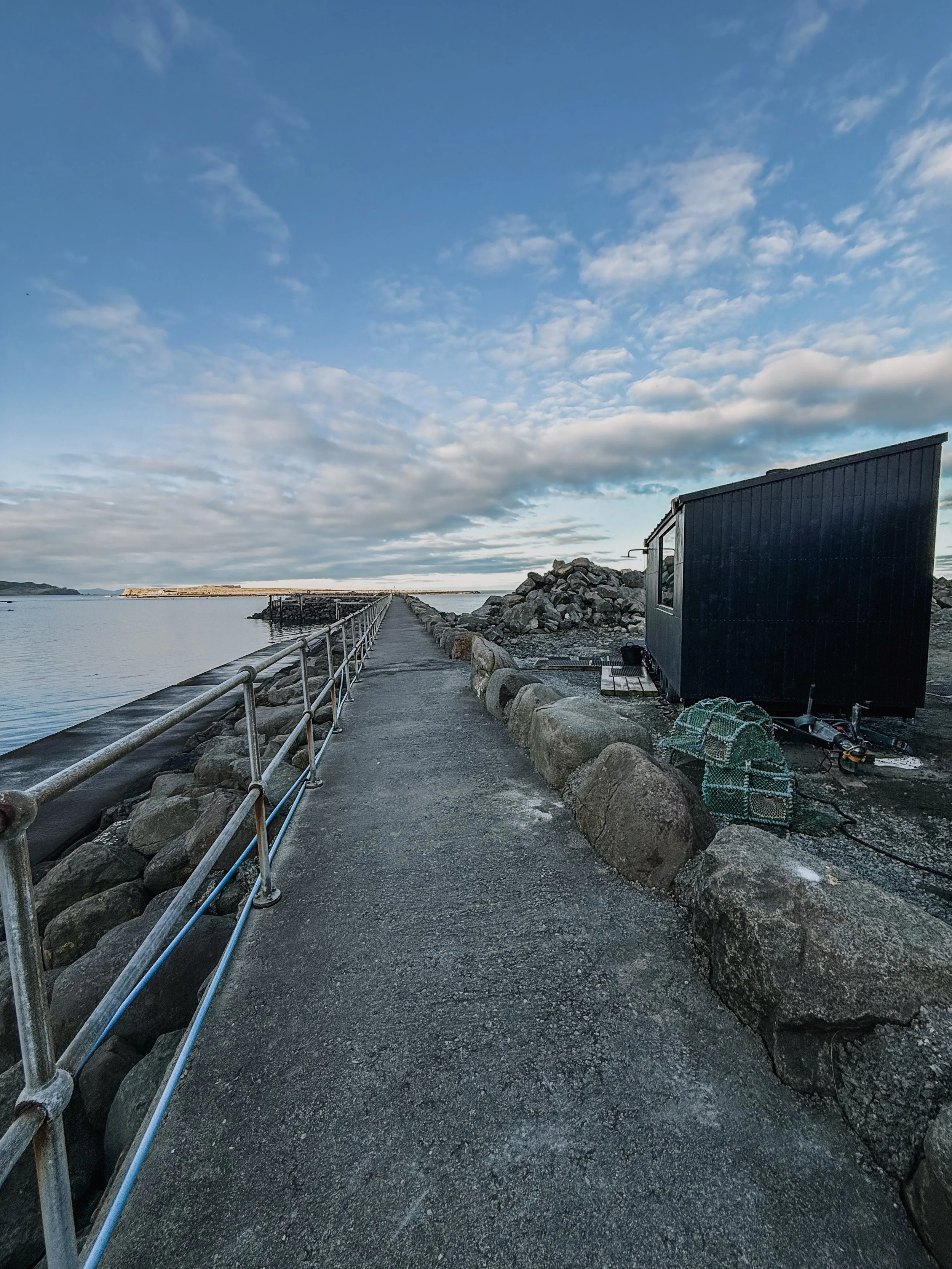
Staffin Sea Sauna, Skye

Staffin Sea Sauna, Skye
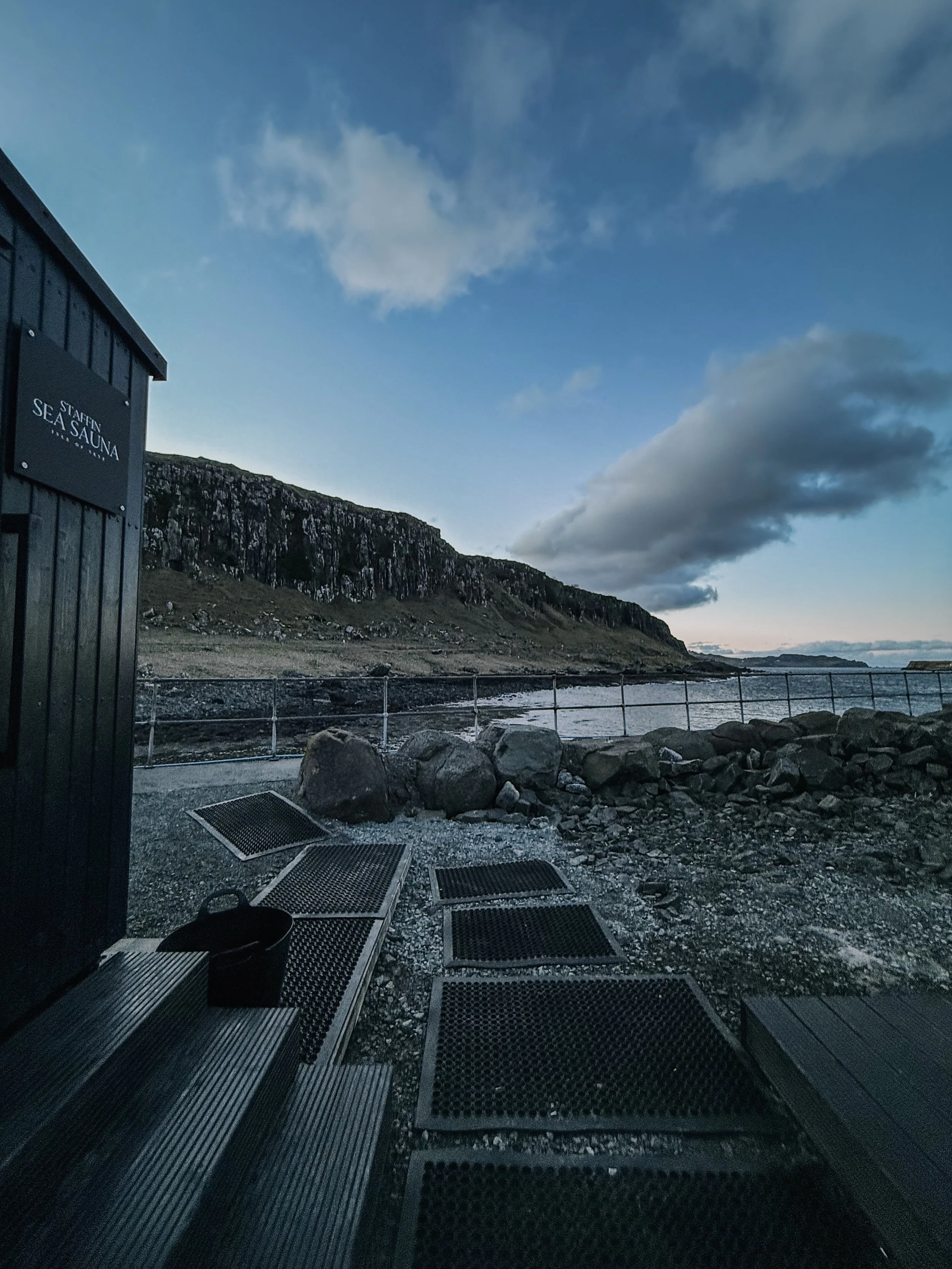
Staffin Sea Sauna, Skye
Pentland View Outdoor Sauna, Edinburgh
March brought me closer to home. A wood-fired sauna at the foot of the Pentland Hills, with Caerketton rising above and the city humming somewhere out of sight. Run by two warm and knowledgeable hosts who take real care of their guests. My experience was a beautifully session with oils, salt scrub, herbal tea and homemade cake by the fire pit afterwards - the kind of small, generous touches that turn an hour into a deep renewal. A reminder that you don't always have to travel far to find what you need, and that the most restorative places are sometimes the ones half an hour up the road.
Hot & Bothy Community Sauna, Archerfield Walled Garden
April, and a visit with my mum to Hot & Bothy is a community sauna tucked behind Archerfield Walled Garden in East Lothian - a small gathering of changing huts, a yurt sauna, the Bothy sauna, plunges and a fire pit, made from reclaimed materials and arranged to form a natural shelter for body and mind. The bothy hut has a window that frames the field beyond, allowing you to watch the wildlife drift past. The 90 minute sessions feel spacious allowing you to move between the saunas and the cold or if you'd rather, sit by the fire pit with herbal tea and orange slices.
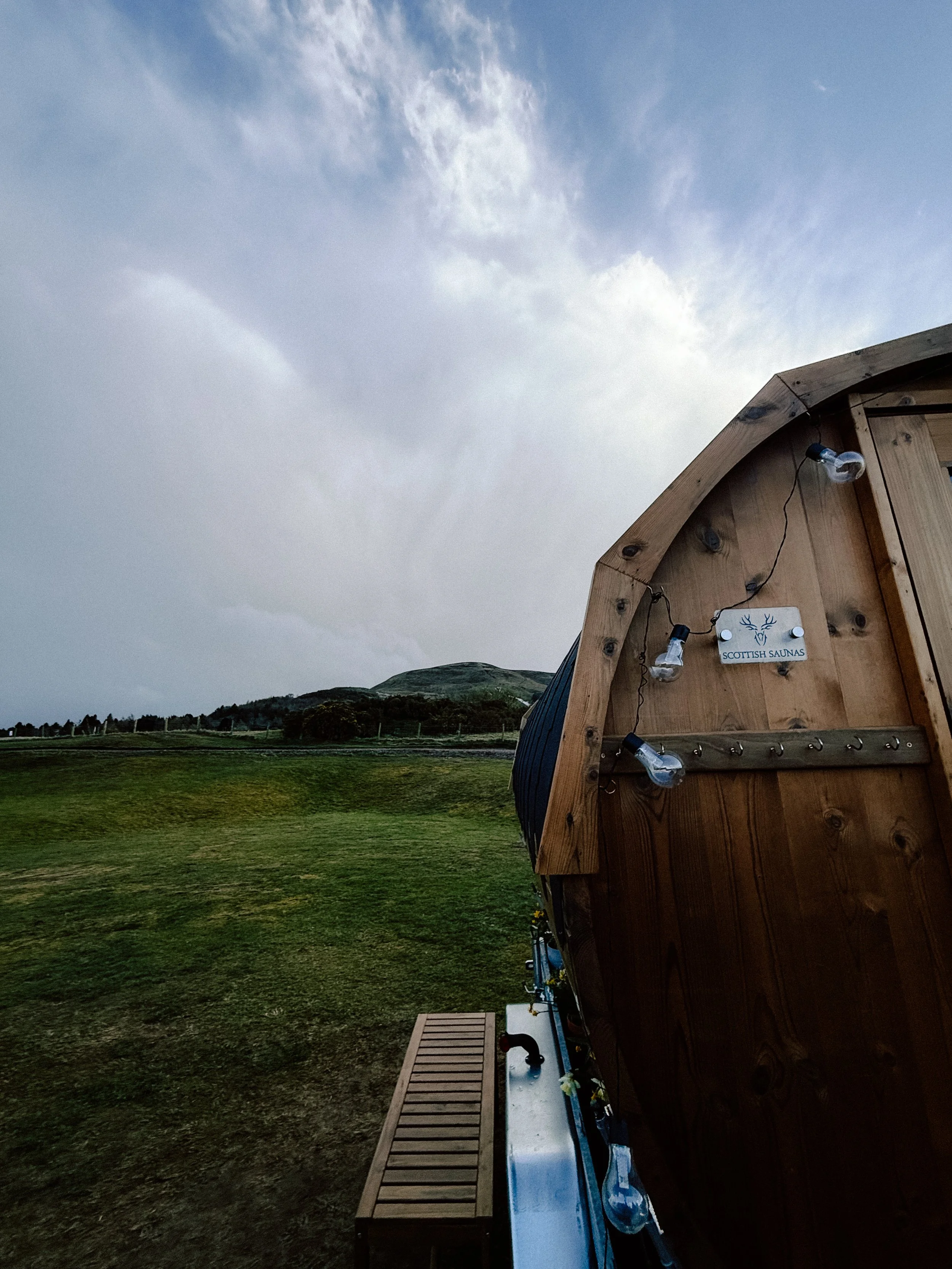
Pentland View, Edinburgh
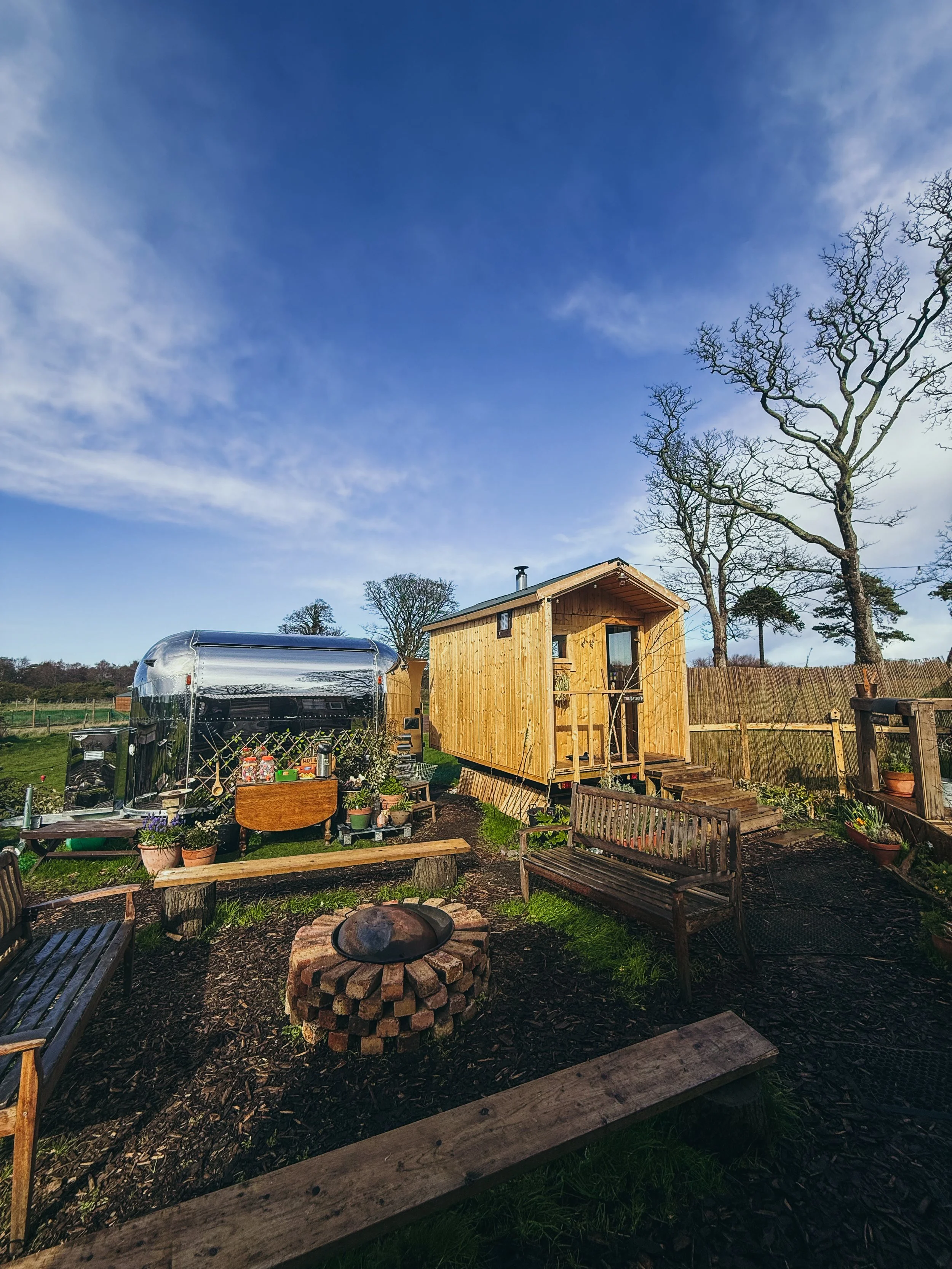
Hot & Bothy, East Lothian
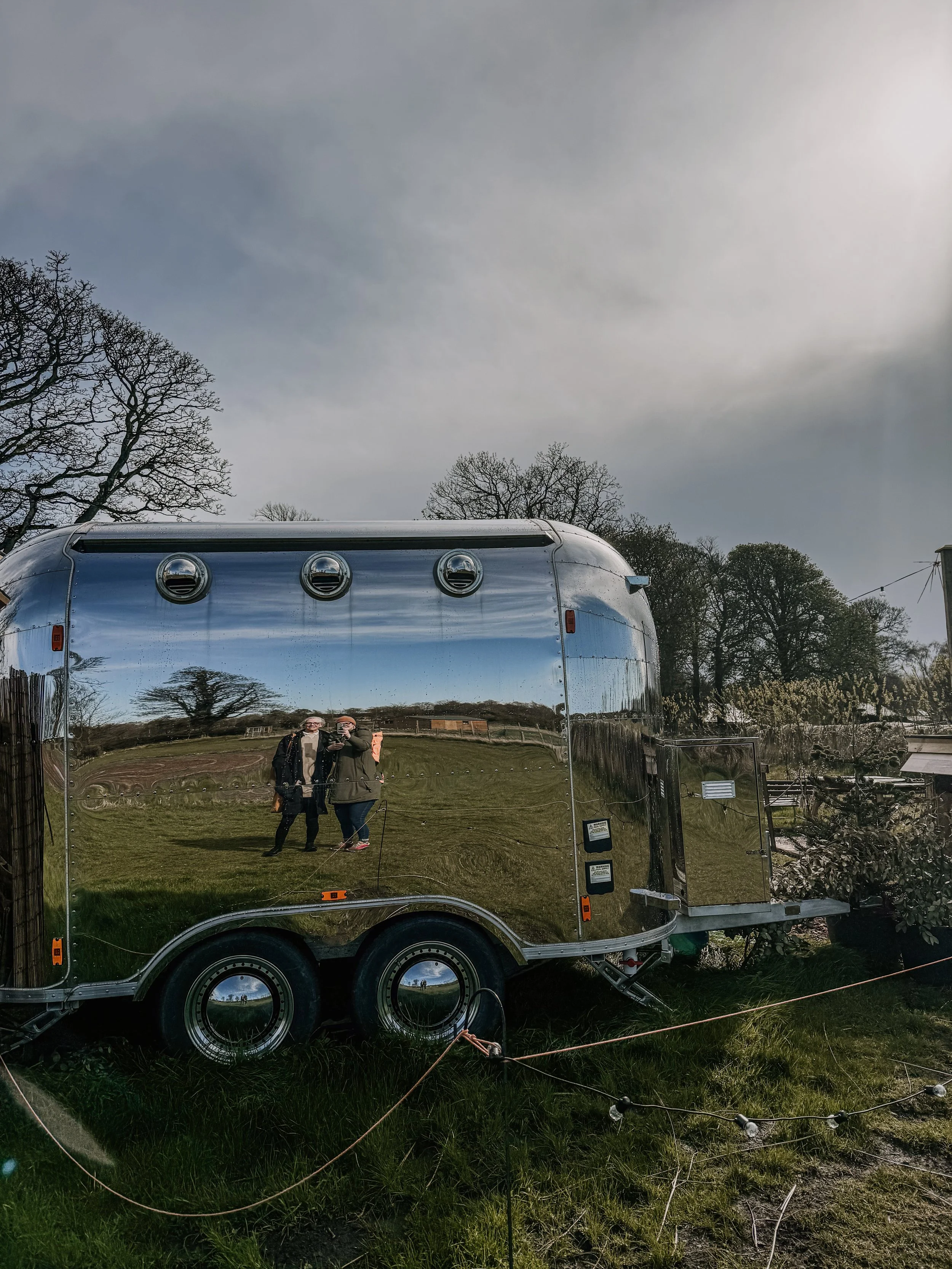
Hot & Bothy, East Lothian
Also April, and a community sauna that genuinely puts the capital C in community. A converted horsebox sauna by the Cromarty Firth, run by the Cromarty and District Development Trust. Here you sweat, take the few short steps down to the sea to dip in the lapping water, then climb back into the heat. Afterwards, coffee and cake at The Last Splash, the little café down by the water - exactly the right kind of unhurried post-sauna landing. What stays with you is the sense that this is somewhere woven into the everyday life of a small Black Isle town, supported by and supporting the people who live there.
Largo Castaway Sauna, Lower Largo
May, and onward along the Fife coast to Lower Largo. A wood-fired sauna on the edge of Largo Bay, warmly hosted with a generous attention to detail - multi-coloured changing huts, orange slices between heat cycles, home-made tablet afterwards. The picture window frames the Forth perfectly, looking back to East Lothian where on a clear day, North Berwick Law and the Bass Rock are visible across the water. The "Castaway" name nods to Lower Largo's own Alexander Selkirk, the real Robinson Crusoe, and the sauna does feel, briefly, like being marooned, in the best way.
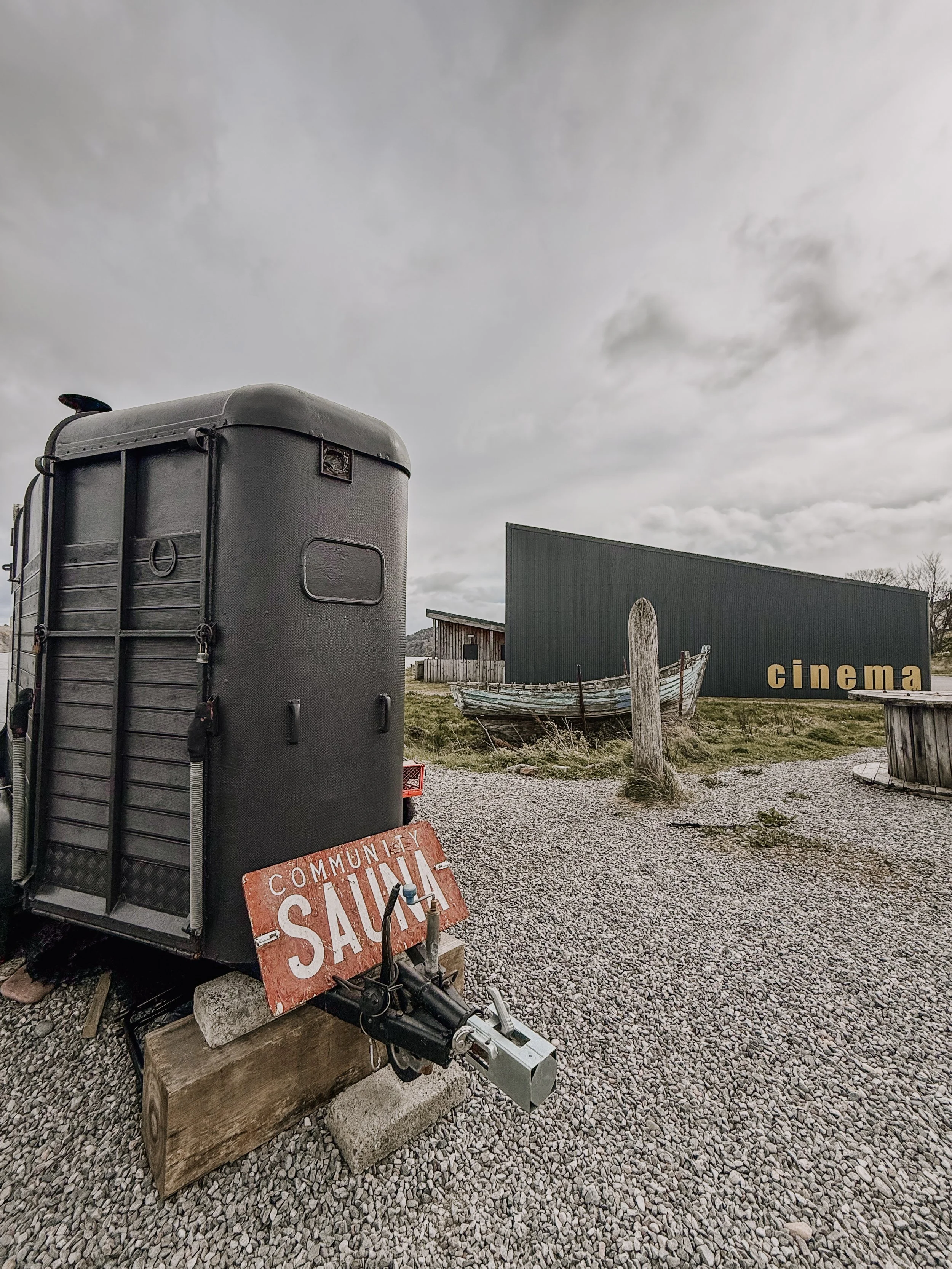
Cromarty Community Sauna
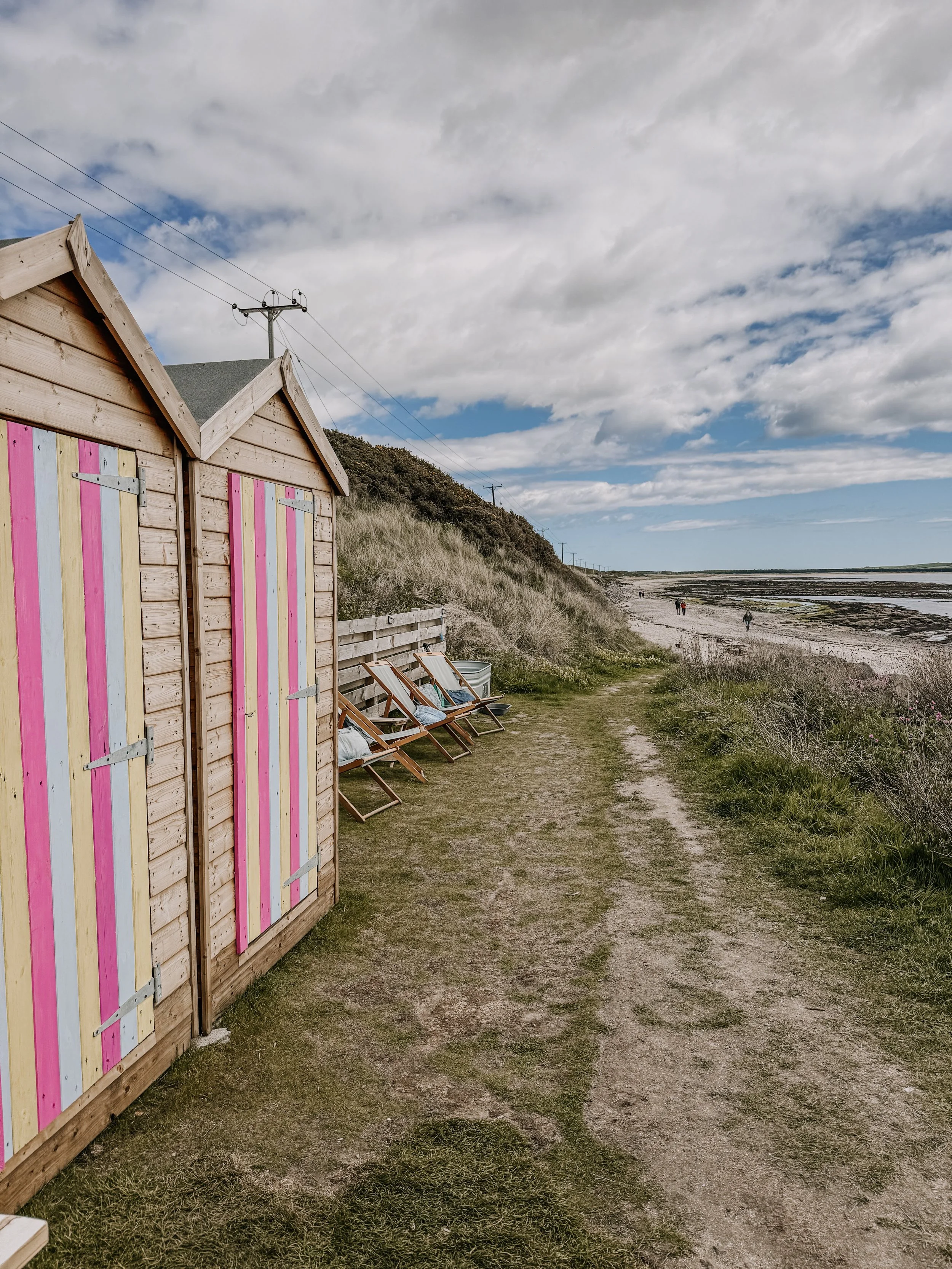
Largo Castaway Sauna, Lower Largo
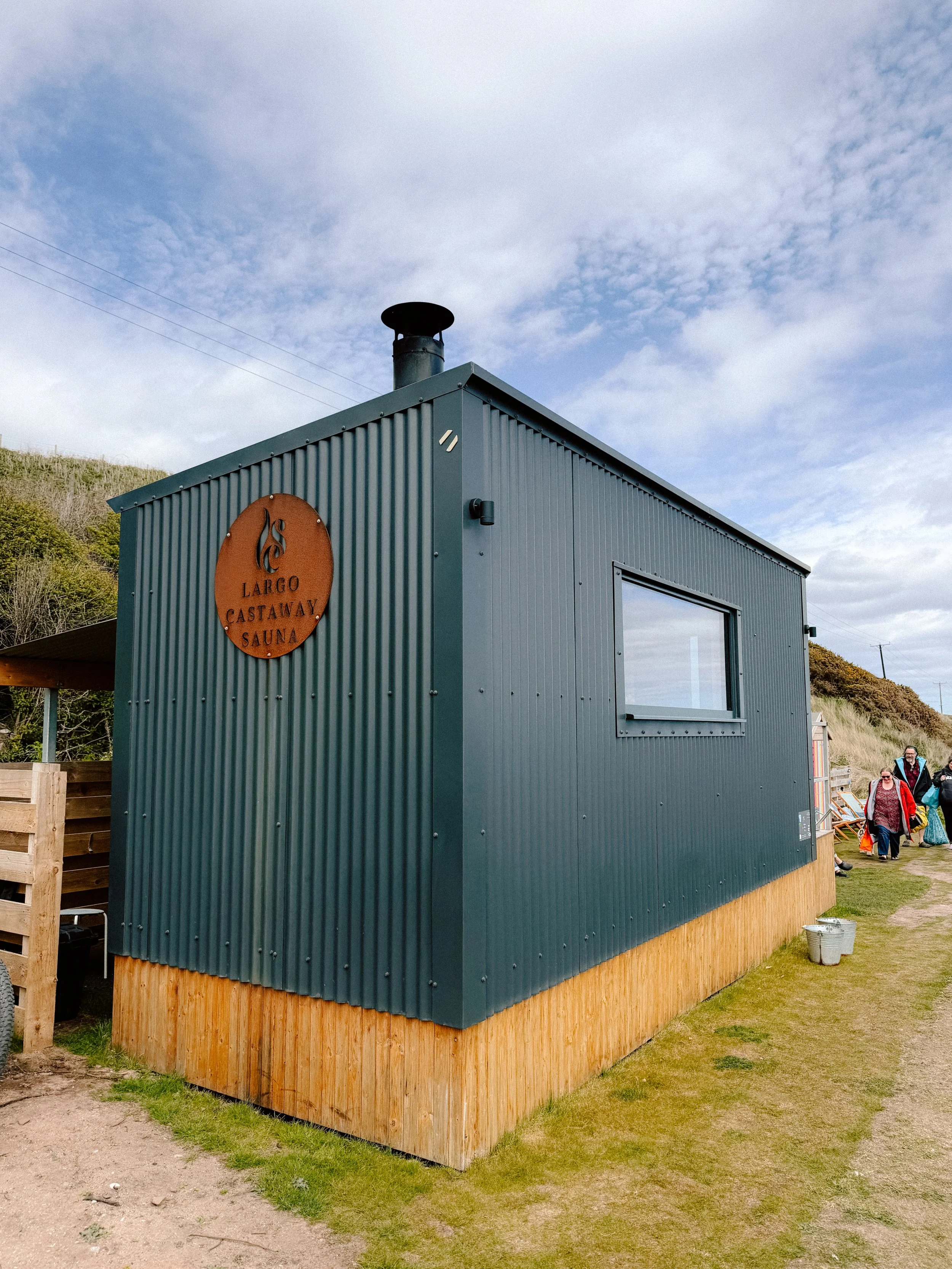
Largo Castaway Sauna, Lower Largo
Mid-May and I find myself in Aberdeen, the granite city, for work so the perfect opportunity to try one of a few saunas on the Aberdeen Esplanade. I chose Barbossauna, a horsebox sauna just along from the old fishing village of Footdee (or Fittie as it’s known locally). The day was a truly wild one, with enormous waves throwing themselves against the shore long before high tide and inside, the steam, eucalyptus and friendly chats did exactly what they needed to. Host Fabio is warm and easy to talk to and, it turns out, the same hands that built the horsebox in Cromarty. A small thread tying two of this year's stops together.
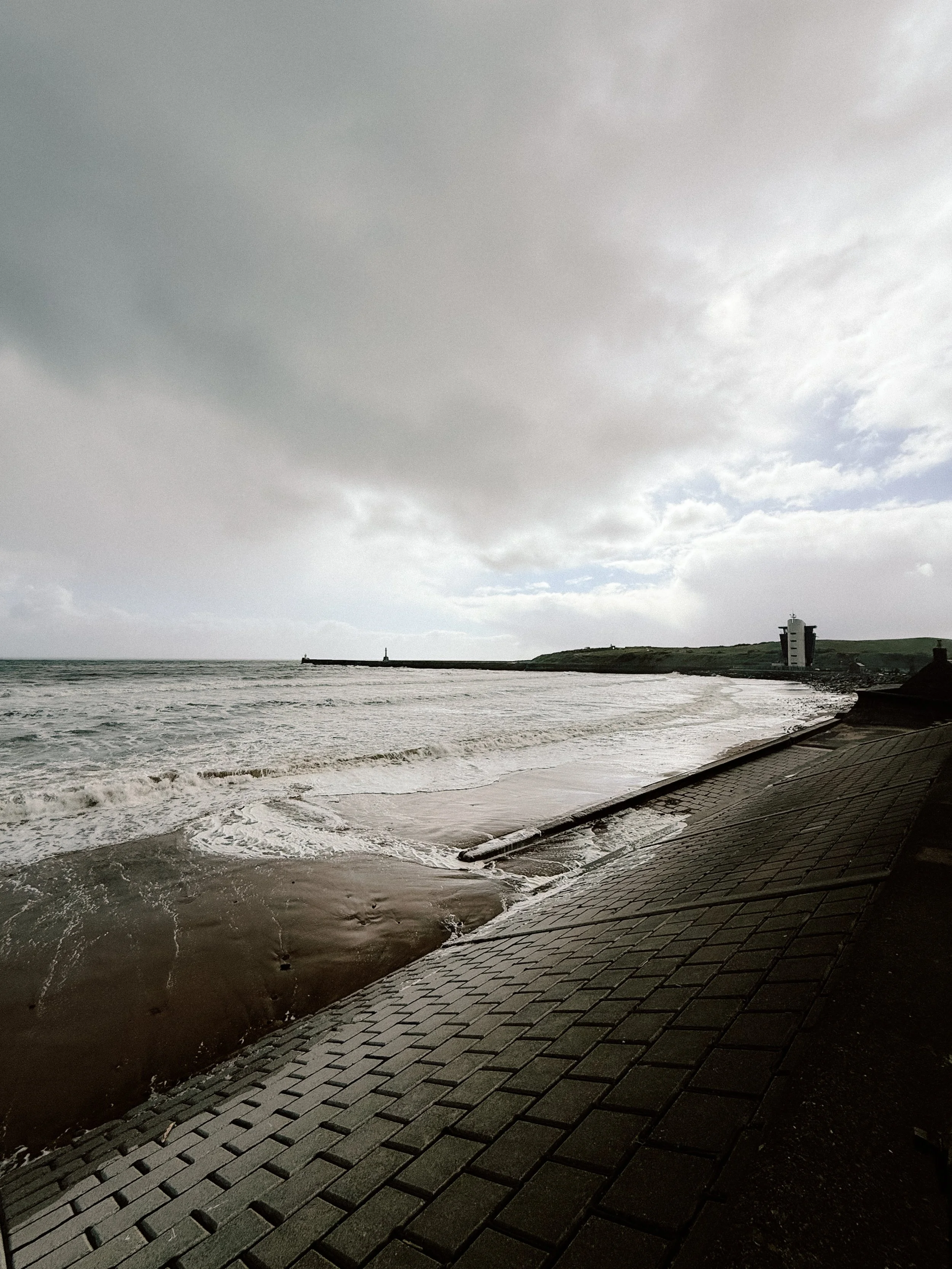
Barbossauna, Aberdeen
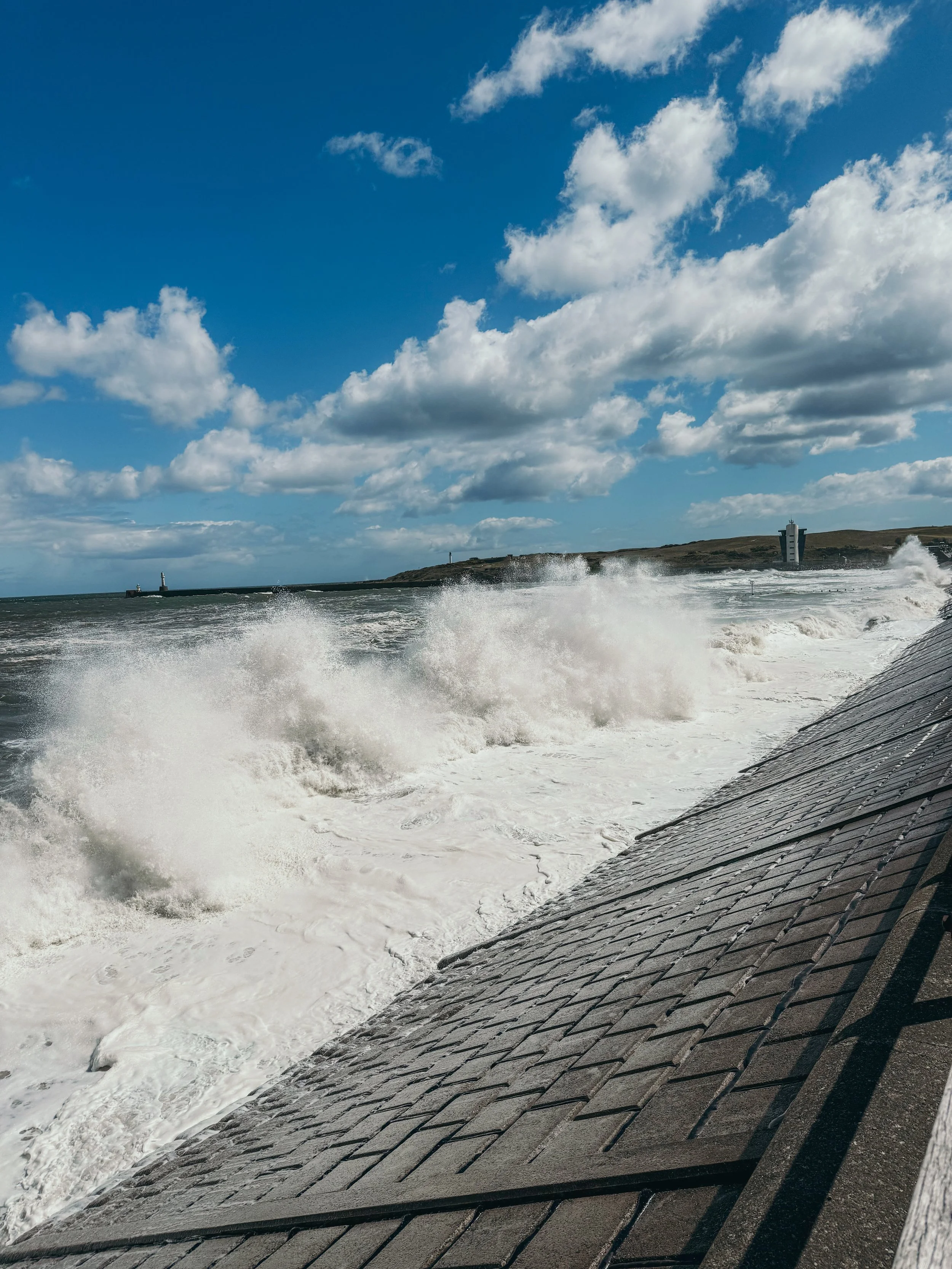
Barbossauna, Aberdeen
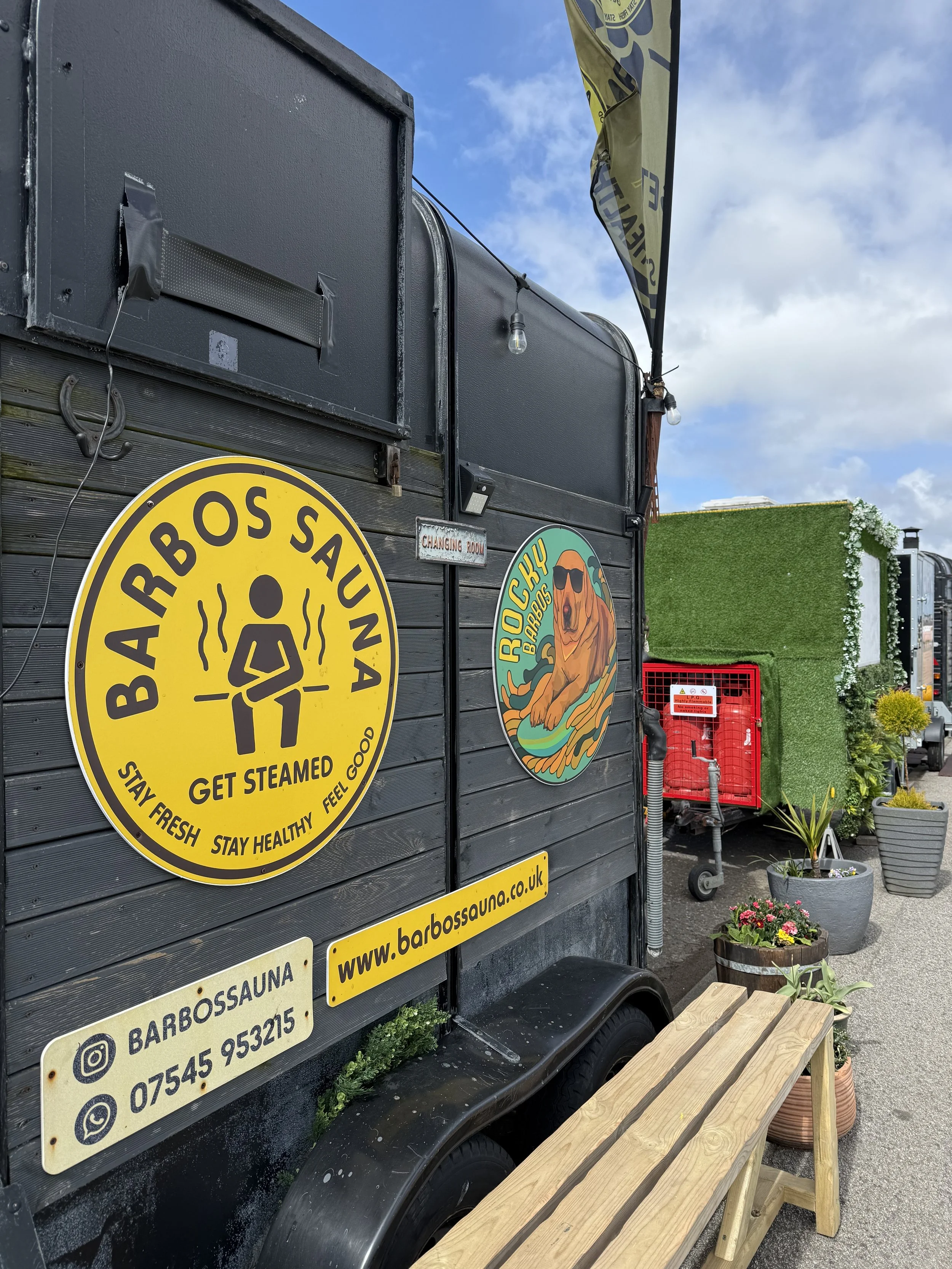
Barbossauna, Aberdeen
Going deeper
If you're curious to go deeper, I had a wonderful conversation with Cara Redpath on my Space to Think podcast. Cara is a nutritional therapist who also works at a sauna in Oban, she shares both the science and the soul of why sauna culture is taking root in Scotland. She talks about heat shock proteins, lower cortisol, the way the cold builds resilience as well as the things you can't quite measure: the third place, the social leveller, the medicine of having somewhere to go where there are no phones and no hierarchy, just people in warm, wood-fired glow getting to know each other. Her enthusiasm is infectious, and her clinical grounding will probably reframe how you think about going to the sauna for life.
From sea-edge to hillside to Loch, the saunas have started to feel like a way of seeing Scotland anew - a slow geography of warmth. I'm curious about where the heat will lead me next.
Written by Sarah Philp. Photos by Sarah Philp.
About Sarah Philp
Sarah is a Psychologist and Coach with almost 20 years of experience in Education. Her mission has always been to maximise the impact of Psychology; to help us understand ourselves and each other more deeply in order to be able to relate, learn and lead better together.
Sarah is also the host of the Space to Think podcast
Zenaa Retreats
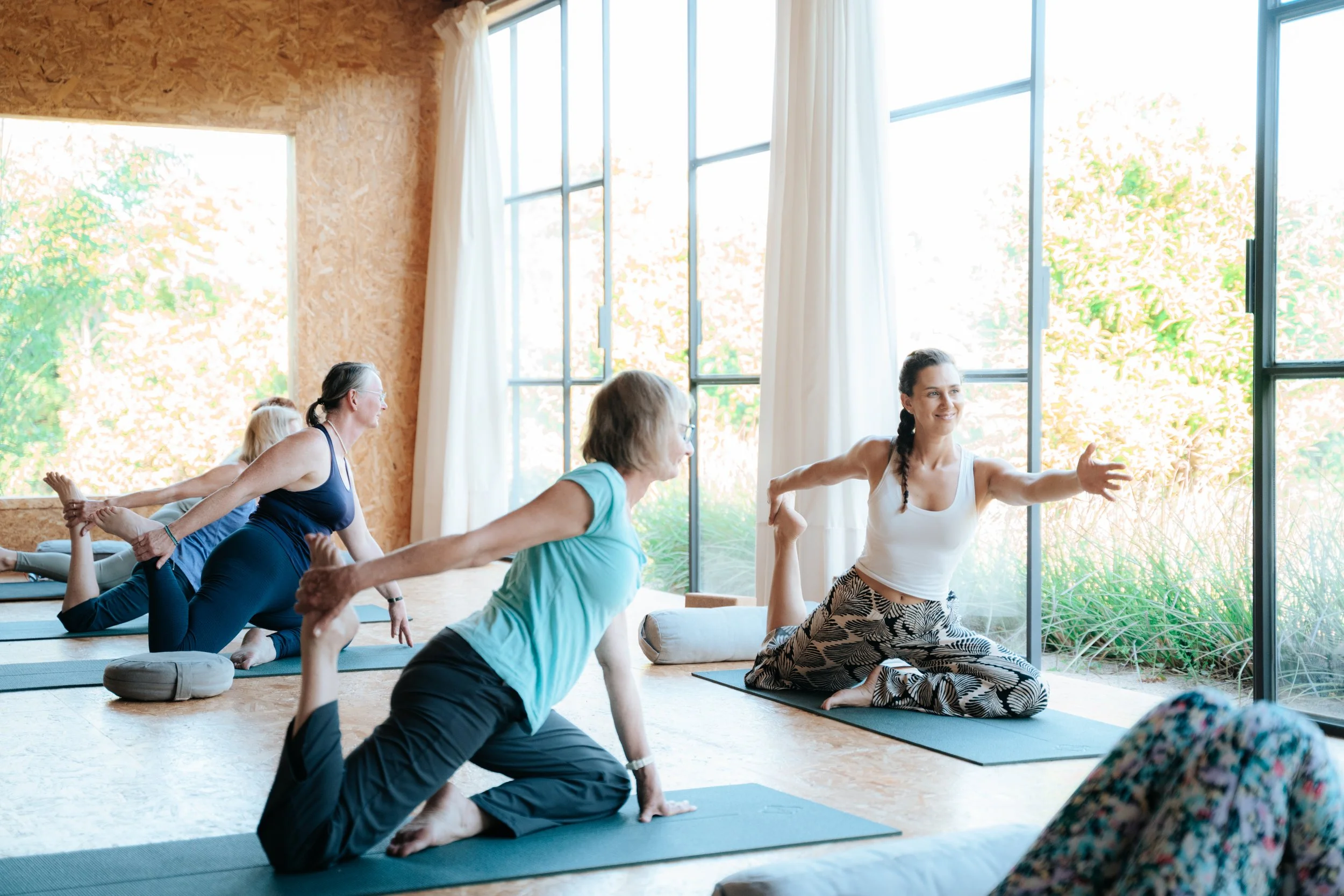
Discover Zenaa Retreats, a welcoming, fad-free approach to yoga and wellness retreats in the UK and abroad. Designed for real life, these nourishing escapes blend movement, rest, great food and genuine connection. Perfect for beginners, solo travellers and the yoga curious.
Perfect For
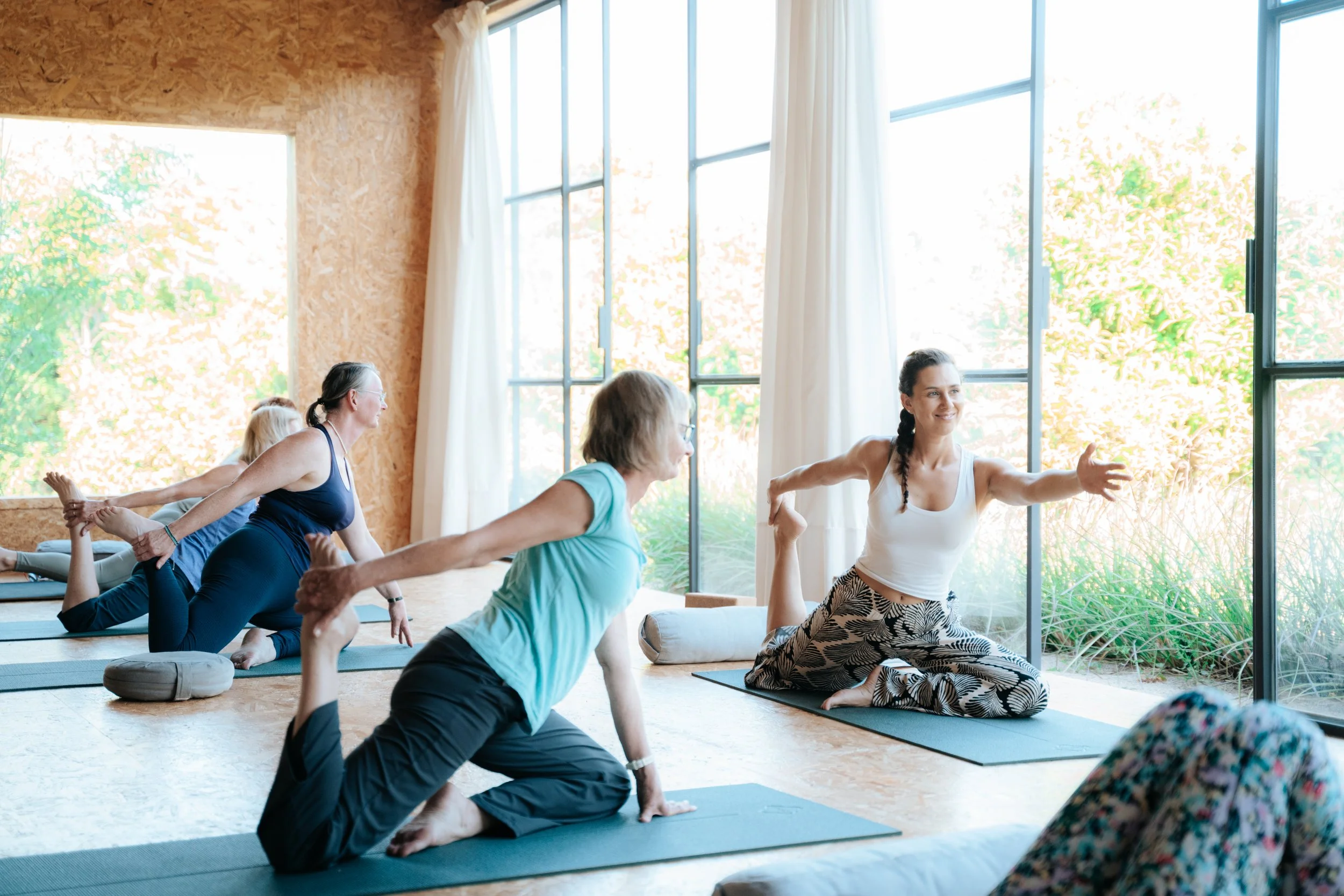
Zenaa Retreats are for the "yoga curious" including regulars, dabblers, those who prefer the back row, and complete beginners. It is designed for the "schedule-seeking, choice-conscious" crowd who value a balance of activity and downtime. Solo travellers are especially welcome and make up a large part of the community.
Why You’ll Love It
We all need a space to pause, breathe, and reconnect. In a world of high expectations, Zenaa provides a judgment-free environment to strip away the pressure and allow you to be present. It’s an opportunity to escape the daily grind, slow down through the "art of slow living," and find nourishment for the mind, body, and soul without the pressure of a detox or juice cleanse.
What Makes It Special
Zenaa stands out for its "fad-free," balanced approach to wellbeing. Unlike many retreats that focus on restriction, Zenaa celebrates food and connection. The focus is on handpicked serene venues and a non-judgmental atmosphere that welcomes all body types and abilities. It is a family-feel business (founder Katie’s mum even helps out!) that prioritises genuine connection over performance.
The If Lost Take
We’ve often written about how we can get lost in wellbeing itself and we’re very much on a mission to get you to the places that can help you find your way through it all. When we met Katie we felt like here was a retreat organiser who really understands our real-lives. The places where we get overwhelmed or stuck, burned out and disconnected. And her events aren’t about adding yet more pressure, but really meeting you where you are, with consideration and kindness too.
Founder’s Story | Katie Hodge
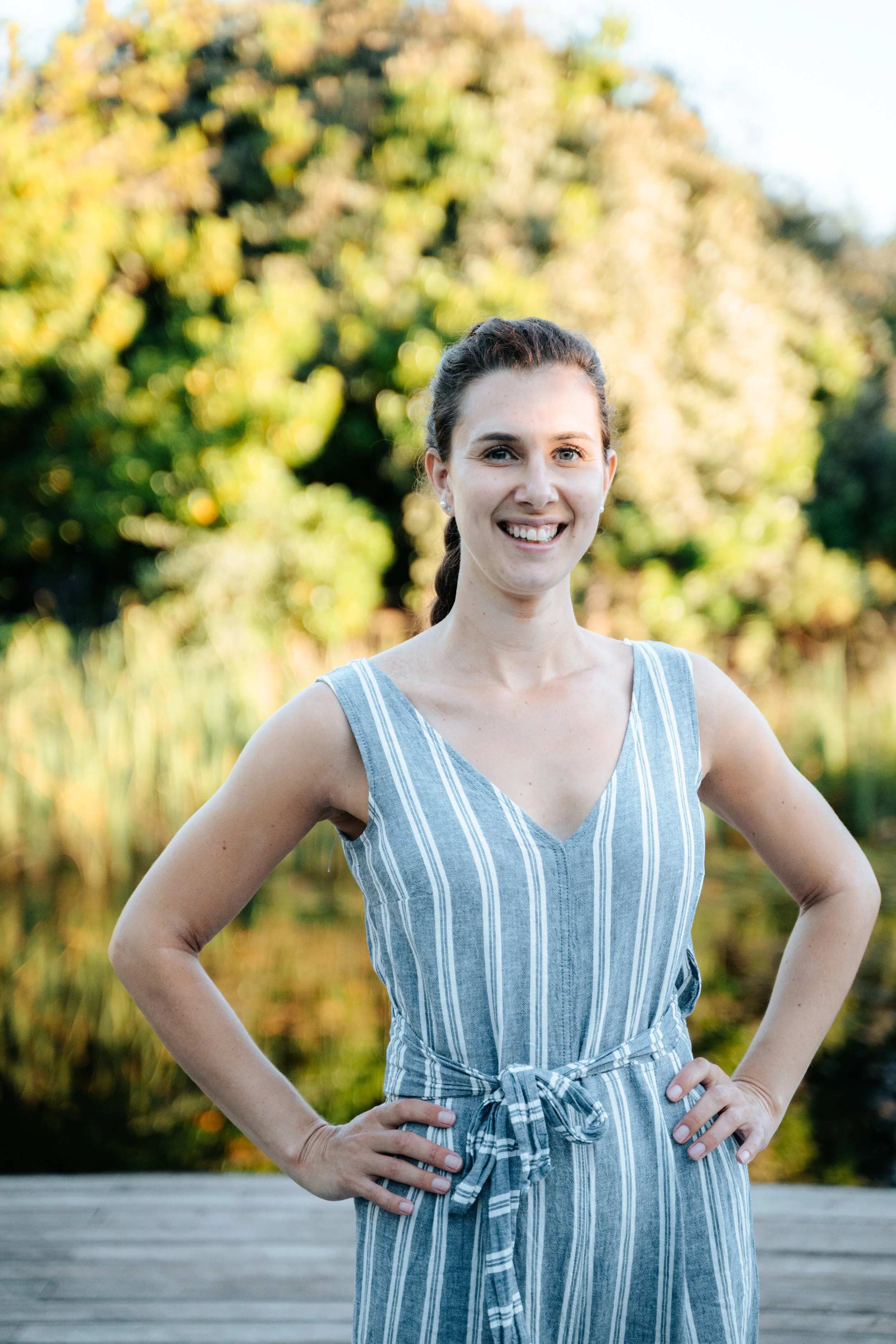
Founder Katie is a wellbeing advocate and planner whose passion for events and yoga creates the perfect blend for meticulously designed retreats. Her journey began ten years ago in Sydney, where she first turned to yoga to find calm for an anxious mind. What started as a personal practice evolved into a mission to bring like-minded people together to connect with nature and enjoy incredible food, the ultimate self-care experience.
After launching Katie J Yoga in 2020 she rebranded to Zenaa in 2024. Today, it is a thriving community where every detail is covered so guests feel entirely nourished and supported.
Founder’s Go-To Wellbeing Advice
“Prioritising sleep. When everything feels overwhelming or I've lost my way, coming back to a consistent and restful sleep routine is the foundation for mental clarity and emotional resilience.”
Some Practical Details
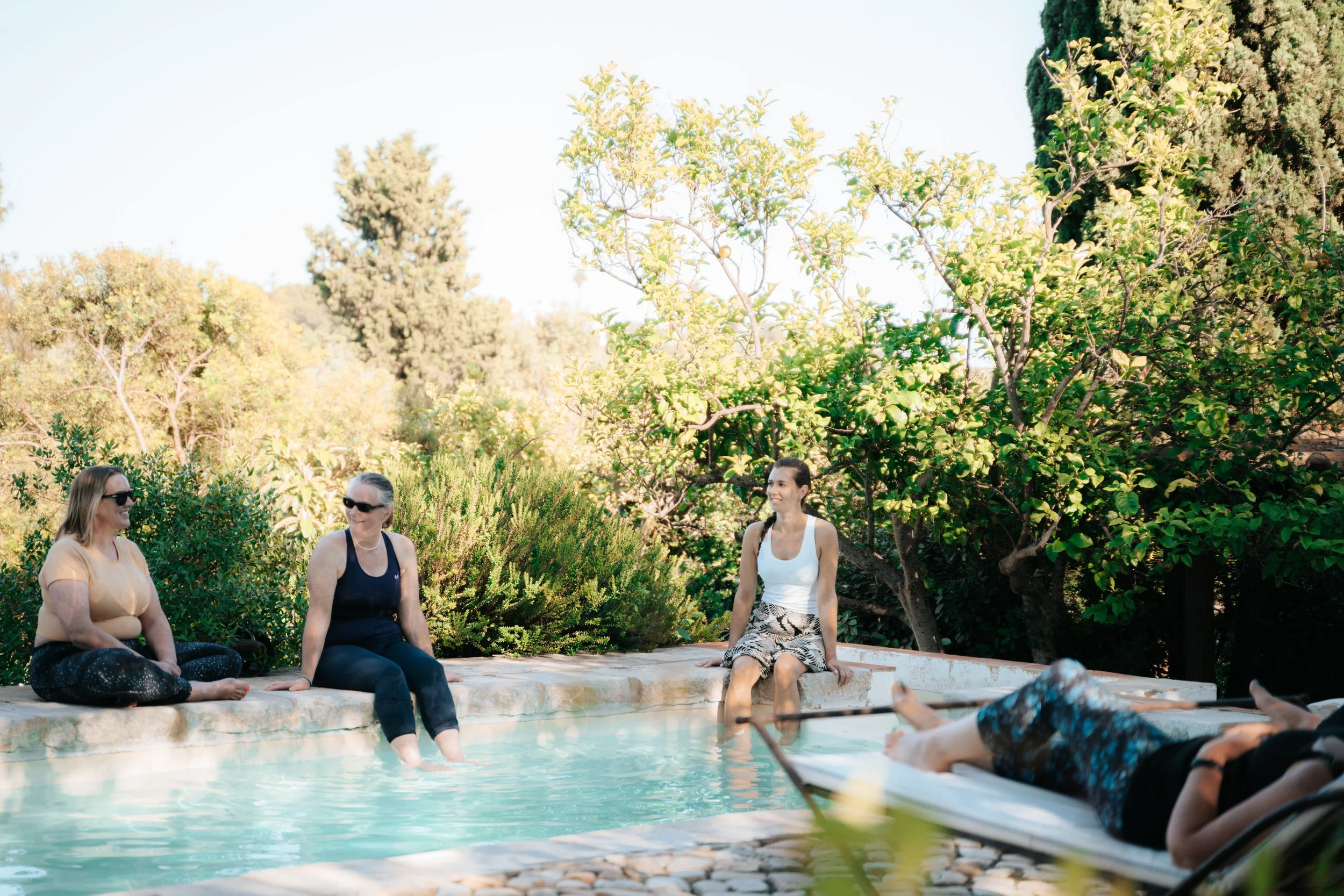
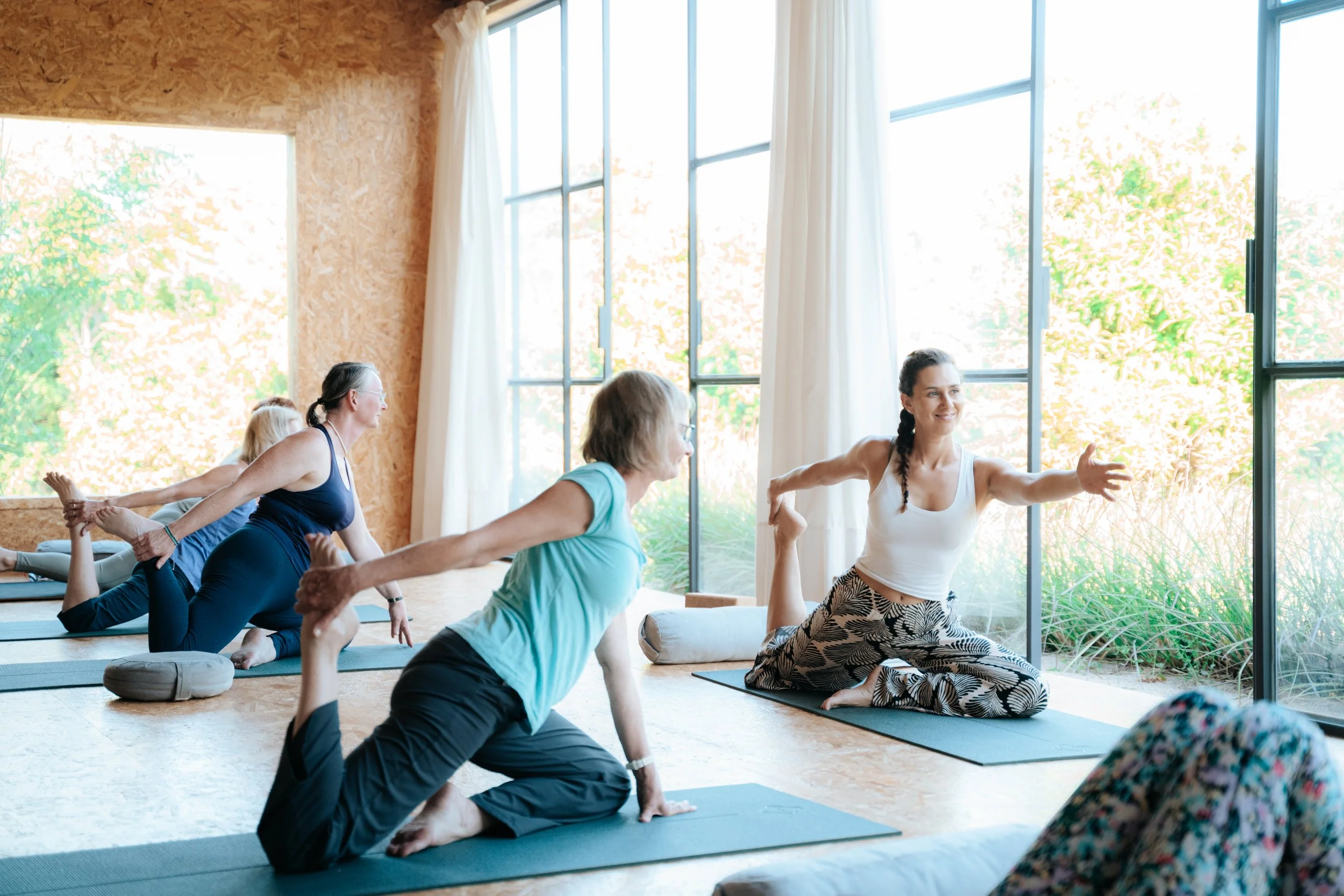
Zenaa offers luxury wellness and yoga retreats in the UK (including Devon, Bath, and the Cotswolds) and abroad (Italy, France, Portugal, and Sri Lanka). These include:
Varied Yoga: Dynamic Hatha sessions in the morning and gentle Yin or yoga nidra in the evenings.
Nourishment: Healthy, wholesome meals prepared by private chefs (always including dessert and sometimes a glass of wine).
Activities: Countryside walks, cold-water swims, creative workshops, and meditation.
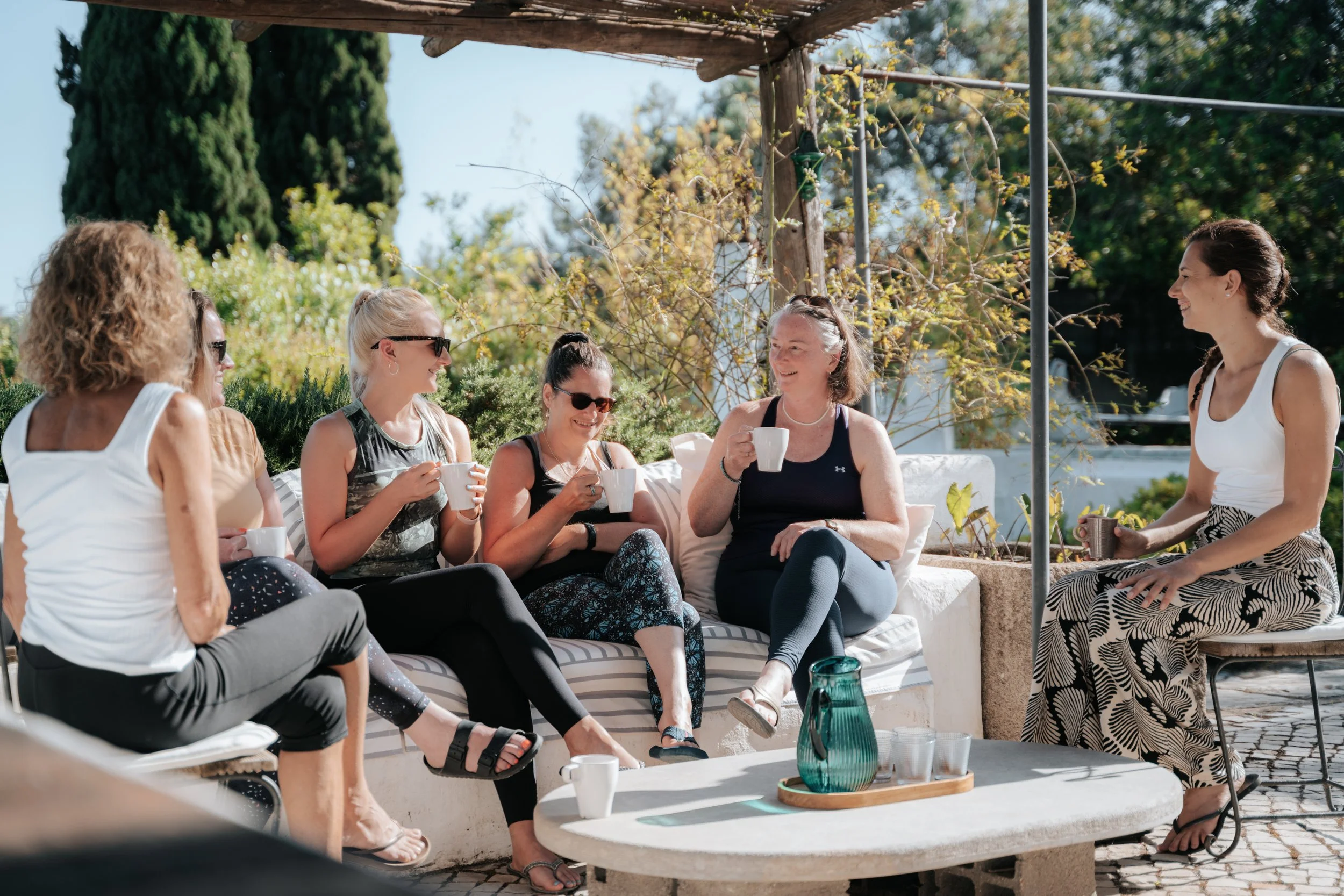
Community: A warm, inclusive environment where guests often leave as close friends.
If you’re not able to attend in-person, don’t worry, there’s Zenaa Online which provides an online retreat experience. You can try out their free 7 day trial here.
Coming up:
Italy Retreat (July 2026) – A 6-night restorative escape
France Retreat (Sept/Oct 2026) – A 5-night wellness experience
Devon, UK (Oct 2026) – A weekend of nourishment and nature
Book a retreat using code IFLOST and get a special welcome gift.

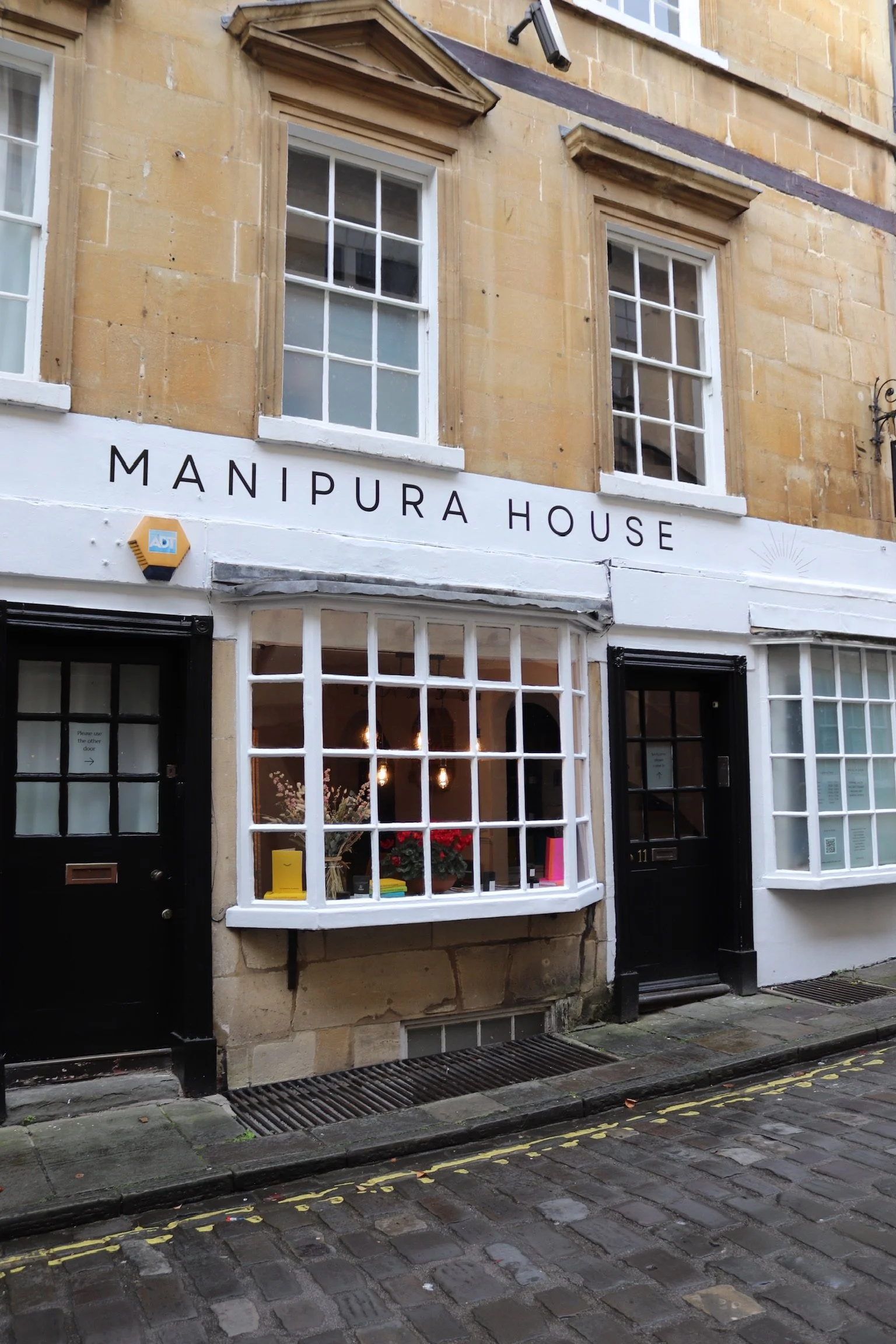
Manipura House, Bath
Explore Manipura House, a mind-body wellness hub in central Bath offering massage therapy, wellbeing workshops and expert bodywork in a stunning setting.
Perfect For
Anyone interested in looking after their long term physical and mental health, supporting fitness and recovery from trauma. This is also the ideal place for anyone who understands that massage therapy is more than just a one-off treat, but an essential partner for a healthy lifestyle.
Why You’ll Love It
Manipura House is a centre that takes care of your physical and mental wellness and that’s on a mission to elevate your health and restore your energy.
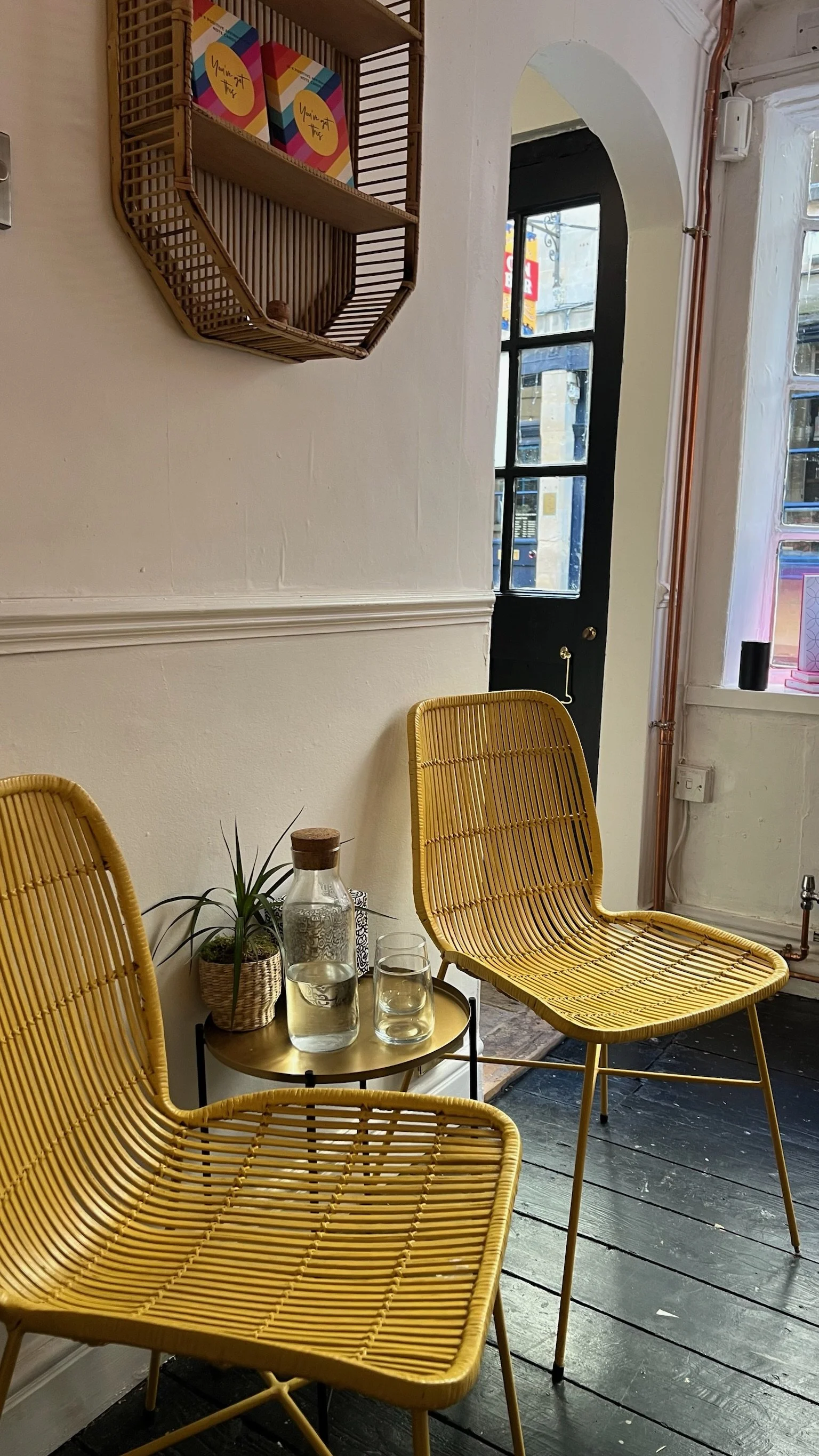
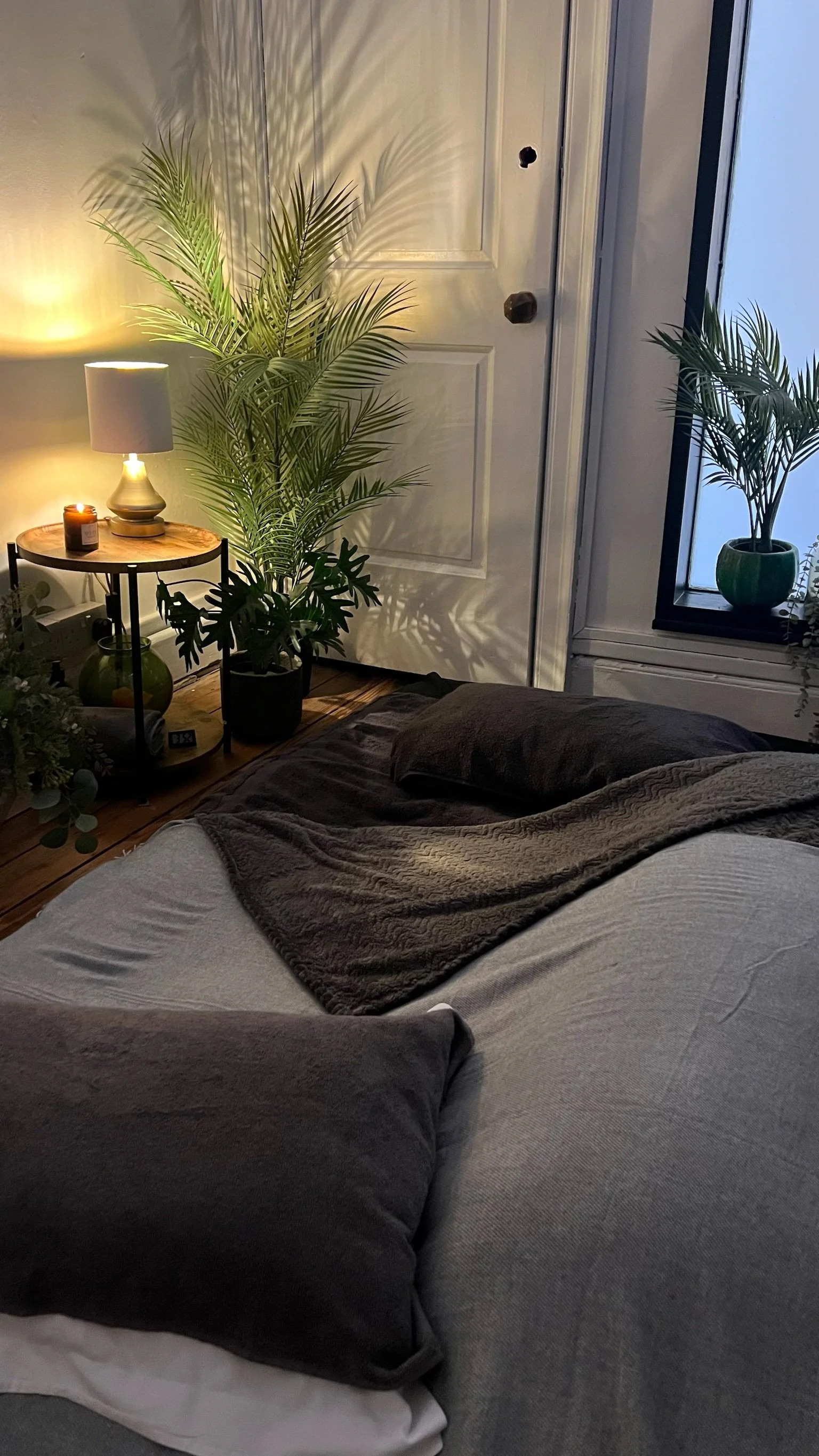
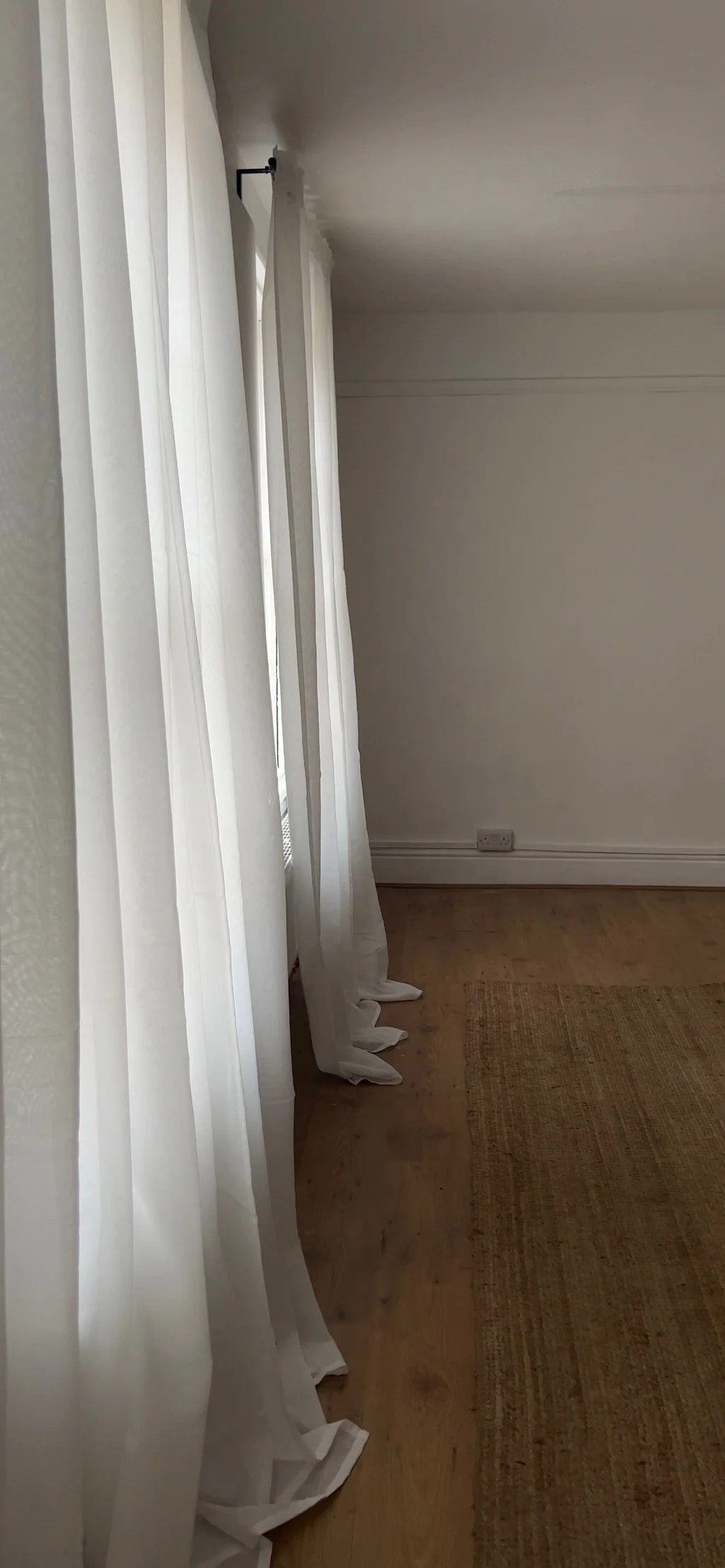
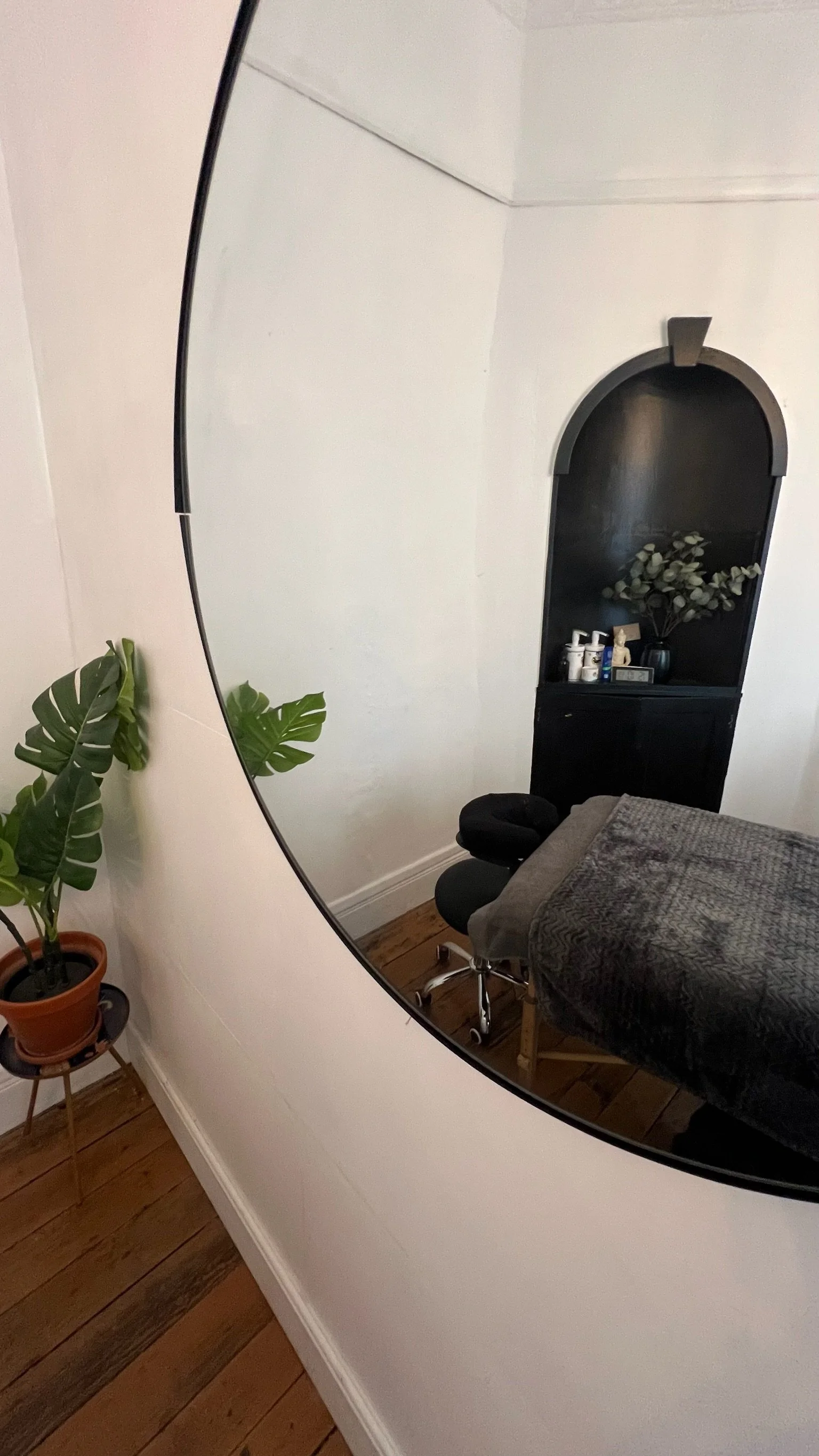
Hosted in a stunning Grade II Listed building in the heart of Bath, you will find exceptional bodywork, clinical massage, therapeutic massage therapy, wellbeing workshops and accessible recovery tools plus a range of wellness services, to help transform your ability to connect mind and body.
The name Manipura refers to your solar plexus, a bundle of nerves in the abdomen that regulates the body’s stress response. As co-founder Lynsey Keyes explains: “It is the centre of our identity and energy, and the key to unlocking our personal power. By tapping into this nerve centre in a variety of ways we can build a strong, confident foundation from which to grow, empowering ourselves with knowledge and awareness of our mind and body to take charge of our own health.”
What Makes It Special
Located on a stunning street, the space hosts a range of highly trained and skilled expert bodywork therapists, who understand and work with your individual needs. It’s a one-stop health hub connecting wellness practitioners through workshops and coaching sessions as well as a curated wellbeing retail offering.
The If Lost Take
One of the hardest things to do when you’re ready to take care of your physical and mental wellbeing is finding the right practitioners to support you. Manipura House takes away the guess work. Under one roof, you’ll find the people and the space you need to help you better move through everyday life.
We’ve handpicked Manipura House for our Wellbeing Guide to Life because it perfectly reflects what we look for in a wellness space: expert-led, beautifully designed, and truly grounded in whole-person care.
Whether you’re seeking to reconnect with your body, manage stress, or explore long-term support for your physical and mental health, this is a place where expert knowledge and compassionate care come together. Expect evidence-based therapies, bespoke treatments, and a deep respect for the mind-body connection.
Founder’s Go-To Wellbeing Advice:
“Our approach to healthcare should move beyond a reactive approach, to a more sustainable and enjoyable one. A holistic approach not just in name, but in the 360 degree services we engage with.”
Some Practical Details
Therapy sessions are all in person on site. Their partner therapists may have online offerings.
Gift vouchers are available
You can book directly on the website.
11 Queen Street, Bath, BA1 1HE, United Kingdom
hello@manipurahouse.com
Tel: 0122 5984379

Why Feeling Your Emotions Can Be So Terrifying and What to Do About It
Feeling emotionally overwhelmed or exhausted? Learn why your nervous system sees everyday stress as danger, and how to safely reconnect with your feelings using body-based tools and soft, supportive practices.
Have you ever felt like the tiniest thing , an unexpected email, a message left on read, a look, a tone, a bill, sends your whole system into overdrive?
In this week’s podcast episode, I spoke to massage therapist and bodyworker Carrie Ekins about emotional overwhelm, emotional exhaustion, and how to begin feeling safe enough to feel our feelings, even when it feels absolutely terrifying.
Carrie shared a thought that changed everything for her:
“Everything is a saber-toothed tiger.”
It sounds playful, but it's a serious insight. Because for many of us, our nervous systems are constantly interpreting life’s daily stresses as if our actual survival is under threat. The primitive parts of our brain haven’t evolved fast enough to know the difference between a demanding boss and a predator in the wild.
So instead of processing an email or a conversation, our bodies kick into survival mode — fight, flight, freeze, or fawn. Over and over. Day after day.
And what gets missed? The essential third part of the stress cycle: processing.

The Truth About Emotional Overwhelm
So many of us are living in a constant state of emotional hyper-vigilance. And the more we try to push through, the more disconnected we become, from our bodies, from our feelings, from ourselves.
As Carrie so beautifully put it:
“… I have to learn how to feel my emotions, even though that is absolutely terrifying because nobody's given me the tools, no one has shown me how to walk this path, nobody has shown me how this feels. Why would you want to do that? That all just sounds like mortifyingly awful…”
And so, when emotions do start to rise, they feel unbearable. Too big. Too much. Too dangerous. Like saber-toothed tigers of the soul.
But the truth is, your feelings aren’t trying to hurt you. They’re trying to help you find your way, back into your body, back into your breath, back into your life.
What If You Didn’t Have to Be Afraid of Your Emotions?
Carrie talks about the power of simple practices that help us shift from stress and shutdown into softening and why softening is not weakness, but wisdom.
It’s not about going on a 10-day silent retreat or becoming someone you’re not. It’s about finding small, meaningful ways to reconnect with your body:
Placing a hand on your chest and simply breathing
Listening to the birdsong out an open window
Dancing in your kitchen or humming your favourite tune
Noticing the texture of the ground beneath your feet
These are what Carrie calls wellbeing anchors: tools that remind your body it’s safe to soften, to feel, to rest.
And from that place of safety, emotional overwhelm starts to ease. Emotional exhaustion starts to heal. The stories your body has been holding start to shift.
Softening Isn’t a Flaw — It’s a Superpower
There’s a story many of us carry that if we let go, if we soften, we’ll lose control. We won’t be prepared. We’ll get eaten alive by the saber-toothed tigers of our inbox, our timelines, our expectations.
But what if softness is what helps us survive?
What if being more in our bodies — in our breath, our senses, our full emotional range — is the very thing that keeps us rooted, resourceful, and resilient?
As Carrie said,
And when you have that moment, when you come back into your body and you can feel your feet on the ground and you can feel your hand on your chest, it's really magical because literally it's like everything opens up. Like your hearing becomes more accessible and your vision is clearer and brighter. And these are physiological changes because your stress has dropped, your cortisol has dropped and your body has instantly responded with allowing yourself to be more present and more there. And that's the beauty of just softening.
We’re All a Little Overwhelmed Right Now
If you’ve been feeling emotionally exhausted, like your nervous system is fried and you can’t stop bracing for the next disaster — you’re not “weird” and you’re certainly not failing. You’re responding the way any human would in a world that has asked far too much for far too long.
But there’s another way. One where you can start to feel your feelings without drowning in them. One where you don’t have to do it alone.
Listen to the full conversation with Carrie Ekins on Substack here, Apple, Spotify or wherever you get your podcasts. You’ll find that it’s a gentle, playful, radically human exploration of what it means to come back to yourself, one breath at a time.
And if you’re curious about exploring your own emotional life in a deeper, supported way, enquire about our 1:1 emotions coaching. It’s a safe, compassionate space to learn how to feel your feelings — and feel safe doing so.
Because your emotions aren’t saber-toothed tigers. They’re just messengers. And they might be waiting for you to listen to them.

What Happens When You Stop Optimising and Start Moving Gently?
A wellbeing experiment in mind-body connection, Qigong, and the search for energy that stays.
Have you ever felt like your energy disappears the moment you need it most?
Maybe you’ve hit a season of life (midlife, motherhood, burnout, the unnameable fog) where your mind and body no longer feel like they’re on speaking terms. You’ve tried the morning routines, the wellness hacks, the meditation apps. But somehow, you still feel off — unanchored, disconnected, lost.
Today I wanted to share one small experiment that helped me find a way back.

Living Wellishly, Not Perfectly
Back in May, I started A Year of Living Wellish-ly, a set of micro wellbeing experiments designed not to improve me, but to reconnect back in with myself, others and the world around me.
I wasn’t looking to become a better version of myself. I just wanted to feel more like myself again — to restore the link between my mind, body, and what makes life feel good. This wasn’t about glowing skin or green juice. It was about remembering who I was when I wasn’t rushing, striving, or performing.
And it worked. For a while.
Then life did what it always does: got full. Work deadlines stacked up, school year chaos kicked in, and work on my podcast began with ten interviews recorded in one month. Slowly, my wellbeing practices drifted to the edge. What returned was fatigue, self-doubt, and a sort of body-fog where energy used to be.
How the Mind-Body Connection Works (and Why It’s Easy to Forget)
Our culture tends to separate the body and the mind, even though research tells a very different story. In fact, studies show that our mental wellbeing is inextricably linked to physical movement, breath, posture, and even how we stand in space.
The research tells us this:
Moving your body in gentle, intentional ways reduces anxiety by lowering cortisol and regulating the nervous system.
Practices like Qigong, yoga, and Tai Chi stimulate the vagus nerve, improving your heart rate variability — a key marker of emotional resilience.
A 2022 systematic review and meta-analysis published in Frontiers in Psychology titled "Effects of Qigong Exercise on the Physical and Mental Health of College Students" found that Qigong exercise significantly reduced symptoms of depression and anxiety in college students.
And here’s something else science confirms: You don’t need high-intensity workouts or perfect form to feel better. Just starting—even slowly, even awkwardly—can be enough to begin rewiring your nervous system for calm, presence, and energy that lasts.
The Experiment: Qigong in a Sprint-lit Hall with Strangers
So when spring had rolled in with that fresh-start energy, I didn’t go back to the gym. I went to Qigong.
The class was held in a community hall. I was the youngest by at least ten years. Someone offered me a chair.
Our teacher, a calm and commanding German woman, opened the session with Mary Oliver’s Wild Geese — a poem that felt like permission.
Then we moved. Slowly. Deliberately. Breathing with intention. Stroking our arms. Holding our hands out as if to welcome something. And for a few minutes, I didn’t feel lost. I felt here.
I didn’t optimise. I didn’t hustle. I just allowed myself to feel. And what I felt was… present, even radiant. Like a little bit of my light had come back.
What I Learned About Reconnecting Through Movement
This class felt like a quiet homecoming.
Qigong invited me to meet myself where I was — tired, a little cynical, hopeful despite everything. And that soft meeting helped me realise:
I don’t need to “get fit” to start.
I don’t need to understand it fully to feel the benefits.
Movement isn’t about discipline — it’s about relationship.
And when I treat my body kindly, my mind follows.
What To Do If You’re Feeling Lost, Disconnected or Overwhelmed
If you’re reading this and thinking, “That sounds nice, but I could never…” — let me offer this:
You don’t need a fancy studio, or matching leggings, or a full hour.
You could try:
A 10-minute walk without your phone
Standing barefoot in your garden and taking five slow breaths
A YouTube Qigong video
Dancing to one song in your kitchen
Stretching your arms as you make tea, and simply noticing how it feels
These are not fixes. They are invitations. And if you follow them gently, they might just lead you back to the body you call home.
From Crashed to Connected (and What’s Next)
Though I’ve moved on to the next phase of Living Wellish-ly — creativity, more on that soon — I’m carrying a few things with me:
A community sauna I want to return to
A Nordic walking group I’m curious about
A commitment to listen to what my energy needs, not just what my to-do list says
A quieter conversation between my body and mind
If you’re curious about the mind-body connection, or wondering what your version of wellbeing might look like — here’s your invitation:
Create your own mini month of movement experiments.
Let it be playful, soft, silly even.
Try Qigong or something else that surprises you.
Don’t worry about doing it right. Just do it gently.
And if you want a companion for the path, you can find my collection of mind-body reflections here.
Because you don’t have to be good.
You just have to begin.

Finding My Way Back to My Body: Sauna for Wellbeing in Somerset
Curious about the benefits of sauna for your wellbeing? Discover the rise of Finnish-style saunas in the UK, the mental and physical health benefits of heat and cold therapy, and how one Somerset sauna changed everything.
Why would anyone step into a hot sauna on one of the warmest days of the year?
That was my exact thought as I stood outside a bright orange door on a sun-baked industrial estate in Somerset. But beneath the surface of that contradiction was a deeper search for something. A reset. A moment of connection with my body. A pause in the chaos of modern life.
And I found it — not in a spa, but in a converted graffitied truck with steam billowing from its seams.
The idea of seeking out a sauna for better everyday wellbeing first took root while reading How to Winter by Kari Leibowitz. Her writing on Scandinavian winter rituals — particularly the reverence for sauna — felt oddly timely, even as I read it in the full bloom of British summer.
Did you know that in Finland, there are over 3 million saunas for a population of just 5.5 million? That’s one sauna for every two people. It’s not just a wellness trend there — it’s part of everyday life, deeply embedded in the culture. Saunas are where people slow down, open up, and sweat out more than just toxins. As Leibowitz writes:
“The sauna is an escape, both physical and mental. It’s a time to slow down, pause, and connect: with ourselves, with our bodies, with each other.”
In the UK, we’re catching up. According to the British Sauna Society, there were only 45 Finnish-style saunas across the country in 2023. By the end of 2025, that number had leapt to over 200. And in Somerset alone, new community saunas are popping up in forest clearings, rewilded farms, and, in my case, just behind the local bakery.
My first visit to Wildcat Sauna was part nervous curiosity, part midlife experiment.
The etiquette was unclear — was this a silent retreat? Were my unpainted toes allowed? But what I found instead was kindness, community, and a warm welcome. A mix of regulars and holiday-makers shared tips about 15-minute sauna cycles followed by cold plunges, and somehow, without ceremony, we all eased into it together.
I chose the hottest sauna first — a bold but not-for-me move — before relocating to the cosier wooden barrel. I found my rhythm slowly: heat, breathe, plunge. Repeat. In the cold plunge, I didn’t last long, but I lasted longer than I thought I could. There was pride in that. Progress.
And more than that — I found a kind of presence I hadn’t realised I was missing.
This small, steamy ritual has now become one of the most grounding practices in my week. I can reconnect with myself in a way that’s both physical and emotional. And I’m not alone.
Sauna offers proven health benefits:
Lowers blood pressure
Reduces stress and improves mood
Enhances circulation and immune function
But perhaps just as importantly, it offers a pause. A way to step outside the noise of everyday life and listen to yourself again.
And there’s something special about the communal nature of it too. Unlike a spa, this is a space for locals, regulars, conversations. As the Swedish Sauna Academy puts it: “In saunas, there is truth.”
There are now public or wild saunas nearby at Vallis Farm, The Glove Factory, Campwell, and more arriving each season. The trend is rising, yes — but so is the call to reconnect with ourselves.
So here’s my gentle nudge:
Have you tried a sauna for your wellbeing? Would you?
Whether you’re curious about the heat, the cold, the community, or just curious in general — this might be the warm, unfamiliar, lovely reset you didn’t know you needed.
Let me know if you sauna (and where!). I’d love to know which places are helping you feel more at home in your own body.
Sending you warmth and curiosity,

5 Places to Try Sauna in Somerset and Beyond
4. Campwell, Winsley, near Bath
5. Somerwhere Sauna, Dartington Estate
Where would you add? Let us know so we can add more saunas to our guide to life.

Walking for Wellness: How Daily Walks Brought Me Back to Myself
Discover the emotional and mental health benefits of walking with five mindful ways to walk, inspired by personal experience and wellbeing research.
It wasn’t until the pandemic that I discovered walking — not as a way to get from A to B, but as a way to come back to myself. Like many people, I found myself locked down, overwhelmed, and restless. My only escape was a daily walk.
It became essential. A bowl of milk to the day’s dry cereal. The thing that made everything else make sense.
Each morning, after waking to another repeat of the same uncertain day, I’d lace up my trainers and head out. Sometimes I went uphill, breath catching as I climbed towards the high view that held the San Francisco Bay and Mount Diablo in the distance. Other times, I turned down the trail, earbuds in, passing neighbours who had become companions in this strange shared stillness.
My walks weren’t about fitness. They were about sanity. A way to breathe again before returning to home-schooling, back-to-back video calls, and the quiet chaos of a household running on edge.

The benefits of walking for mental health
I wasn’t alone. According to the Mental Health Foundation, 59% of UK adults said that taking a walk helped them cope with the stress of the pandemic. In the UK, where I spent round three of lockdown, walking was considered so essential that the government protected it — up there with grocery shopping and filling your car with petrol.
These daily walks weren’t just good for our bodies. They were medicine for our minds. For many of us, walking helped re-establish a link between physical movement and emotional stability. And for some, it was the beginning of a new relationship with wellbeing altogether.
Why I kept walking (even when I didn’t have to)
I’ve kept walking. Not out of obligation, but because I now understand what it gives me.
I take a short walk before I collect my daughter from school — a simple mental reset after a day of coaching, writing, and running a business. I walk after dinner, letting the last of the day’s light touch my skin. I park further away than I need to when heading into Bath, giving myself that extra stroll in silence before a meeting.
It’s not always about the steps or the stats. I’ve let walking become part of how I design my day — like eating lunch, brushing my teeth, or drinking coffee. It gives me time to think. Time to feel. Time to stop being just a brain at a screen.
And the dog walkers I pass seem baffled that I walk alone — no dog, no Fitbit, no real purpose.
But here’s the thing: walking is the purpose.
5 mindful ways to walk when the world feels heavy
When I feel unmotivated, overwhelmed, or too busy to walk — I remind myself it doesn’t have to look a certain way. These are five gentle ways to walk that have helped me stay connected, curious, and calm.
1. Take a Colour Walk
This morning, I followed the colour pink.
It was a choice that made me look. Brash pinks and soft blushes showed up in unexpected places — roses in front gardens, foxgloves leaning into the road, a pair of pyjamas flapping on a washing line, and even the warm tone of a village pub sign. The pinks softened the streets I thought I knew.
Try this: Choose a colour before you leave the house. Follow it with your eyes. Notice the tones, textures, placements. Photograph them, sketch them, or just observe. You’re not documenting your walk — you’re getting more into it.
2. Walk Without an Agenda
“Take a walk without an agenda,” said Margaret Heffernan in her TEDx talk on thinking like an artist.
Leave your phone at home. Head out with no destination, no task list. Let the walk shape itself.
Can you hear the difference after the rain? Have the leaves turned? What’s blooming this week? Let your attention wander, gently.
The only cost is your attention. The gift is being where you are.
3. Try an Awe Walk
An awe walk invites you to look at the world with child-like eyes.
Research from the University of California found that regular awe walks can reduce stress, increase joy, and expand our sense of connection to something bigger than ourselves. Participants even began taking smaller selfies — a literal shrinking of the ego.
This week, I walked a slightly different route and was caught by wildflowers pushing through tarmac, a castle glowing yellow under a blue sky, and a pile of painted stones stacked on a gravestone by a child’s hand. Nothing grand, but all quietly wonderful.
Try this: Look for something vast or something tiny. Either way, let it move you.
4. Take a 12-Minute Brisk Walk
If time is the thing getting in your way, keep it short and purposeful.
In 52 Ways to Walk, Annabel Streets encourages a simple 12-minute brisk walk. That’s all it takes to shift your mood, alter your blood chemistry, and reconnect with your body.
Try this: Set a timer for 12 minutes. Walk like you mean it. Breathe deeply. Notice the shift.
5. Bring Company (Human or Otherwise)
Sometimes I take a friend. A quick lunchtime loop before school pickup. Sometimes I take a podcast — lately I’ve been walking with themes like overwhelm or emotional fatigue, choosing episodes that help me think differently.
There’s evidence that some of the emotional benefits of walking come not just from movement, but from connection. The nod of a neighbour. A chat with a friend. The quiet rhythm of shared silence.
Try this: Invite someone to walk with you. Or pick a podcast that feeds your mind as your feet move. Make it feel like a companion.
Let walking be whatever you need it to be
You don’t need to count steps or measure your worth in minutes. Walking is a practice — and like all good practices, it adapts to you. It can be fast or slow, quiet or sociable, structured or loose.
Let it meet you where you are.
If you need to ground yourself: walk.
If you feel cloudy-headed: walk.
If you want to think, or not think at all: walk.
You don’t need a goal. You just need to begin.
So…
What kind of walk are you craving today?
Which of these walking practices might you try?
Or do you have your own that sustains you?
We’d love to hear your stories of why you walk — and what you’ve found along the way.
Your next steps
If something here resonated, here are three gentle ways to keep exploring with us:
Subscribe to our Newsletter
Get weekly wellbeing notes — full of small, real-life ways to feel better, think differently, and live with a little more ease and curiosity. Sign up here.Explore Our Wellbeing Remedies
Discover our bespoke prescriptions for everyday life. Whether you're feeling lost, overwhelmed or just want to explore more of what matters to you — we’ve designed gentle tools to support you. Browse our remedies here.Visit Our Mind–Body Library
Practical, non-performative ways to reconnect with your body — whether you're walking, resting, stretching or simply breathing. It’s about being in your body in a way that feels good, not forced. Explore your mind-body connection here.

Why You Feel Emotions in Your Body—And What to Do About It
Emotions aren’t just in your head—they live in your body too. Here’s what science and experience say about embodied emotions, and how reconnecting with your physical self can help you understand and manage your feelings better.
Your Emotions Live in Your Body Too
You probably know what anxiety feels like—not just the thoughts. The racing heart. The clenched jaw. The fluttery stomach.
Or how sadness can settle like a heaviness in your chest.
That’s not coincidence. That’s embodied emotion—and understanding it can completely change how you relate to your emotional life.
I didn’t always know this.
For years, I thought of myself as someone who was “good with emotions.” I could explain them, write about them, coach others through them. But it wasn’t until I started training in emotions coaching that I realised: I was living almost entirely in my head.
I could name a feeling. I could even quote research on it. But I wasn’t feeling it. Not really. Not in my chest, or my belly, or my breath. It was a cognitive experience. One that left me overwhelmed by emotions I wasn’t actually letting myself process.
That’s when I discovered what embodied emotion really means—and why it matters.

So… What Does ‘Embodied Emotion’ Actually Mean?
It means this:
You don’t just think emotions. You feel them.
Literally. Physically. In your body.
This isn’t just poetic—it’s backed by science:
Embodied cognition
Your brain and body work together to create emotional experiences. Your brain reads signals from your body (called interoception)—like muscle tension, heart rate, posture—and uses those to help you feel an emotion.
"I feel sad" = Your brain integrating body signals (slumped posture, shallow breath, heaviness) + memory/context.
Emotions as energy
Emotions are energetic experiences. Crying, laughing, shaking, sighing—these are physical discharges of emotional energy. If you don’t let it move through, it stays stuck in your system.
Why This Matters (Especially If You're Often in Your Head)
When we don’t allow emotions into the body—when we only talk about or think them—we disconnect from key tools of self-regulation and emotional clarity.
That disconnection might show up like this:
You overanalyse emotions instead of feeling them.
You get overwhelmed by “too many” emotions at once.
You struggle to explain how you feel, or can’t connect to the physical experience of it.
You feel exhausted, tense, or foggy without knowing why.
10 Ways to Reconnect with Your Emotions Through the Body
You don’t need to master this. You just need to start noticing. Try a few of these to begin:
1. Ask your body where the emotion is
Try:
“Where do I feel this in my body?”
“What’s the sensation—tightness, warmth, tension, fluttering?”
2. Breathe into it
Gently breathe into the area where you feel something. Let yourself stay with it for a few slow breaths, without judging it or needing it to change.
3. Name it—but stay curious
Instead of “I am anxious,” try “I’m feeling some anxiety in my chest right now.”
Let it be a process, not an identity.
4. Try movement as a release
Shake out your arms. Stretch. Walk. Sometimes the body needs to move emotion through before your mind makes sense of it.
5. Be aware of what you avoid
Ask: “Which emotions do I avoid because of how they feel in my body?”
Sometimes it’s not the thought—it’s the sensation we resist.
6. Don’t force clarity
Emotions don’t always show up with neat labels. Stay present to the feeling—even if it’s messy.
7. Use temperature and touch
Try a warm drink, a weighted blanket, a gentle hand on your chest. These can anchor you in your body when emotions feel too big.
8. Connect the dots
When you’re tense or tired, ask: “Is there an emotion I haven’t allowed myself to feel today?”
9. Use memory
Think of a time you felt confident, joyful, at peace. Remember how that felt in your body. Let that memory guide you back to that state.
10. Know this is a skill, not a flaw
If this feels unfamiliar, that’s not failure. It’s a sign you’re learning something new.
Three Things We Hope You’ll Take Away
Emotions are physiological, not just psychological.
When you feel cut off from your emotions, reconnecting with your body can help.
Small practices—like breath, movement, curiosity—can build emotional connection over time.
Join the Emotions Newsletter
Want more support as you explore your emotional world—both mind and body?
Sign up for our newsletter for practical prompts, gentle reflections and real ways to feel better in your everyday life.
You don’t need to think your way through everything.
Sometimes the answer is already in your body.

Is This Anxiety or Just a Lack of Magnesium? (And Other Mind-Body Mysteries)
From nervous system signals to gut health and breathwork, this playful, science-backed post explores how emotional and physical wellbeing are deeply connected — and how to listen when your body is trying to tell you something.
Ever feel off and have no idea why?
In this Q&A, we explore the messy space where your mind and body talk to each other — often in whispers, occasionally in yells. From gut feelings to breathwork to mystery symptoms, here’s what your body might be trying to say.

Q: Why do I feel weird today?
A: That’s the eternal question, isn’t it?
It might be:
Hormones
A fight with your sister
A missed meal
Perimenopause
Not enough sunlight
Too much coffee
Something someone said in passing that burrowed into your heart like a tick
Or… it could be magnesium. (We’re only half-joking.)
Q: How do I know what’s a mental health thing and what’s a physical thing?
A: The honest answer? You probably don’t — and neither do most of us.
That’s because your mind and body aren’t separate departments. They’re in constant conversation. That anxious feeling in your chest might be your nervous system gearing up. That foggy brain could be dehydration. That random wave of sadness might be emotional, hormonal, or both.
Here’s what science tells us:
The gut-brain axis means what you eat can affect your mood (yes, even that kombucha matters)
The nervous system can be soothed by breath, warmth, and gentle movement
Inflammation is increasingly linked to depression and fatigue
Sleep is your brain’s emotional housekeeping service
The more curious you are about your whole self — not just your thoughts — the more empowered you become.
Q: Is it just me, or does anxiety show up in the body first?
A: Not just you.
Many of us feel anxiety in our bodies before we ever identify it mentally. Your jaw tightens. Your breath shortens. Your stomach flips. Your hands fidget. Then — if you pause long enough to ask — you realise: oh, I’m anxious.
Learning to read those signals can help you intervene earlier and more kindly.
Q: So what helps?
A: Here are a few research-backed ways to support the mind-body connection — and your emotional state:
Movement (the kind you don’t dread)
Even gentle walks boost serotonin and dopamine. Pick movement that matches your mood.
Breathwork
A few long, slow exhales can activate the parasympathetic nervous system and calm stress.
Gut Health
Emerging science suggests your microbiome is deeply linked to your mood. Fermented foods, fibre, and reducing ultra-processed food might help.
Nervous System Regulation
Touch something warm. Take a shower. Rock gently. Even humming helps. All these stimulate the vagus nerve.
Being Seen
Talk to someone — a therapist, a coach, a trusted friend. Co-regulation (the sciencey term for calming down in the presence of another) is real.
Q: What if I still feel unsure about what’s going on?
A: That’s okay.
Sometimes the kindest thing you can do is notice, without needing to diagnose. Treat your body like a friend you’re just getting to know again. Ask it questions. Listen. Try something small. Then listen again.
This isn’t about mastering your biology. It’s about living in it .
Your body isn’t the enemy. It’s the messenger.
So when things feel a bit off — don’t rush to fix. Get curious.
Could it be anxiety? Yes.
Could it be magnesium? Maybe.
Could it be both? Absolutely.
Let’s keep figuring it out — gently, curiously, together. Have you ever had a mind-body mystery? What helped you understand it better?

Need more ways to well? Subscribe to our newsletter for a weekly dose of inspiration.

Dancing Into Emotional Wellbeing: A Year of Living Well-ishly Begins
Discover the science-backed emotional benefits of dance and join Claire’s “Year of Living Well-ishly” — a playful, accessible journey into movement, connection, and micro-adventures in wellbeing.
When was the last time you truly moved — not just walked or exercised, but swayed, spun, or laughed your way across a room?
For me, it was at a Friday morning disco class. I showed up, a little nervous, wearing all black but with bright turquoise trainers — a quiet nod to that day’s theme. My body, after a couple of midlife years of feeling rigid and cautious, was ready (though uncertain) to wake up again.
That class, led by the radiant Cheryl Sprinkler, became more than just a workout. It became a micro-adventure into reconnecting with my body, my emotions, and my life — and a surprising beginning to the year-long experiment I’m calling A Year of Living Well-ishly.
This month, we’re focusing on how our bodies might be speaking to us — and how we can learn to listen. One powerful way to start? Dance.

Why Dance? The Science Behind the Joy
Dance isn’t just fun; it offers a range of benefits for our emotional wellbeing. Here’s why moving to music can transform not only your body but also your mood and mind:
Emotional Regulation & Mood
Mood Lift & Stress Relief
Dancing to your favourite tunes releases endorphins, dopamine, and serotonin — the “feel good” chemicals that lift your spirits. Research shows that even a short dance session reduces stress, lowers cortisol, and boosts mood.
Processing Difficult Emotions
Sometimes, words just aren’t enough. Dance gives us a non-verbal way to express feelings like grief, frustration, or joy, helping us process what’s been sitting unspoken in our bodies.
Combating Depression & Anxiety
Structured dance programmes (even as short as six weeks) have been shown to significantly reduce symptoms of depression and anxiety — sometimes even outperforming other forms of exercise in emotional benefits.
Embracing Yourself: Confidence, Growth & Body Positivity
Boosting Self-Esteem
Learning a new move or simply letting go in a dance class offers a real sense of achievement, building confidence and emotional resilience.
Body Acceptance
Dance encourages us to notice what our bodies can do, rather than focusing on how they look. Moving freely fosters self-compassion and a healthier body image — especially important for those in midlife navigating shifts and changes.
Resilience Through Movement
By reconnecting with your body, reducing stress, and staying present, dance helps you better manage life’s challenges and bounce back from emotional setbacks.
The Power of Connection: Dancing Together
While dance can be deeply personal, it’s also beautifully communal.
Belonging & Community
Dancing in a group — whether in a church hall, at a party, or even a Zoom class — creates a shared rhythm, a sense of togetherness that fights isolation and fosters connection.
Shared Joy & Laughter
In that Friday disco class, it wasn’t just the music or the moves; it was the glances between women, the laughter when someone went right instead of left, the quiet understanding that we were all there for something bigger.
Your Invitation: Join Me on This Well-ish Journey
This year, I’ll be sharing weekly (or so) micro-adventures — small but powerful experiments in feeling better, reconnecting with ourselves, and making wellbeing more playful and accessible.
This month’s theme: How are you listening to your body?
This week’s invitation: Try dancing — wherever and however you like. Take a class, dance in your kitchen, or just put on a song that makes your shoulders shimmy. To read more about how why I’m starting out with dancing click here.
Let’s do this together. Share your stories on Substack or socials, tell me what music moves you, and let’s build a community of women exploring what wellbeing means for each of us — imperfectly, joyfully, together.
Want extra support? Join The Wellery and join one of our two Co-Wells where we explore these themes in community.

What Counts as Movement? (Hint: It’s More Than the Gym)
Tired of fitness that feels like punishment? Discover 10 joyful, everyday ways to move your body that support your emotional and mental health — no gym required. For anyone seeking realistic, meaningful ways to feel better in their bodies.
If the word exercise makes you feel instantly tired or judged, this post is for you.
Maybe you’re not a “gym person.” Maybe your yoga mat is gathering dust. Maybe you’re in a season where even walking around the block feels like a big deal. That’s okay. You’re not doing it wrong.
Movement doesn’t have to be about performance. It doesn’t even have to be about fitness.
Movement can be about feeling better. About reconnecting with yourself. About shifting your mood, easing your stress, or making space for something new to emerge.
Here are 10 kinds of movement that count — for your mental health, your emotional wellbeing, and your connection to your body.

1. Walking (Without a Step Goal)
Whether it’s a loop around the block or a lap of your living room, walking helps us process thoughts, reset nervous systems, and regulate emotions. You don’t need a Fitbit to feel the benefits.
2. Dancing in the Kitchen
Spontaneous dancing — even just a microbop while waiting for the kettle — releases endorphins and activates joy. Bonus points for music you loved as a teen.
3. Stretching Like a Cat
You know how cats stretch without guilt or agenda? Try that. No fancy sequence needed — just listen to where your body wants length, space, or breath.
4. Housework as Movement
Yes, vacuuming counts. So does gardening, scrubbing, rearranging. These everyday movements often offer rhythm and release, especially when paired with a good playlist.
5. Breathwork or Intentional Breathing
Not all movement is big. Breathing deeply and consciously moves the diaphragm, signals safety to your nervous system, and can dramatically change how you feel — in just a few minutes.
6. Playing With Kids (or Pets)
Chasing a toddler. Running with a dog. Even just sitting on the floor and reaching for toys or rolling a ball. This kind of unstructured play can be more effective for wellbeing than any structured workout.
7. Cold Showers or Warm Baths
Both are sensory experiences that stimulate the vagus nerve — a key player in nervous system regulation. (And yes, standing in a cold shower does count as movement.)
8. Embodied Practices Like Qigong or Yoga
These practices help us slow down and actually feel what’s happening in our bodies. They're less about performance and more about presence.
9. Micro-Adventures
A walk in a new neighbourhood. Climbing a hill you’ve never noticed. Paddleboarding on a Sunday morning. These small shifts in scenery and sensation can wake up body and spirit alike.
10. Rest as Resistance
Sometimes, what your body needs is stillness. Choosing rest — intentional, spacious, nourishing — is itself a radical act of embodiment.
Movement doesn’t need to feel like punishment. It isn’t penance. Or even another box to tick.
It’s a way back to yourself.
The next time you feel overwhelmed, stuck, low or just a little disconnected, try moving in a way that feels good. Let your body take the lead.
Try This Today: What’s one form of movement that brings you joy or ease?
Can you make space for it — even just 5 minutes — today?

Need more ways to well? Subscribe to our newsletter for a weekly dose of inspiration.

Daybreakers
Daybreaker is a global community hosting early-morning dance parties and wellness experiences focused on joy, connection, and conscious movement. With events in iconic spaces—from museums to rooftops—it offers a fresh, fun way to connect mind and body.
Perfect For
Anyone who wants to move their body, feel amazing, and start their day with a serious spark of joy. Ideal for people craving connection, ritual, and something different before 9am.
Why You’ll Love It
What if your morning started with a DJ set, a dance floor, and a room full of strangers moving like no one’s watching—completely sober?
Welcome to Daybreaker: a global movement that turns wellness on its head.
Equal parts early-morning rave, mindful movement practice, and joy experiment, Daybreaker events are designed to wake up your body, uplift your spirit, and reconnect you with fun.
What Makes It Special
Sober, high-vibe dance parties – No alcohol, no late nights—just sunrise dancing in iconic locations, from rooftops to museums.
Movement: Without the pressure to get it right or look good while doing so.
Community without dressing up– No velvet ropes, no staying awake beyond 9pm—just people who are there to feel good and connect.
The Story Behind It
Founded by Radha Agrawal in 2013, Daybreaker was born out of a desire for joyful connection and conscious community.
Radha, frustrated with traditional nightlife and craving something deeper, imagined a new way to gather: one rooted in wellness, intention, and playfulness.
What began as a 6am rooftop party in NYC has now grown into a global movement across 30+ cities—and counting.
Something Else We Love
We love how Daybreaker’s heart-led energy doesn’t stop at the dance floor—through its sister platform, the Belong Center, it’s creating deeper spaces for connection.
With courses, community gatherings, and creative initiatives like Belong Circles and Belong Benches, it’s all about helping people feel seen, supported, and part of something bigger.
The If Lost Take
We love Daybreaker because it reminds us that joy is a wellbeing practice. That dance floors can be about more than sticky surfaces. That community can be felt in a great song to dance to.
This is movement as a medium for joy, self-care as something done together and mornings reimagined as about more play rather than more productivity.


Living Shoulders Up: Why We Lose Touch With Our Bodies (and How to Gently Return to Them)
Feel like you’re living in your head 24/7? Explore how we disconnect from our bodies — and how reconnecting through small, kind practices can support emotional wellbeing.
Ever feel like your head is doing all the work of being human? Like your brain is in charge of every decision, every worry, every next step—and your body is just there, trailing behind like an overworked assistant carrying too many bags?
Many of us are now living "shoulders up" — in our heads, from dawn till dusk. We analyse, plan, overthink, and rarely drop down into the quiet, often-overlooked wisdom of our physical selves.
But something impactful happens when we do.

Why We Leave Our Bodies in the First Place
It’s not your fault if embodiment doesn’t come naturally. Many of us learned early on to prize thinking over feeling. We were rewarded for being smart, productive, efficient — not necessarily for being present, grounded or intuitive.
Modern life doesn’t help. Screens dominate our days. Sitting is the default. Emotions are often something to manage, not feel. And somewhere along the way, we began to believe that our bodies were either a project to fix — or something to ignore.
The Costs of Living From the Neck Up
Living disconnected from our bodies might feel normal, but it comes with hidden costs.
We miss early signals of stress or burnout until they become full-blown exhaustion. We override our hunger or sleep cues. We lose access to the small joys of being alive — the stretch of a shoulder, the warmth of a cup in our hands, the grounding feel of feet on earth.
More subtly, when we live only in our heads, we lose touch with something essential: ourselves.
What It Means to Return to the Body
Coming back into the body doesn’t have to mean hour-long yoga classes or a new fitness routine (though it might include those if you love them).
It can start with something much smaller:
A few deep breaths with your hand on your belly
A walk where your goal is to feel your feet, not track your steps
Stretching like a cat before you get out of bed
Noticing what foods make you feel clear vs. cloudy
Asking yourself, “What does my body need right now?” — and pausing long enough to listen
The key is to feel without needing to fix. To notice without judgment. To be curious about what your body is telling you, without rushing to control it.
Why This Matters for Your Mental Health
The mind-body connection isn’t just poetic — it’s profoundly biological. Research now shows:
Movement improves mood by stimulating neurotransmitters like serotonin and dopamine
Gut health impacts emotional resilience through the gut-brain axis
Breathwork regulates the nervous system, reducing symptoms of anxiety and overwhelm
When we tend to our bodies, we tend to our minds. It’s a two-way street, and walking it with care opens up emotional clarity, steadiness, and even joy.
You Don’t Need to Be Good at This
One of the biggest myths in wellness is that embodiment has to look a certain way.
You don’t need to meditate every morning. You don’t need to go to Bali. You definitely don’t need to like kale.
You just need to start noticing. And from there, you can start choosing. Choosing what helps. What softens. What steadies. What lets you come back to yourself.
An Invitation to Begin
This week, try one small thing:
Lie down and put your hand on your chest. Feel your breath.
Wiggle your toes when you’re on a Zoom call.
Step outside, close your eyes, and feel the air on your skin.
Tiny practices. Huge shifts.
You don’t need to overhaul your life. You just need to arrive in it — one breath, one step, one body-listening moment at a time.
What’s one way you’ve gently returned to your body lately?
Let us know or forward this to a friend who needs the reminder that coming back to yourself doesn’t have to be hard. Just human.

Need more ways to well? Subscribe to our newsletter for a weekly dose of inspiration.

Park Run
parkrun is a free, weekly 5k running and walking event held in parks across the world. Welcoming all ages and abilities, it’s a simple way to boost wellbeing, build community, and create healthy habits.
Perfect For
Anyone looking to reclaim movement as a joyful, social, accessible part of life. If you're trying to build consistency, shake off the emotional cobwebs or just do something kind for your body, start here.
Why You’ll Love It
If you’re looking for gentle accountability, fresh air, and a reason to lace up your trainers on a Saturday, parkrun is one of the most welcoming places to start.
These free, weekly, timed 5k runs are held in parks all over the world—open to all ages, all paces, and all intentions. Whether you're running, jogging, walking, or volunteering, parkrun is a simple and powerful reminder that movement feels better when it’s shared.
What Makes It Special
Free and inclusive – No fees, no finish time pressure—just movement for the joy of it.
Community without cliques – You’ll find everyone from elite runners to stroller-pushing parents and total beginners, all in it together.
A weekly ritual – Show up, move your body, feel a sense of rhythm and reset.
The Story Behind It
parkrun started in 2004 with just 13 runners in a London park, created by Paul Sinton-Hewitt during a difficult period of his life. What began as a personal project quickly grew into a global movement.
The idea was simple but radical: free, community-led events that encouraged people to be active, connected, and outside, no matter their ability or background. Today, parkrun happens in over 2,000 locations across the world—powered entirely by volunteers, held together by community spirit.
Something Else We Love
That feeling of togetherness at the starting line—whether it’s your first or your hundredth parkrun. Plus, the coffee afterwards is basically a sacred part of the event.
parkrun has now gone international — with the idea taking off from Denmark to Japan.
The If Lost Take
We love parkrun because it strips movement back to what really matters: being outside, doing something positive for your body, and feeling like you belong. It’s a gentle nudge toward momentum—whatever that looks like for you.

Bristol Lido
Bristol Lido is a restored Victorian open-air pool and spa in Clifton, offering cold water swimming, sauna, and seasonal food in a peaceful city-centre setting. A perfect mind–body reset, it invites you to slow down, move gently, and reconnect.
Perfect For
Anyone craving a reset without leaving the city—whether that’s through movement, stillness, warmth or just a little space to think again.
Why You’ll Love It
Hidden behind a row of Georgian townhouses in Clifton, Bristol Lido is one of those places that feels like a secret well-being sanctuary in the middle of the city.
At its centre is a sparkling, heated open-air pool (to 20-24 degrees year around — these things matter), surrounded by steam rooms, saunas, treatment rooms and a restaurant overlooking the water.
Whether you’re trying to glide through the water, floating under grey skies, or warming up with a post-swim coffee, it’s the kind of place that grounds you in your body and quiets your mind—without ever leaving the city.
What Makes It Special
A historic city-centre oasis – Originally opened in 1850, lovingly restored into a modern, serene space for rest and movement.
Connection built in — Experience one of the supper clubs and make friends beyond your bathing suit.
Eat well, feel well – The poolside restaurant feels like a genuine treat—nutritious, seasonal food from local sources.
The Story Behind It
Rescued from dereliction and reopened in 2008, Bristol Lido was brought back to life by a group who believed in reimagining the public bathing experience for modern life. They’ve since expanded their vision to Reading with the Thames Lido.
Something Else We Love
Outdoor swimming always feels like a mini-holiday, particularly when the pool is in its own courtyard and has those cute Victorian changing rooms. You also don’t need to be a member: two hour guest swims are available with pre-booking.
The If Lost Take
We love Bristol Lido because it’s a reminder to slow down even in the busiest of cities. You don’t need a full retreat—sometimes all it takes is 45 minutes, a pool, and a moment to connect with ourselves again.

Festivals That Move You: 5 Mind–Body Gatherings to Bookmark This Summer
Discover five of the UK’s most inspiring wellbeing festivals for summer 2025—featuring yoga, trail running, wild swimming, live music, mindfulness and more. From Love Trails to Wilderness, these gatherings offer movement, connection and joy in stunning natural settings.
When we talk about mind–body wellbeing, we often imagine yoga mats, silent retreats, and solo meditations. But what if feeling well could be louder, looser, and shared with thousands of others under open skies?
These festivals go beyond the traditional wellness format—they bring together movement, music, community, and nature in ways that are joyful, embodied, and deeply connecting.
Here are five to discover:

1. Love Trails Festival
10 — 13 July, 2025 | Gower Peninsula, Wales

A festival where trail running, adventure, and music are brought together, Love Trails is for those who see movement as a form of freedom. Morning runs, cold dips, wild swims, yoga sessions, and night-time dancing—it’s about moving through the weekend with curiosity and community. If you’ve ever wanted to combine endorphins with exploration, this one’s for you.
The If Lost Take:
We love it because it proves that fitness can be soulful and adventure can be mindful.
2. Boardmasters
Wednesday 6 – Sunday 10 August, 2025 | Newquay, Cornwall

Surf. Skate. Sounds. Set against the cliffs and beaches of Cornwall, Boardmasters blends a coastal lifestyle with world-class music and wellness. Think: morning beach yoga, breathwork, cold water therapy, surf sessions, and then dancing under the stars to big-name DJs. It's a sun-kissed reset that brings together body and rhythm, rest and exhilaration.
The If Lost Take:
This is wellbeing for the wave-chasers, sea-dippers, and free spirits who feel better with sand between their toes.
3. Wellnergy Festival
13th & 14th June, 2025 | Wimbledon Park, London

Wellnergy blends fitness, mindfulness, music, food, and mental health into a one-day experience that’s accessible, thoughtful, and full of positive energy. With talks from psychologists, live workouts, laughter yoga, and nourishing food stalls, it’s designed for those looking to dip into lots of feel-good tools without the overwhelm.
The If Lost Take:
We love how welcoming and inclusive this festival is—a taster menu of wellbeing, served with heart and good vibes.
4. Wilderness Festival
31 July — 3 August, 2025 | Cornbury Park, Oxfordshire

Wilderness mixes music, wild swimming, feasting, wellbeing workshops, and open-air theatre into one of the UK’s most beloved boutique festivals. The Sanctuary area offers everything from forest bathing to dynamic yoga and fire rituals. This is where mind-body meets wild creativity, and you’ll leave sweaty, inspired, and maybe a little changed.
The If Lost Take:
It’s a beautifully curated pause from real life—a reminder of what’s possible when we come back to our bodies and the land.
5. Verve Festival
Saturday 13 & Sunday 14 September, 2025 | Wiltshire, UK
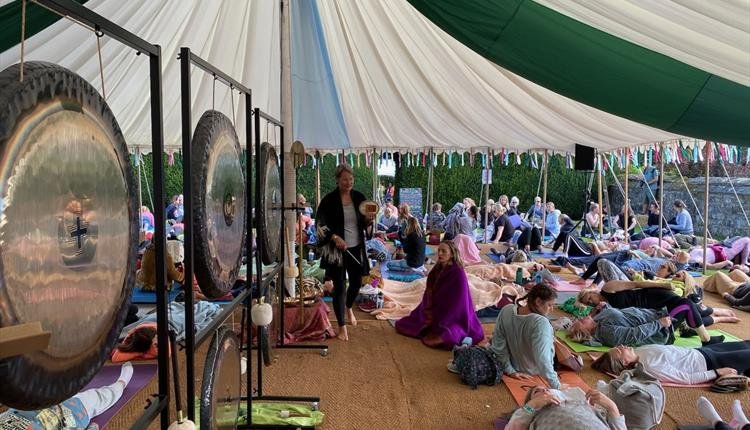
Tucked into the Wiltshire countryside, Verve is a small, beautiful wellbeing festival designed to restore and uplift. Think open-air yoga, creative workshops, soulful conversations, forest walks, live music and seasonal food, all with a focus on mindful, meaningful living. Intimate, accessible, and community-led, it’s one of the UK’s best-kept secrets for a conscious weekend in nature.
The If Lost Take:
We love Verve for its intentional pace and gentle spirit—a space where wellbeing feels joyful, local, and connecting..

These festivals invite you to move differently, connect deeply, and come back to yourself—through rhythm, nature and shared joy. Whether you're craving a hit of endorphins, a soulful workshop, or a dancefloor under the stars, there's a mind–body gathering waiting to meet you this summer.
Want more ideas like this? Join our mailing list for thoughtful guides, small shifts, and fresh inspiration on how to feel better in everyday life—no festival wristband required.

Frome Boulder Rooms
Frome Boulder Rooms is a modern, inclusive bouldering centre offering climbing for all levels, from beginners to experienced climbers. With a welcoming community, strength training areas, and expert coaching, it’s a place where movement, confidence, and connection come together.
Perfect For
Anyone who wants to move, build strength, and challenge themselves in a fun, supportive environment—whether you’re an experienced climber or just looking for a new way to move your body and clear your mind.
Why You’ll Love It
Frome Boulder Rooms is a climbing gym that encourages movement, strength, and connection.
Designed for all levels—from complete beginners to seasoned climbers—this state-of-the-art bouldering centre offers a welcoming environment where you can challenge yourself, learn new skills, and build confidence one climb at a time.
Whether you’re here to push your limits, train with friends, or just have fun on the walls, this is a place where movement and community come together.
What Makes It Special
A modern bouldering facility – Thoughtfully designed walls with routes for all abilities, from easy climbs to serious challenges.
More than just climbing – Strength and conditioning areas, coaching, and movement classes to support every aspect of your training.
A welcoming space – A friendly, inclusive atmosphere where you can climb at your own pace, whether you're here for fitness, fun, or flow.
The Story Behind It
Founded by a team of passionate climbers, Frome Boulder Rooms was created to make climbing more accessible, more social, and more fun.
With a mission to build a space where movement meets community, they designed a centre that isn’t just about strength—it’s about mind-body connection, confidence, and progression.
Whether you’re tackling your first climb or working on advanced techniques, this is a space where everyone is encouraged to learn..
Something Else We Love
The friendly, community-driven vibe—Frome Boulder Rooms isn’t just about scaling the walls; it’s about sharing the experience. Whether it’s a social climbing night, a women’s session, or coaching for all abilities, this is a place where support and encouragement come as standard..
The If Lost Take
We love Frome Boulder Rooms because it proves that climbing isn’t just about reaching the top—it’s about the process. Whether you’re here for fitness, focus, or fun, this space reminds us that every challenge can be tackled one move at a time..

Reframing the Mind-Body Connection: Learning to Listen to Yourself Again
Struggling with stress or feeling disconnected from your body? Learn how to reframe the mind-body connection in a way that supports your mental and emotional well-being. Discover sustainable, gentle ways to listen to your body, reduce anxiety, and create a well-being practice that truly works for you.
A few weeks ago, a friend told me that she couldn’t remember the last time she truly felt in her body.
“I know I move through the world,” she said, “but it’s like I’m just a floating head. I think. I analyze. I make decisions. But my body? It’s just there. Until it’s hurting, or exhausted, or screaming for attention.”
She’s not alone in this. So many of us have been trained to treat our bodies as tools—things we push, manage, or ignore until they demand otherwise. We think of movement in terms of productivity or goals: Am I exercising enough? Eating the right things? Doing what I should be doing to ‘take care’ of myself?
But what if we shifted the way we see this connection? What if our bodies weren’t just things to be worked on but something far more profound—something to be listened to?
What We Get Wrong About the Mind-Body Connection
For years, we’ve been fed the idea that mental well-being happens in the mind alone. That clarity, calm, or resilience are things we can think our way into. We read the books, listen to the podcasts, and try to force our thoughts into new, more positive directions. And yet, despite all the knowledge we gather, we still feel anxious, restless, disconnected.
That’s because the body isn’t separate from the mind—it’s the other half of the conversation.
Think about the last time you felt deeply stressed. Maybe your stomach was in knots, or your shoulders were locked up so tightly you had to remind yourself to breathe. Maybe you noticed your heart racing, or that creeping exhaustion that makes even simple things feel overwhelming.
This isn’t just coincidence—it’s communication. The body is always talking to us, offering signals about what’s happening beneath the surface. But we don’t always listen.
We override exhaustion with caffeine. We push through discomfort with sheer willpower. We rationalize away emotions rather than sitting with them. We think: I don’t have time to feel this right now. And slowly, we lose the ability to hear what our bodies are trying to say.
Finding a Different Way
Rebuilding a mind-body connection isn’t about rigid wellness routines or strict rules. It’s about coming home to yourself again—learning to notice what your body is telling you and responding with something other than frustration or dismissal.
I used to think movement was only valuable if it had a purpose. A workout, a goal, something trackable. But then I started walking just to walk. No tracker. No agenda. Just time spent moving, paying attention to how my body felt that day. Was I tired? Energized? Stiff? What changed as I moved?
At first, it felt strange, almost pointless. But something shifted. I began to notice how movement changed my mental state. How a short walk could clear my thoughts in ways sitting at my desk never could. How stretching in the morning made me feel more present. How even the smallest physical shifts—unclenching my jaw, dropping my shoulders—changed the way I felt inside.
This wasn’t about doing more. It was about listening more.
How We Reconnect
For some, the first step is noticing where disconnection shows up. Maybe it’s in the way you eat—rushing through meals without tasting them. Maybe it’s in the way you breathe—shallow, fast, like you’re always bracing for something. Maybe it’s the way stress lives in your body—tension in your neck, a restless energy that never quite settles.
For others, the shift comes from redefining movement. Instead of forcing yourself into a strict workout plan, what happens if you just explore what feels good? Maybe it’s dancing in your kitchen or stretching in a way that feels nourishing. Maybe it’s long walks or slow mornings with warm tea and time to breathe deeply.
And sometimes, it’s about learning to pause. Checking in. Asking yourself, Where am I? How do I feel? What do I need right now? Not in a way that demands an immediate fix, but in a way that simply makes space for the answer.
A Different Kind of Well-being
The way we care for ourselves is so often framed around discipline—eat better, exercise more, think positive. But what if real well-being wasn’t about control? What if it was about kindness?
Because the truth is, your body isn’t something to fix. It isn’t something to push or perfect. It’s something to be in a relationship with. To listen to. To move alongside, rather than against.
This shift doesn’t happen overnight. But it starts with one small thing: the willingness to listen.
If You Need Support, We’re Here
If reconnecting with yourself feels like an uphill climb, we can help. Our Well-Being Prescriptions are designed to help you create sustainable, gentle practices that support both your mind and body—without the pressure, the guilt, or the overwhelm.
Get Your Personalised Well-Being Prescription
Because taking care of yourself should feel like something woven into your life, not another thing on your to-do list.

42 Acres
Explore 42 Acres, a 173-acre regenerative estate and nature reserve in Somerset offering transformative retreats and nature-based experiences. Swim in the lake, meditate in the treehouse, or nourish yourself with farm-to-table food grown on-site.
Go here if: You’re looking to get into nature, reawaken your deep-rooted instincts and nourish yourself.
What is it: Set over 173 acres of wild land and ancient forest, 42 Acres is a regenerative estate and nature reserve where you can reconnect with nature, yourself and others.
Explore the self-guided and led retreats, often in partnership with world-renowned practitioners and aligned with nature, that encourage you to dream, grow, learn and rest. Stay in a restored 13th-century former hermitage, converted barge or under the stars in a luxury bell tent. Swim in the lake, meditate in the treehouse, sauna in the woods and nourish yourself with food grown on the land.
Why you need it: 42 Acres was first conceived in 2015 by siblings Lara and Seth Tabatznik as a home for personal, social and environmental change after having been deeply inspired by some powerful personal retreats and workshops in their own lives. Both Seth and Lara are strong advocates that outer change in the world starts with the self, or to quote Gandhi: “Be the change that you wish to see in the world”.
What they offer: At its core, 42 Acres invites people to reconnect with nature, self and others but has now grown to offer so much more including a range of wellbeing and nature-based experiences and events, a regenerative farm and an abundant nature reserve.

What makes it different: Living within an ancient forest, host to a variety of wild meadows and vast open fields and the source of four different rivers within a stone’s throw, this is a place for planting your dreams.
What you need to know: You can visit 42 Acres in several ways — as a guest on a day experience, workshop or energy exchange or by visiting them on retreat. All booked guests are free to roam the estate, swim in the lake and explore. Food, accommodation and experiences need to be pre-booked on their website.


In their own words:
“Our vision is to grow and consume in a way that serves the health of people and the planet. Our market gardens and regenerative farm use and permaculture and biodynamic-inspired principles. We grow, forage and wild-tend to create wholesome, nutrient-dense food. As we cultivate and restore health in our earth, we restore the worlds within ourselves.
We use our deepest intuition, ancient tools and shared knowledge to establish regenerative spaces, curate transformational experiences, and foster opportunities to learn, heal and grow.”
42 Acres is a 173 -acre retreat centre, regenerative estate and nature reserve in Witham Friary, just outside of Frome, Somerset
All images courtesy of 42 Acres.