

What Happens When We Stop Listening to Our Feelings?
Emotional avoidance can look like busyness, people-pleasing, anxiety, overwhelm, and burnout. Explore what happens when we disconnect from our feelings and how to start listening again.

For years, I thought not feeling was a skill. Being able to put difficult emotions to one side seemed practical, sensible, and even admirable. If something hurt, I carried on. If I felt anxious, I pushed through. If I was grieving, overwhelmed, uncertain, or angry, I told myself there would be time for that later.
Later, of course, rarely came.
It's only in recent years that I've realised how many of us are taught some version of the same lesson: that our feelings are a problem to solve rather than information to understand.
Sometimes the message is obvious.
"Toughen up."
"Don't be so sensitive."
"Stop overthinking."
"Just get on with it."
Other times it's much more subtle. We absorb it from workplaces that reward productivity over humanity. Families that don't talk about emotions. Social media feeds that celebrate resilience but rarely vulnerability. Cultures that tell us to stay positive no matter what.
Over time, many of us become experts at emotional avoidance. We stop listening to ourselves.
The Cost of Emotional Numbing
When people think about avoiding emotions, they often imagine dramatic denial or repression. But emotional numbing can look surprisingly ordinary.
It can look like staying busy.
It can look like always being the capable one.
It can look like endlessly researching solutions instead of sitting with uncertainty.
It can look like scrolling, working, tidying, planning, helping everyone else, or finding one more thing to cross off the list.
From the outside, life can appear completely fine. Inside, however, something starts to go quiet. The challenge with numbing difficult emotions is that we rarely get to choose which feelings disappear. When we turn down the volume on anxiety, grief, fear, disappointment, or anger, we often dampen joy, excitement, pride, connection, and hope too.
We don't just lose access to difficult emotions. We lose access to ourselves.
The Emotional Ailments That Often Follow
Many of the struggles people bring to coaching aren't caused by emotions themselves. They're caused by years of ignoring them.
Anxiety can become louder when we repeatedly dismiss what it might be trying to tell us.
Overwhelm can build when we override our limits for too long.
Burnout often follows prolonged periods of disconnecting from our needs.
People-pleasing can flourish when we become more attuned to everyone else's feelings than our own.
Indecision can emerge when we've lost touch with the internal signals that help us know what matters.
Even feeling lost can sometimes be a symptom of emotional disconnection.
After all, emotions are one of the ways we orient ourselves in the world. They tell us what feels safe, meaningful, threatening, exciting, important, unfair, or deeply wanted.
Without them, we can find ourselves moving through life with the map folded shut.
Why We Learn to Disconnect
Most of us don't disconnect from our feelings because we're broken. We disconnect because, at some point, it helped.
Perhaps feeling wasn't welcomed in your family.
Perhaps sensitivity was mocked.
Perhaps you learnt that achievement earned praise while vulnerability attracted criticism.
Perhaps you were carrying responsibilities that left little room for your own emotional life.
Perhaps you simply became very good at surviving.
Emotional avoidance is often an adaptation before it's a problem. The difficulty comes when a strategy that once protected us starts limiting us.
What If Feelings Aren't The Problem?
One of the biggest shifts in my own life has been moving from seeing emotions as obstacles to seeing them as information.
Not instructions. Not facts. Not something that must be acted upon immediately. But information.
Anxiety might be highlighting uncertainty.
Anger might be pointing towards a boundary.
Sadness might be asking us to acknowledge a loss.
Frustration might reveal a need that isn't being met.
Joy might show us what we want more of.
When we stop fighting our feelings, something surprising often happens. They become easier to understand. And when we understand them, we can respond rather than react.
Starting to Listen Again
You don't need to become someone who endlessly analyses every emotion. You don't need to share everything you feel. You don't need to become a different person altogether. But it can be worth becoming curious.
The next time you find yourself distracted, overwhelmed, anxious, stuck, exhausted, or disconnected, try asking:
What might I be feeling right now?
And what might that feeling be trying to tell me?
The answer may not solve everything. But it might reconnect you with the person who has been there all along, quietly trying to get your attention. And sometimes that's where finding your way starts.
Explore Emotions Coaching
If any part of this feels familiar, emotions coaching can offer a space to slow down and listen to what your feelings might be trying to tell you.
Many of us spend years pushing emotions aside, questioning them, fearing them, or simply trying to get through them. Together, we explore what's underneath anxiety, overwhelm, uncertainty, people-pleasing, burnout, and other everyday emotional struggles—not to get rid of your feelings, but to better understand them.
Because emotions aren't interruptions to life. They're part of how we find our way through it.
If you're ready to have a different relationship with what you're feeling, I'd love to help.
Find out more about emotions coaching today.

Living on the Edge of Burnout: How to Recognise the Signs and Find Your Way Back
Exploring burnout, emotional numbness, and the pressure to keep going. Plus some gentle ideas for reconnecting with yourself before you reach breaking point.

Emily goes quiet about twenty minutes into the session.
Up until then she’s been talking quickly, trying to explain why she booked the call in the first place. Work is busy. Home is busy. Life is busy. She keeps saying things like “It’s fine” and “I know everyone feels like this,” while also admitting she can’t remember the last time she felt properly rested. Then she stops talking altogether.
“I just don’t understand why I can’t handle all of this better,” she says eventually. “Other people seem to manage.”
I hear versions of this almost every week.
People arrive carrying so much for so long that they barely recognise the weight of it anymore. They apologise for being emotional. Or overwhelmed. Or tired. They laugh while describing how close to the edge they feel, as though softening it somehow makes it easier to hold.
And usually beneath everything else is the same hope: if I can just keep going, somehow, maybe things will sort themselves out.
I know that place well. When I think back on periods of burnout in my own life, there’s a real sense that I wasn’t fully there at all. I was moving through my days on autopilot. Showing up at work. Meeting deadlines. Replying to emails. Getting through. But I remember so little joy in those years and so little connection with myself or the people around me.
In my twenties, I was so stressed in a gallery job that the highlight of my week became buying myself a Starbucks on a Wednesday lunchtime — a surprising novelty then — because it marked the hump of the week and meant I was inching towards the weekend.
Things got so bad at one point that I remember being wheeled out of work after my body simply stopped cooperating. I had started shaking at my desk. I felt nauseous. Everything hurt. A colleague put me in a taxi and took me home, and I remember lying on the sofa in confusion and shame, wondering whether he’d noticed the awful purple Habitat throw draped across it and how I had somehow let things get this bad.
My boss’s mantra was “Suck it up.” So we did. Until people started burning out completely.
Looking back now, what strikes me is how normal it all felt at the time. The exhaustion. The emotional numbness. The belief that the problem was somehow us. That we weren’t coping well enough. That if we could just work harder, be stronger, manage ourselves better, everything would steady again.
But burnout has a way of hollowing things out quietly. It disconnects us not only from rest, but from ourselves. From joy. From clarity. From the small inner signals trying to tell us something isn’t right anymore.
And increasingly, I see people arriving in sessions already living right on that edge. They tell me they can’t switch off anymore. That they feel strangely flat. That they don’t know what they even enjoy these days. They say things like: “I should be grateful.” “Other people have it harder.” “I don’t have time to fall apart.” Sometimes they’ve become so used to overriding themselves that they barely notice they’re doing it.
There’s often a fog to burnout too. A sense that you can’t properly see yourself or your life anymore because everything is happening at full volume all at once. You’re so busy surviving the week that you lose sight of what’s actually happening to you inside it.
And because so many of our ideas about worth are tangled up with productivity, achievement and being dependable, stopping can feel almost impossible. Rest feels irresponsible. Slowing down feels like failure. Particularly in environments that quietly reward people for overriding themselves.
So where do you start when you realise you can’t keep living like this?
Honestly, I think it often starts smaller than we expect.
Not with a complete reinvention of your life. Not with a perfect morning routine or a dramatic breakthrough. But with acknowledgement.
This is hard.
I’m not coping as well as I want to admit.
Something about the way I’m living right now isn’t sustainable.
There’s something powerful about finally telling yourself the truth.
And then, gradually, there’s the process of returning to yourself by degrees.
A recent guest on my podcast, Hiroko Yoda, spoke about how she came back to the world slowly after an incredibly difficult period in her life. Through walking. Looking up. Noticing trees and skies again. Paying attention to tiny things. In Japanese culture there’s the idea of kami — spirits existing in everything — and I loved that thought of reconnecting first with the small and then with something larger than ourselves.
I think burnout recovery can sometimes look a little like that. Noticing tiny things again. Dr. MaryCatherine McDonald calls them “tiny moments of joy.” Not huge life-changing experiences, but fleeting moments that remind us we are still here somewhere underneath all the pressure. The warmth of tea in your hands. A voice note from a friend. Light through the curtains. A song in the car that briefly returns you to yourself.
And then there’s rest — which sounds obvious until you realise how morally loaded rest has become for so many of us. I’ve had to learn, slowly, that resting isn’t the same as failing. That stopping before collapse is not weakness. That backing away from burnout often involves much smaller, quieter choices than the world tends to celebrate.
Living on the edge of burnout is complicated. There’s never one single reason we arrive there and no universal way back out again. Every person I speak to carries a different story into the room with them. But perhaps this is a place to start:
To notice that burnout is here.
To stop pretending you’re fine when you’re not.
To make eye contact with yourself again instead of endlessly pushing past what you feel.
Not to fix yourself overnight. Just to begin the conversation.
*The story of Emily is not one client’s story, but a weaving together of many experiences I’ve encountered in coaching and in my own life.
If this feels familiar, or if you recognise something of yourself in it, my coaching sessions offer a space to pause before you reach breaking point.
Together, we can gently untangle what’s going on beneath the overwhelm, make sense of what you’re feeling, and explore what support, rest, boundaries or change might look like for you — without judgement, pressure, or needing to have it all figured out already.
You don’t have to keep pushing through alone. Explore emotions coaching sessions at If Lost, Start Here.
More ways to explore burnout



How to Have a Better Relationship with Your Emotions (Without Trying to Fix Them)
Struggling with anxiety, overwhelm, or difficult emotions? Explore a gentler way to relate to what you feel — without fixing, avoiding, or pushing it away.
Ok we need to talk about emotions because there can be so much going on with that aspect of our lives — much of it unseen. Maybe there’s a sense that we should be handling them better. That we should feel calmer, clearer, more in control. That if anxiety shows up, or grief lingers, or something in us feels heavier than it “should,” then something has gone wrong.
So we try to manage what we feel. We minimise it, move past it, explain it away. We tell ourselves we’ll deal with it later, or that it isn’t that big a deal, or that other people have it worse. We learn, often without realising it, to close the door on parts of ourselves that feel inconvenient or uncomfortable.
And yet, for many of us, that doesn’t actually make things easier. It just makes us feel more disconnected. From ourselves, from other people, from what’s really going on.
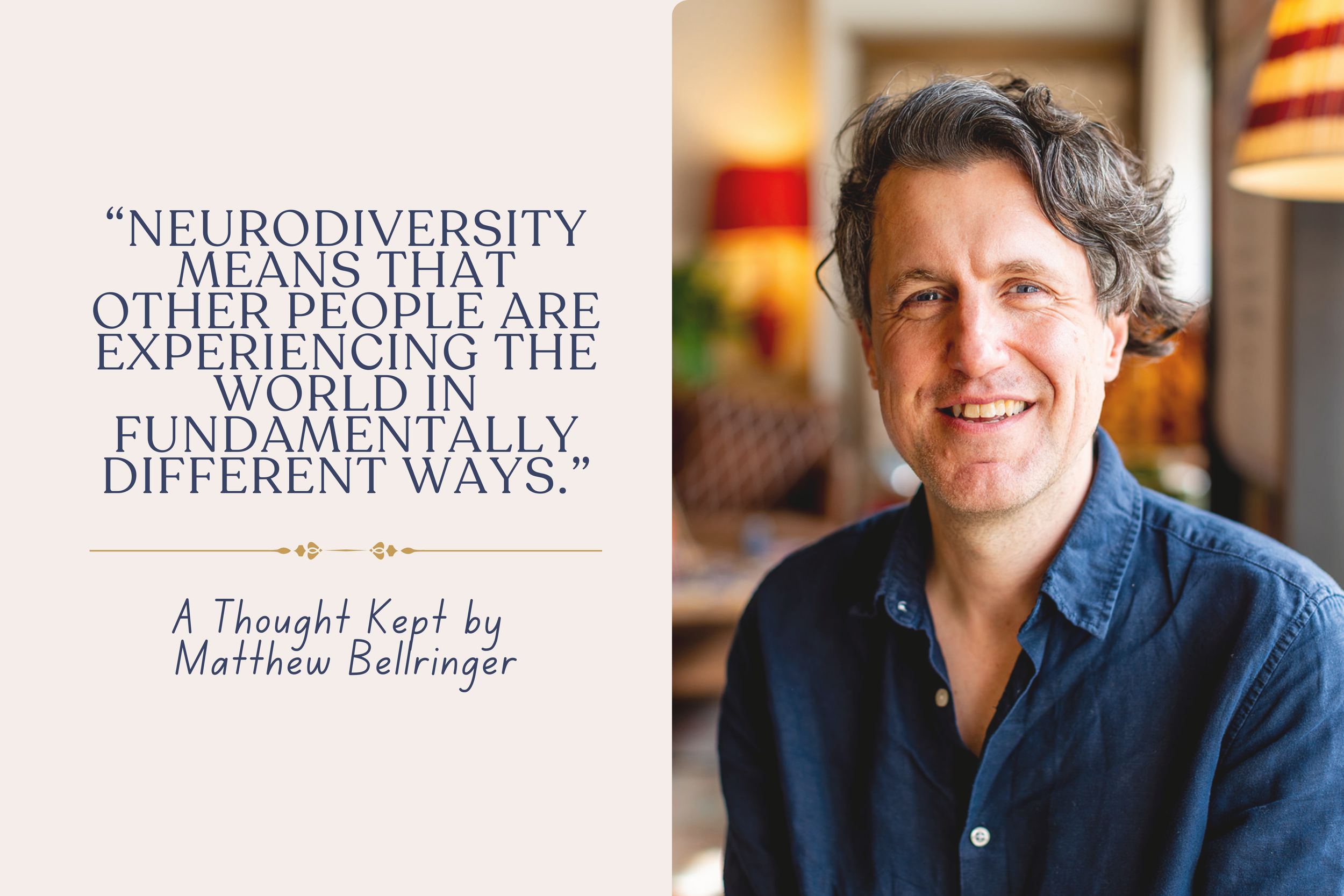
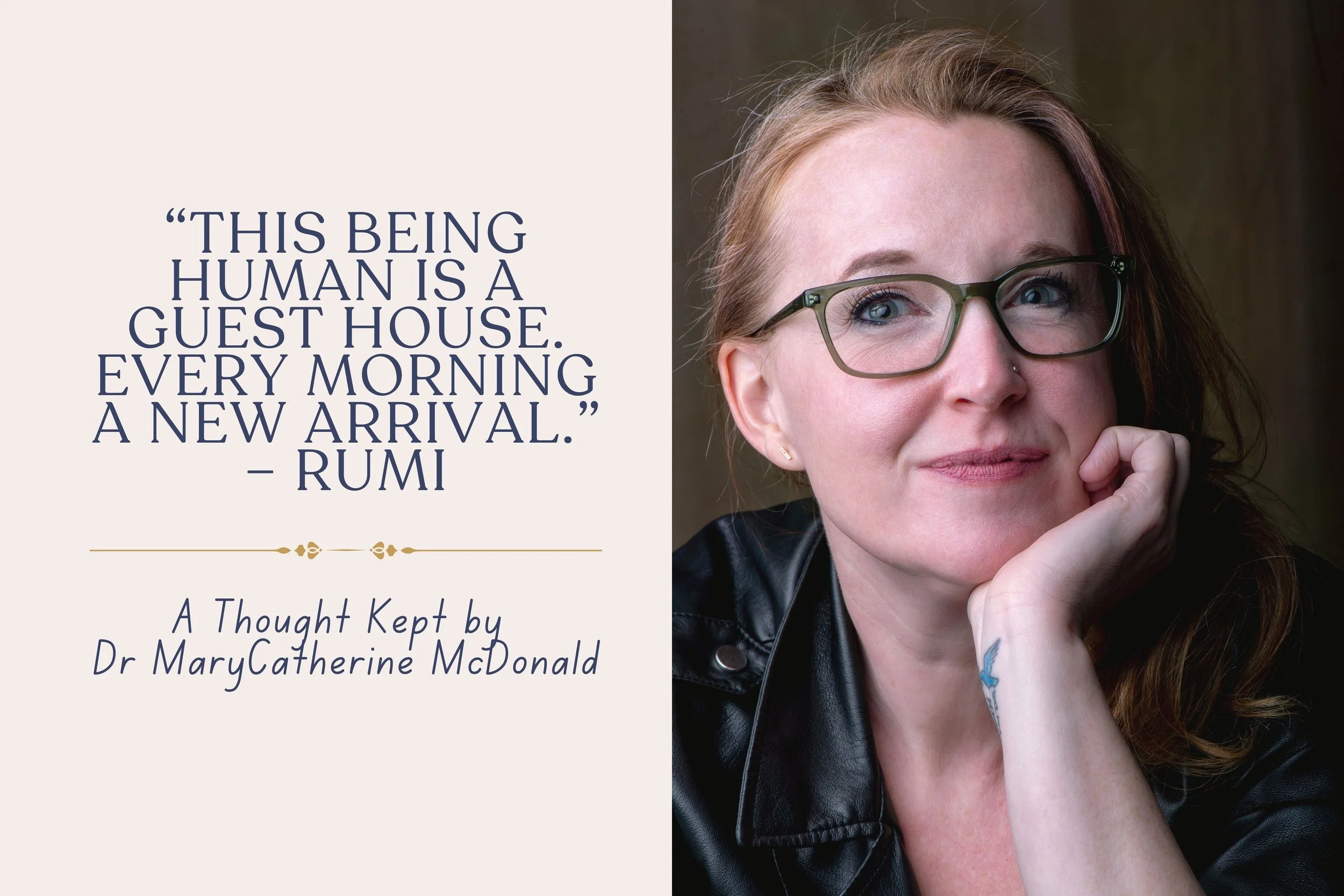
In a recent conversation on A Thought I Kept, I spoke with Dr MaryCatherine McDonald about this — and in particular, about a simple but quietly radical idea: that our emotions might not be something to fix or control, but something to relate to.
She shared a poem by Rumi that has stayed with her for years, about being human as a kind of guest house, where emotions arrive as visitors. Joy, anxiety, grief, irritation. Some welcome, some less so. All of them coming and going, whether we invite them in or not .
It’s such a different way of seeing things.
Because many of us have been taught to do the opposite. To decide which emotions are acceptable and which need to be shown the door. To believe that if something uncomfortable is present, then something must be wrong — and the goal is to get back to a more “acceptable” state as quickly as possible.
MaryCatherine described living like that for years. Feeling as though she was at war with her emotions, trying to control them, contain them, make them behave. And underneath that, a quieter belief: that if anxiety or grief were there, they would take over. That they might ruin everything.
It’s a feeling I recognise, and one I see often in my work. That fear of what might happen if we really let ourselves feel what’s there.
But what if the work isn’t to get rid of what we feel?
What if it’s to sit down with it?
To offer it a chair, rather than pushing it out of the room. To get curious, even gently, about why it’s here. Not because we want to analyse it or solve it, but because we’re willing to be in relationship with it.
That idea of relationship feels important.
Because emotions don’t arrive neatly, one at a time. They overlap. They contradict each other. We can feel anxious and hopeful, tired and grateful, grieving and still find something to laugh at. And yet, we often try to simplify that complexity into something more manageable. I am anxious. I am fine. I am coping.
But that can leave us feeling stuck. As though we’ve become the emotion, rather than someone experiencing it.
What I found grounding in this conversation was the idea that we don’t have to identify so completely with what we feel. We can be in it, without it being all of us. We can let something move through, rather than holding onto it as a fixed state.
And that matters, particularly when things feel heavy.
MaryCatherine talks about something she calls “rehearsing loss” — the way our nervous system, often shaped by past experiences, tries to protect us by anticipating what might go wrong. Imagining endings before we’ve fully lived the beginnings. Bracing ourselves, just in case.
It makes sense, when you see it like that. It’s not weakness. It’s protection.
But it can also make it harder to access the moments that are here. The small, ordinary experiences that carry something lighter in them. A conversation that lands. A moment of connection. A flicker of joy that doesn’t erase what’s hard, but sits alongside it.
This is something else she reframes beautifully — the idea that joy isn’t something we reach once everything is sorted, but something that appears in the middle of things. Not fluffy or superficial, but steady and tenacious. Something that helps us stay, rather than escape.
And maybe that’s part of what a different relationship with our emotions can offer.
Not a life where we only feel the “right” things. But a life where we feel more of what’s real, without it meaning something has gone wrong.
Where we can notice when we’re trying to push something away, and instead soften, even slightly, towards it.
Where we don’t have to be at war with ourselves.
If you’re someone who has been trying to manage or control what you feel, it might be worth asking a different question.
Not “how do I fix this?”
But “what might it be like to sit with this, just for a moment?”
There’s no perfect way to do that. No right or wrong response. Just a gradual shift, over time, from resisting what’s there to being alongside it.
And if that feels unfamiliar, you’re not alone in that either.
If you’d like to explore this idea further, you can listen to my full conversation with Dr MaryCatherine McDonald on A Thought I Kept. It’s a thoughtful, honest exploration of emotions, grief, joy, and what it means to be in relationship with what we feel.
And if you’re looking for a little more support in understanding your own emotional world, you can also explore my emotions coaching sessions — a space to gently make sense of what’s going on, at your own pace.

What if feeling is the way through, not the problem?
If you're feeling emotional exhaustion or disconnection in midlife, maybe your feelings aren’t the problem but rather a path back to yourself.
For a long time, I thought the goal was to feel less.
Less overwhelmed. Less anxious. Less reactive.
Less emotional, less sensitive, less tangled up inside.
Because that’s the message we so often receive — that feelings are inconvenient, messy, indulgent, or something to be managed, tidied, improved.
We learn to ask: What’s wrong with me? Why can’t I just feel better? Why do I keep reacting like this?
We get good at staying composed.
We learn how to keep the peace, keep the plates spinning, and keep functioning — even when something inside us is quietly aching, aching, aching.
And yet… the more I tried to control how I felt, the more disconnected I became.
Not just from other people, but from myself.
Because somewhere along the way, I’d started treating my feelings as problems. Something to get past. Something to rise above. Something to fix.
But what if they weren’t?
> What if feeling is the way through, not the thing to push past?
What if that low hum of irritation has something important to say?
What if the teariness isn’t weakness, but a signal that something in you still longs to be seen?
What if the numbness isn’t failure, but the body’s way of saying this has been too much for too long?
What if our feelings aren’t dysfunctional — but direction?
What if they’re maps, not mess?
And what if the only thing we need to do is listen?
Not fix. Not perform. Not perfect.
Just pause long enough to name what’s actually there.
I’ve started doing that more often. Just naming the emotion — even quietly to myself.
Not the surface-level one (“I’m stressed”), but the real one underneath.
I use a simple practice: naming the layers of what I’m feeling.
Sometimes what I call “busy” is really anxious.
Sometimes what I call “flat” is actually grief.
Sometimes what I call “nothing” is just too much noise in too many directions.
And every time I name it, something softens.
I don’t suddenly feel amazing.
But I feel real. I feel here. I feel true to myself, even if I’m still in the middle of something I can’t quite explain.
And maybe that’s the point.
Not to get rid of our feelings.
But to walk through them, with gentleness, and find our way to ourselves again.
Because you don’t need to be less emotional.
You just need to be allowed to feel — in your own time, in your own language, in a life that’s allowed to be complex and layered and messy and still deeply beautiful.
You’re not broken because you feel everything.
You’re not behind because you feel nothing today.
You’re not wrong for needing more softness, more space, more time.
You’re human. And you’re allowed to feel all of it.
That’s not weakness. That’s wisdom.


Our Emotions Coaching for Midlife Sessions
Unsure of what you’re feeling in midlife? Our 1:1 emotions coaching session offers a supportive space to explore all your emotions — whether that’s anxiety, sadness, or something else.
Learn how a greater understanding of your emotions can help with shifts in relationships, career, self-identity, and more.
Discover how our emotions coaching sessions for midlife can help you make sense of all you’re feeling, or even resisting, right now.
If you’re struggling with all you are feeling in midlife (or trying not to feel), subscribe to our newsletter for practical skills and new perspectives on navigating this time of your life.


What I Learned This Week About Wellbeing, Connection, Purpose, Emotions, and Giving Back
Discover five key insights on wellbeing, emotional resilience, and meaningful connection from a leading conference on female empowerment. Learn how to navigate self-doubt, improve relationships, and find balance in everyday life.
Are you craving more balance, more meaningful connections, and a greater sense of emotional wellbeing in your everyday life?
Recently, I attended a conference packed with ideas about navigating life, relationships and self-care in a way that truly supports us—especially for those of us who often put others first.
Here’s what I learned, and how it might help you find more ease, clarity, and connection in your own life.
Wellbeing: Notice Instead of Avoid
How often do you push through stress, ignore exhaustion, or put off self-care because there’s too much to do?
One simple yet profound idea shared at the conference was this: Notice instead of avoid.
We’re taught to suppress discomfort and to keep going no matter what. But real wellbeing comes from paying attention—to our emotions, our energy, our stress levels—before they become overwhelming.
Try this: Before scrolling, reaching for caffeine, or brushing off your feelings, pause and ask yourself:
What am I feeling right now?
What is my body telling me?
What do I need at this moment?
Sometimes, noticing is the most powerful self-care practice of all.
Connection: The Conversation Is the Relationship
We all want deeper, more fulfilling relationships—with partners, friends, colleagues, or even ourselves.
But as Susan Scott says, “The conversation is the relationship.”
If we’re avoiding tough conversations, our relationships suffer.
If we silence ourselves to protect others’ feelings, we feel unseen.
If we struggle to express what we need, we stay disconnected.
At the conference, I heard from host Hannah Wilson about the idea of talk tokens—a concept where everyone in a meeting gets a set number of one-minute tokens to ensure equal voice time. It made me think:
What if we gave ourselves permission to take up more space in conversations? What if we listened more deeply, but also spoke with more confidence?
Try this: In your next conversation, ask yourself:
Am I truly listening?
Am I expressing what I really feel?
How would this conversation change if I gave myself full permission to show up as I am?
We co-create every relationship through our conversations. What kind of relationships do you want to create?
Purpose: Your Inner Mentor vs. Your Inner Critic
If you struggle with self-doubt, overthinking, or imposter syndrome, you’re not alone.
At the conference, Sadia Ghazanfar explored the difference between two voices inside us:
Your Inner Critic → Harsh, repetitive, and rooted in fear (“I’m not good enough. I’m failing. I should be better.”)
Your Inner Mentor → Wise, grounded, and connected to your values (“You are learning. You are enough. Keep going.”)
One insight that stood out: Your inner mentor doesn’t just think—it feels. It speaks in symbols, emotions, and quiet wisdom.
Try this: If you’re feeling lost or doubting yourself, close your eyes and picture yourself 20 years from now. What advice would that future version of you give you?
Maybe she’d tell you:
You already know more than you think.
You don’t have to have all the answers.
You are stronger than you realize.
What would shift if you started listening to her more than your inner critic?
Emotions: Owning How We Feel
One of the most powerful discussions at my table and throughout the day was about emotional validation.
Many of us, especially women, have been conditioned to believe:
Some emotions are acceptable, others are not.
We should “keep it together” for everyone else.
We must prioritize other people’s feelings over our own.
But your emotions deserve space.
Have you ever been shamed for your feelings?
Do you find yourself apologizing for emotions instead of expressing them?
Have you been taught how to regulate emotions—or just to hide them?
Hannah Wilson shared this powerful phrase from Susan Scott: “Take responsibility for your emotional wake.”
Just like a boat leaves ripples in the water, our emotions create ripples in the lives of those around us. This doesn’t mean suppressing feelings—it means owning them, processing them, and regulating them in ways that feel supportive.
Try this: The next time you feel overwhelmed, ask yourself:
Am I reacting from a place of emotional regulation?
How can I express this in a way that feels both true and safe?
What would happen if I validated my own emotions, instead of waiting for others to do it?
Owning your emotions is one of the most powerful forms of self-trust.
Giving Back: The Power of Small Actions
Women, especially, carry a huge emotional load—not just for our own wellbeing, but for our families, our workplaces, and our communities.
But one of the biggest shifts we can make is redefining impact.
Giving back doesn’t have to be big. Small actions matter.
Being an ally.
Mentoring someone who needs guidance.
Checking in on a friend.
Speaking up when something doesn’t feel right.
Renée Jacobs of The Belonging Network left us with this thought:
"What change do you want to make in yourself, in your relationships, and in the world?"
Try this: Instead of waiting for a big moment to make a difference, ask: What’s one small way I can create impact today?
Small actions create big ripples.
What This Means for You
What I took away from this conference is something I already believe deeply:
Wellbeing isn’t about fixing yourself. It’s about reconnecting with yourself.
So, a few questions for you:
What’s one thing you need to notice instead of avoid?
How can you create more meaningful — even courageous — conversations this week?
What would your inner mentor say to you right now?
Where do you feel ownership over your emotions—and where don’t you?
What’s one small way you can make an impact today?
If you’re feeling lost, overwhelmed, or disconnected, these small shifts can help.
Here’s to small ripples, brave conversations, and the courage to feel what we feel.
Ready to Feel More Connected, Confident, and Supported?
If this piece resonated with you—if you’re craving more balance, clarity, and emotional wellbeing in your everyday life—our coaching sessions might be exactly what you need.
At If Lost Start Here, we don’t believe in one-size-fits-all solutions. We believe in meeting you where you are—whether you’re navigating self-doubt, seeking deeper connections, or simply trying to find a way to feel more like yourself again.
Our ethical and certified coaching sessions are designed to help you:
Reconnect with yourself and what truly matters to you.
Navigate emotions and self-doubt with more ease.
Build healthier relationships—with yourself and others.
Create a life that feels more aligned, not just optimized.
You don’t have to figure it all out alone.
Explore our coaching options here and take the first step toward a life that feels more connected, confident, and lighter.

Why September is the best month to reconnect with your emotions
Start the new season believing that your feelings matter. Discover how our Emotions Coaching Taster Sessions can help you learn how to have a happier relationship with all your feelings.
As the school year kicks off and the busy days of September begin, it’s easy to get swept up in the whirlwind of to-do lists and schedules. But amid all the chaos, have you taken a moment to check in with yourself? How are you really feeling as you step into this new season?
The Quiet Shifts of September
This morning, I found myself alone with my thoughts for the first time in weeks. After a summer of juggling endless responsibilities, I realized how easy it is to let our own emotions slip through the cracks. We’re so focused on making sure everyone else is okay that we often push our own feelings aside.
September brings with it a mix of emotions: the anxiety of what’s to come, the frustration of everyday challenges, and maybe a touch of nostalgia for summer’s freedom. But there’s also hope—the hope of a fresh start, a blank page, a chance to reset. Yet, how often do we actually give ourselves the space to explore these feelings? Too often, we believe that our emotions don’t matter, that we need to hide them or put them on the back burner because everyone else’s need come first.
It’s Time to Prioritize Your Emotions
But here’s the truth: your emotions are just as valid as anyone else’s. They’re the key to understanding where you are right now and where you want to go. This September, instead of simply going through the motions, why not take a moment to tune into what you’re feeling? Whether it’s excitement, anxiety, or something in between, every emotion has something to tell us.
That’s why we’re offering for the first time single online sessions to introduce you to emotions coaching. These sessions are designed to help you reconnect with your feelings, validate them, and use them as a guide for navigating the months ahead.
Emotions were the missing piece for us, and they might be for you too.
Unlock a New Perspective This September
Imagine starting this new season not just with a fresh schedule, but with a renewed understanding of yourself. By taking the time to check in with your emotions, you can transform how you approach not just September, but every aspect of your life. You deserve to feel heard, understood, and empowered—because your emotions matter.
Ready to give yourself the attention you deserve? Join us for an emotions coaching taster session and discover the power of understanding and embracing your feelings. Let’s make this September the start of a better relationship with your emotions..
Click here to book your session and take the first step towards a more fulfilled, emotionally aware you.

Feeling overwhelmed? Learn how to manage dysregulated emotions and enhance your well-being
Struggling with overwhelming emotions? Learn how to find your emotional balance.
Are you struggling to keep your emotions in check? Do you often feel overwhelmed, with your emotions spinning out of control?
Understanding emotional dysregulation can be the first step toward better mental health and overall well-being. Let's explore what it means to have dysregulated emotions and how you can regain control to live a balanced, fulfilling life.
Navigating the emotional rollercoaster: Recognizing dysregulated emotions
Life is filled with ups and downs, and our emotions are a natural response to these daily experiences. However, when emotions become too intense or out of control, they can negatively impact our mental health and well-being.
According to the American Psychological Association (APA), dysregulation refers to "any excessive or poorly managed response." Specifically, emotional dysregulation is a common issue that can make us feel like we're constantly on an emotional rollercoaster, struggling to manage our feelings effectively.
Emotional dysregulation can manifest in various ways, such as difficulty understanding and accepting emotions, lack of effective strategies to manage emotional responses, unwillingness to experience emotional distress while pursuing goals, and inability to engage in goal-directed behaviors when distressed.
These challenges can lead to unhealthy coping mechanisms like avoidance, rumination, denial, aggression, and emotional suppression, ultimately exacerbating negative emotions and impacting our well-being.
From chaos to calm: Understanding emotional dysregulation disorders
While everyone experiences emotional dysregulation to some degree, extreme cases can lead to mental health conditions like depression, anxiety disorders, and panic disorder.
Recognizing the signs of emotional dysregulation and understanding its impact is crucial. By identifying these patterns, you can take proactive steps to manage your emotions and improve your mental health.
Mastering emotional regulation: Practical tips for when you are feeling overwhelmed
Learning healthy emotion regulation strategies can benefit everyone. Here are some practical tips to help you manage your emotions and enhance your well-being:
1. Exercise Regularly:
Physical activities like cycling, running, or even a brisk walk can help regulate emotions. Exercise releases endorphins, which improve mood and reduce stress.
2. Practice Deep Breathing:
When anxiety strikes, our breathing becomes shallow and rapid. Deliberately deepening and slowing your breath can calm your mind and improve your mood.
3. Engage in Yoga:
Yoga combines physical movement with mindful awareness, helping you connect with your body and emotions.
4. Accept Your Emotions:
Embrace your feelings without judgment. Remember that emotions like sadness are a natural part of the human experience, and accepting them can reduce their intensity.
5. Cultivate Awareness:
Develop an awareness of your inner experiences. Recognize when and why you feel certain emotions, which can help you respond more effectively.
By incorporating these strategies into your daily routine, you can better manage your emotions, reduce stress, and improve your overall well-being. Emotional regulation is a skill that can be developed with practice and patience, leading to a more balanced and fulfilling life.
Finding balance: Embracing emotional regulation for a healthier life
It's normal for our emotions to fluctuate, but if you find yourself frequently overwhelmed by strong emotions, you might be experiencing emotional dysregulation. The good news is that there are effective ways to manage your emotions and improve your mental health. By embracing strategies like regular exercise, deep breathing, yoga, emotional acceptance, and cultivating awareness, you can regain control and find balance in your emotional life.
Next time you feel overwhelmed, remember these tips and give yourself the support you need. Emotional well-being is within your reach, and taking these steps can lead to a calmer, more fulfilling life.
Take control of your emotional well-being today
Are you ready to take the first step towards a calmer, more balanced life? Discover how our expert emotions coaching can help you manage overwhelming emotions and enhance your well-being.
At If Lost Start Here, we offer personalized sessions designed to support you in navigating emotional challenges. Visit our emotions coaching page to learn more and book your first session. Start your journey to emotional clarity and resilience today!
Reframing suppression | A guide to navigating unwanted thoughts and emotions
Learn what to do with all those unwanted thoughts and emotions, and why suppressing them might not be the most helpful response.
At the beginning of the movie, Inside Out 2 a handful of unwanted emotions find themselves bottled in a jar hidden away: they have been suppressed!
We might have all done this, putting our unwanted thoughts and emotions far, far, away, in the hope that they will just disappear. But as the movie goes on to reveal (spoiler alert) they don’t.
Suppression might seem like the quick emotional fix we need, but it often does the opposite, making those persistent thoughts and emotions even more enduring.
Here we’ll explore why suppressing your thoughts and emotions can make you feel worse and offer some healthier ways to manage them.
The white bear effect: the paradox of suppression
Picture this: You're having a rough day, and negative thoughts keep popping up. You tell yourself, “I won’t think about this anymore,” and try to push those thoughts away. But the more you try, the more those thoughts seem to invade your mind. Similarly, you might tell yourself not to feel, but your emotional discomfort seems to grow.
This phenomenon was highlighted by the “white bear” study, where participants were instructed not to think about a white bear. Predictably, they thought about white bears more frequently than those who weren’t given this instruction (Wegner, Schneider, Carter, & White, 1987). This research illuminates why suppression can be such an ineffective way to decrease negative thoughts and emotions.
Why suppressing emotions doesn't work
Suppressing thoughts and emotions isn’t just ineffective — it can also amplify our negative experiences. Research shows that suppression typically results in three main effects:
1. An immediate surge in unwanted thoughts.
2. Increasing intrusion of these thoughts over time.
3. A greater overall occurrence of unwanted thoughts (Wenzlaff & Wegner, 2000).
So, why does this happen? Some experts suggest that a part of us actually wants to think about these suppressed thoughts. By trying to push them away, we interrupt the natural process of thinking them through, which only brings them back stronger.
Another theory is that labeling these thoughts as “bad” triggers our brain’s unconscious processes to keep an eye out for them, making them more persistent (Wenzlaff & Wegner, 2000).
Embrace healthier emotion management strategies
Rather than battling with suppression, let’s explore healthier, more effective strategies for managing your thoughts and emotions.
1. Write About Your Feelings
Journaling isn’t just for teenagers—it’s a powerful tool for emotional processing. Research suggests that writing about your feelings can help you process and move past them more quickly (Rude, Mazzetti, Pal, & Stauble, 2011). Grab a notebook and let your thoughts flow without judgment.
2. Practice Acceptance
Emotional acceptance is about experiencing your feelings without labeling them as good or bad. Accepting your emotions can help reduce their intensity more quickly (Rude, Mazzetti, Pal, & Stauble, 2011). This approach can be particularly helpful for managing anxiety or panic. Next time you’re overwhelmed, try acknowledging your feelings without trying to change them.
3. Try Cognitive Reappraisal
Cognitive reappraisal involves reinterpreting a stressful situation to see it in a more positive light. This strategy is often more effective than suppression. For instance, consider what you can learn from a difficult experience or think about the potential positive outcomes. Practicing gratitude can also shift your perspective, helping you feel better in challenging situations.
4. Exercise
Physical activity is an unexpected way to manage negative thoughts and emotions. Vigorous exercise can help distract your mind, as your body and brain focus on the physical task at hand. Whether it’s a brisk walk, a yoga session, or a run, moving your body can help alleviate mental and emotional stress.
Your path to emotional well-being and resilience
Suppression might be a common response to unpleasant emotions, but it’s not the most helpful.
By learning to stop suppressing your thoughts and instead adopting healthier emotion management strategies, you can respond to negative emotions more effectively.
Embrace these techniques — writing, acceptance, reappraisal, and exercise — to experience a more balanced, fulfilling emotional life.
Now that’s something to think about.
Next steps for more emotional guidance
If you find yourself struggling with your emotions consider 1:1 emotions coaching. These sessions are designed to help you navigate your emotional life more effectively, fostering a healthier relationship with your thoughts and emotions.
References
- Rude, S. S., Mazzetti, F. A., Pal, H., & Stauble, M. R. (2011). Social rejection: How best to think about it?. Cognitive Therapy and Research, 35(3), 209-216.
- Wegner, D. M., Schneider, D. J., Carter, S. R., & White, T. L. (1987). Paradoxical effects of thought suppression. Journal of Personality and Social Psychology, 53(1), 5.
- Wenzlaff, R. M., & Wegner, D. M. (2000). Thought suppression. Annual Review of Psychology, 51(1), 59-91.

Emotional Well-being Series | 7 strategies to improve emotional wellbeing
If you’re feeling lost in all your feelings, these effective strategies can help you manage your emotional well-being.
With all that we now need to just do to get through life, connecting with our emotions can feel like an impossible task. But losing touch with what we’re feeling can add to that sense of being lost and disconnected that many of us are now experiencing. Enhancing our emotional well-being can help us better connect with all aspects of our lives.
Building a positive relationship with your emotions
Many of us now juggle the demands of our careers, families, and personal lives, often feeling overwhelmed and unsure of how to manage our emotions. This can lead to a sense of disconnection and emotional imbalance. However, it's possible to improve your emotional well-being by learning and practicing a few key skills.
Improving your emotional well-being isn't about avoiding or suppressing emotions. Instead, it's about enhancing your emotional awareness, learning to regulate your emotions, and building resilience.
Here are seven impactful strategies to help you boost your emotional well-being.
Techniques for positive emotional health
1. Practice Emotional Awareness
Start by engaging in self-reflection. Ask yourself: What am I feeling? Why am I feeling this way? What might help me manage these emotions?
Emotional awareness allows you to recognize how different situations, people, or thoughts affect your feelings. By paying attention to your emotions, you can take proactive steps to foster more positive emotional experiences.
2. Practice Mindful Acceptance
Mindfulness goes beyond emotional awareness; it includes emotional acceptance. This means experiencing emotions without judgment, which helps prevent the development of secondary negative emotions. For example, feeling guilty about being angry creates an additional layer of distress.
By practicing acceptance, you allow your emotions to come and go without labeling them as good or bad. Mindfulness meditation is a great tool to cultivate this skill.
3. Refocus Your Attention
Redirecting your attention away from negative aspects and towards positive ones can significantly enhance your emotional well-being. When you find yourself fixating on the worst parts of a situation, consciously shift your focus to neutral or positive elements. Although this takes practice, research shows that training your mind to focus on less threatening aspects can reduce anxiety.
4. Practice Reappraisal
Reappraisal involves interpreting a stressful situation in a more positive light. This strategy can help you feel better and improve your emotional well-being over time. Try reappraising by listing the good aspects of challenging situations: How is this an opportunity for learning? What has come into your awareness? Where are the possibilities? The more you practice reappraisal, the more natural it becomes.
5. Try Emotional Distancing
Emotional distancing helps you gain perspective during difficult times. Imagine yourself as an observer—a fly on the wall—or think about how you’ll view the situation in the future. For instance, after an argument with a partner, consider how you’ll feel about it in a week, a month, or a year. This technique can make negative experiences feel less intense and aid in quicker emotional recovery.
6. Use Your Imagination
Your imagination can be a powerful ally in boosting emotional well-being. When times are tough, and there’s little positivity to focus on, use your imagination to create positive scenarios. Visualizing yourself in a happy place can generate real positive emotions, helping you cope with difficult moments.
7. Share Your Positive Moments
Sharing your positive experiences can amplify and extend those feelings. When something good happens, share it with someone you care about. Whether it's a text to a friend or a call to a family member, expressing your joy can enhance your emotional well-being. Just remember to share from a genuine place of connection.
Navigating your emotional landscape
By incorporating these strategies into your daily life, you can enhance your emotional awareness, improve your ability to manage emotions, and build resilience. You can transform your emotional well-being, leading to a more balanced and fulfilling life.
Remember, emotions are a normal and necessary part of life, and with the right tools, you can navigate them more effectively.
Maybe today just start with noticing that you have valid emotions. That might be the most important first step towards a more emotionally balanced you.
Seeking further help?
If you're looking to have a more positive relationship with your emotions, consider 1:1 emotions coaching. This personalized approach can provide you with the support and strategies you need to navigate your emotional life more effectively.
References
- Amir, N., Beard, C., Taylor, C. T., Klumpp, H., Elias, J., Burns, M., & Chen, X. (2009). Attention training in individuals with generalized social phobia: A randomized controlled trial. Journal of Consulting and Clinical Psychology, 77(5), 961.
- Bruehlman-Senecal, E., & Ayduk, O. (2015). This too shall pass: Temporal distance and the regulation of emotional distress. Journal of Personality and Social Psychology, 108(2), 356.

Emotional Well-being Series | Learn how to cultivate positive emotions to improve well-being
Discover how to understand and enhance positive emotions to improve your emotional wellness. This guide explores the science behind positive emotions, their impact on mental health, and practical strategies to cultivate joy, contentment, and resilience in everyday life. Boost your well-being and reduce anxiety by embracing positive emotions.
Do you ever feel like joy is fleeting and hard to grasp? You're not alone. Many of us now find it challenging to maintain positive emotions amidst life’s demands. But what if understanding positive emotions better could help us experience them more often?
Positive emotions are one of the most enjoyable parts of being alive. But what exactly are positive emotions? What effect do they have on our lives? And how can we experience more of them?
What are positive emotions?
Positive emotions are more than just fleeting moments of happiness; they are vital to our overall well-being. They encompass a wide range of experiences from joy and excitement to contentment and love.
Positive emotions exist on a continuum with negative emotions on one end and positive emotions on the other. However, the words we use to describe positive emotions generally lead us to think that positive emotions are discrete entities, separate from negative emotions. For example, “happy” and “sad” might be on two ends of one continuum but we think of them as different things.
Positive emotions can also be either high-energy (e.g., excitement, joy) or low-energy (e.g., calm, content).
The importance of positive emotions on our well-being
Research shows that positive emotions not only make us feel good but also contribute to longevity, improved immune function, and greater resilience. Positive emotions may even be considered synonymous with happiness (but happiness may also include things like meaning or purpose).
Here are some examples of positive emotions:
● Excitement. A feeling of great enthusiasm and eagerness.
● Delight. To take great emotional pleasure in something.
● Astonishment. A feeling of great surprise and wonder.
● Happiness. Feeling or showing pleasure or contentment.
● Pleased. A feeling of pride or satisfaction.
● Content. A state of happiness and satisfaction.
● Relaxed. A state of being at rest or ease.
● Calm. Not excited or upset.
Imagine how your life could change if you could tap into these emotions more frequently and deeply.
How positive emotions differ from moods and why it matters
Understanding the nature of positive emotions can be a game-changer. Unlike moods, which are more prolonged and diffuse, positive emotions are typically short-lived and arise from specific experiences. They bring about changes in our nervous system, hormones, facial expressions, and even our thoughts. By learning to recognize and cultivate these emotions, we can enhance our mental and physical health.
Engage, explore, and enjoy: Ways to increase positive emotions
1. Identify Positive Emotions
Start by recognizing different positive emotions such as excitement, delight, astonishment, happiness, and contentment. Each of these emotions has unique triggers and effects on our well-being.
2. Embrace Emotional Granularity
Develop the skill of emotional granularity, which means being able to identify and differentiate between a wide range of emotions. This can help you understand your emotional experiences more clearly and respond to them more effectively.
3. Cultivate Positive Experiences
Engage in activities that naturally evoke positive emotions. For example, joyful play, exploring new interests, savoring moments of contentment, and nurturing loving relationships can all help broaden your emotional repertoire.
4. Apply the Broaden and Build Theory:
According to Barbara Fredrickson's Broaden and Build Theory, positive emotions broaden our thought-action repertoire and build lasting personal resources. This means that by cultivating positive emotions, you can enhance your creativity, resilience, and social connections.
Embrace positive emotions for a healthier, happier you
Positive emotions are powerful tools for enhancing your well-being. By identifying and cultivating these emotions, you can experience greater joy, resilience, and fulfillment in everyday life.
Ready to enhance your emotional wellness and experience greater joy and contentment?
Our specialized emotions coaching sessions at If Lost Start Here can help you understand and cultivate positive emotions for a healthier, happier life.
Click the link to learn more and book your first session today!

Wellbeing Series: How (and Why) to Practice Acceptance
In the first in our Wellbeing Series, today we’re exploring the benefits of acceptance and how cultivating this practice can be a helpful tool in feeling better over all the days of 2024.
What if this January you started not with change and transformation and self-improvement, but with a sense of acceptance?
You’re probably already having some response to this.
This is not to say don’t try to work towards something you need or value. And it’s definitely not to say accept the systemic injustices that impact how you feel and that might show up in your life on a daily basis.
So what are we talking about?
We all have a general sense of what it means to “accept” something. There are many aspects of life that we could simply “accept” — financial circumstances, unhealthy relationships, unfulfilling jobs, etc.
However, in psychology, acceptance means “taking a stance of non-judgmental awareness and actively embracing the experience of thoughts, feelings, and bodily sensations as they occur”. (Hayes et al., 2004)
One of the key ideas underlying acceptance is that difficult emotions are an inescapable part of life: at different times we will find ourselves sad, angry, disappointed, bored, frustrated, grieving, heartbroken, etc. No one, not even the most outwardly steady people, is free of these emotions.
When these emotions inevitably do arise, there are two ways that we can react: resistance or acceptance.
For many of us, resistance is our default reaction. After all, these emotions are not necessarily “pleasant” to experience.
However, psychologists have found that trying to resist or avoid certain difficult experiences can cause further psychological harm. (Hayes et al., 2006)
As Dr Julie Smith says. “Emotions are neither your enemy nor your friend… Emotions are your brain’s attempt to explain and attach meaning to what is going on in your world and your body.”
Why Acceptance Is Important
Studies suggest that acceptance is the healthier option. For example, Tara Brach writes, “believing that something is wrong with us is a deep and tenacious suffering” (2004).
Your experience of yourself consists largely of your emotions, thoughts, and actions, and so learning to accept these (even when they seem difficult or undesirable) is a helpful tool for our well-being.
To be more accepting, it can be helpful to reflect on your habitual attitude towards yourself. Ask yourself:
Do you ever speak harshly to yourself about a perceived mistake you made or an embarrassing thing you said?
Are you ever feeling overwhelmed with emotion, and on top of everything, frustrated with yourself for feeling this way?
How might you be able to take a more understanding and gentle attitude towards yourself?
How To Be More Accepting
1. Cultivate acceptance by noticing your resistance
How do you tend to resist your experience?
Do you snack to stave off boredom, or binge TV when you are sad?
Most of the ways we resist our experiences are unconscious—we do not always understand why we do certain things at certain times. So, resistance can become habitual. The first step towards changing any habit is simply becoming aware of its existence.
2. Cultivate acceptance by questioning your patterns
Once you have started to notice when and how you resist your experiences, try to dig a little deeper to consider why these patterns might exist.
When you were sad or angry as a child, how did the adults in your life react?
Did they allow you to work through these emotions, or did they (perhaps with the best intentions) tell you to put on a brave face or stop throwing a tantrum?
Do you think these experiences might have influenced the way you process emotions today?
It might be helpful to write out some of these reflections to remind yourself of your habitual patterns. It can also be a good opportunity for self-acceptance in that you can see that formative experiences, outside of your control, may have shaped your current patterns. The good news is that any pattern is open to change, as long as you are aware of it.
3. Cultivate acceptance by being mindful
So how can we even become aware of our habitual patterns? One way is with mindfulness.
Mindfulness involves both awareness and acceptance of our experience.
A traditional method of practicing mindfulness is through meditation, which involves dedicating some time to simply observing experiences nonjudgmentally. However, you can bring mindful moments into your everyday life, even without meditating.
4. Cultivate acceptance by thinking of your inner child
We are often our own harshest critics.
Accepting ourselves can be difficult because we are most likely so used to judging ourselves for thinking, feeling, and acting certain ways. You would rarely judge a loved one as harshly as you judge yourself.
One helpful technique in the meantime is to think about yourself as a child. This can help remind you of your most innocent and vulnerable self, which may make it easier to be gentle and understanding when your experience is difficult.
5. Cultivate acceptance through practice
Acceptance is just like any other skill: it takes practice. People who are accepting of themselves and others have made acceptance a mental habit by continuously choosing a more accepting mindset over and over again.
After a while, these repeated mental choices become habitual and natural and do not require as much effort.
So, next time you find yourself struggling with difficult emotions, try to use this as an opportunity to practice acceptance.
Remember, acceptance is not the same as resignation. Acceptance refers to acknowledging and allowing your present experience — not necessarily your life situation. Through awareness and practice, you can increase acceptance in your own life and enjoy the benefits that it may bring.
Further Reading
Brach, T. (2004). Radical acceptance: Embracing your life with the heart of a Buddha. Bantam.
Hayes, S. C., Luoma, J. B., Bond, F. W., Masuda, A., & Lillis, J. (2006). Acceptance and commitment therapy: Model, processes and outcomes. Behaviour Research and Therapy, 44(1), 1-25.
Hayes, S. C., Strosahl, K. D., Bunting, K., Twohig, M., & Wilson, K. G. (2004). What is acceptance and commitment therapy? In A a practical guide to acceptance and commitment therapy (pp. 3-29). Springer, Boston, MA.
If you’re curious about how to bring more acceptance into your life this year, we have a couple of options for you right now.
Join our 12-week Find Your Way course where together we’ll learn real wellbeing practices that can better serve our everyday needs, from acceptance practices like these to building a life based on what matters most to us.
Discover how emotions coaching can support you in bringing more acceptance to your emotional life and rewrite some of those feelings scripts that hold you in check (and probably back from your needs). What could accepting all your feelings open up for you?

Ready to be found? How to find your way when you’re lost in life.
Discover the key to nurturing your mental health and enhancing your emotional wellbeing. Explore effective strategies and expert insights to support your mental health journey and cultivate a lasting sense of emotional balance and wellness.
In recent years, we’ve noticed that more and more of us are finding ourselves lost, struggling with our mental health and emotional well-being. Sometimes this manifests within ourselves, sometimes in our own lives, and sometimes out in our interconnected world.
We’ve seen it in our clients as they grapple with an indescribable unease, feeling adrift, disconnected from their days, in search of a destination but unclear about where that would even be.
We’ve seen it in our friends, our families, and the people in our communities. It's evident in the small moments - in the eyes of parents dropping off their kids, where conversations about the weather have transformed into discussions about inflation, war, and environmental challenges.
And we're not exempt from this experience. We've had our own days of uncertainty, thoughts slipping through our fingers, and goals that felt elusive. The constant "what now" and "what next" can be deafening
It's a shared feeling, a collective yearning for solid ground in a world that seems ever-changing.
Perhaps you're right in the middle of it all, juggling countless responsibilities, and trying to make sense of it. You're in the mix of obligations, losing sight of your own desires and even your true self.
You might be battling feelings of uncertainty, overwhelmed by the chaos, feeling disconnected, and anxious. Maybe you've lost your footing, even your way.
But the question lingers: where do you begin? Which path should you follow? Where do you want to be if not here, at this moment?
We’re here to guide you through the process. We'll explore the steps you can take when you find yourself in this state of being lost. Together, we'll help you reconnect with yourself, reignite your curiosity, build confidence, and find presence in your life.
Think of us as your mental health and emotional well-being guides. We're here to support you in finding your way.
STEP 1: LEARN HOW TO REGULATE YOUR NERVOUS SYSTEM
Learning about the sympathetic and parasympathetic nervous systems helped us orientate ourselves. The former responds to (perceived) danger and triggers our fight or flight response, the latter helps us feel calm and restored by activating our 'rest and digest' system. To shift from one to the other, find an embodiment practice that you like, such as breathwork, dancing, or grounding in your five senses.
STEP 2: IDENTITY WHAT SAFETY LOOKS LIKE TO YOU
Find a safe place, whether it's a person, environment, thought, or belief. Recognize cues in your surroundings and know where to seek help when needed.
STEP 3: BRING IN SELF-COMPASSION
Remember, feeling lost is not your fault. Practice self-compassion and reframe negative thoughts that bring judgment or shame. Acknowledge your courage in trying, even when things don't go as planned.
STEP 4: KNOW YOUR BOUNDARIES, YOUR HARD NO’S
Understanding your boundaries is essential. Honor what you can or cannot tolerate, even if it may seem unconventional to others.
STEP 5: TALK IT OUT
Give yourself the space to reflect on your priorities and struggles. Consider booking a one-on-one session to gain clarity and confidence in navigating life's challenges.
By following these steps, you can find your way and regain a sense of purpose in your life. We understand the feeling of being lost, and we hope that these strategies will help you move closer to better mental health and emotional well-being.

How nature can help us feel better in our everyday lives
How can we broaden out what nature can be for us: the micro gestures that have us listening for bird songs to the bigger-ask ones that have us hiking up mountains? Discover more of nature’s wellbeing benefits.
You do not need to be ‘outdoorsy’ to access nature’s benefits for our mental health and emotional well-being.
We know that we needed to hear that. It can often feel like the entry point to the natural world can be so high, and involve trips to REI, extensive bush-crafting knowledge and an orienteering certificate.
We’re definitely not saying hike in flip-flops or wander into the wilderness without knowing what you’re really taking on. But we are saying there are many, many ways to find yourself in the natural world and to do so in some really simple ways.
We love National Parks, but we also love that field we walk through after dropping our kids off, and that lake we can wander around with a close friend while having a chat on a Sunday morning. We get so much from looking out the window and catching sunsets, or planting something in our garden and willing it to grow (this one is very mixed for us). We feel happy around trees (though slightly less happy in the middle of a forest), and take us to any beach at any time and our hearts will sing. There’s a way into nature for all of us.
Here are just some of the ways to explore where your curiosity might take you as you find ways to wander through the natural world (with not a blistered hiking boot in sight).
To read:
How to overcome eco-anxiety
The Norwegian love of friluftsliv and why being in the fresh air can help us all feel good
A secret sanctuary created with hope in Los Angeles
How a search for female gardeners combatted this writer’s loneliness
How bad air quality is connected to depression later in life
Inspiring books for going outside
A land art masterpiece in the Nevada desert
How to assess the benefits of nature and walking in nature
To do:
Become a community scientist and discover the animals in your neighborhood
Discover The Gardening Mind on Substack
Join 72 Seasons
Plant organic seeds
To watch:
To discover:





How can we broaden out what nature can be for us: the micro gestures that have us listening for bird songs to the bigger-ask ones that have us hiking up mountains?
How do you see nature as something that affects your emotional well-being and mental health?
Let us know how you navigate this aspect of your everyday life.

Discover some of the ways that human connection can help you feel better
We are hardwired to connect. Explore some of the benefits that simply being together can have for your emotional well-being and mental health.
Connection is complicated, isn’t it? Study after study tells us how central it is to human happiness and health, but in our everyday lives we often forget its importance.
Call a friend? But what if they don’t want to hear from us? Reach out to a family member? But what about that political view they seem to have that’s different than my own? Volunteer in the local community? But when? Who has the time?
But this is what we’ve found. When we do reach out, contribute to our community, or try to get to a place of understanding if not agreement, we tend to feel much better than we’d imagined. And we carry those benefits into the rest of our lives.
Curious about how to cultivate more connections in your own life? We’ve selected some things to read, do, watch and experience so that you can discover the benefits to your emotional well-being and mental health of relationships in all their various forms.
Read through an article about what the longest study on happiness tells us about the importance of relationships, try going to therapy with a friend, watch a talk on what empathy can do for us, and discover some cafes that are shaping the community for all.
Be open to the form that relationships can take in your life, and what they can offer you (and you, in turn, can offer them).
To read:
How human relationships fit into a lifetime of happiness
Alternatives to ‘How Are You?’
We are interwoven beings
What to do if you find yourself in the “friendship recession”
An experiment in connection across generations
How to ease your loneliness
Dating with an Expiration Date
When to end a toxic relationship
To do:
Take a quiz to learn how connected you are to humanity
Take a course in the Art of Gathering by bestselling author Priya Parker
Learn how to apologize
Go to friend therapy
Join a community like Peanut
Support the Campaign to End Loneliness
To watch:
To discover:


The Dot Cafe (Spain)

Fluid Coffee (San Francisco, US)

Milk Cafe (San Francisco Bay Area, US)

Kinfolx (Oakland, US)
What are you learning about how your connections impact your emotional well-being and mental health?
Let us know how you navigate this aspect of your everyday life.
Where to next?

How nature can benefit our emotional well-being
We’re learning more about nature’s positive impacts on our emotional well-being and mental health. But how do you access its benefits in your everyday life? We have some ideas for you.
Let’s think about nature for a moment. What comes to mind for you?
We’re learning more about nature’s positive impacts on our emotional well-being and mental health. But how do you access its benefits in your everyday life?
We’ve rounded up some things to read, do, watch and experience so that you can both learn about nature and live in alignment with it.
Read through articles about what happens to our bodies and brains when we walk in nature, try a ‘Going Outside Challenge’, watch an unexpectedly funny talk on foraging, or get to dinner on a beach with a hundred strangers. You’ll learn some of the ways nature can positively impact your emotional well-being and mental health.
Just explore where your curiosity takes you as you find ways to wander through the natural world.
To read:
Just two hours of nature a week offers benefits to our health and well-being
The unique benefits of walking in nature
Are you guilty of ‘plant blindness’? What plants are saying about us
How activism can help with climate anxiety
How buying that fleece could save our National Parks
A stunning new green lung in Hong Kong
What we’re learning from leafing through seed catalogues
Water… as a blueprint for health and well-being
To do:
Although we’re now in March, there’s value in starting this at any time: The Go Outside Challenge
How can you begin to notice the nature that is around you
We made it. Look for signs of spring
Try therapy outdoors
Discover a wild sauna
Develop carbon literacy
To watch:
To discover:





Bronx River Foodway (New York, US)

Oko Farms (New York, US)

Flora Grubb Gardens (San Francisco Bay Area, US)

How can we broaden out what nature can be for us: the micro gestures that have us listening for bird songs to the bigger-ask ones that have us hiking up mountains?
How do you see nature as something that affects your emotional well-being and mental health?
Let us know how you navigate this aspect of your everyday life.

Ways to discover your creativity for better emotional well-being
Bring more creativity into your everyday life. Discover how creativity can positively impact your emotional well-being and mental health.
Creativity can mean very different things to different people. You might consider it to be the moment you sit down with your Morning Pages before the day gets started. You might also consider it to be having a studio and being a ‘proper artist’. Whatever you consider your creativity to be, you are both right and not right.
Creativity weaves throughout our lives. It shows up in all places (in creative practice, but also our workplaces, our homes, our relationships) — if we allow it. And that’s the key. Your ideal of creativity might be the very thing that’s pushing away your ability to even make space for it in your life.
With the links below, there are ideas to get you thinking about that gap — between how you imagine creativity to be, and what you need it to be to feel good in your life. Particularly if you want to access its benefits for your emotional wellbeing and mental health.
Read through articles about the new science of neuroaesthetics, try a noticing workout, watch an inspiring talk on Imposter Syndrome (hint that’s often what’s in the gap) or get to a Sketchbook Skool. Just explore where creativity takes you, not where you think it should be taking you.
You’ll learn some of the ways creativity can positively impact your emotional well-being and mental health.
To read:
How improv can impact not just your creative expression but also your wellbeing
How music loops make me feel more present
Self-care knits and ‘reminders of how to care for oneself through challenging times’
What we actually make when we listen to ChatGPT
What if we could reframe regret as pretending
How Banksy’s work is bringing hope to Ukraine
To do:
6 ideas to fill your sketchbook
Put on an art night at home
Try an app that combines music therapy and neuroscience
Rediscover the well-being benefits of playing with Lego as an adult
To watch:
To discover:


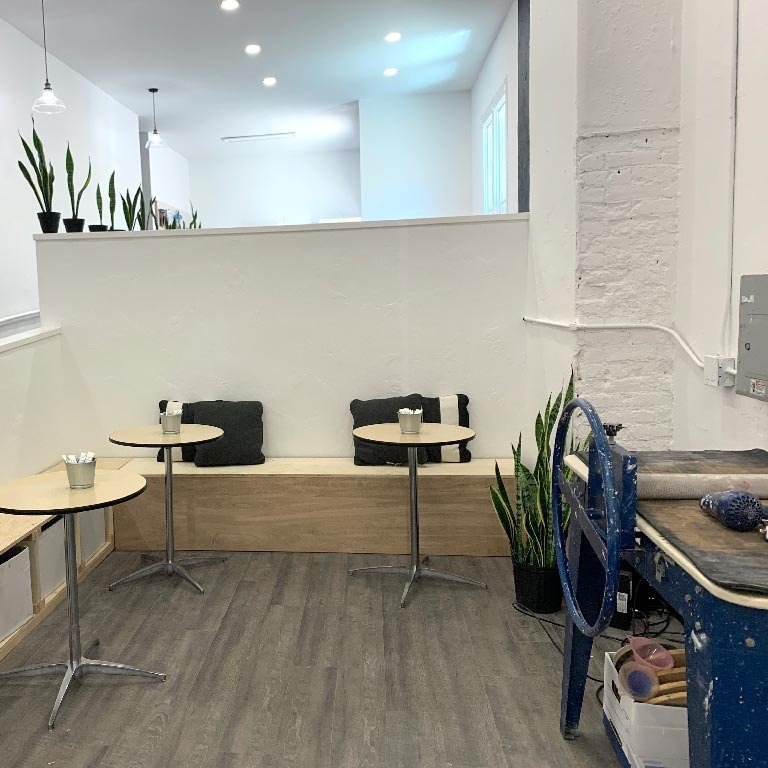
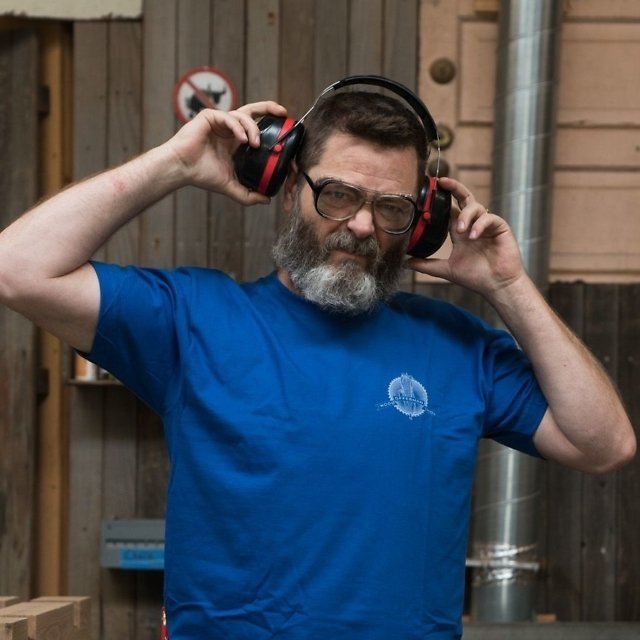



What sparks your interest, your creativity? How do you see creativity as something that affects your emotional wellbeing and mental health?
Let us know how you navigate this aspect of your everyday life.

The Lost Together Book Club | Atlas of the Heart
We’re welcoming in all the emotions with this month’s pick by Brene Brown. Let’s discover together what our emotions are telling us.
““I want this book to be an atlas for all of us, because I believe that with an adventurous heart and the right maps, we can travel anywhere and never fear losing ourselves. Even when we don’t know where we are.””
This is the first month of our Lost Together Book Club where we figure out how to live the books we love — not in an imaginative daydreamy way but in a what-next kind of way. (Read this kick-off post if you missed it).
This book club is for anyone who believes that the right book at the right time can change lives, but also that there are so many books at all times to change our lives in so many ways, it’s all become a bit overwhelming.
In this group, we’ll experiment with the concepts we’ve read, try to apply them to our own lives, and share what we’ve learned. What worked, and what didn’t? What did we discover? What did we let go of? What do we want to take forwards?
So, choose one book. Start reading. And I’ll see you in the Zoom meet-ups to see what you learned, and what you’re curious to try. You just need to register below.
Our Emotions Pick this month is:
Atlas of the Heart, Brene Brown

This is the book that inspired my path to train as an Emotions Coach Practitioner. When Brene Brown turns her formidable attention to what it means to live a life full of all the emotions you know there’s something meaningful going on there.
This book will help you learn to recognize and name your emotions. Research is now showing that this leads to ‘greater emotional regulation and psychosocial wellbeing’. But when asked, many of us can name just 3 emotions – happy, sad, and angry.
Brene shows 87 emotions and experiences that include such things as bittersweetness, resignation, amusement, anguish, and wonder.
I added this one so we can broaden together our understanding of emotions, and what to do when we realize they are there, doing all their magical and confounding work.
To join this month’s Lost Together Book Club head to Substack.
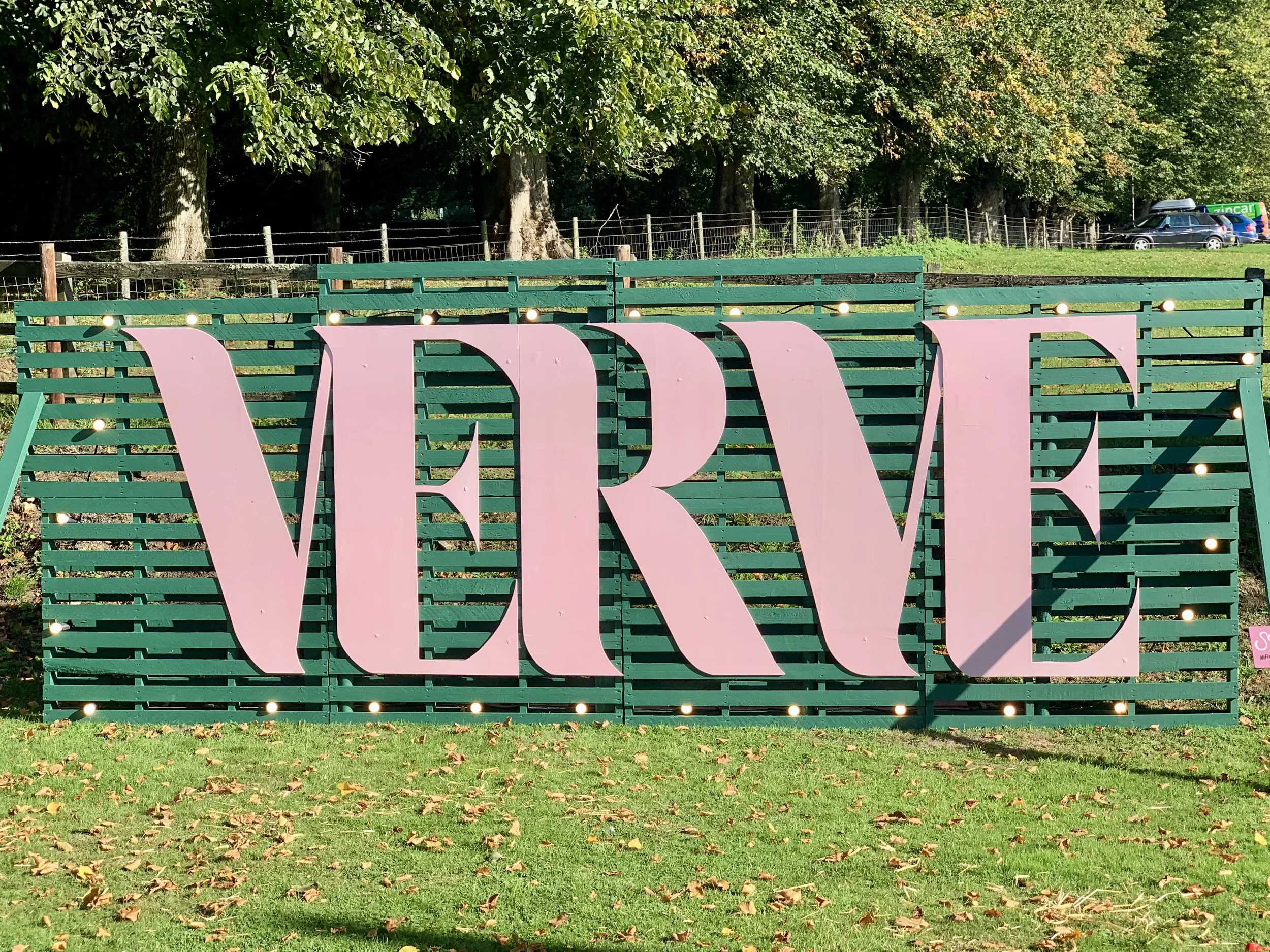
Beyond Happy: Finding Your Way To Better Emotional Well-Being at VERVE Festival
We’re bringing emotions coaching to one of our favourite wellness festivals.
“Language shows us that naming an experience doesn’t give the experience more power, it gives us the power of understanding and meaning.”
How many emotions can you name? Most people can name just three; some version of mad, glad or sad. But recent research indicates that having a wider emotional vocabulary can help people not just better express what they are feeling but cope better with everyday experiences, and live happier and healthier lives. When Brene Brown turns her formidable attention to what it means to live a life full of all the emotions you know there’s something meaningful going on there.
Just knowing the words can help better regulate our emotions and respond more helpfully in all of life’s situations. Is what you’re feeling sorrow or vulnerability? Is it anger or frustration? Is it happiness or pride? How we name something shapes our experience of it. Having access to a greater breadth of emotions means we’re able to better understand what those emotions are asking of us, and what they are pointing to, or guarding against.
I’m thrilled to be joining one of my favourite wellbeing festivals this year by offering coaching around emotions.
In my 1:1 sessions at VERVE Festival this September, I’ll start to explore your emotions. We’ll figure out which emotions you welcome and which ones you deny, which ones you think of as ‘good’ or ‘bad’, and which ones have something to tell you (and whether you’re ready to listen to them).
Over the 30-40 minutes of your session, we’ll get you to a place of being more familiar with all your emotions, build the confidence to explore what to do with them when they inevitably show up, and learn how they can help you find your way to what matters most in your life.
Curious about what better emotional wellbeing would look like to you? Find me near the VERVE Stage and book a session here (you’ll need to have your tickets for the Verve Festival to book a session as this is available to Verve attendees only). The cost is £25.
These sessions can help:
If you’re stuck in an emotion – like fear, stress, overwhelm, anxiety – and need to find a way through them to create more space for the things you want in your life
If you’re struggling with even the idea of bringing joy, love and happiness into your life, and want to learn how to welcome these in so you can access all they could bring
If you have an emotional blocker on something and it’s getting in your way, and you want to learn how to let go of it/ release that to get to a better place
If you are feeling lost, and need help finding your way again
If you’re feeling all the feelings – you are unsettled and unsure – and would like to get to a place of calm, peace and equilibrium
If you’re feeling none of the feelings – just numb and disconnected – and want to figure out what emotions could offer you and the significant role they could play in your life
If you’ve looked at life in all the ways, except this one, and you’re curious to learn how transformational emotions coaching can be.
Excited, optimistic, or even hopeful about what this might do for you? Join me in getting curious about your emotional life.
For more information, you can email me at claire@ifloststarthere.com or book your emotions coaching session at VERVE Festival here.
If you’re not able to get to VERVE Festival this year and you’re still interested in Emotions Coaching, don’t worry, we can still work together. Book a quick call out to see how I can support you to find your way to better emotional wellbeing in your life.
“You are what you feel, as long as you can describe it.”

Finding Myself Lost
Why being lost is sometimes the thing that points the way.
Let me tell you a story.
There’s a very personal “why” for me in co-founding with Amanda If Lost, Start Here: While working at some of the most renowned spaces for contemporary art in the world, my mum’s mind began to slip away, slowly at first, then completely. She struggles now to manage everyday tasks and has a diagnosis somewhere around Dissociative Identity Disorder, the parts of herself fragmented, doctors still confused about how to treat her.
I have seen myself in my mum’s situation, enough to shift my life’s focus. I have struggled with panic attacks, general anxiety disorder, and depression, which in London meant not being able to get on the tube some days, and in San Francisco not being able to cross the Golden Gate Bridge. I’ve been to therapists and energy healers, attended workshops, and engaged in thought work, becoming an active seeker of strategies that work for me, both in the hope of managing my own mind and preventing the same slide as my mum’s. I think part of me believed I was helping her too - if I could just find the right thing, I could save her (and yes, I’ve had years of learning on that one).
That question of how we function as people, put front and center in my life, meant that the pristine environment of conceptually oriented art exhibitions in which I worked didn’t connect with my life anymore. So I worked on swapping gallery walls for something more intimate, two chairs and slightly worse decor.
A year at CCPE completing a foundational course in Counseling & Psychotherapy taught me many things:: that ideas can shape our understanding of who people are and why they do what they do, that Carl Rogers was as cool as Foucault, that I shouldn’t try to fix my role-playing clients (more rescuing).
But most importantly for this project, I also learned that it wasn’t about just the role for me, the job of a therapist, it was about the room, the therapist’s office, the safe container. That interest would lead to seeking out the very spaces that we curate in our guide.
If Lost, Start Here began to percolate when I realized that people were starting to build brick-and-mortar places and starting initiatives that went beyond therapy (though there are now some great contemporary reframes on that) around things like community and emotional intelligence, anxiety and depression, and even the end of relationships and the end of life. They were starting to make places that hold our mental well-being in ways that the museums that I had worked in held contemporary art and the way that a therapist could hold a room.
I also realized that there was nowhere to go to find all those different things. There were, and are, incredible platforms for great interior design, or travel off the beaten path, or well-being trends, but there is nowhere to think about all the different places in the world that are now being kind to our minds and making for better lives. I realised that we needed a guide to this new sector, one that combines well-being with culture, and includes curiosity, travel, lifestyle, place-making and socially engaged art, independent cafes, and mom-and-pop stores — all approaches directed at making our lives better, and easier, and more thoughtful.
If Lost, Start Here brings together the open inquiry I learned in my years in curatorial practice – creating narratives out of disparate subjects and working across different fields of interest — and the search for spaces that act therapeutically and offer different possibilities in which to contain and explore our lives. This project is founded on the belief that the spaces that we make in the world for ourselves matter in who we are and who we are able to become.
My hope for If Lost, Start Here is that it becomes the platform for finding the therapeutic, bringing together the best places that support us as actual people in our worlds. Here we bring together that practical search for something else, for whatever it is that fills the gap in all our lives, for the thing that we need most and are still seeking. As we build this guide, hopefully you’ll find more of what your looking for to help you navigate your days.
How you can help
Help us create a guide to all the places that can help our mental, emotional and physical well-being (they are all interconnected) and you’ll be helping others find more of what they need in their lives as well.

Okay Humans
With Okay Humans, founder and LMFT Christy Desai is modernizing and destigmatizing therapy to help more people feel better, stronger, and more alive.
We are constantly on the lookout for modern therapy that holds great design with great practice. We’ve sat in one too many uncomfortable waiting rooms, following frustrating booking systems, that came after equally as frustrating searches for someone we actually wanted to work with.
When we discovered LA’s Okay Humans, we knew we’d found a way of offering therapy that made sense to us, and how we live our modern lives. Founder (and LMFT therapist herself) Christy Desai tells us how she has designed a new client experience and environment around therapeutic practice. (We now just need one on every High Street and in every neighborhood).
Tell us about Okay Humans:
Okay Humans is a modern therapy practice from the founders of Drybar. We have a group of qualified and diverse therapists with degrees from places like Pepperdine, USC, Smith College, and more.
We’re all about making it easier to get to therapy. Before you even visit Okay Humans, we've simplified the process for you. Finding your therapist, booking your session, and filling out "paperwork" is all done at your fingertips through our industry-leading app or on okayhumans.com.
It was important to us that Okay Humans be on a visible street so we opened our flagship location in the Brentwood neighborhood of Los Angeles on 11710 San Vicente Blvd.
When you arrive at our brick-and-mortar location, you'll notice we've designed a space that makes you start to feel okay the minute you walk through the door – beautiful architecture, a wellness shop, mentali-tea bar, and sound diminishing therapy suites to ensure a feel-good experience from start to finish. We also built an industry-leading app that makes scheduling, booking, and paying a seamless experience.

What inspired you to start this space and app?
After unsuccessfully trying to outrun the stress of life, I finally looked for a therapist in hopes of catching my breath. What started as “3-5 sessions” turned into years of deep inner work. I learned how to be okay with conflict, curveballs, and growth, just to name a few things. My own experience turned into a personal mission to help other people feel better, stronger, and more alive so I went back to school to get my master’s in clinical psychology and become a licensed marriage and family therapist.
From my experience on both sides of the couch, I realized how antiquated and prohibitive the entire experience around therapy was. I knew that changes needed to be made to remove the barriers of entry so therapy could be more readily available and accessible.
Prior to becoming an LMFT, I was the franchise owner of a kids’ indoor playspace where I learned the ins and outs of building and operating a small business. Coupling these two experiences together, the idea of Okay Humans was born.
What do you offer?
We have a brick-and-mortar location where we see teens, adults, and couples for in-person therapy sessions and have a virtual option available for California residents.
To take even more of the headache out of the experience, we’re now in-network with Aetna & Cigna to help guests save up to 100% of their session costs. Even if guests aren’t covered by our in-network partners, we’ll submit insurance claims on their behalf so they can still save up to 80% on session costs, without the hassle.


What makes Okay Humans different?
We know therapy works. It changes lives and helps people thrive. The magic that happens between you and your therapist in session and the relationship you build together is key in accomplishing that. Our therapists at Okay Humans will provide a framework and a safe space, but there is no right or wrong way for the session to go - the important part is showing up. We make it easier for people to do that, and that’s what I’m most proud of.
With insurance benefits, an app-based booking and payment platform, qualified therapists, and a beautiful, safe space - it's the best way to prioritize your emotional wellbeing.
Our long-term goal is to continue modernizing and destigmatizing therapy so more and more people can reap the benefits. We plan to expand across the country to reach even more people and make going to therapy feel okay in every way.
What keeps you motivated?
The impact that we’re making on people’s lives each and every day is what keeps me excited about building Okay Humans. Building a business is certainly not easy but if you can wake up every morning and know that you’re making a meaningful difference in the world, then it’s worth it. You don’t need to be the smartest, loudest, or most educated person in the room to build a successful business. But you do need to believe wholeheartedly in what you’re doing. If you’re doing something you love and something you’re passionate about, the triumphs supersede the trials.
Next (or first) steps?
To book an appointment, download the Okay Humans iphone app or go to okayhumans.com. To stay in the loop and access mental wellness tips, follow @okayhumans on social media.

Feeling burnt out or questioning your career? Explore how to manage your energy, rethink success and find work and purpose that help you feel more alive.