
Finding a Better Way to Well Without Trying to Fix Yourself
I still remember standing in the wellbeing section of my local independent bookshop years ago, holding three different books in my hands and feeling completely overwhelmed by all of them.
One promised confidence. One promised calm. One promised a completely new life if I just followed the steps properly enough. Around me were shelves and shelves of answers. Morning routines. Better habits. Nervous systems. Boundaries. Purpose. Productivity. Healing. Manifestation. Rest. Reinvention.
And underneath all of it was this quiet but persistent feeling: if I could just find the right idea, the right practice, the right way of living, maybe I would finally feel okay.
I think a lot of us arrive at wellbeing from this place now. Not because we’re shallow or self-absorbed, but because life genuinely feels difficult. The world feels loud. Work is relentless. Relationships can be complicated. Many of us are carrying anxiety, grief, uncertainty, burnout or a low-level sense that we’ve somehow drifted away from ourselves. And when you feel like that, it makes sense to go looking for answers.
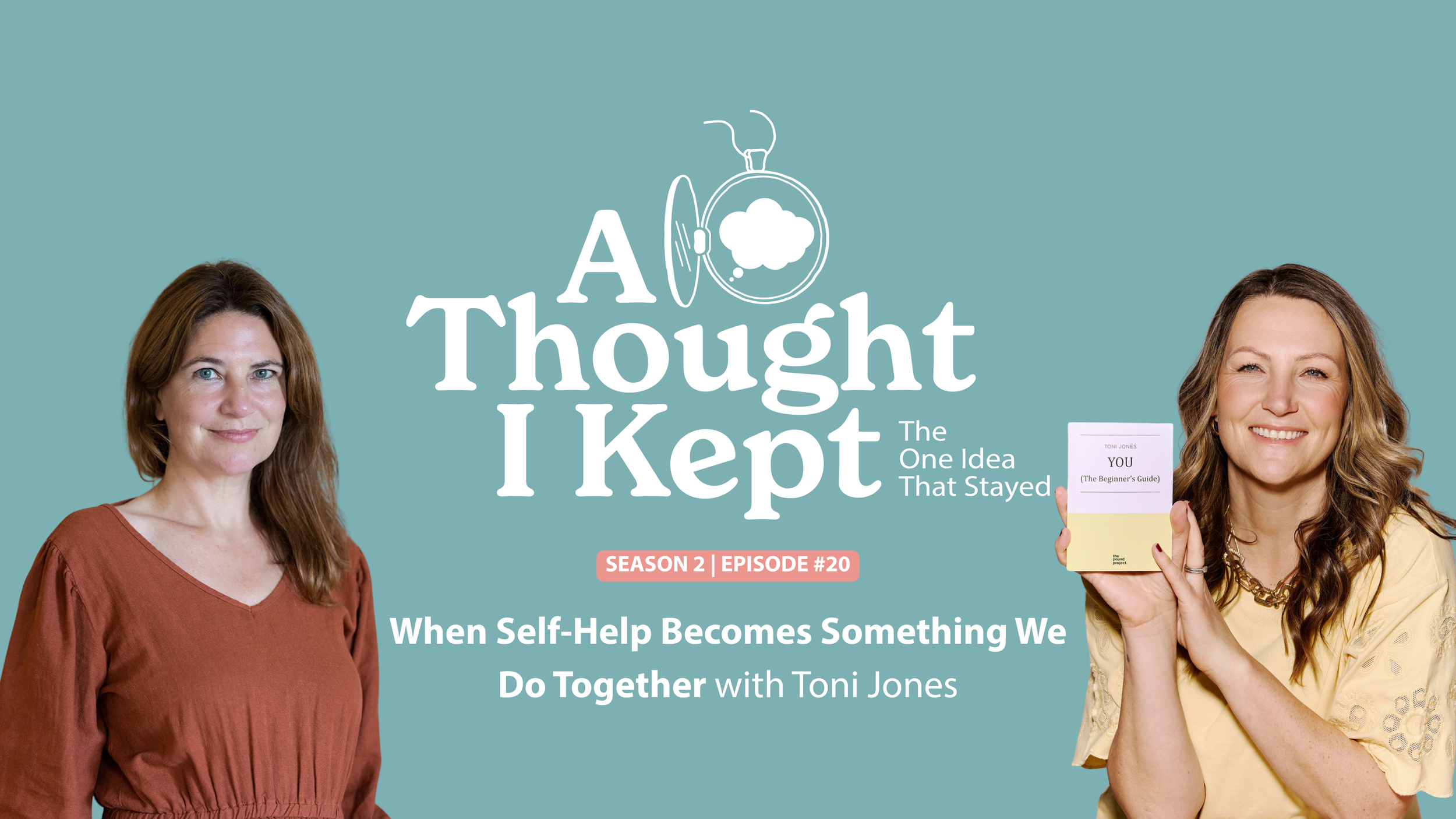
In my recent conversation on A Thought I Kept with Toni Jones, we talked about what happens when you spend a decade immersed in self-help culture. Toni has read more than 1,000 self-help books. She founded Shelf Help, the world’s first self-help book club, after burnout and a growing sense that something in her life needed to change.
What I loved most about our conversation wasn’t really the books though. It was the gentler, steadier framework underneath them.
Because Toni spoke so honestly about how messy change actually is. Not cinematic. Not linear. Not “new life in seven easy steps.” More experimental than transformational. More human than polished.
At one point we talked about the pressure that can sit underneath wellbeing culture now — the sense that we should always be improving ourselves. That wellness can become another arena where we fail, compare, strive or feel behind. And honestly, I think many people feel exhausted by that version of wellbeing, even if they can’t quite articulate why.
There’s something profoundly tiring about approaching yourself like a constant problem to solve.
What Toni kept returning to instead was curiosity.
Not: “How do I finally become perfect?”
But: “What happens if I try this?”
Not: “I must completely reinvent myself.”
But: “What if I treated this more like an experiment?”
That small shift feels important to me. Because experiments allow room for being human. They allow for bad days, contradictions, changing your mind, getting it wrong, trying again. They soften the harshness that so often creeps into conversations about growth.
And maybe that’s part of finding a better way to well.
Not turning wellbeing into another performance of goodness or discipline or achievement. But allowing it to become something more personal. More playful. More forgiving. Something shaped around your actual life rather than the life you think you should be living.
During the conversation, Toni described reading her first self-help book while completely burnt out and desperate for something to change. It was called Change Your Life in Seven Days. Looking back now, she laughs at the urgency of it. The idea that her exhausted nervous system was searching for a quick fix because she simply couldn’t carry on as she was.
I think many of us recognise that feeling.
The late-night googling. The saving of posts we never quite return to. The hopeful ordering of books. The quiet thought that maybe this next thing will finally help us feel calmer, happier, clearer, more confident, less overwhelmed.
And sometimes those things do help. Books can change us. Conversations can change us. Therapy can change us. Tiny rituals and practices can genuinely support us.
But what struck me listening to Toni was that the deeper shift seemed to come less from finding the perfect answer and more from slowly building a different relationship with herself.
One with more compassion in it.
More honesty.
More willingness to be seen.
More permission to need support.
That feels important too because I think a lot of us have absorbed the idea that wellbeing is something we should master privately. Quietly. Alone. We should hold everything together. Cope beautifully. Be low maintenance. Keep functioning.
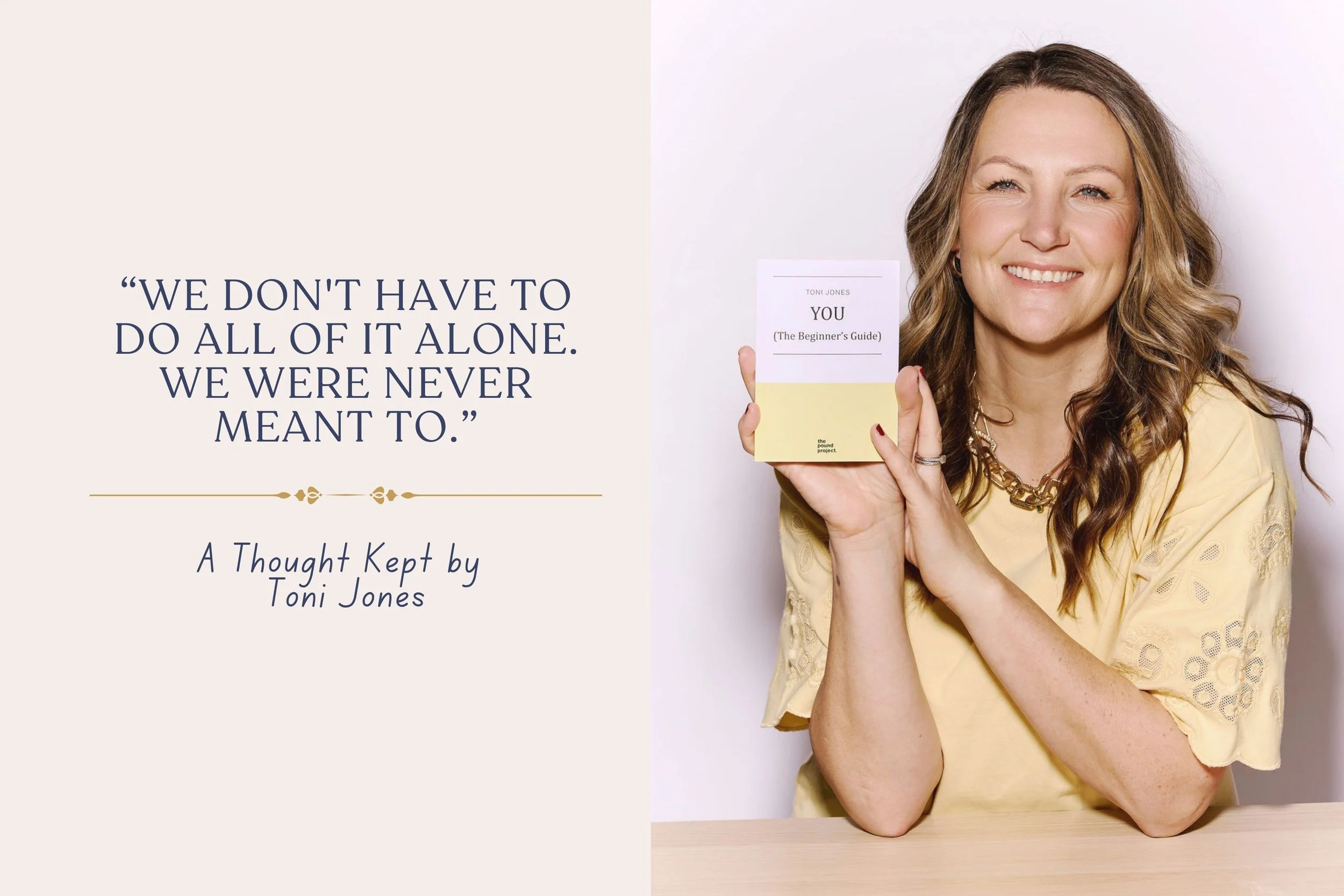
And yet the thought Toni brought to the podcast — borrowed from Brené Brown — was this: “We don’t have to do all of it alone. We were never meant to.”
I kept thinking about that afterwards.
Because maybe a better way to well isn’t just about what we do for ourselves. Maybe it’s also about who we let sit beside us while we figure things out.
The friend who notices you’re not okay before you admit it yourself.
The conversation that helps you feel less strange.
The book club where people finally say the quiet parts out loud.
The person who reminds you that you’re allowed to need care too.
The older version of yourself who can look back and realise: things did change, slowly, even when it didn’t feel like they were changing at all.
One of the things I loved most from the episode was Toni talking about how, years ago, she felt desperate for something — anything — to change. Whereas now, after years of reflection and experimentation and self-discovery, she approaches life with more curiosity than panic. More openness than grasping.
Not because she became a completely different person.
But because she became more connected to herself.
I think that’s the part of wellbeing we don’t talk about enough. That perhaps the goal isn’t becoming somebody new entirely. Perhaps it’s becoming more honest about who we already are. Understanding what supports us. Learning what drains us. Allowing our version of wellbeing to look different from somebody else’s.
And maybe that’s why Amanda and I created the If Lost, Start Here wellbeing journal in the way we did. Not as a rigid plan or perfect prescription, but as an invitation into curiosity. Into experimentation. Into asking better questions about what actually helps you feel more alive, connected, grounded or held.
Not wellness as performance.
Not self-improvement as punishment.
Just a steadier, kinder relationship with yourself and your life.
If this conversation resonates, you can listen to my full episode of A Thought I Kept with Toni Jones, where we explore vulnerability, burnout, self-help, friendship, identity, emotional wellbeing and what it means to stop carrying everything alone.
And if you’re feeling a little lost in your own life right now — unsure what wellbeing even means for you anymore — you’re also very welcome to explore my coaching work or the If Lost, Start Here journal. Not as a way to become someone else. Just as a place to begin listening to yourself again.