
Finding a Better Way to Well Without Trying to Fix Yourself
Feeling overwhelmed by self-help and wellbeing advice? Explore how you can find a more human way to feel better with Toni Jones of Shelf Help.
I still remember standing in the wellbeing section of my local independent bookshop years ago, holding three different books in my hands and feeling completely overwhelmed by all of them.
One promised confidence. One promised calm. One promised a completely new life if I just followed the steps properly enough. Around me were shelves and shelves of answers. Morning routines. Better habits. Nervous systems. Boundaries. Purpose. Productivity. Healing. Manifestation. Rest. Reinvention.
And underneath all of it was this quiet but persistent feeling: if I could just find the right idea, the right practice, the right way of living, maybe I would finally feel okay.
I think a lot of us arrive at wellbeing from this place now. Not because we’re shallow or self-absorbed, but because life genuinely feels difficult. The world feels loud. Work is relentless. Relationships can be complicated. Many of us are carrying anxiety, grief, uncertainty, burnout or a low-level sense that we’ve somehow drifted away from ourselves. And when you feel like that, it makes sense to go looking for answers.
In my recent conversation on A Thought I Kept with Toni Jones, we talked about what happens when you spend a decade immersed in self-help culture. Toni has read more than 1,000 self-help books. She founded Shelf Help, the world’s first self-help book club, after burnout and a growing sense that something in her life needed to change.
What I loved most about our conversation wasn’t really the books though. It was the gentler, steadier framework underneath them.
Because Toni spoke so honestly about how messy change actually is. Not cinematic. Not linear. Not “new life in seven easy steps.” More experimental than transformational. More human than polished.
At one point we talked about the pressure that can sit underneath wellbeing culture now — the sense that we should always be improving ourselves. That wellness can become another arena where we fail, compare, strive or feel behind. And honestly, I think many people feel exhausted by that version of wellbeing, even if they can’t quite articulate why.
There’s something profoundly tiring about approaching yourself like a constant problem to solve.
What Toni kept returning to instead was curiosity.
Not: “How do I finally become perfect?”
But: “What happens if I try this?”
Not: “I must completely reinvent myself.”
But: “What if I treated this more like an experiment?”
That small shift feels important to me. Because experiments allow room for being human. They allow for bad days, contradictions, changing your mind, getting it wrong, trying again. They soften the harshness that so often creeps into conversations about growth.
And maybe that’s part of finding a better way to well.
Not turning wellbeing into another performance of goodness or discipline or achievement. But allowing it to become something more personal. More playful. More forgiving. Something shaped around your actual life rather than the life you think you should be living.
During the conversation, Toni described reading her first self-help book while completely burnt out and desperate for something to change. It was called Change Your Life in Seven Days. Looking back now, she laughs at the urgency of it. The idea that her exhausted nervous system was searching for a quick fix because she simply couldn’t carry on as she was.
I think many of us recognise that feeling.
The late-night googling. The saving of posts we never quite return to. The hopeful ordering of books. The quiet thought that maybe this next thing will finally help us feel calmer, happier, clearer, more confident, less overwhelmed.
And sometimes those things do help. Books can change us. Conversations can change us. Therapy can change us. Tiny rituals and practices can genuinely support us.
But what struck me listening to Toni was that the deeper shift seemed to come less from finding the perfect answer and more from slowly building a different relationship with herself.
One with more compassion in it.
More honesty.
More willingness to be seen.
More permission to need support.
That feels important too because I think a lot of us have absorbed the idea that wellbeing is something we should master privately. Quietly. Alone. We should hold everything together. Cope beautifully. Be low maintenance. Keep functioning.
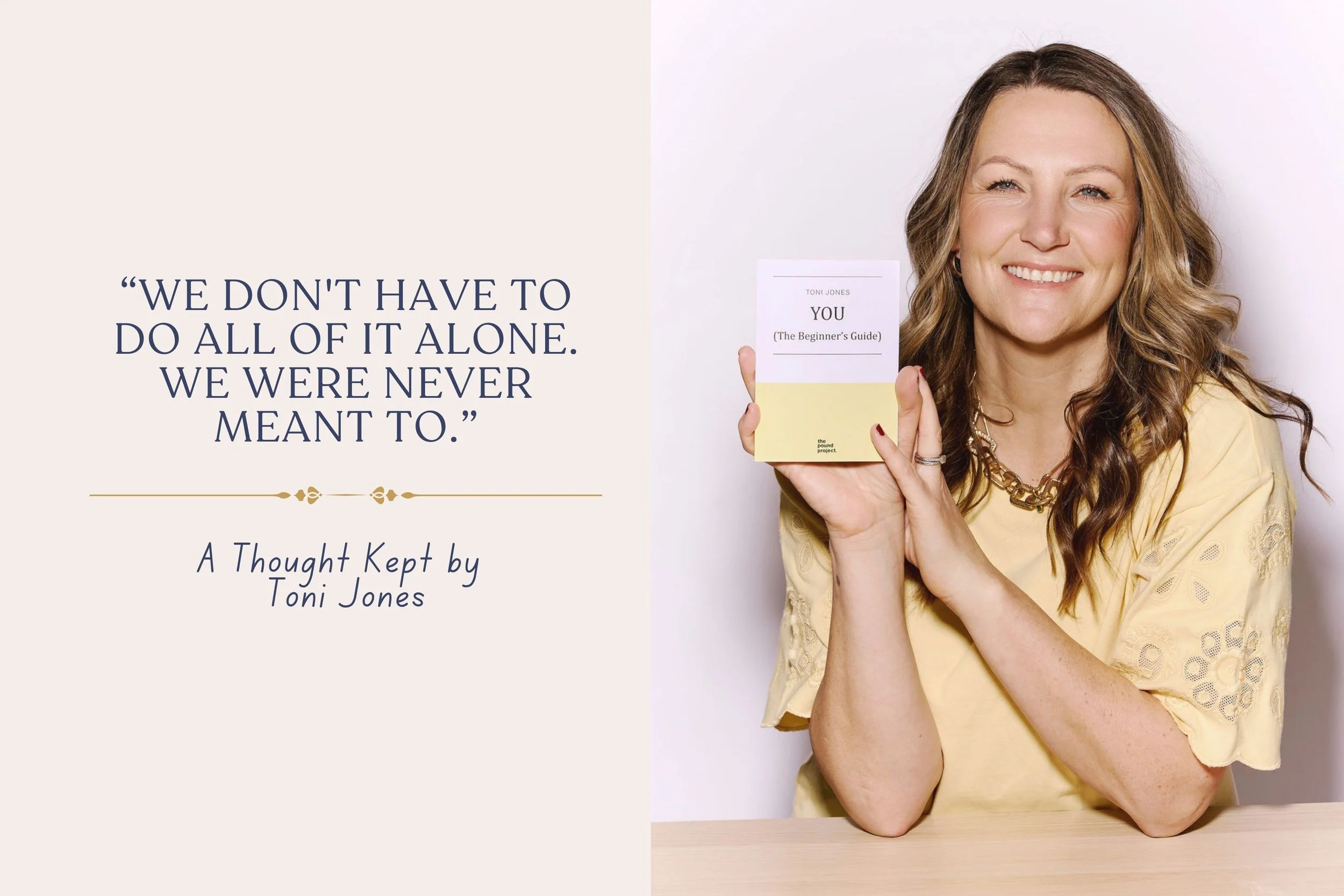
And yet the thought Toni brought to the podcast — borrowed from Brené Brown — was this: “We don’t have to do all of it alone. We were never meant to.”
I kept thinking about that afterwards.
Because maybe a better way to well isn’t just about what we do for ourselves. Maybe it’s also about who we let sit beside us while we figure things out.
The friend who notices you’re not okay before you admit it yourself.
The conversation that helps you feel less strange.
The book club where people finally say the quiet parts out loud.
The person who reminds you that you’re allowed to need care too.
The older version of yourself who can look back and realise: things did change, slowly, even when it didn’t feel like they were changing at all.
One of the things I loved most from the episode was Toni talking about how, years ago, she felt desperate for something — anything — to change. Whereas now, after years of reflection and experimentation and self-discovery, she approaches life with more curiosity than panic. More openness than grasping.
Not because she became a completely different person.
But because she became more connected to herself.
I think that’s the part of wellbeing we don’t talk about enough. That perhaps the goal isn’t becoming somebody new entirely. Perhaps it’s becoming more honest about who we already are. Understanding what supports us. Learning what drains us. Allowing our version of wellbeing to look different from somebody else’s.
And maybe that’s why Amanda and I created the If Lost, Start Here wellbeing journal in the way we did. Not as a rigid plan or perfect prescription, but as an invitation into curiosity. Into experimentation. Into asking better questions about what actually helps you feel more alive, connected, grounded or held.
Not wellness as performance.
Not self-improvement as punishment.
Just a steadier, kinder relationship with yourself and your life.
If this conversation resonates, you can listen to my full episode of A Thought I Kept with Toni Jones, where we explore vulnerability, burnout, self-help, friendship, identity, emotional wellbeing and what it means to stop carrying everything alone.
And if you’re feeling a little lost in your own life right now — unsure what wellbeing even means for you anymore — you’re also very welcome to explore my coaching work or the If Lost, Start Here journal. Not as a way to become someone else. Just as a place to begin listening to yourself again.
If You’re Self‑Cared‑Out: How to Move from Doing to Being Seen
Feeling disconnected, overwhelmed or stuck in the self‑care loop? Discover how self‑advocacy, emotional health and receiving care can bring meaningful change.
You’ve done the rituals — the colouring‑in, the bubble bath, the breaths, the affirmations. And yet, you still feel drained.
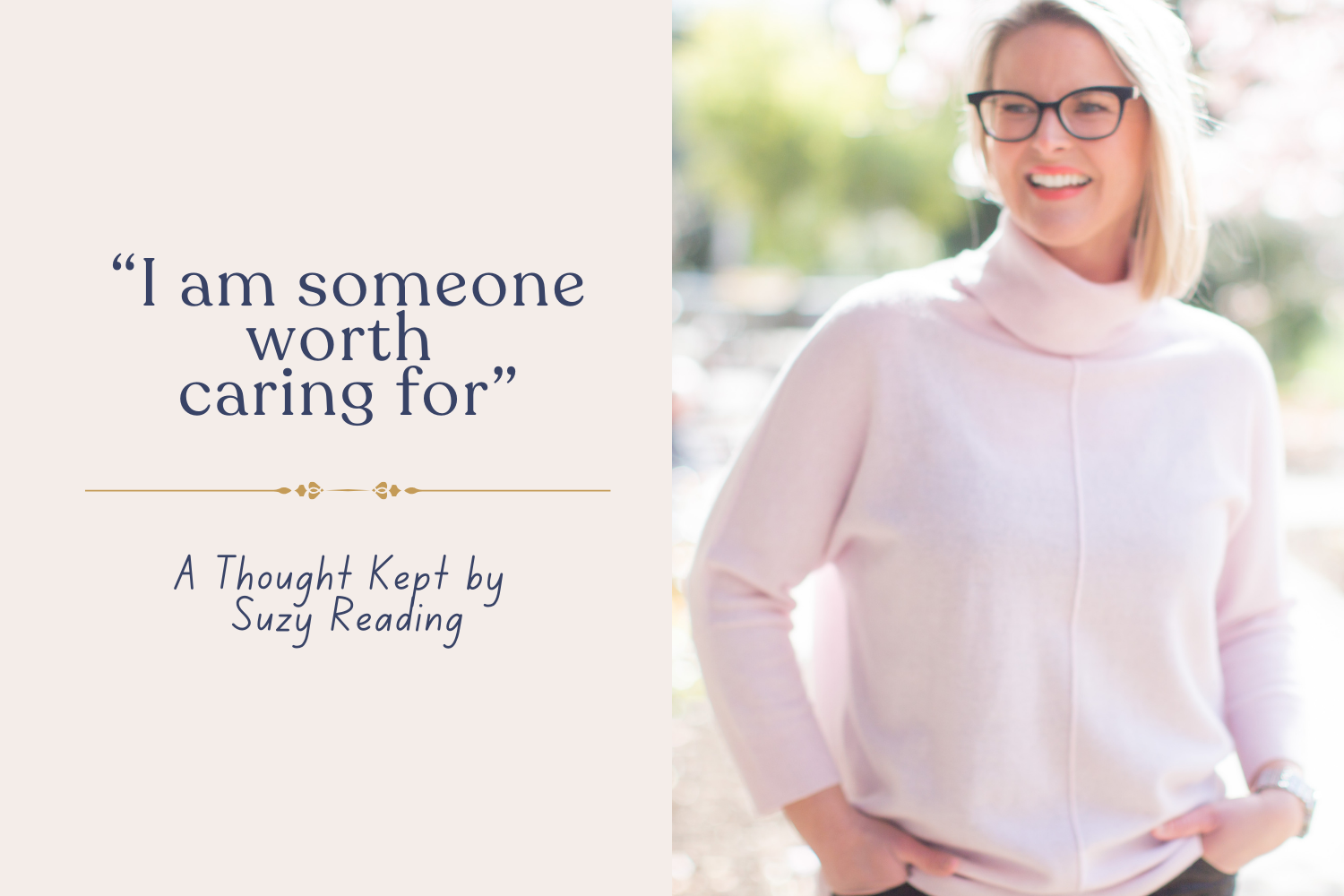
In a recent conversation on A Thought I Kept, I asked psychologist and author Suzy Reading: “What is the one thought you have kept?” Suzy’s answer: “I am someone worth caring for.” And in that simple sentence lies the pivot many of us need — from checking the self‑care box to stepping into the kind of care we might be missing.

1. The Self‑Care Loop: When Doing Becomes Disconnection
Suzy begins the conversation by admitting that it was a “very dreary Friday” and she hadn’t had her usual morning walk to clear the jangly energy. Yet here she was, making space for the conversation and acknowledging the discomfort.
“I’ve got some jangly energy going on too … but you know, we make space for it and it’s all right for it to be here.”
That’s the thing. We often rush into another self‑care “thing” to fix the feeling, rather than giving ourselves permission to simply have the feeling.
If you’re someone who’s been doing self‑care, but still feels numb, overwhelmed or disconnected, consider this: maybe it isn’t more rituals you need — but a different relationship to care.
2. Worthy of Care: The Thought that Changed Everything
At its core, Suzy’s inquiry reveals something many of us never gave ourselves permission to believe: I am someone worth caring for.
She traces that thought back to her late teens and how it’s marks key turning points — a knee injury in her competitive ice‑skating days, becoming a mother, losing her father.
In each, the practice shifted from “perform better” to “treat myself as though I’m worth care” because, as she said:
“If you don’t do that, you’re not going to be here anymore.”
For those feeling burnout, disconnected or emotionally exhausted — the very phrase says this: you do not have to wait until you’ve earned care. You are already worth it.
3. The Barrier: Selflessness, “Not‑Enough”, and Silence of Needs
Why is this so hard? Suzy outlines layers upon layers of cultural messaging:
A “good baby” is one who doesn’t cry. How does that shape how we regard feelings?
A “good child” is one who doesn’t question adults. How does that influence advocating for ourselves?
Women especially carry messages of being selfless, resilient, productive, grateful. In the process our feelings and needs become invisible.
“You mustn’t be selfish. You must be selfless… our own personhood, turning attention inwards … feels shame‑inducing.”
So if you feel lost, exhausted, invisible — it might be less about you doing more and more about you giving yourself permission to need and receive. The blankness you feel might be the space where your needs weren’t asked, seen or met.
4. Self‑Advocacy: The Relational Layer of Self‑Care
Here’s where it deepens: self‑care is not just about self‑soothing or solo rituals. Suzy gently expands it to include receiving care and asking for what you need.
She offers real, grounded advice:
Practice asking with “safe people” first.
Instead of “I don’t mind where we go,” say “Here’s a place I’d enjoy. What about you?”
Be clear: “I feel unappreciated and taken for granted. Would you help me?"
For anyone feeling disconnected — this is an invitation to turn invisible needs into visible requests. To start the conversation with yourself and others. To move from surviving to being supported.
5. Overwhelm, Midlife & the Invitation to Receive
If you’ve been pushing through for years, if you’re mid‑life and your body is starting to whisper (or shout) “slow down”, you might realise the old methods aren’t working. Suzy shares:
“I could muscle my way through anything … until my body said sweetheart you cannot just railroad and muscle your way through everything.”
And so we pivot. We honour the winter seasons of life. We ask:
What have I weathered?
What do I need now?
Can I allow someone to help?
At the close of the episode, Suzy gives a simple but potent practice: every time you sip water (or tea, or whatever you have), place a hand on your heart and say: “I am someone worthy of care.” Use it as a daily touchpoint.
“Where am I at? What do I need?”
Because relational wellbeing isn’t a luxury, it’s a lifeline.
6. What You Can Do Right Now
If you’re reading this and you feel drained, disconnected or simply over it — try this:
1. Pause for one minute, put a hand on your heart and say: “I am someone worth caring for.”
2. Write down one need you have today. (No judgement.)
3. Make one gentle request from someone you trust. It could be: “Would you hold space for me for 10 minutes this week?” or “Could you help me with X so I don’t burn out?”
4. Listen to the episode of A Thought I Kept where Suzy and I unpack all this in vivid detail. (Link below.)
5. If you feel comfortable, share this page or the podcast with someone you trust — being seen is the other half of caring.
If Suzy’s thought — “I am someone worthy of care” — stirred something in you, our Coaching Sessions are here to help you gently unpack those feelings, reconnect with your needs, and practice the relational skills of self-advocacy.
Whether you're overwhelmed, self-cared-out, or simply seeking a safe space to feel seen, we’re here.

Shelf Help | In conversation with Toni Jones
We talk to the British journalist Toni Jones, Founder of Shelf Help about the bookclub that became a global movement and why its her mission to make self-help accessible, collaborative and cool.
When we first found out about Shelf Help, we felt like we had found our people. It’s a book club, built around self-help books, that also builds community in real-life. Isn’t that the ultimate combination?
OK, you’re hesitating, and we’re guessing it might have something to do with the genre because let’s face it, self-help can be a bit naff. You probably already have your biases, unconscious or otherwise.
Don’t worry, in the conversation that follows with Founder Toni Jones, we’ll cover that uncool factor and all the other reasons why Shelf Help is something you might need in your own life. Prepare to change your mind.

Claire: What led you to start Shelf Help?
Toni: I had just left my full-time job as a journalist to become a freelance writer, which meant suddenly spending a lot of time by myself. I was 36 and I’d never spent any time alone. It should have been the dream. I’d quit a job that I hated. I was busy and getting work. But it wasn’t that easy being by myself and getting to know myself. I realized I had spent a long time just ignoring my needs, and as soon as the job wasn’t there as a distraction, it was all back down to me.
I spent a lot of that time not unravelling but definitely in a bit of a mental health black hole. I was transitioning from this high-octane life to having a lot of time to think about whether I had done the right thing. I didn’t know how to deal with any of it. I knew I didn’t want to go back. I knew that wasn’t the right thing to do but I wasn’t sure which way to go.
I just started reading a lot of self-help. I started taking care of myself in other ways too; going to therapy for the first time (which I found really hard and amazing), doing yoga, attending retreats, and participating in a few support groups like Al Anon. I was also writing more about wellbeing because it was a trend that was coming in. In a way, in trying all these things, I was approaching my own life like I was writing a feature.
Claire: What was the first self-help book that you read?
Toni: Paul McKenna’s Change Your Life in Seven Days, which people thought was hilarious and really weird, because you don’t think of him as a self-help guru. To many people he’s that weird hypnotist on tele but he’s well-trained in positive psychology and NLP.
Because it was the first self-help book that I read, it really resonated. All these light bulbs went off. I read it slowly; I’d read a concept in that book and then I’d go away and research it. I’d go deep into the black hole of a certain author or self-help concept. Suddenly I was learning all this stuff and I literally could not get enough of it. I was devouring all these self-help books. I was fascinated by it particularly when I started reading about positive psychology and neuroscience and things like Dr Joe Dispenza (he talks about the power of your brain to change and it’s kind of the Law of Attraction but with all the science behind it).
But I was boring my actual friends with it. They were seeing a change in me—and that does spike people’s curiously—but they were like: ‘we get that you are into self-help, but it’s not our thing but good for you that it’s working.’ I started Shelf Help to find new friends who I could talk to about it. Also, as a journalist, I’m the kind of person who, when I find something good, I just want to share it.
Claire: Tell me about the first meet-up. Was it what you expected?
Toni: Shelf Help started as a local book club at a little wine-bar in west London. The first couple of meet-ups were a bit more earnest than they are now, because I started off thinking I needed to be super serious to be able to offer good support, but I’ve learned—as I’ve got better at running groups and also sharing my own story—that you can talk about the big stuff and still have fun.
Meet-ups today cover all kinds of heavy things; purpose, grief, breakups, fertility, friends, fear, careers…but we end up laughing a lot. They are actually really fun! We don’t just sit there and talk about our problems. People do bring up things that are bothering them and things that they are struggling with but there is usually someone in the room who can help them, someone who can say that happened to me and I did this. The idea is that we can all come together because everyone is fragile. We’re probably going through the same old shit and it’s nice to know other people have gone through it and that they have survived. Everyone leaves feeling positive.
Shelf Help has gone from me saying let’s talk about our problems, and that its ok to share, to a place to move forwards. Now I say we celebrate self-help. It’s about inspiring positive change. We advocate that it’s totally ok to not be ok and that people’s feelings are valid, but there’s a lot we can do to feel better, and so we focus on what’s next and how can we help each other.
Claire: As Shelf Help isn’t therapy but is to the side of therapy, how do you create an environment that is safe and purposeful?
Toni: What I do is create a space to give people tools to empower themselves. It’s self-help, so I’m never saying that I’m a therapist and that I have all the answers. At each meet-up, we use a different book but the same format. I’ll pull out 5-6 quotes or exercises from the book and every host around the world and on-line will use those questions for discussion. That gives us the framework as we’re going through the session.
For instance, let’s take a recent book Designing Your Life, which focuses on working out different versions of who you can be. I’ll say ‘The authors say… ‘ and ‘This is how they say it will work…’ Then I’ll ask, ‘Who has experience of this...’
I’m not saying that’s my advice or opinion, though I’ll share something usually based on my own experience. People understand that I’m not trying to direct anyone in any way. If you have chosen to read this book and come along to a meet-up, it’s because you are interested in the topic and meeting like-minded people. I’m pretty sure the attendees aren’t just there to see me or listen to what I have to say about something. I’m just the host: I bring people together and create an environment. But very much people are coming with their own stories to share.

Claire: It sounds like the book itself is giving you the safe container?
Toni: Yes, the expert in the room is the book. Sometimes we have the author there but not always. In a way, it is like a regular book club where you get together to chat about the different characters and chapters and everybody has a different opinion.
Also, I’m quite clear that confidentiality, kindness and no judgement are our code of conduct. That’s on our printed materials that we put out. Hosts also read out the manifesto at the beginning of each meet-up, which explains what we are and what we’re not.
We do have different levels of people at different levels of pain or need. Some people have gone to the doctor and they are going to therapy. They are using this as another tool. There are a million experts that people can google but what they are looking for with Shelf Help is a way to connect to others and a way to connect with themselves.
Claire: The self-help genre has been promoted as being so individualistic, as something you do alone. There’s this idea that you read a book alone and have all these epiphanies alone. With Shelf Help what you are saying is that actually self-help is not solitary, but rather it can be in understood as a collective experience and can be experienced in a social environment.
Toni: My mission with Shelf Help is to make self-help accessible, collaborative and cool. The idea of self-help is a bit of a misnomer. Yes, you do need to do a bit of that work on yourself, but you also need help to take that work forward. It’s much more powerful when we come together.
If you’ve got used to sitting at home by yourself, with just those stories that go around your head, often just saying something out loud to someone else can give you a different perspective. Shelf Help gives people access to different perspectives, and entirely different life experiences
When we did Susan Jeffer’s Feel the Fear and Do It Anyway at our meet-up in London, we had an Indian grandma who had the original copy from the 80s that she’d been given when she first moved to London. She was sitting next to a Gen-Z girl, 22 years old, clutching her brand-new edition of the book. Though it’s a bit of a worry that we’re still dealing with the same old stuff, it was amazing to watch them connect over the same material. They probably would never have met or talked to each other otherwise, but these are universal themes that can easily see three generations apart talking about the same eternal topics.
Claire: As an advocate for self-help books, going to therapy and going on this deep dive into personal wellness, how do you negotiate some of the cynicism that can come into play? There’s definitely an undertone that says that stuff you are doing over there, that wellbeing stuff, isn’t credible or serious.
Toni: Yes, I see that. But it started working for me, and for others, and as soon as something starts working, people want more of it.
My dream with Shelf Help is that people are not scared to read self-help, that it gets people talking about this genre and connecting, rather than thinking you must be a mess because you are reading a certain book. I believe that the audience is everyone and that’s the whole point. I want people who maybe don’t think they are self-help readers to maybe read an interesting quote or a passage on our Instagram and to go, “oh wow, that’s what’s that book is about.”
Claire: It’s interesting to see that shift, that there is a real thirst for it. That people are going towards it.
Toni: What something like Shelf Help does, and what I realize that I do for my friends and my family, is to give them permission to get curious about self-help. Yes, some people do still see it as naff and cringey, but quietly people will come along to a meet-up. They’ll have read the book and they will want to talk to me about it but maybe not in front of everyone. The interest is definitely there.
Shelf Help is all about accessibility. We make it accessible by organizing free or affordable meet-ups and events as well as via the content we share across various social media. That’s why I now call Shelf Help a platform—the book club is always going to be a big part of it—but we can share all kinds of content too. One day I hope we will be creating online courses, better digital meet-ups, and more events, like author workshops—which means you don’t have to have read any of the books to come along.
The way that people consume content now works to our favor; we don’t necessarily just have to read a book to be helped by self-help. People can also watch a Ted talk delivered by the author, listen to a podcast or follow them on social media and still connect to the strategies and ideas.

Claire: There’s a criticism that I’ll paraphrase here, that 100% of people who have read a self-help book will read another one. This means in effect that they don’t work. But really the point is not that they are buying another one because the last one didn’t work, but that they are buying another one because it is working.
What you are saying in effect with Shelf Help is that your relationship to yourself and to other people is a life-long one. That people can have a growth mindset around their own learning. That’s something positive that people can sustain in their lives. You are shifting the perception that self-help is failing if you need more to its working if you need more. It becomes a form of ongoing mental nutrition in a way instead of an ineffectual crutch.
Toni: I think the more that you learn the more you realize you have to learn. If you are looking to a book to fix you, you are missing the point because most self-help comes back to the same finding: you need to start with you. All these books and tools will help guide you but ultimately you need to know yourself, to meet yourself and then start that work.
People say to me how can you read all this self-help and not be fixed? They have this idea that if it’s so great you only need one book. But we’re always learning. That’s what we are here to do, to grow. You are never going to be complete and how boring would that be if you were? What you learn along the way is amazing and is probably the best bit.
Claire: How do you get over self-help overwhelm/ fatigue (you know that feeling where the 11 things to do to better your life feels like 1000 things to do)? How to do you go from reading self-help to actioning it?
Toni: After feedback from members we’ve slowed down the reading process, to one book of the moment (BOTM) every two months (instead of one book every month). These books require that you delve into yourself or peel off these layers. You need to do the exercises and read it at a pace that allows you to process.
Claire: You give a reading schedule?
Toni: Yes, for accountability and so people can follow along with what we’re doing. Everyone is so busy, and I have to appreciate that reading can be a luxury. We need to allocate proper time to get through these books. It’s very much about reading, processing and then acting on it. In Crazy Good, one of the books we have covered, author Steve Chandler says: “Once for information and twice for transformation.”
Claire: Do you choose all the books that you cover? How do you go about that?
Toni: Yes, I’ve done that so far. I’ve gone on books that I’ve loved and that have made a big difference to me and that I know. People seem to like the fact that they are directed to what to read. Not that I know everything about self-help, but I do get a good vibe for what most people want to know about at the moment, whether that’s happiness or habits or purpose. I also get a sense from everything that I’ve read that this particular book is one that we can dissect together. Now, it has to be available globally cause we’re a global book club and we have loads of engagement in Canada and Australia.
Claire: I saw that you are now worldwide, including Amsterdam and Los Angeles. Why did you decide to make Shelf Help a worldwide movement?
Toni: I want to make the conversation as big as possible and to get as many people as possible talking about these subjects.
I think these things affect you in San Francisco the way they affect someone here in London: Feeling lonely, and just wanting to connect. We’re so connected and so disconnected. People are just looking for things to do that bring them together. I started Shelf Help at a time that I really needed it, but I underestimated how much everyone else needed it as well.

Claire: Shelf Help fits in this cultural moment, this global phenomenon of being disconnected, and searching for something to fill the void. We’re all going through it. For me, Shelf Help covers those universal longings: how do we connect, how do we come together, how do we help ourselves?
Toni: People do want to connect online but people ultimately want to go to or even start a meet-up. We’re able to create this amazing network and that’s what technology is allowing us to do but really its feeding people’s need to connect in real life as well.
People want to catch-up or go to events with each other. Most hosts are starting to organize social events in-between book clubs where they’ll go for dinner or a yoga class or a workshop.
At the meet-up in Farnham UK, they seem to bond over their love of cake as much as the books they read. In central London, the meet-ups typically focus on purpose, career and burn out. The one in Pembrokeshire takes place at lunch-time because it is made up mostly of mums.
I want the hosts be as autonomous as possible. If you want to host a meet-up for me and for Shelf Help, then that’s brilliant. We want you on board. We want as many people as we can get, but applicants have to understand that there’s a certain level of commitment (hosts need to commit to a minimum of 6 bi-monthly meetups, and are responsible for the venue and local members, with some support from Toni/Shelf Help). To scale this movement, I know that it can’t be about me; I can’t be everywhere.
Claire: You don’t have to be the person in the room, you can create the system for it, but it doesn’t have to be you?
Toni: I absolutely don’t want it to me about me. I’m happy to be the figurehead and I’m glad that people relate to my story. I love organizing the events and managing the network of hosts, but, ultimately, I want to empower people to help themselves and build a community that helps each other.
Claire: You’re 2 years old (congratulations!). How has the idea for and realization of Shelf Help shifted from when you started to where you are now?
Toni: Two years ago, it was just a book club in Chiswick, west London. Now, I talk about Shelf Help as both a platform and community. We’re all about connecting people to ideas through both the books and other types of content that we share. We’re creating spaces on-line and off-line, with lots of events and meet-ups, and an active digital community. The community is a massive part of it
A lot of Shelf Helpers who are assisting with our second birthday party, are people who are either hosts or come to a lot of meet-ups. I didn’t know many of them a year ago. Now they’re really good friends who are all giving up their time for this celebration.
I’m finding that people want to be part of what we’re doing. They want to do what they can to help us grow. We seem to call on people who can see a huge value in focusing on their mental wellbeing and who then want to share that message.
Claire: If someone is interested in getting involved, what’s the best way for them to engage with you?
Toni: You can come to a meet-up, an event or a retreat. Or join the Facebook group, follow us on Instagram, sign up to the newsletter or even host your own local book club. There are lots of ways to get involved.
Claire: And finally, what’s the one message you take away from reading so much self-help.
Toni: At its most simple, Shelf Help is about helping people to like themselves more. Because I think that too many of us don’t like ourselves enough (maybe don’t even know how to?) and that everything in life can be made better when we improve the relationship we have with ourselves.
To find out more about Shelf Help, head to the Website, Instagram, or Facebook.
