
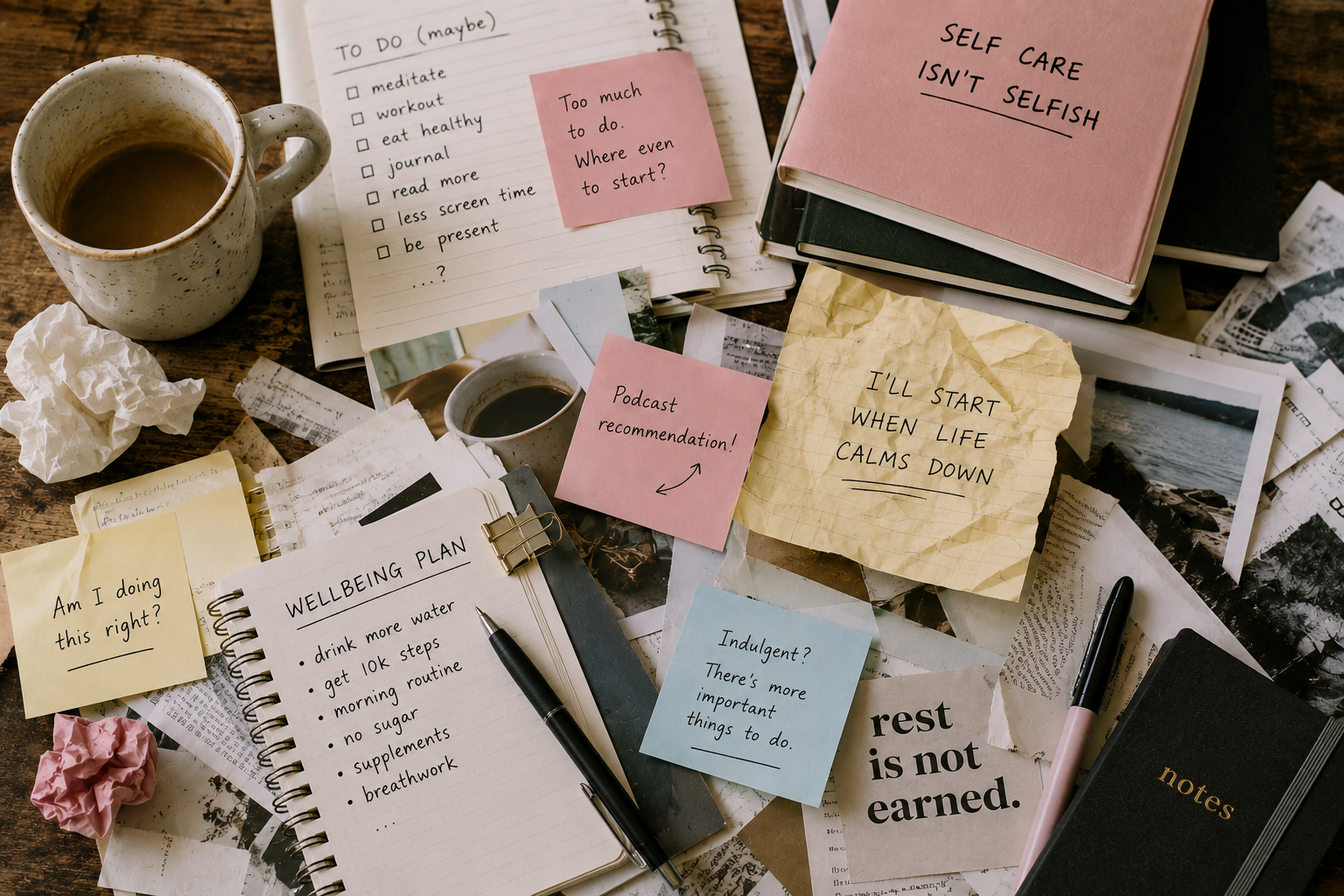
When Wellbeing Becomes Another Thing to Get Right
Why is wellbeing so difficult to put into practice? Explore six common stories that keep us stuck, from overthinking to self-doubt, and discover a gentler way to start feeling better.
I saw a trend forecast this week that predicted that anti-optimization is the new direction wellbeing is taking. Which is an irony in itself: the not doing of the thing we're supposed to be doing becoming the thing we're now supposed to be doing.
I also feel like we're surrounded by countless maxxing articles right now: summermaxxing, productivitymaxxing, communitymaxxing, even joymaxxing. The drive towards more, more, more. But most of the women I talk to aren't looking to optimise their lives. They mostly just want to get to some state of being okay, a general sense of enoughness and a stronger belief that it will all work out, especially when it feels like it very much won't.
There's a real push and pull around wellbeing right now, so I became curious about what happens when we know all the things, yet it can still feel impossible to do the things, because we're not even sure if, or why, we'd want to.
Talking to clients and podcast guests, friends and workshop attendees, I've pulled together some of the most common narratives I'm hearing around wellbeing itself.
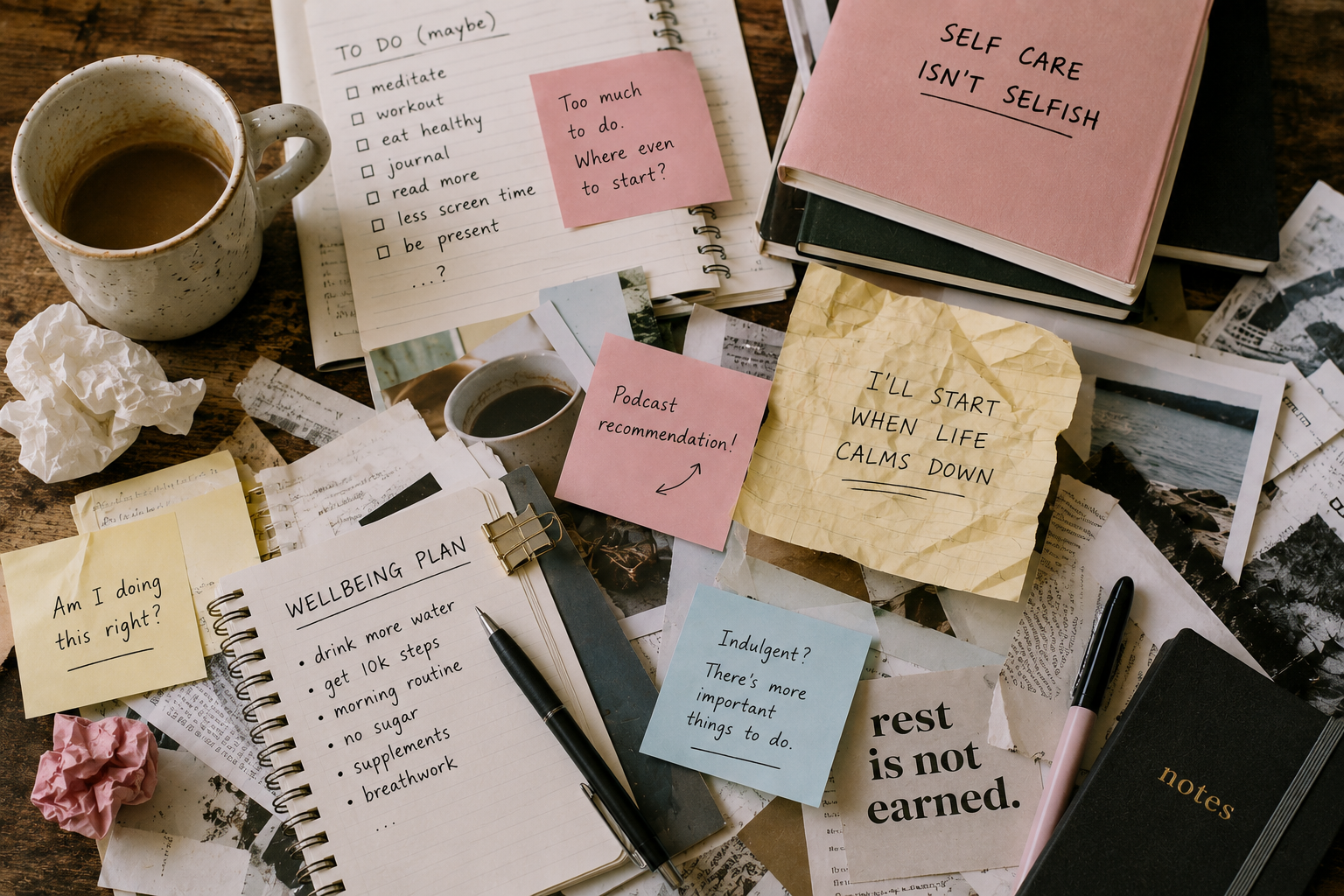
1. Starting: "I know I need something but have no idea where to start."
Okay, something is off. Something needs to change. We no longer want to feel, think or be like this. But now where do we start? Which of all those incoming messages is most relevant to us? Of all the possibilities available, which one works best? Which bits do we feel confident enough to take on, and which should we let fall away?
There is so much information, and some of it is contradictory. Are we falling for trends? Has the science shifted? What's the right thing to do with the information we have available to us right now? Before we've even begun, there's a whole wall of stuff to get through.
We go sideways into rabbit holes of research. We decide to go running, then spend the time we could have been running researching how to run. We consider a walk and wonder what speed, how long, which environment. We choose to nourish ourselves and suddenly there are question marks around fruit and Greek yogurt. We have three minutes while the kettle boils: should we stand on one leg or journal?
So we stay. Waiting to start. Hoping to start. Not starting.
2. Outsourcing ourselves: "Ahhh, I just want someone to tell me what to do."
When we're utterly lost, it makes sense that we turn to experts. We want them to make everything all right. We ask them, "Give me the list and I'll do that." We'll follow their ten-step plans. We'll learn all their hows for our whys.
This makes absolute sense because we have access to people who genuinely do know things, who have answers about overwhelm, burnout and productivity.
And they haven't travelled your life, the paths you've already taken or the ones you hope to take. They don't know the shape of your energy, your values or the systems you operate within. So there's some tempering here. I'll learn what you know, and I'll tailor it to what works within my very real, even messy, life over here.
3. Disconnecting from it all: "That version of magazine wellness doesn't represent my life right now."
We become desensitised to it all. We shrug. We become cynical. We roll our eyes at gratitude journaling and reject it outright. We push back against the very things that might help us. Wellbeing is a bit boring, no? It's just not fun. Or perhaps it doesn't feel serious enough. It becomes something for someone else, with a more photogenic life and a more abundant bank balance.
No one talked about wellbeing when I was growing up. No one talked about wellbeing in the toxic workplaces I found myself in. No one talked about wellbeing in the fast-paced city life that left me holding on and not much more. But it was there all along, in every moment when I longed to feel better, yearned for connection and hoped for purpose. It just looked different from what I imagined.
Maybe that's the same for you.
4. Procrastination: "When I'm in Majorca on that retreat in a few months' time, then I'll take care of myself."
That shiny life, the perfect practice, doesn't connect with the messy, imperfect lives we actually occupy. Washing piles don't sit well beside yoga mats. Bills to pay alongside affirmations to write. So wellbeing becomes something that happens over there, or not at all. If only we could get to that retreat, that calm space, that beach at sunset, then we'd finally have the capacity to do the thing that would make life better right now.
Our hope is that we'll get there while somehow holding onto here. But there are things we need here, in this life, as we wake up exhausted again, trying not to freeze when we look at our WhatsApp messages yet again, feeling so flooded that the only option is to sob in the car at school pick-up.
"Later." Later can become a mantra, when what we're really asking is, "Okay, now, what do I need?"
5. Distancing: "Oh, I totally understand. I'll send you a podcast."
We turn all those messages outwards. Maybe even as a shield against connection. We ask a friend whether they've listened to that podcast rather than offering a hug. We suggest a bestselling non-fiction book on the very subject they're struggling with.
I love a good recommendation. I see it as a love message when someone shares an episode they loved. And there's timing here.
Listen first. Connect first. Then share the thing.
6. Deciding it's not for us."But it's indulgent..."
This is where we turn it on ourselves. We believe wellbeing is indulgent, that we're not the kind of person who... We have more important things to think about than what we perceive as bubble baths and self-care. We may have learned somewhere along the way that taking time for ourselves, which often simply means time away from someone else, is selfish. We do a cost-benefit analysis, and our own column quietly disappears.
This often connects more deeply with self-worth than anything else. There's a pull towards what wellbeing might offer us, alongside a story that it's somehow not for us. There's guilt in considering our own needs when someone else has it worse. Shame when there are more important things to do. A belief that everyone else must come first.
Do any of these sound familiar? Is there a story here that gets in the way of your own wellbeing? What helps you move through it? And what do you hope wellbeing might become, so that it genuinely supports you in the ways you need?

Where to start
If any of these stories resonate, you're exactly who Amanda and I had in mind when we wrote If Lost, Start Here. We didn't want to create another wellbeing book full of things you should be doing. We wanted to create something more playful, more practical and more human. A guide to help you find your own way forward, one small step at a time.
If you're looking for a place to begin, you can find out more about the book and order your copy today.
Burnout Isn't Just About Being Busy
Burnout is about more than being busy. Explore the emotional signs of burnout, why wellbeing isn't a destination, and how to find your way back to yourself.
A few years ago, if you'd asked me what burnout looked like, I probably would have described someone who couldn't get out of bed. Someone who was exhausted. Someone who had simply done too much for too long. And while all of those things can be true, I've started to realise that burnout can be much harder to spot than that.
Sometimes it looks like carrying on. You still show up to work. You still answer the emails. You still remember the PE kit, book the dentist appointment and reply to the WhatsApp messages. From the outside, everything appears to be functioning more or less as normal. But something has shifted.
The things that used to bring you pleasure don't quite land in the same way. The book sits unopened on the bedside table. The walk you've been looking forward to all week suddenly feels like another item on the list. Someone suggests meeting for coffee and, rather than feeling excited, you find yourself wondering whether you can get out of it.
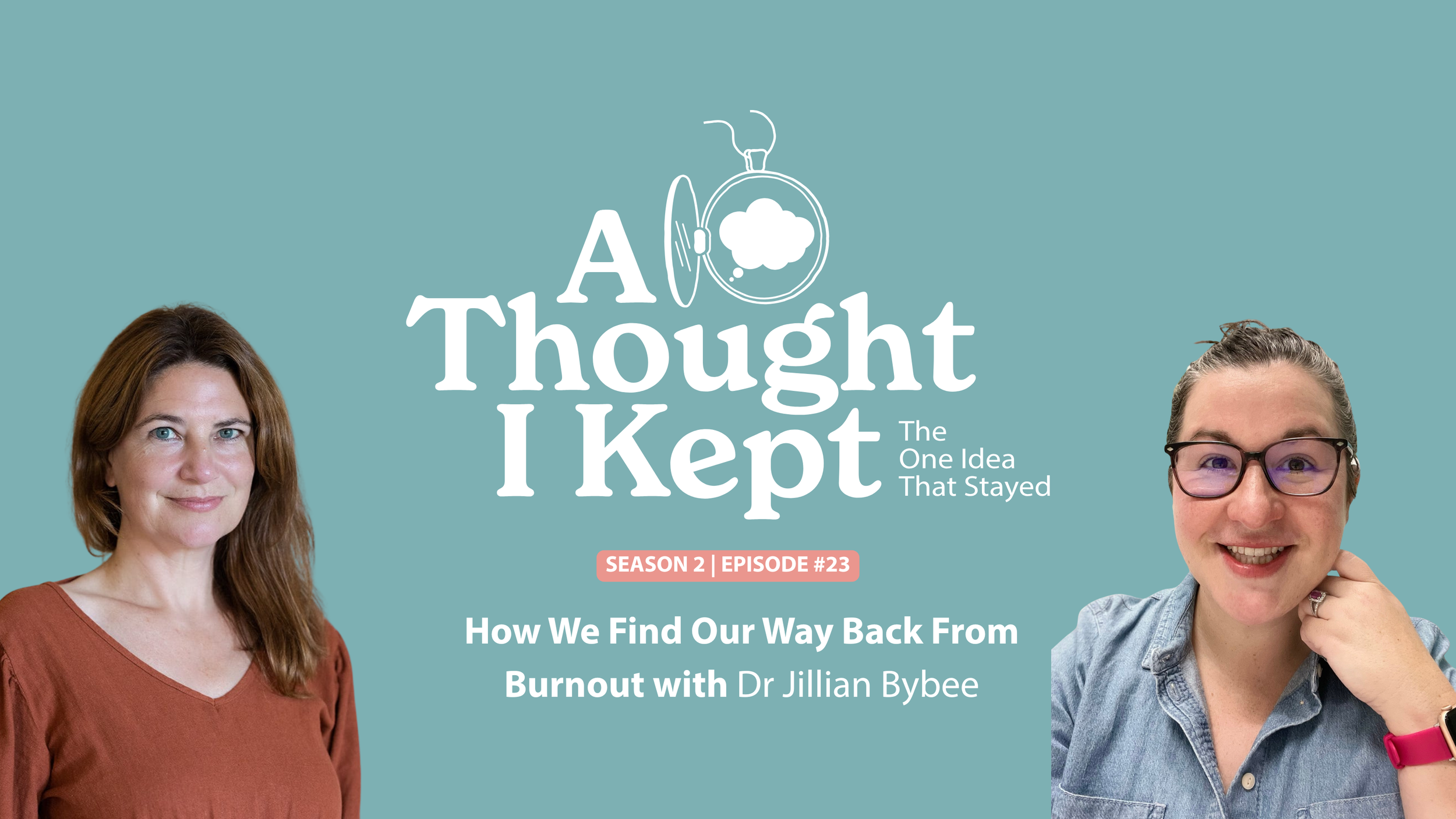
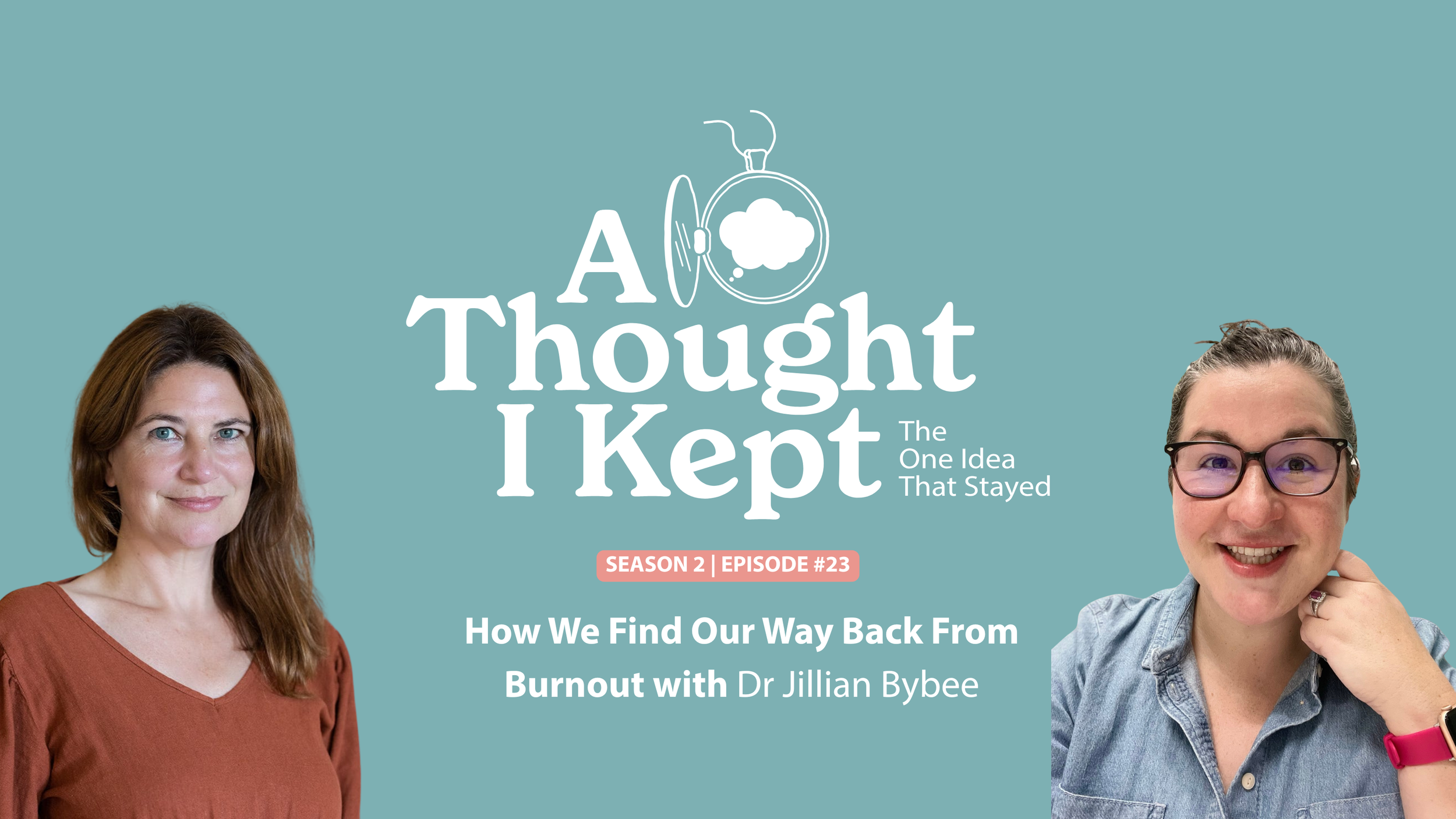
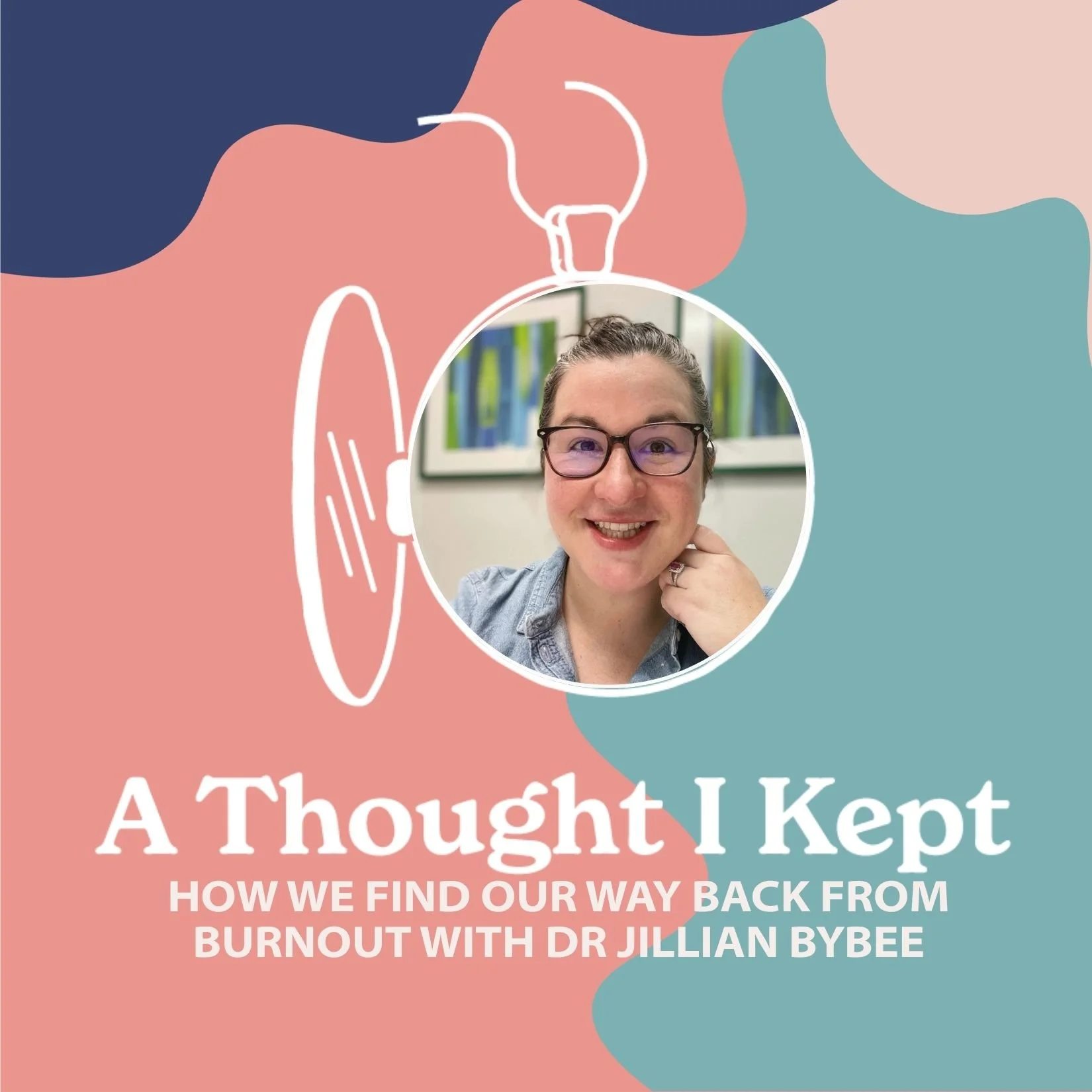
Life starts to feel flatter somehow. Not terrible or dramatic. Just a little more grey than it used to. This was something that really stood out for me from my recent conversation with Dr Jillian Bybee on A Thought I Kept.
Jillian is a paediatric intensive care physician, coach, writer and mother who has experienced burnout twice herself. During our conversation she shared a thought that changed the way she understood wellbeing:
"Wellness is not a state of being, it's a state of action."
We kept returning to that sentence as we talked because it challenges one of the most common assumptions many of us carry around wellbeing. Namely, that it's somewhere we're trying to get to.
If we're honest, many of us live as though wellbeing is waiting for us on the other side of life. It's over there somewhere, beyond the busy period at work, beyond the caring responsibilities, beyond the financial worries, beyond the endless list of things that need our attention. We imagine there will come a moment when life finally settles down and we'll have enough space to focus on ourselves.
Only life has a habit of refusing to settle down. There's always another deadline, another transition, another worry, another season of life that requires something from us. And so wellbeing remains permanently postponed.
What I loved about Jillian's perspective was the reminder that wellbeing isn't something that exists outside our lives. It has to exist within them. Not when things calm down. Now. Not perfectly. Imperfectly. Not as a destination. As a practice.
One of the moments that particularly struck me was when Jillian spoke about how she now understands burnout. Rather than defining it purely through exhaustion or workload, she shared a definition from Duke University's wellbeing research that describes burnout as an inability to feel positive emotion. Which is such a powerful reframe. Because it explains something I've seen in myself at times and in so many people I've worked with.
Burnout isn't always a collapse. Sometimes it's a disappearance. A gradual loss of access to the things that make us feel alive. Joy becomes harder to find. Wonder feels distant. Connection requires effort. Even gratitude can feel strangely out of reach.
We often think of burnout as a productivity problem. We imagine the solution lies in better time management, fewer commitments or a more efficient morning routine. But what if burnout is also an emotional experience?
What if part of what we're grieving when we're burnt out isn't simply our energy, but our relationship with life itself? That idea feels particularly important because so many of us have become very good at pushing through.
We're good at functioning. Good at coping. Good at convincing everyone, including ourselves, that we're fine.
As Jillian pointed out during our conversation, many of us have learned to suppress difficult emotions because they feel inconvenient, uncomfortable or overwhelming. The problem is that emotions don't really work like that. We can't neatly push away grief, anger, sadness and frustration while keeping joy, connection and hope fully intact. Often when we numb one part of ourselves, we numb other parts too.
Which perhaps explains why burnout can feel so lonely. Not because nobody is around us, but because we've become disconnected from ourselves.
One of the stories Jillian shared was about a coaching client who felt completely overwhelmed by the demands of her life. When they began working together, the thing she felt able to offer herself wasn't a wellness retreat or a radical lifestyle overhaul. It was five minutes. Five minutes spent reading in a room where nobody could find her.
I loved that story because it feels so different from the way wellbeing is often presented to us. There was no perfect morning routine. No expensive solution. No dramatic life change. Just five minutes and a growing recognition that she mattered too.
Sometimes I think we underestimate how powerful these small acts can be. Not because they solve everything, but because they begin to challenge the story that everyone else's needs must come before our own.
Perhaps that's why I left this conversation feeling unexpectedly hopeful. Not because burnout is simple. It isn't. Not because five minutes fixes everything. It doesn't. But because Jillian's perspective offers something many of us desperately need right now: a kinder relationship with wellbeing itself.
One that isn't rooted in perfection, optimisation or achievement. One that allows us to ask a different question. Not, "How do I become the best version of myself?" But, "What would help me feel a little more like myself again?" If burnout is the gradual loss of connection to ourselves, perhaps recovery begins there too. Not in becoming someone new. But in finding our way back to the person who has been there all along.
If this resonates, I'd encourage you to listen to my full conversation with Dr Jillian Bybee on A Thought I Kept.
And if you're feeling stuck, overwhelmed or unsure what support might help, you can also explore our Wellbeing Check-Ins and coaching sessions. Sometimes we need another idea. And sometimes we need another person.
Finding a Better Way to Well Without Trying to Fix Yourself
Feeling overwhelmed by self-help and wellbeing advice? Explore how you can find a more human way to feel better with Toni Jones of Shelf Help.
I still remember standing in the wellbeing section of my local independent bookshop years ago, holding three different books in my hands and feeling completely overwhelmed by all of them.
One promised confidence. One promised calm. One promised a completely new life if I just followed the steps properly enough. Around me were shelves and shelves of answers. Morning routines. Better habits. Nervous systems. Boundaries. Purpose. Productivity. Healing. Manifestation. Rest. Reinvention.
And underneath all of it was this quiet but persistent feeling: if I could just find the right idea, the right practice, the right way of living, maybe I would finally feel okay.
I think a lot of us arrive at wellbeing from this place now. Not because we’re shallow or self-absorbed, but because life genuinely feels difficult. The world feels loud. Work is relentless. Relationships can be complicated. Many of us are carrying anxiety, grief, uncertainty, burnout or a low-level sense that we’ve somehow drifted away from ourselves. And when you feel like that, it makes sense to go looking for answers.
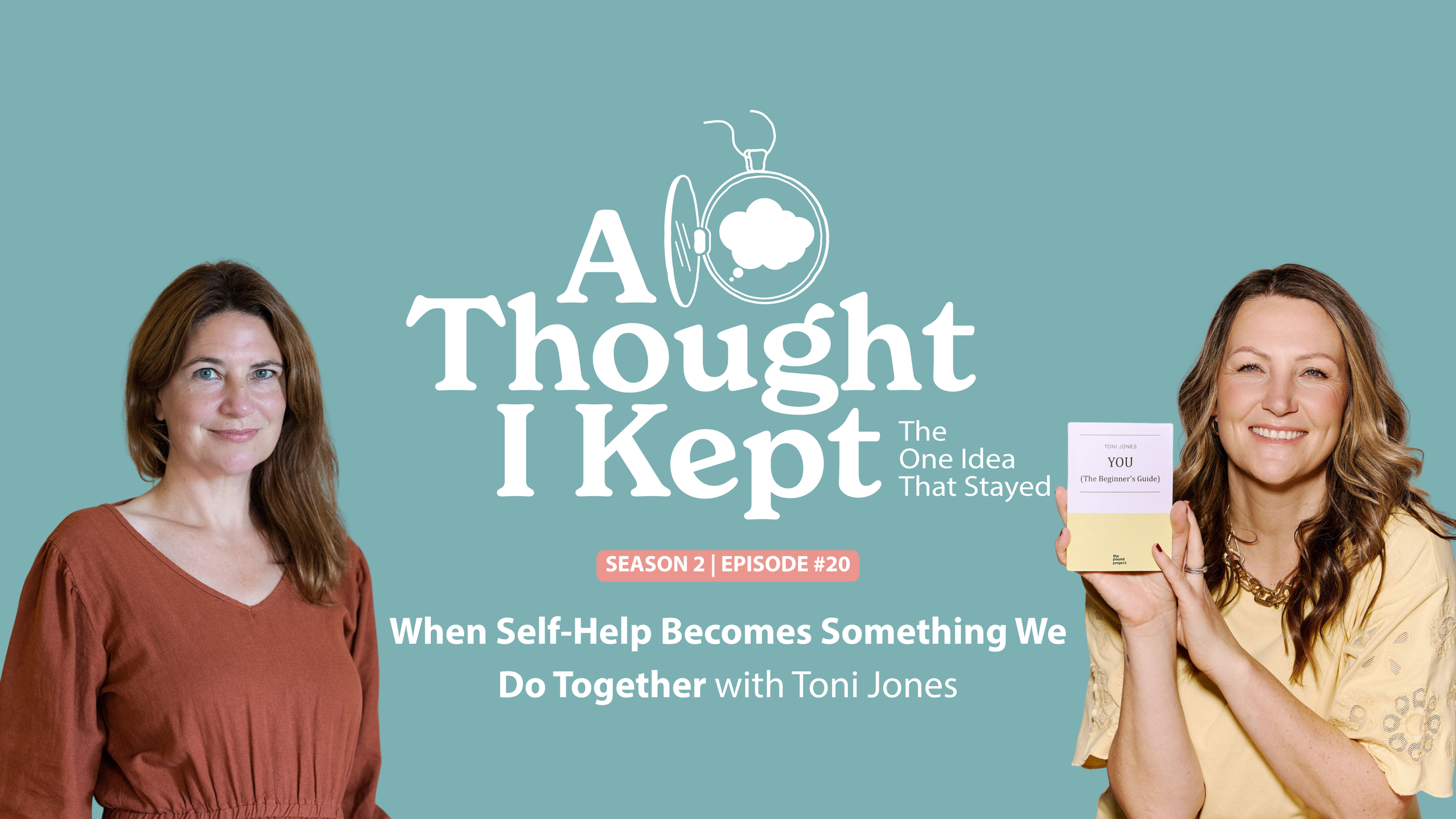
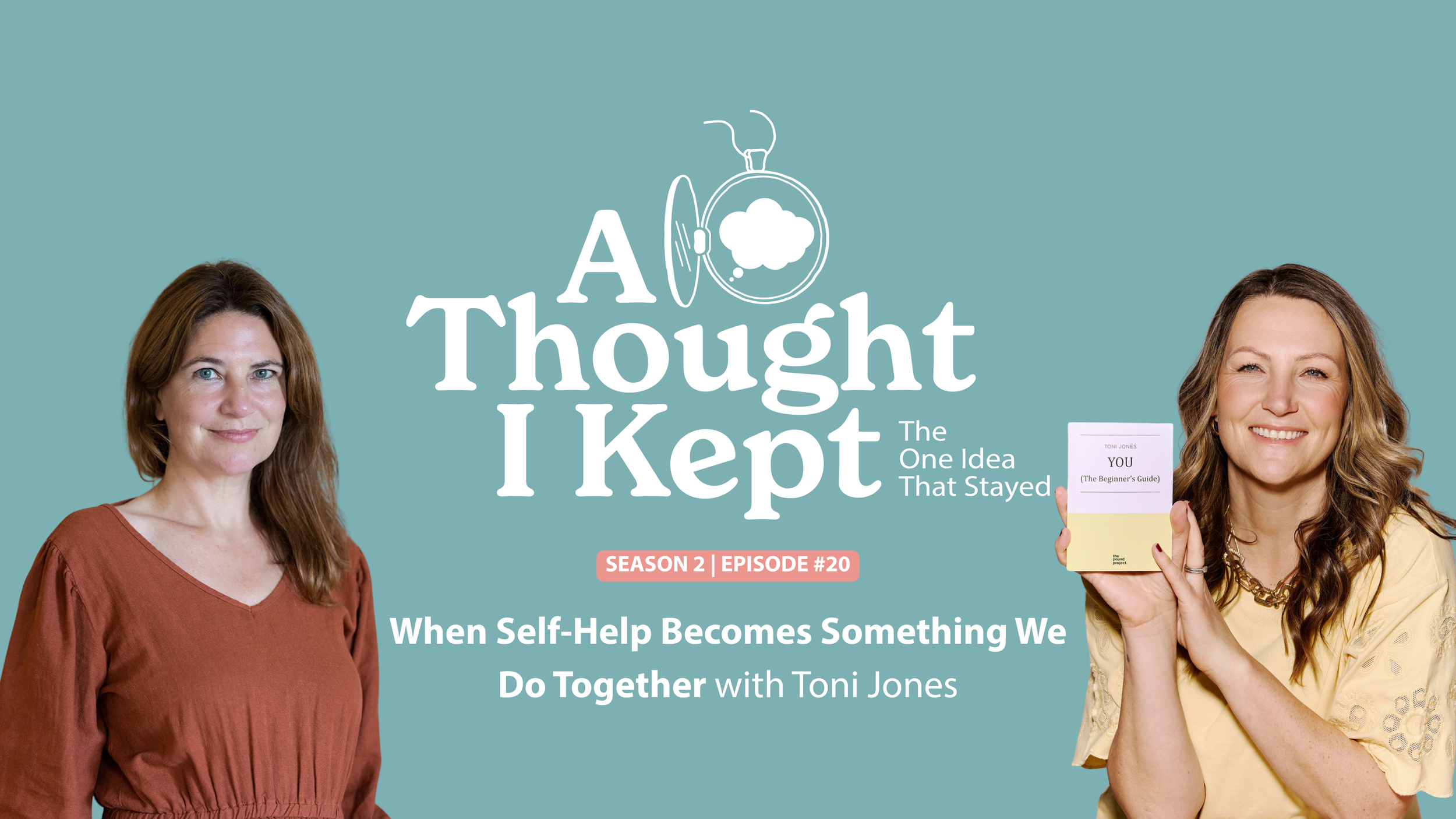
In my recent conversation on A Thought I Kept with Toni Jones, we talked about what happens when you spend a decade immersed in self-help culture. Toni has read more than 1,000 self-help books. She founded Shelf Help, the world’s first self-help book club, after burnout and a growing sense that something in her life needed to change.
What I loved most about our conversation wasn’t really the books though. It was the gentler, steadier framework underneath them.
Because Toni spoke so honestly about how messy change actually is. Not cinematic. Not linear. Not “new life in seven easy steps.” More experimental than transformational. More human than polished.
At one point we talked about the pressure that can sit underneath wellbeing culture now — the sense that we should always be improving ourselves. That wellness can become another arena where we fail, compare, strive or feel behind. And honestly, I think many people feel exhausted by that version of wellbeing, even if they can’t quite articulate why.
There’s something profoundly tiring about approaching yourself like a constant problem to solve.
What Toni kept returning to instead was curiosity.
Not: “How do I finally become perfect?”
But: “What happens if I try this?”
Not: “I must completely reinvent myself.”
But: “What if I treated this more like an experiment?”
That small shift feels important to me. Because experiments allow room for being human. They allow for bad days, contradictions, changing your mind, getting it wrong, trying again. They soften the harshness that so often creeps into conversations about growth.
And maybe that’s part of finding a better way to well.
Not turning wellbeing into another performance of goodness or discipline or achievement. But allowing it to become something more personal. More playful. More forgiving. Something shaped around your actual life rather than the life you think you should be living.
During the conversation, Toni described reading her first self-help book while completely burnt out and desperate for something to change. It was called Change Your Life in Seven Days. Looking back now, she laughs at the urgency of it. The idea that her exhausted nervous system was searching for a quick fix because she simply couldn’t carry on as she was.
I think many of us recognise that feeling.
The late-night googling. The saving of posts we never quite return to. The hopeful ordering of books. The quiet thought that maybe this next thing will finally help us feel calmer, happier, clearer, more confident, less overwhelmed.
And sometimes those things do help. Books can change us. Conversations can change us. Therapy can change us. Tiny rituals and practices can genuinely support us.
But what struck me listening to Toni was that the deeper shift seemed to come less from finding the perfect answer and more from slowly building a different relationship with herself.
One with more compassion in it.
More honesty.
More willingness to be seen.
More permission to need support.
That feels important too because I think a lot of us have absorbed the idea that wellbeing is something we should master privately. Quietly. Alone. We should hold everything together. Cope beautifully. Be low maintenance. Keep functioning.
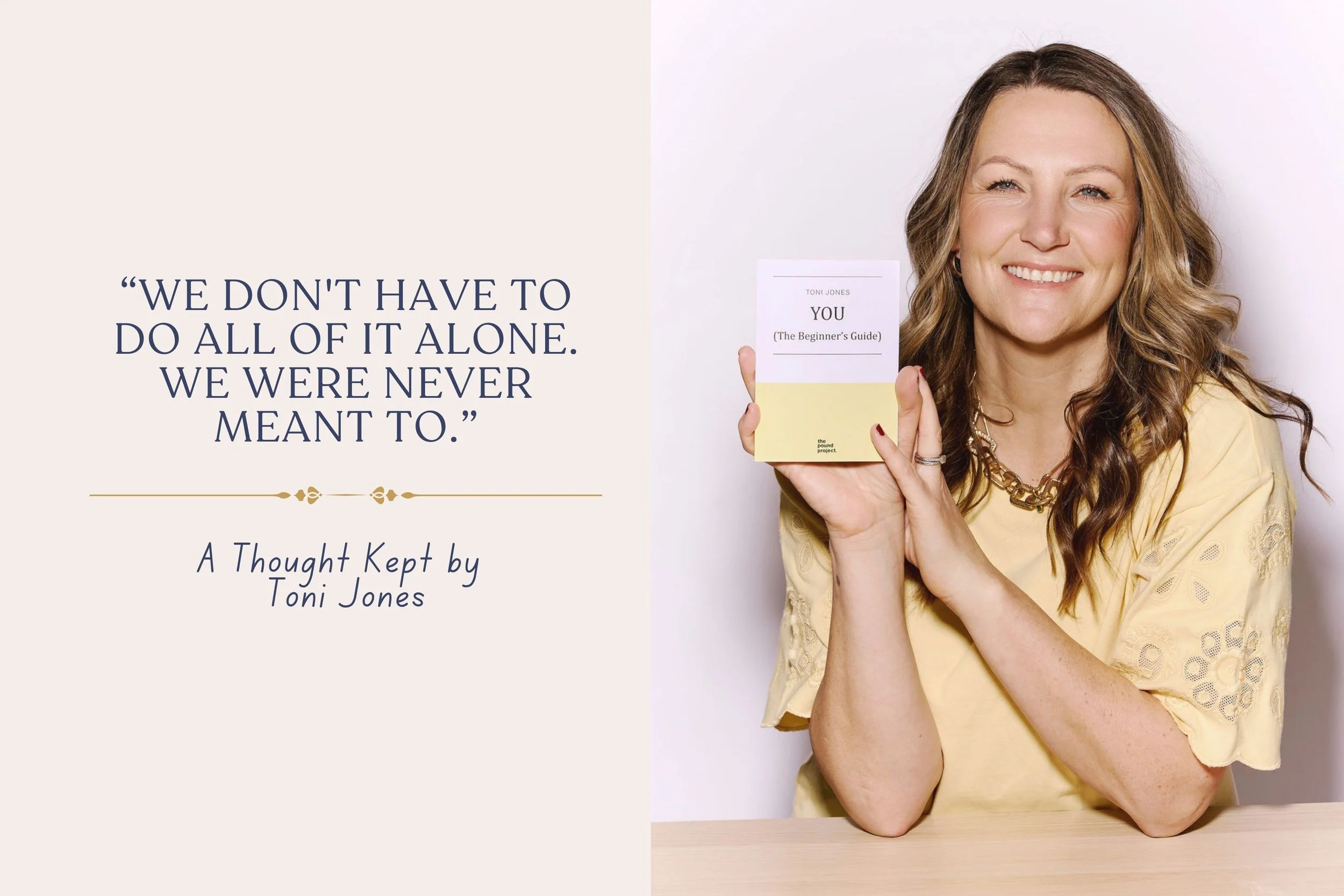
And yet the thought Toni brought to the podcast — borrowed from Brené Brown — was this: “We don’t have to do all of it alone. We were never meant to.”
I kept thinking about that afterwards.
Because maybe a better way to well isn’t just about what we do for ourselves. Maybe it’s also about who we let sit beside us while we figure things out.
The friend who notices you’re not okay before you admit it yourself.
The conversation that helps you feel less strange.
The book club where people finally say the quiet parts out loud.
The person who reminds you that you’re allowed to need care too.
The older version of yourself who can look back and realise: things did change, slowly, even when it didn’t feel like they were changing at all.
One of the things I loved most from the episode was Toni talking about how, years ago, she felt desperate for something — anything — to change. Whereas now, after years of reflection and experimentation and self-discovery, she approaches life with more curiosity than panic. More openness than grasping.
Not because she became a completely different person.
But because she became more connected to herself.
I think that’s the part of wellbeing we don’t talk about enough. That perhaps the goal isn’t becoming somebody new entirely. Perhaps it’s becoming more honest about who we already are. Understanding what supports us. Learning what drains us. Allowing our version of wellbeing to look different from somebody else’s.
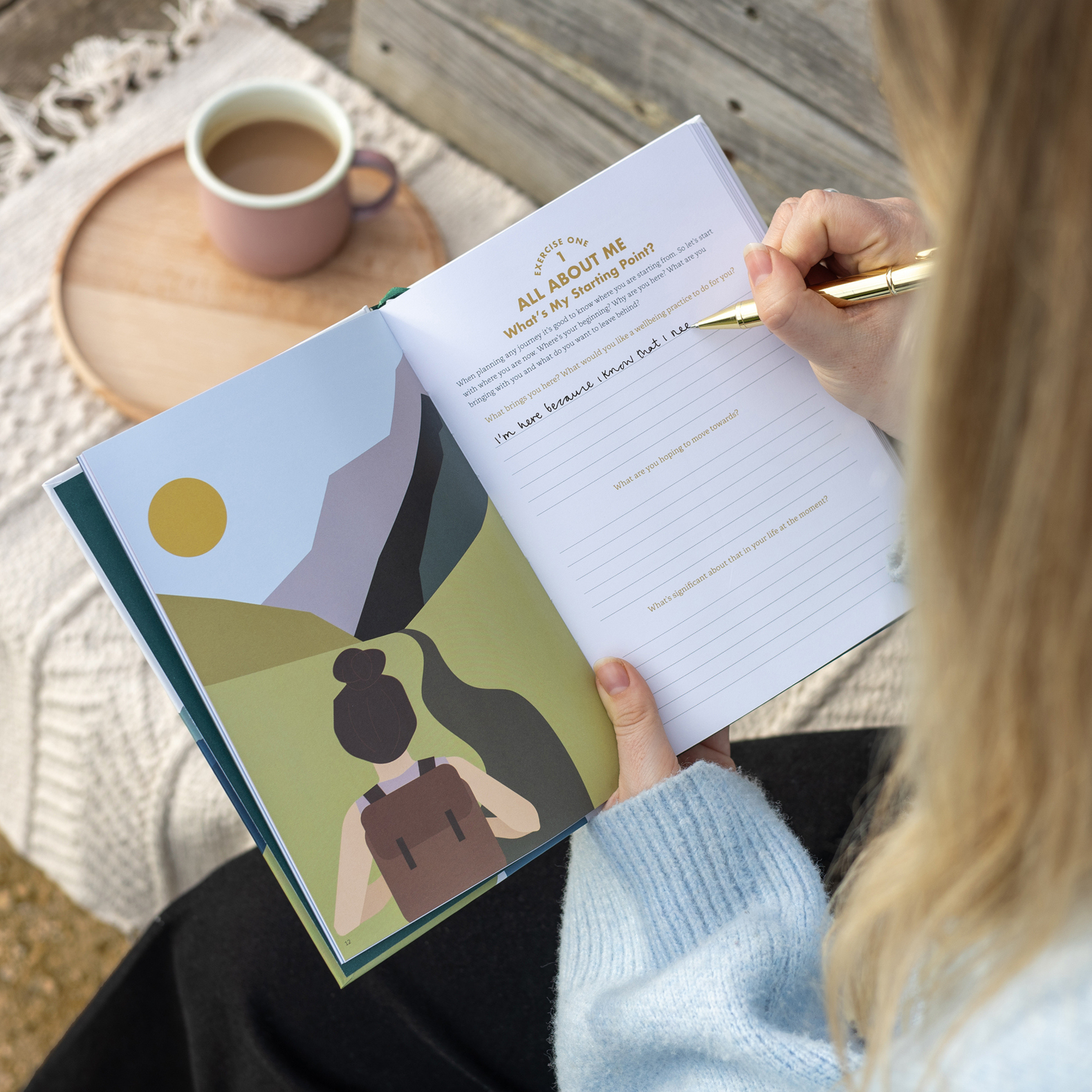
And maybe that’s why Amanda and I created the If Lost, Start Here wellbeing journal in the way we did. Not as a rigid plan or perfect prescription, but as an invitation into curiosity. Into experimentation. Into asking better questions about what actually helps you feel more alive, connected, grounded or held.
Not wellness as performance.
Not self-improvement as punishment.
Just a steadier, kinder relationship with yourself and your life.
If this conversation resonates, you can listen to my full episode of A Thought I Kept with Toni Jones, where we explore vulnerability, burnout, self-help, friendship, identity, emotional wellbeing and what it means to stop carrying everything alone.
And if you’re feeling a little lost in your own life right now — unsure what wellbeing even means for you anymore — you’re also very welcome to explore my coaching work or the If Lost, Start Here journal. Not as a way to become someone else. Just as a place to begin listening to yourself again.

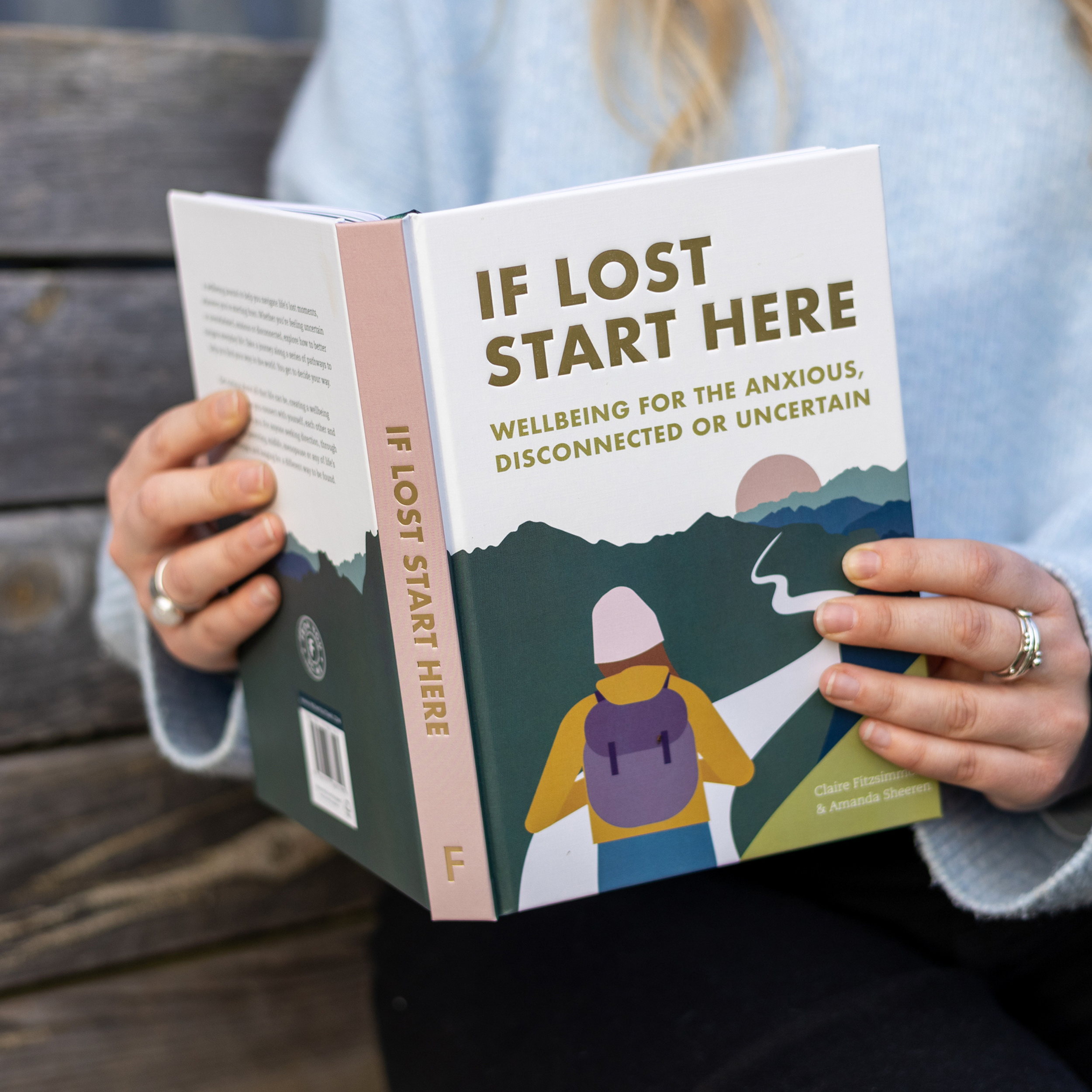
If Lost, Start Here: Our Book Is Here
If Lost, Start Here is a wellbeing journal designed for real life. Explore simple, practical ways to feel better, reconnect with yourself, and find your own way to well.
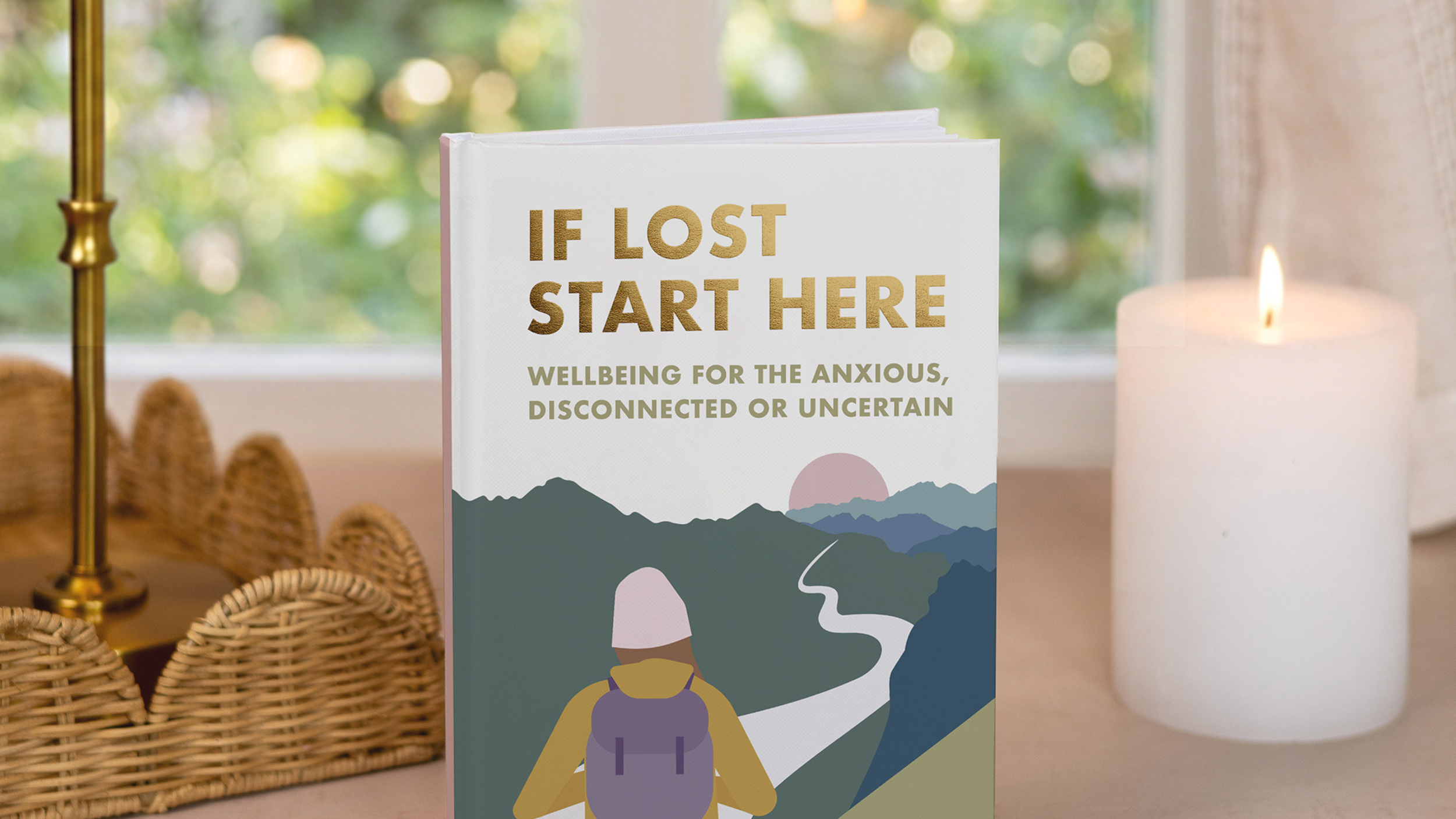
Ten years ago, we were sitting on a living room floor. Two friends, babies crawling around us, talking about all the ways we felt a bit… lost. Untethered. Overwhelmed.
And more than anything, we were talking about how hard it was to know where to start to just feel better. Not because there weren’t options. Because there were too many.
Everything we turned to—books, advice, tools—often left us feeling worse than we anticipated. Like we were somehow getting it wrong before we’d even begun. And there was a version of life we were meant to be living, and we were slightly off-track from it.
So we started asking different questions.
What do people actually need when they feel like this?
What helps when you’re tired, or overwhelmed, or uncertain?
What still counts when life doesn’t look like the version wellbeing advice assumes?
That was the beginning of If Lost, Start Here. And now, our book.
What This Book Is (And Isn’t)
This isn’t a book that asks you to overhaul your life. It’s not built on the idea that there’s a better version of you waiting on the other side of a perfect routine.
It’s more a guide for when you don’t know where to begin. A place to come back to when things feel off, or unclear, or just a bit flat.
It’s grounded in research, but it doesn’t feel like work. It’s designed to be easy to pick up, easy to move through, and importantly easy to make yours.
There’s no point in this book where you should feel like you’re failing at it. Instead, it’s about exploring.
Exploring yourself, yes, but also exploring your life. The world around you. The things that bring you back into it.
Because one of the things we kept coming back to was this: So much of wellbeing focuses on going inward.
But what about everything that happens when we go outward too?
A Guide to You And the World Around You
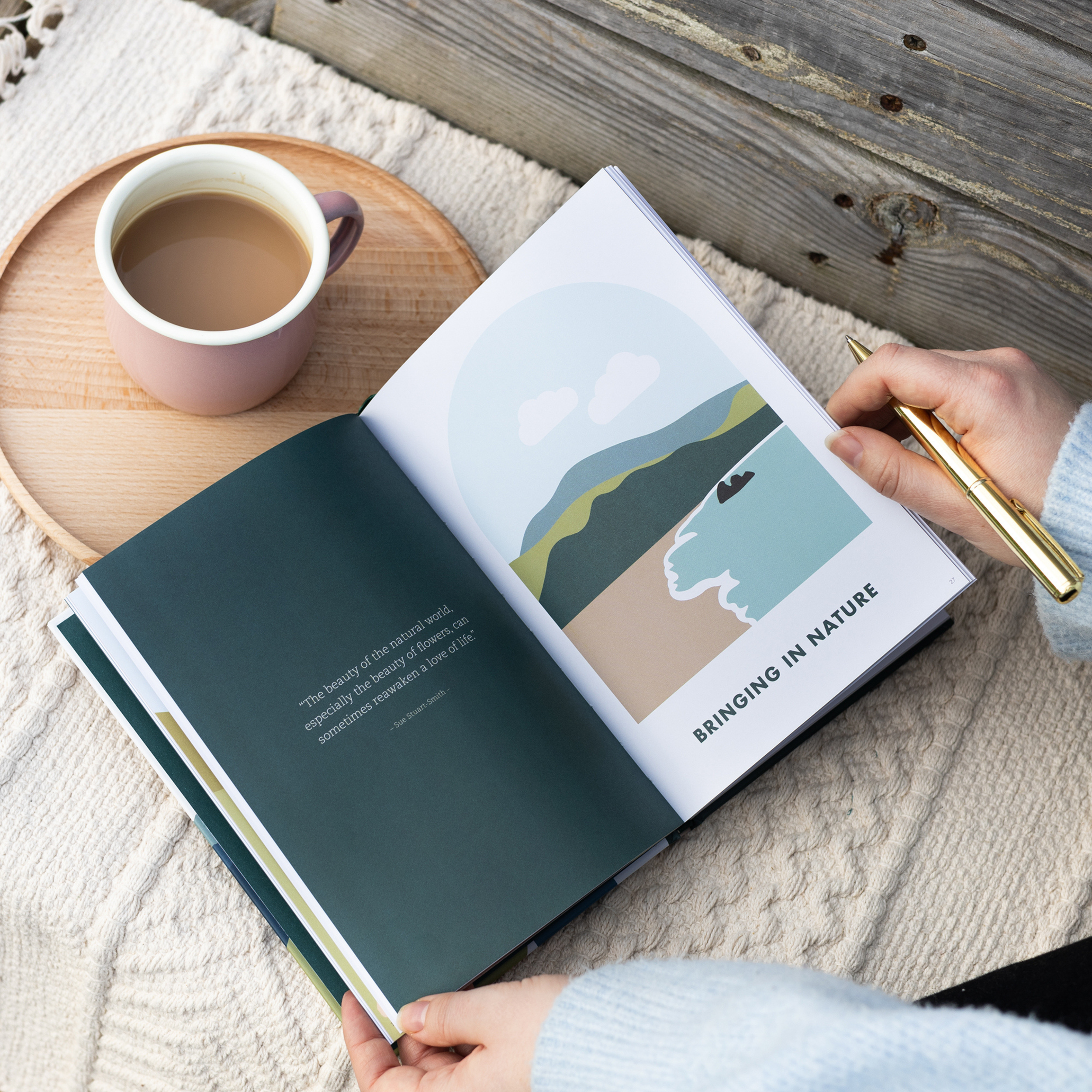
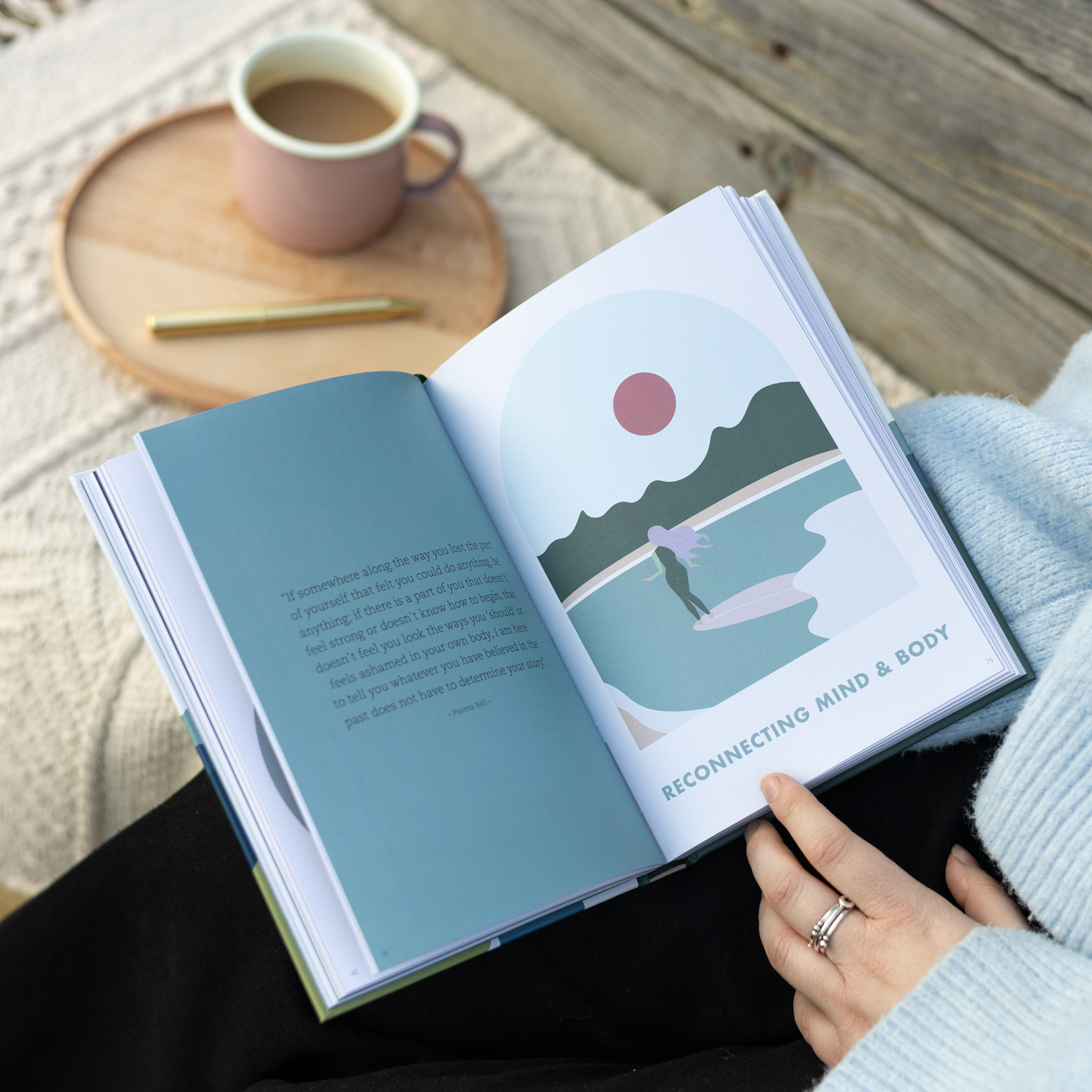
This book moves through ten different wellbeing pathways. Some will feel familiar like connection, creativity and nature. Others might feel like something you’ve lost touch with, or haven’t quite found your way into yet.
And that’s kind of the point.
We hear this a lot from people: “I’ve never really thought about my life this way before.”
About play, for example. Or awe. Or having a creative practice as an adult that isn’t tied to being “good” at something.
Each pathway is there as a way in. Not something to master. But something to try. Something to notice. And something to come back to when you need it.
You Don’t Have to Do It All (Or Do It Properly)
One of our favourite things about this book is that it doesn’t need you to use it in a particular way.
You can dip in and out. You can follow it month by month. You can skip around entirely and follow whatever catches your attention.
If you’re someone who likes to think things through, you might spend longer with the essays and reflections. If you’re more of a doer, you might go straight to the activities and try things out in your day-to-day life. If you’ve got very little energy, you might just read a page and leave it there.
All of it counts. It’s much more of a “choose your own way through” than a step-by-step plan.
Built for Real Life (Not Ideal Life)
A lot of this started with a very practical question:
What does wellbeing look like when you’re too exhausted, too uncertain and too overwhelmed to do alll the things.
We started looking at each area of wellbeing not as something you either do or don’t do but as something that exists on a spectrum.
So instead of:
“Go for a walk in nature.”
It might be:
“Can you look out of the window?”
Instead of:
“Build a strong social life.”
It might be:
“Who feels like an easier person to text today?”
We found research that backed up the fact that even very small moments still matter. That they still count. That they can still shift how we feel in meaningful ways.
And more than anything, we wanted to build something that worked with people’s lives as they actually are. Not as they think they should be.
A Different Way to Think About Wellbeing
There’s a lot of pressure in this space now. To get it right. To do more. To optimise. And it can quietly turn wellbeing into another thing on the list.
We wanted this book to sit slightly outside of that. To say: there isn’t one right way to well.
For some people, it might be running, wild swimming, green juices. For others, it might be going to a museum, painting at the kitchen table, watching live music, or finding small ways to be part of the world again.
This is about finding your way. Not following someone else’s.
Something You Can Come Back To
Over the years, this became something we used ourselves.
When things felt off, we’d come back to it. Run through the pathways. Notice what had slipped. What we needed more of. Not in a critical way—more like a check-in.
“Oh, I haven’t so much as touched my toes this year. Maybe mind-body could use a bit of attention.”
It’s that kind of relationship we hope this book becomes. Something you return to. Something that helps you find your footing again.
If You’re Not Sure Where to Start
That’s okay. That’s exactly where this begins.
Also available on Not on the High Street and Amazon.

Finding Winter Light: How Nature-Connectedness Boosts Wellbeing When Days Are Short
Spending time in nature — even short daily walks — can ease winter blues, lift mood, and support wellbeing. Here’s why nature-connectedness matters most in darker months.
Winter can feel like a long exhale — darker mornings, heavier coats, and that tug to stay inside. Yet stepping outdoors might be one of the gentlest ways to support yourself right now.
A few winters ago, I decided to make a small change: go outside every day, even if it was grey, damp, or uninspiring. Not hikes, not adventures. Just a walk — 10, maybe 30 minutes — in whatever patch of nature I could find: a park, a bridle path, a path by my kid’s school. I looked for small things — the biting crunch of frost, birds on bare branches, the way the sky changes colour even behind a cloud.
What started as an experiment turned into something else. My mood lifted. My head felt clearer. Even on days when I didn’t want to leave the house, coming back felt like I’d plugged myself into a quiet energy source.
It’s not just a feeling. Research backs this up. Studies show that time spent outdoors — especially in green or natural spaces — reduces stress, supports immune function, and improves mood.
Even brief “nature doses” (about 20–30 minutes) have measurable benefits, from lowering cortisol to easing anxiety. And in winter, when daylight is scarce and we spend more time inside, that effect matters even more.
Light matters: Outdoor daylight — even on cloudy days — is much stronger than indoor light, helping regulate mood and sleep.
Movement matters: Gentle walking outdoors supports mental health and resilience.
Nature matters: Contact with trees, water, birdsong, and sky connects us to something larger and steadies our nervous system.
So if winter sometimes feels like wading through fog, try weaving in small nature rituals:
A quick daily walk where you can see the sky.
Lunch by a window with outdoor views.
Pausing to notice tiny seasonal details — buds, frost patterns, migrating birds.
It doesn’t have to be perfect weather or a big adventure; just a moment to step outside.
Want help making small, feel-good changes that stick? Explore our wellbeing remedies including gentle ways to bring more light and balance into winter.
And if you suspect that nature might be your preferred way to reconnect with yourself and the world around you, explore our guide for life.

7 Ways to Disconnect and Recharge Without Taking Time Off
Discover small and practical ways to disconnect and recharge without needing a vacation. If you can't get away right now, learn how to feel better right where you are.
Sometimes taking a vacation or retreat just isn’t possible. But that doesn’t mean you can’t find ways to disconnect and recharge right where you are. With a few small changes, you can bring moments of peace and calm into your daily life, without needing to book time off work or escape your routine.
We all need breaks, but let’s face it: taking time off can be tricky, whether it’s due to a busy schedule, financial limitations, or life’s constant demands. The good news is you don’t need a week off to feel refreshed. By incorporating these small practices into your daily routine, you can create moments of calm no matter how hectic your life feels.
Here are 7 ways to disconnect and recharge without needing a vacation:
Unplug for 15 Minutes a Day:
Whether it’s during your lunch break or just before bed, set aside a few minutes to step away from screens. Use this time to breathe, reflect, or simply sit in silence.
Create a Soothing Space at Home:
Designate a spot in your home that feels calming—a cozy chair, a corner of your bedroom, or a peaceful nook where you can retreat for a few moments.
Take a Nature Break:
If you can’t get away, bring nature to you. Sit outside for a few minutes, open a window, or tend to a plant. Nature’s calming effect is immediate, even in small doses.
Practice Mindful Breathing:
Whenever stress creeps in, pause for a moment to focus on your breath. Deep breathing can help calm your mind and reduce anxiety.
Stretch or Move Your Body:
A few minutes of stretching or light movement can help release tension and recharge your energy levels.
Gratitude Check-In:
At the end of each day, write down three things you’re grateful for. This practice shifts your focus from stress to appreciation.
Meditate or Journal:
Spend 5 minutes reflecting on your thoughts or doing a quick guided meditation to clear your mind.
By building these practices into your daily life, you’ll feel less drained and more recharged—even without taking a full vacation. And if you want a structured, supportive approach to making these habits stick, our Everyday Retreat can help.
With just a few mindful moments each day, you’ll feel more grounded, energized, and ready to take on whatever life throws at you. It’s about finding balance without stepping away from your responsibilities.
Ready to disconnect and recharge without the need for time off? Join our Everyday Retreat for daily lessons that will help you build these practices into your routine.