
Finding a Better Way to Well Without Trying to Fix Yourself
Feeling overwhelmed by self-help and wellbeing advice? Explore how you can find a more human way to feel better with Toni Jones of Shelf Help.
I still remember standing in the wellbeing section of my local independent bookshop years ago, holding three different books in my hands and feeling completely overwhelmed by all of them.
One promised confidence. One promised calm. One promised a completely new life if I just followed the steps properly enough. Around me were shelves and shelves of answers. Morning routines. Better habits. Nervous systems. Boundaries. Purpose. Productivity. Healing. Manifestation. Rest. Reinvention.
And underneath all of it was this quiet but persistent feeling: if I could just find the right idea, the right practice, the right way of living, maybe I would finally feel okay.
I think a lot of us arrive at wellbeing from this place now. Not because we’re shallow or self-absorbed, but because life genuinely feels difficult. The world feels loud. Work is relentless. Relationships can be complicated. Many of us are carrying anxiety, grief, uncertainty, burnout or a low-level sense that we’ve somehow drifted away from ourselves. And when you feel like that, it makes sense to go looking for answers.
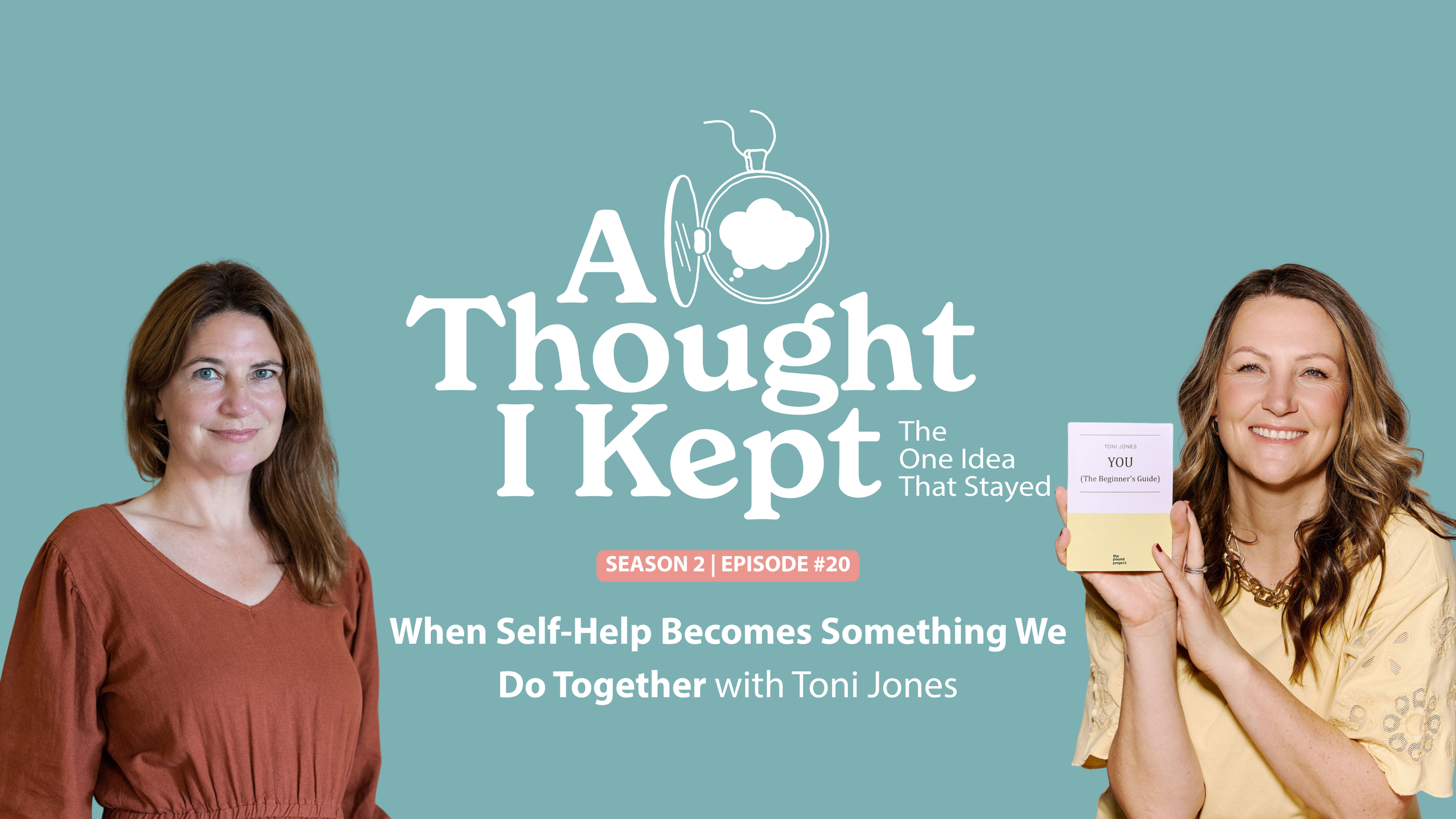
In my recent conversation on A Thought I Kept with Toni Jones, we talked about what happens when you spend a decade immersed in self-help culture. Toni has read more than 1,000 self-help books. She founded Shelf Help, the world’s first self-help book club, after burnout and a growing sense that something in her life needed to change.
What I loved most about our conversation wasn’t really the books though. It was the gentler, steadier framework underneath them.
Because Toni spoke so honestly about how messy change actually is. Not cinematic. Not linear. Not “new life in seven easy steps.” More experimental than transformational. More human than polished.
At one point we talked about the pressure that can sit underneath wellbeing culture now — the sense that we should always be improving ourselves. That wellness can become another arena where we fail, compare, strive or feel behind. And honestly, I think many people feel exhausted by that version of wellbeing, even if they can’t quite articulate why.
There’s something profoundly tiring about approaching yourself like a constant problem to solve.
What Toni kept returning to instead was curiosity.
Not: “How do I finally become perfect?”
But: “What happens if I try this?”
Not: “I must completely reinvent myself.”
But: “What if I treated this more like an experiment?”
That small shift feels important to me. Because experiments allow room for being human. They allow for bad days, contradictions, changing your mind, getting it wrong, trying again. They soften the harshness that so often creeps into conversations about growth.
And maybe that’s part of finding a better way to well.
Not turning wellbeing into another performance of goodness or discipline or achievement. But allowing it to become something more personal. More playful. More forgiving. Something shaped around your actual life rather than the life you think you should be living.
During the conversation, Toni described reading her first self-help book while completely burnt out and desperate for something to change. It was called Change Your Life in Seven Days. Looking back now, she laughs at the urgency of it. The idea that her exhausted nervous system was searching for a quick fix because she simply couldn’t carry on as she was.
I think many of us recognise that feeling.
The late-night googling. The saving of posts we never quite return to. The hopeful ordering of books. The quiet thought that maybe this next thing will finally help us feel calmer, happier, clearer, more confident, less overwhelmed.
And sometimes those things do help. Books can change us. Conversations can change us. Therapy can change us. Tiny rituals and practices can genuinely support us.
But what struck me listening to Toni was that the deeper shift seemed to come less from finding the perfect answer and more from slowly building a different relationship with herself.
One with more compassion in it.
More honesty.
More willingness to be seen.
More permission to need support.
That feels important too because I think a lot of us have absorbed the idea that wellbeing is something we should master privately. Quietly. Alone. We should hold everything together. Cope beautifully. Be low maintenance. Keep functioning.
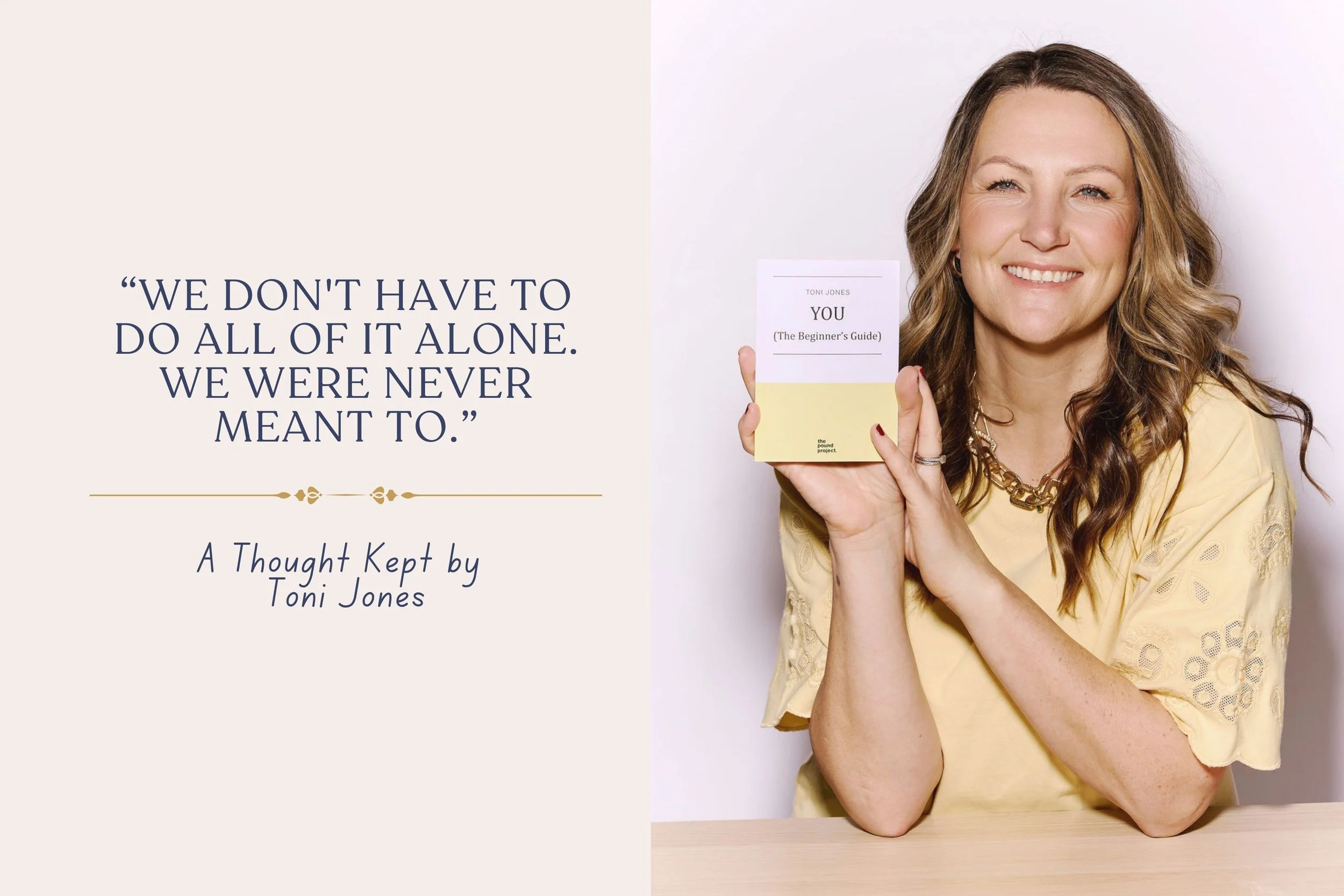
And yet the thought Toni brought to the podcast — borrowed from Brené Brown — was this: “We don’t have to do all of it alone. We were never meant to.”
I kept thinking about that afterwards.
Because maybe a better way to well isn’t just about what we do for ourselves. Maybe it’s also about who we let sit beside us while we figure things out.
The friend who notices you’re not okay before you admit it yourself.
The conversation that helps you feel less strange.
The book club where people finally say the quiet parts out loud.
The person who reminds you that you’re allowed to need care too.
The older version of yourself who can look back and realise: things did change, slowly, even when it didn’t feel like they were changing at all.
One of the things I loved most from the episode was Toni talking about how, years ago, she felt desperate for something — anything — to change. Whereas now, after years of reflection and experimentation and self-discovery, she approaches life with more curiosity than panic. More openness than grasping.
Not because she became a completely different person.
But because she became more connected to herself.
I think that’s the part of wellbeing we don’t talk about enough. That perhaps the goal isn’t becoming somebody new entirely. Perhaps it’s becoming more honest about who we already are. Understanding what supports us. Learning what drains us. Allowing our version of wellbeing to look different from somebody else’s.
And maybe that’s why Amanda and I created the If Lost, Start Here wellbeing journal in the way we did. Not as a rigid plan or perfect prescription, but as an invitation into curiosity. Into experimentation. Into asking better questions about what actually helps you feel more alive, connected, grounded or held.
Not wellness as performance.
Not self-improvement as punishment.
Just a steadier, kinder relationship with yourself and your life.
If this conversation resonates, you can listen to my full episode of A Thought I Kept with Toni Jones, where we explore vulnerability, burnout, self-help, friendship, identity, emotional wellbeing and what it means to stop carrying everything alone.
And if you’re feeling a little lost in your own life right now — unsure what wellbeing even means for you anymore — you’re also very welcome to explore my coaching work or the If Lost, Start Here journal. Not as a way to become someone else. Just as a place to begin listening to yourself again.
The Day You Realise You’ve Been Living With Your Eyes Closed
Feeling lost, restless, or unsure about your career or direction? We explore more quiet life changes, self-trust, and how small moments of awareness can help you find clarity without reinventing who you are.
We tend to think confidence arrives fully formed. A clear decision. A bold move. A moment where everything clicks into place. But often it begins with something far less impressive.
It begins with discomfort that doesn’t quite have a name. A low hum of restlessness that follows you through meetings, through conversations, through evenings on the sofa. You might not be able to point to anything that’s broken. You might even feel slightly ungrateful for questioning it. And yet the question lingers.
Am I actually choosing this?
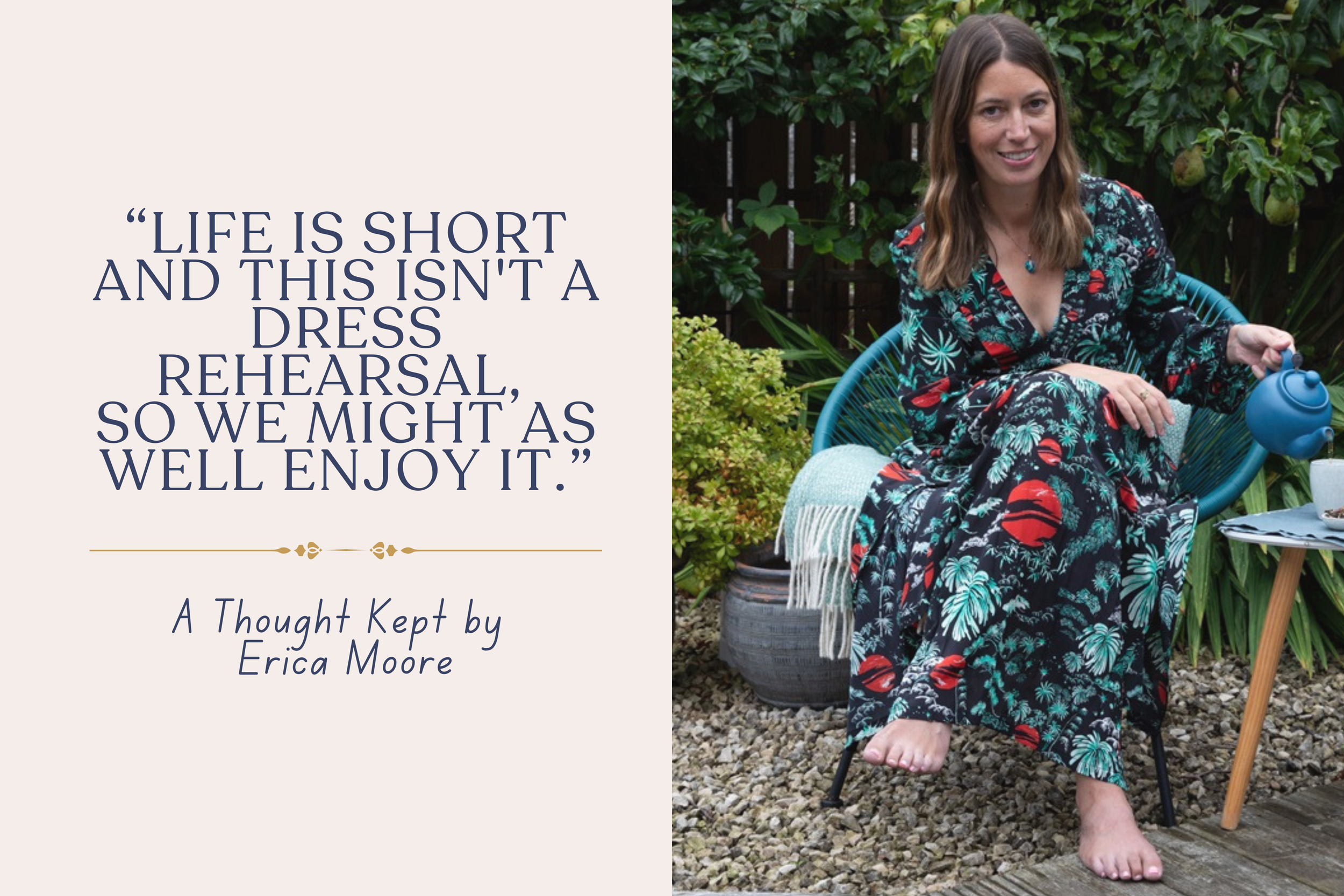
That was the pivot in my conversation with Erica Moore, founder of speciality tea brand eteaket on the podcast this week. Not a dramatic exit. Not a grand reinvention. Just a quiet noticing that she had been progressing through a life she hadn’t consciously shaped. She had been capable, competent, successful but not fully awake.
There’s something unsettling about realising you’ve been living slightly on autopilot. It can feel like you’ve missed something. Like you should have known sooner. But I don’t think that’s what’s happening.
I think sometimes we simply reach a point where the life that once fitted us begins to feel tight around the edges. We outgrow ways of coping. We outgrow expectations we once accepted without question. And because the outside world still sees us as “fine,” it can be hard to admit the internal shift.
This is often where people arrive here. Not because they want to become someone new. But because they want to feel more like themselves. And that’s a different thing entirely.
In the episode of the podcast, we talked about tea as a container — a small moment in the day where you can pause without having to justify it. I’ve been thinking about that a lot. How rare it is to have moments that aren’t productive, reactive, or outward-facing. How easy it is to move from task to task without ever checking whether the direction still feels right.
When you’re feeling lost, the instinct can be to find a bigger answer. A plan. A strategy. A reinvention.
But sometimes what’s needed is smaller. A little more space. A little more honesty. A little more willingness to sit with what’s true before deciding what to do about it.
Uncertainty doesn’t always mean something is wrong. It can mean something inside you is ready to be heard.
And the steadiness I come back to — in my own life and in coaching conversations — is this: you do not need to dismantle who you are in order to move forward. You do not need to be more disciplined, more confident, more impressive. You need to feel safe enough to notice.
When you allow yourself to notice what feels heavy, what feels enlivening, what feels misaligned, you begin to orient yourself again. Not through force. Through awareness. The work is not becoming someone else. It’s coming back to yourself, gently and repeatedly, until your choices begin to reflect who you actually are.
That’s not dramatic. It won’t make a good headline. But it does create a steadier life. And if you’re in that space right now — questioning quietly, searching for clarity, wanting change but not chaos — you are not behind. You are not broken. You may simply be opening your eyes.
You can listen to the full conversation with Erica on A Thought I Kept wherever you get your podcasts, and sit with the idea a little longer.
If you’re in a season of questioning or change and would value support as you find your way forward, our coaching sessions offer space for clarity, self-trust, and meaningful direction — at your pace.
You Don’t Have to Change Who You Are to Move Forward
If you’re feeling lost, overwhelmed or unsure, today we’re exploring self-trust, ADHD, and why you don’t need to change who you are to move forward.
Sometimes the feeling of being lost doesn’t announce itself loudly. It slips in quietly, disguised as self-doubt or restlessness. You find yourself wondering why the things that seem to work for everyone else don’t quite stick for you. Why your energy rises and falls. Why you can be so capable one week and so uncertain the next. Why the common advice about confidence or consistency feels faintly misaligned, as though it were written for someone else.
Many of the people who arrive here are not looking to reinvent themselves. They are looking for steadier ground. They are tired of trying to fix what might not be broken.
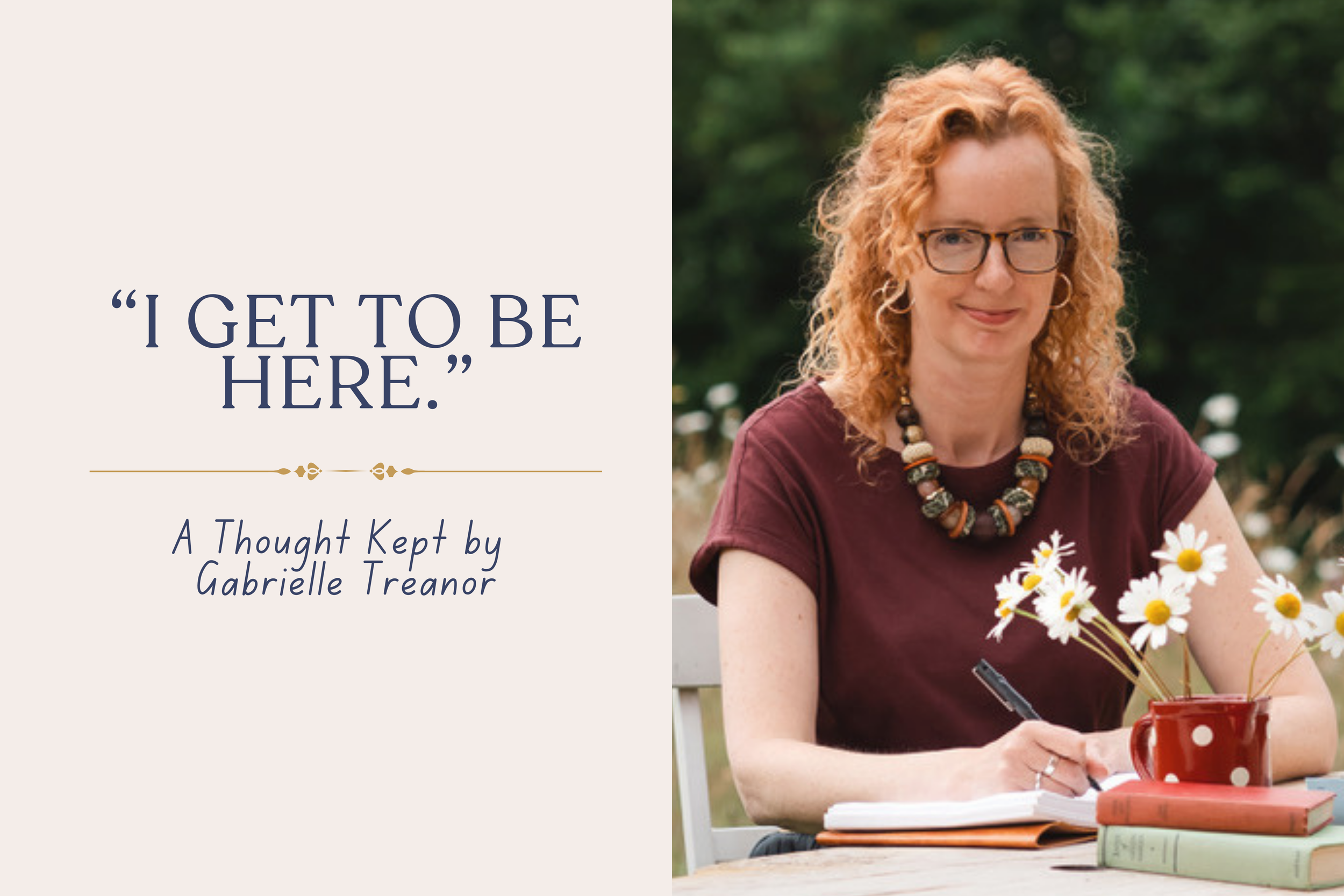
In a recent episode of A Thought I Kept, I spoke to writer and ADHD coach Gabrielle Treanor about a thought that had quietly reshaped her life: “I get to be here.”
When she said it, it wasn’t defiant. It wasn’t triumphant. It was calm. Considered. Almost surprised.
Gabrielle was diagnosed with ADHD in her late forties. For years she had assumed that her fluctuating motivation, her sensitivity, her tendency to procrastinate meant she simply wasn’t disciplined enough. She had tried to follow the prescribed routes to wellbeing — the routines, the systems, the ways of doing things “properly.” When she couldn’t sustain them, she thought the fault lay with her.
What changed was not her personality, but her understanding. Her brain worked differently. The expectations she had internalised were not neutral; they were shaped by a culture that prizes steadiness, productivity and linear progress. Realising this did not give her a new identity so much as a new understanding. A new willingness to stop apologising for the way she was wired.
I get to be here.
It is such a simple sentence, but it carries weight. It suggests that your presence is not conditional on becoming more efficient, more certain, more contained. It does not demand that you take centre stage; it simply reminds you that you belong in the room.
Many of us have been taught to make ourselves smaller in order to move through the world more smoothly. To temper our sensitivity. To soften our opinions. To be grateful for what we have and not ask for more. Even the language of wellbeing can subtly reinforce this shrinking — as though if we could only master the right practice, wake earlier, focus harder, meditate longer, we would finally become the sort of person who functions without friction.
But what if friction is not evidence of failure? What if it is simply information?
Gabrielle’s approach to wellbeing is rooted in experimentation rather than compliance. Instead of asking, “Why can’t I stick to this?” she asks, “What might work for me right now?” The difference is small but profound. It shifts the emphasis from self-criticism to curiosity. It acknowledges that we are not static creatures. Our energy shifts. Our capacity changes. The practices that nourish us in one season may not suit us in another.
For those of us who feel overwhelmed by self-improvement culture, this can be a relief. It allows us to step out of the exhausting cycle of starting and stopping, trying and failing, promising and abandoning. It invites us to pay attention to who we actually are, rather than who we think we ought to be.
If you are feeling unsure of your direction, it may not be because you lack ambition or courage. It may be because you have been trying to travel using someone else’s map.
To say “I get to be here” is to begin from your own coordinates. It does not solve everything. It does not remove uncertainty. But it offers a place to stand. From there, you can notice what feels steady and what does not. You can experiment gently. You can allow for inconsistency without interpreting it as collapse.
This is not an argument against change. Growth still happens. We still learn, adjust, stretch. But growth that begins from self-rejection rarely feels sustainable. Growth that begins from recognition — from a quiet acknowledgement of your temperament, your history, your rhythms — tends to be kinder.
If you are questioning whether the usual wellbeing advice works for you, that questioning may be wisdom rather than resistance. If you are tired of feeling behind, it may be because you have been measuring yourself against a timeline that was never yours.
You get to be here. As you are. With the brain you have, the experiences you carry, the particular mix of steadiness and fluctuation that makes you you.
If you’d like to hear the full conversation with Gabrielle, you can listen to the episode of A Thought I Kept where we explore this idea in more depth — including what it means to discover ADHD in midlife and how experimentation can replace striving.
And if you’re feeling especially untethered, our coaching sessions are here to help you explore these questions at your own pace.
There is no rush to become someone else. Sometimes the first step forward is allowing yourself to be exactly who you are.
What to Do When Life Falls Apart and You Feel Lost
When a relationship ends, someone dies, or you lose your job, it can feel like you’ve been pushed out of the life you built. Read this guide to navigating unexpected change, uncertainty, and rebuilding self-trust without rushing to fix everything.
There are moments in life when the ground gives way without your consent.
You didn’t choose the ending. You didn’t plan the disruption. A relationship ends because someone else makes a decision. A parent dies. A health diagnosis lands. A job disappears. And suddenly you are standing outside the life you built, holding pieces that no longer fit together.
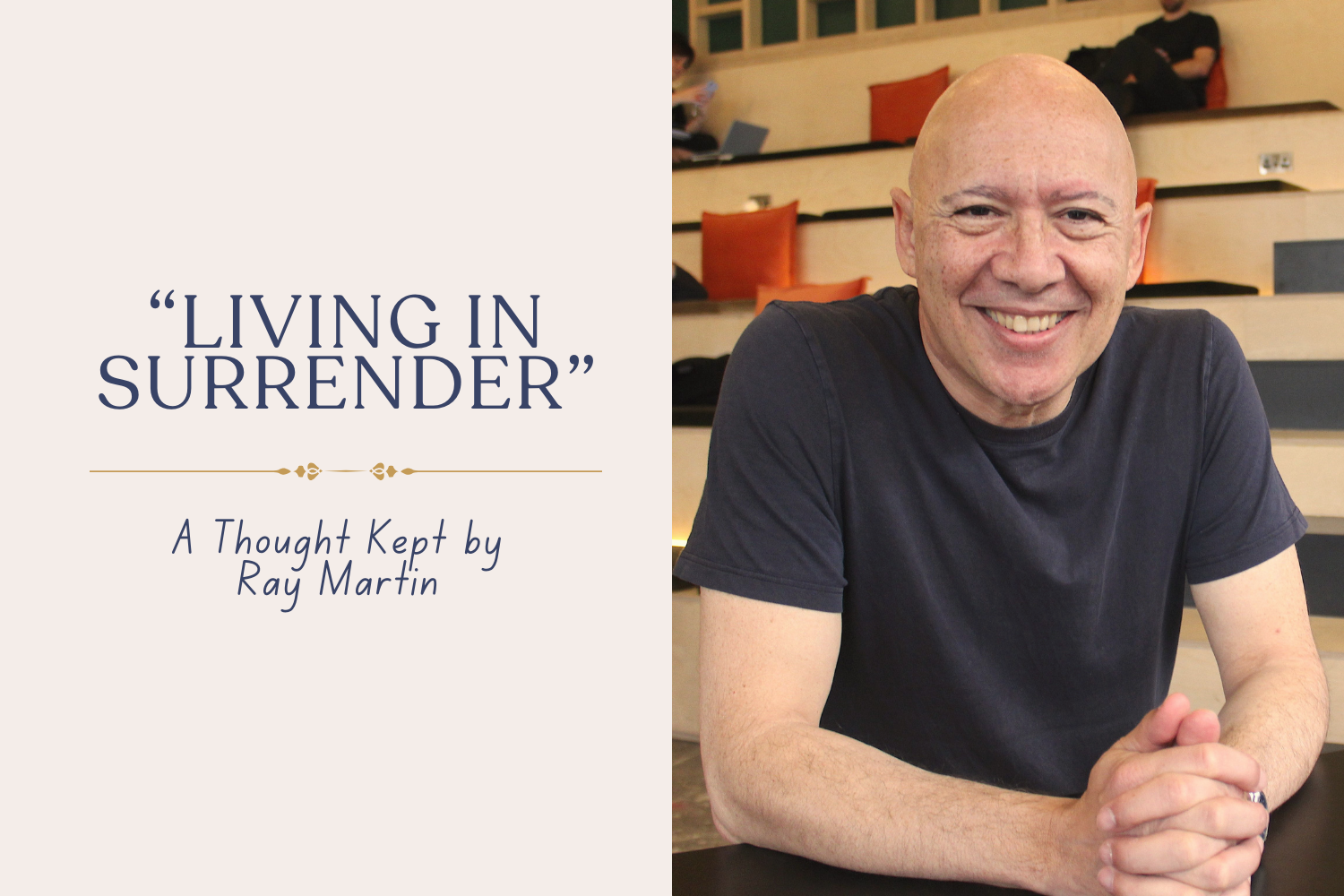
In my recent conversation with Ray Martin on A Thought I Kept, what struck me most wasn’t the romance of fourteen years of travel. It was the year that came before it. In a single stretch of time he lost his marriage, his business partnership, and his father The identity he had constructed — successful businessman, husband, son— fractured all at once.
He didn’t wake up one morning and decide to reinvent himself. Life pushed him out.
And that is often how it happens.
When something unexpected pulls the rug from under us, the first instinct is to restore what was. To fix. To replace. To rush toward a new beginning so we don’t have to sit in the in-between. Ray became fascinated by this middle space — what William Bridges calls the neutral zone The place where the old life has ended but the new one hasn’t fully formed. From the outside, nothing looks dramatic. Inside, everything is shifting.
If you are in that space, it can feel disorienting. You might not recognise yourself. The roles that once organised your days no longer apply. The confidence that came from knowing who you were can wobble. You may feel lost not because you are indecisive, but because the map you were using is no longer valid.
Ray’s core thought — the one he kept — is living in surrender
Not surrender as defeat. Not resignation. But surrender as a different way of orienting when control has already slipped from your hands.
He began to pay attention to where his energy went. After visiting an elephant sanctuary and an orphanage, he couldn’t stop thinking about them. Instead of dismissing that tug as sentimental, he followed it. That eventually led him to train for and run a marathon to raise money, something he had never imagined doing before
What I take from that is not “run a marathon.” It is this: when life has already dismantled your plans, perhaps you can afford to listen more closely to what quietly draws you.
Unexpected endings often strip us back to something more elemental. Ray speaks openly about how, earlier in life, he overrode his instincts in order to stay in character After everything fell apart, he found he could no longer ignore those nudges. He began treating life as a series of experiments rather than a fixed destination
There is something gentle in that framing. If you have been kicked out of the life you built, the pressure to “get it right” next time can be immense. An experiment carries less weight. It allows you to try, to notice, to adjust.
Another shift that came for him was around feeling. He moved from living primarily in his head to allowing himself to express emotion more freely. That matters when we are navigating grief, anxiety, or overwhelm. Emotional states are not permanent addresses. They are places we pass through. Letting yourself feel does not mean you will be swallowed by it. Often it means the feeling can move.
He also rethought the idea of “ties.” Work, relationships, community, home. The issue, he suggests, isn’t being tied to something. It’s being unconsciously tied When life tears away a tie without your permission, there can be freedom hidden inside the shock. Not the freedom you would have chosen, but the freedom to ask: what do I now choose, consciously?
Later in the conversation, Ray talks about calculating how many days he might have left — around 5,700 at this stage Not as a dramatic countdown, but as orientation. If time is finite, what is worth fighting? What can be softened? What is no longer necessary?
When the unexpected happens, we often look for certainty. For guarantees. For a clear five-step plan. What Ray’s story offers instead is steadier and perhaps more honest. You may not get certainty. But you can cultivate attention. You can notice what feels alive, even faintly. You can allow the neutral zone to do its quiet work inside you.
Being lost is not always a failure of planning. Sometimes it is the inevitable consequence of loving, committing, building — and then losing.
If you find yourself outside the life you built, perhaps the question is not immediately “What should I do next?” Perhaps it is “What is drawing me, even now?”
You can listen to the full conversation with Ray on A Thought I Kept:
And if you are in the middle of your own unexpected transition, our coaching sessions at If Lost Start Here offers a place to think, feel, and find your footing again without pressure to rush toward a new identity.
You are allowed to be in between. You are allowed to listen before you leap.
When the Story You’re Living No Longer Feels Like Yours
Sometimes life looks fine on the outside, but something feels off. Explore what self-trust can look like and what it means when the story you’re living no longer fits — and how to find your footing again.
You might be standing in the kitchen, making packed lunches. Nothing dramatic is happening. No argument. No crisis. Just the familiar rhythm of the morning — coffee cooling on the side, toast popping up, your phone lighting up with emails you already feel behind on.
You might catch yourself thinking, I’m good at this. At holding things together. At anticipating what everyone else might need. At getting through the day without making too much noise. And then, almost immediately, another thought follows: But I don’t remember choosing this version of myself.
It’s not that you dislike your life. You’re capable, loved, respected. From the outside, things look fine. But there’s a growing sense that you’re performing a role you’ve learned very well — one shaped by expectation, responsibility, and what once felt necessary — rather than living from a place that feels true to you now.
When you try to put words to it, they’re hard to find. You don’t want to sound ungrateful. You don’t want to blow things up. You just know that something about the story you’re carrying feels outdated, like clothing that once fit perfectly but now restricts your movement in small, tiring ways.
This is often how it begins. Not with a bold decision or a clear turning point, but with a quiet noticing. A moment where the life you’re living feels slightly misaligned with the person you’re becoming. Where the way you’re seen — dependable, easy-going, capable — no longer matches how you feel on the inside.
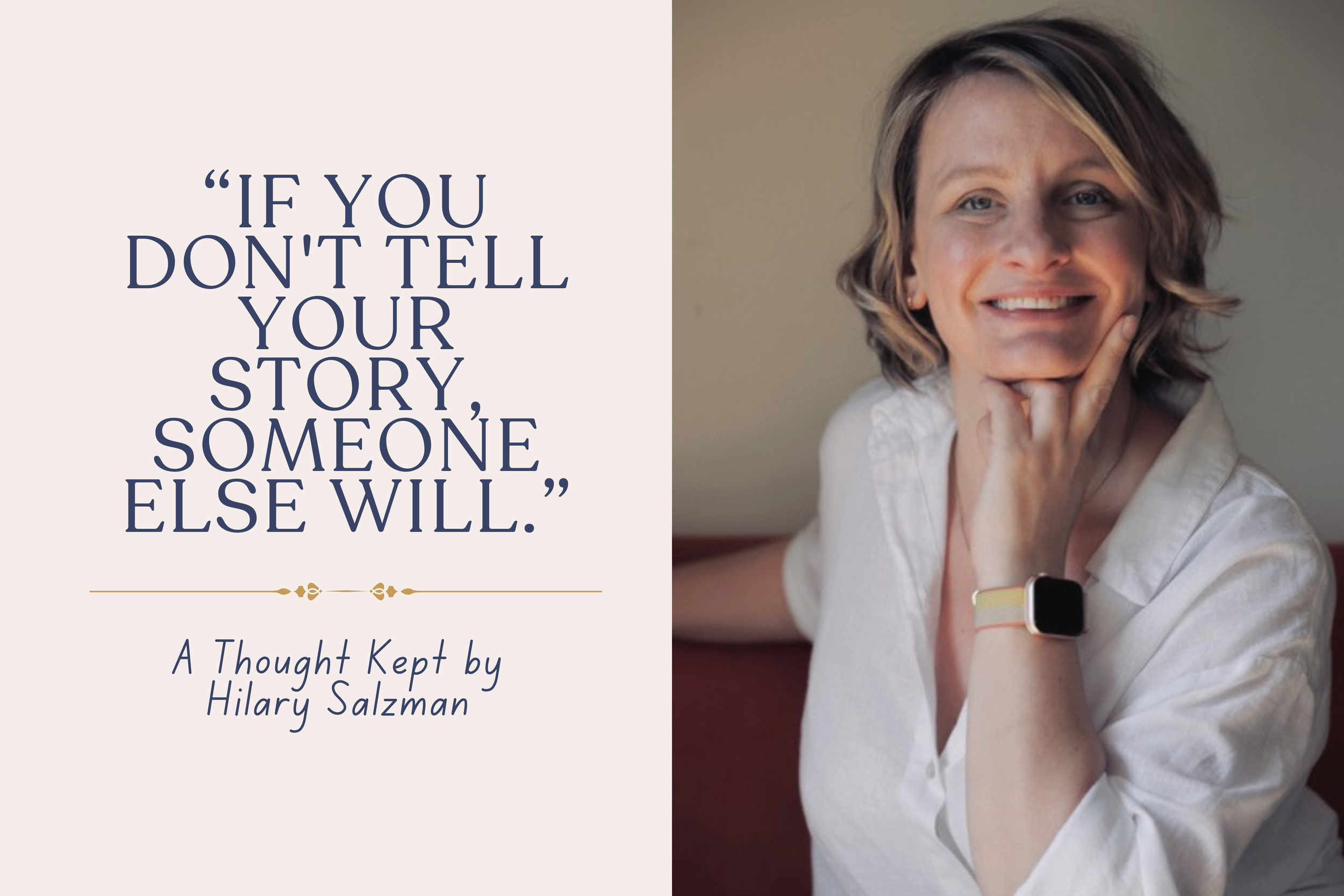
I’ve been thinking about this a lot since my recent conversation on A Thought I Kept with Hilary Salzman. We talked about storytelling, voice, and self-trust — not as something polished or performative, but as something deeply everyday. The stories we absorb, repeat, and live inside, often without realising we’re doing it.
Hilary shared a thought that has stayed with her for years: if you don’t tell your story, someone else will. It isn’t a warning or a call to action. It’s more like a lens — a way of noticing what happens when we stop authoring our own lives and allow habit, expectation, or other people’s assumptions to fill in the gaps.
Most of us aren’t consciously choosing to live someone else’s story. It happens gradually. We adapt. We respond. We take on roles that make us legible and useful. We learn how to be good — good at work, good in relationships, good at coping. And for a long time, those stories can be protective. They help us belong. They help us get through.
But protection can quietly turn into distance. From ourselves. From our feelings. From the sense of aliveness that comes from knowing why we’re doing what we’re doing.
In the conversation, Hilary spoke about the discomfort that arises when the way the world sees you no longer matches how you see yourself. That mismatch can show up as anxiety, restlessness, or a low-level dissatisfaction that’s hard to explain. You might feel unsettled or unsure, even though nothing is obviously “wrong”.
What stays with me is how rarely this is about needing a better plan or a more confident version of yourself. More often, it’s about noticing. Becoming curious about the stories you’re living inside. Asking gentle questions, not to fix or optimise, but to understand.
Whose expectations am I carrying here?
What version of myself am I maintaining?
What would it mean to tell this story in my own words?
We live in a culture that treats uncertainty as something to overcome — as though clarity must arrive quickly, and confidence comes from having answers. But what if uncertainty is simply information? A sign that something is shifting. A signal that the story you’ve been living has reached its limits.
Hilary talked about how clarity often doesn’t arrive as an answer, but as a feeling in the body — a sense of constriction or ease. A quiet knowing that something no longer fits. And noticing this doesn’t require dramatic change or brave declarations. It can begin by allowing yourself to feel what’s already there, without rushing to make sense of it.
This is where self-trust comes in — not as confidence or self-belief in the motivational sense, but as a willingness to stay present with your own experience. To let your emotions inform you rather than embarrass you. To trust that discomfort isn’t a personal failure, but a reasonable response to living inside a story that’s outgrown its usefulness.
Many people arrive at If Lost Start Here feeling overwhelmed, behind, or unsure why familiar wellbeing advice isn’t helping. Often, that’s because what’s needed isn’t another strategy, but orientation. A way of standing still long enough to feel where you are, and what might be asking for attention.
Living your own story doesn’t mean having a perfectly articulated narrative. It doesn’t require sharing everything or knowing exactly who you are becoming. It’s less about broadcasting and more about authorship — about being able to come back to yourself and say, this is who I am, for now. This is what matters. This is what I’m no longer willing to override.
The stories we tell ourselves shape our nervous systems, our relationships, our sense of belonging. When those stories are borrowed, inherited, or outdated, it makes sense that we feel unsettled. And when we begin to gently reclaim them — not by rewriting our lives overnight, but by listening more closely — something steadies.
You don’t need to force a new story into existence. You don’t need to perform authenticity or prove your voice. Sometimes it’s enough to notice the gap. To recognise the feeling of misalignment without judging it. To stay curious about what’s trying to emerge.
If this resonates, you might want to listen to the full conversation with Hilary on A Thought I Kept. It’s a thoughtful exploration of voice, identity, and what it means to feel more at home in your own life.
And if you’re in a season of questioning — unsure, overwhelmed, or quietly ready for something to shift — there’s support here too. Not to fix you, but to help you find your footing, in your own time, and in your own words.
You’re allowed to pause. You’re allowed to question the story you’re in. And you’re allowed to take your time deciding what comes next.
When No One Is Coming to Save You: Finding Self-Trust in Midlife
Often we can feel lost in midlife without knowing why. This week we’re exploring self-trust, confidence, and what might be keeping you stuck.
Sometimes feeling lost doesn’t look as dramatic as we think it might.
Rather it looks like getting through the day, doing what needs to be done, being relied on — and still having a sense that you’re not quite where you thought you’d be. Or that life feels oddly paused, even though everything is moving. You might not be unhappy, exactly. Just a little unheld. A little disconnected from yourself.
I notice this often when I talk to women in midlife. There’s competence there. So much experience. Caring for everyone and everything. And underneath it all, a feeling that something is meant to shift but absolutely no clear sense of how or when.
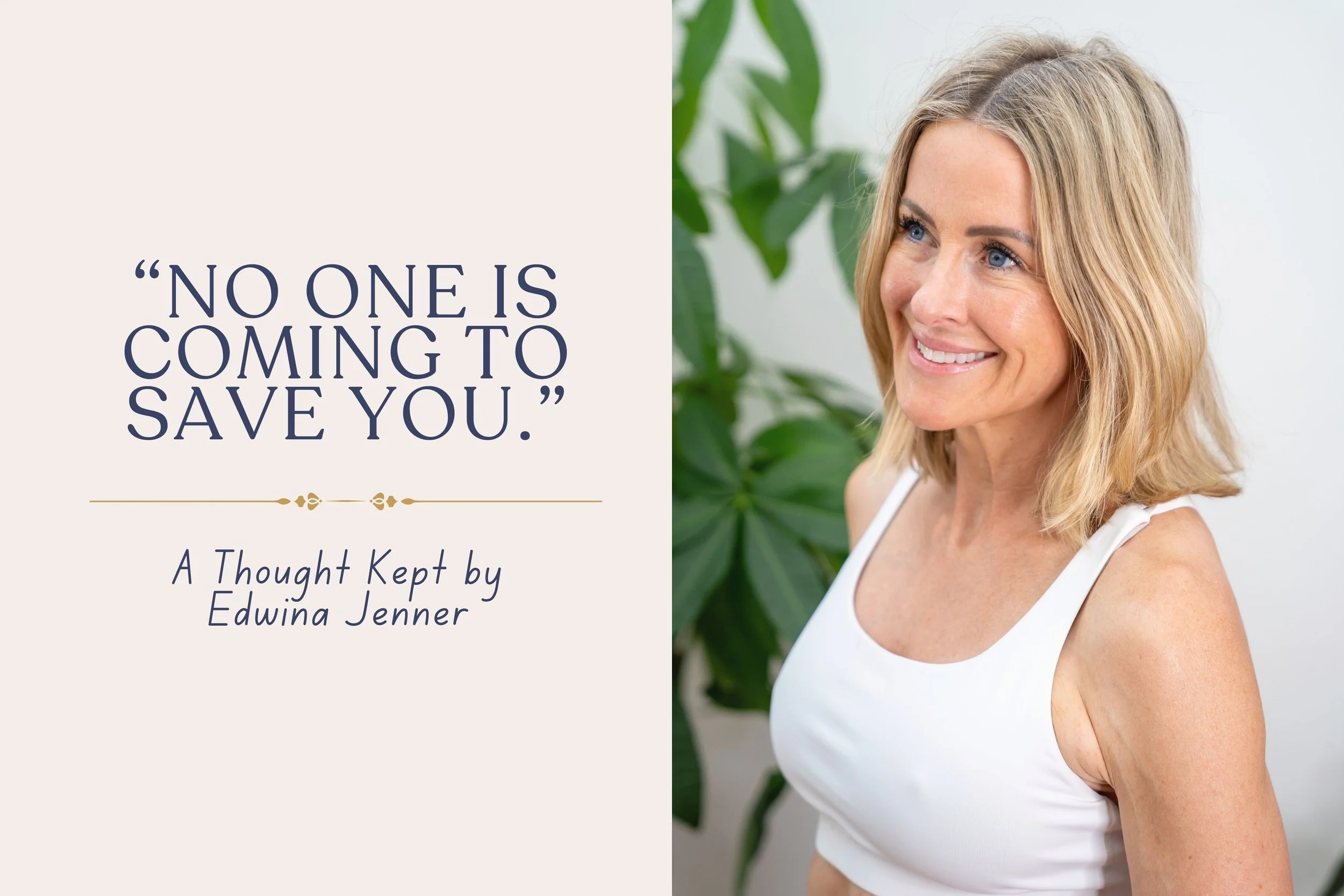
That feeling came up strongly for me in a recent conversation on A Thought I Kept with Edwina Jenner. As we talked, Edwina shared an idea that had stopped her in her tracks because it named something she hadn’t realised she was carrying.
The sense that, quietly, she had been waiting.
Waiting for things to feel easier. Waiting for confidence to arrive. Waiting for someone — or something — to step in and make life feel more manageable, more certain, more settled.
When she finally noticed that belief, it wasn’t crushing. It was clarifying.
Because alongside it came another realisation: no one else was coming to save her. She already had more agency than she’d been giving herself credit for.
Many of us arrive here having spent years responding to what’s needed — children, work, relationships, family, emotional labour. We learn to be capable. Reliable. Adaptable. And somewhere along the way, it can become easy to lose touch with our own pull. Not what’s expected of us, but what matters now.
Waiting can feel sensible. Responsible. Even kind. We tell ourselves we’ll come back to ourselves when things calm down. When there’s more space. When we feel more confident. When life gives us a clearer signal. But often, that signal never arrives.
Instead, what we notice are small signs of disconnection. Putting off caring for our bodies because we’re tired. Dismissing creative ideas because they feel indulgent. Ignoring rest, curiosity, or desire because other things seem more important.
In the conversation, Edwina spoke about strength, not as something performative or punishing, but as something built slowly, through attention and consistency. She talked about learning to trust herself again by doing what she said she would do. By listening to what pulled her, even when it felt uncomfortable. By recognising that motivation comes and goes, but self-trust is built through action.
What struck me most was how impactful this actually was.
Believing that no one is coming to save you doesn’t have to mean doing everything alone. It doesn’t mean hardening yourself or becoming self-sufficient at all costs. It can mean releasing an expectation that has unconsciously kept you waiting and turning back toward yourself instead.
There can be a kind of relief in that. Relief in realising you don’t need to become someone else to move forward. You don’t need a dramatic overhaul or a better version of yourself. You need permission to take yourself seriously. To listen more closely to what your body, your energy, and your inner life are already telling you.
When self-trust begins to rebuild, it rarely announces itself loudly. It shows up in small decisions. In boundaries that feel steadier. In caring for your body not as a project, but as a relationship. In choosing what supports you, even when it doesn’t look impressive from the outside.
If you’re feeling lost right now, it might not be because you’re “behind” or “broken”. It might be because you’re between ways of being. No longer able to live on autopilot, but not yet clear about what comes next.
That in-between can feel uncomfortable. But it’s also where attention returns. Where curiosity starts to replace pressure. Where you begin to notice that you already know more than you think.
At If Lost Start Here, we don’t believe that confidence or wellbeing come from fixing yourself or forcing change. They come from reconnecting — slowly and openly — with what matters to you now. From trusting that the things pulling at you are worth listening to.
If this resonates, you might like to listen to the full conversation with Edwina on A Thought I Kept.
And if midlife feels like a threshold you’re standing in — unsure, but ready for something to change — we’ve created a great resource to support that moment.
You can download our free midlife resource here.
Struggling With Comparison? Rethinking Confidence and Self-Trust
Comparison and competition can quietly shape how we see ourselves. In this conversation, we explore confidence, self-trust, and the beliefs we carry through life.
This is how it might go. You’re scrolling, or reading, or listening to a podcast, and you notice a flicker of feeling when someone else shares good news. A promotion. A book deal. A confident post about work they love. You’re pleased for them — genuinely — and yet something tightens. A question forms that you don’t quite want to look at too closely.
What does this mean about me?
Moments like this don’t usually come with drama. They’re small, everyday, easy to brush past. But they can linger. And over time, they shape how we see ourselves, how we show up at work, and how much space we allow ourselves to take.
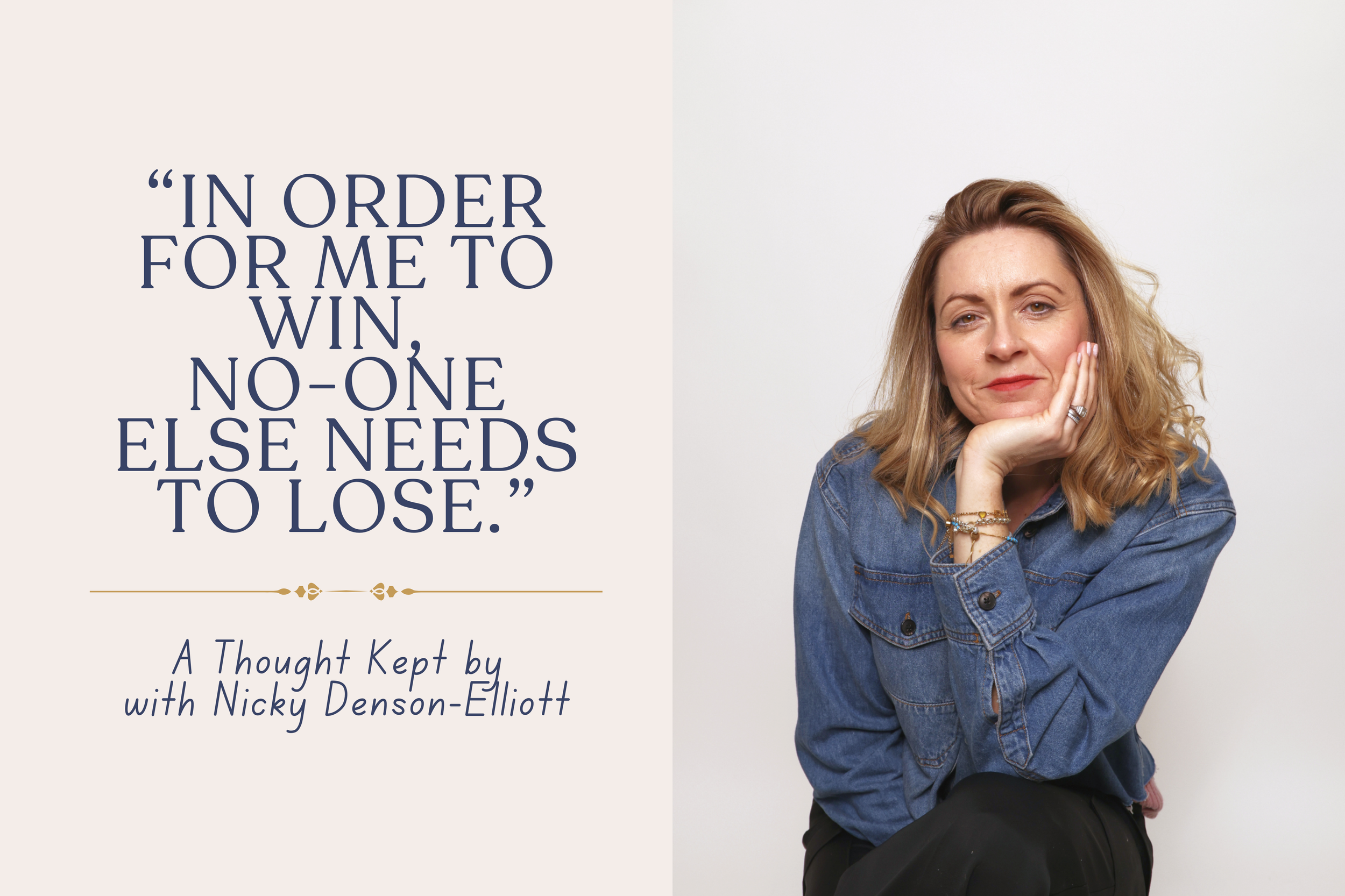
This week on A Thought I Kept, I spoke to Nicky Denson-Elliott, and she brought a thought that disrupted that familiar inner pattern:
In order for me to win, no one else has to lose.
It’s one of those ideas that seems obvious when you first hear it and then quietly radical the longer you sit with it.
Because so much of our inner landscape has been shaped by the opposite belief. That success is scarce. That confidence belongs to certain people, not others. That if someone else steps forward, there’s less room for us. These ideas don’t usually announce themselves as beliefs. They show up as feelings: comparison, jealousy, self-doubt, hesitation.
Nicky spoke about how deeply this conditioning runs, especially for women. How it can shape our relationship with money, confidence, and visibility. How it influences the way we price our work — often not based on its value, but on what feels safe. How it quietly sets women against one another, even when connection and solidarity are what we most want.
What’s important here is that none of this is a personal flaw. These are not thoughts we invented. They’re learned. Reinforced. Picked up over time in workplaces, families, schools, media, and culture. When they surface, they can feel intensely personal but they rarely originate there.
And when life already feels full or uncertain, carrying these inherited ideas can make everything heavier. You might notice it in how hard you are on yourself. In the way you second-guess decisions. In the tension you feel around confidence — wanting it, distrusting it, worrying what it might cost.
One of the most grounding parts of the conversation with Nicky was her refusal to replace one set of rules with another. There was no invitation to be bolder, louder, or more confident in a performative sense. Instead, she talked about noticing. About recognising when a familiar reaction appears and asking, with curiosity rather than judgment: Is this actually mine?
That question alone can create a shift.
Because when we start to see that some of our thoughts are inherited rather than chosen, we don’t have to wrestle with them in the same way. We don’t have to argue ourselves out of feeling jealous or small or unsure. We can simply recognise the pattern, and loosen our grip.
This matters not just for our inner world, but for how we move through everyday life. Especially work. Especially relationships with other women. Especially moments where confidence feels like something other people have access to, and we’re still figuring it out.
Letting go of the myth of competition doesn’t mean pretending everything is fair or easy. It doesn’t mean denying ambition or discomfort. But it does open up a different orientation — one where someone else’s success doesn’t automatically diminish our own, and where confidence can be something we grow into, rather than something we perform.
For many of us, this kind of rethinking doesn’t arrive as a neat turning point. It shows up gradually. In small pauses. In moments where we choose not to rush to judgment — of ourselves or others. In the realisation that uncertainty doesn’t mean we’re failing; it often means we’re paying attention.
If you’ve been questioning old ideas about success, money, confidence, or what it means to be doing “well” in life, you’re not behind. You may simply be noticing that the old maps don’t quite match the terrain anymore.
Nicky’s thought offers a steadier way of orienting. It reminds us that life isn’t a zero-sum game. That generosity — toward ourselves and others — isn’t naïve, but grounding. And that self-trust doesn’t come from fixing or perfecting ourselves, but from recognising which beliefs were never designed to support us in the first place.
You don’t need to know what comes next. You don’t need to replace every thought at once. Sometimes it’s enough to notice which ideas make life feel smaller, and to wonder — without urgency — what it might be like to set one of them down.
If this resonates, listen to the full conversation with Nicky on A Thought I Kept.
And if you need help exploring some of the feelings you have around comparison — jealousy, self-doubt, hesitation — or what confidence even means to you, explore our emotions coaching sessions.
How to Handle Your Emotions When You’re Feeling Lost or Overwhelmed
Feeling lost or overwhelmed by your feelings? Learn how to handle your emotions when you struggle to understand them.
There’s a moment many of us might recognise.
You’re trying to make a decision, move something forward, or simply get through the day — and your emotions feel louder than you’d like them to be. Anxiety edges in. Frustration bubbles up. Self-doubt has an opinion. And suddenly it feels harder to think clearly, trust yourself, or know what the next step might be.
When that happens, it’s easy to conclude that the problem is your emotions. That you’re feeling too much, or handling things badly. That if you could just calm down, be more confident, or stop overthinking, everything would be easier.
But what if the issue isn’t having emotions — it’s that most of us were never taught how to handle them well?
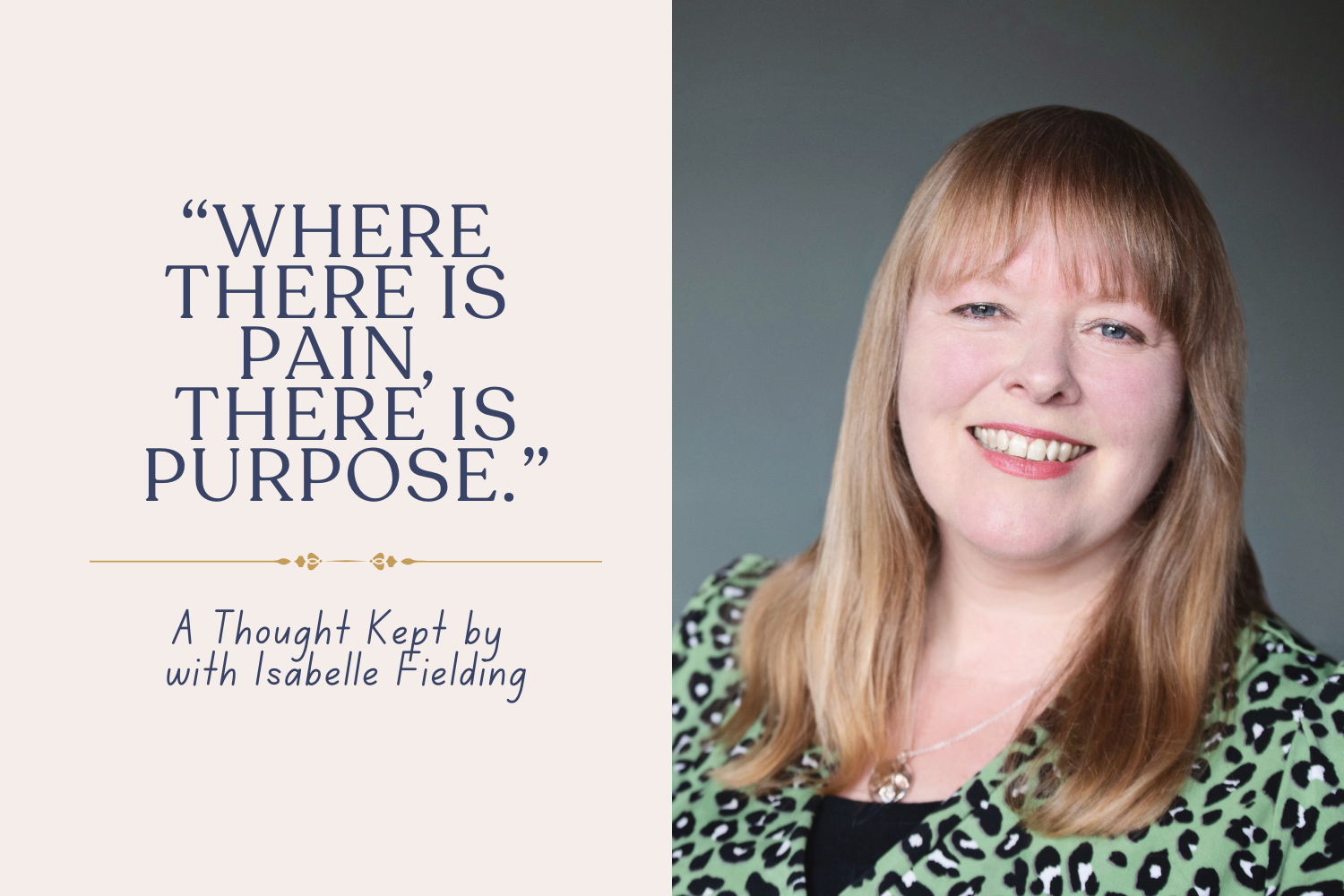
This question sat at the heart of a recent conversation on our podcast A Thought I Kept, with Isabelle Fielding. Isabelle works with individuals and organisations navigating change and uncertainty, and her work is grounded in a simple but often overlooked idea: emotions are part of being human, and learning how to relate to them is a skill — not a personality trait.
One of the key ideas Isabelle shared was this: Where there’s pain, there’s purpose. Not pain as something to glorify or push through, but pain as a signal. An indication that something matters, that a value is being touched, that attention is needed.
For many people who arrive here feeling lost, this is already a reframe. Because when emotions feel uncomfortable, our instinct is often to control them, deny them, or move away from them as quickly as possible. We tell ourselves we shouldn’t feel this way. We judge the feeling. We add a second layer — frustration, shame, self-criticism — on top of the original emotion.
Very quickly, things escalate.
Isabelle spoke about how emotions often stack like this. You feel anger, then feel ashamed of feeling angry. You feel anxious, then criticise yourself for being anxious again. Before long, it’s hard to know what you’re actually feeling — just that it’s too much.
Handling emotions better doesn’t mean stopping that first feeling from arising. It means learning how not to pile everything else on top.
In the conversation, Isabelle used an image that makes this easier to picture. Imagine being in the sea, trying to hold a beach ball underwater. It takes constant effort. Your arms ache. And eventually, no matter how determined you are, the ball bursts back to the surface — often catching you off guard. That’s what it can be like when we try to suppress or ignore our emotions. They don’t disappear; they resurface later, often louder and harder to manage.
A more sustainable approach is to let the ball float.
To allow emotions to be present without pushing them away — but also without letting them take over. Isabelle described this as learning to carry emotions lightly, rather than holding them right in front of your face. They’re there, but they don’t get to drive every decision.
This is where handling emotions becomes less about control and more about relationship.
Instead of asking, How do I get rid of this feeling? we might ask, Can I notice this without being overwhelmed by it?
Instead of assuming emotions make us unreliable, we can start to see them as information — not instructions.
Anxiety might be signalling uncertainty that needs time. Frustration might be pointing to a boundary or a mismatch. Self-doubt often appears where we care deeply about doing something well. None of these emotions tell us exactly what to do next but they can help us understand what’s going on inside us.
For people feeling lost, this can be grounding. Because it means you don’t have to wait until you feel calm, confident, or certain before you’re allowed to move forward. You don’t need to change who you are to begin handling things better.
Another important distinction Isabelle made was between experiencing an emotion and becoming it. Feeling anxious is not the same as being an anxious person. Feeling unsure doesn’t mean you can’t be trusted. Emotions are states — they come and go — even when they feel sticky or familiar.
Learning to handle emotions better often starts with noticing this difference.
It might mean pausing long enough to name what you’re feeling, without immediately reacting or analysing it. It might mean recognising when a second emotion — shame, irritation, self-judgment — has joined the first. It might mean allowing yourself to feel something without demanding that it resolve straight away.
This isn’t about emotional mastery. It’s about emotional steadiness.
At If Lost Start Here, we often talk about finding your footing rather than finding answers. About orientation rather than certainty. Learning to handle your emotions is part of how to navigate life. Not because emotions give you a perfect map, but because they help you stay connected to yourself as you move through change.
You may still feel unsure. You may still feel conflicted or overwhelmed at times. But handling emotions better doesn’t mean eliminating those experiences — it means being less knocked off course by them.
And that can make a real difference when you’re trying to move forward gently, in your own way.
If you’d like to explore this further, the full conversation with Isabelle Fielding is now available on our podcast A Thought I Kept.
And if you’re feeling lost or unsure and want support in understanding and handling your emotions, explore our coaching sessions.
If You’re Not Ready for New Year’s Resolutions, Try This Instead
If New Year’s resolutions leave you feeling pressured or unsure, curiosity offers a gentler way to start the year without changing everything about yourself.
January has a way of making people feel behind before the year has properly begun. Even if you resist it, there’s a low hum of expectation in the background — conversations about goals, questions about what you’re changing this year, lists forming almost by default. The start of a new year is meant to feel like the thrill of new beginnings, but for many people it lands more like a dulling pressure.
A lot of people arrive here in January wondering whether New Year’s resolutions ever really worked for them. Whether it’s worth writing them down again. Whether this is the year they finally follow through — or whether they’re already tired of trying to become a better version of themselves before the year has even settled.
If that sounds familiar, it’s worth saying this clearly: not feeling ready doesn’t mean you’re unmotivated. It often means you’re paying attention to where you really are right now.
Resolutions are built on an idea of certainty that most of us don’t actually have at the start of a year. They assume we know what needs changing, that we’re ready to commit to it, and that progress happens best when we draw a sharp line between who we were and who we’re supposed to become. But life doesn’t tend to work in clean breaks. We carry the previous year with us — its questions, its fatigue, its unfinished business — and January doesn’t erase any of that.
That’s one reason resolutions can feel fragile. They ask us to decide too much, too soon, at a moment when many of us are still finding our footing, and in the middle of the grey days of winter too.
There’s another way to begin, one that doesn’t require reinvention or resolve. Curiosity.
Curiosity doesn’t ask you to map the year ahead. It doesn’t demand a plan or a promise. It invites you to notice what’s already happening and stay in relationship with it. Instead of asking what you should change this year, curiosity asks what’s worth paying attention to right now. Instead of pushing for answers, it allows you to explore.
This matters because curiosity works with real life, not an idealised version of it. You can be curious about when you feel most yourself and when you feel depleted. You can notice patterns in how you spend your time, what you avoid, what you keep returning to. You can start to understand what supports you and what quietly drains you, without turning those observations into a verdict on who you are.
For many people, the desire behind a resolution is something simple and human: to feel more confident, to enjoy life more, to feel steadier or more successful in a way that actually fits. Curiosity doesn’t get in the way of those hopes. It gives them room to grow.
One of the most freeing things about curiosity is that it removes the pressure to be ready. You don’t need a word for the year. You don’t need a perfect starting point. You don’t need to know where you’ll end up. You can begin with interest instead of intention, learning as you go rather than judging yourself for not having it all figured out.
That’s often where meaningful change starts — not from fixing yourself, but from understanding yourself better. From noticing what matters, what’s shifting, and what might need a little more care.
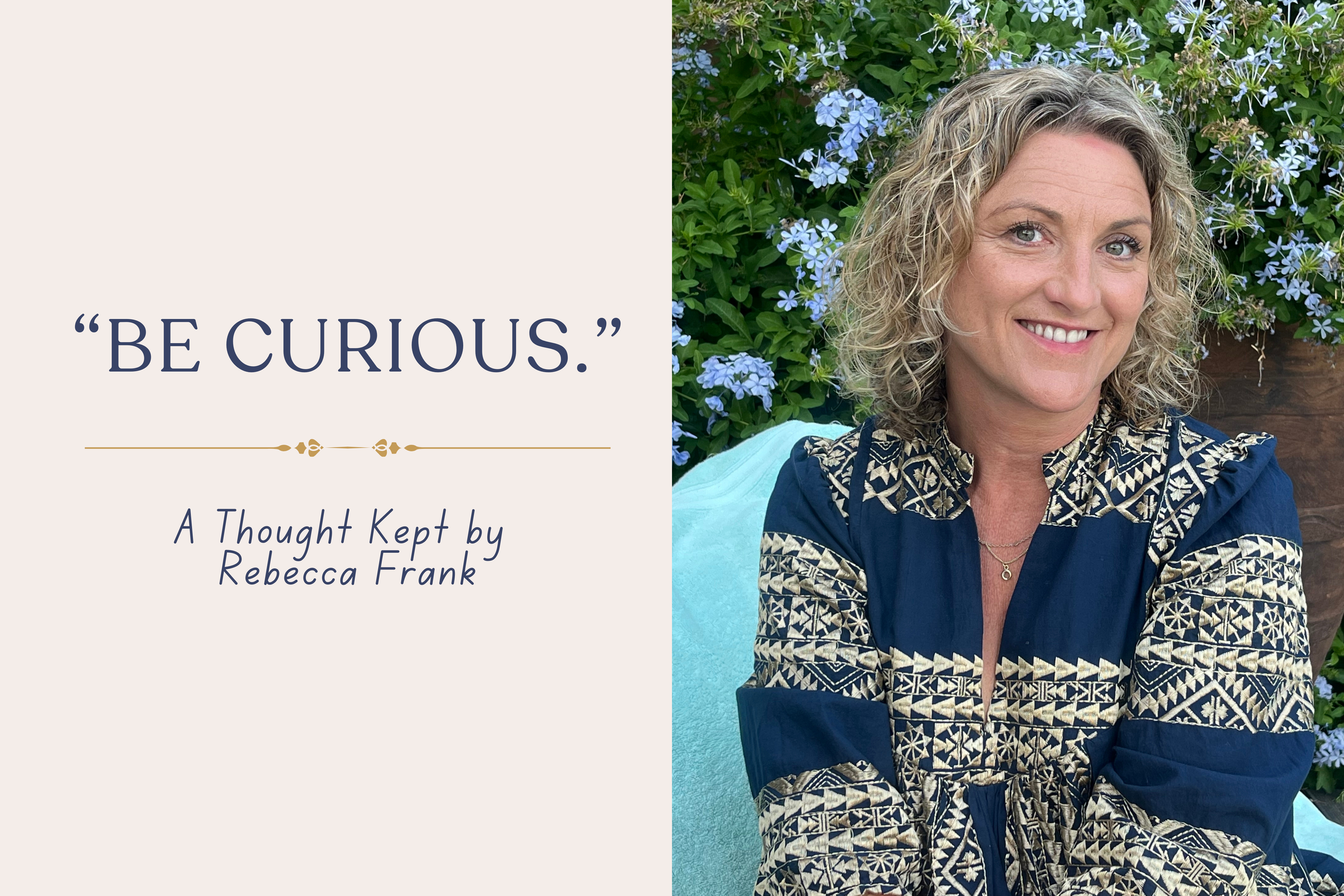
If you’re questioning whether New Year’s resolutions work, or whether there’s a gentler way to start the year, this week’s episode of A Thought I Kept explores curiosity as a way of approaching life without pressure. In this conversation with Rebecca Frank, wellbeing editor of The Simple Things, we talk about navigating January without having to change everything about yourself — and how curiosity might offer a different, and steadier, place to begin.
The Thought That Changed How I End the Year
End the year with more clarity and less pressure. Discover one powerful question to reset your mind and start the new year with intention
Every year around this time, I feel a quiet tension building.
It’s not just the pressure to finish things, though that’s part of it — the projects left undone, the goals half-met. It’s something deeper. A low-grade noise, humming underneath the productivity tools and Pinterest-perfect vision boards.
That voice that says:
“You should be reflecting.”
“You should be setting goals.”
“You should be figuring out how to make next year better.”
And often, if I’m honest, I try to oblige. I sit down with the journal. I make the lists. I try to “get clear.”
But I don’t always feel clear. I just feel… tired.
So this year, I’m trying something different. Something softer.
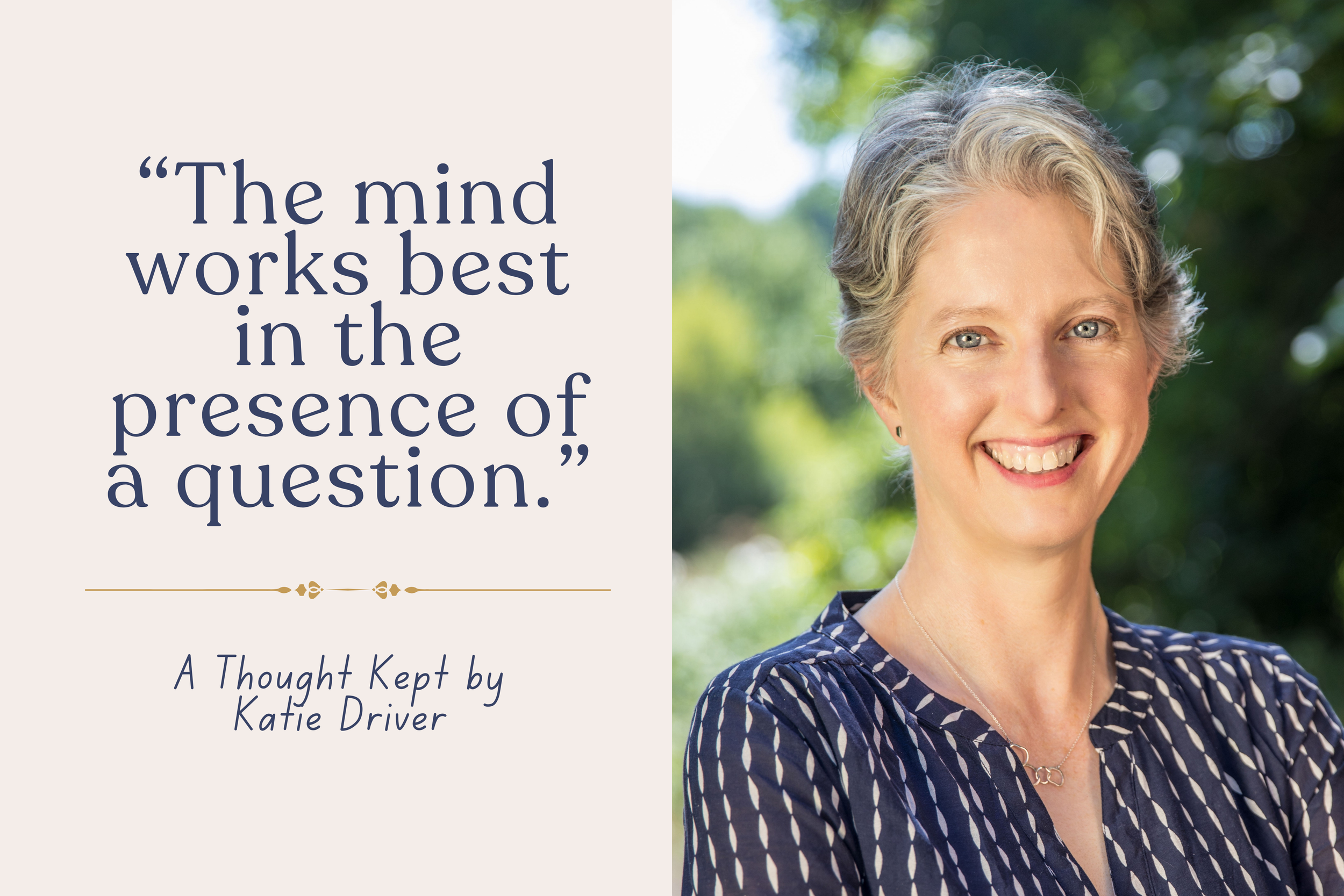
And it started with one sentence from a conversation I had with coach and facilitator Katie Driver:
“The mind works best in the presence of a question.”
It landed so gently, I almost missed it. But the more I sat with it, the more it felt like a key — not just to better thinking, but to a better ending.

What if clarity doesn’t come from pushing — but from asking?
Katie’s work centers around helping people think for themselves — particularly those who feel like their minds are “buffering” or stuck in mental noise loops. In our episode of A Thought I Kept, she talks about the value of attention, the importance of quiet, and what can shift when we stop trying to force insight, and start trusting the questions.
As someone who has historically tried to think my way to control — to logic, list-make, or out-journal the overwhelm — this idea felt like an exhale. What if I didn’t need the answer yet? What if I didn’t need a 12-step plan? What if I just needed the right question?
So I tried one.
The question that helped me end the year differently
On a particularly messy-feeling day, I sat down with this:
What would make this a good ending — for me?
Not a successful one. Not a productive one. Not an impressive one.
A good one. For the person I actually am.
And quietly, without fanfare, an answer rose:
Letting go of something I never really wanted.
Finishing one small thing I care about.
Taking a walk in silence, no headphones.
Choosing presence over performance.
Not exactly a 10-point strategic vision. But honest.
True. Grounded. And — perhaps most importantly — doable.
Another question I’ve come to love:
“What do I need right now?”
It’s one Katie shared in the episode, and I’ve returned to it often.
When the list is long. When my brain feels foggy. When I’m tempted to sink into distraction instead of meeting myself gently.
Sometimes the answer is small — a cup of tea, a stretch, a text to someone I love. Sometimes it’s “nothing right now.” But just asking reminds me I have needs, and they’re worth listening to.
In a season that often prioritizes output — what did you accomplish, what are you planning next — this simple question helps me reorient inward. To listen. To care. To remember that ending well isn’t always about tying everything up. Sometimes it’s about releasing what no longer fits.
A better ending is possible. But it starts with presence, not pressure.
So if you’re feeling behind or burnt out or like your brain is caught in a loop —
If you’re wondering how to reset without overhauling everything —
Here’s what I learned:
You don’t need to fix it all.
You don’t need to reinvent yourself.
You don’t even need to reflect perfectly.
You just need one honest, open question.
And a little space to answer it.
Listen to the episode: What to Do When You Can’t Think Straight with Katie Driver
And if you need the space to think then explore our online and in-person coaching sessions. You can still book for the end of this year, or get a session in your calender for the start of 2026.
Navigating Grief When It Doesn’t Look How You Thought It Would
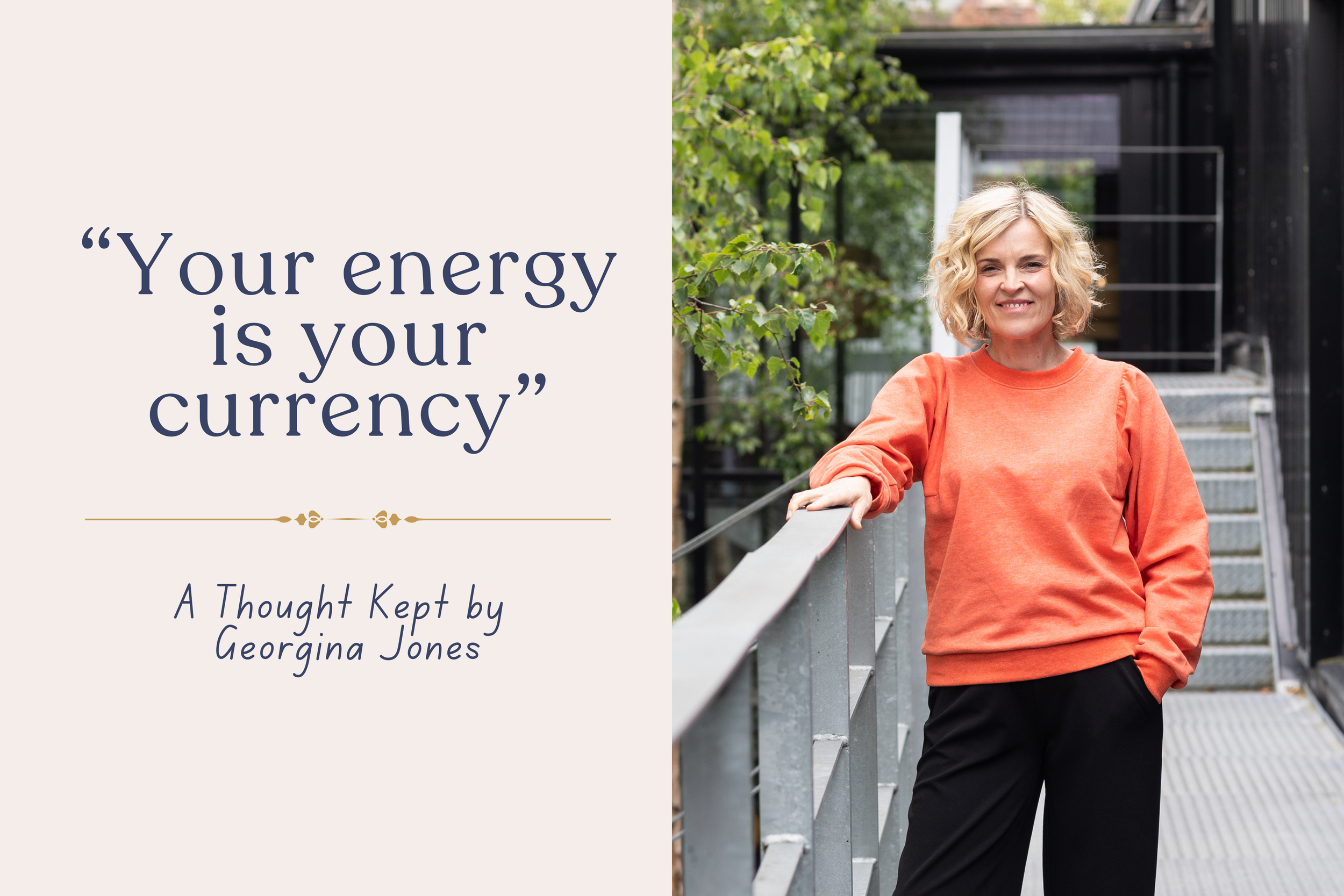
Discover a gentler, more human way to navigate grief — especially when it doesn’t look the way you thought it would — with Georgina Jones, founder of The Grief Disco
What does grief look like?
If we’re honest, many of us have a picture in our minds. Tears. Silence. Perhaps someone wearing black, speaking softly, saying “I’m fine” when they’re clearly not. Or maybe someone who’s angry, messy, falling apart. We expect grief to look dramatic — or dignified — but either way, we expect to recognise it when it arrives.
So what happens when it doesn’t look the way we thought it would?
What happens when we’re grieving and we’re… still functioning? Still laughing? Still showing up for the school run? Or what if we can’t cry but know we’re holding something enormous inside?
And what if someone else is grieving and we misjudge them, because we think they should be more upset, or more together, or more like us?
That’s the quiet heartbreak of grief: not only the loss itself, but the confusion about how it’s “meant” to be.

In a recent episode of A Thought I Kept, I spoke to Georgina Jones, founder of The Grief Disco — a woman whose work lives at the intersection of grief, music, dance, and joy.
Her story challenged so much of what we think we know about grief. Georgina lost her son in 2023, and has experienced what many would describe as profound, unimaginable loss. And yet, she dances. She laughs. She connects. She creates spaces where people can cry and dance at the same time.
It’s not about ignoring grief or sugar-coating it. It’s about making space for the full spectrum of it — especially when it doesn’t come wrapped in the behaviours we’ve been taught to expect.
Georgina spoke about how grief lives in the body. That there are things music can unlock that words can’t reach. That sometimes we can be sobbing and laughing in the same breath. And that joy isn’t something that betrays grief — it’s something that supports it.
What struck me most was this: grief doesn’t always look the way we think. And that misunderstanding can create more pain, not just for the person grieving — but for those around them, too.
We’ve inherited a lot of strange stories about how we’re supposed to grieve.
We think:
Grief has “stages” (it doesn’t — it has cycles, spirals, waves).
It’s meant to be quiet and tearful — or explosive and visible.
There’s a right way to do it.
It’s only valid if someone has died.
It ends.
But grief is far more expansive than that. It can be:
The silent, confusing ache after a miscarriage no one knew about.
The slow unraveling of identity in a job or relationship loss.
The anticipatory grief of watching someone change before they’re gone.
The quiet guilt of feeling relief — and wondering what that says about you.
And crucially: grief doesn’t always look “sad”.
You might feel numb. Or angry. Or completely disconnected. Or wildly creative. You might crack jokes at a funeral, or scream into your pillow a year later when you least expect it. That’s grief too.
So how do we navigate grief — especially when it surprises us?
Here’s what I’m learning, from Georgina and others, and through the work I do in emotions coaching:
1. Let go of the script
There is no one way grief should look. There is only the way it shows up in you. That’s enough. And it’s valid — even if it makes no sense.
2. Name what’s true
Maybe you’re grieving someone still alive. Maybe you’re mourning a version of yourself. Maybe you feel like your grief isn’t “big enough” to count. It does count. Language helps. Start with small truths. “This is hard.” “I feel strange.” “I miss something I never really had.”
3. Move it through the body
Grief isn’t just cognitive — it’s visceral. Breath, movement, music, crying, stillness — these aren’t indulgences. They’re how your body integrates the experience. As Georgina said, “We are so heady. But there is so much knowledge in the body.”
4. Let joy have a seat at the table
Joy doesn’t replace grief. It companions it. Finding joy again isn’t a betrayal of your sadness — it’s part of what sustains you. You’re allowed to laugh. To sing. To dance. Even while you’re broken-hearted.
5. Ask for support from someone who gets it
You don’t have to figure this out alone. Talking to someone trained in emotional literacy, regulation, and compassionate witnessing can help you feel seen — especially when your grief doesn’t look “typical.” That’s what emotions coaching is for.
Grief doesn’t come with a rulebook. But it can come with support.
If this resonates with you — if your grief feels different, or hard to name, or hard to carry — I’d love to invite you to:
Georgina shares her story of loss, joy, dancing through grief, and why your energy — even in the darkest moments — is your currency.
If you’re navigating something tender, tangled, or hard to name — this is the space for you. Emotions coaching is not about fixing you. It’s about helping you meet what’s here with more understanding, care, and clarity.
You don’t have to go it alone.
And your grief doesn’t have to look like anyone else’s.
If You’re Self‑Cared‑Out: How to Move from Doing to Being Seen
Feeling disconnected, overwhelmed or stuck in the self‑care loop? Discover how self‑advocacy, emotional health and receiving care can bring meaningful change.
You’ve done the rituals — the colouring‑in, the bubble bath, the breaths, the affirmations. And yet, you still feel drained.
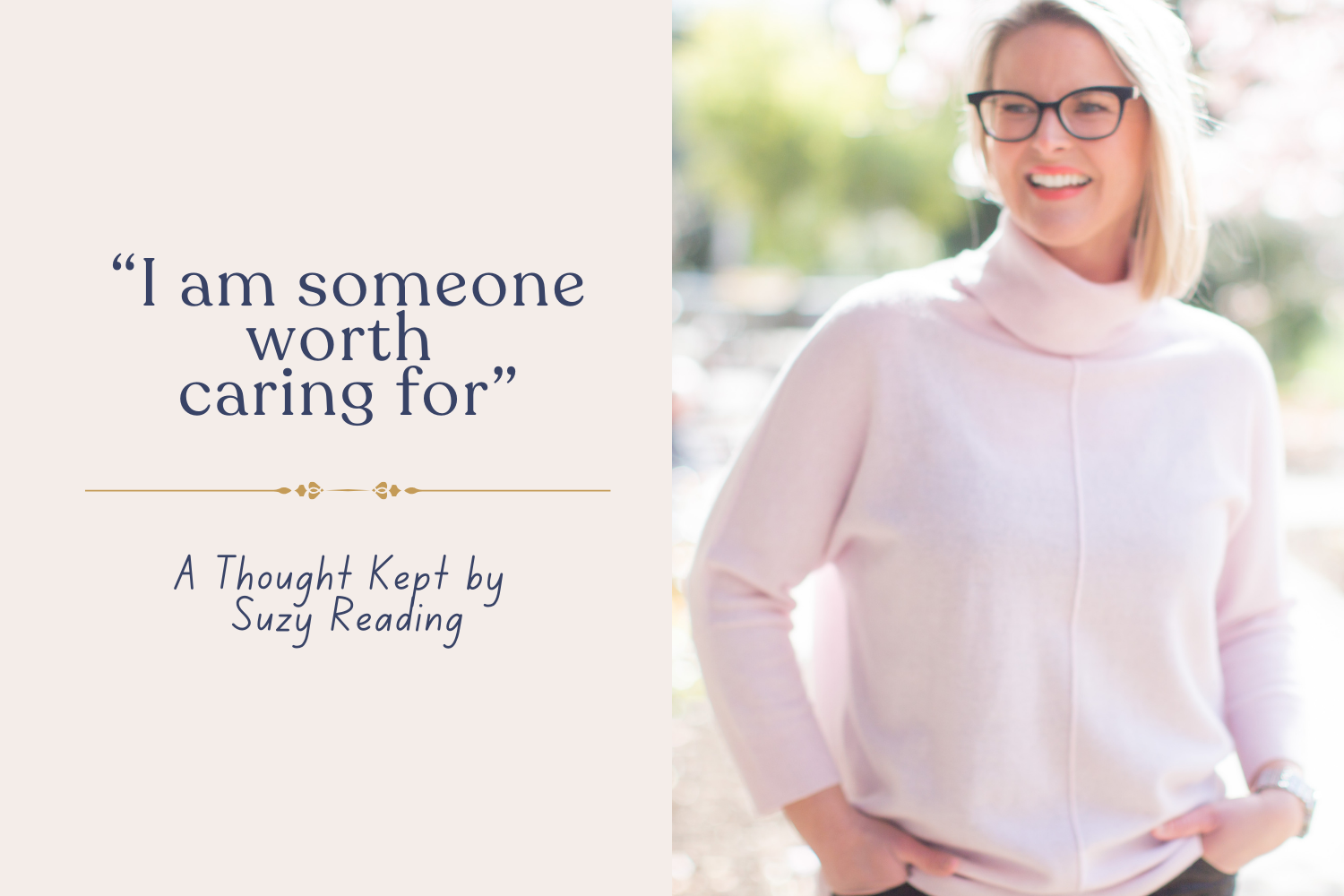
In a recent conversation on A Thought I Kept, I asked psychologist and author Suzy Reading: “What is the one thought you have kept?” Suzy’s answer: “I am someone worth caring for.” And in that simple sentence lies the pivot many of us need — from checking the self‑care box to stepping into the kind of care we might be missing.

1. The Self‑Care Loop: When Doing Becomes Disconnection
Suzy begins the conversation by admitting that it was a “very dreary Friday” and she hadn’t had her usual morning walk to clear the jangly energy. Yet here she was, making space for the conversation and acknowledging the discomfort.
“I’ve got some jangly energy going on too … but you know, we make space for it and it’s all right for it to be here.”
That’s the thing. We often rush into another self‑care “thing” to fix the feeling, rather than giving ourselves permission to simply have the feeling.
If you’re someone who’s been doing self‑care, but still feels numb, overwhelmed or disconnected, consider this: maybe it isn’t more rituals you need — but a different relationship to care.
2. Worthy of Care: The Thought that Changed Everything
At its core, Suzy’s inquiry reveals something many of us never gave ourselves permission to believe: I am someone worth caring for.
She traces that thought back to her late teens and how it’s marks key turning points — a knee injury in her competitive ice‑skating days, becoming a mother, losing her father.
In each, the practice shifted from “perform better” to “treat myself as though I’m worth care” because, as she said:
“If you don’t do that, you’re not going to be here anymore.”
For those feeling burnout, disconnected or emotionally exhausted — the very phrase says this: you do not have to wait until you’ve earned care. You are already worth it.
3. The Barrier: Selflessness, “Not‑Enough”, and Silence of Needs
Why is this so hard? Suzy outlines layers upon layers of cultural messaging:
A “good baby” is one who doesn’t cry. How does that shape how we regard feelings?
A “good child” is one who doesn’t question adults. How does that influence advocating for ourselves?
Women especially carry messages of being selfless, resilient, productive, grateful. In the process our feelings and needs become invisible.
“You mustn’t be selfish. You must be selfless… our own personhood, turning attention inwards … feels shame‑inducing.”
So if you feel lost, exhausted, invisible — it might be less about you doing more and more about you giving yourself permission to need and receive. The blankness you feel might be the space where your needs weren’t asked, seen or met.
4. Self‑Advocacy: The Relational Layer of Self‑Care
Here’s where it deepens: self‑care is not just about self‑soothing or solo rituals. Suzy gently expands it to include receiving care and asking for what you need.
She offers real, grounded advice:
Practice asking with “safe people” first.
Instead of “I don’t mind where we go,” say “Here’s a place I’d enjoy. What about you?”
Be clear: “I feel unappreciated and taken for granted. Would you help me?"
For anyone feeling disconnected — this is an invitation to turn invisible needs into visible requests. To start the conversation with yourself and others. To move from surviving to being supported.
5. Overwhelm, Midlife & the Invitation to Receive
If you’ve been pushing through for years, if you’re mid‑life and your body is starting to whisper (or shout) “slow down”, you might realise the old methods aren’t working. Suzy shares:
“I could muscle my way through anything … until my body said sweetheart you cannot just railroad and muscle your way through everything.”
And so we pivot. We honour the winter seasons of life. We ask:
What have I weathered?
What do I need now?
Can I allow someone to help?
At the close of the episode, Suzy gives a simple but potent practice: every time you sip water (or tea, or whatever you have), place a hand on your heart and say: “I am someone worthy of care.” Use it as a daily touchpoint.
“Where am I at? What do I need?”
Because relational wellbeing isn’t a luxury, it’s a lifeline.
6. What You Can Do Right Now
If you’re reading this and you feel drained, disconnected or simply over it — try this:
1. Pause for one minute, put a hand on your heart and say: “I am someone worth caring for.”
2. Write down one need you have today. (No judgement.)
3. Make one gentle request from someone you trust. It could be: “Would you hold space for me for 10 minutes this week?” or “Could you help me with X so I don’t burn out?”
4. Listen to the episode of A Thought I Kept where Suzy and I unpack all this in vivid detail. (Link below.)
5. If you feel comfortable, share this page or the podcast with someone you trust — being seen is the other half of caring.
If Suzy’s thought — “I am someone worthy of care” — stirred something in you, our Coaching Sessions are here to help you gently unpack those feelings, reconnect with your needs, and practice the relational skills of self-advocacy.
Whether you're overwhelmed, self-cared-out, or simply seeking a safe space to feel seen, we’re here.

How We Cope: The Hidden Language of Emotions, the Body, and Self-Harm
Explore how emotional coping, self-harm, and nervous system regulation are deeply connected — and what it means to support ourselves and others with less fear.
We are taught to say “I’m fine.”
We are rarely taught to notice what we actually feel.
And almost never taught what to do with it.
This week on the podcast, I spoke with Beth Derry — resilience coach, Havening practitioner, and founder of Lovely Messy Humans — about one idea that changed everything for her:
“I'm bringing the realization that I had not actually that so long ago, still in my forties, about the sheer power that our nervous system has over every aspect of our life, our health, our happiness, our relationships, our work, and yet we have not talked about it. And when I started to learn about it and go deeper into it, it really changed everything.”
It made me wonder: What would our lives look like if we were taught nervous system literacy in school?
If we knew that emotional coping isn’t a flaw — but often a biological response?
If we stopped seeing anxiety, anger, or shutdown as personal failures… and started seeing them as signals?
When We Don’t Know How to Cope
When we don't understand our internal worlds — when we push away feelings, or panic in the presence of them — we disconnect. From ourselves. From others. From the cues that could help us come back to safety.
As Beth so gently shared, many of us live in the edges of our window of tolerance. We function. We show up. But we’re often one thing away from emotional overload. Or from total shutdown.
And in those spaces, we might turn to whatever makes the pain disappear.
Even if just for a moment.
Self-Harm and the Misunderstood Body
One of the most powerful parts of this conversation was Beth’s perspective on self-harm — especially among young people. A topic often clouded by fear, shame, or silence.
She explains that self-harm is rarely about wanting to die.
It’s often a desperate attempt to feel something, or regulate overwhelm.
A bid for connection. A tool of survival. A nervous system trying to find relief.
That reframing changed something in me. As a parent. As a coach. As a human who once believed that emotional intensity was a flaw to fix.
We talk a lot about mental health. But nervous system health? Still a gap.
And yet — it’s at the heart of how we process everything.
What I’m Taking With Me
Here are just a few shifts I’m sitting with after this conversation:
Emotions are messengers, not enemies. Every feeling we have — from anxiety to anger to disgust — evolved to help us survive. They’re not the problem. They’re trying to point us to one.
We don’t need to be experts. But we do need to get curious. Especially when we find ourselves spiralling, shutting down, or stuck.
Self-harm isn’t attention-seeking. It’s often connection-seeking. And our first response should always be: safety, gentleness, and holding the door open for conversation.
Talking therapy is powerful — but sometimes we need the body in the room. Beth’s work with Havening is just one example of how physical practices can help calm the nervous system and unlock healing in a different way.
For You, If You’re Feeling Lost
If you’re feeling emotionally full to the brim…
If you’re shut down and not sure how to begin again…
If your teenager seems unreachable…
Or if you simply want to understand why you react the way you do —
This episode is an invitation.
To move slowly.
To get curious.
To stop blaming yourself for feeling everything (or nothing).
To start gently noticing the signals your body has been sending all along.
Listen to this week’s episode: Lovely Messy Humans: Understanding Self-Harm, Emotional Coping, and the Nervous System with Beth Derry. Available now on A Thought I Kept
And if you need more support and understanding as you explore your emotional life, book one of our 1:1 online sessions.

What to Do When You Feel Creatively Empty
How to Reclaim Your Energy, One Small Practice at a Time
You know the feeling. That bone-deep tiredness that no nap or green juice will touch. The ideas that once came freely now feel flat. The excitement that used to buzz in your chest has turned to static.
If you’ve been feeling creatively empty — like your spark has left the room — you’re not broken. You’re burnt out, or as entrepreneur and founder Liana Fricker calls it, maybe you’re just in a “burndown.”
When Liana hit burnout — again — in 2023, she realised that it wasn’t a one-off collapse. It was part of a repeating pattern. She’d push hard, build momentum, connect dots, gather people, spark ideas — and then, suddenly, the tank was empty. She had to start “by designing my work life and just my general life in such a way that creates that space so I can stay open.”
Liana calls herself an “idea-laying machine.” But even machines need power sources — and her old ways of working (and marketing herself online) weren’t sustainable anymore.
So she began to experiment. To unlearn. To ask a different set of questions:
What if I stopped performing consistency and started trusting my energy instead?
What would work look like if it was slower, tactile, real-world?
What if connection — not content — was my strategy?

These are some of the wellbeing practices and mind shifts that helped Liana rebuild creative energy — not by working harder, but by reimagining what “working” means.
Each one is a quiet act of resistance against burnout culture, and a reminder that creative energy is not infinite but it is renewable.
1. Stop Performing Consistency — Start Practising Self-Trust
The advice we’re given online — “be consistent!” — often misses the truth that not all brains or energy cycles work in straight lines. For Liana, the key was designing routines that flowed with her energy, not against it.
She now plans her month in cycles: high-energy weeks first, slow restoration later. Some weeks are for ideas, others are for Antiques Roadshow and weighted blankets.
“If all I could do was meditate in a sauna and watch Antiques Roadshow with my weighted blanket at 3 p.m. on a Wednesday, I can do that. Because that might be what the burndown needs, right?”
Try this: Instead of scheduling every day equally, design your calendar like a tide chart. Plan creative work during your high-energy phases, and build in restorative “ebb” weeks.
2. Redefine Burnout — and Learn Your ‘Burndown’ Pattern
Liana differentiates between burnout (the big collapse) and burndown (the mini energy crashes that happen every few weeks).
When you start to recognise these smaller cycles, you can respond before the full crash.
Notice:
Do you have predictable weeks of high motivation followed by emotional flatness?
Do you overcommit when your energy peaks?
Can you give yourself permission to pause before you’re forced to stop?
Reframing burnout as cyclical rather than catastrophic helps turn it from a crisis into data — something you can observe, not judge.
3. Design for Energy, Not Productivity
“I think if you're someone who suffers from quite big burnouts or you've had a few in your life and you're over the age of 40, you may want to take a step back and ask yourself, what is this internal engine that keeps making me run at full speed, ultimately off a cliff?”
So she began to design her days not for output, but for energy flow. She created conditions that help her stay open — like attending real-world gatherings, limiting context-switching, and making space for brainfood conversations.
“I absolutely came home buzzing with energy, being in a room, in a curated space. It didn't feel too overwhelming, but just with so many interesting people telling me interesting things, that kind of cup is very full.”
Try this: Once a week, replace a Zoom call with a walk, a museum visit, or a local event. Think of it as refuelling, not slacking. Creative energy is relational.
4. Feed Your Brain (and Body) With Connection
Liana describes herself as “best with a spark” — someone whose creativity ignites in conversation.
That spark doesn’t come from scrolling; it comes from connection. The quick chat with a stranger, the serendipity of a room, the awkward but alive feeling of being seen.
“Whereas if you're on your phone or on your laptop, it's like the closest you'll ever get to an invisibility cloak, right? You can choose whether to engage or not.”
For those feeling creatively apathetic, connection might be the antidote — not to produce something, but to remember what it feels like to be moved.
5. Reframe ‘Anxiety’ as Excitement
A subtle but powerful reframe:
When your heart races before a new project or social event, what if it’s not anxiety — but excitement?
“The moment when I realized that what I would have described as anxiety was excitement was huge for me. Because even calling it anxiety changes the relationship with it. It's something to stop doing.”
Reinterpreting physical sensations as energy — rather than threat — can turn overwhelm into motion.
6. Build a Creative Ecosystem
Liana also began thinking about wellbeing like professional athletes do: as a team effort.
“There's no athlete that goes to the Olympics that does not have a sports psychologist and a physio and a chef and because the machine is this integration it needs specialists.”
That might mean therapy, coaching, accountability partners, or simply the people who remind you to rest.
7. Let Rest Be an Act of Mastery
Creativity needs stillness. For Liana, that looked like allowing emptiness — even boredom — without guilt.
“I was absolutely an empty vessel. There was no guilt because there was no energy for guilt. There was no shame because there was no energy for shame. Like, right. I was just empty.”
This is her glass of water philosophy:
“You know no one's gonna say how dare you have a glass of water. Why are you getting up to get a glass of water? What? You are gonna fail. Sometimes my glass of water is antiques roadshow.”
Creative fatigue, burnout, apathy — these aren’t signs of weakness. They’re signals. Your body is trying to tell you something.
When you stop trying to perform consistency and start listening to those signals, you create space for something far more powerful than productivity: self-trust.
And maybe, what looks like burnout is actually your creativity asking for a different kind of rhythm — one that includes silence and conversation, slow design and sparks of engagement.
If you want to explore these ideas further, listen to my conversation with Liana on the podcast A Thought I Kept.
Need some support as you navigate life’s ups and downs, explore our 1:1 coaching sessions.

Are You Giving All Your Attention to Negative Emotions?
Discover how to balance emotional depth with lightness. Learn from Amanda’s story and explore emotion coaching tools to feel more resourced every day.
When Amanda Sheeren (co-founder of If Lost, Start Here) joined me on A Thought I Kept, she brought a thought that had stayed with her for years:
“Even in the darkness, there is light.”
It sounds simple but it came from a place of burnout, emotional overwhelm, and the quiet collapse that can happen when we believe we’re doing everything “right.”
In the episode, Amanda shares a moment from early motherhood: two small kids, no sleep, therapy for the first time. She described showing up to those sessions thinking she’d be praised for being emotionally attuned. “I was validating every feeling. I was letting my kids be sad, be mad, feel all the things.”
But then her therapist asked her something that stopped her in her tracks:
“Is it possible that you're giving all your attention to negative emotions?”
That was the pivot point.

When Feeling Deeply Becomes Feeling Stuck
If you’ve ever been told to feel your feelings — and taken that advice seriously — you may know this space. You learn that sadness, anger, and frustration are valid. You work hard not to bypass or brush past what’s hard.
But here’s the catch: when we spend all our energy in the shadow emotions, we can forget to make space for joy, hope, and light. And those emotions need practice too.
In emotion coaching, we talk a lot about awareness, validation, and regulation. But there's a step people often miss:
Attention. Where are you placing it? What emotions are getting airtime?
Validating sadness is powerful. But so is dancing in the kitchen. So is naming a moment of peace, or laughing at the squirrel outside your window — something Amanda shares in the episode that shifted how she related to joy.
Emotions are not just there to be survived. They're part of what makes life meaningful — all of them.
What Are You Practicing
In the episode, Amanda reflects on how her own attention began to shift. Not through gratitude lists or forced positivity, but through tiny joys. A squirrel doing something weird. A rainbow on a grey day. The “glimmers,” as some researchers call them.
And with time, those small practices started to grow into something more sustainable — a full-spectrum emotional life, not just a deep one.
Interested in Emotion Coaching?
We offer 1:1 emotion coaching sessions for people wanting to better understand their emotions — parents, creatives, leaders, those who feel a lot and want to feel more resourced doing it.
Explore our coaching offers here

Why Feeling Your Emotions Can Be So Terrifying and What to Do About It
Feeling emotionally overwhelmed or exhausted? Learn why your nervous system sees everyday stress as danger, and how to safely reconnect with your feelings using body-based tools and soft, supportive practices.
Have you ever felt like the tiniest thing , an unexpected email, a message left on read, a look, a tone, a bill, sends your whole system into overdrive?
In this week’s podcast episode, I spoke to massage therapist and bodyworker Carrie Ekins about emotional overwhelm, emotional exhaustion, and how to begin feeling safe enough to feel our feelings, even when it feels absolutely terrifying.
Carrie shared a thought that changed everything for her:
“Everything is a saber-toothed tiger.”
It sounds playful, but it's a serious insight. Because for many of us, our nervous systems are constantly interpreting life’s daily stresses as if our actual survival is under threat. The primitive parts of our brain haven’t evolved fast enough to know the difference between a demanding boss and a predator in the wild.
So instead of processing an email or a conversation, our bodies kick into survival mode — fight, flight, freeze, or fawn. Over and over. Day after day.
And what gets missed? The essential third part of the stress cycle: processing.

The Truth About Emotional Overwhelm
So many of us are living in a constant state of emotional hyper-vigilance. And the more we try to push through, the more disconnected we become, from our bodies, from our feelings, from ourselves.
As Carrie so beautifully put it:
“… I have to learn how to feel my emotions, even though that is absolutely terrifying because nobody's given me the tools, no one has shown me how to walk this path, nobody has shown me how this feels. Why would you want to do that? That all just sounds like mortifyingly awful…”
And so, when emotions do start to rise, they feel unbearable. Too big. Too much. Too dangerous. Like saber-toothed tigers of the soul.
But the truth is, your feelings aren’t trying to hurt you. They’re trying to help you find your way, back into your body, back into your breath, back into your life.
What If You Didn’t Have to Be Afraid of Your Emotions?
Carrie talks about the power of simple practices that help us shift from stress and shutdown into softening and why softening is not weakness, but wisdom.
It’s not about going on a 10-day silent retreat or becoming someone you’re not. It’s about finding small, meaningful ways to reconnect with your body:
Placing a hand on your chest and simply breathing
Listening to the birdsong out an open window
Dancing in your kitchen or humming your favourite tune
Noticing the texture of the ground beneath your feet
These are what Carrie calls wellbeing anchors: tools that remind your body it’s safe to soften, to feel, to rest.
And from that place of safety, emotional overwhelm starts to ease. Emotional exhaustion starts to heal. The stories your body has been holding start to shift.
Softening Isn’t a Flaw — It’s a Superpower
There’s a story many of us carry that if we let go, if we soften, we’ll lose control. We won’t be prepared. We’ll get eaten alive by the saber-toothed tigers of our inbox, our timelines, our expectations.
But what if softness is what helps us survive?
What if being more in our bodies — in our breath, our senses, our full emotional range — is the very thing that keeps us rooted, resourceful, and resilient?
As Carrie said,
And when you have that moment, when you come back into your body and you can feel your feet on the ground and you can feel your hand on your chest, it's really magical because literally it's like everything opens up. Like your hearing becomes more accessible and your vision is clearer and brighter. And these are physiological changes because your stress has dropped, your cortisol has dropped and your body has instantly responded with allowing yourself to be more present and more there. And that's the beauty of just softening.
We’re All a Little Overwhelmed Right Now
If you’ve been feeling emotionally exhausted, like your nervous system is fried and you can’t stop bracing for the next disaster — you’re not “weird” and you’re certainly not failing. You’re responding the way any human would in a world that has asked far too much for far too long.
But there’s another way. One where you can start to feel your feelings without drowning in them. One where you don’t have to do it alone.
Listen to the full conversation with Carrie Ekins on Substack here, Apple, Spotify or wherever you get your podcasts. You’ll find that it’s a gentle, playful, radically human exploration of what it means to come back to yourself, one breath at a time.
And if you’re curious about exploring your own emotional life in a deeper, supported way, enquire about our 1:1 emotions coaching. It’s a safe, compassionate space to learn how to feel your feelings — and feel safe doing so.
Because your emotions aren’t saber-toothed tigers. They’re just messengers. And they might be waiting for you to listen to them.

How to Pay Attention (When the World Keeps Pulling You Away)
If you’re feeling overwhelmed, lost, or stuck in autopilot, explore how to reconnect with yourself through small, creative acts of attention. Learn how mindful noticing can support your emotional wellbeing in everyday life.
If you’ve been feeling overwhelmed, scattered, or a little bit lost lately, we’re with you.
This is an age of constant distraction — and for many of us, that means we’ve stopped paying attention. Not just to the world around us, but to ourselves.
We move through the day with noise in our ears, tabs open in our brains, and a quiet sense that something is missing — even if we can’t name what.
So what would it mean to really notice our lives again?

The Gift of Noticing
In a recent episode of my podcast, A Thought I Kept, I spoke with Andrea Rathborne — a storyteller and creative leader — about a memory from her early twenties that still lives vividly in her mind. It wasn’t dramatic. It wasn’t loud. It was a simple, wordless exchange with an elderly woman in Greece, sitting on a stone step, snapping beans in the morning light.
There were no profound quotes. No life-changing advice. But that small, silent moment stitched itself into the fabric of Andrea’s life. She describes her memory as a kind of Morse code, made of dots and dashes — tiny gestures and longer scenes that, together, form her library of moments.
But this conversation made me think: what happens when we lose the ability to notice?
Distraction Is a Mental Health Issue
There’s growing research around attention as a form of wellbeing. When we’re constantly pulled between notifications, tasks, and worries, our brain stays in a reactive state — flooding our nervous system and draining our energy.
Distraction disconnects us, from ourselves, from others, from the present moment.
But when we pause long enough to really notice the light in the kitchen, the warmth of a shared task, the quiet rhythm of our breath, something shifts.
Paying attention does three powerful things:
Regulates the nervous system: Deep presence signals safety to the brain. It slows the stress response and brings us into calm.
Builds emotional resilience: When we’re present, we can process emotions as they arise — instead of stuffing them down or numbing out.
Reawakens connection: To beauty. To meaning. To other people. To ourselves. And that connection is the antidote to loneliness.
What Are We Even Paying Attention To?
That’s the other part of this, right? It’s not just about being mindful for the sake of it. It’s about what we’re turning toward. Noticing can be the very beginning of holding on.
Because when we pay attention, we don’t just see the world more clearly. We start to remember who we are.
So what’s worth noticing?
The texture of your day — not just the events, but how they feel
The people you love, and the way their voice sounds when they’re excited
The in-between moments— reading a beloved book, making tea, watching the rain
Your own thoughts — especially the positive ones you keep coming back to
These are the things that make up a life. And there’s value in noticing them.
5 Everyday Ways to Pay Attention (That Actually Feel Good)
You don’t need a 30-minute meditation practice or a digital detox to get started.
Here are a few gentle ways to return to presence today:
Choose one daily ritual to do without distraction. Drink your coffee without scrolling. Fold laundry while listening to yourself. Let one small thing become sacred.
Keep a Dot + Dash Journal. Inspired by Andrea’s Morse code metaphor, jot down: One dot: a fleeting moment that caught your attention. One dash: a longer memory or thought you want to hold onto. This builds your own “library of moments.”
Practice sensory noticing. What can you see, hear, smell, taste, or touch right now? Anchor yourself with one detail from each sense.
Look for everyday awe. Wonder is good for the nervous system. A tree against the sky, your child’s laugh, the smell of lavender. Notice something that makes you come alive, even a little.
Draw your day in five lines. Not an artist? Even better. Use five quick lines or shapes to represent how your day feels — not what happened, but what it felt like. A scribble. A curve. A burst. It’s a way to bypass the brain and check in through creativity.
If You’re Feeling Lost…
Start with your attention. Don’t try to solve everything at once. Just slow down enough to notice the moment you’re in.
Name one thing. Feel one breath. Stay with it for a beat longer than you normally would.
And maybe that becomes your first dot — the first piece of a new way of being. Not a perfect or polished one. But a path back to presence, and maybe even to yourself.
Want to Go Deeper?
You can listen to my full conversation with Andrea Rathborne on the podcast here:
Or join me over on Substack at More Good Days, where I share weekly reflections, prompts, and gentle reminders that life is made of tiny things, that are still yours to notice. .

“Is This How I Really Feel?” When Your Thoughts and Emotions Get Tangled
What to do when you’re not sure what you feel. We explore emotional confusion and how emotions coaching can help you understand what’s really going.
Ever found yourself suddenly spiralling? Maybe you’re in the middle of a simple conversation… or just walking to the shops… when suddenly something flares — anxiety, shame, guilt — and you don’t even know why.
And then the questioning begins:
Am I overreacting?
Why am I like this?
Is this a real feeling or just me being dramatic?
This is what’s called emotional confusion — and it’s one of the most common things I see as an emotions coach.
It’s also the heart of this week’s episode of A Thought I Kept, where I sit down with the brilliant Anya Pearse to explore the deceptively simple question:
“Am I feeling my thinking?”
How Thoughts Masquerade as Feelings
In our conversation, Anya describes a moment in her life with painful clarity. She’d just learned about the death of a parent she’d been estranged from for years. In the midst of the shock and grief, a surprising feeling surfaced: relief. But just as quickly, came the guilt.
Shouldn’t I be sadder? Was I a bad daughter? Is this what I’m really feeling… or what I’ve been told to feel?
That moment — when her body and mind started to spin in opposite directions — helped her realise something that’s stayed with her ever since: She wasn’t just feeling her feelings. She was feeling her thinking.
That phrase might sound odd at first. But sit with it for a moment. How often do we have an emotion because of a thought that may not even be true?
“They probably hate me.”
“I’m not good enough.”
“I’ve messed everything up.”
We feel shame, fear, sadness — but those emotions are responses to thoughts. Not to what’s actually happening in the moment.
Emotional Confusion Is a Signal.
This is what emotional confusion often looks like in real life:
Feeling overwhelmed without knowing why
Spiralling into anxiety when nothing “big” has happened
Reacting strongly and then doubting yourself afterwards
Telling yourself you’re too much or not enough based on a feeling that doesn’t even feel like your own
And here’s what I’ve learnt: Your emotions are real. But they are not always true.
This doesn’t mean you can’t trust yourself — it means you get to build a better relationship with what your emotions are trying to tell you.
That’s essentially what emotions coaching is about. It’s not about judging or fixing your feelings. It’s about learning how to notice them, untangle them, and gently ask:
Is this mine? Is this now? Is this helpful?
A Different Way to Be With Yourself
If you’re someone who’s stuck in your head, or if you’re constantly trying to “figure out” how you feel before you feel it — this episode is for you.
If you’ve been hard on yourself for being too emotional (or not emotional enough), it’s for you too.
Because as Anya so beautifully says in our conversation:
“Just because there’s a thought in your head doesn’t mean it’s real. Doesn’t even mean it’s yours.”
This episode is an invitation to get a little distance from the noise, and return to the quiet knowing that’s underneath.
Listen to the episode: “Am I Feeling My Thinking?” with guest Anya Pearse
Click here to listen to the episode on Substack or search for A Thought I Kept on your favourite podcast app.
Want to Explore This More?
I work with clients 1:1 to help them:
Make sense of overwhelming or contradictory feelings
Recognise emotional spirals before they take over
Learn the difference between reaction and response
Get curious, not critical, with what they feel
Curious about emotions coaching? Learn more here.
Or start with this episode. It might be the beginning of something new.

What’s the Worst That Can Happen? Really.
How one brave thought can shift everything when you feel lost, anxious, or disconnected
We all have one thought we return to. A thought that holds us steady, that we whisper to ourselves at crossroads or in quiet moments of doubt. For Emma Simpson — wild swimmer, author, mother, and my guest on this week’s episode of A Thought I Kept — that thought is:
“What’s the worst that can happen?”
It sounds simple. Even flippant. But for Emma, this thought has been a guide — first through trauma and grief, then through healing, change, and courage.
What began as a phrase loaded with anxiety slowly became something else: a spark of freedom, a tiny rebellion, a way to say yes to the wild, unpredictable mess of life.
In our conversation, we talk about the fear that underpins so many of our decisions. The kind of fear that keeps us small, silent, stuck. We explore what it means to let fear sit beside you instead of driving the car. We talk about grief, bravery, the emotional labour of friendship, and the quiet, daily choices that shape a life.
If you’re feeling overwhelmed, unsure, anxious or flat, this podcast episode might just be the first small step (or a shift in direction or a sentence to hold onto) that you need.

From Fear to Freedom — What Shifts?
When we’re anxious or lost, our inner voice often says things like:
What if I get it wrong?
What if I fail?
What if people judge me?
What if I can’t cope?
That fear can feel so familiar it almost becomes comforting — a twisted safety net of at least I’m not risking anything. But, as Emma shares, fear doesn’t always need to be a stop sign. It can also be a jumping off point.
Because what if you changed the tone of the question?
Instead of fear, what if “what’s the worst that can happen?” came with a shoulder shrug, a grin, a let’s see energy?
So that it becomes not about recklessness, but more recognising that:
Fear doesn’t always mean danger.
You can survive discomfort.
You might even discover something better.
The Trial-and-Error Practice of Facing Fear
One of the most powerful parts of Emma’s story is how she’s come to face fear curiously — not through huge declarations or dramatic overhauls, but through presence and practice.
When she quit her job in aviation after 20 years, trained as a coach, and became a full-time writer, she didn’t do it all at once. It happened over time. Through grief. Through healing. Through honest questions like:
What am I afraid of, really?
What am I protecting myself from?
What’s on the other side of this fear?
If you’re feeling overwhelmed or anxious right now, you don’t need to do anything drastic. But you might try asking yourself:
What’s one small thing I could try today… even if I’m scared?
That one thing might be sending a message, signing up for something, going for a swim, or starting a conversation. You don’t need to feel ready. You just need to feel curious.
Emotional Energy is a Real Thing
We often talk about time and energy like they’re the same thing. But they’re not. Emotional energy is its own resource — and it can be quietly, completely draining when we’re holding too much.
Emma shared how she made the difficult decision to stop coaching — not because she didn’t love it, but because it took up emotional energy she needed to keep for herself, her daughters, and her writing.
If you’ve been feeling unusually tired, flat, or irritable — ask yourself:
Where is my emotional energy going right now?
What replenishes me?
What depletes me?
You Might Just Make a Friend
Loneliness is one of the most common themes I hear in my work — and one of the most painful to talk about. We tell ourselves we should be fine. We should have more friends by now. We shouldn’t need connection this much.
But we do. We all do.
In the episode, Emma and I talk about the challenge of making friends as adults. The awkwardness. The vulnerability. The real fear of rejection.
And yet — one of the simplest, most powerful reframes she offers is this:
“What’s the worst that can happen? You might just make a friend.”
Listen to the Full Episode:
Transforming Fear into Adventure: A Conversation with Emma Simpson
Or search for A Thought I Kept wherever you get your podcasts.
A Thought I Kept is a wellbeing podcast for anyone feeling lost, anxious or stuck and who is searching for ideas to better navigate everyday life.
Self-Reflection Prompts to Take This Further:
If you're feeling disconnected or unsure, here are three journal prompts to gently explore:
1. Where does fear show up most in my life right now?
2. What have I survived that once felt unsurvivable?
3. What might be waiting on the other side of “what’s the worst that can happen?
If You’re in a Wobbly Place Right Now...
Just know that…
You are resilient, even when you don’t feel it.
You don’t need to fix everything. Just stay in motion.
One small, brave thought can change everything.
You don’t have to leap. You just have to look up and say, “Maybe…”

A Different Way to Well: Reimagining Wellness Without the Rules
What if wellness wasn’t about doing more, but about doing what feels good?
We’re overwhelmed with advice about how to live well.
Drink less. Eat more fibre. Get better sleep. Lift heavy. Walk outside. Meditate. Journal. Cold plunge. Biohack.
If you’ve ever felt like wellness has become a never-ending to-do list, you’re not alone.
That’s exactly where we began in the latest episode of A Thought I Kept — in a conversation with the journalist, author, and Substack writer Rosamund Dean. And what unfolded was a candid, open reframe on how we might give ourselves permission to do wellbeing differently?

Wellness Without the Pressure
Rosamund and I both come from backgrounds where “wellness” was something we didn’t feel part of. The green juice crowd. The sanctimonious language. The quiet implication that if you weren’t waking at 5am to train and sip mushroom coffee, you were failing.
But what stood out in our conversation — and what I’ve been thinking about ever since — was this idea of choice.
For Rosamund, that shift began not with a life overhaul, but a single comment overheard at a sobriety conference:
““The only thing I’ve given up is hangovers.””
That offhand remark reframed everything. It wasn’t about giving something up. It was about getting something back — joy, clarity, energy, connection.
And that opened the door to a very different kind of wellbeing. One that asks:
What makes me feel like me?
What am I ready to reclaim?
What am I tired of pretending to enjoy?
The Wellness Fatigue Is Real
We talked about that too — how the shoulds are so loud right now.
We should sleep better.
We should go alcohol-free.
We should wild swim, eat kale, and somehow find joy in weighted lunges.
And the truth is: many of us want to live better, but we’re also exhausted by the sameness of it all.
Rosamund put it beautifully: that it’s not the what anymore — it’s the how that we need.
So What Is a Different Way to Well?
Here’s what emerged from our chat — and what I hope will land with you today:
1. Start with Joy, Not Judgment
Let go of the wellness rules you don’t connect with. If you hate mushrooms, don’t eat them. If wild swimming fills you with dread, skip it. There are other ways.
2. See Wellbeing as a Practice, Not a Fix
You don’t have to become a non-drinker or a 5am person overnight. Ask instead: “What would it be like if I tried this today?”
3. Make It Social
Walking with friends. Cooking with kids. Chatting over kombucha. These are valid, vibrant acts of wellness.
4. Expand the Definition
Wellbeing isn’t just nutrition and movement. It’s awe. Laughter. Rest. Boundaries. It’s knowing yourself enough to ask what you actually need today.
This Isn’t About Perfection. It’s About Permission.
It’s about remembering that your version of “well” can look very different from anyone else’s. That taking care of yourself doesn’t have to mean subscribing to a whole new identity.
Maybe it means:
Drinking less because you want to feel sharper in the morning.
Strength training because you’re curious about feeling strong.
Going to bed earlier — not to optimise yourself — but because you’re tired.
Or maybe it means going out with friends, eating pizza, and laughing for hours. That counts too.
Want More?
This conversation with Rosamund Dean was full of honest insights, hard-earned learnings, and laugh-out-loud moments about mushroom coffee and kale guilt.
Listen to the full episode of A Thought I Kept here or search for it wherever you get your podcasts.
If wellness has felt a bit meh lately — this one’s for you.
Some questions to leave you with:
What part of wellness feels most alive for you right now?
What are you tired of pretending to like?
What’s your different way to well?