

The Happiness Museum
Designed to connect us with different ways of understanding what happiness is and why we might be looking for it in all the wrong places, Copenhagen’s Happiness Museum is what we all need right now.
Seek this out if: Concepts like hygge have caught your attention, you are interested in how you can pursue happiness in your own life, or ideas of wellbeing have recently risen up your agenda.
What is it: After many people had expressed interest in visiting the offices of The Happiness Research Institute — an independent thinktank that aims to influence public policy through investigating what makes some societies happier than others — the team there decided to give people the space they hoped to find. The Museum of Happiness opened in the basement of an 18th-century building in Copenhagen’s historical center in summer 2020. Although it had been delayed due to the emergence of the pandemic, its existence anticipates a moment when we could all do with more joy, positivity, and wellbeing in our lives. The Museum has been designed to connect us with different ways of understanding what happiness is and why we might be looking for it in all the wrong places (hint more human connection, less emotionally driven Amazon purchases).
Why you’ll love it: When faced with “an experience machine” asking you to choose between the constant pleasure of an illusory life or moments of suffering in a real one, which do you choose? When listening to laughter, do you laugh too? Finding a wallet of cash on the floor, do you hand it in? What would you write on a post-it when asked what your happiest memory is or your definition of happiness?
At The Happiness Museum, you’re encouraged to participate, learning first-hand what happiness is and what it isn’t. Over just 2,585 square feet and eight rooms, visitors learn about happiness from every angle, from how it manifests physiologically to how it shifts according to geography, how thinkers have evolved an understanding of it from ancient Greeks to modern-day, to where our scientific understanding now rests. There’s a Trump MAGA hat representing the lowest level of happiness experienced in the UK (the day of his inauguration). A range of self-help books showing how the promise of finding happiness has become front and center in many of our lives. A harmonica that captures the happy beginning of a relationship.
What you need to know: The Happiness Museum is perfectly placed; it’s located in a country that is regularly cited as one of the world’s happiest – the UN World Happiness Report in 2020 put it second only to Finland. Within the museum, you’ll find displays on why this might be and what Nordic happiness really is. It’s also headed by Happiness Institute CEO Meik Wiking who literally wrote the bestselling book on Hygge, the Danish way to live life well, that has captured our imagination (and increased candle sales) worldwide.
How to bring this into your life wherever you are: Take The Happy Course and learn how to apply science-based principles on happiness to your own situation. Or brighten dinner conversations with The Hygge Game.
Why we think it’s different: The work of the Happiness Museum is not just to incite smiles (and to allow you to play with Mona Lisa’s), but to make you think about what happiness really is and why we’re so obsessed with it. Our knee-jerk path to it might be via rainbows and unicorns, but often we get it wrong. We seek out things that actually don’t make us happy — like the products that are sold to us that make us think they’ll make us fulfilled — and lean on strategies that don’t serve our lives well, like immediate dopamine hits that come from social media but don’t sustain us in the long term. The museum reframes some of what we think we know and gives us tools to find happiness in ways that are more sustaining. Like this quote from Epicurus: “Of all the means to ensure happiness throughout the whole life, by far the most important is the acquisition of friends.” A fleeting visit to the Museum is designed to instill a more lasting and nuanced relationship with happiness in our own lives.
In their own words: “A small museum about the big things in life. At The Happiness Museum you will understand why Denmark is often called the happiest country on earth, what hygge has got to do with it, and how you can measure something as subjective as happiness. The Happiness Museum is created by The Happiness Research Institute, a think tank focusing on well-being, happiness and quality of life.”
Inspired by: These words from Immanuel Kant: “Rules for happiness: something to do, someone to love, something to hope for.” Not this song on happiness by Lana del Rey, Happiness is a Butterfly (Happiness is a butterfly / Try to catch it like every night / It escapes from my hands into moonlight).
To find out more: Website / Instagram
Additionally, try: The Color Factory / The Museum of Ice Cream

Clayground Ceramic Studio
Feel like playing in the analog world? Clayground brings the co-working concept to ceramics.
What is it: A co-working space for ceramicists of all levels.
Why you’ll love it: Take the coworking concept — flexible access, a supportive community, thoughtful design, and the provisions necessary to thrive — then apply it to the practice of ceramics, and you arrive at Clayground.
What you need to know: Whether as a hobbyist just getting started or a professional looking for the space to create, Clayground has put in the investment — in space, tools, and community — to support ceramicists. A cozy space, memberships are on application and provide 24/7 access not only to the studio space but also to all aspects of production including wheels, tools, and glazes. During “normal times,” check out the workshop schedule and studio sales.
How to bring this into your life: Ready to play in the analog world? Purchase one of their clay kits to do at home, with all the tools and materials you need to get your hands muddy.
Why we think it's different: If you need it and can’t find it, build it. Clayground was founded by architect Jonas Klock and user researcher and service designer Caitlin Delphine, after she moved from Stockholm to Berlin and couldn’t find the kind of community space she needed in which to make her ceramics. She found that others shared that need too, with Clayground soon having an active membership (which you can also shop on the site).
As we’re increasingly looking for ways to bring creativity into our lives, to make with our hands, to produce something material, places like Clayground stake out vital space for exactly that. It’s been designed to make creativity happen within a community of support and takes the intimidation factor out of claiming to be a creative person.
We also love how ceramics as a practice can feel like a return to form, a much-needed antidote perhaps to the functionality that dominates our modern lives. Making visible something through clay is something that we can grasp onto as life starts to feel more and more about the intangible.
In their own words: “Clayground is a ceramics co-working studio for ceramics memberships and ceramics workshops. Our thoughtfully designed space in a quiet corner of Friedrichshain, Berlin brings together a collaborative community, with clay creatives of all levels helping each other. We believe in having time and space to focus on your craft, without navigating around drop-in hours.”
To find out more: Website / Instagram

The Regional Assembly of Text // Update
We revisited one of the first places that we featured in our guide to see how they are sustaining a creative enterprise in the current pandemic.
Recently we reached out to Brandy and Rebecca, founders of Canada’s Regional Assembly of Text and one of the first places that we wrote about in our guide to ask how they are navigating the impacts of the global pandemic. Our conversation hopefully offers some insight into how one creative business is responding to the current situation and how you can continue to support their work and each other in the coming months.
How has the coronavirus impacted your business / space / you?
We closed both our storefronts in the hope of helping keep our staff, customers and communities healthy. We feel privileged to have been able to make this decision. We thank our staff for their support and we thank all the essential workers in our communities who continue to do their jobs amidst risk and uncertainty.
What are you doing now?
We are both sticking close to home... having meetings on the interweb, trying not to panic too many times in one day and finding solace in the simple fact that we are all in this together.
How have you shifted your business / space?
Because we just launched a brand new website with an online shop featuring our products, we are still shipping orders twice a week from our Vancouver location.
How can people still engage with you from home?
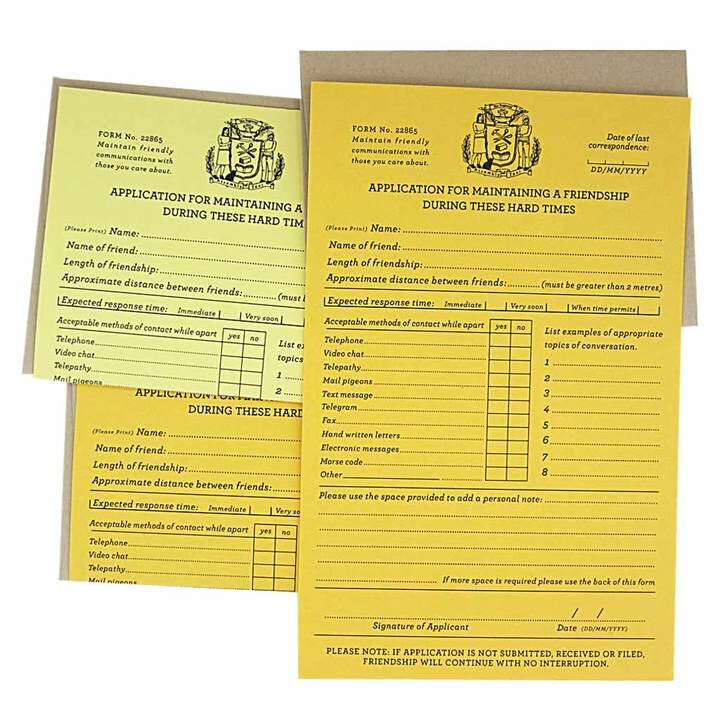
We are loving our Instagram community more now than ever and invite people to join us @assemblyoftext. We are posting letter writing prompts for people to do at home with the hashtag #staystationarysendstationery
How can people best support you?
By engaging with us on Instagram, by telling their friends about us or by supporting us with online orders.
We love your products. Are there that you'd like to highlight?
We just posted a collection of Stay Stationary, Send Stationery goods on our website... including an Activity Book, Off the Grid Stationery, Missing You Card and more.
In the coming weeks, we’re going to try to feature more places that are pivoting at the moment to offer support, creativity and wisdom for our stay-at-home lives. Follow along on social media for updates.

Street Wisdom
Street Wisdom is prefacing a way of being that feels critical now. It’s untethering us from devices, it’s getting us back into our heads and bodies, it's making us sit with ideas again, and it’s offering us the space, time and tools to allow new perspectives in.
“Answers are everywhere.”
OK technically this is not a place, but it is everywhere and there’s something to be said for that.
Street Wisdom was founded by David Pearl in 2013 with the mission to ‘make every street in every city a free source of inspiration for everyone, every single day.’ That reach is spreading. Their bespoke problem-solving walks are now worldwide from York to Utrecht, Paris to Wellington, and you can even take part in a World Wide Wander this coming September.
So what exactly is it and how does it work?
Volunteers lead short urban walks – each about three hours – over the course of which they set up a different kind of scenario for engaging with the world around you. Rather than casually and blindly walking familiar and even unfamiliar paths, participants like you are invited to notice everything that is around them. But this isn’t just an observation exercise, it’s also founded on inquiry because you are invited to ask these streets (aka the universe) a question - maybe around a career change, a relationship ending, or professional and personal conundrum of some other kind. But something meaty, and concrete, that needs a straight-forward enough answer. This is not metaphysical deliberation.
That means that as you wander the streets, they are going to respond to you in a metaphorical conversational way; the magic starts to happen in the form of a sign, a place name, a chance encounter, something unseen before and observed now. It’s all information, its all material to be used and processed. These guided walks are designed to help you find answers in the environment that is all around you. There’s no need to escape your life to get insight into it.
There’s some training built into these walks to do this: during the first part, before this wandering with some intent starts, participants are invited to tune into their bodies, to become aware of their instincts, their sense of self, their openness. The guides create the structure for these sessions, even if they are not the ones who are going to give you the answers. There’s also that moment of collective reflection; each session ends with participants coming together again as a group, of sharing what was discovered that might make meaning in their lives.
Sounding hokey? It’s funny, because really what Street Wisdom is doing is prefacing a way of being that feels critical now. It’s untethering us from devices, it’s getting us back into our heads and bodies, it's making us sit with ideas again, and it’s offering us the space, time and tools to allow new perspectives in. That means if you want to repress anything by wearing headphones as you walk down the street, if you want to avoid people and any chance encounters, if you want to keep your head down and your goal in mind, you can’t. You can’t do any of that. Which is pretty much our default way of negotiating our world and it probably doesn’t serve us so well. Because we no longer wander, or roam, or stroll, or kinda just be – or any of those wonderful things without a definite purpose that might get us approaching our own lives differently.
Try it. Being your body, in the streets, in your life – that’s a powerful trifecta. No avoidant behaviors here.
If you can’t get to a walk, there’s tons of material on their website to DIY one of their sessions, including an audio session, or you can read Pearl’s book Wanderful:Sat Nav for the Soul. There is wise material to be had all around us if we try to seek it.
To find out more: Website www.streetwisdom.org / Twitter @street_wisdom / Facebook @streetwisdom1 / instagram @street.wisdom

ARoS Aarhus Kunstmuseum
ARoS refers to itself as a ‘mental fitness center’ which we just love. We’re very much on board with that approach to our museums.
“ARoS is the perfect place for social interaction. It is a place where visitors are presented with new perspectives and opportunities to broaden their outlook. In all its diverse activities, ARoS wants to radiate attractiveness, relevance, and integrity. ARoS, therefore, is an outstanding universe appealing to both the heart and the brain. Looking at art is very like standing on a trampoline. You need to be moving in order to gain something from it and, after a time, you find yourself jumping higher and seeing more of the world. This is what art is about at ARoS. It is mental fitness. ”
Usually, when an art museum decides it wants to be one of the top 10 in the world, it focuses on building a stellar collection of masterpieces. ARoS Aarhus Kunstmuseum is doing it differently by focusing on its connections with the local community and society at large. That means it’s committing to us as people not just us as an audience.
Take its latest exhibition, Tomorrow is the Question, which faces our possible futures as humans given the crises we're in and is one of the many initiatives at the museum inspired by the UN seventeen sustainable development goals (others include Hunger and Poverty). There’s the awe-inspiring rooftop work by Olafur Eliasson, Your rainbow panorama, as well as James Turrell’s wondrous expansion of the museum with the Next Level, and the ARoS Triennial, which in 2017 looked at nature and environmental issues in contexts beyond the museums walls. Plus there’s Art & Yoga, artists in residence, and an emphasis on local food and craftsmanship in its culinary offerings. It is this commitment to 'experience, insight and reflection' that is making ARoS, one of Europe’s largest museums, also maybe one of its most relevant.
In fact Director Erlend Hoyersten is explicitly making good health and well-being a goal for this contemporary arts institution:
'A good life is a life full of meaning and social relations. We humans need to commit ourselves, to know things, and to mean something to others. Joy is not about predictability, control or absence of pain. Joy is often about something we cannot be quite sure of. Art disrupts. Art asks questions. Art helps us to see what does not yet exist. Only by imagining a better world can we actually get a better world. If you can think it, you can do it.’
ARoS refers to itself as a ‘mental fitness center’ which we just love. We’re very much on board with that approach to our museums. Here we get to reach as people for whatever it is we need in our lives: curiosity, connection, awe and wonder amongst these. Giving ourselves over to new ideas, to new ways of being, to new visual languages, means we also get to give ourselves over to an expanded sense of ourselves, of our worlds and of each other.
Watch this video: it will give you shivers for how our museums can function differently. Campfires for today? Absolutely.
To find out more: Website https://en.aros.dk / Instagram @arosartmuseum / Facebook @ARoSArtMuseum / Instagram @arosartmuseum
teamLab Planets
There are the obvious jokes one can make about the plethora of experiential pop-up museums that have emerged in our new Instagram-able world, but perhaps there is a kind of beauty that would not have been dreamed nor experienced had social media not been invented.
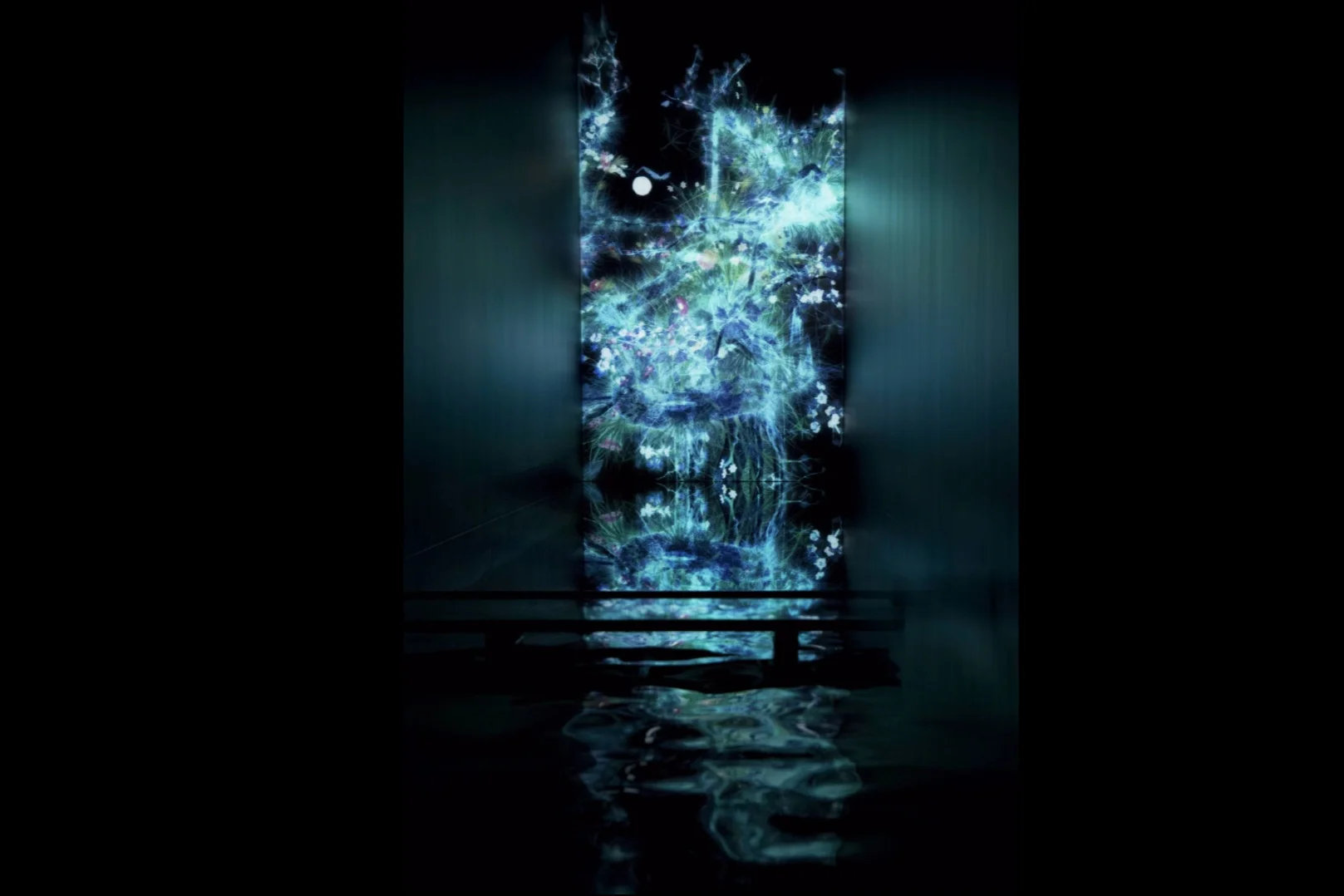
“teamLab Planets is a museum where you move through water. It consists of 4 vast exhibition spaces at its center, and 7 works of art. The artworks are based on art collective teamLab’s concept of “Body Immersive”.
The massive Body Immersive space consists of a collection of installations in which the entire body becomes immersed in the art, and the boundaries between the viewer and the work become ambiguous.
Visitors enter the museum barefoot, and become immersed with other visitors in the vast installation spaces.”
I know there are the obvious jokes one can make about the plethora of experiential pop-up museums that have emerged in our new Instagram-able world, but today’s visit to *Planets* had me re-thinking my own cynicism.
Perhaps there is a rare beauty in these new creations that we ought to be grateful for, a kind of beauty that would not have been dreamed nor experienced had social media not been invented. I have only ever gone to these *museums* because I know it’s an hour my kids will thank me for. But today’s visit turned out to be something entirely different for me.
Unlike the highly commercial, soulless stateside pop-ups, this museum experience was wildly sensual, surprisingly dreamy and inevitably personal. Over and over again I kept asking myself, “Is this what the approach to heaven feels like?” I kept thinking of my father in his last days weeping, “If I’d known dying was such a beautiful experience, I wouldn’t have spent my entire life fearing it.” I know this is some heavy feelings-stuff for this venue, but really - it was beautiful and powerful.
Head to their website, turn-up the volume and walk with us through an Olympic sized pool of warm, milky water with calming projections of cherry blossoms and koi fish. The music was absolutely everything.
In the end, we lay on a floor for an eternity, observing the vibrant visions of petals falling and butterflies ascending, and the whole time I kept thinking: “Yes. This is exactly what heaven will be like.”

Regional Assembly of Text
When faced with the possibility of a blank page and a typewriter, what would you say, and to whom would you write. An apology, a confession, a declaration of affection?
“A lovely little stationery shop.”
On a trip to Vancouver, I found myself in The Regional Assembly of Text thinking of sending a letter home. Established by the artists and Emily Carr graduates Brandy Fedoruk and Rebecca Ann Dolen to explore “text as a theme”, this is a store/ printing press/ design studio that offers quirky cards, tiny books, papers and printed materials. It also contains the Lowercase Reading Room, a cosy reading library of self-published books and Zines housed in a former storage closet. The Vancouver store has its duplicate in beautiful downtown Victoria, British Colombia, in a second store which has been open since March 2013.
The Regional Assembly of Text is gorgeous, with witty and heartfelt messages in abundance. It just feels good to be in it. But the reason I was really drawn to this space is that once a month they also offer The Letter Writing Club. Since September 2005, out have come the Remingtons and Coronas, with the invitation for people to type, or handwrite, letters to whomever they want, about whatever they want, whether letters to governors or girlfriends. No drafts on Word first, no time to mull over. There’s just the page and a postage stamp, old school style. The Regional Assembly of Text provides supplies, snacks and the space to compose.
As I won’t be here for their next session in a week, I chose a sheet to take away, titled “Heartfelt Letter to Follow”. The last (paper) letter I had written was to a friend when I was in High School. We were separated for the summer and pre-email, so we shared cute teenage girl letters of missing each other even though she lived a short car journey away.
This being Vancouver, I have a rainy day ahead of me, a coffee on the table, and now a pencil in hand, composing a note, but to whom? When faced with the possibility of a blank page and a typewriter, what would you say, and to whom would you write. An apology, a confession, a declaration of affection?
People talk about letter-writing as a lost art form, but perhaps the key part of that sentence is that which is lost. And maybe that’s what letters inevitably connect us back to, and why these sessions at The Regional Assembly of Text are so popular; we get to reach out again to those people, that feel like home, but aren’t where we are at the moment.
As it has rained every day the week that I was in Vancouver, we’ll end with the message on one of their greeting cards:
“Things to do:
In order to increase your level of accomplishment on a rainy day of your choice:
Answer the phone using only verbs beginning with M
Count all the books you own that have one word titles
Choose between elbows and knees
Practice drawing polar bears (mail the best one to your oldest friend, ask for one in return)
Squint every time you hear the word tomorrow
Feel accomplished.”
To find out more: www.assemblyoftext.com / Instagram @assemblyoftext

Creative Mornings
It’s a Friday morning. You have 30 minutes before work. You could be anywhere in the world. It’s time to get inspired. You are at a Creative Mornings Session.
“Breakfast lecture series for the creative community.”
It’s a Friday morning. You have 30 minutes before work. You could be anywhere in the world. It’s time to get inspired. You are at a Creative Mornings Session.
Started in 2008 in New York by Tina Roth Eisenberg, who goes by Swissmiss (who incidentally has an awesome email link pack), as an inspiring way for people in the creative community to meet, Creative Mornings has blossomed into a global phenomenon.
We’ve attended Creative Mornings in San Francisco for our blast of connection. They are sweetly hosted, with baked goods and coffee on arrival, name badges if you are ready to network at that hour, and efficient timing, you are straight into the talk because time matters when you have somewhere to be straight after.
It’s just enough time to get a perspective on a Big Picture issue. Each month, the Creative Mornings community selects a global thematic, and these have been ambitious signifiers of our times, from their first lecture subject of Art + Technology though to their 76th of Water (others have included #12 Bravery, #54 Serendipity, #67 Craft). The voices of speakers are equally as wide-ranging, from local thought-leaders to widely recognized names. These talks should give you an idea of that breadth: The Art of Gathering by Priya Parker (NYC) , From Chaos to Creativity with Danny Kim (San Diego) and Craft: The Antidote to Perfectionism with Jen Hewitt (San Francisco).
Creative Mornings give just enough thinking space and a roomful of chattering people for us freelancers to feel part of a community. That’s maybe the bit that almost matters more, that you get out of your head and off your laptop, into a room with likeminded humans who are open to knowing more and are actively willing to get out of their mental comfort zones. Just being in the room recharges. Sitting next to someone who may be chasing down the same curiosity oddly comforting.
We haven’t mentioned that these talks are free (which is incredible when you think about what people charge usually for these inspiration consumables). Which means its popular. Which means you need to sign up for your spot fast. Pre-registering is essential.
If you are not near a Creative Mornings talk, you have a couple of options: you can catch them online (all sessions are recorded and there’s an extensive - read over 6000 - archive to spend some time with) or you could even do this, start your own by applying to launch a Chapter here.
Creative Mornings has now evolved into an extensive community of support online too. Check out their recently launched Creative Guild, a global directory of creative companies, professionals and jobs.
Creative Mornings are now in 194 cities and 65 counties. Attend one and aspire to their mantra: ‘More connected. More human. More heart.’
Website: www.creativemornings.com / Instagram @creativemorning / Twitter @creativemorning / Facebook @creativemornings