
How Poetry Can Help When You’re Feeling Lost
Feeling lost or uncertain? Discover how poetry can help us live with uncertainty, find meaning, notice what matters and reconnect with possibility.
When we’re feeling lost, we tend to go looking for answers. We ask what we should do next, which direction we should take, what needs to change. We make lists. We ask other people what they think. We search online. Sometimes we search so hard for a way forward that being lost starts to feel like another problem we ought to be able to solve. But what if, sometimes, we didn’t need an answer? What if we needed a poem?
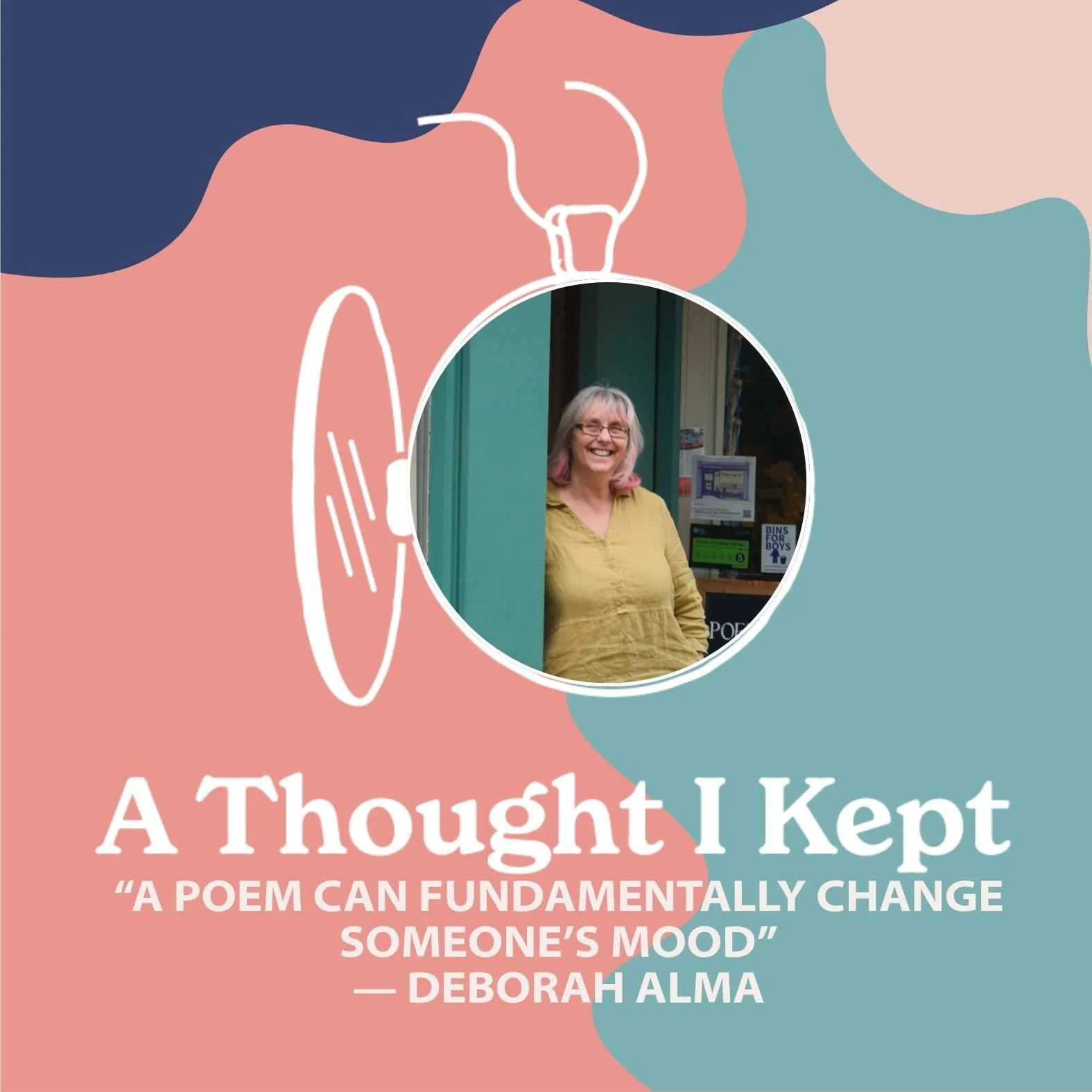
I’ve been thinking about this since my conversation with Deborah Alma, poet, editor and founder of The Poetry Pharmacy, for A Thought I Kept. Deborah has spent years prescribing poetry for the emotional ailments of everyday life, and the thought she brought to our conversation was beautifully simple:
“A poem can fundamentally change someone’s mood.”
Deb first understood the power of this while working with people living with profound dementia. Through a poem, she could take someone to the sea, fly a kite with them or go on an imaginary picnic. They might not remember afterwards where the poem had taken them, but Deborah saw that the feeling it created could remain for hours.
I love this idea of a poem as somewhere we can go. That we can seek them out to experience something different for a moment as well as to find answers. To step outside the moment we’re in. To remember the sea. To notice sunlight. To find ourselves somewhere else in our imagination when our actual lives feel particularly difficult to navigate. Perhaps that is also why poetry can help us when we feel lost.
Deborah told me that increasingly the people coming to her for poetry prescriptions are living with a more general anxiety about the world. They’re trying to work out how to live with uncertainty. And poetry, she believes, is particularly good at this because uncertainty is a place poets already know how to inhabit.
So much of feeling lost is about wanting to get out of where we are. We want certainty back. We want to know what happens next. We want the new job, the decision, the relationship to resolve itself, the grief to become more manageable, the sense of possibility to return. We want to find ourselves again. Poetry doesn’t necessarily give us any of those things. Instead, it can help us stay for a moment with what we don’t yet know.
There is something almost spiritual in that for me. Not spiritual in the sense that we have to believe anything in particular, but in the way poetry asks us to pay attention to what it means to be here.
Deborah talked about this beautifully. She believes we all have the poetic in us. We notice a bird landing in a tree while we’re grieving and wonder if, somehow, we’ve been visited by the person we’ve lost. We see that the sea is exactly the same colour as a flower in front of us. We notice strange coincidences, beauty, juxtapositions, things that seem to mean something even when we can’t quite explain what. For Deborah, those moments are already poems. We just haven’t written them down.
Maybe poetry is akin to a spiritual practice in this way: a practice of noticing. A way of interrupting the scrolling, doing and busyness long enough to see what is actually around us. A way of making contact with beauty, meaning, mystery and our own humanity without needing to pin any of it down.
I know that I have reached for poetry most instinctively when I haven’t had the words myself. When my mum died, I found myself looking through the Norton anthologies I had studied at university. I have a literature degree and a longstanding love of John Donne, so perhaps I thought I was supposed to find something suitably literary and profound. But my mum would never have chosen John Donne. She loved Pam Ayres.
So at her funeral I read Ayres’ poem These Hands, about all the often invisible things a mother’s hands have done throughout a life. It managed to hold something I couldn’t quite hold myself: what we had overlooked while Mum was here and what her absence now meant. The poem didn’t resolve my grief but it filled a space where my own words failed me.
Towards the end of our conversation, I asked Deborah to prescribe a poem for someone feeling lost. She thought about lostness as uncertainty and stuckness, but also as losing contact with possibility and hope.
The poems that came to her were about stillness, finding your own centre and noticing the small and beautiful things around you. One was Lost by David Wagoner, which imagines being lost in a forest and, rather than continuing to wander frantically in search of the way out, becoming still. She also suggested Denise Levertov’s Variation on a Theme by Rilke and Esther Morgan’s Grace, poems that offered her a sense of hope and possibility.
Perhaps this is what we so often miss about being lost. We assume our task is to find the path as quickly as possible. But perhaps there are moments when we need to become still enough to notice where we already are.
A poem can help us do that. You don’t need to understand all of it. You don’t need to analyse it as you once did at school. You don’t even need to become someone who “reads poetry.” Deborah’s invitation is much simpler: find a poem. Sit with it. Notice what happens.
Maybe it changes your mood. Maybe it gives you words for something you couldn’t name. Maybe it makes you notice the light coming through the window or remember somewhere you once felt more like yourself. Maybe it offers no answers at all, but makes the uncertainty a little easier to inhabit.
And when you’re lost, that might be somewhere to start.
Listen to my full conversation with Deborah Alma on A Thought I Kept: “A Poem Can Fundamentally Change Someone’s Mood.”
And if you are feeling lost, explore emotions coaching with me.
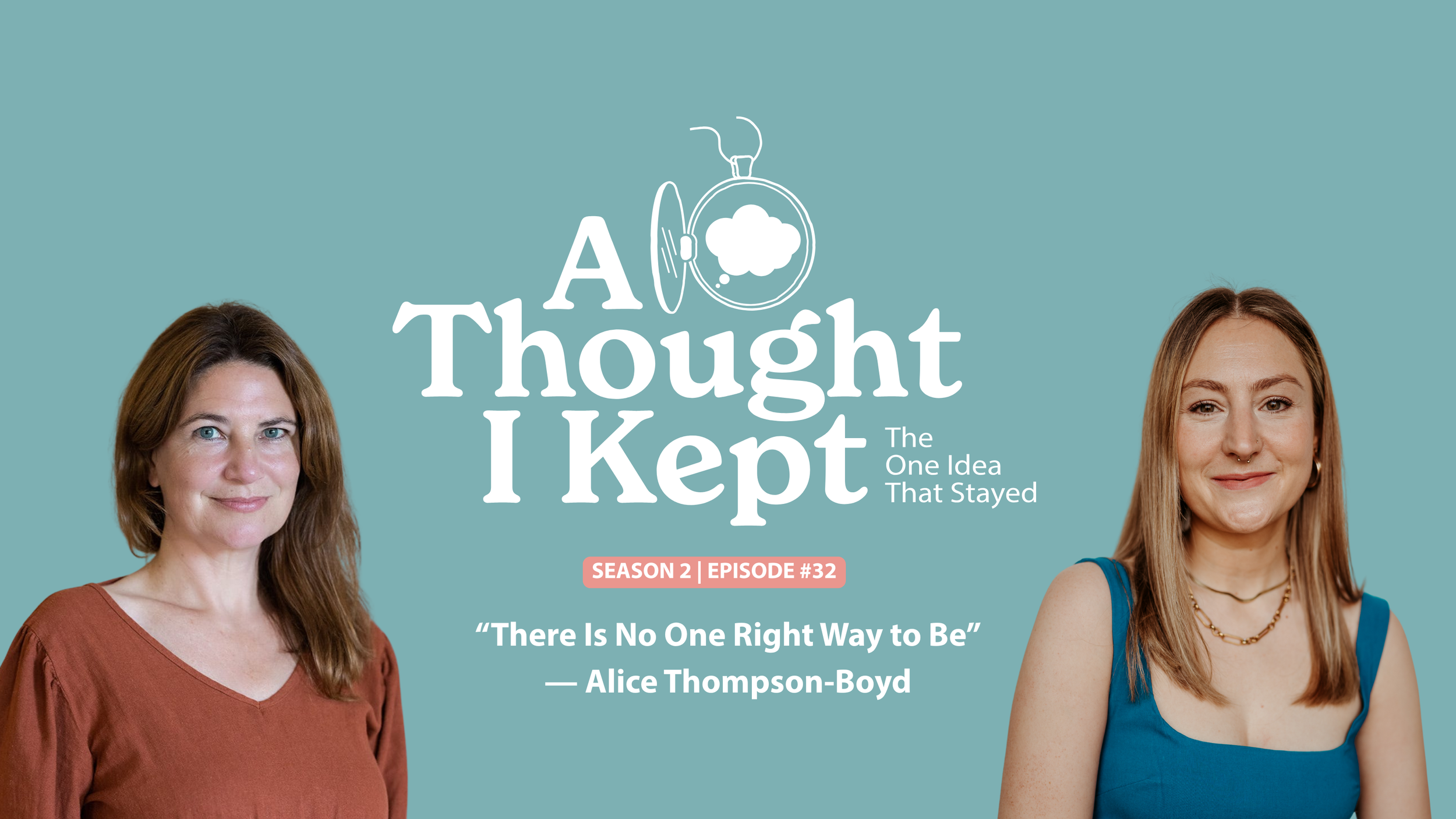
There Is No One Right Way to Be: Spirituality, Purpose & Feeling Lost
What can spirituality offer when you feel lost? Claire Fitzsimmons talks with Alice Thompson-Boyd about the Enneagram, purpose, self-understanding and finding your way back to yourself.
Have you ever arrived at a moment in your life when you thought that you’d feel ok, but you just didn’t?
We can build the career, achieve the goal, do work that genuinely matters, even create something successful, and still find ourselves asking difficult and confusing questions about who we are, what we need and where we’ve gone. Sometimes, as I discovered in my conversation with Alice Thompson-Boyd on A Thought I Kept, it can feel as though we have somehow disappeared out of our own lives.
Alice knows something about that experience. In her twenties, she co-founded Social Bite, the Edinburgh social enterprise supporting people experiencing homelessness. It grew into an organisation with more than 100 employees, celebrity supporters including George Clooney and Leonardo DiCaprio, awards, honorary doctorates and a level of impact that most of us would probably look at from the outside and call extraordinary.
And yet Alice was struggling. Alongside work that was changing other people’s lives, she experienced anxiety, burnout, panic attacks and a growing disconnection from herself. Eventually she stepped away from Social Bite and from the identity she had spent almost her entire adult life building.
What came next wasn’t another big mission. It was a much more internal question: who was she without all of that?
When we start looking for something deeper
It was after leaving Social Bite that Alice encountered the Enneagram, a system for understanding nine different patterns of human motivation and experience. She describes it as something that began almost accidentally and then became impossible to put down.
What interested me most in our conversation wasn’t really whether you believe in the Enneagram or whether you know your number. It was what Alice found through it: a different way of understanding herself.
For years, she had been trying to work out the right way to be. How should she show up to get the connection, approval and validation she longed for? How could she be one version of herself for one person and another for somebody else? What was she getting wrong?
The Enneagram offered her a surprisingly liberating answer: perhaps there wasn’t one right way to be at all.
It helped Alice see that the people around her weren’t necessarily looking at the same situation and reaching different conclusions. They might actually be experiencing that situation from a fundamentally different internal perspective. Their needs, fears, motivations and ways of making sense of the world could be different from hers.
There’s something very freeing in that. We don’t have to keep twisting ourselves into the person we imagine everyone else needs us to be. And other people don’t have to become more like us before we can understand them.
Spirituality doesn’t have to be about having the answers
This is where our conversation began to feel less like one about personality typing and more like one about spirituality.
Alice talked about how little time we seem to have now to sit around thinking about what it means to be human. We are behind screens, rushing between things, consuming information, producing, achieving, responding. There isn’t always much space left for the bigger questions.
And perhaps that helps explain our renewed interest in things like the Enneagram, astrology, Human Design and other systems for understanding ourselves. We are looking for depth. For connection. For something that helps us make sense of being here.
Of course, these systems can become another form of self-improvement. Another test to pass or way of deciding what is wrong with us. Alice makes an important distinction here. For her, the deeper she has gone into the Enneagram, the more she has realised that the point isn’t to fix herself. In fact, she suggests that our obsession with fixing ourselves can become part of the suffering itself.
Instead, she sees it as an invitation to become more aware of the patterns we inhabit and a little less confined by them. Not to put ourselves into a box, but to notice the box we may already be living inside and discover that there might be more room than we realised.
Remembering that we are part of something bigger
There was one moment in our conversation when Alice talked about zooming out far enough to see Earth as this small, vulnerable thing floating in space. From there, all the divisions and identities that can feel so convincing in everyday life begin to look rather different.
We are here for such a tiny amount of time. We are part of nature rather than separate from it. We are part of something much larger than the jobs we do, the things we achieve or the identities we work so hard to maintain.
I think that is one of the reasons spirituality is one of the ten pathways we explore in our book If Lost, Start Here. Not because Amanda and I believe there is one particular spiritual practice we should all follow, but because when we feel anxious, disconnected or uncertain, it can help to look beyond the immediate boundaries of our own lives.
Spirituality might mean religion. It might mean nature, ritual, meditation, philosophy or simply making space to wonder about the bigger questions. It might be standing under a huge night sky and remembering your scale within things. It can offer us somewhere to put the questions that don’t necessarily have neat answers.
And perhaps that matters particularly in a culture so interested in answers, solutions and fixing.
What happens when we stop trying so hard?
Alice told me that these days fulfilment increasingly looks like doing less. Walking the dog. Making dinner. Having nowhere she needs to be that evening. Stripping things away rather than continually adding more.
She also notices when she has forgotten the deeper lessons of the Enneagram because she gets fast. She starts rushing everywhere, trying to do everything. Remembering it asks her to slow down, become present and disentangle herself for a moment.
I keep thinking about that because it feels like such a useful measure. Not Have I found my purpose? or Have I finally become the right version of myself? But: am I here? Am I present in my own life? Do I feel connected to myself, other people and the world around me?
Perhaps spirituality can help us with that. Not by giving us another set of things to get right, but by reminding us that there was never only one right way to be in the first place.
Listen to my full conversation with Alice Thompson-Boyd on A Thought I Kept, where we explore the Enneagram, burnout, purpose, conviction, doing less and what happens when we stop looking outside ourselves for the answer to who we should be.
And if you’d like to explore spirituality in your own life, it’s one of the ten pathways in our book, If Lost, Start Here: Wellbeing for the Anxious, Disconnected or Uncertain — a place to explore what might help you feel more connected, grounded and part of something beyond yourself.
What If Feeling Lost Isn't the Problem?
Feeling lost doesn't always mean something is wrong. Explore how the Enneagram, self-awareness and the lifelong process of becoming ourselves can help us reconnect with who we are and what matters most.
A few weeks ago, I found myself down an Enneagram rabbit hole.
If you've never come across it before, the Enneagram is a personality framework that describes nine different ways of moving through the world. Unlike many personality tools, it isn't particularly interested in what you do. It's more interested in why you do it. What motivates you. What you're trying to avoid. What you long for. The stories you've come to believe about yourself and the strategies you've developed to navigate life.
I'd encountered it before, but this time I found myself lingering. Was I a Three? A Six? A Nine? The more I read, the less certain I became. Part of me could see myself in the achiever, someone who likes creating things, working towards goals and making ideas happen. Another part recognised the (anxious) planner, always trying to anticipate what might happen next and looking for a way to feel more certain. Then there was the peacemaker, the person who wants harmony, dislikes conflict and can lose sight of themselves whilst attending to everyone else's needs.
The answer mattered less than I expected. What interested me was noticing what happened as I tried to answer the question. What was I hoping the Enneagram would tell me? Why was I so drawn to understanding myself through this particular lens? And what was I really searching for underneath it all?
Perhaps the same thing many of us are searching for when life feels uncertain. More clarity wherever we can find it. And often that does mean starting with ourselves.
When we're struggling, it's often tempting to believe that the answer lies somewhere outside us. A new habit. A better morning routine. A different job. A clearer plan. A version of ourselves that is somehow more confident, more productive or more certain. Sometimes those things help. Sometimes change is exactly what's needed. Yet so often what we're really searching for isn't a better system but a deeper understanding of ourselves.
We want to know why we keep ending up in the same place. Why we say yes when we mean no. Why we struggle to make decisions. Why we feel anxious when everything appears fine on paper. Why success doesn't feel the way we expected it to. Why we're exhausted. Why we're stuck. Why we've somehow become strangers to ourselves.
The older I get, the less interested I become in fixing myself and the more interested I become in understanding myself. Not because understanding alone changes everything, but because it's difficult to move forwards when we're constantly fighting who we are. Before we can choose a different path, we often need to understand the one we've been walking.
When the Map No Longer Works
One of the things I've noticed through coaching, writing and conversations on the podcast is how quickly we turn feeling lost into evidence that something is wrong. We treat uncertainty as a problem to solve. We assume that if we could just find the answer, make the decision or create the plan, everything would settle down.
Yet when I look back on the periods of my own life when I've felt most lost, they often weren't signs that I'd failed. They were signs that something important was changing.
The life that made sense before no longer fit. The identity I'd been carrying was becoming too small. The coping strategies that had once protected me were no longer serving me. I wasn't lost because I'd gone off course; I was lost because the map no longer worked.
I think this is one of the reasons people are drawn to frameworks like the Enneagram. Not because they provide all the answers, but because they offer language for things we haven't quite been able to articulate. They help us notice patterns. They invite us to become curious about ourselves. They shine a light on habits, fears and motivations that have often been running quietly in the background for years.
Whether or not the Enneagram is your thing, I think it points towards something useful. We all develop ways of being in the world. We find strategies for staying safe, being loved, belonging, succeeding or avoiding pain. We learn what earns approval. We discover what feels dangerous. We adapt.
The challenge is that over time these strategies can become so familiar that we mistake them for who we are.
The person who always takes care of everyone else may no longer know what they need. The person who always achieves may no longer know what they actually want. The person who keeps the peace may no longer know what they think. The person who prepares for every possibility may no longer trust themselves to handle uncertainty. What began as a way of navigating the world slowly hardens into an identity.
Then one day we find ourselves questioning things.
Perhaps we're burnt out. Perhaps a relationship changes. Perhaps the children leave home. Perhaps a career no longer feels meaningful. Perhaps we simply wake up one morning with the uncomfortable feeling that something isn't quite right.
Often what we're experiencing isn't failure. It's an invitation to become more fully ourselves.
The Lifelong Process of Becoming Ourselves
One of my favourite ideas comes from the writer Cathy Rentzenbrink and it’s the idea of selfing: the lifelong process of becoming more fully who we are.
I love it because it feels so different from the language of self-improvement that surrounds us. Selfing isn't about finding a perfect version of yourself hidden somewhere beneath the surface. It's not about optimisation, reinvention or becoming someone new. It's about developing a deeper relationship with yourself over time. It's about becoming more honest about what matters, more aware of your patterns and more compassionate towards the parts of yourself you've spent years trying to outrun.
Seen this way, there is no final version of you waiting to be discovered. There is only an ongoing conversation between who you have been, who you are and who you are becoming. To me that feels both more realistic and more hopeful.
If you're in a time of life where you're questioning things, feeling disconnected, uncertain or stuck, perhaps the invitation isn't to rush towards an answer. Perhaps it's to become curious.
What keeps repeating in your life? What feels out of alignment? What role are you playing that no longer fits? What are you longing for? What have you stopped listening to? What part of yourself have you lost touch with?
You don't need the Enneagram to ask those questions (though it’s always fascinating to explore). You don't need a personality framework, a diagnosis or a five-year plan (though for some of us they can offer something we are searching for). Sometimes the most important thing is simply creating enough space to hear your own answers.
Feeling lost can be frightening because we assume we're moving away from ourselves. Yet sometimes we're moving towards ourselves. Sometimes the confusion arrives because an old story is loosening its grip. Sometimes uncertainty is what it feels like before something truer emerges.
The challenge is not to solve yourself too quickly. The challenge is to stay curious long enough to discover who you're becoming.
If you're feeling anxious, disconnected or uncertain, explore the resources at If Lost Start Here. From our Guide to Life and wellbeing journal to one-to-one coaching and community, everything we create is designed to help you find your grounding when life feels a little off course.
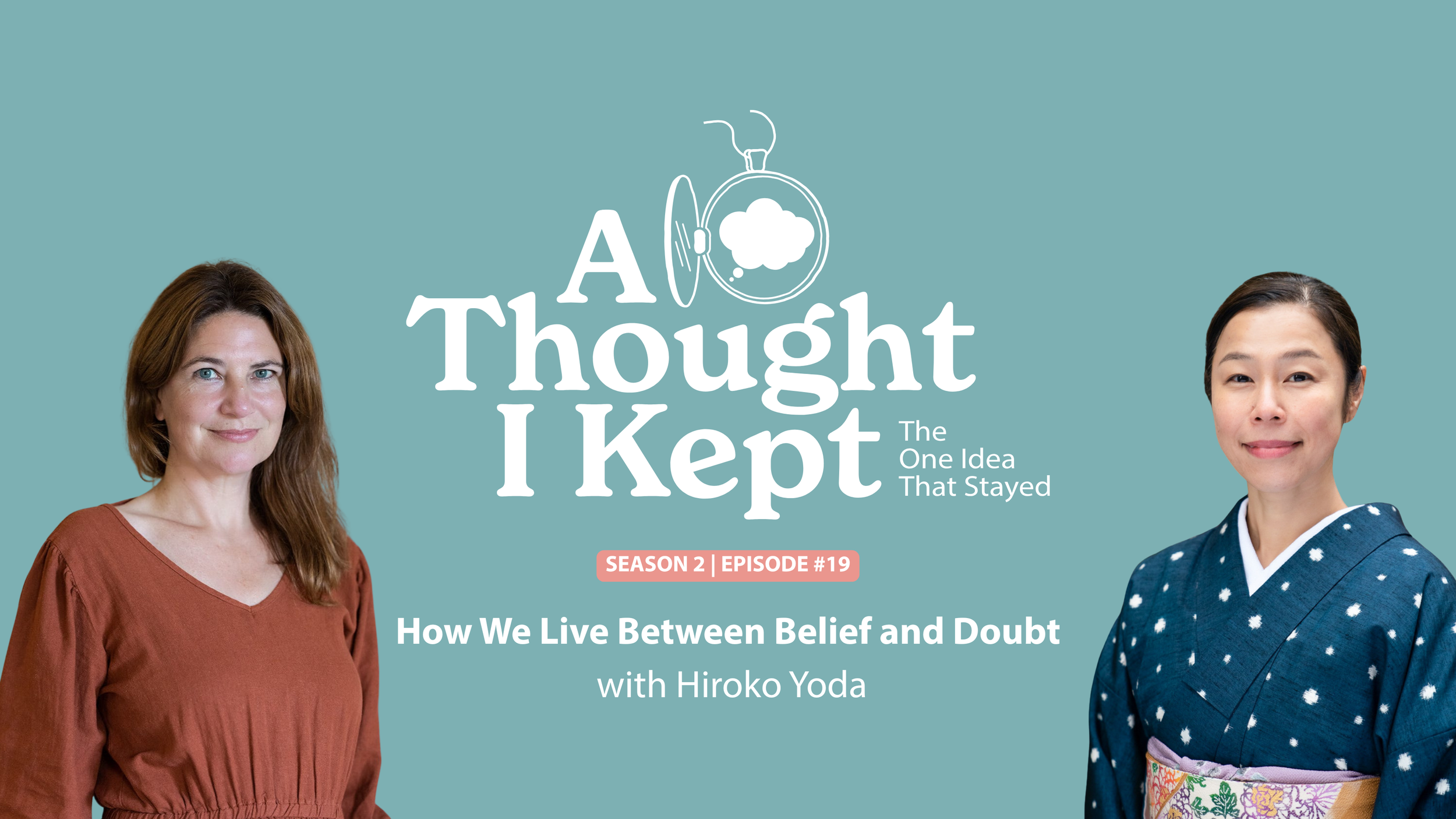
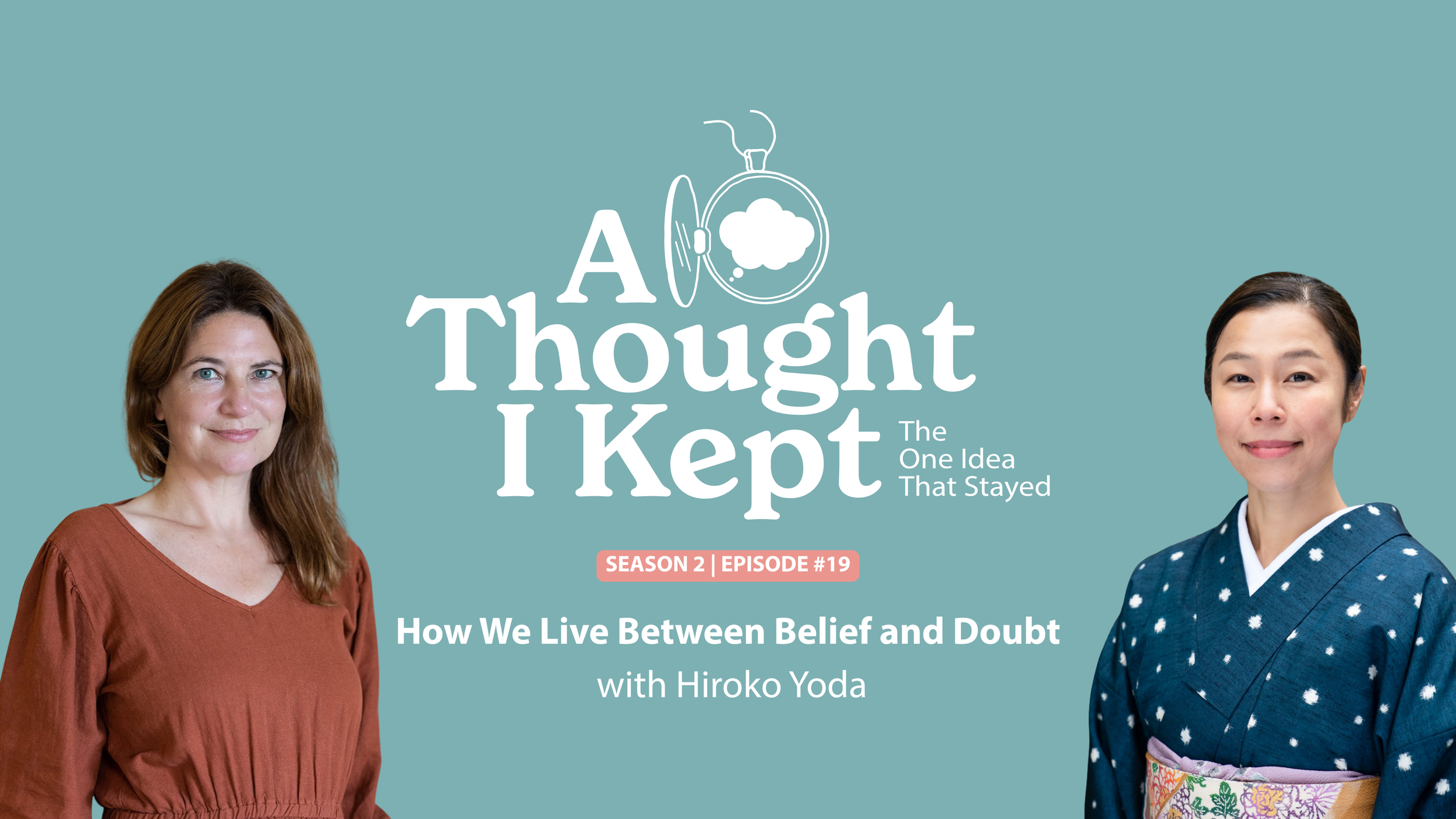
How Japanese Spirituality Can Help Us Feel Less Lost
What Japanese spirituality can teach us about wellbeing, grief and uncertainty from everyday rituals and noticing beauty to finding comfort in living between belief and doubt.
The park was the same one Hiroko Yoda had walked through countless times before. Same paths. Same trees. Same shrine tucked quietly amongst the landscape. But after her mother died, she could barely see any of it. She describes walking with her head down, shuffling through the park and back home again, where she would cry. Then repeat it the next day. And the next. Until one day she looked up.
She noticed the birds first. Then the maple trees. The shifting light through the leaves. A shrine she must have passed hundreds of times before. And in that moment, something changed. Not because her grief disappeared or because she suddenly understood everything about life or death or spirituality, but because she no longer felt entirely alone inside the world.
I haven’t stopped thinking about that since we recorded our conversation for A Thought I Kept.
Partly because I think many of us know what it is to move through life with our heads down. To become so overwhelmed by grief, anxiety, burnout, uncertainty or simply the sheer weight of being human that the world narrows around us. Our lives become logistical. Functional. We focus on getting through the day, answering messages, making dinner, remembering appointments. We stop noticing what is around us because we are working so hard to hold ourselves together within it.
And yet so much of what Hiroko shared in our conversation was about exactly that: noticing.
Noticing what remains. Noticing what connects us. Noticing the things that quietly hold us when we feel lost.
Her book, Eight Million Ways to Happiness, explores Japanese spirituality not as a rigid belief system but as something lived alongside everyday life. Something woven into nature, rituals, food, language, grief, playfulness and community. In Japanese spirituality, kami — spiritual presences — exist not just in shrines or sacred spaces, but in trees, rivers, mountains, words, objects and everyday acts of care.
I think what struck me most was how different this felt from the way spirituality is often discussed in wellbeing spaces. So much modern wellbeing culture seems obsessed with certainty. Morning routines that promise transformation. Manifesting practices that suggest we can think ourselves into a better life. The pressure to optimise, improve, transcend.
But Hiroko kept returning to something much softer and more spacious than that.
The Japanese idea of hanshin hangi — half belief, half doubt. The permission to remain somewhere in the grey zone. To not fully know. To allow uncertainty to exist without rushing to resolve it.
Honestly, it felt like a relief.
Because I suspect many of us already live there, whether we admit it or not.
We carry objects that mean more to us than they logically should. We talk to people we’ve lost. We feel calmer by the sea. We light candles. We keep rituals we cannot entirely explain. We sense that some places hold energy. We wonder whether there might be more to life than what we can immediately see or prove.
And then, often, we dismiss ourselves. We tell ourselves we’re being silly. Irrational. Dramatic.
What I loved about Hiroko’s perspective was that it made space for both curiosity and scepticism. Both wonder and uncertainty. Both grief and joy.
At one point in the conversation she talks about eating a banana at breakfast and saying itadakimasu beforehand — “I humbly receive.” And suddenly the banana stops being just a banana. It becomes the people who grew it, transported it, stocked it, bought it. It becomes weather and soil and labour and unseen connection.
That stayed with me because I think many of us are searching for meaning whilst overlooking the small moments where meaning already exists.
Noticing can become a kind of spiritual practice.
Making coffee in the morning. Opening the curtains. Walking the dog. Watering plants. Speaking kindly. Taking the long route home. Sitting quietly before the rest of the house wakes up.
Not because these things solve our lives, but because they return us to relationship with them.
And perhaps that matters especially when we feel lost.
Often when we feel uncertain, we assume we need dramatic change. A new version of ourselves. A breakthrough. A complete reinvention. But sometimes what we actually need is a gentler way of relating to where we already are.
Hiroko spoke beautifully about how Japanese spirituality allows opposites to coexist. Joy and sadness. Gratitude and anger. Light and darkness. She talked about how grief changed shape over time, how writing about her mother softened certain memories and complicated others, how healing was not neat or linear but layered.
I think there’s comfort in that too.
Because many people arrive at wellbeing feeling as though they are failing at it. Failing at being positive enough, resilient enough, healed enough, grateful enough. But perhaps wellbeing is not about eliminating darkness or uncertainty. Perhaps it is about learning how to stay connected to ourselves and the world around us whilst those things exist.
To look up occasionally, even when life feels heavy.
To notice the shrine amongst the trees.
To let a cup of coffee become a moment of connection rather than simply fuel.
To allow for half belief and half doubt.
If this resonates with you, you might enjoy my conversation with Hiroko Yoda on A Thought I Kept. We talk about grief, spirituality, uncertainty, belonging, rituals and the unseen threads that connect us to each other and the world around us.
And if you’re navigating your own season of uncertainty or emotional overwhelm, you can also explore coaching and support through If Lost Start Here. Not to fix yourself or become someone new, but simply to have somewhere to think things through more honestly and openly.

Sherlock & Pages
Sherlock & Pages in Frome is an independent bookshop specializing in nature writing, conservation, and environmental sustainability. It serves as a magical (and a little mischievous) hub for those passionate about reconnecting with the natural world.
Perfect For
Anyone seeking books that inspire a deeper connection with nature, those interested in locating meaning in their lives, and anyone looking to support independent book shops.
Why You’ll Love It
Nestled in the heart of Frome, Sherlock & Pages is a tiny bookshop — of just 1500 titles — with a big ambition. Co-founder Luke Sherlock has said “My dream as a person is to have the most beautiful, soulful bookshop surrounded by stories and community.”
True to his promise, together with his partner Agathe Cavicchioli, he has created somewhere magical — and sometimes mischievous — that holds a carefully curated collection of books that mostly celebrate nature, but also bring in other areas such as conservation, folklore, history and pilgrimage.
This truly charming book shop invites you to embark on journeys — sometimes physical, sometimes of the mind and spirit, all while fostering a deep connection to the natural world.
What Makes It Special
Nature-Centered Collection – Specializing in books about nature, conservation, and environmental sustainability, Sherlock & Pages offers readers a chance to reconnect with some of the best writing about the natural world.
Community Reach – In a town that believes in maintaining its independent spirit, Sherlock & Pages foster a sense of community and shared values. They are always happy to recommend the latest titles or beloved reads when you stop by. But don’t worry if you’re not local, you can also check out their YouTube Channel
Personal Touch & Advocacy – The people behind it have created not just a platform for cherished reads, but also for the story of the joys and difficulties of running a bookshop. Making literal space in the world for the things we love can be extraordinarily hard and rewarding. Their campaigns, and honesty, around this have highlighted how important it is to support the independent spaces in our community because when we don’t, we lose them too.
The Story Behind It
Luke Sherlock and Agathe Cavicchioli, both with backgrounds in climate action and sustainability, founded Sherlock & Pages in October 2023. After experiencing an intense bout of climate anxiety, Luke sought to create a positive space for community building and discussion on conservation, including what’s past and what’s to come.
Their shared passion for nature and literature led them to establish a sanctuary where readers can explore themes of nature, conservation, and history, anything that helps us connect with the world around us in restorative ways.
The shop's tagline, "Long Live the Hedgerows," reflects its dedication to conservation and the natural world.
The If Lost Take
We love Sherlock & Pages because it’s more than just a bookshop—it’s a beacon for environmental consciousness and a kind of nature-led self-exploration. It’s clear focus feels refreshing, as it brings together stories that inspire action and reflection, encouraging us all to become stewards of the world around us, even if that means that we just start noticing it again.
Something Else We Love
Luke has also created an avid following on Instagram through his account @englishpilgrim for his pilgrimages to churches, and has written his own book on the subject: Forgotten Church: Exploring England’s Hidden Treasures.
Some Practical Details
Frome, Somerset, UK
P.S.
If you visit, make sure to pop next door to independent shop Seed and the gorgeous florist Bramble & Wild.

42 Acres
Explore 42 Acres, a 173-acre regenerative estate and nature reserve in Somerset offering transformative retreats and nature-based experiences. Swim in the lake, meditate in the treehouse, or nourish yourself with farm-to-table food grown on-site.
Go here if: You’re looking to get into nature, reawaken your deep-rooted instincts and nourish yourself.
What is it: Set over 173 acres of wild land and ancient forest, 42 Acres is a regenerative estate and nature reserve where you can reconnect with nature, yourself and others.
Explore the self-guided and led retreats, often in partnership with world-renowned practitioners and aligned with nature, that encourage you to dream, grow, learn and rest. Stay in a restored 13th-century former hermitage, converted barge or under the stars in a luxury bell tent. Swim in the lake, meditate in the treehouse, sauna in the woods and nourish yourself with food grown on the land.
Why you need it: 42 Acres was first conceived in 2015 by siblings Lara and Seth Tabatznik as a home for personal, social and environmental change after having been deeply inspired by some powerful personal retreats and workshops in their own lives. Both Seth and Lara are strong advocates that outer change in the world starts with the self, or to quote Gandhi: “Be the change that you wish to see in the world”.
What they offer: At its core, 42 Acres invites people to reconnect with nature, self and others but has now grown to offer so much more including a range of wellbeing and nature-based experiences and events, a regenerative farm and an abundant nature reserve.
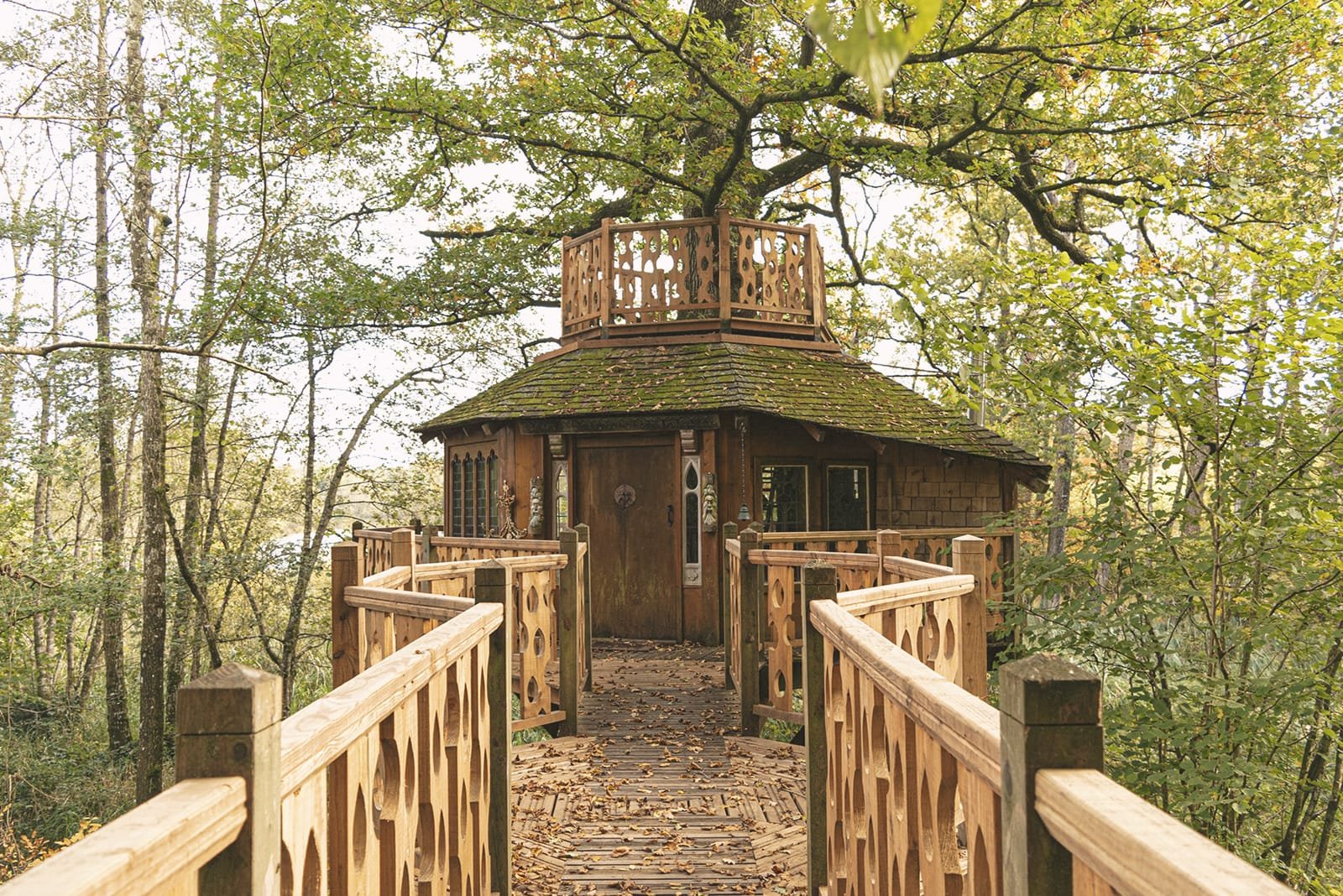

What makes it different: Living within an ancient forest, host to a variety of wild meadows and vast open fields and the source of four different rivers within a stone’s throw, this is a place for planting your dreams.
What you need to know: You can visit 42 Acres in several ways — as a guest on a day experience, workshop or energy exchange or by visiting them on retreat. All booked guests are free to roam the estate, swim in the lake and explore. Food, accommodation and experiences need to be pre-booked on their website.


In their own words:
“Our vision is to grow and consume in a way that serves the health of people and the planet. Our market gardens and regenerative farm use and permaculture and biodynamic-inspired principles. We grow, forage and wild-tend to create wholesome, nutrient-dense food. As we cultivate and restore health in our earth, we restore the worlds within ourselves.
We use our deepest intuition, ancient tools and shared knowledge to establish regenerative spaces, curate transformational experiences, and foster opportunities to learn, heal and grow.”
42 Acres is a 173 -acre retreat centre, regenerative estate and nature reserve in Witham Friary, just outside of Frome, Somerset
All images courtesy of 42 Acres.
Life advice for the spiritually-curious
Feeling like there's something else, but you don't know what? Some meaning out there that you've yet to locate? Hannah Carey, founder of Rewild the Empress, talks to us about being Spiritually-Curious and how that's helped her find herself.
Today we have a guest post from Hannah Carey, the founder of Rewild The Empress, a place and community in which there is infinite space for self-acceptance.
In Hannah’s practice, she supports the spiritually curious as they navigate, discover and recommit to living in an authentic and aligned way: “to be the me you were always meant to be”. Rewilders often come from a place of feeling destined for more and, at the same time, fear they may not be enough or that they are unfulfilled and failing. Something that Hannah has experienced first-hand as she writes here:

Spirituality for me has become about confronting the conscious unrest within us.
But it wasn’t always that way: I was brought up in an informally Christian household, was baptised and attended traditional schools in which formal religion, regular chapel attendance and hymns were woven throughout the school week. My weekends ended on Sundays at 6 pm with a Sunday Service or Hymn Practice, the school’s version of informality.
Internally I was already rejecting the patriarchal God our Father, the Almighty and the governor of us all. It wasn’t me and didn’t align with my values of Freedom, Authenticity and Personal Growth.
And yet my heart rejoiced when an entire congregation of people sang in unison and in troubled times I found the voice in my head speaking to a higher power – I assumed God.
And so commenced the constant narrative of right or wrong, god or no god, and the general black-and-white thinking that goes with this, which might also be familiar to you.
As a teenager (pre-google, damn and pre-mainstream internet access) I bought tarot cards and explored. I read about paganism, and astrology. I aligned with nature and the cycle of the year. But wasn’t this “Witchcraft”? I couldn’t call myself a witch and be taken seriously – at 15 I knew enough to know that it was safer to keep it quiet.
Years passed by and in the many times of existential crisis in my 20s I muddled through beating myself up with the shame stick (it’s one of my personal favourites – what’s yours?). I figured I was agnostic, got married in a church because I rationalised that there was ‘something there’ and it may as well be God and continued to aspire to success and fitting-in-ness so unaligned with my personal values I wound up deeply misshapen and lost. I viewed it as ‘just the way it is’ and carried on.
But that internal compass just wouldn’t let it go. The conscious unrest ebbed and flowed like a tide and every so often I allowed my inner self a small win… I closed a ‘successful business’ searching for more. I took a slight detour down ‘what the fuck were you thinking avenue’ and finally landed at a rest stop in which I dusted off my tarot cards, took a deep breath and shuffled.
Death, The Emperor, The Hanged Man and 10 coins stared back at me. Plain as day my ‘god’ was telling me – Change it girl. You are meant for more.

Hannah is one of our ‘People We Love’ - handpicked practitioners who can help us feel better in our lives. To work with Hannah reach out to her here (we may get affiliate fees which help support our work but in no way influences who we choose to feature).
Hannah offers coaching in all areas of life whilst exploring your personal version of spirituality.
By recognising where systems, structures and history may have led you astray, unpicking family dynamics, the messaging you took on from the big people around you as you grew up, and your beliefs and the “shoulds” that keep you small and unfulfilled, you’ll get to re-decide and choose to do life differently.
Whether it’s through modalities like Astrology, Human Design, or the lunar cycles, you will get to connect with yourself and deepen your self-awareness. Hopefully, from working with Hannah you’ll discover that there is a glorious permission and freedom that comes from knowing you are whole and OK just as you are.

Podcasts for Spirituality & Meaning | March Edit
Modern Wisdom for bringing more Spirituality & Meaning into our days. We’ve curated a selection of recent Podcasts that can help you think differently about faith, belief and ritual.
“Many of us come to astrology in search of ourselves. In search of the meaning of our lives. In search of some clues about what it is we are here to do and whether or not we are on the right track.”
When we think of this pathway, Spirituality & Meaning, we think of anything that can bring wisdom into our lives, orientate us in our days, and find our way forward in ways that make sense for us. These podcasts share this open approach to what belief, ritual and faith can look like. They cover how to use the Enneagram, Tarot, and Astrology as tools of understanding. How the practice of prayer or the modern church can show up in our current lives. And how to locate joy and healing even when faced with the darkest times.




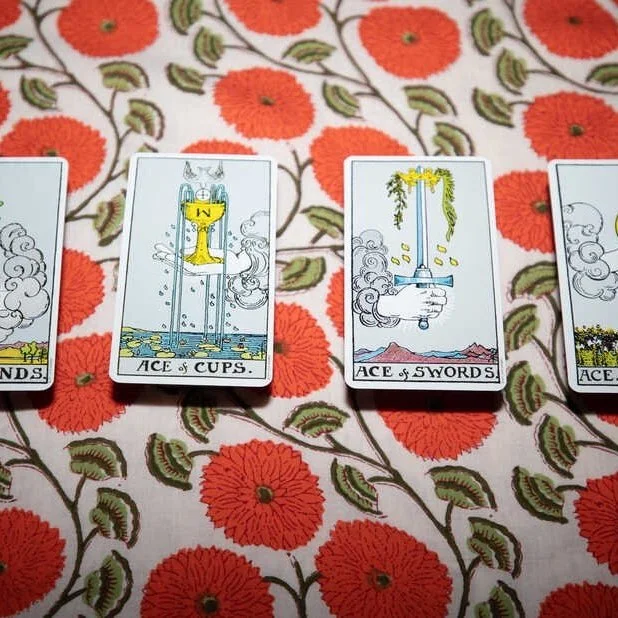


“Our future-focused, technology-obsessed world seems to be hurtling down a bad path. People are turning to ancestral practices for a sense of enduring longevity, and comfort. To help stay sane and grounded in the midst of so much cultural insanity. To source a different kind of power in hopes of making changes both personal and political. From learning meditation to fighting off a cold with some homemade fire cider; from indigo-dyeing your curtains to strengthening your intuition with the aid of the Tarot, such old-world practices are capturing our imaginations and providing us with meaningful ways to impact our world.”
All these selections can be found in our Spotify playlist for Spirituality and Meaning. You can listen here:
Let us know what you’ve been listening to this month to help you think about your own approach to Spirituality & Meaning. Which podcasts have inspired you to think more about meditation and manifesting, Tarot and Astrology, ritual and faith?
To seek out more resources for how to bring more Spirituality and Meaning into your life take a look at our guide.
Main Image: Photo by Ashley Inguanta on Unsplash

The Soul Spa | A conversation with founder Madeline Blackburn
How do you make time to pause? We talked to Madeline Blackburn, founder of Bath’s The Soul Spa, about how we can rethink how we treat our modern-day ailments and create better spaces to hold us on our high streets.
A center dedicated to the mind-body-soul connection, The Soul Spa was founded on a site of healing — legend has it that King Bladud was cured of leprosy from the hot springs that the building, one of the oldest in Bath, is situated on. For years people have come to this location to get well (the energy of Sulis Minerva has even been felt in its rooms).
We talk to founder Madeline Blackburn about how The Soul Spa is providing ways to treat our modern-day ailments and creating the space for people to just pause.
The Soul Spa feels like a new model for the mind/body/spiritual in our communities.
When I was thinking about how to create this space, I knew I didn’t want to be the church hall, because the environment matters so much to me. I was in a flotation tank in Colorado, and I literally sat up in the dark and the idea of “soul centers” came into my head. I went home and wrote and wrote and wrote. I noticed that there were workshops in spaces, nice retreats, and meditation and mindfulness classes. But what’s unique to The Soul Spa is that we’re in one building and have a permanent offering. Though workshops and courses might change, our practitioners and team of people are here all the time and here for you if you need them.
Often practitioners can be quite siloed but maybe, for instance, a client who comes in for psychotherapy finds it won’t work for them and that they would do better with a reiki healer. You offer a more client-led model, giving possibilities for accessing healing in different ways.
Absolutely. From a holistic physiotherapist and an astrologer to a shamanic healer and nutritionist, we try to foster a collaborative nature between us. We know what each other does. All the therapists say how refreshing it is to feel part of something, rather than just renting a room. That’s quite unique about us. Also what I understand of the human brain is where your beliefs are, if you believe in something, that’s probably going to work for you better than something that you don’t believe in. I’m here, not to make any comment or judgment about what anyone’s beliefs are, but to give them the smorgasbord of choices that will fit in with their view of the world. And then maybe even open people up to new ways that they haven’t thought of.
We don’t want to make people feel like it’s going to be work or difficult though but approach from a place of relaxation and calm, peace, and time out. We have a Quantum Field room, so people can just drop in and tune in to one of our guided meditations or bring their own.


There’s a shift in wellness now: it felt like before it was something you did over there, there was a certain audience for it and that audience looked a certain way. But with The Soul Spa and the other places we cover in this guide, we’re finding that where we locate wellness is more fluid. It’s shifting in how people are bringing it more into their everyday lives.
We’ve also noticed how people in the UK now talk about wild swimming or forest bathing, or other activities that are right there in their communities, and actively reach for something locally. It feels like people want to be doing these things and your space, and the others that we feature, give us permission to bring more of what we need into our lives.
Because you don’t do it. Most of us don’t do it at home. It’s hard to do it at your desks. Summertime yes you might sit in a park. But where is there to go in winter? I was brought up Catholic and the other week I just sat in a church for a bit, just to defrag for a few moments and calm my head down. We do need spaces that give you that permission to hang whatever is happening in life up in the cloakroom and just come and be for a bit. For The Soul Spa, I want people — whether they are shopping or a tourist or a local worker — to know there’s a space they can go for twenty minutes or half an hour where they don’t need to think about anything else.
I think we all need that space.
So many people say that they wish they had something like this in our town. Every High Street needs one.
If there was intentionality about it, the High Street would look so different, and serve us as people. What we’re really craving are these spaces that hold us differently and not on our own but together. Somehow to be around one another in positive, more human-minded ways.
I think The Soul Spa is that. I’m not a shopper but I love the energy of the High Street. That’s why it was important to be situated in a quiet place near the center of the city. I would love to think we could prove this as a model and then bring it into other places, just like how the idea of gyms developed before when they’d never existed previously.
I also like that we’d be for everyone, children and old men, fat and thin, every color and creed. Everybody. What we do here is a human thing. It’s fantastic that it appeals to people who already do yoga or meditation: they are intrinsically very interested in their health and more likely to do this, but I want other people who have never done anything like this to know it’s for then too


Why do you think wellness can be associated with being aspirational, a commodity, an appearance, and not for everybody? Is that cynicism, money, equity? Why do you think it has that weight to it?
I think it’s partly cultural because I don’t think it’s in every culture like that. There are cultures that do see it as intrinsic. But here, before the 80s, everyone was just trying to survive. My mum was born at the beginning of the war, and for her generation there was nothing. It really felt like a luxury to even consider looking after yourself. As we were growing up that was still in the mix. Then we had the 80s which just became uber materialistic and we’re still in the back end of that somehow.
It’s very natural for people to try and make themselves feel better. It’s just where you look for the thing that’s going to make you feel better that’s shifts so much. In our culture now it’s getting lots of likes, social media shaping our self-perception, and that’s not working so well.
I really think that people are going to want places like The Soul Spa more. It’s all life though. And I absolutely love life so even the bumps are kind of interesting when you can view them from that perspective.
Our model for mental wellness has been one around crisis management. For a long time, when we’ve thought about accessing therapy and medication, it’s about quickly reaching out, finding resources in the moment of high need. But what I’m seeing from you and your work at The Soul Spa is that there’s a different way of navigating our wellbeing, by developing a practice that people can build and access every day before they get to that stage. That means that when a crisis happens there’s that foundational piece, tools that people know work for them and they can use. It’s the other way around.
Most of us know now how to look after ourselves physically, and most do a bit of the right thing. We know how we should eat, and about exercise. We do all of that so that we don’t get ill and if we do, our bodies are stronger to cope with that. It’s the same thing for the mind. But I think that’s what puts so many people off, is that they think they can’t do it. Like with meditation, people often worry that they will think about what to have for tea and getting the shopping…
… they worry about getting it wrong. For many people meditation comes with the perception that their mind needs to be empty to get it right…
…and they say but my mind is too busy. But welcome to being human beings. That’s not that special, it’s not unique to them. Everybody has this experience and it’s learning that’s ok that might get someone to try it.
I come from a hypnotherapy background, and it’s all about your deep-down beliefs, where they’ve come from, and how they drive all your automatic behaviors, reactions, and thoughts. When I’m helping people relax, I’m thinking about the brain state, and about getting them into an alpha state, and potentially into the theta state because I know that in that state the rest of their body can go off the sympathetic into the parasympathetic nervous system. It can rejuvenate, it can heal. That’s the state you need to be in for your body to be well, for your mind to take a minute, to take a break.
For people who find it harder, my method is much more spoken and guided. I’ll use little hacks from hypnotherapy like a countdown or an eye-roll, or something for people to get into the alpha state a bit faster so that their neurons then fire together. The more they do that, the more they practice it, it becomes automatic, like a habit. Instead of responding when someone cuts you up on the road with adrenaline and anger, you can be more chilled out about it, understanding that maybe they are having a bad day and need a bit of love.
Just a bit of compassion
I just feel like positive things could happen if we can get more people responding like that or at least seeing or understanding why they are responding the way they do, looking at it, and being willing to shift. Instead of looking at the external world and blaming it for everything but wondering actually how can I change because I’m probably not going to change that external thing. Though in reality the more we can all change the more that can change too.


Need more mind-body connection in your life, visit our guide for more places, prompts and ideas for how and where to find it.
Let us know where you go when you are looking for more spirituality and more mind/body connection in your life.

The Lake Shrine
Neuroscientist Dr. Daya Grant discovers a sanctuary in Los Angeles for reflection and a moment of respite from it all.
“Live each present moment completely and the future will take care of itself. Fully enjoy the wonder and beauty of each instant.”
What is it: The Lake Shrine is a sanctuary in the heart of Los Angeles. The beautiful grounds have a small lake (with turtles, koi fish, and two exquisite swans) surrounded by a walking path, pristine plants, flowers, and trees, as well as benches for reflection.
Why You'll Love It: As soon as you step onto the grounds, you can't help but exhale. It is peaceful and inclusive, and every time I visit I can't help but feel that "All is OK". The setting is absolutely gorgeous, but there's also an energy there that is grounding, uplifting, and hopeful. It's a place where you're encouraged to slow down and take your time.
What They Offer: Pre-COVID, the Lake Shrine offered beginner meditation classes in the charming windmill chapel right on the lake. Now, all inspirational presentations and meditations have shifted online. At the Lake Shrine itself, there is a small gift shop with gifts from India, as well as a small bookstore with thoughtful readings.
What Makes It Different: The Lake Shrine invites you to just be — to breathe deep and surrender to the present moment and the beauty all around. While it is on the grounds of a spiritual organization, inclusivity is paramount.
What You Need to Know: During COVID, reservations are required. A limited number of parking permits are available and can be reserved (for free) at a particular time the week prior. It does sell out each week within five minutes, so jump on your computer early and prepare to hit refresh! It is open from Wednesday to Sunday from 1 pm to 4 pm.
In Their Words: "Lake Shrine is part of Self-Realization Fellowship founded by Paramahansa Yogananda. Dedicated in 1950, he envisioned a spiritual environment where people from all over the world could come and experience peace of heart and mind. Today, Lake Shrine offers a lakeside Meditation Garden with shrines and waterfalls, a hilltop Temple with weekly inspirational services and meditations, a retreat for silent renewal, and an ashram for monks of Self-Realization Fellowship."
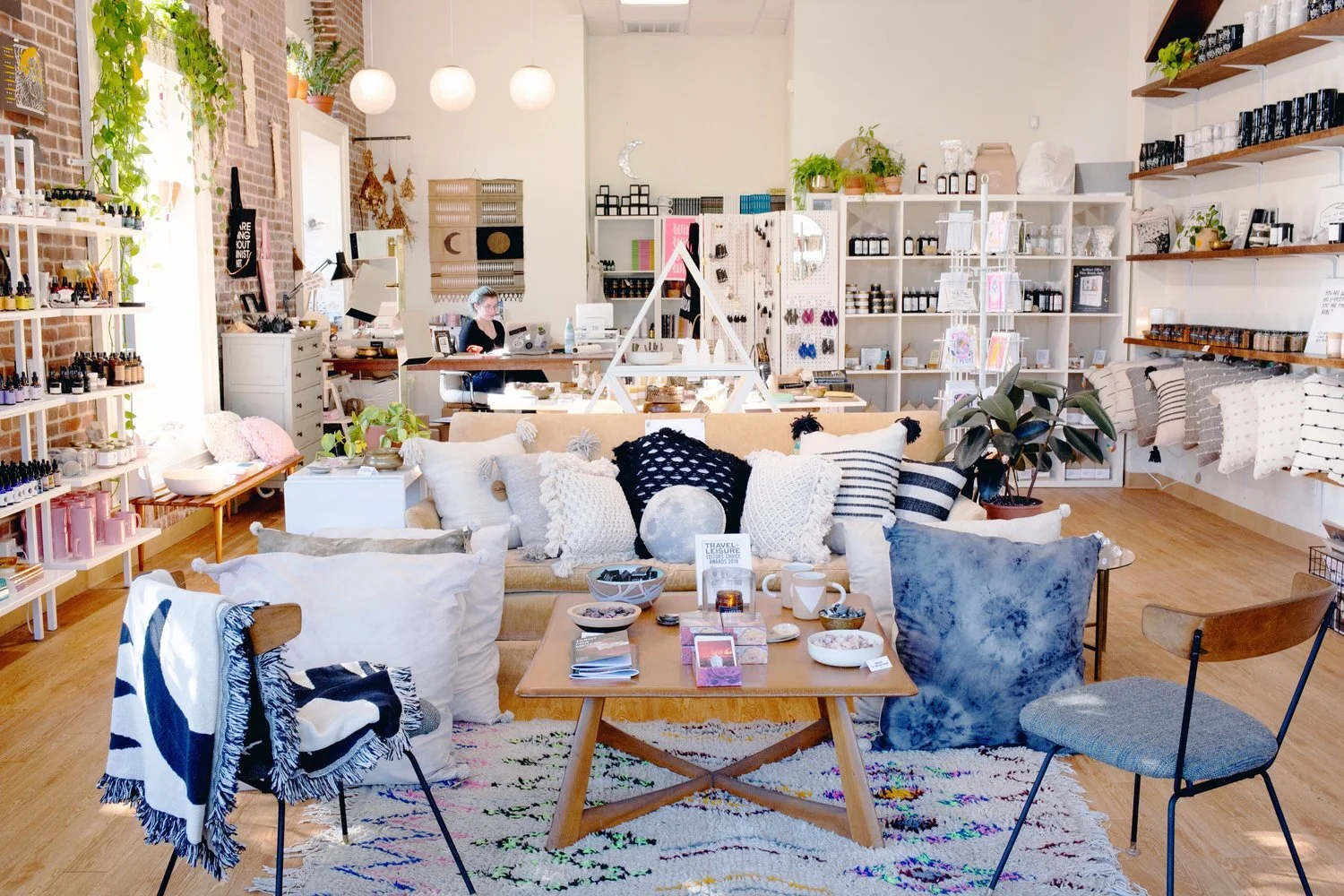
HausWitch
Think you know witchcraft? Think again with this space in Salem redefining Witchcraft for modern times.
Go here if: you are seeking strategies for self-care, are ready to push against some social boundaries, and want to make your home the sanctuary you need it to be.
What is it: A metaphysical lifestyle store for the modern witch, or those curious about what that even means, in Salem – yes, that Salem.
Why you’ll love it: Founder Erica Feldmann opened HausWitch in 2015 after completing her graduate studies in the sacred feminine and witchcraft at Simmons College and as a positive space to bring magic into our everyday lives and homes. This isn’t the version of witchcraft told in fairytales or Halloween stories or even those witch trials: it’s not black peaked hats, cauldrons, and evil incantations. Rather its more Scandi design and modern twists: the storefront is light-filled, combining a keen eye for interior decoration with products that reframe witchcraft for contemporary times, bringing in ideas of self-knowledge, empowerment, healing, intuition, mindfulness, and nature-inspired spirituality.
What you need to know: The Treasure Palace as Feldmann refers to the storefront holds minimally designed items for the modern witch (some serious, some playful): incense, spell kits, candles, and potions as well as throw pillows, cleaning products (from own brand LightHaus) and ceramics (‘Witches are the Future’ ). HausWitch also hosts workshops for developing intuitive skills, such as tarot reading or astrology, and that offer safe spaces for women to share, learn and support one another.
How to bring this into your life: HausWitch has just opened up again after a year of being closed due to the pandemic but you can still shop the collection from wherever you are, attend an online workshop or even bring in some magic to your home with Feldmann’s book, HausMagick.
Why we think it's different: Witchcraft is being reframed; we’re increasingly curious about what it represents, what it can provide, and how we can bring it into our lives. In a moment when we’re struggling to live within the constraints of our modern-day world, for the curious and the seekers, witchcraft offers alternative ways into healing and reflection. Its rituals can ground our days, its practices offer self-care to orientate us in spiraling lives. But witchcraft is also about empowerment, about resistance. HausWitch offers ways to slow down, tune in, recognize, but it also offers ways to push against, make space, be heard.
When you get beyond the narrative that has represented witches as outsiders, you get to one that reveals that witches are often those who have pushed against patriarchy, social norms and spiritual expression denoted narrowly. As Feldmann has said: "It's more about feeling empowered, wanting to change the world and connecting to your own intuition."
Witchcraft here sits closely with feminism, with women no longer silenced, reclaiming their powers and making space for themselves in a world that better reflects who they really are (Also shop: “A simple spell against the cis hetero white supremacist patriarchy”. ) For Feldmann, the meaning of witch is ‘Women in Total Control of Herself’ — with women here meaning all gender identities. HausWitch is an intersectional space that is consciously open to “all genders, sexualities, ethnicities, abilities, and anyone who feels like they are in need of a truly supportive and safe environment in this ever-changing world.” Feldmann’s wife Melissa Nierman teaches workshops here (currently offering Past Life and Clairvoyant Energy Readings) and runs NowAge Travel.
In their own words: “HausWitch Home + Healing is a modern metaphysical lifestyle brand and shop, providing Salem locals and visitors with a selection of witchy and handmade products from independent makers from around New England and the US! HausWitch combines the principles of earth magic, meditation, herbalism, and interior decorating to bring magic and healing into everyday spaces.”
Inspired to: We’ve all been tied to our homes this year in ways that may have made us love our spaces slightly less than usual. This spring, find a way to reconnect to where you are. In her book HausMagik, Feldmann suggests rebuilding our relationship to our own space by decluttering, being attuned to what feels good and what doesn’t, bringing in greenery and crystals, and burning sage to reset the energy of a room. Our homes are the spaces that can hold and sustain us through the less cozy outer world; this spring find a way to make it your own again, restorative and replenishing for whatever comes next.

Spirit Rock
As the ground shifts beneath our feet, we’re looking more for solace and self-compassion. Enter Marin’s Spirit Rock.
“When one thought ends, right before the next thought begins, there is a tiny gap called ‘now.’ Over time we learn to expand that gap.”
What is it: An open-to-the-public insight meditation center inspired by Buddhist teachings tucked away in West Marin, California.
Go here if: you’re curious about meditation, seeking to practice loving kindness, or looking to connect to something as yet undefined.
Why you’ll love it: There’s nothing intimidating here just warmth and openness to meeting you wherever you are. If like us a 10-minute meditation once a year is all you can manage, you’ll feel ok walking through these doors. You can take the programs at your own pace, from morning sessions through to month-long silent retreats.
What you need to know: Monday Nights with Jack Kornfield (co-founder of Spirit Rock) and friends is a great non-committal way to get to know the place and the practice. Join one of Kristin Neff’s sessions on self-compassion.
How to bring this into your life where you are: During stay-at-home times, Spirit Rock operates its programs online and on a donation basis, so you don’t need to be in the San Francisco area to benefit from its teachings.
In their own words: “People come to Spirit Rock for many reasons, but they all amount to essentially the same thing — wanting a more easeful relationship with life. The spaciousness and stillness of Spirit Rock and the caring teachers, staff, and volunteers, create a supportive environment for turning inward and letting go of the struggles that get in the way of experiencing the freedom and joy that are inherent in every moment of life.”
To find out more: Website / Instagram / Facebook / Twitter
If you’ve visited Spirit Rock, or if you have another Meditation Center that you’d recommend, tell us about it on social media or by emailing hello@ifloststarthere.com

Austin
Finding the spiritual amongst the abstract in Austin.
“ I hope visitors will experience Austin as a place of calm and light.
Go there and rest your eyes, rest your mind. ”
Search this out: If art for you can be a sanctuary.
What is it: American artist Ellsworth Kelly’s only building. Permanently installed at Texas’ Blanton Museum, Austin is the culmination of Kelly’s seven-decade long career. This immersive artwork is a modern interpretation of a traditional Christian Chapel; all the elements we’d anticipate are there but rendered in a secular, modernist way — like awe-inspiring stained-glass windows, Stations-of-the-Cross marble geometric panels, and a central redwood curved totem, all installed in a monumental 2,715 square foot stone structure. Not your grandmother’s church — at least not ours.
Why you’ll love it: The play of color, form, and light through the three stained glass windows that change through the seasons, the placement of the sun, and the natural environment. It’s a truly time-based work that emphasizes the life-giving qualities of light. Kelly was finely attuned to color: the Tumbling Squares window (itself inspired by Chartres cathedral) and the Starbust windows span through careful gradations of color.
What you need to know: Kelly first conceived of this modern chapel in the 1980s but it took decades to realize the work in Austin and the artist never saw it finished (though he witnessed the beginning of the 18-month construction). Though Kelly himself was not religious, he was fascinated by how spirituality could be conveyed through both art and nature and had a life-long interest in Judeo-Christian forms.
How to bring this into your life from wherever you are: Though the Blanton Museum is closed during stay-at-home orders, you can experience Austin through a live-stream of two of the stained glass windows, and the Happy Hour curated conversation by the team who realized the work as part of their #MuseumFromHome series.
Why we think it matters: Spirituality comes in all shapes and forms. Even abstraction.
In their own words: “Kelly himself was constantly inspired by the natural world and was deeply aware of how perception can transform ordinary things into extraordinary–even spiritual–experiences, if we open ourselves to that possibility.

Lost at Home: Prompts for thriving while social-distancing
We’ve put together a quick guide for how to maintain your mental wellbeing while social-distancing.
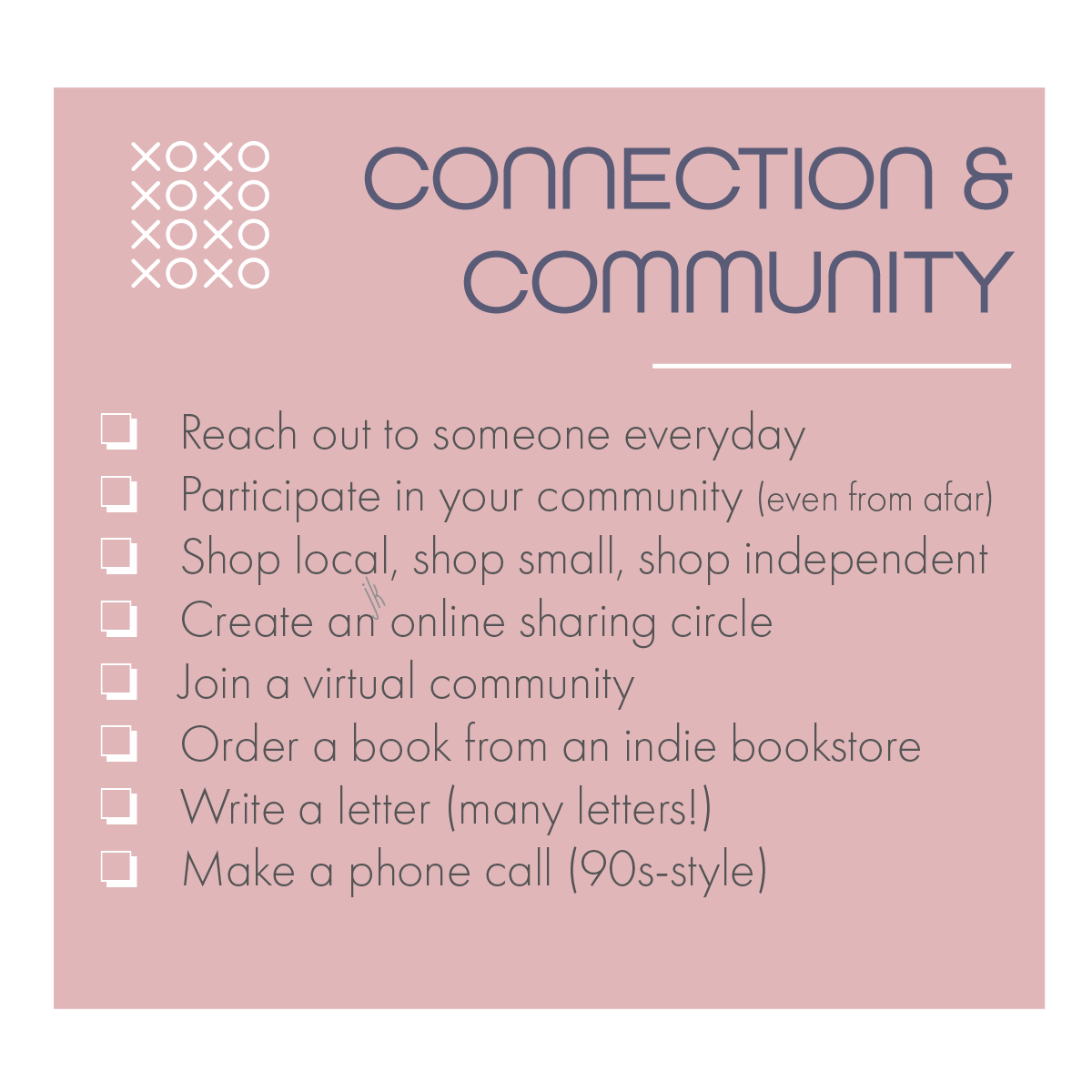
We all have the same basic needs — even when we’re stuck at home. While If Lost Start Here generally focuses on the *places* we go to meet these needs, we’re pivoting and reassessing to find ways to meet them from home. From finding community and connection to discovering your own creative potential, we’ve collected some of our ideas for thriving while social distancing. Have something to add? Feel free to share ideas in the comments below! This is in no way an exhaustive list! (And of course, please share with anyone who may need a boost of inspiration!)


MOAB | Feeling Beloved
Moab is a place to discover yourself in the present, but with a deep sense of being cradled by the past. A place to feel beloved on the earth.
“And did you get what
you wanted from this life, even so?
I did.
And what did you want?
To call myself beloved, to feel myself
beloved on the earth.”
Moab, in Southern Utah, is an enchanting town full of contrasts. Nestled in the Southwest desert, it is an area of stark but ethereal beauty. Red cliffs rise dramatically out of the flattest of plains, as if sculpted by some other-worldly hand.
As a land where dinosaurs once roamed, where the Wild West played out, markers of the past are everywhere. Serene hikes among stunning, primitive, red rock formations compete with modern, high-octane adventures, tempting the senses. Moab is a place to discover yourself in the present, but with a deep sense of being cradled by the past. A place to feel beloved on the earth
The town is the gateway to two national parks, The Arches and Canyonlands. The former has over 2,000 Arches, with the iconic Delicate Arch drawing endless streams of visitors. The park is a mystical wonderland of gigantic sandstone structures, eroded monoliths, spires and colossal rocks, balancing precariously; somehow daring you to approach, to wander among them, but forever imprinting a deep awe and respect for this ancient ecosystem upon you. For indeed, over 65 million years of intense geological forces created this surreal, fragile land.
A visit to the Canyonlands is equally as mesmerising. The Colorado River and Green River combine here, dramatically carving out the land. Majestic canyons, mesas and buttes formed over millions of years invite the visitor deeper into the desert. It is a place of reflection, a place where solitude can be found among its vast, primitive deserts. Traces of the past hang in its atmosphere. Rock art from hunter-gatherers from the Late Archaic period (2,000-1,000 BC) is found alongside petroglyphs from the Ancestral Puebloans, and some images are dated to after 1540 AD, when the Spanish re-introduced horses into America; a veritable gallery of mankind’s visions unfolding over time.
Moab is a land of awe and wonder, where dinosaur tracks are as ubiquitous as Native American petroglyphs. Time transcends. As the desert sun burns intensely overhead, you can somehow feel the ground shake as a gigantic Brontosaurus tears trees from the land.
As the night sky falls, a curtain of black dramatically descending, you are drawn into the thundering hooves of the Wild West days, debauchery and gunfights escalating in the town squares. Ultimately though, it is a magical place where time loses relevance, a place to feel beloved on earth.
To find out more: website www.discovermoab.com / Instagram discovermoab / Facebook @discovermoab / Twitter @Visit_Moab_Utah

Sunday Assembly
What makes Sunday Assembly distinct, and widely compelling, is the basic belief system of ‘Live Better, Help Often, Wonder More’. Who could not find themselves getting behind that?
“Celebrating life together. Inspiring events and caring communities in 70+ cities worldwide.”
A Sunday Assembly. What are your associations with this? You probably already have some. Maybe your mind goes to Church. Maybe it goes to Religion. Maybe it’s just thrown back to some gathering, or school, or choir thing you had to attend when you were a kid. But does it go to singing Snow Patrol (‘Light Up, light up / As if you have a choice / Even if you cannot hear my voice / I’ll be right beside your dear’), or eating donuts and drinking coffee, or hearing someone’s story of how they couldn’t quite get their life to do what it needed to do that week?
Since it was launched in 2013 by two comedians Sanderson Jones and Pippa Evans, as the punch-line that didn’t have a joke, Sunday Assembly has morphed into 70 chapters in 8 countries. The most recent chapter opened in Plymouth, England in the past month. We’ve attended the monthly meet-ups in the San Francisco Bay Area. There are others, many others, in places like Cape Town, Sydney, Amsterdam, Paris, Detroit and Las Vegas. If there isn’t one near you, you get to start one with 9 of your friends, following this pathway. There’s a reason it’s the fastest growing secular community in the world.
What makes Sunday Assembly distinct, and widely compelling, is the basic belief system of ‘Live Better, Help Often, Wonder More’. Who could not find themselves getting behind that? Each Chapter is built around a Manifesto that includes things like ‘Is 100% a celebration of life. We are born from nothing and go to nothing. Let’s enjoy it together.’ And ‘Is radically inclusive. Everyone is welcome, regardless of their beliefs—this is a place of love that is open and accepting.’ And ‘We won’t tell you how to live but will try to help you do it as well as you can.’ (There are 10 points that make lots of sense, read them all here)
But this is making it all sound horribly serious. The Assemblies themselves are open and playful, and delightfully human. They speak to our needs as people – the simple ones of laughter, storytelling, friendship, singing, music, sharing food and spending time together. Things happen at them, some expected like the inspirational speakers saying wise words on themes like human aging, or happiness, or body positivity, but some things that may take you out of your comfort zone (or not, depending on how you are inclined) like err dance breaks. Bands play, spoken word artists perform, poets take the podium. Each Assembly is different though the foundation of the mission permeates even the most unique among them.
Maybe because they all speak to our more complex needs, those of wanting to be heard and needing to listen, of getting beyond ourselves and into a wider purpose, of realizing that our emotional lives can have a place in the days of our weeks, that there’s a graspable value system within our reach. Maybe the most important thing here is around belonging – at a time when we’re more and more disconnected, more lost, more lonely, Sunday Assembly opens its doors and says just ‘hi, come in.’
That’s the beautiful simplicity of the whole thing. When you walk into one of the congregations, you can feel it. That openness, that sense of welcome, that feeling of being ok. As you sing along, as you reflect, as you boogie just a little, even as you catch the eye of the person next to you in the fab recognition of it all, you get to be a person in the world, and that can feel good, even if you are out of tune or a stranger or slightly befuddled by it all. This is your chance to revel in the feeling of truly belonging, even if it’s just for a little while.
To find out more: Website www.sundayassembly.com / Instagram @sundayassemblylondon

The School of Life
The distinct yellow pop of this life-managing brand has found infinite ways to weave itself into our lives. And this has all been done without ever really talking directly about our mental health - which is maybe the most genius thing of all.
“The School of Life is designed to help you live a calmer, wiser, more fulfilled life.”
Heads up, I have a work connection with The School of Life - I helped put on their three-day Conference at Yerba Buena Center for the Arts in San Francisco in the spring of 2018. It was kind a personal dream come true as I’d followed and obsessed over the brand for years, so this entry is going to be unabashedly in the direction of loving what they do.
I’ve known about The School of Life since they first got going over a decade ago in 2008 as a single bricks-and-mortar location in London. But now The School of Life has developed into something else: a multi-platform cultural enterprise with outlets across the world. Their initial store/classroom/therapy room now has its duplicate in multiple international locations which include Amsterdam, Berlin, Sydney and Taipei, while the distinct content developed in London now fills the twice-yearly Conferences that have so far been hosted in Los Angeles, Lisbon, Zurich and SF.
But let’s not forget the YouTube channel, the crazily popular off-site events, the gorgeous publications and products, the community app, an architectural serene retreat, even marriages and a Book of Life (which has all the thoughts on all the things). The distinct yellow pop of this life-managing brand has found infinite ways to weave itself into our lives. And this has all been done without ever really talking directly about our mental health - which is maybe the most genius thing of all.
All of this, the crazily ambitious web of physical locations and online supports, is all guided by the philosophical wisdom and cadence of writer and thinker Alain de Botton. The School of Life was, and is still, very much his own passion project, aiming to extend emotional intelligence into our everyday lives. His ambition seemingly to shape how we think about all aspects of who we are and how we interact in all the main areas of potential concern, which he’s identified as work, relationships, sociability, self-knowledge, and calm.
At the core of this mission are the roster of classes, the first step of doing something in real-space with The School of Life. These classes are approachable How-To’s for schooling us in well, umm, our lives, with subjects that we all need like How To Find Love, How to Identify Your Career Potential, and How to Fail (believe me, you need to know how to do this).
I took the class at the London school in How to be More Confident, a mixture of practical techniques and the latest research, with an undertow of stoicism (which I know is having a moment but can be sort of a downer sometimes, less grounding more annoying). Over an afternoon, we were invited to think about what confidence is, practice it by interacting with our fellow students, and learn the techniques to deploy it in our lives. All in a comfortable classroom that made it feel like learning about yourself was as natural as learning about History, or Art, or some other capital letter subject heading. That’s quite an achievement in a country that does this kind of thinking typically behind closed doors of a home kind.
The School of Life is not a bad place to start if you are looking for a very accessible journey into who you are and how you might best function. Choose a class, build a curriculum for yourself, book a bibliotherapy session, and dive deeper and deeper into the gorgeous wisdom of this brand.
To find out more: www.theschooloflife.com / Twitter @TheSchoolOfLife / Instagram @theschooloflifelondon / Facebook @theschooloflifelondon