
The Difference Between Kindness and People-Pleasing
There is a lot of advice out there about people-pleasing. We're told to stop doing it. To set firmer boundaries. To care less about what other people think. To say no more often. To put ourselves first.
While there is wisdom in some of that, it can also leave us feeling as though people-pleasing is simply another flaw to fix, another habit to break, another reason we're somehow getting life wrong.
Listening to my recent podcast conversation with psychotherapist Alice Bramhill reminded me that there might be a more helpful place to begin. Rather than asking how we stop people-pleasing, what if we got curious about why it exists in the first place? Because for many of us, people-pleasing didn't appear out of nowhere. It developed for reasons that made sense at the time.
Perhaps it helped us feel safe. Perhaps it helped us belong. Perhaps it helped us navigate difficult family dynamics, demanding workplaces, friendships we didn't want to lose, or relationships where conflict felt frightening. Perhaps we learned, consciously or unconsciously, that being easy-going, agreeable, capable, useful, accommodating, or endlessly understanding was the best way to move through the world.
Over time, those behaviours can become so familiar that we stop noticing them altogether. We become highly attuned to the needs, moods, preferences, and expectations of everyone around us, often without realising how little attention we're paying to our own.
This is where many people find themselves feeling lost. Not because they don't care enough about other people, but because somewhere along the way they stopped knowing what they themselves wanted.
When Kindness Becomes Self-Abandonment
One of the things I appreciated most about Alice's perspective is that she doesn't demonise people-pleasing.
There is a tendency in wellbeing spaces to treat it as something entirely negative, as though caring deeply about other people is automatically a problem. Yet most of us can think of countless examples where being thoughtful, considerate, generous, or compassionate enriches our relationships and our lives.
Many people-pleasers are genuinely kind people.
The challenge comes when kindness stops being a choice and starts feeling like an obligation.
When we say yes because the thought of disappointing someone feels unbearable.
When we agree because we don't know how to express what we really want.
When we take responsibility for everyone else's emotions while quietly carrying our own.
When we become so focused on keeping the peace that we lose touch with ourselves altogether.
The difference can be subtle, which is why so many of us miss it.
Making your grandmother happy because you love her and want to spend time with her is very different from feeling unable to say no to anyone, ever. Supporting a friend through a difficult time is different from believing you are responsible for fixing their life. Being considerate is different from constantly abandoning your own needs.
The question is rarely whether we're being kind. The question is whether we're choosing that kindness freely.
The Hidden Cost of Always Being Good
For many women especially, people-pleasing is tangled up with a much older story about being good.
A good daughter. A good mother. A good friend. A good employee. A good partner. A good person.
These ideas often arrive long before we have a chance to question them. They are handed to us through family, school, work, culture, religion, advertising, and countless everyday interactions. Some serve us well. Some help us become thoughtful, responsible, caring human beings.
Others can become surprisingly heavy. Because when being good becomes the primary goal, we sometimes start rejecting parts of ourselves that don't fit the picture.
Our anger. Our ambition. Our uncertainty. Our need for rest. Our desire for more space. Our wish to change our minds. Our longing for a different life.
The more energy we spend trying to maintain the image of being good, the harder it can become to hear what is actually true.
The Fawn Response and the Need to Feel Safe
In recent years, more people have become familiar with the idea of the fawn response, a survival strategy where we seek safety through pleasing, accommodating, or appeasing others.
For some people, this language offers an enormous sense of relief. What looked like weakness may have been adaptation. What felt like a personal failing may have been an intelligent response to circumstances. Seen through this lens, people-pleasing becomes less of a character flaw and more of a conversation.
What was this behaviour trying to protect?
What did it help me avoid?
What need was it meeting?
Those questions don't excuse every pattern or remove the challenges people-pleasing can create. They simply invite us to respond with curiosity rather than criticism. And curiosity tends to open doors that self-judgement keeps firmly closed.
Becoming Curious About Yourself Again
One of the hidden consequences of people-pleasing is that we often become experts in everybody else's needs.
We know who likes what.
We know who is upset.
We know who needs support.
We know who is disappointed.
We know who might be annoyed.
We know who requires reassurance.
What we often don't know is how we feel. Or what we need. Or what we want.
Many people arrive at coaching, therapy, or periods of personal reflection not because they are selfish, but because they realise they have spent years looking outward and very little time looking inward.
This is where the work begins. Not with becoming harder. Not with becoming less caring. Not with learning to stop being ourselves.
But with gradually extending some of the same curiosity, compassion, and attentiveness that we offer other people towards ourselves.
A Different Question
Perhaps the goal isn't to stop people-pleasing altogether. Perhaps the goal is to understand it well enough that we have a choice.
To recognise when kindness feels nourishing and aligned. To notice when accommodation becomes exhaustion. To understand when caring for others is an expression of who we are and when it has become a way of disappearing from our own lives.
Because there is a difference between kindness and self-abandonment. And sometimes finding our way back to ourselves begins with asking a gentler question than "How do I stop people-pleasing?"
Perhaps it begins with asking:
What has people-pleasing been trying to do for me all these years?
The answer might tell us far more than any boundary script ever could.
If you’re curious about where people-pleasing and ideas of being “good” show up in your own life, listen to my conversation with psychotherapist, writer, and podcast host Alice Bramhill on A Thought I Kept.
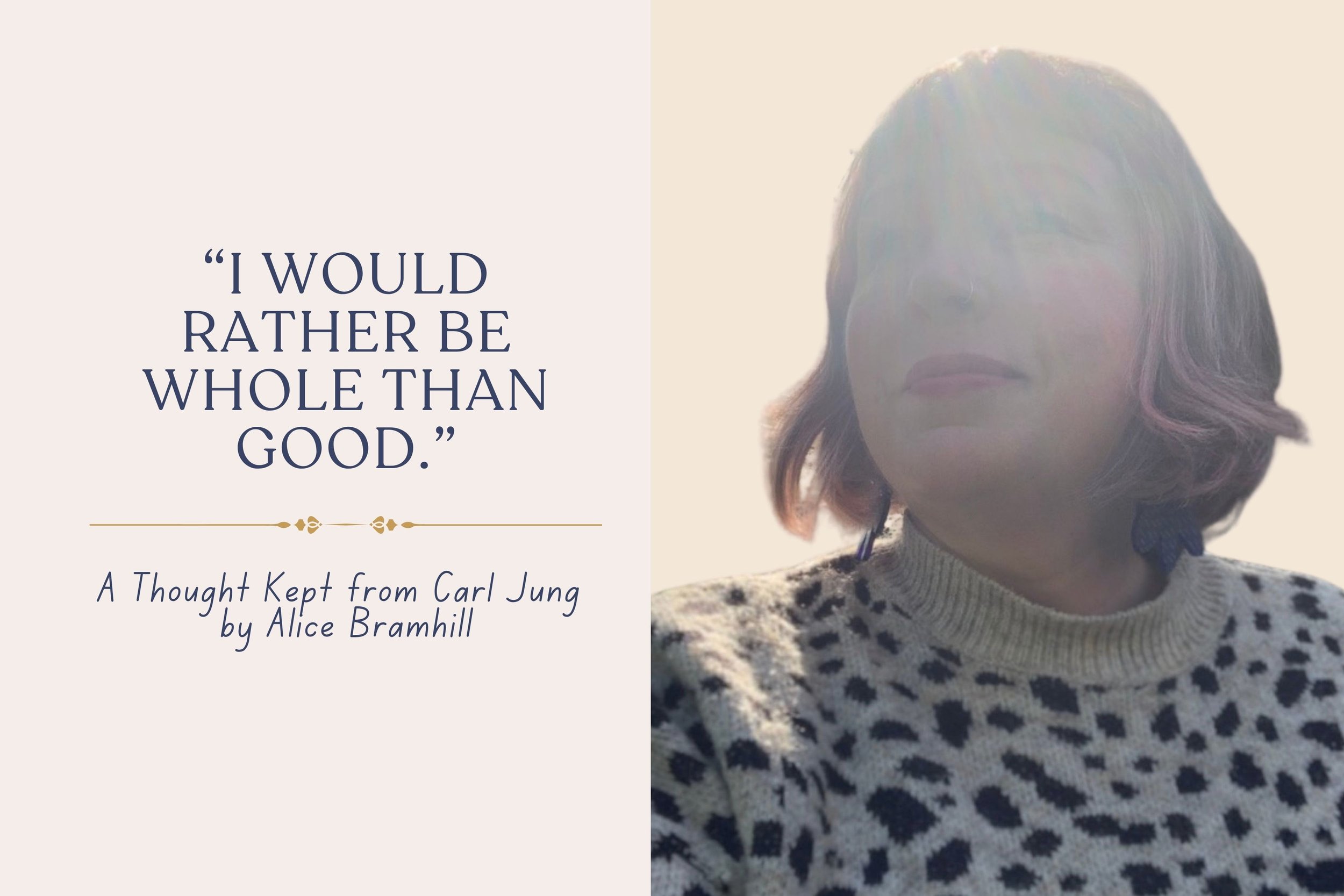
Together, we explore self-trust, boundaries, sensitivity, late-diagnosed neurodivergence, and the thought Alice has carried with her for decades: "I'd rather be whole than good."
If you've ever felt exhausted by trying to be good, struggled to know what you want, or wondered where people-pleasing ends and genuine kindness begins, I think you'll find this conversation really helpful.
Listen to When Being Good Is Exhausting with Alice Bramhill on A Thought I Kept.
If this piece resonated with you, it may be because you've spent a long time paying attention to everyone else.
Many of the people I work with arrive feeling exhausted, overwhelmed, resentful, or disconnected from themselves. They often know exactly what everybody around them needs but struggle to answer a much simpler question: "What do I need?"
Emotions coaching offers a space to slow down and get curious about those patterns with someone alongside you. Together, we can explore the habits, beliefs, emotions, and expectations that may have helped you navigate life so far, while gently uncovering what you need now.
You don't have to stop being kind. You don't have to become a different person. Sometimes the work is simply learning how to include yourself in the care and attention you've spent years offering everybody else.
If you'd like some support finding your way back to yourself, I'd love to help. Explore emotions coaching and book a free discovery call.