

Why Is It So Hard to Validate Ourselves?
If other people's approval never feels like enough, you're not alone. Discover why we seek external validation and how emotions coaching can help you trust yourself more.

A few years ago, I was talking to a coaching client about a project she had recently completed at work. It had gone well by every measure available. The feedback was positive, her colleagues were happy, and her manager had praised her contribution. As we talked about it, I asked a simple question: "So how do you feel about it?"
She paused for a moment before replying, "I don't know. No one's told me yet."
It was one of those answers that stayed with me because it captured something many of us experience but rarely say out loud. So often, we are waiting for someone else to tell us how to feel about ourselves. We wait for the compliment, the approval, the performance review, the invitation, the praise, the message that confirms we are doing a good job, making the right choice, or becoming the person we hope to be.
When those moments arrive, they can feel wonderful. There is relief in being recognised and comfort in being seen. Yet for many people, the feeling never lasts for long. The compliment fades. The praise is forgotten. The promotion becomes the new normal. Before long, we find ourselves searching for the next piece of evidence that we are okay.
If this sounds familiar, you are far from alone.
When Other People's Opinions Carry More Weight Than Our Own
Many of the people I work with in coaching are thoughtful, capable and deeply caring individuals. From the outside, they often appear confident and successful. Yet inside, they are carrying a constant question: Am I doing enough? Am I enough? They look to other people for the answer because trusting their own judgement feels surprisingly difficult.
What fascinates me is that this isn't usually a problem of confidence. More often, it is a problem of trust.
Somewhere along the way, many of us learned that other people's opinions carried more weight than our own. Perhaps praise was linked to achievement. Perhaps approval felt conditional. Perhaps there wasn't much room for our feelings, perspectives or needs growing up. Perhaps we discovered that being liked felt safer than being honest, or that getting things right earned connection and belonging.
Whatever the origin, the result can be the same. We begin to treat other people as the experts on our lives while becoming increasingly disconnected from our own authority.
The difficulty is that no amount of external validation can fully solve that problem. If you don't trust your own perspective, even the most generous praise struggles to land. It might make you feel better for an afternoon or a few days, but eventually the doubt returns and the search begins again.
What Are We Really Looking For?
One of the most helpful shifts I have seen in coaching comes when we stop focusing on validation itself and become curious about what sits underneath it.
Because validation is rarely the thing we are actually seeking.
When we long for reassurance from another person, what we are often looking for is something deeper. Sometimes it is safety. We want to know we haven't made a mistake. Sometimes it is belonging. We want to know we still have a place in the group. Sometimes it is certainty in an uncertain situation. Sometimes it is visibility. We want someone to notice how hard we have been trying. Sometimes it is worth. We want proof that we matter.
When we begin to understand the need beneath the validation, something softens. Instead of criticising ourselves for being needy, insecure or dependent on what other people think, we can approach ourselves with curiosity. We can ask what it is we are really hoping someone else's approval will give us.
That question often opens an entirely different conversation.
From Self-Validation to Self-Trust
I think this is why the language of self-validation can sometimes feel unhelpful. It can sound like another thing we should be doing better. Another wellbeing task to add to the list. Another reason to feel we are falling short.
What if the goal wasn't to become completely self-validating? What if the goal was simply to begin trusting ourselves a little more?
Not more than everyone else. Just enough that our own voice gets a seat at the table.
Letting Your Experience Count
Many people assume that self-trust means being certain all the time. In reality, it often looks much quieter than that. It is being willing to acknowledge your effort before someone else notices it. It is recognising when you have handled something well, even if there is no applause. It is allowing your experience to count as evidence. It is asking yourself what you think before immediately turning to someone else for an answer.
This isn't about becoming immune to feedback or pretending other people's perspectives don't matter. Relationships matter. Community matters. Being seen matters. We are human beings, not islands.
The invitation is simply to stop outsourcing your entire sense of worth and direction to people who can never fully know what it is like to be you.
The people who love you can offer encouragement. They can reflect your strengths back to you. They can remind you of things you have forgotten. What they cannot do is build the relationship you have with yourself.
Building a Different Relationship with Yourself
That work happens slowly, often through hundreds of small moments. Moments when you pause before seeking reassurance. Moments when you acknowledge your own effort. Moments when you choose to believe your experience rather than immediately questioning it. Moments when you allow yourself to be both uncertain and trustworthy at the same time.
If you are someone who constantly seeks validation from others, perhaps the question is not, "How do I stop needing reassurance?" Perhaps the question is, "What need am I hoping reassurance will meet, and how might I begin meeting some of that need myself?"
That feels like a gentler place to begin. It is certainly a more compassionate one.
And from that place, it becomes possible to build something far more sustainable than confidence. It becomes possible to build trust.
Explore Emotions Coaching
If you recognise yourself in this story, emotions coaching can help you understand why external validation feels so important, what needs sit beneath it, and how to build a steadier relationship with your own voice.
Together, we'll explore the emotional patterns that keep you second-guessing yourself, learn what your emotions are trying to tell you, and help you move forward with greater self-trust, clarity and confidence.
Because the goal isn't to stop caring what other people think. It's to make sure your opinion matters too.
How We Learn to Matter Too
Always supporting everyone else can leave you exhausted and disconnected from yourself. Explore how to care for others without losing sight of your own needs.
One of the things I see come up most often in my work is what happens when someone has become the strong one.
They are the person everyone calls. The person who knows what needs to happen next. The person who organises the appointments, remembers the details, absorbs the worry, keeps the family going, manages the work, checks in on everyone else and says, when someone finally asks how they are, “I’m fine.”
Often, they are fine. Or fine enough. They are functioning. They are coping. They are doing what needs to be done, and perhaps doing it incredibly well. But somewhere in all that doing, they can begin to disappear.
This is particularly complicated when the people we love are going through something difficult themselves. If your partner is unwell, your parent needs care, your child is struggling, or someone close to you is living through grief, trauma or a major life change, it can feel almost impossible to say: What about me?
Their difficulty might seem bigger. Their needs might feel more urgent. You might look at what they are going through and decide that your exhaustion, sadness, anger, loneliness or uncertainty is somehow less important. You might tell yourself that this is simply what love looks like. You might believe that being strong means being the person who can handle it.
But what happens when you keep telling yourself that it isn’t about you?
When “it’s not about me” becomes a way of life
This is the question at the heart of my conversation with Lois Jackson on A Thought I Kept.
In 2017, Lois’s then-fiancé, former professional rugby player Ed Jackson, suffered a life-changing spinal cord injury. Their lives changed almost overnight, and Lois did what came naturally to her: she went into care mode. She booked appointments. She drove Ed where he needed to go. She spoke to doctors. She supported his recovery. When people asked how she was, her answer was simple: “It’s not about me. Ask Ed. I need to look after Ed.”
What struck me in talking to Lois was how little conscious decision there seemed to be in this. She didn’t sit down and decide to erase her own needs. She simply stepped into the role that needed filling, and perhaps the role she had always been good at filling.
I think many of us will recognise this. Losing ourselves rarely happens in one dramatic moment. It can happen gradually, through a thousand reasonable decisions. Someone else needs us more today. This isn’t the right time to bring that up. I can deal with it later. I don’t want to make things harder. I should be grateful. I should be able to cope. And then, one day, we might look at our lives and wonder where we have gone.
For Lois, that realisation came a couple of years after Ed’s accident. From the outside, life had in some ways returned to “normal”, but of course it wasn’t the old normal. Ed was living with the physical and psychological consequences of his injury. His rugby career had ended. Their relationship had changed. Their future had changed.
Lois realised that Ed had changed, their life had changed, but she was still, as she described it, “stuck in old Lois”. She had kept pushing her feelings to the back of her mind because it still felt as though they weren’t relevant.
Eventually, she knew she had to be honest.
The strong one has feelings too
This is often the difficult part. It can feel selfish to acknowledge that supporting someone has been hard when what they have experienced seems harder. We can turn suffering into a hierarchy in which only the person going through the most visible difficulty is allowed to have needs. But emotions don’t work particularly well in hierarchies.
You can love someone deeply and feel exhausted by caring for them. You can be grateful for your family and need time away from them. You can understand why someone is struggling and still be affected by the way their struggle changes your life. You can want to support someone and feel angry, lonely, scared or resentful. The presence of your feelings does not cancel out your love.
Lois had been afraid that being honest would hurt Ed. She was afraid of losing him. There was perhaps also something else underneath it: a fear that she might no longer be able to be the strong one who could handle everything.
But, as she told me, she came to understand strength differently. Sometimes the strong thing is not continuing to cope quietly. Sometimes strength looks like vulnerability. Sometimes it is saying the difficult thing carefully and honestly. Sometimes it is admitting that you are struggling too.
Lois began having those conversations with Ed. She also spoke to a relationship counsellor and started putting into words what she had been pushing away. Rather than destroying their relationship, that honesty became part of rebuilding it. She described it as though their relationship was “born again”.
There is something important here for those of us who have come to associate love with endurance. We can believe that protecting a relationship means protecting another person from our feelings. But what happens to a relationship when one person can no longer fully exist inside it?
What we suppress doesn’t simply disappear
When we repeatedly decide that our feelings are not relevant, they don’t usually go away. They can become exhaustion, disconnection, irritability or resentment. We might become increasingly frustrated with people we genuinely love, while also feeling guilty for that frustration. We might stop knowing what we want because we have spent so long asking what everyone else needs. Sometimes we end up in lives we never really chose.
This doesn’t necessarily happen because someone else chose them for us. It can happen because we made so many decisions around other people that we stopped including ourselves in the decision-making process.
This is why I think Lois’s thought is so important. After years of saying, “It’s not about me,” she realised something else:
It is about me.
Not only about me. Not me instead of you. Not my needs matter and yours don’t. Me as well as you.
There is a significant difference between putting yourself first all the time and remembering to put yourself somewhere in your own life.
Where are you in your own story?
One of the questions I found myself returning to during my conversation with Lois was: Where am I in my own story?
For those of us who are very good at looking outwards, this can be a surprisingly difficult question to answer. We might know what our children need, what our partner is worried about, what is happening at work, what our parents need help with and what is expected of us this week. But ask what we feel, what we need or what we want, and the answers can be much less clear.
Lois now does a lot of work around values, both for herself and with the people she supports. Values can sound like a very abstract idea until we think of them as an anchor: What actually matters to me? What makes me feel alive? What do I want more of? What am I no longer willing to lose?
When we have spent a long time responding to other people’s needs, reconnecting with ourselves may not begin with a dramatic life change. It might begin by noticing.
What am I feeling that I keep dismissing? What do I need that I keep telling myself is unreasonable? Where am I saying yes because I am afraid of what will happen if I say no? What parts of me have become smaller while I have been taking care of everyone else? What would it mean to include myself in the picture?
We may not immediately know the answers. Perhaps the important thing is to begin asking the questions.
You don’t have to wait until everyone else is okay
I think this is one of the hardest beliefs to loosen when you are caring for someone else: the idea that your turn will come later.
I will rest when things calm down. I will think about what I want when they are better. I will ask for help when this difficult period is over. I will return to myself eventually.
But sometimes things don’t calm down for a very long time. One difficult period becomes another. Children need us in different ways. Parents age. Work changes. Someone gets ill. Life continues to be life.
If our wellbeing is always conditional on everyone around us being okay, we may be waiting for a moment that never quite arrives.
Lois has learned to notice her boundaries, to lean on other people and to delegate. She has also learned that putting something back into herself does not have to be enormous. At the beginning of our conversation, after ten emotionally demanding days supporting people on a charity walk, she told me she had just had her hair done. It was a small thing, but it mattered. She had recognised that she needed something put back in.
I loved that because caring for ourselves can become another impossible standard. We imagine it requires a retreat, a perfect morning routine or hours of uninterrupted time we simply do not have. Sometimes it might be a walk. A book. Getting your hair done. Asking someone else to take over. An honest conversation. An hour in which nobody needs anything from you.
Lois also reminded me that rest does not have to look the same for everyone. For her, it might be walking slowly through the woods and paying attention to what she can see, smell and hear. Rest can still involve movement. Support can take different forms. The question is less whether we are doing self-care correctly and more whether there is anywhere in our lives where we are being replenished rather than continually depleted.
Small changes still count
There is another idea woven throughout Lois and Ed’s story: millimetres to mountains.
During Ed’s recovery, progress could be almost imperceptibly small. A finger moving a little more. A toe beginning to wiggle. Changes that were difficult to see from one day to the next, but became visible when they looked back. I think there is something useful in this for anyone trying to find themselves again.
You do not have to completely redesign your life tomorrow. If you have spent years being the person who copes, asking for help once might be a significant step. Saying what you actually feel might be a millimetre. Letting someone be disappointed in your boundary might be another. Doing something because you enjoy it, rather than because it is useful to somebody else, might be another still.
There may be steps backwards too. Lois is clear about that. Progress is not a neat journey in one direction. But once you have evidence that you can do something differently, you have something to return to.
Perhaps the question is not: How do I become someone who always puts myself first?
Perhaps it is: What would help me matter a little more in my own life today?
Maybe being strong was never meant to mean doing it alone
One of the great contradictions of being the strong one is that the more capable you appear, the less likely people may be to realise that you need support. You become the support system rather than someone within it.
But Lois’s work, both through her coaching and through the charity Millimetres 2 Mountains, is deeply rooted in connection. She has seen again and again how much it matters to be around people who understand, to have somewhere you can be honest, and to know that you do not have to carry everything alone.
The same should be true for the supporters. You are allowed to need somewhere to put your feelings. You are allowed to be affected by what is happening to someone you love. You are allowed to want things for your own life even while someone else is struggling. You are allowed to be tired of being strong.
And perhaps strength itself can become something different. Less about holding everything together without complaint, and more about knowing when to let yourself be held too.
Listen to my conversation with Lois Jackson
In this episode of A Thought I Kept, How We Learn to Matter Too with Lois Jackson, we talk about being the strong one, supporting someone through life-changing circumstances, honesty in relationships, identity, rest, hope, nature, joy and what happens when we finally realise that our own feelings and needs matter too.
Listen to the full episode and discover the thought Lois kept: “It is about me.”
Who supports the person who supports everyone else?
If you are used to being the capable one, the person who holds everything together, it can be difficult to know where to take your own emotions. You may not want to burden the people you love, particularly when they are struggling too, but that does not mean you have to keep carrying everything alone.
An emotions coaching session is a space for you. A place to talk honestly about what you are feeling, including the feelings that seem complicated, selfish or difficult to admit, and begin to understand what they might be asking for.
If you need somewhere to be supported while you support everyone else, you can book an emotions coaching session with me at If Lost Start Here.
The Difference Between Kindness and People-Pleasing
People-pleasing isn't always a flaw to fix. Explore the difference between kindness and self-abandonment, why people-pleasing develops, and how to reconnect with your own needs.
There is a lot of advice out there about people-pleasing. We're told to stop doing it. To set firmer boundaries. To care less about what other people think. To say no more often. To put ourselves first.
While there is wisdom in some of that, it can also leave us feeling as though people-pleasing is simply another flaw to fix, another habit to break, another reason we're somehow getting life wrong.
Listening to my recent podcast conversation with psychotherapist Alice Bramhill reminded me that there might be a more helpful place to begin. Rather than asking how we stop people-pleasing, what if we got curious about why it exists in the first place? Because for many of us, people-pleasing didn't appear out of nowhere. It developed for reasons that made sense at the time.
Perhaps it helped us feel safe. Perhaps it helped us belong. Perhaps it helped us navigate difficult family dynamics, demanding workplaces, friendships we didn't want to lose, or relationships where conflict felt frightening. Perhaps we learned, consciously or unconsciously, that being easy-going, agreeable, capable, useful, accommodating, or endlessly understanding was the best way to move through the world.
Over time, those behaviours can become so familiar that we stop noticing them altogether. We become highly attuned to the needs, moods, preferences, and expectations of everyone around us, often without realising how little attention we're paying to our own.
This is where many people find themselves feeling lost. Not because they don't care enough about other people, but because somewhere along the way they stopped knowing what they themselves wanted.
When Kindness Becomes Self-Abandonment
One of the things I appreciated most about Alice's perspective is that she doesn't demonise people-pleasing.
There is a tendency in wellbeing spaces to treat it as something entirely negative, as though caring deeply about other people is automatically a problem. Yet most of us can think of countless examples where being thoughtful, considerate, generous, or compassionate enriches our relationships and our lives.
Many people-pleasers are genuinely kind people.
The challenge comes when kindness stops being a choice and starts feeling like an obligation.
When we say yes because the thought of disappointing someone feels unbearable.
When we agree because we don't know how to express what we really want.
When we take responsibility for everyone else's emotions while quietly carrying our own.
When we become so focused on keeping the peace that we lose touch with ourselves altogether.
The difference can be subtle, which is why so many of us miss it.
Making your grandmother happy because you love her and want to spend time with her is very different from feeling unable to say no to anyone, ever. Supporting a friend through a difficult time is different from believing you are responsible for fixing their life. Being considerate is different from constantly abandoning your own needs.
The question is rarely whether we're being kind. The question is whether we're choosing that kindness freely.
The Hidden Cost of Always Being Good
For many women especially, people-pleasing is tangled up with a much older story about being good.
A good daughter. A good mother. A good friend. A good employee. A good partner. A good person.
These ideas often arrive long before we have a chance to question them. They are handed to us through family, school, work, culture, religion, advertising, and countless everyday interactions. Some serve us well. Some help us become thoughtful, responsible, caring human beings.
Others can become surprisingly heavy. Because when being good becomes the primary goal, we sometimes start rejecting parts of ourselves that don't fit the picture.
Our anger. Our ambition. Our uncertainty. Our need for rest. Our desire for more space. Our wish to change our minds. Our longing for a different life.
The more energy we spend trying to maintain the image of being good, the harder it can become to hear what is actually true.
The Fawn Response and the Need to Feel Safe
In recent years, more people have become familiar with the idea of the fawn response, a survival strategy where we seek safety through pleasing, accommodating, or appeasing others.
For some people, this language offers an enormous sense of relief. What looked like weakness may have been adaptation. What felt like a personal failing may have been an intelligent response to circumstances. Seen through this lens, people-pleasing becomes less of a character flaw and more of a conversation.
What was this behaviour trying to protect?
What did it help me avoid?
What need was it meeting?
Those questions don't excuse every pattern or remove the challenges people-pleasing can create. They simply invite us to respond with curiosity rather than criticism. And curiosity tends to open doors that self-judgement keeps firmly closed.
Becoming Curious About Yourself Again
One of the hidden consequences of people-pleasing is that we often become experts in everybody else's needs.
We know who likes what.
We know who is upset.
We know who needs support.
We know who is disappointed.
We know who might be annoyed.
We know who requires reassurance.
What we often don't know is how we feel. Or what we need. Or what we want.
Many people arrive at coaching, therapy, or periods of personal reflection not because they are selfish, but because they realise they have spent years looking outward and very little time looking inward.
This is where the work begins. Not with becoming harder. Not with becoming less caring. Not with learning to stop being ourselves.
But with gradually extending some of the same curiosity, compassion, and attentiveness that we offer other people towards ourselves.
A Different Question
Perhaps the goal isn't to stop people-pleasing altogether. Perhaps the goal is to understand it well enough that we have a choice.
To recognise when kindness feels nourishing and aligned. To notice when accommodation becomes exhaustion. To understand when caring for others is an expression of who we are and when it has become a way of disappearing from our own lives.
Because there is a difference between kindness and self-abandonment. And sometimes finding our way back to ourselves begins with asking a gentler question than "How do I stop people-pleasing?"
Perhaps it begins with asking:
What has people-pleasing been trying to do for me all these years?
The answer might tell us far more than any boundary script ever could.
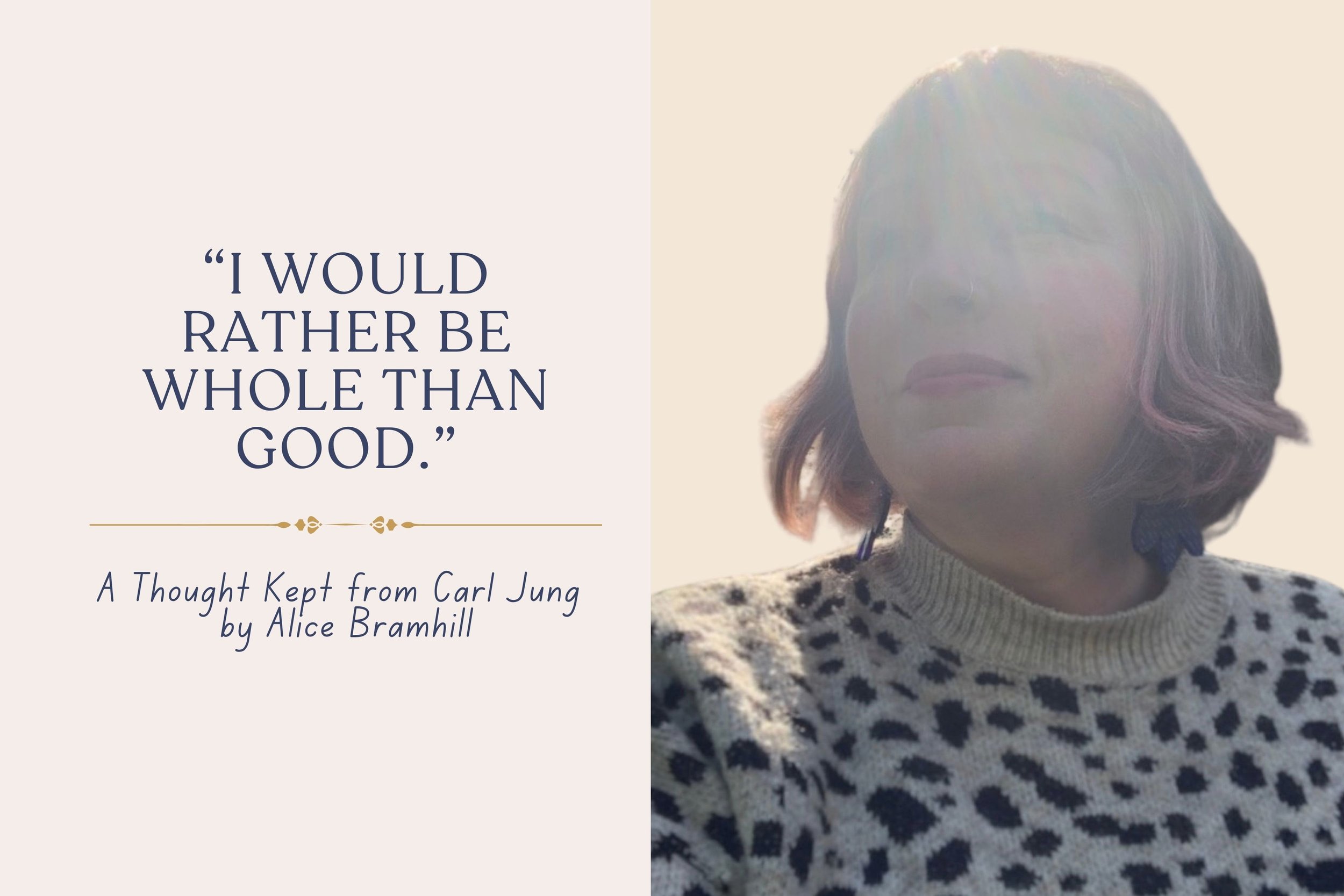
If you’re curious about where people-pleasing and ideas of being “good” show up in your own life, listen to my conversation with psychotherapist, writer, and podcast host Alice Bramhill on A Thought I Kept.
Together, we explore self-trust, boundaries, sensitivity, late-diagnosed neurodivergence, and the thought Alice has carried with her for decades: "I'd rather be whole than good."
If you've ever felt exhausted by trying to be good, struggled to know what you want, or wondered where people-pleasing ends and genuine kindness begins, I think you'll find this conversation really helpful.
Listen to When Being Good Is Exhausting with Alice Bramhill on A Thought I Kept.
If this piece resonated with you, it may be because you've spent a long time paying attention to everyone else.
Many of the people I work with arrive feeling exhausted, overwhelmed, resentful, or disconnected from themselves. They often know exactly what everybody around them needs but struggle to answer a much simpler question: "What do I need?"
Emotions coaching offers a space to slow down and get curious about those patterns with someone alongside you. Together, we can explore the habits, beliefs, emotions, and expectations that may have helped you navigate life so far, while gently uncovering what you need now.
You don't have to stop being kind. You don't have to become a different person. Sometimes the work is simply learning how to include yourself in the care and attention you've spent years offering everybody else.
If you'd like some support finding your way back to yourself, I'd love to help. Explore emotions coaching and book a free discovery call.

How Human Connection Helps Us Through Hard Times
Feeling overwhelmed, burned out, or disconnected? Explore how human connection can support us through difficult times, ease loneliness, and help us feel less alone in modern life.

I think one of the hardest things about modern life is that so many of us are living right at the edge of ourselves.
You can feel it in the way people answer “How are you?” with a sigh before they even begin. In the low-level exhaustion that seems to sit underneath everyday life now. In how quickly conversations move from grocery prices to burnout to the latest terrible thing in the news.
There is so much happening at once.
There’s the pressure of work and bills and trying to hold together ordinary life during a cost of living crisis. There’s the endless churn of headlines arriving directly into our palms before we’ve even had breakfast. There are wars unfolding in real time, including the ongoing devastation in the Middle East, which many people are carrying emotionally while still trying to navigate school runs, meetings, laundry, dinner, emails, ageing parents, and the strange expectation that we should somehow continue functioning normally through all of it.
And underneath all of that, many of us are simply tired. Not dramatic collapse tired. More the kind where joy starts slipping out of reach. The kind where you become permanently a little irritated, a little resentful, a little emotionally threadbare. The kind where you keep going because you have to, but feel increasingly disconnected from yourself while you do.
What interests me about difficult seasons like these is that we often respond to them in ways that make us feel even more alone.
We retreat.
We stop replying to messages.
We cancel plans.
We convince ourselves we’re too exhausted to socialise.
We scroll instead of speaking.
We mistrust people more easily.
We compare our messy lives to everyone else’s carefully edited competence.
We assume we’re behind.
We become less generous with one another because we’re barely holding ourselves together.
And the wider culture often deepens that separation. Politics becomes polarised. Algorithms reward outrage. Conversations flatten into sides to pick rather than people to understand. We become wary of saying the wrong thing, believing the wrong thing, being judged, misunderstood, excluded, criticised, corrected.
It can start to feel safer to withdraw.
But I keep coming back to the possibility that it’s exactly in moments like these that human connection matters most.
Not in a glossy “community fixes everything” sort of way. Not because a coffee with a friend magically resolves grief or burnout or fear about the state of the world. But because connection helps us carry reality differently.
There’s something regulating about being with people who allow you to exhale a little.
Someone making you laugh when you hadn’t realised how long it’s been since you properly laughed.
Someone texting to ask if you got home alright.
Someone saying, “Honestly? I’m struggling too.”
Someone sitting at your kitchen table while life remains unresolved, but somehow more bearable because another person is witnessing it with you.
Connection reminds us that we are not machines built only for productivity and endurance.
We are relational creatures. We make meaning together. We soothe each other’s nervous systems. We borrow hope from one another. We remember ourselves through other people sometimes.
And importantly, connection does not have to look impressive to matter.
I think we can sometimes make ourselves feel worse by imagining “good connection” as being endlessly social, extroverted, emotionally articulate, always surrounded by friends or part of some perfect community.
But connection can be tiny and ordinary too.
It might be the person at the local café who remembers your order. The neighbour you chat to while bringing the bins in. Sending a voice note instead of a text because you want someone to hear your actual voice. Watching a film with your teenager and briefly entering their world. Going for a walk with someone who doesn’t require you to be cheerful. Sitting in a room with other people at yoga, church, choir, book club, a protest, a workshop, or a community garden and remembering, even fleetingly, that we are living alongside one another rather than entirely alone.
Sometimes connection is simply the experience of being real with another person for five minutes instead of pretending you’re coping perfectly.
And perhaps that’s why it can feel both comforting and uncomfortable at the same time.
Because real connection asks us to emerge slightly from hiding.
To let ourselves be seen before everything is neatly resolved.
To admit we’re struggling before we’ve found the lesson in it.
To risk not being entirely self-sufficient.
Which can feel deeply vulnerable in a culture that rewards performance, certainty, independence, and appearing fine.
But when life gets hard — and for many people, it really is hard right now — isolation rarely softens the experience. Usually it sharpens it.
Connection, meanwhile, often gives us just enough steadiness to keep going.
Not because other people save us.
But because being human was probably never meant to be done entirely alone.

Explore the Connection Pathway
Our wellbeing journal, If Lost Start Here, includes a full pathway exploring connection — the people, places, conversations, communities, and everyday moments that help us feel more supported, understood, and alive.
Inside you’ll find reflections, prompts, and playful experiments to help you reconnect not just with others, but with yourself too.
You can explore the journal here

Navigate summer with ease | Your guide to a joyful, stress-free season
Feeling overwhelmed by summer pressures? Discover our (Stay-at-home) Wellcation program: a 4-week guide to creating a meaningful and stress-free summer with self-care, connection, and exploration - all from the comfort of your own home.
Ah, summer. The very idea of it can conjure up visions of sun-kissed beaches, lazy afternoons with a good book, and get-togethers in pub gardens.
We picture carefree days spent reconnecting with loved ones and making memories that last a lifetime. But for many of us, summer brings a different kind of pressure.
The Summer Juggle: Balancing Work, Family, and Expectations
As we transition from the dark days of winter to hopefully a sun-filled summer, we can often find ourselves caught in so many expectations. From planning family vacations to managing work commitments, the pressure to make every moment count can feel overwhelming. For many, summer isn't just a time of relaxation; it's a high-stakes game of juggling various aspects of life.
Each year both of us eagerly anticipate how we’ll create magical summer memories for our kids. Yet, as the summer progresses, we often find ourselves exhausted and financially stretched, feeling like we’re the only ones who haven't had a break.
Feel familiar? The pressure to have the "perfect" summer can transform this joyful season into a stressful one, making it hard to maintain our well-being amidst the chaos.
Introducing Our Summer Wellcation
But what if we told you that this summer could be different? At If Lost Start Here, we've designed something to help you navigate these pressures with ease and create the summer you’ve been longing for.
Introducing our first-ever Summer (Stay-at-Home) Wellcation — a unique 4-week online course that brings the vacation to you, wherever you are.
Over the course of four weeks, we'll deliver short, inspiring postcard lessons straight to our app and/or online platform. These lessons are designed to help you create a summer that's both meaningful and manageable, allowing you to connect deeply with yourself, your loved ones, and the world around you.
Embrace a Balanced Summer: Inner and Outer Adventures Await
So, how does the Summer (Stay-at-Home) Wellcation work?
1. Inward Journeying
Each week, we'll provide you with tools to connect with yourself on a deeper level. Whether it's through a journaling prompt, a self-coaching exercise, or an audio note, these activities will help you stay grounded and attuned to your own needs. You'll learn to prioritize self-care and cultivate a sense of self-connection, making it easier to handle the external pressures of summer.
2. Outward Exploring:
Alongside your inward exploration, we'll encourage you to step outside your comfort zone with fun and engaging activities. From local scavenger hunts to mini-adventures in your neighborhood, these tasks will help you see your surroundings with fresh eyes and rediscover the joy of simple pleasures. It's about creating moments of joy and connection, no matter where you are.
3. Balanced Days:
By balancing these inward and outward approaches, you'll find some equilibrium this summer. You'll learn to manage your time and energy more effectively, reducing stress and increasing your overall sense of well-being. This balanced approach ensures that you can enjoy the season without feeling overwhelmed or stretched too thin.
Make This Summer Different: Join Our Wellcation Now
How will your summer be different this year? Come choose your own summer adventure with us and connect with what truly matters while the sun is hopefully shining.
Ready to start your Wellcation? Visit here to learn more and register now!

The Lost Art of Reaching Out (Especially When You Don’t Feel Like It)
Feeling disconnected but too overwhelmed to socialise? Here’s how to gently rebuild your sense of community and connection — even when it feels like too much.
Sometimes, connection feels like a beautiful idea that belongs to someone else’s life.
You want it — the warmth, the welcome, the sense of being seen — but everything in your body says not now.
You're burnt out. Anxious. Tired from holding too much for too long.
And instead of reaching out, you slowly slip back. Into silence. Into solitude.
You tell yourself that it’s just for now. But now has been a while.
If that’s you? You’re not failing. You’re human. And you’re not alone.
Many of us are here right now, wanting to connect but not quite knowing how to.
Why We Pull Back When We Most Need People
When life overwhelms us, our nervous systems do something wise: they protect.
They shut things down to help us survive. Socialising — even with people we love — can feel like one demand too many.
The problem is: we still need people. We are hardwired for connection.
It’s a core human need — not a nice-to-have.
But the modern world hasn’t made that easy.
Loneliness is rising, even as we become more digitally connected. According to the Mental Health Foundation, 1 in 4 adults in the UK feel lonely some or all of the time. And among those dealing with burnout, that number climbs even higher.
And yet, when we do connect — even briefly — we feel the shift.
Tiny interactions can co-regulate our nervous systems. A nod from a neighbour. A friendly moment with a stranger in a queue. A text back from someone we haven’t heard from in a while.
The secret is this: connection doesn’t need to be big to be meaningful.
What If We Started Small?
The invitation here is not to “join a group” or “go to more things.”
It’s to experiment with connection that fits you now.
Maybe that looks like:
Sitting in a café instead of scrolling at home — just being in proximity to others.
Texting one person to say: thinking of you, no need to reply.
Wandering a local bookshop or museum, where other quiet people gather.
Volunteering, not for the social aspect, but because doing something small that matters feels grounding.
Attending a gentle yoga or movement class where connection is built through shared breath, not small talk.
Let the moment be enough. You don’t need to stay long.
Just notice how your body feels before and after. Maybe a little lighter?
Rebuilding Trust in People
Reconnection isn’t just about other people. It’s about learning to trust that it’s safe to be seen again. To believe that the right people will meet you where you are.
You don’t need to fix your burnout first. Or wait until you’re “back to your old self.”
The act of connecting — even in the smallest of ways — is part of the healing.
And connection doesn’t mean constant availability.
You can have boundaries. You can take breaks. You can be someone who dips in and out, without explanation.
Because community isn’t a performance. Its presence that you can choose.
What If You Tried One Tiny Reach?
What would your version of a gentle reach look like?
A walk with someone you enjoy talking to?
A visit to a familiar café?
A class where no one expects anything from you except that you try?
Try just one. Let it be small. Let it be enough.
When you’re ready, here are 3 ways we can help you:
1. Join us on Substack – Become a paying member and we’ll gift you our Spring Everyday Retreat right now so you can focus on how you like to connect even when life does its thing.
2. Book a wellbeing coaching session – If you want company while figuring out your next steps, let’s chat. Book a free consultation to see how we can help you connect in ways that feel good to you.
3. Sign up for our newsletter – Receive real-life tools, everyday insights and tiny reminders that you’re not alone in this. We’re all yearning to connect while also finding it easier to binge-watch Netflix.

How Emotions Shape Our Increasingly Isolated Lives
Discover how emotions like fear and loneliness shape disconnection and learn practical ways to reconnect with yourself and others.
Have you ever wondered why it feels harder to connect these days? You’re not imagining it. Life has shifted, and with it, our emotions have too. What we’re feeling (or not) might play a bigger role in how we engage with others—and ourselves—than we thought.
From stress to loneliness, our feelings often push us toward isolation, even when what we crave is connection. But we’ve found that understanding this emotional interplay can help us break free from this sense of disconnection and move toward a more connected, fulfilling life.
The Emotional Side of Disconnection
Our feelings are deeply intertwined with how we navigate the world. Stress, fear, and overwhelm often lead to withdrawal, while positive emotions like curiosity and joy can inspire us to seek connection.
Some common emotions that can drive disconnection include:
1. Stress and Overwhelm
Modern life feels like a constant race. Between work, family, and endless to-do lists, stress leaves little room for meaningful connection.
When overwhelmed, we tend to retreat, choosing solitude or distraction over engagement.
2. Fear and Vulnerability
Fear of rejection or judgment can make reaching out feel risky, leading us to avoid social situations altogether.
Past experiences of hurt or betrayal may create emotional walls that keep others at a distance.
3. Loneliness and Shame
Loneliness often perpetuates itself. When we feel disconnected, shame can convince us that we’re the problem, making it harder to take steps toward connection.
This creates a cycle: disconnection fuels negative emotions, which then reinforce isolation.
When Isolation Becomes a Cycle
The longer we stay disconnected, the harder it can feel to break the cycle. This is because isolation reinforces the very emotions that keep us apart:
Stress compounds stress: Without social outlets, stress builds, making re-engagement feel even more overwhelming.
Loneliness intensifies: The absence of connection magnifies feelings of emptiness, leading to further withdrawal.
Recognizing this cycle is the first step toward shifting it. The next steps might include:
1. Name Your Emotions
Awareness is the antidote to avoidance. Spend time identifying and naming what you’re feeling:
Are you avoiding connection because you’re afraid of rejection?
Does stress make you feel like you don’t have time to engage with others?
Journaling or mindfulness practices can help you explore these emotions without judgment.
2. Reframe Disconnection as an Opportunity
Disconnection doesn’t have to be a dead end—it can be a starting point for better understanding yourself.
Use periods of solitude to reflect on what truly matters to you.
Ask yourself: What kind of connections would feel meaningful right now?
3. Seek Out Moments of Joy and Curiosity
Positive emotions like joy and curiosity can nudge you toward connection.
Try something new: Join a group or take a class that sparks your interest.
Revisit an old passion: Shared interests often lead to natural connections with like-minded people.
4. Foster Emotional Safety
Strong connections thrive on emotional safety. Deepen relationships by being vulnerable in small, manageable ways:
Share a personal story with a trusted friend.
Show up authentically in conversations, even if it feels a little scary.
5. Make Connection a Habit
Connection doesn’t have to be grand or time-consuming. Small, intentional actions can go a long way:
Send a quick text to someone you care about.
Schedule a weekly walk with a friend or family member.
Join a virtual or in-person community aligned with your interests.
Emotions as a Bridge to Connection
Your feelings don’t need to be obstacles—they can also be clues. By understanding how emotions like stress, fear, and joy shape your behavior, you can begin to take intentional steps toward connection.
Whether it’s reaching out to a friend, trying a new activity, or exploring what’s holding you back, the journey to reconnection starts with acknowledging what you’re feeling.
Connection is closer than you think—it begins with this one small step.
Your emotions are the key to connection. Our emotions coaching sessions help you understand which feelings can hold you back, help you reconnect with your inner self, and build deeper, more meaningful relationships.
Curious to know more? Click here to explore emotions coaching and how your feelings can help you better connect with both yourself and others.
You can also sign up for our special newsletter dedicated to better understanding your emotional life. Subscribe here.

Friendship First: Celebrating Connection This Galentine's Day
Explore the joy of friendship, why it matters to your well-being, and how to nurture these bonds—especially in the isolating winter months.
Winter often brings a sense of stillness, but for many of us, it can also feel isolating. Long nights and cold days can leave us yearning for connection—those shared moments that remind us we’re not alone. This Galentine’s Day is the perfect opportunity to celebrate the friendships that light up our lives, especially during this quieter time of year.
Science tells us that friendships aren’t just nice to have; they’re essential. From boosting our mental health to supporting our longevity, these connections nurture us in ways we often overlook.
The Science of Friendship: The People That Hold Us Together
Friendship isn’t just good for the soul; it’s vital for our well-being. Research shows that meaningful relationships can reduce stress, strengthen resilience, and even improve physical health. Whether it’s a quick catch-up over coffee or a heartfelt phone call, these connections create a buffer against loneliness.
Positive psychology tells us that shared experiences strengthen our sense of belonging. Even simple rituals—like meeting a friend for a walk or laughing over a shared memory—build powerful emotional bonds.
Friendships also teach us the value of showing up for each other in small ways. Being present for someone, without trying to fix their problems, creates a space where both people feel seen and supported.
Practical Ways to Celebrate Friendship This Galentine’s Day
Friendship thrives on intention. Here are a few ideas to nurture your bonds this winter:
Host a Candlelight Dinner Tradition:
Invite a friend over for a simple meal by candlelight. Share stories, laugh, and enjoy the warmth of connection.
Create a Winter Walk Ritual:
Bundle up and explore your local park or neighbourhood together. The fresh air and movement can lift your spirits.
Swap Playlists or Books:
Share your favourite music or a novel that resonated with you. It’s a small gesture that sparks deeper conversations.
Start a Mini Friendship Project:
Whether it’s a joint craft, a collaborative journal, or planning a small adventure, working on something together strengthens bonds.
Gratitude in Action:
Write a short message to a friend sharing why you appreciate them. It doesn’t have to be long—just heartfelt.
How Friendship Changes Us
Friendships are life’s anchors, keeping us steady when we feel adrift. They remind us that life is a shared journey, full of laughter, support, and even the occasional tear.
This Galentine’s Day, celebrate your friendships in all their perfectly imperfect beauty. Honour the messy schedules, the missed calls, and the moments where you showed up for each other anyway.
And if you’re longing to deepen your connections, take the first step: reach out. Friendships don’t need grand gestures; they need small, consistent acts of care.
“Take a moment today to text or call one friend you’re grateful for. Let them know why they’re important to you. It’s a small gesture that can mean the world.”
Celebrate Friendship With Us
At If Lost, Start Here, we know how crucial connection is for emotional well-being.
Join us in celebrating the beauty of friendship. Sign up for our newsletter or explore our facilitated courses to find out more. Because life feels better when it’s shared.

Connection: The Word That Defines Our Mission in 2025
Feeling disconnected? In 2025, If Lost Start Here is making connection our word of the year. Read why it matters now more than ever and discover three ways to reconnect with yourself, others, and the world around you.
We live in an age of paradox. Never before have we been so hyper-connected—constantly plugged into notifications, messages, and social media feeds. And yet, we are also lonelier, more isolated, and more disconnected than ever.
Recent studies paint a concerning picture:
One in three adults worldwide experience loneliness regularly.
The former U.S. Surgeon General Dr Vivek Murthy has declared loneliness an epidemic, citing its impact on physical and mental health, including higher risks of depression, anxiety, and even heart disease.
Social fragmentation is rising due to remote work, an increase in digital communication over in-person interactions, and the pressures of modern life that leave us exhausted and stretched thin.
At If Lost Start Here, we believe that the antidote to this growing crisis isn’t just found in another self-help book or productivity hack. It’s in connection. Connection with ourselves, with others, and with the world around us. It’s in deep conversations, small moments of presence, and shared experiences that remind us we’re not alone.
So in 2025, we’re making connection our focus. Not just as a word, but as a way of living.
Three Ways to Reconnect in 2025
At If Lost Start Here, we don’t just talk about wellbeing; we create experiences that help people feel it. Here are three ways we’re helping you reconnect this year:
1. Reconnecting with Yourself
True connection starts within. When was the last time you checked in with yourself—not just to tick off a to-do list, but to ask what you really need?
Here’s how we help:
Guided Wellbeing Courses – Our Find Your Way program helps you build an everyday wellbeing practice that supports emotional, mental, and physical balance.
One-on-One Coaching – Sometimes, you need a conversation that brings clarity. Our coaching sessions offer a space for self-reflection, emotional support, and guidance.
Creative Reflections – Whether through journaling prompts, gentle reset practices, or curiosity-driven exercises, we provide simple ways to get back in touch with yourself.
2. Reconnecting with Others
Loneliness isn’t just about physical isolation—it’s about the feeling that no one really sees you. The good news? Human connection isn’t about how many friends you have but the depth of the relationships you cultivate.
We’re creating spaces for real connection through our community The Collective Together and our Events including:
Small Group Sessions – Intimate, guided conversations where people can show up as they are, without pretense.
Community Gatherings & Events – From online wellbeing retreats to informal meetups, we’re bringing people together to connect meaningfully.
Shared Learning Experiences – Whether it’s a book club, a workshop, or a wellbeing challenge, we believe in collective learning as a way to strengthen relationships.
3. Reconnecting with the World
When we feel disconnected, it’s easy to shrink inward. But sometimes, the best way to find ourselves is to expand outward—to seek inspiration, to engage with the world in new ways.
Maybe that means stepping into a gallery where a single painting stops you in your tracks. Or walking through a city park and feeling the crisp air shift something inside you. Maybe it’s volunteering for a cause that reminds you just how much you have to give.
We believe in the power of small, intentional experiences to help you feel more anchored in the world around you. That’s why we’re:
Creating Wellbeing Prescriptions – Sometimes, we all need a little direction. Our personalised wellbeing prescriptions offer a roadmap to help you reconnect with what nourishes you—whether that’s more rest, creativity, movement, or something unexpected.
Offering Culture Therapy – We believe that books, art, music, and creative resources have the power to heal and inspire. Our culture therapy sessions help you find new ways to engage with the world through stories, creativity, and shared human experiences.
Curating a Guidebook to Connection – We’re mapping out places—cafés, museums, parks, and cultural spaces—that help you feel a little more at home in the world. Because sometimes, the right environment can make all the difference.
The world is full of places, experiences, and ideas waiting to reconnect you. Let’s explore them—together.
Connection: The Heart of Our Mission
At If Lost Start Here, we believe connection isn’t just something we do—it’s something we build, something we feel, something that makes life worth living.
As we step more into 2025, we invite you to reconnect with what matters most. To make space for deep conversations, real relationships, and a sense of belonging. To not just exist but to engage fully in life.
If you’re ready to start feeling more connected, we’d love to support you.
Explore Our Wellbeing Courses & Coaching
Join One of Our Community Sessions
Because no one should have to find their way alone.
Let’s Stay Connected—Join Us
If this piece resonated with you, let’s keep the conversation going. Our newsletter is a space for real connection—where we share insights on wellbeing, stories that inspire, and small ways to feel more anchored in your life.
It’s not just another email. It’s a moment of pause, a reminder that you’re not alone, and an invitation to explore what truly matters.
Sign up now and let’s navigate this year—together.

What I Learned This Week About Wellbeing, Connection, Purpose, Emotions, and Giving Back
Discover five key insights on wellbeing, emotional resilience, and meaningful connection from a leading conference on female empowerment. Learn how to navigate self-doubt, improve relationships, and find balance in everyday life.
Are you craving more balance, more meaningful connections, and a greater sense of emotional wellbeing in your everyday life?
Recently, I attended a conference packed with ideas about navigating life, relationships and self-care in a way that truly supports us—especially for those of us who often put others first.
Here’s what I learned, and how it might help you find more ease, clarity, and connection in your own life.
Wellbeing: Notice Instead of Avoid
How often do you push through stress, ignore exhaustion, or put off self-care because there’s too much to do?
One simple yet profound idea shared at the conference was this: Notice instead of avoid.
We’re taught to suppress discomfort and to keep going no matter what. But real wellbeing comes from paying attention—to our emotions, our energy, our stress levels—before they become overwhelming.
Try this: Before scrolling, reaching for caffeine, or brushing off your feelings, pause and ask yourself:
What am I feeling right now?
What is my body telling me?
What do I need at this moment?
Sometimes, noticing is the most powerful self-care practice of all.
Connection: The Conversation Is the Relationship
We all want deeper, more fulfilling relationships—with partners, friends, colleagues, or even ourselves.
But as Susan Scott says, “The conversation is the relationship.”
If we’re avoiding tough conversations, our relationships suffer.
If we silence ourselves to protect others’ feelings, we feel unseen.
If we struggle to express what we need, we stay disconnected.
At the conference, I heard from host Hannah Wilson about the idea of talk tokens—a concept where everyone in a meeting gets a set number of one-minute tokens to ensure equal voice time. It made me think:
What if we gave ourselves permission to take up more space in conversations? What if we listened more deeply, but also spoke with more confidence?
Try this: In your next conversation, ask yourself:
Am I truly listening?
Am I expressing what I really feel?
How would this conversation change if I gave myself full permission to show up as I am?
We co-create every relationship through our conversations. What kind of relationships do you want to create?
Purpose: Your Inner Mentor vs. Your Inner Critic
If you struggle with self-doubt, overthinking, or imposter syndrome, you’re not alone.
At the conference, Sadia Ghazanfar explored the difference between two voices inside us:
Your Inner Critic → Harsh, repetitive, and rooted in fear (“I’m not good enough. I’m failing. I should be better.”)
Your Inner Mentor → Wise, grounded, and connected to your values (“You are learning. You are enough. Keep going.”)
One insight that stood out: Your inner mentor doesn’t just think—it feels. It speaks in symbols, emotions, and quiet wisdom.
Try this: If you’re feeling lost or doubting yourself, close your eyes and picture yourself 20 years from now. What advice would that future version of you give you?
Maybe she’d tell you:
You already know more than you think.
You don’t have to have all the answers.
You are stronger than you realize.
What would shift if you started listening to her more than your inner critic?
Emotions: Owning How We Feel
One of the most powerful discussions at my table and throughout the day was about emotional validation.
Many of us, especially women, have been conditioned to believe:
Some emotions are acceptable, others are not.
We should “keep it together” for everyone else.
We must prioritize other people’s feelings over our own.
But your emotions deserve space.
Have you ever been shamed for your feelings?
Do you find yourself apologizing for emotions instead of expressing them?
Have you been taught how to regulate emotions—or just to hide them?
Hannah Wilson shared this powerful phrase from Susan Scott: “Take responsibility for your emotional wake.”
Just like a boat leaves ripples in the water, our emotions create ripples in the lives of those around us. This doesn’t mean suppressing feelings—it means owning them, processing them, and regulating them in ways that feel supportive.
Try this: The next time you feel overwhelmed, ask yourself:
Am I reacting from a place of emotional regulation?
How can I express this in a way that feels both true and safe?
What would happen if I validated my own emotions, instead of waiting for others to do it?
Owning your emotions is one of the most powerful forms of self-trust.
Giving Back: The Power of Small Actions
Women, especially, carry a huge emotional load—not just for our own wellbeing, but for our families, our workplaces, and our communities.
But one of the biggest shifts we can make is redefining impact.
Giving back doesn’t have to be big. Small actions matter.
Being an ally.
Mentoring someone who needs guidance.
Checking in on a friend.
Speaking up when something doesn’t feel right.
Renée Jacobs of The Belonging Network left us with this thought:
"What change do you want to make in yourself, in your relationships, and in the world?"
Try this: Instead of waiting for a big moment to make a difference, ask: What’s one small way I can create impact today?
Small actions create big ripples.
What This Means for You
What I took away from this conference is something I already believe deeply:
Wellbeing isn’t about fixing yourself. It’s about reconnecting with yourself.
So, a few questions for you:
What’s one thing you need to notice instead of avoid?
How can you create more meaningful — even courageous — conversations this week?
What would your inner mentor say to you right now?
Where do you feel ownership over your emotions—and where don’t you?
What’s one small way you can make an impact today?
If you’re feeling lost, overwhelmed, or disconnected, these small shifts can help.
Here’s to small ripples, brave conversations, and the courage to feel what we feel.
Ready to Feel More Connected, Confident, and Supported?
If this piece resonated with you—if you’re craving more balance, clarity, and emotional wellbeing in your everyday life—our coaching sessions might be exactly what you need.
At If Lost Start Here, we don’t believe in one-size-fits-all solutions. We believe in meeting you where you are—whether you’re navigating self-doubt, seeking deeper connections, or simply trying to find a way to feel more like yourself again.
Our ethical and certified coaching sessions are designed to help you:
Reconnect with yourself and what truly matters to you.
Navigate emotions and self-doubt with more ease.
Build healthier relationships—with yourself and others.
Create a life that feels more aligned, not just optimized.
You don’t have to figure it all out alone.
Explore our coaching options here and take the first step toward a life that feels more connected, confident, and lighter.

How Small Acts of Connection Can Transform Your Year (And why they matter more than ever)
Feeling disconnected? Small acts of connection can transform your year. Discover simple, meaningful ways to combat loneliness, build relationships, and create more community in your everyday life.
Maybe you’ve felt it too—that quiet hum of loneliness in the background of your day. You scroll, you work, you tick off the to-dos, and yet… something feels missing.
It’s not just you. We live in a time where we’re paradoxically more connected than ever (hello, 24/7 notifications), yet deeply isolated. Studies show that loneliness is as harmful to our health as smoking 15 cigarettes a day—and the irony is that many of us are longing for connection but unsure where to start.
So here’s a radical idea to try: what if the smallest acts of connection could change everything?
Why Small Moments of Connection Matter
I used to believe connection was about grand gestures. The milestone birthdays, the big reunions, the perfectly styled gatherings. But some of the most profound moments in my life—the ones that shifted something deep inside—were tiny.
When a neighbour made an extra pizza after my mum died so I didn’t have to think about what was for dinner. Or when a friend asked me, “How are you really?” and I exhaled, dropping the mask I had been holding all day.
These weren’t huge acts. They were micro-moments. But they reminded me: We start with each other.
How Can We Rebuild Connection?
If you're feeling disconnected, you don’t have to overhaul your life. You just need to start small. Here are three ways to weave more connection into your year.
1. We Start With Each Other
Connection begins with community. We are wired to be with and for one another, and the more we embrace that, the more we transform our experience of the world.
Try This: Make it a daily practice to send one thoughtful message. Not a “hope you’re well” text, but a real check-in. “Hey, I saw something today that reminded me of you,” or “I’ve been thinking about our last conversation—how are you feeling about that?”
This tiny act shifts you from passive relationships to active connection.
2. Creating Spaces for Connection
Many of us are waiting for connection to just happen. But what if we made space for it?
Try This: Set up a recurring way to connect that feels natural. A Friday coffee with a friend. A voice note swap every Sunday. A “phone call walk” where you catch up with someone while moving.
Most of us are starving for deeper, more meaningful conversations—but those don’t happen in passing. They happen when we create space for them.
3. Innovating How We Care
We often think of care as something we receive—but it’s equally powerful when we offer it. In a world that’s feeling more fragmented, being an ambassador for care is one of the most radical things you can do.
Try This: Pick one small way to offer care today. Send a handwritten note. Leave a book for someone with a note inside. Be the person who reaches out first.
Connection isn’t just about what we get—it’s about what we give. And when we start giving it, we realize that we are never as alone as we think.
What Changes When We Connect?
When we shift from passively moving through our days to actively looking for ways to connect, something shifts in us.
We become softer. More open. Less alone. We see the world differently because we’re no longer moving through it as if we are separate from it.
The irony of loneliness is that it tricks us into believing we’re the only ones feeling this way. But the truth? Everyone is looking for a little more connection.
And maybe, just maybe, you could be the one to offer it first.
What Now?
If you’re feeling disconnected, overwhelmed, or unsure where to start, know this:
💡 Small acts of connection can change everything.
💡 You don’t have to wait for someone else to reach out.
💡 There is space for you here.
Let’s make this year the one where we put connection back at the center of our lives.
Connection Starts Here – Join Us in The Collective Together
If you’ve been craving deeper conversations, more meaningful moments, and a place where connection truly matters—you’re not alone.
That’s exactly why we created The Collective Together—our online space for those seeking real connection, shared support, and a new way of caring for one another.
Here, we don’t just talk about wellbeing—we live it together. Through conversations, shared experiences, and small daily actions that make a difference.
Come as you are. Connect how you need. Let’s build something beautiful together.
Join The Collective Together today.
Because everything changes when we start with each other.

The Healing Power of Connection: How to Overcome Fear and Fatigue to Build a Life You Love
Discover the benefits of connection for your wellbeing, learn to overcome fear and fatigue, and join our 7-day challenge to build meaningful relationships.
Connection is more than just a feel-good concept—it’s essential for our wellbeing. Studies show that strong social bonds can boost happiness, reduce stress, and even increase longevity.
When we cultivate meaningful relationships, we feel more grounded and resilient. Connection offers us a sense of belonging, helping us navigate life’s challenges with greater ease. Even small moments, like sharing a laugh or a quiet moment, can have a profound impact on our emotional and mental health.
Connection isn’t just about quantity; it’s about quality. A single meaningful relationship can offer profound support and transformation.
The Barriers to Connection and How to Overcome Them
Despite its benefits, many of us face challenges when it comes to building or maintaining relationships. Two of the most common barriers are fear of rejection and low energy.
1. Fear of Rejection
Fear of rejection can stop us from reaching out, leaving us feeling isolated. It’s natural to worry about being turned away, but overcoming this fear can lead to deeper and more fulfilling connections.
Tips to Overcome Fear of Rejection:
Start Small: Begin with low-pressure interactions, like casual chats with acquaintances.
Reframe Rejection: Understand that rejection isn’t personal; it’s part of finding the right connections.
Practice Self-Compassion: Be kind to yourself if a connection doesn’t go as planned. Every effort is a step forward.
2. Low Energy or Exhaustion
Sometimes, life’s demands leave us too tired to connect. However, meaningful interactions can also be rejuvenating when approached thoughtfully.
Tips to Connect When Energy Is Low:
Prioritise Quality Over Quantity: Focus on deepening relationships with one or two people.
Leverage Micro-Moments: Connection can happen in small ways, like sending a thoughtful text or sharing a moment of gratitude.
Set Boundaries: Honour your energy by setting limits. True friends will respect your need for rest.
Join Our 7-Day Connection Challenge
Are you ready to deepen your connections and improve your wellbeing? Join our 7-Day Connection Challenge, designed to help you foster meaningful relationships one simple step at a time.
Here’s What You’ll Get:
Daily Prompts: Small, actionable steps to build connection.
Supportive Community: Access to The Collective Together, where you’ll share your journey with others.
Lasting Benefits: Learn how to prioritise connection in a way that aligns with your energy and needs.
Sample Challenges Include:
Day 1: Reconnect with someone you’ve lost touch with.
Day 2: Write a gratitude message to someone who’s impacted your life.
Day 3: Share an honest moment with a trusted friend.
Connection doesn’t have to feel overwhelming. This challenge is designed to fit into your life, no matter how busy or tired you feel.
Together, we can create a life rich in connection and belonging. Join us and experience the joy of being truly seen and supported.

Connection in the New Year: 5 Ways to Combat Loneliness and Build Meaningful Relationships
Feeling lonely or isolated? Discover the wellbeing benefits of connection and five actionable tips to foster meaningful relationships, even when life feels overwhelming.
Loneliness is a common yet often hidden struggle. Recent research by Gallup found that one in five people experiences daily loneliness, a statistic that highlights the importance of connection in our lives. If you’re feeling lonely, overwhelmed, or just curious about how relationships can enhance your wellbeing, this post is for you.
Strong social connections don’t just make life more enjoyable; they are proven to boost mental health, reduce anxiety, and even improve physical health. Whether you’re working from home, finding it hard to reach out, or just seeking more meaningful relationships, reconnecting with others can transform your everyday life.
Why Connection Matters for Your Wellbeing
The wellbeing benefits of connection go far beyond warm feelings. Building and maintaining social ties impacts your health in measurable ways:
1. Improved Mental Health:
Meaningful relationships reduce symptoms of depression and anxiety by providing a sense of belonging.
2. Better Physical Health:
People with robust social networks experience stronger immune systems and lower risks of chronic illnesses.
3. Greater Emotional Resilience:
Feeling connected helps you better handle stress and navigate life’s challenges.
Barriers to Connection
While we all crave connection, many of us face hurdles in making it happen:
Loneliness from Remote Work:
Without casual office interactions, remote work can leave us feeling isolated.
Lack of Energy to Socialise:
When life feels overwhelming, reaching out can feel like just another chore.
Fear of Rejection:
Vulnerability is hard, and taking the first step can feel daunting when you’re already feeling low.
The key to overcoming these barriers is recognising that connection doesn’t have to be overwhelming or all-consuming. It can start small and grow naturally.
5 Ways to Build More Connection and Combat Loneliness
1. Focus on Micro-Connections
Even small gestures can make a big difference:
- Smile at your neighbour or say hello during your morning walk.
- Send a quick “thinking of you” text to a friend.
- Compliment someone during a virtual meeting or in passing.
These tiny moments of connection build confidence and help ease feelings of isolation without requiring much energy.
2. Create Rituals for Social Connection
Routines take the guesswork out of connecting with others:
- Join a local class or activity like yoga, pottery, or book clubs.
- Set up a regular coffee chat with a friend or coworker.
- Schedule weekly family calls or virtual hangouts with distant loved ones.
By weaving connection into your routine, you’ll create touchpoints to look forward to and rely on.
3. Find Connection in Shared Activities
Shared experiences are natural icebreakers and create lasting memories:
- Watch a movie or series with a friend, even remotely, and discuss it afterward.
- Try a new recipe or DIY project together.
- Volunteer for a cause you’re passionate about and meet others who share your values.
These activities allow you to bond over mutual interests without added pressure.
4. Be Honest About How You’re Feeling
Sometimes, the most direct path to connection is honesty:
- Share your feelings of loneliness with someone you trust.
- Let a close friend know you’d like to spend more time together.
- Practice vulnerability by asking for support when you need it.
Opening up can deepen relationships and remind you that you’re not alone.
5. Reconnect with Nature and Your Community
Nature-based and community activities often provide effortless ways to connect:
- Join a local walking group or attend outdoor events.
- Visit a community garden or attend a nature conservation project.
- Take a pet to a dog park, where conversation often flows naturally.
Combining the restorative power of nature with social interactions offers double the benefits.
FAQs About Connection and Loneliness
Q: What are the health risks of loneliness?
A: Loneliness has been linked to increased risks of depression, anxiety, heart disease, and even early mortality. Building connection can help mitigate these risks.
Q: How can I connect with others if I work from home?
A: Join coworking groups, set up virtual lunch breaks with colleagues, or participate in online communities aligned with your interests.
Q: What if I’m too busy or overwhelmed to connect?
A: Start small. Even sending a quick message or sharing a smile can create meaningful moments of connection without adding stress.
Visit our guide to life for ideas for more places to help you better connect.
Transforming Loneliness Into Connection
Connection isn’t about grand gestures — it’s about showing up in ways that feel authentic and manageable for you. Start small, explore what feels right, and trust that the benefits of connection will ripple through your life.
Which of these ideas feels most accessible to you?
Don’t forget to share this post with someone who might need it.
Let’s be friends
The path to well-being isn’t linear—it’s personal, evolving, and sometimes messy. What matters is finding what works for you.
If you’re looking for a way to start, we’ve created A Better Way to Well, a free five-part email series designed to help you cut through the noise and connect with what truly matters. You’ll receive practical, research-backed prompts to help you reflect, reset, and create your own personalized approach to well-being.
Sign up here and take the first small step toward feeling better in your everyday life.

Rediscovering connection through Taylor Swift's Eras Tour
Discover how Taylor Swift's music fosters emotional connection and self-discovery. Learn how her songs can help you connect more deeply with yourself and build meaningful relationships with others.
Ever found yourself caught in the whirlwind of Taylor Swift's universe, endlessly scouring for concert updates, dissecting lyrics, and soaking in every moment of her performances?
If you're seeking ways to connect more deeply with yourself and others, you're not alone in turning to Swift. Let's delve into how the pop superstar’s music has become more than just entertainment; it’s now our collective way to both self-discovery and meaningful connection.
The power of collective effervescence and emotional connection
In his studies on awe, psychologist Dacher Keltner explores the concept of 'collective effervescence,' where shared experiences create a sense of unity and awe. Taylor Swift's music acts as a catalyst for this phenomenon, bringing people together from all walks of life.
In a world plagued by loneliness, her concerts become sanctuaries of togetherness, where we find solace in shared emotions and experiences. For those seeking an emotional connection, Swift's music offers a powerful way to bridge the gaps between our fragmented lives.
Embracing emotional freedom through music
Swift's songs serve as emotional landscapes, inviting us to feel deeply and authentically. In a society that often encourages emotional suppression, her music gives us permission to embrace our vulnerabilities, to cry, to laugh, to rage, and to love without restraint.
Through her narratives, we confront our own emotional narratives, challenging beliefs that hinder our connection with ourselves and others.
For anyone looking to connect more with their feelings, Taylor Swift's music provides a safe space to explore and express emotions.
Writing our own stories and building connections
As we immerse ourselves in Taylor Swift's music, we not only find connection but also inspiration to rewrite our own stories. Her openness about the messy, imperfect parts of life reminds us that it's okay to not have it all figured out.
We're encouraged to embrace the complexities of our existence, to acknowledge our struggles, and to find beauty in our imperfections.
For those wanting to connect more with who they believe themselves to be and how they are really living their lives, Swift's music is a guide for how to do this with courage and vulnerability (the two often go together).
Embracing our own eras
As the Eras tour unfolds, it's more than just a musical spectacle; it's a phenomenon centered on being seen and feeling connected.
Through Taylor Swift's music, we find camaraderie, emotional release, and a renewed sense of self.
So, let's lean into the melodies, the lyrics, and the shared experiences, knowing that in each chord and verse, we find echoes of our own stories, our own struggles, and our own triumphs.
For anyone looking to connect more with themselves and others, Taylor Swift's music offers a heartfelt path forward.
Ready to deepen your connection with yourself and others? Subscribe to our newsletter for more insights on emotional wellness and join our community of like-minded individuals on this ever-meandering journey of self-discovery.
Plus, get exclusive updates on how music and other forms of art can enrich your life (see our Culture Therapy series for more).
Click here to subscribe now and start connecting with yourself, each other, and the world around you in new and creative ways.

Discover some of the ways that human connection can help you feel better
We are hardwired to connect. Explore some of the benefits that simply being together can have for your emotional well-being and mental health.
Connection is complicated, isn’t it? Study after study tells us how central it is to human happiness and health, but in our everyday lives we often forget its importance.
Call a friend? But what if they don’t want to hear from us? Reach out to a family member? But what about that political view they seem to have that’s different than my own? Volunteer in the local community? But when? Who has the time?
But this is what we’ve found. When we do reach out, contribute to our community, or try to get to a place of understanding if not agreement, we tend to feel much better than we’d imagined. And we carry those benefits into the rest of our lives.
Curious about how to cultivate more connections in your own life? We’ve selected some things to read, do, watch and experience so that you can discover the benefits to your emotional well-being and mental health of relationships in all their various forms.
Read through an article about what the longest study on happiness tells us about the importance of relationships, try going to therapy with a friend, watch a talk on what empathy can do for us, and discover some cafes that are shaping the community for all.
Be open to the form that relationships can take in your life, and what they can offer you (and you, in turn, can offer them).
To read:
How human relationships fit into a lifetime of happiness
Alternatives to ‘How Are You?’
We are interwoven beings
What to do if you find yourself in the “friendship recession”
An experiment in connection across generations
How to ease your loneliness
Dating with an Expiration Date
When to end a toxic relationship
To do:
Take a quiz to learn how connected you are to humanity
Take a course in the Art of Gathering by bestselling author Priya Parker
Learn how to apologize
Go to friend therapy
Join a community like Peanut
Support the Campaign to End Loneliness
To watch:
To discover:


The Dot Cafe (Spain)

Fluid Coffee (San Francisco, US)

Milk Cafe (San Francisco Bay Area, US)

Kinfolx (Oakland, US)
What are you learning about how your connections impact your emotional well-being and mental health?
Let us know how you navigate this aspect of your everyday life.