
What If Kindness Included You Too?
Feeling burnt out from caring for everyone else? Discover why kindness needs to include you too, inspired by our podcast conversation with Nicky Marshall.
There are some people who are very good at knowing what everybody else needs.
They remember the message that needs replying to. They notice when someone is quieter than usual. They check in on their children, their parents, their friends, their colleagues. They make the lunches, hold the door open, listen to the problem, rearrange the diary, pick up the thing that everyone else seems to have forgotten. They care, often deeply, about making other people’s lives a little easier.
Kindness can be one of the most powerful ways we can create a better life. It’s why it’s one of our Pathways to Wellbeing at If Lost, Start Here. There is something profoundly wellbeing-giving about looking beyond ourselves, connecting with another person and knowing that something we did made a difference.
But what happens when our kindness includes everybody except ourselves?
This came up in my recent conversation with Nicky Marshall for A Thought I Kept. Nicky is a speaker, mentor, publisher, wellbeing facilitator and author of No One Is Coming to Save You. She has spent much of her life wanting to help people and make a difference. But the thought she brought to the podcast came from realising that there was one person she had repeatedly left out of that mission:
“To make a difference in this life, I had to put myself in the queue first.”
When caring becomes too much
I recognise so much in this, not only in myself but in the women I work with. There can be so much invisible and emotional labour involved in caring for other people. We know what needs doing. We know who needs checking on. Even when we are supposedly concentrating on something else, part of our brain can still be carrying the people we love. And if you’re someone who believes strongly in kindness, putting yourself first can feel uncomfortable. Perhaps even selfish.
But if I don’t do it, who will?
So we keep going. We finish this and then we’ll rest. We get everyone else sorted and then we’ll look after ourselves. We make it through this week, this deadline, this difficult patch, this stage of the children’s lives, this period with our parents, and imagine that somewhere on the other side there will finally be enough time left over for us.
Nicky knows something about what can happen when we keep overriding the signals that tell us we have reached enough. At 40, after months of pushing herself, she suffered a disabling stroke following a scuba diving accident. Looking back, she can see the bargaining she had been doing with herself before it happened: I’ll do this and then I’ll relax. I’ll do this and then I’ll get some help.
That line stayed with me because I think many of us have our own version of it.
I’ll just get through this week.
I’ll rest when this is finished.
I’ll go for the swim tomorrow.
I don’t really have time for myself today.
Until sometimes we’ve been so busy caring, helping, achieving and getting through that we barely notice how far down our own queue we have slipped.
Kindness doesn’t have to mean self-sacrifice
What I particularly like about Nicky’s thought is that she doesn’t conclude that the answer is to stop helping other people. She still wants to make a difference. She talks in our conversation about making a difference to her husband, her children, her parents, her friends and her customers, right down to the stranger she holds a door open for. She believes those small acts ripple outwards.
The shift is that she now includes herself in that ripple.
As she puts it, she realised: “I need to make a difference to myself.” From there, she could continue making a difference to everyone else, but in a way that might actually be sustainable.
I think this matters because self-care is sometimes presented as the opposite of caring for others. As though we have to choose between being generous and having boundaries, between being available to the people we love and having needs of our own. Perhaps the more interesting question is whether kindness can remain genuinely kind when there is no kindness in it for us.
Because eventually something has to give. We become exhausted. Resentful. Irritable. We lose our sense of ourselves inside all the things we are doing for everybody else. The kindness might still be happening on the outside, but internally we are running increasingly close to empty.
Can you hear the nudges before they become a shout?
One of my favourite parts of my conversation with Nicky is when we talk about the smaller signals that tell us we are reaching capacity. After what happened to her, Nicky says she doesn’t want her body to have to give her another really big message. She wants to listen to the nudges.
For her, those nudges might begin with feeling grumpy when her phone pings, becoming more negative or noticing herself thinking, I’ve got so much to do. If she doesn’t respond, the message moves into her body: tense shoulders, a headache, pain in her hips.
“I like listening to the nudges,” she tells me.
I love this as a way of thinking about caring for ourselves because it doesn’t require a complete life overhaul. It asks us to become a little more curious about ourselves.
What are your nudges?
Perhaps you start resenting people you usually love spending time with. Maybe every request feels like an imposition. You find yourself endlessly scrolling because you have no capacity left to decide what you actually need. You’re tired but keep saying yes. You stop doing the small things that make you feel more like yourself because there simply doesn’t seem to be room for them.
These aren’t necessarily signs that you need to become better at coping. They might be information.
What would putting yourself in the queue actually look like?
This is where I think Nicky’s approach becomes particularly useful, because putting yourself first doesn’t have to mean putting yourself first in every situation, all day, every day. Her version can be surprisingly small. She takes ten minutes in the morning with a coffee, looking outside and checking in with herself. She puts ballet and Zumba into her week because they bring her back to herself. If her energy is lower, she tries to halve her diary for the following week. If she has 20 minutes and feels exhausted, she might get under the duvet.
There’s an acceptance in this that I find really refreshing: we are not machines with a consistent amount of energy to distribute every day. “We are organic beings,” Nicky says. Sometimes we have more energy than at other times. Sometimes life has asked more of us and we need to recuperate. Nature rests in winter, she points out, while somehow we imagine we should be able to keep going indefinitely.
It made me think about my own swimming. I sometimes swim in the morning, and on the day I spoke to Nicky I had caught myself considering cutting my swim short because I had so much to do afterwards. I had to actively remind myself: I am allowed to take this time.
Not because swimming makes me more productive. Not because I have earned it by doing enough for everybody else. But because I get to occupy some space in my own life too. And perhaps that is where putting yourself in the queue begins.
A different way to think about kindness
At If Lost, Start Here, we think about kindness as a pathway into wellbeing because turning towards other people can connect us to meaning, purpose and something beyond our own immediate worries. But pathways are invitations to explore, not another set of rules to get right.
So perhaps there is another direction we can travel along this one too: allowing some of that kindness to find its way back to us.
Not me instead of you.
Not caring less.
Not becoming someone who never helps, gives, supports or shows up.
Just recognising that you are one of the people whose wellbeing matters too.
Maybe today that means noticing the first signs that you’re depleted rather than waiting until you can’t keep going. Maybe it means saying no to something. Leaving something undone. Taking the full swim rather than cutting it short. Sitting with your coffee for ten minutes. Asking yourself what you need before automatically responding to what everybody else needs from you.
Nicky talks in the episode about moving away from the idea of balance and towards something she calls bounce. I like that distinction. Balance can suggest that there is some perfect state we should eventually achieve and then somehow maintain. Bounce makes room for movement. Our energy goes down and comes back. We lose ourselves and find ourselves again. We have weeks when we can hold more and weeks when we need to hold much less.
Maybe kindness can work like that too.
It can move outwards towards the people we love, our communities and even strangers. And it can move back towards us.
Because perhaps the most sustainable way to keep making a difference is not to keep placing ourselves at the very end of the queue.
It’s to remember that we were meant to be in it all along.
Listen to “Put Yourself in the Queue First” with Nicky Marshall on A Thought I Kept to hear our full conversation about burnout, resilience, people-pleasing, self-trust, spirituality, learning to listen to your body and what it might mean to put yourself back into your own life.
And if this idea of kindness as a pathway into feeling better resonates with you, explore this pathway at If Lost, Start Here for more ideas, reflections and small ways to experiment with kindness including, perhaps, extending a little more of it towards yourself.
The Difference Between Kindness and People-Pleasing
People-pleasing isn't always a flaw to fix. Explore the difference between kindness and self-abandonment, why people-pleasing develops, and how to reconnect with your own needs.
There is a lot of advice out there about people-pleasing. We're told to stop doing it. To set firmer boundaries. To care less about what other people think. To say no more often. To put ourselves first.
While there is wisdom in some of that, it can also leave us feeling as though people-pleasing is simply another flaw to fix, another habit to break, another reason we're somehow getting life wrong.
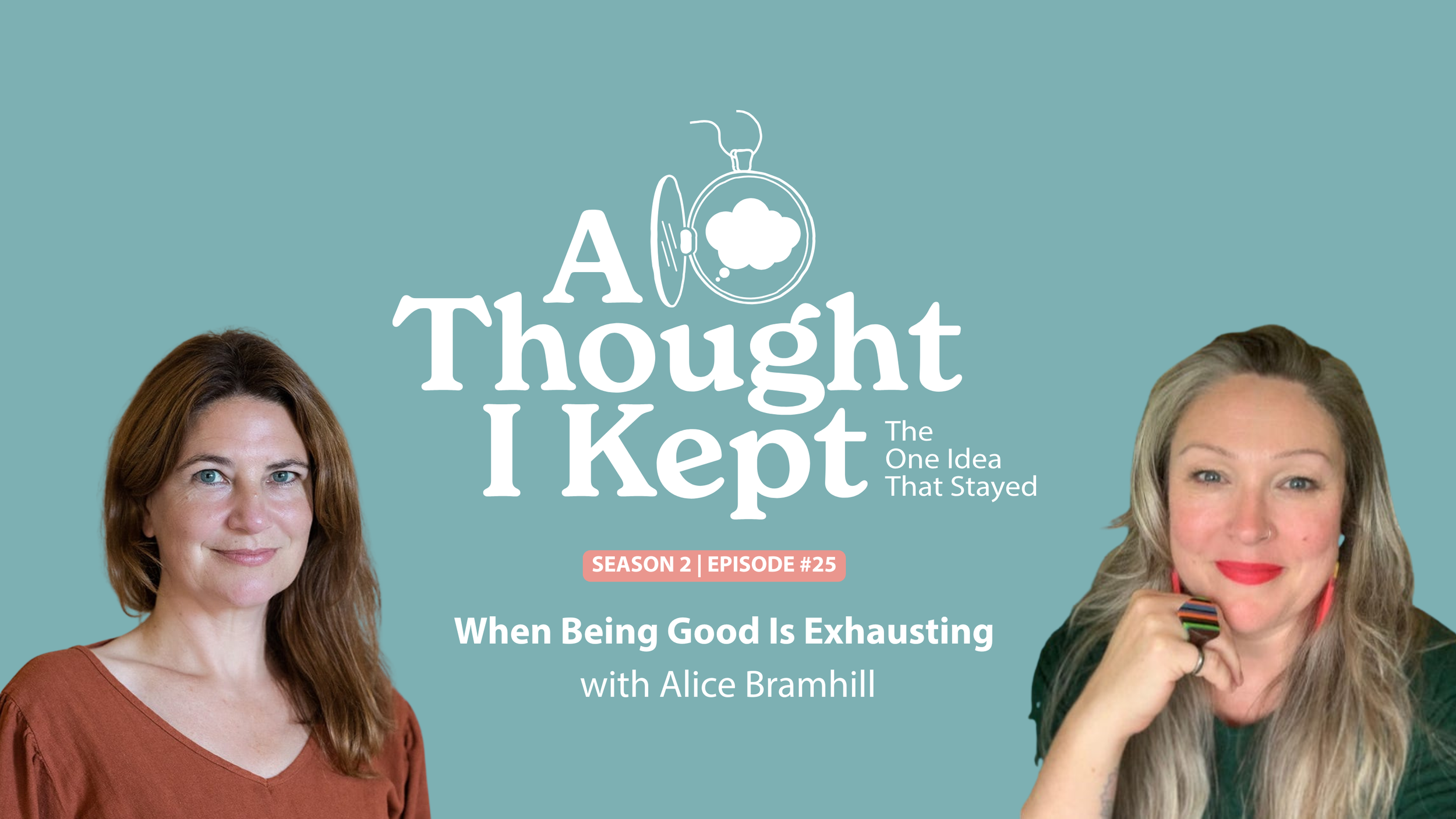
Listening to my recent podcast conversation with psychotherapist Alice Bramhill reminded me that there might be a more helpful place to begin. Rather than asking how we stop people-pleasing, what if we got curious about why it exists in the first place? Because for many of us, people-pleasing didn't appear out of nowhere. It developed for reasons that made sense at the time.
Perhaps it helped us feel safe. Perhaps it helped us belong. Perhaps it helped us navigate difficult family dynamics, demanding workplaces, friendships we didn't want to lose, or relationships where conflict felt frightening. Perhaps we learned, consciously or unconsciously, that being easy-going, agreeable, capable, useful, accommodating, or endlessly understanding was the best way to move through the world.
Over time, those behaviours can become so familiar that we stop noticing them altogether. We become highly attuned to the needs, moods, preferences, and expectations of everyone around us, often without realising how little attention we're paying to our own.
This is where many people find themselves feeling lost. Not because they don't care enough about other people, but because somewhere along the way they stopped knowing what they themselves wanted.
When Kindness Becomes Self-Abandonment
One of the things I appreciated most about Alice's perspective is that she doesn't demonise people-pleasing.
There is a tendency in wellbeing spaces to treat it as something entirely negative, as though caring deeply about other people is automatically a problem. Yet most of us can think of countless examples where being thoughtful, considerate, generous, or compassionate enriches our relationships and our lives.
Many people-pleasers are genuinely kind people.
The challenge comes when kindness stops being a choice and starts feeling like an obligation.
When we say yes because the thought of disappointing someone feels unbearable.
When we agree because we don't know how to express what we really want.
When we take responsibility for everyone else's emotions while quietly carrying our own.
When we become so focused on keeping the peace that we lose touch with ourselves altogether.
The difference can be subtle, which is why so many of us miss it.
Making your grandmother happy because you love her and want to spend time with her is very different from feeling unable to say no to anyone, ever. Supporting a friend through a difficult time is different from believing you are responsible for fixing their life. Being considerate is different from constantly abandoning your own needs.
The question is rarely whether we're being kind. The question is whether we're choosing that kindness freely.
The Hidden Cost of Always Being Good
For many women especially, people-pleasing is tangled up with a much older story about being good.
A good daughter. A good mother. A good friend. A good employee. A good partner. A good person.
These ideas often arrive long before we have a chance to question them. They are handed to us through family, school, work, culture, religion, advertising, and countless everyday interactions. Some serve us well. Some help us become thoughtful, responsible, caring human beings.
Others can become surprisingly heavy. Because when being good becomes the primary goal, we sometimes start rejecting parts of ourselves that don't fit the picture.
Our anger. Our ambition. Our uncertainty. Our need for rest. Our desire for more space. Our wish to change our minds. Our longing for a different life.
The more energy we spend trying to maintain the image of being good, the harder it can become to hear what is actually true.
The Fawn Response and the Need to Feel Safe
In recent years, more people have become familiar with the idea of the fawn response, a survival strategy where we seek safety through pleasing, accommodating, or appeasing others.
For some people, this language offers an enormous sense of relief. What looked like weakness may have been adaptation. What felt like a personal failing may have been an intelligent response to circumstances. Seen through this lens, people-pleasing becomes less of a character flaw and more of a conversation.
What was this behaviour trying to protect?
What did it help me avoid?
What need was it meeting?
Those questions don't excuse every pattern or remove the challenges people-pleasing can create. They simply invite us to respond with curiosity rather than criticism. And curiosity tends to open doors that self-judgement keeps firmly closed.
Becoming Curious About Yourself Again
One of the hidden consequences of people-pleasing is that we often become experts in everybody else's needs.
We know who likes what.
We know who is upset.
We know who needs support.
We know who is disappointed.
We know who might be annoyed.
We know who requires reassurance.
What we often don't know is how we feel. Or what we need. Or what we want.
Many people arrive at coaching, therapy, or periods of personal reflection not because they are selfish, but because they realise they have spent years looking outward and very little time looking inward.
This is where the work begins. Not with becoming harder. Not with becoming less caring. Not with learning to stop being ourselves.
But with gradually extending some of the same curiosity, compassion, and attentiveness that we offer other people towards ourselves.
A Different Question
Perhaps the goal isn't to stop people-pleasing altogether. Perhaps the goal is to understand it well enough that we have a choice.
To recognise when kindness feels nourishing and aligned. To notice when accommodation becomes exhaustion. To understand when caring for others is an expression of who we are and when it has become a way of disappearing from our own lives.
Because there is a difference between kindness and self-abandonment. And sometimes finding our way back to ourselves begins with asking a gentler question than "How do I stop people-pleasing?"
Perhaps it begins with asking:
What has people-pleasing been trying to do for me all these years?
The answer might tell us far more than any boundary script ever could.
If you’re curious about where people-pleasing and ideas of being “good” show up in your own life, listen to my conversation with psychotherapist, writer, and podcast host Alice Bramhill on A Thought I Kept.
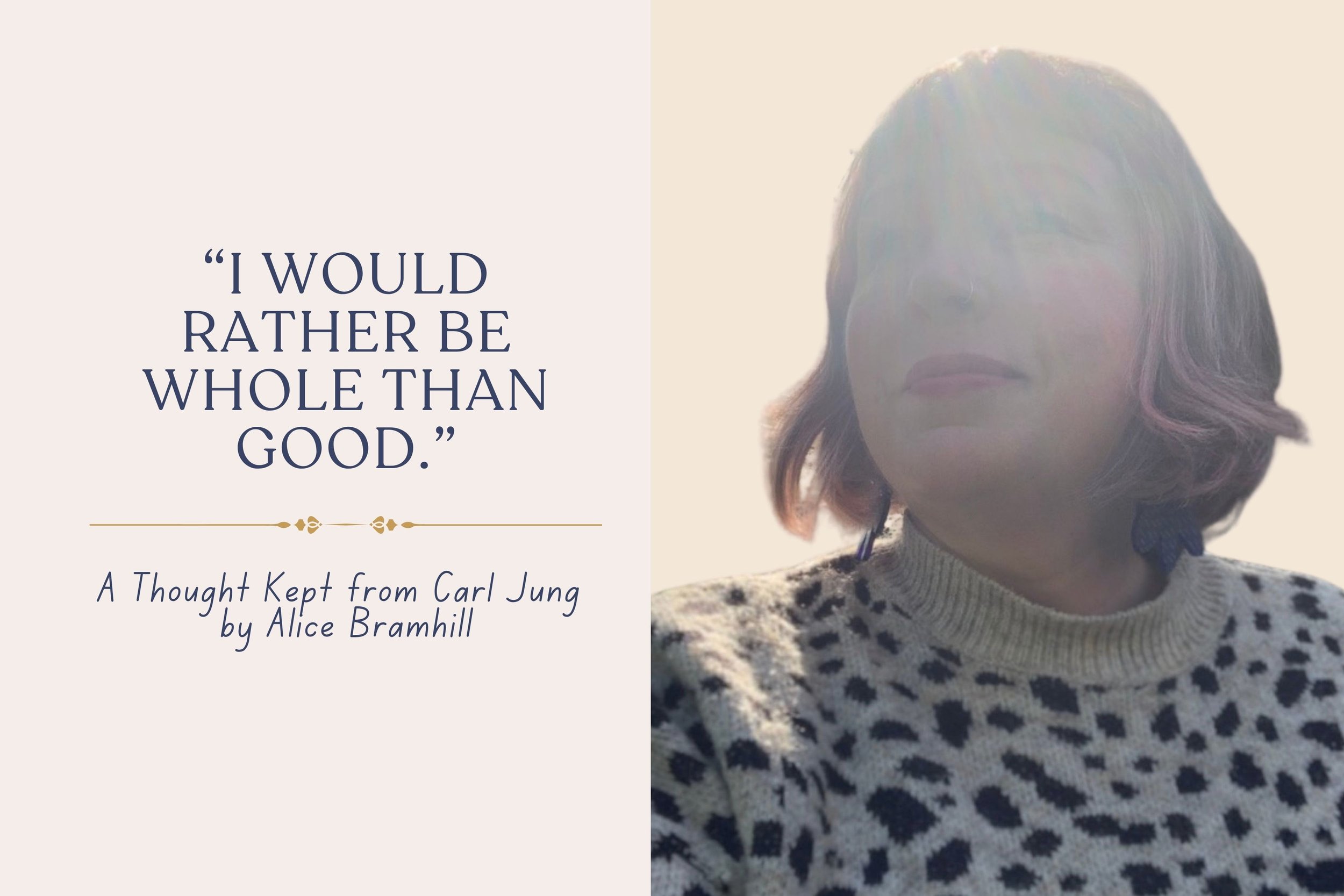
Together, we explore self-trust, boundaries, sensitivity, late-diagnosed neurodivergence, and the thought Alice has carried with her for decades: "I'd rather be whole than good."
If you've ever felt exhausted by trying to be good, struggled to know what you want, or wondered where people-pleasing ends and genuine kindness begins, I think you'll find this conversation really helpful.
Listen to When Being Good Is Exhausting with Alice Bramhill on A Thought I Kept.
If this piece resonated with you, it may be because you've spent a long time paying attention to everyone else.
Many of the people I work with arrive feeling exhausted, overwhelmed, resentful, or disconnected from themselves. They often know exactly what everybody around them needs but struggle to answer a much simpler question: "What do I need?"
Emotions coaching offers a space to slow down and get curious about those patterns with someone alongside you. Together, we can explore the habits, beliefs, emotions, and expectations that may have helped you navigate life so far, while gently uncovering what you need now.
You don't have to stop being kind. You don't have to become a different person. Sometimes the work is simply learning how to include yourself in the care and attention you've spent years offering everybody else.
If you'd like some support finding your way back to yourself, I'd love to help. Explore emotions coaching and book a free discovery call.

The Hidden Benefits of Small Acts of Kindness (Or: What to Do When You’re Feeling Lost, Lonely, or Disconnected)
Feeling lost, lonely, or disconnected? Discover the hidden benefits of small acts of kindness and how giving back—through simple, everyday actions—can improve your mental well-being. Learn easy ways to reconnect, build community, and find meaning through kindness.
Ever felt lost, lonely, or disconnected? Though we tend to hide it, many of us are there with you.
And here’s something else that might be unexpected—one of the best ways to feel more grounded, seen, and connected to the world around you isn’t to look inward but outward.
It starts with small acts of kindness.
Why Giving Back is a Secret Superpower
We often think of kindness as something we do for others, but the truth is, it shapes us just as much. Science backs this up—when we engage in acts of kindness, we release oxytocin (the ‘love’ hormone), dopamine (the ‘reward’ hormone), and serotonin (the ‘feel-good’ neurotransmitter). These brain chemicals lift our mood, reduce stress, and even improve physical health.
But beyond the science, there’s something deeply human about kindness. It pulls us out of our own heads, away from the endless loop of worries, and into something bigger than ourselves. It reminds us that we belong.
Here are five powerful mental health benefits of giving back:
It creates a foundation for better mental well-being.
Being part of something bigger than ourselves fosters a sense of purpose and belonging.
It helps build stronger communities.
Places that center kindness—whether a neighborhood café, a community garden, or a local bookshop—become spaces for gathering, learning, and play.
It provides balance.
When anxiety or stress overwhelms us, shifting our focus outward can restore our equilibrium.
It expands the impact of mental well-being.
Supporting initiatives that benefit others strengthens not just individuals, but entire communities.
It makes help more accessible.
Sharing knowledge, resources, and experiences creates pathways for collective well-being.
But if kindness is so powerful, why don’t we do more of it?
What Gets in the Way?
It’s easy to say “Just be kind,” but harder to act on when life is pulling you in different directions. Here are some common barriers:
Fear of being misinterpreted.
We sometimes hesitate, worrying about how our actions will be received.
Lack of time.
Giving back feels like a ‘nice-to-do’ rather than a ‘must-do’ in an already packed schedule.
Emotional exhaustion.
When we’ve spent all day taking care of others, it’s tempting to switch off and withdraw.
Self-protective instincts.
When we feel vulnerable, we may pull away instead of reaching out.
A disconnect from what we need most.
If we struggle to access connection, meaning, or community, it becomes harder to give back.
The good news? Kindness doesn’t have to be big, complicated, or time-consuming. Small, everyday actions can have a ripple effect—on others, and ourselves.
7 Small Ways to Give Back (Even When You Feel Stuck)
If you’re feeling lost, lonely, or disconnected, try one of these:
1. Share what you know.
Someone out there needs your knowledge, whether it’s advice on navigating a challenge or a simple book recommendation.
2. Support independent spaces.
Cafés, bookshops, and community centers create places where connection happens—helping them thrive helps everyone thrive.
3. Practice micro-kindness.
Compliment someone’s work, send a quick “thinking of you” message, or pay for a stranger’s coffee. Small acts add up.
4. Join a community gathering.
Whether it’s a book club, a workshop, or a volunteering opportunity, show up for something that fosters connection.
5. Create access.
Help someone else find the resources they need—whether that’s a job lead, a support group, or just a good therapist recommendation.
6. Tell your story.
Sharing your experiences (even the messy ones) helps others feel less alone.
7. Make space for care.
Whether it’s inviting a friend over for tea or checking in on a neighbor, creating spaces where people feel nurtured makes a real difference.
Even something as simple as keeping a kindness diary—where you note one small act of kindness each day—can shift your mindset toward connection.
Kindness as a Daily Practice
If you’re feeling disconnected, try this:
Pick one small act of kindness today. It doesn’t have to be grand. Just something that nudges you toward connection.
Notice how it makes you feel. Did it shift your mood? Your perspective? Your energy?
Repeat. Because the more we practice kindness, the more it becomes part of us.
And if you’re still feeling stuck?
Just start where you are. Small steps lead to big shifts.
Need a Well-Being Boost? Try a Personalised Well-Being Prescription
If you're feeling lost, disconnected, or overwhelmed, sometimes the smallest shifts can make the biggest difference. Our Well-Being Prescriptions are designed to help you find what works for you—whether that’s reconnecting with kindness, rediscovering joy, or creating space for yourself.
Giving back is one of the areas we explore in our prescriptions, helping you discover simple, meaningful ways to contribute that also nourish your well-being.
Get Your Personalised Well-Being Prescription

The Frome Kindness Festival
How a small town in Somerset is trying to be kinder
“Frome is already full of kindness, but there’s always scope for more – particularly towards the people that we don’t feel close to.
The scientific evidence is that simply watching someone else doing something kind can set a ripple of positive change in motion. As Aesop said: No act of kindness, however small, is ever wasted.”
Go here if: you would like to be a kinder person, you would like to have more kindness in your life, or you would like to make where you live and work a better place
What is it: Brought to you by The Good Heart, a local non-profit, this week-long festival aims to make Frome, a market town in Somerset, the kindest place on earth
Why you’ll love it: When else do you get to put kindness front and center in your life, and the lives of others? And how often is kindness even the aim that we have for the communities in which we live and work?
What you need to know: Now in its second year, The Frome Kindness Festival takes place from 5th to 11 March, 2023.
Each day of the Festival has a kindness-related theme, and events range from a Caravan of Kindness to a West Country afternoon tea with Radio 4 presenter Claudia Hammond.
There will be a debate about Kindness in Social Media, a film extravaganza, and clothes swaps for children and adults, including a catwalk where eco-conscious shoppers can be photographed in their new outfits.
On the streets, there will be live music, pop-ups and a flash mob featuring a specially commissioned Kindness Dance. The Boyle Cross in the centre of the town will be decorated with a super-sized hat that encourages passers-by to “put your kindness hat on.”
At heart: “the Festival aims to bring together young and old to celebrate, practice and explore the power of kindness to improve mental and physical health, transform relationships and strengthen communities.”
Something to do: Join the Kindness Challenge, where local individuals, groups, businesses and organizations have the opportunity to give back. You’re invited to do something kind, imaginative, special and down-to-earth.
Even if you can’t sign up for the Kindness Challenge, you could bring in acts of kindness wherever you are. See some ideas for how to do that here.
Read The Compassionate Project, a great book about how Frome turned to human kindness to solve the problem of loneliness.
