
When Everything Feels Like Too Much: A Different Way to Think About Wellbeing
Tired of self-improvement advice that doesn’t work for you? This week we’re exploring how attention, beauty, and everyday meaning can help you find steadiness when you feel lost or overwhelmed.
There are moments when life begins to feel louder than we expected. Not necessarily dramatic or catastrophic moments — although those exist too — but the quieter accumulation of things. Too much information. Too many expectations about what we should be doing with our lives. Too many messages about how we should be improving ourselves.
If you spend any time in the world of wellbeing advice, you’ll know the feeling. The promise is always that if we just find the right system, the right routine, the right mindset, things will click into place. We’ll feel calmer. Clearer. More certain about the path ahead.
But many people arrive here feeling the opposite. They’ve tried the advice. They’ve listened to the podcasts, read the books, followed the practices — and instead of clarity they feel more overwhelmed. As though wellbeing has become another task on the list.
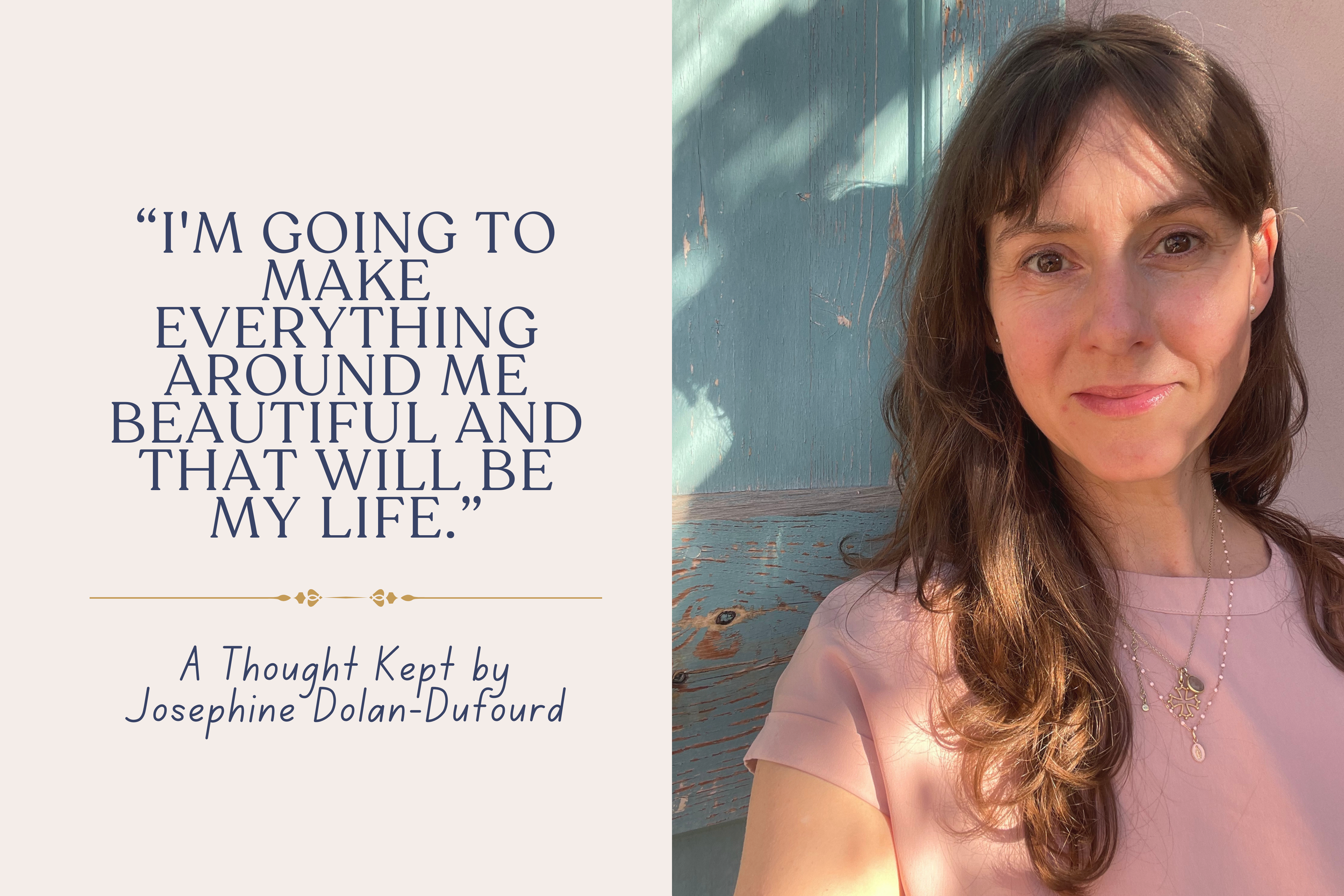
Recently on the podcast A Thought I Kept, I spoke with occupational therapist Josephine Dolan-Dufourd about a line that has stayed with her for many years. It comes from the early twentieth-century designer Elsie de Wolfe:
“I’m going to make everything around me beautiful and that will be my life.”
At first, it can sound almost frivolous. Beauty can feel like a luxury — something decorative, something that sits on the edges of life rather than at its centre. But as Josephine talked about it, the idea began to shift. Because beauty, in the way she understands it, is not about perfection or aesthetics. It’s about attention.
Josephine’s work as an occupational therapist centres around what she calls “meaningful doing” — the everyday activities, rhythms, and choices that help us live with more ease and connection. And what she has seen again and again, working with people navigating illness, burnout, and major life change, is that wellbeing rarely arrives through grand reinventions of ourselves. More often, it begins in the smallest places.
The cup of coffee you drink in the morning, taken slowly rather than hurriedly.
The walk through your neighbourhood where you notice the flowers instead of only the things that frustrate you.
The moment of choosing clothes that make you feel like yourself.
These things are not solutions. They don’t solve life. But they change how we experience it.
One of the examples Josephine shared during our conversation has stayed with me. She once worked with a client who was deeply irritated by something very ordinary: dog mess in the streets of the village where she lived. If you went looking for it, you could see it everywhere. It became the thing that defined every walk. So Josephine began gently redirecting her attention.
Look up, she suggested. Look at the buildings. Look at the flowers. Look at the people passing by. Yes, the dog mess is still there — life will always contain the irritating, messy parts — but it doesn’t have to be the only thing you see.
This might sound like a small shift, but in many ways it’s a radical one. Our brains are naturally wired to notice what is wrong. Psychologists call this the negativity bias — the evolutionary tendency to scan our environment for threats and problems. It kept our ancestors alive.
But in modern life, surrounded by constant news updates, social media feeds, and endless comparison with other people’s lives, that same instinct can make the world feel far heavier than it really is. We begin to believe the story that everything is broken. That we are behind. That everyone else has figured something out that we haven’t.
Josephine’s perspective offers a different orientation.
Life will always contain difficulty. Illness, uncertainty, setbacks, grief — none of us escapes those parts of the story. Josephine herself has lived through many moments that could easily have led her to a much darker outlook.
When she was sixteen, her father experienced a life-changing brain injury in a car accident. It was during that time that she first encountered occupational therapy — and saw how meaningful activities could help people find dignity and purpose even in the most difficult circumstances.
Beauty, in this sense, is not the absence of hardship. It is something we learn to notice alongside it.
Later in her career, after seventeen years working in forensic psychiatric settings, Josephine reached a point of deep burnout. She realised she had lost her sense of zest for life. What helped her recover was not another professional breakthrough or productivity system, but something much simpler: a change of environment, a slower rhythm of living, and a renewed attention to what actually mattered in her day-to-day life.
That idea — that our lives are shaped by what we notice — feels particularly important right now. We live in a culture that constantly asks us to optimise ourselves. To become more productive, more disciplined, more impressive.
But perhaps another question is worth asking.
What if the work is not to become someone new?
What if the work is to notice more carefully the life you already have?
Josephine described beauty as something that can be created almost anywhere — in the way you arrange a room, the way you prepare a meal, the way you spend time with the people around you. It’s not about escaping the realities of life, but about refusing to let them define the whole picture.
And when you begin to approach life this way, something subtle shifts. You stop waiting for the future version of your life to begin. Instead, you start to realise that your life is already happening — in these ordinary moments that will one day feel strangely precious when you look back on them.
None of this removes uncertainty. You might still feel unsure about your direction. You might still be navigating change, loss, or the quiet sense that something in your life needs to move or evolve. But you may discover that steadiness doesn’t come from fixing yourself. Sometimes it comes from learning how to look. From noticing what is already here. And from asking, quietly and without pressure:
What might it mean, in my own way, to make the world around me a little more beautiful?
If this idea resonates with you, you can listen to the full conversation with Josephine on the podcast A Thought I Kept.
And if you’re looking for more support finding your footing — emotionally, practically, or simply as a human being navigating life — you can explore our coaching sessions and resources here.
The Day You Realise You’ve Been Living With Your Eyes Closed
Feeling lost, restless, or unsure about your career or direction? We explore more quiet life changes, self-trust, and how small moments of awareness can help you find clarity without reinventing who you are.
We tend to think confidence arrives fully formed. A clear decision. A bold move. A moment where everything clicks into place. But often it begins with something far less impressive.
It begins with discomfort that doesn’t quite have a name. A low hum of restlessness that follows you through meetings, through conversations, through evenings on the sofa. You might not be able to point to anything that’s broken. You might even feel slightly ungrateful for questioning it. And yet the question lingers.
Am I actually choosing this?
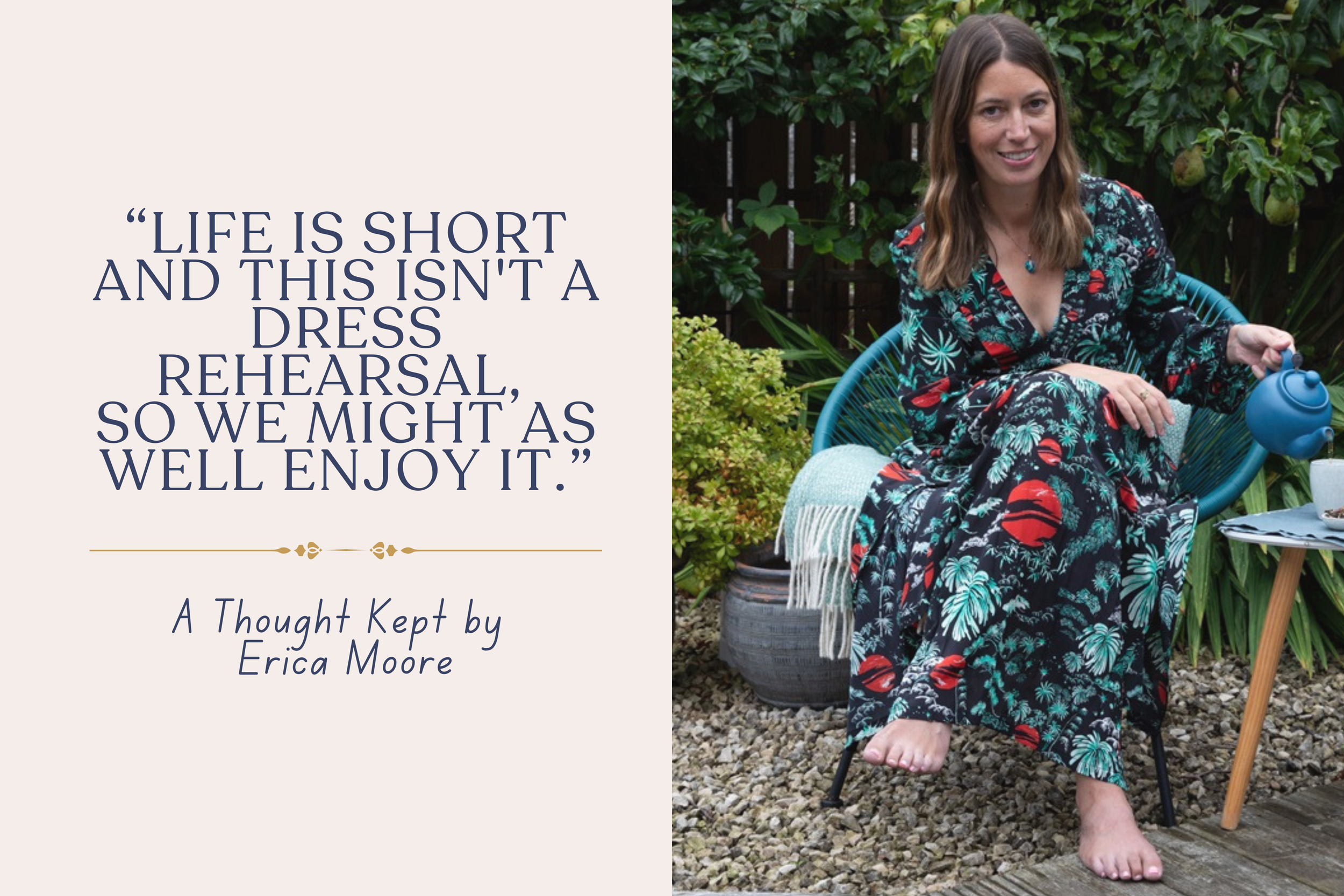
That was the pivot in my conversation with Erica Moore, founder of speciality tea brand eteaket on the podcast this week. Not a dramatic exit. Not a grand reinvention. Just a quiet noticing that she had been progressing through a life she hadn’t consciously shaped. She had been capable, competent, successful but not fully awake.
There’s something unsettling about realising you’ve been living slightly on autopilot. It can feel like you’ve missed something. Like you should have known sooner. But I don’t think that’s what’s happening.
I think sometimes we simply reach a point where the life that once fitted us begins to feel tight around the edges. We outgrow ways of coping. We outgrow expectations we once accepted without question. And because the outside world still sees us as “fine,” it can be hard to admit the internal shift.
This is often where people arrive here. Not because they want to become someone new. But because they want to feel more like themselves. And that’s a different thing entirely.
In the episode of the podcast, we talked about tea as a container — a small moment in the day where you can pause without having to justify it. I’ve been thinking about that a lot. How rare it is to have moments that aren’t productive, reactive, or outward-facing. How easy it is to move from task to task without ever checking whether the direction still feels right.
When you’re feeling lost, the instinct can be to find a bigger answer. A plan. A strategy. A reinvention.
But sometimes what’s needed is smaller. A little more space. A little more honesty. A little more willingness to sit with what’s true before deciding what to do about it.
Uncertainty doesn’t always mean something is wrong. It can mean something inside you is ready to be heard.
And the steadiness I come back to — in my own life and in coaching conversations — is this: you do not need to dismantle who you are in order to move forward. You do not need to be more disciplined, more confident, more impressive. You need to feel safe enough to notice.
When you allow yourself to notice what feels heavy, what feels enlivening, what feels misaligned, you begin to orient yourself again. Not through force. Through awareness. The work is not becoming someone else. It’s coming back to yourself, gently and repeatedly, until your choices begin to reflect who you actually are.
That’s not dramatic. It won’t make a good headline. But it does create a steadier life. And if you’re in that space right now — questioning quietly, searching for clarity, wanting change but not chaos — you are not behind. You are not broken. You may simply be opening your eyes.
You can listen to the full conversation with Erica on A Thought I Kept wherever you get your podcasts, and sit with the idea a little longer.
If you’re in a season of questioning or change and would value support as you find your way forward, our coaching sessions offer space for clarity, self-trust, and meaningful direction — at your pace.

Finding Winter Light: How Nature-Connectedness Boosts Wellbeing When Days Are Short
Spending time in nature — even short daily walks — can ease winter blues, lift mood, and support wellbeing. Here’s why nature-connectedness matters most in darker months.
Winter can feel like a long exhale — darker mornings, heavier coats, and that tug to stay inside. Yet stepping outdoors might be one of the gentlest ways to support yourself right now.
A few winters ago, I decided to make a small change: go outside every day, even if it was grey, damp, or uninspiring. Not hikes, not adventures. Just a walk — 10, maybe 30 minutes — in whatever patch of nature I could find: a park, a bridle path, a path by my kid’s school. I looked for small things — the biting crunch of frost, birds on bare branches, the way the sky changes colour even behind a cloud.
What started as an experiment turned into something else. My mood lifted. My head felt clearer. Even on days when I didn’t want to leave the house, coming back felt like I’d plugged myself into a quiet energy source.
It’s not just a feeling. Research backs this up. Studies show that time spent outdoors — especially in green or natural spaces — reduces stress, supports immune function, and improves mood.
Even brief “nature doses” (about 20–30 minutes) have measurable benefits, from lowering cortisol to easing anxiety. And in winter, when daylight is scarce and we spend more time inside, that effect matters even more.
Light matters: Outdoor daylight — even on cloudy days — is much stronger than indoor light, helping regulate mood and sleep.
Movement matters: Gentle walking outdoors supports mental health and resilience.
Nature matters: Contact with trees, water, birdsong, and sky connects us to something larger and steadies our nervous system.
So if winter sometimes feels like wading through fog, try weaving in small nature rituals:
A quick daily walk where you can see the sky.
Lunch by a window with outdoor views.
Pausing to notice tiny seasonal details — buds, frost patterns, migrating birds.
It doesn’t have to be perfect weather or a big adventure; just a moment to step outside.
Want help making small, feel-good changes that stick? Explore our wellbeing remedies including gentle ways to bring more light and balance into winter.
And if you suspect that nature might be your preferred way to reconnect with yourself and the world around you, explore our guide for life.
You Don’t Have to Change Who You Are to Move Forward
If you’re feeling lost, overwhelmed or unsure, today we’re exploring self-trust, ADHD, and why you don’t need to change who you are to move forward.
Sometimes the feeling of being lost doesn’t announce itself loudly. It slips in quietly, disguised as self-doubt or restlessness. You find yourself wondering why the things that seem to work for everyone else don’t quite stick for you. Why your energy rises and falls. Why you can be so capable one week and so uncertain the next. Why the common advice about confidence or consistency feels faintly misaligned, as though it were written for someone else.
Many of the people who arrive here are not looking to reinvent themselves. They are looking for steadier ground. They are tired of trying to fix what might not be broken.
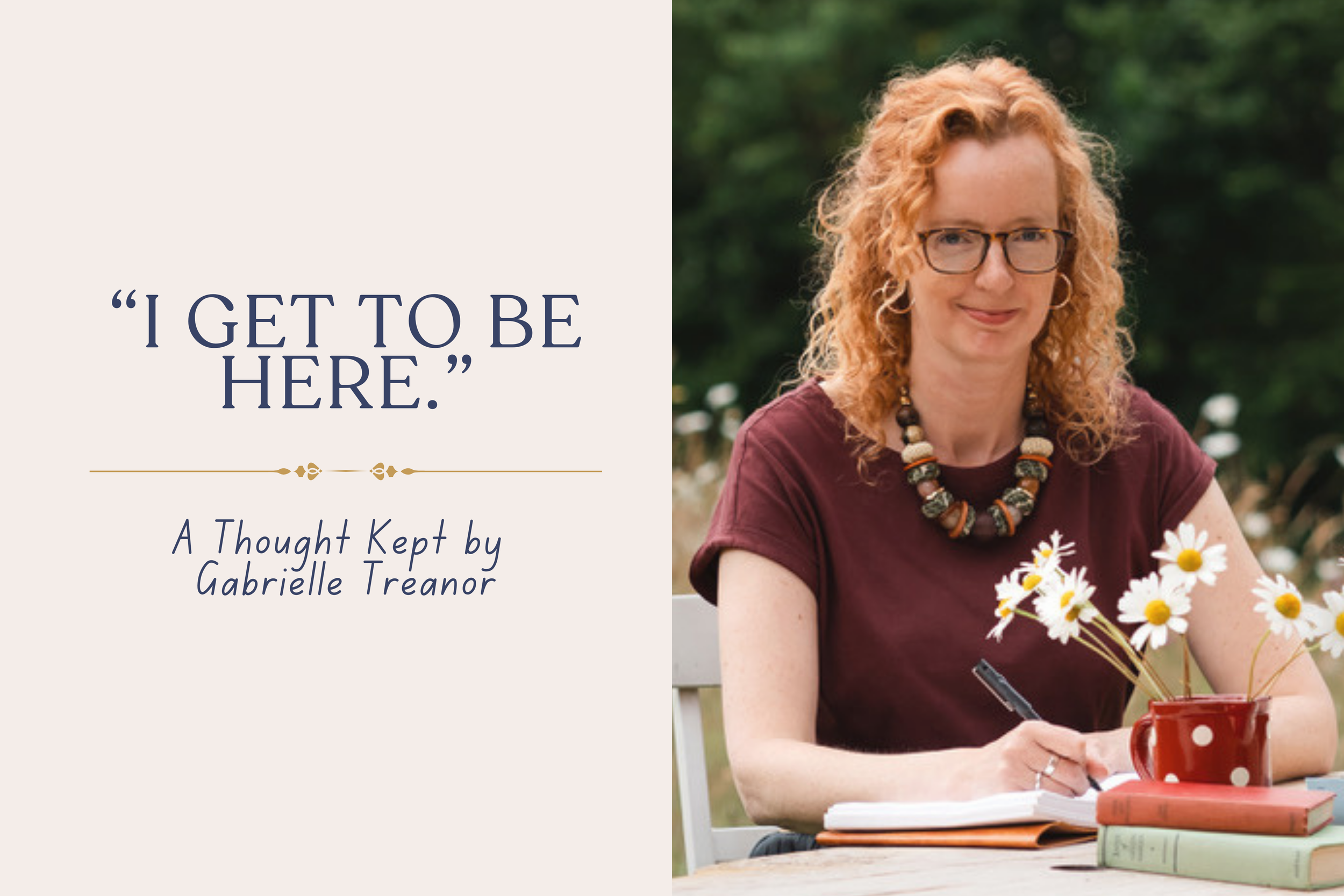
In a recent episode of A Thought I Kept, I spoke to writer and ADHD coach Gabrielle Treanor about a thought that had quietly reshaped her life: “I get to be here.”
When she said it, it wasn’t defiant. It wasn’t triumphant. It was calm. Considered. Almost surprised.
Gabrielle was diagnosed with ADHD in her late forties. For years she had assumed that her fluctuating motivation, her sensitivity, her tendency to procrastinate meant she simply wasn’t disciplined enough. She had tried to follow the prescribed routes to wellbeing — the routines, the systems, the ways of doing things “properly.” When she couldn’t sustain them, she thought the fault lay with her.
What changed was not her personality, but her understanding. Her brain worked differently. The expectations she had internalised were not neutral; they were shaped by a culture that prizes steadiness, productivity and linear progress. Realising this did not give her a new identity so much as a new understanding. A new willingness to stop apologising for the way she was wired.
I get to be here.
It is such a simple sentence, but it carries weight. It suggests that your presence is not conditional on becoming more efficient, more certain, more contained. It does not demand that you take centre stage; it simply reminds you that you belong in the room.
Many of us have been taught to make ourselves smaller in order to move through the world more smoothly. To temper our sensitivity. To soften our opinions. To be grateful for what we have and not ask for more. Even the language of wellbeing can subtly reinforce this shrinking — as though if we could only master the right practice, wake earlier, focus harder, meditate longer, we would finally become the sort of person who functions without friction.
But what if friction is not evidence of failure? What if it is simply information?
Gabrielle’s approach to wellbeing is rooted in experimentation rather than compliance. Instead of asking, “Why can’t I stick to this?” she asks, “What might work for me right now?” The difference is small but profound. It shifts the emphasis from self-criticism to curiosity. It acknowledges that we are not static creatures. Our energy shifts. Our capacity changes. The practices that nourish us in one season may not suit us in another.
For those of us who feel overwhelmed by self-improvement culture, this can be a relief. It allows us to step out of the exhausting cycle of starting and stopping, trying and failing, promising and abandoning. It invites us to pay attention to who we actually are, rather than who we think we ought to be.
If you are feeling unsure of your direction, it may not be because you lack ambition or courage. It may be because you have been trying to travel using someone else’s map.
To say “I get to be here” is to begin from your own coordinates. It does not solve everything. It does not remove uncertainty. But it offers a place to stand. From there, you can notice what feels steady and what does not. You can experiment gently. You can allow for inconsistency without interpreting it as collapse.
This is not an argument against change. Growth still happens. We still learn, adjust, stretch. But growth that begins from self-rejection rarely feels sustainable. Growth that begins from recognition — from a quiet acknowledgement of your temperament, your history, your rhythms — tends to be kinder.
If you are questioning whether the usual wellbeing advice works for you, that questioning may be wisdom rather than resistance. If you are tired of feeling behind, it may be because you have been measuring yourself against a timeline that was never yours.
You get to be here. As you are. With the brain you have, the experiences you carry, the particular mix of steadiness and fluctuation that makes you you.
If you’d like to hear the full conversation with Gabrielle, you can listen to the episode of A Thought I Kept where we explore this idea in more depth — including what it means to discover ADHD in midlife and how experimentation can replace striving.
And if you’re feeling especially untethered, our coaching sessions are here to help you explore these questions at your own pace.
There is no rush to become someone else. Sometimes the first step forward is allowing yourself to be exactly who you are.
What to Do When Life Falls Apart and You Feel Lost
When a relationship ends, someone dies, or you lose your job, it can feel like you’ve been pushed out of the life you built. Read this guide to navigating unexpected change, uncertainty, and rebuilding self-trust without rushing to fix everything.
There are moments in life when the ground gives way without your consent.
You didn’t choose the ending. You didn’t plan the disruption. A relationship ends because someone else makes a decision. A parent dies. A health diagnosis lands. A job disappears. And suddenly you are standing outside the life you built, holding pieces that no longer fit together.
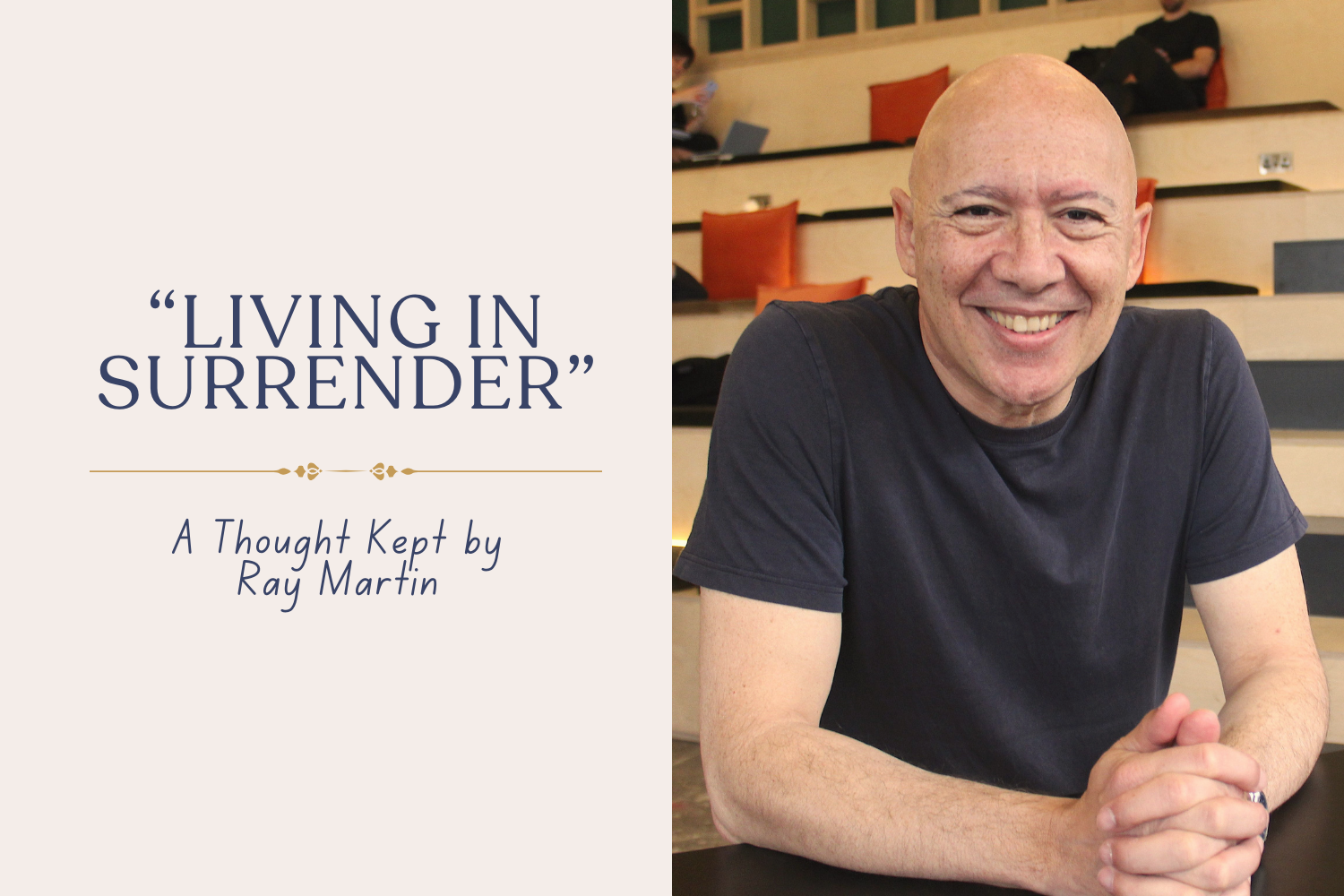
In my recent conversation with Ray Martin on A Thought I Kept, what struck me most wasn’t the romance of fourteen years of travel. It was the year that came before it. In a single stretch of time he lost his marriage, his business partnership, and his father The identity he had constructed — successful businessman, husband, son— fractured all at once.
He didn’t wake up one morning and decide to reinvent himself. Life pushed him out.
And that is often how it happens.
When something unexpected pulls the rug from under us, the first instinct is to restore what was. To fix. To replace. To rush toward a new beginning so we don’t have to sit in the in-between. Ray became fascinated by this middle space — what William Bridges calls the neutral zone The place where the old life has ended but the new one hasn’t fully formed. From the outside, nothing looks dramatic. Inside, everything is shifting.
If you are in that space, it can feel disorienting. You might not recognise yourself. The roles that once organised your days no longer apply. The confidence that came from knowing who you were can wobble. You may feel lost not because you are indecisive, but because the map you were using is no longer valid.
Ray’s core thought — the one he kept — is living in surrender
Not surrender as defeat. Not resignation. But surrender as a different way of orienting when control has already slipped from your hands.
He began to pay attention to where his energy went. After visiting an elephant sanctuary and an orphanage, he couldn’t stop thinking about them. Instead of dismissing that tug as sentimental, he followed it. That eventually led him to train for and run a marathon to raise money, something he had never imagined doing before
What I take from that is not “run a marathon.” It is this: when life has already dismantled your plans, perhaps you can afford to listen more closely to what quietly draws you.
Unexpected endings often strip us back to something more elemental. Ray speaks openly about how, earlier in life, he overrode his instincts in order to stay in character After everything fell apart, he found he could no longer ignore those nudges. He began treating life as a series of experiments rather than a fixed destination
There is something gentle in that framing. If you have been kicked out of the life you built, the pressure to “get it right” next time can be immense. An experiment carries less weight. It allows you to try, to notice, to adjust.
Another shift that came for him was around feeling. He moved from living primarily in his head to allowing himself to express emotion more freely. That matters when we are navigating grief, anxiety, or overwhelm. Emotional states are not permanent addresses. They are places we pass through. Letting yourself feel does not mean you will be swallowed by it. Often it means the feeling can move.
He also rethought the idea of “ties.” Work, relationships, community, home. The issue, he suggests, isn’t being tied to something. It’s being unconsciously tied When life tears away a tie without your permission, there can be freedom hidden inside the shock. Not the freedom you would have chosen, but the freedom to ask: what do I now choose, consciously?
Later in the conversation, Ray talks about calculating how many days he might have left — around 5,700 at this stage Not as a dramatic countdown, but as orientation. If time is finite, what is worth fighting? What can be softened? What is no longer necessary?
When the unexpected happens, we often look for certainty. For guarantees. For a clear five-step plan. What Ray’s story offers instead is steadier and perhaps more honest. You may not get certainty. But you can cultivate attention. You can notice what feels alive, even faintly. You can allow the neutral zone to do its quiet work inside you.
Being lost is not always a failure of planning. Sometimes it is the inevitable consequence of loving, committing, building — and then losing.
If you find yourself outside the life you built, perhaps the question is not immediately “What should I do next?” Perhaps it is “What is drawing me, even now?”
You can listen to the full conversation with Ray on A Thought I Kept:
And if you are in the middle of your own unexpected transition, our coaching sessions at If Lost Start Here offers a place to think, feel, and find your footing again without pressure to rush toward a new identity.
You are allowed to be in between. You are allowed to listen before you leap.

When Midlife Feels Like More Than You Expected
Many UK women in midlife are struggling with mental health, overwhelm and emotional exhaustion. Today we’re exploring why and what kind of support can help.
For many women, midlife can arrive with a sense that life isn’t quite as straightforward as it once was. The responsibilities we’ve carried for years — at work, within families, in our friendships and community roles — haven’t disappeared, and yet something in the background changes. Sleep feels less restorative. Thoughts feel a little foggy. Tasks that once felt manageable now feel heavier. It can be hard to put a name on it, but you feel it: a sense that there’s more to life than you can easily juggle, even when nothing obvious has fallen apart.
A recent survey of women aged 50 and over in Britain has given words to many of these experiences. Almost two in three women in this age group say they are struggling with their mental health as they navigate the changes that come with midlife — from menopause and sleep disruption to relationship shifts, caring for ageing parents and adjusting to children leaving home. For many, this is accompanied by anxiety, poor sleep, “brain fog” and a loss of the zest for life they once took for granted.
Perhaps most striking is how quiet this struggle often is. The survey found that almost nine out of ten women dealing with these challenges don’t seek help. Many feel they have to cope alone, or minimise how they’re feeling because the idea of asking for support feels somehow like giving in — even when the weight of it all is real.
What’s Underneath Overwhelm
This isn’t just about menopause. It’s about transitions that happen gradually and simultaneously: shifts in our bodies; shifts in our roles; evolving relationships; changes in energy and emotional resilience. Each of these on its own can feel manageable, but woven together over years they can create a deep and exhausting pressure that’s easy to overlook until it becomes hard to ignore.
Many women simply don’t talk about this. Society still tends to treat emotional struggle — especially in midlife — as something that should be handled quietly, or something to “power through”. But the survey reminds us that these experiences are common and human, not a personal failing.
The Cost of Keeping It Quiet
When emotional strain isn’t acknowledged, it doesn’t disappear — it accumulates. It affects sleep, concentration, relationships and the simple joy of everyday moments. It becomes harder to notice when you’re depleted, because you’ve become accustomed to pushing through. And without space to reflect on what you’re actually feeling and why, it’s easy to blame yourself rather than understand that what you’re experiencing is a response to real emotional load.
That’s why finding the right kind of support matters.
What Support Looks Like — Beyond a Quick Fix
For some women, support might be practical — medication, hormone therapy, lifestyle adjustment, or changes in work or caregiving arrangements. For others, it’s about having someone to talk things through with — not someone who offers quick answers, but someone who helps make sense of experience and emotion in a grounded, non-judgmental way.
This is where emotions coaching can fill a gap that many traditional services overlook. It isn’t therapy in the clinical sense, and it isn’t a promise to “fix” everything overnight. Instead, it’s a space designed to help you:
notice what’s been building beneath the surface
make sense of emotional patterns rather than dismissing them
recognise what’s reasonable to expect of yourself — and what isn’t
develop a clearer sense of how you’re feeling rather than just that you’re overwhelmed
For women whose lives are woven with responsibility and care — often for others — having someone who listens deeply and reflects back what you’re actually experiencing can offer clarity and grounding rather than pressure to perform better or be more resilient.
You’re Not Alone in This
The survey’s findings are a reminder that many women are living with these feelings — often quietly and without support. That doesn’t make your experience any less valid. It makes it human.
If this resonated, you might like our occasional reflections and conversations on emotional life, wellbeing and what it really feels like when life feels like a lot.
And if you feel ready to explore your feelings with someone — not to fix you but to understand your experience more clearly — learn more about emotions coaching and how I might support you through midlife.

Why Everything Feels Like Too Much
Feeling like everything is too much, even when you’re coping on the surface? This gentle reflection explores capacity, overwhelm, and why it’s not just you.
Often it isn’t one big thing that tips us into feeling overwhelmed. It’s the accumulation of many small, reasonable demands, layered one on top of another, until life begins to feel heavier than it looks from the outside. You’re still doing what needs doing. You’re still showing up. And yet, there’s a sense that everything takes more effort than it should, that coping has become something you have to consciously work at rather than something that happens naturally.
This is usually when people start questioning themselves. Not in a dramatic way, but in the background of everyday life. Why does this feel so hard? Am I just not very good at coping? Is this just me? We tend to assume the explanation must be personal — a flaw, a lack, a resilience gap we haven’t quite closed yet.
But very often, what’s going on has less to do with who you are, and more to do with capacity.
Capacity isn’t one single thing you either have or don’t have. It’s layered, changeable, and deeply affected by the conditions of your life. And when we talk about feeling overwhelmed, we’re often really talking about several kinds of capacity being stretched at once — even if we haven’t named them that way before.
There’s work capacity, for example. This isn’t just about hours or workload, but about responsibility, pressure, decision-making, and the emotional labour that so often comes with work — particularly in caring roles, leadership positions, or people-facing jobs where you’re expected to hold others as well as yourself. Then there’s mental capacity: the ability to concentrate, plan, remember, and problem-solve without every small decision feeling draining. When this is stretched, even simple choices can begin to feel surprisingly heavy.
There’s emotional capacity too — how much feeling you can hold, not only your own, but other people’s as well. Supporting children, partners, parents, colleagues, friends. Anticipating needs. Managing tension. Smoothing things over so life keeps moving.
Alongside this sits energy capacity: sleep, health, recovery time, and the overall load on your nervous system. This is often the first capacity to dip, and the one we’re most likely to ignore or override.
And then there’s life capacity — the background weight of life itself. The admin, the finances, the relationships, the uncertainty, the changes, the griefs and transitions that don’t always announce themselves loudly but still take up space.
You can be coping well enough in one area while another is quietly depleted. And when several kinds of capacity are stretched at the same time, it can feel as though something is deeply wrong, even when nothing obvious has changed. This is often why advice about slowing down or prioritising yourself can feel oddly out of reach. When capacity is already full, there isn’t spare room to rearrange things — there’s just more being asked.
For many people, doing everything isn’t about control or perfectionism. It’s about necessity. It’s about being the one who notices what needs doing and steps in because otherwise it won’t happen. It’s about holding together the practical and emotional threads of a life that relies on you more than feels fair. In that context, exhaustion isn’t a failure — it’s a natural response.
And yet, this is often where self-criticism creeps in. Why can’t I cope better? Why does everyone else seem to manage? Why does rest feel so far away for me? Overwhelm becomes something to judge ourselves for, rather than something to listen to.
Capacity isn’t something you fix by pushing harder or organising yourself more efficiently. It’s something you work with. And that often begins by telling the truth — not in a way that demands immediate change, but in a way that simply names what’s real. What’s taking the most from you right now. Where there isn’t really a safety net underneath. How tired you are, not because you’re weak, but because you’ve been carrying a lot for a long time.
When people begin to understand their experience through this lens, something softens. The constant questioning eases. The pressure to justify how they feel begins to lift. Not because everything suddenly changes, but because the story they’ve been telling themselves does.
If you’ve been wondering whether the way you’re feeling is justified, it probably is. Overwhelm is rarely random. It’s often a sign that too much has been resting on you for too long. Learning to listen to that — without rushing to fix yourself — can be the start of a steadier, kinder relationship with your own limits.
If this piece resonated, you might like to hear from us occasionally. Our newsletter shares thoughtful reflections and gentle guidance for navigating everyday life when things feel like a lot.
And if you’re feeling overwhelmed, confused by your emotional responses, or questioning why things feel the way they do, our 1:1 emotions coaching sessions can help you make sense of what’s happening.
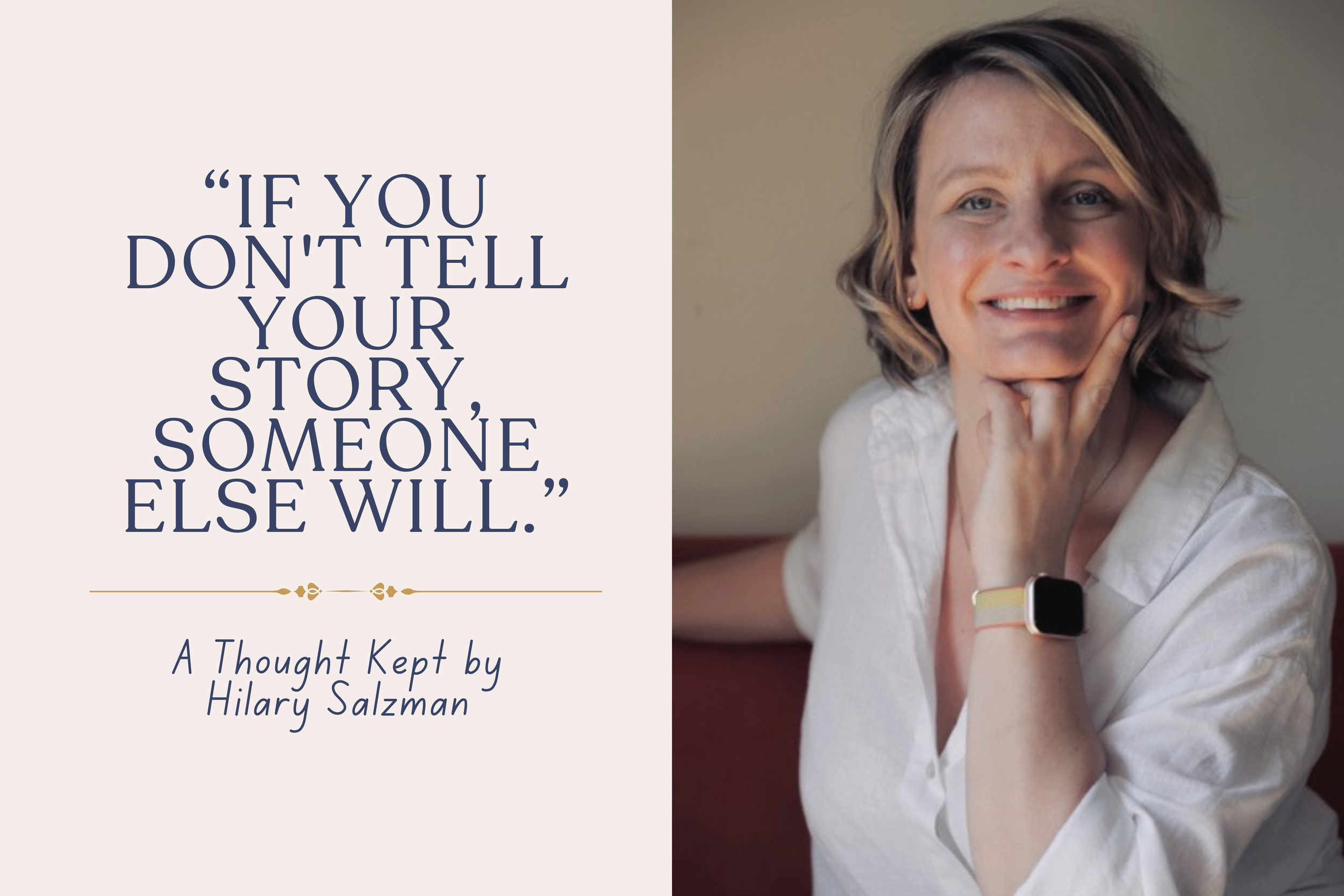
When the Story You’re Living No Longer Feels Like Yours
Sometimes life looks fine on the outside, but something feels off. Explore what self-trust can look like and what it means when the story you’re living no longer fits — and how to find your footing again.
You might be standing in the kitchen, making packed lunches. Nothing dramatic is happening. No argument. No crisis. Just the familiar rhythm of the morning — coffee cooling on the side, toast popping up, your phone lighting up with emails you already feel behind on.
You might catch yourself thinking, I’m good at this. At holding things together. At anticipating what everyone else might need. At getting through the day without making too much noise. And then, almost immediately, another thought follows: But I don’t remember choosing this version of myself.
It’s not that you dislike your life. You’re capable, loved, respected. From the outside, things look fine. But there’s a growing sense that you’re performing a role you’ve learned very well — one shaped by expectation, responsibility, and what once felt necessary — rather than living from a place that feels true to you now.
When you try to put words to it, they’re hard to find. You don’t want to sound ungrateful. You don’t want to blow things up. You just know that something about the story you’re carrying feels outdated, like clothing that once fit perfectly but now restricts your movement in small, tiring ways.
This is often how it begins. Not with a bold decision or a clear turning point, but with a quiet noticing. A moment where the life you’re living feels slightly misaligned with the person you’re becoming. Where the way you’re seen — dependable, easy-going, capable — no longer matches how you feel on the inside.
I’ve been thinking about this a lot since my recent conversation on A Thought I Kept with Hilary Salzman. We talked about storytelling, voice, and self-trust — not as something polished or performative, but as something deeply everyday. The stories we absorb, repeat, and live inside, often without realising we’re doing it.
Hilary shared a thought that has stayed with her for years: if you don’t tell your story, someone else will. It isn’t a warning or a call to action. It’s more like a lens — a way of noticing what happens when we stop authoring our own lives and allow habit, expectation, or other people’s assumptions to fill in the gaps.
Most of us aren’t consciously choosing to live someone else’s story. It happens gradually. We adapt. We respond. We take on roles that make us legible and useful. We learn how to be good — good at work, good in relationships, good at coping. And for a long time, those stories can be protective. They help us belong. They help us get through.
But protection can quietly turn into distance. From ourselves. From our feelings. From the sense of aliveness that comes from knowing why we’re doing what we’re doing.
In the conversation, Hilary spoke about the discomfort that arises when the way the world sees you no longer matches how you see yourself. That mismatch can show up as anxiety, restlessness, or a low-level dissatisfaction that’s hard to explain. You might feel unsettled or unsure, even though nothing is obviously “wrong”.
What stays with me is how rarely this is about needing a better plan or a more confident version of yourself. More often, it’s about noticing. Becoming curious about the stories you’re living inside. Asking gentle questions, not to fix or optimise, but to understand.
Whose expectations am I carrying here?
What version of myself am I maintaining?
What would it mean to tell this story in my own words?
We live in a culture that treats uncertainty as something to overcome — as though clarity must arrive quickly, and confidence comes from having answers. But what if uncertainty is simply information? A sign that something is shifting. A signal that the story you’ve been living has reached its limits.
Hilary talked about how clarity often doesn’t arrive as an answer, but as a feeling in the body — a sense of constriction or ease. A quiet knowing that something no longer fits. And noticing this doesn’t require dramatic change or brave declarations. It can begin by allowing yourself to feel what’s already there, without rushing to make sense of it.
This is where self-trust comes in — not as confidence or self-belief in the motivational sense, but as a willingness to stay present with your own experience. To let your emotions inform you rather than embarrass you. To trust that discomfort isn’t a personal failure, but a reasonable response to living inside a story that’s outgrown its usefulness.
Many people arrive at If Lost Start Here feeling overwhelmed, behind, or unsure why familiar wellbeing advice isn’t helping. Often, that’s because what’s needed isn’t another strategy, but orientation. A way of standing still long enough to feel where you are, and what might be asking for attention.
Living your own story doesn’t mean having a perfectly articulated narrative. It doesn’t require sharing everything or knowing exactly who you are becoming. It’s less about broadcasting and more about authorship — about being able to come back to yourself and say, this is who I am, for now. This is what matters. This is what I’m no longer willing to override.
The stories we tell ourselves shape our nervous systems, our relationships, our sense of belonging. When those stories are borrowed, inherited, or outdated, it makes sense that we feel unsettled. And when we begin to gently reclaim them — not by rewriting our lives overnight, but by listening more closely — something steadies.
You don’t need to force a new story into existence. You don’t need to perform authenticity or prove your voice. Sometimes it’s enough to notice the gap. To recognise the feeling of misalignment without judging it. To stay curious about what’s trying to emerge.
If this resonates, you might want to listen to the full conversation with Hilary on A Thought I Kept. It’s a thoughtful exploration of voice, identity, and what it means to feel more at home in your own life.
And if you’re in a season of questioning — unsure, overwhelmed, or quietly ready for something to shift — there’s support here too. Not to fix you, but to help you find your footing, in your own time, and in your own words.
You’re allowed to pause. You’re allowed to question the story you’re in. And you’re allowed to take your time deciding what comes next.
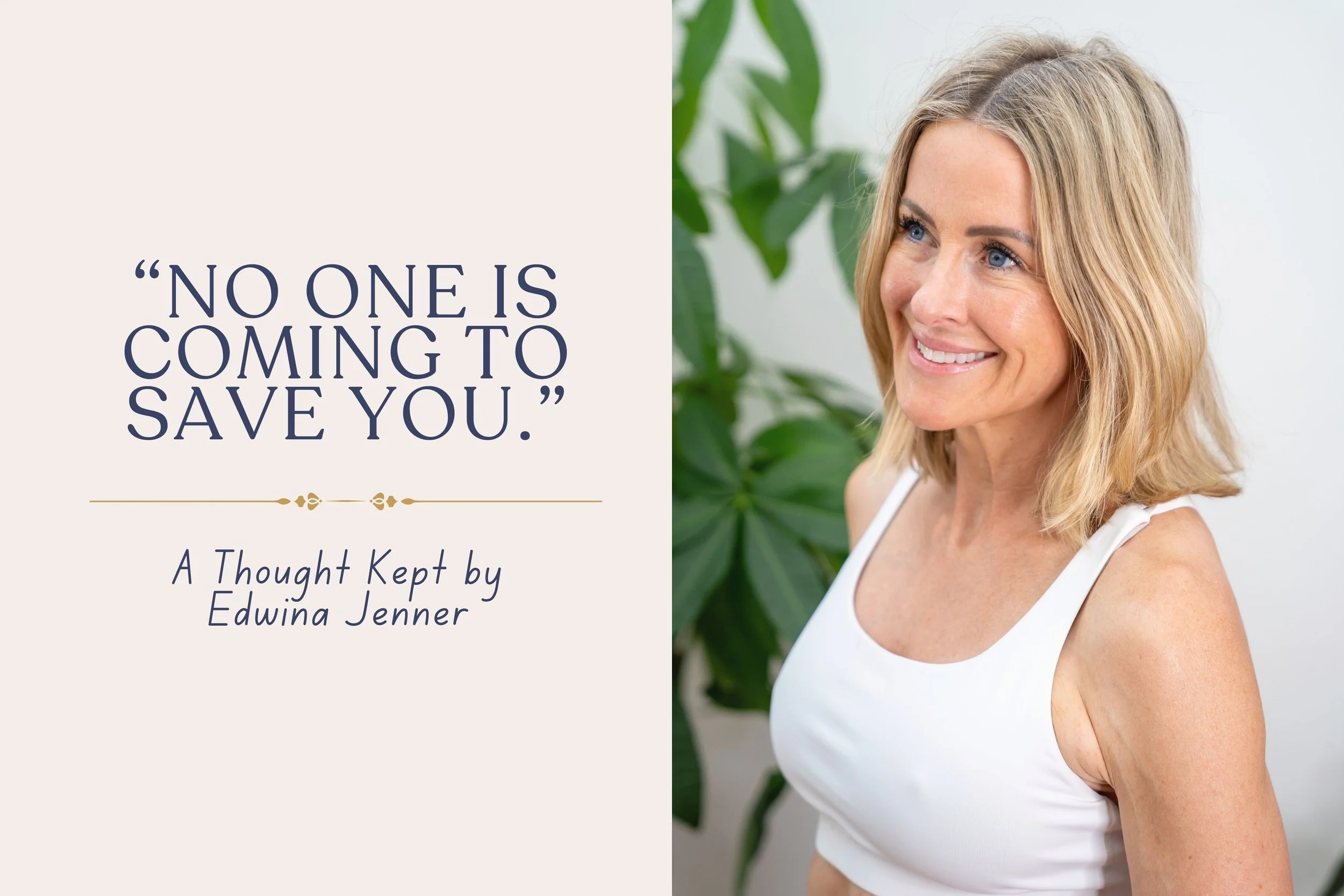
When No One Is Coming to Save You: Finding Self-Trust in Midlife
Often we can feel lost in midlife without knowing why. This week we’re exploring self-trust, confidence, and what might be keeping you stuck.
Sometimes feeling lost doesn’t look as dramatic as we think it might.
Rather it looks like getting through the day, doing what needs to be done, being relied on — and still having a sense that you’re not quite where you thought you’d be. Or that life feels oddly paused, even though everything is moving. You might not be unhappy, exactly. Just a little unheld. A little disconnected from yourself.
I notice this often when I talk to women in midlife. There’s competence there. So much experience. Caring for everyone and everything. And underneath it all, a feeling that something is meant to shift but absolutely no clear sense of how or when.
That feeling came up strongly for me in a recent conversation on A Thought I Kept with Edwina Jenner. As we talked, Edwina shared an idea that had stopped her in her tracks because it named something she hadn’t realised she was carrying.
The sense that, quietly, she had been waiting.
Waiting for things to feel easier. Waiting for confidence to arrive. Waiting for someone — or something — to step in and make life feel more manageable, more certain, more settled.
When she finally noticed that belief, it wasn’t crushing. It was clarifying.
Because alongside it came another realisation: no one else was coming to save her. She already had more agency than she’d been giving herself credit for.
Many of us arrive here having spent years responding to what’s needed — children, work, relationships, family, emotional labour. We learn to be capable. Reliable. Adaptable. And somewhere along the way, it can become easy to lose touch with our own pull. Not what’s expected of us, but what matters now.
Waiting can feel sensible. Responsible. Even kind. We tell ourselves we’ll come back to ourselves when things calm down. When there’s more space. When we feel more confident. When life gives us a clearer signal. But often, that signal never arrives.
Instead, what we notice are small signs of disconnection. Putting off caring for our bodies because we’re tired. Dismissing creative ideas because they feel indulgent. Ignoring rest, curiosity, or desire because other things seem more important.
In the conversation, Edwina spoke about strength, not as something performative or punishing, but as something built slowly, through attention and consistency. She talked about learning to trust herself again by doing what she said she would do. By listening to what pulled her, even when it felt uncomfortable. By recognising that motivation comes and goes, but self-trust is built through action.
What struck me most was how impactful this actually was.
Believing that no one is coming to save you doesn’t have to mean doing everything alone. It doesn’t mean hardening yourself or becoming self-sufficient at all costs. It can mean releasing an expectation that has unconsciously kept you waiting and turning back toward yourself instead.
There can be a kind of relief in that. Relief in realising you don’t need to become someone else to move forward. You don’t need a dramatic overhaul or a better version of yourself. You need permission to take yourself seriously. To listen more closely to what your body, your energy, and your inner life are already telling you.
When self-trust begins to rebuild, it rarely announces itself loudly. It shows up in small decisions. In boundaries that feel steadier. In caring for your body not as a project, but as a relationship. In choosing what supports you, even when it doesn’t look impressive from the outside.
If you’re feeling lost right now, it might not be because you’re “behind” or “broken”. It might be because you’re between ways of being. No longer able to live on autopilot, but not yet clear about what comes next.
That in-between can feel uncomfortable. But it’s also where attention returns. Where curiosity starts to replace pressure. Where you begin to notice that you already know more than you think.
At If Lost Start Here, we don’t believe that confidence or wellbeing come from fixing yourself or forcing change. They come from reconnecting — slowly and openly — with what matters to you now. From trusting that the things pulling at you are worth listening to.
If this resonates, you might like to listen to the full conversation with Edwina on A Thought I Kept.
And if midlife feels like a threshold you’re standing in — unsure, but ready for something to change — we’ve created a great resource to support that moment.
You can download our free midlife resource here.

Wellbeing Doesn’t Have to Be Hard: A Manifesto for Doing It Differently
A gentle manifesto for anyone tired of trying to do wellbeing properly. Explore calm, personalised wellbeing sessions designed to help you reconnect with what matters and find supportive ways forward in the here and now.
What if wellbeing didn’t feel like a job?
There’s something tiring about the way wellbeing is often presented to us, as a series of things we’re meant to be doing properly: routines to get right, habits to keep up with, versions of ourselves we’re encouraged to move towards. Even when it’s well intentioned, it can start to feel like pressure dressed up in pastel colours, another place where we’re measuring ourselves and wondering why it doesn’t seem to land in the way it’s supposed to.
At If Lost Start Here, this comes up again and again in conversations with the people we work with and hear from. It’s not that people don’t care about wellbeing or aren’t trying. It’s that trying to do it right can begin to feel like work in itself, and sometimes like another quiet way of feeling you’re falling short.
So this manifesto begins with a gentler question. What if your wellbeing wasn’t something to chase or optimise, but something you could return to, slowly and with a little more kindness, in ways that actually fit the life you’re living right now?
This piece grew out of the threads we’ve been following in our own work over time: conversations that stayed with us, notes scribbled in the margins of notebooks, moments where we wished someone had said, more clearly, that you’re not doing this wrong. Again and again, we come back to the same idea, which feels both simple and surprisingly difficult to hold onto: your wellbeing doesn’t need to be perfect, it just needs to be yours.
Not an idealised version of you, and not a future version either, but the one that exists here and now, with all its changeability, contradictions, and constraints. When we start from there, wellbeing stops being about keeping up and starts to feel more like listening, noticing, and responding to what actually matters to you in this moment.
We all need small, grounding reminders of that from time to time, especially when life feels loud or uncertain. Words that help us exhale rather than strive, sentences that soften the sharp edges of the day and bring us back to ourselves. That’s what this manifesto is intended to be. It isn’t long, it isn’t prescriptive, and it isn’t another thing to add to your list. It’s simply a list of lessons we’ve learned that you can return to, whether you pin it to your wall, tuck it inside a journal, or come back to it on the days when wellbeing feels like too much to hold.
You don’t need fixing, and you don’t need better habits in order to be worthy of care. What many of us are really longing for is more space to feel like ourselves again, without the constant sense that we should be doing more or doing it differently.
This manifesto doesn’t offer solutions or strategies. Instead, it offers something quieter and, we hope, more sustaining: reassurance, permission, and a reminder that wellbeing can be personal, creative, relational, and shaped by what matters to you and what helps in the here and now, rather than by someone else’s idea of what it should look like.
So take what you need from it and leave the rest.
Which line speaks to you most today, and which one might be worth carrying with you into the week ahead?
You don’t need to be your best self. Just your kindest self.
Wellbeing isn’t a destination. It’s an ongoing relationship with yourself.
You’re allowed to start again. And again. And again.
The smallest things — a song, a sentence, a coffee drunk warm — can restore you.
Books, podcasts, art and beauty aren’t luxuries. They’re lifelines.
Your feelings are not flaws. They’re vital messages of what matters
You don’t need to fix yourself. You need space to feel like yourself
Messiness and detours; They’re part of being human.
Language matters. Speak to yourself like someone you deeply love.
Connection is wellbeing. You were never meant to do this alone.
If this resonates and you’re curious about exploring what might help you in the here and now, you can find out more about our wellbeing sessions here.

A Better Way to Well: Why Personalised Wellbeing Matters
Feeling overwhelmed by one-size-fits-all wellbeing advice? Discover a more personal, creative approach to wellbeing that reconnects you with what matters most and supports you in the here and now.
There comes a point where trying to “look after yourself” starts to feel strangely exhausting.
You’re doing the things you’ve been told are good for you. You’re walking more. You’re resting when you can. You’ve read the articles, listened to the podcasts, saved the posts. And yet, instead of feeling steadier or more supported, you’re left with a sense that you’re somehow falling short.
If this sounds familiar, it’s not because you’re doing wellbeing wrong. It’s because the way we’re often encouraged to approach wellbeing doesn’t leave much room for real life.
Most wellbeing advice assumes we’re all starting from the same place, with the same needs, energy, and capacity. But we’re not. We’re living different lives, carrying different histories, responding to different pressures. What helps one person feel calmer or clearer can leave another feeling overwhelmed or inadequate.
At If Lost Start Here, this is something we return to again and again. Not because we have a neat fix, but because we keep hearing the same story.
People aren’t resistant to wellbeing. They’re tired of advice that doesn’t meet them where they are.
We live in a moment where wellbeing information is everywhere. We know more than ever about our nervous systems, emotions, habits, and mental health. That knowledge can be genuinely helpful. But it also creates a strange pressure — the sense that if we just chose the right tools, followed the right routine, or tried a little harder, we’d finally feel okay.
Instead, many people end up feeling more lost than when they started.
So we’ve been asking a different kind of question.
Rather than “What’s the best way to well?”
We ask: “What matters to you right now and what might actually help?”
A personalised wellbeing prescription starts there.
It’s not a generic plan or a set of instructions to follow. It’s a thoughtful way of reconnecting people with what matters most to them — their values, interests, curiosities, relationships, and needs — and then exploring what could support them in the here and now.
Not in theory. Not in an ideal version of life. But in the life they’re actually living.
This kind of approach recognises that wellbeing isn’t static. What you need during a period of uncertainty, grief, overwhelm, or quiet dissatisfaction will be different from what you need when life feels steadier or more expansive. A personalised prescription adapts as you do.
It also leaves room for creativity and play. Instead of focusing solely on what’s wrong or what needs fixing, we look at what might gently reintroduce energy, meaning, and connection. That might be through nature, creativity, culture, conversation, reflection, or small, everyday rituals that help you feel more like yourself again.
The emphasis isn’t on doing more — it’s on doing what makes sense. Optimism, here, doesn’t come from adding another habit or chasing a better version of yourself. It comes from feeling understood, supported, and reconnected to what already matters to you.
A personalised wellbeing prescription offers a way to cut through the noise and make sense of what might help now. It gives shape and direction without pressure. It supports agency, curiosity, and choice — not compliance.
And importantly, it doesn’t treat wellbeing as something separate from life. It weaves support into your days in ways that feel realistic, human, and sustainable.
If you’re feeling lost, overwhelmed, or dissatisfied with the way wellbeing is presented to you, this is your reminder: you’re not behind, broken, or failing.
You might simply be ready for a different way of being supported.
At If Lost Start Here, our personalised wellbeing prescriptions are designed to help you reconnect with what matters, explore what helps in this moment, and build a more supportive relationship with your own wellbeing — one that feels creative, playful, and personal.
You don’t need fixing. You don’t need perfect habits. Maybe you just need an approach that starts where you are.
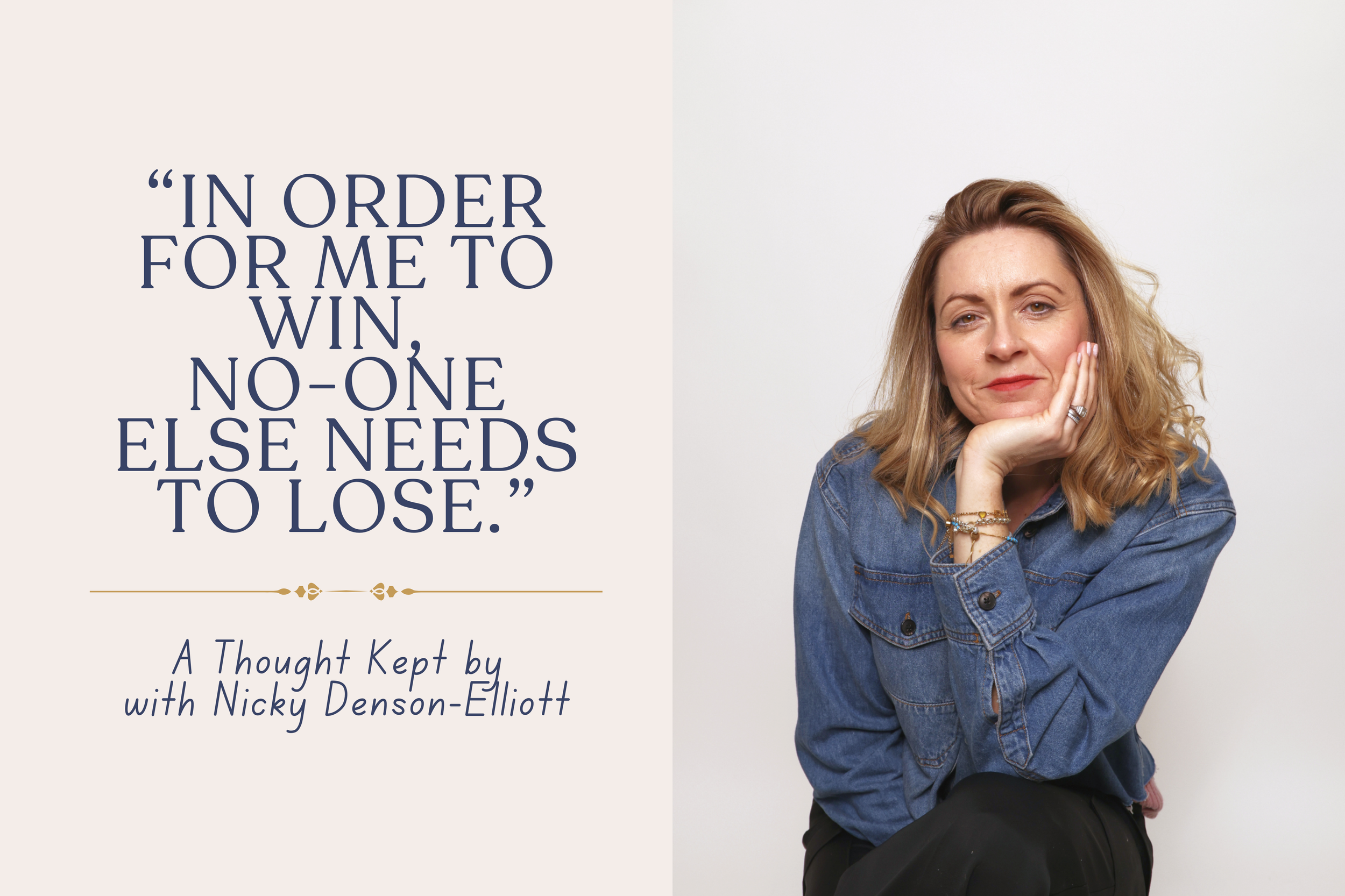
Struggling With Comparison? Rethinking Confidence and Self-Trust
Comparison and competition can quietly shape how we see ourselves. In this conversation, we explore confidence, self-trust, and the beliefs we carry through life.
This is how it might go. You’re scrolling, or reading, or listening to a podcast, and you notice a flicker of feeling when someone else shares good news. A promotion. A book deal. A confident post about work they love. You’re pleased for them — genuinely — and yet something tightens. A question forms that you don’t quite want to look at too closely.
What does this mean about me?
Moments like this don’t usually come with drama. They’re small, everyday, easy to brush past. But they can linger. And over time, they shape how we see ourselves, how we show up at work, and how much space we allow ourselves to take.
This week on A Thought I Kept, I spoke to Nicky Denson-Elliott, and she brought a thought that disrupted that familiar inner pattern:
In order for me to win, no one else has to lose.
It’s one of those ideas that seems obvious when you first hear it and then quietly radical the longer you sit with it.
Because so much of our inner landscape has been shaped by the opposite belief. That success is scarce. That confidence belongs to certain people, not others. That if someone else steps forward, there’s less room for us. These ideas don’t usually announce themselves as beliefs. They show up as feelings: comparison, jealousy, self-doubt, hesitation.
Nicky spoke about how deeply this conditioning runs, especially for women. How it can shape our relationship with money, confidence, and visibility. How it influences the way we price our work — often not based on its value, but on what feels safe. How it quietly sets women against one another, even when connection and solidarity are what we most want.
What’s important here is that none of this is a personal flaw. These are not thoughts we invented. They’re learned. Reinforced. Picked up over time in workplaces, families, schools, media, and culture. When they surface, they can feel intensely personal but they rarely originate there.
And when life already feels full or uncertain, carrying these inherited ideas can make everything heavier. You might notice it in how hard you are on yourself. In the way you second-guess decisions. In the tension you feel around confidence — wanting it, distrusting it, worrying what it might cost.
One of the most grounding parts of the conversation with Nicky was her refusal to replace one set of rules with another. There was no invitation to be bolder, louder, or more confident in a performative sense. Instead, she talked about noticing. About recognising when a familiar reaction appears and asking, with curiosity rather than judgment: Is this actually mine?
That question alone can create a shift.
Because when we start to see that some of our thoughts are inherited rather than chosen, we don’t have to wrestle with them in the same way. We don’t have to argue ourselves out of feeling jealous or small or unsure. We can simply recognise the pattern, and loosen our grip.
This matters not just for our inner world, but for how we move through everyday life. Especially work. Especially relationships with other women. Especially moments where confidence feels like something other people have access to, and we’re still figuring it out.
Letting go of the myth of competition doesn’t mean pretending everything is fair or easy. It doesn’t mean denying ambition or discomfort. But it does open up a different orientation — one where someone else’s success doesn’t automatically diminish our own, and where confidence can be something we grow into, rather than something we perform.
For many of us, this kind of rethinking doesn’t arrive as a neat turning point. It shows up gradually. In small pauses. In moments where we choose not to rush to judgment — of ourselves or others. In the realisation that uncertainty doesn’t mean we’re failing; it often means we’re paying attention.
If you’ve been questioning old ideas about success, money, confidence, or what it means to be doing “well” in life, you’re not behind. You may simply be noticing that the old maps don’t quite match the terrain anymore.
Nicky’s thought offers a steadier way of orienting. It reminds us that life isn’t a zero-sum game. That generosity — toward ourselves and others — isn’t naïve, but grounding. And that self-trust doesn’t come from fixing or perfecting ourselves, but from recognising which beliefs were never designed to support us in the first place.
You don’t need to know what comes next. You don’t need to replace every thought at once. Sometimes it’s enough to notice which ideas make life feel smaller, and to wonder — without urgency — what it might be like to set one of them down.
If this resonates, listen to the full conversation with Nicky on A Thought I Kept.
And if you need help exploring some of the feelings you have around comparison — jealousy, self-doubt, hesitation — or what confidence even means to you, explore our emotions coaching sessions.
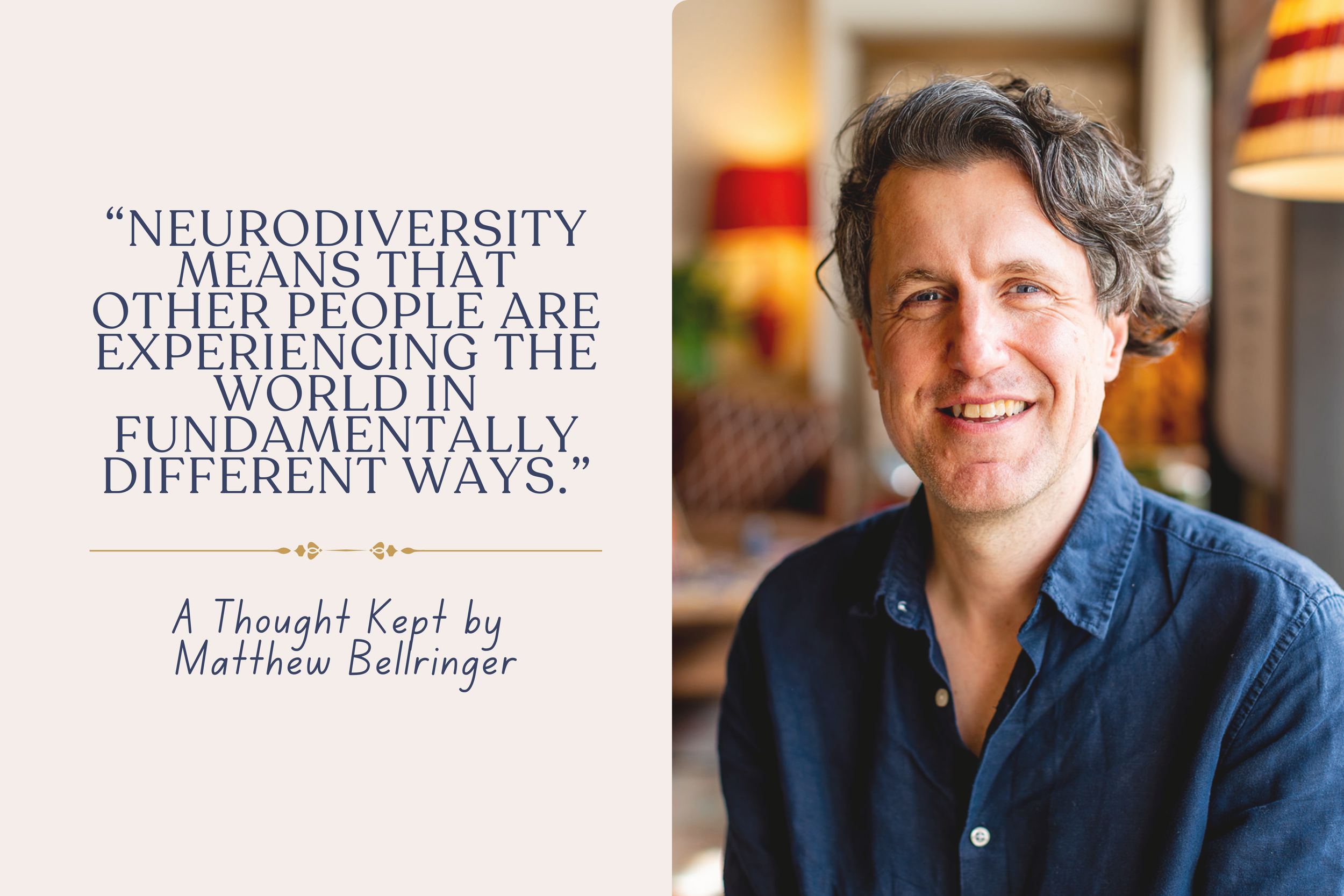
Burnout and Neurodiversity: When the World Wasn’t Made for You
How neurodiversity helps explain burnout, overwhelm, and why common wellbeing advice doesn’t work for everyone.
There’s a particular sense of being absolutely and utterly lost that doesn’t come from not trying hard enough.
It comes from doing all the things you’re meant to do — reading the books, following the advice, showing up, pushing through — and still feeling as though something isn’t quite lining up. As if you’re working hard to fit into a life that doesn’t seem to hold you in the way you hoped it would.
For many people, this shows up as overwhelming exhaustion. Or confusion. Or a sense of being slightly out of step with the world around you. You might tell yourself you need more confidence, more clarity, more discipline. Or you might wonder why change seems to come more easily to other people.
This is often the moment people arrive here — not because they want to reinvent themselves, but because they’re looking for something steadier to stand on and anchor themselves in.
One of the things we keep returning to through the podcast A Thought I Kept is the idea that sometimes it’s not a new plan we need, but a new way of seeing. A thought that doesn’t tell us what to do, but helps us understand what’s already happening.
In a recent conversation, Matthew Bellringer shared one such idea. Their “thought kept” was:
“ neurodiversity — and more specifically, the understanding that people experience the world in fundamentally different ways.”
Not just think differently. Not just behave differently. But experience differently: how information lands, how emotions move through the body, how energy rises and falls, how environments feel, how much effort it takes just to get through the day.
Matthew spoke about how this understanding helped them make sense of years of feeling overwhelmed, burnt out, or misunderstood — not as personal failure, but as a mismatch between their nervous system and the systems they were trying to survive within. Burnout, in this light, wasn’t a sign of weakness or poor resilience. It was a signal. A body doing its best under sustained conditions that didn’t meet its needs.
This matters because burnout is often framed as something to “recover from” so we can return to how things were before. But if you’ve reached burnout — whether suddenly or slowly — it’s often because how things were before was never truly sustainable for you in the first place.
For people who are neurodivergent — diagnosed or not — this can be especially true. Many learn early on how to mask, adapt, and perform in ways that keep them functioning, even when it costs them deeply. They may appear capable, creative, competent, even successful — while quietly running on empty.
And for those who love, work with, or manage neurodivergent people, this idea opens something too. It invites a pause before judgement. A moment of curiosity instead of assumption. A chance to ask not “why isn’t this working?” but “what might be happening here that I can’t see?”
What’s important is that this idea doesn’t demand that you identify in any particular way. You don’t need a label for it to be useful. You don’t need to decide whether it “applies” to you. You can simply notice what happens when you hold the possibility that your experience of the world is valid, even if it’s not the dominant one.
Used as a lens, this thought can soften old stories. It can help explain why certain wellbeing advice has never quite landed. Why rest that looks like stillness feels agitating rather than restoring. Why structure can feel comforting for one person and constricting for another. Why what helps your friend recover leaves you feeling worse.
It can also return you to yourself.
Instead of asking how to fix what feels wrong, you might start asking gentler questions. What environments help me feel more like myself? Where does my energy actually go? What does my nervous system need to feel safe enough to rest, curious enough to engage?
This isn’t about optimisation or self-improvement. It’s about orientation. About finding a framework that helps you trust your own signals again, rather than overriding them in the hope of becoming someone else.
At If Lost Start Here, we believe that change doesn’t begin with pressure. It begins with understanding. With recognising that you’re not behind, broken, or failing — you’re responding, with more awareness, to the life you’re living.
Sometimes, one idea can hold that understanding for you when everything else feels wobbly. A thought you can return to when things don’t make sense. A lens that helps you see yourself, and others, with a little more compassion.
If this idea resonates, listen to the full conversation with Matthew Bellringer on A Thought I Kept.
And if you’re finding yourself at a point where you want support, explore the coaching and resources we offer here.

How to Approach Grief (When Life Doesn’t Stop for It)
Grief often arrives while life keeps going. A compassionate guide to understanding grief, honouring loss, and finding support while managing everyday responsibilities.
Grief has a way of arriving while everything else keeps going.
There are lunches to make, emails to answer, people who still need you. Bills still come. The world doesn’t pause, even when something inside you has fractured.
For many people—especially if this is your first experience of loss—grief can feel not only overwhelming, but disorienting. You might wonder: Am I doing this right? Why don’t I feel how I thought I would? How do I keep living a normal life while carrying this?
This is not a guide to “getting over” grief. It’s an invitation to approach it differently—with more space, less judgement, and a little more support for the reality of living a full life alongside loss.

Start by noticing what you believe about grief
If you’re able to, one gentle place to begin is here:
What do you believe about grief?
Do you see it as:
a natural process?
something dangerous or overwhelming?
a sign of weakness?
a way of honouring the person you’ve lost?
Most of us carry beliefs about grief long before we ever experience it ourselves. These beliefs shape how we meet our emotions. If grief feels frightening or “too much,” it’s often because we’ve been taught that it should overwhelm us—or that we should hurry it along.
There’s no right belief to hold. Simply noticing what you already think about grief can soften your relationship with it.
Make space for how you actually feel (not how you think you should)
Grief often comes with a quiet internal conflict.
There can be a gap between:
how you think you should feel
and
how you do feel
Cultural narratives, other people’s opinions, and unspoken expectations all seep in. You might feel pressure to be strong, to “cope well,” or to move forward. Or you might feel guilty if your grief doesn’t look dramatic enough.
Simply becoming aware of this disconnect can be relieving. You don’t need to correct your emotions. Letting them exist as they are—without comparison—creates more room to breathe.
Different people grieve in different directions
One idea that can ease a lot of judgement (both towards ourselves and others) is this:
Some people are past-focused in grief.
They need to remember, revisit, and keep a strong connection with the person who has died.
Others are future-focused.
Loss reminds them of life’s fragility, and they feel pulled to engage more fully with what’s ahead.
Neither response is better or more “correct.” This understanding can help loosen harsh labels we sometimes place on grief—wallowing, cold, insensitive, stuck. Often, we’re simply grieving in different directions.
Grief is solitary—and deeply relational
Grief can feel intensely lonely. And yet, it is strangely relational.
We carry expectations about how we want to be supported. Others carry assumptions about what “appropriate” grief looks like, or how long it should last. Sometimes people retreat because they don’t know what to say. Sometimes the person grieving pulls away because explaining feels exhausting.
And yet, the moments that often help most are small and connective:
someone saying, “Tell me about her.”
flowers arriving without explanation
a genuine “How are you?” that makes space for the real answer
Grief doesn’t disappear in company but it can feel lighter when it’s shared.
Seeing grief as a form of honouring
Over time, I came to see my own grief as a way of honouring the people I’d lost.
It kept me connected. It felt like I was still holding space for them in my life. That shift mattered. Instead of seeing grief as something to push away, I began to welcome it as a sign of love still present.
This reframing doesn’t remove pain but it can change how hostile grief feels.
You are not your grief
One of the hardest moments for me was realising how easily grief can become an identity.
“I am grief.”
“I am sadness.”
“I am regret.”
One of the core principles of emotions coaching helped here:
We are not our emotions.
“I am feeling sad”
“I am experiencing grief”
Those phrases create just enough distance to remember that grief is something you are in, not something you are. That space matters. It allows the emotion to move, rather than define you.
Joy and loss can exist together
Grief does not cancel joy.
After my mum died, there were moments when my family laughed together through tears. I’ve crumpled on the kitchen floor one moment, then found myself laughing at a story my daughter told me the next.
These moments are not a betrayal. Feeling love, gratitude, or even joy alongside grief doesn’t diminish loss—it reflects the complexity of being alive.
Two things can be true at once.
Practical ways to live alongside grief
Keep the connection in your own way
We all honour loss differently. My mum and I were readers. After she died, the most precious thing I received wasn’t jewellery—it was two bags of her books. Seeing where she’d folded down pages, the note she’d written inside the cover, felt like continuing a conversation.
Are there places, habits, words, or rituals you could revisit—or even begin—that keep a sense of connection alive?
Capture stories (if you can)
When someone dies, we often lose not only them, but their stories—and the stories of those who came before them. There’s a growing movement around recording life stories, wisdom, or memories in anticipation of loss. It can be comforting to have that continuity across generations.
Move your body
Walking became essential for me. Grief lives in the body, and movement helped me feel like I was doing something with the emotion. Walking side by side also made conversations easier—less intense than sitting face-to-face, more spacious.
Let awe support you
When my mum died, the emotion that steadied me most was awe.
Inspired by Dacher Keltner’s writing on awe and loss, I intentionally sought experiences that connected me to something larger than myself. For me, that meant museums—spaces that offered wonder, perspective, and a sense of being part of a much bigger story.
Awe can come from nature, big ideas, the night sky, acts of moral courage, or creativity. It doesn’t erase grief, but it can help meaning return, gently.
Find the people who understand
Grief doesn’t end when the funeral does.
If you can, find people who understand that. Check whether you have the support you need—and allow yourself to ask for help. We’re often taught to handle grief alone, but shared grief is lighter to carry.
How emotions coaching can help
Emotions coaching doesn’t try to fix grief or rush it away. Instead, it offers a space to:
explore what you’re feeling without judgement
understand your emotional patterns
create distance between you and the emotion
learn how to live a full life alongside loss
If you’re navigating grief for the first time—or finding that it’s touching every part of your life—coaching can help you feel less alone and more supported as you move through it.
If you’d like to explore this together, emotions coaching is here to support you.
You don’t need to have the right words. You just need a place where what you’re feeling makes sense.

When Overwhelm Turns Into Procrastination (And What Your Mind Is Really Trying to Tell You)
How to understand your overwhelm, soften procrastination, and find your way back to steadiness.
There’s a feeling that many of us might know too well right now.
You sit down with every intention of making a start — on the email, the project, the idea that’s been nudging you for weeks. The kettle’s just boiled, your notebook is open, and you’ve even set the nice pen aside, the one that’s supposed to make you feel organised and capable.
And then… nothing.
Your mind fogs, your chest tightens, and suddenly the task you could do becomes the task you can’t. So you get up. Put a wash on. Scroll for a bit. Reorganise a drawer you didn’t care about an hour ago. And all the while, the quiet fear begins to creep in:
Why can’t I just get on with things?
What’s happened to my energy/mind/motivation?
What’s wrong with me?
If this feels familiar, you’re not alone — and you’re not failing.
You’re overwhelmed. And your procrastination is not the enemy.
It’s a message.

What Overwhelm Really Is (And Why It Feels So Big)
We tend to think overwhelm is about having too much to do. But the science tells a slightly different story: overwhelm is what happens when the demands on your mind and body exceed the resources you currently have.
It’s not a character flaw. It’s a capacity mismatch.
When your nervous system feels under-supported — too many tabs open in your brain, too many emotional pulls, too little rest — your body responds as if something unsafe is happening. Clarity disappears. The thinking brain goes a little offline. Everything feels urgent or impossible.
And procrastination?
That’s simply your mind stepping in to protect you.
Why Overwhelm Turns Into Procrastination
Procrastination is often painted as laziness or lack of willpower. But psychologically, it’s something much more useful: a coping mechanism.
When a task feels too big, too unclear, too emotionally charged, or simply beyond your current energy levels, your brain moves you toward something that feels safer.
It’s a self-protective pause.
And the moment you understand procrastination this way, something can begin to shift. You realise you’ve been blaming yourself for a very human biological response.
This reframing alone can bring enormous relief.
How to Support Yourself When You’re Overwhelmed and Procrastinating
Below are some gentle, practical steps that can help you understand what’s happening and begin to find a calmer, more sustainable rhythm.
1. Name what you’re feeling
Before you do anything else, take a moment to acknowledge your emotional state.
Try asking yourself:
“What’s the emotion underneath my procrastination?”
“Where do I feel this in my body?”
Giving your feelings a name — overwhelm, worry, fear of getting it wrong — helps calm the nervous system. Research shows that naming emotions reduces the intensity of what you feel.
Start there.
2. Reduce the load your mind is carrying
When everything is swirling in your head, even the smallest task feels enormous. Try externalising your thoughts:
Make a list of the things weighing on you
Circle the ones that genuinely matter this week
Cross out the ones that belong to someone else’s expectations
Sometimes clarity isn’t about doing more. It’s about seeing clearly.
3. Shrink the task until it feels human-sized
Most of us don’t procrastinate because we don’t care. We procrastinate because the task feels too big.
Ask yourself:
“If this were 10 times smaller, what would the first step be?”
“Could I spend 2 minutes beginning?”
Two minutes is all you need to break the freeze.
4. Match the task to your energy
Not all tasks are for all moments. If you’re exhausted, scattered or emotionally stretched, your brain simply isn’t ready for high-focus work.
Try asking:
“What kind of energy do I have right now?”
“What task fits this energy? What would be a compassionate win?”
We make better progress when we stop fighting our natural rhythms.
5. Ask: What is this procrastination protecting me from?
Sometimes procrastination hides a deeper fear:
What if I fail?
What if I succeed?
What if it’s not perfect?
What if I disappoint someone?
There is almost always something else going on beneath the delay. Try to see what would happen if you listen to what’s behind it.
6. Create a sense of safety before you begin
If overwhelm is a nervous system state, your first job isn’t action — it’s support.
Try one of these:
A slow exhale (longer out-breaths calm the body)
A walk around the block
A glass of water and a stretch
Asking someone to co-work with you for 10 minutes
Putting on music that makes your shoulders drop
When your body feels safer, your mind follows.
You Are Not Behind. You Are Overwhelmed.
We often blame themselves long before we recognise that we are depleted.
But procrastination isn’t a moral failure — it’s a sign your system needs support, tenderness, and time.
Burnout doesn’t happen because you’re weak.
It happens when you’ve been strong for too long without enough nourishment.
But your system can recover. You can feel steady again.
If you’ve recognised yourself anywhere in this, coaching can give you space to breathe, think clearly, and rebuild confidence in a way that feels gentle and grounded.
In our emotions-focused coaching sessions, we help you:
understand your overwhelm with compassion
work with your emotions rather than against them
soften procrastination so you can move forward with ease
prevent burnout before it begins
create a wellbeing plan that actually supports your real life
If you’re ready to feel more resourced and less alone, you can book a free discovery call or explore coaching options here:
Start your journey toward emotional steadiness today.

Feeling Stuck Until You’re “More Confident”? Curiosity Might Be a Better Place to Start
If you’re waiting to feel confident before making a change, curiosity can help you move forward.
“I’ll do this when I feel more confident.”
We tell ourselves we’ll speak up, make the change, apply for the role, take ourselves seriously, or move forward once confidence arrives. Once we feel braver, clearer, more certain about who we are and what we want.
But confidence has a habit of staying just out of reach.
Not because there’s something wrong with us, but because confidence is rarely the starting point we imagine it to be. For most people, confidence grows through experience, not before it. The problem is that waiting to feel confident can keep us stuck, circling the same questions, postponing decisions, and quietly reinforcing the idea that we need to become someone else before we’re allowed to act.
This is where curiosity offers a different way in.
Curiosity doesn’t ask you to believe in yourself. It doesn’t require certainty or bravery. It simply invites you to explore. What would happen if you tried this? What might you notice if you took one small step, not to prove anything, but to learn?
When you approach change with curiosity, the stakes are lower. You’re not asking yourself to succeed; you’re allowing yourself to gather information. A conversation becomes an experiment rather than a test. A new direction becomes something you’re exploring rather than committing to forever.
This shift matters because it changes how we relate to ourselves. Instead of measuring every move against an imagined ideal, curiosity keeps us in contact with our actual experience. Each step, however small, offers insight rather than judgement. Over time, that insight builds self-trust — and confidence follows.
Many people who want to feel more confident are really looking for something deeper: a sense that they can trust themselves, that they’re allowed to make choices without constant second-guessing, that they don’t need to have it all worked out in advance. Curiosity supports that kind of confidence because it stays close to what’s real. It helps you learn what fits, what doesn’t, and what feels meaningful in your own life.
If you’re feeling stuck, unsure, or waiting for confidence before you move forward, curiosity can be a more accessible starting point. It allows movement without demanding certainty. It gives you permission to begin where you are, rather than where you think you should be.
If confidence, decision-making, or feeling stuck are recurring patterns for you, coaching can be a supportive space to explore them more deeply. Coaching isn’t about fixing you or telling you what to do; it’s about understanding what’s going on beneath the surface and finding ways to move forward that feel steady, realistic, and impactful.
You don’t need to wait until you feel confident. You can start by getting curious.
How to Handle Your Emotions When You’re Feeling Lost or Overwhelmed
Feeling lost or overwhelmed by your feelings? Learn how to handle your emotions when you struggle to understand them.
There’s a moment many of us might recognise.
You’re trying to make a decision, move something forward, or simply get through the day — and your emotions feel louder than you’d like them to be. Anxiety edges in. Frustration bubbles up. Self-doubt has an opinion. And suddenly it feels harder to think clearly, trust yourself, or know what the next step might be.
When that happens, it’s easy to conclude that the problem is your emotions. That you’re feeling too much, or handling things badly. That if you could just calm down, be more confident, or stop overthinking, everything would be easier.
But what if the issue isn’t having emotions — it’s that most of us were never taught how to handle them well?
This question sat at the heart of a recent conversation on our podcast A Thought I Kept, with Isabelle Fielding. Isabelle works with individuals and organisations navigating change and uncertainty, and her work is grounded in a simple but often overlooked idea: emotions are part of being human, and learning how to relate to them is a skill — not a personality trait.
One of the key ideas Isabelle shared was this: Where there’s pain, there’s purpose. Not pain as something to glorify or push through, but pain as a signal. An indication that something matters, that a value is being touched, that attention is needed.
For many people who arrive here feeling lost, this is already a reframe. Because when emotions feel uncomfortable, our instinct is often to control them, deny them, or move away from them as quickly as possible. We tell ourselves we shouldn’t feel this way. We judge the feeling. We add a second layer — frustration, shame, self-criticism — on top of the original emotion.
Very quickly, things escalate.
Isabelle spoke about how emotions often stack like this. You feel anger, then feel ashamed of feeling angry. You feel anxious, then criticise yourself for being anxious again. Before long, it’s hard to know what you’re actually feeling — just that it’s too much.
Handling emotions better doesn’t mean stopping that first feeling from arising. It means learning how not to pile everything else on top.
In the conversation, Isabelle used an image that makes this easier to picture. Imagine being in the sea, trying to hold a beach ball underwater. It takes constant effort. Your arms ache. And eventually, no matter how determined you are, the ball bursts back to the surface — often catching you off guard. That’s what it can be like when we try to suppress or ignore our emotions. They don’t disappear; they resurface later, often louder and harder to manage.
A more sustainable approach is to let the ball float.
To allow emotions to be present without pushing them away — but also without letting them take over. Isabelle described this as learning to carry emotions lightly, rather than holding them right in front of your face. They’re there, but they don’t get to drive every decision.
This is where handling emotions becomes less about control and more about relationship.
Instead of asking, How do I get rid of this feeling? we might ask, Can I notice this without being overwhelmed by it?
Instead of assuming emotions make us unreliable, we can start to see them as information — not instructions.
Anxiety might be signalling uncertainty that needs time. Frustration might be pointing to a boundary or a mismatch. Self-doubt often appears where we care deeply about doing something well. None of these emotions tell us exactly what to do next but they can help us understand what’s going on inside us.
For people feeling lost, this can be grounding. Because it means you don’t have to wait until you feel calm, confident, or certain before you’re allowed to move forward. You don’t need to change who you are to begin handling things better.
Another important distinction Isabelle made was between experiencing an emotion and becoming it. Feeling anxious is not the same as being an anxious person. Feeling unsure doesn’t mean you can’t be trusted. Emotions are states — they come and go — even when they feel sticky or familiar.
Learning to handle emotions better often starts with noticing this difference.
It might mean pausing long enough to name what you’re feeling, without immediately reacting or analysing it. It might mean recognising when a second emotion — shame, irritation, self-judgment — has joined the first. It might mean allowing yourself to feel something without demanding that it resolve straight away.
This isn’t about emotional mastery. It’s about emotional steadiness.
At If Lost Start Here, we often talk about finding your footing rather than finding answers. About orientation rather than certainty. Learning to handle your emotions is part of how to navigate life. Not because emotions give you a perfect map, but because they help you stay connected to yourself as you move through change.
You may still feel unsure. You may still feel conflicted or overwhelmed at times. But handling emotions better doesn’t mean eliminating those experiences — it means being less knocked off course by them.
And that can make a real difference when you’re trying to move forward gently, in your own way.
If you’d like to explore this further, the full conversation with Isabelle Fielding is now available on our podcast A Thought I Kept.
And if you’re feeling lost or unsure and want support in understanding and handling your emotions, explore our coaching sessions.
If You’re Not Ready for New Year’s Resolutions, Try This Instead
If New Year’s resolutions leave you feeling pressured or unsure, curiosity offers a gentler way to start the year without changing everything about yourself.
January has a way of making people feel behind before the year has properly begun. Even if you resist it, there’s a low hum of expectation in the background — conversations about goals, questions about what you’re changing this year, lists forming almost by default. The start of a new year is meant to feel like the thrill of new beginnings, but for many people it lands more like a dulling pressure.
A lot of people arrive here in January wondering whether New Year’s resolutions ever really worked for them. Whether it’s worth writing them down again. Whether this is the year they finally follow through — or whether they’re already tired of trying to become a better version of themselves before the year has even settled.
If that sounds familiar, it’s worth saying this clearly: not feeling ready doesn’t mean you’re unmotivated. It often means you’re paying attention to where you really are right now.
Resolutions are built on an idea of certainty that most of us don’t actually have at the start of a year. They assume we know what needs changing, that we’re ready to commit to it, and that progress happens best when we draw a sharp line between who we were and who we’re supposed to become. But life doesn’t tend to work in clean breaks. We carry the previous year with us — its questions, its fatigue, its unfinished business — and January doesn’t erase any of that.
That’s one reason resolutions can feel fragile. They ask us to decide too much, too soon, at a moment when many of us are still finding our footing, and in the middle of the grey days of winter too.
There’s another way to begin, one that doesn’t require reinvention or resolve. Curiosity.
Curiosity doesn’t ask you to map the year ahead. It doesn’t demand a plan or a promise. It invites you to notice what’s already happening and stay in relationship with it. Instead of asking what you should change this year, curiosity asks what’s worth paying attention to right now. Instead of pushing for answers, it allows you to explore.
This matters because curiosity works with real life, not an idealised version of it. You can be curious about when you feel most yourself and when you feel depleted. You can notice patterns in how you spend your time, what you avoid, what you keep returning to. You can start to understand what supports you and what quietly drains you, without turning those observations into a verdict on who you are.
For many people, the desire behind a resolution is something simple and human: to feel more confident, to enjoy life more, to feel steadier or more successful in a way that actually fits. Curiosity doesn’t get in the way of those hopes. It gives them room to grow.
One of the most freeing things about curiosity is that it removes the pressure to be ready. You don’t need a word for the year. You don’t need a perfect starting point. You don’t need to know where you’ll end up. You can begin with interest instead of intention, learning as you go rather than judging yourself for not having it all figured out.
That’s often where meaningful change starts — not from fixing yourself, but from understanding yourself better. From noticing what matters, what’s shifting, and what might need a little more care.
If you’re questioning whether New Year’s resolutions work, or whether there’s a gentler way to start the year, this week’s episode of A Thought I Kept explores curiosity as a way of approaching life without pressure. In this conversation with Rebecca Frank, wellbeing editor of The Simple Things, we talk about navigating January without having to change everything about yourself — and how curiosity might offer a different, and steadier, place to begin.

Burmieston Farm and Steading
An off-grid, award-winning eco steading near the Scottish Highlands. Burmieston offers screen-free stays, sauna, escape barn, retreats, local food and space to reconnect with nature and each other.
Perfect For
Burmieston is perfect for families, groups of friends, or anyone looking to come together in the middle of rural Scotland.
Why You’ll Love It
Burmieston Steading is a group accommodation space on the edge of the Scottish Highlands where nature is close, the air and water are crystal clean, and there is space to be….just be.
They offer 5 ensuite bedrooms sleeping 12-13 people with a spacious kitchen and great sitting room with a library wall and a projector. Co-owner Keesje Crawford-Avis can even cook for you! They have an Escape Barn, a sauna and rural Scotland is all around. They also sell their own lamb, wool and skins as well as jams and chutneys made from orchard produce.
What Makes It Special
They don’t have WiFi or TVs, so you can really get away from screens here if you choose to. Nature and climate change are at the core of their business. The building was renovated with many eco features (they even won the Historic Scotland RIBA award for climate change in 2018) and they run Burmieston conscious that they are part of an ecosystem. Keesje can entertain you for hours if you want to know more!
The If Lost Take
So many people live in cities and rarely have the opportunity to let their senses become alive again. It’s quiet here. It’s dark at night. The weather is always present and the beds are super comfy. Burmieston gives you the space to remember there is no wall between you and the natural world (without camping), and an opportunity to spend time with your loved ones and/or the fun ones and space to be on your own. In a moment that we are longing to be together, Burmieston is all about in-person reality.
Founders Story
Keesje and Olly Crawford-Avis: “We found Burmieston in the Guardian’s ‘Wreck of the Week’ column around 2015 and wanted to start farming on a very small scale. (Olly and I met at agricultural college a long time ago). We also wanted to share this amazing spot and we opened the renovated Steading in 2017, the weekend our second son was due. It’s a truly family affair — he’s our chief customer relations officer in charge of all things on the trampoline. We are passionate about our surroundings, about community and about food. Burmieston is the physical reality of that passion.”
Founder’s Go-To Wellbeing Advice
“Take a walk on a well worn path and look for things you have never noticed before. A plant you have always walked past, a bird song you have never noticed before. And then breathe.”
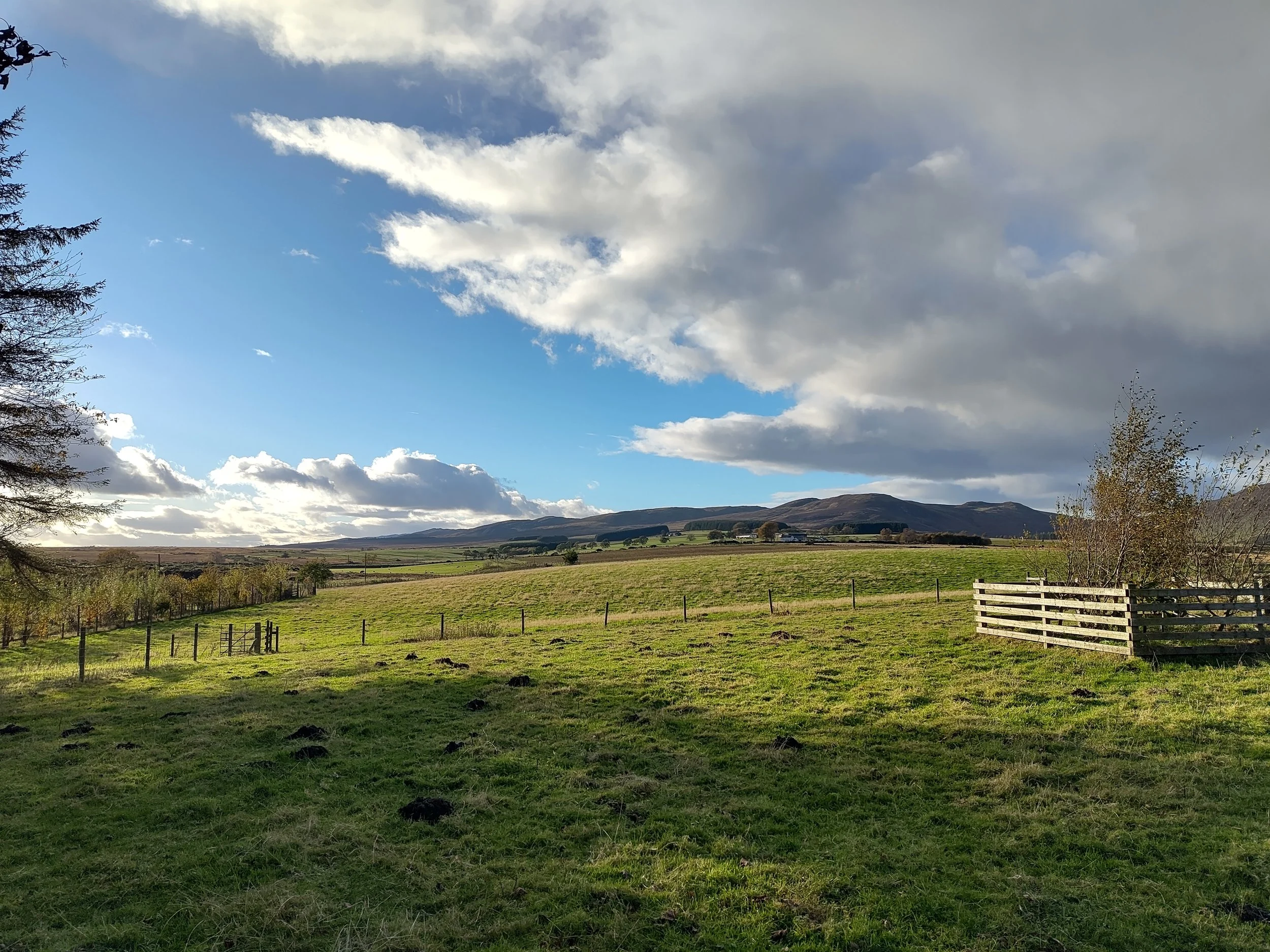

Some Practical Details
They are dog friendly but do have chickens, geese, ducks and sheep around so please keep your dog well controlled. They have their own dogs too.
The team also work with a number of wellness businesses to host their events, from meetings to retreats to catering. They focus on self catering groups at weekends and B&B for singles and couples during the week.
Coming up
They have a few weekend retreats coming up: willow basket making, a weekend of wet felting with yoga and sauna, and a weekend of drawing with a brilliant illustrator. They also have the next in their series of seasonal yoga and mindfulness day retreats. New adventures are being planned all the time. More info and book can be found here.
A special If Lost bonus
Anyone who finds them here will receive a guided walk around the smallholding. You can choose either a night walk with Keesje or an introduction to our farming set up with Olly.
The Thoughts That Stayed When the Year Felt Hard
A gentle end-of-year reflection drawn from A Thought I Kept — thoughts that helped when life felt overwhelming, uncertain or hard to navigate.
Some years are easy to summarise.
They arrive with neat headlines: “the year everything changed”, “the year it all came together”, “the year of big decisions".
And then there are the other years. The ones that feel harder to pin down.
This has been one of those years for many of us.
A year where you might not have clear answers. Where you feel more tired than triumphant. Where you’re still carrying questions about work, identity, relationships, or simply how to feel okay in the everyday.
When we started the podcast A Thought I Kept, we weren’t looking for big breakthroughs or polished wisdom. We asked a much simpler question:
What’s the thought that stayed with you — when everything else fell away?
As the year draws to a close, those are the thoughts we keep returning to. Not because they fixed everything, but because they helped us navigate life just that little bit better.
Here are some of the ideas that stayed — especially when the year felt heavy, overwhelming, or uncertain.

When Thinking Harder Wasn’t the Answer
One of the strongest threads running through this year’s conversations was the idea that clarity doesn’t always come from effort.
In our conversation with Katie Driver, we talked about how thinking clearly often begins with paying attention, not pushing for solutions. That sometimes the most helpful question isn’t “What should I do next?” but “What am I noticing right now?”
For anyone ending the year feeling mentally overloaded, this idea might help you create space for, rather than force, clarity.
That might look like fewer inputs. Quieter mornings. Walking without headphones. Letting your thoughts arrive without interrogating them.
When life feels hard, this kind of attention can be grounding — a way to feel less lost without needing a map.
Listen to the episode with Katie Driver on A Thought I Kept.
Learning to Trust Yourself Again (Slowly)
Another thought that stayed came up in conversations about self-trust.
Not the confident, decisive version of self-trust we often imagine — but a quieter kind. The kind that grows when you stop overriding yourself.
Several guests spoke about moments where they realised they had been ignoring their own signals for years: exhaustion, resentment, numbness, restlessness. And how wellbeing didn’t begin with adding more practices, but with listening.
If this year left you feeling unsure of yourself, this matters.
Self-trust isn’t rebuilt by grand declarations. It’s rebuilt in small acts:
pausing before saying yes
noticing what drains you
letting your feelings be information, not obstacles
That idea alone — my feelings are trying to tell me something — was one many of us kept.
Explore episodes on emotions, attention and self-trust wherever you listen to A Thought I Kept.
Overwhelm Isn’t a Personal Failure
Overwhelm came up again and again this year. Not as something to eliminate, but as something to understand.
In conversations about work, creativity and leadership, guests reflected on how overwhelm is often a signal that our systems — not our selves — need adjusting.
If you’re ending the year feeling overwhelmed, anxious or behind, this thought matters:
Overwhelm isn’t proof you’re failing. It’s information that’s pointing to too much noise, too many expectations, too little rest, or too little support. And noticing that is already a form of progress.
This is especially important at the end of the year, when reflection can quietly turn into self-criticism. These conversations reminded us that kindness — toward ourselves — is not a soft option. It’s a stabilising one.
You Don’t Need to Fix the Year to Learn From It
One of the most reassuring ideas to come out of the podcast this year was this:
You don’t need to tidy the year up to take something meaningful forward.
You can let it be unfinished.
Many guests spoke about learning through living, not through tidy conclusions. About carrying insights forward even when situations hadn’t resolved.
For anyone feeling lost or disconnected right now, that’s an invitation to stop forcing meaning — and trust that some understanding unfolds later.
Sometimes the thought you keep doesn’t explain everything.
It simply keeps you company.
Keeping these Thoughts Close
As we reached the end of the year, we realised something else: these ideas are easy to forget when life gets loud again.
That’s why we gathered the thoughts that stayed into a printable poster designed by Amanda — a way to live with them, not just read them once. Something to glance at on a difficult day. Something to remind you that you’re not alone in these questions.
You can shop the printable poster here — a collection of thoughts kept from the first year of A Thought I Kept.
And if any of these reflections resonated, we’d love for you to explore more.
Listen to A Thought I Kept — conversations about wellbeing, emotions, work, identity and self-trust, because when the year feels hard, sometimes the most helpful thing isn’t a plan — it’s a thought worth keeping.