
The Vagina Museum
The world’s first museum is more than a display of gynecological anatomy. It’s dedicated to a serious discussion of women’s health, feminism, and sexuality.
What is it: The world’s first bricks-and-mortar museum dedicated to what have often been the unmentionable parts of a woman’s body.
What you need to know: Now in its starter space in Camden Market, The Vagina Museum has serious ambitions — the hope is for a permanent larger space in the next couple of years — and serious credentials — founded by science communicator Florence Schechter with sex tech entrepreneurs and gynecologists alongside global health specialists on hand to advise. Get over the titillation/gawping/shock factor (of which there is very little – this is not the vibe) and you are down to vital questions around gender and sexuality, feminism and equality, health and reproductive rights. With exhibits like Muff Busters and Periods that go straight to the taboos, The Vagina Museum takes on what we think we know about women’s bodies and what we actually need to know.
Why you’ll love it: A lot is going on down there and as women, we know there are impacts that go beyond biology (hopefully some of our menfolk know that too now). The mission statement in itself has us excited from raising awareness of gynecological health through to ‘challenging heteronormative and cisnormative behaviour.’
Why we think it’s different: Come on, it’s a museum about women’s bits, about vulvas and vaginas, and the other parts that gynecologists rather than the museum-going public are more acquainted with (though let's face it half of us have them so there’s a contradiction there).
Women’s bodies have been horrifically and frustratingly relegated. Men’s bodies have been used as the standard for modern medicine, women take medicines constructed with the male anatomy in mind, women’s pain is often minimized, we even have longer waiting times in A&E, students are only now learning about menopause along with sex education in schools, and serious mental health symptoms are often put down to gender-biased ideas of hysteria, anxiety, and emotional spirals. Also, there has been a 500% increase in vagioplasty between 2002 and 2012, period poverty still affects thousands of women and girls worldwide, and 200 million women and girls globally have undergone female genital mutilation. We could sadly go on and on.
But for now, let’s add to that list: that many of us who identify as women can point to moments when our own experience of our bodies and minds weren’t taken seriously and understood in ways that could have helped us see a way through and got us the help we needed.
Get beyond saying Vagina, and you get to some of the starkest issues facing women today.
How to bring this into your life: Severely impacted during the spring lockdown, The Vagina Museum has just completed a successful crowdfunding project to reopen in October. To continue their work and continuing operations, you can support them through the online store. Their FAQ’s also has one of the best guides as to the difference between vulvas and vaginas that we’ve read for a while (maybe even ever) if you need an anatomy refresher.
In their own words: “The aim of the Vagina Museum is to destigmatise the vagina, vulva and gynaecological anatomy. Through destigmatisation comes empowerment for all people with vulvas. …. feminism has fought very hard to have women viewed as something other than objects, as people and not just sex objects or baby vessels. Objectification of women is wrong. But for many people, their vagina is a part of their identity and directly affects their lives. It is one part of a greater whole that makes the person. By shutting down discussions about vaginas, it makes it difficult to address issues that are directly related to them like FGM and sexual violence. That must end and the first step is by acknowledging that vaginas exist and they deserve respect.”
To find out more: Website / Facebook / Instagram / Twitter
If you’ve visited The Vagina Museum or you know of other places that look at a healthy connection between women’s minds and bodies let us know about it. Things change all the time and we want to make sure we’re bringing you the most up to date information and the latest places.

Soul Circus Festival
Too soon to think about what your well-being looks like next summer? Not according to this Cotswold based glitterball of a holistic festival.
What is it: A summer festival that puts wellness at the center but keeps the fun going, set in the beautiful Cotswold countryside.
Why you’ll love it: If Downward Facing Dog in the company of hundreds and an openness to all things wellness is your thing, then this is the Summer weekender for you. Who needs wellies and stumbling drunk into tents when you can have tipis full of meditation, breathwork sessions from GOOP superheroes, and yoga to Beyonce (as in played not present). Don’t worry there’s still cocktails to be had, comedy for life-affirming belly-laughs, and serious dancing in the evening (Goldie and Norman Jay MBE have attended previous years).
What you need to know: Is it too early to think about summer festivals and spending long summer days outside (as we start to huddle indoors in 12 layers)? Seems not. Tickets are already on sale for 2021. Who knows where the world will be by then but this year Soul Circus managed to pull off a COVID secure festival with 46,000 attendees spread over 59 days of programs in Cheltenham’s Montpellier Gardens.
What they offer – from here and there: When our worlds closed down earlier this year, Soul Circus brought its festival to our homes with their on-demand platform. Still going strong you can recreate some of the magic in your living rooms, with videos that offer the same range of classes and events, with yoga, dance, pilates, HIIT, cooking classes, DJ sets, and coaching sessions. There are even Gong baths online.
Why we think it's different: This is one festival that gets that wellness isn’t just white lycra and the splits against beautiful sunsets. The 2020 event had a community mental health clinic in one of its tents to meet new needs after months of pandemic induced stresses. We are all struggling in our own ways and there are like a thousand ways (not an exact number) to respond to those needs. Soul Circus isn’t about how stretchy your body is, but about finding a way that works for you to recalibrate your life. Then you can take whatever it is you have discovered with you when you return to your everyday world.
In their own words: “Because at the end of the day, we’re here to expand your curiosities, provide you a safe place to explore your unknowns, and sprinkle just a bit of glitter into your every day.”
To find out more: Website / Instagram / Facebook
If you’ve visited the Soul Circus Festival or you love other wellness-based festivals let us know about it. Things change all the time and we want to make sure we’re bringing you the most up to date information and the latest places to go to find that mind/body connection.

Remedies at Apothe-cary
A modern-day apothecary to help with modern-day ailments deep in the Somerset countryside.
What is it: A modern take on the apothecary, this tiny independent in the Somerset town of Castle Cary feels like a cabinet of curiosities for wellbeing.
Why you’ll love it: For serious roaming and rabbit-hole potential. Densely packed with remedies for modern life, with useful signs to help you navigate and owner Nell to lead you to what you need.
What you need to know: We now know that it's complicated, what we buy. Even as we think we’re making good choices, sometimes we inadvertently support the thing we don’t want to. A cruelty-free product owned by a non-cruelty free abiding parent company, a reduced waste product that is part of a complex production chain, a supplement that has lost all its goodness by the time it makes it back to your kitchen.
Here they’ve done all the work for you of tracing a product and making sure it's all the things you hope it will be: like wildcrafted, organic, vegan, cruelty-free, and sustainably sourced. Remedies at Apothe-cary makes it easier to find the most holistic version of whatever snacks or skincare, supplements or scents, you need to restore some equilibrium in your life.
What they offer (online and off): We love The Dispensary – weighing out therapeutic teas or naturally mined salts. There’s something of the child in us about seeing those glass jars opened for our grown-up treats. The store is currently building up its online shop so check back for developments.
Why we think it matters: We’ve all been goopified to some extent. We know by now that what you put in your body, affects not just how you look but how you feel. A packet of Karma Bites might do more for you than a pack of Cheetos, a bath in Epsom salts more restorative than one in Mr. Matey (though got to love those bubbles). Everything is connected, and having a holistic understanding of the impacts of what we consume helps us feel better within those bodies and minds of ours.
In their own words: “Our interest in health and wellness embraces the traditional and medicinal role of plants, herbs, and earth minerals, including ancient Ayurvedic principles - as well as the evolving science of nutritional medicine. We have researched to find the acclaimed, from award-winning organic and food-grade health supplements to decoctions, balms, essential oils, and flower essences.”
To find out more: Website / Instagram / Facebook
If you’ve visited Remedies at Apothe-cary or you know other modern wellness places let us know about it. Things change all the time and we want to make sure we’re bringing you the most up to date information and the latest places to go to help.

Brigade Bar + Kitchen
At Brigade Bar + Kitchen, food is bringing brighter futures to London’s homeless.
“The first thing that cooking does, and professional cooking, is that it gives you structure. And that’s exactly what people need when they have a highly complex situation where they have lost everything. Probably structure is the one thing that they are desperate for.”
What is it: On London’s South Bank, heaving with history in a converted brick fire station similarly heaving with history (built after the Great Fire, it’s one of the capital’s oldest), Brigade Bar + Kitchen is not just a lovely place to escape for a meal, but a vital place for people who are homeless or at risk of homelessness to escape their situation.
What you need to know: Founded by Simon Boyle, Beyond Food of which this restaurant is the public-facing part, offers cooking apprenticeships, opportunities, and support for people who have been displaced. The figures of those helped are a testament that it is having an impact: 3,500 people have been through Breakthrough Kitchen, 1,200 through Freshlife, and 825 have graduated from Get Stuck In, with 133 people now employed full time
Why you’ll love it: Beyond Brigade is built on generosity. And we’re not saying that lightly. Even during the bleakest days of the pandemic, Boyle didn’t stop making good things happen through food. During the lockdown, and as his own restaurant closed, Boyle and his team kept working with other restaurants to bring meals to those in need and to redistribute food to hospitals, food banks, and direly impacted communities. Boyle set up the Beyond Food support line, offering mental health resources for people in the hospitality sector — from chefs to pot washers to servers — experiencing financial hardship, loneliness, and lost motivation. As the hospitality industry still struggles from the impacts of COVID 19, Hospitality Made Again is helping it survive.
How to bring this into your life: If you are someone in the hospitality sector who has been furloughed or are out of work check out Made Again, which offers a 100% free program for positively approaching this situation.
Also Invisible Chips. Yep, these exist: 0% fat, 100% charity (read a three pounds fifty donation to help Hospitality Action). Or you can directly support the work of the Beyond Food Foundation by buying new cookbook Feast with Purpose that includes recipes from 140 chefs.
Why we think it matters: Work is so integral to our sense of self. It gives us something to focus on, it allows us to be part of something bigger, it offers financial and life stability. For the homeless community that Boyle works with it also offers a different life and a different future. Through programs that support over 100 people each year, Beyond Food takes on some of the social issues that keep people homeless including health problems, substance abuse, housing shortages and benefit dependency, and some of the personal ones such as low self-esteem, a sense of hopelessness, and lack of purpose, to create the infrastructure for different lives.
In their own words: “Our solution is based around simple, good food. Cooking it and serving it. At Beyond Food, we aim to inspire people to begin the process of developing skills and attitudes that can become the foundation for their work and life for the future. We bring freshly cooked food into the lives of vulnerable people, as it plays a crucial role in helping them stand on their own two feet. It helps them live healthier lives. Learning the basics of cooking, equips them with building blocks to create lives full of purpose. Good food, kitchen skills and harnessing a sense of vitality, lays the groundwork towards helping them contribute and belong in society.”
To find out more: Website / Instagram / Facebook / Twitter
If you’ve visited Brigade Bar + Kitchen or you know other restaurants with purpose let us know about it. Things change all the time and we want to make sure we’re bringing you the most up to date information and the latest places to go to help.

Chapter 510 and the Department of Make Believe
Need permission to dream? The Department of Make Believe gives you, and kids in Oakland, exactly that.
“I am rooted here
because this city reminds me of who I want to be
is the only place that accepts me for me
provides my tension as well as my release
lets me be all of my selves.”
What is it: A writing, bookmaking, and publishing center for Oakland’s youth fronted by a rather fantastic magical bureaucracy.
Why you’ll love it: Words matter. They give us pathways, allow for hope, shape the sense of our lives, and of ourselves. Through writing, bookmaking, and publishing workshops and camps, Chapter 510 brings words to those aged 6 to 18 living in Oakland. Here poetry is used to imagine better futures, storytelling to explore Black Joy, and songwriting to address racial injustice and the impacts of the pandemic.
Why we think it matters: By providing access to creativity, Chapter 510 also teaches confidence, joy, and courage. Through authoring essays and stories and magazines, Chapter 510 creates eager learners and leaders, future change-makers and creatives. By establishing a learning center led by teaching artists, volunteers, and educators, Chapter 510 makes a safe and supportive space for the youth in their community. It’s a place that invites all people to make-believe, whether shopping their magical products or attending one of the programs.
In their own words: “Chapter 510 is a Made in Oakland literacy project focused on developing creative and expository writing skills for students. Founded by parents, educators, writers, and youth-serving organizations, Chapter 510 shares a vision for Oakland as a place where we make our children and their perspectives visible; where teachers are honored and supported; and where we expand our community’s belief in its own possibilities.”
Something to do: If you live locally, volunteer to teach, tutor, or mentor. Or volunteer your design skills, your time, your other abilities (they are very open about who they need to support their mission - if you can help and want to help, you can apply to volunteer here). Even as classes go online during the pandemic, there are opportunities to help continue the work of Chapter 510 remotely.
How to bring this into your life wherever you are: You can now dream virtually from home with capsules of dehydrated courage and liquid procrastination.
To find out more: Website // Facebook // Twitter // Instagram
If you’ve visited Chapter 510 and the Department of Make Believe let us know about it. Things change all the time and we want to make sure we’re bringing you the most up to date information.

Therapy for Black Girls
From providing access to therapists who understand the experiences of Black Women to offering products and publications that destigmatize common mental health issues, Therapy for Black Girls is an online space dedicated to encouraging the mental wellness of Black women and girls.
“ Stigma is probably a primary reason why lots of people of color struggle with seeking help for mental health concerns. Historically, it’s not something that has been done in our community. Lots of us were raised to feel like what goes on in this house, stays in this house. ”
Go here: For therapy specifically and mental wellness more generally that takes on the unique life experiences and social contexts of Black women and girls.
What you need to know: From providing access to therapists who understand the experiences of Black Women to offering products and publications that destigmatize common mental health issues, Therapy for Black Girls is an online space dedicated to encouraging the mental wellness of Black women and girls. It was founded in 2014 as a blog by licensed psychologist (and Oprah Magazine resident) Dr. Joy Harden Bradford after watching the positive energy created in the TV show Black Girls Rock and wanting to apply that same uplifting feeling to Black women’s experience of therapy. With the addition of a directory of Black therapists and a popular podcast in 2017, Therapy for Black Girls has since been recognized by Solange Knowles as the place for Black women to prioritize their own mental health.
Why it matters so much now: Therapy for Black Girls aims to contend with the stigma and mistrust around the practice that has been felt within the Black community. Similarly, therapy has traditionally neglected the specific realities of Black women and girls or reinforced their oppression. The mental wellness sector has similarly failed to contend with issues of collective trauma, systemic racism, and social inequalities of Black Americans. At a moment that Black Lives Matter is advocating for justice and equality, the one profession that needs to take this on is the one that speaks to healing, transformation, and wellbeing, that of therapy.
How to bring this into your life: In addition to their online directory of ‘culturally competent therapists’ that now has over 800 listings (some of whom offer virtual therapy sessions), Therapy for Black Girls also offers an entire online community for Black women called The Yellow Couch Collective: a space for Black women to support one another, connect, learn and thrive (with off-line events that have included a Netflix watch party for Michelle Obama’s Becoming).
In their own words: “So often the stigma surrounding mental health issues and therapy prevents Black women from taking the step of seeing a therapist. This space was developed to present mental health topics in a way that feels more accessible and relevant.”
One piece of advice, something to inspire, to do: Listen to the popular weekly mental health podcast (with one million downloads in its first year!), Therapy for Black Girls, hosted by Dr. Joy.
To find out more: Website / Instagram / Twitter / Facebook
If you’ve experienced Therapy for Black Girls or have other resources directed at the mental health of people of colour that you would recommend tell us about them at hello@ifloststarthere.com so we may bring these into our guide.

Potts Coffee
Liverpool’s Potts Coffee gives a plant-based lifestyle a modern outlook and brings compassion to a neighborhood cafe.
What is it? A 100% plant-based coffee shop
Why you’ll love it: With a modern design, this is not your hippy hangout but a cozy entry into the world of veganism (through pancakes and lattes!)
What you need to know: A café that cares: about animals, about the environment, about the neighborhood. Potts Café makes sure to weave ideas of ethical sourcing, sustainability, and community into their coffee business. But these are not just of-the-moment trends but translate into real-world solutions — fairtrade beans, compostable takeaway containers, reclaimed furniture, and products from local producers, farmers, and makers.
Why we think it matters: Plant-based lifestyles are shown to reduce the environmental impact of animal-based food systems. Consuming more vegan meals and snacks has real-world impacts, by minimizing water and land use, creating less pollution, slowing down deforestation and even saving lives by promoting human health. Plus, it feels good to support a business that is dedicated to doing good in the world. (Eating here is basically selfless self-care. Just saying.)
In their own words: “One lazy Sunday morning our founders, Jonny & Danielle had a dilemma - they wanted great coffee and a great vegan brunch. Being coffee enthusiasts and brunch lovers - they wanted somewhere that they could get both. From there, their mission was to create an entirely vegan coffee haven in Liverpool city centre - fulfilling the needs of brunch lovers in the city, whilst striving to make the world more compassionate (& delicious).”
How to bring this into your life: This one needs a visit if you are in the area, particularly for their vegan brunch which started it all. From home, you can shop their merchandise (our eyes are on the Be Kind Tote bag.) Or start your own plant practice by replacing cow milk with oat in your morning coffee.
To find out more: Website / Instagram / Facebook / Twitter
If you’ve visited Potts Coffee and have something to add here, or if there’s another plant-based community cafe that you love, let us know by emailing us at hello@ifloststarthere.com.

Luminary Bakery
A bakery with a purpose, Luminary offers second chances and hope along with those cinnamon buns.
“When you enter that door you will experience love, kindnesses and respect. You will never be the same. If you are broke they will glue all your pieces back in a way that won’t be broken again. Luminary will give hope. They will give you strength.”
What is it: Cinnamon Swirls. Carrot Cake. Vegan choc chip cookies. Lattes from New Ground. And behind it all an award-winning social enterprise offering socially and economically disadvantaged women a better future.
What you need to know: A bakery with an impact, and some serious fangirls. Founded by Alice Williams as a baking course in 2014 in a Bethnal Green Church for the women in her community severely impacted by poverty and violence, Luminary Bakery has now grown to two London café bakeries (in Stoke Newington and Camden) and an endorsement from Meghan Markle in her guest editorship of Vogue. Over the intervening years, and still very much today, Luminary’s courses, support programs, work experience, community infrastructure, and employment have provided both a safe space and a second chance to women in London who are in situations of “multiple disadvantages”, such as gender-based violence (domestic abuse, prostitution, sexual exploitation, human trafficking and honor-based violence) and experiences of homelessness, mental health issues, substance abuse and the criminal justice system.
What they offer (online and off): If you live locally, make it your go-to café. Further away, support their work through donations to campaigns such as #shareherfare — reallocating the money you may be saving not commuting towards the cost of travel for their trainees. Or buy one of their cute aprons, tote bags and the Rising Hope cookbook which includes recipes and inspirational stories from the courses. A favourite idea is to order Letterbox Brownies delivered to a friend’s door (only UK for now). Or if you want to get even more involved, offer your skills to become a mentor or volunteer.
Why we think it’s special: The things that build our days, the tiny rituals like ordering a coffee, can build the lives of others. That’s from who gets to be employed as baristas and bakers, to sourcing ethically, to being a vital contributor to a local community. Luminary works on all those levels going beyond the café/bakery model to transforming the lives of the people in the neighborhoods that it serves. Our daily rituals can make a difference in our communities – that daily coffee, even those special occasion orders (wedding cake anyone) – can benefit others in ways that Williams has already imagined for you.
In founder Alice Williams’ words: “Meeting women experiencing extreme poverty, disadvantage, and violence was the inspiration for starting Luminary. Too often, violence and trauma isolate us from community, when that is the very thing we need most. Every woman has shown immense courage to survive her circumstances alone, but it is only when others embrace her that she can really start to fulfill her potential. Luminary is more than a bakery; it is a community and a sign of hope for so many.”
One piece of advice to do where you are: Ok we have two: One is general: Think about how you can ‘foster a culture of second chances’ in your own world. And two, much more specific: seek out their densely packed Resource Packs on Self-Care or Safety Planning for when home doesn’t feel safe or dealing with the impacts of the pandemic as a mum.
To find out more: Website / Instagram / Facebook / Twitter
If you’ve visited Luminary Bakery, or you have other businesses with a purpose that you’d recommend, tell us about it at hello@ifloststarthere.com.

Swimming to a Place of Calm
Simon Hodgson writes about what wild swimming, pebbly stones notwithstanding, does for his sense of wellbeing.
We’re walking through the woods alongside the River Dart. Four Hodgsons. Two grandparents. My sister and her family. Ten of us on a holiday week in Devon. It’s hot, even in the shade where we pick our way beneath the white willows, and tempers are quietly rising.
After a week of seaside postcards, fish and chips, and running to the railway bridge to watch the trains, we’ve had a fun day on Dartmoor (despite minor GPS shenanigans). Now we’re picking our way alongside the River Dart as it streams south past Buckfastleigh, Totnes and Stoke Gabriel towards the Channel.
This part of the day’s excursion—wild swimming in the Dart—is for me and I’m getting anxious. Is the water high enough? Will there be hundreds of people? Will we ever find the right spot? We’re following a friend’s map, scrawled on a Co-op receipt (ginger beer, Scotch eggs, malt loaf) and the directions look dangerously ambiguous. Grandparents’ sugar levels are as finite as fossil fuel; one false step and it’s “Bugger this, let’s go home for ice-cream.”
Yet there it is. A little clearing, a flat patch of grass, and a slow southward curve of the river with a shallow gravelly spot to enter the water. In moments, I’m in and then I remember the hypnotic, hydraulic draw of wild swimming.
Swimming in a river is a challenge, a rite of summer. That first moment on the toes, the creep of cold on the calves, then the heartstopping tingle on your chest. Even though it only lasts a few breaths, that sudden clenched exhilaration never disappears. What follows is calm—all the fears and questions and anxieties slip away—and I’m totally present, aware only of the sense of place, the scent of the woods, the light stippling the river, the trill and trickle of running water.
It’s not all roses, wild swimming. The stones are often jagged beneath your feet. There’s rarely a changing room to hand. There’s muck on the surface and weeds in the shallows. The cold is sometimes less hypnotic than hypothermic. But the reason I return to rivers like the Dart is the feeling of immersion. It’s not far from the way music can transport us. Wild swimming demands your attention, it impacts all your senses at once, it’s like music for your skin.



Normal People (but much hotter)
We’re still obsessed with Normal People and now we think we’ve figured out why.
We, collectively, as humans on the earth, are obsessed with Normal People.
(If you haven’t seen it yet, that’s ok…you, too, will be obsessed the second your eyes fall upon the main characters. Also, you should definitely stop reading because this article is filled with spoilers.)
I’ve been thinking a lot about why this series has struck such a chord with so many people…why Paul Mescal’s name was the most googled term one week this spring? Why there are multiple Instagram pages devoted solely to #MariannesBangs? How we may not exactly be “chain people” but seem to have an undying lust for Connell’s, all the same.
It would be easy to pin this obsession on the sex scenes (because…oh. my. god.) but my feeling is, this isn’t *quite* it.
After my 6th hour perusing the “MariannesBangs” hashtag, I knew I couldn’t rest until I figured it out (and/or I cut my own bangs.) So I hid my scissors and did what any rational person would do: I started making a list of my favorite scenes in the hope that the answer to why this show has gripped us all so tightly would finally be revealed.
For time purposes I stuck to the Top 5, but just know, this list could be much MUCH longer.
Marianne Telling Connell She Likes Him
Such innocence to this admission. Makes you wonder why we all struggle to be honest. The display of vulnerability is so refreshing. It’s what we want to see for our kids…ourselves.
First Sex Scene
Sex with consent that is actually…sexy. Again, this is something to strive for, youth of America. (Ok, and every man from every generation, ever.) Watch, learn, develop a repertoire of super hot questions to be sure your partner is on board with everything you’re doing, repeat.
The Bike Riding Through Italy
First of all, if I rode a bike in a mid-length dress it would likely be the last thing I did. Are Europeans immune to death via chain tangle? Anyway, logistics aside, if someone doesn’t casually eat some gelato with me in a quaint and empty town square soon I will probably die.
Connell’s Panic Attack / Therapy
Jokes and sex aside, this show is amazing for its very real depictions of people in the world, normalizing how difficult it can be simply to exist in a body that is overcome with emotion and anxiety. For so many of us, accepting and understanding out mental health issues was a process complicated by the pop-culture portrayals of “people who suffer”. This show so expertly weaves this condition in with the complex and beautiful character of Connell.
Marianne Encouraging Connell to Go To New York
It’s the most cliche thing in the world, and all of us have heard it: “If you love something, let it go.” But fuck, guys, have you ever tried it??? So often we fail to recognize the love (and selflessness) you must possess in order to let someone go. While some may argue it was not the most “romantic” outcome, I think it really might have been.
We love these characters not only because they could be us, but because we recognize ourselves in their mistakes, in the complexity of their relationships, in the moments when they finally abandon their defenses and succumb to something greater. They are all of our wants and needs and insecurities and triumphs wrapped into one. With Normal People, we see that things are hardly ever black and white, that motivations and intentions are difficult to discern when hidden behind the veil of our own lived experiences and biases. We love Normal People not because they’re “normal” just like us, but because we’re all kind of extraordinary, just like them.

Spirit Rock
As the ground shifts beneath our feet, we’re looking more for solace and self-compassion. Enter Marin’s Spirit Rock.
“When one thought ends, right before the next thought begins, there is a tiny gap called ‘now.’ Over time we learn to expand that gap.”
What is it: An open-to-the-public insight meditation center inspired by Buddhist teachings tucked away in West Marin, California.
Go here if: you’re curious about meditation, seeking to practice loving kindness, or looking to connect to something as yet undefined.
Why you’ll love it: There’s nothing intimidating here just warmth and openness to meeting you wherever you are. If like us a 10-minute meditation once a year is all you can manage, you’ll feel ok walking through these doors. You can take the programs at your own pace, from morning sessions through to month-long silent retreats.
What you need to know: Monday Nights with Jack Kornfield (co-founder of Spirit Rock) and friends is a great non-committal way to get to know the place and the practice. Join one of Kristin Neff’s sessions on self-compassion.
How to bring this into your life where you are: During stay-at-home times, Spirit Rock operates its programs online and on a donation basis, so you don’t need to be in the San Francisco area to benefit from its teachings.
In their own words: “People come to Spirit Rock for many reasons, but they all amount to essentially the same thing — wanting a more easeful relationship with life. The spaciousness and stillness of Spirit Rock and the caring teachers, staff, and volunteers, create a supportive environment for turning inward and letting go of the struggles that get in the way of experiencing the freedom and joy that are inherent in every moment of life.”
To find out more: Website / Instagram / Facebook / Twitter
If you’ve visited Spirit Rock, or if you have another Meditation Center that you’d recommend, tell us about it on social media or by emailing hello@ifloststarthere.com

Austin
Finding the spiritual amongst the abstract in Austin.
“ I hope visitors will experience Austin as a place of calm and light.
Go there and rest your eyes, rest your mind. ”
Search this out: If art for you can be a sanctuary.
What is it: American artist Ellsworth Kelly’s only building. Permanently installed at Texas’ Blanton Museum, Austin is the culmination of Kelly’s seven-decade long career. This immersive artwork is a modern interpretation of a traditional Christian Chapel; all the elements we’d anticipate are there but rendered in a secular, modernist way — like awe-inspiring stained-glass windows, Stations-of-the-Cross marble geometric panels, and a central redwood curved totem, all installed in a monumental 2,715 square foot stone structure. Not your grandmother’s church — at least not ours.
Why you’ll love it: The play of color, form, and light through the three stained glass windows that change through the seasons, the placement of the sun, and the natural environment. It’s a truly time-based work that emphasizes the life-giving qualities of light. Kelly was finely attuned to color: the Tumbling Squares window (itself inspired by Chartres cathedral) and the Starbust windows span through careful gradations of color.
What you need to know: Kelly first conceived of this modern chapel in the 1980s but it took decades to realize the work in Austin and the artist never saw it finished (though he witnessed the beginning of the 18-month construction). Though Kelly himself was not religious, he was fascinated by how spirituality could be conveyed through both art and nature and had a life-long interest in Judeo-Christian forms.
How to bring this into your life from wherever you are: Though the Blanton Museum is closed during stay-at-home orders, you can experience Austin through a live-stream of two of the stained glass windows, and the Happy Hour curated conversation by the team who realized the work as part of their #MuseumFromHome series.
Why we think it matters: Spirituality comes in all shapes and forms. Even abstraction.
In their own words: “Kelly himself was constantly inspired by the natural world and was deeply aware of how perception can transform ordinary things into extraordinary–even spiritual–experiences, if we open ourselves to that possibility.

Content Care Package: Edition 1
As everything shifts, yet again, we’ve pulled together our first Content Care Package full of link love, inspiration, and we hope support.
We’ve pulled together our first Content Care Package full of link love, inspiration, and we hope support. These are all the things that we’ve been turning to over the past week(s). We’re realizing that in all our idiosyncrasies and wonderfully imperfect ways we’re finding different things to help us wherever and however we find ourselves. These are ours; we know you have yours. Let us know which sources of joy, wisdom, and connection you are looking to in your worlds.
Connection & Community:
Stacey Abrams talking to Brittany Packnett Cunningham as part of the Aspen Ideas Festival about the potential for transformation in our current moment.
“The science of friendship gives you permission to hang out with your friends and call it healthy.” Lydia Denworth on her new book, Friendship.
If you are interested in making an actual, physical send-it-in-the-mail care package, here’s how Ann Friedman makes them.
Nature:
The drive-in movie theater takes to the water in Paris this summer.
“Travel is a powerful antidote to the growing distance many feel from the natural world. But I’m just now learning that travel does not have to mean flying to the other side of the planet. A walk around the block will do. It’s not how far we go in miles that counts, but how deeply we allow the world to enter us.” Paying attention to our daily routes.
Many of us are looking to nature as a way of finding our balance right now, a connection many beloved writers have made before.

Mind/Body Connection:
We’re maybe slightly enamored by this voice, Jeff Warren telling us How to Meditate on the Calm app.
Interested in dancing but don’t want to leave your house? Try new Virtual Studio Imaginative Movement by our friend Lauren Duchene (Amanda designed the logo): “My dream was to create a space that inspires children and adults to use their imaginations and gain new strength in a way that is accessible.”
As a true Brit (well, one of us), we’re turning to tea in times of crisis.
Untethering:
Do you count yourself in the 84% of Smartphone users who can’t go a day without their device? If so, check out these resources for rebalancing tech in your life.
If you need five-minutes of untethering, we recommend listening to poetry on The Slowdown (see recent episode Frequently Asked Questions: #7)
Need a Phone Detox?
Purpose:
“Museums must practice empathy and close the gap between themselves and their communities; they must provide space for conversations on the issues that matter to the lives of their audiences, neighbors, and employees. Museums must be sites of advocacy, not just for the artistic and art-historical traditions that they hold so dear, but for basic rights to life, safety, shelter, well-being, and economic and intellectual sustenance. Museums must dismantle regimes of power even when that power emanates from within.” Rethinking our cultural institutions in terms of care and knowledge is vital to how they function in society.
We’re just a little in love with Jameela Jamil’s podcast particularly the episodes with Reese Witherspoon, Scarlet Curtis and Vivek Murphy (also see his new book Together which we’re currently listening to on Audible)
Spirituality & Meaning:
What does your Enneagram number mean?
“Finding answers from above for whatever the hell is going on down here.’ New podcast discovery, Phillip Picardi’s Unholier Than Thou.

Mental wellbeing:
“At some point, you’ve paid your dues. Months without sugar or caffeine or alcohol of cauliflower, months of meditation and books and creams, and you’ve finally suffered enough. You’ve sacrificed with just the right mix of humility and hope. Your value remains.” Amanda’s new piece at Harness Magazine.
Our brains are not cut-out for navigating how best to behave in a pandemic
“I’ve got these conditions—anxiety, depression, addiction—and they almost killed me. But they are also my superpowers. The sensitivity that led me to addiction is the same sensitivity that makes me a really good artist. The anxiety that makes it difficult to exist in a world where so many people are in so much pain—and that makes me a relentless activist. The fire that burned me up for the first half of my life is the exact same fire I’m using now to light up the world.” This quote alone tells you why we’re still in love with Glennon Doyle’s Untamed.
We’re discovering the benefits of teletherapy and they might outlast the pandemic.
Scented candles getting tired and In need of new inspiration for self-care? Chalkboard has some new ideas for you.
If like many of us you have been thinking about your mental and emotional wellbeing, we would be so so thankful if you took our survey! It will take you less than 5 minutes but will be hugely impactful for us!
Awe & Wonder:
How bookstores have stepped up as we’re allowed to step back into them again.
Our new favorite building.
Creativity & Culture
We’ve just discovered “illustration therapy” with Aww Magazine
Journal prompts to unleash your creativity
Hamilton. On Disney+. Nothing more to say on this one.
We’re planning to attend the Literary Death Match at the Hammer this Tuesday night
“You have the Rite”. Marc Bamuthi Joseph’s breathtaking spoken-word performance for TED
Doing Good:
Votes matter now more than ever. Join Fair Fight 2020
If you are not too exhausted with everything, this month is Plastic-Free July.
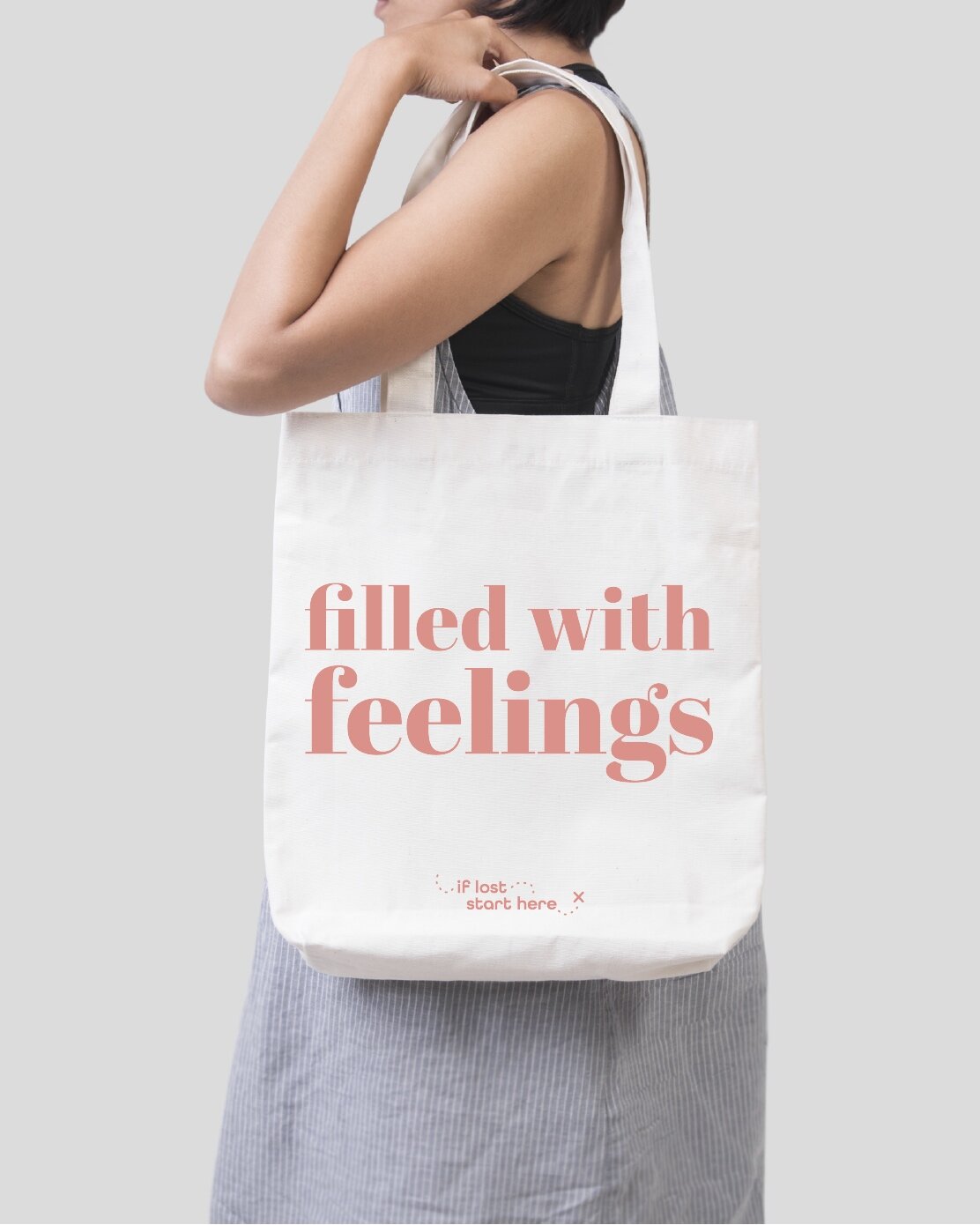
Support All Together Collective’s latest fundraising bundle (which includes our Filled With Feelings Tote Bag). This time 50% of profits will go directly to @play.marin - a local nonprofit already doing the work to increase diversity and inclusion in Marin through play.

If you have ideas for our next Content Care Package going out at the end of July, you can submit them here. Let us know what’s catching your attention and helping you through.
Keeping Up the Momentum
We’ve been thinking a lot about how to sustain momentum after this news cycle has passed, what role we’ll play in a massive fight against systemic racism...a long overdue fight for equality.
Because If Lost, Start Here exists to bring people closer to impactful mental health initiatives and independently-owned spaces, it makes sense that our energy stays here, but this time, with an added focus on the spaces founded by and for the Black community. .
In the world of mental health, with all of the stigma and misconceptions that surround it, the Black community has been particularly impacted. Today, we are taking a moment to highlight some of the spaces and projects that have been founded in response, some of which we’ve featured in the past, some that are totally new to us. From therapy directories and podcasts to yoga studios and books, there is a wealth of resources available from the Black community. Our focus will stretch across the US and the UK so please feel free to share any relevant projects. (We will continue to update this list.)
Approximately 15% percent of the US population identifies as Black. That means AT LEAST 15% of our content should be featuring spaces and initiatives founded by Black individuals. We are pledging to hold ourselves to this standard by ensuring that at least 1 of every 5 features in our guide (20%) is of a Black-owned business.
We are kicking off this initiative by donating to The Loveland Foundation (a therapy fund for Black womxn and girls). We will continue to donate 10% of any proceeds to this foundation moving forward.
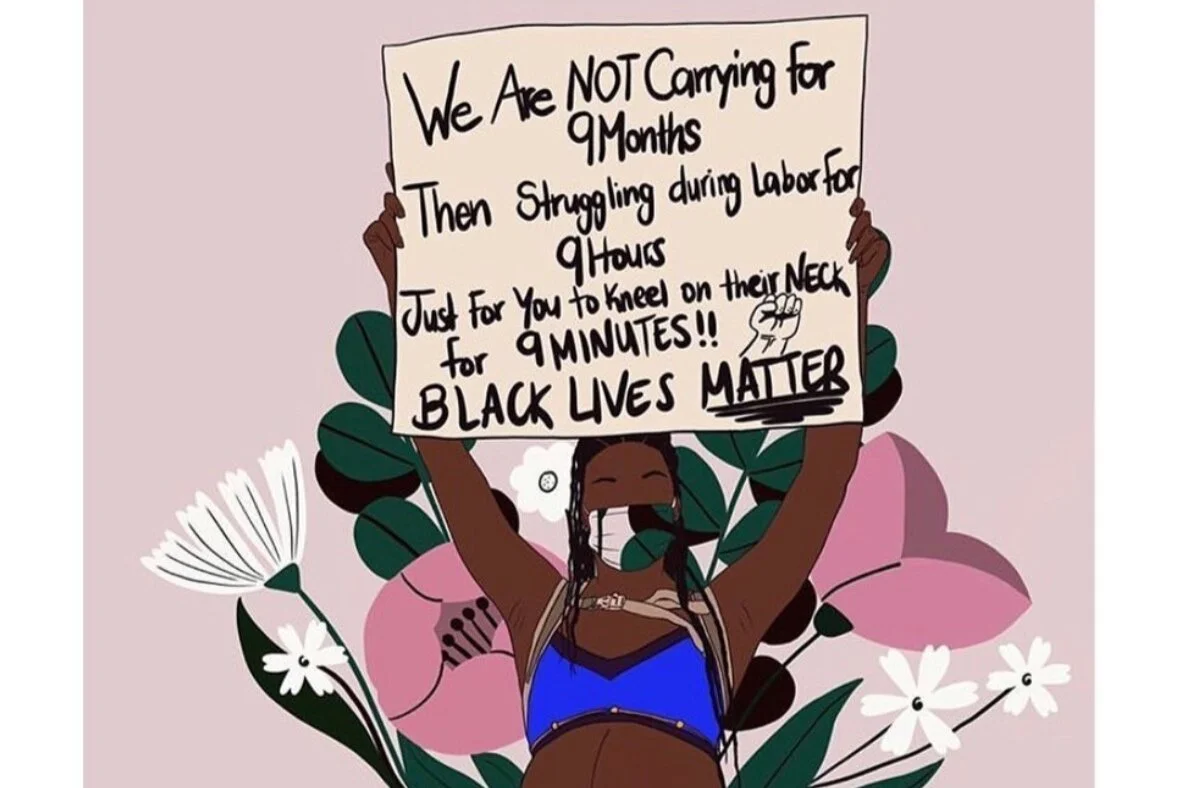
BLACK LIVES MATTER
BLACK MENTAL HEALTH MATTERS
Illustration of @uluvmylovefaces by @jcgmisul ✨
This has been a difficult week for so many. If you’re struggling (or simply looking to take care of yourself more deeply) please check out these amazing projects and organizations.


We Will Never Go Back #blacklivesmatter
We are back on Instagram and back working on our guide and fulfilling this dream, but we are never going back to the world as we left it. On May 25th, George Floyd was murdered when a Minneapolis police officer pressed a knee to his neck for 8 minutes and 46 seconds. This act in itself was barbaric and reprehensible, but, almost as frightening, was the fact that so many of us were so shocked…so many of us who believed ourselves to be allies and friends had never truly grasped the severity of systemic racism and all of the brutality that exists within that oppressive system.
We launched If Lost, Start Here almost 2 years ago and committed ourselves, from Day 1 to making this space inclusive, representative and safe. We bought Rachel Cargle’s “Unpacking White Feminism”, we read articles, we consulted friends, we featured some amazing black-owned businesses and spaces. We tried. We are here to tell you that WE HAVE NOT DONE ENOUGH. Not even close. We are also here to tell you that THIS CHANGES NOW. We are not perfect, and never will be, but we are committed, and we will not let the momentum of this movement stop. Not here. If you are a white woman, we hope you’ll join us in our ongoing effort to be forcefully anti-racist.
Here are a few steps we’re taking now:
We are protesting (even when our social anxiety says to stay home)
We are donating to bailfunds (in Minneapolis and Louisville) and @thelovelandfoundation (a therapy fund for black women and girls)
Amanda is reading Ibram X. Kendi’s “How to Be An Anti-Racist” and Mikki Kendall’s “Hood Feminism”. Claire is reading Robin DiAngelo’s “White Fragility” (We are sharing/discussing as we go.)
We are listening to Layla F. Saad’s “Good Ancestor” Podcast
We are having uncomfortable conversations with friends and family (because nothing is as uncomfortable as being persecuted for over 400 years)
We are educating our children, laying the foundation with a real look at American History. (Check out the Oh Freedom! curriculum we’re using here.) We are incorporating stories of powerful and pivotal black men and women throughout history. (The books we purchased this week are from Bay Area bookseller @ashaybythebay)
We are buying from black-owned businesses and paying content creators for their knowledge/time/emotional energy (we should have been doing this consistently much earlier. We are committing to making up for that now.)
We are following lovely people like Kat Vellos who are helping us to navigate our relationships with our black friends.
We are reveling in the joy that is twitter. (We are KPOP fans now.)
We are committing to KEEP UP THE FIGHT by making If Lost a resource that is truly representative of the world we live in.
We are committed to using this platform to highlight black-owned small businesses, particularly community spaces founded by Black womxn. (As always, we will approach from the angle of mental health and community impact.)
We will accept responsibility for the role we’ve played in perpetuating a system that has benefited us.
We will not process our feelings or air our grievances in the comments sections of the black women we admire. We will not expect anyone to educate us.
We will vote.
We will center black voices without our analysis.
We will not wait for more educated people to impart their knowledge. We will seek it out, and we will compensate the creators.
We will sign petitions and send emails and apply unyielding pressure.
We will be active in dismantling a system that has been broken since its inception.
We will make mistakes.
We will keep fighting.
We hope you’ll join us.
Lost in Place
When you thrive out in the world, in the places you love, that coping strategy is impossible to recreate right now. There isn’t an app for smiling at a stranger across a crowded cafe, or for the way your dress flutters against your legs on a perfect spring day. No amount of control or self care or intention can account for a need for something that is real and physical and palpable. Here we look at how the stay in place orders are starting to affect our mental health even as we look for silver linings.
I am failing at Lockdown.
A friend reminded me that the idea is just to not die and, in that respect, I’m killing it.
But in all the other ways, I do not have this. We are not in this together. Because the zoom call you can’t attend, it’s in my head. And in there, the lockdown is tight, and restrictive, and sucking the breath out of my days.
I am a fixer. I make all the things happen. I do not pause. I don’t play. I get things done. I’m an A++ type (read Anxiety in those As) though I hide it with whimsy and pretty dresses. I know my tendency to fall. That for this pandemic I need to build fortresses around myself.
It was with this mindset that I approached the stay at home order here in California now 7 weeks ago.
I printed out all the things: a cute chart for more connection and laughter and peace and quiet. A list of 100 things to do with kids during Coroanvirus Quarantine and Social Distancing. Ideas for science experiments from esteemed institutions. And homeschooling tips sent to my inbox every Monday that would bring hands-on project-based learning into our current world of google-classroom and worksheets.
I made all the schedules: each child had a whiteboard that we’d look at each day. My son’s would be mostly Maths, which he’d inevitably swap out for reading Harry Potter as he races through all 7 books. My daughters would have hearts and stars and she’d cross out half each morning before hiding under the table.
I even had my own: A morning routine starting at 5.30 to get me through before the kids woke up. To give me the self-care that I’m told I need.
My husband and I had one: dividing up our nights so that each has a turn to binge-watch crappy TV, and each has a turn to watch Disney+ with our kids. We even added nights without alcohol, cause that bit wasn’t going so well.
I made the house fun: I tipped out all the Lego that we own and made a Lego mountain in one of the rooms. My son is a fanatic, his eyes sparkled at the disarray. We turned a bedroom into a disco so that we could boogie unashamedly with glow-up balloons and flashing torches. I’m thinking of buying a disco ball. We even made an obstacle course with marshmallows: one station = marshmallow fight, one station = build a marshmallow tower, one station = marshmallow catch, one station = find the marshmallows. You can eat them at the end but no one wants to.
We did all the things: watched the latest funny video doing the rounds, felt that pang during The Great Realisation, visited the feeding times of sea otters, had Michelle Obama or an astronaut or Josh Gad read to us, got drawing lessons from Mo Willems and science from Mark Rober, visited mud volcanos and geysers, tried the Louvre.
I downloaded all the apps: Plant Nanny for enough water, Couch to 5K for exercise, Headspace for Meditation. I subscribed to Luminary and to Audible, to courses on creativity and small business skills. My phone tethers me now as much as any lockdown requirements.
Then I played it out with all these new tools. I did all the things thinking I was immune. I added in time for myself I haven’t had in years because no-one is now commuting or waking up to go to school. I made space for meditation and running and interesting podcasts because keeping me together matters in this house. I am its heart; I need to stay whole.
And to this once-therapist-in-training it’s obvious what I was trying to do: I was taking back the control I lost when my kids’ school closed. When my writing days became homeschooling ones. When I longed to see friends who lived so, so close, but I wasn’t allowed near. When our plans for the great move home, ended, and we sat in the not-knowing while advice came in harder and the news shifted. As disappointments accumulated and we tried to be ok, to model resilience and gratitude and love for our children.
My dentist sent a note, dated April, saying I hadn’t visited for a while. Maybe he should remove me from his client list.
I missed a kid’s birthday on Zoom.
Online traffic for the guide I write started to go down as those places shuttered.
I forgot to cancel subscriptions.
I stepped on the Lego now all over the floor.
Food deliveries started costing more because you know snacks and panic.
I put on weight, I burnt the bread, my drawings are awful.
I hated the weekly wave-thru at my kids’ school though I beamed and smiled through the car window.
I started to resent neighbors excelling at everything chalk. My kids refused to draw the rainbows.
I started to fail Lockdown.
And there are no strategies that I haven’t turned to. There’s no advice you need to give me. Because what I need is to get out of my head and for me, that means getting out of here. Over the years I have learned the antidote to my anxiety. I know enough of where to go when I inevitably fail at life: I recharge with other people, I come alive in cafes, I need bookstores and museums to feel things. I need to walk down streets with strangers, to be in sunlight as the blinds at home start to close for the summer months.
I know that I haven’t died and that is the only success I should be looking to at the moment. I know that I should be grateful that my husband has a job. I know that I shouldn’t feel these things. I know there are silver linings, and a planet healing, and priorities being reset. I know the good, I feel it too. I can equally write a piece with all that is wonderful and positive and needed as a consequence of this pandemic. I can tell you a hundred things I’ve experienced the last weeks that have been life-affirming. And I know all this as I die quietly inside.

Imaginary Places
This week we decided to pull together some of our favorite imaginary places (from TV shows, plays, movies and books.) We found that it was quite fun to imagine where we’d love to spend our time, if reality weren’t a confine.
We’ve spent the last year and a half devoting ourselves to finding the places in the world that help to support us as people.
We’ve defined categories representing our most basic needs for happiness and connection and belonging. We’ve categorized and consolidated, gained traction and lost momentum, burnt out and forged on. Eventually, we found our stride and mapped out our plans. You might be able to imagine, then, our surprise (read: panic) when the world shut down and “going places” was, suddenly, no longer a thing.
Instead of wallowing in self pity or questioning our entire lives, or throwing in the towel, we’ve pivoted, temporarily resetting our path and redefining our focus. (You can head here to see all of our prompts for surviving while Lost At Home or here to check out the tote bags we created to support struggling small businesses.) If we’re being honest though, the thing we miss more than anything is finding the most magical places for people.
So this week, we decided, instead, to pull together some of our favorite imaginary places (from TV shows, plays, movies and books.) We found that it was quite fun to imagine where we’d love to spend our time, if reality weren’t a confine.
We hope this list inspires you! And if it does, we have a challenge for you. Your prompt this week is to dream up your own imaginary place, sketch it out, write a story. Maybe when we come out of this, you could aim to stretch that imagination into the actual, and make that place real.
In the mean time, here’s a look at the places we’re visiting via Netflix binges and late night read-a-thons.
Our Favorite Imaginary Places




Learning to Count to 100
This week we’re learning to count to 100, listing the things we value, we need, we’ve lost and gained. What would your list include?
As we’ve both been homeschooling our Kindergarten girls (one of us by choice, the other by necessity), we’ve also been learning to count to 100. You know, 100 Lego pieces, a hundred marbles, a hundred Fruity ‘O’s — anything we can find at home to make this very serious academic lesson a bit more concrete.
And it made us think about — stay with us here — what as adults we might want to count at this time. Less shiny plastic objects and tiny snacks, more the things we rely on and reach for. The things that we’re grateful for and that bring us joy or make us laugh or give us that warm feeling in our chests. The things that energize our minds, the things we are desperate to share because they are so good, the things that linger once they are over. And the things, maybe most importantly, that help displace our fears and anxieties, pause the endless loop of overthinking and help us manage our own mental wellbeing through this pandemic.
So it is with that in mind, that we’re bringing you a very adult list of counting to 100. Yes, it’s super idiosyncratic. Yes, it roams widely across subjects. Yes, you may have no idea why something is included or left out. And if you want to analyze this, yes, this is probably a way of us asserting some control in uncertain times, by grounding 100 things that do make sense to us.
It’s maybe an odd exercise, but in writing this list we found that it captured not just a need to organize but a way of marking where we are right now. Last week this list would have been very different. Next week it certainly will be. For now, right now, this is what the threads of our life and attention look like. Some of it may resonate or inspire; some of this may leave you wondering about the legitimacy of how we’re spending our time. But the key thing here is that we all do lockdown differently, and we all need to approach our mental health in ways that fit us.
We’ve arranged our list — because if you know us by now you know we love lists — into our four modern life conditions that we might all find ourselves in, particularly as life is being played out for many of us: Curiosity, Loneliness, Anxiety and that complex feeling of being Lost wherever we are. See it like a gratitude journal, but totally random and super reflecting the very personal choices that we’re all learning to make to survive life under lockdown.
As an extra gold star bonus (can you tell, homeschooling brain is taking over) you can make your own list of counting to 100.

1. Kitchen micro-discos
2. The Happiness Lab special episodes on approaching our wellbeing during the lockdown
3. Taking just a little too long to come out of the bathroom (we all need to take our pauses when we can)
4. Going to Holland when you could have been going to Italy
5. The Getahead Virtual Festival
7. Be Kind magazine making its issues free
8. Rediscovering jigsaw puzzles
9. Watching every rom-com we can find on Netflix and starting Parasite on Hulu thinking it was a comedy
10. Eating all the cookies, brownies, and cakes that we’re baking with our kids (ok, we try to bake with our kids until they lose interest and we do all the work) and then wondering why we’re piling on the pounds.
11. Every Mind Matters Campaign and William & Kate talking it up this month
12. Snack Cleanse (we only have so many options in our kitchens right now, don’t judge)
13. The calming voice of Andy from Headspace
14. Being ok with a messy house because no-one will be visiting soon
15. The game Bears vs. Babies
16. A toolbox for living with worry and uncertainty
17. Bike rides to nowhere
18. In contradiction to number 14, keeping our houses very clean for one day, even though no one else will see it.
19. Winged eyeliner. (Why now? Why ever? Who knows.)
20. Tele-therapy (I know you can see me crying in my car but I DON’T CARE)
21. Deciding now is the time to get super new-age and find a spirit guide
22. Making at-home music videos
23. Morning meetings with Glennon Doyle (helping us to feel less alone, and MUCH less shitty for our subpar parenting)
24. Focusing on the relationships that matter most.
25. Doing slow-deep breathing out of necessity, but taking the opportunity to explain the value to our children.

26. Listening to Ted Connects with Elizabeth Gilbert: on the gentler stakes of following a journey of curiosity rather than passion
27. Create a list of 100 dreams from the Before Breakfast podcast
28. Rob Walker’s book The Art of Noticing: 131 Ways to Spark Creativity, Find inspiration and Discover Joy in the Everyday
29. A new love of the theater: National Theater Live weekly plays, Andrew Lloyd Weber’s Friday night Musicals The Show Must Go On, and the original theater version of Fleabag now on Amazon Prime as a fundraiser
30. Taking the bins out in our ballgowns
31. All the animals: Going On Safari / Beluga Whales at Georgia Aquarium / Koala bears and chubby unicorns (read Rhinos) at San Diego Zoo
32. Discovering our libraries at home and finding books to read amongst our own shelves
33. Histfest Lockdown edition
34. Mo Willems’ drawing residency and lessons in pigeon drawing
35. Watching Rolly Pollies cross the road
36. The Sunday Read: The Woman Who Might Find Us Another Earth
37. Skill Share classes!
38. Picking wildflowers along the side of the road.
39. Online dog training courses for our whole family! (We’ll probably start a circus soon. YOLO!)
40. Khan Academy for teaching us how to do math the right way.
41. This collection of research assuring us that all the video games our kids (and, yeah, maybe we) are playing, might actually work to ease anxiety and depression.
42. This “make-up” tutorial that had us crying laughing!
43. This Spotify playlist we made.
44. Unexpected gifts from friends left on our front porch.
45. Jen Gotch’s book The Upside of Being Down (there really is an upside, guys).
46. Global Citizen’s Together at Home concert series.
47. Gary Vee
48. Tip Your Waitstaff (and everything Mike Birbiglia has ever done).
49. Taking the time to find all of the automatically renewing things we’ve signed up for over the years and CANCELING ALL OF THEM.
50. Realizing if it weren’t for societal pressure we would probably wear the same seven items on repeat.

51. Phone calls with friends 80s style.
52. A new research paper suggesting that however we fill our social tank — yes, even with non-traditional social strategies like listening to music or watching a favorite TV show — works just as well as the traditional ones like spending time with a friend.
53. Carissa Potter of People I’ve Loved sharing her essay On Love in Confinement
54. Paper Profanities from Erica Frances George
55. Making friends with the people who go out for daily exercise at the same time — even though all you do is exchange a wave at six-feet apart. These relationships however tentative make our mornings most days (also to the lady who walks her dog each day and witnesses our red-faced runs each morning thanks for the silent encouragement)
56. Hello (from the Inside) An Adele Parody by Chris Mann
57. The Rime of the Ancient Mariner Big Read
58. Female friendships getting us through
59. The High Low being back on podcasting air
60. Organizing a Zoom Scavenger hunt with our extended family - ‘go find an elephant / something important to you / favorite thing, etc’
61. This song which contains a certain amount of irony
62. Anything Hamilton but particularly The Zoom Where It Happens
64. Kat Vellos new book Connected from Afar
65. 8pm Daily Howl, 7pm weekly clap for carers, and however you are singing into the empty streets with your neighbors
66. Hearing piano playing on our daily walks, a guitar player in town, kids playing in their yards
67. Spike Jonze, Her
68. Esther Perel’s podcast on couples under lockdown
69. Wondering what we can send in a package and why our handwriting is so bad
70. The Social Distancing Festival
71. Knowing your neighbors for the first time
72. Connecting and falling in love with small businesses (local and otherwise)
73. Being endlessly thankful for social media for…maybe the first time?
74. Basking in the glow and glory of everything Serious Mom Fun says/does.
75. Reveling in the beauty of missing things and taking note of the things we don’t. [Though we’re currently longing to go grocery shopping (without a mask and gloves) so our judgments can hardly be trusted.]

76. Foldall in Bath
77. Indhi Rojas’ spreadsheet for organizations that need our donations now
78. Some Good News with John Krasinski
79. French Fry Burritos (a real thing that you need to put in your face immediately)
80. Learning to make a decent latte at home (and also teaching our kids to make them for us cause you know #homeschool)
81. Battersea Power Station Community Choir paying tribute to NHS carers by singing ‘Something Inside So Strong’
82. Reading The Salt Path by Raynor Winn
83. Living hyper-locally (and using that exact buzz word so that it sounds much more intentional/chic.)
84. Bookstores counting as essential services in Europe.
85. The concept of practice days (if there was a time to do it all over again tomorrow but a little bit better that’s now)
86. A visit to a Pet Food Store feeling like a bad sci-fi movie
87. Looking at photos from just two months ago feeling like they were another age
88. This Human Moment — looking forward to these Friday sessions
89. Making new routines / realizing we’re bad at routines / accepting a life free of routines!
90. Mentally dedicating ourselves to ‘vision boarding’ but then forgetting to actually make the thing.
91. Keeping all the cookie ingredients on the counter so we can easily bribe our children and/or convince them that we’re fun and crafty and/or consume only cookie dough between the hours of 11am and 6pm.
92. The vulnerability and honesty of some of our favorite creative women in the world, including Megan February of For Women Who Roar
93. Distraction Tactics with Dan Smith from Bastille
95. Playing charades with our kids.
96. Following creative prompts from places like Sketch Appeal
97. Daily walks without time constraints or destinations.
98. Slowly making our way through the Top 50 Teen Movies of All Time and understanding why we are the way we are. (Spoiler alert: even if you remembered them being good, they are almost always inconceivably horrible.)
99. Looking for the helpers and finding them everywhere.
100. This quote from Jane Eyre: “I see at intervals the glance of a curious sort of bird through the close set bars of a cage: a vivid, restless, resolute captive is there; were it but free, it would soar cloud-high.”
Now that you have a glimpse into our lockdown life, let us know what your ‘Learning to Count to 100’ list would look like. Even better, make one of your own, tag us on social media, and we’ll spread the joy of the unique ways we are all finding to negotiate this as we’re very much alone and very much together at the same time.

Scrappy adventures at home
This weekend we brought the outside world indoors. Now we’re trying to bring the magic of the undomestic world home.
In a creative outburst (or desperation on day 40 of lockdown), we pitched a tent in our living room and went camping. We blew up the deluxe mattress, brought down our duvets, and hung a super bright lantern. The six-year-old asked for spooky stories, the eleven-year-old asked for more bouncing on that deluxe mattress, the forty-four-year-old husband gave up and headed for an actual bed, alone. As I fell asleep with the kids, we looked at the sky and trees through windows, snuggling into the warmth of indoor camping and our even cozier imaginations.
As we’re increasingly longing to be out in the world, we’ve also starting to think about how we can bring our favorite places indoors. We’re learning in our very scrappy way how to recreate a little of our former world’s magic in our domestic unbliss. Thrown together with whatever we have lying around the house, our manifestations at home are ungainly, un-Pinterest worthy recreations, but somewhere in our souls, they are filling an ever-growing need to be somewhere else, with you in the world outside.
We’ve noticed on social media the creeping in of festivals, discos, museums, into our living rooms, gardens, kitchens. We’re seeing a blending together of before and now, and a relentless hope that once was will come back again. For now, our attempts at capturing the spirit of where we once gathered will have to do.
Here’s our rundown of what we’re missing and how we’re, and you perhaps, are bringing places out there in here.
Cafes: Missing, missing, missing. We admit to buying a coffee maker as Step 1 of our lockdown journey (not sure there was a Step 2) and have since spent way too much time working out how to make an oat milk latte with froth (who needs to write the next NYT bestseller?). Add in Spotify’s Coffeehouse playlist, find a quirky chair at home, and nurse that coffee for 3-4 hours while trying not to make eye contact with anyone else. Maybe even throw $7 in the bin if you live in the Bay Area. You are almost, almost there.
Festivals: Can of wine, loud music, and deck chair on whatever outside space we can find. Kids running wild. We’ve nearly nailed it. The only things left are to throw mud at our tent, find the wellies, and start smoking.
Bakeries: A friend is baking cookies and cakes for distraction. Actually, everyone is baking cookies and cakes for distraction. There’s a run on flour and yeast and cultivating a sourdough starter has just become the new learning a language of lockdown. We’re also opening cookbooks like “50 most calorific things you can cook today with real sugar”, rather than “The Joy of Kale and Brown Rice”. Scents of bread baking, old school achievement, something to eat that isn’t from a can or cereal. Also comfort eating – it is a requirement to comfort eat right now. Pairs well with white wine at the end of the day. This is not the moment to diet, numb feelings yes with carbohydrates and alcohol. No one can see you anyway.
Coworking: If you live alone, sorry this one is going to be tough; you could make cut out figures as today’s art project and prop them next to your laptop while smiling at them occasionally. If you live with other people, just find any table, crowd around it, write an aspirational saying like ‘We work best together’ somewhere on a wall, and occasionally high-five each other. Points for adding name tags.
Indie cinema: Just switch out Netflix for National Theater Live, add in posh popcorn and a vodka tonic, and you’ve got the vibe.
Museum: Entry-level efforts, hang all the new creations you’ve been working on with everyone else on a wall in a pretty way. Add wall labels with cute names and give the whole thing a title (no, “Untitled” is cheating). Even better hang them on a wall outside and call it ‘Public Art’. But if you want to take it seriously, and you do, because you know ‘Art’, then follow the lead of New Jersey resident Teresa Mistretta. If you want to get super fancy, make your home into one of those experiential museums – paint your walls candy-colored (you need a DIY project right now). Even better, make merchandise in said theme to sell back to yourself.
Library / Bookstore: Those books on your shelves at home you’ve been meaning to read, now is the time to actually read them, not just wave at them. That might mean pulling I Could Pee on This off your shelves, but hopefully, you have something lying around like Joan Didion’s The Year of Magical Thinking. If going for the library vibe, post them back through your front door for added return affect. If indie bookstore, make cute piles randomly around your house. For either, go crazy and curate subject areas, that only you understand – brave princesses who’ve learned to say no, self-help for the days you hate everyone, chick-lit which you basically see as the great American novel but are too ashamed to say so. You could also print a cool Indie Store name on the side of a paper bag and shop your shelves. We always wanted to own a bookstore.
Lecture series: You can be inspirational too. Watch something by Brene Brown or Elizabeth Gilbert or Glennon Doyle, then hold forth at dinner about the value of vulnerability, creativity, love. Your co-lockdown companions will appreciate your Ted Talk at the kitchen table. They might even take notes.
Safari: If you have pets, just follow them around the house for an hour, narrating their escapades. Maybe even give them a backstory that adds drama – you need an arc for this one to work. Make sure to practice a Megan Markle narrating Elephants range of emotion.
Retreat: Basically, lockdown with some sort of epiphany and hiding alone in your bedroom trying not to talk to anyone.
Places in the world – we miss you. And though our attempts to make you real in our living rooms and gardens may be naff, they’ll have to do for now. One day when we visit you again, we will shower you with love and attention and never take you for granted again. We Promise.

Collective Care // A Guide to Supporting Others While Supporting Ourselves
It’s with dual tensions in mind that we offer up our first shopping guide to supporting small during uncertain times.
We’re writing this — our first Shopping Small Guide — with competing interests. Like many of you now, we’re all too aware of what resources we have and how we can best use them. We’re hunkering down, saving where we can, managing our budgets in ways we might not have done previously. We’re acutely aware that many are struggling to pay rent, to cover food needs, and to sustain basic necessities, as they are being financially dragged under by this virus.
We also know that as we pull back and retreat, we’re creating more pain for independent businesses, creative spaces, and places in the world that rely on our support to make their own ends meet. We’re conscious of places closing now and shutting their doors, and though we are hopeful that they will reopen, we’re aware that they also might not be able to if they can’t sustain some aspect of their business during lockdown. And we’re worried that the vital businesses that made up our neighborhoods— that we might have overlooked as luxuries but which were sustaining the connections we all need in our lives unbeknownst to us — will disappear. That the texture and heart of human life, the places that baked the bread, pulled that shot of espresso and sold the books (insert your own list here), will cease to exist even if the conditions return to allow them to.
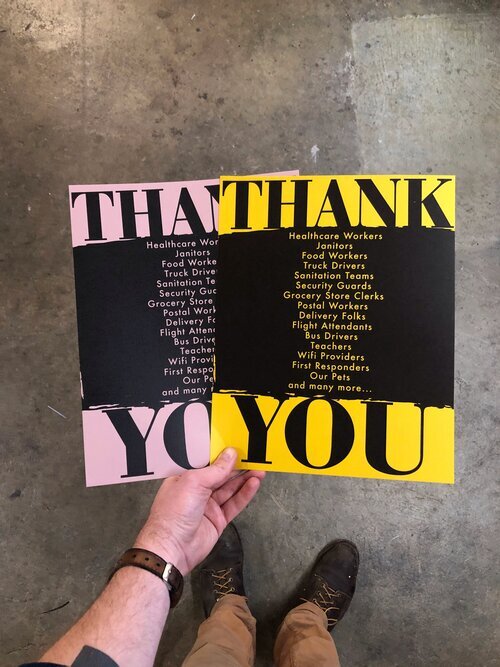
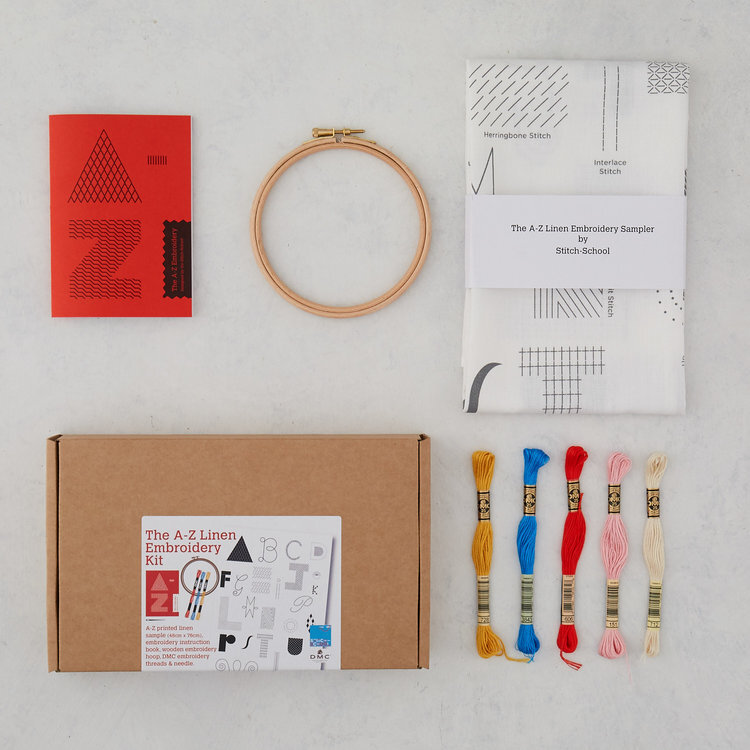
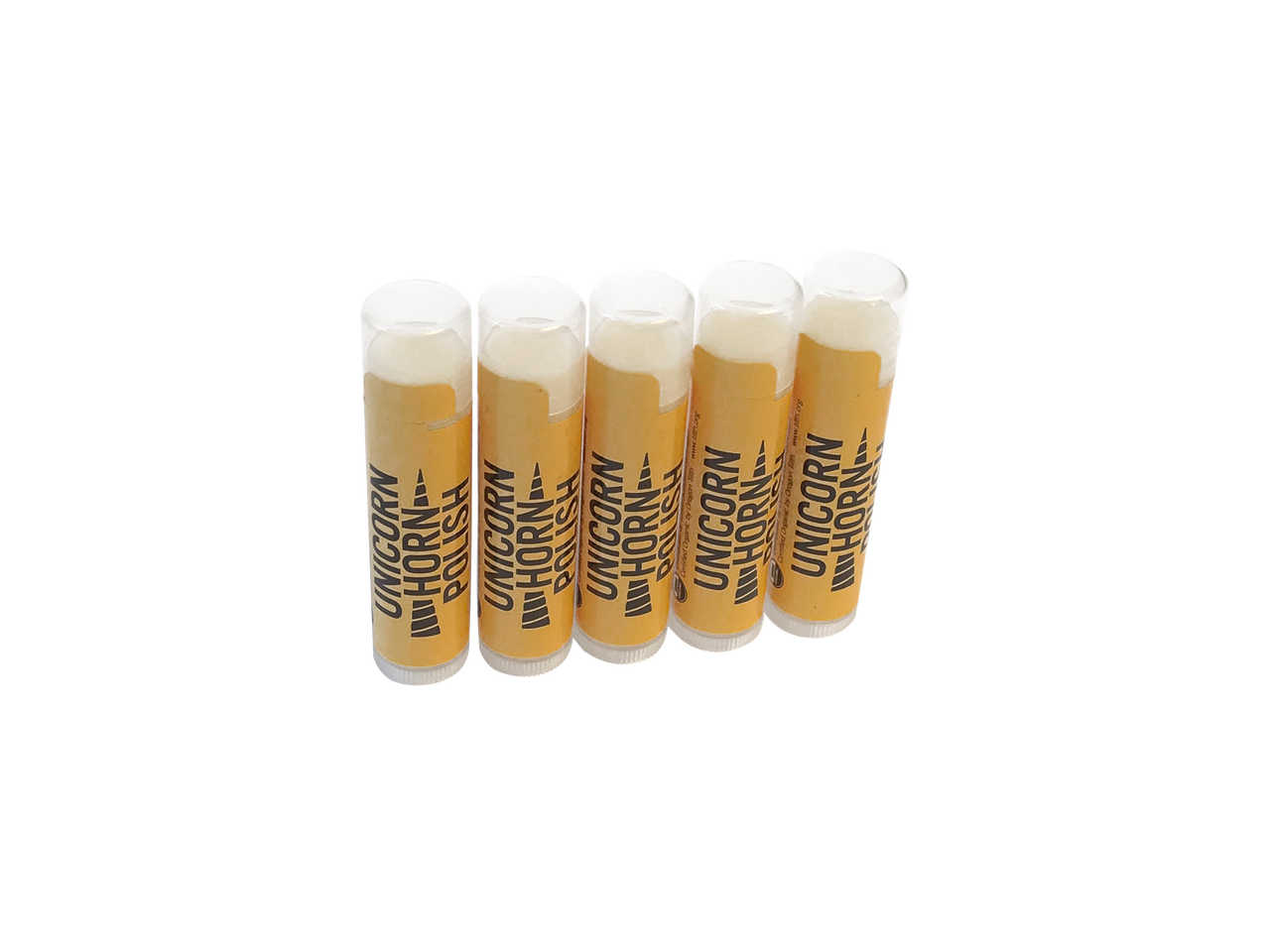
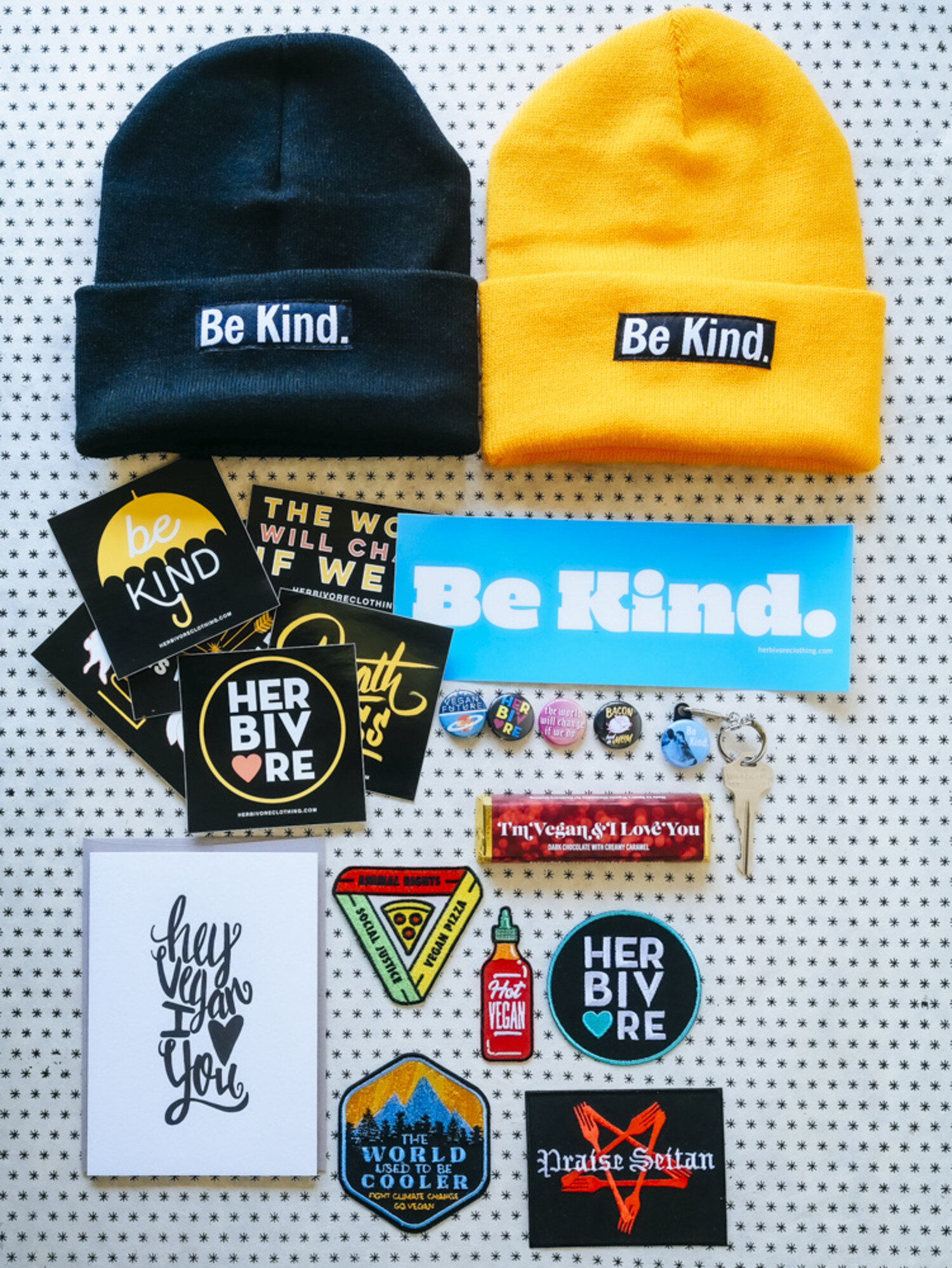
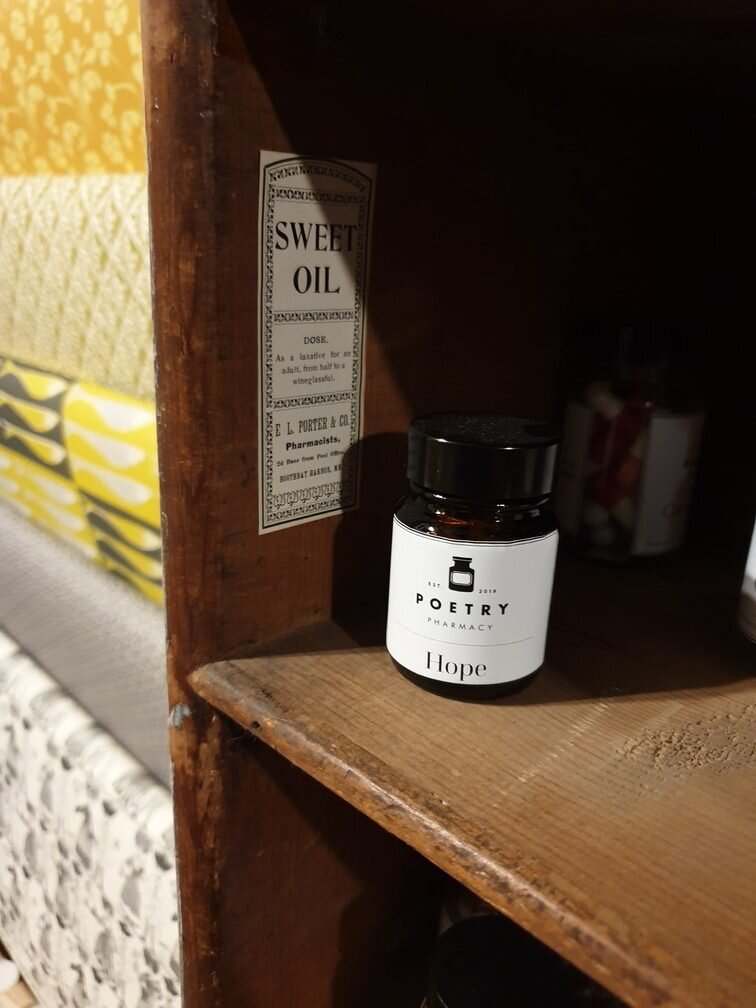
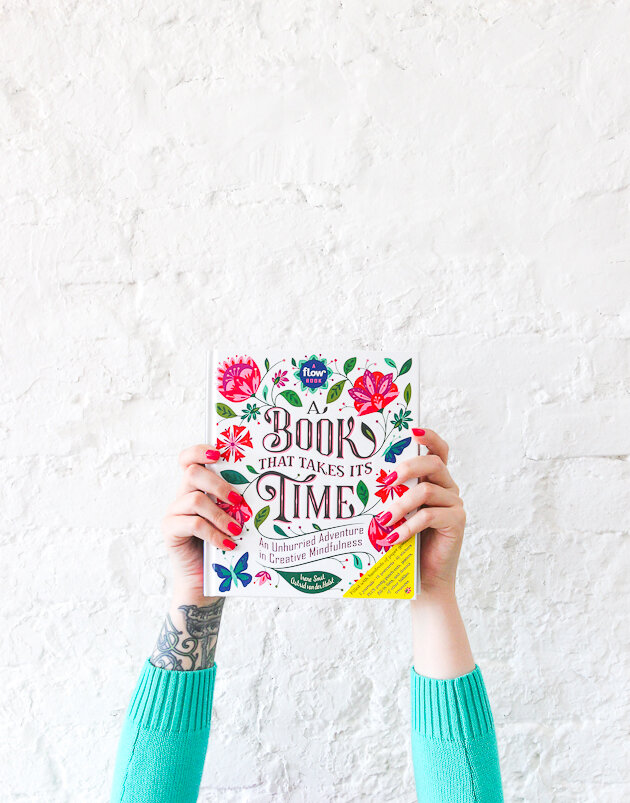
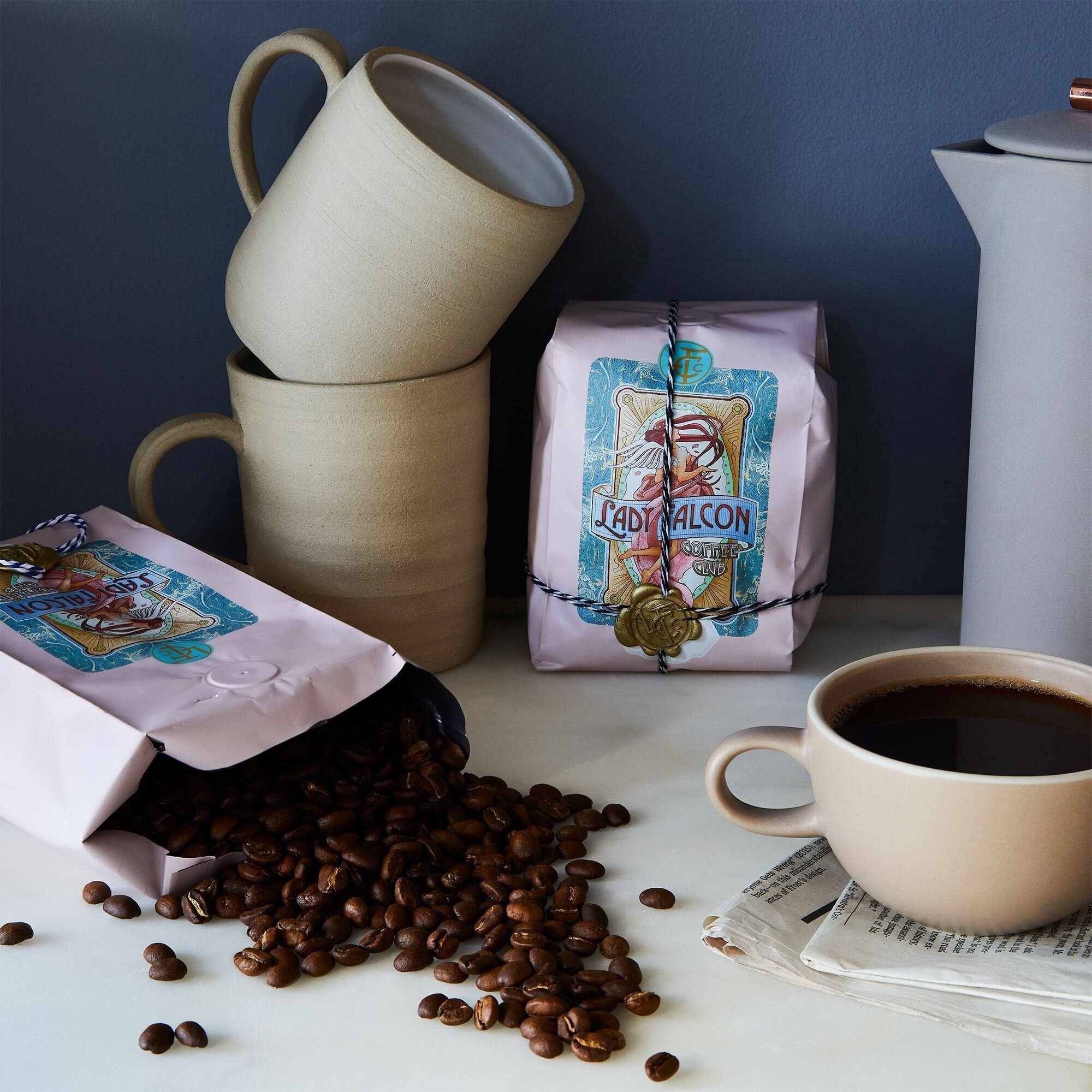
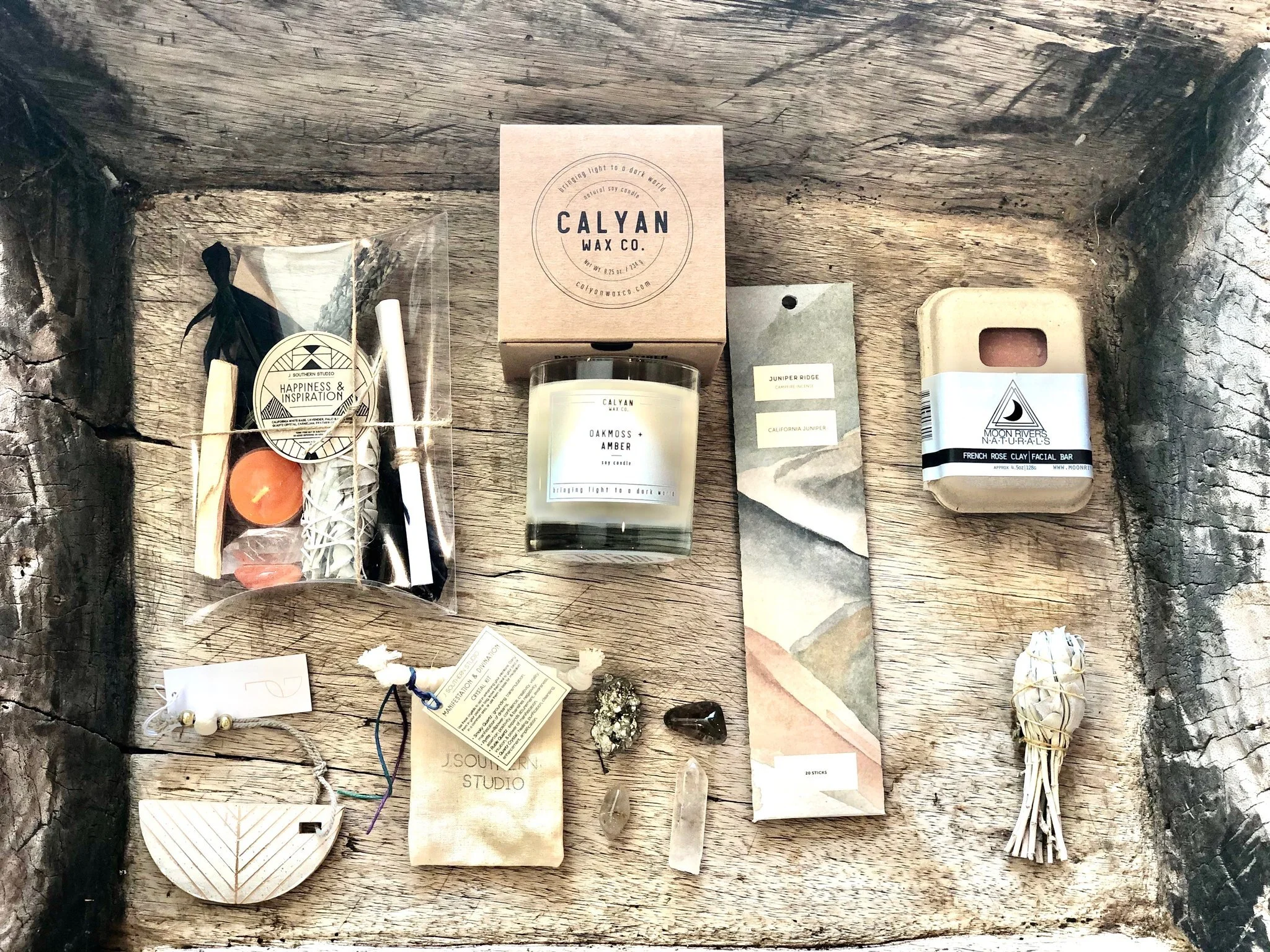
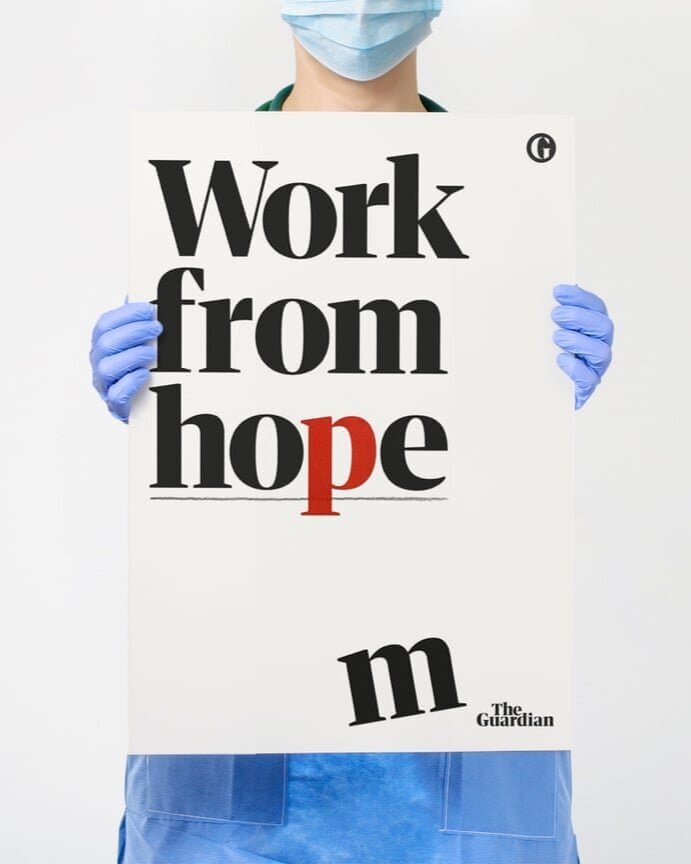
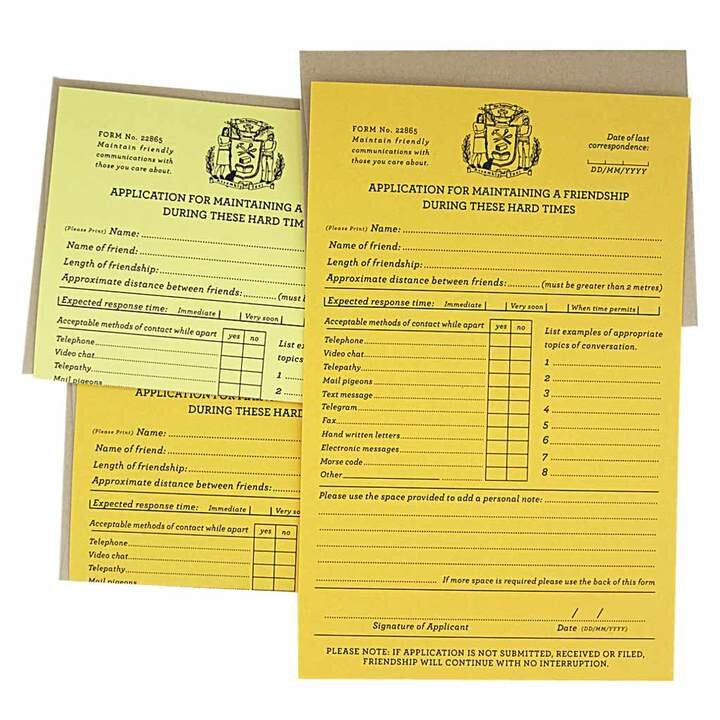
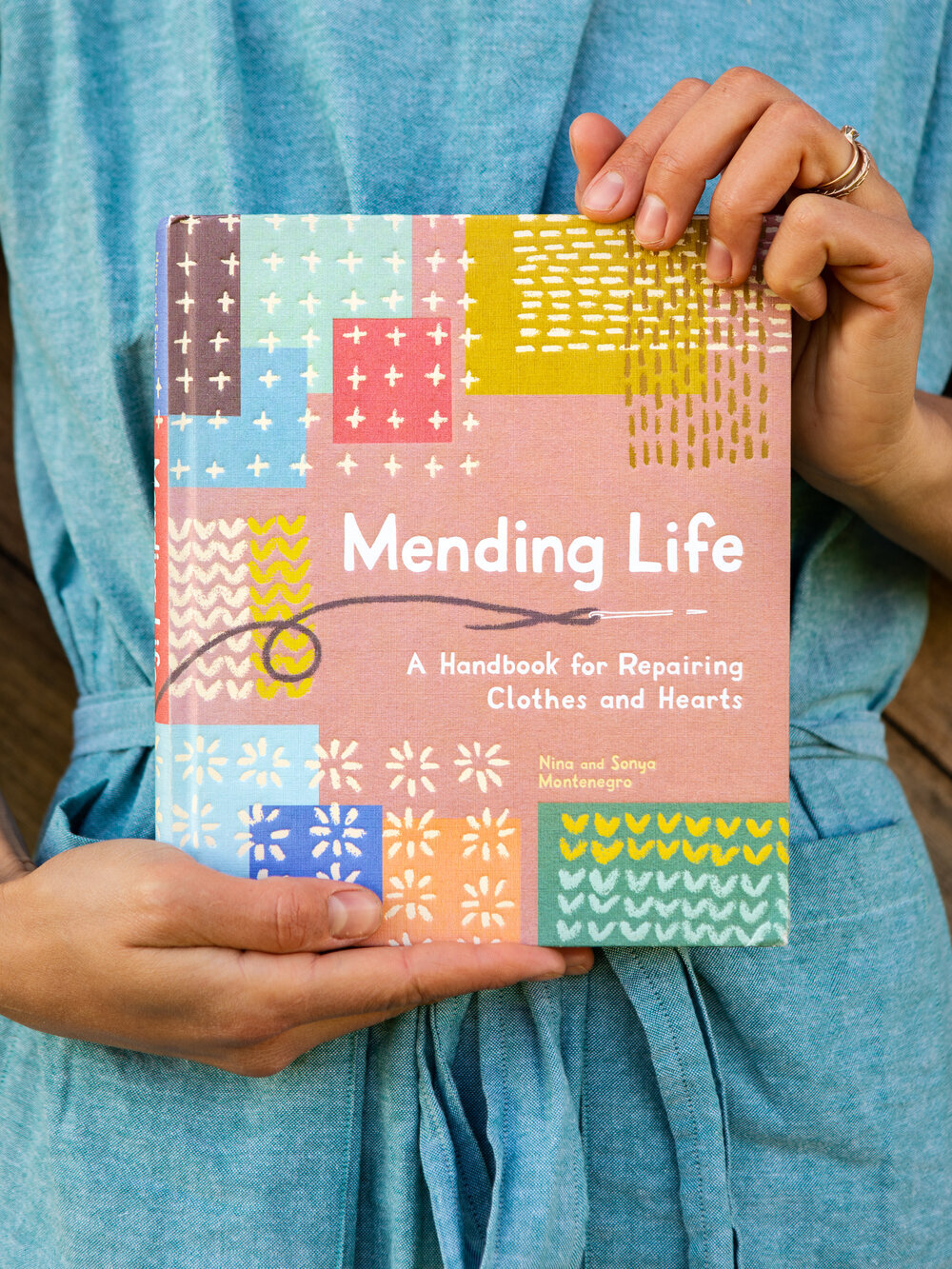
So it’s with those dual tensions in mind, that we offer up this guide. We’ve tried to identify products from places that we’ve supported and who we’d encourage you to continue to support if you can. Some offer self-care essentials, or new skills (clothes repairing). Some offer treats like really good coffee beans or magic (yes you don’t need unicorn horn polish, but does that idea make you smile?). Some offer support to get us through — conversation cards feel like a must now for those fading home relationships. Some just kindness like a simple thank you.
We hope that you can find something here that might help you and help others who created these as we negotiate these uncertain times in relation to one another. And as always let us know what we missed, what you love and what is bringing joy to you in who you support in your life right now.
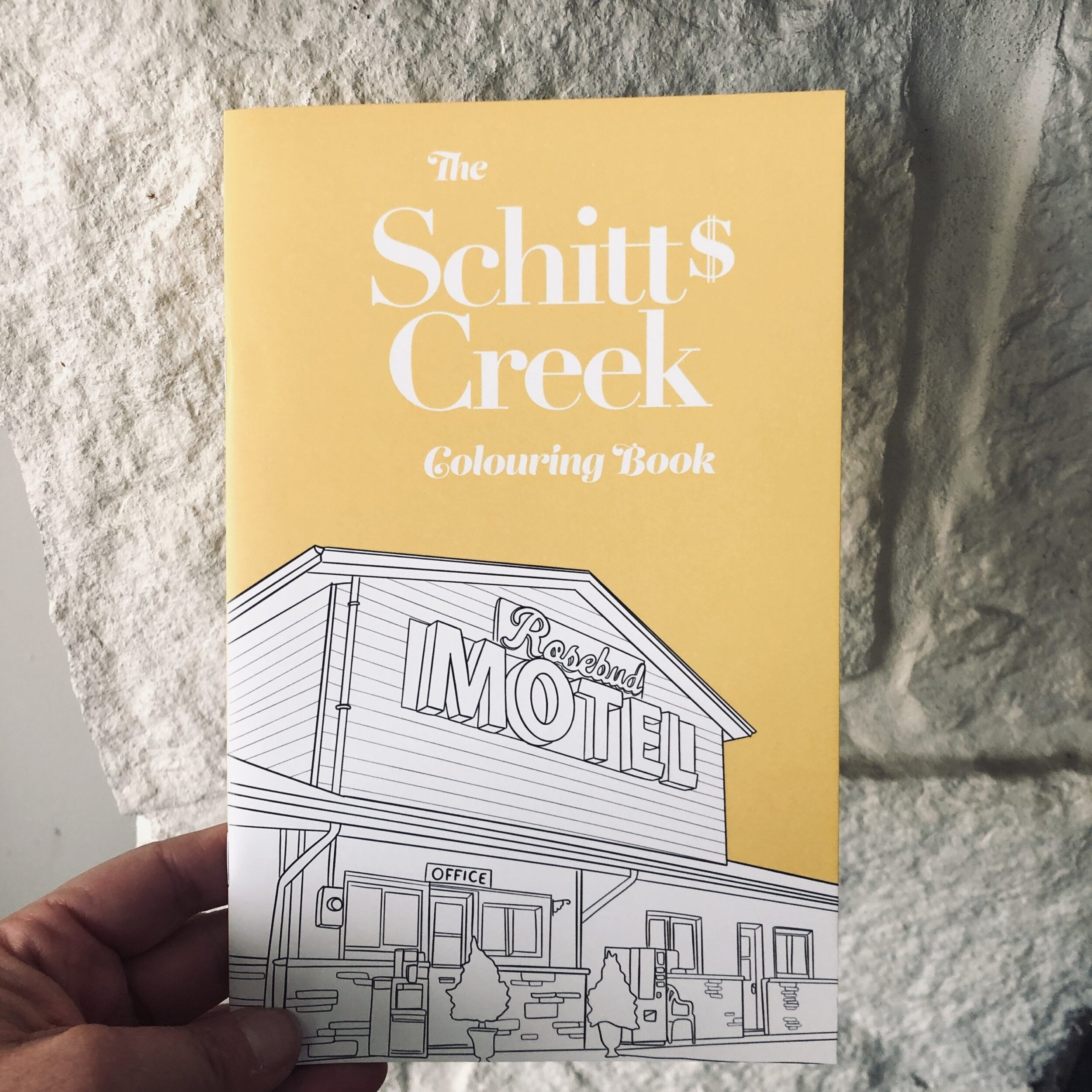


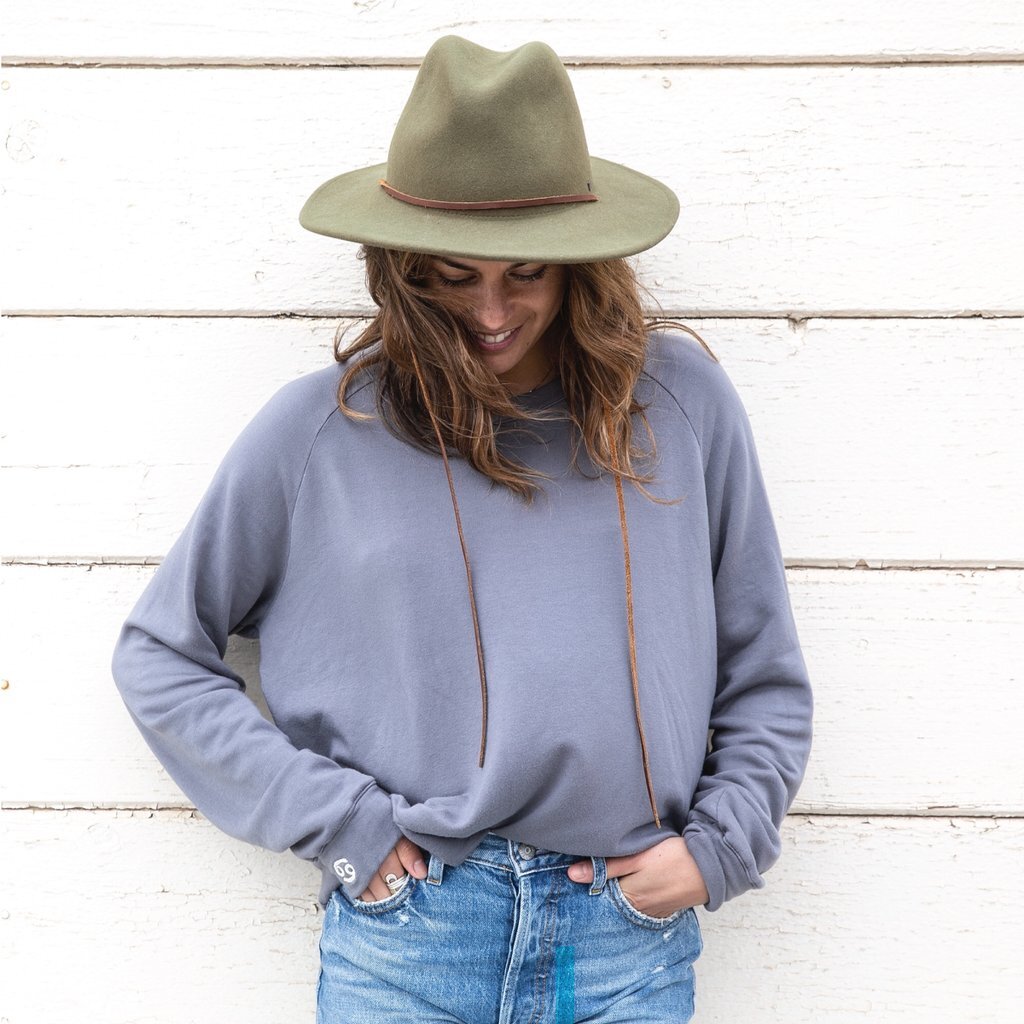
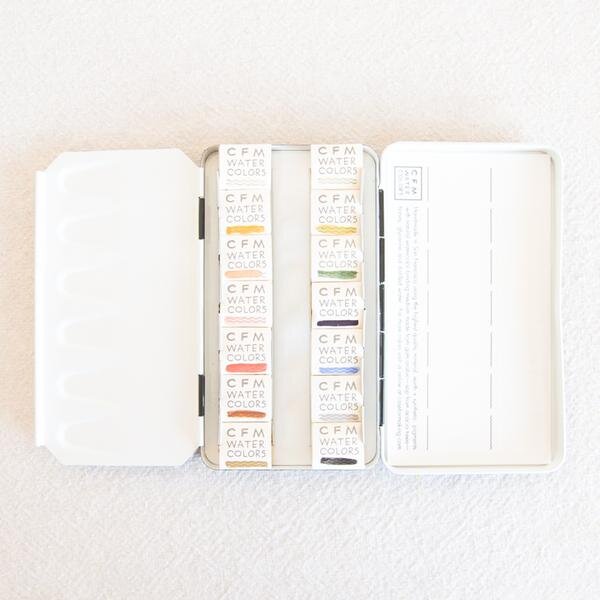
Local Spotlight
If you live in the SF Bay Area, we hope you’ll join us in supporting these women-owned brands and businesses. Each of them has impacted us and helped to lift us up through this time, and we want to do the same for them.