

Finding presence through tactility by Sarah Robertson
How sensory activities and physical objects can bring us home to ourselves.

All photos courtesy Sarah Robertson
We are increasingly living in a state of digital abstraction, consuming stories and making connections through the blue light of our screens.
Yet we often finish a session of scrolling feeling strangely detached, as if we’ve travelled miles without ever having moved. So how do we find our way back?
How do we ground ourselves when the digital world pulls us toward endless distraction or when the rhythms of our own lives feel chaotic and overwhelming?
For me, the answer lies in tactility.
“The hands are the instruments of man's intelligence.”
— Seneca
Sensory rituals
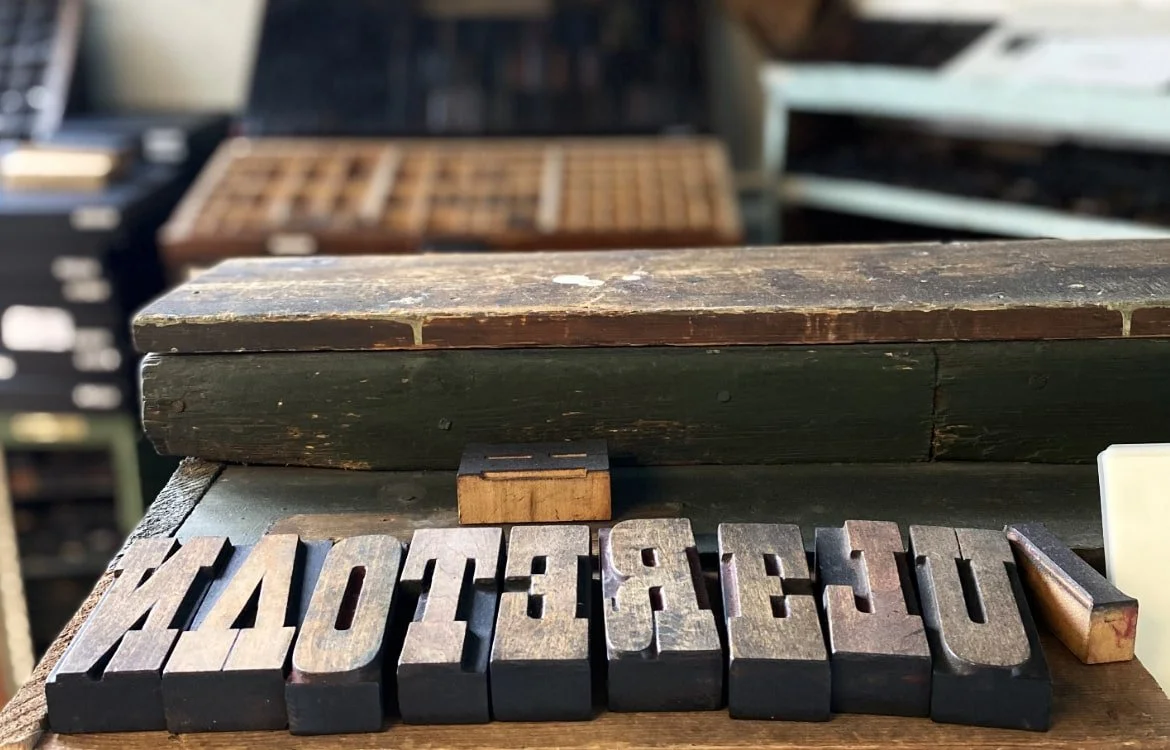
I recently took my daughter on a creative pilgrimage to Robert Smail’s Printing Works, one of the few remaining Victorian letterpress printers in the UK. It’s a quiet place, filled with the scent of ink and the rhythmic clunk and whirr of cast-iron machines.
Watching the type being laid one character at a time, I was struck by how much patience and presence are required in the physical act of making. As my daughter made her own bookmark, it struck me that there’s a profound magic in things that have weight, texture and even scent
The feel of paper, the impression of a letterpress print, the resistance of a pen as we write — these aren't just aesthetic preferences. They’re sensory signals, acting as anchors, pulling our attention away from the infinite expanse of the internet and back into the immediate, physical moment.

Objects as anchors
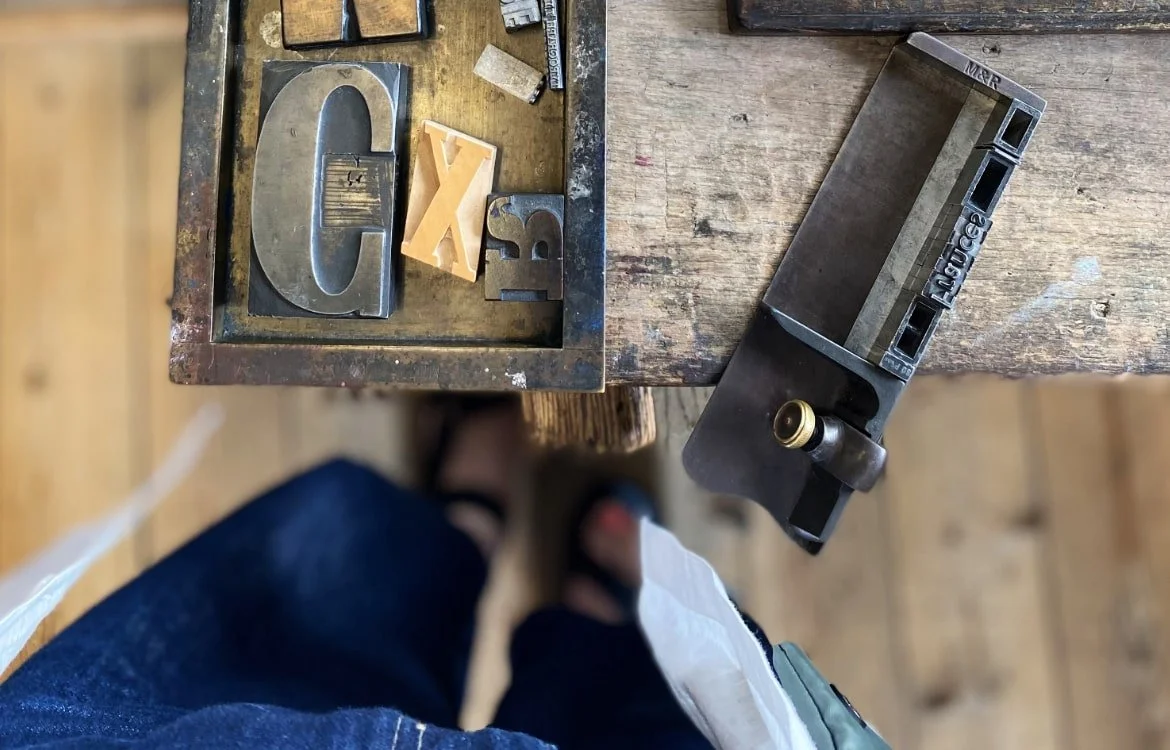
When we engage with a physical object — be it a beautifully bound book, a ceramic mug held in both hands or a wellbeing journal like those created by If Lost Start Here or Saorsa Psychology — we engage in ritual. We’re choosing a medium that requires us to slow down.
I’ve come to realise that these sensory moments aren’t about productivity; they’re about protection. They create a soft space for our thoughts and ideas to arrive. In a busy world that asks us for polish and perfection, the tactile world offers us permission to be messy. There’s a grace in imperfect action…the scribbles, the ink stains, the sketches. These moments signal to our nervous system that it is safe to land, to be.
This sense of ritual is something I used to enjoy exploring through the concept of the "Artist Date", a weekly practice of seeking out sensory, playful experiences to refill our creative wells, popularised by The Artist’s Way by Julia Cameron. Of course, it doesn't have to be an excursion to a printing works; it can be as simple as choosing a specific notebook for your morning reflections or finding joy in turning the pages of a new magazine.


Returning to self
The tools we use to care for ourselves matter. In seasons where our capacity feels limited, or life feels loud, these tactile anchors become even more vital.
For me, it’s a reminder that creativity and connection don't always require grandeur; they require mindfulness, maybe even playfulness. And I’ve learned that the value of these rituals isn't in the "finish line" or the end result. It’s in the returning; the decision to show up for ourselves and our curiosity, even when we feel uninspired.
By choosing the tactile, we choose the real. By choosing the moment, we choose to be here.
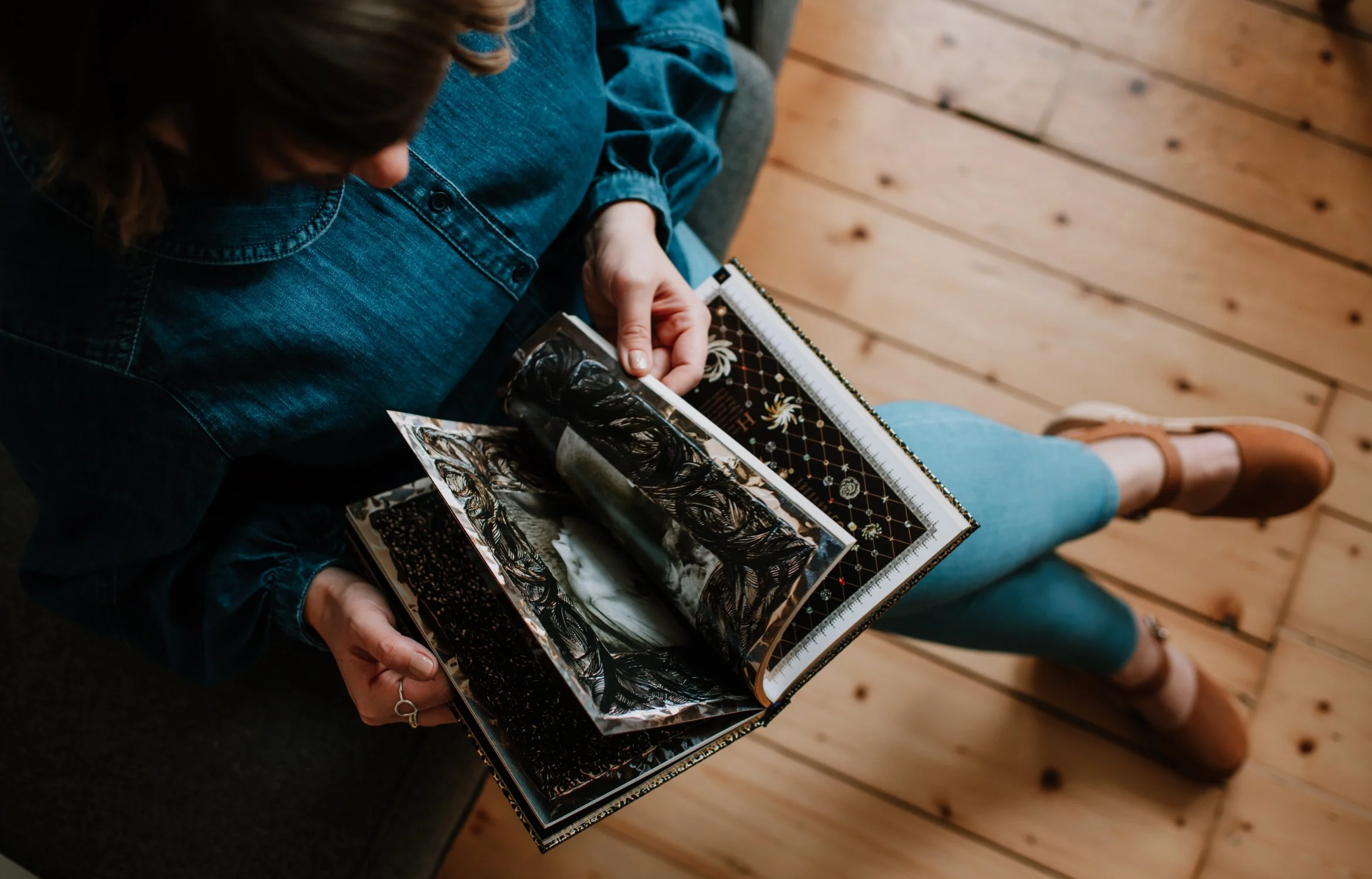
This love for the sensory is woven into the very fabric of my upcoming book, Shape Your Brand Story. This tactile companion for founders, makers and creatives is a beautifully crafted hardback — complete with gold foiling and accents — something to be held and enjoyed as you navigate the cycles of your branding and business journey.
Do you have a tactile ritual that helps you transition from the digital world into a more intentional space? Whether it’s the scratch of a fountain pen on paper or the ritual of opening a fresh journal, I’d love to know what helps you slow down enough to notice.
Sarah Robertson is the creator of the Brand Seasons® Method, a cyclical approach to branding and business that inspired the Brand Seasons® Playdeck and Playbook.
Through her storytelling studio, Fonn, she helps founders, makers and creatives define their vision, craft beautiful visuals and discover their voice. You can find more reflections on intentionality and creativity on her Substack publication, This Creative Life.
Sarah’s first book, Shape Your Brand Story, is being published with 91 Editions this autumn and is now available to pre-order.
How Japanese Spirituality Can Help Us Feel Less Lost
What Japanese spirituality can teach us about wellbeing, grief and uncertainty from everyday rituals and noticing beauty to finding comfort in living between belief and doubt.
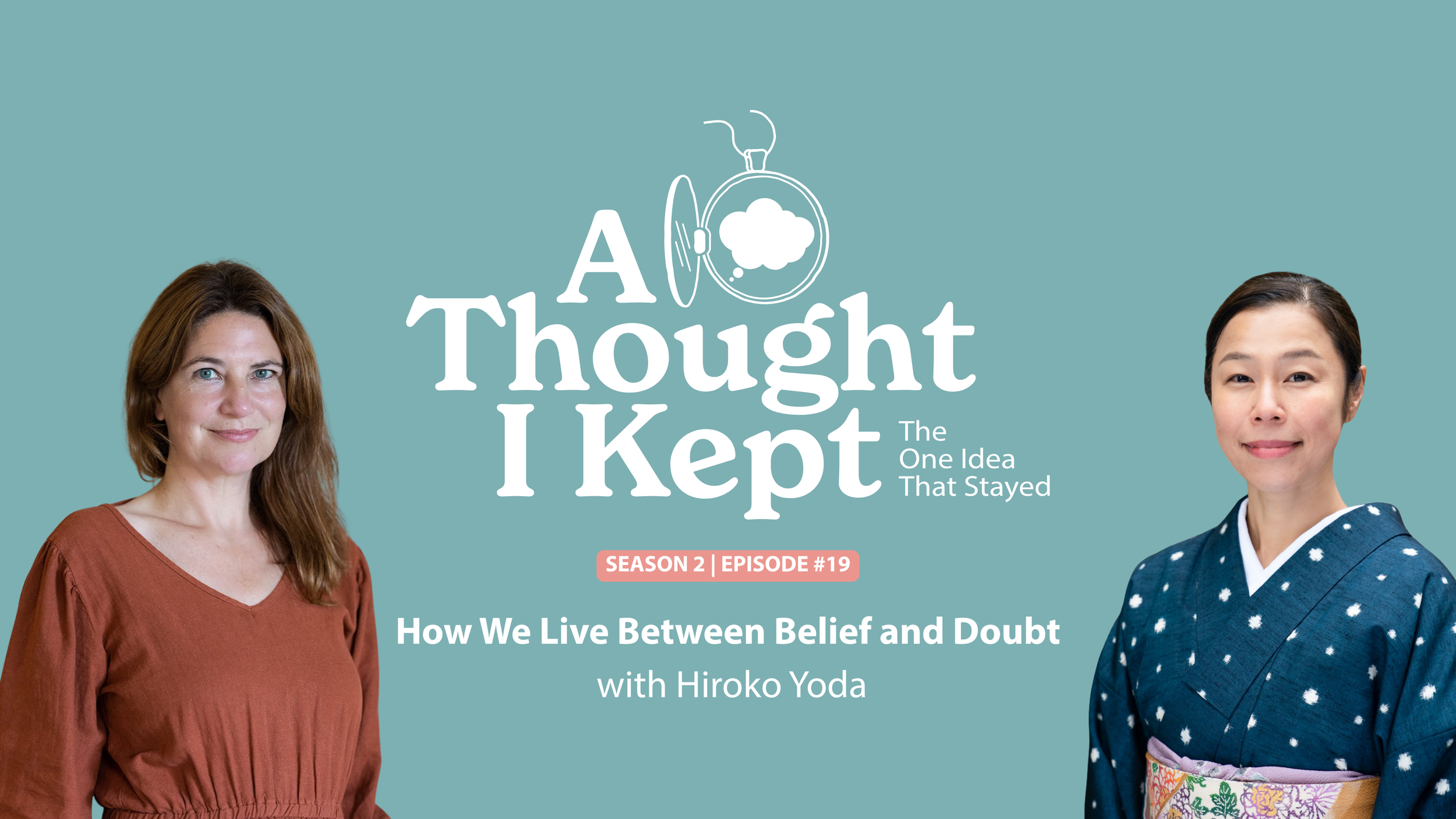
The park was the same one Hiroko Yoda had walked through countless times before. Same paths. Same trees. Same shrine tucked quietly amongst the landscape. But after her mother died, she could barely see any of it. She describes walking with her head down, shuffling through the park and back home again, where she would cry. Then repeat it the next day. And the next. Until one day she looked up.
She noticed the birds first. Then the maple trees. The shifting light through the leaves. A shrine she must have passed hundreds of times before. And in that moment, something changed. Not because her grief disappeared or because she suddenly understood everything about life or death or spirituality, but because she no longer felt entirely alone inside the world.
I haven’t stopped thinking about that since we recorded our conversation for A Thought I Kept.
Partly because I think many of us know what it is to move through life with our heads down. To become so overwhelmed by grief, anxiety, burnout, uncertainty or simply the sheer weight of being human that the world narrows around us. Our lives become logistical. Functional. We focus on getting through the day, answering messages, making dinner, remembering appointments. We stop noticing what is around us because we are working so hard to hold ourselves together within it.
And yet so much of what Hiroko shared in our conversation was about exactly that: noticing.
Noticing what remains. Noticing what connects us. Noticing the things that quietly hold us when we feel lost.
Her book, Eight Million Ways to Happiness, explores Japanese spirituality not as a rigid belief system but as something lived alongside everyday life. Something woven into nature, rituals, food, language, grief, playfulness and community. In Japanese spirituality, kami — spiritual presences — exist not just in shrines or sacred spaces, but in trees, rivers, mountains, words, objects and everyday acts of care.
I think what struck me most was how different this felt from the way spirituality is often discussed in wellbeing spaces. So much modern wellbeing culture seems obsessed with certainty. Morning routines that promise transformation. Manifesting practices that suggest we can think ourselves into a better life. The pressure to optimise, improve, transcend.
But Hiroko kept returning to something much softer and more spacious than that.
The Japanese idea of hanshin hangi — half belief, half doubt. The permission to remain somewhere in the grey zone. To not fully know. To allow uncertainty to exist without rushing to resolve it.
Honestly, it felt like a relief.
Because I suspect many of us already live there, whether we admit it or not.
We carry objects that mean more to us than they logically should. We talk to people we’ve lost. We feel calmer by the sea. We light candles. We keep rituals we cannot entirely explain. We sense that some places hold energy. We wonder whether there might be more to life than what we can immediately see or prove.
And then, often, we dismiss ourselves. We tell ourselves we’re being silly. Irrational. Dramatic.
What I loved about Hiroko’s perspective was that it made space for both curiosity and scepticism. Both wonder and uncertainty. Both grief and joy.
At one point in the conversation she talks about eating a banana at breakfast and saying itadakimasu beforehand — “I humbly receive.” And suddenly the banana stops being just a banana. It becomes the people who grew it, transported it, stocked it, bought it. It becomes weather and soil and labour and unseen connection.
That stayed with me because I think many of us are searching for meaning whilst overlooking the small moments where meaning already exists.
Noticing can become a kind of spiritual practice.
Making coffee in the morning. Opening the curtains. Walking the dog. Watering plants. Speaking kindly. Taking the long route home. Sitting quietly before the rest of the house wakes up.
Not because these things solve our lives, but because they return us to relationship with them.
And perhaps that matters especially when we feel lost.
Often when we feel uncertain, we assume we need dramatic change. A new version of ourselves. A breakthrough. A complete reinvention. But sometimes what we actually need is a gentler way of relating to where we already are.
Hiroko spoke beautifully about how Japanese spirituality allows opposites to coexist. Joy and sadness. Gratitude and anger. Light and darkness. She talked about how grief changed shape over time, how writing about her mother softened certain memories and complicated others, how healing was not neat or linear but layered.
I think there’s comfort in that too.
Because many people arrive at wellbeing feeling as though they are failing at it. Failing at being positive enough, resilient enough, healed enough, grateful enough. But perhaps wellbeing is not about eliminating darkness or uncertainty. Perhaps it is about learning how to stay connected to ourselves and the world around us whilst those things exist.
To look up occasionally, even when life feels heavy.
To notice the shrine amongst the trees.
To let a cup of coffee become a moment of connection rather than simply fuel.
To allow for half belief and half doubt.
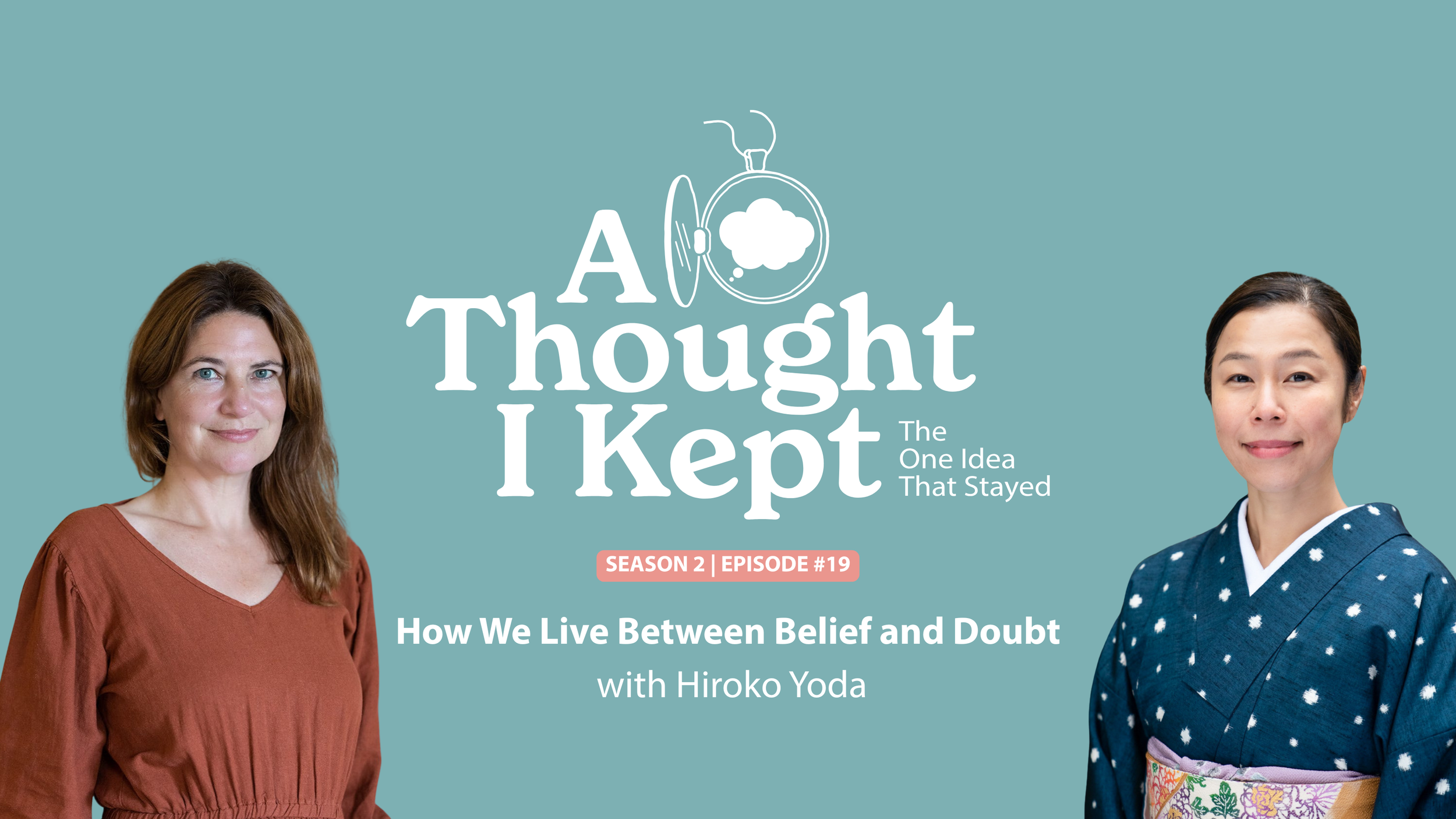
If this resonates with you, you might enjoy my conversation with Hiroko Yoda on A Thought I Kept. We talk about grief, spirituality, uncertainty, belonging, rituals and the unseen threads that connect us to each other and the world around us.
And if you’re navigating your own season of uncertainty or emotional overwhelm, you can also explore coaching and support through If Lost Start Here. Not to fix yourself or become someone new, but simply to have somewhere to think things through more honestly and openly.

When Wellness Isn’t Working: A Few Small Things That Might Actually Help
Self-Care Feeling Like A Chore? Here’s What Might Actually Help.
Or: A Wellbeing Prescription for People Who Are a Bit Tired of Self-Care
There’s this moment that happens, usually when you’re standing in your kitchen at 9 pm, surrounded by unopened supplements, a meditation app you never use, and a wilting bag of spinach you meant to juice.
And you catch yourself thinking:
When? And how? And maybe why?
You might even ask this: What is going on with this wellness thing anyway? Is it really helping me feel better, or has it become another thing that I feel like I’m failing at?
Maybe you’ve tried the things. The early mornings. The gratitude lists. The wild swimming trend. Maybe you have six lists in the notes app on your phone with titles like “Things That Might Help”.
And maybe none of them have really helped in the way you hoped. Or they did for a moment, but you couldn’t sustain them beyond the three days that you managed to fit them in before life took over again.
Wellness might have once felt simple. Now it can tend to feel like homework.
There’s always something new to do. Another morning routine to master. Another life hack to implement. Another hot take about gut health or cold plunging or celery juice, or which milk you should actually be drinking.
And all of it — somehow — starts to feel like work.
Which is wild, really, when you think about what wellness is supposed to be: care, comfort, restoration, return.
But this is where so many of us seem to have landed — in a place where self-care feels like another thing to get right.
So what do we do when wellness starts to feel like a chore? When it’s not that we want to abandon caring for ourselves — but we definitely want to care differently?
We look somewhere else.
We step sideways.
We get messier, softer, smaller.
We look for things that feel less like a regime, and more like a reminder — of what feels human. What feels good. What feels possible.

In this month’s Wellbeing Prescription, we curated a handful of books, podcasts, ideas, and places that won’t ask you to be better or do more.
They won’t tell you to wake up at 5 am or optimise your sleep cycle.
But they might just make you feel a little more like yourself again.

Books for Wellbeing Confusion
Real Self-Care by Dr Pooja Lakshmin — for redefining what care really means
I Didn't Do The Thing Today by Madeleine Dore — for gentle rebellion against productivity culture
I Haven’t Been Entirely Honest With You? by Miranda Hart — for humour and humanness in equal measure
Wellness by Nathan Hill — for recognising yourself (for better or worse) in fiction
Browse more of our edit of the books that can help you navigate the sometimes overwhelming world of wellness.

Podcasts to Walk With
Everything Happens with Kate Bowler — for kindness + complexity
Maintenance Phase — for myth-busting wellness culture
The Happiness Lab — for the science of what actually matters
Discover more podcasts that can help you find a more real-life approach to wellness here.

TV to Watch Without Guilt
Ted Lasso — for joy and simplicity
White Lotus— for sharp, biting wellness satire
Nine Perfect Strangers — a wellness resort offers more than it says in the brochure
Shrinking — what happens after your therapist says that’s time
Loot — for when wellness means a water bed filled with camomile tea and a koi pond filled with fish you are slightly scared of (the billionaire kind then)

Places To Go (or Imagine Going)
Self Space — therapy without clinical vibes
The School of Life — for thoughtful people being thoughtful
The Happy Place Festival — for connecting with others around what feels-good
A bench. Any bench. Sit. Breathe. Watch the pigeons.

An Alternative Daily Practice
Do less, without feeling guilty about it.
Be curious, not perfect.
Look for life-giving things, not life-hacking things.
Optional Side Effects
Reduced panic at the phrase wellness routine
A new fondness for Miranda Hart
Increased compassion for literally everyone just trying to get through the day
Lowered expectations (in the best possible way)
Tiny, steady improvement in your relationship with your own wellbeing

Join In
What would you add to this prescription?
A book that soothed you. A podcast that helped. A small thing that felt like magic (or relief) in the middle of a very ordinary day.
Join this discussion on Substack and Instagram.
And while you’re at it, what should go in the next Wellbeing Prescription? What small, everyday things feel like they need their own remedy?
Because maybe wellness isn’t broken.
Maybe it’s just due for a rewrite.
Curious about your unique way to well? Learn more about our wellbeing sessions.

Exploring Emotions, Connection, and Wellbeing Through Podcasts
Discover the best podcasts for exploring culture, emotional connection, and wellbeing. From The Hidden Brain to Noticing, explore some inspiring stories, practical tools, and cultural insights in our latest podcast playlist in our Culture Therapy series.
What makes a culture thrive? How do emotions, traditions, and shared narratives influence our collective wellbeing? Welcome to our Culture Therapy series, where we learn about the intricacies of human connection, emotional health, and the shared experiences that shape our world through podcasts, books, and more.
This month, our curated podcast playlist highlights some incredible podcasts that offer fresh perspectives on culture, emotions, and our everyday wellbeing.
Podcasts About Emotions and Connection
Podcasts like Noticing and The Hidden Brain focus on how we connect with ourselves and others. In Noticing, Maggie Ward and Urvi Patel explore the roots of disconnection, sharing practical strategies like self-compassion, thought interruption, and micro changes that foster deeper reconnection. Meanwhile, The Hidden Brain series Emotions 2.0 examines how emotions spread and intensify in group settings, from the shared joy of concert crowds to the power of communal rituals like fire walking.
Podcasts About Cultural Narratives
Exploring the stories that shape culture, Conspiracy She Wrote reveals the women-led origins of conspiracy culture, tracing the roots of Illuminati paranoia to figures like Nesta Webster. Similarly, Don’t Drink the Milk examines the legacy of witch hunts, uncovering how these historic events continue to inform modern power dynamics and societal fears.
Science-focused podcasts like The Infinite Monkey Cage also weave cultural threads into their explorations, from how stargazing has shaped civilizations to the beauty and environmental significance of trees, featuring guests like Dame Judi Dench.
Podcasts That Inspire and Entertain
Storytelling is a powerful way to connect with culture and well-being. Comedian Amy Gledhill hilariously recounts her day on What Did You Do Yesterday, reminding us of the joy in life’s small moments. In Intersections, Lauren Layfield introduces immersive soundscapes and interviews with notable Angelenos to preserve Los Angeles’ untold stories.
For those exploring relationships and personal identity, Single Ladies in Your Area follows Amy Gledhill and Harriet Kemsley navigating the modern dating scene, while Kylie Kelce’s Not Gonna Lie balances humor, holiday traditions, and personal insights from guests like Charissa Thompson.
Why Podcasts Matter for Culture Therapy
Podcasts are a treasure trove of ideas, offering tools for emotional wellbeing, cultural understanding, and even some healthy distraction. From unpacking disconnection to exploring shared narratives and communal experiences, these episodes will help you explore more of life.
As you listen, think about how these podcasts might inspire you to move toward connection with yourself, each other and the world around you.
Whether you’re drawn to emotional health, cultural history, or lighthearted storytelling, there’s something here to spark some new thoughts and bring fresh perspectives to your sense of self and the world around you.
Ready to explore how stories, art, and culture can shape your emotional well-being? Discover Culture Therapy—a new approach to finding meaning and connection in everyday life.
Explore curated recommendations and insights designed to inspire and support you. Because sometimes, the right story or even podcast can be the best remedy.

A Very Well-ish Holiday Season: Navigating Family Dynamics with Grace and Joy
Discover how to approach family relationships this holiday season with kindness, curiosity, and connection. Let go of perfection and embrace what truly matters.
The holidays are here, and with them come the anticipation of connection, the glow of festive lights, and yes, the occasional family dynamic that feels more like a tangled string of fairy lights than a harmonious carol. In this post, we’re diving into how to navigate family relationships during the holiday season with compassion, curiosity, and a little less pressure.
If you're finding this time of year both heartwarming and nerve-wracking, you're not alone. Let's explore how to approach family relationships with a little more ease this season.
The Holiday Ideal vs. Reality
We often envision picture-perfect holidays: meaningful conversations, shared laughter, and moments of reconciliation. But reality can bring its own scenes—perhaps an awkward silence at dinner, a tense exchange, or a tradition gone awry. It’s important to remember that perfection is neither attainable nor necessary for connection.
The key? Letting go of rigid expectations. Instead of aiming for a movie-worthy holiday, focus on embracing the small, authentic moments of connection. Whether it’s a shared laugh during a holiday game or simply sitting together by the tree, these are the memories that truly matter.
1. Let Go of Perfection
The pressure to create a flawless holiday experience can weigh heavily. From planning the "perfect" menu to finding the "ideal" gift, this season often comes with an invisible checklist.
This year, consider letting go of one expectation. Maybe it’s allowing someone to arrive late without stress or accepting that not everyone wants to join the Christmas jumper tradition. By releasing some control, you open the door to unexpected joy.
2. Shift from Reacting to Responding
Family gatherings can sometimes bring out old dynamics or unresolved tensions. When emotions run high, it’s easy to react. Instead, try pausing and practicing curiosity:
What might this person be feeling right now?
What value or need might be driving their behavior?
How can I respond in a way that feels true to me?
By approaching situations with curiosity, you can create emotional distance and respond with intention rather than reactivity. Remember, this isn’t about excusing bad behavior but about navigating tricky moments with grace.
3. Cultivate Collective Care
The holidays shouldn’t rest solely on your shoulders. Consider inviting others to share the load, both emotionally and logistically:
Assign tasks: Have someone bring a dessert or a favorite side dish.
Share traditions: Invite others to take ownership of decorating or reading a holiday story.
Create opportunities for connection: Conversation starters or collaborative activities like baking can foster shared joy without adding to your to-do list.
The holidays are about being together, not delivering a perfect experience.
4. Break Old Patterns
Holiday gatherings often pull us into roles we’ve outgrown. Whether you’re the peacemaker, the overachiever, or the one who withdraws, take a moment to notice these patterns. Then, experiment with small changes:
If you tend to take on too much, practice saying no with kindness.
If you usually retreat, try staying present, even if it’s just for a few extra moments.
Breaking old habits can create space for new, healthier ways of being together.
5. Find Joy in Presence, Not Perfection
In the midst of the busyness, it’s easy to lose sight of what the holidays are truly about: enjoying the people we care about. Joy doesn’t require grand gestures—it’s often found in the little things:
Watching a holiday film together.
Sharing a quiet moment by the tree.
Laughing over a shared mishap.
This year, focus on what’s already here rather than striving for what’s missing. Ask yourself: “What’s one moment I’m looking forward to? How will I recognize joy when it appears?”
Family dynamics during the holidays are rarely perfect, but they don’t have to be. This year, let go of the need to manage every moment or fix every relationship. Instead, lean into curiosity and allow for surprise. Let kindness—for yourself and others—guide your interactions.
And if the season feels overwhelming, step back, take a breath, and reconnect with the people or moments that bring you warmth. The holidays are about being in it together—not creating a perfect façade.
What Are Your Thoughts?
What’s one expectation you’re letting go of this holiday season? Or a tradition you’re excited to embrace? Join the conversation on Substack or Instagram. If this post resonated with you, consider sharing it with someone who might need a little extra support navigating their holiday season.
Wishing you a season filled with small joys, meaningful connections, and a little less stress.

Embracing the Winter Season: Finding Magic in these Darker Months
Discover how to embrace winter's challenges and uncover its magic. Learn the art of slowing down, connecting with nature, and nurturing yourself through cozy practices and meaningful connections. Wintering well starts here.
Welcome to an exploration of a season that, for many, can feel daunting and seemingly endless: winter.
Much like you, I too have wrestled with the challenges that this cold and often gloomy time of year can present. Today, I want to challenge myself, and maybe you too, to find ways not just to endure but embrace winter, discovering a bit of magic along the way.
Winter isn't my favorite. It can feel relentless and isolating, casting a shadow over everything I do. I recognize its impact on my mental well-being, so I’m currently trying to make peace with it.
My goal this winter is to uncover some of its hidden gems—those small moments of beauty and coziness that might make the season more bearable, perhaps even enjoyable.
The Art of Wintering
My perspective began to shift after reading Katherine May's book, Wintering, which explores winter not merely as a season, but as a state of being. This time invites us to slow down, even when it feels uncomfortable. May's wisdom encourages us to accept winter's potential benefits—a more restful period in our lives.
I've come to see the tension in winter as both a call for productivity and an invitation to rest. The shorter days urge us to pause.
Could slowing down actually be productive? It's a question that might help us better navigate the different pace of this season.
Lessons from Nature
Could nature guide us through winter's challenges? Trees drop their leaves, conserving energy. Hedgehogs hibernate. Seeds rest beneath the earth. Nature embraces its seasons. Can we do the same?
The concept of the "fertile void"—a space where nothing seems to happen on the surface, yet beneath there's preparation and potential—resonates with me, particularly in the winter.
Are we, by slowing down, able to prepare for something needed right now, that might even return us back to ourselves in future months?
Connection: A Winter Essential
In winter, self-care often focuses on going inward. While important, there's also a need for connection. We must remember to lean on each other. Connection combats isolation and its creeping melancholy.
Consider small acts of connection this winter. Reach out—invite a friend for a walk, send a heartfelt message.
Building these threads of connection can lift us, and help us through these cold months.
Acceptance and Curiosity
Winter is an opportunity to disconnect from constant productivity and embrace the season's messy middle—the space between endings and beginnings.
We don't need to have it all figured out. Exploration can keep curiosity alive.
Whether it’s trying new recipes, chasing the light, or asking what sparks your curiosity now, these are paths winter opens for us.
Anchoring Ourselves
I've found anchoring practices helpful to remain present in ways that feel good this winter. A daily 3-2-1 practice—three things I’m grateful for, two things I’m curious about, and one act of kindness for myself or others—brings new awareness to my days.
Consider creating a well-being winter toolkit: perhaps the crackle of a fire, a glow of candles, a cozy weighted blanket, or a beloved seasonal movie.
What small comforts help you anchor in winter?
Seeking Ways to Wintering Well
Wintering well is not about fighting the season but listening—finding rest and connection in its quiet months.
Ask yourself: What would wintering well look like for me? Resting more, reaching out more, or simply acknowledging the good already present in your life?
What strategies have you developed to handle winter?
Until next time, take care, stay warm, and remember that if winter does not become your favorite season, spring is just around the corner.
Coming soon: how to navigate messy family relationships during the holidays—right when we need it the most.

Reads to make your summer that much better
Explore what makes the perfect summer read with our curated selection of books for every mood and moment.
What makes the perfect summer read? Is it the latest bestseller purchased in the airport while racing to your flight? Is it the book your sister-in-law just finished, passed to you across the beach lounger? Or is it a book you bought long ago that you’ve never quite had the time for until now?
We’ve rounded up our picks for summer reading this year. Some are recent hits. For others all the chatter happened a while ago. Books are made to last so we’ve included a selection of our favorites from different moments, for different moods, and with different intentions.
The One You Won’t Want to Put Down | Romantic Comedy, Curtis Sittenfeld
To be read by the pool. On the plane. In bed in the morning. At any moment you can grab really. Curtis Sittenfeld's Romantic Comedy is a witty and insightful exploration of love and modern relationships set against the backdrop of a late-night comedy show. With sharp humor and relatable characters, this novel offers a fresh take on the classic rom-com genre. If the sun isn’t warming you, this book will.

The Joyful Read | Still Life, Sarah Winman
Probably the book we most recommend at the moment. We read this earlier in the year and regretted that we hadn’t sooner. Sarah Winman's Still Life is a heartwarming tale that spans decades, blending art, love, and friendship in post-war Florence. At a moment when we’re only ever reminded about what divides us, this book shows how we can make our lives better by connecting, both wildly and with joy.
The Darker And Twistier One | The Marriage Portrait, Maggie O’Farrell
And the opposite, though still a great read that you’ll tear through. Maggie O'Farrell's The Marriage Portrait is a captivating historical novel that transports readers to Renaissance Italy, unraveling the life of Lucrezia de Medici through a richly woven tapestry of art, power, and intrigue. Full of twists, turns, and surprises.
The Secret Find | Enchanted April, Elizabeth von Arnim
We picked this up after our local bookshop Winstone’s made it their book club pick of the month. Knowing nothing about Enchanted April this book has become one of our surprise reads of the year. Elizabeth von Arnim's novel published in 1922 is a delightful escape to a sun-drenched Italian castle, where four women find renewal and unexpected friendships. If you want to still believe in people’s capacity to change and to surprise themselves, read this. Though it captures the magic of springtime and renewal, it’s still perfect for a summer when we’re all longing to feel more hopeful.

The Heavy Book That Shouldn’t Have A Place In Your Suitcase But Does | Wolf Hall, Hilary Mantel
Summer doesn’t have to mean new. Or light. Or contemporary. It can mean older, weighty, and historical. During the non-summer months, we often fall asleep after a few pages because we are so, so exhausted. But on vacation, with the promise of more hours free, that also hopefully means more hours for reading. That’s where Wolf Hall (and the following two books in the series) can come in. Hilary Mantel's masterful historical novel brings to life the complex and cunning world of Thomas Cromwell in the court of Henry VIII. With its rich detail and compelling narrative, this Booker Prize-winning book will immerse you in the political intrigue and drama of Tudor England. Deeply engrossing, you’ll ignore everyone you’re on holiday with.
The One Everyone Else Has Read (and Watched) Except You | One Day, David Nicholls
Yes, we spent spring talking about the Netflix show. Yes, there’s another book out by David Nicholls that we’re falling for too. But in case you haven’t read One Day, do. Not just a beautifully crafted love story between the seemingly mismatched Emma and Dexter as we revisit their lives on the same day each year, but a nostalgic remembering of the two decades that it spans. It may even have you longing for a pre-smartphone age.
The One That Will Have You Thinking | Such a Fun Age, Kiley Reid
This came out some years ago but it’s still lodged in our heads. Such a Fun Age is a sharp and thought-provoking novel that delves into issues of race, privilege, and identity through the lens of a young Black babysitter and her well-meaning employer. Summer reading doesn’t have to mean throwaway; it can include those books that just stay with you through the years. This is one of them.

The Trusted And True One | Tom Lake, Ann Patchett
Really anything by Ann Patchett. Could be The Dutch House, Commonwealth or These Precious Days. We’re mid Tom Lake, and we couldn’t leave this off the list. Already we’re been drawn into one of those intimate stories that only Patchett can tell. It’s a beautifully crafted novel that explores themes of love, memory, and family through the lens of a summer theater production in Michigan. By the time you read this, we will have finished it and will be reaching for the next Patchett novel. We’re slightly envious that you’ve yet to start.
The Ultimate Summer Read By The Ultimate Summer Author | People We Meet on Vacation, Emily Henry
Pick anything by Emily Henry and you’ve got the perfect summer escape. We first discovered her with Beach Read which is exactly what it says on the cover. People We Meet on Vacation is a delightful and heartwarming romance that follows the evolving friendship and love between travel writer Poppy and her best friend Alex. An easy, breezy summer read.
Let us know if any of these become your favorite summer read. And tell us about other book discoveries from this summer or those long past.
Love books as much as we do? Explore our Culture Therapy series or book an appointment to match the best podcasts, books, or series with what ails you.

Rediscovering connection through Taylor Swift's Eras Tour
Discover how Taylor Swift's music fosters emotional connection and self-discovery. Learn how her songs can help you connect more deeply with yourself and build meaningful relationships with others.
Ever found yourself caught in the whirlwind of Taylor Swift's universe, endlessly scouring for concert updates, dissecting lyrics, and soaking in every moment of her performances?
If you're seeking ways to connect more deeply with yourself and others, you're not alone in turning to Swift. Let's delve into how the pop superstar’s music has become more than just entertainment; it’s now our collective way to both self-discovery and meaningful connection.
The power of collective effervescence and emotional connection
In his studies on awe, psychologist Dacher Keltner explores the concept of 'collective effervescence,' where shared experiences create a sense of unity and awe. Taylor Swift's music acts as a catalyst for this phenomenon, bringing people together from all walks of life.
In a world plagued by loneliness, her concerts become sanctuaries of togetherness, where we find solace in shared emotions and experiences. For those seeking an emotional connection, Swift's music offers a powerful way to bridge the gaps between our fragmented lives.
Embracing emotional freedom through music
Swift's songs serve as emotional landscapes, inviting us to feel deeply and authentically. In a society that often encourages emotional suppression, her music gives us permission to embrace our vulnerabilities, to cry, to laugh, to rage, and to love without restraint.
Through her narratives, we confront our own emotional narratives, challenging beliefs that hinder our connection with ourselves and others.
For anyone looking to connect more with their feelings, Taylor Swift's music provides a safe space to explore and express emotions.
Writing our own stories and building connections
As we immerse ourselves in Taylor Swift's music, we not only find connection but also inspiration to rewrite our own stories. Her openness about the messy, imperfect parts of life reminds us that it's okay to not have it all figured out.
We're encouraged to embrace the complexities of our existence, to acknowledge our struggles, and to find beauty in our imperfections.
For those wanting to connect more with who they believe themselves to be and how they are really living their lives, Swift's music is a guide for how to do this with courage and vulnerability (the two often go together).
Embracing our own eras
As the Eras tour unfolds, it's more than just a musical spectacle; it's a phenomenon centered on being seen and feeling connected.
Through Taylor Swift's music, we find camaraderie, emotional release, and a renewed sense of self.
So, let's lean into the melodies, the lyrics, and the shared experiences, knowing that in each chord and verse, we find echoes of our own stories, our own struggles, and our own triumphs.
For anyone looking to connect more with themselves and others, Taylor Swift's music offers a heartfelt path forward.
Ready to deepen your connection with yourself and others? Subscribe to our newsletter for more insights on emotional wellness and join our community of like-minded individuals on this ever-meandering journey of self-discovery.
Plus, get exclusive updates on how music and other forms of art can enrich your life (see our Culture Therapy series for more).
Click here to subscribe now and start connecting with yourself, each other, and the world around you in new and creative ways.

The best self-help books for when you're feeling lost
The best self-help books by female authors for when you're feeling lost. These five non-fiction books are our go-to reads when we need more practical support for our mental health and emotional wellbeing.
Self-help books written by men currently dominate the bestseller lists — such as those by James Clear and Eckhart Tolle —although women have traditionally been the primary consumers of these titles. However, female authors have started to gain popularity and draw widespread readership.
We’ve selected our favourite self-help books by female authors that we turn to when we’re lost. These five non-fiction books are our go-to’s when we need more practical support for our mental health and emotional wellbeing.
A self-help book to connect with self-acceptance | Already Enough by Lisa Olivera

We’ve been thinking a lot about self-acceptance over the past month: how we feel forced to mold and shape ourselves into something else just to be, and the one book we’ve been turning to as an antidote to that perspective is this one. Lisa Olivera’s Already Enough: A Path to Self-Acceptance.
In this book you’re gently encouraged to write a whole new story — and with that invite in a new set of beliefs and possibilities — so that ultimately you can believe in and access your “inherent enoughness.”
Staying in her work as a therapist, Olivera gives us a space to reflect on what our story is: such as needing to be perfect to feel worthy, having to stay small because our needs don’t matter or not showing up because we don’t belong.
This book feels like having a session with Olivera, as she takes us through practices, questions, and tools to reframe our stories and then courageously integrate new ones. This book is for anyone, who feels less than accepted, who is striving, striving, striving, and wonders what’s beneath that.
““Our stories weave themselves into every aspect of our lives. They shape our reactions and our choices. They influence how we treat ourselves and how we relate to other people. Our stories are guiding forces in our experience of being human.””
A self-help book for when you’re burned out on self-help | Real self-care by Dr Pooja Lakshmin

This is the book we’d been seeking as an antidote to the pressure to do more and more and more. It’s almost an anti-self-help book in that it both challenges some of the assumptions of the ever-improving industry and offers a different, almost unmarketable, set of ideas for how to be.
Dr Lakshmin emphasizes genuine self-awareness over quick fixes, advocating for practices that nurture holistic well-being rather than fleeting indulgences. In this book, burnout becomes a form of cultural betrayal, as we turn to one of three coping mechanisms from the self-help industry: escape, achievement, or optimization.
For Dr. Lakshmin Real Self-Care is self-driven and founded on four key principles:
Setting boundaries around your needs and desires
Treating yourself with compassion which might mean changing how you talk to yourself
Moving closer to yourself by connecting with what matters most to you
Making yourself bigger (rather than smaller) and supporting other women as you do so
Read this if you’re tired of quick fixes or you even experiencing fatigue around the latest wellness trend.
““Wellness dogma says that a fix for your troubles is as simple as buying a new day planner or signing up for a meditation class. And according to this philosophy, when you don’t find time for these “solutions”, it’s your fault for not keeping up with one more task on your to-do list.””
A self-help book for when you feel stuck | Un(Stuck) by Dr Sophie Mort

Dr Sophie Mort’s (Un)Stuck is the perfect book if you’ve ever committed to a habit that didn’t stick, found that you’re stuck in one that you can’t break, or you find yourself getting in your own way.
A clinical psychologist with a Master’s in Neuroscience and the bestselling author of A Manual for Being Human who has become somewhat renowned for taking therapy to Instagram, Dr Soph as she’s known has written an accessible, practical and hopefully impactful self-help book on what to do when we (inevitably) get stuck. So if you’re curious to know what might be getting in the way of anything you want to do (but can’t) read this.
In this book, Dr Soph covers five areas that “people rarely fully understand that get in the way of us being able to take charge of our lives and stop going in circles.”
Heuristics: understanding what these are and how they might be holding you back
Self-sabotage: what it really is (self-rescuing?) and what to do with it when this happens
Games: knowing that you might be playing these, often unconsciously (any rescuers out there?)
History: understanding generational patterns and the scripts that we inherit, and unknowingly live by
When you’re feeling stuck in life, this book can help you get out of your own (often unconscious) way.
““More than 40 percent of our actions are behaviours we engage in without conscious thought.” ”
A self-help book to build self-awareness | Why Had Nobody Told Me This Before? by Dr Julie Smith

Dr Julie Smith’s bestselling book is a toolkit – it’s filled with the lessons we could learn through years of therapy, but that should be available to all of us before we even sit on that couch. Like what’s the baseline for our emotional and mental wellbeing? What are the foundational approaches to better navigate our everyday lives? How can we build a practice when we’re feeling good that serves us when we’re feeling bad?
Drawing from her extensive experience as a clinical psychologist, Dr. Smith distills complex psychological concepts into accessible and actionable advice. The book is structured around key themes such as managing anxiety, battling depression, building self-confidence, and fostering resilience.
Dr. Smith's approach is refreshingly straightforward, offering tools and techniques that can be immediately applied to daily life. She emphasizes the importance of understanding and managing one's emotions, highlighting that mental health is a continuous journey rather than a destination. Through relatable anecdotes, insightful tips, and engaging exercises, we can learn how to cultivate a healthier mindset and develop coping mechanisms for stress and adversity.
One of the standout aspects of the book is its focus on self-compassion and the power of small, consistent changes. Dr. Smith encourages us to be kind to ourselves and to recognize our progress, no matter how incremental.
Why Has Nobody Told Me This Before? is an empowering resource that demystifies mental health and provides a toolkit for building a more resilient and fulfilling life. This is a book to live through and by, which is why it’s one of the most popular self-help books at the moment.
““you have to get to work being your own coach instead of your own worst critic””
A self-help book for when you need a pep talk | Life Skills for a Broken World by Dr Ahona Guha

In the Preface to this book Dr Guha suggests two ways to use it. The first is to read it from start to finish. The second is to dip into it if you’re not feeling great. We’ve done both.
Life Skills by Dr. Ahona Guha is the guide to life that we all need right now as we navigate the complexities of modern life.
As a clinical and forensic psychologist, Dr. Guha leverages her extensive expertise to present a practical manual that covers a wide array of life skills crucial for personal and professional success. The book is structured to address various aspects of well-being, including emotional intelligence, effective communication, stress management, and decision-making.
Dr. Guha's writing is both engaging and informative, breaking down intricate psychological concepts into relatable and actionable advice. Each chapter is dedicated to a specific skill, providing readers with clear, step-by-step instructions on how to develop and hone these abilities. Through real-life examples, interactive exercises, and reflective questions, the book encourages readers to actively apply what they learn to their own lives.
A notable feature of Life Skills is its holistic approach, emphasizing the interconnectedness of different skills and how they collectively contribute to a balanced and fulfilling life. Dr. Guha advocates for continuous learning and resilience, offering insights that are both practical and inspirational.
Life Skills is an invaluable resource for anyone looking to enhance their capabilities and lead a more effective and enriched life.
“This is a book of understanding, of action, of realism, of anti-hustle, and some tolerable discomfort — not a pastel book of self-care, bubble baths, motivational quotes, and polite platitudes.”
These are our favorite self-help books by female authors that offer us guidance as we navigate our lost moments. They speak to the pressures of being a woman in the world today and all we’re now supposed to strive for. Together they offer a much-needed antidote to the idea of doing more to be more by female authors who get it too.
For more ways to navigate life, join our mailing list. Like little doses of (real) self-care in an email.

Lost in May | A Podcast Playlist
Explore our latest podcast playlist. We curated some of our favourite recent listens to help you navigate your everyday life. Discover how these episodes can help your emotional well-being.
We’ve made a Podcast Playlist for you to take on your next walk, to accompany you on your drive, and to make tidying the house just a little less tedious.
This month, there are many new listens including Wiser Than Me, Letters from a Hopeful Creative and It’s Going to be OK. There’s season 2 of WILD, a Southeast LA Rom-Com. And some great stand-out episodes from long-time favourites The Ezra Klein Show, Unladylike, Truth be Told and Normal Gossip. Plus that Clueless episode from Articles of Interest is just Podcast Perfection.
Listening to this playlist lets you know where our interests currently go (it’s a little like reading our journal). From our emerging curiosity about plant medicine to how we think about self-care, you’ll find that we’re seeking voices that offer us more than traditional well-being and counter some long-held narratives about how we should exist in this world of ours.
Hopefully, some ideas and conversations here help you navigate your own life just that little bit better this month.

A Culture Therapy Prescription | March Edition by Beth Nasce
This month’s Culture Therapy Prescription will help you feel good this season. Discover the podcasts, books, websites, apps, events, and places that can connect you with more of what you need for better emotional and mental well-being.
This month’s Culture Therapy Prescription is written by Beth Nasce, a creative celebrant, writer and primary school teacher, whose passions are seasonal living and celebrating all of life's milestones (the big and small). Beth is constantly experimenting with poetry, non-fiction and short stories and helps other people explore their own creativity too.

Connection & Community
Podcasts: The Real Question, and Harry Potter and the Sacred Text, both by Not Sorry Productions.
TRQ is a place for people to explore deeper questions about life and think about how different texts can help us with those answers. The current edition of the podcast is called Should I Quit and its guests come on with a question about whether they should quit something and Vanessa the host does a sort of chaplaincy service for them.
HPST is treating the HP stories like a bible study. Each episode goes chapter by chapter reading it through a theme e.g. love or jealousy and then they use old religious practices to deepen their questioning.
This is the second read of the books (I think book 5 right now?) and they do an amazing job of holding this tension of the ultimate question about whether HP should or shouldn't be given airtime anymore given the author’s recent statements. The podcast has a large LGBTQ+ fanbase so it has been really helpful in understanding the difficulties with it.

Modern Life / Untethering
Book: The Power of Ritual by Casper Ter Keuile is a fantastic book that looks at rituals and spirituality from a secular lens.
Casper is not a Christian but has grown up sort of culturally that way, and while traditional Christianity feels inaccessible to him as a gay man at times he also sees the power and beauty of many ancient practices.
In this book, he explores the ways different religions and civilisations access rituals and explores how we can see them being used in secular contexts too e.g. Soul Cycle or CrossFit.
In the book, he talks about doing a tech sabbath every Friday night for 24 hours where he turns off his phone and all tech. He says the mantra "the work isn't done but it's still time to stop" and it's something I TRY to do. It always feels very enriching and expansive when I do it!

Nature
Podcast: As The Season Turns by Ffern and Lia Leendertz.
Lia Leendertz who writes The Almanac releases an enhanced audio version of the monthly entries of her book on the first of every month. The podcast version also includes a soundscape meditation, a herbal musing by Zoe Gilbert and a Welsh folk song.
In my newsletter Spark and Fable, each month I follow a weekly pattern - of things to look forward to this month (a combination of seasonal events and celebration days) - a seasonal recipe - field notes (where I simply write what is going on at this moment in time outside) - and a monthly roundup of favourite things (including tree, plant and flower of the month!)

Mind & Body
Book: The Self Care Year by Alison Davies is a lovely book that has different ways to care for yourself both physically and mentally in line with the seasons. There are meditations to do, pamper products to make yourself, yoga positions to try, etc.

Purpose
Podcasts: Quiet The Hive is a podcast where host Jane Galloway mixes solo musings with interviews of people in all different industries. Her linking thread is well-being and often the people in the interviews have a clear vision for their project/mission which is always very inspiring. Most people in it have simple ideas and not many resources but just go for it. Her solo episodes are also very inspiring and give lots of ideas for getting to know yourself better.
Squiggly Careers podcast. Hosts Helen and Sarah send out a weekly podcast about careers that are never really linear.

Spirituality & Meaning
Book: Your Spiritual Almanac by Joey Hulin is an evergreen almanac that can be used every year. Each month has a theme e.g. abundance, rest, and alignment, with affirmations, meditations, journal prompts, ways of paying it forward, yoga poses, fables and creative ideas.
Podcast: The RobCast by Rob Bell. Rob Bell is a spiritual writer/speaker who used to lead a megachurch back in the 90s and early 2000s until he wrote a book called Love Wins which basically said "there is no heaven and hell" or words to that effect, and he was very much ousted by the church. He is a beloved friend of Elizabeth Gilbert and Glennon Doyle (I think) and while he uses the Bible and what he called "Jesus stories" in a lot of his podcasts I do feel he comes at it from a totally different way and isn't really seen as a "Christian" podcast. This podcast is great for everyone but perhaps, especially for people who used to be Christians or who struggle with calling themselves that.

Mental Wellbeing
App: Finch is kind of like a Tamagotchi on your phone, only you're not feeding and watering it with food, etc but you're feeding it by doing little reflections or mini well-being activities.
Website: 750Words. If you've ever attempted morning pages (from Julia Cameron's The Artist's Way) this is sort of a digital version of that (750 words is roughly 3 pages)
It's essentially a private place for you to write and store your words. The beauty of doing it on the website as opposed to handwriting is you get a sort of analysis afterward that details the themes you wrote about, and your predominant feelings and ways of writing (eg. introverted/extroverted). You also get badges for keeping streaks or doing certain things like writing early in the morning etc. (love a bit of gamification!)
It has become a daily practice for me in the same way handwriting them used to but I feel I access deeper thoughts and feelings, like lots of "gunk" coming out onto the screen. Perhaps it's because I find I type as fast as I think whereas my handwriting is always a little slower and I often trip over my own thoughts.
I'd recommend it to anyone who struggles with the handwriting element of morning pages but likes the idea of them! (oh and it's totally private too)

Awe & Wonder
Art: Nature Photographer of the Year Exhibition (starts in the Natural History Museum then tours the country). Just looking at how these photographers interpret a category but also the way they can capture nature in such awe-inspiring ways is enough to have you desperate to get outside!
Place: Cambo Gardens in Fife, Scotland is an absolutely stunning garden that has a "wow" moment at every turn! It's a walled garden that's lovingly looked after, which then turns into a woodland walk and before you know it you're on a beach. Oh, and it has a lovely cafe and shop.
Creativity & Culture
Book: Little Stories of Your Life by Laura Pashly is a fabulous book that looks at how we can use social media, storytelling and photography to tell more authentic and creative stories online. It feels like a perfect antidote to the showoffiness of social media (Instagram in particular) and gives a beautiful roadmap of how we could all show up online in a more positive, creative and authentic way.
Podcast: Sentimental Garbage by Caroline O'Donoghue, especially the latest season of this podcast. Caroline and a guest take a cultural phenomenon or work that society deems as "trashy" and looks at why it isn't and why it is in fact worthy of being treated like high culture. Particular highlights lately have been the movies, Chicago and Bring It On, and a discussion about weddings.
Doing Good
App: Seek (also nature really!) Seek by iNaturalist is a citizen science app that also helps you learn more about the flora and fauna around you. You begin by holding your phone on a plant/insect/bird/stone until the app identifies it, you then take a picture and save it to the app which then records where you spotted the thing you've just snapped. This then gives a clearer picture of what exists where and when. There are also monthly challenges like "butterflies" etc
In a similar vein: Joining in with RSPB's great garden birdwatch in January, and The Big Butterfly Count in the spring are great ways of helping scientists understand species numbers and placements, etc. I'm sure there are similar things with The Woodland Trust, The National Trust and there's a bluebell one too - all ways of helping people to track patterns, migrations, growth and decline etc
We’re currently reviewing submissions for April’s Culture Therapy Prescription.
Fill in yours here to be considered:

The Lost Together Book Club | Atlas of the Heart
We’re welcoming in all the emotions with this month’s pick by Brene Brown. Let’s discover together what our emotions are telling us.
““I want this book to be an atlas for all of us, because I believe that with an adventurous heart and the right maps, we can travel anywhere and never fear losing ourselves. Even when we don’t know where we are.””
This is the first month of our Lost Together Book Club where we figure out how to live the books we love — not in an imaginative daydreamy way but in a what-next kind of way. (Read this kick-off post if you missed it).
This book club is for anyone who believes that the right book at the right time can change lives, but also that there are so many books at all times to change our lives in so many ways, it’s all become a bit overwhelming.
In this group, we’ll experiment with the concepts we’ve read, try to apply them to our own lives, and share what we’ve learned. What worked, and what didn’t? What did we discover? What did we let go of? What do we want to take forwards?
So, choose one book. Start reading. And I’ll see you in the Zoom meet-ups to see what you learned, and what you’re curious to try. You just need to register below.
Our Emotions Pick this month is:
Atlas of the Heart, Brene Brown

This is the book that inspired my path to train as an Emotions Coach Practitioner. When Brene Brown turns her formidable attention to what it means to live a life full of all the emotions you know there’s something meaningful going on there.
This book will help you learn to recognize and name your emotions. Research is now showing that this leads to ‘greater emotional regulation and psychosocial wellbeing’. But when asked, many of us can name just 3 emotions – happy, sad, and angry.
Brene shows 87 emotions and experiences that include such things as bittersweetness, resignation, amusement, anguish, and wonder.
I added this one so we can broaden together our understanding of emotions, and what to do when we realize they are there, doing all their magical and confounding work.
To join this month’s Lost Together Book Club head to Substack.

The Lost Together Book Club | The Wellbeing Pick
Possibly what happens when you smoosh together Culture Therapy, a Book Club and Coaching.
““you have to get to work being your own coach instead of your own worst critic”
”
Have you ever read a non-fiction book and had an idea spark, but then die again because hours passed and you forgot it? Have you ever wanted to do the exercises, answer the questions, and take the wisdom offered in the latest bestseller, but then left that space behind when you closed its pages?
Or have you learned some new way to well-being only to be confused about how that sits with that other piece of advice you liked that said something equally as valid, but opposite? Have you felt just a little like you were flailing with all the things to do that feel contradictory rather than complimentary, or all-encompassing rather than life-enhancing?
Or. Or, have you ever felt alone with your emotions, your thoughts, and your life and you thought maybe others felt like this too? You were sneakily suspicious that they did. (Just think about all those readers of The New York Times or Sunday Times bestsellers which must mean we’re all thinking about this too?) You believe that other people have felt this way, experienced this as well, and felt just as lost. You just didn’t know where to find them.
All of this is a preamble for telling you why I’m starting a book club and why I’m doing it differently. At its heart is the question: what if we could shift the self in self-help to a kind of collective support? Could we learn all the things together, bring a sense of acceptance and curiosity back into our days, and integrate just the bits of science that resonate into our lives?
So this is how it’ll work:
I’ll take the Culture Therapy piece from If Lost. I’ll cover mostly books, but I may also bring in podcasts, TV series, magazines — really anything that can help navigate life and all that life now contains.
I’ll add in a coaching framework — taking what we’re reading and exploring and seeing how, and whether, to integrate it into our actual lives.
And we’ll add in the familiarity and community that comes with being part of a book club. Think slightly awkward, but kind of connecting, moments together.
At the beginning of each month, I’ll announce the selections: a mix of books you might already have on your shelves with new releases you’ve been looking forward to reading.
Mid-month, I’ll send some ideas/questions/exercises that stood out for me and invite you to practice them together.
And — here’s the fun bit — I’ll organize a get-together on Zoom focusing on each book, coaching around what came up for you, and seeing where the book took you.
For this kick-off month, the Wellbeing Pick is:

This book is designed as the complete toolkit – it’s filled with the lessons we could learn through years of therapy, but that should really be available to all of us before we even sit on that couch.
What’s the baseline for our emotional and mental well-being?
What are the foundational approaches to better navigate our everyday lives?
How can we build a practice when we feel good that serves us when we’re feeling bad?
We added this because it’s a book to live through and by, with concepts to integrate and exercises to complete.
We’re curious about what happens when books go beyond reading, and this one’s a case in point: how might we actively nurture our good mental health when we spend time with it?
To join this month’s Lost Together Book Club head to Substack.

Twenty-Five Ways to Find Yourself In the Natural World
As the seasons start to change, this week we're looking at ways to bring the great outdoors into our everyday lives.
As the seasons start to change, this week we're looking at ways to bring the great outdoors into our everyday lives.
Here are some ways you might seek out nature this week. What would you like to try? Where would you like to go? What would you like to commit to?
Take action with a Climate Optimist (Anywhere)
#FindthatLizard (Los Angeles)
Discover the UK’s only surviving Georgian Lido at Cleveland Pools (Bath)
Spend time with an emotional support squid (Anywhere)
Seek out Allotme (Pair with this guide to allotments for beginners) (UK)
Explore a former Victorian Viaduct that has been transformed into a Public Park (Manchester)
Visit an actual Schleep Sanctuary (think glamping with real sheep to count before bedtime) (UK)
Support a seed library (US)
Help make surfing accessible to everyone (Cornwall)
Nurture your digital health plants: Play Kinder World (Anywhere)
Try a new walking App like GoJauntly or FreeTree or Trigbagging (Anywhere)
Take The High Road (Massachusetts)
Join a Garden Club (Anywhere)
Discover the English Fenlands, for Annie Proulx a story of a ‘tearing apart’ (To be experienced in the UK, to be read anywhere)
Support Planting Justice (Oakland)
Garden with Heidegger (Anywhere)
Improve your emotional and physical health with Hiking for Health (UK)
Escape to an airstream in Joshua Tree (California)
Discover Diversity Outdoors (featuring London Caribbean Trekkers, Muslim Hikers, Peaks of Colour, Black Girls Hike & The Wonderlust Women)
Learn why we should all be chasing acorns (Anywhere)
Make a bucket list of places to find nature anew: On ours (Anywhere, & Norway)
Stay in a Plant-friendly hotel (Kentucky)
Pursue Ecohappiness (Anywhere)
Discover how to rewild your organization (see Ted Talk below)
And even looking at nature helps, so shop our new prints! (US only right now)
How will you find your way back to (or even stay in) the natural world this week?
Let us know what you discover, what works for you, and what doesn’t.
You may have local finds that help you connect with nature’s remedy. Tell us about those too so we can fold them into future lists and help everyone benefit from a connection with our green and blue spaces.
“The more people I meet, the more individuals I come across who are crying out for a connection with the natural world. Today, society is in many ways dangerously disconnected – people are separate from both each other and their surroundings. Mental health problems and stress are on the rise for children and adults. We need nature; we are part of it and the sooner we embrace the natural elements in our lives, the sooner balance will be restored in our lives.”

New ways to think about your purpose
If like us you’re feeling befuddled by the world of work or need one too many cups of coffee to identify your core motivation, take a look at some recent reads, talks and listens that reframe our work lives and can help us show up in ways that matter.
Whether you’re trialing a four-day week, returning to the office after a very long time away, starting a business later in life, or taking part in the Great Resignation/ Great Sabattical (or whatever we’re now calling it), our relationship to work has dramatically changed over the past couple of years. And we’re finding that this is bringing all the things: anxiety and excitement, flexibility and burnout, possibility and loss.
We’re all adjusting, all shifting our relationship to how and where we find purpose. To help we’ve gathered some recent articles that offer tools to make our work lives easier and some perspectives on how to show up in ways that matter to us, though maybe not day after day after day.
100+ Tooks for an Easy Life. As always the people from Do deliver a stellar list to make life work.
An Anxiety Toolkit for returning to the office
“the new frontier for competition is quality of life”: a mass experiment of a four-day working week and here’s the reason why it works
66% of working parents meet the criteria for parental burnout and why it might be here to stay
The rise of the Anywhere Worker
The formula from Yale Researchers for getting into that state of flow
“love for the content of the work itself” - how to redesign work for lives that matter to us
Is anyone else diving deep into the Brene Brown Dare to Lead universe?
Follow these recommendations with our Podcast Playlist for Finding Purpose and/or our curated selection of places to seek out a better work-life.
Have an article, talk, podcast, place, or other suggestion that helps you find your life’s purpose let us know.

Podcasts for Finding Your Purpose | The Spring Edit
We've curated a selection of our favorite podcasts about how we can best connect with our working lives and how we can think better about our emotional health as we go about finding our purpose.
“I’ve chosen opportunities where I might fail rather than live in the shadow of my own potential.”
Finding purpose. Isn’t that our life’s goal? Identifying what it is that excites us, that gets us to flow within our days, that shapes our working lives? But how do we go about doing that?
And when we find whatever it is that uniquely drives us, how do we then deal with everything that working life brings: the inevitable questions around work-life balance, how to be more productive, how to deal with failure or burnout, or even the Sunday night Scaries?
In this month’s playlist, we’ve pulled together some recent listens on how we can better think about our working lives and show up with more purpose, and more presence (the two we’ve found are often connected).





“Productivity is a trap. Becoming more efficient just makes you more rushed, and trying to clear the decks simply makes them fill up again faster. Nobody in the history of humanity has ever achieved “work-life balance,” whatever that might be, and you certainly won’t get there by copying the “six things successful people do before 7:00 a.m.” The day will never arrive when you finally have everything under control—when the flood of emails has been contained; when your to-do lists have stopped getting longer; when you’re meeting all your obligations at work and in your home life; when nobody’s angry with you for missing a deadline or dropping the ball; and when the fully optimized person you’ve become can turn, at long last, to the things life is really supposed to be about. Let’s start by admitting defeat: none of this is ever going to happen. But you know what? That’s excellent news.”
All these selections can be found in our Spotify Playlist for Purpose. You can listen here:
Let us know what you’ve been listening to this month to help you think about your professional life. Which podcasts have helped you think about how you spend your working days?
To seek out more resources for finding your own purpose take a look at our guide.

Podcasts for Spirituality & Meaning | March Edit
Modern Wisdom for bringing more Spirituality & Meaning into our days. We’ve curated a selection of recent Podcasts that can help you think differently about faith, belief and ritual.
“Many of us come to astrology in search of ourselves. In search of the meaning of our lives. In search of some clues about what it is we are here to do and whether or not we are on the right track.”
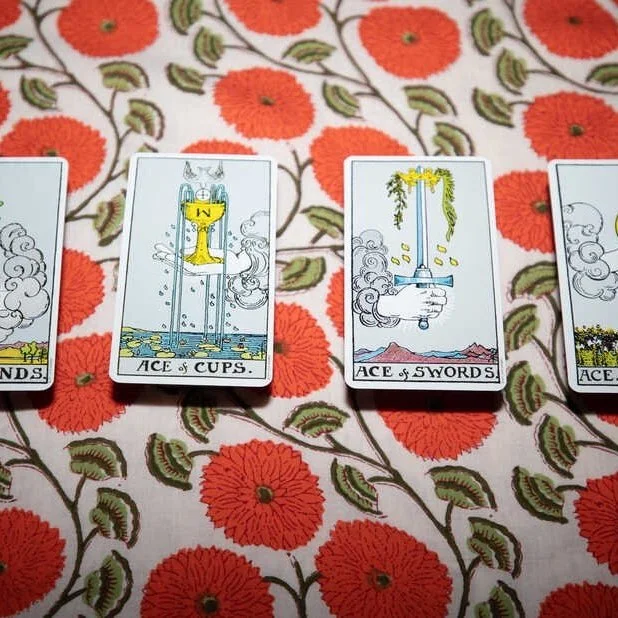
When we think of this pathway, Spirituality & Meaning, we think of anything that can bring wisdom into our lives, orientate us in our days, and find our way forward in ways that make sense for us. These podcasts share this open approach to what belief, ritual and faith can look like. They cover how to use the Enneagram, Tarot, and Astrology as tools of understanding. How the practice of prayer or the modern church can show up in our current lives. And how to locate joy and healing even when faced with the darkest times.






“Our future-focused, technology-obsessed world seems to be hurtling down a bad path. People are turning to ancestral practices for a sense of enduring longevity, and comfort. To help stay sane and grounded in the midst of so much cultural insanity. To source a different kind of power in hopes of making changes both personal and political. From learning meditation to fighting off a cold with some homemade fire cider; from indigo-dyeing your curtains to strengthening your intuition with the aid of the Tarot, such old-world practices are capturing our imaginations and providing us with meaningful ways to impact our world.”
All these selections can be found in our Spotify playlist for Spirituality and Meaning. You can listen here:
Let us know what you’ve been listening to this month to help you think about your own approach to Spirituality & Meaning. Which podcasts have inspired you to think more about meditation and manifesting, Tarot and Astrology, ritual and faith?
To seek out more resources for how to bring more Spirituality and Meaning into your life take a look at our guide.
Main Image: Photo by Ashley Inguanta on Unsplash

New Thinking on the Mind & Body Connection
Our favorite reads for helping us think more widely about what wellbeing for our minds and bodies means, how the two are connected and what we can do about it.
It’s not just yoga or running. Wild swimming or nordic walking. All the different ways that we can move our bodies to move our minds. We’re now learning that our mind-body connection brings in so many different areas: sexual wellness, sensory integration, the impacts on our brain of long COVID, even technology and AI.
Here are a selection of the articles, essays, research, and interviews that recently caught our attention and are helping us think more widely about what wellbeing for our minds and bodies means, how the two are connected and what we can do about it.
Exercise as a tool against depression
Why we need to move for the sake of our minds as well as our bodies
Clinical trials often overlook eating disorders in men
“I had a really frightening loneliness that felt fundamental to who I was, like it had maybe been in my body for as long as I’d been alive.” How getting sober in a pandemic saved this writer’s life
The impacts we’re now learning COVID has on brain health
Burnout is showing up in your body
What does the future look like for our bodies when technology has its impacts?
“It may seem simple, but there’s a fine art to creating the perfect bedtime story for grown-ups.” — A new tool for sleep hygiene - adult bedtime stories
How to have a better lie-in.
“Even now, there’s limited education on menopause for trainee and practicing doctors, unless they seek it out or are particularly interested. This is really sad, because it can lead to women suffering unnecessarily.” — Niki Bezzant on what we've been getting wrong about the menopause
Some good things to pay attention to right now
Your cues are contagious and say more about you than you think
New habit: taking a midday walk
We’re excited about this new dance festival in London
More wisdom from Lizzo on body-positivity
And a Tedx Talk on why sensory health matters. What does sensory health mean for you? What are your preferences and how do you actually feel?
Lead image: Photo by Arek Adeoye on Unsplash

Podcasts for Mind & Body | February Edit
Our selections of this month’s podcasts on the Mind & Body Connection cover everything from sexual wellness to what self-care means today. These episodes gave us some helpful ways of thinking about our mind and our body that we hope you can take into your own life too.
“I used to think healing meant ridding the body and the heart of anything that hurt. It meant putting your pain behind you, leaving it in the past. But I’m learning that’s not how it works. Healing is figuring out how to coexist with the pain that will always live inside of you, without pretending it isn’t there or allowing it to hijack your day. It is learning to confront ghosts and to carry what lingers.”
We recently heard the term ‘serendipitous curation’ and that reflects our process of discovering this month’s Podcasts for the Mind & Body Connection. Our selections below cover everything from sexual wellness to what self-care means today, from some of our favorite listens (we’d really press play on anything from Pandora Sykes) to some new-to-us series like New York Magazine’s Cover Story: Power Trip. We hope you find some helpful new ways of thinking about your mind and your body and how they might relate to each other in your life.



“In the moments when we can offer suggestions to improve something in another or in the world, we can make those suggestions with kindness, tenderness, and affection, knowing that everyone is fighting their own battles and knowing that the hardest and most important things we’ll ever change for the better are our own hearts and minds. ”
All of our February selections can be found in our Spotify playlist for Mind & Body Connection. You can listen here:
Let us know what you’ve been listening to this month to help you think about your own Mind/Body Connection. What are your go-to’s on exercise, health, nutrition, self-care and healing?
To seek out more resources for your mind-body take a look at our guide.
Main image attribution: Photo by Jozsef Hocza on Unsplash

Podcasts for Connection | February Edit
Our February Edit of Podcasts for Connection from therapy with our friends to how to deal with loneliness. Inspiring conversations and stories for finding your people.
“Loneliness does not come from having no people about one, but from being unable to communicate the things that seem important to oneself, or from holding views which others find inadmissible.”
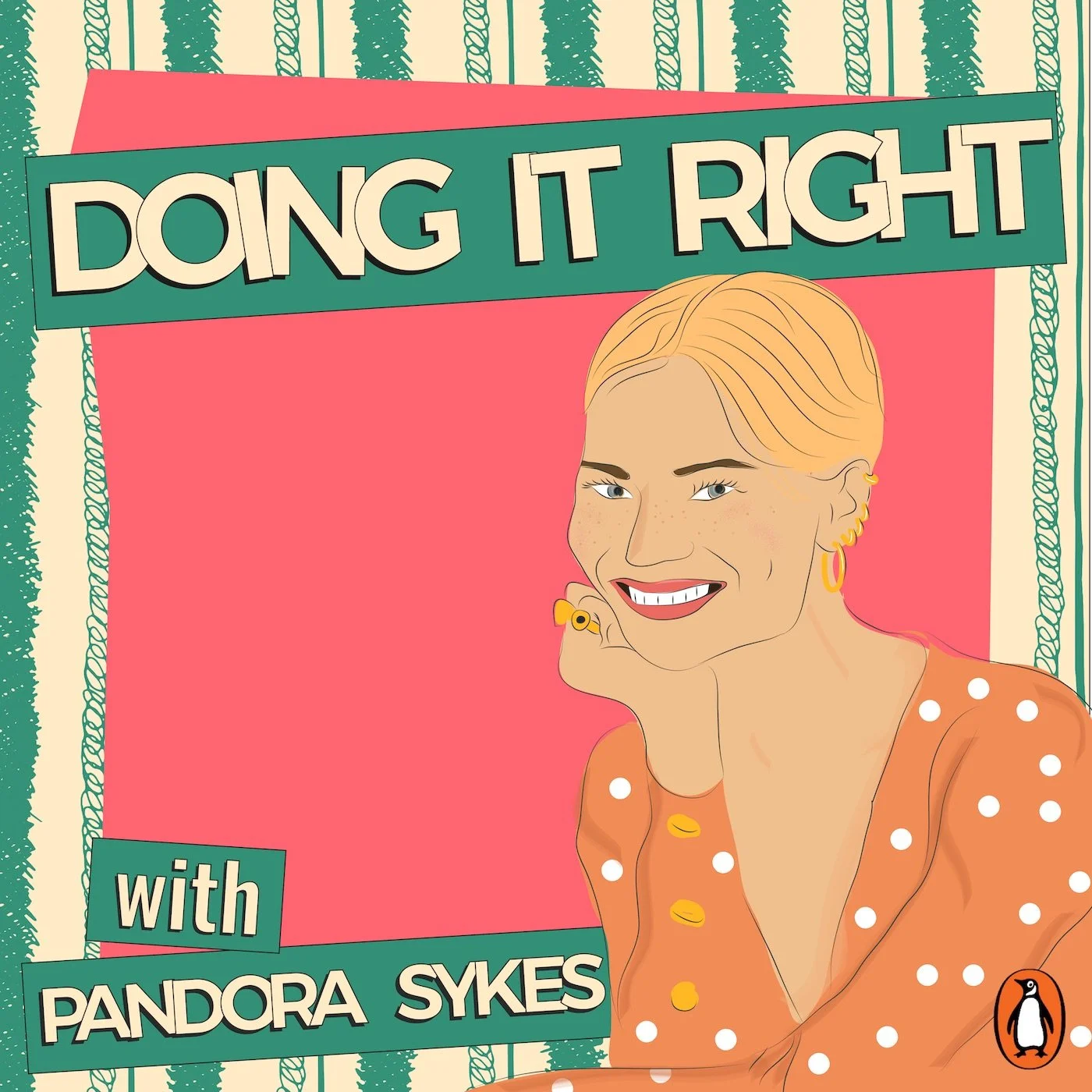
Our February Edit of Podcasts for Connection covers everything from therapy with our friends to why we’re all so lonely. Some of our favourite podcasts — Invisibilia and Doing it Right — have recently talked about why connection is so important to our mental wellbeing and covered strategies for how to be in relationship with others in ways that feel good to us. We also recommend checking out the new series, This is Dating, and Wild.






“These are human beings with unbelievable emotional and social capacity. And we as a culture just completely try to zip it out of them.”
All of our February selections can be found in our Spotify playlist for Connection. Listen here:
Let us know what you’ve been listening to this month to help you deal with feeling lonely, finding community, figuring out your close relationships, or just finding connection in ways that feel good to you.
And seek out more resources for more connection and community in our guide.
“Part of it is a kind of a bias that commitment, love and intimacy belong in the realm of family and belong in the romantic sphere, that they don’t necessarily apply to friendships. ”