

The Poetry Pharmacy | A conversation with Founder Deborah Alma about why poetry still matters
We talked to the founder of the world’s first Poetry Pharmacy about why poetry still matters.
When we first heard about The Poetry Pharmacy, we thought it was a kind of dream. A shopfront dispensing poetry for modern day ailments. It’s something from a children’s book, or a gorgeous idea of a place developed over excited conversations. But just last month, in the town of Bishop’s Castle in Shropshire, poet Deborah Alma (with her partner Dr James Sheard) opened the world’s first Poetry Pharmacy. And she readily admits its dream-like quality even as it now exists as a reality for her, and the people it serves. In the first months of opening, we were lucky to grab some time with Deborah to talk about why real-life places and poetry matter more than ever.
Claire: We’re enthralled by The Poetry Pharmacy, as I think are many people who are reaching out to you. Can you talk us through the space?
Deborah: We’ve converted a beautiful Victorian shop that had been closed for 13 years into an apothecary from which to dispense poems. It’s located in a small town on the wild west borders between England and Wales that’s full of writers and artists.
When people come into The Poetry Pharmacy, they’ll find books of poetry face up and filling the shelves. We’ve designed it so that people can browse by ailment — like ‘Matters of the Heart’, ‘Carpe Diem’, ‘Now I Become Myself’, ‘Be Alive Every Minute of Your Life’, and ‘Hope is the Thing with Feathers’ — and shop accordingly. We offer free one-on-one consultations on Friday afternoons, or people can make an appointment outside of that. We’re also happy for people to just come in and chat.
We also have a Dispensary Café which serves tisane, teas, coffee and cakes, as well as a shop that offers poems-in-pills for different needs such as a Bottle of Hope and Existential Angst Pills. Upstairs, we have The Distillery space from which we host book launches, workshops and other writing events.
We’ve kept the original architectural details like the old mahogany counter and till. We’ve allowed for as much natural light as possible (there are no neon lights). We’ve also painted the walls in muted paint colors.
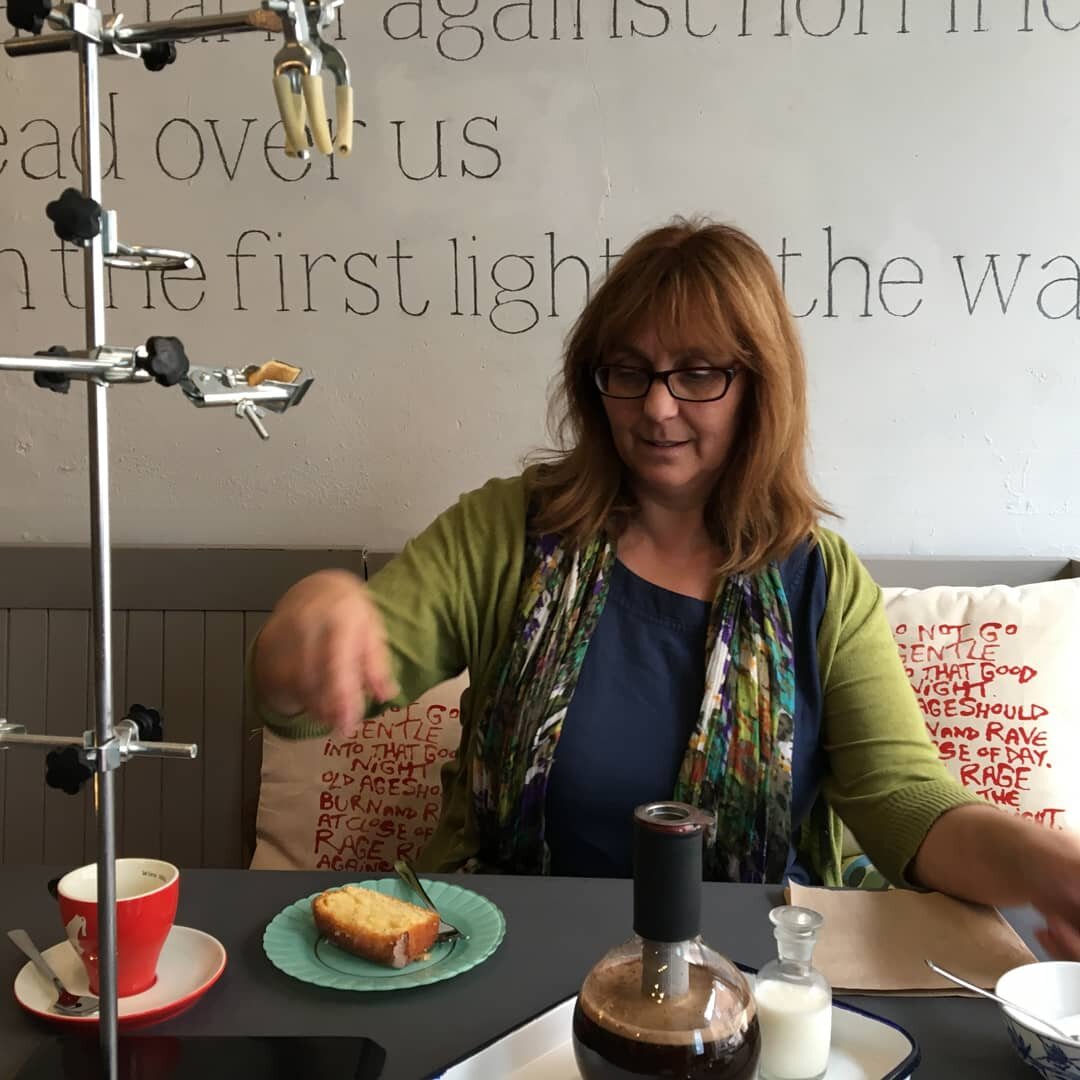
There’s definitely something about the space that appeals to people in and of itself; a kind of therapy in not having technology everywhere. We’ve explicitly designed The Poetry Pharmacy for people to sit longer over coffee. There’s no pressure to move on and people are encouraged to talk to each other. It’s a place also for people to come to read and write.

Claire: Why in this moment when we’re rushing more and more of our everyday lives online and our High Streets are sadly struggling was opening a physical space important to you?
Deborah: I see the Ambulance as a physical space too; for years I operated as an ‘Emergency Poet’ from a converted vintage ambulance, prescribing poems to people at festivals, conferences, hospitals, libraries and schools around the country. But I felt like I was getting too old for all that travelling around, and it was often cold working outside in the UK. As the editor of four books and the writer of two of my own, I felt like enough people had heard of me, that if I set up a permanent location, they would already know what I was doing.
I do believe that people still want to touch something real. To be in a place that feels like it might last. The online world has a terrible power to cut connections with people in real places. The Poetry Pharmacy offers nothing like we can replicate when we are online. I also feel like if it’s there then it’s not hard for people to engage. People here are so delighted to find this place open; a place they can drift into and have a coffee and chat
I’m aware that it’s a gamble though. It’s an experiment, that comes with a certain degree of optimism and maybe even self-indulgence.
Claire: What need in the world do you think The Poetry Pharmacy responds to?
Deborah: We offer a therapy in slowness and a nostalgia for something lost: old fashioned service, friendliness, even listening.
People can come in feeling miserable and we give them a free ‘pill’ as well as the chance to talk about what they need. Then we prescribe a poem.
Claire: Why poetry? What’s the value that you see in it when applied to people’s lives?
Deborah: I realized a long time ago that most people are frightened of literature and poetry within that. And that the people who create or understand that art can be possessive. I used poetry in my work with people living with dementia. From that experience, I saw first-hand how you can change someone’s mood by taking them somewhere with a poem and that I could share the intimacy inherent in this form. This underpinned the Emergency Poet idea; I wanted to stop poetry from being intimidating and I wanted to show that it can literally be a vehicle for talking to people. That project effectively bypassed how poetry usually gets to people and how they then get to use it.
I’m aware that the Poetry Pharmacy idea is a bit mad. That putting poetry on the High Street is unusual. We keep hearing that poetry doesn’t sell, and this is a quiet town, but I’ve done it because I really do believe that poetry is a good thing. It’s beautiful. We’re putting it front and center instead of in the corner. Why not have piles of poetry books and say that has a value equivalent to other genres? With The Poetry Pharmacy we’re bringing poetry to the forefront and there’s an art in curating it — picking out the ones that speak to certain subjects, putting them with other things, and saying,“Take a look!”


Claire: And they are. People are enamored with this idea. Why do you think that’s happening?
Deborah: When I first started, it was a mad faith thing. People said, “you know why there is no other Poetry Pharmacy in the world? Because no one wants it.” But we’re finding differently; the idea of it even existing in the world seems to be a nice thing in the middle of all this darkness — BREXIT, Trump and just continuous bad news. It’s a piece of optimism and faith in something. It’s a positive thing, and light-hearted in lots of ways
It’s lovely that The Poetry Pharmacy exists in the world. It’s like a piece of fiction and reminds me of The Little Paris Bookshop by Nina George. In that novel Monsieur Perdu opens a floating bookstore on the Seine from which he prescribes books for a broken heart.
We’re only in week six and it’s been busier than I thought it would be. People get in touch across the world, we’ve had BBC News in here, the local Bishop’s Castle / Shropshire or West Midlands community is delighted, and people are seeking us out from outside of town and even from outside the UK.
We need all the elements though for it to work: the coffee shop to have a treat and a good coffee or tea that is nicely presented, like a ceremony; music that is welcoming and low-key, that makes people feel comfortable; a shop of desirable items, the consulting room and workshop space; and lots of events going on.
Claire: Would you place The Poetry Pharmacy within the world of mental wellbeing?
Deborah: I shy away from the word therapy, but I do say that it’s therapeutic. When I prescribe poetry to people, poems that I know and love, then people can make a poem their own; just reading it will take them to another place. What poetry is doing is taking you somewhere else in your head when you are busy. It’s telling you things that you may not be hearing from other people. It underlines something to yourself. Even imagining it, is a moment of benefiting from it.
At The Poetry Pharmacy we also include material for how to look after our lives in other ways beyond poetry. There’s a section ‘For days when the world is too much with us’, where we have Wordsworth next to psychotherapy and self-help books. We have another section that’s the ‘Best Medicine’ which includes gardening and nature — like counting butterflies, sitting in a patch of sunlight, and going for a walk.
Claire: When I think of The Poetry Pharmacy, I think of it as helping people with their anxieties, but I also think of it as supporting people in their loneliness. Is that fair?
Deborah: Yes, the poetry community has traditionally been good for the lonely as often people come to things on their own. People don’t have to be in a couple or with a friend to attend these events, like they might for say a dinner party or other social gatherings. It’s easy for people to come here on their own. Most of our events are on Sundays and quite a lot of people have said that Sundays are always difficult when they live on their own, but now they can come here for company. Rural isolation can also be a problem. This can be a place that people can come on their own and still feel comfortable.


Claire: Now we’ve established the life-affirming magic of the place, can we talk a little about the practical side? Like how you made it happen?
Deborah: We ran a successful Kickstarter campaign and I was amazed at the response. The crowdfunding raised money to pay for the build-out, including things like wiring the shopfront! We found that strangers turned up and said we love this idea and want to support it, because they don’t want closed-down shops on the High Street. We also received a small Arts Council grant.
We were very resourceful. As much as we could, we turned The Poetry Pharmacy into a project for both the local community and the literary/poetry one. We had many people volunteering their time and expertise.
Claire: What advice would you give to other creatives thinking of starting a bricks-and-mortar endeavor?
Deborah: It’s difficult, which I think is why so few people do it. But for me, it was huge just knowing that there’s a community of support behind me. I think it’s critical to have a few key people to support you in the first instance, and other people believing in you. The doubters are also quite useful because they test your resolve. Maybe they are right, and you don’t do it. But for me it was: ‘Bloody Hell, I’m going to prove you wrong matey.’ You’ll know in that fierce moment whether to do it or not.
Claire: How else has The Poetry Pharmacy impacted you? How does being front and center sit with the more private practice of writing poetry?
Deborah: Yes, there is that dilemma of reconciling this public project with the country mouse part of me. I do think (without overgeneralizing) that people who write who are novelists tend to be introverted, while poets tend to need to connect with other people more often. They work on a poem, then go out because they need to talk to people. For me, I crave being on my own and periods of time to write, and I’m aware that that’s not in balance at the moment. There are two sides of me; they don’t exist in the same place, but they do need to communicate, all the same. I hope that will settle down.
I do believe in The Poetry Pharmacy and it seems to be working in the way that I hoped. Also, for me too. Because I’m now so busy, I’m not online so much. What I wanted to do — and needed to do — was to have an open door and to welcome people in. To say: “Come in. Who are you?” To say. “ I’m interested in you. “
Discover more places for a happier life

The Makerie | In Conversation with Ali DeJohn.
We talk to Ali DeJohn, founder of the Makerie retreat, about why self-care and creativity are inextricably linked.
Starting something takes a huge amount of courage and commitment. That’s particularly the case if you are an introvert. We chatted to Ali DeJohn, founder of the Makerie—a beloved roaming creative retreat—about how she overcame her fear and realized her dream of making a nourishing space that puts the emphasis on self-care as much as technique.
Claire: Have you always been a creative person?
Ali: Yes, I have always loved creativity. Ever since I was a child, I found the most joy in making things with my hands. I went to a preschool where creativity was a major focus, and I think that sewed some creative seeds. It’s something that I carried with me all my life.
Claire: Did you continue your interest in creativity into adulthood? What were you doing before the Makerie?
Ali: I had a career in event planning. I worked for the Chicago marathon for seven and a half years and before that I worked for a small family-owned business doing all types of events. Both were great experiences.
When I had my children, I decided to stay home. I had always loved the idea of being a stay-at-home mum and I was so grateful that I was in a place where I could do that. As I really wanted to infuse creativity into our home and into our family, I started reading blogs for inspiration, which were booming at the time. There was so much rich content and so many people caring about creativity that I found my community in that world.
As much as I loved being at home with my children,I remember standing in my mom’s kitchen and bursting into tears because I felt so lost in who I was in the midst of motherhood. I had never really considered myself a driven career woman, but I realized how important it was to still maintain something of my own in this journey of being a mom.
Claire: That must have been such a powerful realization. I have a young family and I relate to that idea of losing aspects of yourself and not realizing that it’s happening until you realize that it has happened. How did you deal with that?
Ali: Though I loved to make things, it was really hard to do that in the rhythm of a life with two young babies. So, when a creative retreat popped up on some different blogs that I read, I thought well maybe I could go to that. But another part of me said, “well you’re not really an artist, you don’t really deserve to go.” This inner dialogue went back and forth, and finally, there was just this little tug at my heart, which said, “just go, you should just try this”.
So, I went to my one and only creative retreat. I was terrified but what I found was profound. What I was making, the colors I was choosing, the aesthetic I found myself creating, helped bring me back home to myself. I remembered who I was again, and it was such a joyful, powerful experience to discover that. I also really loved connecting with other people who cared deeply about creativity. I came home from that experience so incredibly filled up.


Claire: How did you go from that first taster of a creative retreat to starting the Makerie?
Ali: There was no intention at all at that time of doing my own version, but, maybe unconsciously, I knew that one day I would embark on that journey too. During the creative retreat experience, I wrote down all the things I loved and areas that would have made it feel more complete for me.
I came home and told all my friends about it, as I wanted them to share in this enormous amount of happiness and inspiration that it brought to me. I searched for a similar experience close to home and when I couldn’t find what I was looking for, somewhere that I wanted to take them to, or that I wanted to go to myself, I decided to start my own version.
Claire: What did that look like for you?
Ali: It was a really big step. I spent a year meeting with different people in our creative community to share my idea, and everyone I met with thought it was a wonderful concept, that it would be well received, and encouraged me to go for it. Everywhere I turned I was getting a green light, but I was still hesitant to move forward because it felt scary and vulnerable, on top of me being a quiet, introverted person at heart.
My husband grew tired of my waffling between doing it or not, so I had to have a heart to heart with myself. Would I rather try and fail? Or move on with my life wondering ‘what if’? At the end of the day, I realized I could live with failing if that’s what happened, but I couldn’t live with never trying and always wondering what could have happened.
Claire: How did you deal with that tension? How did you care for yourself over that time as you were making this big shift in your life?
Ali: I don’t think I did, and I still struggle with that self-care piece for myself. Honestly, I just poured my heart and soul into the first retreat. My kids were so little, and I don’t know how I did it. I just cared so much, and I still do, about creating a sacred and special space for people to practice and prioritize their creativity because it can be so hard to find in our daily rhythm and lives


Claire: You had a very clear vision for the shape of that pause that people could take out of their lives. What were the values that you were trying to bring into that first experience?
Ali: My main aim was to find a setting that was really conducive to nourishment. The space, the venue, and the environment that people walk into are crucial. For that first retreat, we chose the Colorado Chautauqua, in Boulder, which happens to be three miles from my house. It is an amazing, sacred place with community workshop spaces, cozy cabins, a dining hall, and even hiking trails out the back door.
It also has an iconic history. There was a Chautauqua movement over a hundred years ago, in which a group of people gathered together to celebrate secondary education, establishing pop-up camps where they would teach art and music and theatre. I felt like the Makerie spoke to the exact meaning of what the original Chautauqua was.
Claire: How have things changed for you since that first retreat in Colorado?
Ali: It’s been a huge organic journey that’s still continuing on its own path. The iterations have changed depending on various partnerships, the treasured teachers and artists I’ve worked with, and unique venue opportunities that have come my way. We offer varied retreat models in different locations, and have even hosted two retreats in France. I never dreamed of doing an international retreat so that was such a special opportunity.
Currently I am focused on smaller, more intimate retreats, with at the most 16 people. We feature one artist and a focused creative medium, so students are able to explore it on a deeper level. The model that we started with, allowing the participants to choose a variety of four half-day classes, was able to accommodate a large group and also involved more logistical feats. It was a playful and unique structure and maybe one day we’ll go back to that model. But for now, the smaller retreats are working well, particularly given that I now have two teenagers.
Each year we have anywhere from 3 to 7 retreats that are held across the country, and it changes every year based on different venue opportunities. Looking ahead to 2020, we have some special retreats planned in Boulder; we’re exploring a beautiful studio space in the mountains of Colorado; and planning another retreat in New Hampshire with paper flower artist Tiffanie Turner in the barn where she did an artist in residency. We’ll see what else next year brings!
Claire: Your teachers are such a vital part of your retreats. What qualities are you looking for in the artists who come to teach at The Makerie?
Ali: It’s important that the artists I choose to work with not only have teaching experience, but have a nurturing aspect to them too. Inviting adults into a creative space requires a teacher that is skilled in nourishing creativity in adults. Our teachers are crucial in making the experience feel encouraging, inviting, safe and warm.


Claire: You also attract high-caliber artists to work with (such as the retreat with Rose Pearlman in Boulder.) There can sometimes be a hierarchy between the kind of artist who has gallery shows and those who do workshops, but here you’ve managed somehow to bring the two together.
Ali: I don’t think of choosing teachers in this way. I find them through various paths and take the time to research what they’re currently doing, the types of workshops they are hosting and explore if a collaboration feels right. I’m grateful the teachers I work with trust me with their gifts and I make a special effort to make sure they feel as nourished as our participants. If they feel cared for, they are going to be able to do their best job. I’ve had so many teachers comment that when they leave our retreats, they feel inspired and filled up, instead of exhausted, and I cherish that.
Claire: How as a host do you create such a welcoming and accepting space for both your workshop leaders and your attendees?
Ali: For me, every step of the way counts and sends a message. From the second someone registers to walking through the door, I try to create a warm environment and an invitation to be part of something special. I want our participants to feel that they are loved and appreciated from the very beginning. When they arrive at the retreat, they are greeted with a hug and a genuine feeling of excitement that they are there. The teacher plays a big part in the role of creating a safe space by holding the room in a calm, capable and loving way.
There’s also the sense of entering a space that feels inspiring. When I visit a potential venue, I know within minutes if it’s going to work. There’s not a magic formula other than my intuition and it’s tied to my aesthetic preferences and senses. It’s a similar feeling when you’re looking to buy a house. You can feel the energy and whether or not it’s right.
Claire: Your approach at the Makerie feels very person-centered. You lean into ideas of imperfection, slowing down, being in conversation with the person next to you. I love how you place people right next to craft in importance for how you conceive these events. Why is this hosting/ nurturing aspect such a large piece of it for you?
Ali: Someone once described their experience at the Makerie as coming home to themself. I thought that was so beautiful and exactly what I hope people feel when they come to our retreats. It’s a magical thing to watch the transformation that happens when people take time to nurture their creativity and make beautiful things with their hands. I care deeply about each person who attends our retreats and that’s the heart of everything I do.


Claire: I have this strong belief that creativity and wellbeing are very strongly linked. My sense is that you do to. Why do you position these retreats within wellbeing and self-care rather than just as a creative workshop?
Ali: Creativity and self-care are almost the same thing. I look at creativity as one of the pillars of self-care, in addition to moving your body, making healthy food choices, taking care of your mind, and finding human connection.
There are two things at play: One is nourishment from the inside, that people have to give themselves in this process; and then there’s nourishment from the outside, which is what I work hard to create. When you combine the two, it’s a magic combination of whole-body nourishment from head to toe.
Creativity is the cornerstone of what we do and a back door into mindfulness. It’s like yoga for the mind and a way for people to drop into themselves without having to sit in a formal meditation. I love how creativity can take care of your mind and soul in a similar way.
Creativity can also be a way to connect not only with yourself but also with the person next to you. You can be making something and not even say a word, but someone can look at your aesthetic choices and gain an understanding into who you are and what you’re about. Your creativity speaks for you and you’re able to connect with people on a special level by what you’re creating with your hands.
Claire: Do you think that there’s been a shift in understanding of what creativity can do for people? I get the sense more and more that it’s a tool that’s sitting closer to wellbeing.
Ali: Absolutely. Just look at the plethora of coloring books for adults. That in and of itself shows you how everyone is craving a quiet mind. The enormous amount of information we’re all being asked to hold in this day and age is impossible to keep up with. We’re all looking for a joyful out and can’t escape it all, but there are many ways to slow down and find quiet in beautiful ways. Retreats of every kind are popping up as more and more people realize how valuable it is to step out of your everyday rhythm of life to nurture something you love.
Claire: Do you find that people coming to you are first time creatives, who had a similar sense as you that their creativity was somehow dormant and they want to find a way to reconnect with that, or are you finding its people who already have creative leanings that are very much alive who are wanting to develop that aspect of themselves more?
Ali: It’s all of the above, as very few classes require experience. All we ask is a willingness to come with an open heart.


Claire: Do you see yourself as an artist or an amateur? I ask this because often as creatives we take the role of facilitator and it can be hard to hold that space of creativity for ourselves.
Ali: I see myself as a joyful, amateur artist. I dabble in all kinds of creative endeavors - from knitting to embroidery to ceramics to drawing. I just completed 100 days of stitching, which was a fun and challenging practice. I love to try my hand at so many different things and don’t consider myself an expert in anything. I love making anything with my hands.
Claire: Finally, how has founding the Makerie impacted you? We’ve talked about how setting up something like the Makerie impacts the people who come through the door, but I wonder how it has transformed you?
Ali: It has been such an unexpected journey that continues to teach me more than I ever imagined. Here are some of the many lessons I’m learning:
The Makerie gives me rich personal growth. When someone comes to a retreat, I might not know the underlying reason they are there and I have learned to separate out what I need to hold and what someone else is carrying. I used to absorb everything, including everyone’s collective energy at a retreat, and would come away exhausted and depleted. I have learned to lovingly hold a space for other people outside myself, helping me stay nourished and healthy.
I’ve also learned that no one really knows exactly what they are doing. We’re all in the same boat of figuring it out as we go and that’s a refreshing thing to remember.
Keep doing things with a pure, heart forward intention. If I make a decision from this centered place, I know it will lead me to positive places.
Take my own advice to nourish my own creativity. It’s strange how hard it can be to carve out time for something that brings me so much joy. Making by hand nurtures my soul and will always be part of my life.
To find out more about the Makerie, check out the Website, Instagram, and Facebook


Shelf Help | In conversation with Toni Jones
We talk to the British journalist Toni Jones, Founder of Shelf Help about the bookclub that became a global movement and why its her mission to make self-help accessible, collaborative and cool.
When we first found out about Shelf Help, we felt like we had found our people. It’s a book club, built around self-help books, that also builds community in real-life. Isn’t that the ultimate combination?
OK, you’re hesitating, and we’re guessing it might have something to do with the genre because let’s face it, self-help can be a bit naff. You probably already have your biases, unconscious or otherwise.
Don’t worry, in the conversation that follows with Founder Toni Jones, we’ll cover that uncool factor and all the other reasons why Shelf Help is something you might need in your own life. Prepare to change your mind.

Claire: What led you to start Shelf Help?
Toni: I had just left my full-time job as a journalist to become a freelance writer, which meant suddenly spending a lot of time by myself. I was 36 and I’d never spent any time alone. It should have been the dream. I’d quit a job that I hated. I was busy and getting work. But it wasn’t that easy being by myself and getting to know myself. I realized I had spent a long time just ignoring my needs, and as soon as the job wasn’t there as a distraction, it was all back down to me.
I spent a lot of that time not unravelling but definitely in a bit of a mental health black hole. I was transitioning from this high-octane life to having a lot of time to think about whether I had done the right thing. I didn’t know how to deal with any of it. I knew I didn’t want to go back. I knew that wasn’t the right thing to do but I wasn’t sure which way to go.
I just started reading a lot of self-help. I started taking care of myself in other ways too; going to therapy for the first time (which I found really hard and amazing), doing yoga, attending retreats, and participating in a few support groups like Al Anon. I was also writing more about wellbeing because it was a trend that was coming in. In a way, in trying all these things, I was approaching my own life like I was writing a feature.
Claire: What was the first self-help book that you read?
Toni: Paul McKenna’s Change Your Life in Seven Days, which people thought was hilarious and really weird, because you don’t think of him as a self-help guru. To many people he’s that weird hypnotist on tele but he’s well-trained in positive psychology and NLP.
Because it was the first self-help book that I read, it really resonated. All these light bulbs went off. I read it slowly; I’d read a concept in that book and then I’d go away and research it. I’d go deep into the black hole of a certain author or self-help concept. Suddenly I was learning all this stuff and I literally could not get enough of it. I was devouring all these self-help books. I was fascinated by it particularly when I started reading about positive psychology and neuroscience and things like Dr Joe Dispenza (he talks about the power of your brain to change and it’s kind of the Law of Attraction but with all the science behind it).
But I was boring my actual friends with it. They were seeing a change in me—and that does spike people’s curiously—but they were like: ‘we get that you are into self-help, but it’s not our thing but good for you that it’s working.’ I started Shelf Help to find new friends who I could talk to about it. Also, as a journalist, I’m the kind of person who, when I find something good, I just want to share it.
Claire: Tell me about the first meet-up. Was it what you expected?
Toni: Shelf Help started as a local book club at a little wine-bar in west London. The first couple of meet-ups were a bit more earnest than they are now, because I started off thinking I needed to be super serious to be able to offer good support, but I’ve learned—as I’ve got better at running groups and also sharing my own story—that you can talk about the big stuff and still have fun.
Meet-ups today cover all kinds of heavy things; purpose, grief, breakups, fertility, friends, fear, careers…but we end up laughing a lot. They are actually really fun! We don’t just sit there and talk about our problems. People do bring up things that are bothering them and things that they are struggling with but there is usually someone in the room who can help them, someone who can say that happened to me and I did this. The idea is that we can all come together because everyone is fragile. We’re probably going through the same old shit and it’s nice to know other people have gone through it and that they have survived. Everyone leaves feeling positive.
Shelf Help has gone from me saying let’s talk about our problems, and that its ok to share, to a place to move forwards. Now I say we celebrate self-help. It’s about inspiring positive change. We advocate that it’s totally ok to not be ok and that people’s feelings are valid, but there’s a lot we can do to feel better, and so we focus on what’s next and how can we help each other.
Claire: As Shelf Help isn’t therapy but is to the side of therapy, how do you create an environment that is safe and purposeful?
Toni: What I do is create a space to give people tools to empower themselves. It’s self-help, so I’m never saying that I’m a therapist and that I have all the answers. At each meet-up, we use a different book but the same format. I’ll pull out 5-6 quotes or exercises from the book and every host around the world and on-line will use those questions for discussion. That gives us the framework as we’re going through the session.
For instance, let’s take a recent book Designing Your Life, which focuses on working out different versions of who you can be. I’ll say ‘The authors say… ‘ and ‘This is how they say it will work…’ Then I’ll ask, ‘Who has experience of this...’
I’m not saying that’s my advice or opinion, though I’ll share something usually based on my own experience. People understand that I’m not trying to direct anyone in any way. If you have chosen to read this book and come along to a meet-up, it’s because you are interested in the topic and meeting like-minded people. I’m pretty sure the attendees aren’t just there to see me or listen to what I have to say about something. I’m just the host: I bring people together and create an environment. But very much people are coming with their own stories to share.

Claire: It sounds like the book itself is giving you the safe container?
Toni: Yes, the expert in the room is the book. Sometimes we have the author there but not always. In a way, it is like a regular book club where you get together to chat about the different characters and chapters and everybody has a different opinion.
Also, I’m quite clear that confidentiality, kindness and no judgement are our code of conduct. That’s on our printed materials that we put out. Hosts also read out the manifesto at the beginning of each meet-up, which explains what we are and what we’re not.
We do have different levels of people at different levels of pain or need. Some people have gone to the doctor and they are going to therapy. They are using this as another tool. There are a million experts that people can google but what they are looking for with Shelf Help is a way to connect to others and a way to connect with themselves.
Claire: The self-help genre has been promoted as being so individualistic, as something you do alone. There’s this idea that you read a book alone and have all these epiphanies alone. With Shelf Help what you are saying is that actually self-help is not solitary, but rather it can be in understood as a collective experience and can be experienced in a social environment.
Toni: My mission with Shelf Help is to make self-help accessible, collaborative and cool. The idea of self-help is a bit of a misnomer. Yes, you do need to do a bit of that work on yourself, but you also need help to take that work forward. It’s much more powerful when we come together.
If you’ve got used to sitting at home by yourself, with just those stories that go around your head, often just saying something out loud to someone else can give you a different perspective. Shelf Help gives people access to different perspectives, and entirely different life experiences
When we did Susan Jeffer’s Feel the Fear and Do It Anyway at our meet-up in London, we had an Indian grandma who had the original copy from the 80s that she’d been given when she first moved to London. She was sitting next to a Gen-Z girl, 22 years old, clutching her brand-new edition of the book. Though it’s a bit of a worry that we’re still dealing with the same old stuff, it was amazing to watch them connect over the same material. They probably would never have met or talked to each other otherwise, but these are universal themes that can easily see three generations apart talking about the same eternal topics.
Claire: As an advocate for self-help books, going to therapy and going on this deep dive into personal wellness, how do you negotiate some of the cynicism that can come into play? There’s definitely an undertone that says that stuff you are doing over there, that wellbeing stuff, isn’t credible or serious.
Toni: Yes, I see that. But it started working for me, and for others, and as soon as something starts working, people want more of it.
My dream with Shelf Help is that people are not scared to read self-help, that it gets people talking about this genre and connecting, rather than thinking you must be a mess because you are reading a certain book. I believe that the audience is everyone and that’s the whole point. I want people who maybe don’t think they are self-help readers to maybe read an interesting quote or a passage on our Instagram and to go, “oh wow, that’s what’s that book is about.”
Claire: It’s interesting to see that shift, that there is a real thirst for it. That people are going towards it.
Toni: What something like Shelf Help does, and what I realize that I do for my friends and my family, is to give them permission to get curious about self-help. Yes, some people do still see it as naff and cringey, but quietly people will come along to a meet-up. They’ll have read the book and they will want to talk to me about it but maybe not in front of everyone. The interest is definitely there.
Shelf Help is all about accessibility. We make it accessible by organizing free or affordable meet-ups and events as well as via the content we share across various social media. That’s why I now call Shelf Help a platform—the book club is always going to be a big part of it—but we can share all kinds of content too. One day I hope we will be creating online courses, better digital meet-ups, and more events, like author workshops—which means you don’t have to have read any of the books to come along.
The way that people consume content now works to our favor; we don’t necessarily just have to read a book to be helped by self-help. People can also watch a Ted talk delivered by the author, listen to a podcast or follow them on social media and still connect to the strategies and ideas.

Claire: There’s a criticism that I’ll paraphrase here, that 100% of people who have read a self-help book will read another one. This means in effect that they don’t work. But really the point is not that they are buying another one because the last one didn’t work, but that they are buying another one because it is working.
What you are saying in effect with Shelf Help is that your relationship to yourself and to other people is a life-long one. That people can have a growth mindset around their own learning. That’s something positive that people can sustain in their lives. You are shifting the perception that self-help is failing if you need more to its working if you need more. It becomes a form of ongoing mental nutrition in a way instead of an ineffectual crutch.
Toni: I think the more that you learn the more you realize you have to learn. If you are looking to a book to fix you, you are missing the point because most self-help comes back to the same finding: you need to start with you. All these books and tools will help guide you but ultimately you need to know yourself, to meet yourself and then start that work.
People say to me how can you read all this self-help and not be fixed? They have this idea that if it’s so great you only need one book. But we’re always learning. That’s what we are here to do, to grow. You are never going to be complete and how boring would that be if you were? What you learn along the way is amazing and is probably the best bit.
Claire: How do you get over self-help overwhelm/ fatigue (you know that feeling where the 11 things to do to better your life feels like 1000 things to do)? How to do you go from reading self-help to actioning it?
Toni: After feedback from members we’ve slowed down the reading process, to one book of the moment (BOTM) every two months (instead of one book every month). These books require that you delve into yourself or peel off these layers. You need to do the exercises and read it at a pace that allows you to process.
Claire: You give a reading schedule?
Toni: Yes, for accountability and so people can follow along with what we’re doing. Everyone is so busy, and I have to appreciate that reading can be a luxury. We need to allocate proper time to get through these books. It’s very much about reading, processing and then acting on it. In Crazy Good, one of the books we have covered, author Steve Chandler says: “Once for information and twice for transformation.”
Claire: Do you choose all the books that you cover? How do you go about that?
Toni: Yes, I’ve done that so far. I’ve gone on books that I’ve loved and that have made a big difference to me and that I know. People seem to like the fact that they are directed to what to read. Not that I know everything about self-help, but I do get a good vibe for what most people want to know about at the moment, whether that’s happiness or habits or purpose. I also get a sense from everything that I’ve read that this particular book is one that we can dissect together. Now, it has to be available globally cause we’re a global book club and we have loads of engagement in Canada and Australia.
Claire: I saw that you are now worldwide, including Amsterdam and Los Angeles. Why did you decide to make Shelf Help a worldwide movement?
Toni: I want to make the conversation as big as possible and to get as many people as possible talking about these subjects.
I think these things affect you in San Francisco the way they affect someone here in London: Feeling lonely, and just wanting to connect. We’re so connected and so disconnected. People are just looking for things to do that bring them together. I started Shelf Help at a time that I really needed it, but I underestimated how much everyone else needed it as well.

Claire: Shelf Help fits in this cultural moment, this global phenomenon of being disconnected, and searching for something to fill the void. We’re all going through it. For me, Shelf Help covers those universal longings: how do we connect, how do we come together, how do we help ourselves?
Toni: People do want to connect online but people ultimately want to go to or even start a meet-up. We’re able to create this amazing network and that’s what technology is allowing us to do but really its feeding people’s need to connect in real life as well.
People want to catch-up or go to events with each other. Most hosts are starting to organize social events in-between book clubs where they’ll go for dinner or a yoga class or a workshop.
At the meet-up in Farnham UK, they seem to bond over their love of cake as much as the books they read. In central London, the meet-ups typically focus on purpose, career and burn out. The one in Pembrokeshire takes place at lunch-time because it is made up mostly of mums.
I want the hosts be as autonomous as possible. If you want to host a meet-up for me and for Shelf Help, then that’s brilliant. We want you on board. We want as many people as we can get, but applicants have to understand that there’s a certain level of commitment (hosts need to commit to a minimum of 6 bi-monthly meetups, and are responsible for the venue and local members, with some support from Toni/Shelf Help). To scale this movement, I know that it can’t be about me; I can’t be everywhere.
Claire: You don’t have to be the person in the room, you can create the system for it, but it doesn’t have to be you?
Toni: I absolutely don’t want it to me about me. I’m happy to be the figurehead and I’m glad that people relate to my story. I love organizing the events and managing the network of hosts, but, ultimately, I want to empower people to help themselves and build a community that helps each other.
Claire: You’re 2 years old (congratulations!). How has the idea for and realization of Shelf Help shifted from when you started to where you are now?
Toni: Two years ago, it was just a book club in Chiswick, west London. Now, I talk about Shelf Help as both a platform and community. We’re all about connecting people to ideas through both the books and other types of content that we share. We’re creating spaces on-line and off-line, with lots of events and meet-ups, and an active digital community. The community is a massive part of it
A lot of Shelf Helpers who are assisting with our second birthday party, are people who are either hosts or come to a lot of meet-ups. I didn’t know many of them a year ago. Now they’re really good friends who are all giving up their time for this celebration.
I’m finding that people want to be part of what we’re doing. They want to do what they can to help us grow. We seem to call on people who can see a huge value in focusing on their mental wellbeing and who then want to share that message.
Claire: If someone is interested in getting involved, what’s the best way for them to engage with you?
Toni: You can come to a meet-up, an event or a retreat. Or join the Facebook group, follow us on Instagram, sign up to the newsletter or even host your own local book club. There are lots of ways to get involved.
Claire: And finally, what’s the one message you take away from reading so much self-help.
Toni: At its most simple, Shelf Help is about helping people to like themselves more. Because I think that too many of us don’t like ourselves enough (maybe don’t even know how to?) and that everything in life can be made better when we improve the relationship we have with ourselves.
To find out more about Shelf Help, head to the Website, Instagram, or Facebook.


neve & hawk x Kris Galmarini
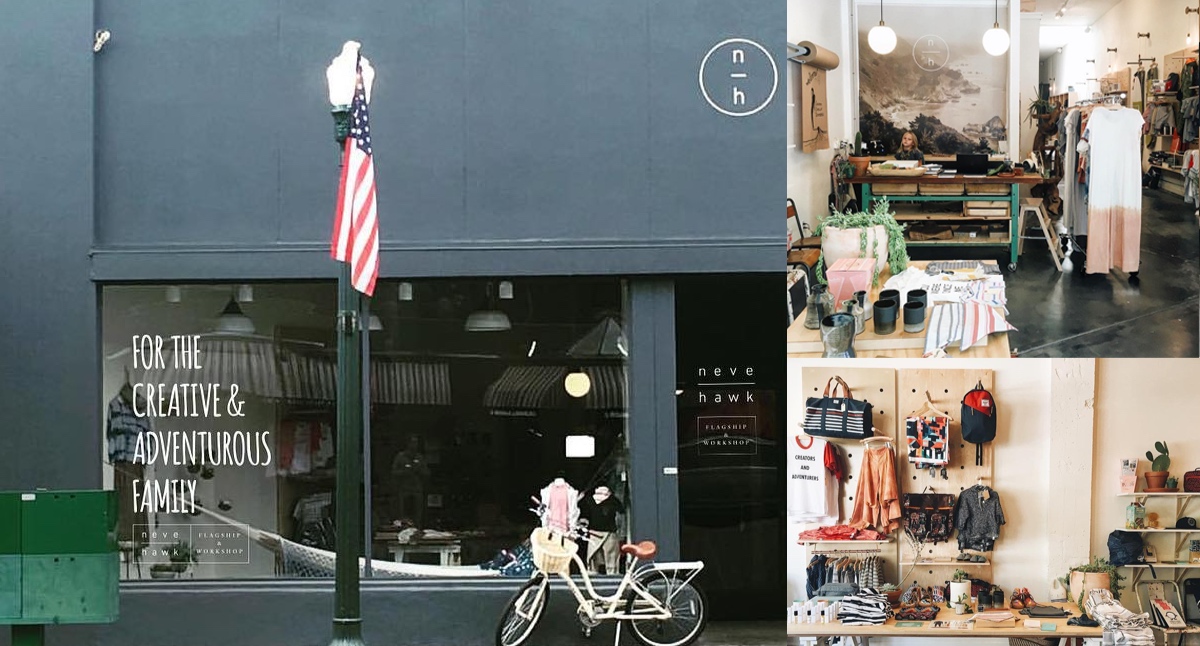
At a moment when we’re all being pushed to do more and more online—more apps, more sharing, more webinars—neve & hawk founder, Kris Galmarini is making the case that actual brick-and-mortar spaces matter.
At a moment when we’re all being pushed to do more and more online—more apps, more sharing, more webinars—neve & hawk founder, Kris Galmarini is making the case that actual brick-and-mortar spaces matter. In many ways, she doesn’t need her brand’s flagship location in Marin County. Neve & hawk has a thriving online presence for its super cute California- inspired, family-loving clothing line. But Kris, herself, does need it, in a very personal way, because community matters (like really matters) to her.
Neve & hawk’s storefront goes beyond just selling something (though we totally want to buy EVERYTHING they create), to actually building something. “We want it to be a place people want to come. We want people to come into the store, and feel better than when they walked in. We want them to interact, to feel inspired, to leave the store feeling better about shit. We’re in this community and we want people to feel good.”
Kris’ mission to bring people into the space has led to a new use for the back section, a café headed by the female-backed coffee brand Lady Falcon. From mid-August, the flagship will be the site of pour-overs, crafted coffees and a reason to hang out. It’s “another way to have people in there and to bring out the community.” This builds on other offerings: a monthly workshop teaching screen printing and chain stitching where people can learn how to sew, or mend, or distress something, as well as a Quarterly Artist series, which gives creatives a start and someone who believes in their work.
This focus on human interaction and holding physical space goes hand-in-hand with who Kris is as a person. Yes, she’s an introvert who might just be hiding in her studio when you visit the store, but she also believes deeply in people, in their worth, in their authenticity, in their talents.
This starts with the design and production process around the clothes themselves: which are made and sourced (from the inks to the manufacturing process) in San Francisco, Sonoma and Marin and are given a fair market price which reflects this intentionality. At all these steps, Kris never forgets that “there are humans who are making it”, that they have value too, creatively and monetarily. “Shopping can be a thought-process”.
The sentiment extends to Kris’ sense of responsibility to her clients: “Community and loyalty go hand in hand.” Both on and offline she has actively fostered a community that people can be part of and has allowed it to grow organically.
And it absolutely extends to how Kris presents (or rather doesn’t) as a person. She doesn’t play the game we’re all being pressed into playing. At a moment, when we’re collapsing our brands with our personhood, when our sense of self is tied up with clicks, when our lives need post-production effects to make them good enough, Kris is working hard to push back. And we are so grateful for that perspective: for someone who is allowing the masks to drop, for her soul to show, and proving this idea that who we are matters much more than what we know (borrowing from two of Kris’ go to quotes).
If places can be a person, and a person can be a place, neve & hawk’s flagship would be it.
To find out more: website www.neveandhawk.com/ Instagram @neveandhawk / Facebook @neveandhawk

Fiber Circle Studio: A conversation with Alisha Reyes on how making saved her
Some of us know our purpose right from the get-go; many of us don’t, we stumble on it. For Alisha Reyes, founder of Sonoma County’s Fiber Circle Studio, it took knitting a pair of socks at age 17 for her life to light up.
“Fiber Circle Studio, located in Sonoma County, CA, focuses on offering fiber related workshops, and equipment in the areas of weaving, spinning, fiber processing, sewing, dyeing, knitting, crocheting and felting. Our goal is to provide all levels of fiber artists, from new to expert, with all the resources, tools, knowledge and equipment to explore one’s creative journey in a place of community, support and inspiration.”
Some of us know our purpose right from the get-go; many of us don’t, we stumble on it. For Alisha Reyes, founder of Sonoma County’s Fiber Circle Studio, it took knitting a pair of socks at age 17 for her life to light up. Literally. At that time she was struggling with depression and ideas around self-worth, and it was that one seemingly tiny act that gave her hope.
Since that moment, Alisha has actively pursued workshops, mentors and teaching experiences to gain mastery of knitting. As she did so, she found she was good at it, like really good. When that pursuit wasn’t quite enough, Alisha headed to a farm in upstate Washington to understand the entire process of fiber, like from the sheep stage on, including spinning and dyeing. She was that committed! Alisha is now a prophetess of the fiber arts but she’s also super approachable and down-to-earth and gets that even if you don’t self-identify as a maker, you get to do it too.
About 18 months ago, at the beginning of 2018, all Alisha’s knowledge got poured into a bricks and mortar space in Cotati, called Fiber Circle Studio. For months before the opening, Alisha collected weaving looms, spinning wheels, sewing machines and drum carders, which all got stored in her 700 square foot home (there’s that commitment showing up again) and which now fill this space instead. She faced down all those barriers to starting an actual space for creatives: like insurance, rent, parking, licenses, you know all the scaffolding that can make our dreams but sometimes make the kind of walls that we don’t want to be building instead. Then there were, and still are, those more personal issues to contend with like money, time, experience, self-value and family time, as well as the reality of being only 28 years old and a mother of two.
Alisha’s getting it done though despite these hurdles. Fiber Circle Studio is a sweet wonderland of making. There are areas for all the fiber arts, like weaving, fiber processing, dyeing, crochet, and knitting, a kitchen station for dyeing, a couple of tables to gather and workshop, even a library of books about process available for members. As Alisha will tell you, “It’s a busy life, but to have all of these incredible things going on in my life is so fulfilling!’
Fiber Circle Studio is designed to support people however they come to the fiber arts. Sometimes that’s with a workshop that starts someone weaving, trying something new, and using their hands again. Building confidence and interest. Or offerings for people at the intermediate and advanced levels, who have exhausted other retail and book-based resources. Recent workshops have brought in fiber artists from Indonesia to explore batik and New Mexico to learn about inkle weaving.
There’s also a membership option, where people get to use the space and tools however and whenever they need, returning again and again to work on their pieces, share their skill, and maybe even collaborate with the person on the loom over. This is a space that works across breadth and at depth, and one of the few places in the US that operates this way in the area of the fiber arts.
And there’s also that community piece, that goes beyond nurturing a potential talent, such as tapestry weaver Keyaira Terry who got her start here, but is also about nurturing us as people and us in community. Fiber Circle Studio isn’t about making in isolation, it’s about making in community and in relation to yourself. That’s evident in programs like Craftaholics Anonymous, but also in the very DNA of this space – it’s all relational, to self and to others. The strands of a life sit here; Fiber Circle Studio exists to help you weave them together, however that makes sense to you.

MAKING SPACE:
With Alisha Reyes, Founder, Fiber Circle Studio
Why was a physical space important to you?
To have a place of engagement and interaction. To provide space and equipment for people to explore a creative journey in an inspiring and supportive environment.
What advice would you give to other creatives thinking of starting a bricks and mortar?
Set a budget, list your absolute needs as well as negotiable desires. Envision, plan and do it!
What does community mean in the context of Fiber Circle Studio?
Community is about sharing knowledge, inspiring others and being inspired, growing and evolving on a creative journey alongside others. Making connections and providing opportunities!
To find out more: Website www.fibercirclestudio.com / Facebook @fibercirclestudio / Instagram @fibercirclestudio