

Shop Small Special | Rare Device
“Beautiful Things to Hold in Your Hands”: a San Francisco store bringing year-round joy.
What is it: A shop of bold and beautiful things in San Francisco’s Nopa neighborhood.
Why you’ll love it: We always find something when we visit Rare Device: the exhibitions of local artists often lure us here, but we stay to browse the selection of stationery, prints, and tabletop objects, that bring something playful to the creative process.
What you need to know: The original Rare Device was founded by cultural entrepreneur and designer Rena Tom (of the now-defunct but once beloved Makeshift Society) in New York, before she focused on the SF (and now only) store with creative inspiration to many Lisa Congdon. In 2011 they sold the store to Giselle Gyalzen, who moved Rare Device to a bustling strip of Divisadero and kept the creative integrity going by bringing in useful, well-made, and modern things made by artists mostly near but some far.
How to bring this into your life: If the storefront is open, check out the monthly rotating exhibitions in the backroom – such as one of our favorites The Friendship Project by Erin Fong, or the exhibition of work from Creativity Explored artists. Rare Device has an open door to the community with kid storytimes, workshops, book signings, and creative pop-ups. During closed pandemic times, the store is still open for pickups and deliveries, and online projects like color meditation (follow along on Insta).
Why we’re happy it exists in the world: What we surround ourselves with matters. We think of that thing over there as just an object but it’s one that can make us feel a certain way, that might make an emotional connection to a time or place, or that might even support a local creative who is trying to make a living. Rare Device gives a platform for makers worldwide (though often they are SF based) who have something to say or something to offer the world. Like…
In our Holiday Gift Guide: … Gemma Correll’s Pep Talk, Taylor Reid’s Mixed Emotions watercolor, and Field Notes.
In their own words: “The storefront is filled with lovely, approachable designed items for your home, yourself, and your family. Every object in the store has its own story and has been chosen because it is either handmade, well-designed, useful, beautiful, or all of the above. The aesthetic is modern and whimsical while remaining warm and inviting. Influences range from the natural world to the interaction between humans and things, be it their clothes or what they choose to use in their homes.”
Something to inspire: Read the Coleridge poem Kubla Khan that inspired this pleasure dome of Rare Device… Then seek out what gives you pleasure – could be that the California bear or a candle that smells of Laurel Canyon or a pin that just says Stay Positive (though in a non-toxic way). Tiny gestures of loving for when we need more joy in our lives (like right now).

The Color Factory
Is sitting in a ball pit allowed anymore? Why The Color Factory is making the argument that it is.
What is it: Founded by Jordan Ferney of Oh Happy Day with fellow creatives and artists as a temporary participatory exhibition in San Francisco, The Color Factory now takes the form of two locations in NYC and Houston that capture each cities unique color stories.
Why you’ll love it: Yes, experiential museums have gotten some flack for their Insta-heavy ways, but we like how The Color Factory works with local artists, illustrators, designers, and makers to envisage its color-loving environments: like our favorite Christine Wong Yap, whose Complementary Compliments room invites visitors to sit across from one another, Emmanuelle Moureaux’s colorful paper ribbon ceilings and Carnovsky’s perspective-shifting NYC corridor. Also, note the jet black ice cream available to try.
What you need to know: Is sitting in a ball pit allowed anymore? Is it ok for rainbow confetti to sprinkle down on you? Can you really draw with giant markers on the wall or boogie on a giant light-up dance floor? Apparently yes you can. After months of being closed (and maybe even again), The Color Factory has brought in some serious cleaning techniques – just note how they clean those plastic balls. One reminder: wear a mask for those selfies.
How to bring this into your life wherever you are: You can extend your visit to The Colour Factory by following a neighborhood map to seek out more colors, and we’d suggest creating something similar where you are. Which colors can you see in your immediate environment? How often do they occur? Can you create the color palette of your home, your street, whatever your world geographically consists of? Photograph the different shades, sketch them, paint them out, even arrange them in a print. We’re inspired by the work of Leah Rosenberg, one of the founding Color Factory artists and eternal explorer of color.
Why we think it still matters: Anyone else longing for joy? For play, for escapism, for (can we whisper it here) fun? At a moment when many of us are fatigued or despondent or a little bit lost, that spirit of play that before felt frivolous in its Insta-centric approach now feels like a much-needed respite from the world. And maybe it's needed now in a not just a running-away-from-it-all-through-mirrored-ceiling-rooms way, but in a physiological sense: when we find the joy in our lives, we benefit from a release of happy hormones dopamine and serotonin. Though the impact of specific colors is changeable depending on culture (white = calm here, = mourning over there, for instance) and their specific mental health effects unproven, finding small gestures of joy in our days can contribute to an overall sense of happiness.
It may have felt like the color has drained out of our lives recently and we’re all existing in that sluggish brown that is created when kids mix all the colors together, but somewhere like The Colour Factory can remind us of the rainbow they were hoping to create when they did that.
In their own words: ‘Color Factory embraces child-like imagination, while expanding boundaries of perception and understanding.’

Outlet PDX
An intimate maker space in Portland printing above its weight.
What is it: Artist Kate Bingaman-Burt opened Outlet PDX in April 2017 as an experiment in making, community, and retail. It’s a combination studio space (Bingaman-Burt works from the semi-open mezzanine level) and public education, retail, library, and event space (accessible on the lower level).
Why you’ll love it: During normal times (we can discuss what that means another time), Bingaman-Burt extends her love of print across the space hosting small-scale workshops and pop-up projects. In-house Risographs Baraba, Janet, Lill’Tina, and Corita are available to experiment with posters and zine formats. During the closed times, you can still remotely print posters, flyers, and zines and attend workshops virtually, on zine-making, the basics of riso printing, and working with watercolors amongst others.
Why we think it’s kind of special: Though a pop of color, a spirit of play, and walls heaving with handdrawn creative expression, Outlet has also made a serious commitment as a white-owned business to support Black, trans, queer, Latinx, Indigenous, and disabled communities with action. Over 2020, Bingaman-Burt has pushed Outlet PDX to respond to the wider public conversation, around Black Lives Matter, gender expression, our current reckoning with our colonial past, and political divisiveness, including that stoked by the recent election. Words, and the dissemination of the messages they carry, matter here; Outlet PDX has created protest posters, de-escalation zines, and its 2021 calendar is aimed at creating more just and equitable futures.
This space has supported the work of local community organizations such as People’s Crisis Line PDX, and Agencies of Change, raised $10k for local BIPOC artists and community organizations through the exhibition 5x5, and donates what they can to local BIPOC organizers and mutual aid projects in the printing and distribution of flyers and zines. That’s no small feat at a time when independent and community spaces such as Outlet PDX are themselves struggling to survive.
In their own words: “We believe print is power and an important medium for elevating marginalized voices and disseminating information, which is vital to any kind of resistance. We want to do our part to work to create equity in printmaking and will be offering workshop scholarships for marginalized and disenfranchised folx wanting to take our workshops, as well as discounted print services and assistance.
Something to do from wherever you are: Consider which words you’d want to disseminate into the world. Which messages of support would you want to create for those within your community? Learn the skill of printing and give form to these words. You don’t need to be an artist, just a thoughtful person in the world hoping to counter messages of hate, division, and isolation that we’re now bombarded with. Or if that makes you tired, learn to draw your coffee mug.

Friends Work Here
A Brooklyn coworking space that brings friendship together with purpose.
What is it: Coworking for Brooklyn creatives brought to you by Swiss Miss aka Tina Roth Eisenberg of some of our favorite endeavors: Creative Mornings, Tattly, Creative Guild, and the TeauxDeux app.
Why you’ll love it: This is not your usual coworking space. It very much embraces our lives in the round, the heart and the head, or applied to our working lives, relationships as much as purpose.
Situated on the third floor of a former factory building, it’s a 3,000 sq foot open plan space that ticks off all the design boxes: exposed brick, wooden floors, light strewing windows, as well as playful pillows, colorful magazine racks, indoor swing, and outdoor deck. There’s even occasionally live music on the fire escape. But it’s not just for hanging out, the other aspect of the space is dedicated to the needs of the professional freelancer with dedicated workstations, a conference room, phone booths, and the ubiquitous whiteboard.
Actually, scratch that, though this space is divided into the loungy and the worky, the ethos is very much that magic happens everywhere – over potluck lunches, in the kitchen making coffee, accidental conversations between meetings. Those interactions build relationships, but also create a web of inspiration and motivation in which to work.
What you need to know: Since 2015 when Friends Work Here morphed from Studio Mates, this has become a co-working community targeted at creatives — designers, illustrators, filmmakers, developers, authors, writers, photographers, and the professionally multi-hyphenated. The fact that it's situated in the same building as The Invisible Dog Art Center and the HQ of Creative Mornings, means there’s a close ecosystem of talented people to be inspired by.
Why we think it's special: Coworking that puts its people at its core. That shouldn’t be unusual but often the business model and need to scale take over, and members become another cog in the purpose-finding wheel. Friends Work Here does not take a one size fits all approach but rather prides itself on bringing together people who fit in with its values — amongst these collaboration, curiosity, kindness. The friends in its name is no accident; Members are carefully chosen to give themselves and the rest of the community the best chance of flourishing. Calling itself ‘a seriously heart-forward community’, competition and ego are not going to work well here, but that doesn’t mean you can’t be talented and invested in what you and the others around you are working on. Just that the work doesn’t get in front of being a person, even if the work is the reason you are there.
In their own words: “We welcome new members who are curious, take their side projects seriously, and who believe that collaborating is good for the soul. We love individuals who love what they do and continuously strive to grow and get better. We appreciate people who love the internet as much as we do. We want doers and kind souls.’
Something to take away from this space: Work doesn’t have to mean competition. Creativity can play nice. Both your practice and your life may better from it.

Eureka Hall & School of the Alternative
Illustrator Chelsea Ragan captures how past, present and future creative minds sit comfortably together at Eureka Hall.
Have you ever been to a place and felt like you have been there before? Something deep in your soul knows that the location holds more than wildlife, plants, and man-made structures. Can you sense something in the air? Maybe it’s the spirits of those who have come before, or is it the feeling that all of the stars have lined up for you to be in this moment? Time feels like it stops and you are in this place fulfilling your destiny.
This is the feeling that I experience every time I step foot onto the grand porch of Eureka Hall, formerly “Lee Hall” at YMCA Blue Ridge Assembly in Black Mountain, North Carolina.
Years ago, I was traveling with my now-husband Adam Void, passing through the Appalachian Mountains. He noted that we were just a hop and a jump away from the historic Black Mountain College Campus and we should check it out. Entering the town of Black Mountain was something special. Surrounding us were the mountains that had been inhabited by the Eastern Band of Cherokees for generations. The feeling of peace is evident and the desire to be immersed in nature immediately takes over.

Photos: Bronwyn Walls (left) and Rita Kovtun (right)

Once we made our way up the winding rhododendron filled, one-way mountain road, we saw the historic building standing high on the hilltop. This was something we had seen in pictures and dreams, but never before in the flesh. When we walked up those steps and turned around, we were awestruck by the view. The Appalachian mountains “Seven Sisters” are lined up perfectly like they were ready for a photoshoot, standing tall as they have for generations. Yes, the view is extraordinary but something else is there; something unspoken.
One explanation for this feeling of spirits is the incredible history of those who have stood countless times in exactly the same place. The many native Americans that found this oasis and treated it as gold. Fast forward thousands of years to the early 1900s when the YMCA Blue Ridge Assembly started operating as a fully functional conference center and meeting place for people all over the globe. It has since housed summer camps, yoga retreats, youth groups, and many other gatherings.
In 1933 Black Mountain College began its legacy on this porch by using these grounds to change the course of art education and to house some of the leading artists of the 20th century. On this very same porch Joseph Albers taught painting classes, faculty met to discuss the future of education, and students danced the night away. These leaders, and soon-to-be leaders, of creative thought, looked over the mountains while passing the hours, soaking up the sublime possibilities.


Even today, the porch of Eureka Hall supports budding creative minds from all across the globe. Every Summer in the month of May, School of the Alternative creates a live-in, passion-driven education experience that functions in the spirit of Black Mountain College. At SotA, anyone can take classes in the same rooms that once held Albers office and the old BMC library. On a hot summer day, you can lay in the grass in front of Eureka Hall and feel the decades fade away. This grand porch still houses late night debates of contemporary literature, plein air painting classes, DIY movie shoots, and general creative shenanigans.
I feel like I’m one of the lucky ones. I live less than five miles away from this creative hub. On days when I feel lost, insignificant, and creativity confused, I find myself drawn to those steps. A couple of months after the birth of my second child I came to sit on these steps wondering if I’ll ever make art again. “Did I lose it? Is my mojo gone?”
Sitting on those steps I reminded myself that destiny can’t be erased or lost. That no matter how treacherous the journey and the amount of times we feel lost we will always find our way to what we’re destined to do. Whatever that is. I felt the comfort of knowing that if my heart is in it, I will always have a guide. This is just one example of how this place, these steps, this view, has changed me.

Photos: Adam Void. Cover image: John Engelbrecht


The Sketchbook Project at Brooklyn Art Library
At Brooklyn Art Library spend time with a living sketchbook museum.
“A crowd-funded sketchbook museum and community space.”
For the Lost: ‘A Lovely Wander NYC’ by Sara Boccaccini Meadows
For the Curious: ‘Come Travel with Me’ by Jill Macklem
For the Lonely: ‘somewhere across the sea’ by Michael Elizabeth Zimmerman
For the Anxious: ‘Anxiety Sucks’ by Suzie Deplonty
But you could equally be looking for ‘A story worth telling’, ‘Pocket-size memories’, or ‘Trivial retrospectives’. The floor to ceiling shelves of The Sketchbook Project at Brooklyn Art Library contain all those themes and more in thousands upon thousands of identical 5 x 7” sketchbooks. In fact, this Williamsburg storefront houses the largest collection of sketchbooks in the world: 45,000 in all (with 24,000 in its digital library). And most are made by amateurs: 30,000 different people in over 130 countries have so far contributed to this over a decade-old project. Anyone can submit a sketchbook irrespective of background, perspective and, here’s the key, ability. These drawn-out and doodled narratives can be made by a granny in Croatia, a mum in California, a child in England. Even you.
We’re a little in love with it.
This is how it works: you order one of their custom designed, Scout-made sketchbooks online and receive along with it a list of thematic prompts: recent calls included: ‘One last chance’, ‘Fearful faces’ and ‘Lamppost Limericks’. Choose one or discard them entirely. It’s up to you. You get to fill 36 pages with whatever you want—abstract squiggles, detailed portraits, maps and landscapes, diary entries, poems, fragments of images and memories, secrets and declarations of lost love—anything that can be contained within its pages (so no glitter or messy embellishments).


Here’s the genius part—your sketchbook has a barcode, so you’ll upload some details to an online catalog, like search terms and your bio. Then you’ll mail it back to The Sketchbook Project for the next part of its life: most likely it will be part of one of the traveling exhibitions which take place in a custom made Mobile Library (‘like a food truck, but instead of tacos you get sketchbooks’) that tours to schools, music festivals, art fairs, museums, and blue-chip companies, in such places as Melbourne, Chicago, Atlanta, Toronto, San Francisco, and even Rapid City, South Dakota. But your sketchbook will definitely find its permanent home on one of those shelves in that storefront in Brooklyn. All sketchbooks are cataloged and kept. There’s no jury, no judgment.
Founded in 2006 by Steven Peterman and Shane Zucker, The Sketchbook Project questions who gets to create, who gets to be good and whether that idea has any currency, and why creativity still matters. By giving people a blank page, it also gives them the impulse to make and the platform to share. This is art for everyone, and artist as anyone. As Peterman attests: “I wanted to create an informal outlet for anyone to create art, with a purpose. I believed and still believe in the notion that a creative community is stronger than its individual artists and that a project can be impactful in a way that is different than a traditional gallery.”
All these sketchbooks—made and mailed in from all over the world, collectively form a library of sorts. Visitors to the storefront, which has a very unlibrary feel—yes, there’s check-out cards, but there’s also music, art supplies and memorabilia on sale—can view any of these sketchbooks in its cozy space. Remember that barcode? That makes the in-store librarian’s job way easier: now visitors just search the catalog by theme, figure out what they want to view, and the librarian will pull it from the shelves. As the artist/maker/author you can get updates on how many times it been viewed—you can even get texts when your sketchbook-baby leaves its home on the shelves. The beauty in all this is that the person who made and then the person who viewed the sketchbooks are now in conversation; the sketchbooks forming physical testimonies of lives lived, documented and shared.


The Sketchbook Project gives analog form to some of our most basic needs, namely to tell stories and to connect. As we’re increasingly driven online to spill and share, it’s a real-world kickback. These shelves express myriad lives and ways of being in the world that you can flick through and digest over time and in physical space. It’s collectively made, with all the contributors expressing themselves very differently while working within exactly the same parameters. And it’s collectively understood; visitors can search for what they need amongst the pages or maybe even chance upon something unexpected. Plus it's permanent. These sketchbooks are designed to last, to be an archive of global creativity that endues longer than the time it takes to scroll through your feed.
(See also the workshops in the community space, on such things as bookmaking and journaling, and other interactive global art projects that aim to connect and dispel some fundament myths around creativity like the Pen Pal Exchange).

826 Valencia
826 Valencia is keeping space for our kids’ imaginations in our cities, and crafting magical spaces for our communities and for ourselves as it does so.
“826 Valencia is a non-profit organization dedicated to supporting students ages 6 to 18 with their creative and expository writing skills, and to helping teachers inspire their students to write.”
Yes, you might think you have just found yourself in a quirky pirate store or an octopus’ playground or a secret spy society, but what you’ve done is landed right at the heart of a non-profit organization that exists to support the writing skills of under-resourced kids. Maybe purpose is like medicine and you need some sugar to help it go down (not sure who does that other than Mary Poppins and her charges but it’s an association that’s stuck). For 826 Valencia and its network of storefront chapters across the US, the sugar takes the form of magic and the imagination: each of their much-needed writing centers are fronted by spaces of whimsy and curiosity.
From its start in San Francisco’s Mission District in 2002, a delightful sense of wonder has been built into how the organization has crafted itself: the first flagship that opened at 826 Valencia Street by educator Ninive Calegari and author Dave Eggers took the form of a pirate store mostly as a workaround for a local zoning issue that demanded some retail component. So of course, pirates need stores too. That model of locating the idiosyncratic in the everyday has inspired further storefront locations across the US; there’s the secret agent supply store (Chicago), a magic shop (Washington), a time travel mart (LA), a robot supply and repair shop (Michigan), a Haunting supply store (New Orleans), a Super Hero Supply Store (NYC), and maybe our favorite the Bigfoot Research Institute (Boston).
The original SF location has since been joined by two more in the city that capture this same spirit of make-believe: the wonderful Enchanted Forest and Learning Center in Mission Bay and the King Carl Emporium in the Tenderloin. In whatever shape-shifting form it takes across the US, 826 Valencia cultivates places of the imaginary and places of very real need, sitting quite naturally next to each other

Photo Interstice Architects
826 Valencia is one of the few places holding space for the imagination on our city streets and in our children’s lives. Think about its latest iteration in the Tenderloin in which a liqueur store associated with drug trafficking and anti-social behavior was converted into a playful apothecary of sorts and a light-filled writing space (also note the brightly colored, game-changing ocean-themed painted exterior). A space that might feel simply enchanting is actually a crucial vehicle for revitalizing a street corner, a community, and a child’s life.
And it also might do this. 826 Valencia might put a spell on your own. Because you get to come in, not just to purchase unicorn horn’s polish, an eye patch or Lumber Jack Repellant, but to participate, to be one of the grown-ups bringing writing to kids who need it. This is where the magic of a different kind starts to happen. Because the core belief running through all these spaces is that kids benefit greatly in confidence, pride and ability from dedicated, focused time on their writing skills—that’s in obvious ways like crafting a personal essay and helping with homework but in other more exploratory ones like working out how to express themselves in poetry and the written word.
826 Valencia is run on volunteers like you who get to tutor in their writing programs or to donate services such as illustration, design, photography and audio editing in order to create the books, magazines, and newspapers that take the students' words beyond their schools and these storefronts.
With 826 Valencia, we can have magic on our streets again and in our kids’ imaginations. We even get to have it back in our own very grown-up lives.


The Museum of Ice Cream
The Museum of Ice Cream might seem like it’s about sugary confections, and equally as sweet images, but approach it as a place of connection and then it becomes something else entirely different.
Ok, you probably have your assumptions about the Museum of Ice Cream that has been popping up in locations in San Francisco (now permanent), New York (very new and permanent), Miami, and Los Angeles. We had ours. We imagined it as an Instagram mecca, a hyperreal pink (that’s Pantone 1905C) paradise of shine and shimmer. Froth and frolics. And it was that: when we visited the SF version, we took photos with everyone else against backdrops of floating cherries and giant popsicles, made impermanent messages with pink magnets, crawled into mirrored rooms and climbed pink walls, and swam deep in the famous pit of colors. We hadn’t gone as far as some; we hadn’t coordinated our outfits and we hadn’t posed again and again for the perfect shot. But we had image-laden fun: we consumed a ton of sugar, visual and edible. We laughed and interacted and just spent a silly afternoon with our kids actually sharing in their joy and not watching from the sidelines as is sometimes the condition of modern parenting.
Though we did all this and came away feeling great (maybe slightly sick also), we have since realized we kind of missed the point. And maybe we weren’t, or aren’t, the only ones. See the Museum of Ice Cream is not really about ice cream (though there’s now a Target branded line that includes such things as Impeach-Mint so this argument might get a bit blurry). It’s also not about taking out your phone to capture the perfect image. It’s also not about screeching through oblivious of those around you as you try to craft the perfect time. What we have since learned is that that it is fundamentally about connection. That’s right, this experience, this museum, now handily rebranded by its founders as an ‘experium’, has been engineered to bring people together, to be a kind of social glue, albeit of the creamy vanilla kind.
It was this episode of Yale associated podcast The Happiness Lab by Dr. Laurie Santos that started to shift our perspective, and as we dug deeper into the motivation of co-founders Maryellis Bunn and Manish Voramotivation, we found more and more that spoke to The Museum of Ice Cream as a counterpoint to our current epidemic of disconnection and the loss of spaces in our worlds that give us the opportunities to just be people together.


Here’s the irony: The Museum of Ice Cream was intended to be so spectacular that we wouldn’t be driven into the world of image-making on our phones, but rather we would be driven away from them. We’d want to immerse ourselves more in this fantasy world, for a short time tangibly all around us, because it was more real, more compelling, than those pixels. We would want to share that experience with those following a similar journey through the joyful labyrinthine spaces, as that would heighten our own experience for us. We’d want to escape our isolation and run into a place of collective joy.
The Museum of Ice Cream has since pivoted and like all new concepts iterated on its theme. Yes, it’s a huge phenomenon that you may have visited, probably most likely have an opinion on, or are in the process of imitating (see the idiosyncratic experiential museums that it has since spawned), but it’s also still figuring itself out. Like Solo Nights (where you get in free if you turn up alone) and the phone free sessions; the Museum of Ice Cream concept is truly working when people connect within this fantasy palace, when they notice what’s actually around them and each other, and when the conversations started within the shininess go outside its walls, and sometimes that needs a phone-free helping hand.
The Museum of Ice Cream is a pop-up experience that’s meant to last more than the sugar high even as it gives you that high. It’s a careful line to tread, but we’re betting that as long as it's as much about the people it buoys up as the abundance of ice cream (or whatever the framework may become) that is consumed then this will stay a place of comfort that continues to soothe our disconnected lives.


The Codfish Cowboy x Angela Skudin
What makes the beachy Codfish Cowboy unique is that it's filled with pieces made by local residents. There's a very low chance you'll be able to find the item on Amazon later.
It's not the wine country that is the North Fork, it's not the exclusive soiree scene of the Hamptons, nor is it quite the suburban sprawl that takes up much of the rest of Long Island. Long Beach, New York is a two square mile city of 30,000 people whose lives revolve around the 3.5 miles of beautiful beaches and 2.2 mile long boardwalk. Surfing, sunny days, and stiff drinks are certainly themes you’ll see thriving in the Long Beach’s West End, but scratch a little deeper and you’ll find so much more to this little community.
In the West End, where the bay and ocean are separated by two blocks, an impressive amount of restaurants, bars, and boutiques bring West Beech Street to life. In the midst of the action is an independent shop that draws you in with earthy smells and a friendly chalkboard whale letting you know they're open. This is The Codfish Cowboy. It’s the kind of store where you are guaranteed to find the perfect gift you went in to buy, and also sure to come out with your new favorite thing. Clever home items, a selection of clothing, unique jewelry, adorable kids stuff and more - it's all the vision of Angela Skudin, its founder and owner.
What makes the beachy Codfish Cowboy even more unique is that it's filled with pieces made by local residents. There's a very low chance you'll be able to go in and then find the item on Amazon later. Skudin prides herself on the fact that when you purchase one of her beautifully curated products, you are supporting a Long Beach maker. At the heart of her ethos is the notion of giving back; bringing something lovely into your life or home while supporting others, it's a win-win.

Here I talk to founder Angela Skudin for If Lost Start Here about what drove her to start The Codfish Cowboy:
What is The Codfish Cowboy and how did the idea for it come about?
I’m classic for my impulsive “great ideas” that fully lack any research, plan, or thought. If you put a visual perspective to it, imagine it like being a squirrel in a cage. The Codfish Cowboy was an impulsive idea that came from the desire to have a shop in my current hometown that reminded me of the shops I love visiting in my original hometown in Tulsa, Oklahoma. I’ve always been “the best gift giver” in my family. I’m told I have the ability to choose the perfect gift for anyone. At the Codfish Cowboy you can find something for a newborn baby, a bachelorette party, housewarming, 80-year-old Aunt Betty.
Why did you decide to open the store in the West End of Long Beach?
When I moved from Tulsa to Long Beach 16 years ago, I lived in the West End with my now-husband. The West End has a vibe and energy that’s undeniable. The Codfish Cowboy is now part of that vibe.
You are very supportive of various causes, from local makers to crucial environmental issues. Can you talk about how you decide whose work to display and sell and how those two passions intersect?
My mother is an immigrant from Germany. My grandfather was a maker. He owned his own furniture-making business. My family still has the original couches he made with his own two hands half a century ago. You can’t get quality like that from a factory. That business made my family who they are today. It paid for private school for all 3 of his children and allowed my family to own a home in America. It’s important to support makers. In turn, we get handcrafted quality items that have a story and help a family.
When I curate, I want to know that story. I want to pass that story on to my customers. We can spend our money anywhere we chose. It feels good to spend it on a piece of handmade art from Long Beach high school’s art teacher whose family lives 3 blocks away and rolls by in their beach wagon waving hello as they pass the store.
Growing up, my family focused on helping others and making sure my sister and I knew what paying it forward felt like. We were a middle-class average family with 2 hard-working parents. Every Thanksgiving my family adopted a family in need and brought Thanksgiving to that family. Every Christmas we adopted a family in need and brought wrapped gifts and Christmas dinner to that family. I’ll never forget those moments. When you are a kid, everyone is equal. When we dropped off the presents and food, my parents would converse with the parents and my sister and I played with those kids like they were our long-time friends. There was no Rich vs Poor, no sense of entitlement. We were all equal. I carried that feeling with me and it’s never left.
As far as environmental issues go, I have always been that person that’s picking up trash in a field, grabbing rogue plastic bags in the ocean or making sure all the soda can rings were cut so a duck doesn’t get strangled. I’m the crazy lady that washes plastic straws and reuses them. I have had the same bag from Ikea for 8 years now. To me it’s common sense….we only have one Earth and it’s our responsibility to make sure she is around for the comfort of the next generation.
What inspired you to begin your apothecary line, “tribal life alchemy”?
Karen Michel, one of my partners, was the inspiration and soul of Tribe Life. One day she said to me, “we should do our own pure essential oil product line,” and I said, “absolutely not.” Fast forward 2 months later we had Tribe Life. Karen is a basically a wizard and can do anything. I give her my ideas for graphics and she can read my crazy brain. With Tribe Life, we really wanted to ensure the quality of the products we were offering to our customers. We live in a toxic world. If I can offer pure products that have therapeutic properties to our customers, I’m going to be able to rest easier. That’s what Tribe Life Alchemy is about.
How would you say The Codfish Cowboy has evolved over the years?
I wanted to build our audience organically. No paid ads (because there simply was no budget for that). I started The Codfish Cowboy with $25,000. The build was done by myself and my awesome handy FDNY husband Casey. The materials were repurposed. I did a lot of dumpster dives to get the wood for the walls and molding. There are pieces of Long Beach homes on the walls of The Codfish Cowboy and I think that’s pretty cool. We are up to right around 3k on our Instagram followers and we are looking to launch our online sales this fall. I’m excited to see that number grow.
What has been the most surprising thing about running the store?
The perception other people have about your business. Just because you have a store does not mean you are rich and just because I’m not physically standing in the store does not mean I’m not working. When you own a brick and mortar your job never ends. There’s a ton of back end work, vendor meetings, research, buying, etc. I’m one person. I can’t be everywhere all the time, but I try.
What is your favorite way to spend a day in Long Beach, aside from being behind the counter?
Shopping local, eating local, riding my beach cruiser on the boardwalk, and soaking in the sun on our beautiful beaches.

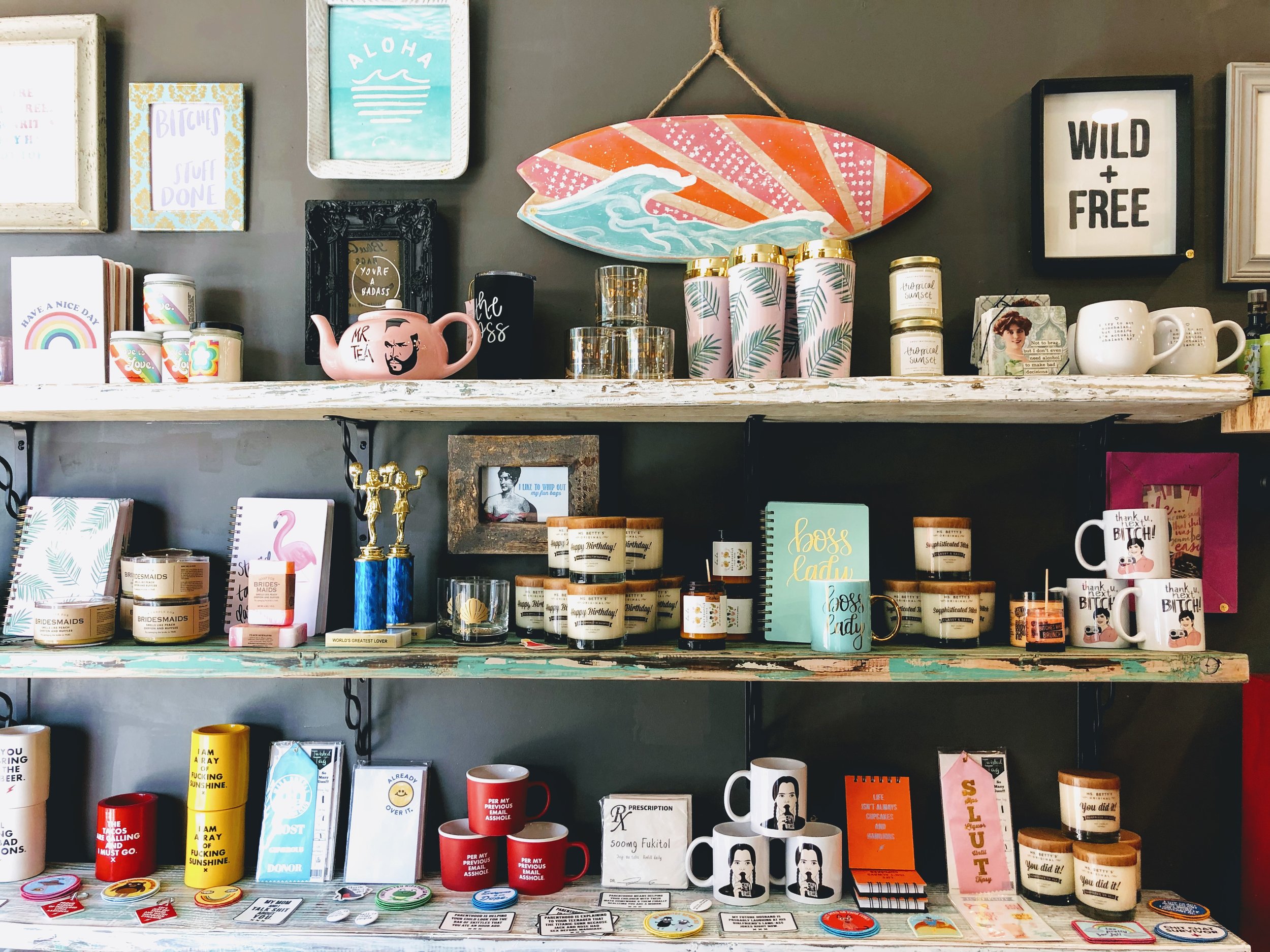


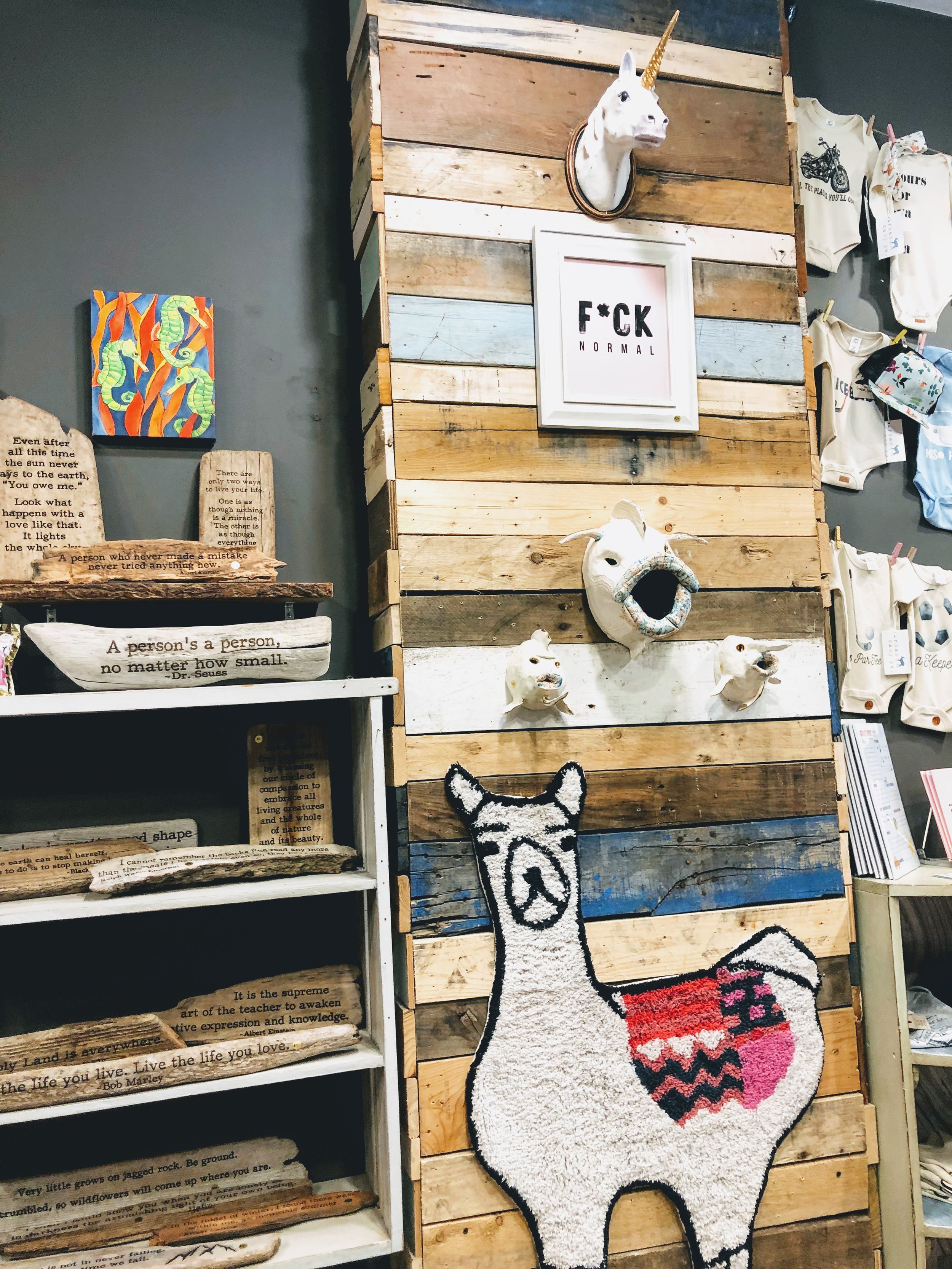
Follow TheCodfishCowboy on Instagram and visit them at 891 W Beech Street Long Beach, NY
& visit my other West End Picks:
Blacksmith’s Breads 870 W Beech street
Dough Hut (right next door) 891 W Beech Street
Island Thyme 780 W Beech Street
Jetty Bar and Grill 832 W Beech Street
Lost at Sea 888 W Beech Street
RaKang 895W Beech Street
Shine’s Bar 55 California Street
Speakeasy 1032 W Beech Street

Lucky Penny Parlor & the World's Smallest Postal Service x Lea Redmond
Maria Popova, a similar collector of interesting (in ideas rather than things) encourages: “Be curious. Be constantly, consistently, indiscriminately curious.” We had that quote in mind talking to Lea and wandering through Lucky Penny Parlor.
“Lea’s storefront project is a place where matter and meaning meet through found object conversations and storytelling.”
At times of darkness, what do we reach for? What do we try to bring into our lives? Our go-to’s are probably around activism, around self-care, around community. But wonder? Curiosity? Sometimes we put them in the ‘superficial’ bucket, the one reserved for whimsy, for frivolity, for later. We leave them alone. They are coping strategies LITE.
Spending a morning with artist Lea Redmond at Lucky Penny Parlor in Oakland you realize you’ve got it all wrong. Finding wonder is deeply purposeful. To abandon it now is to abandon something of our humanity, of our possibility.
It’s ok to not feel entirely comfortable when you come into Lucky Penny Parlor. What is it really? How do you engage? Can you touch this? You’ll have these questions and others. And Lea is fine with this – she’ll lead you through it, spend time with you so you can reach for understanding, bring your experiences into hers. There’s a beauty in questioning, a kindness in the suggestion of clarity. Lea did this with my daughter and I – as we touched things on display, grasped for information as we tried to orientate ourselves, she provided the scaffolding for a connection. Over mint tea, in carefully chosen cups, we found our way in.
There’s a therapy of sorts to be found here in Tea Cup Consultations in which Lea choses a cup from her extensive collection and you bring something from your own life to discuss over tea, and the staged Tabletop Shows, dioramas that encapsulate narratives and even the universe (upcoming shows are about hummingbirds and a choose-your-own-adventure through the solar system). These intimate services provide the framework for poetic conversations, exploratory meanderings and immersive play.
Lea is interested in the material that’s in front of us of another kind though, of what’s available to us in the ordinary and every day that has a tangible quality, the concrete items that are all around us, all the time, and that we no longer see. Look through the hundreds of tiny drawers that make up Lea’s Wonder Cabinet and which contain the detritus of our everyday lives – tags, bottle tops, flea market finds, and household artifacts. Here you are taken right back into the space of seeing again, of living in the pause. Meaning here sneaks up on you, revealed by delight and humor and amusement.
Maria Popova, a similar collector of interesting (in ideas rather than things) encourages: “Be curious. Be constantly, consistently, indiscriminately curious.” We had that quote in mind talking to Lea and wandering through Lucky Penny Parlor which houses her personal collection of curios and from which she curates her own singular world.
Two doors up from Lucky Penny Parlor, is a work in process, the very soon to be first outpost of Lea’s World’s Smallest Post Service and the latest iteration of her 10-year tiny mail project. A space of serendipity – Lea happened upon the perfect-sized vintage post office front to pull it all together. From here Lea and her team will send out tiny – as in seriously tiny – packages into the world.
It’s a truly magical space that captures our love of the absurd and the cute, as well as our need for connection, our longing for the analogue. With this project, Lea is returning to something long lost – our wonder at receiving things in the mail that are not in the form of a bill or bulk entreaties. Can you imagine finding one of these tiny letters or parcels in your mailbox. Can you imagine that moment being in your day? Aren’t you smiling now just thinking about it? Or maybe you are thinking about who you can send something to?
For Lea the World’s Smallest Post Service is all about bringing not just ‘tiny mail magic’ but ‘more wonder into the world’: “We propose to create an enchanting, museum-like, open-to-the-public brick & mortar home for our World's Smallest Post Service. We want to make a place, a magical coordinate on the globe where people can count on wonder and kindness.”
Lea has constructed her world too so that we can reach for it wherever we are – with products by her design company Leafcutter Designs. Like Lively Matter a deck of prompt cards to encourage creativity and play through ‘a grand adventure of the ordinary’, and that provide a much-needed break from our screens, and the Letters to My Series, which we’ve handed to grandparents and friends, to capture the stories they may want to tell but have had no format to do so. Most recently, Lea created Everyday Offerings, which holds a way forward in our daily lives.
From the outside, all this, these storefronts and projects, Lea’s vision for crafting this magical way of living, look fun but it takes hard work, a serious and keen drive, to sustain this creative space. It looks easy because whimsy is a kind of sleight of hand, a magic of sorts that leads you out of the mundane and into belief. You don’t see the trickery (read commitment and focus) that makes it happen, that makes non-obviously functional spaces, exist in the world.
Yes, we need independent cafes and bakeries, coworking spaces and stores. But we need this other non-definable space on our high streets – of inspiration, wonder and play. Of something else. That’s a need that is not being fulfilled in our grown-up lives. We’re losing our joy, and we need to badly capture it again. We’re lucky in that we get to visit this world of Lea’s creation. For a short while. To walk within this vision of what light existing in darkness can actual be, the physical form it can take and its importance in sustaining our lives. There’s nothing superficial in that.
To find out more: website www.leafcutterdesigns.com / Instagram @lucky_penny_parlor / Facebook @LeafcutterDesigns

City Lights Books | behind the truth
City Lights Bookstore is a literary landmark and a magical meeting place for intellectual inquiry.
“City Lights is a landmark independent bookstore and publisher that specializes in world literature, the arts, and progressive politics.”
City Lights Bookstore is a literary landmark and a magical meeting place for intellectual inquiry. Open until midnight daily since 1953, City Lights is internationally known for its expert selection of books and for its impact on the history of free speech in America with the publication of Allen Ginsberg’s Howl and the subsequent trials. City Lights continues to publish avant-garde work, host regular events and readings, and be a beacon of inspiration for all writers and lovers of the written word.
Lawrence Ferlinghetti, the primary founder and caretaker of City Lights, turned 100 years old this year and San Francisco celebrated his incredible contribution to both this city and literary culture across the globe. Ferlinghetti is a widely read, published, and cherished poet and activist who continues to create and paint mystical worlds of the imagination.
Inspired by Ferlinghetti and City Lights, I wrote a poem to pay homage to this singular place of multi-faceted truth:
behind the truth
after ‘behind the cape’ by david larsen
behind the truth,
and growing numb,
fear floods
the misled head.
men of power
trick fear from
silence.
from
knowing
something
to
knowing
nothing.
now
the work of
untangling
knots of
misplaced, misused
lies
i start again.
To find out more about City Lights Books: Website www.citylights.com / Facebook @citylightsbooks / Instagram @citylightsbooks/ Twitter @citylightsbooks
teamLab Planets
There are the obvious jokes one can make about the plethora of experiential pop-up museums that have emerged in our new Instagram-able world, but perhaps there is a kind of beauty that would not have been dreamed nor experienced had social media not been invented.
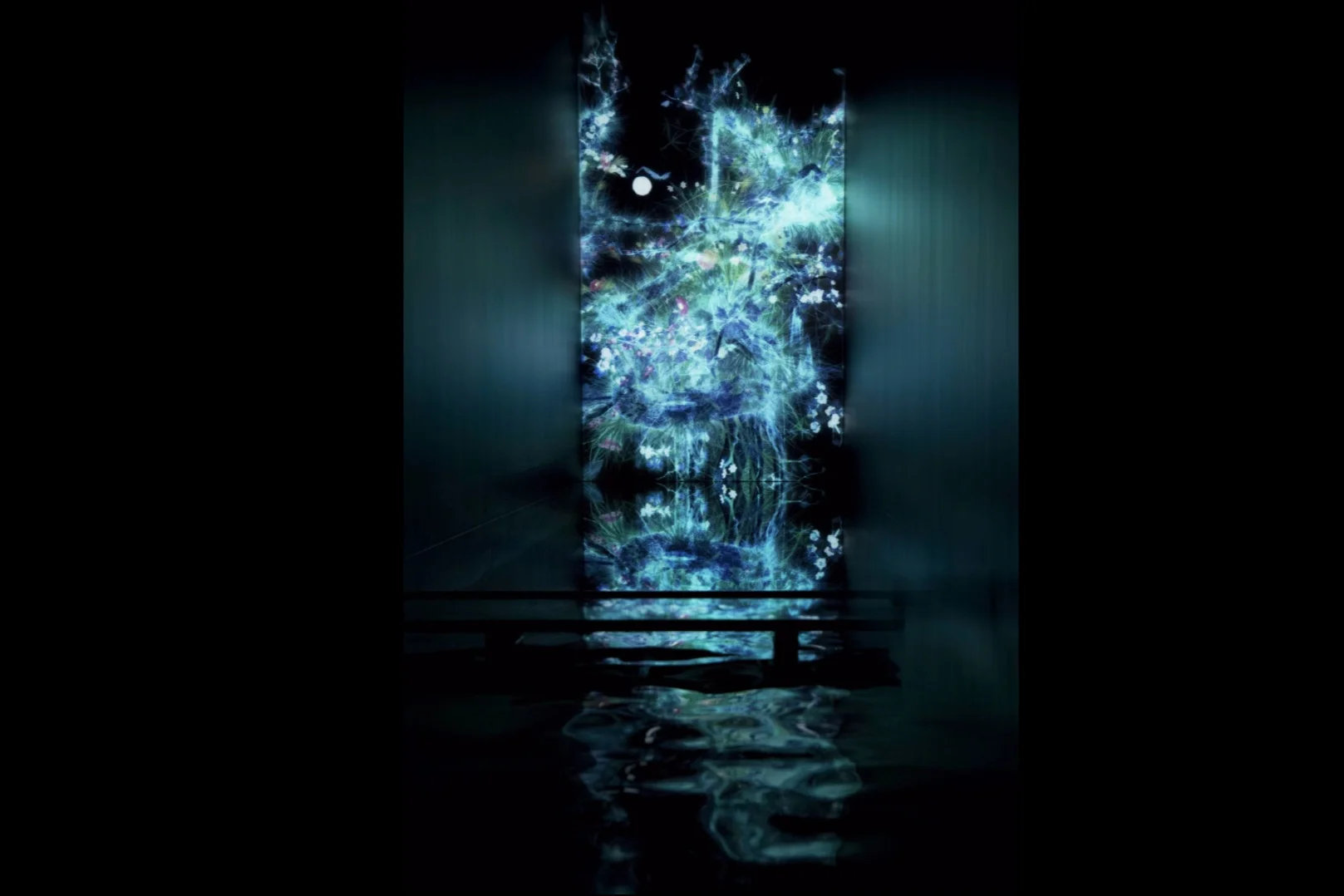
“teamLab Planets is a museum where you move through water. It consists of 4 vast exhibition spaces at its center, and 7 works of art. The artworks are based on art collective teamLab’s concept of “Body Immersive”.
The massive Body Immersive space consists of a collection of installations in which the entire body becomes immersed in the art, and the boundaries between the viewer and the work become ambiguous.
Visitors enter the museum barefoot, and become immersed with other visitors in the vast installation spaces.”
I know there are the obvious jokes one can make about the plethora of experiential pop-up museums that have emerged in our new Instagram-able world, but today’s visit to *Planets* had me re-thinking my own cynicism.
Perhaps there is a rare beauty in these new creations that we ought to be grateful for, a kind of beauty that would not have been dreamed nor experienced had social media not been invented. I have only ever gone to these *museums* because I know it’s an hour my kids will thank me for. But today’s visit turned out to be something entirely different for me.
Unlike the highly commercial, soulless stateside pop-ups, this museum experience was wildly sensual, surprisingly dreamy and inevitably personal. Over and over again I kept asking myself, “Is this what the approach to heaven feels like?” I kept thinking of my father in his last days weeping, “If I’d known dying was such a beautiful experience, I wouldn’t have spent my entire life fearing it.” I know this is some heavy feelings-stuff for this venue, but really - it was beautiful and powerful.
Head to their website, turn-up the volume and walk with us through an Olympic sized pool of warm, milky water with calming projections of cherry blossoms and koi fish. The music was absolutely everything.
In the end, we lay on a floor for an eternity, observing the vibrant visions of petals falling and butterflies ascending, and the whole time I kept thinking: “Yes. This is exactly what heaven will be like.”

Yerba Buena Center for the Arts
Shaping itself very much as a ‘citizen institution’ in diverse and ambitious ways, YBCA is more than an arts institution, it is a container for all our lives.
“At Yerba Buena Center for the Arts (YBCA), we are driven by the belief that art and creativity are essential to healthy lives and communities. Every day, we work with artists who are tapping into the wonder, creativity, and imagination that fuels our perception of what is possible. This sense of possibility and potential is the foundation of our well-being.”
San Francisco’s Yerba Buena Center for the Arts excels at making it’s cool taglines real. Like ‘Center for the Art of Finding Beautiful Truths Amidst Ugly Realities’. Or ‘Center for the Art of Expressing Optimism Against Unfathomable Odds’. And even ‘Center for the Art of Exposing a Needle of Insight in a Haystack of Confusion.’
These often lyrical insights are woven throughout YBCA’s mission and are activated within the diverse communities in which it consciously operates.
Yes, there’s still an active exhibitions program but one that orientates itself around social change and that promotes discussion around participation, reflection and awareness. With exhibitions by socially engaged artists such as Suzanne Lacey, Futurefarmers and Tania Brugera, YBCA goes beyond the standard solo show format to interactive installations that process our everyday realities at depth and within clear contexts.
But YBCA as a real, impactful and needed platform also manifests beyond it’s white walls and into the public realm, onto the streets, in the neighborhoods and within the urban lives surrounding it’s downtown location. YBCA’s public artworks, for instance, advocate for change. Like the partnership with the Tenderloin Healthy Corner Store Coalition, in which artists replace existing neon signs advertising liquor and cigarettes with new ones selling fresh produce. Other sited works are designed to capture our public imagination like Ana Teresa Fernández’s Dream.
With it’s moment defining YBCA 100, YBCA surveys and amplifies the people, initiatives and movements affecting social change. 2018’s wide-ranging list included the ‘me too’ movement, the students of Majory Stoneman Douglas High School, comedian Luna Malbroux, activist Naomi Klein and poet Chinaka Hodge. While YBCA’s Fellowship Program brings together creative citizens across the Bay Area to collectively interrogate a single urgent question that culminates in an inclusive day-long Public Square event, of performances, installation, workshops, and presentations.
Then there’s the partnership with Blue Shield that builds on the ‘growing evidence that art, creativity, and culture have measurable impacts on individual and community health.’ Culture Bank, co-founded by YBCA Director Deborah Cullinan, which actively invests in artists who are cultivating the hidden assets of our communities. And now YBCA has become home to the Curatorial Research Bureau, a bookstore, learning site, exhibition and public programs space that opens up who gets to learn about the discourse impacting culture.
Shaping itself very much as a ‘citizen institution’ in all these many ambitious ways, YBCA is more than an arts institution, it is a container for all our lives. It’s public service ambition is most eloquently summed up in the words of Cullinan:
“Today, as public trust in our institutions and our leaders continues to erode, there may be no role that is more important for our cultural organizations to play than to be places for people from all walks of life to come together in dialogue. In fact, I believe that the arts organizations that will survive and thrive over the next several decades will be those that embrace a radical inclusivity; set free structures that privilege certain perspectives and exclude others; encourage dialogue and debate; and, expand definitions of what art is, who makes it, and who it is for. These organizations will fuel the public imagination and catalyze collective action. These organizations will hold our democracy accountable.”
Across the cultural field, people are starting to build frameworks for engagement, transformation and participation, often through the filter of culture, and creating the structures to help negotiate our lives, from multiple perspectives. It’s a very different approach to what culture was supposed to do previously and how our institutions have been conceived and constructed. YBCA is a lead player in this field: reconfiguring what it means to be an arts institution today, the role that cultural spaces can actively take to affect our everyday lives, and what a center for doing something about it can actually look like.
Visit. Engage. Participate. Because what YBCA makes happen matters to us.
Website: www.ybca.org / Facebook @YBCA / Instagram @ybca / Twitter @YBCA
Case for Making
An emporium for the curious, for searchers and explorers of the page and white space. San Francisco’s Case for Making has been thoughtfully designed to ‘push our collective ideas further about what creativity can be’.
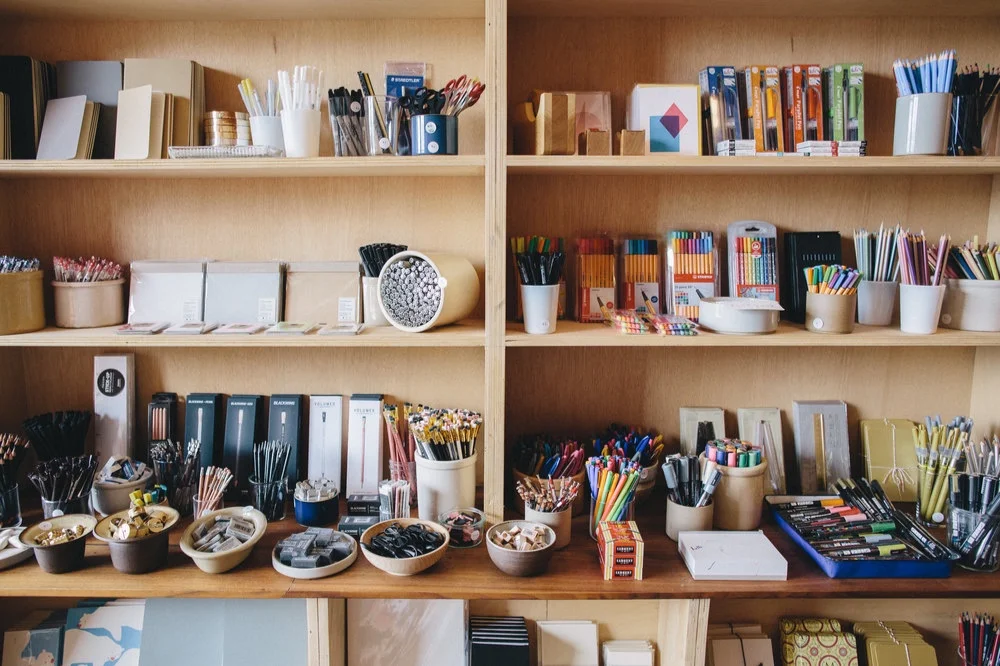
“Case for Making is a storefront offering creative supply basics, raw materials, and workshops, selected and designed to encourage process-focused exploration. Our practice is to recognize the presence of creative inquiry in multiple forms, and to provide space for engaging in and valuing this work.”
Right in a pocket of community in San Francisco’s Outer Sunset neighborhood, sits Case for Making, its creative beating heart. Founded by Alexis Joseph and Lana Porcello in 2014, because ‘the potential of humans doing projects makes them very happy’, this sweet storefront stakes a mark in the ground for the importance of making in our lives. Its an artist’s store for all of us.
Browse their products (you can do this online too). Take time in the store to just figure out what appeals to you and what makes you want to play at the process of it all. For us, its usually the handmade watercolors and indigo inks, and the special paper goods, particularly their fill-in-the-blank greeting cards.
This is an emporium for the curious, for searchers and explorers of the page and white space. Its a place designed to ‘push our collective ideas further about what creativity can be’.
Maybe this is best captured by the workshops on offer. Through classes led by local makers they admire, you are invited to produce your own pigments, learn how to draw, or paint with watercolors (their current offerings). These practical explorations sit closely to a spirit of guided inquiry, about how we show up as people in our worlds.
Case for Making takes down the idea that art is precious a notch or two, and opens the door to whatever it is that creativity means to each of us. We get to decide what we want to make and why it matters. They get to help us to do that. That’s why we love them.
*There’s a sister store at The Aesthetic Union too that you should check out!
Website www.caseformaking.com / Instagram @caseformaking

LA Central Library x Susan Orlean
It’s when Susan Orlean writes of the multipurpose function of libraries now to be the spaces that can reflect our public imagination that we feel like signing up to be a librarian right now.
“The publicness of the public library is an increasingly rare commodity. It becomes harder all the time to think of places that welcome everyone and don’t charge any money for that warm embrace.”
The Los Angeles Central Library? Wait, what, is this the right place for this? Its just a library afterall.
Yeah, we think so. We just finished reading Susan Orlean’s The Library Book and she wrote of this one library in all the terms that we consider fundamental to If Lost… places. She lyrically, and realistically, captures what this library in particular, and libraries more widely, mean to us. She knows in the heart and her own experience, how libraries hold a unique space in our lives, sometimes across generation, how they allow us spaces to just be, how they create a way into our communities that might not otherwise be there.
The Library Book captures the unique history of the LA Public Library itself - the fire that almost took it down, the women who first shaped its mission, and the current social conditions and expectations that it must now negotiate. Its also just a building. Albeit one that makes magic on a daily basis. On the LA Public Library itself, Orlean’s writes:
“The ground floor has the same traffic pattern as Grand Central Station in Manhattan. Both places are animated by a hurrying flow that surges in and out of the doors all day long. You can bob along in that flow, unnoticed. The library is an easy place to be when you have no place you need to go and a desire to be invisible.”
It’s when she writes of the multipurpose function of libraries now to be the spaces that can reflect our public imagination that we feel like signing up to be a librarian right now. Since their development in the 1800s libraries have acted as critical focal points for our communities, but The Library Book, also captures the shift in libraries from “a gigantic, groaning, fusty pile of books” to “a sleek ship of information and imagination.” Our libraries now contain not just text and voices, but services and programs that serve diverse populations, including the homeless, low income population and families. Today, libraries have a critical civic role, a pubic facing responsibility. They are sanctuaries, our town square, our community hub, our places of learning, or as Orlean’s writes “a place that is home when you aren't at home”.
We need libraries. We need these spaces to thrive, and they are.
“By most measures, this optimistic cohort seems to be right. According to a 2010 study, almost thee hundred million Americans used one of the country’s 17,078 public libraries and bookmobiles in the course of the year. In another study, over ninety percent of those surveyed said closing their local library would hurt their communities. Public libraries in the United States outnumber McDonald’s; they outnumber retail bookstores two to one. In many towns, the library is the only place you can browse through physical books.
Libraries are old-fashioned, but they are growing more popular with people under thirty. This younger generation uses libraries in greater numbers than older Americans do, and even though they grew up in a streaming, digital world, almost two thirds of them believe that there is important material in libraries that is not available on the Internet. Unlike older generations, people under thirty are less likely to have office jobs. Consequently, they are always looking for pleasant places to work outside their homes. Many end up in coffee shops and hotel lobbies or join the booming business of coworking spaces. Some of them are also discovering that libraries are society’s original coworking space and have the distinct advantage of being free.
Humankind persists in having the desire to create public places where books and ideas are shared.”
But libraries are also something else aren't they? They have this critical place in our communities, but they hold as equally a powerful place in our imaginations. When Orlean’s writes of the nostalgia around libraries, who cannot be taken back to that place of refuge or respite that they themselves experienced at some stage in their life? For her, it was like this:
“Decades had passed and I was three thousand miles away, but I felt like I had been lifted up and whisked back to that time and place, back to the scenario of walking into the library with my mother. Nothing had changed—there was the same soft tsk-tsk-tsk of pencil on paper, and the muffled murmuring from patrons at the tables in the center of the room, and the creak and groan of book carts, and the occasional papery clunk of a booked dropped on a desk. The scarred wooden checkout counters, and the librarians’ desks, as big as boats, and the bulletin board with its fluttering, raggedy notices were all the same. The sense of gentle, steady busyness, like water on a rolling boil, was just the same. The books on the shelves, with some subtractions and additions, were certainly the same.
It wasn’t that time stopped in the library. It was as if it were captured here, collected here, and in all libraries—and not only my time, life, but all human time as well. In the library, time is damned up—not just stopped but saved. The library is a gathering pool of narratives and of the people who come to find them. It is where we can glimpse immortality; in the library, we can live forever.”
When my son was born the first thing my husband did was get him a library card. He’s now 10, and has a sister in tow, and he has come to know very closely the capacity of libraries to enchant and educate. From the time his then stay-at-how dad bounced him on his knee during library story times to his amazement at experiencing Virtual Reality during a preteen takeover, the library has been a constant. Its one of the few places left where all of us with our different ages and needs finds something. We all find our way in their together, even if we spend our time separately when we’re in there.
If you don’t know your public library seek it out. And if its under threat like we know many are, campaign for its survival. These are places we need, so we don’t become untethered from our pasts or each other.