
What If Being Lost Is Part of Finding Your Way?
Feeling lost can feel uncomfortable, but it doesn’t mean you’re doing life wrong. Anne Ditmeyer explores uncertainty, detours, play and finding your own way.
When we feel lost often we want to get out of it as quickly as possible. We want the answer, the map, the five-step plan. We want to know where we’re going and preferably how long it will take us to get there.
I understand this. I have spent enough of my own life in uncertain moments to know how uncomfortable it can be not to know what comes next. And it’s something I see all the time in my coaching work too. We arrive at these moments in our careers, relationships, families and lives when the route we thought we were following suddenly stops making sense. We feel stuck, uncertain or overwhelmed and assume that somewhere, somehow, we’ve gone wrong.
But what if getting lost isn’t necessarily the problem?
That was one of the ideas I kept returning to during my conversation with Anne Ditmeyer on A Thought I Kept. Anne is a writer, creative coach and workshop facilitator living in Paris, and much of her work is about giving people the confidence to explore, experiment and, quite literally, get lost.
Anne’s thought kept is: “This should be fun.”
It was a mantra used by her grandfather, Charles Stark Draper, the scientist and engineer whose work on inertial guidance systems helped navigate the Apollo missions to the Moon and back. Anne was only six when he died and discovered the phrase much later, after the death of her mother prompted her to start finding out more about him.
Rather than simply following the official paper trail, she began talking to the people who had known him. It became, as she describes it, a scavenger hunt. And through their stories, she discovered not only the scientist she had grown up hearing about, but a man who danced, flew planes, built relationships and approached extraordinarily difficult problems with curiosity and enjoyment.
There was something else that struck Anne too. Her grandfather’s work had been about navigation and exploration. In a very different way, hers was too.
What if you don’t need the whole map?
We tend to talk about lives as if they should be linear. You work hard at school, choose the right university, find a job, progress, settle down, achieve the milestones and keep going. Even when we know intellectually that life rarely happens this neatly, it can still feel unsettling when ours doesn’t.
Anne describes how her grandfather didn’t begin with a perfectly formed plan to help get humans to the Moon. One thing led to another. There were people he met, things he learnt, questions he followed and opportunities he couldn’t possibly have predicted at the beginning.
Our lives can work like this too.
Anne talks about the “messy middle”: the part we often wish we could skip because it doesn’t yet make sense. But sometimes, she says, we need that mess to meet the right person, gain an insight, have an experience or build the skill that takes us somewhere else.
Perhaps feeling lost can be a little like this. It can be the space between the life that made sense before and whatever is emerging next.
That doesn’t necessarily make it comfortable. Anne talks beautifully about “dancing with discomfort”, rather than treating discomfort as evidence that we are doing something wrong. In one of her workshops, she asks people to draw lobsters partly because most of us have absolutely no idea how to draw one. The lobster also gives her a wonderful analogy: as they grow, lobsters have to leave one shell before a bigger one can form.
There is vulnerability in that in-between place. But there is growth too.
What if you followed the detour?
One of my favourite parts of our conversation was Anne’s invitation to think differently about detours.
We’re so accustomed to believing that the quickest, most direct route must be the best one. But Anne talks about rerouting, taking the scenic route and opening the door “just a teeny bit” to another possibility.
This is where being lost starts to feel less like something we have to solve and more like something we might explore.
What happens if, instead of immediately asking How do I get out of here?, we become curious about where we actually are? What assumptions have we been carrying about what our lives should look like? Which expectations still belong to us? What tiny nudges or ideas have we been overriding because they don’t fit the route we thought we were supposed to take?
Anne has a lovely way of describing this as our “internal guidance system”. Her grandfather worked with gyroscopes and inertial navigation systems, and she sees a parallel in our own ability to return to ourselves when the world shakes us around.
After Anne’s mother died, she found a letter her mother had written to her as a teenager. It was addressed to her daughter “born with her own special guidance system”.
I found that incredibly moving because perhaps the work isn’t always to find a completely new direction. Sometimes it’s to hear again what has become very quiet underneath all the noise.
What if being lost could contain possibility?
Of course, not every lost moment feels playful. Sometimes we are lost because somebody has died, a relationship has ended, work has become unbearable or a version of our life we depended upon is no longer available to us.
Anne is very clear that “this should be fun” isn’t about false positivity. Her own story contains profound grief. Instead, she talks about allowing multiple things to be true: that something can be hard and there can still be beauty; that we can grieve and connect; that we can be uncertain and occasionally delighted by what we discover.
Maybe we can be lost and finding our way at the same time.
I think that is what I took most from this conversation. We don’t always need to respond to feeling lost by gripping the map more tightly. We might need to wander. To take one small step before we understand where it leads. To notice what interests us. To follow an unlikely connection. To draw something badly. To go for a walk. To let ourselves admit, as Anne sometimes does, I’m not really sure right now, while trusting that something will come.
Because clarity, as Anne reminds us, doesn’t always come from thinking harder about our lives. Sometimes it comes from moving through them.
Listen to my full conversation with Anne Ditmeyer on A Thought I Kept: “This Should Be Fun”.
And if you’re feeling lost yourself, our book If Lost, Start Here: Wellbeing for the Anxious, Disconnected or Uncertain was created for exactly these moments. Rather than giving you another prescribed route to follow, it offers ten different pathways through wellbeing — including creativity, play, connection, nature, purpose and awe and wonder — so you can start with whatever feels possible or interesting to you right now.
You don’t have to know where it will lead. Sometimes you just need somewhere to start.
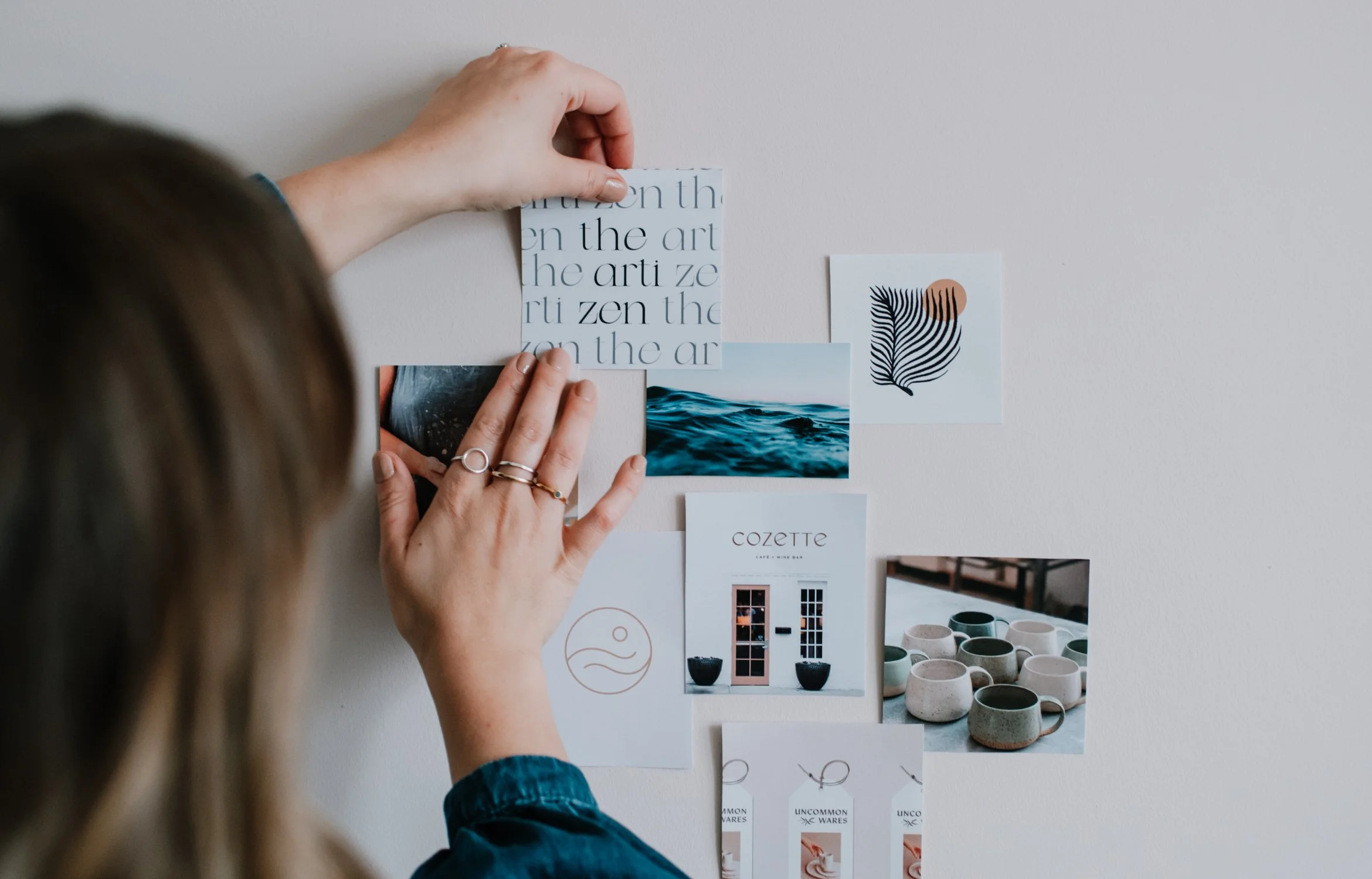
Finding presence through tactility by Sarah Robertson
How sensory activities and physical objects can bring us home to ourselves.
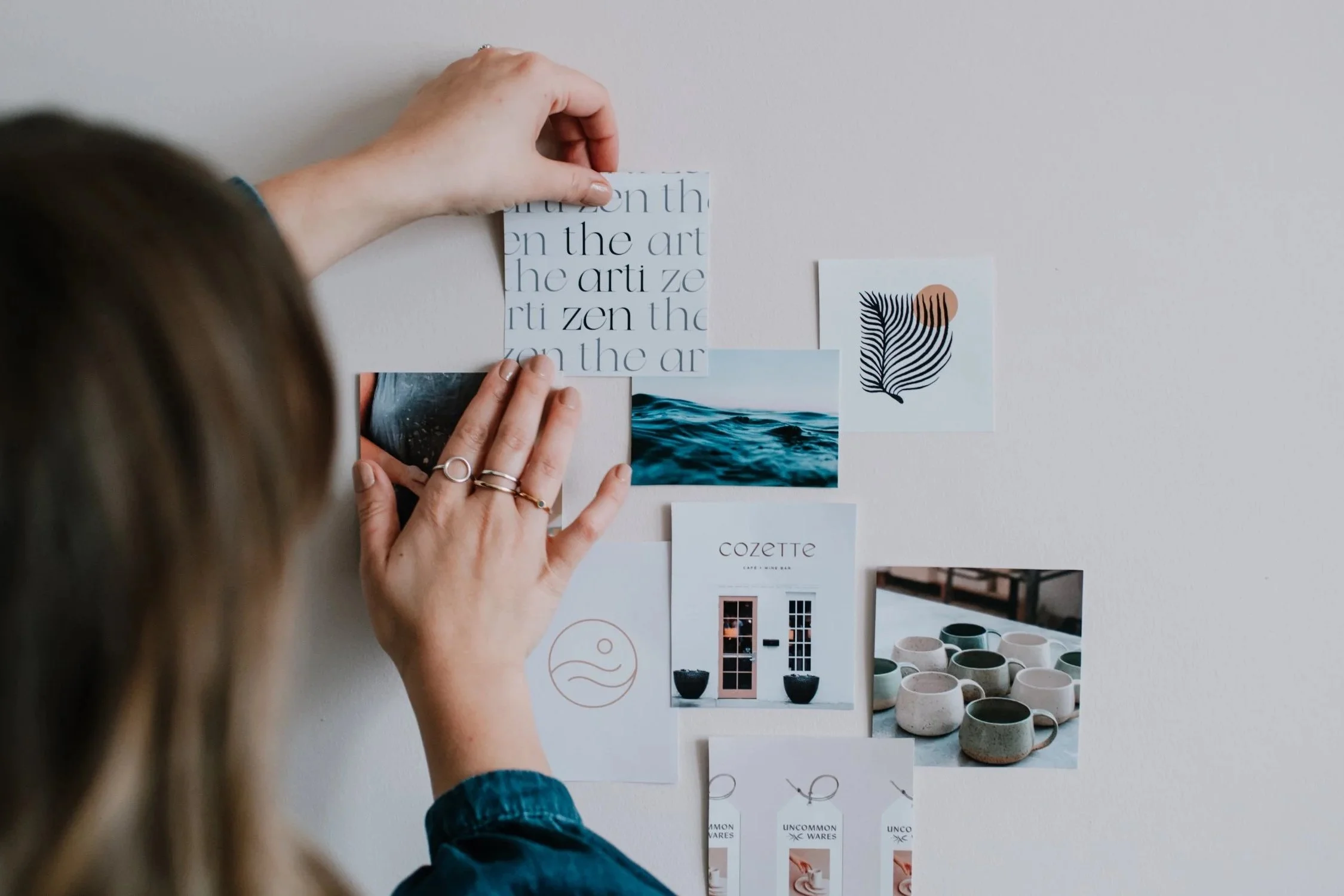
All photos courtesy Sarah Robertson
We are increasingly living in a state of digital abstraction, consuming stories and making connections through the blue light of our screens.
Yet we often finish a session of scrolling feeling strangely detached, as if we’ve travelled miles without ever having moved. So how do we find our way back?
How do we ground ourselves when the digital world pulls us toward endless distraction or when the rhythms of our own lives feel chaotic and overwhelming?
For me, the answer lies in tactility.
“The hands are the instruments of man's intelligence.”
— Seneca
Sensory rituals
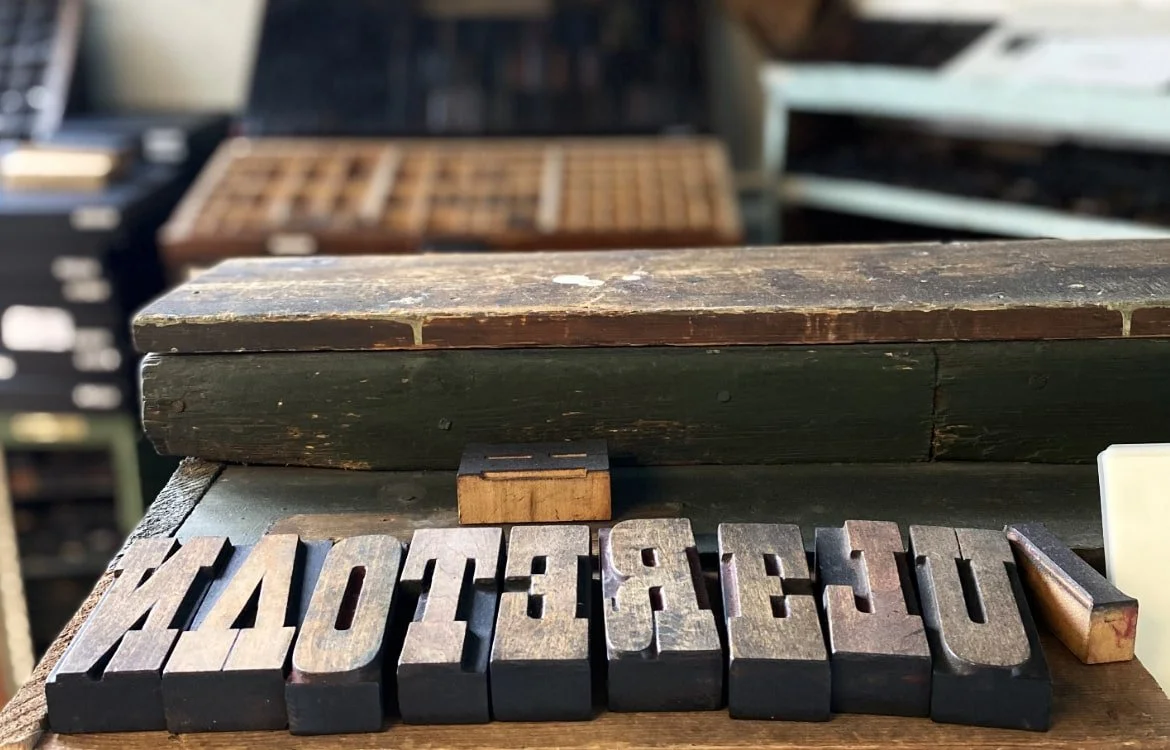
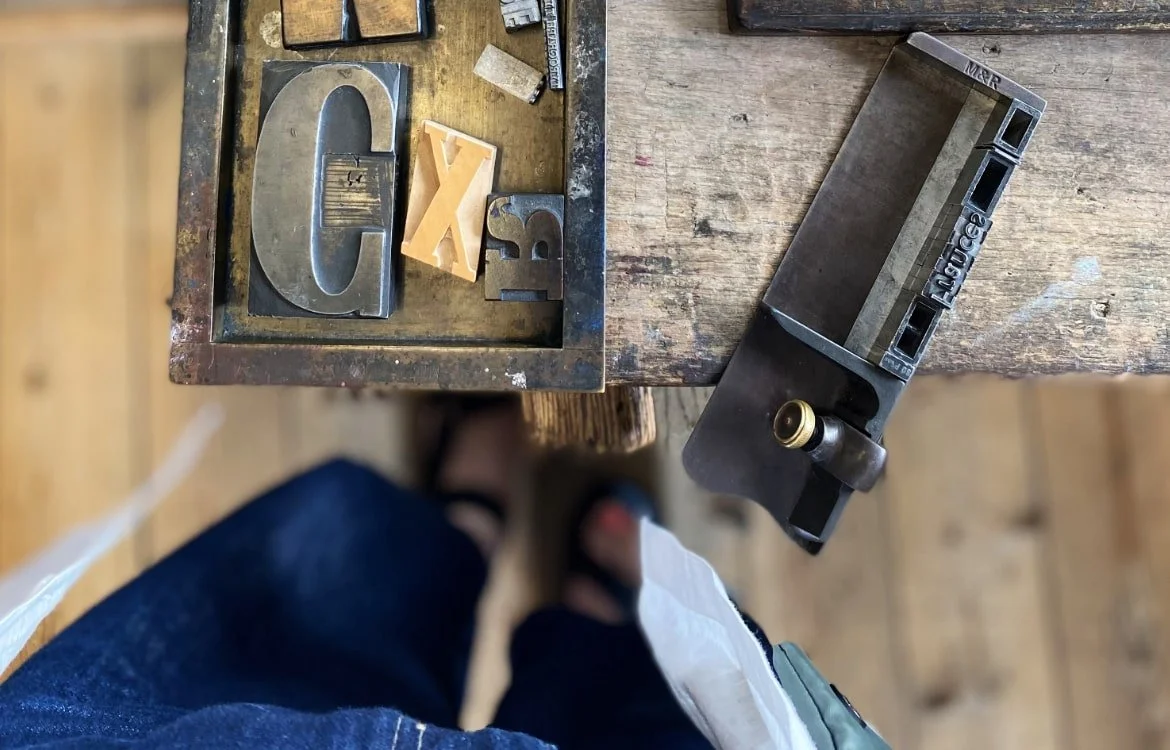
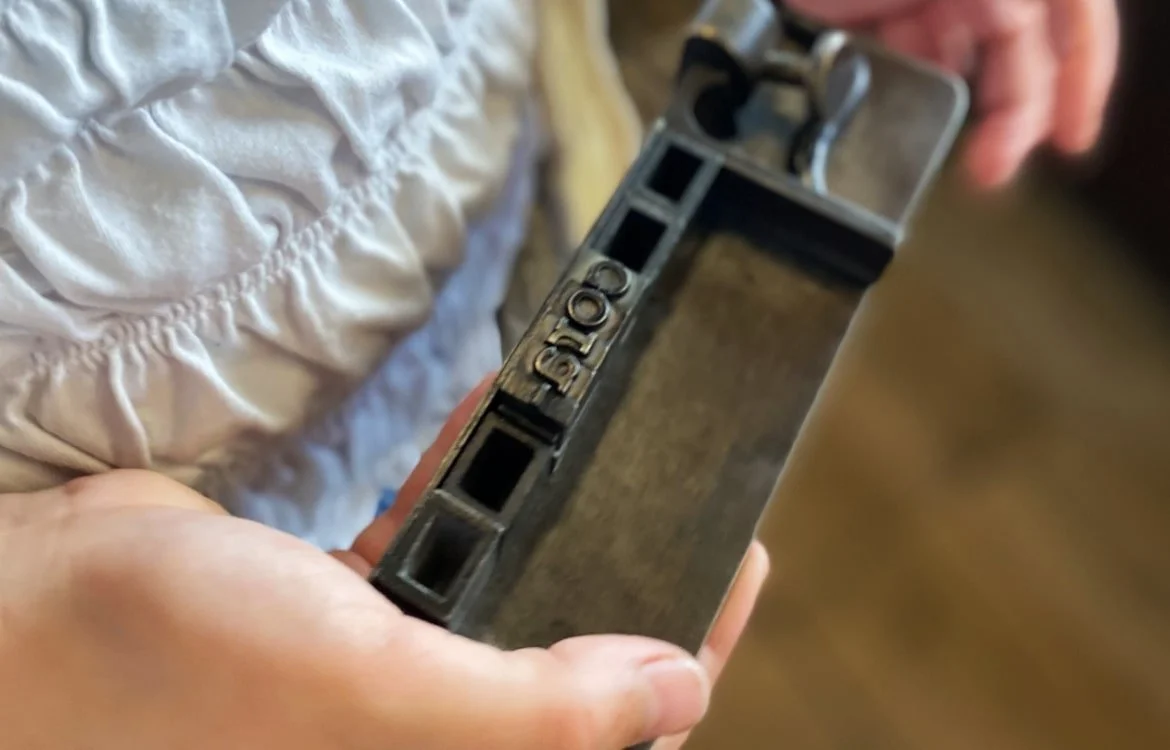
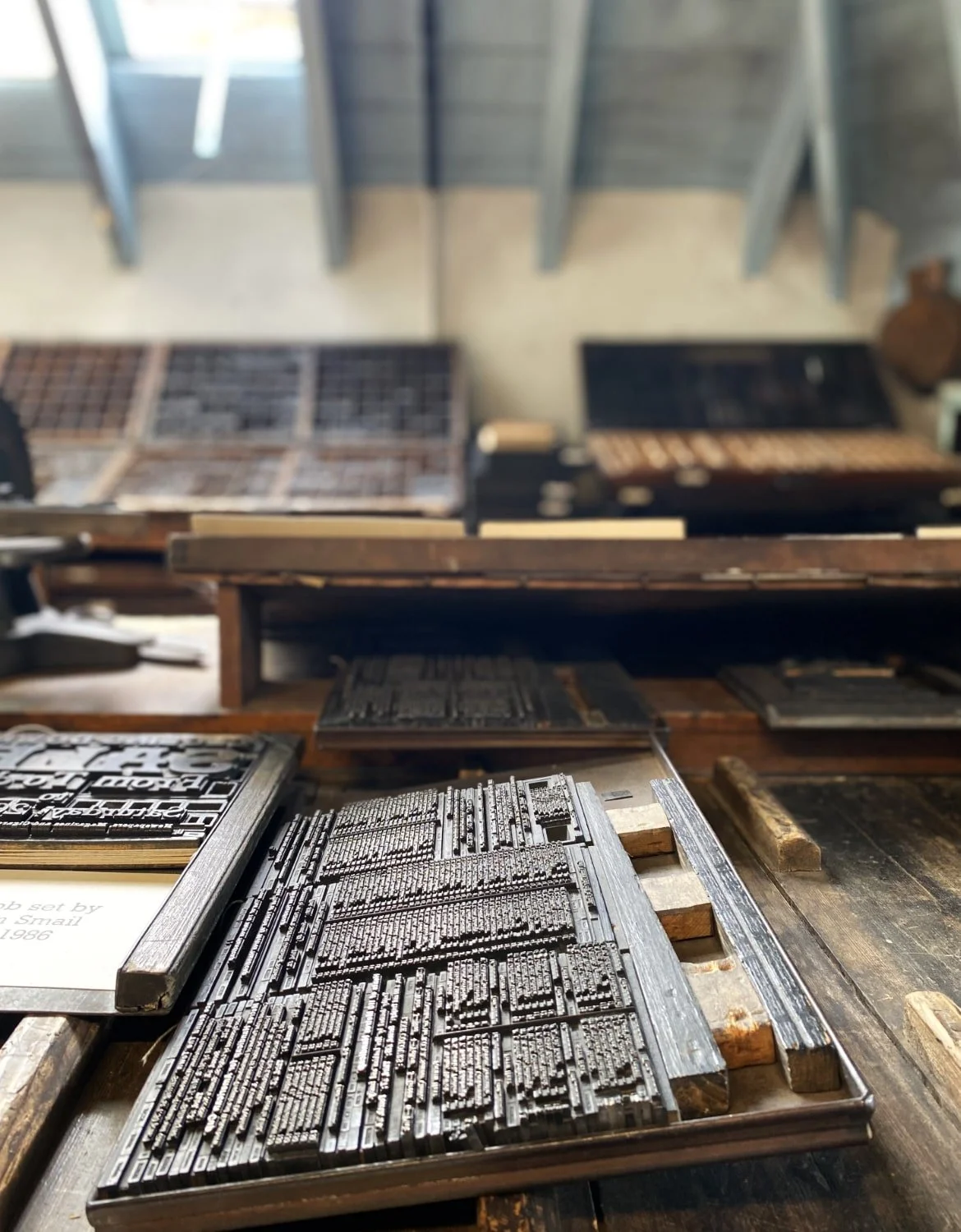
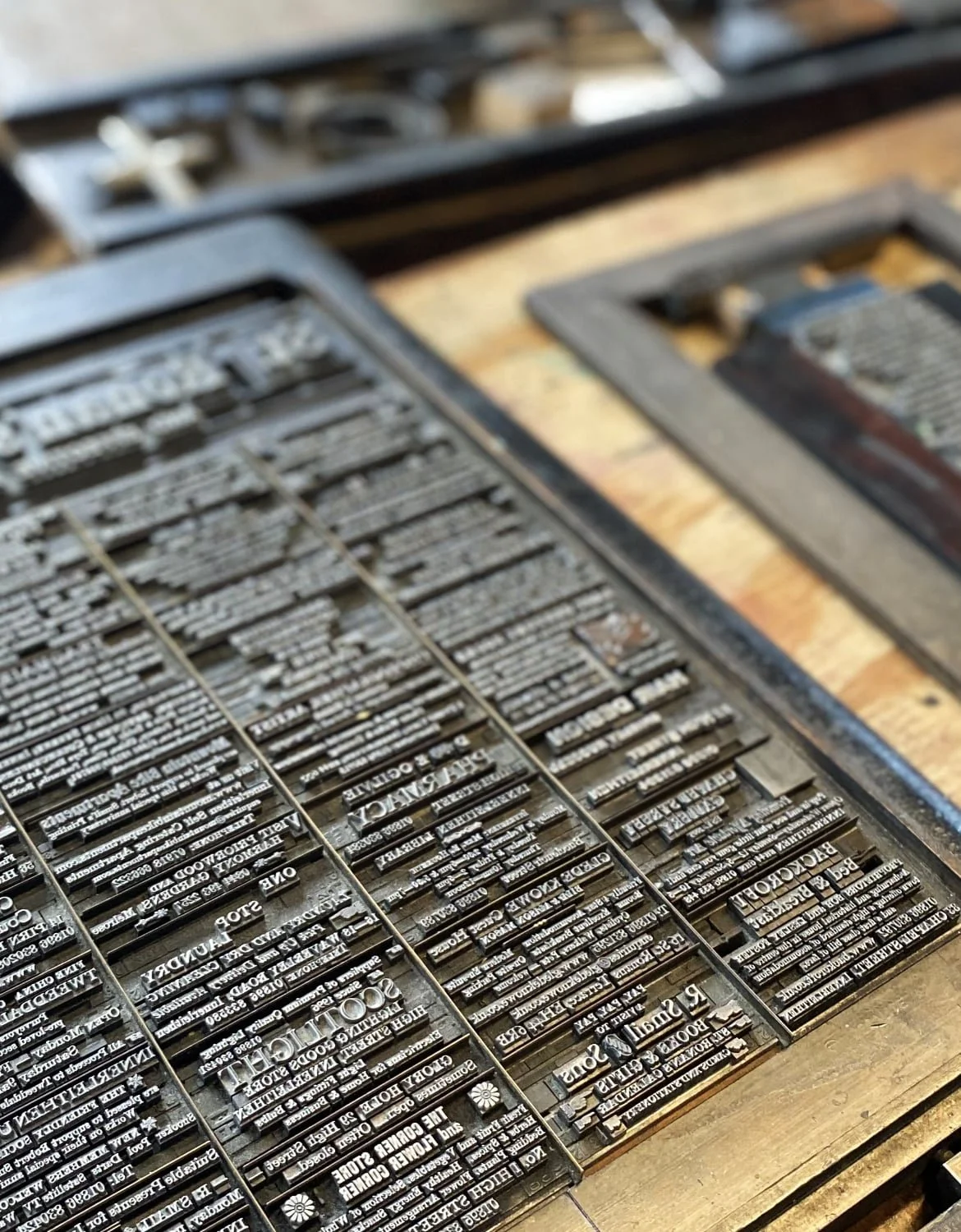
I recently took my daughter on a creative pilgrimage to Robert Smail’s Printing Works, one of the few remaining Victorian letterpress printers in the UK. It’s a quiet place, filled with the scent of ink and the rhythmic clunk and whirr of cast-iron machines.
Watching the type being laid one character at a time, I was struck by how much patience and presence are required in the physical act of making. As my daughter made her own bookmark, it struck me that there’s a profound magic in things that have weight, texture and even scent
The feel of paper, the impression of a letterpress print, the resistance of a pen as we write — these aren't just aesthetic preferences. They’re sensory signals, acting as anchors, pulling our attention away from the infinite expanse of the internet and back into the immediate, physical moment.
Objects as anchors
When we engage with a physical object — be it a beautifully bound book, a ceramic mug held in both hands or a wellbeing journal like those created by If Lost Start Here or Saorsa Psychology — we engage in ritual. We’re choosing a medium that requires us to slow down.
I’ve come to realise that these sensory moments aren’t about productivity; they’re about protection. They create a soft space for our thoughts and ideas to arrive. In a busy world that asks us for polish and perfection, the tactile world offers us permission to be messy. There’s a grace in imperfect action…the scribbles, the ink stains, the sketches. These moments signal to our nervous system that it is safe to land, to be.
This sense of ritual is something I used to enjoy exploring through the concept of the "Artist Date", a weekly practice of seeking out sensory, playful experiences to refill our creative wells, popularised by The Artist’s Way by Julia Cameron. Of course, it doesn't have to be an excursion to a printing works; it can be as simple as choosing a specific notebook for your morning reflections or finding joy in turning the pages of a new magazine.
Returning to self
The tools we use to care for ourselves matter. In seasons where our capacity feels limited, or life feels loud, these tactile anchors become even more vital.
For me, it’s a reminder that creativity and connection don't always require grandeur; they require mindfulness, maybe even playfulness. And I’ve learned that the value of these rituals isn't in the "finish line" or the end result. It’s in the returning; the decision to show up for ourselves and our curiosity, even when we feel uninspired.
By choosing the tactile, we choose the real. By choosing the moment, we choose to be here.
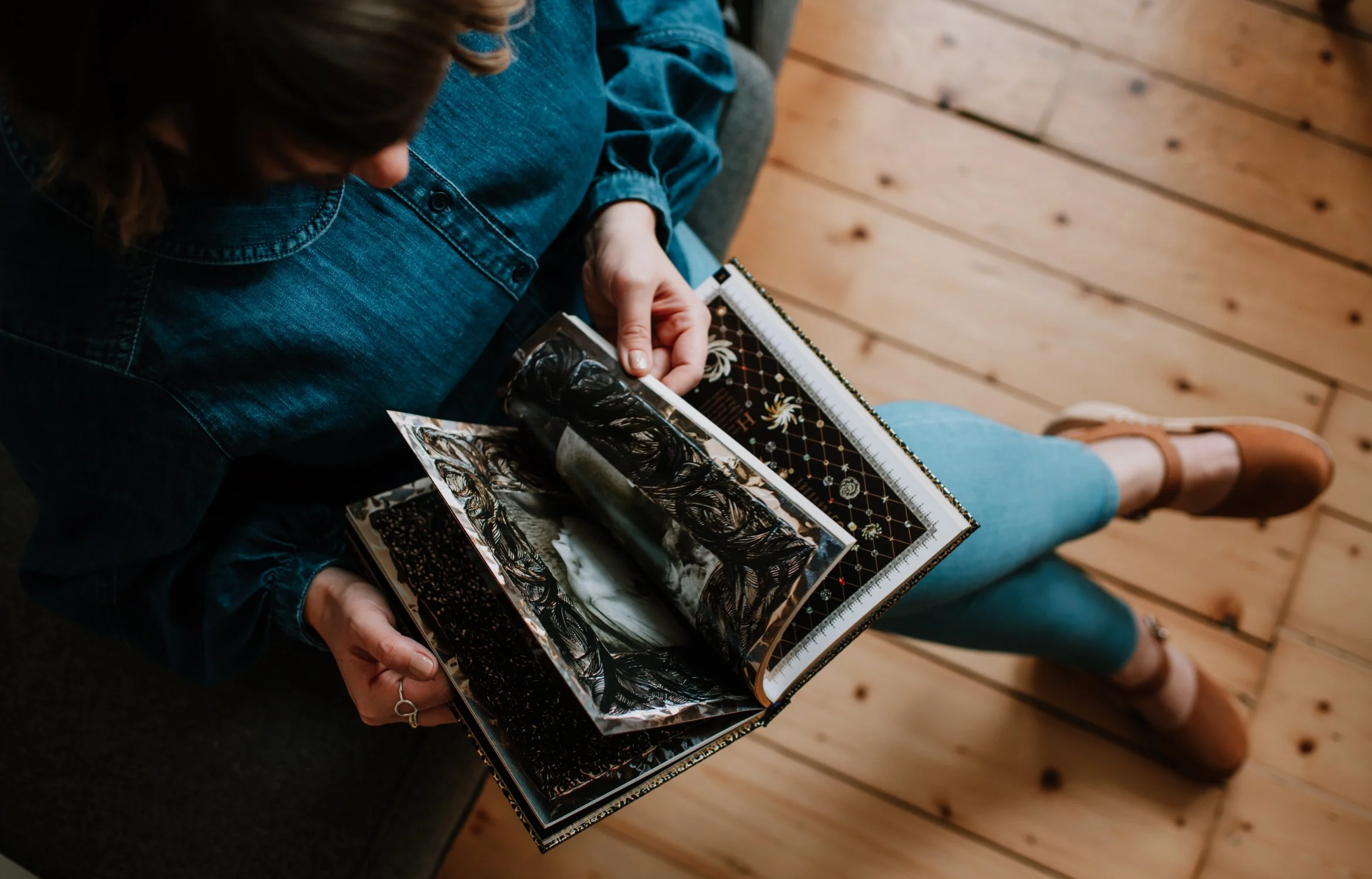
This love for the sensory is woven into the very fabric of my upcoming book, Shape Your Brand Story. This tactile companion for founders, makers and creatives is a beautifully crafted hardback — complete with gold foiling and accents — something to be held and enjoyed as you navigate the cycles of your branding and business journey.
Do you have a tactile ritual that helps you transition from the digital world into a more intentional space? Whether it’s the scratch of a fountain pen on paper or the ritual of opening a fresh journal, I’d love to know what helps you slow down enough to notice.
Sarah Robertson is the creator of the Brand Seasons® Method, a cyclical approach to branding and business that inspired the Brand Seasons® Playdeck and Playbook.
Through her storytelling studio, Fonn, she helps founders, makers and creatives define their vision, craft beautiful visuals and discover their voice. You can find more reflections on intentionality and creativity on her Substack publication, This Creative Life.
Sarah’s first book, Shape Your Brand Story, is being published with 91 Editions this autumn and is now available to pre-order.
Creativity as a Mental Health Tool: How Art Can Support Wellbeing and Self-Trust
Feeling overwhelmed or unsure where to start? Discover how creativity can support mental health, ease anxiety and build self-trust in everyday life, even if you don’t think you’re creative.
Often when we think about wellbeing, our minds go to the things we’ve been taught to reach for. Yoga classes and early morning runs. Cold water swims, breathwork, journaling practices carefully folded into the edges of the day. There is a familiar shape to it now, a sense of what counts as looking after ourselves and what does not.
And yet, there are other ways of feeling better that sit just outside of that frame. Quieter, less prescribed, often overlooked. Creativity is one of them.
Not because it is unavailable, but because many of us stopped recognising it as something we were allowed to have. Somewhere along the way, it became something reserved for other people. The creative ones. The artistic ones. The ones who knew what they were doing.
So when we find ourselves searching for support, for something that might help us feel a little steadier or more like ourselves again, creativity rarely makes the list. It feels optional, or indulgent, or something to come back to when everything else is in place.
But what if it is not an extra at all. What if it is one of the most overlooked ways we have of supporting our mental health and wellbeing.
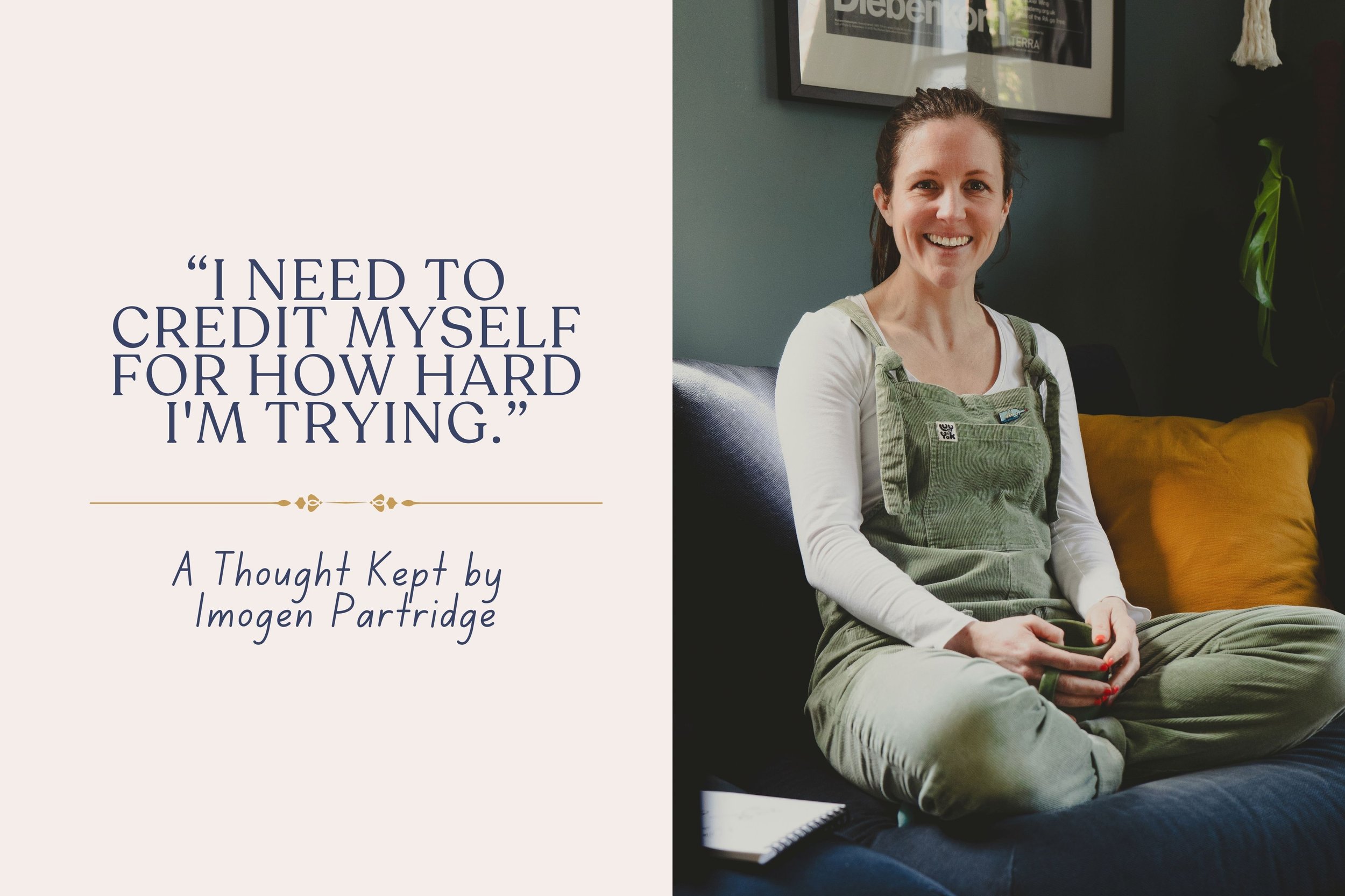
This is something that came into sharper focus for me in a recent conversation with Imogen Partridge, a watercolour illustrator and workshop host whose work sits at the intersection of creativity and everyday life. Not in a way that asks us to become more creative, but in a way that reminds us we already are.
What she speaks about is not creativity as output or identity, but as a practice. Something we can return to in the middle of ordinary days. Something that can sit quietly alongside everything else we are holding, offering a different way of being with ourselves when things feel uncertain or overwhelming.
At the heart of her own experience is a thought she has kept for years. A reminder that appears on her phone at the end of the day, asking her to give herself more credit for how hard she is trying .
It is a simple idea, but one that shifts something fundamental. Because so often, even when we are looking after ourselves, we are still measuring. Noticing what we have not done, where we have fallen short, how far we feel from where we thought we might be. And so even our wellbeing practices can quietly become another place where we are trying to get it right.
What happens if we begin somewhere else.
If instead of asking whether something is working, we notice that we are trying. If instead of evaluating the outcome, we stay with the experience of being in it.
This is where creativity begins to feel different.
In Imogen’s workshops, people often arrive with a certainty that they are not creative. It is not something they have questioned for a long time. It sits quietly in the background, shaping what they reach for and what they avoid. And so there is hesitation at first. A sense of being outside of something. Of not quite belonging in the space.
But when they begin, something shifts. Not because what they create is suddenly good or finished or worthy of being shown, but because they are in it. They are making marks, however tentative. They are noticing what it feels like to try without knowing exactly where it will lead.
There is a vulnerability in that. In being seen trying, even by yourself. In allowing something to exist that is unfinished, uncertain, not quite right.
And there is also something quietly steadying about it.
Because when the focus moves away from outcome, there is space for something else to emerge. A different kind of attention. A moment of calm. A feeling of being absorbed in what is in front of you, rather than pulled in multiple directions at once.
This is where creativity begins to show up as a mental health tool, not in the way we might expect, but in the way it meets us where we are.
It does not ask us to be consistent or disciplined or to improve. It does not require us to share or perform or turn it into something more. It simply offers a place to land. A way of settling into the present moment, even briefly, when everything else feels like too much.
And over time, those moments can begin to matter.
Not because they change everything, but because they offer something different. A pause in the noise. A way of coming back into your body. A reminder that you can be with yourself without needing to fix or move beyond what you are feeling.
I have seen this in small, everyday ways. Children drawing without hesitation, moving from one idea to the next without questioning whether it is good. Adults returning to creative practices after years away, unsure at first, then gradually finding a rhythm that feels their own. A partner coming home from a long day and picking up a paintbrush, not to create something finished, but to let the day settle.
There is something important in these moments. Not just the act itself, but what it represents.
That creativity is not something we have to earn.
That it does not need to be productive to be valuable.
That it can sit alongside the rest of our lives, quietly supporting us in ways we might not have considered.
In a world where so much of wellbeing is shaped by structure and expectation, creativity offers something softer. A way of being rather than doing. A practice that can exist in small pockets of time, without needing to be perfect or complete.
It is not the only way of supporting your mental health, and it does not replace anything else that works for you. But it is one of the tools that often goes unnoticed, even though it has been there all along.
And perhaps that is where this thought continues to land.
Not as something to achieve, but as something to recognise.
That trying counts.
That effort, even when it is unseen, has value.
That you do not need to feel ready or confident to begin.
If you find yourself searching for ways to feel better, it might be worth looking not just at what you can add, but at what you might return to. Something simple. Something small. Something that allows you to be in the moment without needing to change it.
You can listen to the full conversation with Imogen Partridge on A Thought I Kept, where we explore creativity, mental health, motherhood and the quiet power of trying in more depth.
And if you are curious about how creativity might support your own wellbeing, you can explore our wellbeing prescriptions at If Lost Start Here, where we share gentle ways to bring more creativity into your everyday life in ways that feel possible and personal to you
Creative Frome: A Wellbeing Guide to Living More Creatively in Everyday Life
Discover how to bring more creativity into your everyday life in Frome. From Black Swan Arts to Made at Nest, explore a wellbeing guide to creative places that help you slow down, reconnect, and feel better.
There’s something about Frome that makes creativity feel like part of everyday life, not something reserved for weekends or special occasions. It’s in the windows, the workshops, and the sense that people are making things because they want to, not because they have to. And when life feels full or a little unclear, creativity offers a way back, giving us somewhere to place our attention, our hands, our thoughts.
Why creativity matters for wellbeing
Creativity isn’t just about producing something beautiful or impressive. It’s about process. It’s about making space for curiosity, for play, for noticing what draws you in.
When we engage creatively, even in small ways, we step out of constant consumption and into participation. We soften the pressure to have all the answers and instead follow something more alive: interest, instinct, experimentation. Creativity can regulate our nervous systems, reconnect us to ourselves, and remind us that we’re allowed to make things imperfectly.
In a town like Frome, that invitation is everywhere.

A wellbeing prescription for a more creative life in Frome
Start with wandering. Let yourself be led by what catches your eye, not what you think you “should” do.
Here are some of our favourite places to seek out creativity:
Black Swan Arts
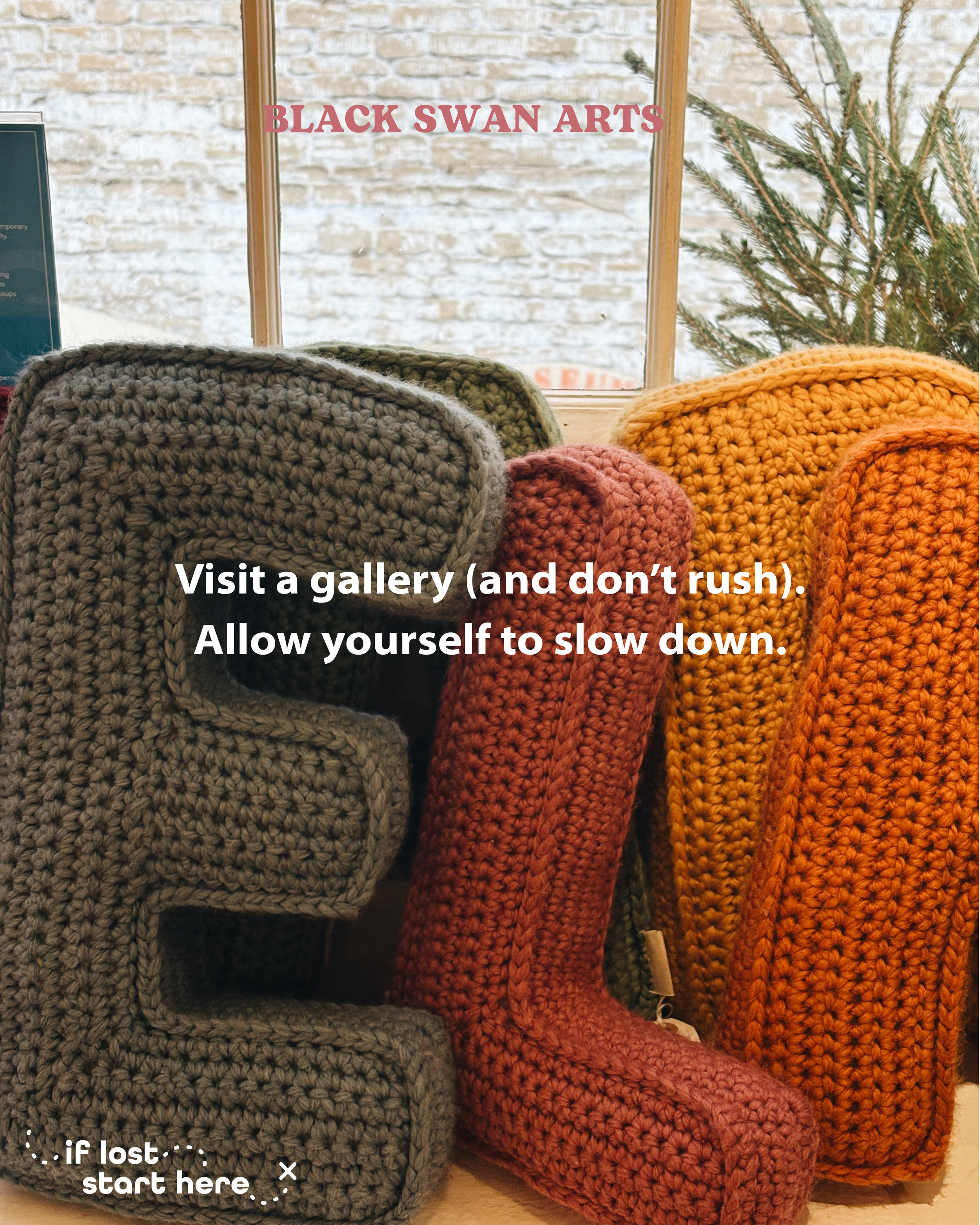
Set in a beautiful old building, Black Swan Arts is a community-driven contemporary arts centre that supports local and emerging artists through exhibitions, open studios, and workshops. You might come for a specific show, or simply to wander through and notice what resonates. It’s a reminder that creativity takes many forms and that you don’t need to understand it all to be moved by it. Also check out The Write Place, a cosy place to work on that novel hidden away on the top floor.
The Silk Mill Studios and Gallery
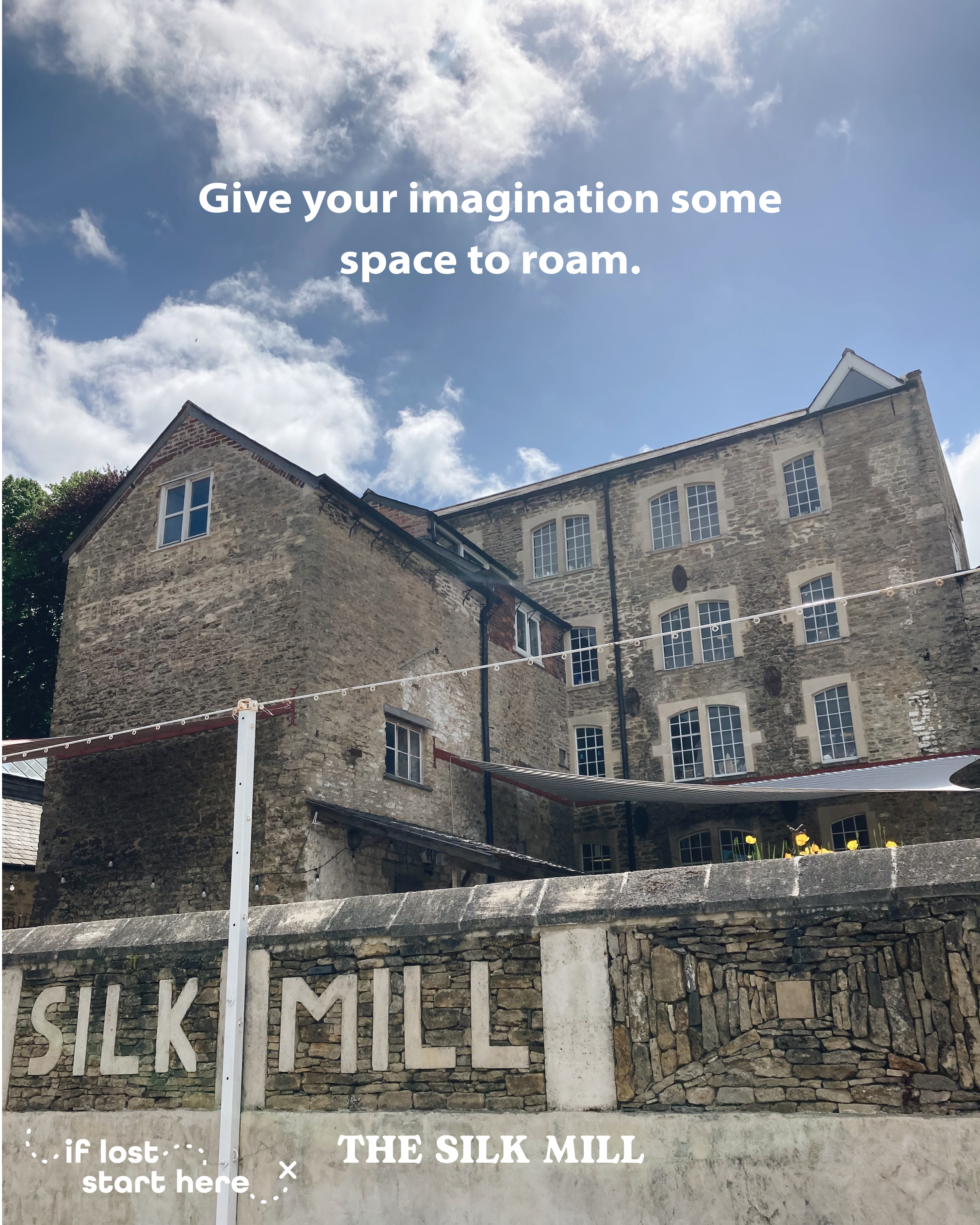
Part gallery, part working space, The Silk Mill offers a closer look at creativity lived out by the artists who work here. There’s a sense of getting to witness the in-between stages—the sketches, the half-finished pieces, the process itself, challenging the idea that creativity needs to be polished to be worthwhile. With a rotating series of exhibitions, workshops and events there’s often something here to expand your world a little.
Ground
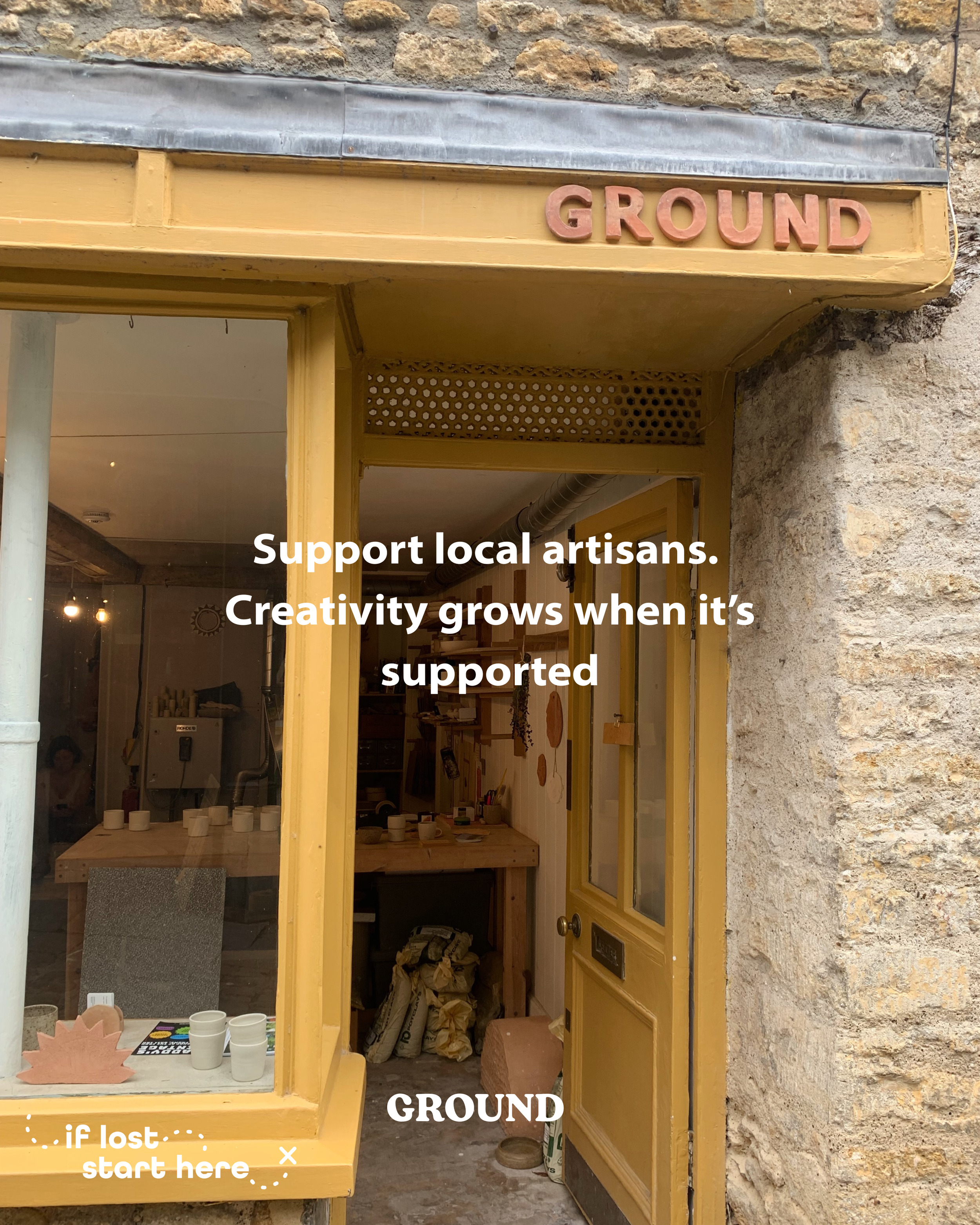
At the top of Catherine’s Hill, you’ll find Ground, a studio and shop created by the potter and artist Fi Underhill. Here you’ll get a sense that creativity can both be something you make and something you engage with. Take one of the gorgeous ceramic mugs home with you, so that an everyday, almost throwaway moment drinking your morning coffee becomes even better.
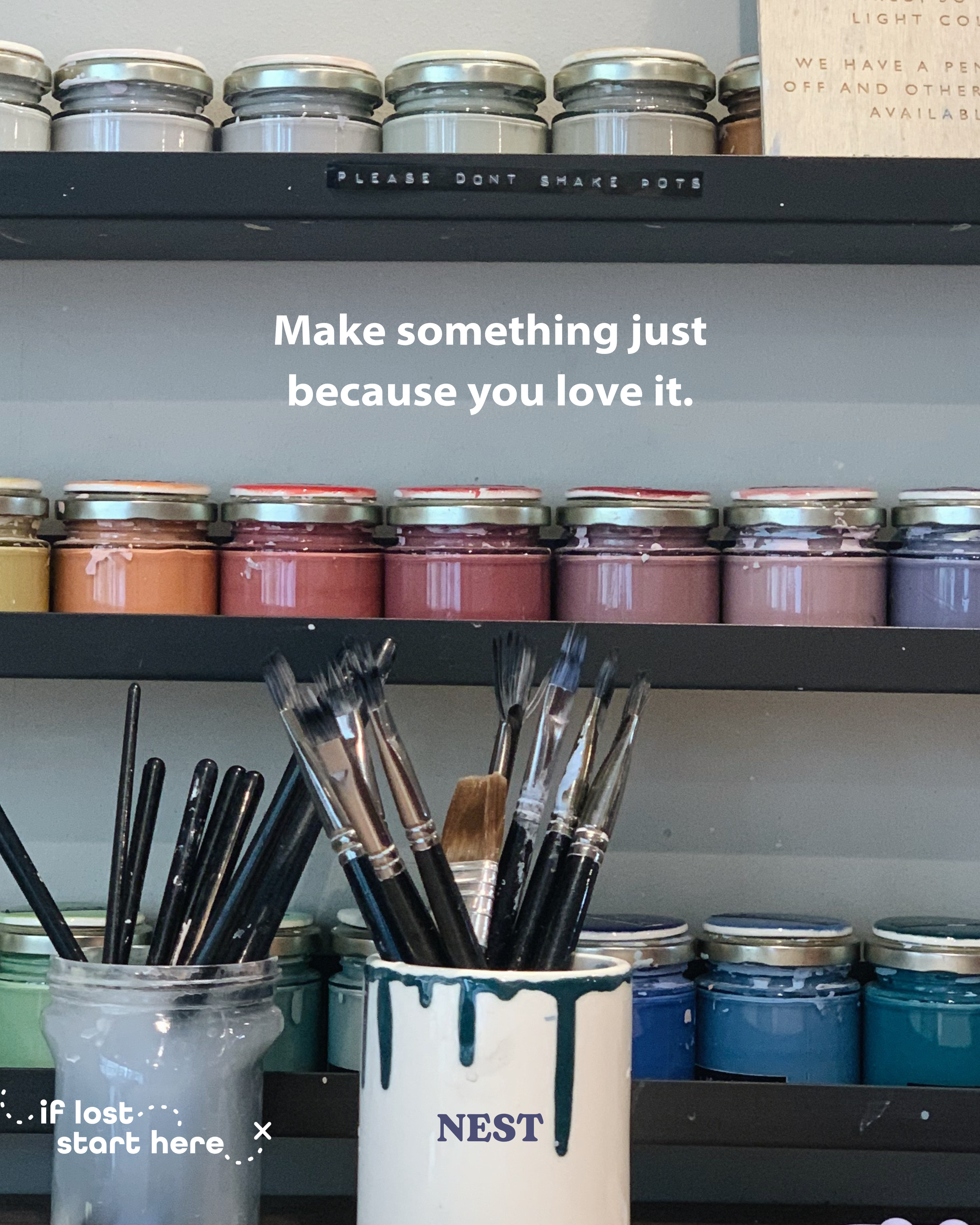
Made at Nest
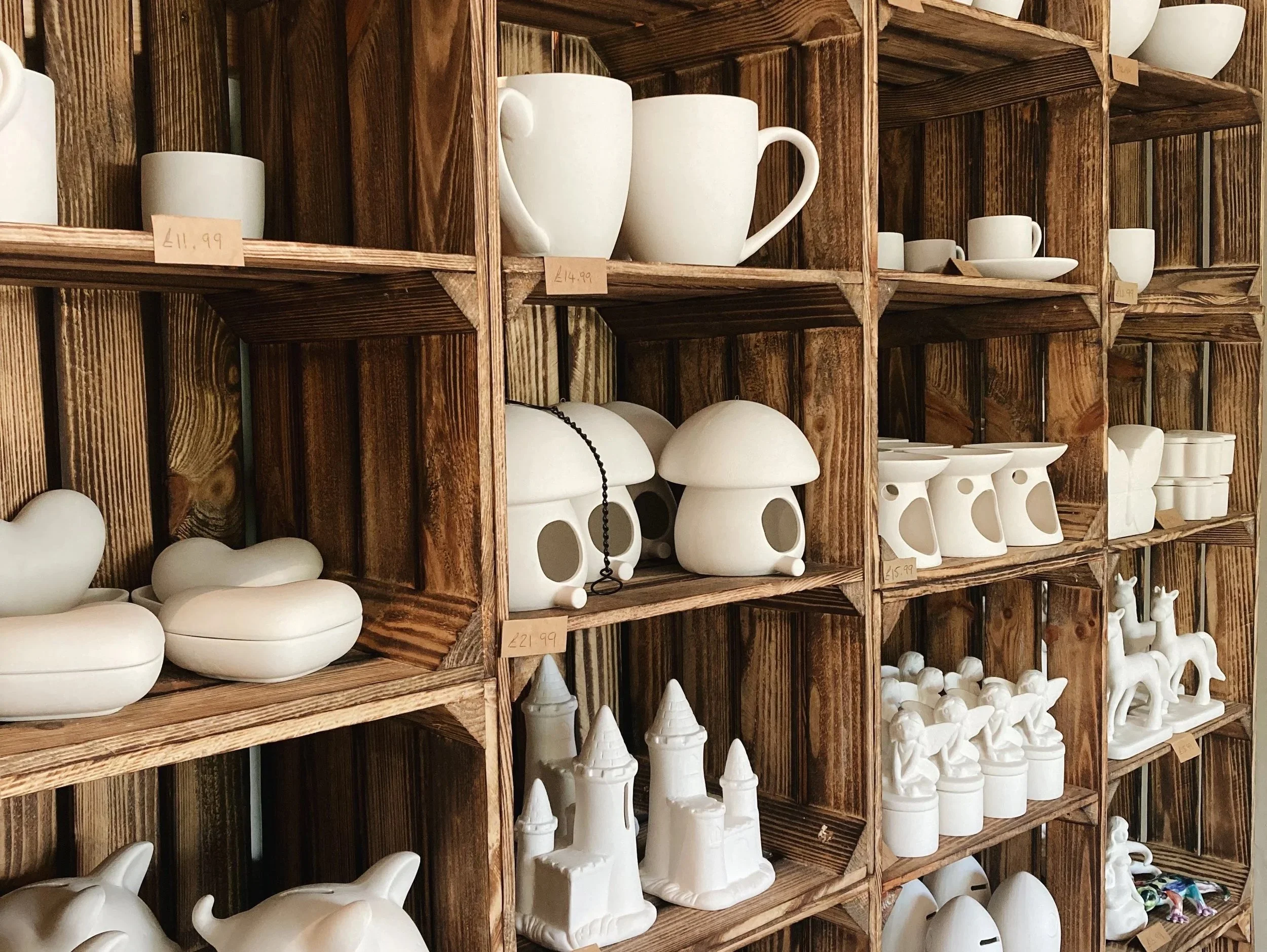
Made at Nest is a welcoming pottery studio and coffee shop that invites you not just to buy something creative, but to try making something yourself. It offers a gentle nudge towards participation rather than perfection, and you’ll feel free to paint vases and bowls, tiny bears and exuberant elephants to your heart’s content. Oh and there’s cake.
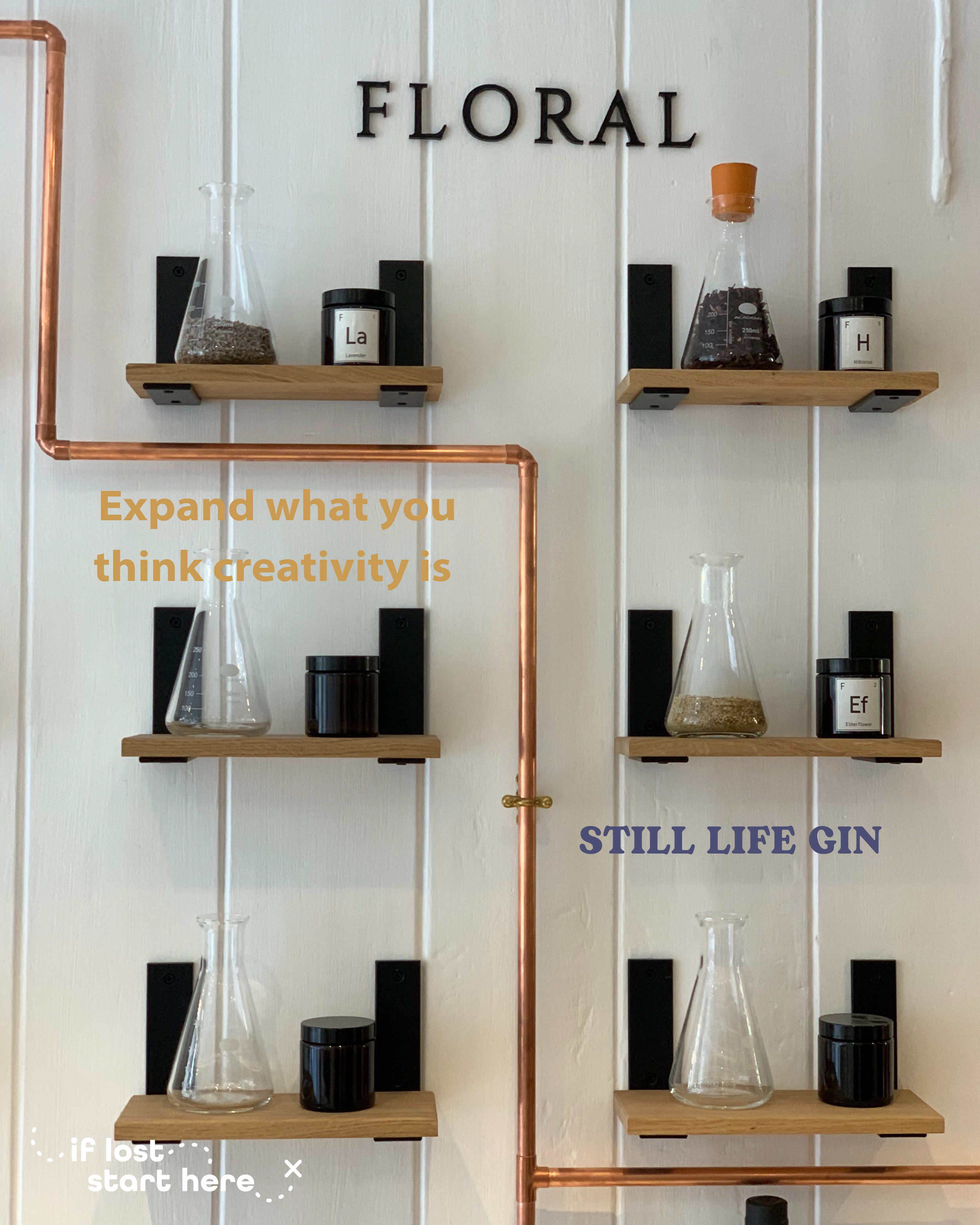
Still Life Gin
There’s creativity in flavour too. At Still Life Gin, the process of distillation becomes its own kind of craft—thoughtful, sensory, experimental. It’s a different lens on creativity, one that invites you to taste and notice, not just look. You can also book sessions to make your own gin blend.
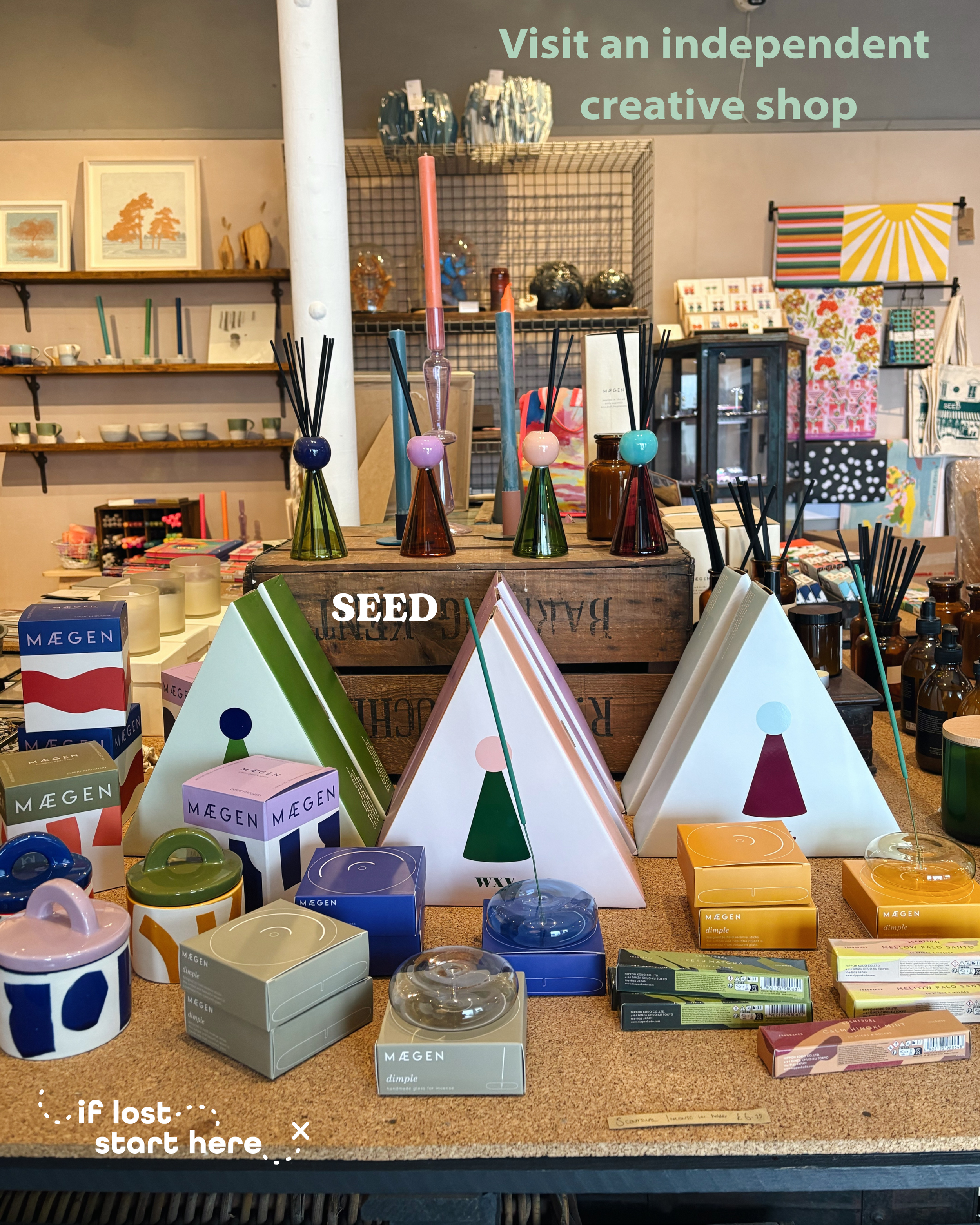
Seed
Seed is a thoughtfully curated shop filled with the best of British design from homewares, stationery, and objects that bring a sense of life and intention into your space. It’s a reminder that creativity can be as simple as how we care for our environment—what we surround ourselves with, what we bring in, and how we make a space feel like our own.
You don’t need to become “a creative person” to live more creatively. You just need to follow what feels interesting, even if it seems small or ordinary.
If you’re looking for more places like these—spaces that help you reconnect, explore and feel a little more like yourself—browse our guide for life. It’s filled with creative corners, thoughtful businesses and everyday places that make life feel better, one visit at a time.
Oh, and if you run a local place that you think would be perfect for our guide, apply to be part of our collection of places for happier days here.

What to Do When You Feel Creatively Empty
How to Reclaim Your Energy, One Small Practice at a Time
You know the feeling. That bone-deep tiredness that no nap or green juice will touch. The ideas that once came freely now feel flat. The excitement that used to buzz in your chest has turned to static.
If you’ve been feeling creatively empty — like your spark has left the room — you’re not broken. You’re burnt out, or as entrepreneur and founder Liana Fricker calls it, maybe you’re just in a “burndown.”
When Liana hit burnout — again — in 2023, she realised that it wasn’t a one-off collapse. It was part of a repeating pattern. She’d push hard, build momentum, connect dots, gather people, spark ideas — and then, suddenly, the tank was empty. She had to start “by designing my work life and just my general life in such a way that creates that space so I can stay open.”
Liana calls herself an “idea-laying machine.” But even machines need power sources — and her old ways of working (and marketing herself online) weren’t sustainable anymore.
So she began to experiment. To unlearn. To ask a different set of questions:
What if I stopped performing consistency and started trusting my energy instead?
What would work look like if it was slower, tactile, real-world?
What if connection — not content — was my strategy?

These are some of the wellbeing practices and mind shifts that helped Liana rebuild creative energy — not by working harder, but by reimagining what “working” means.
Each one is a quiet act of resistance against burnout culture, and a reminder that creative energy is not infinite but it is renewable.
1. Stop Performing Consistency — Start Practising Self-Trust
The advice we’re given online — “be consistent!” — often misses the truth that not all brains or energy cycles work in straight lines. For Liana, the key was designing routines that flowed with her energy, not against it.
She now plans her month in cycles: high-energy weeks first, slow restoration later. Some weeks are for ideas, others are for Antiques Roadshow and weighted blankets.
“If all I could do was meditate in a sauna and watch Antiques Roadshow with my weighted blanket at 3 p.m. on a Wednesday, I can do that. Because that might be what the burndown needs, right?”
Try this: Instead of scheduling every day equally, design your calendar like a tide chart. Plan creative work during your high-energy phases, and build in restorative “ebb” weeks.
2. Redefine Burnout — and Learn Your ‘Burndown’ Pattern
Liana differentiates between burnout (the big collapse) and burndown (the mini energy crashes that happen every few weeks).
When you start to recognise these smaller cycles, you can respond before the full crash.
Notice:
Do you have predictable weeks of high motivation followed by emotional flatness?
Do you overcommit when your energy peaks?
Can you give yourself permission to pause before you’re forced to stop?
Reframing burnout as cyclical rather than catastrophic helps turn it from a crisis into data — something you can observe, not judge.
3. Design for Energy, Not Productivity
“I think if you're someone who suffers from quite big burnouts or you've had a few in your life and you're over the age of 40, you may want to take a step back and ask yourself, what is this internal engine that keeps making me run at full speed, ultimately off a cliff?”
So she began to design her days not for output, but for energy flow. She created conditions that help her stay open — like attending real-world gatherings, limiting context-switching, and making space for brainfood conversations.
“I absolutely came home buzzing with energy, being in a room, in a curated space. It didn't feel too overwhelming, but just with so many interesting people telling me interesting things, that kind of cup is very full.”
Try this: Once a week, replace a Zoom call with a walk, a museum visit, or a local event. Think of it as refuelling, not slacking. Creative energy is relational.
4. Feed Your Brain (and Body) With Connection
Liana describes herself as “best with a spark” — someone whose creativity ignites in conversation.
That spark doesn’t come from scrolling; it comes from connection. The quick chat with a stranger, the serendipity of a room, the awkward but alive feeling of being seen.
“Whereas if you're on your phone or on your laptop, it's like the closest you'll ever get to an invisibility cloak, right? You can choose whether to engage or not.”
For those feeling creatively apathetic, connection might be the antidote — not to produce something, but to remember what it feels like to be moved.
5. Reframe ‘Anxiety’ as Excitement
A subtle but powerful reframe:
When your heart races before a new project or social event, what if it’s not anxiety — but excitement?
“The moment when I realized that what I would have described as anxiety was excitement was huge for me. Because even calling it anxiety changes the relationship with it. It's something to stop doing.”
Reinterpreting physical sensations as energy — rather than threat — can turn overwhelm into motion.
6. Build a Creative Ecosystem
Liana also began thinking about wellbeing like professional athletes do: as a team effort.
“There's no athlete that goes to the Olympics that does not have a sports psychologist and a physio and a chef and because the machine is this integration it needs specialists.”
That might mean therapy, coaching, accountability partners, or simply the people who remind you to rest.
7. Let Rest Be an Act of Mastery
Creativity needs stillness. For Liana, that looked like allowing emptiness — even boredom — without guilt.
“I was absolutely an empty vessel. There was no guilt because there was no energy for guilt. There was no shame because there was no energy for shame. Like, right. I was just empty.”
This is her glass of water philosophy:
“You know no one's gonna say how dare you have a glass of water. Why are you getting up to get a glass of water? What? You are gonna fail. Sometimes my glass of water is antiques roadshow.”
Creative fatigue, burnout, apathy — these aren’t signs of weakness. They’re signals. Your body is trying to tell you something.
When you stop trying to perform consistency and start listening to those signals, you create space for something far more powerful than productivity: self-trust.
And maybe, what looks like burnout is actually your creativity asking for a different kind of rhythm — one that includes silence and conversation, slow design and sparks of engagement.
If you want to explore these ideas further, listen to my conversation with Liana on the podcast A Thought I Kept.
Need some support as you navigate life’s ups and downs, explore our 1:1 coaching sessions.

Creative Self-Care For When No-one is Watching
Feeling stuck or disconnected from yourself? Discover how creative self-care can restore emotional wellbeing — and why creativity might be exactly what you need during life transitions.
I used to think being creative meant having the right aesthetic. Saying the right things. Looking the part.
It was the '90s, and I wanted to be like Maggie O’Connell from Northern Exposure — all-black wardrobe, self-contained, mysterious. When I landed an internship at New York’s Museum of Modern Art, I leaned into that persona hard. Black turtlenecks, boots, cynicism. I belonged. Or at least, I looked like I did.
But the longer I stayed in the art world, the more disconnected I felt. I was writing gallery texts and walking through exhibitions before they opened, surrounded by creativity but somehow far away from it. I had become someone who performed creativity — without actually feeling it.

Then I remembered my mum and what real creativity looked like for her. My mum didn’t care about art-speak or curation. Her creativity was visceral, chaotic, healing. It was hers.
She made clocks, hundreds of them. Covered in sparkles, stars, pinks, purples. Scribbled on with felt-tip pens. For three years, she attended creative wellbeing sessions at our local town’s Art Room, a space a long way from sleek museums. Those mornings were her reset. Her way back to herself.
When she died, she left us the clocks. They’re in wardrobes, on bedroom walls — small reminders of making something just because you need to.
I didn't realise it then, but the idea of creativity was shifting for me too. I wasn’t calling it burnout at the time. I wasn’t saying I was “lost.” But things were shifting. I was tired. Flat. Uncertain. The things that used to light me up didn’t anymore. I kept pushing forward — working, parenting, managing but underneath, something was fraying.
That’s when I started to wonder if creativity could help me find my way back to myself too. Not the polished, performative kind, but the one you do when no one’s watching.
The Link Between Creativity and Wellbeing
What my mum knew instinctively, science now confirms: creative expression can be a powerful tool for wellbeing.
Even simple acts like doodling, journalling, taking photos, and collage can reduce stress, increase positive emotions, and help us feel more like ourselves. Studies in the field of positive psychology link creative practices to improved emotional regulation and resilience.
And the best part? You don’t have to be “creative” to benefit from creative self-care. You just have to make something. Or start.
5 Ways to Reconnect with Creativity During a Life Shift
If you’re in a season of change, burnout, overwhelm, or confusion — here are a few small ways to begin again:
Create something without a plan — a collage, a playlist, a scribble.
Take a creative walk — snap one photo every 5 minutes.
Try a “morning pages” style journal — three uncensored pages first thing.
Colour outside the lines — literally. Get all the pencils and get messier.
Find your kitchen-table creativity — the kind where you get to play.
The Wellery: A Space for Creative Self-Care and Collective Living
Inside The Wellery, our group space for curious, compassionate wellbeing, we’re currently exploring creative self-care as our theme.
Each quarter, we meet for a Co-Well: a group experience to anchor yourself with others through small, doable, reflective practices including creative ones.
If you’d like to explore what creativity might mean for your own version of wellbeing, you’re invited to join us.
Or subscribe here to follow this month’s theme.
Prefer Personal Support? Try a Wellbeing Prescription
If you’d rather explore this one-to-one, I offer Wellbeing Prescriptions: one-off, personalised sessions where we gently map out a plan that supports your energy, creativity, and wellbeing — based on where you are now.
Book your session here.
Make Something That Doesn’t Have to Mean Anything
You don’t need to wait until you feel inspired. Or healed. Or ready. Sometimes, the making is the way.
And in a season of life that feels uncertain, flat, or like you're standing in the hallway between who you were and who you're becoming — creating something just for you might be the most radical act of self-care there is.

How to Reignite Creative Joy When You're Burnt Out
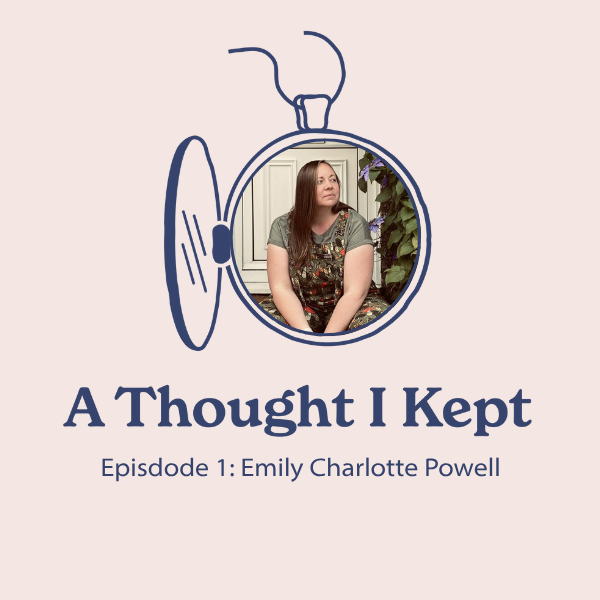
Feeling burnt out or disconnected from your creativity? Discover how reconnecting with joy and creating for love—not likes—can restore your sense of purpose, peace, and play. Featuring insights from our podcast conversation with Emily Charlotte Powell on new wellbeing podcast A Thought I Kept.
If you’re feeling creatively numb, worn down by algorithms, or like you’ve lost your way with the work you used to love — you're not alone. So many of us are asking how to keep going when creativity feels like just another demand, another item on the to-do list, another thing to optimise.
Recently, I had a conversation with artist and illustrator Emily Charlotte Powell on the A Thought I Kept podcast that helped me remember something essential — something I didn’t even realise I’d let slip:
“I will create what I love. I will love what I create. And that will be enough.”
What would shift if that were your starting point too?

Why Burnout Can Sneak Up on Creative People
Creative burnout doesn’t always look like collapse. Sometimes it shows up quietly — a reluctance to return to the page, a growing resentment of the posting schedule, a dullness where there used to be a spark.
We start out making something because we feel something. But over time, it’s easy to swap that inner compass for external cues:
What performs well
What grows fastest
What’s currently trending
In the episode, Emily and I unpack how this shift slowly disconnects us from our original why. We move from making things we love, to making things we think we should.
And that’s when joy leaves the room.
Joy Isn’t Frivolous — It’s Can Be Fuel
This conversation reminded me that joy isn’t a luxury or a frivolous extra — it’s part of the glue that holds our creative selves together.
It’s what makes us want to sit down again tomorrow.
It’s what helps us navigate the rejection, the unread work, the projects that didn’t quite land.
It’s what keeps us tethered to the core of why we started.
Emily speaks about making things she genuinely enjoys and how reconnecting with this playful spirit helped her fall back in love with her practice.
She didn’t wait for permission. She didn’t check what the market wanted first. She just let herself love what she was making.
Creating for Your Wellbeing — Not Just Your Feed
There’s so much content telling us how to create for growth. But what if your creativity was a tool for wellbeing?
What if:
Writing a paragraph you love is its own reward
Drawing something softens your day
Re-reading an old blog post and smiling at your own words is reason enough
Creating what you love and loving what you create can be an act of care — not just for the audience, but for you
It’s okay to pause. It’s okay to make what delights you, even if no one ever sees it. And it’s more than okay to step away from “relevance” to reconnect with resonance — that feeling that this matters to me and that’s enough.
What If Joy Was the Point?
After this episode, I’ve been asking myself:
What would I make if no one else ever saw it?
What would I love to return to?
What kind of work makes me want to begin again?
If you’re burnt out, blocked, or just quietly bored, maybe don’t start with a productivity tip. Start with a feeling. Start with joy. That could be your way back in.

Want More?
This journal post was inspired by my conversation with the wonderful Emily Charlotte Powell on the latest episode of A Thought I Kept.
Listen in for more on:
How to navigate creative pressure without losing your spark
Why feeling something while you create matters
How to protect joy as part of your process
The emotional reality of being a creative person in a content-driven world
Listen now on Substack with bonus video content or find us wherever you get your podcasts.
Let this episode be the quiet nudge that helps you find your way back to what you love.
Sign up for my Substack More Good Days, where I share gentle thoughts on creativity, emotions, and everyday wellbeing — always with the aim of helping you feel better, not more pressure.
Or check out our wellbeing courses designed to help you reconnect with what matters to you.

How to Move Through Creative Self-Doubt and Reconnect With Your Purpose
Feeling stuck or creatively disconnected? Here's how to rebuild your confidence, find meaning in the uncertainty, and return to the creative work that matters.
Have you ever felt like you’ve lost your spark?
Like the ideas that once lit you up have dimmed, or that the thing that used to matter doesn’t quite land the same way anymore?
Maybe you’ve asked yourself: What am I doing this for?
If you're here, chances are you’re navigating your own season of doubt. And if that’s true, then let me offer you this:
You’re not doing it wrong. This is part of it.
The creative process isn’t linear. It’s a stretch and a return. A leap, and then a grounding. A brave “yes” to something new, followed (often quietly) by the decision to come back home to what really matters.

What’s for you won’t go by you.
That phrase—shared by brand designer and creative mentor Sarah Robertson on a recent episode of A Thought I Kept—has been looping in my head since we spoke. It was something her Scottish grandmother used to say, sometimes just in passing. But it landed.
It became an anchor for Sarah in all kinds of moments:
When her business changed direction
When launching a new product stirred up old fears
And when self-doubt made her question whether she was going in the right direction
In each of those moments, that phrase whispered back to her: If it’s for you, it won’t pass you by.
What happens when creativity starts to feel fragile?
Sarah spoke about the delicate emotions that come up when we make something new—especially something that asks a lot of us. When she launched her Brand Seasons card deck (a beautiful, soul-filled strategy tool), it wasn’t just a product launch. It was a creative stretch.
She worried about whether she still had it. She worried whether it was worth it. And in all of that, she still trusted enough to try.
Because sometimes, the bravery is just in showing up for what might be possible.
If you're in a stretch season...
...it might look like saying yes to something that scares you. A project you’re not sure will land. A conversation you don’t feel ready for.
But then there’s the other half of the rhythm—the return.
Sarah shared how, after all the brave leaping, she’s now back in her creative comfort zone: working one-on-one with clients, doing deep brand work, mentoring creatives who are trying something new.
And she’s realised:
It’s okay to let go of the things that aren’t for you too.
Even the things you poured your heart into.
This is permission to release the pressure to make every project the thing.
It can just be a thing. A moment. A stretch.
Then you come back to what fills you up.
If you're in a return season...
...let it be enough.
You don’t have to reinvent everything. You don’t have to push.
Returning to what feels good—what feels like you—can be the most creative act of all.
As Sarah put it:
““There’s definitely been something about learning that the creativity is always there. I can access it, I can tap into it.””
So how do you find your way back to creativity?
Here’s what this conversation reminded me of (and maybe it will help you too):
Self-doubt doesn’t mean you’re not creative. It means you care.
You don’t have to push all the time. Sometimes the letting go is the power move.
A creative pause doesn’t erase your purpose. Your creativity is still there.
The process matters as much as the outcome. Trust what you're learning in the doing.
Not everything is yours to carry. What’s truly for you will stay. What isn’t, can go.
Want to feel more connected to your creativity again?
Take a breath. Come back to yourself.
And ask: What feels like mine to hold right now?
Not what’s trending. Not what’s shiny. Just… what’s true?
If it’s for you, it won’t go by you.
Let that be the anchor.
Want more like this?
Listen to Sarah’s full episode on A Thought I Kept on Substack, Spotify or wherever you get your podcasts