

Silent Book Club | In Conversation with Laura Gluhanich
We talked to Silent Book Club co-founder Laura Gluhanich about how a simple night of reading with a friend became a global phenomenon.
We recently discussed with co-founder Laura Gluhanich all the ways that Silent Book Club offers community and a space to unplug, both vital to our mental health and emotional wellbeing as we negotiate these uncertain times.
What compelled you to start reading together, silently?
One night out to dinner at a favorite local spot in San Francisco my friend Guinevere de la Mare and I shared our frustration with traditional book clubs, and our joy of reading at restaurant bars. The next time we met for dinner, we planned to sit at the bar and read together. We continued meeting up, and as friends heard about our “silent book club” they asked to join. Everything today comes from that.
How do you get over that initial need to chat, to make noise, to fill the silence? We’re so unaccustomed now to filling the spaces between us.
Our format includes some planned conversation at the start. Typically a silent book club meeting starts off with everyone saying hello and sharing what they are reading. It creates a shared space and connects folks over shared books or genres. I think our members appreciate that when they start reading they know they don’t have to worry about anything else at that moment. We set an alarm and wrap up the session, so they can just dive into whatever they are reading.

Book club selections can be very particular to a group or the situation of coming together to talk about one. Are there certain books that lend themselves to Silent Book Club? Like, don’t read conversation-inducing books such as anything by Glennon Doyle or Three Women?
What surprises me more is that at every in-person meet-up, I’d venture we have a minimum of five genres represented in a group of ten. It is a very welcoming group, and if someone isn’t into what you happen to be reading, it’s not taken personally. And in our Facebook group, just about everything goes, though we choose to not offer a platform to white supremacists, misogynists, and the like.
Have you ever thought of Silent Book Club as an anti-tech space?
Yes! My co-founder and I both work full time in tech, so providing a time to ignore notifications is a benefit we recognize.
Or maybe even an anti-loneliness initiative?
Yes! I love that Silent Book Club can provide community in a really low-key way. Beyond the minimal conversation, it is super low stakes, so especially if people are less extroverted it’s a great opportunity to connect. And while there are lots of book lovers in the community, particularly the Facebook group regularly gets posts from folks who are getting into reading for the first time or rediscovering their love.
You have chapters globally now. Have you noticed differences between how these book clubs meet or how they are received locally?
Not really! Shout-out to our Genoa chapter for being super photogenic and fun. There’s a ton of variety throughout our chapters but I don’t see a difference based on location.
What kind of setting is conducive to a Silent Book Club?
As you can see from that Genoa link, lots of places work to meet up and read. We recommend cafes and bars (hotel lobby bars can be chic and have the perfect level of background noise). Bookstores, ice cream shops, community centers, parks, beaches, and backyards have all been successful. We’ve even seen them at conferences — a great option for introvert attendees to chill out.
Do you have any favorite meetup anecdotes?
We’ve had a couple of chapters see people meet at their events (ready for that meet-cute to happen in a movie). We definitely hear more about books getting discovered than soulmates.
One fun thing that has happened with the virtualization of Silent Book Clubs is the ability for anyone to join any virtual meetup. Our Denver chapter has had guests from Mexico City, Guinevere has said hi to Italian chapters, and I sat in on a meetup based in South Korea. It’s a fun way to explore!
How are Silent Book Clubs adapting to the shifting situation of the pandemic?
We’ve seen dozens of chapters shift to an online format. A number have hosted outdoor meetups globally. Of course, plenty of countries have had competent pandemic leadership, so they have been able to meet far ahead of us here in the US.

Why do you think the idea of Silent Book Club has taken off so much?
I think there are two primary reasons people have responded to Silent Book Club. The first is broadly the mental wellbeing aspects that I’ve already mentioned. And in conjunction, we are all so over-productive, Silent Book Club is an antidote to that.
What is your vision for Silent Book Club going forwards?
We’d love to see its continued growth, supported by brands or organizations that share our mission of encouraging reading. We plan to continue our author series in 2021, and have an idea of a global Silent Book Club week, promoting literacy in public.
Any places out in the world or books that you seek out to support you in uncertain times?
We’re big fans of independent bookstores and libraries, and while there is broad uncertainty, we encourage folks who have the resources to support their local cultural institutions in an ongoing way. The mutual aid movement reflected in Little Free Libraries and the Community Fridge network gives me hope.
What should people do if they are curious about Silent Book Club?
Find a local chapter on our website or a virtual meetup. We welcome you whether you are looking for the time to get through a few chapters for another book club, or just for fun.
“If you are finding it hard to find space for reading, joining Silent Book Club gives you that time back. It prioritizes reading in your life again. It gives books back to you. ”
Discover more ways to connect

EPIC: Irish Emigration Museum
Though we’re mostly about small in the places we bring into our guide, sometimes we need to go big, like EPIC big.
What is it: Only Europe’s Leading Tourist Attraction 2019 & 2020 (although it opened relatively recently in 2016), this interactive museum on the famed River Liffey in Dublin’s docklands isn’t afraid of epic narratives as it covers over 1,500 years of Irish history and the stories of the 10 million people who left Ireland behind.
Why you’ll love it: A feeling of discovery and exploration is built-into the labyrinthine floorplan which takes you on a journey through the emigrant experience with mostly digital installations that are high engagement and participatory, and often awe-inspiring in the ways the emigrant experience is shared. You’ll pass through passport control, sit within intimate booths with conversational stories, share the perils of the emigrant journey, and even walk on the darker side of this history as you learn the global impacts of Irish emigrants.
What you need to know: It was Irish emigrant, Annie Moore, who made history in 1892 as the first person to be processed through Ellis Island’s gates though her story of what happens after makes you doubt the reality of the American dream as it came to be foundational to the nation in which she arrived.
What they offer from wherever you are: The virtual tour had our preteen confidently running through the rooms and following his curiosity as if he was there, the boundary between the physical and the virtual so porous these days. Also, check out their interactive library and Online Educational Resources for our distance-learners.
Why we think it matters: As the world turns this very week – with a new US president proud of his Irish heritage and with a different set of policies than the previous administration — we’re hopeful that the debate around immigration can shift too, becoming less caustic, a sense of humanity restored to the discussion. EPIC shows the extraordinary reach of Irish emigrants – the museum itself was co-founded by Neville Isdell, the Irish-born former CEO of Coca-Cola – and how they have shaped the world in fields as diverse as sport, culture, politics, science, and technology. Immigration has become a highly complex, and often emotionally driven, debate. But we’re always struck by these stats (about the US experience specifically) that counter the belief that immigrants negatively impact the nations in which they arrive: in 2017 although 13.7 percent of the US population are immigrants, they make up 30% of new entrepreneurs. In fact, companies such as Amazon, Apple, and Google were founded by immigrants or their children, while Microsoft is headed by an immigrant.
EPIC tells the complex story of one nation’s emigrants, but it stands in for impacts felt by migration elsewhere and pulls back the narrative of human movement to something more people rather than politics based.
In their own words: “Go beyond the stereotypes at EPIC The Irish Emigration Museum. You won’t find leprechauns or pots of gold here, but you’ll discover that what it means to be Irish expands far beyond the borders of Ireland through the stories of Irish emigrants who became scientists, politicians, poets, artists and even outlaws all over the world. Discover Ireland from the outside in and find out why saying “I’m Irish” is one of the biggest conversation starters, no matter where you are.”
Participate: If you are based in the US, support the work of the ACLU on immigration, advocate for DACA. and be mindful of your own inherent biases around migration.
Silent Book Club
For the introverts, a book club that doesn’t get you talking.
“Welcome to introvert happy hour.”
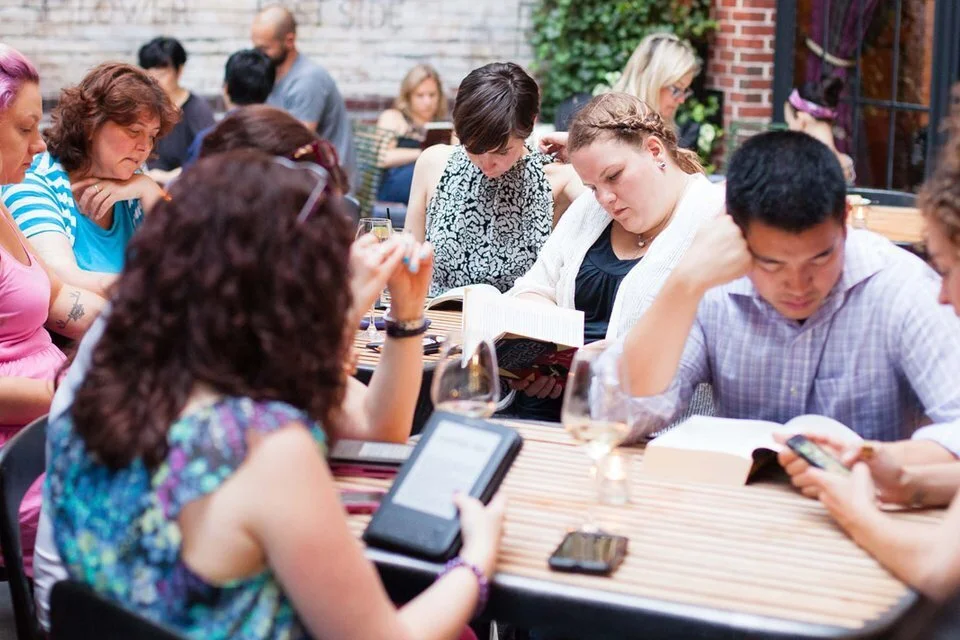
What is it: An opportunity to read. The twist, there are others reading with you too. You’ll be in a café, a bar, a public library; in COVID times maybe you’ll be on Zoom or outdoors. The people with you will have their own books, you’ll have yours. And though there’s a social moment built in — a hello and sharing of what you are reading — the focus is simply on you and your book. Enjoyed now in ways which we have learnt to understand, together but apart.
Why you’ll love it: This is one for the introverts among us (of which we count ourselves). Yes, book clubs are great – we’ve hosted and attended many – but sharing just the love of reading that’s something magical. The Silent Book Club started in 2012 when two friends Guinevere de la Mare (a UX writer at Google) and Laura Gluhanich (director of programs at Him for Her) began reading together in a neighborhood bar in San Francisco. Gone was the pressure of typical book clubs, having to read the same books, having smart things to say, hiding the fact that you haven’t read the book. Here was just enjoying the moment of reading together – no mobile phones, no commitments pressing in, no pressure to select the right thing to share or carry out a conversation in the right way. Just a book, a friend, and a nice location somewhere. And from this, this now Silent Book Club grew to friends and acquaintances, and grew to a handful of cities, and grew to now 285 chapters in 37 countries.
What you need to know: If books are your happy place, you can now seek out a Chapter probably wherever you are, though if there isn’t you can start one (friends there isn’t one in Bath or the Marin area where we’re both based if someone’s inclined to host…). During stay-at-home times, many of these Chapters offer virtual read-ins.
Why we think we need it to exist: We’re noticed something odd going on in our lives. Though we love books, we’re no longer reading them in quite the same way that we used to. We seek out recommendations, we subscribe to book boxes, we haul heavy bags from independent stores, we ship boxes upon boxes when we move, but the reading part is not as high up our agenda as it once was. You may be finding the same in your life. Life pressing in, doomscrolling replacing narrative and character development, anxiety blocking any possibility of retreat or escape. Time has gone, and we’re trying to find it again. For many purposes, but also so that we can return to the books that we love and the ones we might love in our future. If you are finding it hard to find space for reading, joining a Silent Book Club gives you that time back. It prioritizes reading in your life again. It gives books back to you.
It also gives you other people. As many of us spiral in our loneliness, that companionable silence actually gives us connection, it fosters relationships. As co-founder Gluhanich says, “For people who want to do something on their own but at the same time are seeking connections and a community with other people, SBC’s can offer them both of these. People all around the world are forming emotional bonds with one another while reading in silence.”
In their own words: “Silent Book Club is about community. Everyone is welcome, and anyone can join or launch a chapter. We encourage people all over the world to start their own Silent Book Clubs. All you need is a friend, a café, and a book. We have more than 240 active chapters around the world in cities of all sizes, and new chapters are being launched by volunteers every week.”
Something to do from anywhere: Wake up, doom scrolling. Before bedtime, doom scrolling. These have traditionally been times for reading books. So for a non-binding, after the New Year’s, non-resolution, ban the phone from the bedroom, buy a book light, and read books again. Paper pages. Like us, you may find your brain working just that little bit better, your life feeling slightly less heavy, and the world just that little bit bigger. You’ll be reading books again.
To find out more: Website / Instagram / Twitter / Facebook
Love this? Try also Shelf Help, or podcast Celebrity Book Club
teamLab Planets
There are the obvious jokes one can make about the plethora of experiential pop-up museums that have emerged in our new Instagram-able world, but perhaps there is a kind of beauty that would not have been dreamed nor experienced had social media not been invented.
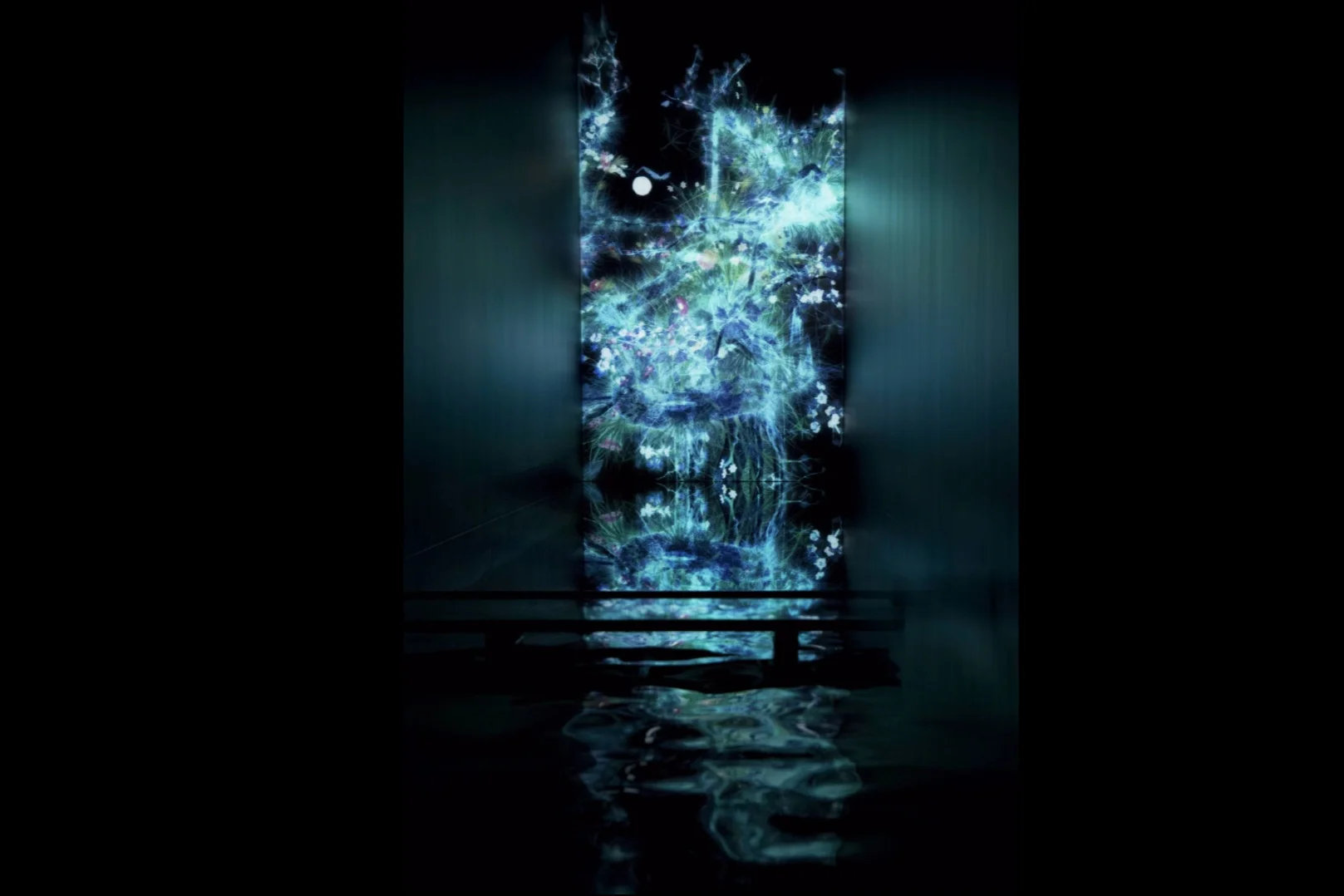
“teamLab Planets is a museum where you move through water. It consists of 4 vast exhibition spaces at its center, and 7 works of art. The artworks are based on art collective teamLab’s concept of “Body Immersive”.
The massive Body Immersive space consists of a collection of installations in which the entire body becomes immersed in the art, and the boundaries between the viewer and the work become ambiguous.
Visitors enter the museum barefoot, and become immersed with other visitors in the vast installation spaces.”
I know there are the obvious jokes one can make about the plethora of experiential pop-up museums that have emerged in our new Instagram-able world, but today’s visit to *Planets* had me re-thinking my own cynicism.
Perhaps there is a rare beauty in these new creations that we ought to be grateful for, a kind of beauty that would not have been dreamed nor experienced had social media not been invented. I have only ever gone to these *museums* because I know it’s an hour my kids will thank me for. But today’s visit turned out to be something entirely different for me.
Unlike the highly commercial, soulless stateside pop-ups, this museum experience was wildly sensual, surprisingly dreamy and inevitably personal. Over and over again I kept asking myself, “Is this what the approach to heaven feels like?” I kept thinking of my father in his last days weeping, “If I’d known dying was such a beautiful experience, I wouldn’t have spent my entire life fearing it.” I know this is some heavy feelings-stuff for this venue, but really - it was beautiful and powerful.
Head to their website, turn-up the volume and walk with us through an Olympic sized pool of warm, milky water with calming projections of cherry blossoms and koi fish. The music was absolutely everything.
In the end, we lay on a floor for an eternity, observing the vibrant visions of petals falling and butterflies ascending, and the whole time I kept thinking: “Yes. This is exactly what heaven will be like.”