

How to Create an Everyday Retreat at Home: Small Ways to Care for Yourself Each Day
Wellbeing doesn’t have to mean retreats or perfect routines. Discover small, realistic ways to create moments of calm and care throughout an ordinary day.
Retreats, holidays, or even a quiet weekend away can be wonderful and exactly the reset we need. And for a little while everything softens. We sleep more deeply. We notice things again. We remember what it feels like to move through the day without quite so much pressure.
And then we come home. The inbox fills up again. The washing basket mysteriously multiplies. Work, care, responsibilities and the endless small decisions of modern life return to their usual volume.
That contrast can make wellbeing feel like something that lives somewhere else. Somewhere beautiful, slower, quieter — somewhere we occasionally visit rather than something that belongs inside our real lives. But what if the question isn’t how to recreate retreat conditions perfectly at home? What if it’s simply about making a little more room for ourselves inside the life we already have. Not through grand gestures or perfect routines, but through small moments that gently interrupt the pace of the day.
Sometimes that might look like taking a few breaths before you open your laptop in the morning. Or stepping outside for ten minutes of air and sky between meetings. It might be writing a few lines in a notebook before bed, or sitting in the quiet of the house before everyone else wakes up.
None of these things are dramatic. But they are ways of reminding ourselves that our days can hold small pockets of steadiness, even when life is full. At If Lost Start Here we often think of this as an everyday retreat. Not something that requires travel, time off, or a perfect environment, but something we create in ordinary spaces — kitchens, gardens, desks, walks around the block.
Moments where we pause long enough to reconnect with ourselves. Because wellbeing rarely arrives all at once. More often it grows slowly through the small ways we choose to care for ourselves inside the lives we’re already living.
One way to think about an everyday retreat is simply this: small moments of care woven through an ordinary day. The kind of day where the alarm goes off earlier than you’d like, the kettle needs refilling again, and someone has already asked you a question before you’ve even had your first sip of coffee.
Sometimes the retreat begins there. A few slow breaths before you open your email. A page of journaling while the house is still quiet. Or simply drinking your tea without doing three other things at the same time.
Later in the day it might appear as a small corner of calm. Not a perfectly styled meditation space, just a chair by the window, a step outside the back door, or five minutes sitting on the edge of the bed before the next thing begins.
Technology tends to follow us everywhere now, so another small act of care can be letting parts of the day remain screen-free. Leaving your phone on the kitchen counter while you walk around the block. Eating lunch without scrolling. Letting your mind wander for a few minutes rather than filling every space with information.
And then there are the tiny resets that help us keep going when the day becomes full again. A stretch between meetings. Fresh air after too long indoors. A quick walk where you remember that the world is larger than your to-do list.
By the evening, when the house is quieter again or the day finally loosens its grip, another small moment can appear. Writing a few lines about the day. Noticing something that went well. Letting yourself acknowledge that you carried a lot and made it through.
None of this is dramatic. It’s simply a way of remembering that wellbeing doesn’t have to live somewhere else. It can move with us through the ordinary, messy, human shape of our days.
Over time, these small daily actions will build up to create lasting wellbeing. You’ll feel more grounded, less overwhelmed, and better able to handle life’s challenges. It’s about making wellbeing part of your everyday life.
Want help making these changes stick? Join the Everyday Retreat, where we’ll explore these practices together through daily lessons and community-meet ups.

Finding Winter Light: How Nature-Connectedness Boosts Wellbeing When Days Are Short
Spending time in nature — even short daily walks — can ease winter blues, lift mood, and support wellbeing. Here’s why nature-connectedness matters most in darker months.
Winter can feel like a long exhale — darker mornings, heavier coats, and that tug to stay inside. Yet stepping outdoors might be one of the gentlest ways to support yourself right now.
A few winters ago, I decided to make a small change: go outside every day, even if it was grey, damp, or uninspiring. Not hikes, not adventures. Just a walk — 10, maybe 30 minutes — in whatever patch of nature I could find: a park, a bridle path, a path by my kid’s school. I looked for small things — the biting crunch of frost, birds on bare branches, the way the sky changes colour even behind a cloud.
What started as an experiment turned into something else. My mood lifted. My head felt clearer. Even on days when I didn’t want to leave the house, coming back felt like I’d plugged myself into a quiet energy source.
It’s not just a feeling. Research backs this up. Studies show that time spent outdoors — especially in green or natural spaces — reduces stress, supports immune function, and improves mood.
Even brief “nature doses” (about 20–30 minutes) have measurable benefits, from lowering cortisol to easing anxiety. And in winter, when daylight is scarce and we spend more time inside, that effect matters even more.
Light matters: Outdoor daylight — even on cloudy days — is much stronger than indoor light, helping regulate mood and sleep.
Movement matters: Gentle walking outdoors supports mental health and resilience.
Nature matters: Contact with trees, water, birdsong, and sky connects us to something larger and steadies our nervous system.
So if winter sometimes feels like wading through fog, try weaving in small nature rituals:
A quick daily walk where you can see the sky.
Lunch by a window with outdoor views.
Pausing to notice tiny seasonal details — buds, frost patterns, migrating birds.
It doesn’t have to be perfect weather or a big adventure; just a moment to step outside.
Want help making small, feel-good changes that stick? Explore our wellbeing remedies including gentle ways to bring more light and balance into winter.
And if you suspect that nature might be your preferred way to reconnect with yourself and the world around you, explore our guide for life.

Wellbeing Doesn’t Have to Be Hard: A Manifesto for Doing It Differently
A gentle manifesto for anyone tired of trying to do wellbeing properly. Explore calm, personalised wellbeing sessions designed to help you reconnect with what matters and find supportive ways forward in the here and now.
What if wellbeing didn’t feel like a job?
There’s something tiring about the way wellbeing is often presented to us, as a series of things we’re meant to be doing properly: routines to get right, habits to keep up with, versions of ourselves we’re encouraged to move towards. Even when it’s well intentioned, it can start to feel like pressure dressed up in pastel colours, another place where we’re measuring ourselves and wondering why it doesn’t seem to land in the way it’s supposed to.
At If Lost Start Here, this comes up again and again in conversations with the people we work with and hear from. It’s not that people don’t care about wellbeing or aren’t trying. It’s that trying to do it right can begin to feel like work in itself, and sometimes like another quiet way of feeling you’re falling short.
So this manifesto begins with a gentler question. What if your wellbeing wasn’t something to chase or optimise, but something you could return to, slowly and with a little more kindness, in ways that actually fit the life you’re living right now?
This piece grew out of the threads we’ve been following in our own work over time: conversations that stayed with us, notes scribbled in the margins of notebooks, moments where we wished someone had said, more clearly, that you’re not doing this wrong. Again and again, we come back to the same idea, which feels both simple and surprisingly difficult to hold onto: your wellbeing doesn’t need to be perfect, it just needs to be yours.
Not an idealised version of you, and not a future version either, but the one that exists here and now, with all its changeability, contradictions, and constraints. When we start from there, wellbeing stops being about keeping up and starts to feel more like listening, noticing, and responding to what actually matters to you in this moment.
We all need small, grounding reminders of that from time to time, especially when life feels loud or uncertain. Words that help us exhale rather than strive, sentences that soften the sharp edges of the day and bring us back to ourselves. That’s what this manifesto is intended to be. It isn’t long, it isn’t prescriptive, and it isn’t another thing to add to your list. It’s simply a list of lessons we’ve learned that you can return to, whether you pin it to your wall, tuck it inside a journal, or come back to it on the days when wellbeing feels like too much to hold.
You don’t need fixing, and you don’t need better habits in order to be worthy of care. What many of us are really longing for is more space to feel like ourselves again, without the constant sense that we should be doing more or doing it differently.
This manifesto doesn’t offer solutions or strategies. Instead, it offers something quieter and, we hope, more sustaining: reassurance, permission, and a reminder that wellbeing can be personal, creative, relational, and shaped by what matters to you and what helps in the here and now, rather than by someone else’s idea of what it should look like.
So take what you need from it and leave the rest.
Which line speaks to you most today, and which one might be worth carrying with you into the week ahead?
You don’t need to be your best self. Just your kindest self.
Wellbeing isn’t a destination. It’s an ongoing relationship with yourself.
You’re allowed to start again. And again. And again.
The smallest things — a song, a sentence, a coffee drunk warm — can restore you.
Books, podcasts, art and beauty aren’t luxuries. They’re lifelines.
Your feelings are not flaws. They’re vital messages of what matters
You don’t need to fix yourself. You need space to feel like yourself
Messiness and detours; They’re part of being human.
Language matters. Speak to yourself like someone you deeply love.
Connection is wellbeing. You were never meant to do this alone.
If this resonates and you’re curious about exploring what might help you in the here and now, you can find out more about our wellbeing sessions here.

A Better Way to Well: Why Personalised Wellbeing Matters
Feeling overwhelmed by one-size-fits-all wellbeing advice? Discover a more personal, creative approach to wellbeing that reconnects you with what matters most and supports you in the here and now.
There comes a point where trying to “look after yourself” starts to feel strangely exhausting.
You’re doing the things you’ve been told are good for you. You’re walking more. You’re resting when you can. You’ve read the articles, listened to the podcasts, saved the posts. And yet, instead of feeling steadier or more supported, you’re left with a sense that you’re somehow falling short.
If this sounds familiar, it’s not because you’re doing wellbeing wrong. It’s because the way we’re often encouraged to approach wellbeing doesn’t leave much room for real life.
Most wellbeing advice assumes we’re all starting from the same place, with the same needs, energy, and capacity. But we’re not. We’re living different lives, carrying different histories, responding to different pressures. What helps one person feel calmer or clearer can leave another feeling overwhelmed or inadequate.
At If Lost Start Here, this is something we return to again and again. Not because we have a neat fix, but because we keep hearing the same story.
People aren’t resistant to wellbeing. They’re tired of advice that doesn’t meet them where they are.
We live in a moment where wellbeing information is everywhere. We know more than ever about our nervous systems, emotions, habits, and mental health. That knowledge can be genuinely helpful. But it also creates a strange pressure — the sense that if we just chose the right tools, followed the right routine, or tried a little harder, we’d finally feel okay.
Instead, many people end up feeling more lost than when they started.
So we’ve been asking a different kind of question.
Rather than “What’s the best way to well?”
We ask: “What matters to you right now and what might actually help?”
A personalised wellbeing prescription starts there.
It’s not a generic plan or a set of instructions to follow. It’s a thoughtful way of reconnecting people with what matters most to them — their values, interests, curiosities, relationships, and needs — and then exploring what could support them in the here and now.
Not in theory. Not in an ideal version of life. But in the life they’re actually living.
This kind of approach recognises that wellbeing isn’t static. What you need during a period of uncertainty, grief, overwhelm, or quiet dissatisfaction will be different from what you need when life feels steadier or more expansive. A personalised prescription adapts as you do.
It also leaves room for creativity and play. Instead of focusing solely on what’s wrong or what needs fixing, we look at what might gently reintroduce energy, meaning, and connection. That might be through nature, creativity, culture, conversation, reflection, or small, everyday rituals that help you feel more like yourself again.
The emphasis isn’t on doing more — it’s on doing what makes sense. Optimism, here, doesn’t come from adding another habit or chasing a better version of yourself. It comes from feeling understood, supported, and reconnected to what already matters to you.
A personalised wellbeing prescription offers a way to cut through the noise and make sense of what might help now. It gives shape and direction without pressure. It supports agency, curiosity, and choice — not compliance.
And importantly, it doesn’t treat wellbeing as something separate from life. It weaves support into your days in ways that feel realistic, human, and sustainable.
If you’re feeling lost, overwhelmed, or dissatisfied with the way wellbeing is presented to you, this is your reminder: you’re not behind, broken, or failing.
You might simply be ready for a different way of being supported.
At If Lost Start Here, our personalised wellbeing prescriptions are designed to help you reconnect with what matters, explore what helps in this moment, and build a more supportive relationship with your own wellbeing — one that feels creative, playful, and personal.
You don’t need fixing. You don’t need perfect habits. Maybe you just need an approach that starts where you are.

What to Do When You Feel Creatively Empty
How to Reclaim Your Energy, One Small Practice at a Time
You know the feeling. That bone-deep tiredness that no nap or green juice will touch. The ideas that once came freely now feel flat. The excitement that used to buzz in your chest has turned to static.
If you’ve been feeling creatively empty — like your spark has left the room — you’re not broken. You’re burnt out, or as entrepreneur and founder Liana Fricker calls it, maybe you’re just in a “burndown.”
When Liana hit burnout — again — in 2023, she realised that it wasn’t a one-off collapse. It was part of a repeating pattern. She’d push hard, build momentum, connect dots, gather people, spark ideas — and then, suddenly, the tank was empty. She had to start “by designing my work life and just my general life in such a way that creates that space so I can stay open.”
Liana calls herself an “idea-laying machine.” But even machines need power sources — and her old ways of working (and marketing herself online) weren’t sustainable anymore.
So she began to experiment. To unlearn. To ask a different set of questions:
What if I stopped performing consistency and started trusting my energy instead?
What would work look like if it was slower, tactile, real-world?
What if connection — not content — was my strategy?

These are some of the wellbeing practices and mind shifts that helped Liana rebuild creative energy — not by working harder, but by reimagining what “working” means.
Each one is a quiet act of resistance against burnout culture, and a reminder that creative energy is not infinite but it is renewable.
1. Stop Performing Consistency — Start Practising Self-Trust
The advice we’re given online — “be consistent!” — often misses the truth that not all brains or energy cycles work in straight lines. For Liana, the key was designing routines that flowed with her energy, not against it.
She now plans her month in cycles: high-energy weeks first, slow restoration later. Some weeks are for ideas, others are for Antiques Roadshow and weighted blankets.
“If all I could do was meditate in a sauna and watch Antiques Roadshow with my weighted blanket at 3 p.m. on a Wednesday, I can do that. Because that might be what the burndown needs, right?”
Try this: Instead of scheduling every day equally, design your calendar like a tide chart. Plan creative work during your high-energy phases, and build in restorative “ebb” weeks.
2. Redefine Burnout — and Learn Your ‘Burndown’ Pattern
Liana differentiates between burnout (the big collapse) and burndown (the mini energy crashes that happen every few weeks).
When you start to recognise these smaller cycles, you can respond before the full crash.
Notice:
Do you have predictable weeks of high motivation followed by emotional flatness?
Do you overcommit when your energy peaks?
Can you give yourself permission to pause before you’re forced to stop?
Reframing burnout as cyclical rather than catastrophic helps turn it from a crisis into data — something you can observe, not judge.
3. Design for Energy, Not Productivity
“I think if you're someone who suffers from quite big burnouts or you've had a few in your life and you're over the age of 40, you may want to take a step back and ask yourself, what is this internal engine that keeps making me run at full speed, ultimately off a cliff?”
So she began to design her days not for output, but for energy flow. She created conditions that help her stay open — like attending real-world gatherings, limiting context-switching, and making space for brainfood conversations.
“I absolutely came home buzzing with energy, being in a room, in a curated space. It didn't feel too overwhelming, but just with so many interesting people telling me interesting things, that kind of cup is very full.”
Try this: Once a week, replace a Zoom call with a walk, a museum visit, or a local event. Think of it as refuelling, not slacking. Creative energy is relational.
4. Feed Your Brain (and Body) With Connection
Liana describes herself as “best with a spark” — someone whose creativity ignites in conversation.
That spark doesn’t come from scrolling; it comes from connection. The quick chat with a stranger, the serendipity of a room, the awkward but alive feeling of being seen.
“Whereas if you're on your phone or on your laptop, it's like the closest you'll ever get to an invisibility cloak, right? You can choose whether to engage or not.”
For those feeling creatively apathetic, connection might be the antidote — not to produce something, but to remember what it feels like to be moved.
5. Reframe ‘Anxiety’ as Excitement
A subtle but powerful reframe:
When your heart races before a new project or social event, what if it’s not anxiety — but excitement?
“The moment when I realized that what I would have described as anxiety was excitement was huge for me. Because even calling it anxiety changes the relationship with it. It's something to stop doing.”
Reinterpreting physical sensations as energy — rather than threat — can turn overwhelm into motion.
6. Build a Creative Ecosystem
Liana also began thinking about wellbeing like professional athletes do: as a team effort.
“There's no athlete that goes to the Olympics that does not have a sports psychologist and a physio and a chef and because the machine is this integration it needs specialists.”
That might mean therapy, coaching, accountability partners, or simply the people who remind you to rest.
7. Let Rest Be an Act of Mastery
Creativity needs stillness. For Liana, that looked like allowing emptiness — even boredom — without guilt.
“I was absolutely an empty vessel. There was no guilt because there was no energy for guilt. There was no shame because there was no energy for shame. Like, right. I was just empty.”
This is her glass of water philosophy:
“You know no one's gonna say how dare you have a glass of water. Why are you getting up to get a glass of water? What? You are gonna fail. Sometimes my glass of water is antiques roadshow.”
Creative fatigue, burnout, apathy — these aren’t signs of weakness. They’re signals. Your body is trying to tell you something.
When you stop trying to perform consistency and start listening to those signals, you create space for something far more powerful than productivity: self-trust.
And maybe, what looks like burnout is actually your creativity asking for a different kind of rhythm — one that includes silence and conversation, slow design and sparks of engagement.
If you want to explore these ideas further, listen to my conversation with Liana on the podcast A Thought I Kept.
Need some support as you navigate life’s ups and downs, explore our 1:1 coaching sessions.

A Different Way to Well: Reimagining Wellness Without the Rules
What if wellness wasn’t about doing more, but about doing what feels good?
We’re overwhelmed with advice about how to live well.
Drink less. Eat more fibre. Get better sleep. Lift heavy. Walk outside. Meditate. Journal. Cold plunge. Biohack.
If you’ve ever felt like wellness has become a never-ending to-do list, you’re not alone.
That’s exactly where we began in the latest episode of A Thought I Kept — in a conversation with the journalist, author, and Substack writer Rosamund Dean. And what unfolded was a candid, open reframe on how we might give ourselves permission to do wellbeing differently?

Wellness Without the Pressure
Rosamund and I both come from backgrounds where “wellness” was something we didn’t feel part of. The green juice crowd. The sanctimonious language. The quiet implication that if you weren’t waking at 5am to train and sip mushroom coffee, you were failing.
But what stood out in our conversation — and what I’ve been thinking about ever since — was this idea of choice.
For Rosamund, that shift began not with a life overhaul, but a single comment overheard at a sobriety conference:
““The only thing I’ve given up is hangovers.””
That offhand remark reframed everything. It wasn’t about giving something up. It was about getting something back — joy, clarity, energy, connection.
And that opened the door to a very different kind of wellbeing. One that asks:
What makes me feel like me?
What am I ready to reclaim?
What am I tired of pretending to enjoy?
The Wellness Fatigue Is Real
We talked about that too — how the shoulds are so loud right now.
We should sleep better.
We should go alcohol-free.
We should wild swim, eat kale, and somehow find joy in weighted lunges.
And the truth is: many of us want to live better, but we’re also exhausted by the sameness of it all.
Rosamund put it beautifully: that it’s not the what anymore — it’s the how that we need.
So What Is a Different Way to Well?
Here’s what emerged from our chat — and what I hope will land with you today:
1. Start with Joy, Not Judgment
Let go of the wellness rules you don’t connect with. If you hate mushrooms, don’t eat them. If wild swimming fills you with dread, skip it. There are other ways.
2. See Wellbeing as a Practice, Not a Fix
You don’t have to become a non-drinker or a 5am person overnight. Ask instead: “What would it be like if I tried this today?”
3. Make It Social
Walking with friends. Cooking with kids. Chatting over kombucha. These are valid, vibrant acts of wellness.
4. Expand the Definition
Wellbeing isn’t just nutrition and movement. It’s awe. Laughter. Rest. Boundaries. It’s knowing yourself enough to ask what you actually need today.
This Isn’t About Perfection. It’s About Permission.
It’s about remembering that your version of “well” can look very different from anyone else’s. That taking care of yourself doesn’t have to mean subscribing to a whole new identity.
Maybe it means:
Drinking less because you want to feel sharper in the morning.
Strength training because you’re curious about feeling strong.
Going to bed earlier — not to optimise yourself — but because you’re tired.
Or maybe it means going out with friends, eating pizza, and laughing for hours. That counts too.
Want More?
This conversation with Rosamund Dean was full of honest insights, hard-earned learnings, and laugh-out-loud moments about mushroom coffee and kale guilt.
Listen to the full episode of A Thought I Kept here or search for it wherever you get your podcasts.
If wellness has felt a bit meh lately — this one’s for you.
Some questions to leave you with:
What part of wellness feels most alive for you right now?
What are you tired of pretending to like?
What’s your different way to well?

When You Think You Need to Know More… But Really Just Need to Begin
When you're feeling lost or stuck, it's tempting to keep learning more. But what if all that knowledge is just a very clever way to avoid starting? Here's how to notice—and gently shift.
We get it. When you're feeling lost, the world starts to look like one big advice column.
Buy this book.
Sign up for that course.
Follow this expert.
Click here, scroll there.
And you? You’re trying to find your way. So you do what you’ve always done: you gather. You research. You prepare.
You stack up ideas like blankets to keep out the cold.
It feels useful. Smart, even. You're learning, right?
But here’s the thing: sometimes the impulse to “know more” isn’t clarity-seeking. Sometimes it’s a very well-disguised form of procrastination.

When Ideas Keep Us Safe (But Still Stuck)
We recently spoke to Emma Lightfoot on our podcast A Thought I Kept, and she shared something that stopped us in our tracks. A friend had gently pointed out that when Emma gets a new idea, she doesn’t immediately start it—she starts learning about it. Endlessly. Widely. Sideways.
Sound familiar?
It’s a common habit, especially for people who care deeply. Who want to get it right. Who fear failure (or being seen as someone who hasn’t got it all together).
Emma called it “learning sideways.” It gave her the comfort of movement, without the risk of failure. And we’ve all done it. Bought the book instead of opening the journal. Signed up for the challenge instead of going for the walk. Listened to another podcast on boundaries instead of actually saying no.
Awareness, Not Shame
Let’s be clear though: we love ideas. Everyday we explore what learning, growth and guidance can look like. We create courses, coach clients, share resources. But we design them with this reality in mind. That people like you might already be overwhelmed. That you don’t need another guru. That you might just need a little spark that helps you begin—right where you are.
So this isn’t a post about stopping learning.
It’s a post about noticing when you’re gathering as a form of safety… and gently asking yourself:
Am I preparing? Or am I avoiding?
What might happen if I just began?
What do I already know that I can trust?
What If You Trusted Yourself?
Emma made a pledge for 2025: no more buying books or courses on self-help. Instead, she wrote herself a list of 25 small things to do this year. She made a mini-zine as a daily reminder. And she started moving forwards—not perfectly, but consistently.
Not because she doesn’t believe in learning. But because she believes in herself now, too.
That’s something we wish more of us were taught.
That wellbeing isn’t something you acquire—it’s something you tend to.
That starting imperfectly is often more powerful than preparing forever.
That sometimes the next best step isn’t another social media scroll, course or quote—it’s a cup of tea, a deep breath, and the first 10 minutes of actually doing the thing.

A Thought to Keep
If you’re waiting to feel ready… maybe ready is a myth.
Start where you are. Begin anyway.
Write the first line. Go for the walk. Cook the simple meal.
Be in motion—imperfectly, bravely, beautifully.
You can always return to the resources later (we’ve got some good ones for when you’re ready).
But maybe the knowing you need isn’t out there.
Maybe it’s already inside you.
You can listen to this episode on Substack or wherever you get your episodes.

Postcards from a Happy Place
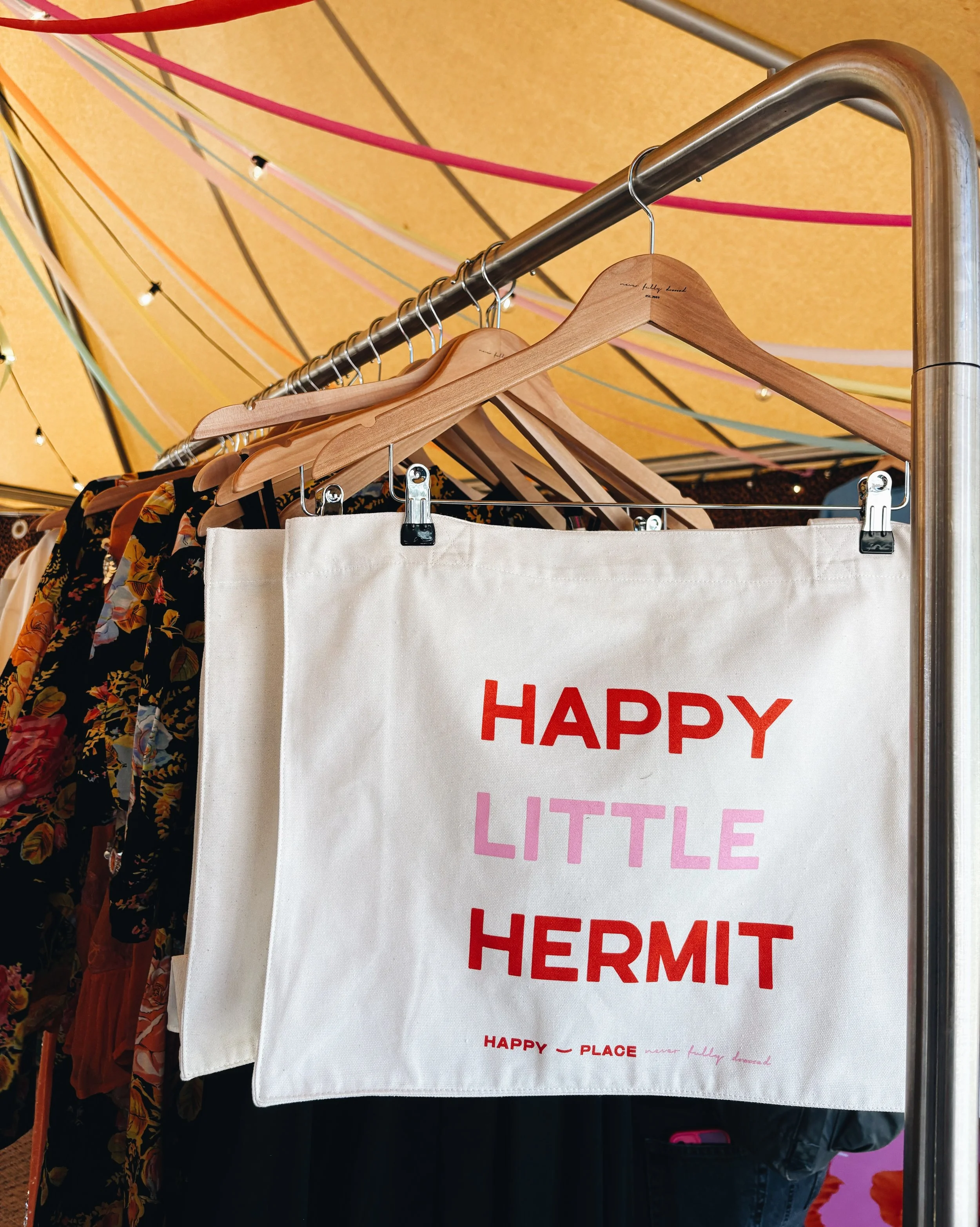
A day at The Happy Place wellbeing festival — and the ideas I brought home with the tote bag
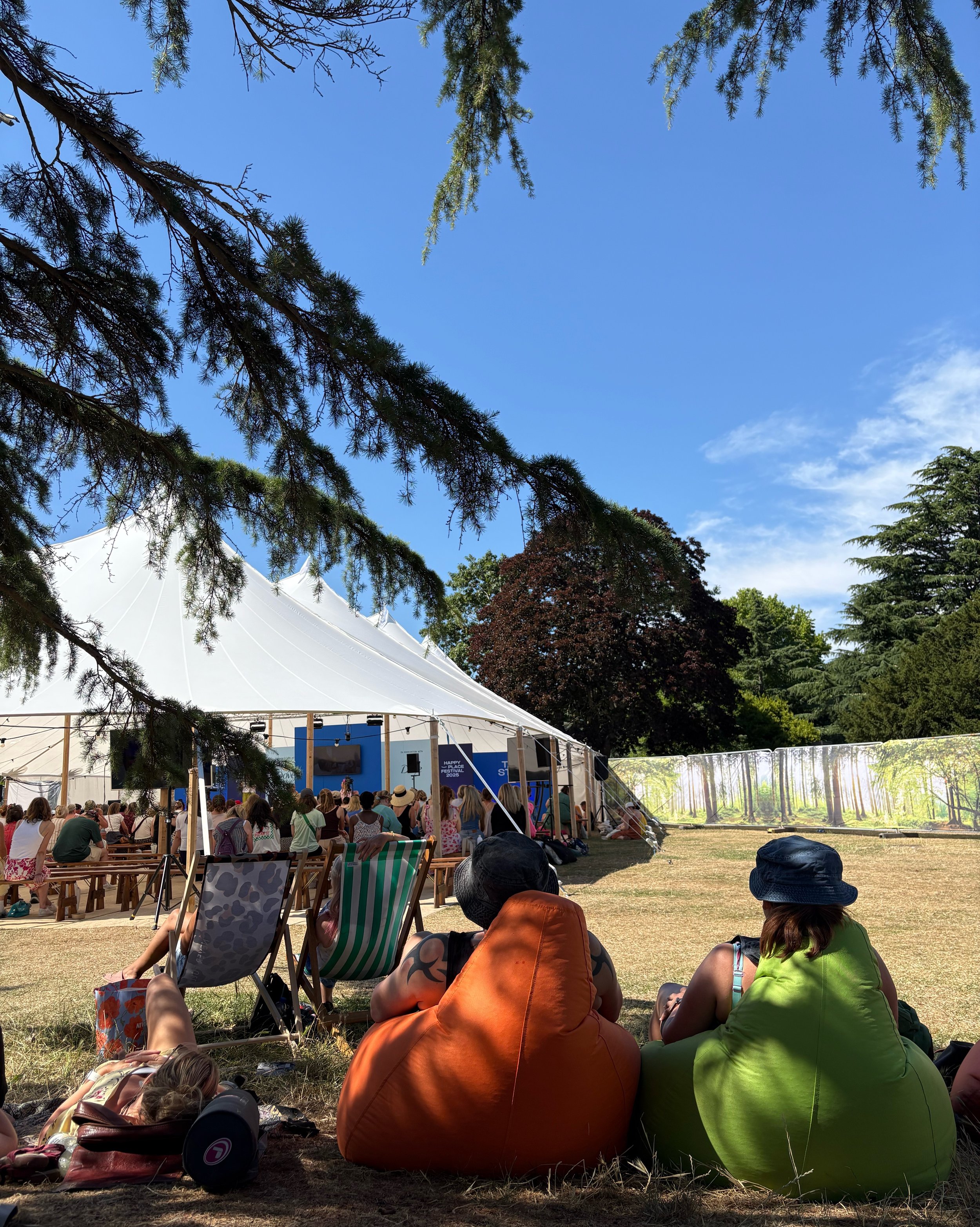
I’m sitting under the shade of a 100-year-old tree in a west London park, the kind with branches that creak when the breeze moves through them. I’ve claimed one of the bright bean bags scattered across the lawn and wedged it against the bark. It’s quieter here than in the big open-sided marquee where the talks are held. I almost left earlier — the heat was stifling — but this patch of dappled light invited me to stay.
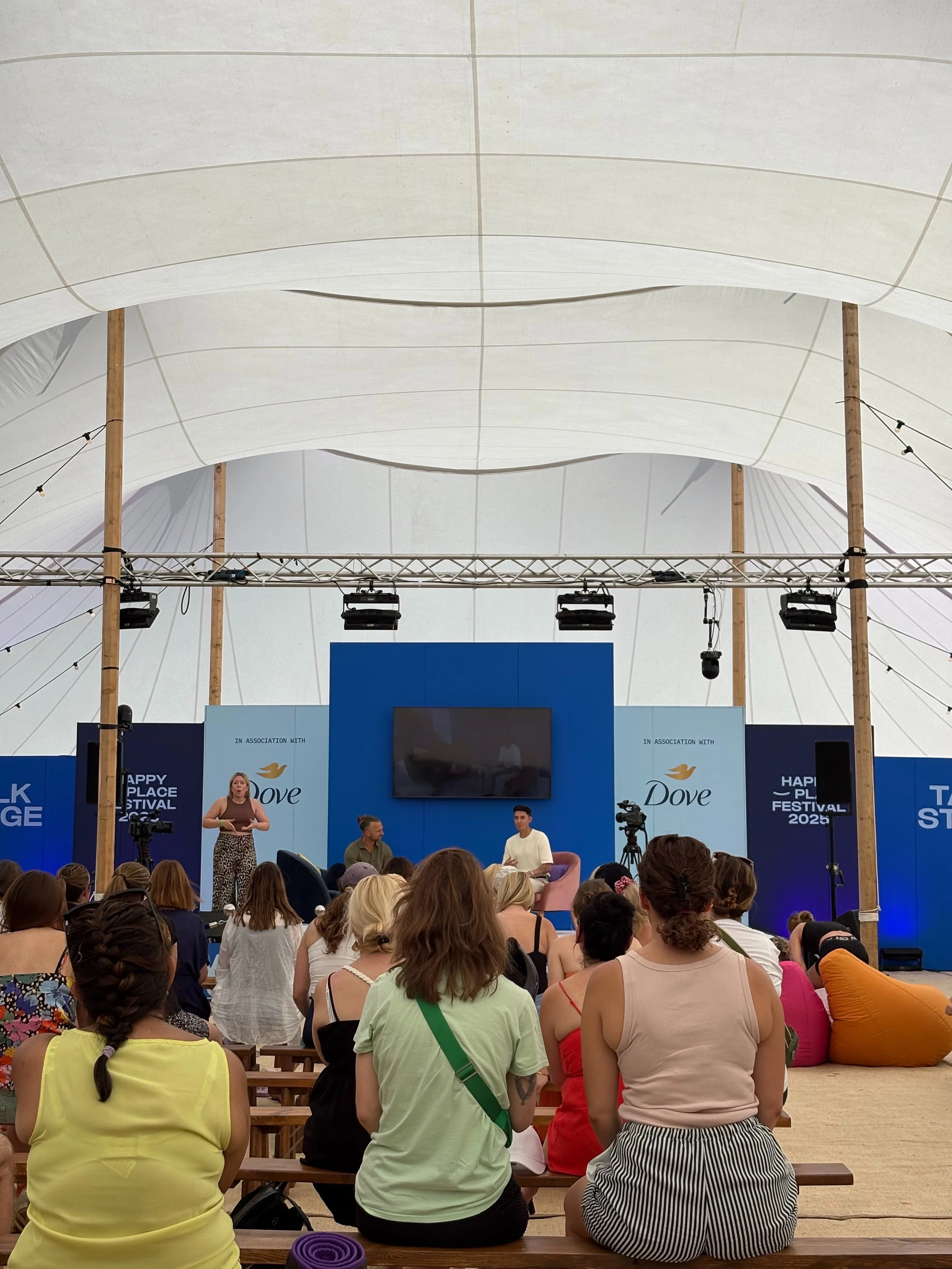
This is the Happy Place Festival, Fearne Cotton’s annual celebration of all things wellbeing. Held in Gunnersbury Park, the event feels relaxed despite the crowds. There’s a sound bath tent, hormone talks, yoga happening under awnings, iced lattes for a quick pick-me-up, and a hum of voices talking about nutrition, breathwork, sleep, and happiness.
I wander a little, swap my trainers for sandals, browse the book tent, and eventually drift towards the Talk Tent — where the ideas start to land.
What Wellbeing Looks Like When You Do It at Your Own Pace
There’s a clawfoot bathtub painted bright yellow on the lawn. Giant HAPPY PLACE letters. Pink phone booths for Instagram moments.
People move slowly, or not at all. Some stretch into yoga poses. Others lounge with notebooks. I’m surrounded mostly by women. An older woman in a navy wrap dress stands near a mother and daughter in yoga pants. And I start to wonder: What are we all here for?
A day of self-care? A search for clarity? A break from decision fatigue?
For me, it became about gathering small, meaningful insights or the big ideas that I hope might stick. Here's what I took home from a single day of getting away from it all (so I could get back to it all).
5 Takeaways from The Happy Place Festival
1. Midlife Is for Beginning Again
“Everyone has something.” — Donna Ashworth
Poet Donna Ashworth shared that she didn’t begin writing until her mid-40s. “It was either me… or it,” she said. There was something inside her that needed to be expressed — even if it emerged messily.
Holly Tucker, founder of Holly & Co, echoed this. She shared that 75% of the small businesses they support were started by people aged 40–60. Midlife isn’t an ending. It’s the start of something else.
2. Listen to the Whispers of the Soul
The idea of tuning inward came up again and again. Katy Hill spoke of following the “whispers of the soul.” Kelly Holmes said she’s living not in the “if onlys” but the “maybes.”
What if we don’t need to have the whole plan — just enough of a nudge to start?
3. Time Is Measured in Moments, That Become Years
“Life is 80 summer holidays.” — Julia Bradbury
Oliver Burkeman’s 4000 Weeks was cited more than once. It’s a reminder that life is not endless. Julia Bradbury put it plainly: "You only get about 80 summers." She advocates for nature snacks as the way to reset her days — stepping outside every couple of hours to widen your gaze, regulate your nervous system, and remember you’re alive. The evidence backs her up. A University of Exeter study found that if 1.2 million people took part in a green prescribing project that would save the NHS £635.6 million.
4. Start Imperfectly, Stay Imperfect
“Just begin.” — Donna Ashworth
Donna’s talk — and the reading of her poem “Just Begin” — was a balm for the overthinkers. “Someone here needs this,” she said before reading. She was right. That someone was me. And maybe it’s you too.
Start before you’re ready. Begin without knowing the outcome. Let the thing live in the world. That’s where the magic happens — not in the editing, but in the doing.
5. Small Impacts Matter
“What’s my impact?” — Holly Tucker
Holly said she grounds herself daily in one question: What will my impact be today? Not in a pressure-filled way, but as an invitation. She believes we all have the potential to lift others — to support their dreams in small, significant ways.
And if you don’t know your answer yet? Ask yourself: What lit you up when you were 10?




Wellbeing That Feels Possible
There’s a lot out there right now about how to live better. Some of it’s helpful. A lot of it is loud. What this day reminded me is that you can be curious without committing to a complete reinvention.
Wellbeing isn’t a fixed destination or a 12-step plan. It’s something you get to define. Something you can build, imperfectly. Slowly. Softly. On your own terms.
Your happy place might not be mine. And that’s more than okay.
So, what’s your Version of a Happy Place?
Maybe it’s not a festival. Maybe it’s a book, or a walk, or a quiet cup of tea. The point is not to do more. It’s to tune in.
Here’s a gentle question to leave you with:
What whispers have you been ignoring?
And what might shift if you started to listen?
Want to explore this further?
We’re creating spaces for the wellbeing curious — people who want better days, not busier ones.

Why We Created a Wellbeing Guidebook (and What It Might Unlock for You)
Discover why feel-good places matter for your happiness. This wellbeing guidebook explores how everyday spaces—from creative studios to independent bookshops—can support your emotional wellbeing and inner world.
What do we really need when we’re feeling stuck, overwhelmed, or unsure of our next step? Not more noise. Not more sitting with our ever spiraling thoughts. Not pressure to fix or upgrade or optimise.
Often, we just need a place to pause.
A space that makes us feel something again.
Somewhere that helps us remember who we are.
That’s why we created our wellbeing guidebook—an ever-growing collection of feel-good, real-world places that support emotional wellbeing, gentle exploration, and the kind of connection that genuinely helps.
Because sometimes it’s the right place that can help us find our way back to ourselves.

Why Place Matters for Our Mental Wellbeing
Wellbeing isn’t just something we do in private with a journal, or during a one-hour class. It’s also shaped by the spaces we move through every day.
Whether it’s a forest walk, a quiet café, a workshop, a cold-water swim, or a tiny bookshop full of soul—the right space can ground us, support us, or simply give us a new perspective.
Science backs this too: studies show that spending time in certain environments—especially nature-connected or creativity-rich spaces—can lower anxiety, boost mood and regulate the nervous system.
Connection Is Part of the Cure
The modern world is increasingly isolating. We’re online, overstimulated, and often emotionally undernourished.
But when we step into the right places—places that welcome, hold, inspire or comfort us—we’re reminded that we don’t have to do everything alone.
That might be a shared table at a local supper club. A movement class where no one cares what you look like. A gallery that sparks something long dormant. These places reconnect us: to others, to our bodies, to our creativity, and to the wider world.
Why Exploring Out There Helps Us Explore In Here
You don’t have to travel far to feel a shift. Sometimes going just a few streets away can spark something powerful.
This guidebook isn’t about bucket lists or big-budget retreats—it’s about discovering destinations for wellbeing that feel human, thoughtful, and accessible. It’s about using the outer world to support your inner one.
Because when you change your environment, even briefly, you often change your story. And that’s where something new can begin.
The If Lost Start Here Guidebook: What It Is
It’s not just a list. It’s a lovingly curated collection of spaces that help people feel better in real life. Every entry is chosen with care—not because it’s trendy, but because it offers something meaningful.
The guide features places that support:
Mind–body wellbeing through movement or stillness.
Creativity and self-expression
Experiences of awe, presence and joy
Know a Place That Deserves to Be Seen?
If you run, own, or simply love a place that helps people feel better, we’d love to hear about it.
Because sharing these spaces matters—and someone out there might be looking for exactly what you offer and what you’ve found.

Want more like this?
Our newsletter offers small, thoughtful ideas for navigating everyday life—especially when things feel uncertain, busy or a bit off-track.
Think of it as your life companion: one part inspiration, one part practical support, always written with care.
Sign up here to receive occasional, meaningful emails from If Lost Start Here.

What If This Summer Wasn’t Just About Everyone Else?
You’re holding everything together this summer — but what about you? Here’s how to reclaim space for yourself without guilt or overwhelm.
You’re making summer work for everyone else. But what if you made space for yourself, too?
It’s that time of year again.
You’ve likely got the family calendar up, the holiday bookings in motion, the WhatsApp groups alive with BBQs and beach plans — and a low-level hum of pressure vibrating through your body.
You're trying to make it all work: childcare, work, travel, expectations.
You want this summer to feel joyful, easy, like something from a slow-living Instagram post. But if you're being honest? You're already tired. And it hasn’t even started yet.
There’s that familiar moment of wondering:
Where do I fit into this season I’m planning for everyone else?
When do I get to rest, reset, feel taken care of — not just needed?
Is it wrong to want summer to give something back to me, too?

When summer feels heavy (and not just because of the heat)
We don’t talk enough about how intense summer can be — especially for women who are the organisers, the emotional holders, the ones creating the so-called magic.
Behind the joy and brightness, there’s often:
The mental load of planning and juggling
The invisible work of keeping others happy
The loss of rhythm and routine that leaves you untethered
The pressure to make it memorable — without falling apart
Even the things we’re supposed to enjoy can become another to-do: the family holiday that’s more logistics than rest, the BBQs that drain more than connect, the daily question of how do I keep everyone occupied and happy today?
No wonder you’re staying up later and later, just for a slice of quiet.
No wonder the mornings feel harder.
No wonder you’re beginning to feel like summer is happening around you — not with you in it.
Why naming it matters
Here’s the thing we’ve found: feeling flat, resentful or emotionally absent during summer doesn’t make you ungrateful. It makes you honest.
Because beneath all the busyness, what you might really be craving is:
A moment that’s just yours
A sense of clarity about how you feel and what you need
A space that doesn’t require you to be “on”
The relief of being seen, supported, and reminded you matter too
This isn’t about doing less for others. It’s about doing something for yourself.
Because you’re a person in this season too — not just the person keeping it all going.
Three small ways to shift the shape of your summer
You don’t need to overhaul everything. You don’t need a solo yoga retreat (unless you want one!). You just need one small shift in your direction.
Here are three starting points:
1. Give yourself a headline
If your summer had a title, what would it be? Not the one about planning and packing — but the one for you. Maybe it’s “the summer I slowed down,” or “the summer I felt more present.” Naming it changes how you show up for it.
2. Create a “me list”
Not a bucket list, not another set of expectations — just a list of 5 things that make you feel more you. Tea alone in the garden. Finishing that book. A swim without company. Circle one and plan it in this week.
3. Plan one thing you don’t have to plan
Let someone else hold the structure for a change. Choose a podcast series, a gentle course, or even just a stack of journaling prompts that arrive without you doing the thinking. Let it feel easy. Let it be enough.

And this is where we can help
We created the Summer Wellcation for women like you — the ones holding it all, hoping for more, and not knowing where to find a moment that feels like theirs again.
It’s a 4-week do-anywhere experience that starts August 4.
Here’s what you’ll receive:
Daily “postcard” lessons — quick, beautiful reflections that help you ground, pause and feel
Self-coaching prompts, journaling, creative invitations and micro-adventures
4 weekly facilitated meet-ups with a small, like-minded group (gentle, supportive)
Delivered via course platform or app so you can engage wherever summer takes you
Whether you read your prompts in the park, journal in the car while waiting for summer camp to end, or just read quietly with your tea — this is your moment in the day.
Let this be the summer you don’t forget yourself.
You're already making sure everyone else has what they need.
Let this be the part of summer that gives something back to you.
We start August 4, but you can sign up now — and know you’ve got something in place just for you when you need it most.
Explore the Summer Wellcation and reserve your spot.
Early Bird Pricing: $89 until 1 July (then $129)
Because you deserve more than survival this summer.
Micro Adventures: The Antidote to Everyday Inertia
A gentle rebellion against routine and the reason I danced on a Friday morning
What needs fixing?
Maybe nothing is wrong, exactly. But still, everything feels... flat.
I glance at my calendar and see the work I care about, the family I love, the home that holds me.
And yet, life has shrunk.
To Zoom calls, WhatsApp groups, to-do lists, "have you bought milk?" texts, and "where’s my homework?"
Somewhere along the way, the edges disappeared. The colour faded.
How do I feel about this?
I felt grateful — but restless. Safe — but stuck.
So I tried something. A small act of rebellion: I booked a disco dance class. On a Friday morning.
Weekdays are usually sacred for work, but there was this pull… a longing to break the inertia.
Apparently, what I needed was an instructor in neon spandex asking us to groove to 80s tracks.
That morning felt like the beginning of something — not a big reinvention, just a small return.
It wasn’t about fitness. It wasn’t about routine. It was about feeling something again.
So what’s the counter view?
We’re told wellbeing is about green juices, retreats, and rigid routines.
But what if it's also about tiny, regular interruptions to the ordinary?
Joyful ones. Playful ones. Silly ones. Local, affordable, non-performative ones.
Ones that don’t require you to overhaul your life — just to step sideways from it, for a moment.
That’s how the idea of weekly wellbeing micro adventures was born.

The Micro Adventure Manifesto
Here are the gentle rules I’ve made for myself as I try this out:
With other people.
The research (and our hearts) say we feel better when we’re connected. So these adventures include others — even if we just smile at the person on the mat next to us.
Affordable.
If it works, I want to repeat it. This isn’t about a £90 spa day — it’s about a £9 drop-in class or a free gallery stroll.
Local.
My wellbeing is tied to the places I actually spend time in. I’m curious about what’s already around me.
Not in the evenings.
Evenings are full. Of fatigue, of responsibilities. So where I can, I’ll adventure earlier in the day.
Once a week.
Just one thing. One moment that helps me feel more like myself again.
One theme at a time.
Creativity, awe, rest, movement — I’ll focus on one wellbeing theme at a time to keep it doable (and memorable).
What will this change?
Already, something is shifting. I feel a little more awake. More playful. More willing.
Not because I’m fixing myself, but because I’m reconnecting. With joy. With curiosity. With the aliveness I’d let go quiet.
This isn’t self-optimisation.
It’s self-reclamation.

Want to try your own weekly wellbeing micro adventure?
Here are 5 questions to get you started:
What’s pulling at you right now?
What’s your version of a disco class?
What do you want to feel more of?
What wellbeing area are you most curious to explore?
What are your rules for adventure?
Want to come along with me? Follow along on Substack.
For weekly inspiration to start your own micro adventure practice, sign up for our newsletter. Get real-life ideas, gentle encouragement, and wellbeing stories worth reading.
Let’s see what becomes possible — one tiny, joyful interruption at a time.

When Trying to Feel Better Starts to Feel Like Pressure
Learn more about midlife wellbeing, emotional burnout, and why real self-care starts with less pressure and more kindness.
There’s a strange irony in midlife:
You start trying to take care of yourself just at the moment you feel most disconnected from yourself.
You read the books. You save the Instagram posts. You sign up for the newsletters, download the meditation apps and promise yourself that this week you’ll really do it.
You’ll stretch. Journal. Eat better. Rest more. Be present. Meditate. Cut out caffeine. Maybe even finally take those supplements you bought months ago and keep forgetting to open.
You try.
But somehow, even the trying feels heavy. Like it’s yet another thing you’re not doing quite right.
You start to wonder if self-care is just another version of self-judgment — a performance you’re meant to keep up, while secretly wondering if you’ve missed some essential instruction manual that everyone else seems to have read.
And maybe, beneath all the pressure, you start to feel something even harder to admit:
> That trying to feel better is making you feel worse.
I remember a moment — not so long ago — when I stood in the kitchen staring at half-opened supplements and wondering if I even had the energy, or time, to blend that green smoothie I believed would help. I was tired. Not just physically, but soul-tired. And somewhere in me, a voice whispered: What are you doing this for, really? Who are you trying to be right now?
Because the truth was — I didn’t want a smoothie (even though I really love them).
I wanted stillness.
I wanted to feel something again that didn’t feel like a task.
I wanted to feel myself again — not the version of me who ticked all the boxes, but the one who could sit down in the quiet and still recognize her own thoughts.
And that’s what I’ve come to believe:
Wellbeing isn’t something we’re meant to achieve.
It’s something we can tend to. Gently. Kindly. Imperfectly.
Not through someone else’s morning routine or a podcast’s list of non-negotiables. But through our own noticing. Our own honest relationship with ourselves. Our own tiny, ordinary acts of kindness — not as a means to optimize ourselves, but simply to meet ourselves where we actually are.
Some days that might look like journaling.
Some days it might look like making toast and sitting down for five minutes while it’s still warm.
Some days it might look like doing nothing at all.
And that’s enough. Truly.
Because you don’t need the perfect wellness plan.
You need more permission to be human in your own life.
You’re not failing at self-care.
You’re just exhausted from trying to do it in a way that was never designed for your actual days.
So here’s a suggestion, if you need one today:
> What if well-being didn’t need to be a routine you follow, but a relationship you build — slowly, kindly, intuitively?
One that’s shaped by your own rhythm. Your own energy. Your own life as it actually is — not the life you wish you were living.
Maybe it starts with making a really great coffee before you check your email.
Or choosing that latest fiction blockbuster over one more scroll.
Or simply asking yourself: What do I need today — not in theory, but in reality?
Maybe you don’t need more effort.
Maybe you just need less pressure.
And maybe, just maybe, that’s the beginning of feeling better — not as something you achieve, but something just to keep you connected to yourself even in the most wobbly of days.


Well-being Prescriptions for Midlife
We don’t believe that well-being is one thing to all people. We’ve found that we all need something different from it — some of us to feel calmer, others more energized; some to deal with the overwhelm, others with the disconnection; and some of us to reach for our purpose, others for a paintbrush.
Learn more about our well-being prescriptions here. Find out more about what you need it to be, and do, for you.
Midlife can look different for each of us. Write your own plan for a way through it that works for you.
Not sure if coaching is for you? We get it; it took us experiencing coaching to understand what it really is. That’s why we offer a free coaching consultation to see how talking through where you are might help with where you want to go.
Curious how to find your own way to well during these midlife days? Subscribe to our newsletter here.

What Coaching Really Is (and Isn’t): A Q&A for Curious People
Curious about coaching but not sure what it actually is? A gentle, myth-busting Q&A that explains what coaching really means — and how it can help you reconnect with yourself.
Maybe you’ve been reading along for a while now. Nodding, recognising something in yourself, slowly starting to feel seen again. And maybe, you’ve wondered: Would coaching help me? Is it for someone like me? Do I even know what it really is?
We hear those questions a lot. So here are our non-sales-speak answers (because there’s already too much hustle in this industry).
Q: Is coaching just life advice?
Not at all. In fact, coaching isn’t advice-giving. It’s not someone telling you what to do. It’s not a checklist or a five-step plan or a quick fix.
Coaching is a conversation where you get to hear yourself more clearly. It’s space to think. It’s being asked the kinds of questions that help you untangle what’s really going on beneath the surface, in a way that feels safe, not exposing.
Q: But I’m not trying to “transform my life.” Would coaching still be useful?
Absolutely. Coaching doesn’t have to be about big reinventions.
In fact, the most powerful work often starts in the smallest moments: when you notice what you’re tired of carrying, or what you’ve been quietly craving, or what part of you you’ve been ignoring.
Q: I’ve seen a lot of shiny coaching online. I’m not sure that’s for me.
Us too. And this isn’t that. Our coaching isn’t about perfection or even performance. It’s about being human, and finally having a space where you don’t have to keep holding it all together.
There’s no hype here. No positive vibes only. Just grounded, clear, thoughtful support for the real version of you, the one who’s doing her best, even when she’s unsure what that looks like anymore.
Q: Do I need a goal to bring to coaching?
No. You just need to bring yourself. You don’t need a mission statement or a project plan. Sometimes the goal is simply: to feel like yourself again. To hear your own thoughts. To name your own needs. To feel something.
That’s more than enough to begin.
Q: What even happens in a session? What do we actually do?
We talk. We pause. We ask better questions. We listen.
Sometimes there are tears. Sometimes laughter. Sometimes we sit in silence for a moment because something lands, and that alone is a shift.
We might name what you’re carrying. We might explore what’s underneath the overwhelm. We might simply ask: Where do you want to feel more like yourself again?
It’s not therapy. It’s a gentle, guided space for self-connection at your pace.
Q: Who is this really for?
It’s for the woman who’s wondering what happened to her spark.
The one who feels emotionally full but strangely flat.
The one who wants to feel seen, not just by the world (that would be nice too), but by herself.
It’s for the woman who’s quietly tired of being the person everyone relies on… but doesn’t know where to put her own feelings.
It’s for you, if something in you has whispered:
I want more space. I want to feel more real. I want to come back to myself.
It’s for you if you have questions and you’re living in the space between.
It’s for you if you just need to press pause on life for an hour.
If this sounds familiar, we think you’ll find these sessions exactly what you need right now.
There is nothing we love to do more then hold the space for you and to ask the big questions that hold the shifts you need.


What I Learned This Week About Wellbeing, Connection, Purpose, Emotions, and Giving Back
Discover five key insights on wellbeing, emotional resilience, and meaningful connection from a leading conference on female empowerment. Learn how to navigate self-doubt, improve relationships, and find balance in everyday life.
Are you craving more balance, more meaningful connections, and a greater sense of emotional wellbeing in your everyday life?
Recently, I attended a conference packed with ideas about navigating life, relationships and self-care in a way that truly supports us—especially for those of us who often put others first.
Here’s what I learned, and how it might help you find more ease, clarity, and connection in your own life.
Wellbeing: Notice Instead of Avoid
How often do you push through stress, ignore exhaustion, or put off self-care because there’s too much to do?
One simple yet profound idea shared at the conference was this: Notice instead of avoid.
We’re taught to suppress discomfort and to keep going no matter what. But real wellbeing comes from paying attention—to our emotions, our energy, our stress levels—before they become overwhelming.
Try this: Before scrolling, reaching for caffeine, or brushing off your feelings, pause and ask yourself:
What am I feeling right now?
What is my body telling me?
What do I need at this moment?
Sometimes, noticing is the most powerful self-care practice of all.
Connection: The Conversation Is the Relationship
We all want deeper, more fulfilling relationships—with partners, friends, colleagues, or even ourselves.
But as Susan Scott says, “The conversation is the relationship.”
If we’re avoiding tough conversations, our relationships suffer.
If we silence ourselves to protect others’ feelings, we feel unseen.
If we struggle to express what we need, we stay disconnected.
At the conference, I heard from host Hannah Wilson about the idea of talk tokens—a concept where everyone in a meeting gets a set number of one-minute tokens to ensure equal voice time. It made me think:
What if we gave ourselves permission to take up more space in conversations? What if we listened more deeply, but also spoke with more confidence?
Try this: In your next conversation, ask yourself:
Am I truly listening?
Am I expressing what I really feel?
How would this conversation change if I gave myself full permission to show up as I am?
We co-create every relationship through our conversations. What kind of relationships do you want to create?
Purpose: Your Inner Mentor vs. Your Inner Critic
If you struggle with self-doubt, overthinking, or imposter syndrome, you’re not alone.
At the conference, Sadia Ghazanfar explored the difference between two voices inside us:
Your Inner Critic → Harsh, repetitive, and rooted in fear (“I’m not good enough. I’m failing. I should be better.”)
Your Inner Mentor → Wise, grounded, and connected to your values (“You are learning. You are enough. Keep going.”)
One insight that stood out: Your inner mentor doesn’t just think—it feels. It speaks in symbols, emotions, and quiet wisdom.
Try this: If you’re feeling lost or doubting yourself, close your eyes and picture yourself 20 years from now. What advice would that future version of you give you?
Maybe she’d tell you:
You already know more than you think.
You don’t have to have all the answers.
You are stronger than you realize.
What would shift if you started listening to her more than your inner critic?
Emotions: Owning How We Feel
One of the most powerful discussions at my table and throughout the day was about emotional validation.
Many of us, especially women, have been conditioned to believe:
Some emotions are acceptable, others are not.
We should “keep it together” for everyone else.
We must prioritize other people’s feelings over our own.
But your emotions deserve space.
Have you ever been shamed for your feelings?
Do you find yourself apologizing for emotions instead of expressing them?
Have you been taught how to regulate emotions—or just to hide them?
Hannah Wilson shared this powerful phrase from Susan Scott: “Take responsibility for your emotional wake.”
Just like a boat leaves ripples in the water, our emotions create ripples in the lives of those around us. This doesn’t mean suppressing feelings—it means owning them, processing them, and regulating them in ways that feel supportive.
Try this: The next time you feel overwhelmed, ask yourself:
Am I reacting from a place of emotional regulation?
How can I express this in a way that feels both true and safe?
What would happen if I validated my own emotions, instead of waiting for others to do it?
Owning your emotions is one of the most powerful forms of self-trust.
Giving Back: The Power of Small Actions
Women, especially, carry a huge emotional load—not just for our own wellbeing, but for our families, our workplaces, and our communities.
But one of the biggest shifts we can make is redefining impact.
Giving back doesn’t have to be big. Small actions matter.
Being an ally.
Mentoring someone who needs guidance.
Checking in on a friend.
Speaking up when something doesn’t feel right.
Renée Jacobs of The Belonging Network left us with this thought:
"What change do you want to make in yourself, in your relationships, and in the world?"
Try this: Instead of waiting for a big moment to make a difference, ask: What’s one small way I can create impact today?
Small actions create big ripples.
What This Means for You
What I took away from this conference is something I already believe deeply:
Wellbeing isn’t about fixing yourself. It’s about reconnecting with yourself.
So, a few questions for you:
What’s one thing you need to notice instead of avoid?
How can you create more meaningful — even courageous — conversations this week?
What would your inner mentor say to you right now?
Where do you feel ownership over your emotions—and where don’t you?
What’s one small way you can make an impact today?
If you’re feeling lost, overwhelmed, or disconnected, these small shifts can help.
Here’s to small ripples, brave conversations, and the courage to feel what we feel.
Ready to Feel More Connected, Confident, and Supported?
If this piece resonated with you—if you’re craving more balance, clarity, and emotional wellbeing in your everyday life—our coaching sessions might be exactly what you need.
At If Lost Start Here, we don’t believe in one-size-fits-all solutions. We believe in meeting you where you are—whether you’re navigating self-doubt, seeking deeper connections, or simply trying to find a way to feel more like yourself again.
Our ethical and certified coaching sessions are designed to help you:
Reconnect with yourself and what truly matters to you.
Navigate emotions and self-doubt with more ease.
Build healthier relationships—with yourself and others.
Create a life that feels more aligned, not just optimized.
You don’t have to figure it all out alone.
Explore our coaching options here and take the first step toward a life that feels more connected, confident, and lighter.

How to Start 2025 in a Better Place: A New Approach to Wellbeing
Discover 3 alternatives to New Year’s resolutions and learn how to start 2025 in a better place. Focus on emotional wellbeing, micro-resolutions, and meaningful connections.
Are you ready to rethink how you start the New Year?
If you’re tired of setting resolutions that don’t stick, feeling the pressure to change everything about yourself, or just want a gentler way to approach 2025, this guide is for you.
Why Traditional Resolutions Don’t Work
Most people abandon their resolutions by February. Here’s why:
1. Resolutions Are Overwhelming: They demand huge changes at a time when our energy is already low (hello, January blues).
2. They Focus on Perfection: If you slip up, it feels like failure.
3. They Ignore What Really Matters: Resolutions often target surface-level changes while neglecting our emotional and relational needs.
This year, let’s start differently.
How to Start 2025 in a Better Place
Instead of aiming for a total reinvention, focus on sustainable, meaningful practices that align with your values. Here are three alternative ways to begin 2025:
1. Start Small with Micro-Resolutions
Micro-resolutions are tiny, actionable steps that feel manageable and build momentum.
Example: Replace “I’ll exercise five times a week” with “I’ll take a 10-minute walk on most days.”
Why it Works: Small actions are easier to stick to and help you build habits over time.
2. Make Emotional Resolutions
Instead of focusing on what you need to do, think about how you want to feel.
Ask yourself: “What emotions do I want to invite into my life this year?”
Examples: Replace “I need to lose weight” with “I want to feel energised.” Replace “I need to be more productive” with “I want to feel balanced.”
This approach shifts the focus from fixing yourself to creating a life that feels aligned with your values.
3. Focus on Connection-Based Goals
Wellbeing isn’t just about what you do alone—it’s about the relationships that sustain you.
Try: Scheduling a monthly catch-up with friends. Joining a community group. Setting boundaries to prioritize quality time with loved ones.
Why it Works: Strong connections improve mental health, reduce stress, and foster a sense of belonging.
A Simple Practice to Reflect and Reset
Before setting any goals for the year, take a moment to pause and reflect:
Look Back Without Judgment. What did 2024 teach you about yourself? What habits or experiences brought you joy or peace?
Reframe the New Year as a Continuation. Instead of asking, “What do I need to change?” ask, “What do I want to nurture?”
Write a Letter to Your Future Self. Imagine it’s December 2025. What would you thank yourself for? What moments would you hope to have experienced?
Rethink Wellbeing in 2025
If you’re looking for a better way to well this year, join our New Year, New Approach mini-course. This self-guided experience will help you:
Understand why resolutions fail and how to avoid the guilt cycle.
Explore 12 creative ways to approach the New Year.
Discover three flexible alternatives to resolutions that can guide you through 2025.
Why This Matters
Starting 2025 with a focus on curiosity, connection, and compassion can help you:
Reduce the overwhelm of traditional resolutions.
Feel more aligned with your values.
Build a sustainable foundation for your emotional and mental well-being.
Sign up for New Year, New Approach today and start 2025 in a better place—one that supports who you are, not who you believe you have to be.

How to Find Your Anchor This Holiday Season: A Guide to Gentle Well-Being Practices
Feeling overwhelmed as the holidays approach? Discover simple ways to anchor yourself with gentle well-being practices that can support you through this busy season.
As the year speeds toward the holiday season, life can start to feel like a relentless list of to-dos. Between work deadlines, family gatherings, and all the plans piling up, it’s easy to lose sight of yourself. If you’re craving a way to stay grounded and calm, even as the busyness builds, now is the time to explore practices that anchor you to what really matters.
Anchoring yourself is about having touchpoints – small, meaningful actions that bring you back to a sense of calm and stability. And Find Your Way, our well-being course, is designed with this exact need in mind: a gentle, supportive guide to help you build well-being practices that fit into real life. Today, we’re sharing a few foundational ideas to help you create your own anchors before the holiday season ramps up.
Why You Need an Anchor Right Now
It’s no surprise that the weeks before the holidays can be one of the most stressful times of the year. Studies show that around 64% of people feel increased stress as the holiday season approaches. The pressure to get everything just right, to do it all, and to meet everyone’s needs can make us feel like we’re in a constant whirlwind.
But what if, instead of getting swept up, you could feel calm, steady, and present? Anchoring practices give you just that. Anchors aren’t about adding more to your plate – they’re about finding small moments of stillness and grounding that help you feel centred, even on the busiest days.
Discovering the Power of Anchors
There was a time when we, too, felt lost in the shuffle, especially as the year-end drew close. We would tackle all the plans, the obligations, and the endless details but somehow feel like we were missing out on the season itself. It was only when we discovered the importance of having anchors that we were able to slow down, connect to what truly mattered, and enjoy the season in a way that felt authentic and fulfilling.
These anchors were small – a morning coffee (or egg nog latte) enjoyed without rushing, a quick (multilayered) walk outside, a few minutes to write down a thought or feeling (mostly ‘how’?) – but they helped us remember ourselves in the midst of everything else. Anchors are now an integral part of Find Your Way, created from the realisation that well-being is best built on everyday moments of connection and calm.
3 Simple Anchoring Practices to Try Before the Holidays
Here are a few simple practices that you can begin using now to help keep you grounded as the season gets busier:
1. Morning Mindfulness Moment
Take five minutes each morning to be still and present. Whether you’re sipping coffee, breathing deeply, or sitting in silence, let these minutes ground you. Studies show that even a brief daily practice can significantly reduce stress and improve focus throughout the day.
2. Daily “Gratitude Pause”
Amid all the planning, it can be easy to forget what brings us joy. Take a moment to reflect on something you’re grateful for each day, no matter how small. This practice can reset your mindset, helping you feel more positive and less overwhelmed.
3. Short Walk or Outdoor Break
If you’re feeling stressed or caught up in “holiday to-do mode,” step outside for a brief walk. Research shows that spending just 15 minutes in nature can lower stress levels and improve mood. Let the fresh air remind you that there’s more to this season than tasks and to-dos.
How Find Your Way Can Help You Feel Grounded This Season
If these practices resonate, Find Your Way is designed to be a supportive guide in your life, especially as the world gets busier. Our course explores ten pathways to well-being, including reconnecting with nature, nurturing our relationships and finding meaning in everyday moments. Each theme offers practical ways to bring well-being into your daily life without the pressure to be perfect.
Through Find Your Way, you’ll discover small, manageable ways to create an anchor point that keeps you feeling steady, no matter what the day brings. It’s all about finding a path that feels good, not one that demands more of you.
Ready to Anchor Yourself This Holiday Season and Beyond?
This November, as life picks up speed, give yourself the gift of gentle well-being practices that truly support you. Our Find Your Way course was created with real-life needs in mind – to help you feel more centred, more resilient, and more at ease in your own life.
Click here to learn more about Find Your Way and start building your well-being anchor today.
As we enter the holiday season, remember that well-being doesn’t have to be grand or time-consuming. Often, it’s the small, intentional moments that make the biggest difference. So take a breath, find your anchor, and let’s navigate this season together.

5 Simple Shifts for a Calmer, Happier Holiday Season
Create a holiday season that feels calm and joyful with these five easy shifts. From setting daily intentions to savouring small moments, discover practical ways to stay grounded and enjoy each day.
The holiday season can be a time of joy, connection, and warmth. But let’s face it – it can also be a time of stress and overwhelm, as we try to keep up with the endless to-do lists and holiday “shoulds.” Sometimes, the pressure to make everything “just right” leaves us feeling more frazzled than festive. This year, instead of aiming for perfection, why not try a few tiny shifts that can make a big difference?
Small, intentional changes can help you create a season that feels lighter, more balanced, and genuinely enjoyable. From setting daily intentions to savouring little moments, these simple shifts can help you feel grounded and at ease, even on the busiest days. Here’s how to get started.
1. Start Your Day with a “Holiday Intention”
How we start each day can set the tone for how we experience the whole season. Rather than diving straight into the holiday hustle, try beginning each morning with a quiet moment to set an intention for the day. This doesn’t need to be anything big or elaborate – just a simple feeling you want to focus on, like “peace,” “connection,” or “joy.”
How It Works
Intentions are powerful because they shift our focus from what we have to do to how we want to feel. Research on mindfulness shows that setting daily intentions can improve mood and reduce stress. By choosing a specific feeling to guide your day, you’re creating a mental framework that prioritises your well-being, not just productivity.
Try This Action Prompt
Each morning, pause and ask yourself: “What feeling do I want to cultivate today?” Write it down or simply say it out loud to yourself. For example: “Today, I want to feel calm.” Let this intention gently guide your choices and responses throughout the day..
Small Reminder
Even if things don’t go as planned, try returning to your intention. Whether it’s taking a breath or pausing for a moment of gratitude, small steps can bring you back to the feeling you want to create.
2. Create a “Pause Ritual” for When Things Feel Busy
Holidays tend to come with a natural uptick in busyness. From last-minute errands to unexpected guests, it’s easy to feel swept up in the momentum. That’s why having a go-to “pause ritual” can be such a helpful tool. When you have a simple, calming activity that you can use anytime, it becomes easier to slow down, reset, and approach each moment with more mindfulness.
How It Works
Pause rituals act like mini “time-outs” that let us step back from the chaos. Studies suggest that taking short breaks throughout the day improves mental clarity and overall well-being. Even a quick minute can help you re-centre, helping you approach each task with renewed calm and focus.
Try This Action Prompt
Choose a small ritual that feels calming to you, like a breathing exercise, stretching, or enjoying a warm drink without distractions. Whenever you feel overwhelmed, take one minute to pause and focus on this ritual.
Example Pause Rituals
- Breathe Deeply: Take three deep breaths, inhaling through your nose and exhaling slowly through your mouth.
- Savour the Warmth: Sip a cup of tea or coffee slowly, noticing the warmth, taste, and aroma.
- Look Around: Take a quick look outside or around the room, noticing something that brings you a sense of peace.
By building a pause ritual into your day, you’ll create small moments of calm that can help you manage even the busiest days.
3. Keep a Small Wins List
During the holiday rush, it’s easy to lose sight of the small things we accomplish each day. But recognising these “small wins” can create a surprising sense of achievement and joy. Keeping a daily list of even the tiniest wins can remind you of your progress and help you appreciate your efforts, no matter how big or small.
How It Works
Celebrating small achievements has been shown to boost mood and increase motivation. A small win could be something as simple as finishing a task, spending a quiet moment with a loved one, or enjoying a peaceful walk. Noticing and acknowledging these wins helps reinforce that you’re moving forward, even in small ways.
Try This Action Prompt
At the end of each day, write down one small “win” you experienced. It could be anything from a completed task to a pleasant conversation. Focus on moments that made you feel good.
Examples of Small Wins
- Enjoyed a quiet moment with a hot drink
- Finished a task you were putting off
- Took a five-minute walk outside
- Received a kind message or sent one
Reflecting on these moments at the end of the day can leave you with a sense of satisfaction and gratitude, making the holiday season feel fuller and more meaningful.
4. Embrace “Micro Moments” of Gratitude
Gratitude doesn’t need to be a grand gesture or a once-a-year Thanksgiving tradition. Instead, consider practicing gratitude in “micro moments” throughout the season. Taking a few seconds to pause and appreciate something small can help you feel grounded and connected to the present.
How It Works
Studies show that gratitude improves mental health, fostering resilience and reducing stress. Practising gratitude in small, frequent doses lets you capture the benefits without needing to set aside large chunks of time.
Try This Action Prompt
Look for one small thing each day that you’re grateful for, whether it’s a cozy blanket, a loved one’s smile, or the smell of holiday treats. Take a few seconds to pause and savour it.
Examples of Micro Moments of Gratitude
- Appreciating a beautiful sunset or holiday lights
- Enjoying the first sip of your morning coffee
- Noticing the warmth of a cozy blanket
- Pausing to listen to a favourite holiday song
These small gratitude pauses add up, helping you experience the season with a greater sense of presence and joy.
5. Let Go of One “Should” This Season
Sometimes, the stress of the holidays comes from feeling like we “should” do everything: we should host, we should bake, we should buy the perfect gifts. But holding onto these “shoulds” can make the season feel heavy. This year, try letting go of just one “should” that doesn’t feel right for you. It could be a tradition that no longer serves you, or an expectation that adds stress rather than joy.
How It Works
When we let go of unnecessary obligations, we make room for what genuinely matters. Letting go of a “should” can feel freeing, helping you create a holiday season that aligns with your true values.
Try This Action Prompt
Identify one “should” that doesn’t serve you and commit to letting it go. Think of it as a small holiday gift to yourself!
Examples of “Shoulds” to Let Go
- Hosting every gathering yourself
- Buying expensive, elaborate gifts for everyone
- Decorating every inch of your home
- Making complex holiday meals from scratch
By releasing one “should,” you’re giving yourself permission to make the holiday season simpler and more enjoyable.
A Calmer, Well-ish Holiday Season
This holiday season, tiny shifts can make a big difference. Setting daily intentions, creating small moments of calm, celebrating small wins, and practicing gratitude can help you find joy in simple ways. Letting go of just one “should” gives you the freedom to create a holiday that feels balanced and meaningful.
If you’re ready for more simple ways to create a joyful, well-ish holiday season, sign up for our free Well-ish Guide to Feeling Better this Holiday Season! It’s the perfect companion to a holiday that feels good to you.

3 Things to Say “No” to This Holiday Season (Without the Guilt): A Q&A Guide
Reduce holiday stress by setting gentle boundaries. Learn how to say “no” to overcommitting, perfection, and self-criticism with this Q&A guide for a more balanced, guilt-free season.
The holidays can be a joyful time, but they can also bring pressure – from packed schedules to high expectations. It’s easy to get caught up in saying “yes” to everything, only to end up feeling exhausted and overwhelmed. But what if you could set a few gentle boundaries and say “no” to what doesn’t serve you, without the guilt?
In this Q&A guide, we’ll explore three common holiday challenges and share ways to gracefully say “no” to them so you can focus on what truly matters.
Q: How Do I Say “No” to Overcommitting My Schedule?
A: It can feel difficult to decline invitations and gatherings, especially when you want to be there for everyone. However, overcommitting leaves little time for rest and self-care, and often leads to burnout. Setting healthy boundaries is essential for reducing stress and staying emotionally balanced during high-demand seasons.
Try This:
1. Set an Event Limit: Decide in advance how many events you can realistically attend each week. Communicate this boundary with friends and family early on.
2. Use “Thank and Decline”: Practice saying, “Thank you so much for inviting me! I won’t be able to make it this time, but I’d love to connect soon.” Expressing gratitude makes it easier to say no without guilt.
Bonus Journal Prompt: “How does my schedule reflect my holiday priorities? What can I let go of to feel more present?”
Q: How Can I Let Go of the “Perfect” Holiday Decor?
A: Holiday decor can be a fun way to celebrate the season, but aiming for a Pinterest-perfect setup often adds unnecessary stress. Instead, think about what makes your space feel festive to you, and let go of the pressure to make everything look flawless. Perfectionism is often a barrier to joy, especially during high-stakes times like the holidays
Try This:
1. Choose a Signature Element: Pick one decor element you love (like twinkle lights or a favourite ornament), and let that set the tone. Focus on what you truly enjoy rather than a “perfect” overall look.
2. Embrace Minimalism: Simplifying your decor can actually enhance its impact. Select a few meaningful pieces, and allow yourself to skip or scale back on the rest.
Bonus Journal Prompt: “What does a meaningful holiday atmosphere look like to me? Which traditions can I simplify?”
Q: How Do I Say “No” to Self-Criticism This Season?
A: Self-criticism can sneak in during the holidays, especially when you’re trying to keep up with expectations or feeling the effects of comparison. Research on self-compassion by Dr. Kristin Neff suggests that treating yourself with kindness and understanding can significantly improve mental and emotional well-being
Try This:
1. The “Friend Check”: When you catch yourself in a cycle of self-criticism, pause and ask, “Would I say this to a friend?” Often, we’re kinder to others than to ourselves. Shifting this perspective can help soften critical thoughts.
2. Create a “Self-Care Mantra”: Choose a comforting phrase, like “I’m doing my best” or “It’s okay to be well-ish.” Use this mantra whenever self-criticism starts creeping in.
Bonus Journal Prompt: “What am I grateful for in myself this season? How can I nurture a sense of compassion?”
Gentle Actions for a Boundaries-Based Holiday Season
Here are three simple actions you can try to help reinforce these boundaries and make this season feel calmer and more aligned with your well-being:
1. Create a “Holiday Well-being List”: Instead of a to-do list, make a list of small things that bring you joy or calm. Keep it somewhere visible as a reminder to prioritise these throughout the season.
2. Set a “Self-Compassion Break” Reminder: Use your phone or calendar to set daily reminders to take a self-compassion break. Even a few minutes each day can make a difference.
3. Visualise Your Ideal Holiday: Before diving into holiday preparations, take a moment to imagine your ideal holiday season. Picture it in detail: What are you doing (or not doing)? Who are you spending time with? Use this vision as a guide when making decisions.
Embrace a Holiday that Feels Right for You
This holiday season, saying “no” doesn’t have to be difficult or guilt-inducing. By setting gentle boundaries and focusing on what truly matters, you can create a season that’s joyful, calm, and fulfilling. Let go of the need to be everywhere, decorate perfectly, or criticise yourself for small missteps. Instead, celebrate the moments that bring you peace and presence.
If you’re ready for more ways to simplify the season and focus on what matters most, sign up for our Well-ish Guide to Feeling Better this Holiday Season! Discover gentle, meaningful tips for a holiday that feels just right.

Feeling “Well-ish” is Enough: Embracing a Balanced Holiday Season
Forget perfection this holiday season and embrace “well-ish.” Discover practical ways to feel good enough, from setting boundaries to focusing on small wins, plus gentle journal prompts for a holiday that feels balanced and meaningful.
With the holiday season often comes the expectation to be our “best selves,” but striving for perfection can be overwhelming and, frankly, exhausting. Rather than aiming for perfection, what if we allowed ourselves to be just “well-ish”? This idea isn’t about lowering standards – it’s about finding joy and meaning in what feels genuinely achievable. By embracing a “well-ish” approach, we can let go of pressure and create a holiday that is kind, balanced, and nourishing.
In this post, we’ll explore how to make “well-ish” your seasonal mantra and offer some gentle prompts and actions to help you feel grounded and at ease.
1. Reframe Wellbeing as “Good Enough”
Letting go of perfection can be challenging, especially when it comes to family gatherings, decor, and gift-giving. Yet setting realistic expectations can reduce stress and increase satisfaction. Accepting “good enough” doesn’t mean you don’t care – it simply means you’re focusing on what matters most to you this season.
Try This:
- Journal Prompt: “What does a ‘good enough’ holiday look like for me? What parts of the season can I enjoy without striving for perfection?”
- Gentle Action: Choose one holiday tradition and simplify it. For example, if cooking an elaborate dinner is daunting, consider a simpler menu or make it a potluck. Let the focus be on connection rather than presentation.
Letting go of perfect frees you to be present. By reframing “good enough” as a positive choice, you’re embracing a more intentional way to celebrate.
2. Small Wins for a Well-ish Holiday
Small, achievable actions can go a long way in creating a sense of well-being. The science behind positive psychology shows that small, manageable changes can significantly boost our mood and resilience, especially when we’re busy. Instead of big resolutions or overwhelming to-do lists, think about small wins that bring you a moment of joy or peace.
Try This:
- Journal Prompt: “What small action could bring me joy or calm today?”
- Gentle Action: Start a “small wins” list, noting one little thing each day that brings you joy, whether it’s taking a short walk, listening to your favourite song, or enjoying a hot drink without multitasking. These small wins build up over time, creating a sense of accomplishment and balance.
By focusing on small actions, you’ll find that well-being feels more accessible. This approach aligns with the “well-ish” mindset, making it easier to enjoy the season without feeling overwhelmed.
3. Give Yourself Permission to Be Imperfect
The holiday season can make us feel like everything should be “just so,” but aiming for perfection in every area can sap our energy and joy. Research on self-compassion shows that treating ourselves with kindness – especially when we’re not meeting ideal standards – can reduce anxiety and improve our emotional well-being. By embracing our imperfect selves, we allow for more authentic, meaningful experiences.
Try This:
- Journal Prompt: “Where am I being hard on myself this season? How can I bring more compassion to these areas?”
- Gentle Action: Practice a “self-compassion break.” When you catch yourself being overly self-critical, pause and ask: “What would I say to a friend in this situation?” Often, we’re much kinder to others than we are to ourselves, and shifting that perspective can help ease the pressure.
Embracing imperfection isn’t about giving up; it’s about recognising that our worth isn’t tied to doing things flawlessly. This shift makes room for real joy and connection.
Journal Prompts for a “Well-ish” Holiday
Here are three prompts to help you dive deeper into what a “well-ish” holiday means for you:
1. “What does a ‘well’ holiday feel like to me?”
- Describe what “well” means to you in the context of the holidays. Is it calm? Connected? Balanced? This prompt helps clarify your priorities and intentions.
2. “What expectations am I holding onto that I could release?”
- Reflect on traditions or pressures you feel obligated to follow. Do they bring joy, or are they simply habits? Identifying what you can let go of can free up space for what truly matters.
3. “What small moments bring me peace during the holiday season?”
- Think about moments that bring you a sense of calm – a morning coffee, a walk, or a favourite song. Recognising these moments can help you add intentional breaks to your days.
3 Gentle Actions to Embrace “Well-ish” This Season
If you’re ready to create a holiday that feels balanced and manageable, here are three actions to try:
1. Set a “Good Enough” Boundary:
- Choose one area where you’ll consciously decide to aim for “good enough” instead of perfection. Whether it’s holiday cards, decorating, or event planning, see if you can let go of some pressure.
2. Make a “Not To-Do” List:
- Just as powerful as a to-do list, a “not to-do” list helps you identify things you can skip this season. For example, if holiday baking feels like a chore, give yourself permission to buy cookies instead!
3. Focus on Feeling Intentions, Not “To-Do’s”:
- At the start of each week, pick one feeling you want to cultivate – such as “relaxed” or “connected.” Let that feeling guide your choices, helping you say “yes” to things that align with it and “no” to things that don’t.
Research Insights: Why Embracing “Well-ish” Can Improve Your Wellbeing
Studies from the field of positive psychology show that perfectionism is often linked with anxiety and burnout, particularly during high-stress periods like the holidays. According to Brené Brown, an expert in vulnerability and self-compassion, the drive for perfection can keep us disconnected from what truly matters and make us more self-critical.
By focusing on achievable goals and self-compassion, we support our mental and emotional well-being more sustainably. As Dr. Kristin Neff, a self-compassion researcher, says, self-kindness is a proven method for reducing stress and improving our ability to navigate life’s challenges. So by embracing “well-ish,” you’re not just making the season easier – you’re building resilience for the year ahead.
A Holiday Season That Feels Like “You”
This holiday season, give yourself permission to be “well-ish.” Rather than perfect, aim for a holiday that feels good enough – one that brings joy without adding stress. By letting go of expectations, focusing on small wins, and embracing your imperfect self, you create space for a more meaningful celebration.
If you’re ready for more gentle tips like these, sign up for our free Well-ish Guide to Feeling Better this Holiday Season. Discover simple ways to create a holiday season that truly feels like you.

How to Feel Good Without Perfect: Simple Steps to a Kinder Holiday Season
Striving for a perfect holiday season can lead to burnout. Discover three gentle ways to embrace a “well-ish” approach instead, with tips for finding ease, balance, and genuine joy this holiday season.
With the holiday season approaching, many of us feel the pressure to make everything “just right.” Between the gatherings, gift-giving, and endless “to-do” lists, this time of year can bring both joy and stress. If the quest for perfection leaves you feeling more overwhelmed than content, it may be time to try a new approach.
Instead of aiming for a picture-perfect holiday, consider setting your sights on something kinder: simply feeling “well enough”. This shift is not about lowering standards; it’s about embracing what matters and letting go of what doesn’t.
Here, we’ll explore three simple ways to create a season that feels right for you, plus some journal prompts and gentle actions to help you connect to your own well-being.
1. Release the Holiday “Shoulds”
The holiday season is full of “shoulds”: we should send out perfectly coordinated holiday cards, bake all the desserts from scratch, and make sure every gift is wrapped with care. But who set these standards? Often, they’re a mix of societal expectations, family traditions, and our own internal pressures. Research suggests that releasing perfectionist tendencies, especially around the holidays, can reduce stress and lead to greater happiness
Try This:
- Journal Prompt: “What holiday traditions actually bring me joy? What expectations do I feel pressure to uphold, and why?”
- Gentle Action: Pick one “should” you feel attached to (like baking cookies from scratch or hosting a large gathering) and ask yourself if it truly brings you joy. If not, consider letting it go or simplifying it to suit your current needs.
When we question the holiday “shoulds” and focus on what feels genuine, we create space for a season that aligns with our real desires rather than external pressures. Remember, there’s no one right way to celebrate – only what feels right for you.
2. Permission to Pause
With all the activity and planning that comes with the holidays, it’s easy to lose sight of our own needs. But taking a small moment to pause can make all the difference. Research shows that small breaks throughout the day can significantly improve mood, focus, and overall well-being. Even a 5-minute pause can help reduce stress and reconnect you with yourself..
Try This:
- Journal Prompt: “How can I create moments of calm for myself this season? What would a short, meaningful pause look like for me?”
- Gentle Action: Practice a “holiday pause” by setting aside five minutes in your day to just breathe, enjoy a hot drink, or step outside. If a pause feels difficult to fit in, try integrating it into an existing activity, like focusing on your breath while waiting in line or slowing down during your evening routine.
These small pauses are powerful because they give us a chance to reconnect with ourselves amid the holiday bustle. Let this time be about you, free from any “shoulds” or “to-dos.”
3. Prioritise Feeling Over Doing
It’s tempting to overfill our calendars during the holidays, saying “yes” to every invitation, event, and tradition. But when we focus solely on “doing,” we can lose sight of how we actually want to feel. Do you want to feel relaxed, connected, or joyful this season? Let those feelings guide your choices.
Focusing on activities that support our desired emotions (rather than obligations) leads to greater life satisfaction. When we let our feelings, rather than activities, shape our holiday experience, we find a balance that aligns with our true well-being.
Try This:
- Journal Prompt: “How do I want to feel during the holiday season? What small choices or actions can support these feelings?”
- Gentle Action: Set an intention based on how you want to feel. For example, if you want to feel connected, consider inviting a friend for a casual coffee date. If relaxation is your priority, block off an afternoon to enjoy a quiet activity you love, like reading or crafting.
By prioritising feeling over doing, we can create a holiday season that resonates with who we truly are. This approach allows us to say “yes” to what matters and “no” to what doesn’t – without guilt.
Three Journal Prompts for a Kinder Holiday Season
Here are three journal prompts designed to help you dig deeper into what a “well enough” holiday could look like for you:
1. “What does a well holiday feel like to me?”
- Imagine your ideal holiday season. What stands out? What are you doing (or not doing) that makes it feel well? This prompt can help you identify specific actions or moments to bring into your season.
2. “What holiday expectations am I holding onto that I could release?”
- Often, we cling to traditions or expectations out of habit. Use this prompt to identify which of these serve you and which ones you might let go.
3. “What small moments can I add to my holiday routine to feel more balanced?”
- Small, daily rituals (like morning tea, evening journaling, or mindful walks) can help you stay grounded. Reflect on what these moments might look like for you.
Gentle Actions to Try
If you’re ready to make this season feel more balanced, here are three simple actions you can try:
1. Create a “Yes-No-Maybe” List:
Make a list of holiday activities and label them as “yes,” “no,” or “maybe.” Keep only the “yes” activities on your calendar and see if the “maybe” ones can become “no” if they feel too much.
2. Practice the “10-Minute Reset”:
Give yourself ten minutes each day to pause, reflect, and reset. This could be a quick walk, journaling, or simply sitting quietly. It’s a way to ground yourself in the midst of the holiday pace.
3. Set a “Feeling Intention” for Each Week:
Choose one feeling to focus on each week of the season, such as “peace,” “gratitude,” or “connection.” Make small choices that nurture this feeling in your life.
A Holiday Season That Feels Right for You
The holidays are a time for joy and connection, but they’re also an invitation to care for ourselves. By letting go of the “shoulds,” giving ourselves permission to pause, and focusing on how we want to feel, we can experience a season that’s kinder, calmer, and truly well.
If you’re ready for more ways to enjoy a well holiday season, sign up for our free Well-ish Guide to Feeling Better this Holiday Season. It’s packed with small, simple tips that help you focus on what really matters.