

The Little Retreat & The Big Retreat Festival | A Conversation with founder Amber Rich
We speak to Amber Rich, founder of The Little Retreat and The Big Retreat Festival about how she arrived at these projects, how wellness is now something that we all reach for, and her role as a curator of discovery and awe.
To call The Little Retreat in Pembrokeshire glamping is like calling Glennon Doyle a blogger. Staying in one of the wood-furnace heated domes (with furniture you’d find in a boutique hotel), warming up in your own Scandi hot tub, or roasting smores by a private fire pit after a day at the beach or walking in the Preseli Hills, you’ll sink into what life could be if we stopped for a while to notice its possibilities.
The Little Retreat was founded by Amber Rich, who also curates The Big Retreat “feel-good festival” that takes place on these grounds (2022 tickets are already on sale), and from which it takes its cue. Where the festival has a Darwin den, campfire stage, cold water swims in The Cleddau, a talk tent curated by Shelf Help director Toni Jones, and creative workshops, its weekend away counterpart has sustainability woven through its design, foraging workshops about to start, stargazing tents with views of dark skies, and curated programs focusing on such practices as breathwork, yoga, arts and craft. The festival and retreat overlap, exchange ideas, and share their approach, with both offering a slowed-down lifestyle and collective experiences that get you closer to a vision of how you might shape your own life when you return back to it.
After a few days at The Little Retreat, we had the chance to speak with Amber about how she arrived at this place, how closely the festival and the retreat are connected, and how wellness is now something that we all reach for:
Let’s start with the connection between The Big Retreat and The Little Retreat. Why did you start them and how do they connect? If the core value of the festival is one of ‘discovery’, how would you describe the retreat?
I used to own my own gym and ran fitness and wellbeing classes to improve mental and physical health. After the birth of my daughter Bea (who is now 7) I decided that I wanted to utilise the family land to create a sanctuary where people could come to escape their busy lives, pause and reconnect. This was the start of the original "Little Retreats".
I found that these retreats were having such a profound effect on people’s lives and making a real difference: One lady who attended had not been able to sleep for years. After our retreat, she learnt how to pause and use those skills to have her first good night’s sleep in 7 years! It was feedback like this that spurred me on to create The Big Retreat Festival.
I wanted to create a space where people could come and discover breath work, fire walking, gong baths, yoga, wild swimming, forest bathing — literally anything and everything that allowed people to "find their feel good". It also included festival favourites such as gin workshops and music to enhance people’s experience and wellbeing.
I realised that giving people time and space in a beautiful setting to discover all of these wonderful life-enhancing experiences could really make a positive change in people’s lives.
Discovery and "finding your feel good" still remains the core value to this day.
What do you think people are looking for who stay with you or attend one of your events?
I think people are looking for time to reflect on themselves, to unplug from daily life and to find out what makes them feel good. We are perfectly poised in the heart of the Pembrokeshire National Park on the banks of the "Secret Waterway". The stunning location inspires awe and wonder every time and we think the unique setting coupled with a sanctuary and safe space to discover is the catalyst for change.

What do you hope people experience with the projects that you create? What do you hope they take away and bring into their everyday lives?
I hope that people’s appreciation for nature and the outdoors grows and they are able to reconnect and utilise outdoor space to improve their wellbeing. I think it’s important with the complexity of modern living that people are reminded that sometimes it’s the simple things that bring us the most happiness.
If you attend one of our Feel Good Retreats you will learn skills that you can take away with you and implement straight away in your everyday life. The goal is to inspire people to reset and to really connect with themselves and the great outdoors.
I see my role as a curator of discovery and awe, allowing people the opportunity to reset, rethink and equip themselves with a host of skills and experiences — a toolkit that they can take home and continue to use to ultimately change their path and enhance their lives.
How do you think the idea of wellness has shifted since you started The Little and Big Retreats?
When I first began The Little Retreat the words wellbeing and wellness were quite niche and only appealed to a select few. Today looking after your mental and physical health is much more mainstream and in the public psyche. With the Covid pandemic more and more people are realising just how important nature and mental as well as physical health are to enhance our lives. That is one positive we can take away from the Covid pandemic.

What motivates you to create these spaces in the world? What kept you going during recent challenges?
My key motivation is to provide a sanctuary that allows people to discover not only nature but how to unwind and reconnect for their physical and mental health. A safe space where people are free to discover and pause.
The design of the space at The Little Retreat was about focusing on ways for people to connect with the outdoors without necessarily having to "rough it" to experience the joys of being close to nature. A key focus was also to have a minimal impact on the surrounding ecology and landscape.
The pandemic has actually given me the time and space to take ecology and planning into focus and look at ways for nature to thrive. We noticed during the pandemic the return of otters on the river banks and native oysters that had previously been wiped out due to human impact. This rewinding of our natural space showed me just how important it is to tread lightly on the site and in everything we do. We have worked to encourage nature in the planning — from bat boxes, swallow bricks, hedgehog runs, planting native species and harvesting the rainwater. We are really hoping to reduce our carbon footprint at both The Little Retreat and The Big Retreat Festival.
Over the pandemic, I realised that conserving the area was so important for nature and our own wellbeing that I set up the nonprofit arm "The Big Retreat Community". This is geared at enhancing and protecting nature as well as giving welsh artists a platform at our next festival.
In our guide for life, we roam across ten different pathways in the places that we feature and I’m curious about where you’d position your projects and why?
After looking through your Ten Pathways it is extremely difficult to choose one. All of them are intertwined intrinsically in everything we do from untethering upon arrival, to reconnecting mind and spirit right through to purpose and doing good. All of your pathways align exactly with our mission and how we conduct our projects.

How do you bring the values of the places you create into your own life?
I am constantly trying new things and discovering not only the latest external wellbeing practices but rediscovering the landscape. I make sure I set aside time every day to do this. Whether it’s a cooling wild swim in the Cleddau or a mindful walk through the woodland set around our site. I make sure that at least once a day I allow time for myself to reconnect and discover. I think it is so important to schedule this time into your diary in the same way you would an appointment at the doctor’s.
As we emerge from the lockdowns and are maybe feeling more hopeful about our worlds, is there anything that you’re particularly excited about going forwards?
There is so much going on at The Little Retreats this year it’s actually really really exciting. We have the addition of wild food workshops offering a foraging course and a 12-course dinner, the release of our Find Your Feel Good In Pembrokeshire guide, wild swimming sessions, forest bathing, and breathwork. We are currently building the space for the new stargazer tents with outdoor hot baths — a perfect opportunity to make the most of our stunning location in an official UK Dark Sky reserve. There are so many things that are organically falling into place.
We want both The Little and The Big Retreat to be a sanctuary and a beacon for anyone and everyone who wants to set aside time to find out just what it is that makes them tick and "find their feel good".
While there: we recommend pastries and bread from the micro bakery in the village Hugtasty, the award-winning beach shack Café Mor at Freshwater West (also the site of Dobby’s resting place), the stunning beaches, hikes, and paddle-boarding at Stackpole, and cafe with a mission Get the Boys a Lift.

Unplugged
Exhausted by the tech in your life? Unplugged offers you a way to get some space from your phone.
Go here if: you’d had it with Zoom calls, social media, and emails, you’ve become not tethered but entrapped by your online life, or you’re never two steps away from your smartphone, ever.
What is it: A 3-day digital detox retreat in the form of a cabin in the countryside just an hour outside of London.
Why you’ll love it: Rather than rustic chic, the cabin looks like something a tech start-up would design (somewhat aptly the founders met at a tech-startup), clean lines, matt black, and a large screen in the form of a window to look through rather than an interface to scroll down.
What you need to know: Write. Play board games. Read. Go for a non-lockdown-induced walk. Talk to one another. There are lots of options to spend time and connect and be in this place, but screens are not one of them. They will literally be locked away. No photos, no just checking, no looking over at notifications during mealtimes. Founders Hector Hughes and Ben Elliott will help you get through it though. On arrival, you’ll get a welcome pack, a polaroid camera, a map of the area, a compass, and a torch, as well as postcards to send out into the world. The cabin also has books and activities (and a cassette player!) to occupy your time
What they offer (online and off): Only offline this one.
Why we think it's different: Founders Hector and Ben started Unplugged in response to their own needs. Hector had realized the extent to which he was tethered to technology when he went on a two-week silent retreat to the Himalayas. Ben could get in up to 14 hours of screen time a day. Looking for a solution that didn’t involve vast amounts of time and a plane flight, they opened their first cabin to reconnect with ourselves by turning off our devices. That they did so last July, after the first lockdown, was particularly timely.
During the first few months of the pandemic, many of us forgot where we ended and our devices began. Any tech boundaries we had dissolved in work from home, zoom pub quizzes, and Netflix binges. We digitized our days, whether as a numbing distraction or for essential professional needs, our devices became the way we interacted with a world we couldn’t physically get to. But as that real-life world opens up, now is the moment to shift that co-dependency, to find ways to reclaim analog space and our non-tech-centered lives.
In their own words: “Humans have always escaped to nature as an antidote to hectic city life. The issue is that now so many of us just wouldn’t know where to start. We’re glued to our phones, inundated with push notifications & respond to emails at all times of the day. We’re on a mission to help you unplug from your devices so that you can recharge.”
Something to do: Wherever you are you can set boundaries around technology. Start with turning off notifications, taking your smartphone out of your bedroom, leaving it behind occasionally when you pop out, using apps to mediate social media time or gaming, keep your phone literally out of sight which will translate to out of mind, buy a watch and an alarm clock, and let people know that you can’t be reached sometimes. In those moments when a phone demands your attention, really think about whether that moment of interruption in your day was worth it. If it wasn’t find ways to block those demands on your time like deleting apps, and even turning off your phone for short, then longer, periods.

Men's Shed Movement
As men have traditionally struggled to find outlets to talk about their feelings and challenges, the men’s shed movement is starting to fulfill this need for connection.
What is it: A network of DIY-enthusiast communities that bring men (and now women) together to fix things, collaborate on projects, and share stories.
What you need to know: The men’s shed movement began life in Australia in the 1990s as a way to give older men a social hub. Working shoulder to shoulder (rather than face to face) offered participants a chance to share skills, learn techniques, and make friends. The men’s shed movement has since spread across the world; there are now 2000 sheds across 12 countries, including Finland, Ireland, the USA, and the UK, where there are more than 600 nationwide.
What they offer (online and off): Depending on the particular shed, there could be tools for woodworking, electricals, and metalwork, while members frequently pass on their own skills — coding, welding, machine tools, or car repair. Although most sheds are run by and for older men, there’s no barrier to entry; many sheds feature both female members and younger men. If there’s no shed in your area, British shedder Chris Lee has a TEDx talk on YouTube that’s a useful introduction to what sheds mean to him and how they’ve helped him. And if you’re inspired, get some tips from the guys who’ve “made one earlier” and start your own shed!
Why we think it matters: While individual sheds offer a creative, communal, and inclusive environment, the growth in the men’s shed movement illustrates the deep need for male companionship.
After major life changes such as retirement or the death of a partner, some men can become isolated. Often the loss of status or purpose can impact men’s mental health, as they keep their anxieties to themselves without finding outlets to talk about their feelings or their challenges. “As men we seem to be conditioned into letting go of things but not replacing them,” says Chris Lee, a former marketing professional who’s now a trustee of the men’s shed movement in the UK. Sheds — gathering points that feature activities from coffee to carpentry — provide a sense of community and purpose.
Whether sheds are literally wooden huts or shared community spaces, they are places where men can feel useful, comfortable, and purposeful.
In their own words: “When I heard about the Men’s Sheds movement, I immediately thought it was a brilliant way of bringing people together around something creative and fun. Men aren’t always the best at making new friends or talking to one another, but get them around a piece of wood or a DIY task and it’s amazing how they open up.” — Mike Magnay, retired electrical engineer and co-founder of a shed in Blewbury, Oxfordshire
One piece of advice for where you are: Start online and see if there’s a men’s shed in your area. Check out the website and learn more about weekly events or special sessions. Email the team. Show up. You don’t have to own a toolbelt — some guys just come along for the company and the conversation. Drink coffee, ask questions, learn wood-turning, repair an appliance, smell the smoke of a soldering iron, make a connection . . . whatever you’re looking for, the shed is what you make it.
To find out more: Website / Instagram / Facebook / Twitter
If you’ve visited a men’s shed, or you have other organizations with a purpose that you’d recommend, tell us about it at hello@ifloststarthere.com.

Shop Small Special | Alice in Scandiland
We’re starting our Shop Small Holiday Special with Alice’s adventures in Scandiland.
When indie doors close at the most important time of the year (many shops make the bulk of their earnings in the run-up to the Holidays), our makers, shop owners, small-batch producers, and our communities struggle. In the weeks before Christmas, we’re focusing on independent stores that are anchor points in their neighborhoods, who support small themselves, and who make our worlds just that little bit better by existing.
In a moment when we can easily slip into the mass-produced at the expense of the environment, our makers, and ourselves — what do 80p black dresses really do for us and all those amazon deliveries we’re now relying on — we feel that shops that curate the handmade, that add to our high streets, and that give us places to go matter more than ever. If you can (we understand the competing pressures financially that many of us have this year), give independent stores in your community the gift of your support.
What is it: Scandinavian design comes to Cornwall courtesy of award-winning style blogger Alice Collyer.
Why you’ll love it: As with many independent stores, Alice in Scandiland started as a labor of love two years ago, when Alice decided to transform the inspiration for her blog and the vintage finds that she sold in her backyard She-Shed, into a bricks and mortar shop. Literally built out by Alice and her dad, Alice in Scandiland is very much an extension of her own home and life philosophy.
Why we think it matters: Hygge. Lagom. Fitka. Scandanavian concepts in living that have caught our attention, and which have themselves spun mini industries. But take away the quickly produced books and listicles that cash in on cool new words, pare all the trend styling back and they represent enduring healthy approaches to life. Alice got there before most of us, embracing the cult around all things Scandinavian (yes, we know they are better at everything than us now) when she started to makeover her own home by taking the things away she didn’t need and immediately felt the benefits of living with less.
Favoring a natural color palette and materials, integrating form with function, and bringing in light and nature where possible, Scandinavian design is all about creating a sense of stillness that is soothing in its calm. Its warm minimalism helps our environment too – items are made to last and owning less is foundational. If we’re fortunate to be able to work from home (and still not resent it), how we create our home environments will make even more of a difference to how we function. Alice may have been having adventures in Scandiland for a while, but they are adventures we can now share in worlds of our own making.
In conversation with 91 Magazine Alice says: “I love to champion independent makers, they are keeping amazing skills and crafts alive, putting their heart and soul into their creations. I firmly believe that it is these carefully considered pieces that add the meaningful finishing touches to a home and that’s not something you can buy for £3 in Primark. I am a strong advocate of buying less, but buying better.
It really doesn’t have to mean spending much more either, if you average it out over a year. It’s important that we all become more conscious consumers and support our local creatives. Add this with vintage, thrifted finds and it’s a total winner.”
In our gift guide: we recommend Sofia Lind’s white flower print, Laura Lane’s Cornish Textured Mug and for those thank you cards, Gemma Koomen’s note set.
How to bring this into your life: Want to recreate the pared-down look at home – think woven baskets, cozy textures, and handmade ceramics. Alice’s blog gives tons of tips. During usual times, Alice also acts as a small business mentor and hosts workshops including one on building as successful an Instagram platform as her own.

FForest
As many of us have realized how vital nature is to how we function in our worlds, places like Fforest have been holding that idea for a while for us.
What is it: Oh that’s a tough one. We hesitate to put it in any of the buckets — glamping, nature retreat, lifestyle brand, eco camp, staycation — so we’ll go with this. Fforest is what happens when someone dreams something and makes it happen for all of us. Sorry, that’s not so helpful. Let’s jump to here:
What you need to know: Conceived by two London creatives, Sian Tucker and James Lynch, graduates of the Royal College and St Martins who had found a way to live the good life in Shoreditch and New Zealand, before taking some of that to Fforest. On 500 acres in Wales, they have created a magical place to pursue the simple life with their family of four boys and many, many others. Fforest takes form across specially designed places to stay — geodesic domes, hill and garden shacs, crog lofts, a stone farmhouse, and Kata Cabins. Each is furnished in that way that hand made can feel luxurious: with craft furniture, Welsh woolen blankets, and small touches like wildflowers in enamel jugs on arrival. What is in essence a thoughtfully designed situation makes the best of life, of our natural world, and the things right there in front of us (no, not washing up, your mobile phone, or screaming in-box). Rather they have built a spirit of slow, of play, of untethering,
While there: Book a pizza night in town at their tented restaurant in Cardigan or supper in the woods at Hydref (where you order ahead to reduce food waste, also note the repurposed 24 classroom doors), seek out ‘the bwythn’, a tiny pub that serves their own IPA, or if a sauna is more your style, head to the wooden cedar barrel. Getting out into the natural surroundings is encouraged, in fact, part of the religion here: walk the coastal path, find the National Trust beach Penbryn, or take a canoe along Teifi gorge. And if it all sounds very grown-up, that’s not true. Kids are very much welcome to run free — there’s even a family summer camp of sorts in the form of Gather 2021.
How to bring this into your life: All the wisdom for living the Fforest lifestyle at home is captured in Sian’s book: ”Fforest: Being, Doing, and Making in Nature.” Create a tiny bit of the magic, with star walks, wild swims, and den building.
Why it caught our attention now: In a year that has taught us the pleasure in the simple, in each other, and in nature (amongst many, many other hard-won lessons), Fforest has been ahead of us, speaking this language for a while. All the components of a good life – defined here as one lived slowly, locally and with meaning are woven into the ethos of this place: food is served to be collectively enjoyed, ingredients are sourced from the farm gardens, architecture from repurposed materials encourage a feeling of sanctuary. Think low environmental footprint, high human value. It’s all designed to linger: over sunsets and views, firepits and new friendships, in wildflower meadows and outdoor terraces. Life is lived in the details; how we spend time with each other and how we exist in place is not the stuff of life’s periphery but its core.
Favorite thing said about this place: “How to describe Fforest? Labelling it a campsite would be like calling El Bulli a café. Instead, picture a hip hybrid of Welsh farm and Japanese forest retreat, where you can get up close and personal with nature.”
In their own words: “The dream would be about celebrating how good ‘simple’ could look, feel and taste. The dream was to combine the life-enhancing feeling of living outdoors with the simplest of things all wrapped up in the luxury of a magical setting, underpinned by all the design and creative skills that Sian & I had learned over the years.” – James (@fforestchief)
One piece of advice we take from Fforest: As the cold sets in here, we’re taking Fforest’s advice to ‘Do Winter Well: Embrace winter with candles, fires, beautifully crafted food, long cozy lie-ins & woodland walks.” Add a thick blanket and cute PJs and we’re preparing to face this winter, maybe more alone than we like, but ready to get together when the weather turns again.

The Good Life Experience
Is it too soon to start planning for a different year? The Good Life Experience is one festival that might get you back to enjoying everything that life has to offer.
What is it: Billed as a festival like no other, The Good Life Experience takes place over a long autumn weekend on a castle estate in North Wales and has all the things that you’d hope to have in your regular life — great music, creative expression, inspirational books, time in the great outdoors, incredible food — to give you a taster of The Good Life. Founded by Cerys Matthews, Steve Abbot, and Charlie and Caroline Gladstone in 2014 to be ‘more than just’, from its starting point of “powerful, memorable and — most importantly — FUN experiences.”, it has since expanded to include Summer Camps, a dog-diving competition, and a range of activities for our grown-up inner children like fairground rides, ax throwing, and blacksmithing!
Why you’ll love it: Sometimes we think of The Good Life like our guide made in festival format: it has all the components that we try to weave together in the way that we approach the world: connection, nature, wellness, untethering, purpose, meaning, awe, creativity and doing good. All that is needed for our wellbeing.
Or see it like a favorite lifestyle magazine that makes all the things recommended and talked about happen in the real world rather than just on the page, so there’s the latest authors talking about their writings, top chefs cooking their recipes with us, sustainably produced fashion and small independent makers to shop, and travel spreads on glamping that you get to inhabit for a few nights. It's all there for real-world engagement.
Or consider it like how kids feel when they get to a theme park and want to do all the things and they have that squeaky voice and excitement inside, but here it’s us grown-ups (though many of us with our kids) wanting to do all the things too. On our list are floristry and weaving, dancing to new bands then star gazing, faery card reading, and campfire cooking sessions.
In short, The Good Life Experience is a playground of the thoughtfully curated and frankly just fun for the curious and the seekers among us.
What you need to know: Are we allowed to plan ahead yet? If so, booking a slot at The Good Life Experience is high on our list of things to do for making 2021 nothing like 2020. (Tickets are already available for next year’s festival taking place from 29 April to 2 May and the waitlist for them has already started — which we’re now also on, sigh).
How to bring this into your life: The Good Life Experience is not just a festival anymore, it’s becoming a way of life to access year-round. And when lockdown happened (and is happening again) the team behind it got active: see a community shop in a pub, new podcasts and daily posters, Some Good Ideas, and a whole array of Good Life Experiences to do at home. At the time of writing, you can participate in the new project Lockdown Radio and an All Day Communion, a partnership with writer Mark Shayler. Out of festival hours, there are also weekend camps at sister project Glen Dye in Scotland and open through all the times their farm shop on Hawarden Estates.
Why we think it’s different: There was a moment not that long ago when making anything other than toast for breakfast was seen as the norm and self-care extended to a long bath. Maybe we learned knitting from our nans, or we tried Jamie Oliver when we needed to cook, or we got into the National Trust to go outdoors. But then something shifted, hugely. With the constant demands of our working and online lives, a planet on a horribly destructive path, and daily life that’s getting harder on our minds and souls, many of us are now seeking out the different and the good and the life-affirming. We’re looking for ways to connect with something slower, more meaningful, and dare we say it more human.
Such pastimes as wild swimming, crafting, and poetry, have become newly popular and widely sought out. Just think about those sourdough starters and new crocheted wall pieces that you started in Lockdown. We turn to other things when the world turns inside out, and often these are simple pleasures, the people around us, and the natural world.
Where once The Good Life Experience was a singular way of being, now more of us are open to experiences that help us find new ways of navigating our lives and having better, more joyful, and sustainable days as we do so. If The Good Life Experience becomes just an interruption in the year from all the things that make modern life what it is than that’s great, but taking new discoveries beyond the weekend has the capacity to help year-round.
In their own words: “At its core, this movement can best be defined, perhaps, as The Search for The Good Life; a life that’s fulfilled and considered, yes, but is also fun and values the things that matter... family, friends, a real connection with The Great Outdoors, proper food and drink, discovery, music that comes from the soul, great books, craft. All the things that don’t cost a great deal but that make life richer, more rewarding, and better fun.”
To find out more: Website / Instagram / Twitter / Facebook
Additionally try: The Big Retreat

Lost at Home: Prompts for thriving while social-distancing
We’ve put together a quick guide for how to maintain your mental wellbeing while social-distancing.
We all have the same basic needs — even when we’re stuck at home. While If Lost Start Here generally focuses on the *places* we go to meet these needs, we’re pivoting and reassessing to find ways to meet them from home. From finding community and connection to discovering your own creative potential, we’ve collected some of our ideas for thriving while social distancing. Have something to add? Feel free to share ideas in the comments below! This is in no way an exhaustive list! (And of course, please share with anyone who may need a boost of inspiration!)


Butser Ancient Farm
Writer Tiffany Francis-Baker takes us both back in time and brings us into the moment on the South Downs.
The farm sits in a small valley, just metres away from the A3 trunk road that roars its way between London and Portsmouth. You’d never guess it was so close—to drive down the dirt track is like being transported into another world, one serenaded by yellowhammers singing in the hedgerows, their golden feathers like turmeric in the morning light. This is Butser Ancient Farm in the South Downs National Park, where rosebay willowherb tumbles out of the earth like coils of pink rope, and adders sunbathe, hidden, in heaps of firewood.


At the heart of the farm is the Iron Age village that Butser has become most famous for, a cluster of six roundhouses with roofs like pointed witches’ hats against the sky. What is this place? The internet might indicate a museum or education center, but the truth is more ambiguous. It’s an archaeological research site, specialising in the construction of ancient houses using their archaeological footprints and sustainable materials. In one morning you can explore 10,000 years of British history, from the Stone Age longhouse, through to the Roman villa and Saxon mead hall—all with a cup of coffee in hand and plenty of time to greet the rare breed pigs, sheep and goats that lounge about in the sun.


To the south, at the base of a steep hill, the interior walls of the Neolithic longhouse are marked with wall paintings, streaks of umber pigment replicating a hunting scene from an archaeological dig in Turkey. On the northern edge of the farm, the Roman villa stands white and cool, complete with handcrafted mosaic, underfloor heating, and a walnut tree in the garden that is said to bring on a ‘heaviness of the head’, according to Pliny the Elder, if one sits beneath it for too long. And at the far end of the site, the Saxon mead hall glows with heat from the fireplace, a favourite roosting spot for one of the farm’s barn owls who shelters in the timber roof on dark winter nights.


Both staff and volunteers are drawn to this place through their love for an older, slower way of being. They are passionate, often eclectic, but never boring. In one day you might meet a woman weaving tapestries by the roundhouse fire, while the clink clink clink of the blacksmith echoes through the air as he forges a new sword. Elsewhere, a Roman cook drizzles honey over a batch of freshly grilled figs in the villa kitchen, as the treewright finishes hewing another timber beam in the Saxon workshop. You can smell the warmth of sleeping goats, the elderflower blossom and fire smoke, all caught in a time capsule that seems so very distant from the chaos of the modern world.

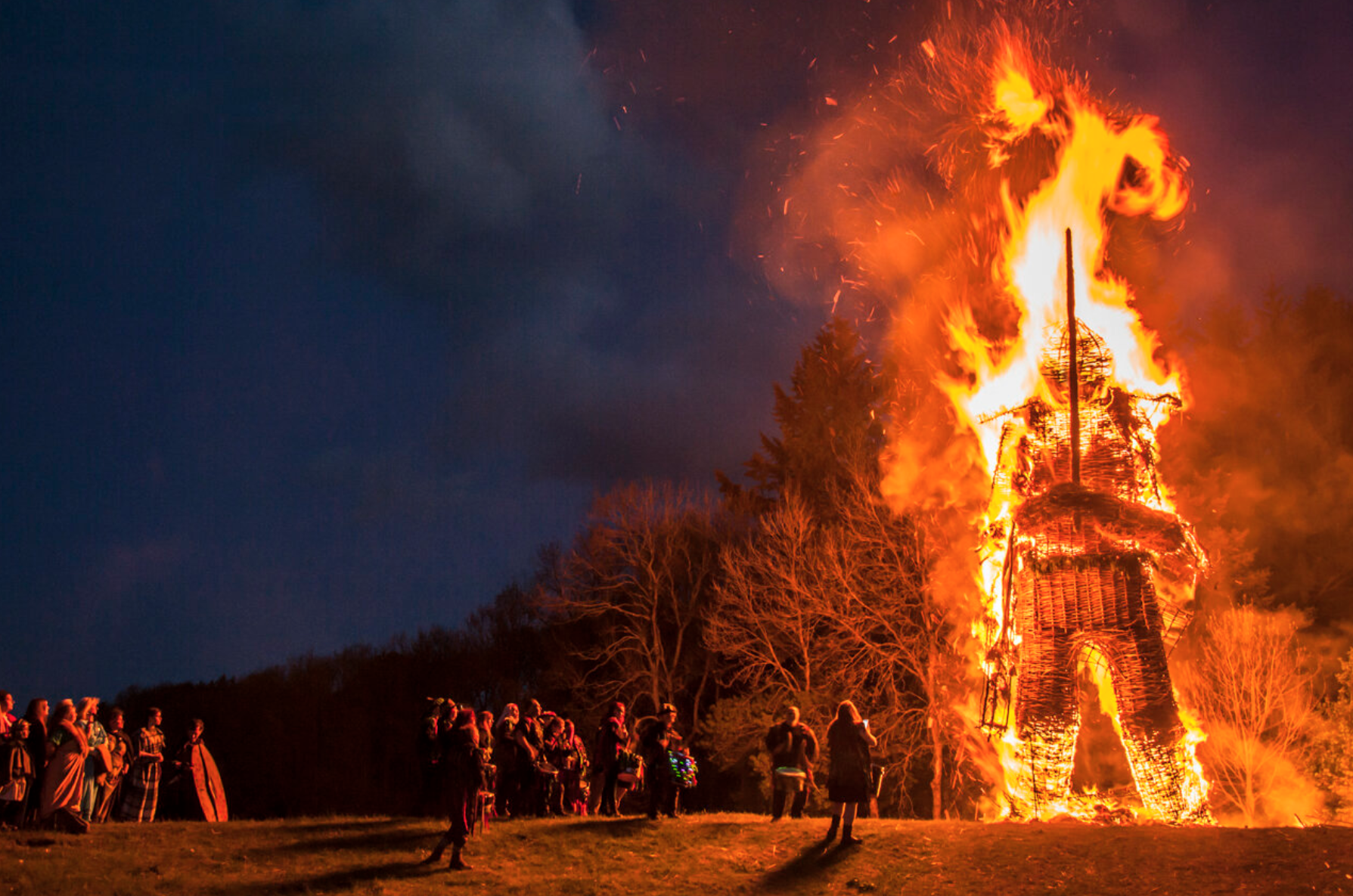
In spring, the biggest event of the Butser calendar takes place, rooted in the Celtic wheel of the year and the festival that marks the beginning of summer. Beltain (or Beltane) is held around 1st May, halfway between the spring equinox and summer solstice. At Butser, it’s a time to welcome in longer, warmer days, celebrated with live music, dancing, drumming, real ale and cider, crafts, local food, storytelling and ancient skills. As the sun sets, the festival finishes with the burning of a 30ft Wickerman, an inferno of cleansing fire and raging heat. Hundreds of people come together to bask in the Wickerman's flames, cider in hand, drummers beating their rhythm into the night, as each guest dares to escape modernity for a few short hours, hidden away in the dark wilderness of the South Downs landscape.

The Sketchbook Project at Brooklyn Art Library
At Brooklyn Art Library spend time with a living sketchbook museum.
“A crowd-funded sketchbook museum and community space.”
For the Lost: ‘A Lovely Wander NYC’ by Sara Boccaccini Meadows
For the Curious: ‘Come Travel with Me’ by Jill Macklem
For the Lonely: ‘somewhere across the sea’ by Michael Elizabeth Zimmerman
For the Anxious: ‘Anxiety Sucks’ by Suzie Deplonty
But you could equally be looking for ‘A story worth telling’, ‘Pocket-size memories’, or ‘Trivial retrospectives’. The floor to ceiling shelves of The Sketchbook Project at Brooklyn Art Library contain all those themes and more in thousands upon thousands of identical 5 x 7” sketchbooks. In fact, this Williamsburg storefront houses the largest collection of sketchbooks in the world: 45,000 in all (with 24,000 in its digital library). And most are made by amateurs: 30,000 different people in over 130 countries have so far contributed to this over a decade-old project. Anyone can submit a sketchbook irrespective of background, perspective and, here’s the key, ability. These drawn-out and doodled narratives can be made by a granny in Croatia, a mum in California, a child in England. Even you.
We’re a little in love with it.
This is how it works: you order one of their custom designed, Scout-made sketchbooks online and receive along with it a list of thematic prompts: recent calls included: ‘One last chance’, ‘Fearful faces’ and ‘Lamppost Limericks’. Choose one or discard them entirely. It’s up to you. You get to fill 36 pages with whatever you want—abstract squiggles, detailed portraits, maps and landscapes, diary entries, poems, fragments of images and memories, secrets and declarations of lost love—anything that can be contained within its pages (so no glitter or messy embellishments).


Here’s the genius part—your sketchbook has a barcode, so you’ll upload some details to an online catalog, like search terms and your bio. Then you’ll mail it back to The Sketchbook Project for the next part of its life: most likely it will be part of one of the traveling exhibitions which take place in a custom made Mobile Library (‘like a food truck, but instead of tacos you get sketchbooks’) that tours to schools, music festivals, art fairs, museums, and blue-chip companies, in such places as Melbourne, Chicago, Atlanta, Toronto, San Francisco, and even Rapid City, South Dakota. But your sketchbook will definitely find its permanent home on one of those shelves in that storefront in Brooklyn. All sketchbooks are cataloged and kept. There’s no jury, no judgment.
Founded in 2006 by Steven Peterman and Shane Zucker, The Sketchbook Project questions who gets to create, who gets to be good and whether that idea has any currency, and why creativity still matters. By giving people a blank page, it also gives them the impulse to make and the platform to share. This is art for everyone, and artist as anyone. As Peterman attests: “I wanted to create an informal outlet for anyone to create art, with a purpose. I believed and still believe in the notion that a creative community is stronger than its individual artists and that a project can be impactful in a way that is different than a traditional gallery.”
All these sketchbooks—made and mailed in from all over the world, collectively form a library of sorts. Visitors to the storefront, which has a very unlibrary feel—yes, there’s check-out cards, but there’s also music, art supplies and memorabilia on sale—can view any of these sketchbooks in its cozy space. Remember that barcode? That makes the in-store librarian’s job way easier: now visitors just search the catalog by theme, figure out what they want to view, and the librarian will pull it from the shelves. As the artist/maker/author you can get updates on how many times it been viewed—you can even get texts when your sketchbook-baby leaves its home on the shelves. The beauty in all this is that the person who made and then the person who viewed the sketchbooks are now in conversation; the sketchbooks forming physical testimonies of lives lived, documented and shared.


The Sketchbook Project gives analog form to some of our most basic needs, namely to tell stories and to connect. As we’re increasingly driven online to spill and share, it’s a real-world kickback. These shelves express myriad lives and ways of being in the world that you can flick through and digest over time and in physical space. It’s collectively made, with all the contributors expressing themselves very differently while working within exactly the same parameters. And it’s collectively understood; visitors can search for what they need amongst the pages or maybe even chance upon something unexpected. Plus it's permanent. These sketchbooks are designed to last, to be an archive of global creativity that endues longer than the time it takes to scroll through your feed.
(See also the workshops in the community space, on such things as bookmaking and journaling, and other interactive global art projects that aim to connect and dispel some fundament myths around creativity like the Pen Pal Exchange).

Governors Island
Rawly Bold Founder Pamela Delgado on why New York’s Governors Island is the place she turns to when she needs some balance in her life.
You know when you’ve reached that overwhelming point and you’re in dire need of an escape? It happens to all of us. For me, on those occasions when I can’t take the vacation that I would like, thankfully I can escape to a local New York City gem: Governors Island. As soon as the weather permits I’m on the first ferry there.
This little historic island (172 acres to be exact) is located off the southern tip of Manhattan and depending on where I’m standing I can see Brooklyn, Staten Island, New Jersey or the Big Apple. Once used as military installation, Governors Island is now a seasonal destination which gets around 800,000 visitors per year.
With ample park space, I often just set up my own little picnic and just be. For these escapes I don’t need to take much. I may pack a book or a magazine, but on Governors Island I get to dine, snack and support local food vendors too. Being a small business owner I’ve learned the value of support and I’m happy to do so whenever I can. Island Oyster is my favorite. I will usually indulge in oysters and a glass of champagne while watching the hustle and bustle of the city. During the hot summer days, I’ll hang out near Little Eva’s Beer Garden before frolicking over to see the Statue of Liberty. After living here for eight years New York is still surreal to me. I used to dream of living here.

Having alone time is so very rare and I take full advantage when I get it. Being here makes me feel peace. I’m a lover of the sun and water and although there is no beach, it’s close enough and gives me the fuel I need to keep on trucking. When was the last time you walked barefoot on grass? I consider that to be a luxury. The last time I did was on one of my visits here in July.
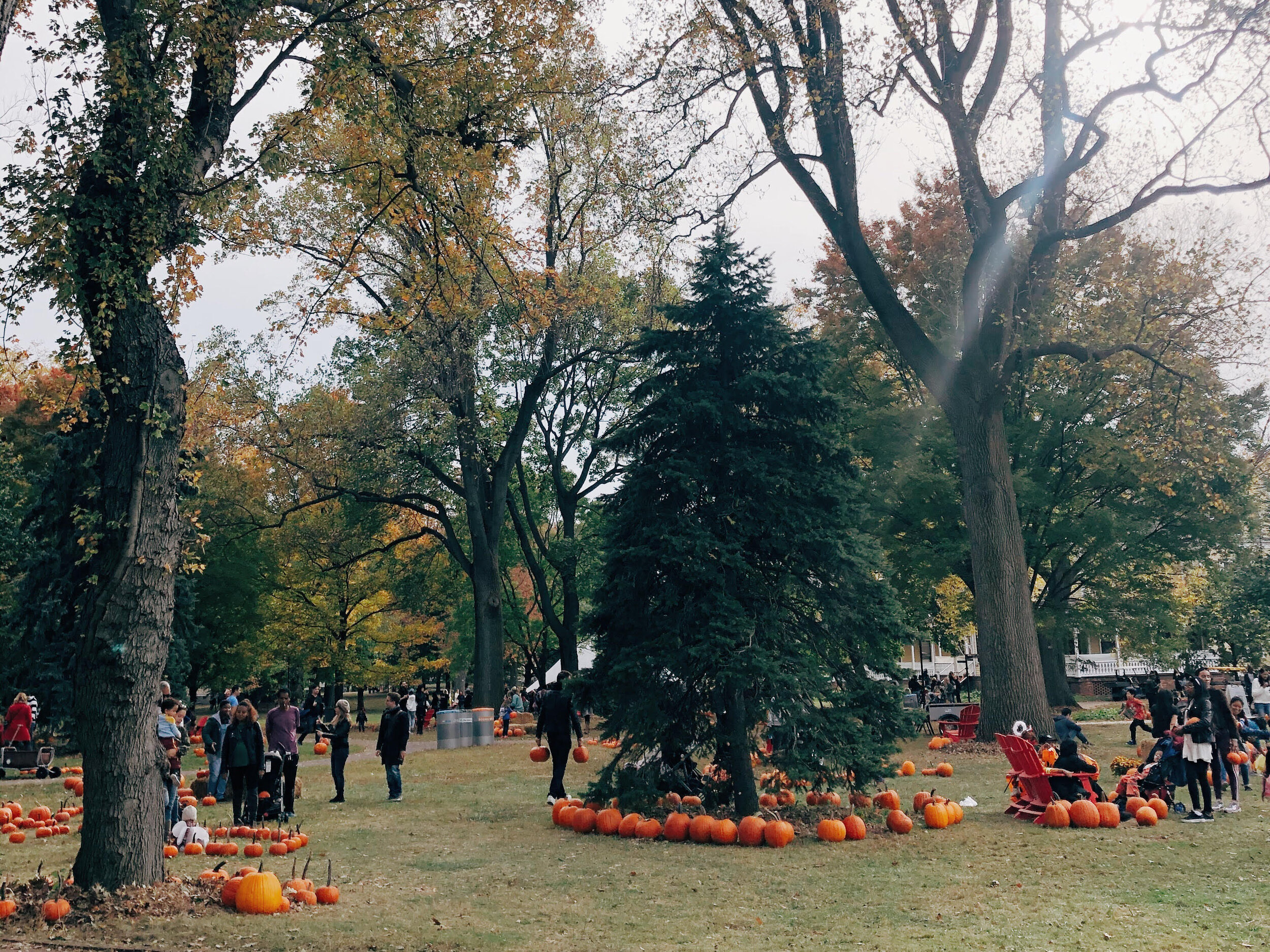
It’s now November and I’ve loved this past season! It was my first time visiting during the Fall and it won’t be my last. I felt like there was always something different or new to discover. I visited their incredible pumpkin patch: cider stations, pumpkin decorating for the kids, pumpkins for purchase, and fall foods to nosh on.


Governor’s Island gives me the opportunity to let go, of all the stress I may have experienced prior to my visit or whatever issue is coming up for me. It gives me the space to regain my clarity and prepare to face things that may require my attention or make me feel uncomfortable. Problems don’t disappear overnight, but taking a step back can help. I can be silly. I can get out of my comfort zone and meet new people if I feel like it. On occasions when I need to release pent up energy or ease my anxiousness I put my sneakers on and go for or a run. This island is the perfect track. There have been times where I turn on my yoga app and dive right into a pose with no worries in the world. It never fails to transform me. I head home feeling like a brand new person.
Living in such a fast paced city, sometimes all I need is just time to be alone with my thoughts or have a moment to meditate while the breeze from New York City harbor hits my face. As the mother of two very energetic toddler boys, I escape here to feel grounded and centered. And as someone who is multi-passionate, finding down time is required to nurture this journey of life. Governors Island has become that place for me; it will always have my heart.
To find out more, Website, Instagram, Facebook, and Twitter (Please note that Governors Island is closed for the season and will reopen in Spring 2020)

Re:Mind
Finding calm in stressed-out London with a new kind of lifestyle studio.
“Find Your Calm.
Drop-in meditation classes in the heart of London.”
Re:Mind speaks to a future where mindfulness studios are as common as your local gym. We all now understand the benefits of exercise, even as we procrastinate to get ourselves to that yoga class, or Soul Cycle session, or just out the door for a half-arsed hike. But we’re now coming to understand the benefits of being in our bodies in a different way, in ways that are slower, gentler and much less sweaty than cardio. Breathwork and meditation once meant retreats or a niche happening-over-there kind of thing. They were definitely for other people. Now we strive to bring these self-care practices into our working weeks and everyday attempts to keep it all together.
Re:Mind helps us negotiate that shift in how we see and experience mindfulness techniques. And it does so by removing some of the woo-woo that might have put us off before—incense sticks, tie-dye, those draped curtains. Founded in 2018 by entrepreneurs and wellness warriors Carla von Anhalt and Yulia Kovaleva, Re:Mind is London’s first drop-in healing studio. Bringing a lustrous charm to self-care practices, Re:Mind takes out the intimidation factor around more alternative wellness approaches.
That all starts with the space. It has been designed to hold you in your practice; to be an instant balm as you walk through the doors. The colour palette is soft, more akin to a high-end boutique. Attention has been paid to best practices for air quality, comfort and serenity. An abundance of greenery (including an air-purifying floor-to-ceiling plant wall) and cascading natural light, nature-derived materials liked the covetable buckwheat filled floor mats, and a mandala of Himalayan Salt Lamps (which are having their moment), create the setting for finding your calm. And if something looks this good, it must be good for us, right?
Actually, right. There’s now study after study to back up the techniques on offer. The intimate studio offers a wide range of equilibrium finding drop-in sessions: There’s yoga, in restorative movement class (Re:Store), mindfulness techniques (Re:Heal), and energizing breathing (Re:Breathe). But there’s also more intriguing sounding offerings such as healing sound baths (Re:Sound), rituals for connection with one another (Re:Connect) and the one we lean towards, bringing in kindness and self-care practice (Re:Caim).
In this serene urban oasis, practitioners are called ‘Calmers’, clients are invited to relax before or after a session with herbal tea, and a small library offers some context (or diversion to those of us who feel less comfortable in new environments). The on-site eco-wellness store is stocked with small businesses who are doing some of the work of sustaining us and our environment, with handmade soaps, flower remedies, chimes and the requisite crystals.
Bringing some Californian lifestyle savvy to the streets of London, this pristine boutique studio for the stressed-out gives both the space and the permission to pause. Here is a place to actually practice some of those concepts that are increasingly talked about as vital tools for navigating modern life; jumping off the pages of a lifestyle magazine or a wellness manual into our real-world. LA would be proud.

Street Wisdom
Street Wisdom is prefacing a way of being that feels critical now. It’s untethering us from devices, it’s getting us back into our heads and bodies, it's making us sit with ideas again, and it’s offering us the space, time and tools to allow new perspectives in.
“Answers are everywhere.”
OK technically this is not a place, but it is everywhere and there’s something to be said for that.
Street Wisdom was founded by David Pearl in 2013 with the mission to ‘make every street in every city a free source of inspiration for everyone, every single day.’ That reach is spreading. Their bespoke problem-solving walks are now worldwide from York to Utrecht, Paris to Wellington, and you can even take part in a World Wide Wander this coming September.
So what exactly is it and how does it work?
Volunteers lead short urban walks – each about three hours – over the course of which they set up a different kind of scenario for engaging with the world around you. Rather than casually and blindly walking familiar and even unfamiliar paths, participants like you are invited to notice everything that is around them. But this isn’t just an observation exercise, it’s also founded on inquiry because you are invited to ask these streets (aka the universe) a question - maybe around a career change, a relationship ending, or professional and personal conundrum of some other kind. But something meaty, and concrete, that needs a straight-forward enough answer. This is not metaphysical deliberation.
That means that as you wander the streets, they are going to respond to you in a metaphorical conversational way; the magic starts to happen in the form of a sign, a place name, a chance encounter, something unseen before and observed now. It’s all information, its all material to be used and processed. These guided walks are designed to help you find answers in the environment that is all around you. There’s no need to escape your life to get insight into it.
There’s some training built into these walks to do this: during the first part, before this wandering with some intent starts, participants are invited to tune into their bodies, to become aware of their instincts, their sense of self, their openness. The guides create the structure for these sessions, even if they are not the ones who are going to give you the answers. There’s also that moment of collective reflection; each session ends with participants coming together again as a group, of sharing what was discovered that might make meaning in their lives.
Sounding hokey? It’s funny, because really what Street Wisdom is doing is prefacing a way of being that feels critical now. It’s untethering us from devices, it’s getting us back into our heads and bodies, it's making us sit with ideas again, and it’s offering us the space, time and tools to allow new perspectives in. That means if you want to repress anything by wearing headphones as you walk down the street, if you want to avoid people and any chance encounters, if you want to keep your head down and your goal in mind, you can’t. You can’t do any of that. Which is pretty much our default way of negotiating our world and it probably doesn’t serve us so well. Because we no longer wander, or roam, or stroll, or kinda just be – or any of those wonderful things without a definite purpose that might get us approaching our own lives differently.
Try it. Being your body, in the streets, in your life – that’s a powerful trifecta. No avoidant behaviors here.
If you can’t get to a walk, there’s tons of material on their website to DIY one of their sessions, including an audio session, or you can read Pearl’s book Wanderful:Sat Nav for the Soul. There is wise material to be had all around us if we try to seek it.
To find out more: Website www.streetwisdom.org / Twitter @street_wisdom / Facebook @streetwisdom1 / instagram @street.wisdom

Sunday Assembly
What makes Sunday Assembly distinct, and widely compelling, is the basic belief system of ‘Live Better, Help Often, Wonder More’. Who could not find themselves getting behind that?
“Celebrating life together. Inspiring events and caring communities in 70+ cities worldwide.”
A Sunday Assembly. What are your associations with this? You probably already have some. Maybe your mind goes to Church. Maybe it goes to Religion. Maybe it’s just thrown back to some gathering, or school, or choir thing you had to attend when you were a kid. But does it go to singing Snow Patrol (‘Light Up, light up / As if you have a choice / Even if you cannot hear my voice / I’ll be right beside your dear’), or eating donuts and drinking coffee, or hearing someone’s story of how they couldn’t quite get their life to do what it needed to do that week?
Since it was launched in 2013 by two comedians Sanderson Jones and Pippa Evans, as the punch-line that didn’t have a joke, Sunday Assembly has morphed into 70 chapters in 8 countries. The most recent chapter opened in Plymouth, England in the past month. We’ve attended the monthly meet-ups in the San Francisco Bay Area. There are others, many others, in places like Cape Town, Sydney, Amsterdam, Paris, Detroit and Las Vegas. If there isn’t one near you, you get to start one with 9 of your friends, following this pathway. There’s a reason it’s the fastest growing secular community in the world.
What makes Sunday Assembly distinct, and widely compelling, is the basic belief system of ‘Live Better, Help Often, Wonder More’. Who could not find themselves getting behind that? Each Chapter is built around a Manifesto that includes things like ‘Is 100% a celebration of life. We are born from nothing and go to nothing. Let’s enjoy it together.’ And ‘Is radically inclusive. Everyone is welcome, regardless of their beliefs—this is a place of love that is open and accepting.’ And ‘We won’t tell you how to live but will try to help you do it as well as you can.’ (There are 10 points that make lots of sense, read them all here)
But this is making it all sound horribly serious. The Assemblies themselves are open and playful, and delightfully human. They speak to our needs as people – the simple ones of laughter, storytelling, friendship, singing, music, sharing food and spending time together. Things happen at them, some expected like the inspirational speakers saying wise words on themes like human aging, or happiness, or body positivity, but some things that may take you out of your comfort zone (or not, depending on how you are inclined) like err dance breaks. Bands play, spoken word artists perform, poets take the podium. Each Assembly is different though the foundation of the mission permeates even the most unique among them.
Maybe because they all speak to our more complex needs, those of wanting to be heard and needing to listen, of getting beyond ourselves and into a wider purpose, of realizing that our emotional lives can have a place in the days of our weeks, that there’s a graspable value system within our reach. Maybe the most important thing here is around belonging – at a time when we’re more and more disconnected, more lost, more lonely, Sunday Assembly opens its doors and says just ‘hi, come in.’
That’s the beautiful simplicity of the whole thing. When you walk into one of the congregations, you can feel it. That openness, that sense of welcome, that feeling of being ok. As you sing along, as you reflect, as you boogie just a little, even as you catch the eye of the person next to you in the fab recognition of it all, you get to be a person in the world, and that can feel good, even if you are out of tune or a stranger or slightly befuddled by it all. This is your chance to revel in the feeling of truly belonging, even if it’s just for a little while.
To find out more: Website www.sundayassembly.com / Instagram @sundayassemblylondon

Psychology Fringe Festival
The Psychology Fringe Festival is giving us some much needed alternatives for ways forward and ways of being. They are bringing to the fore increasingly urgent conversations created by the circumstances of our rapidly evolving world by the people who understand them most. That’s a new kind of festival that we all need to exist.
“The more we can talk about mental health – and the more ways we find to talk about it, sing about it, rap, act, paint, photograph and so much else then the more chance we have of improving wellbeing more generally. Mental health isn’t something that belongs behind the clinic-room door or in the professor’s office. It belongs to all of us. ”
A small team of clinical psychologists established the Psychology Fringe Festival and the accompanying Beyond the Therapy Room Conference to present ‘different voices, opinions and perspectives on mental health’ and to ask how we can create a more psychologically caring society. That’s a perspective that we badly need.
Though it operates alongside the Division of Clinical Psychology’s annual conference, The Psychology Fringe Festival is very much publicly orientated. Its aim is to explore clinical psychology and mental health in a broader way, to think about how we relate to one another as human beings rather than focusing on a purely medicalized approach to difficulty and distress which we’re maybe more familiar with.
In that spirit, the festival uses art-based formats, such as dance, theatre, poetry, comedy, philosophy, art and workshops, and has touched on poverty, LGBT issues and the media as well as mental health. Programs and performances are often delivered by people with lived experience of mental health services, such as DanceSyndrome, Heart to Heart Theatre, and Neural Knitworks.
Its sister program, The Beyond the Therapy Room conference similarly focuses on celebrating innovative ways of working, highlighting what we can do beyond one-to-one therapy to engage with wider issues affecting people’s mental health, including the social and political climate.
Following successful events in London, Liverpool, Cardiff, and Manchester, the Psychology Fringe Festival is giving us some much needed alternatives for ways forward and ways of being. They are bringing to the fore increasingly urgent conversations created by the circumstances of our rapidly evolving world by the people who understand them most. That’s a new kind of festival that we all need to exist.
Alternatives for supporting us through our everyday lives are popping up, but as clinical psychologist and one of the festival’s cofounders Will Curvis advises, we need to engage: “Show up at the conference and festival. Coming to events, meeting like-minded people, getting involved in these services - there’s a lot of opportunity to be active.” See you there next year?
To find out more: www.psychologyfringe.com / Twitter @ClinPsychFringe / Facebook @psychologyfringe

The Bear Trail
The Bear Trail gives you full nature immersion in the up-to-your-knees/waist/neck mud version. This is an outdoor adventure assault course for adults and kids that starts with things to scramble over and ends in the showers!
“Love mud. Love life.”
We know that being in nature does good things for us like making us less stressed and more balanced in our everyday lives. The Bear Trail takes this idea and runs with it by giving you full nature immersion in the up-to-your-knees/waist/neck mud version. This is an outdoor adventure assault course for adults and kids that starts with things to scramble over and ends in the showers!
We got lucky, in a way. We went at the tail-end of a heatwave, so those deep pools of mud were still there but maybe not as abundant as at other times of the year. You can decide how much you are all in so to speak. You get to take the course at its own pace, and choose the risks that you are willing to take. If you’ve brought flip-flops (don’t) and are feeling kind of quesy about mushy wetness you can probably half-arse a few of the obstacles.
Regardless of your timidity level around dirt, its joyful scrambling, jumping, zip-lining, balancing, bouncing and climbing your way around the 28 obstacles. There’s no judgement if you don’t get anything right, actually no tuition to even tell you that. Adults are given as much credibility for being here as kids, there’s no feeling stupid for wanting to do what your 9 year old is doing. Just an open field to play in for everyone. As they say here, “Remember, mud washes off… experiences stay forever!”
Website: thebeartrail.co.uk / Facebook @thebeartrail / Twitter @trail_bear

Regional Assembly of Text
When faced with the possibility of a blank page and a typewriter, what would you say, and to whom would you write. An apology, a confession, a declaration of affection?
“A lovely little stationery shop.”
On a trip to Vancouver, I found myself in The Regional Assembly of Text thinking of sending a letter home. Established by the artists and Emily Carr graduates Brandy Fedoruk and Rebecca Ann Dolen to explore “text as a theme”, this is a store/ printing press/ design studio that offers quirky cards, tiny books, papers and printed materials. It also contains the Lowercase Reading Room, a cosy reading library of self-published books and Zines housed in a former storage closet. The Vancouver store has its duplicate in beautiful downtown Victoria, British Colombia, in a second store which has been open since March 2013.
The Regional Assembly of Text is gorgeous, with witty and heartfelt messages in abundance. It just feels good to be in it. But the reason I was really drawn to this space is that once a month they also offer The Letter Writing Club. Since September 2005, out have come the Remingtons and Coronas, with the invitation for people to type, or handwrite, letters to whomever they want, about whatever they want, whether letters to governors or girlfriends. No drafts on Word first, no time to mull over. There’s just the page and a postage stamp, old school style. The Regional Assembly of Text provides supplies, snacks and the space to compose.
As I won’t be here for their next session in a week, I chose a sheet to take away, titled “Heartfelt Letter to Follow”. The last (paper) letter I had written was to a friend when I was in High School. We were separated for the summer and pre-email, so we shared cute teenage girl letters of missing each other even though she lived a short car journey away.
This being Vancouver, I have a rainy day ahead of me, a coffee on the table, and now a pencil in hand, composing a note, but to whom? When faced with the possibility of a blank page and a typewriter, what would you say, and to whom would you write. An apology, a confession, a declaration of affection?
People talk about letter-writing as a lost art form, but perhaps the key part of that sentence is that which is lost. And maybe that’s what letters inevitably connect us back to, and why these sessions at The Regional Assembly of Text are so popular; we get to reach out again to those people, that feel like home, but aren’t where we are at the moment.
As it has rained every day the week that I was in Vancouver, we’ll end with the message on one of their greeting cards:
“Things to do:
In order to increase your level of accomplishment on a rainy day of your choice:
Answer the phone using only verbs beginning with M
Count all the books you own that have one word titles
Choose between elbows and knees
Practice drawing polar bears (mail the best one to your oldest friend, ask for one in return)
Squint every time you hear the word tomorrow
Feel accomplished.”
To find out more: www.assemblyoftext.com / Instagram @assemblyoftext