
How Human Connection Helps Us Through Hard Times
Feeling overwhelmed, burned out, or disconnected? Explore how human connection can support us through difficult times, ease loneliness, and help us feel less alone in modern life.
I think one of the hardest things about modern life is that so many of us are living right at the edge of ourselves.
You can feel it in the way people answer “How are you?” with a sigh before they even begin. In the low-level exhaustion that seems to sit underneath everyday life now. In how quickly conversations move from grocery prices to burnout to the latest terrible thing in the news.
There is so much happening at once.
There’s the pressure of work and bills and trying to hold together ordinary life during a cost of living crisis. There’s the endless churn of headlines arriving directly into our palms before we’ve even had breakfast. There are wars unfolding in real time, including the ongoing devastation in the Middle East, which many people are carrying emotionally while still trying to navigate school runs, meetings, laundry, dinner, emails, ageing parents, and the strange expectation that we should somehow continue functioning normally through all of it.
And underneath all of that, many of us are simply tired. Not dramatic collapse tired. More the kind where joy starts slipping out of reach. The kind where you become permanently a little irritated, a little resentful, a little emotionally threadbare. The kind where you keep going because you have to, but feel increasingly disconnected from yourself while you do.
What interests me about difficult seasons like these is that we often respond to them in ways that make us feel even more alone.
We retreat.
We stop replying to messages.
We cancel plans.
We convince ourselves we’re too exhausted to socialise.
We scroll instead of speaking.
We mistrust people more easily.
We compare our messy lives to everyone else’s carefully edited competence.
We assume we’re behind.
We become less generous with one another because we’re barely holding ourselves together.
And the wider culture often deepens that separation. Politics becomes polarised. Algorithms reward outrage. Conversations flatten into sides to pick rather than people to understand. We become wary of saying the wrong thing, believing the wrong thing, being judged, misunderstood, excluded, criticised, corrected.
It can start to feel safer to withdraw.
But I keep coming back to the possibility that it’s exactly in moments like these that human connection matters most.
Not in a glossy “community fixes everything” sort of way. Not because a coffee with a friend magically resolves grief or burnout or fear about the state of the world. But because connection helps us carry reality differently.
There’s something regulating about being with people who allow you to exhale a little.
Someone making you laugh when you hadn’t realised how long it’s been since you properly laughed.
Someone texting to ask if you got home alright.
Someone saying, “Honestly? I’m struggling too.”
Someone sitting at your kitchen table while life remains unresolved, but somehow more bearable because another person is witnessing it with you.
Connection reminds us that we are not machines built only for productivity and endurance.
We are relational creatures. We make meaning together. We soothe each other’s nervous systems. We borrow hope from one another. We remember ourselves through other people sometimes.
And importantly, connection does not have to look impressive to matter.
I think we can sometimes make ourselves feel worse by imagining “good connection” as being endlessly social, extroverted, emotionally articulate, always surrounded by friends or part of some perfect community.
But connection can be tiny and ordinary too.
It might be the person at the local café who remembers your order. The neighbour you chat to while bringing the bins in. Sending a voice note instead of a text because you want someone to hear your actual voice. Watching a film with your teenager and briefly entering their world. Going for a walk with someone who doesn’t require you to be cheerful. Sitting in a room with other people at yoga, church, choir, book club, a protest, a workshop, or a community garden and remembering, even fleetingly, that we are living alongside one another rather than entirely alone.
Sometimes connection is simply the experience of being real with another person for five minutes instead of pretending you’re coping perfectly.
And perhaps that’s why it can feel both comforting and uncomfortable at the same time.
Because real connection asks us to emerge slightly from hiding.
To let ourselves be seen before everything is neatly resolved.
To admit we’re struggling before we’ve found the lesson in it.
To risk not being entirely self-sufficient.
Which can feel deeply vulnerable in a culture that rewards performance, certainty, independence, and appearing fine.
But when life gets hard — and for many people, it really is hard right now — isolation rarely softens the experience. Usually it sharpens it.
Connection, meanwhile, often gives us just enough steadiness to keep going.
Not because other people save us.
But because being human was probably never meant to be done entirely alone.

Explore the Connection Pathway
Our wellbeing journal, If Lost Start Here, includes a full pathway exploring connection — the people, places, conversations, communities, and everyday moments that help us feel more supported, understood, and alive.
Inside you’ll find reflections, prompts, and playful experiments to help you reconnect not just with others, but with yourself too.
You can explore the journal here

Distil Coworking Somerset
Discover Distil Coworking Somerset—an inspiring rural coworking space set in a restored mill with gardens, café and community. Ideal for creatives, freelancers and small business owners looking to feel more connected and work well in beautiful surroundings.
Perfect For
Creatives, freelancers, small business owners, remote workers — or anyone craving a more inspiring alternative to working from home.
Why You’ll Love It
Housed in a beautifully restored former mill, Distil Coworking Somerset offers a calm and inspiring place to work with beautifully restored wooden floors, abundant natural light and views out to a landscaped courtyard. It’s the kind of place that makes you exhale as soon as you walk through the door.
Whether you're a small business owner looking for an inspiring workspace for your team, a parent looking to be super productive around the school run or you want a change from the commute to the city — Distil Coworking Somerset is designed to make your working day better.
With plenty of free parking, choose the scenic route and work from a beautiful location in the heart of the Somerset countryside.
What Makes It Special
Set within the wider Kilver Court development, Distil offers more than just a desk. Booking a coworking space here includes access to the lush 3.5-acre gardens — perfect for stretching your legs between meetings, taking a walking call or a giving yourself a moment of pause under the trees.
You’ll also find fashion and homeware outlets like Toast and Mulberry and a newly renovated café with a wellbeing-focused menu. It’s all part of what founder Sam Cunningham envisioned when he transformed this site: “a thriving creative business ecosystem that drives growth, sparks innovation, and encourages collaboration.”
Whether you're looking for a quiet corner to enjoy a warm cup of tea, to scribble ideas in a notebook or simply to close your eyes and let the gentle rustle of leaves spark fresh inspiration, this is garden coworking.
The If Lost Take
We often think of coworking spaces as urban hubs — but Distil is part of a growing movement to bring creative, connected workspaces to rural settings. While countryside living has its charms, working from home in remote areas can sometimes deepen feelings of isolation and disconnection. Spaces like Distil shift that story — offering a place to come together, connect and work alongside fellow creatives, freelancers and entrepreneurs who also call Somerset home.
Founder’s Go-To Wellbeing Advice:
“You spend a third of your life at work — choose environments that nurture your wellbeing and people who help you thrive. The right environment can do more than just support productivity; it can restore calm, spark creativity, and invite genuine connection.”


Some Practical Details
Book a desk, meeting room or the podcasting studio. Facilities include free parking, superfast WIFI, private call booth, shower and kitchen with coffee and tea.
During every booking, receive 10% off at the café and access to the stunning Kilver Court Gardens — the perfect place to recharge during the working day.
Distil Coworking will soon have an events programme up and running, including the option of remote attendance at some events. For anyone visiting the area, they also offer day passes as well as the option of booking by the hour.
Kilver Court, Kilver Street, Shepton Mallet, BA4 5NF, United Kingdom
hello@distilcoworkingsomerset.co.uk
If Lost Reader Benefits: Use code 'InnerCircle' for 10% off your first month when signing up to a monthly membership.
If you prefer to book on a pay-as-you-go basis, use code InnerCircleHotDesk for 20% off your first day pass.

42 Acres
Explore 42 Acres, a 173-acre regenerative estate and nature reserve in Somerset offering transformative retreats and nature-based experiences. Swim in the lake, meditate in the treehouse, or nourish yourself with farm-to-table food grown on-site.
Go here if: You’re looking to get into nature, reawaken your deep-rooted instincts and nourish yourself.
What is it: Set over 173 acres of wild land and ancient forest, 42 Acres is a regenerative estate and nature reserve where you can reconnect with nature, yourself and others.
Explore the self-guided and led retreats, often in partnership with world-renowned practitioners and aligned with nature, that encourage you to dream, grow, learn and rest. Stay in a restored 13th-century former hermitage, converted barge or under the stars in a luxury bell tent. Swim in the lake, meditate in the treehouse, sauna in the woods and nourish yourself with food grown on the land.
Why you need it: 42 Acres was first conceived in 2015 by siblings Lara and Seth Tabatznik as a home for personal, social and environmental change after having been deeply inspired by some powerful personal retreats and workshops in their own lives. Both Seth and Lara are strong advocates that outer change in the world starts with the self, or to quote Gandhi: “Be the change that you wish to see in the world”.
What they offer: At its core, 42 Acres invites people to reconnect with nature, self and others but has now grown to offer so much more including a range of wellbeing and nature-based experiences and events, a regenerative farm and an abundant nature reserve.
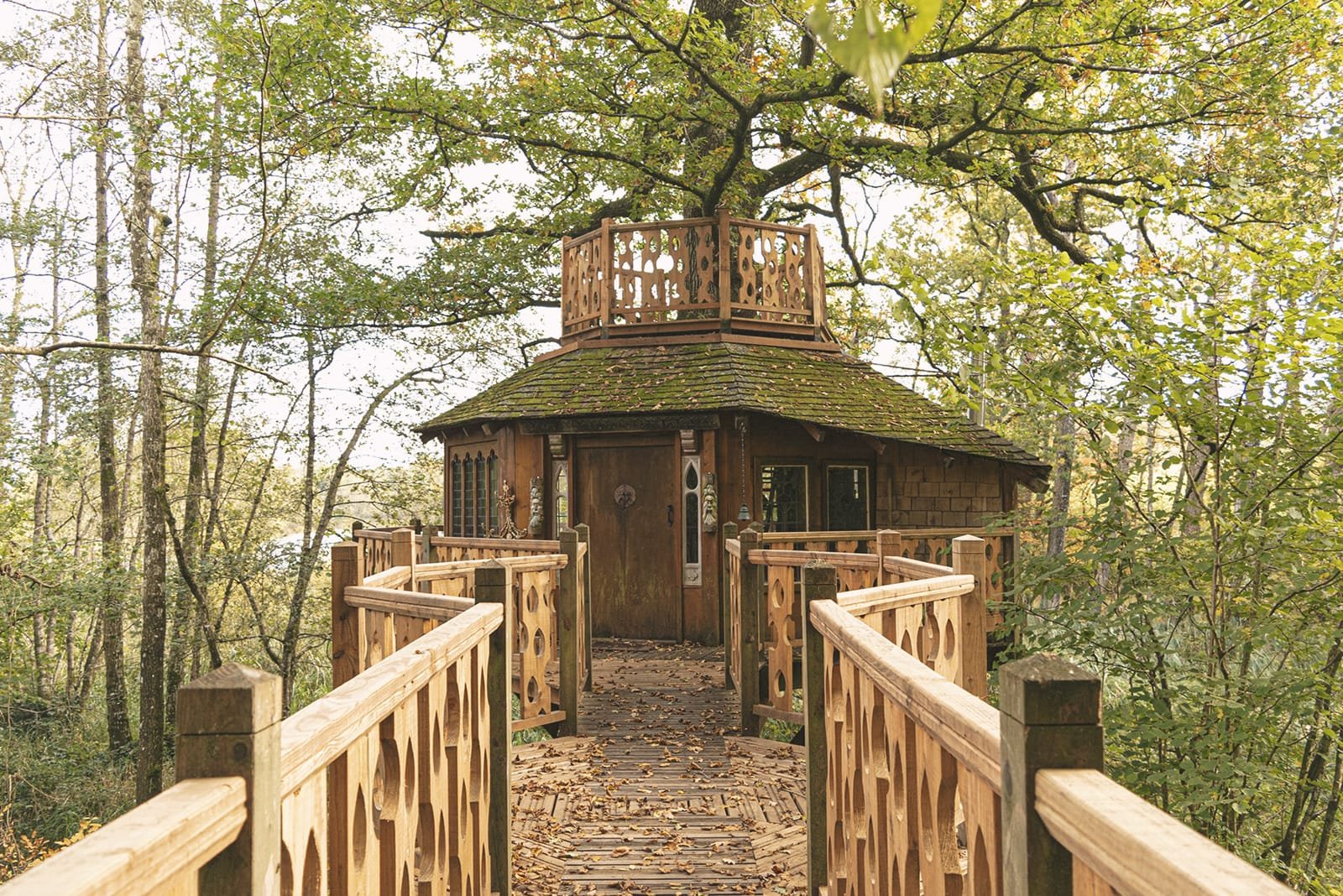

What makes it different: Living within an ancient forest, host to a variety of wild meadows and vast open fields and the source of four different rivers within a stone’s throw, this is a place for planting your dreams.
What you need to know: You can visit 42 Acres in several ways — as a guest on a day experience, workshop or energy exchange or by visiting them on retreat. All booked guests are free to roam the estate, swim in the lake and explore. Food, accommodation and experiences need to be pre-booked on their website.


In their own words:
“Our vision is to grow and consume in a way that serves the health of people and the planet. Our market gardens and regenerative farm use and permaculture and biodynamic-inspired principles. We grow, forage and wild-tend to create wholesome, nutrient-dense food. As we cultivate and restore health in our earth, we restore the worlds within ourselves.
We use our deepest intuition, ancient tools and shared knowledge to establish regenerative spaces, curate transformational experiences, and foster opportunities to learn, heal and grow.”
42 Acres is a 173 -acre retreat centre, regenerative estate and nature reserve in Witham Friary, just outside of Frome, Somerset
All images courtesy of 42 Acres.

Discover some of the ways that human connection can help you feel better
We are hardwired to connect. Explore some of the benefits that simply being together can have for your emotional well-being and mental health.
Connection is complicated, isn’t it? Study after study tells us how central it is to human happiness and health, but in our everyday lives we often forget its importance.
Call a friend? But what if they don’t want to hear from us? Reach out to a family member? But what about that political view they seem to have that’s different than my own? Volunteer in the local community? But when? Who has the time?
But this is what we’ve found. When we do reach out, contribute to our community, or try to get to a place of understanding if not agreement, we tend to feel much better than we’d imagined. And we carry those benefits into the rest of our lives.
Curious about how to cultivate more connections in your own life? We’ve selected some things to read, do, watch and experience so that you can discover the benefits to your emotional well-being and mental health of relationships in all their various forms.
Read through an article about what the longest study on happiness tells us about the importance of relationships, try going to therapy with a friend, watch a talk on what empathy can do for us, and discover some cafes that are shaping the community for all.
Be open to the form that relationships can take in your life, and what they can offer you (and you, in turn, can offer them).
To read:
How human relationships fit into a lifetime of happiness
Alternatives to ‘How Are You?’
We are interwoven beings
What to do if you find yourself in the “friendship recession”
An experiment in connection across generations
How to ease your loneliness
Dating with an Expiration Date
When to end a toxic relationship
To do:
Take a quiz to learn how connected you are to humanity
Take a course in the Art of Gathering by bestselling author Priya Parker
Learn how to apologize
Go to friend therapy
Join a community like Peanut
Support the Campaign to End Loneliness
To watch:
To discover:


The Dot Cafe (Spain)

Fluid Coffee (San Francisco, US)

Milk Cafe (San Francisco Bay Area, US)

Kinfolx (Oakland, US)
What are you learning about how your connections impact your emotional well-being and mental health?
Let us know how you navigate this aspect of your everyday life.
Where to next?

The Generator Hub
Discover a coworking space in Exeter that has become a place where people can come and escape their own four walls, and meet other like-minded individuals (maybe even friends for life).
Located in a historic building in a stunning location on Exeter’s Quayside, the Generator Hub was the city’s first independent coworking space. Elizabeth Finnie, one of its three founders, takes us through how the Generator Hub has been helping its members shape both their businesses and their lives since 2012, and how it’s very much a coworking space with soul.
What is The Generator Hub? We are more than just bricks and mortar, we are a coworking space where people can work flexibly in a professional manner while being immersed in a diverse, interactive, and supportive community.
How did your space get started? When Neil Finnie (one of the founders) started a new business aimed at abolishing the status-quo of traditional and uninspiring internship schemes, he recognised that the participants attending his Corkscrew programs also needed to be immersed in real-time businesses to better grow their skills. At that time there were no co-working spaces in Exeter, so Neil launched not one, but two businesses simultaneously in order for them to complement each other. This is when The Generator Hub began, making Corkscrew one of its first members. Since then, The Generator has gone on to support hundreds of local businesses in many different capacities as well as the community where it is located.

How is your space different? Having grown organically we remain a very small team. Three out of four of the directors are based in the coworking space and play an active role in the community and day-to-day running of the space. We’ve also progressed approximately ten apprentices through business admin and event management roles, giving them the skills to move on to further employment. We also recognise that individuals and businesses are all unique and we will always take each situation on a case-by-case basis to give them a chance to grow and be successful.
We offer discounts for CICs, social enterprises, charities, and the NHS and adapt to people's ever-changing needs. We also like to get involved in the local community — attending local meet-up groups, supporting local networking groups by offering free space, and highlighting local events on our internal slides, newsletter and social posts.
Why is your space needed now? For many freelancers working alone, the Generator Hub has been a place where they can come and escape their own four walls, meeting other like-minded individuals and friends for life. Everyone is viewed as equal and, for many, it's a place to come and talk about issues both business-related and in their personal lives.
For small businesses, we are a great space to offer a more hybrid way of working — many companies now rotate larger teams so there is the flexibility to work from home some days and be part of the team others — again, this has really helped people’s health and wellbeing, This is particularly poignant after Covid and we feel with have maintained many people's mental well-being by just being here.

What do you offer people? We offer flexible working space options (hot desks, permanent desks, private offices), meeting rooms, registered addresses, a postal service, a reception service, and even showers on site. We organise Lunch & Learn events whereby we invite external speakers to promote their business/charity/initiatives, we hold internal talks to showcase our own members’ businesses and skills, and we arrange regular charity fundraising events. We have a meet-the-members wall and within the community, other events have grown, such as a curry club, a biscuit club, a running club, a CrossFit club, and 5-a-side football — the list is ever-growing.
How can people be inspired by your space wherever they are? We have regular social posts on Instagram and Facebook, alongside promotions of things going on in and around Exeter (on LinkedIn). We also have a monthly newsletter that highlights all the things that have been going on in the space and future things to come — as well as a community insider highlight to introduce our members to others.
What do people need to know? We are fully up and running again after Covid and we welcome any business to talk to us about their needs.
We also have a big emphasis on sustainability, people, and the planet. Having very recently started on the B-Corporation journey, we hope to make our business better for the people that work for us, the community and the environment. We are looking at trialing a 4-day work week for our employees, alongside ways to become net-zero.
Where inspires you? Nature — anything sea, river, stream, countryside.


Typewronger Bookshop & Typewriter Repair Shop
An indie bookstore, that offers typewriters repairs, origami animals and soup on Christmas Day. Founder Tom Hodges tells us whyTypewronger is far more than just a place to buy books.
“You can’t be lonely with a book - books transport you to other worlds, other places, they make you other people. Whilst immersed in a book you can only feel what’s in the pages.”
We knew we’d discovered somewhere special on a recent trip to Edinburgh when we stumbled into Typewronger on Christmas Eve and received the warmest welcome, an origami elephant, and a recommendation to read Insomniac City (subsequently stamped with their distinctive red logo and now one of our most cherished reads). Here founder Tom Hodges tells us about what makes Typewronger so distinct:
What is it? Typewronger Books is Edinburgh's smallest indie bookshop and Scotland's only typewriter repair shop! It's home to a community of readers, writers, artists & musicians and strongly advocates the written word in our daily lives.
Why do people need it? Typewronger is far more than just a place to buy books. Regulars stop in for a chat, people have built creative connections, made friends, been inspired, switched careers, written zines & started publishing companies all as a result of hanging out in this shop.
Advice & Assistance Obtainable Immediately, and there's even a Public Typewriter for those who want to just sit down and write - and don't worry about mistakes, this is TypeWRONGer where we embrace our flaws.

What do you offer? Book signings, author events, open mic nights, a YouTube channel, we flex on the 'gram & have a 1984 electric typewriter wired directly into our Twitter (yes, it types out your Tweets!)
We send books all over the world in our characteristic wrapping with hand-typed notes of your dictation, so we're perfect if you want to send a book as a gift - just drop us an email and we'll wrangle it.
We also organise the Edinburgh Zine Fair and advise new publishers on the nitty-gritty of the trade.
What makes it different? The energy is anarchic, the books hand-picked, and we're always ready and willing to engage with you on any topic. We stamp all the books with our shop stamp and give a little origami animal with each purchase. Even though we're a tiny wee store we stay open until 9 pm, we even open on Christmas Day with soup for those with nowhere else to be, and New Years Day handing out recovery Bloody Marys.
What do people need to know? Due to Covid we have a traffic light system to limit numbers and have paused our events program. We are hoping to change both of these in the coming months as cases dwindle.

Tell us a little about your story: Typewronger started when I moved back to Edinburgh in 2017 and began selling books in the street from The Leith Walk Police Box. Every Sunday a band of friends would humph all the bookshop stuff down from my flat - books, bookcases, a carpet, an armchair - the lot! In 2018 Typewronger moved into the old gallery space beside McNaughtan's, Scotland's oldest Antiquarian bookshop. In 2019 Elsa joined the team, and the shop opened 7 days a week, and in 2021 we were joined by Viv who works the day shift on a Saturday. Since opening, we've had thousands of conversations with people from all over the world.
How can people be inspired by your space wherever they are? We send books worldwide, so you can always get a bit of Typewronger sent to your doorstep. Also, we believe in physical correspondence - if you write us a letter and include your return address we will always write back to you on one of the shop's trusty typewriters.
Where inspires you? There's a wine bar upstairs.
You can't be lonely with a book - books transport you to other worlds, other places, they make you other people. Whilst immersed in a book you can only feel what's in the pages. And the feelings can be hard, but they're cathartic, and the feelings can be good, and there's all sorts of books perfect to all sorts of moods.
Anything we're missing? It's a matter of public record that the store's founder is Tom Hanks' "hero."

Discover more places for life in our Guidebook

The London Lonely Girls Club
Looking for connection in one of the world’s busiest cities? Holly Cooke talks to us about why she started The London Lonely Girls Club and how it can inspire you wherever you are.
“Stepping outside of your comfort zone, saying yes to every opportunity to meet others, being bold.”
We talk to Holly Cooke, founder of The London Lonely Girls Club about why she started these IRL meet-ups for women looking for connection and how this idea can inspire you wherever you are.
What is it? The London Lonely Girls Club is a community in London, created to help women in the city meet up, hang out, build friendships and make London life a little less lonely.
Why do people need it? As an adult, it can be really difficult to meet new people, make new friends or simply find others with similar interests or hobbies. And so The London Lonely Girls Club was created to meet this need and help women across one of the busiest cities in the world connect with each other!
What do you offer? We are both an online and physical community. We have an active Facebook group of over 10.5k women. Within this forum our members can post, engage and get to know each other at their own pace. Alongside this, we run meet-ups multiple times a month where our members can get to know each other IRL whilst visiting some of London’s loveliest places or doing fun activities together.
What makes it different? The London Lonely Girls Club was specifically created to help women connect, make friends and beat loneliness. It’s as simple as that, no strings attached!
What do people need to know? LLGC, as we call it, is an inclusive, supportive, fun community that any woman in London can engage with in their own way. Whether they’re just looking to find someone to go on weekend walks or theatre trips with, advice on the best place to get their hair done in a specific part of northwest London, or to build lifelong friendships, everyone is welcome!
What’s your story? Before founding The London Lonely Girls Club, I was a very lonely girl living in London. I’d moved to the city for work and to fulfill a lifelong dream of living in the best city in the world. But very quickly moving to a city where you know absolutely no one can be both isolating and terrifying. From this The London Lonely Girls Club was born, a community created to bring the women of this incredible city together under the flag of unity, connection, and friendship. With meet-ups each month that allow people to connect in person, rather than just via a screen.
How can people be inspired by your initiative wherever they are? Every day the members of LLGC teach me about bravery and courage, whether it is sharing their story in our group’s main feed and looking for others who share a similar struggle or journey, stepping outside their comfort zone by coming along alone to our monthly IRL meet-ups and connecting with others in person over a coffee, burger or glass of wine, or simply revealing themselves by joining a community with lonely in the name.
I think this is something that can inspire everyone, no matter where you live, how you identify, or what your social situation is. Stepping outside of your comfort zone, saying yes to every opportunity to meet others, being bold. Just one small decision of courage really can change your life, I should know, it did mine!
Where inspires you? The women of our community and the incredible city that we live in. They’re both so inclusive and diverse and vibrant and loud and unapologetic, but also kind and supportive and beautiful. It is inspiring to get to be just a small part of these things.
Anything we’re missing? If a woman in London is reading this, then we’d love to have you be part of our community! Whether you’ve lived here your whole life or you moved a day ago, feeling lonely is the worst. As humans, we’re built to be in community, surrounded by others who can lift us and love us and support us during both our triumphs and challenges and that is what The London Lonely Girls Club aims to do.
To find out more visit: Our website | The LLGC FB community | Our social media


Discover more places to feel connected

The Little Retreat & The Big Retreat Festival | A Conversation with founder Amber Rich
We speak to Amber Rich, founder of The Little Retreat and The Big Retreat Festival about how she arrived at these projects, how wellness is now something that we all reach for, and her role as a curator of discovery and awe.
To call The Little Retreat in Pembrokeshire glamping is like calling Glennon Doyle a blogger. Staying in one of the wood-furnace heated domes (with furniture you’d find in a boutique hotel), warming up in your own Scandi hot tub, or roasting smores by a private fire pit after a day at the beach or walking in the Preseli Hills, you’ll sink into what life could be if we stopped for a while to notice its possibilities.
The Little Retreat was founded by Amber Rich, who also curates The Big Retreat “feel-good festival” that takes place on these grounds (2022 tickets are already on sale), and from which it takes its cue. Where the festival has a Darwin den, campfire stage, cold water swims in The Cleddau, a talk tent curated by Shelf Help director Toni Jones, and creative workshops, its weekend away counterpart has sustainability woven through its design, foraging workshops about to start, stargazing tents with views of dark skies, and curated programs focusing on such practices as breathwork, yoga, arts and craft. The festival and retreat overlap, exchange ideas, and share their approach, with both offering a slowed-down lifestyle and collective experiences that get you closer to a vision of how you might shape your own life when you return back to it.
After a few days at The Little Retreat, we had the chance to speak with Amber about how she arrived at this place, how closely the festival and the retreat are connected, and how wellness is now something that we all reach for:
Let’s start with the connection between The Big Retreat and The Little Retreat. Why did you start them and how do they connect? If the core value of the festival is one of ‘discovery’, how would you describe the retreat?
I used to own my own gym and ran fitness and wellbeing classes to improve mental and physical health. After the birth of my daughter Bea (who is now 7) I decided that I wanted to utilise the family land to create a sanctuary where people could come to escape their busy lives, pause and reconnect. This was the start of the original "Little Retreats".
I found that these retreats were having such a profound effect on people’s lives and making a real difference: One lady who attended had not been able to sleep for years. After our retreat, she learnt how to pause and use those skills to have her first good night’s sleep in 7 years! It was feedback like this that spurred me on to create The Big Retreat Festival.
I wanted to create a space where people could come and discover breath work, fire walking, gong baths, yoga, wild swimming, forest bathing — literally anything and everything that allowed people to "find their feel good". It also included festival favourites such as gin workshops and music to enhance people’s experience and wellbeing.
I realised that giving people time and space in a beautiful setting to discover all of these wonderful life-enhancing experiences could really make a positive change in people’s lives.
Discovery and "finding your feel good" still remains the core value to this day.
What do you think people are looking for who stay with you or attend one of your events?
I think people are looking for time to reflect on themselves, to unplug from daily life and to find out what makes them feel good. We are perfectly poised in the heart of the Pembrokeshire National Park on the banks of the "Secret Waterway". The stunning location inspires awe and wonder every time and we think the unique setting coupled with a sanctuary and safe space to discover is the catalyst for change.

What do you hope people experience with the projects that you create? What do you hope they take away and bring into their everyday lives?
I hope that people’s appreciation for nature and the outdoors grows and they are able to reconnect and utilise outdoor space to improve their wellbeing. I think it’s important with the complexity of modern living that people are reminded that sometimes it’s the simple things that bring us the most happiness.
If you attend one of our Feel Good Retreats you will learn skills that you can take away with you and implement straight away in your everyday life. The goal is to inspire people to reset and to really connect with themselves and the great outdoors.
I see my role as a curator of discovery and awe, allowing people the opportunity to reset, rethink and equip themselves with a host of skills and experiences — a toolkit that they can take home and continue to use to ultimately change their path and enhance their lives.
How do you think the idea of wellness has shifted since you started The Little and Big Retreats?
When I first began The Little Retreat the words wellbeing and wellness were quite niche and only appealed to a select few. Today looking after your mental and physical health is much more mainstream and in the public psyche. With the Covid pandemic more and more people are realising just how important nature and mental as well as physical health are to enhance our lives. That is one positive we can take away from the Covid pandemic.

What motivates you to create these spaces in the world? What kept you going during recent challenges?
My key motivation is to provide a sanctuary that allows people to discover not only nature but how to unwind and reconnect for their physical and mental health. A safe space where people are free to discover and pause.
The design of the space at The Little Retreat was about focusing on ways for people to connect with the outdoors without necessarily having to "rough it" to experience the joys of being close to nature. A key focus was also to have a minimal impact on the surrounding ecology and landscape.
The pandemic has actually given me the time and space to take ecology and planning into focus and look at ways for nature to thrive. We noticed during the pandemic the return of otters on the river banks and native oysters that had previously been wiped out due to human impact. This rewinding of our natural space showed me just how important it is to tread lightly on the site and in everything we do. We have worked to encourage nature in the planning — from bat boxes, swallow bricks, hedgehog runs, planting native species and harvesting the rainwater. We are really hoping to reduce our carbon footprint at both The Little Retreat and The Big Retreat Festival.
Over the pandemic, I realised that conserving the area was so important for nature and our own wellbeing that I set up the nonprofit arm "The Big Retreat Community". This is geared at enhancing and protecting nature as well as giving welsh artists a platform at our next festival.
In our guide for life, we roam across ten different pathways in the places that we feature and I’m curious about where you’d position your projects and why?
After looking through your Ten Pathways it is extremely difficult to choose one. All of them are intertwined intrinsically in everything we do from untethering upon arrival, to reconnecting mind and spirit right through to purpose and doing good. All of your pathways align exactly with our mission and how we conduct our projects.

How do you bring the values of the places you create into your own life?
I am constantly trying new things and discovering not only the latest external wellbeing practices but rediscovering the landscape. I make sure I set aside time every day to do this. Whether it’s a cooling wild swim in the Cleddau or a mindful walk through the woodland set around our site. I make sure that at least once a day I allow time for myself to reconnect and discover. I think it is so important to schedule this time into your diary in the same way you would an appointment at the doctor’s.
As we emerge from the lockdowns and are maybe feeling more hopeful about our worlds, is there anything that you’re particularly excited about going forwards?
There is so much going on at The Little Retreats this year it’s actually really really exciting. We have the addition of wild food workshops offering a foraging course and a 12-course dinner, the release of our Find Your Feel Good In Pembrokeshire guide, wild swimming sessions, forest bathing, and breathwork. We are currently building the space for the new stargazer tents with outdoor hot baths — a perfect opportunity to make the most of our stunning location in an official UK Dark Sky reserve. There are so many things that are organically falling into place.
We want both The Little and The Big Retreat to be a sanctuary and a beacon for anyone and everyone who wants to set aside time to find out just what it is that makes them tick and "find their feel good".
While there: we recommend pastries and bread from the micro bakery in the village Hugtasty, the award-winning beach shack Café Mor at Freshwater West (also the site of Dobby’s resting place), the stunning beaches, hikes, and paddle-boarding at Stackpole, and cafe with a mission Get the Boys a Lift.
Longway California
Slow fashion meets community and connection at this California-based clothing store and cafe.
“We celebrate slow creation. The people who make things and ideas. The people who spend their lives imagining and dreaming in the same way that we do. We look to take the road with more curves, but also more thought - where a difference can be made and adventures found.”
For: anyone who values taking the backroads, those who cherish slow and thoughtful. This is the anti-thesis of fast fashion.
What is it: A California-based sustainable clothing brand and coffee shop whose dedication to building community rests at the forefront of their mission.

What you need to know: Originally opened under the name Neve and Hawk (a moniker inspired by the first and middles names of their daughter and son, respectively) Longway was, at one time, nothing more than a master bedroom turned screen printing studio. Founder Kris Galmarini and husband Bob took a passion for graphic tees and turned it into one of the most beautifully designed and highly sought-after clothing brands in California, featuring small-batch and handmade pieces that appeal to the dreamer in all of us.
How to bring this into your life: Bay Area locals can stop by their San Anselmo storefront to peruse their collection of women’s, men’s, and children’s clothing along with home goods, books, and gifts, featuring a curated selection of treasures from other artists, designers, and small businesses. While there, be sure to head to the back to find the hidden gem of Marin— an adorable cafe serving SF’s own Lady Falcon Coffee and a selection of seriously delicious treats. We cannot stress enough that this is THE BEST COFFEE IN MARIN COUNTY.
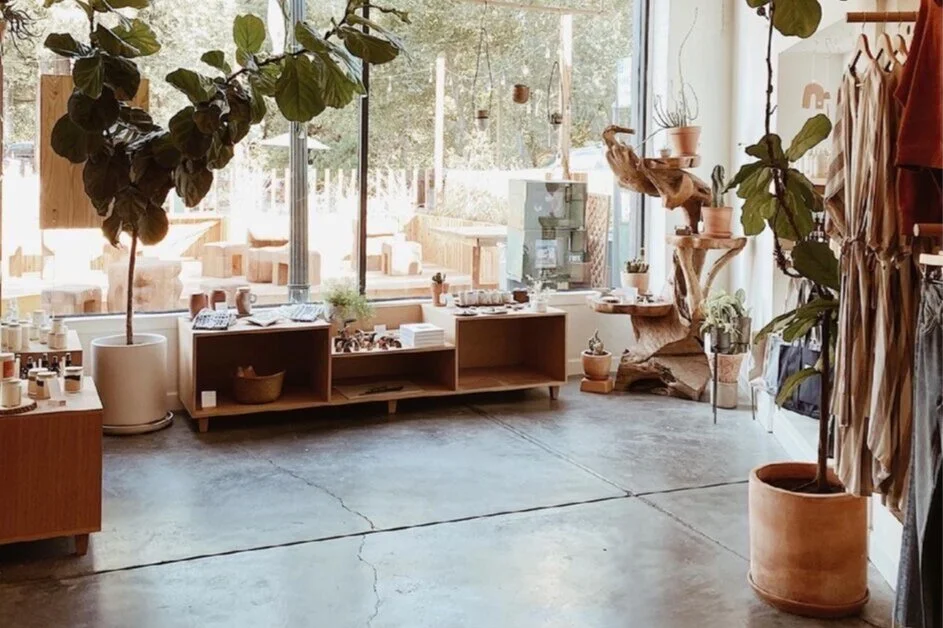
In addition to ample inside seating, which will remain closed/limited through the duration of the covid-pandemic, Longway has partnered with Orca Living to expand their dreamy vibe with the creation of a front patio that is straight out of our Pinterest dreams. Carved wooden stools and thoughtful corners designed for community, connection, and fresh air, greet visitors as they sit to sip on their coffee and give in to the feeling of slow.
For anyone who is not California-based, the Longway Instagram is a great place if you’re looking to redefine your relationship to fashion and start building towards a slower more thoughtful wardrobe, or life, in general. As a bonus, founder Kris Galmarini often graces us with her incredible dance moves and we are very much here for it! She also pops on to give followers a behind-the-scenes look at how the brand is built and the relationships she holds with the people who work so hard to bring her beautiful designs to life. From seamstresses in San Francisco and Peru to her in-store team, to her late-night stories delving into setbacks (both personal and production-related) you cannot help but feel connected to Longway. Their mission to foster community and sustainability shines through everything they do.
We can still recall when the pandemic hit and Kris jumped on Instagram to say something to the effect of. “People are struggling and it feels ridiculous to ask you to buy a new sweater right now.” There was something to her realness and understanding of privilege, that made us love Longway just a little more. At the end of the day, this is the type of brand and space we want to see existing in the world. This is the type of place we are dedicated to supporting in any way we can because it’s the type of place that pushes our world to operate at a higher standard, to value people over profit, to help us redefine consumerism.
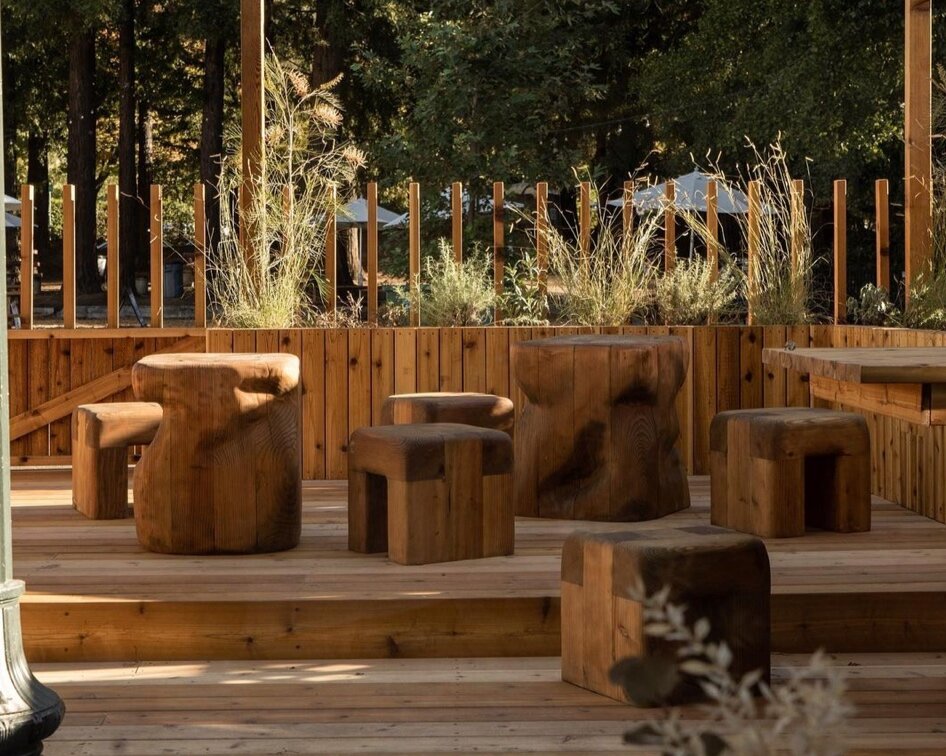
Why we think it’s different: Longway’s storefront goes beyond just selling something (though we totally want to buy EVERYTHING they create), to actually building something. “We want it to be a place people want to come,” says founder Kris Galmarini. “We want people to come into the store, and feel better than when they walked in. We want them to interact, to feel inspired, to leave the store feeling better about shit. We’re in this community and we want people to feel good.”
In their own words: “We celebrate slow creation. The people who make things and ideas. The people who spend their lives imagining and dreaming in the same way that we do. We look to take the road with more curves, but also more thought - where a difference can be made and adventures found.”

Something to inspire: Whether fighting for racial justice or the end to family separations at the border, or the normalization of mental health struggles, or the value of slow fashion, Longway is a brand that is not afraid to speak out or to take action, raising awareness, funds and the vibrations of a community who look to them for inspiration. We appreciate Longway for their beautiful selection of goods, but we stay because we know at their heart, they are not a brand, they are a family, one that grows and changes overtime to ensure that they continue to push forward towards a kinder, more just world.
Also their Denim Sunset Jumper is literally the perfect item of clothing. (Don’t even try to change our minds.)

SoberIRL | In Conversation wtih Karla Carolina
In conversation with soberIRL founder Karla Carolina on the power of connection in sobriety.
We spoke with SoberIRL founder Karla Carolina about her journey to sobriety and her realization about the role connection can play in helping people to maintain their alcohol-free lifestyle (and overall mental well-being).
How long have you been sober? Can you tell us a bit about yourself and your journey?
I celebrated 2 years on 12/31/20. I started drinking at 19 when I was studying abroad in college and knew I was a problematic drinker from the get-go. Binge drinking was normal in my circle of friends so even though I was blacking out and acting in ways I didn't like, they were too so it was normal. I also was getting great grades, got into a master’s program, and started my career so it was easy to rationalize away my fears that I had a problem. After 13 years and seeing how much my life was changing for the worse because of drinking, I finally accepted sobriety was the right choice for me.
What is the most important component to maintaining your sobriety and overall well-being?
Community is everything to me, which feels so odd because I felt very strongly against socializing with other sober people in the beginning. I was 8 months in when I started feeling lonely and mourned the loss of my party buddies. I decided to go to a sober retreat and holy guacamole — I felt myself come alive! I made deep connections with people I still talk to regularly. Having a network of people who get me, who understand what I've gone through, and don't judge me for it, is incredibly healing. I have people I can count on when I need some encouragement, need to vent, or want to celebrate. Essentially my real, true, authentic friendships keep me going.
What was the catalyst behind starting soberIRL? Did you ever struggle to be social without alcohol? If so, how have you worked to move past that?
When I went to a sober retreat at 8 months, I became friends with so many amazing people but they lived all over the country. I also made great connections with people I met through Instagram but they didn't live near me either. I struggled to find where I could meet other women locally who were also sober/sober-curious in a casual setting. Since I couldn't find it I decided to create what I wanted. I was equally part scared shitless and excited about the possibilities!
Alcohol had always been part of the equation when I socialized and the idea of meeting new people without it terrified me. What I learned at the sober retreat is: the awkwardness lasts for a short time and as long as you push past it, everything will be ok. Each time I put myself in a situation to socialize without alcohol it has gotten easier, like any other skill.
How has COVID affected your mission?
After doing 2 meetups pre-pandemic, I was heartbroken when we couldn't meet up anymore especially when IRL is part of the name! The coolest thing happened though — I started getting DMs and messages from people asking if we could just do virtual meetings in the meantime. By keeping the virtual meetups for local people, we were still able to foster our connections so when we could do social-distanced hangouts outside. We were so excited to be in each other's company!
COVID has also made me think through what virtual offerings I'd like to make permanent for soberIRL, especially for people with accessibility concerns or those who don't live nearby. A virtual community is still important and can bring lots of value to someone's life. I think after being cooped up for a year, people will want to socialize more than ever but also want to be very intentional about who and what they spend their time on.
What is your dream for soberIRL? How has it been going starting new chapters?
I want to get lofty with this, I'd love for soberIRL to be as ubiquitous as AA! For a long time, it's been the main resource people know, even if they don't have issues with alcohol. I am doing my part to co-create a world where people understand there are multiple pathways to recovery and they have the opportunity to choose what feels right for them. And for those who want to explore what it’s like to socialize and participate in life without alcohol, soberIRL will be there.
After a year of hosting meetups in San Francisco and sharing it with people through Instagram, I decided to partner with women to bring soberIRL to their local community. Right now my biggest challenge is spreading awareness that soberIRL is no longer just a Bay Area thing. I almost feel like I'm getting people set up to start their own franchise! It's been great as a forcing function to be very clear about the mission, vision, and vibe of the community.
What are some of your favorite sobriety resources? Products?
The resources I am forever grateful to:
Podcasts: Recovery Happy Hour and Recovery Elevator
Books: This Naked Mind by Annie Grace and Quit Like A Woman by Holly Whittaker
NA Drinks: CLEAN Cause, Curious Elixirs, Siren Shrubs
Places: Ocean Beach Cafe
What would you say to someone who might be sober-curious but afraid to take the leap?
You know where alcohol leads you, why not see where cutting it out for a bit takes you? Part of what kept me stuck was feeling I had to quit forever and to make that decision on Day 1. Because I couldn't commit to forever I kept drinking. You don't have to worry about forever right now.
The other thing I would say is...get first-hand experience of what sober life is like. Just imagining it (like I did for years!) is not sufficient. Immerse yourself in it. Read some quit lit, listen to podcasts, check out some blogs, and/or scroll through sober IG for inspiration — it will help you see people who are empowered by their sobriety, not ashamed of it.
What are some of your favorite quotes?
“I understood myself only after I destroyed myself. And only in the process of fixing myself, did I know who I really was.” ― Sade Andria Zabala.
"I would rather go through life sober, believing I am an alcoholic, than go through life drunk, trying to convince myself that I am not" -unknown
You can learn more about SoberIRL, find a local chapter or sign-up for a virtual meet-up by reaching out on instagram or their website!

Cafes for Life
Which cafes do more than get you started in the morning? Here we’re featuring a handful of cafes that go beyond coffee to our communities, our planet, even our minds.
Although our equivalent of lockdown bread baking was making a half-decent latte, we’ve been missing cafes. Today we’re looking at a handful that give us a place to think about the world differently, whether that’s giving back to our communities, raising money for charities that matter, working to save our planet, or even redefining their role in mental wellness. As we’ve come to realize as we steam oat milk in our kitchens, there is more to cafes than the drinks they serve; they are the hubs that bring a neighborhood together and offer a framework in which to explore what matters in life.
Pink Owl Coffee, Marin, CA
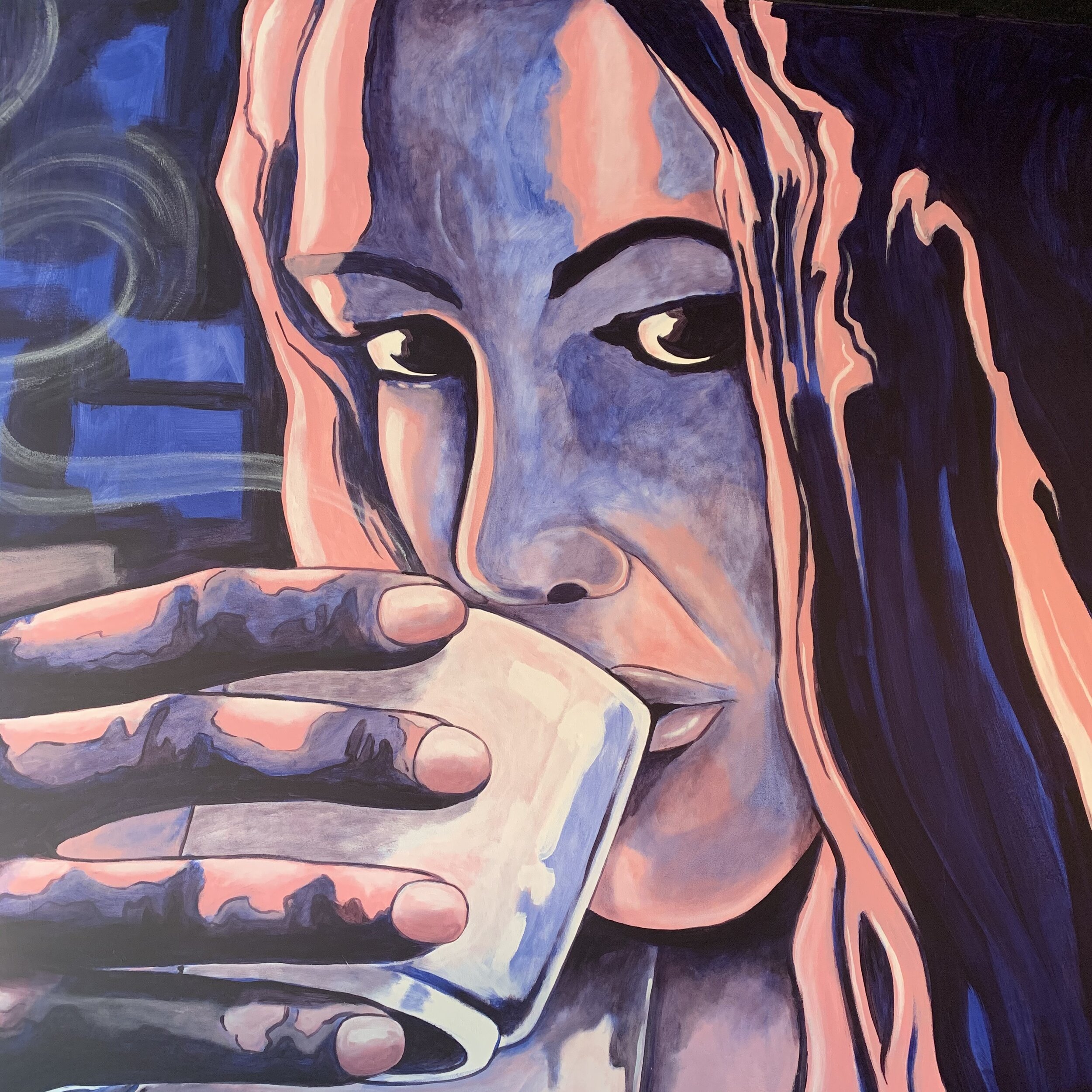
Before the pandemic, this was our place to head for early morning work meetings, chosen because of its friendly owners, great coffee, and cozy lounge. But the reason we’re including it here is the café’s mission to support breast cancer charities, with 10% of profits going to research and awareness initiatives. Founded by breast cancer survivor Saandra Bowlus and her partner Joe Carlo, the café puts its support front and center, from the name (the Owls are just because they like them), the pink inflected décor, and the savvy branding — as their new retail coffee bags say “Because breast cancer sucks”. When you buy their vanilla lavender oat milk latte made with the on-site roasted blend, or a mochi donut from Third Culture Bakery, or even a puppucino, you get to support a great cause too. Once the space reopens for inside coffee drinking, we recommend you seek out a spot by the fireplace or a window seat, grab a board game or a book on coffee, and settle down with a friend or listen to one of the live music sessions. A local with heart.
Back of the Yards Coffeehouse, Chicago
A womyn and Latinx-owned community-focused coffee company established in 2016 based in the Back of the Yards neighborhood on the south side of Chicago. In one of the city’s most historic districts – many European immigrants came to work on the stockyards, which has most recently seen an influx of Mexican migrants – that has become associated in the news with gun violence, Marya Hernandez and Jesse Iniguez, who grew up in the neighborhood, wanted to establish a different narrative and new opportunities for locals. Working against a belief that “Mexicans don’t drink coffee” and in a place where independent coffee shops weren’t going, Back of the Yards Coffeehouse has become a popular spot – awarded the 2018 Time Out Chicago Love Award for Most Loved Coffee Place. Its drinks menu includes Cafe de olla (with cinnamon and spices), Ojo Rojo (a shot of espresso added to drip), and Café Con Leche. But it is how the cafe supports ethical coffee production and the neighborhood that makes it stand out: The café sources its beans directly from farmers including those in the Chiapas region paying a fair price, directs 95% of waste to compost, everything from coffee cups to used beans, and hires locally, training up interns to be fully qualified baristas. For each purchase of a bag of their 47th Street blend, Back in the Yards Coffeehouse gives $1 to a Social Impact Fund that works to support programs for peace and education in the neighborhood. And those red mugs on the wall, represent all the people who pulled together to make this cafe happen for the community.


Trouble Coffee, San Francisco
We’ve written about how cafes have helped our own emotional wellbeing, but this Outer Sunset coffee shop was started 13 years ago to help the owner, Giulietta Carrelli, manage her own mental health. Many first came to Carrelli’s story on This American Life which relays how she founded the business to give her the order and routine she needed to manage her schizophrenia. Trouble Coffee reads like an autobiography, a stand-in for Carrelli herself, particularly its idiosyncratic menu which features cinnamon toast (for comfort and which is also attributed with starting San Francisco’s high-end toast craze), coconuts (for survival, containing everything needed for nourishment), and coffee (representing speed and communication). This tiny outpost by the ocean — which was created out of the driftwood found on the beach — also gave Carrelli the loose connections she needed to feel safe, to know that as people began to recognize her, she’d be known and understood within this community. Opening a coffee business is not a natural remedy for a mental health condition, but Trouble Coffee allowed Carrelli to make space for herself in ways she hadn’t been able to before and that saved her. As Carrelli/ Trouble says, “trouble is not only a coffee co it is a community of people and power that kept me alive.”
IXV, Brooklyn
In a city where, pre-pandemic, New Yorkers were going through 100,000 disposable coffee cups every half hour, IXV is the sustainably-minded coffee shop and brand that’s needed. It was founded by Jenny Cooper, former J.Crew/ crewcuts designer (the company is named after her grandfather) in the garage of her Boerum Hill, Brooklyn home, to make “life less trashy”. When she started just over a year ago, Cooper had a simple idea to bring sustainability and community together — making coffee for people in the neighborhood who could bring a mug to be filled and drop it off to be cleaned, with the cycle beginning again the next morning. Aiming for zero-waste, IXV encourages customers to bring their own cups (there’s a .25 cent charge for paper cups to cover composting and recycling charges), reduce waste and compost where possible (it’s all the detail here: cold drinks are served in algae lined paper cups which compost better than PLA compostable plastics). IXV also serves as a store with plastic-free household goods, ceramic espresso cups, and refillable hand sanitizer available, a vintage clothing upcyler aiming to counter the environmental impacts of fast fashion through reworking preloved pieces, and a location for a CSA food box that supports local growers and makers, in this instance New York’s Norwich Meadows and givebacks via donations to a local shelter and soup kitchen ChiPS. IXV is giving locals a better way of getting their caffeine and a different model for how our neighborhood coffeeshops might operate. More widely it can inspire us all to carry our keep cups while adjusting daily habits that trash the environment.

Tell us which cafes matter to you and could matter to other people too? Which cafes are helping our minds, our bodies, our communities and our planets function better? You can nominate them for our guide here.

Sidewalk Talk
Sidewalk Talk takes the psychotherapist’s couch outdoors, creating the space for anyone to be heard.
Seek this out if: you want to refine your listening skills or just feel listened to.
What is it: A community-listening project, Sidewalk Talk offers a place of belonging within everyday surroundings. Just pull up a chair for the chance to be heard or volunteer to be the one listening. Connection doesn’t have to be complicated. It can happen right here in the streets around us by people who want to be there for us.
What you need to know: When San Francisco-based psychotherapist Traci Ruble noticed a surge in gun violence in her neighborhood, as well as increasing disengagement from each other due to tech and politics, she wondered whether she could place her therapist’s chair on the sidewalk and just listen. Curious about what was happening to society, Traci invited 28 psychotherapists to set up “listening chairs’ around the city, giving people an opportunity to just talk, to share their stories, to feel heard, and to find a connection. That was in 2015. Sidewalk Talk has since grown into a global movement and is now a non-profit operating in over 50 cities and in 15 countries, with over 8000 volunteers.
What they offer online and off: Sidewalk Talk is driven by its volunteers, 50% of whom have a background in therapy, though that’s not essential. Find out how to be trained as a listener or how to start your own chapter. Traci also hosts a podcast, Sidewalk Talk with invited guests discussing the breadth of issues creating loneliness and impacting our emotional wellbeing today.
New for 2021: The consequences of the pandemic – the stay-at-home orders, the focus on home at the expense of everything else, the pressures piling on – have strained some of our relationships like never before. Traci is also now offering a 12-week couples listening skills community, which is science-based, three-year tested, and heart-centered.
Why we think it’s special: In a moment when face-to-face contact has us feeling like we’re breaking rules or under threat, we’re looking forward to the time when that in-person piece is restored in our worlds. Sidewalk Talk recognizes the power of connection, how human it is just being together and how important it is just to feel heard. The organization also offers a much-needed counterpoint to the narrative that we need to do everything alone, including wellness, that being with each other, helping each other through, offers ways forward that going more and more inwards doesn’t. We need more kindness, more support, more togetherness; Sidewalk Talk steps into the “empathy deserts” we’re now living in and creates space for belonging and connection.
In their own words. “The world loves to talk - but words aren't enough. Listening helps people open up, share more, and reconnect in an increasingly lonely world. At Sidewalk Talk, our mission is to create communities of listeners who return to the same public spaces to practice heart-centered listening all over the world.”
More of a reflection: Learn to listen, not to fix, or give advice, or make sure someone knows absolutely what’s on your mind too. Learn to hear what someone is saying, reflect back to them the ways in which you understand, and be with them without judgment or preconceived direction. We’ve almost forgotten how to allow space for someone else and to show up to relationships with kindness. A language of listening can be learned, just as much as social media algorithms or cultural trends. Start with being aware of how you can listen better today. Then keep going, actively building positive relationships of trust and support.

Refettorio Felix
The magic that can happen when a Michelin-starred chef takes on food insecurity, food waste and social isolation.
What is it: The community magic that can happen when a three-star Michelin chef solves for issues of food waste, food insecurity, and social isolation through great food, compassionate design, and human dignity. Refettorio Felix takes London’s food surplus and turns it into meals for the vulnerable prepared by local chefs, bringing people together in community over a shared meal served in comfortable surroundings.
What you need to know: In 2017, renowned chef Massimo Bottura – his Moderna restaurant Osteria Francescana was named the world’s best – brought his innovative non-profit Food for Soul to St Cuthberts Centre, a 30-year old charity serving those experiencing mental health issues and homelessness, aging populations and the vulnerable in the community. Building on the impacts of Refettorio Paris and Refettorio Gastromotiva in Rio de Janeiro, in London Bottura teamed up with The Felix Project, a charity that saves food that can’t be sold — in date, good quality ingredients from national supermarkets — and delivers it to those in need.
As with his other projects, Bottura realized that the context mattered too. For Refettorio Felix he commissioned Ilse Crawford, a designer sensitive to the wellbeing impacts of the environments that she creates, to transform St Cuthbert’s space. Her brief: “to make it beautiful, a universal pleasure that is often missing from social projects”. The resulting dining area facilitates connection and closeness, with reading areas, low hanging light fixtures, and darker toned walls. Swiss furniture company Vitra donated the chairs.
How to bring this into your life: Refettorio Felix is very much active through the pandemic, serving meals and hot drinks. If you are local you can volunteer to support their ongoing work.
Why we think it matters: There are an estimated 8.4 million (12%) adults living in households with insufficient access to food. And yet, in the UK annually 10,000 tonnes of food is wasted (that figure is closer to 1.6 billion tons worldwide). These figures are pre-covid and have only gotten worse. Before the virus, the project served 75-80 people a day, in the early days of the pandemic that went up to 300 meals.
Refettorio Felix steps right into the gap between food insecurity and food waste, but it does so in ways that treat people with care and dignity. The conversations made over meals, the feeling of support of a safe environment, become as important as the social inequalities it hopes to alleviate. After a meal, people can stay – for therapeutic counseling, creative workshops, and even laundry services.
In their own words: “We sustain and support vulnerable people with positive and warm therapeutic services to accomplish our charity’s objectives of relieving poverty, hardship, sickness and distress. Our impact is grounded in the power of a shared meal of outstanding quality made with 100% surplus food.”
Something to do: If you are able, start to help alleviate food insecurity from your home – from reducing the meat you consume and the food you waste to supporting your local food bank and supporting school meal programs.
Additionally, support: Emma’s Torch | Social Bite | Brigade Bar + Kitchen | Luminary Bakery

Book-ish
For curiosity seekers, book lovers, and those looking for an escape into ideas, Crickhowell’s Book-ish makes a community out of reading.
“Reading gives us somewhere to go, when we have to stay where we are.”
What is it: An award-winning bookstore – Independent Bookshop of the Year Award 2020 — situated in an award-winning town — Crickhowell officially has one of Britain’s best High Streets, Book-ish was founded by an award-winning local high street hero Emma Corfield-Walters in 2010. Likes all good bookstores there’s a person behind it who believes in its capacity to be the heart of a community.
What you need to know: When the pandemic closed the store, Corfield-Walters (aka Mrs. Bookish) quickly got together with the female-founders of three other leading independent bookstores — Helen Stanton from Forum Books, Carrie Morris from Booka Bookshop, and Sue Porter from Linghams Booksellers — to start 4Indies, an online space that hosts author events for at home times.
How to bring this into your life: Book-ish has one of the widest range of book clubs that we’ve seen, including The Throw Away Your Television Society that delves into ever-changing themes, and The Underground for teen readers. You can sign up for a subscription service, with a book pick — non-fiction, fiction, poetry, picture book — sent out each month. (One option includes a monthly candle). Book-ish still runs an active online events calendar for when in-person is on hold.
Why we think it matters: Our favorite bookstores are those that go beyond books into the lives of our communities, enriching not only our minds and imaginations but also the relationships that bind us together. During non-pandemic times, the bookshop, with its bar, café, and events space, is a critical place to come together, to chat, to make space for ourselves. But its work goes outwards too. Corfield-Walters is a local advocate, bringing books into schools, hosting pop-ups at local festivals such as Green Man and HowTheLightsGetIn (when they are running), and serving as the co-director of the Crickhowell Literary Festival. She’s also an active supporter of community-building campaigns like Totally Locally, Fair Tax Town, and the community Corn Exchange Program. Book-ish makes space for books, but it also makes space for the people who love them too.
What next: If your pandemic fatigue now comes with reading fatigue, seek out Corfield-Walters’ recommendation to get you back to books: My Sister The Serial Killer by Oyinkan Braithwaite for “its short chapters and wickedly dark characters”.
To find out more: Website / Instagram / Facebook / Twitter
Additionally, try: Mr. B’s Emporium of Reading Delights / Pages of Hackney

The Museum of Broken Relationships
For when you don’t get your happily ever after, the Museum of Broken Relationships shows that you are not alone in your heartbreak.
Go here if: you didn’t live happily ever after.
What is it: When love stories end, we tend to purge our lives of our former partners. We burn letters, destroy souvenirs, throw away the detritus of our lives together. The Museum of Broken Relationships exists to provide an alternative, preserving objects that hold memories of our once beloveds. It holds a collection assembled entirely from mementos from broken relationships that still mean something to someone and that have lasted beyond the relationships that they eulogize.
What you need to know: The Museum started over a decade ago as a slightly quirky art installation by former couple visual artist Dražen Grubišić and film producer Olinka Vištica. As they were dismantling their own four-year relationship, they realized that they had objects that told their story, that held traces of their relationship, and nowhere to put them. Grubišić and Vištica gathered some of these together with similar objects from their friends, and curated an exhibition that could tell their love stories and serve as a testament that though over, these moments in time existed, they mattered.
Capturing a collective emotional nerve, the Museum of Broken Relationships has evolved into a permanent museum in Zagreb, where it opened in 2010. It now has over 3600 objects in its collection. Another venue in Los Angeles is temporarily closed. The Museum continues to travel internationally — with 58 previous iterations to date across the world including recent displays in New Zealand, Canada, Japan, and Romania
Why you’ll love it: The Zagreb museum will take you through thematic displays that chart emotions associated with a breakup. Its displays offer a fascinating walkthrough of others’ relationships, exploring what lingers at the end of a breakup through the physical objects that capture experiences of the lovelorn: An iron used on a wedding suit, the marriage’s only relic. A scab, from a literal wound. A love letter from a 13-year old to his first love, written when fleeing war-torn Sarajevo. A toaster (Colorado, 2006-10) taken on moving out –“How are you going to toast anything now?’ Not all relationships are of the unrequited kind. Next to a pile of Werther’s Originals is the caption, “I got these for you, but you died first.”
How to bring this into your life wherever you are: The online space exists very much in tandem with the offline one, with a virtual collection of personal objects that tell the stories of lost love. You can still donate your own items and tell your own story. A book inspired by the museum shares a similar emotional journey through people’s relationship souvenirs. If you make it to Zagreb, you can visit the Brokenships Café for emotional eating. Not a possibility, watch The Broken Hearts Gallery movie inspired by the same idea.
Why we think it’s special: The pain at the end of a relationship can make us feel singularly alone. We can feel like the only ones who have ever experienced the rejection, hurt, and frustrations that this moment can bring. But the Museum of Broken Relationships with its collection of stories shows us that relationships end for all of us, however that happens. We’ve all been down that road, or close to there. Reading these captions offers comfort; these objects bear witness to our stories, allowing us to realize that even in this, we are not alone.
Unusually for a museum, the Museum of Broken Relationships sits in parallel with our everyday lives; its existence shifts what a museum can be. The Museum of Broken Relationships more closely reflects the actuality of our personal lives, the messiness of our emotions, the randomness of the things we come to value and those we come to love and will one day let go.
In their own words: “Museum of Broken Relationships is a physical and virtual public space created with the sole purpose of treasuring and sharing your heartbreak stories and symbolic possessions. It is a museum about you, about us, about the ways we love and lose.”
Something not to do: We’ve deleted all the emails, torn all the notes, obliterated from our lives all remnants of past loves, and just occasionally we’ve come to regret it. Yes, the choice of our younger selves to destroy all reminders made absolute sense. It was a ritual that could help ease any ending, but did we erase something of our narrative as well? Sometimes we’d like a glimpse of who that person was we fell so heavily for, and who we were when we did that. Moments that we could have captured in time through random stuff, and held onto as treasured, even if the person involved in those memories is no longer with us.
To find out more: Website / Instagram / Facebook / Twitter
See also: Love Stories Museum / Museum of Failure

The Civic Kitchen
A civic-minded kitchen classroom in San Francisco to get you cooking whether it scares or excites you.
What is it: A purpose-built kitchen classroom in the city of San Francisco designed for home cooks to master culinary skills. The Civic Kitchen will get you cooking.
What you need to know: Co-founders Chris Bonomo and Jen Nurse opened The Civic Kitchen in 2018 with a belief that anyone can learn to cook. Their Mission Street space has a program of accessible cooking classes taught by knowledgeable local chefs in a supportive and welcoming environment. The roster of classes, which in person never go about 14 attendees, cover the basics like knife skills and baking, through to more in-depth studies like a recent evening on sweet and savory souffles. The schedule goes beyond just making food though, to also talking about it (with Salt + Spine Cookbook Club), documenting it (with lessons on food styling and photography), and writing about it (a current offering is how to pitch a Cookbook of your own).
Why you’ll love it: This is not your typical classroom. This light-filled space feels like a home cook’s playground, from its brightly colored 20ft long floor-to-ceiling Cookbook Library through to a fully kitted out kitchen with its three ranges, double oven, and all the ingredients you could possibly need. The Civic Kitchen is all about practical hands-on learning and connecting with others as you sharpen those skills. During class, you’ll don an apron, get chopping and mixing, and make a meal to be enjoyed with your classmates on its central communal table.
What they offer online and off: Refresh those cooking skills during the pandemic with online workshops and wine tastings. Rather than the one-way of YouTube, learning from a kind person who is there with you in your own kitchen (albeit via a screen), can help instill more confidence and even joy in your cooking.
Why we think it matters: Vulnerability binds, but food connects us. With a motto of “Kindness in the kitchen”, The Civic Kitchen makes preparing a meal as much about bringing us together as about assembling ingredients. Co-founder Nurse encourages civility in all encounters with cooking, from learning about other cultures — along with the respect that must go with that — and finding a common language in preparing a shared meal. By taking the fear factor out of food, and giving us a much-needed alternative to food delivery apps, The Civic Kitchen is also creating a path back to nourishing ourselves and supporting a better ecosystem around food and how and where we get our daily meals.
In their own words: “We have built The Civic Kitchen from the ground up to be the perfect place for home cooks to learn.”
What next: Learn one meal that you can prepare for yourself, and one meal you can share with others. Something that you love to eat, and something you think others will. Two meals. That’s a start. Then keep going. A brunch for Sunday mornings. A lunch to break up WFH days. A grabbable snack as you race out the door. Something to make with kids, or grandparents. A classic that you’d choose in a restaurant. A dish to pack in a picnic basket. We much prefer this approach to selecting starters, mains, and desserts that you find in typical cookbooks. Give life boundaries around the food you make to make it relevant, accessible, and meaningful again.
To find out more: Website / Instagram / Facebook / Twitter
Additionally, try: 18 Reasons / Bite Unite

Silent Book Club | In Conversation with Laura Gluhanich
We talked to Silent Book Club co-founder Laura Gluhanich about how a simple night of reading with a friend became a global phenomenon.
We recently discussed with co-founder Laura Gluhanich all the ways that Silent Book Club offers community and a space to unplug, both vital to our mental health and emotional wellbeing as we negotiate these uncertain times.
What compelled you to start reading together, silently?
One night out to dinner at a favorite local spot in San Francisco my friend Guinevere de la Mare and I shared our frustration with traditional book clubs, and our joy of reading at restaurant bars. The next time we met for dinner, we planned to sit at the bar and read together. We continued meeting up, and as friends heard about our “silent book club” they asked to join. Everything today comes from that.
How do you get over that initial need to chat, to make noise, to fill the silence? We’re so unaccustomed now to filling the spaces between us.
Our format includes some planned conversation at the start. Typically a silent book club meeting starts off with everyone saying hello and sharing what they are reading. It creates a shared space and connects folks over shared books or genres. I think our members appreciate that when they start reading they know they don’t have to worry about anything else at that moment. We set an alarm and wrap up the session, so they can just dive into whatever they are reading.

Book club selections can be very particular to a group or the situation of coming together to talk about one. Are there certain books that lend themselves to Silent Book Club? Like, don’t read conversation-inducing books such as anything by Glennon Doyle or Three Women?
What surprises me more is that at every in-person meet-up, I’d venture we have a minimum of five genres represented in a group of ten. It is a very welcoming group, and if someone isn’t into what you happen to be reading, it’s not taken personally. And in our Facebook group, just about everything goes, though we choose to not offer a platform to white supremacists, misogynists, and the like.
Have you ever thought of Silent Book Club as an anti-tech space?
Yes! My co-founder and I both work full time in tech, so providing a time to ignore notifications is a benefit we recognize.
Or maybe even an anti-loneliness initiative?
Yes! I love that Silent Book Club can provide community in a really low-key way. Beyond the minimal conversation, it is super low stakes, so especially if people are less extroverted it’s a great opportunity to connect. And while there are lots of book lovers in the community, particularly the Facebook group regularly gets posts from folks who are getting into reading for the first time or rediscovering their love.
You have chapters globally now. Have you noticed differences between how these book clubs meet or how they are received locally?
Not really! Shout-out to our Genoa chapter for being super photogenic and fun. There’s a ton of variety throughout our chapters but I don’t see a difference based on location.
What kind of setting is conducive to a Silent Book Club?
As you can see from that Genoa link, lots of places work to meet up and read. We recommend cafes and bars (hotel lobby bars can be chic and have the perfect level of background noise). Bookstores, ice cream shops, community centers, parks, beaches, and backyards have all been successful. We’ve even seen them at conferences — a great option for introvert attendees to chill out.
Do you have any favorite meetup anecdotes?
We’ve had a couple of chapters see people meet at their events (ready for that meet-cute to happen in a movie). We definitely hear more about books getting discovered than soulmates.
One fun thing that has happened with the virtualization of Silent Book Clubs is the ability for anyone to join any virtual meetup. Our Denver chapter has had guests from Mexico City, Guinevere has said hi to Italian chapters, and I sat in on a meetup based in South Korea. It’s a fun way to explore!
How are Silent Book Clubs adapting to the shifting situation of the pandemic?
We’ve seen dozens of chapters shift to an online format. A number have hosted outdoor meetups globally. Of course, plenty of countries have had competent pandemic leadership, so they have been able to meet far ahead of us here in the US.

Why do you think the idea of Silent Book Club has taken off so much?
I think there are two primary reasons people have responded to Silent Book Club. The first is broadly the mental wellbeing aspects that I’ve already mentioned. And in conjunction, we are all so over-productive, Silent Book Club is an antidote to that.
What is your vision for Silent Book Club going forwards?
We’d love to see its continued growth, supported by brands or organizations that share our mission of encouraging reading. We plan to continue our author series in 2021, and have an idea of a global Silent Book Club week, promoting literacy in public.
Any places out in the world or books that you seek out to support you in uncertain times?
We’re big fans of independent bookstores and libraries, and while there is broad uncertainty, we encourage folks who have the resources to support their local cultural institutions in an ongoing way. The mutual aid movement reflected in Little Free Libraries and the Community Fridge network gives me hope.
What should people do if they are curious about Silent Book Club?
Find a local chapter on our website or a virtual meetup. We welcome you whether you are looking for the time to get through a few chapters for another book club, or just for fun.
“If you are finding it hard to find space for reading, joining Silent Book Club gives you that time back. It prioritizes reading in your life again. It gives books back to you. ”
Discover more ways to connect

Golden Hare Books
Edinburgh’s Golden Hare Books keeps the city’s literary tradition alive with its thoughtful curation.
What is it: An award-winning (Bookshop of the Year 2019 UK & Ireland) indie bookstore to warm your heart (and hands by its wood-burning stove) in Edinburgh’s village within the city, Stockbridge.
What you need to know: Founded in 2012 by Sir Mark Jones – previously the Director of the Victoria & Albert Museum and the National Museums of Scotland – this is a bookstore as curated space in both how it looks and what gets to be included. Covers face out and draw attention to great design, creating an immediate visual hook for potential readers and making objects of the books themselves.
The range of its small careful selection of books changes constantly –‘the idea is that you never visit the same bookshop twice.’ Golden Hare is known for bringing in a wide range of choices, including works in translation, books by women, and diverse children’s authors
How to bring this into your life: It’s all about the reading subscription, Postbooks, which sends a beautifully packaged fiction or non-fiction book(s) each month specially chosen for you, often around a theme, like Green Transformation, and with its own reading guide. The key difference though is that Golden Hare supports indie presses and small publishers in its choices such as Charco Press, Tilted Axis, or & Other Stories, widening your reading from the usual suspects and making sure more writers get attention from readers.
Golden Hare is also a bookstore where you can become a Member, and during usual times there is an active book club and Sunday Stories reading club for kids. Golden Hare has pivoted to the ways we now shop: click and collect, and Saturday bike deliveries.
Why it caught our attention: This is a bookstore that works hard. It does a lot. Not just in its active support of indie publishers but its reach within the local community and that of the city of Edinburgh. In 2019, Golden Hare hosted its first book festival with local partners and it co-hosts the Edinburgh Book Fringe with Lighthouse Books. Books are embedded in the cultural life of Edinburgh – a UNESCO City of Literature. It was famously here that J.K. Rowling wrote some of her Harry Potter series and Arthur Conan Doyle, Sherlock Holmes. Golden Hare keeps the tradition alive of supporting local voices and creating a place for the writing community.
In their own words: “We are a knowledgeable team of self-confessed reading addicts who have been selling beautiful and important books since 2012.
Our charming independent bookshop is situated in Edinburgh's Stockbridge, where you can find an ever-changing collection of fiction and non-fiction for readers of all ages. We hold close to 2000 titles covering all genres of writing from cookery to travel, from flower arranging to science fiction - and many more topics in between.”
Lost at home: It's winter where we are. Maybe there too. Cozy down with a book. Choose one of Golden Hare’s winter picks: Once Upon a River by Diana Settenfield, The Snow Child by Eowyn Ivey, and The Changeling by Victor LaValle. While purchasing, make a resolution not to buy from internet giants (take this resolve into the rest of 2021).
While here: Seek out Golden Hare collaborators café Lovecrumbs and Smith & Gertrude, as well as If Lost favorites the Royal Botanic Gardens and Lifestory.
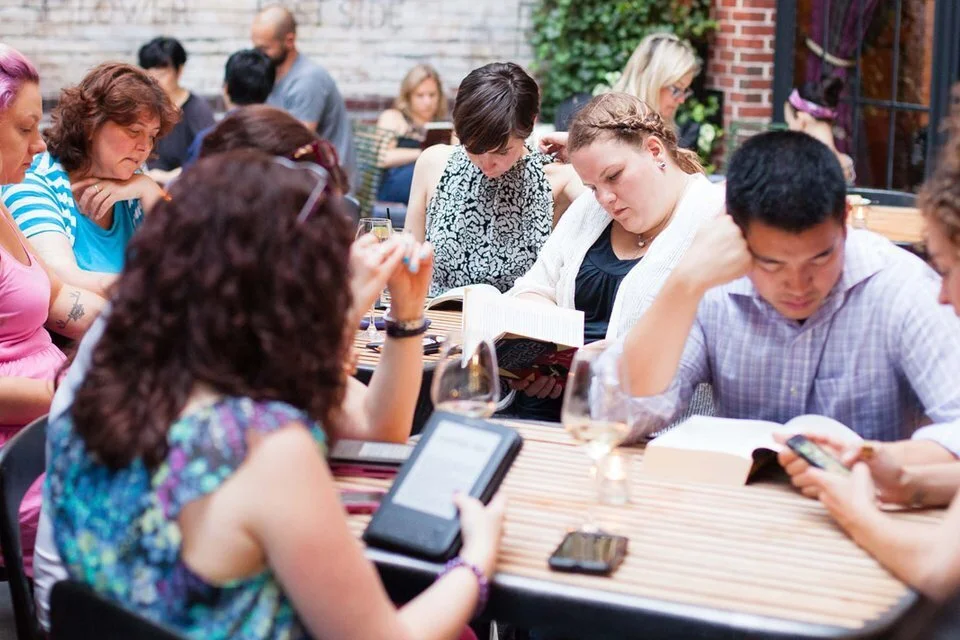
Silent Book Club
For the introverts, a book club that doesn’t get you talking.
“Welcome to introvert happy hour.”
What is it: An opportunity to read. The twist, there are others reading with you too. You’ll be in a café, a bar, a public library; in COVID times maybe you’ll be on Zoom or outdoors. The people with you will have their own books, you’ll have yours. And though there’s a social moment built in — a hello and sharing of what you are reading — the focus is simply on you and your book. Enjoyed now in ways which we have learnt to understand, together but apart.
Why you’ll love it: This is one for the introverts among us (of which we count ourselves). Yes, book clubs are great – we’ve hosted and attended many – but sharing just the love of reading that’s something magical. The Silent Book Club started in 2012 when two friends Guinevere de la Mare (a UX writer at Google) and Laura Gluhanich (director of programs at Him for Her) began reading together in a neighborhood bar in San Francisco. Gone was the pressure of typical book clubs, having to read the same books, having smart things to say, hiding the fact that you haven’t read the book. Here was just enjoying the moment of reading together – no mobile phones, no commitments pressing in, no pressure to select the right thing to share or carry out a conversation in the right way. Just a book, a friend, and a nice location somewhere. And from this, this now Silent Book Club grew to friends and acquaintances, and grew to a handful of cities, and grew to now 285 chapters in 37 countries.
What you need to know: If books are your happy place, you can now seek out a Chapter probably wherever you are, though if there isn’t you can start one (friends there isn’t one in Bath or the Marin area where we’re both based if someone’s inclined to host…). During stay-at-home times, many of these Chapters offer virtual read-ins.
Why we think we need it to exist: We’re noticed something odd going on in our lives. Though we love books, we’re no longer reading them in quite the same way that we used to. We seek out recommendations, we subscribe to book boxes, we haul heavy bags from independent stores, we ship boxes upon boxes when we move, but the reading part is not as high up our agenda as it once was. You may be finding the same in your life. Life pressing in, doomscrolling replacing narrative and character development, anxiety blocking any possibility of retreat or escape. Time has gone, and we’re trying to find it again. For many purposes, but also so that we can return to the books that we love and the ones we might love in our future. If you are finding it hard to find space for reading, joining a Silent Book Club gives you that time back. It prioritizes reading in your life again. It gives books back to you.
It also gives you other people. As many of us spiral in our loneliness, that companionable silence actually gives us connection, it fosters relationships. As co-founder Gluhanich says, “For people who want to do something on their own but at the same time are seeking connections and a community with other people, SBC’s can offer them both of these. People all around the world are forming emotional bonds with one another while reading in silence.”
In their own words: “Silent Book Club is about community. Everyone is welcome, and anyone can join or launch a chapter. We encourage people all over the world to start their own Silent Book Clubs. All you need is a friend, a café, and a book. We have more than 240 active chapters around the world in cities of all sizes, and new chapters are being launched by volunteers every week.”
Something to do from anywhere: Wake up, doom scrolling. Before bedtime, doom scrolling. These have traditionally been times for reading books. So for a non-binding, after the New Year’s, non-resolution, ban the phone from the bedroom, buy a book light, and read books again. Paper pages. Like us, you may find your brain working just that little bit better, your life feeling slightly less heavy, and the world just that little bit bigger. You’ll be reading books again.
To find out more: Website / Instagram / Twitter / Facebook
Love this? Try also Shelf Help, or podcast Celebrity Book Club

Cafe Con Libros
A feminist bookstore making vital space for the stories of women and girls.
What is it: An intersectional feminist independent bookstore and coffee shop in Brooklyn’s Crown Heights neighborhood.
Why you’ll love it: Café Con Libros was founded by Kalima DeSuze in December 2017 when she made real the space that she wanted to see in the world, one that could hold the stories of womxn and girls – stories which have overwhelmingly been sidelined in favor of those of male voices – for those who want, need and are open to hearing them. Though intimate, the reach of the store is wide, bringing together on its physical and virtual shelves an abundance of books by female authors (99% of the selections are books by, for, or about womxn), including those beyond the continental US and by LGBTQAI+ writers.
Why we think it matters: During normal times, Café Con Libros is very much a community space for female-identifying folx; it's somewhere to hang out and be as much as it’s a bookstore. As Kalima says, the spaces that we create are political. Who holds physical space, what that space is used for, and even the stories these places are allowed to tell has meaning on a personal and collective level. Bookstores like Café Con Libros hold not just the stories within pages that we need to hear, but stories within a place that allow for all possible futures, for nurturing relationships, for community action, and for extending our learning together. As Kalima notes: “It’s time that womyn’s stories be prioritized and that a space exists explicitly for and about womyn. So many of our spaces are male-dominated; even the ones that are created solely to be for and about womyn. My womyn only spaces have served as a healing tonic and, a reminder of whose shoulders I stand on. It’s important that more of our girls and womyn have access to such warmth and mirroring.”
How to bring this into your life: As mothers of young daughters, we’re excited by the monthly subscription boxes, which include an option for baby feminist board books for the zero to fives and emerging feminist books for kids aged five to nine. There are also subscription boxes focusing on womxn of color and for the feminists among us. You can also join one of two book clubs that meet monthly (on zoom during shut-door times): either the Feminist Book Club which focuses on a book by, for, and about womxn, or The Womxn of Colour Book Club, a reading space and conversation for womxn of color. There are also virtual read-a-longs and a monthly podcast Black Feminist & Bookish, hosted by Kalima.
In their own words: “ We value: family. community. justice. art. transparency. accountability. equity. equality. authenticity. joy. solidarity. earth. the brilliance and possibility of imperfection. love.
We respect and value the contentious history womxn of color have with the word "feminist;" the tension hold us to account to live our Black Feminist and Womanist principles in real and measurable ways. We were born from and are guided by the lush cannon of Black Feminist thought producers and activists; the space endeavors to be intersectional, inclusive and welcoming of all who stand with and on behalf of the full human rights of womxn and girls. We seek to advance and uplift stories of womxn and girls around the globe who are redefining the word feminist and feminism with every day, ordinary culturally informed acts of resistance and love.
Something to inspire: Try a reading challenge: purchase, support, and read books only by womxn, or womxn of color, or by LGBTQIA+ writers for 3, 6, or 12 months. Change your knee-jerk choices in what you’d ordinarily see or consume. Extend this challenge even further to include podcasts, TV shows, films, and music that are by, for, and about womxn. This not only helps our own understanding of the ongoing pursuit for gender equality but the choices you make in where you put your attention and your money indicates to the industries behind them – the entertainment, publishing, and culture industries – what it is you really want to see.