
Finding the Work You Were Intended to Do
You can spend years building a life that looks successful from the outside while quietly wondering why it no longer quite fits on the inside.
Not in a dramatic, burn-it-all-down kind of way. More subtle than that. More like noticing you feel strangely flat after doing work you once loved. Or finding yourself restless in moments that should feel satisfying. Or realising that the thing you keep thinking about — the thing you dismiss as impractical, indulgent, impossible, too late, too risky — keeps returning anyway.
Maybe it arrives while you’re washing dishes. Or driving home from work. Or lying awake at 3am trying to mentally organise your entire future. Maybe it appears as envy when you see somebody else making the kind of work they were clearly meant to make. Maybe it shows up as grief. Maybe it simply sounds like a very quiet voice saying: “There must be something more true than this.”
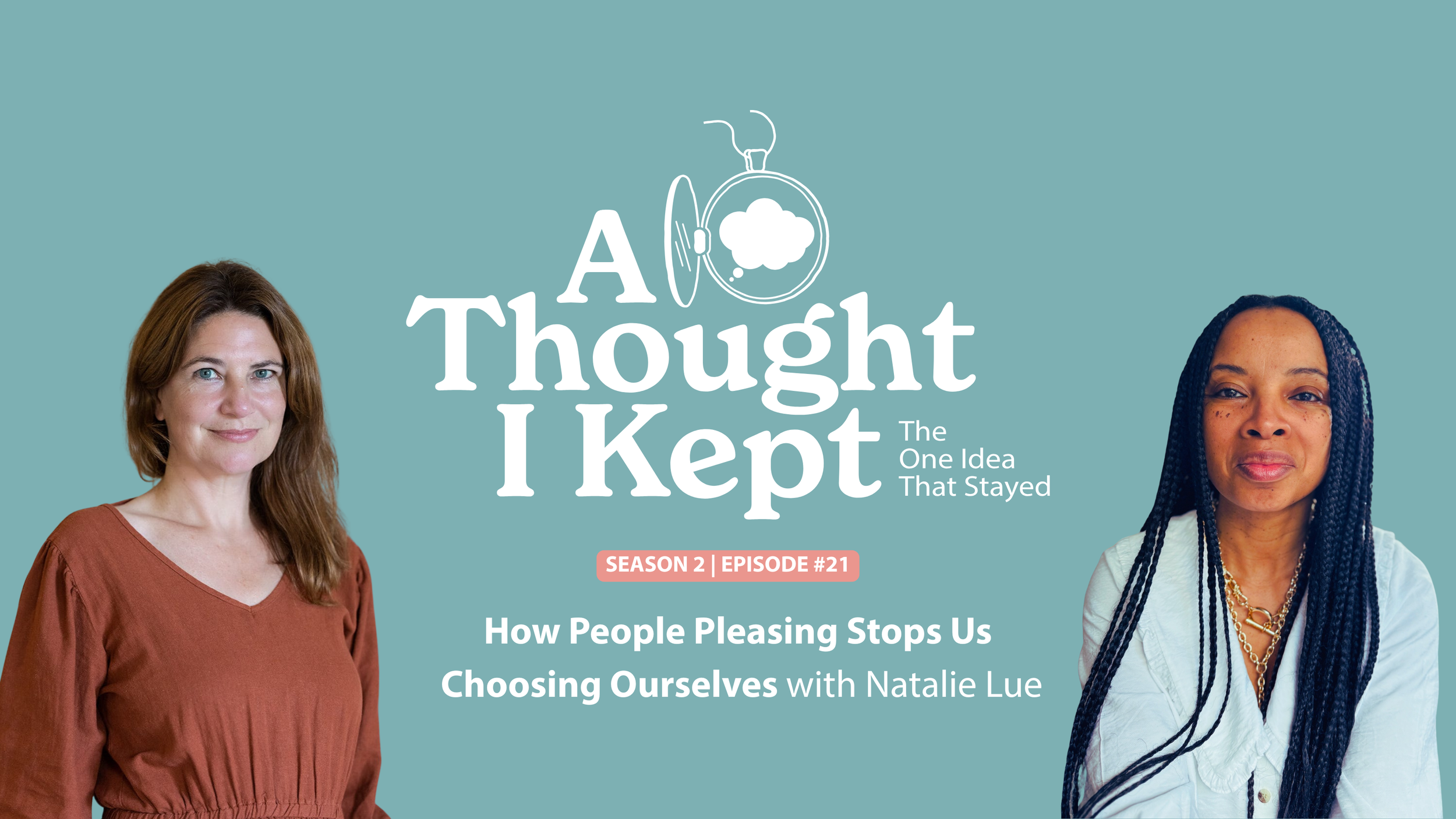
This week on A Thought I Kept, I spoke to Natalie Lue about people pleasing, creativity, identity, perfectionism, and what it means to finally stop fighting the thing calling for your attention.
The thought Natalie brought to the conversation was this:
“Do the work that you were intended to do, and your money worries will cease.”
What fascinated me about our conversation wasn’t really the money part. It was the word intended.
Because I think many of us secretly wonder this, especially in midlife or moments of change: What am I actually meant to be doing with my life?
And beneath that question often sits another one we rarely say out loud: What if I already know?
Natalie spoke beautifully about spending years trying to make a version of work continue because she had already invested so much into it. The effort. The loyalty. The identity. The expectation. She talked about how easy it is to become attached not just to a career or role, but to being the kind of person who keeps going, who makes things work, who doesn’t let people down.
I recognised so much of that.
Particularly the idea that if we are competent, thoughtful, caring people, we often mistake endurance for alignment. We think the discomfort means we should simply try harder. Be more disciplined. More grateful. More resilient. We tighten our grip instead of asking whether the thing itself still fits who we are becoming.
And because many of us have been rewarded our entire lives for achievement, reliability, or self-sacrifice, changing direction can feel almost morally wrong. Like we are abandoning something. Wasting potential. Failing.
But what if changing is not failure?
What if a version of your life can be deeply meaningful and still not be yours forever?
One of the most moving parts of the conversation was hearing Natalie speak about creativity. About art. About the thing that had quietly kept calling to her for years while she continued showing up for everything and everyone else first. She described the strange habit many of us have of postponing the thing we most long for until we’ve finally “sorted everything else out.”
The problem is, there is always something else to sort out.
Another responsibility. Another deadline. Another financial worry. Another person to care for. Another reason why now is not the right time.
And yet the longing remains.
I think this is partly why conversations about calling can feel so emotionally loaded. Because they are rarely just about work. They are about permission. About self-trust. About whether we believe our desires matter. About whether we are allowed to evolve beyond the version of ourselves that once kept us safe.
For many people — particularly women — there is also a deep fear that choosing ourselves will disappoint other people. That if we stop being useful in the ways we always have been, we might lose love, approval, belonging, identity.
So we stay in roles, routines, relationships, or versions of ourselves that no longer fully fit because at least they are familiar.
We tell ourselves we are being practical.
Sometimes we are simply frightened.
And to be clear, this isn’t really an argument for dramatic reinvention. I don’t think most people need to quit their jobs, move countries, or become entirely different people to feel more alive. Often the shifts begin much more quietly than that.
Taking the class.
Starting the project.
Making space for rest.
Writing the thing.
Applying for the role.
Letting yourself want what you want without immediately dismissing it.
Allowing the possibility that the thing you keep returning to might matter for a reason.
I also think there is something deeply reassuring in realising that we do not have to become entirely new people to move forward. So much of modern wellbeing culture still quietly suggests that confidence, healing, or success require a total transformation of the self. But what if the goal is not to become somebody else at all?
What if it is simply to become more honest about who you already are?
Throughout our conversation, Natalie returned again and again to the idea that we are allowed to change. Allowed to evolve. Allowed to outgrow old identities without those identities becoming mistakes.
That feels important to me.
Because I meet so many people through coaching and through this work who are exhausted from trying to force certainty before they allow themselves movement. They want guarantees before they begin. They want to know the outcome before they trust the instinct.
But perhaps self-trust is not certainty.
Perhaps self-trust is simply being willing to listen when something inside you keeps whispering: this matters.
Even if you don’t yet know exactly why.
If this resonates, you might enjoy listening to my full conversation with Natalie Lue on A Thought I Kept, where we explore people pleasing, creativity, identity, self-trust, and what it means to let yourself change.

And if you are sitting with questions about direction, confidence, emotional overwhelm, or the sense that something in your life no longer fits, you can also explore our coaching sessions. Sometimes it helps simply to have space to hear yourself think again.