

Emotional Well-being Series | 7 strategies to improve emotional wellbeing
If you’re feeling lost in all your feelings, these effective strategies can help you manage your emotional well-being.
With all that we now need to just do to get through life, connecting with our emotions can feel like an impossible task. But losing touch with what we’re feeling can add to that sense of being lost and disconnected that many of us are now experiencing. Enhancing our emotional well-being can help us better connect with all aspects of our lives.
Building a positive relationship with your emotions
Many of us now juggle the demands of our careers, families, and personal lives, often feeling overwhelmed and unsure of how to manage our emotions. This can lead to a sense of disconnection and emotional imbalance. However, it's possible to improve your emotional well-being by learning and practicing a few key skills.
Improving your emotional well-being isn't about avoiding or suppressing emotions. Instead, it's about enhancing your emotional awareness, learning to regulate your emotions, and building resilience.
Here are seven impactful strategies to help you boost your emotional well-being.
Techniques for positive emotional health
1. Practice Emotional Awareness
Start by engaging in self-reflection. Ask yourself: What am I feeling? Why am I feeling this way? What might help me manage these emotions?
Emotional awareness allows you to recognize how different situations, people, or thoughts affect your feelings. By paying attention to your emotions, you can take proactive steps to foster more positive emotional experiences.
2. Practice Mindful Acceptance
Mindfulness goes beyond emotional awareness; it includes emotional acceptance. This means experiencing emotions without judgment, which helps prevent the development of secondary negative emotions. For example, feeling guilty about being angry creates an additional layer of distress.
By practicing acceptance, you allow your emotions to come and go without labeling them as good or bad. Mindfulness meditation is a great tool to cultivate this skill.
3. Refocus Your Attention
Redirecting your attention away from negative aspects and towards positive ones can significantly enhance your emotional well-being. When you find yourself fixating on the worst parts of a situation, consciously shift your focus to neutral or positive elements. Although this takes practice, research shows that training your mind to focus on less threatening aspects can reduce anxiety.
4. Practice Reappraisal
Reappraisal involves interpreting a stressful situation in a more positive light. This strategy can help you feel better and improve your emotional well-being over time. Try reappraising by listing the good aspects of challenging situations: How is this an opportunity for learning? What has come into your awareness? Where are the possibilities? The more you practice reappraisal, the more natural it becomes.
5. Try Emotional Distancing
Emotional distancing helps you gain perspective during difficult times. Imagine yourself as an observer—a fly on the wall—or think about how you’ll view the situation in the future. For instance, after an argument with a partner, consider how you’ll feel about it in a week, a month, or a year. This technique can make negative experiences feel less intense and aid in quicker emotional recovery.
6. Use Your Imagination
Your imagination can be a powerful ally in boosting emotional well-being. When times are tough, and there’s little positivity to focus on, use your imagination to create positive scenarios. Visualizing yourself in a happy place can generate real positive emotions, helping you cope with difficult moments.
7. Share Your Positive Moments
Sharing your positive experiences can amplify and extend those feelings. When something good happens, share it with someone you care about. Whether it's a text to a friend or a call to a family member, expressing your joy can enhance your emotional well-being. Just remember to share from a genuine place of connection.
Navigating your emotional landscape
By incorporating these strategies into your daily life, you can enhance your emotional awareness, improve your ability to manage emotions, and build resilience. You can transform your emotional well-being, leading to a more balanced and fulfilling life.
Remember, emotions are a normal and necessary part of life, and with the right tools, you can navigate them more effectively.
Maybe today just start with noticing that you have valid emotions. That might be the most important first step towards a more emotionally balanced you.
Seeking further help?
If you're looking to have a more positive relationship with your emotions, consider 1:1 emotions coaching. This personalized approach can provide you with the support and strategies you need to navigate your emotional life more effectively.
References
- Amir, N., Beard, C., Taylor, C. T., Klumpp, H., Elias, J., Burns, M., & Chen, X. (2009). Attention training in individuals with generalized social phobia: A randomized controlled trial. Journal of Consulting and Clinical Psychology, 77(5), 961.
- Bruehlman-Senecal, E., & Ayduk, O. (2015). This too shall pass: Temporal distance and the regulation of emotional distress. Journal of Personality and Social Psychology, 108(2), 356.

Simple ways nature can boost your mental health and well-being
Explore how connecting with nature can reduce stress and enhance your emotional wellness.
Feeling overwhelmed by the constant demands of daily life? You're not alone. We can now struggle to find moments of peace and clarity.
But what if the key to enhancing your well-being and regaining your sense of self was as simple as stepping outside and connecting with nature?
The power of micro gestures for how we connect with nature
Imagine starting your day with the sound of birds singing softly outside your window. Instead of rushing through your morning routine, you take a moment to listen, to really listen. These micro gestures can create profound connections with the natural world.
You don’t need to hike up mountains or venture into dense forests. Sometimes, all it takes is a few minutes of stillness and observation to feel the calming presence of nature.
These small acts of mindfulness can help you build a stronger relationship with nature in your everyday life.
Understanding our relationship with nature and its benefits
Our relationship with nature is complex and multifaceted. We often experience fear, longing, curiosity, and even avoidance, yet we have an inherent need to connect with the natural world. Recognizing and nurturing this relationship is crucial for our well-being.
Nature engagement is not one-size-fits-all though; it varies depending on our physical abilities, location, and interests. This personalized approach to connecting with nature ensures that everyone can find a way to experience its benefits.
Simple steps to integrate nature into your daily life
1. Start with Small Steps
Begin by incorporating micro gestures into your daily routine. Watch the sunrise, notice the clouds, or simply enjoy the fresh air. These small actions can have a big impact on your mood and well-being.
2. Embrace Accessibility
Nature is for everyone. Whether you live in a bustling city or a rural area, there are countless ways to experience nature. Find what works best for you, be it a walk in the park, tending to a small garden, or even just sitting by a window with a view of the outdoors.
3. Make Nature a Priority
Elevate your relationship with nature on your list of priorities. Make time to value and cherish your interactions with the natural world. Schedule regular nature breaks, plan weekend outings, or simply set aside moments each day to appreciate the beauty around you.
4. Find Beauty Everywhere
Look for glimpses of nature in your everyday life. Whether it's a flower growing in a sidewalk crack or the changing colors of the sky, these small moments of beauty can foster a deeper appreciation and connection to the environment.
5. Engage with Nature Indoors
If you can't go outside, bring nature to you. Listen to nature podcasts, watch documentaries, or enjoy nature-inspired artwork. There are many ways to experience the benefits of nature without leaving your home.
Embrace nature’s healing power for enhanced well-being
Connecting with nature is a powerful way to enhance your well-being. By incorporating micro gestures, embracing accessibility, making nature a priority, finding beauty everywhere, and engaging with nature indoors, you can profoundly enrich your life.
Nature has the power to reduce stress, improve mood, and boost overall health. So, step outside, take a deep breath, and let the natural world nurture and heal you.
Ready to reduce stress and enhance your emotional wellness? Discover the positive impacts of nature with our course, 'Find Your Way.'
Learn practical strategies to connect with nature and improve your mental health. Enroll now and start your journey towards a more balanced and fulfilled life!

Emotional Well-being Series | Learn how to cultivate positive emotions to improve well-being
Discover how to understand and enhance positive emotions to improve your emotional wellness. This guide explores the science behind positive emotions, their impact on mental health, and practical strategies to cultivate joy, contentment, and resilience in everyday life. Boost your well-being and reduce anxiety by embracing positive emotions.
Do you ever feel like joy is fleeting and hard to grasp? You're not alone. Many of us now find it challenging to maintain positive emotions amidst life’s demands. But what if understanding positive emotions better could help us experience them more often?
Positive emotions are one of the most enjoyable parts of being alive. But what exactly are positive emotions? What effect do they have on our lives? And how can we experience more of them?
What are positive emotions?
Positive emotions are more than just fleeting moments of happiness; they are vital to our overall well-being. They encompass a wide range of experiences from joy and excitement to contentment and love.
Positive emotions exist on a continuum with negative emotions on one end and positive emotions on the other. However, the words we use to describe positive emotions generally lead us to think that positive emotions are discrete entities, separate from negative emotions. For example, “happy” and “sad” might be on two ends of one continuum but we think of them as different things.
Positive emotions can also be either high-energy (e.g., excitement, joy) or low-energy (e.g., calm, content).
The importance of positive emotions on our well-being
Research shows that positive emotions not only make us feel good but also contribute to longevity, improved immune function, and greater resilience. Positive emotions may even be considered synonymous with happiness (but happiness may also include things like meaning or purpose).
Here are some examples of positive emotions:
● Excitement. A feeling of great enthusiasm and eagerness.
● Delight. To take great emotional pleasure in something.
● Astonishment. A feeling of great surprise and wonder.
● Happiness. Feeling or showing pleasure or contentment.
● Pleased. A feeling of pride or satisfaction.
● Content. A state of happiness and satisfaction.
● Relaxed. A state of being at rest or ease.
● Calm. Not excited or upset.
Imagine how your life could change if you could tap into these emotions more frequently and deeply.
How positive emotions differ from moods and why it matters
Understanding the nature of positive emotions can be a game-changer. Unlike moods, which are more prolonged and diffuse, positive emotions are typically short-lived and arise from specific experiences. They bring about changes in our nervous system, hormones, facial expressions, and even our thoughts. By learning to recognize and cultivate these emotions, we can enhance our mental and physical health.
Engage, explore, and enjoy: Ways to increase positive emotions
1. Identify Positive Emotions
Start by recognizing different positive emotions such as excitement, delight, astonishment, happiness, and contentment. Each of these emotions has unique triggers and effects on our well-being.
2. Embrace Emotional Granularity
Develop the skill of emotional granularity, which means being able to identify and differentiate between a wide range of emotions. This can help you understand your emotional experiences more clearly and respond to them more effectively.
3. Cultivate Positive Experiences
Engage in activities that naturally evoke positive emotions. For example, joyful play, exploring new interests, savoring moments of contentment, and nurturing loving relationships can all help broaden your emotional repertoire.
4. Apply the Broaden and Build Theory:
According to Barbara Fredrickson's Broaden and Build Theory, positive emotions broaden our thought-action repertoire and build lasting personal resources. This means that by cultivating positive emotions, you can enhance your creativity, resilience, and social connections.
Embrace positive emotions for a healthier, happier you
Positive emotions are powerful tools for enhancing your well-being. By identifying and cultivating these emotions, you can experience greater joy, resilience, and fulfillment in everyday life.
Ready to enhance your emotional wellness and experience greater joy and contentment?
Our specialized emotions coaching sessions at If Lost Start Here can help you understand and cultivate positive emotions for a healthier, happier life.
Click the link to learn more and book your first session today!

Mental Well-being Series | How to overcome perfectionism
Discover practical strategies to overcome perfectionism and improve your well-being. This guide offers insights into managing perfectionism, reducing anxiety, and achieving a healthier work-life balance. Learn how to set realistic goals, embrace flexibility, and find fulfillment beyond the pursuit of perfection.
Ever feel like you’re constantly chasing an impossible standard? You’re not alone. Many women grapple with the pressures of perfectionism, feeling lost in the pursuit of flawlessness. But what if we told you that striving for perfection might actually be holding you back?
How perfectionism impacts women's well-being
Picture this: You’re excelling at work, managing your home life, and still finding time to help friends and family. Yet, despite your successes, you feel exhausted, anxious, and never quite satisfied. You spend countless hours double-checking everything, afraid of making even the tiniest mistake.
This constant fear of failure leads to sleepless nights and chronic stress. This scenario is all too common for many women who push themselves to the brink, driven by the need to be perfect.
Understanding healthy vs. unhealthy perfectionism
This experience illustrates the dual nature of perfectionism. While striving for excellence can lead to remarkable achievements, when it crosses into the realm of maladaptive perfectionism, it becomes detrimental. Understanding this balance is crucial for our well-being.
So, how can we recognize and overcome unhealthy perfectionism to lead more fulfilling lives?
1. Set Attainable Standards
Reflect on your goals and ask yourself if they are realistic. Unrealistic standards set you up for disappointment. Break down your larger goals into smaller, manageable tasks.
2. Embrace Flexibility
Life is unpredictable. Learning to adapt to changes and adjust your expectations can relieve a lot of pressure. Flexibility allows you to navigate life's ups and downs with more ease.
3. Reframe Mistakes
Mistakes are inevitable. Instead of viewing them as failures, see them as opportunities for growth and learning. This shift in perspective can reduce the fear and anxiety associated with perfectionism.
4. Seek Support
Sometimes, overcoming perfectionism requires external help. Cognitive-behavioral therapy (CBT) can be particularly effective in helping you identify and change negative thought patterns and behaviors.
5. Celebrate Progress
Take time to acknowledge and celebrate your achievements, no matter how small. Recognizing your progress helps build self-confidence and reduces the constant pressure of striving for an unattainable ideal.
Finding fulfillment beyond perfection: Your path to well-being
Perfectionism, when kept in check, can be a powerful motivator. However, when it becomes excessive, it can lead to stress, anxiety, and a perpetual sense of dissatisfaction.
By setting realistic goals, embracing flexibility, reframing mistakes, seeking support, and celebrating progress, we can transform our approach to perfectionism. This shift in approach allows us to enjoy our achievements and navigate everyday life with confidence and contentment, imperfections and all.
Remember, you are enough just as you are. Embrace your journey, and let go of the need to be perfect.
Ready to overcome your perfectionist tendencies? Join our community at If Lost Start Here and start your journey towards a more balanced, fulfilling life.
Sign up for our newsletter to receive our favorite well-being tips, support, and resources tailored to help you embrace imperfection and thrive.

Create your path to clarity and calm by discovering your unique way to well
Discover how to create a self-guided wellbeing practice that can take you from overwhelm to calm. Where would you like to explore in your life?
Feeling overwhelmed by the demands of everyday life? Many women today are searching for ways to navigate their busy schedules with more ease and purpose. Discover how our self-guided wellbeing course can help you reclaim your well-being and move forward with confidence.
Your Journey Towards Self-Wellness
Imagine taking a moment to pause and reflect on your current state, identifying areas of your life that feel cluttered and distracting. This simple act of reflection can give you a clearer picture of where to focus your energy. This is the first step, Taking Stock, in our self-guided online course designed to help create a personalized well-being practice.
As you move through the course, you’ll learn to Embrace Change. Letting go of old habits and beliefs can be liberating, making space for new growth. You’ll begin to live more intentionally, aligning your daily actions with your core values and goals.
The concept of Frequent Resets will become your new mantra. Regular, small adjustments can keep you aligned with your aspirations and prevent you from getting stuck.
You’ll explore how to Integrate New Practices that support your well-being, such as creative pursuits and adventures in nature.
Refreshing your life in meaningful ways—whether it's reevaluating relationships or learning to have a healthier relationship with your emotions—can give you a renewed sense of energy and purpose.
Finally, by Investing in Yourself, you’ll discover the joy of dedicating time and resources to activities that enrich your life, resulting in increased happiness and fulfillment.
Create Your Own Well-Being Practice
Many women have found themselves on a similar journey, seeking ways to feel more connected and less overwhelmed. Our online self-guided course is designed to help you create a tailored well-being practice that fits seamlessly into your daily life. It’s about learning to live with intention and acceptance, making small, attainable changes that lead to a more fulfilling life.
What You’ll Learn in Our Course
Take Stock: Gain clarity on what needs your attention.
Embrace Change: Let go of what no longer serves you.
Live Consciously: Make mindful choices aligned with your values.
Reset Frequently: Keep your life dynamic and forward-moving.
Integrate New Practices: Support your health and happiness.
Refresh Your Life: Create a renewed sense of energy and purpose.
Invest in Yourself: Find joy and fulfillment in personal growth.
Join Our Course Today
Imagine waking up each day with a sense of clarity and calm, knowing that you’re investing in your well-being in ways that truly matter. Our course is your guide to creating a well-being practice that’s uniquely yours.
Start your journey today and discover how to navigate your life with more ease, purpose, and joy. Click here to enroll in our online self-guided wellbeing course now.

Embrace the Magic of Midlife
Don't let midlife be a time of uncertainty and confusion. Embrace the opportunity to rediscover yourself and create a future filled with purpose and joy.
Are you navigating the winding roads of midlife? You're not alone; in fact, one of us is right there with you, experiencing all the highs and lows of this transformative period.
The Midlife Awakening
Whether you're fully entrenched in midlife or supporting someone who is, understanding this phase can be a game-changer. Midlife brings a whirlwind of thoughts about aging, self-image, purpose, and relationships. The what-ifs and what's-to-comes might wake you up at 3 a.m., as frequently as those nighttime sweats do. Anxiety often feels like a constant companion, alongside that trusty retinol cream.
You look in the mirror and sometimes struggle to recognize the person staring back. The meticulously built life might not align with who you are today. Your career, relationships, and daily routines may no longer spark the joy they once did, leaving you wondering what's next.
Midlife challenges us to reassess our identities, paths, and future aspirations. Yet, within these challenges lie opportunities for rediscovery and new possibilities. It's a chance to get curious about life again, even amidst the brain fog and hot flushes.
From Lost to Found
So, how do you transition from feeling lost in midlife to reconnecting with yourself? Here are a few guiding principles to help you navigate this journey:
The Ebb and Flow:
Recognize that there will be good and bad days. Navigate these cycles with grace, adjusting your to-do lists and emotional awareness accordingly.
Adopting a Threshold Perspective:
Embrace this in-between stage as a chance for exploration. It's okay not to have all the answers yet.
Getting Quiet:
Create space for self-reflection through practices like journaling, meditation, or quiet walks. Listen to what you really think and feel to gain clarity.
Midlife can be both challenging and rewarding, but you are not alone. There are more resources available than ever to support you through this stage. From books and podcasts to organizations and apps, you can find the tools you need in ways our mothers never could.
Step into Your New Chapter
Inspired by our personal experiences, we've designed a range of 1:1 midlife coaching sessions to provide you with the support and tools you need to navigate midlife positively. We'll explore why you feel the way you do, address anxiety and self-doubt, and help you recognize how your values and goals are evolving.
We'll delve into well-being practices that can make you feel better, one step at a time. Midlife may sometimes feel like a confusing and disorienting rethinking of everything, but it doesn't have to be navigated alone.
Here are some of the benefits you'll experience:
Personalized Guidance: Tailored strategies that align with your values and goals.
Emotional Support: Navigate the emotional ups and downs of midlife with confidence.
New Perspectives: Discover new possibilities and reignite your passions.
Improved Well-being: Learn well-being practices that enhance your overall quality of life.
If you're ready to explore what's next and reconnect with yourself, come and talk to us. Our expert midlife coaches are here to support you through these middling moments, helping you rediscover the magic and potential of midlife.
Midlife is a time of change—let’s make it a time of possibility. Sign up for our mailing list to receive insights, tools, and guidance to help you navigate midlife with more clarity, confidence, and ease. Because this chapter is yours to shape. Join us here

Rediscovering connection through Taylor Swift's Eras Tour
Discover how Taylor Swift's music fosters emotional connection and self-discovery. Learn how her songs can help you connect more deeply with yourself and build meaningful relationships with others.
Ever found yourself caught in the whirlwind of Taylor Swift's universe, endlessly scouring for concert updates, dissecting lyrics, and soaking in every moment of her performances?
If you're seeking ways to connect more deeply with yourself and others, you're not alone in turning to Swift. Let's delve into how the pop superstar’s music has become more than just entertainment; it’s now our collective way to both self-discovery and meaningful connection.
The power of collective effervescence and emotional connection
In his studies on awe, psychologist Dacher Keltner explores the concept of 'collective effervescence,' where shared experiences create a sense of unity and awe. Taylor Swift's music acts as a catalyst for this phenomenon, bringing people together from all walks of life.
In a world plagued by loneliness, her concerts become sanctuaries of togetherness, where we find solace in shared emotions and experiences. For those seeking an emotional connection, Swift's music offers a powerful way to bridge the gaps between our fragmented lives.
Embracing emotional freedom through music
Swift's songs serve as emotional landscapes, inviting us to feel deeply and authentically. In a society that often encourages emotional suppression, her music gives us permission to embrace our vulnerabilities, to cry, to laugh, to rage, and to love without restraint.
Through her narratives, we confront our own emotional narratives, challenging beliefs that hinder our connection with ourselves and others.
For anyone looking to connect more with their feelings, Taylor Swift's music provides a safe space to explore and express emotions.
Writing our own stories and building connections
As we immerse ourselves in Taylor Swift's music, we not only find connection but also inspiration to rewrite our own stories. Her openness about the messy, imperfect parts of life reminds us that it's okay to not have it all figured out.
We're encouraged to embrace the complexities of our existence, to acknowledge our struggles, and to find beauty in our imperfections.
For those wanting to connect more with who they believe themselves to be and how they are really living their lives, Swift's music is a guide for how to do this with courage and vulnerability (the two often go together).
Embracing our own eras
As the Eras tour unfolds, it's more than just a musical spectacle; it's a phenomenon centered on being seen and feeling connected.
Through Taylor Swift's music, we find camaraderie, emotional release, and a renewed sense of self.
So, let's lean into the melodies, the lyrics, and the shared experiences, knowing that in each chord and verse, we find echoes of our own stories, our own struggles, and our own triumphs.
For anyone looking to connect more with themselves and others, Taylor Swift's music offers a heartfelt path forward.
Ready to deepen your connection with yourself and others? Subscribe to our newsletter for more insights on emotional wellness and join our community of like-minded individuals on this ever-meandering journey of self-discovery.
Plus, get exclusive updates on how music and other forms of art can enrich your life (see our Culture Therapy series for more).
Click here to subscribe now and start connecting with yourself, each other, and the world around you in new and creative ways.

How journaling can positively impact your well-being
Discover how expressive writing can boost mental health and creativity. Learn how this simple practice helps deepen awareness, process emotions, and unleash imagination. Explore key exercises for immediate well-being benefits.
I recently attended a Writing Workshop for Well-being at The Write Place in Frome led by Christina Sanders, an educator, poet, and fiction writer. During a Saturday morning session, both seasoned writers and complete beginners explored how the simple act of putting words on a page can help us connect with the wonder of life, slow down, deepen our awareness, and unleash our imagination.
James Pennebaker, a social psychologist, was one of the first to highlight the emotional benefits of expressing our thoughts and feelings through writing. His studies, along with those of others, have demonstrated that expressive writing can help us feel less isolated, identify our emotions, and connect with our needs. Moreover, it can assist in processing trauma and alleviating depression.
Writing is a powerful, generative practice. It helps us make sense of our thoughts and feelings, allowing us to write to understand, to get unstuck, and to be curious. Writing encourages us to pay attention to what’s happening inside us as well as in the world around us. And importantly, it can be a source of fun, enabling us to play with our imaginations and give our minds the freedom to roam—even into silliness!
One of the most remarkable insights from the workshop was how quickly writing could create a positive shift. Although the workshop lasted three hours, the actual exercises were just 5 to 10 minutes long. Even these brief exercises were enough to bring about a sense of well-being.
Below, I’ve included five short exercises adapted from Christina’s prompts. These combine freewriting—where you keep writing without stopping, letting whatever comes up flow onto the page—with journaling exercises.
Five Short Writing Exercises for Well-being
Five-Minute Freewrite:
Set a timer for five minutes
Start writing and don’t stop until the timer goes off.
Write whatever comes to mind without worrying about grammar or structure. Just let your thoughts flow.
Write a dialogue:
Take as your subjects the different parts of yourself (e.g., your anxious self and your calm self). This can help you explore inner conflicts and find resolutions. This can also support you in better understanding your inner dynamics and find balanced solutions.
Identify two aspects of yourself that are in conflict.
Write a conversation between these parts, allowing each to express its perspective.
Gratitude Journaling:
Spend five minutes writing about things you are grateful for.
Focus on the details and how these things make you feel.
Imaginary Journey:
Imagine a place where you feel completely at peace.
Spend ten minutes describing this place in as much detail as possible.
Allow your imagination to take over and enjoy the process of creating your peaceful haven.
Visual Prompts:
Using images as prompts can stimulate creativity and emotional expression. This exercise can help you explore emotions and uncover hidden thoughts.
Find a photograph or piece of artwork that resonates with you.
Spend 10-15 minutes writing about what you see, how it makes you feel, and any memories or thoughts it evokes.
Try these exercises and see how writing can enhance your well-being. Remember, the key is not to self-edit as you go along. No one else needs to read what you write—not even you. The goal is simply to get your thoughts and feelings down on the page, no matter how messy or meandering they may seem.
Try to write regularly, even if it’s just for a few minutes each day.
You might be surprised by what emerges from your scribbles. Give it a try, and you’ll see the benefits for yourself.
Happy writing!

The best self-help books for when you're feeling lost
The best self-help books by female authors for when you're feeling lost. These five non-fiction books are our go-to reads when we need more practical support for our mental health and emotional wellbeing.
Self-help books written by men currently dominate the bestseller lists — such as those by James Clear and Eckhart Tolle —although women have traditionally been the primary consumers of these titles. However, female authors have started to gain popularity and draw widespread readership.
We’ve selected our favourite self-help books by female authors that we turn to when we’re lost. These five non-fiction books are our go-to’s when we need more practical support for our mental health and emotional wellbeing.
A self-help book to connect with self-acceptance | Already Enough by Lisa Olivera

We’ve been thinking a lot about self-acceptance over the past month: how we feel forced to mold and shape ourselves into something else just to be, and the one book we’ve been turning to as an antidote to that perspective is this one. Lisa Olivera’s Already Enough: A Path to Self-Acceptance.
In this book you’re gently encouraged to write a whole new story — and with that invite in a new set of beliefs and possibilities — so that ultimately you can believe in and access your “inherent enoughness.”
Staying in her work as a therapist, Olivera gives us a space to reflect on what our story is: such as needing to be perfect to feel worthy, having to stay small because our needs don’t matter or not showing up because we don’t belong.
This book feels like having a session with Olivera, as she takes us through practices, questions, and tools to reframe our stories and then courageously integrate new ones. This book is for anyone, who feels less than accepted, who is striving, striving, striving, and wonders what’s beneath that.
““Our stories weave themselves into every aspect of our lives. They shape our reactions and our choices. They influence how we treat ourselves and how we relate to other people. Our stories are guiding forces in our experience of being human.””
A self-help book for when you’re burned out on self-help | Real self-care by Dr Pooja Lakshmin

This is the book we’d been seeking as an antidote to the pressure to do more and more and more. It’s almost an anti-self-help book in that it both challenges some of the assumptions of the ever-improving industry and offers a different, almost unmarketable, set of ideas for how to be.
Dr Lakshmin emphasizes genuine self-awareness over quick fixes, advocating for practices that nurture holistic well-being rather than fleeting indulgences. In this book, burnout becomes a form of cultural betrayal, as we turn to one of three coping mechanisms from the self-help industry: escape, achievement, or optimization.
For Dr. Lakshmin Real Self-Care is self-driven and founded on four key principles:
Setting boundaries around your needs and desires
Treating yourself with compassion which might mean changing how you talk to yourself
Moving closer to yourself by connecting with what matters most to you
Making yourself bigger (rather than smaller) and supporting other women as you do so
Read this if you’re tired of quick fixes or you even experiencing fatigue around the latest wellness trend.
““Wellness dogma says that a fix for your troubles is as simple as buying a new day planner or signing up for a meditation class. And according to this philosophy, when you don’t find time for these “solutions”, it’s your fault for not keeping up with one more task on your to-do list.””
A self-help book for when you feel stuck | Un(Stuck) by Dr Sophie Mort

Dr Sophie Mort’s (Un)Stuck is the perfect book if you’ve ever committed to a habit that didn’t stick, found that you’re stuck in one that you can’t break, or you find yourself getting in your own way.
A clinical psychologist with a Master’s in Neuroscience and the bestselling author of A Manual for Being Human who has become somewhat renowned for taking therapy to Instagram, Dr Soph as she’s known has written an accessible, practical and hopefully impactful self-help book on what to do when we (inevitably) get stuck. So if you’re curious to know what might be getting in the way of anything you want to do (but can’t) read this.
In this book, Dr Soph covers five areas that “people rarely fully understand that get in the way of us being able to take charge of our lives and stop going in circles.”
Heuristics: understanding what these are and how they might be holding you back
Self-sabotage: what it really is (self-rescuing?) and what to do with it when this happens
Games: knowing that you might be playing these, often unconsciously (any rescuers out there?)
History: understanding generational patterns and the scripts that we inherit, and unknowingly live by
When you’re feeling stuck in life, this book can help you get out of your own (often unconscious) way.
““More than 40 percent of our actions are behaviours we engage in without conscious thought.” ”
A self-help book to build self-awareness | Why Had Nobody Told Me This Before? by Dr Julie Smith

Dr Julie Smith’s bestselling book is a toolkit – it’s filled with the lessons we could learn through years of therapy, but that should be available to all of us before we even sit on that couch. Like what’s the baseline for our emotional and mental wellbeing? What are the foundational approaches to better navigate our everyday lives? How can we build a practice when we’re feeling good that serves us when we’re feeling bad?
Drawing from her extensive experience as a clinical psychologist, Dr. Smith distills complex psychological concepts into accessible and actionable advice. The book is structured around key themes such as managing anxiety, battling depression, building self-confidence, and fostering resilience.
Dr. Smith's approach is refreshingly straightforward, offering tools and techniques that can be immediately applied to daily life. She emphasizes the importance of understanding and managing one's emotions, highlighting that mental health is a continuous journey rather than a destination. Through relatable anecdotes, insightful tips, and engaging exercises, we can learn how to cultivate a healthier mindset and develop coping mechanisms for stress and adversity.
One of the standout aspects of the book is its focus on self-compassion and the power of small, consistent changes. Dr. Smith encourages us to be kind to ourselves and to recognize our progress, no matter how incremental.
Why Has Nobody Told Me This Before? is an empowering resource that demystifies mental health and provides a toolkit for building a more resilient and fulfilling life. This is a book to live through and by, which is why it’s one of the most popular self-help books at the moment.
““you have to get to work being your own coach instead of your own worst critic””
A self-help book for when you need a pep talk | Life Skills for a Broken World by Dr Ahona Guha

In the Preface to this book Dr Guha suggests two ways to use it. The first is to read it from start to finish. The second is to dip into it if you’re not feeling great. We’ve done both.
Life Skills by Dr. Ahona Guha is the guide to life that we all need right now as we navigate the complexities of modern life.
As a clinical and forensic psychologist, Dr. Guha leverages her extensive expertise to present a practical manual that covers a wide array of life skills crucial for personal and professional success. The book is structured to address various aspects of well-being, including emotional intelligence, effective communication, stress management, and decision-making.
Dr. Guha's writing is both engaging and informative, breaking down intricate psychological concepts into relatable and actionable advice. Each chapter is dedicated to a specific skill, providing readers with clear, step-by-step instructions on how to develop and hone these abilities. Through real-life examples, interactive exercises, and reflective questions, the book encourages readers to actively apply what they learn to their own lives.
A notable feature of Life Skills is its holistic approach, emphasizing the interconnectedness of different skills and how they collectively contribute to a balanced and fulfilling life. Dr. Guha advocates for continuous learning and resilience, offering insights that are both practical and inspirational.
Life Skills is an invaluable resource for anyone looking to enhance their capabilities and lead a more effective and enriched life.
“This is a book of understanding, of action, of realism, of anti-hustle, and some tolerable discomfort — not a pastel book of self-care, bubble baths, motivational quotes, and polite platitudes.”
These are our favorite self-help books by female authors that offer us guidance as we navigate our lost moments. They speak to the pressures of being a woman in the world today and all we’re now supposed to strive for. Together they offer a much-needed antidote to the idea of doing more to be more by female authors who get it too.
For more ways to navigate life, join our mailing list. Like little doses of (real) self-care in an email.

How to design a life that nurtures your well-being
Learn how you can create a plan for better well-being, one that supports you in exploring your life with curiosity.
You've probably tried setting relentless self-improvement goals.
Often, these goals set us up for disappointment because they're based on societal expectations, rather than our true selves.
So how can you design a life that actually supports and nurtures you?
That’s a question we consider all the time as we’re bombarded with expectations about what life should be.
We’ve found that creating a life that emphasizes self-acceptance, emotional awareness, curiosity, and creativity helps us not only face personal but also global uncertainties.
Here's how you can start building a life that truly supports you.
How to shift focus to creating a supportive environment
Begin by acknowledging your current state and the resources available to you. Instead of relentlessly pursuing self-improvement, ask yourself how you can create an environment and lifestyle that supports you as you are. This shift in focus encourages acceptance, fostering daily practices that fit within your life.
How to navigate uncertainty with curiosity
In our uncertain world, it's crucial to develop curiosity and flexibility. Focus on where you find stability internally when external conditions are volatile. Prioritize a version of self-care that helps you adapt without imposing the broken pieces of the world onto you.
How to manage unwanted emotions
Recognize that encountering feelings like fear, shame, guilt, or anxiety is normal when navigating life's complexities. Equip yourself with strategies to acknowledge, understand, and manage these emotions. This involves not letting them dictate your actions or self-worth, but rather, learning how to coexist with them as you move forward in life.
By adopting these practices, you can begin to design a life that not only supports you but also inspires others to do the same. Embracing acceptance, curiosity, and creativity in the face of uncertainties allows us to build a life centered around more of what we need and access better well-being.
Are you ready to design a life that truly supports you?
We’ve created our self-guided, online course, Find Your Way, to help people like you learn how to navigate life's uncertainties so you can feel better on your terms.
You might have tried endless self-improvement regimes. Often, these fail because they focus on changing who we are, rather than accepting and working with what we've got.
With this on-demand course you’ll get to design a life that helps you feel better and nurtures your well-being.
Here’s a 5-minute glimpse into Find Your Way:
Benefits of this course:
1. Learn to navigate life with curiosity, understanding how exploring can open the way for more possibility.
2. Gain strategies to manage unwanted emotions, turning them from obstacles into opportunities for greater self-awareness.
3. Discover the power of creating a life that meets your needs, while fostering a sense of connection with others.
When we start designing a life that truly supports us with the resources and capabilities we currently possess, our focus can shift away from constant self-improvement towards creating an environment and lifestyle that nurtures our well-being.
Enroll today to begin exploring life, and your well-being, in a whole new way.

From self-doubt to self-belief: Strategies to overcome Imposter Syndrome
Struggling with Imposter Syndrome and self-doubt? Discover expert strategies to step into self-belief.
Ever felt like a fraud, even when in reality you’ve got this? Hands up if you’ve ever experienced Imposter Syndrome!
At the recent Bath Festival, Dr. Jessamy Hibberd, the brilliant mind behind The Imposter Cure, asked a packed room if they’d ever felt this way. Spoiler alert: nearly everyone raised their hands! Turns out, about 70% of people have experienced Imposter Syndrome at some point. You're definitely not alone!
A Quick History Lesson on Imposter Syndrome
Imposter Syndrome was first identified by researchers in 1978 when they discovered that many high-achieving women, including those in academia, felt like frauds even though they were more than qualified. These women were fearful of being found out and believed that their success and accomplishments were based on external factors like luck or other people’s mistakes, rather than their abilities. The study concluded that Imposter Syndrome was widespread among high-achieving women and this led to wider recognition of the term. The concept would be expanded to apply to men — 50% of whom feel it too — as well as people from different backgrounds and professions.
So, What Is Imposter Syndrome?
In short, it’s the sneaky belief that we’re not worthy of our achievements. Even when we’re outwardly successful, we think we’re not good enough. Dr. Hibberd calls these “faulty beliefs.” Many of us are busy doubting ourselves. When we approach life from a place of anxiety — from fearing we’ll get found out — that can make it impossible to give ourselves the space to learn, grow, and experiment. Sound familiar?
We also think everyone else has it all together. We see others’ shiny success stories and hold ourselves to impossible standards, trying to be the best version of ourselves. It’s exhausting!
Meet the 5 Imposter Types—Which One Are You?
The Perfectionist: Believes there’s a right and wrong way to do everything.
The Soloist: Is hesitant to ask for help.
The Natural Genius: Thinks they need to get it right on the first try.
The Expert: Feels they need to know everything before starting.
The Superwoman/man: Strives to be perfect in all areas.
These can lead us down two not-so-fun paths: Avoidance (hello, procrastination!) and Overwork (burnout, anyone?). Which one’s your go-to?
Finding Your Grounding in Self-Belief
Dr. Hibberd suggests some impactful strategies to combat Imposter Syndrome:
Self-Compassion: Swap self-criticism for self-awareness. Talk to yourself like you would to a friend.
Challenge Your Beliefs: Keep a record of your daily successes and strengths. This helps shift how you see yourself.
Be Aware of Biases: We all have a 'negativity bias' (always on the lookout for threats) and a 'confirmation bias' (seeking proof of what we believe).
The Antidote in The Imposter Cure
In her book, Dr. Hibberd delves deep into practical, science-backed strategies to help you reframe your thoughts and silence your inner critic. Here are some gems from the book:
Visualization Techniques: Picture your success and visualize overcoming challenges.
Cognitive Behavioral Therapy (CBT) Exercises: Change negative thought patterns with simple yet effective CBT practices.
Daily Affirmations: Use positive affirmations to reinforce your worth and capabilities.
Sharing Is Caring
Sitting with a group of fellow doubters at the Guildhall, I realized the magic of saying, “That’s me too.” It’s a reminder that we’re not alone. We’re all in this together, and we’re all more ‘normal’ than we think. Let’s take a deep breath and let go of that weight because many of us are exhausted from carrying it around with us.
Ready to Move Beyond Imposter Syndrome?
Check out Dr. Hibberd’s The Imposter Cure. Or, let’s have a chat. Book a free 20-minute call to see how a 1:1 coaching session with one of our Certified Coaches can help you navigate and conquer Imposter Syndrome.

Well-being Series: 6 Well-being Practices to Boost Your Mood
Discover science-based well-being practices to boost positive emotions, decrease negative emotions, and support yourself in feeling better. Fold these well-being tips into your plan for better emotional and mental health.
Life isn’t always easy. Sometimes things just happen that put us in a bad mood. Other times we make decisions that get us down. And still other times we feel bad for no obvious reason. All we know is that we want to feel better...but we're just not sure how.
Luckily, psychological research has shown us some ways we can boost our mood. Here are several to check out. If any resonate with you see if you can fold them into your plan for better mental and emotional well-being.
1. Practice gratitude
One of the best ways to start feeling better is to practice gratitude. You can write a gratitude journal or a gratitude list. These activities can result in a quick and fast boost of positivity.
2. Cultivate self-compassion
Self-compassion can often help us feel better about ourselves. We're not as judgmental of our thoughts, emotions, and behaviors, and we treat ourselves better. You can boost self-compassion by writing yourself a self-compassionate letter that reminds you of all the good things about you and by talking to yourself like you would a friend, kindly.
3. Boost self-confidence
When we are confident, we are more likely to take the necessary actions we need to take to improve our lives. As a result, it can be easier to be in a better mood. We may be able to boost self-confidence by reminding ourselves of our strengths and positive qualities. So go ahead and think about your strengths. It doesn’t have to be anything big—maybe you’re a good cook, good at playing video games, or have a good imagination.
4. Write yourself a 'feel better soon' letter
Research shows that looking at our current situation from another point in time can decrease our current negative emotions and make us feel better (Bruehlman-Senecal & Ayduk, 2015). So if you've experienced a breakup or other difficult event that has put you in a bad mood, it may be helpful to write a letter to yourself from some time in the future. Tell yourself to "feel better soon" and talk about all the great stuff your future self is doing once this challenging time has passed.
5. Try to notice the positive things
Numerous studies show that training our attention away from the negative and onto the positive improves our well-being (MacLeod, et al., 2002; Wadlinger & Isaacowitz, 2008). For example, if we lose a job, we might say to ourselves: "I am so happy to have my family and friends".
6. Look at positive images
All the science is great for helping us learn strategies to feel better. But sometimes we just want to look at funny or cute things. (There's actually science that suggests positive images do boost our mood.) Sometimes, when we’re feeling down, it can be helpful to let our brains rest, look at cute otter videos online, and just let our mood improve that way.
If you're in a bad mood these are some of the things you can do to feel better. Try one of the suggestions presented here. Just be sure to be gentle with yourself, take your time, and do it your way.
If you’re curious to discover more daily practices for better emotional and mental well-being, subscribe to our newsletter. We’ll share our favorite ways to feel better and take you from lost to found.
References
● Bruehlman-Senecal, E., and O. Ayduk. 2015. “This Too Shall Pass: Temporal Distance and the Regulation of Emotional Distress." Journal of Personality and Social Psychology 108 (2): 356.
● MacLeod, C., Rutherford, E., Campbell, L., Ebsworthy, G., & Holker, L. (2002). Selective attention and emotional vulnerability: assessing the causal basis of their association through the experimental manipulation of attentional bias. Journal of abnormal psychology, 111(1), 107.
● Wadlinger, H. A., & Isaacowitz, D. M. (2008). Looking happy: The experimental manipulation of a positive visual attention bias. Emotion, 8(1), 121.

Well-being Series: How to set long term well-being goals
Explore some of our favorite tips for setting long-term well-being goals and how these can support you in feeling better in your everyday life. Learn more about how to meet your well-being needs over time.
One of the questions we hear the most when working with people on their mental and emotional well-being plans is this: but where do I start?
A great place to begin is by asking yourself what you even want well-being to do or be for you. What are the goals you have around well-being? Is it for more energy or more rest, more connection or more space, more excitement or more calm?
We each arrive with very different needs for our mental health and emotional well-being plans and we’ll need to set very different goals to meet them.
So here we’ll look at what goals are and how to set them to your well-being needs so that you can feel better in your everyday life.
What are goals?
Goals, broadly speaking, are defined as the desired states that we seek to obtain, maintain, or avoid (Nair, 2003). Long-term goals can be defined as a set of goals that need a longer period to achieve. For example, they could be goals related to our education, career, relationships, fitness, etc. Long-term goals require planning and sustained effort, so they can be a bit trickier to achieve than shorter-term goals.
Here are some tips to get you started.
How to reach long-term well-being goals
1. Set specific and challenging well-being goals.
It turns out that we achieve more by setting specific goals that are a little bit bigger or challenging, but not too challenging. If we set easy goals, we often don't achieve as much as we could because we don't push ourselves quite as hard.
2. Set meaningful well-being goals.
Reaching goals that you care about is easier than reaching goals you don't care about. So it's helpful to get clear on what you do care about from the start, and what is significant about making a plan for your mental and emotional health in your life right now.
3. Set realistic well-being goals.
It can be tricky to know just how much you can achieve. In fact, if you don't believe in yourself, you might set your goals too low and miss out on doing some great things. If you believe in your ability to manifest something, you are more likely to persist until you do. So take some time to dream big and then put on your reality cap to reflect on what is possible.
4. Commit to your well-being goals.
Humans don't like to disappoint themselves or others. So when we commit to something, we're actually more likely to do it, especially if we share the commitment with other people in our lives.
5. Create a feedback cycle.
Feedback can be helpful so that you know how well you are doing (Latham, & Locke, 2007). Even if you don't have someone to provide feedback for you, you can still put systems in place to give yourself feedback. In other words, you could track your progress on how you're moving towards your well-being goals. That way, you'll know how you're doing.
Align long-term well-being goals with core needs
Researchers suggest that we are more motivated to fulfill core needs like autonomy, relatedness, and competence (Sheldon & Elliot, 1999). So when setting long-term goals, try to identify how each goal relates to a core need.
For example, 'starting your creative practice' might relate to autonomy because you are free to work on what you want. 'Nurturing friendships' might connect to relatedness. And 'learning something new' might relate to competence.
By identifying how your well-being goals relate to your needs, you'll have a better sense that what you're striving for will actually make you feel good once you get there.
Phases of long-term well-being goal pursuit
A process for achieving our long-term goals can look like this:
● Initiation.
Getting started on the goal.
● Maintenance.
Continuing to work on the goal and execute actions that lead to achieving the goal.
● Persistence.
Overcoming challenges, setbacks, and emotional issues like exhaustion, boredom, or dissatisfaction.
● Revision.
Periodic review of the goal to track progress, revise plans, and reevaluate the goal as a whole (Sniehotta, Schwarzer, Scholz, & Schüz, 2005).
Sticking to your well-being goals
The thing about long-term goals is that they are ... well ... long. That means they require dedication, determination, and persistence. They require overcoming both tangible obstacles and emotional obstacles. So, some have suggested that in addition to creating an action plan (a plan for what you will do), it can be helpful to have a coping plan (Sniehotta, Schwarzer, Scholz, & Schüz, 2005).
Here are some tips for how to do that:
1. Clarify possible challenges
Anticipating the situations that will slow or stall your progress toward the goal can help you develop a plan for how to respond effectively. Then, creating "if-then" statements for each potential obstacle can help you more easily overcome it.
For example, if I'm exhausted and just need a nap during the time I have set aside for my well-being goal, it's OK because then I have a backup time set up that I only use when I need it.
2. Think about how to overcome distraction
Perhaps the most common obstacle is distraction. Maybe some parts of our long-term well-being goal are boring or hard. Or, there are just a lot of distractions in our lives. That's why putting a plan in place to minimize distractions can be helpful.
For example, we can download an app to pause our emails, log ourselves out of social media, or put a time limit on our internet time. Or, maybe we benefit from headphones to drown out noise. Or maybe we just need a few snacks nearby so we don't have to keep running out to get something.
Think about what distracts you and how you might overcome these things.
3. Know your challenges
Take some time to think about what's stopped you from reaching past well-being goals. Write these down and then brainstorm what you'll do. Try to be specific (say more than "I'll figure it out!").
For example, if low self-confidence often keeps you from reaching your well-being goals, maybe you use some self-compassion exercises when you find you're getting down on yourself.
By having specific plans in place to cope with your unique difficulties, you can increase your chances of success.
Take the next step to better mental and emotional well-being
Arrange a free consultation with our resident well-being coach
What well-being goals do you have and how can you achieve them? If you need more help exploring your well-being goals, book a free consultation with our well-being coach.
References
● Nair, K. S. (2003). Life goals: the concept and its relevance to rehabilitation. Clinical Rehabilitation, 17(2), 192-202.
● Latham, G. P., & Locke, E. A. (2007). New developments in and directions for goal-setting research. European Psychologist, 12(4), 290-300.
● Sheldon, K. M., & Elliot, A. J. (1999). Goal striving, need satisfaction, and longitudinal well-being: the self-concordance model. Journal of personality and social psychology, 76(3), 482.
● Sniehotta, F. F., Schwarzer, R., Scholz, U., & Schüz, B. (2005). Action planning and coping planning for long‐term lifestyle change: theory and assessment. European Journal of Social Psychology, 35(4), 565-576.

Well-being Series: What to do about all the pressure to be happy
Happiness and well-being are interrelated but sometimes our pursuit of it can make us unhappier. Discover how toxic positivity might be impacting you and how you can learn to be ok when you're not ok.
Right now, you might be feeling the pressure to be happy all the time. And if you’re not quite there, you may feel like you're in constant pursuit of happiness. You might even feel like you’re failing at happiness.
Our relationship with happiness has become something entangled with ideas of toxic positivity. So let’s find out what distinguishes good positivity from bad positivity, as well as how to reset our relationship with the very idea of happiness.
What is toxic positivity?
Positivity involves things like gratitude, optimism, and positive reappraisal and you may have heard that positivity is good for well-being.
On the flip side, maybe you’ve felt annoyed, angry, or uncomfortable when positivity was forced on you. Indeed, positivity can be good for well-being...as long as we’re not using it to avoid or suppress negative emotions. Then, it can become toxic.
Toxic positivity is defined as the act of rejecting or denying stress, negativity, or other negative experiences that exist (Sokal, Trudel, & Babb, 2020).
It can sometimes be difficult to distinguish positivity from toxic positivity.
For example, if someone tells us, “Hey, look at the bright side,” we might feel like they are diminishing or denying our negative feelings. Because negative emotions are tools we use to get important needs met, we don’t just want to be shoving them away without acknowledgment.
So, seemingly positive advice from friends can often feel like toxic positivity to the person receiving it.
Here are a few more examples of toxic positivity:
● I say: “I’m having a bad day.” Toxic response: “But you have so much to be grateful for.”
● I say “I don’t know if I can have a relationship with my sister. She doesn’t treat me with decency and respect.” Toxic response: “She’s family. You should love her no matter what.”
● I say: “This job sucks.” Toxic response: “You’re lucky you even have a job.”
In these examples, someone is using positivity to get rid of our true or negative experiences.
On the other hand, say a friend tells us, “Hey, it’s okay not to be okay. ” This shows acceptance of our negative emotions as well as compassion and gratitude. This approach is not toxic because it doesn't deny our emotions and force us to feel something we don’t want to feel.
When does positivity become toxic?
One study showed that looking for silver linings is only beneficial in uncontrollable contexts. For example, if we lose our job, we might benefit from thinking about our future opportunities. But if we try to use positive reappraisal in controllable situations—or situations that we could change—we might actually be worse off (Troy, Shallcross, & Mauss, 2013).
Some research suggests that it is inappropriate to use positivity (positive reappraisal) when our identities are being threatened. For example, when people experience racial oppression, looking for silver linings appears to actually lead to worse well-being (Perez & Soto, 2011).
If people encourage us to use a specific emotion regulation skill that we’re not good at, it could actually leave us worse off. And for many people, positivity can be a difficult skill to develop and implement. So if you’re not good at being positive, optimistic, or reflecting on your situation to find the silver lining, it could actually be bad for you (Ford & Troy, 2019).
Most people think of positive emotion as a good thing, and more is better, right? Well, it turns out that too much positive emotion may actually be a bad thing. Too much positive emotion has been shown to be a risk factor for mania (Gruber, Johnson, Oveis, & Keltner, 2008). So, too much positive emotion actually can be a bad thing.
Being obsessed with happiness and focusing excessively on getting happy has also been shown to be bad for well-being (Ford & Mauss, 2014). It’s thought that this may create a discrepancy between how we feel now and how we want to feel. Indeed, having ultra-high expectations for happiness tends to be bad for our mental health.
Toxic positivity can be tricky. The benefits of positivity are very real and impactful, but at the same time, it can be easy to get positivity wrong.
Hopefully, the guidance here will help you take what you can from the field of positivity psychology and our ever-returning pursuit of happiness while still being able to prevent positivity from becoming toxic.
Take the next step to better mental and emotional well-being
Join our course ‘Find Your Way’ to create your own way to well (that includes happiness and so much more)
This online, self-guided well-being course is designed to give you the space, time, and resources to explore more of what you need. Over 12 weeks you’ll get to create your own well-being practice that draws on the latest science but is still shaped by your core values, beliefs, and needs. Discover how you can get beyond happy to feel better in your everyday life.
References
● Ford, B., & Mauss, I. (2014). The paradoxical effects of pursuing positive emotion. In J. Gruber & J. T. Moskowitz (Eds.), Positive emotion: Integrating the light sides and dark sides (pp. 363–382). Oxford University Press.
● Ford, B. Q., & Troy, A. S. (2019). Reappraisal reconsidered: A closer look at the costs of an acclaimed emotion-regulation strategy. Current Directions in Psychological Science, 28(2), 195-203.
● Gruber, J., Johnson, S. L., Oveis, C., & Keltner, D. (2008). Risk for mania and positive emotional responding: Too much of a good thing? Emotion, 8(1), 23–33.
● Perez, C. R., & Soto, J. A. (2011). Cognitive reappraisal in the context of oppression: Implications for psychological functioning. Emotion, 11, 675–680.
● Sokal, L., Trudel, L. E., & Babb, J. (2020). It’s okay to be okay too. Why calling out teachers’“toxic positivity” may backfire.
● Troy, A. S., Shallcross, A. J., & Mauss, I. B. (2013). A person-by-situation approach to emotion regulation: Cognitive reappraisal can either help or hurt, depending on the context. Psychological science, 24(12), 2505-2514.

Well-being Series: What is eudaimonic well-being and how can you cultivate more of it in your everyday life?
Discover how well-being and happiness overlap as well as seven practices that can help you cultivate eudaimonic well-being for a more fulfilling life.
Many of us are aiming to be more happy in our lives. But we can find the pursuit itself falling short.
One way to reframe how we understand happiness is through the concept of eudaimonia. This combines eu (good) and daimon (spirit) and can be defined as a life well-lived, or human flourishing.
To access eudaimonia in your everyday life, four core elements have been found to be needed (Huta & Waterman, 2014):
● Authenticity
● Excellence
● Growth
● Meaning
So how can you shift to increasing your eudaimonic well-being rather than focusing wholly on happiness? These wellbeing tips will help you cultivate this experience of eudaimonia in your life and discover how it connects with your sense of happiness.
Ways to Increase Eudaimonic Well-Being
Here are a few actionable steps that you can take to promote eudaimonia for better mental health and emotional well-being.
1. Express your values and stay close to them
We all have different values. If something is truly important to you, try your best to stand by it, even when others don’t agree. This will also help you feel true to yourself (see #6).
2. Write down your biggest goals
This isn’t your usual career goal or where you want to see yourself in 20 years. These are goals that reflect your core values. Sure, they can be related to your career, but think about it at a broader level. For example, some of your big goals could be ‘to help people who are struggling’ and ‘to stand up for marginalized groups’.
3. Develop and refine your skills and capabilities
No matter who you are, you are good at something (or many things). You have traits that can help you achieve your goals (re: #2). Maybe you’re good at giving advice, or you're detail-oriented, or you have an ear for music. Whatever it is, focus your efforts on developing the skills that bring you joy.
4. Focus on the quality, not quantity, of your relationships
This might seem obvious, but social connections play a major role in well-being. Of course, you’ll form new relationships as you start different chapters of your life, but remember not to neglect the people you cherish and truly care about. This can be as simple as expressing gratitude or calling your favorite people now and then to check-in. Also, sometimes we may realize that relationships are no longer serving us, which may mean it’s time to reassess how those show up in our lives.
5. Do the things you genuinely want to do
We engage with things for different reasons: sometimes it’s because it’s personally rewarding (i.e., intrinsic motivation) or externally rewarding (i.e., extrinsic motivation). Find things you love to do, and not only have to do. Yes, life is full of responsibilities and activities that are extrinsically motivated, but even a few side hobbies that bring you joy can be helpful in the long run.
6. Be authentic and true to yourself
Have you ever felt not quite like ‘yourself’ after saying or doing something? We all have those moments. It’s not a comfortable feeling because it feels like you’re lying to yourself. It’s no wonder that authenticity is such a big part of eudaimonia.
7. Do Positive Activities
What are some things you can do in daily life to promote eudaimonia? A study by Steger and colleagues (2008) outlined the following eudaimonic activities:
● Volunteering one’s time
● Giving money to someone in need
● Writing out one’s future goals
● Expressing gratitude for another’s actions
● Carefully listening to another’s point of view
● Confiding in someone about something that is of personal importance
● Persevering at valued goals despite obstacles
As you consider how to be happier, try to shift more towards how to cultivate eudaimonic well-being.
Which of these well-being tips will you try?
Take the next step to better mental and emotional well-being
If you’re curious to know more about what better well-being means to you, and how to navigate your way through life when you’re feeling lost, lonely, uncertain, or overwhelmed explore our personalized coaching options. Find your way to more good days.
References
● Hursthouse, R. (1999). On virtue ethics. Oxford University Press.
● Huta, V., & Waterman, A. S. (2014). Eudaimonia and its distinction from hedonia: Developing a classification and terminology for understanding conceptual and operational definitions. Journal of Happiness Studies, 15(6), 1425–1456.
● Steger, M. F., Kashdan, T. B., & Oishi, S. (2008). Being good by doing good: Daily eudaimonic activity and well-being. Journal of Research in Personality, 42(1), 22–42.

Well-being Series: How to boost your digital well-being
What is digital well-being and how can you boost your own? Discover how tech is impacting your mental health and emotional wellbeing.
Although people define digital well-being in different ways, this is generally thought to be the extent to which our digital lives help or hurt our well-being. This can involve the physical tools we use to manage the amount of time we spend online, the behaviors we decide to engage in while online, and the emotional tools we use to manage our experiences online. Discover what better digital well-being might look like to you.
Physical Tools for Digital Well-Being
First, discover how much time you spend online and how you might want to disconnect more often with a tool like Google's Digital Well-Being App or Apple’s Screen Time. These can show you how often you use different apps and check your phone. They can also allow you to set limits that can help protect your sleep and focus. Knowing your current digital habits is a good step in understanding yourself.
And setting limits can indeed be helpful for well-being. But if a digital well-being tool's primary purpose is to help us be on our phones less, this means that we’re working with an inherent assumption that more digital interactions lead to worse well-being. And the research doesn’t quite support this assumption.
Although movies like The Social Dilemma point to clear problems with how Internet apps are being developed, these leave out important information that can help you better improve your digital well-being. Indeed, app designers are trained in psychological techniques that get users addicted and reliant upon these apps for a sense of connectedness, emotion regulation, and just survival in the modern world. This can be especially problematic for those prone to addictions and can significantly hurt the well-being of some people.
However, the research shows that some apps improve the well-being of some people in some circumstances. Hopelab published a fascinating study showing that youth who suffer from depression benefited from accessing other people’s health stories through blogs, podcasts, and videos. Overall, research reviews suggest that technology use is not bad for all and not bad in all circumstances.
Behavioral tools for digital well-being
Given the research, behavioral and emotional tools are likely also useful for enhancing digital well-being. In other words, we need to choose to avoid apps or experiences that make us feel bad and instead choose to engage with apps and experiences that make us feel good.
This means growing our understanding of how different apps affect our well-being, self-reflecting on how our digital time is spent, and making the right decisions for us.
Emotional tools for digital well-Being
Many of the emotional tools we need for digital well-being are the very same emotional tools we need for real life. We just need to apply them in our digital lives. Here are some specific tips:
1. Be more mindful
When we're more mindful of how we live our digital lives, we pay more attention to our experiences and emotions, and also to others. This heightened awareness can help us make decisions that help us better appreciate the good and manage the bad.
2. Focus on others
When we are on social media, we tend to focus mostly on ourselves — our feelings, opinions, and experiences. But heightened self-focus can amplify negativity. The research shows that other-focus and prosocial behavior (kindness towards others) are fantastic ways to boost well-being. So when you're online, try to focus more on doing kind activities.
3. Find the good things
While online, try to look for the good things or the silver linings. If you find something positive, consider sharing it with others (#SilverLinings). Practicing this skill both on and offline can help you improve your well-being.
4. Practice gratitude online
Gratitude is fantastic for well-being. And we can practice it both on and offline. Practice gratitude with gratitude journaling apps, share your gratitude in texts, or create a gratitude collection on Pinterest. Our digital lives are a great place to practice gratitude.
5. Cultivate self-esteem
The messages people post on social media can sometimes make us feel bad about ourselves. Maybe we don't feel attractive enough or popular enough. To fight these negative messages, try to spend more of your digital life doing things that boost self-esteem (like learning skills or making content) and less time pouring over what everyone else is doing.
Digital well-being for everyday life
Digital well-being is now an important part of overall well-being. Knowing how to improve it and taking action to improve digital well-being is essential.
If you’re curious about how your digital life is impacting your overall well-being, explore our course Find Your Way where we cover how untethering from tech can help you feel better.
References
Rideout, V., & Fox, S. (2018). Digital health practices, social media use, and mental well-being among teens and young adults in the US.
Verduyn, P., et al. (2017). "Do Social Network Sites Enhance or Undermine Subjective Well‐Being? A Critical Review." Social Issues and Policy Review 11(1): 274-302.
Ingram, R. E. 1990. “Self-Focused Attention in Clinical Disorders: Review and a Conceptual Model.” Psychological Bulletin 107 (2): 156–176.

How to create your emotional and mental well-being plan for happier days
Learn how to create an emotional and mental well-being plan tailored to you. Discover how our new online well-being course can help you feel better in your everyday life.
In today's fast-paced world, just finding your way to feel better can be daunting. That’s why our online well-being course, "Find Your Way," offers a distinct approach to navigating through all the noise.
Our mission is to guide individuals toward enhanced emotional and mental well-being, acknowledging the uniqueness of each person's experience. "Find Your Way" provides inclusive and empathetic personalized support, while drowning out all the messages of what we should be doing with our time, bodies, life.
Here's how you can integrate "Find Your Way" into your daily routine and create an emotional and mental well-being plan that feels good to you.
How to incorporate our well-being course into your daily life
We've structured the course content into easily digestible segments — whether through video, audio, or workbook components. These daily lessons seamlessly blend into your schedule, each lasting approximately 10-20 minutes.
This manageable timeframe ensures you can seamlessly integrate our guidance into your daily rituals, be it during your morning coffee, a work break, or before bedtime. Consistency is key, so find a time that suits you best and make it a dedicated part of your day.
How to tailor our well-being course to your pace
One of the unique features of “Find Your Way” is its flexible duration. Whether it takes you 12 weeks or 12 months to move through the program, the important thing is to progress at your own pace. Set your own rhythm: there's no pressure to rush through the material. Instead, focus on fully absorbing the insights and applying them to your life. This flexibility allows for a truly personalized exploration of your well-being, one based on curiosity rather than anxiety.
How to cultivate a personal connection for support
As co-founders of If Lost, Claire and Amanda act not only as your guides but as companions on your wellness journey. Interact with the content as if engaging in a heartfelt conversation with a supportive friend.
This personal connection forms the cornerstone of the program, providing direct support and empathy. Remember, you're not alone in this; there's a real person, with genuine thought and expertise, guiding you every step of the way.
How to embrace the social purpose behind If Lost
At the core of our course lies a commitment to collective well-being. By participating in "Find Your Way," you contribute to a broader movement towards a more inclusive and supportive wellness culture.
Keep this purpose in mind as you progress through the program, allowing it to inspire and motivate your engagement.
Feeling lost, uncertain, overwhelmed, directionless, or something else? Discover how we can help you create an emotional and mental well-being plan that helps you find your way through life.
You can start this online well-being course anytime. Click on the link below to learn more.
A glimpse into “Find Your Way”
Discover where this course will take you. How can it help you create an emotional and mental well-being plan of your own making? One that will help you feel better in your everyday life?

Studio Pottery
Reconnect with the practice of making in this light-filled and spacious pottery workshop located in the heart of Belgravia.
Go here if: You are seeking a break from the noise of the city and are looking to connect with the practice of making.
What is it: Founded by Lucy Attwood and Gregory Tingay in 2019, Studio Pottery London is a light-filled and spacious workshop for all who are attracted to making with clay, from absolute beginners to more experienced potters.
Why you need it: Uniquely located in central London in the heart of Victoria as part of the Eccleston Yards development, the studio has been created as a place of calm and community. A carefully curated working studio and gallery space provides a perfect environment for city-dwellers to come together to learn and create.

Photo: Yiki Dong, Studio Pottery, London

What they offer: Intimate classes across the two teaching classrooms with six wheels in each as well as a dedicated area that has been carefully designed to give members premium space. The central area, with its library, kitchenette and facilities, gives opportunities for the community to socialize.
Members and students are also welcomed by a resident potter into their private studio for one-to-one throwing and mentoring sessions, while an evolving teaching team and an in-house technician — who monitor the studio kilns and glazing room — provide support for the studio community.
For inspiration, take a look at the curated windows and displays of historic and contemporary ceramics (some of which are also for sale to visitors).
We asked Directors and Co-Founders, Lucy Attwood and Gregory Tingay what makes Studio Pottery different:
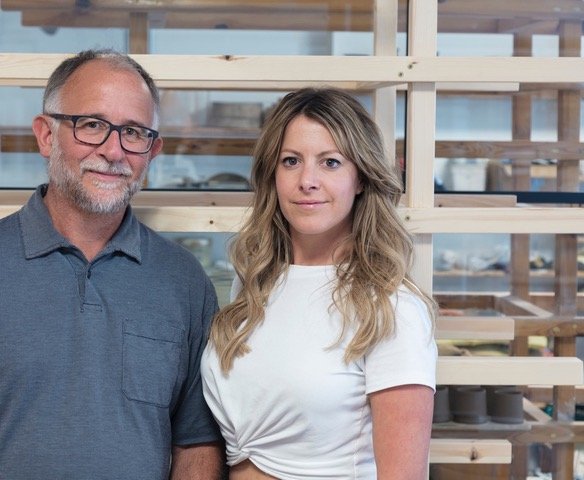
“Our focus is throwing – working with clay on the wheel. The studio also provides space for hand-building. This traditional craft provides a counterbalance to the hyperactive, mechanised, and technologically saturated metropolis.
The hands-on practice of throwing opens dormant creativity and encourages therapeutic transformation. Engaging with clay, the practitioner slows down, assimilating technique and mastering knowledge through careful repetition. It is a holistic, gradual and joyous experience, connecting the potter to a living history of human making.
Our lineage flows directly from Bernard Leach and the 20th Century revival of studio pottery – enshrined in our name. At the heart of Studio Pottery London is the desire to form a community around a shared ethos and love of pottery in all its forms.”
— Gregory Tingay, Co-founder
“Pottery can be a wonderfully social activity, as well as a solitary path of meditative practice. Our studio respects both.
We provide group taster introductions, 5 week foundation courses, and run a regular schedule of ongoing mixed ability classes that you can book according to your availability.
Our expert teachers not only lead our group sessions, they offer on-one-on tuition, which is an excellent way to learn and grow in confidence on the wheel. If you would like the flexibility of coming in your own time you can become a member, enjoying exclusive access to our members area, equipped with several wheels and workspaces.
Our studio is also available for private hire, and our team has a wealth of experience arranging workshops for private functions and one-off experiences.”
— Lucy Attwood, Co-founder

Turning Earth Ceramics
"Like a gym membership for potters", discover four pioneering London studios cultivating craft both as an accessible hobby and as a viable career.
Go here if: You want to learn a new skill, make work in ceramics, be part of a community, find new ways to relax and unwind, nurture your creativity, or even develop your career.
What is it: Turning Earth's pioneering ceramics studios are for everyone, from beginners to part-time professionals, and can now be found in four London locations: Hoxton, Leyton, Tottenham and Highgate. They offer classes and open-access membership, "like a gym membership for potters".

Turning Earth Hoxton

Turning Earth Highgate
Why you need it: Turning Earth's mission is to cultivate craft both as an accessible hobby and as a viable career (they offer a full-time professional studio, In Production, in Leyton). They want to contribute towards a broad adult curriculum that will improve the quality of life in the city.
What they offer: All the ways to try making and develop skills: Tasters, 8 or 12-week beginners courses, intermediate courses, week-long courses, weekend-long courses, private workshops, and monthly membership.
For members, they also organise improvement workshops, like their very popular raku parties, and they have exclusive access to their quarterly ceramics markets.

Turning Earth Leyton

Turning Earth Tottenham
What makes it different: The community and atmosphere are unique to each of their studios. Someone might join for the craft and end up staying for the friends and a 'second home' discovered.
What else do you need to know: They are open every day till late except on Mondays. If you’re not local you can see the wide diversity of skills and techniques on their Instagram which is often updated with pots made by their members in the studio.


In their own words: Turning Earth was founded by Tallie Maughan. Their first studio, Turning Earth Hoxton, opened in December 2013. Following a model popular in the US, it was the first dedicated open-access ceramics studio in London.

“Turning Earth is indebted to the Arts and Crafts movement at the beginning of the 20th century, which suggested that there should be no separation between utility and art.
Our vision rests in the intuited feeling that we will naturally make life more beautiful when we take our aesthetic awareness, our right-brained feeling for things, as seriously as we take our rational understanding of the world.
We exist to enable people to make beautiful physical objects, and in so doing to make their lives more beautiful: more centred, more fulfilled, more present to what they truly care about.
We feel that in making this movement, we are encouraging a broader social shift towards living with care in our world.”


Women Outdoors
Discover a community of friendly and fun-loving women of all ages, backgrounds and fitness levels based in the UK. With Women Outdoors, founder Emma Winters has created an environment where you can be your authentic self, develop outdoor skills, connect with like-minded women and go home with a big smile on your face.
Go here if: You are seeking outdoor events across the UK and abroad to inspire you and connect with nature and other people.
What is it: Women Outdoors is a community of friendly and fun-loving women of all ages, backgrounds and fitness levels based in the UK. They create an environment where you can be your authentic self, develop outdoor skills, connect with like-minded women and go home with a big smile on your face.


Why you need it: Getting into nature is about more than just beautiful views. It also brings significant mental and physical benefits such as:
Increased self-esteem
Reduced stress, anxiety and depression
Improved fitness
Increased feelings of connection and belonging
Even more joy and fun
What they offer: All of Women Outdoors’ events are led by certified guides and instructors in the Peak District, Snowdonia, Yorkshire Dales, the Lake District or abroad. Events include hiking, wild swimming, paddleboarding, climbing, navigation courses and wellness retreats.
What else do you need to know: To ensure all women have access to life-enhancing outdoor opportunities, they organise one free hike a month and provide concessionary tickets for paid events.

In their own words: We asked founder Emma Winters to tell us her story
Hey, I’m Emma, I’m 38 years old and I’m a qualified Mountain Leader & SUP Instructor from Hull, Yorkshire.
I have a huge passion for exploring nature and outdoor activities. Over the last 15 years I have travelled to 47 countries to absorb different landscapes and cultures, meet many diverse people and try lots of fun outdoor hobbies.
The whole of my working career has been as a Procurement professional in the corporate world but in December 2021 I decided to change my life forever. I handed in my notice and hit the road travelling for one year.
This gifted me with time and space to think and reflect on what I’m passionate about and where I want to spend my time and energy.
It was during this time that I founded Women Outdoors with the mission to break down confidence and financial barriers that prevent women from getting outside, trying new things and meeting new people.
Women Outdoors creates a safe space for all women, provides financial support where required and teaches the community about conservation, flora & fauna & outdoor skills.
If you would like to know more about my journey and creating Women Outdoors go here.
Women Outdoors
For UK events go here. For trips abroad go here.
For private events contact emma.winter@womenoutdoorsuk.com
