

Emma's Torch
A beacon of light for refugees in Brooklyn is forging a way forwards through culinary education.
What is it: A not-for-profit Brooklyn restaurant and culinary school offering paid training and job placement for refugees, people granted asylum, and survivors of human trafficking.
What you need to know: Founded by Kerry Brodie in 2016 after she completely shifted her career focus from public policy — she previously worked at the Human Rights Campaign and has a Masters degree in government from John Hopkins University — to the restaurant industry, completing her studies at the Institute of Culinary Education in New York.
The impetus for this shift and the inspiration for Emma’s Torch: the possibility of food to do more than nourish, an idea that came to Brodie while she was volunteering in a Washington homeless shelter. Food can connect disparate people, bringing them together around the table, while the cultures that shape our understanding of food remain foundational no matter where people find themselves. But Brodie also saw a way to solve the difficulty that restaurants had of hiring line cooks in New York and the struggles of people newly arrived in the US to find employment.
Brodie now works with refugee resettlement agencies, homeless shelters, and social service providers to identify candidates for Emma’s Torch’s signature 10-week training program for refugees that covers everything from knife skills to job readiness. After graduation, Emma’s Torch has placed 97% of job-seeking graduates and as many as 100 trainees have secured permanent employment in the restaurant industry since it was founded.
With the COVID pandemic and the devastating impacts on the hospitality industry, Brodie has pivoted to a new partnership, becoming a Rethink Food certified organization with the aim of reducing food insecurity by donating 600 meals a week to the Nutrition Kitchen Food Pantry.
What they offer online and off: During pandemic closures, take a virtual cooking class, buy pantry provisions made by students and partners – there’s also own-brand goods such as Hawij Hot Cocoa Mix – or order pick-up and delivery. Donate to secure the future of this organization, if you are able.
Why we think it matters: Emma’s Torch has at its heart a belief that refugees can be welcomed into their new home country. Its name is taken from the poet Emma Lazurus, whose famous line is etched into the Statue of Liberty: “Give me your tired, your poor / Your huddled masses yearning to breathe free”. But this historical precedent stands in contrast with present-day experiences of xenophobia and prejudice around refugees, the difficulties displaced people have of finding employment or housing, and the fatigue and barriers that come with negotiating an ever-evolving political context that often characterizes them as a burden. But Emma’s Torch builds on the positive impacts of NYC’s large population of refugees, their contribution to the local economy, particularly in the borough of Brooklyn where it is located. As Brodie has said: "We engage in this work not simply because our students are people less advantaged than ourselves; we do this because, as Americans, we believe that when we are at our best, this is how we behave, simply because it’s the right thing to do. There is no ‘us’ and ‘them’, but if there was, I would argue that ‘they’ make ‘us’ stronger and better. What our students bring to the table has value, and we are fortunate to be able to work with them to ensure that they are welcomed by their new community."
In their own words: “We find comfort in the diversity in our classrooms and kitchens. Refugees, asylees, and survivors of human trafficking from over 35 countries have passed through our kitchen. Not only has this pushed us to be more sensitive and aware of culinary traditions from across the world, but it also reaffirms that there is so much binding us all together. Our menu reminds us of this common ground, and draws from both our students’ cultures and our team’s culinary upbringing. As we grow, we hope our menu continues to not only be a learning tool for our students, but also a unique conversation between the almost 100 students and graduates who now have a home at Emma’s Torch.”
We’re inspired to: As the hospitality industry is severely impacted by the consequences of the pandemic, support your local restaurants if you are able and you’ll be supporting the jobs that they provide. Whether that’s a burger night that your local café has pivoted to, a finish-at-home delivery box, or eating in the cold outside, find ways to support the independents so they, and the people they in turn support, can get through this time. As Emma’s Torch can attest, what you eat goes beyond food.
To find out more: Website / Instagram / Facebook
Additionally, try: Social Bite / Brigade Bar + Kitchen / Luminary Bakery

Something Good
A Newcastle store making it easier to live the zero-waste lifestyle.
What is it: A sustainable living store with a plastic-free pantry and a refillery, Something Good is bringing the zero-waste lifestyle to Newcastle (and possibly beyond if its popular online service is extended).
Why you’ll love it: Founder Lauren Wedderburn, an architect by training, has applied an ethos of great design to create a minimalist, light-filled space that makes supporting a more ethical lifestyle much easier for all of us. Confused by the implications of the choices that you make in a regular supermarket run, Lauren has chosen a selection of products that not only fit the store’s carefully curated aesthetic but also the rigorous set of values (biodegradable, plastic-free, and not tested on animals) on which it is founded.
What you need to know: Here you’ll find the everyday items that you use in your life and in your home – the porridge you make for breakfast, the coffee that wakes you, the oat milk you’ve now switched to, the body wash you apply in the shower — but without the environmental devastation. Gone are single-use plastics and none-reusable packaging: Dried goods, like cereals and spices, nuts and pasta, are dispensed into compostable bags or long-use containers; bath, kitchen, and cleaning products distributed in refillable bottles so you buy only what you need.
Where possible Lauren sources locally, supporting the independents in her community similarly striving for a better way of living, like handmade chocolate from Tynemouth, natural deodorant produced a walk away, and coffee beans ground and roasted in North Shields.
Purchases also support one of the shop’s two charity partners: tree planting with the Tree Sisters — whereby money for a tree is donated with each delivery or each birthday of loyalty club members, and The Hygiene Bank, alleviating hygiene poverty through a buy one / donate one scheme.
How to bring this into your life: The pandemic has driven more of us online for our food shopping. Replace an Ocado order if you can with click and collect from a zero-waste store. Something Good even offers local delivery by electric cargo bikes or a zero transmission van.
Why we think it matters: When we read that microplastics have now entered our water supply and that traces have been found in our bodies, there’s no hiding the devastating impact of our consumer choices anymore. From killing seabirds and marine life to accelerating climate change, that throwaway water bottle lasts longer than the thirst you had when you bought it. Similarly, we’re overbuying when we shop, with an estimated 33 to 50% of all food grown globally never eaten. By buying less and buying what you need, you can reduce the amount of food that goes moldy in your fridge or is forgotten at the back of a cupboard. Stores like Something Good present an alternative way of purchasing our food and products for our home in a way that not only feels good but does our planet good too.
In their own words: "Our little shop brings together all of the products we use ourselves to make our everyday routine a little less wasteful, and a little more sustainable! Everything we sell is tried, tested, tasted and loved by us, so we can make it simple and affordable for you to make some small changes, too.
We make sure each product is thoughtfully designed, well crafted, and sourced from only the best growers, makers and creators. And we make sure to champion local small businesses at every opportunity."
Something to do: Many more of us are turning to plant-based eating as a form of environmental protection, but many of our cosmetic products also use animal derivatives in their ingredients. If you are making the switch to vegan, look on your bathroom shelf as much as your kitchen fridge. Lauren recommends Pamoja skincare, as a planet-friendly go-to.
To find out more: Website / Instagram / Facebook
Additionally, try The Good Life for more on pursuing a zero-waste lifestyle.

Yorkshire Sculpture Park
As we’re forced to head outside this winter, we’re looking to an open-air art museum for awe and wonder in a natural setting.
What is it: A nine-foot-high Birkin bag. An oversized teapot in which to rest. A blank snowman in the middle of a glistening pond. Yorkshire Sculpture Park is an awe-inspiring museum without walls, with over 80 modern and contemporary sculptures set across 500-acres of the historic eighteenth-century Bretton Hall estate.
What you need to know: Since it was founded over 40 years ago by Peter Murray (also the current Executive Director), a young art lecturer inspired by European sculpture parks who had the radical idea to create an outdoor art exhibit, YSP has evolved from the UK’s first sculpture park to once of the largest in Europe and one of the most world-renowned. Through its ever-changing displays and temporary exhibitions in its enclosed galleries, YSP brings new audiences to the practice of sculpture — redefining what it is and how we view it — while enabling wider access to art and opening the field for all.
Why you’ll love it: Although there’s obviously a focus on the artworks themselves — including classics by local artists Barbara Hepworth and Henry Moore — it’s so much about how those works are situated in the surrounding environment, their dialogue with the forms of nature around them, that creates the awe-inducing and reflective situations that YSP has become known for. The outdoors replaces the architecture of the museum — trees instead of white walls, grass banks instead of wooden floors, light derived from sunlight instead of overheads — to create a living context of a very different kind.
With art embedded in nature, our perception shifts according to location, light, time of day, and the seasons. No longer static, each work’s place in the landscape is sensitively considered – part of the evolution of YSP has been the transformation of the landscape that holds it to be a more fitting backdrop for its sculptures and audiences. Recently opened award-winning visitor center The Weston designed by architecture practice Fielden Fowles and built on the site of a former quarry, takes inspiration from land artists Michael Heizer and Robert Morris. And in case you need a reminder that art and nature sit closely together here, you’ll find sheep wandering amongst its sculptures and herons found by its art trails.
Why we think it's different: After a year that has seen its capacity to bring in visitors drastically reduced (80% of revenue is from audiences on-site), YSP has also recognized a silver lining, its vital role in its audience’s wellbeing, creating much-needed opportunities to bring people outdoors and to connect with art and nature. YSP has become a location for refuge and reflection, a place that can give respite in an uncertain time. This builds on the work started in pre-COVID times such as YSP’s wellbeing program. Deputy Director, Heather Featherstone, recognizing the social and personal infrastructure that YSP provides, has commented that: “Museums and cultural organisations are the hidden social care that no one really talks about.” YSP encourages a way of being and a mode of engagement that goes beyond the typical museum audience experience, with impacts beyond a visit and into our everyday lives.
In their own words: “YSP’s driving purpose for 40 years has been to ignite, nurture and sustain interest in and debate around contemporary art and sculpture, especially with those for whom art participation is not habitual or familiar. It enables open access to art, situations and ideas, and continues to re-evaluate and expand the approach to considering art’s role and relevance in society. Supporting 45,000 people each year through YSP’s learning programme, this innovative work develops ability, confidence and life aspiration in participants.”
Something to do: Art for all? Participate in new public art initiative, The Great Big Art Exhibition, hosted by Firstsite, Colchester with the support of partners such as Tate and the National Gallery. Here rainbows in windows are replaced by artworks created on a fortnightly theme, linking us to our neighbors and displaying the creativity that many of us have newly found in lockdown and beyond.

Black Girls Trekkin
How two friends in Los Angeles are working to make the outdoors more diverse.
What is it: A community and advocacy organization based in LA with a goal of making the outdoors more inclusive.
What you need to know: Friends Tiffany Tharpe and Michelle Race started the group three years ago with the goal of increasing the representation of Black women in the outdoors. Both share a love of hiking the trails around their home city of Los Angeles — a way to escape the urban hustle and a form of wellbeing in their everyday lives — which they wanted to share with other like-minded Black women and girls while shifting the narrative of who gets to even be outdoors. From inclusive group hike meet-ups to a range of outdoor activities like camping, backpacking, and nature adventures (kayaking, rock climbing, outdoor yoga) as well as education and conservation programs that focus on caring for the planet as much as understanding its history (particularly that of displaced native Americans), Black Girls Trekkin is making the outdoors safe, accessible and inclusive.
How to bring this into your life: Though it’s on pandemic pause, BGT’s group hikes around LA will hopefully be back soon. In the meantime, BGT is continuing its support of hiking for everyone in its online spaces.
Why it matters: We’ve written often of the benefits of nature for our wellbeing (there’s a whole category dedicated to the impacts of our green and blue worlds on our mental health), but we’re also conscious that access to nature is neither equitable, in how it is accessed or received. An understanding of the natural world, what it represents, who gets to connect with it and how, and its impacts on our psychological health, is deeply woven with issues of racial injustice.
Just a handful of studies that attest to this fact: A study of the 4,600 photos of people within Outside Magazine from 1991-2001, depicted just over 100 images with Black Americans. Data from the National Parks tell a story of deep racial inequality: with non-White Hispanics comprising between 88 and 95% of visitors to national lands and African Americans 1 to 1.2 percent. While another study showed that people of color were three times as likely to live in nature deprived neighborhoods.
Black Girls Trekkin works against the stereotype that Black girls and women don’t go outdoors. The co-founders' experience speaks to the biases that came with their own experience of the natural world: As a kid, Tiffany’s understanding of nature came from watching PBS, Discovery, and Animal Planet – exploring was just something that her family didn’t do. When Tiffany did start hiking in her twenties, she realized how few other Black people were on the trails, an insight shared by a Yosemite National Park Ranger. Similarly, Michelle was the only Black person to graduate in her class of marine biologists, a subject and area of interest that wasn’t “something black people do”. The narrative of who gets to explore our natural world has been primarily focused on the experiences of white people.
BGT also works against the judgment and condescension that can occur when Black women do head onto the trails, from stares to offers of help to outright hostility, advocating safety and respect for everyone who enjoys the outdoors. Alluding to a history of the natural world entangled with persecution in the minds of black people, Michelle has said this of the perceived barriers to the outdoors: “It might also come from the story we inherited, from a time when venturing out into the woods alone could end in violence and when certain spaces were literally off-limits due to racial segregation. As these well-founded words of caution have been passed down, the aversion has persisted even as the original reason has fallen out of the story we tell.” BGT is shifting this narrative, creating new stories of the Black experience of the natural world.
In their own words: “We’re here to show the world that not only do black girls and women hike, we also run, climb, swim, and have a thirst for adventure that is too often underrepresented or unacknowledged. We’re beautiful, black women who trek it out in the great outdoors!”
Something to inspire: Interested in forming a local chapter, reach out to BGT or seek out one of the other organizations listed below:
Outside the US? Let us know about other groups active in making access to nature more equitable and diverse.
To find out more about Black Girls Trekkin: Website / Instagram / Facebook

Silent Book Club | In Conversation with Laura Gluhanich
We talked to Silent Book Club co-founder Laura Gluhanich about how a simple night of reading with a friend became a global phenomenon.
We recently discussed with co-founder Laura Gluhanich all the ways that Silent Book Club offers community and a space to unplug, both vital to our mental health and emotional wellbeing as we negotiate these uncertain times.
What compelled you to start reading together, silently?
One night out to dinner at a favorite local spot in San Francisco my friend Guinevere de la Mare and I shared our frustration with traditional book clubs, and our joy of reading at restaurant bars. The next time we met for dinner, we planned to sit at the bar and read together. We continued meeting up, and as friends heard about our “silent book club” they asked to join. Everything today comes from that.
How do you get over that initial need to chat, to make noise, to fill the silence? We’re so unaccustomed now to filling the spaces between us.
Our format includes some planned conversation at the start. Typically a silent book club meeting starts off with everyone saying hello and sharing what they are reading. It creates a shared space and connects folks over shared books or genres. I think our members appreciate that when they start reading they know they don’t have to worry about anything else at that moment. We set an alarm and wrap up the session, so they can just dive into whatever they are reading.

Book club selections can be very particular to a group or the situation of coming together to talk about one. Are there certain books that lend themselves to Silent Book Club? Like, don’t read conversation-inducing books such as anything by Glennon Doyle or Three Women?
What surprises me more is that at every in-person meet-up, I’d venture we have a minimum of five genres represented in a group of ten. It is a very welcoming group, and if someone isn’t into what you happen to be reading, it’s not taken personally. And in our Facebook group, just about everything goes, though we choose to not offer a platform to white supremacists, misogynists, and the like.
Have you ever thought of Silent Book Club as an anti-tech space?
Yes! My co-founder and I both work full time in tech, so providing a time to ignore notifications is a benefit we recognize.
Or maybe even an anti-loneliness initiative?
Yes! I love that Silent Book Club can provide community in a really low-key way. Beyond the minimal conversation, it is super low stakes, so especially if people are less extroverted it’s a great opportunity to connect. And while there are lots of book lovers in the community, particularly the Facebook group regularly gets posts from folks who are getting into reading for the first time or rediscovering their love.
You have chapters globally now. Have you noticed differences between how these book clubs meet or how they are received locally?
Not really! Shout-out to our Genoa chapter for being super photogenic and fun. There’s a ton of variety throughout our chapters but I don’t see a difference based on location.
What kind of setting is conducive to a Silent Book Club?
As you can see from that Genoa link, lots of places work to meet up and read. We recommend cafes and bars (hotel lobby bars can be chic and have the perfect level of background noise). Bookstores, ice cream shops, community centers, parks, beaches, and backyards have all been successful. We’ve even seen them at conferences — a great option for introvert attendees to chill out.
Do you have any favorite meetup anecdotes?
We’ve had a couple of chapters see people meet at their events (ready for that meet-cute to happen in a movie). We definitely hear more about books getting discovered than soulmates.
One fun thing that has happened with the virtualization of Silent Book Clubs is the ability for anyone to join any virtual meetup. Our Denver chapter has had guests from Mexico City, Guinevere has said hi to Italian chapters, and I sat in on a meetup based in South Korea. It’s a fun way to explore!
How are Silent Book Clubs adapting to the shifting situation of the pandemic?
We’ve seen dozens of chapters shift to an online format. A number have hosted outdoor meetups globally. Of course, plenty of countries have had competent pandemic leadership, so they have been able to meet far ahead of us here in the US.

Why do you think the idea of Silent Book Club has taken off so much?
I think there are two primary reasons people have responded to Silent Book Club. The first is broadly the mental wellbeing aspects that I’ve already mentioned. And in conjunction, we are all so over-productive, Silent Book Club is an antidote to that.
What is your vision for Silent Book Club going forwards?
We’d love to see its continued growth, supported by brands or organizations that share our mission of encouraging reading. We plan to continue our author series in 2021, and have an idea of a global Silent Book Club week, promoting literacy in public.
Any places out in the world or books that you seek out to support you in uncertain times?
We’re big fans of independent bookstores and libraries, and while there is broad uncertainty, we encourage folks who have the resources to support their local cultural institutions in an ongoing way. The mutual aid movement reflected in Little Free Libraries and the Community Fridge network gives me hope.
What should people do if they are curious about Silent Book Club?
Find a local chapter on our website or a virtual meetup. We welcome you whether you are looking for the time to get through a few chapters for another book club, or just for fun.
“If you are finding it hard to find space for reading, joining Silent Book Club gives you that time back. It prioritizes reading in your life again. It gives books back to you. ”
Discover more ways to connect

Freedom Apothecary
A holistic wellness space and boutique for radical self-care in Philadelphia puts women at the center of all it does.
What is it: A holistic wellness boutique in the Northern Liberties neighborhood of Philadelphia that’s all about empowering women.
What you need to know: Co-founded and led by women, the inspirational Morissa Jenkins and Bonkosi Horn, Freedom Apothecary stocks female-owned brands that they trust and that share their same values around clean living, many of which are by women of color.
Why you’ll love it: Opened in the summer of 2019, Freedom Apothecary reflects Jenkins and Horn’s shared aim of a place that goes beyond just products, to one that also holds women in community, fostering connections, and sustaining relationships, with themselves and others. The light-filled corner store space with its calming arrangement of products on natural wooden shelves, dried moss wall behind the register over which the words FREEDOM are set, and the abstract mural by local artist Dora Cuenca, set a tone of welcome and openness, a space for self-care and in which to pause.
How to bring this into your life: We all need some self-care right now. During closed times when their in-person treatments and their blend bar for personalized products are on hold, you can still shop Freedom Apothecary’s selection of skincare, cosmetics, and wellness products. Favorites include the Green Tea Body Butter, Gleaux Body Balm, and Rose Face Oil – all made by Morissa – as well as brands Botnia and Noto. Or book an at-home botanical customizable facial. During open times, Freedom Apothecary offers a range of workshops in its event space that make wellness an attainable priority in our everyday lives.
Why we think it matters: Morissa and Bonkosi take the idea of “radical self-care” – in short (there’s a long history here – see below) caring for yourself first before you care for others — and gives it foundational support in holistic wellness and a physical space. Freedom Apothecary is targeted at “anyone who has skin”, with the belief that anyone can practice self-care, including black women and women of color for whom the concept of their own healing has historically (and still) been pushed aside for their healing and support of others in their family and community. Wellness here is a political act, one of resistance and empowerment.
Morissa and Bonkosi set out to consciously create a place of support and safety, to extend inclusivity in concepts of wellness and the industry that supports it (often itself whitewashed), and to provide access to clean, non-toxic products (shifting who has access to them and who gets to make them). Freedom Apothecary is ultimately about helping all women find themselves, to give space for whoever they can be, and allowing for whatever it is they need.
Freedom Apothecary contains in its name the ethos they hope to promote, both freedom from toxic products that actually harm our bodies, our selves and our planet, and freedom as it pertains to choice, to live our lives in our own way, one that allows ourselves to be nurtured and to support ourselves in ways that we need.
In their own words: “ We create space for women to empower women. We are women-founded, women-led; we provide a platform for female-founded brands; and ultimately, we foster dynamic, inclusive and brave healing spaces for all women.”
Inspired by Freedom Apothecary to: Read activist and feminist writer Audre Lorde’s A Burst of Light: “Caring for myself is not self-indulgence, it is self-preservation, and that is an act of political warfare.” Wellness means something very different from wherever it is we are standing, it's affected by race, gender, and class. Even the idea of self-care has become shaped by privilege and inflected with insta quotes and spa days. Reconnect with its activist history: How people (and particularly people of color) are able to look after ourselves is navigated within how the world allows us to do so and the importance it puts (or doesn’t put) on our own health and wellbeing.

Social Bite
A cafe with a cause in Edinburgh that became a movement to end homelessness.
What is it: A sandwich shop in Edinburgh that became a movement to end homelessness in Scotland (and has also captured the attention of Meghan Markle, George Clooney, and Helen Mirren)
What you need to know: The first café was opened in 2012 on Edinburgh’s Rose Street – amongst the Subways and Prets — by co-founders Josh Littlejohn MBE and Alice Thompson (who recently left to join motivational speaker agency Speaker Buzz). From the outset, Social Bite donated its profits to homeless causes and a pay-it-forward jar sat on the counter so that customers could donate a meal to people experiencing homelessness. Now Social Bite has grown into an award-winning social enterprise with five of its mission-driven cafes across three cities (now including Glasgow and Aberdeen), and one central kitchen.
But there’s also now this – a housing development Social Bite Village, the now international Sleep Out campaign, and an annual fundraising campaign to provide Christmas meals to the homeless (the cafés in Glasgow and Edinburgh this year opened to homeless people in Edinburgh and Glasgow and served 155,000 meals).
How to bring this into your life: One small ask: Buy a box of brownies. Each ethically sourced and handmade brownie box helps to fund jobs, housing, and support for people experiencing homelessness. Need more ideas? Social Bite has a ton of them for wherever you are, like using Amazon Smile, Sustainably, and Give as You Live.
Why we think it matters: At a moment when homelessness and food insecurity are becoming dire consequences of the Coronavirus epidemic, Social Bite's mission of tackling homelessness with compassion, support, and love is needed more than ever. One-third of the cafes’ workforce are people who have struggled with homelessness. Their high-end restaurant Vesta Bar + Kitchen sets aside Monday afternoons to feed people experiencing homelessness for free and with humanity – with a two-course menu of dishes typically offered to paying patrons during the week. And the business did a very quick pivot when the COVID crisis hit. They shifted their operations to feeding the hungry — still including the homeless, but also now those experiencing food poverty and vulnerable children and adults — with a weekly target of providing 5000 emergency food packs to partners in communities in Scotland, and 160 free meals distributed each day in the cafes in Edinburgh and Glasgow.
In their own words: “We believe that now more than ever, there is a need to put aside our differences and come together to ensure that everyone has a safe space to call home.”
Inspired to: Volunteer to help the homeless and feed the hungry in your community. Pack food parcels at your local food bank (and donate items), support campaigns for free school lunches, and share food going to waste on the Olio app.
To find out more: Website / Instagram / Facebook / Twitter
Try also: London’s Luminary Bakery and Brigade Bar + Kitchen

EPIC: Irish Emigration Museum
Though we’re mostly about small in the places we bring into our guide, sometimes we need to go big, like EPIC big.
What is it: Only Europe’s Leading Tourist Attraction 2019 & 2020 (although it opened relatively recently in 2016), this interactive museum on the famed River Liffey in Dublin’s docklands isn’t afraid of epic narratives as it covers over 1,500 years of Irish history and the stories of the 10 million people who left Ireland behind.
Why you’ll love it: A feeling of discovery and exploration is built-into the labyrinthine floorplan which takes you on a journey through the emigrant experience with mostly digital installations that are high engagement and participatory, and often awe-inspiring in the ways the emigrant experience is shared. You’ll pass through passport control, sit within intimate booths with conversational stories, share the perils of the emigrant journey, and even walk on the darker side of this history as you learn the global impacts of Irish emigrants.
What you need to know: It was Irish emigrant, Annie Moore, who made history in 1892 as the first person to be processed through Ellis Island’s gates though her story of what happens after makes you doubt the reality of the American dream as it came to be foundational to the nation in which she arrived.
What they offer from wherever you are: The virtual tour had our preteen confidently running through the rooms and following his curiosity as if he was there, the boundary between the physical and the virtual so porous these days. Also, check out their interactive library and Online Educational Resources for our distance-learners.
Why we think it matters: As the world turns this very week – with a new US president proud of his Irish heritage and with a different set of policies than the previous administration — we’re hopeful that the debate around immigration can shift too, becoming less caustic, a sense of humanity restored to the discussion. EPIC shows the extraordinary reach of Irish emigrants – the museum itself was co-founded by Neville Isdell, the Irish-born former CEO of Coca-Cola – and how they have shaped the world in fields as diverse as sport, culture, politics, science, and technology. Immigration has become a highly complex, and often emotionally driven, debate. But we’re always struck by these stats (about the US experience specifically) that counter the belief that immigrants negatively impact the nations in which they arrive: in 2017 although 13.7 percent of the US population are immigrants, they make up 30% of new entrepreneurs. In fact, companies such as Amazon, Apple, and Google were founded by immigrants or their children, while Microsoft is headed by an immigrant.
EPIC tells the complex story of one nation’s emigrants, but it stands in for impacts felt by migration elsewhere and pulls back the narrative of human movement to something more people rather than politics based.
In their own words: “Go beyond the stereotypes at EPIC The Irish Emigration Museum. You won’t find leprechauns or pots of gold here, but you’ll discover that what it means to be Irish expands far beyond the borders of Ireland through the stories of Irish emigrants who became scientists, politicians, poets, artists and even outlaws all over the world. Discover Ireland from the outside in and find out why saying “I’m Irish” is one of the biggest conversation starters, no matter where you are.”
Participate: If you are based in the US, support the work of the ACLU on immigration, advocate for DACA. and be mindful of your own inherent biases around migration.

Golden Hare Books
Edinburgh’s Golden Hare Books keeps the city’s literary tradition alive with its thoughtful curation.
What is it: An award-winning (Bookshop of the Year 2019 UK & Ireland) indie bookstore to warm your heart (and hands by its wood-burning stove) in Edinburgh’s village within the city, Stockbridge.
What you need to know: Founded in 2012 by Sir Mark Jones – previously the Director of the Victoria & Albert Museum and the National Museums of Scotland – this is a bookstore as curated space in both how it looks and what gets to be included. Covers face out and draw attention to great design, creating an immediate visual hook for potential readers and making objects of the books themselves.
The range of its small careful selection of books changes constantly –‘the idea is that you never visit the same bookshop twice.’ Golden Hare is known for bringing in a wide range of choices, including works in translation, books by women, and diverse children’s authors
How to bring this into your life: It’s all about the reading subscription, Postbooks, which sends a beautifully packaged fiction or non-fiction book(s) each month specially chosen for you, often around a theme, like Green Transformation, and with its own reading guide. The key difference though is that Golden Hare supports indie presses and small publishers in its choices such as Charco Press, Tilted Axis, or & Other Stories, widening your reading from the usual suspects and making sure more writers get attention from readers.
Golden Hare is also a bookstore where you can become a Member, and during usual times there is an active book club and Sunday Stories reading club for kids. Golden Hare has pivoted to the ways we now shop: click and collect, and Saturday bike deliveries.
Why it caught our attention: This is a bookstore that works hard. It does a lot. Not just in its active support of indie publishers but its reach within the local community and that of the city of Edinburgh. In 2019, Golden Hare hosted its first book festival with local partners and it co-hosts the Edinburgh Book Fringe with Lighthouse Books. Books are embedded in the cultural life of Edinburgh – a UNESCO City of Literature. It was famously here that J.K. Rowling wrote some of her Harry Potter series and Arthur Conan Doyle, Sherlock Holmes. Golden Hare keeps the tradition alive of supporting local voices and creating a place for the writing community.
In their own words: “We are a knowledgeable team of self-confessed reading addicts who have been selling beautiful and important books since 2012.
Our charming independent bookshop is situated in Edinburgh's Stockbridge, where you can find an ever-changing collection of fiction and non-fiction for readers of all ages. We hold close to 2000 titles covering all genres of writing from cookery to travel, from flower arranging to science fiction - and many more topics in between.”
Lost at home: It's winter where we are. Maybe there too. Cozy down with a book. Choose one of Golden Hare’s winter picks: Once Upon a River by Diana Settenfield, The Snow Child by Eowyn Ivey, and The Changeling by Victor LaValle. While purchasing, make a resolution not to buy from internet giants (take this resolve into the rest of 2021).
While here: Seek out Golden Hare collaborators café Lovecrumbs and Smith & Gertrude, as well as If Lost favorites the Royal Botanic Gardens and Lifestory.
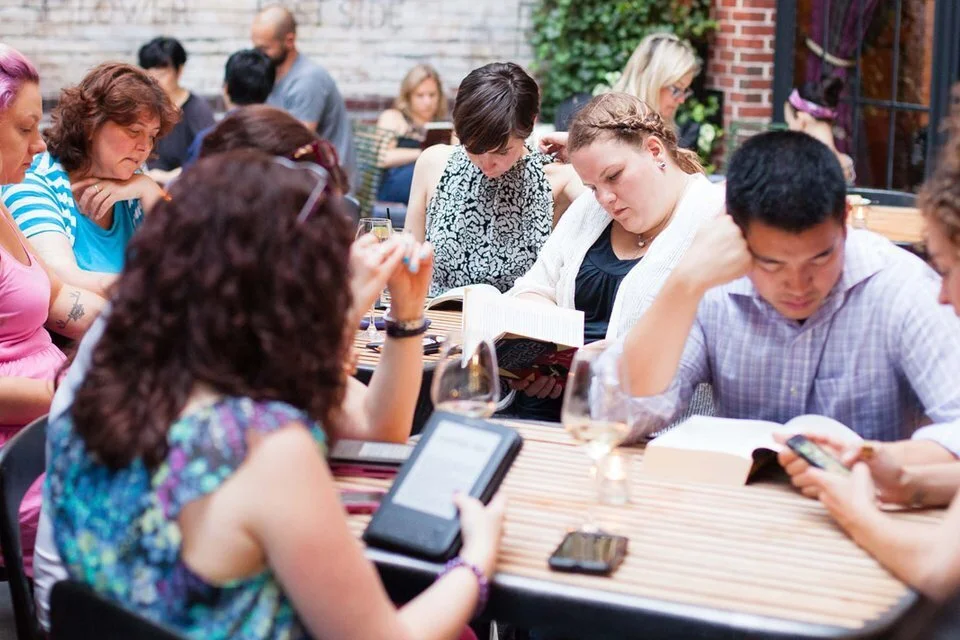
Silent Book Club
For the introverts, a book club that doesn’t get you talking.
“Welcome to introvert happy hour.”
What is it: An opportunity to read. The twist, there are others reading with you too. You’ll be in a café, a bar, a public library; in COVID times maybe you’ll be on Zoom or outdoors. The people with you will have their own books, you’ll have yours. And though there’s a social moment built in — a hello and sharing of what you are reading — the focus is simply on you and your book. Enjoyed now in ways which we have learnt to understand, together but apart.
Why you’ll love it: This is one for the introverts among us (of which we count ourselves). Yes, book clubs are great – we’ve hosted and attended many – but sharing just the love of reading that’s something magical. The Silent Book Club started in 2012 when two friends Guinevere de la Mare (a UX writer at Google) and Laura Gluhanich (director of programs at Him for Her) began reading together in a neighborhood bar in San Francisco. Gone was the pressure of typical book clubs, having to read the same books, having smart things to say, hiding the fact that you haven’t read the book. Here was just enjoying the moment of reading together – no mobile phones, no commitments pressing in, no pressure to select the right thing to share or carry out a conversation in the right way. Just a book, a friend, and a nice location somewhere. And from this, this now Silent Book Club grew to friends and acquaintances, and grew to a handful of cities, and grew to now 285 chapters in 37 countries.
What you need to know: If books are your happy place, you can now seek out a Chapter probably wherever you are, though if there isn’t you can start one (friends there isn’t one in Bath or the Marin area where we’re both based if someone’s inclined to host…). During stay-at-home times, many of these Chapters offer virtual read-ins.
Why we think we need it to exist: We’re noticed something odd going on in our lives. Though we love books, we’re no longer reading them in quite the same way that we used to. We seek out recommendations, we subscribe to book boxes, we haul heavy bags from independent stores, we ship boxes upon boxes when we move, but the reading part is not as high up our agenda as it once was. You may be finding the same in your life. Life pressing in, doomscrolling replacing narrative and character development, anxiety blocking any possibility of retreat or escape. Time has gone, and we’re trying to find it again. For many purposes, but also so that we can return to the books that we love and the ones we might love in our future. If you are finding it hard to find space for reading, joining a Silent Book Club gives you that time back. It prioritizes reading in your life again. It gives books back to you.
It also gives you other people. As many of us spiral in our loneliness, that companionable silence actually gives us connection, it fosters relationships. As co-founder Gluhanich says, “For people who want to do something on their own but at the same time are seeking connections and a community with other people, SBC’s can offer them both of these. People all around the world are forming emotional bonds with one another while reading in silence.”
In their own words: “Silent Book Club is about community. Everyone is welcome, and anyone can join or launch a chapter. We encourage people all over the world to start their own Silent Book Clubs. All you need is a friend, a café, and a book. We have more than 240 active chapters around the world in cities of all sizes, and new chapters are being launched by volunteers every week.”
Something to do from anywhere: Wake up, doom scrolling. Before bedtime, doom scrolling. These have traditionally been times for reading books. So for a non-binding, after the New Year’s, non-resolution, ban the phone from the bedroom, buy a book light, and read books again. Paper pages. Like us, you may find your brain working just that little bit better, your life feeling slightly less heavy, and the world just that little bit bigger. You’ll be reading books again.
To find out more: Website / Instagram / Twitter / Facebook
Love this? Try also Shelf Help, or podcast Celebrity Book Club

Cafe Con Libros
A feminist bookstore making vital space for the stories of women and girls.
What is it: An intersectional feminist independent bookstore and coffee shop in Brooklyn’s Crown Heights neighborhood.
Why you’ll love it: Café Con Libros was founded by Kalima DeSuze in December 2017 when she made real the space that she wanted to see in the world, one that could hold the stories of womxn and girls – stories which have overwhelmingly been sidelined in favor of those of male voices – for those who want, need and are open to hearing them. Though intimate, the reach of the store is wide, bringing together on its physical and virtual shelves an abundance of books by female authors (99% of the selections are books by, for, or about womxn), including those beyond the continental US and by LGBTQAI+ writers.
Why we think it matters: During normal times, Café Con Libros is very much a community space for female-identifying folx; it's somewhere to hang out and be as much as it’s a bookstore. As Kalima says, the spaces that we create are political. Who holds physical space, what that space is used for, and even the stories these places are allowed to tell has meaning on a personal and collective level. Bookstores like Café Con Libros hold not just the stories within pages that we need to hear, but stories within a place that allow for all possible futures, for nurturing relationships, for community action, and for extending our learning together. As Kalima notes: “It’s time that womyn’s stories be prioritized and that a space exists explicitly for and about womyn. So many of our spaces are male-dominated; even the ones that are created solely to be for and about womyn. My womyn only spaces have served as a healing tonic and, a reminder of whose shoulders I stand on. It’s important that more of our girls and womyn have access to such warmth and mirroring.”
How to bring this into your life: As mothers of young daughters, we’re excited by the monthly subscription boxes, which include an option for baby feminist board books for the zero to fives and emerging feminist books for kids aged five to nine. There are also subscription boxes focusing on womxn of color and for the feminists among us. You can also join one of two book clubs that meet monthly (on zoom during shut-door times): either the Feminist Book Club which focuses on a book by, for, and about womxn, or The Womxn of Colour Book Club, a reading space and conversation for womxn of color. There are also virtual read-a-longs and a monthly podcast Black Feminist & Bookish, hosted by Kalima.
In their own words: “ We value: family. community. justice. art. transparency. accountability. equity. equality. authenticity. joy. solidarity. earth. the brilliance and possibility of imperfection. love.
We respect and value the contentious history womxn of color have with the word "feminist;" the tension hold us to account to live our Black Feminist and Womanist principles in real and measurable ways. We were born from and are guided by the lush cannon of Black Feminist thought producers and activists; the space endeavors to be intersectional, inclusive and welcoming of all who stand with and on behalf of the full human rights of womxn and girls. We seek to advance and uplift stories of womxn and girls around the globe who are redefining the word feminist and feminism with every day, ordinary culturally informed acts of resistance and love.
Something to inspire: Try a reading challenge: purchase, support, and read books only by womxn, or womxn of color, or by LGBTQIA+ writers for 3, 6, or 12 months. Change your knee-jerk choices in what you’d ordinarily see or consume. Extend this challenge even further to include podcasts, TV shows, films, and music that are by, for, and about womxn. This not only helps our own understanding of the ongoing pursuit for gender equality but the choices you make in where you put your attention and your money indicates to the industries behind them – the entertainment, publishing, and culture industries – what it is you really want to see.

Black Bird Bookstore
San Francisco’s Black Bird Books sits on the edge of the world while being resolutely of its place.
“a community bookstore for all”
What is it: Black Bird Bookstore is exactly how an independent bookstore located a couple of blocks from the Pacific Ocean should look. It brings the outdoors very much in. Hinting at Cali Cabin chic, Black Bird is wooded out (in reclaimed oak and cypress) coziness — perfect for a neighborhood that in San Francisco is known for its non-warming fog blanket. There’s even an indoor treehouse reading nook complete with a twisting oak branch that our kids love to spend time in.
Why you’ll love it: Opened by Kathryn Grantham, formerly the owner of feminist bookstore Bluestockings in New York, this is a place driven by curiosity: all titles face out, are regularly changed, and tightly curated from an inclusive selection of writers. It’s all about discovery with thought out selections made from the 1000 titles across just 900 square feet of space.
What they offer (online and off): Even during shifting times, this sense of discovery is still there, only its also happening online: chose from a monthly box of curated picks such as the Bay Area Box, Poetry Box, or Cooking Box. You can also currently book a 30-minute appointment to shop alone (from 6 pm to 8 pm), which sounds like a book lover's fantasy date.
Why we think it's special: Opening an independent bookstore feels counter to all the claims that both storefronts and books don't work anymore. But Black Bird makes the case that as our lives are pushed to be experienced more and more online, physical spaces for books and people matter. It’s a bookstore driven by both curiosity and community. Leading book lovers through its titles while supporting those who share this community.
Black Bird is so much an expression of its neighborhood (there’s a high-end garden shed by local artist Jesse Schlesinger and the shelving and counter space have been designed by Luke Bartels). Even the name was inspired by one of Kathryn’s kids who noted the awe-inspiring presence of Black Birds in the neighborhood. Books connect us to worlds on the page; the bookstores that contain them to the wider world outside their doors.
In their own words: We’re borrowing the words from Ocean Vuong that Kathryn has quoted: “The way I see it, whenever someone walks into a bookstore, they are walking into the future of their cultural and intellectual life… Amazon, with its algorithms, can only show you where you’ve been, can only give you a calcified mirror of your past. In a bookstore, you get a human being who is also a mapmaker of possibility. As booksellers, you are practicing, to my mind, one of our species’ oldest arts, the art of fostering, sharing and shepherding our most vital stories into the future.”
Something to do: Be driven by curiosity about where you live. Now is the moment to spend time in one place – the place where you are. Books can take you there in ways that go beyond your local commute, your working days, the school drop off. We recently sought out guidebooks to our county, and though it's hard for us to visit the places we’re learning about, we’re layering on history that we probably wouldn’t have connected with if we didn’t need to live hyper-locally. Our block is holding our world: our social connections, our daily outings, new discoveries and narratives that haven’t involved us. What’s really around you? Who has shaped your community and how is it evolving. Where are you really? Even when doors close, lives are still open.
While there: Black Bird Bookstore sits in the middle of our favorite SF block: Stop by Trouble next door for toast and coffee, the General Store, Case for Making, and Outerlands. Then head to the sand dunes for fast runs down to the ocean.

Mr. B’s Emporium of Reading Delights
This month, we’re finding awe and wonder in our independent bookstores. First up for booklovers and the curious, Mr B’s Emporium.
This week, in the middle of winter and at the start of a New Year that’s feeling decidedly same-y, we’re seeking wonder in the everyday. We need an antidote to All This (gestures to COVID, politics, BREXIT, homeschool, laundry, Tuesdays in January).
For us, one of the easiest ways to access awe is through bookstores. As holders of the imaginary, of knowledge and curiosity, these special places out in the world give us access to lives that we might otherwise not know and avenues in our own worlds that we currently may be unable to tread. Even during the harshest of lockdowns (hello, UK), the doors of independent bookstores may be closed, but what they contain can still be made available to us.
Over the next week, we’re going to focus on a handful of independent bookstores that help us find our way in uncertain times. Like a great café or bakery, a local dive bar or a music venue, we’re aware that we each have our go-to independent bookstores, so let us know what yours are, so we can bring them into our guide and into other people’s lives.
Mr. B’s Emporium of Reading Delights
“Book lovers — welcome to your spiritual home.”
What is it: How bookstores look in movies, Bath’s Mr. B’s Emporium has all the delight, whimsy, and charm of a highly idiosyncratic world created especially for bibliophiles. A dream conceived on a honeymoon by newly married lawyers Nic and Juliette Bottomley, since it opened in 2006 Mr. B’s Emporium has twice been named best UK Independent bookstore and The Guardian has named it as one of the top ten bookstores in the world.
Why you’ll love it: For us, it’s the friendly staff who have an exhaustive knowledge of books and aren’t afraid to share it — every time we’re there we eavesdrop on excited conversations about much-loved recommendations — while also kinda apologizing when it feels like they may be upselling us as they get enthused about something. It’s also the magical kid’s section, with its fairytale tree and park bench corner. It’s The Imaginarium, an in-store spot for visiting writers-in-residence. It’s the fine touches: the wall of comic book pages, the winding staircase, the fireplace, and claw foot bath (book filled, of course). It's maybe also the fact that Mr. B’s Emporium is set off the main street, down an alleyway, so it feels like a find, though other book lovers have been lured this way before.
What you need to know: It’s so much about reading here: about opinions on books and chatter on authors, about bringing into your world books you may not have previously considered. The staff will gently guide you through but also leave you alone if you are more of a private browser.
How to bring this into your life wherever you are: For At-Home Times, go with their specially tailored to you Reading Subscriptions, which are like a through-your-letterbox monthly bibliotherapy session. One to save for Later (which we are), the Reading Spas – meaning a cozy tea and cake moment in the bibliotherapy room with a pile of books chosen especially for you. During All Times, watch storytime on the YouTube channel or listen to their podcast with more recommendations and meandering chats, Talking to Book People.
Why we think it matters: Books are personal but sometimes the way they are sold feels nothing of the sort. Book buying becomes transactional, with stores that pile it high, discount massively, and rotate them fast. Reading lists become bestseller lists. At Mr. B’s Emporium book-finding feels more person to person, one world brought into another, a love shared and passed on. Here books are restored as the wonders that we, and they, believe them to be.
In their own words: “Mr. B's is a beautiful, energetic and innovative bookshop on John Street in the heart of Bath. It's a bright labyrinthine space where book-related chatter and advice seems ever-present and you never know what you might encounter next, from claw-foot bath book displays to toilets illustrated by Chris Riddell.”
Something to do when this is all done: Take a bookshop tour of wherever you are (you could even attempt this virtually). See Louise Boland’s Bookshop Tours of Britain for inspiration.
While local: We recommend Landrace Bakery and Colonna Coffee, and If Lost featured places: Meticulous Ink and Magalleria.

Prick
Beyond the best name for a store dedicated to cacti, Prick is making wider access to the greenery we all need part of its mission.
What is it: London’s first store dedicated entirely to cacti and succulents on Dalston’s Kingsland Road.
Why you’ll love it: With their geometric forms and unusual presentations, the plant life here read as nature’s aesthetic conjurings. Nominated for High Street Shop of 2020, the store feels more like a boutique than a garden center, with white walls, sculptural plinths, shelves of ceramics — “prick pots” – many of which have been commissioned by local artists and books on the subject rounding out the interior landscape. Even the wood here is sourced from the Natural History Museum’s Reading Rooms.
What you need to know: Prick was founded by Gynelle Leon, who at the age of 30 on a quest for a different story of happiness than the one she’d been sold retrained as a florist. Her love of plants had started to edge out an early career in finance and fraud prevention (her degree was in Forensic Science). A 2011 visit to Yves Saint Laurent’s Jardin Majorelle in Marrakesh led her to fall for cacti’s diverse forms and set her on a global search to become an expert taking in the epic desert plant-life of the United States. Leon now sources unusual specimens (the shop stocks over 150 types) throughout the UK and Europe, forging relationships with auctions, nurseries, and collectors to curate the store’s collection of cacti and succulents.
In the summer, Prick expanded from just the plant shop to a new space which according to Gynelle “is not a shop but our event space for workshops, talks, panel discussions lectures, book clubs, coffee mornings… I love community and have always dreamt of a space where we can celebrate and enjoy plant culture.” Due to shifting COVID rules, we suggest checking social media for updates on this new stage of Prick.
Why we think it matters: As we spend more time at home – and we can all feel differently about that – those little pops of green around us start to matter. Plants have a direct impact on our wellbeing: seeing them reduces stress, caring for them gets us out of our heads, and even the air we breathe improves. Gynelle has been open about her own experiences of depression, stress, and anxiety and how “being around nature and especially caring for my houseplants provides me with moments of calm and allows me to be in flow.”
And yet, who has access to green spaces and those green pots, indeed who can cultivate them, hasn’t been historically equal. On researching and developing Prick, Gynelle found that she was one of the few people of color in horticulture, a field dominated by middle-class white men. She has since made it part of her mission to bring plants to everyone. That’s part of the appeal of houseplants – they can be for all — there’s no need for outdoor spaces, or vast amounts of experience, or expensive tools. Hardy, needing very little attention, cacti and succulents are the perfect companions for busy city dwellers and everyone who wants to tend to them. As Leon says: “We all should have the right to a connection with nature and the ability to make a career out of it. The representation in gardening media and the large horticultural bodies must change to inspire those of all walks of life and race.”
In their own words: “Prick sees cacti and succulents as living sculptures that take years to fully develop…A succulent plant has the potential to live for many years, sometimes even outliving its owners. Investing in plants is like gaining new flatmates or family members; a break away from our modern disposable culture.”
Gift edit: The shop is now in book form, Prick, but we’re also coveting this one and this one.
Something to do: Participate in Black Pound Day, started by Swiss of So Solid Crew, and now backed by Google, which takes place on the first Saturday of the month to encourage people to support black-owned businesses.

Little Free Diverse Libraries
A movement born on social media changing the narratives that make up our neighborhoods.
What is it: A movement born only six months ago on social media that is having real-world impacts, Little Free Diverse Libraries aim to amplify and share stories of Black, Indigenous, and People of Colour.
What you need to know: You may have seen Little Free Libraries in your community: those cute wooden boxes around since 2009 where you are invited to take a book and leave a book. But have you thought about the books that make-up those libraries? Do they represent the community, country, or context in which you live? Do they represent you, your voice, and your life? Do they include a breadth of voices, diverse backgrounds, and inclusive stories?
On a walk, through her home neighborhood of Arlington, Massachusetts where she was sitting out the pandemic, New York School Counsellor Sarah Kamya noticed that those in her own neighborhood didn’t do any of those things. As a daughter of a black father and a white mother, they didn’t reflect her. Neither did they speak to the Black Lives Matter Movement that was taking hold across the county.
With $150 donated from her family, Kamya brought books from black authors and began placing them in the Little Free Libraries in her neighborhood. This tiny gesture grew and grew: boxes of books by BIPOC authors began arriving at her home, as did donations from people to buy more books from diverse authors, all of which were to be distributed in other Free Libraries. Kamya bought directly from black-owned bookstores and opened her own Little Free Diverse Library.
Over 2,200 books have now been distributed to Little Free Libraries across 50 states, over 15 Little Free Diverse Libraries have been installed, $16,000 of books have purchased from Black-Owned bookstores, and the movement has inspired 20 LFDL Instagram accounts.
Why we think it matters: The stories that we are exposed to shape our understanding of the world and our place in it, not just in terms of whose lives we get to see represented but in terms of who gets to even tell those stories. Growing up, Kamya didn’t see herself in the characters or the narratives of the books she loved to read. Little Free Diverse Libraries aims to change that by widening the books that we are all exposed to so that we can increase our empathy, understanding, and kindness towards others, and think differently about issues such as social justice, systemic racism, and gender inequality.
As Kamya says: “I find books to be such an important place where one can build their self-confidence and self-worth, start conversations, and create change. I believe that Black and brown children deserve to see themselves represented in books and that if you cannot see it, you cannot be it. Some of my favorite books have been discovered in Little Free Libraries, and I am so excited for others to discover books they may have never seen, books they wish they had seen, and books that create conversations and change for years to come.”
The project has since expanded to include books about LGBT+ issues, people with disabilities, and who have different religious beliefs.
How to bring this into your life: Read widely, from diverse authors. Kamya is generous with her knowledge of books, and you can find recommendations for both adults and children on the Little Free Diverse Libraries Instagram. Among her recommendations are: Hair Love by Matthew A. Cherry, illustrated by Vashti Harrison; Of Thee I Sing by Barack Obama, illustrated by Loren Long; Talullah the Tooth Fairy CEO by Tamara Pizzoli, illustrated by Federico Fabiani; and Amazing Grace by Mary Hoffman, illustrated by Caroline Binch.
In her own words: “Having conversations regarding race with children and youth is extremely important to me. I truly believe that we have to teach about race and differences and a lot of that starts at home, and through books. I also find it important for books to represent diverse characters because if you can’t see it, you can’t be it. This project has allowed me to show Black and brown children that they deserve to have themselves represented, celebrated, and portrayed in literature. For Black authors, this project has allowed me to bring their work to the forefront. For so long Black authors have not had the recognition they deserve and this project has allowed me to highlight their work, as well as the Black-owned bookstores who have made it their mission to amplify Black voices.”
To find out more (or even start your own): Instagram

Meticulous Ink
A tiny print studio and store that creates human-centered designs for all of us.
What is it: An independent studio and store for the printed and written word on Bath’s street of artisans Walcot Street (see other favorites Landrace Bakery and A Yarn Story).
Why you’ll love it: If you are in love with paper and pens and print, this is your place. Founded in 2010 by printmaker, illustrator, and designer Athena Cauley-Yu, Meticulous Ink is all about the precision, charm, and timelessness that go hand in hand with letterpress printing. Cauley-Yu and her team can take you through projects that matter to you (think stationery, business cards, and invitations), but you can also browse the selection of Meticulous Ink designed stationery and paper goods, and the thoughtful selection of products for modern lettering, journaling and correspondence in the tiny space out front.
What you need to know: Now into its tenth year, Meticulous Ink was recently shortlisted in the Top Five of small business campaigner Holly Tucker’s High Street Shop of the Year awards (check out the rest of the inaugural Independent Awards nominees here).
How to bring this into your life: The popular lettering and calligraphy workshops that run during normal times now take shape in Calligraphy and Handbrush Lettering Kits to practice at home (check out Cauley-Yu’s youtube videos to go along with these).
In our gift edit: This was hard to get down to just a handful of things (so basically you can’t go wrong) but we’ll go with The Stationery Pick n Mix, the cutest pencils that exist, and a custom notebook.
Why we think it's special: Those massive metal machines you see when entering the store, they work, and are the heart of all that goes on here: from the two original Heidelberg printing presses from the 1960s that started the business to the full family that now includes a Stephenson Blake proofing press, and two tabletop Model Printing presses. Each has stories of their own and are a key part of keeping the tradition of letterpress going. Cauley-Yu is enthralled by the medium and dedicated through her projects to giving it modern relevance and contemporary designs. It's all about attention to the tiniest details: making the most of paper – in all its weight, textures, colors — understanding how inks change over time, and how to make something beautiful with accuracy (from cropping to the printing itself). Printing here isn’t about mass production, but happy humans collaborating at all stages of the process.
In their own words: “We proudly create bespoke design, and stationery printed the old fashioned way - using beautiful papers, time, patience, and a deep-rooted passion for being meticulous. At the very back of the studio we usually teach our lettering and calligraphy workshops, though sadly these are on hold at the moment. The space is calm and friendly, full of creative inspiration and tactile, analogue trinkets.”
Something to do: Given our current situation, this is a store that inspires us both to retreat — to create paper-based things in which to better understand ourselves. – and to reach out — to send those things out into the world for others to enjoy. Whether that’s making a journal that best reflects who you are and spending the months indoors filling its pages, or learning calligraphy and sending a note to a loved one, try to find a way to play with materials – with paper, pens, and print – and see which direction it takes you (and to whom).
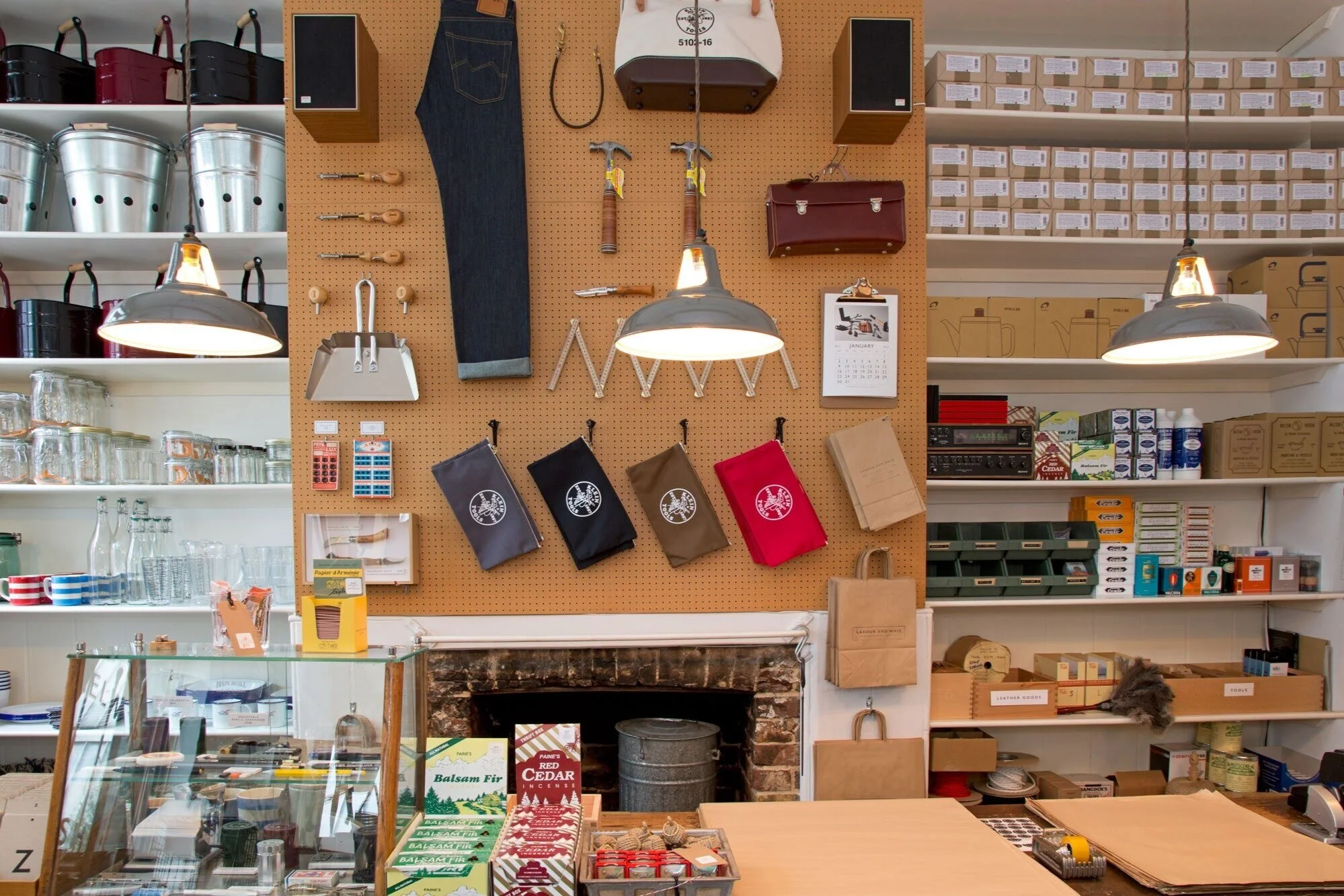
Shop Small Special: Labour and Wait
Timeless designs having a contemporary moment, London’s Labour and Wait will make you think differently about your dish brush.
What is it: This store makes buckets look good. A corner shop that combines the hardware with the artisan in a former pub (see the distinctive green tile of Truman Brewery) in Shoreditch and offers functional products for everyday life. Also now has an outpost in Tokyo.
What you need to know: Founded in 2000 by two designers, Rachel Wythe-Moran and Simon Watkins, frustrated by the endless cycles of fashion, Labour and Wait is based on their philosophy that good design should last. Their independent store is full of products that have stood the test of time – both in terms of the legacy behind them (products include blankets produced by the last remaining woolen mill in Wales) and in terms of how long they last when we get them back home (whether that be a dish brush or bottle opener). Think functional classics like Cornishware Mugs and essential hardware needs like an indoor brush that support traditional manufacturing and resist our current throwaway culture. Though very covetable, ironically Labour and Wait takes away the pressure to consume more. Rather it’s founded on durable and functional objects having their place in everyday life.
Why we think it's special: Apart from resisting our tendency to buy plastic and buy cheap with little concern for the person behind the making – the average person in North America and Western Europe consumes 100 kilograms of plastic each year — Labour and Wait is very much an ‘in-person’ store, human interactions are key to this bricks and mortar. On Black Friday instead of leading with product discounts and special offers, Labour and Wait donated 10% of sales to Crisis at Christmas which helps homeless people in the UK.
In their own words: “We believe in a simple, honest approach to design, where quality and utility are intrinsic. From hardware to clothing we offer a selection of timeless products that celebrate functional design and which are appropriate in a traditional or contemporary environment.”
In our gift edit: Carbon neutral enamelware from Riess of Austria, a recycled coffee cup made from discarded coffee grounds, a Scottish woolen blanket made from surplus yarns (it's cold out there, sometimes emotionally), and Labour and Wait’s signature apron.
In need of more Holiday inspiration? We’re a little in love with their shops of yesterday within their own shop: like a Haberdashery, Chemist and Stationer.
Something to inspire: We get stuck on toothbrushes. Or toilet brushes. The small things around our house that we somehow forget to buy sustainably. We fall very quickly into the plastic hole with these. Try to identify something in your house that you have a kneejerk anti-environment position on (there’s something, believe us) and just focus on getting that one thing more human-friendly (whether that’s how and where it’s made, how its production affects the planet and who the person is behind the product). Small steps. Later you can commit to a plastic-free lifestyle (no, we’re not there yet either).

Shop Small Special | Lifestory
Meander slowly online or off this Holiday Season with Scandi inspired concept store Lifestory.
What is it: A slow Scandi-oriented lifestyle store in Edinburgh.
What you need to know: Lifestory was founded in 2014 by Susan Doherty (who also started the city’s Hula Juice Bars) as Edinburgh’s first concept store — bringing together coffee and design — after being inspired by similar stores on her travels in places like Melbourne and Copenhagen. An airy, warm space, Lifestory offers a thoughtful edit of the Scandinavian-based (like House Doctor, ferm LIVING and Hay) and the Scandinavian-inspired (like Woolf & Moon and Kinshipped) with some Japanese simplicity added in there. During "normal times”, there’s coffee and cake for browsing the latest issue of Cereal.
Why we’ve included it here: Each independent store makes a circle of support: within the local community in which it’s located (with Lifestory located amongst the indies of Broughton Street) and the wider community of makers that it gives a platform to (in this case candle makers, jewelry designers, potters, graphic designers, furniture crafters). We often overlook the human in how we shop, the people behind stores, behind products and, behind our neighborhoods, so its good to be reminded of this by Susan: “Ultimately, the unique quality of Lifestory, as with all shops of this kind, lies with the owner’s relationship with the products, with the space itself and with their customers". A living wage employer, Lifestory also supports the people who work there.
In their own words: “Independently-owned and constantly evolving, Lifestory is a destination for lovers of Scandinavian design and lifestyle, considered products that share the traits of beauty and function.”
Our Christmas gift edit: We’re coveting many of the wall-based pieces such as Soo Burnell’s prints and the We Haven’t Located Us Yet print.
Something to do: Browse your neighborhood, even if virtually. Many independents have had to scramble to put their wares online in the last few months, extending their business ethos of bricks and mortar into digital platforms. That’s a huge transition and a very different way of working for many people who started shopfronts for the community aspect. This season if you’re not allowed, or able, to go out, take a virtual shopping journey through a local town, and shop like you would if you were able to meander with carols in the background and snow falling (yes, we’re romanticizing as we huddle inside). For inspiration, read this piece about how our neighborhood stores are coming together online.
To find out more: Website / Instagram / Twitter

Shop Small Special | Rare Device
“Beautiful Things to Hold in Your Hands”: a San Francisco store bringing year-round joy.
What is it: A shop of bold and beautiful things in San Francisco’s Nopa neighborhood.
Why you’ll love it: We always find something when we visit Rare Device: the exhibitions of local artists often lure us here, but we stay to browse the selection of stationery, prints, and tabletop objects, that bring something playful to the creative process.
What you need to know: The original Rare Device was founded by cultural entrepreneur and designer Rena Tom (of the now-defunct but once beloved Makeshift Society) in New York, before she focused on the SF (and now only) store with creative inspiration to many Lisa Congdon. In 2011 they sold the store to Giselle Gyalzen, who moved Rare Device to a bustling strip of Divisadero and kept the creative integrity going by bringing in useful, well-made, and modern things made by artists mostly near but some far.
How to bring this into your life: If the storefront is open, check out the monthly rotating exhibitions in the backroom – such as one of our favorites The Friendship Project by Erin Fong, or the exhibition of work from Creativity Explored artists. Rare Device has an open door to the community with kid storytimes, workshops, book signings, and creative pop-ups. During closed pandemic times, the store is still open for pickups and deliveries, and online projects like color meditation (follow along on Insta).
Why we’re happy it exists in the world: What we surround ourselves with matters. We think of that thing over there as just an object but it’s one that can make us feel a certain way, that might make an emotional connection to a time or place, or that might even support a local creative who is trying to make a living. Rare Device gives a platform for makers worldwide (though often they are SF based) who have something to say or something to offer the world. Like…
In our Holiday Gift Guide: … Gemma Correll’s Pep Talk, Taylor Reid’s Mixed Emotions watercolor, and Field Notes.
In their own words: “The storefront is filled with lovely, approachable designed items for your home, yourself, and your family. Every object in the store has its own story and has been chosen because it is either handmade, well-designed, useful, beautiful, or all of the above. The aesthetic is modern and whimsical while remaining warm and inviting. Influences range from the natural world to the interaction between humans and things, be it their clothes or what they choose to use in their homes.”
Something to inspire: Read the Coleridge poem Kubla Khan that inspired this pleasure dome of Rare Device… Then seek out what gives you pleasure – could be that the California bear or a candle that smells of Laurel Canyon or a pin that just says Stay Positive (though in a non-toxic way). Tiny gestures of loving for when we need more joy in our lives (like right now).

Men's Shed Movement
As men have traditionally struggled to find outlets to talk about their feelings and challenges, the men’s shed movement is starting to fulfill this need for connection.
What is it: A network of DIY-enthusiast communities that bring men (and now women) together to fix things, collaborate on projects, and share stories.
What you need to know: The men’s shed movement began life in Australia in the 1990s as a way to give older men a social hub. Working shoulder to shoulder (rather than face to face) offered participants a chance to share skills, learn techniques, and make friends. The men’s shed movement has since spread across the world; there are now 2000 sheds across 12 countries, including Finland, Ireland, the USA, and the UK, where there are more than 600 nationwide.
What they offer (online and off): Depending on the particular shed, there could be tools for woodworking, electricals, and metalwork, while members frequently pass on their own skills — coding, welding, machine tools, or car repair. Although most sheds are run by and for older men, there’s no barrier to entry; many sheds feature both female members and younger men. If there’s no shed in your area, British shedder Chris Lee has a TEDx talk on YouTube that’s a useful introduction to what sheds mean to him and how they’ve helped him. And if you’re inspired, get some tips from the guys who’ve “made one earlier” and start your own shed!
Why we think it matters: While individual sheds offer a creative, communal, and inclusive environment, the growth in the men’s shed movement illustrates the deep need for male companionship.
After major life changes such as retirement or the death of a partner, some men can become isolated. Often the loss of status or purpose can impact men’s mental health, as they keep their anxieties to themselves without finding outlets to talk about their feelings or their challenges. “As men we seem to be conditioned into letting go of things but not replacing them,” says Chris Lee, a former marketing professional who’s now a trustee of the men’s shed movement in the UK. Sheds — gathering points that feature activities from coffee to carpentry — provide a sense of community and purpose.
Whether sheds are literally wooden huts or shared community spaces, they are places where men can feel useful, comfortable, and purposeful.
In their own words: “When I heard about the Men’s Sheds movement, I immediately thought it was a brilliant way of bringing people together around something creative and fun. Men aren’t always the best at making new friends or talking to one another, but get them around a piece of wood or a DIY task and it’s amazing how they open up.” — Mike Magnay, retired electrical engineer and co-founder of a shed in Blewbury, Oxfordshire
One piece of advice for where you are: Start online and see if there’s a men’s shed in your area. Check out the website and learn more about weekly events or special sessions. Email the team. Show up. You don’t have to own a toolbelt — some guys just come along for the company and the conversation. Drink coffee, ask questions, learn wood-turning, repair an appliance, smell the smoke of a soldering iron, make a connection . . . whatever you’re looking for, the shed is what you make it.
To find out more: Website / Instagram / Facebook / Twitter
If you’ve visited a men’s shed, or you have other organizations with a purpose that you’d recommend, tell us about it at hello@ifloststarthere.com.