

Dartington
Dartington, we found out, is one of those special places that are many different things to many different people, some of which we’d guessed at, and many of which we hadn’t. It’s like a polymath of a place.
“Dartington is not one thing, but a complex unity of activities.”
The whole time we were here we kept saying, ‘wait, what is this place.’ Is it a learning center? A dance school? A festival site or wedding venue or camp ground? An indie cinema, maybe, a vegan café, an outdoors playground? A walled garden and a great hall? What is it? And why is it here on this stunning, rambling estate in Devon?
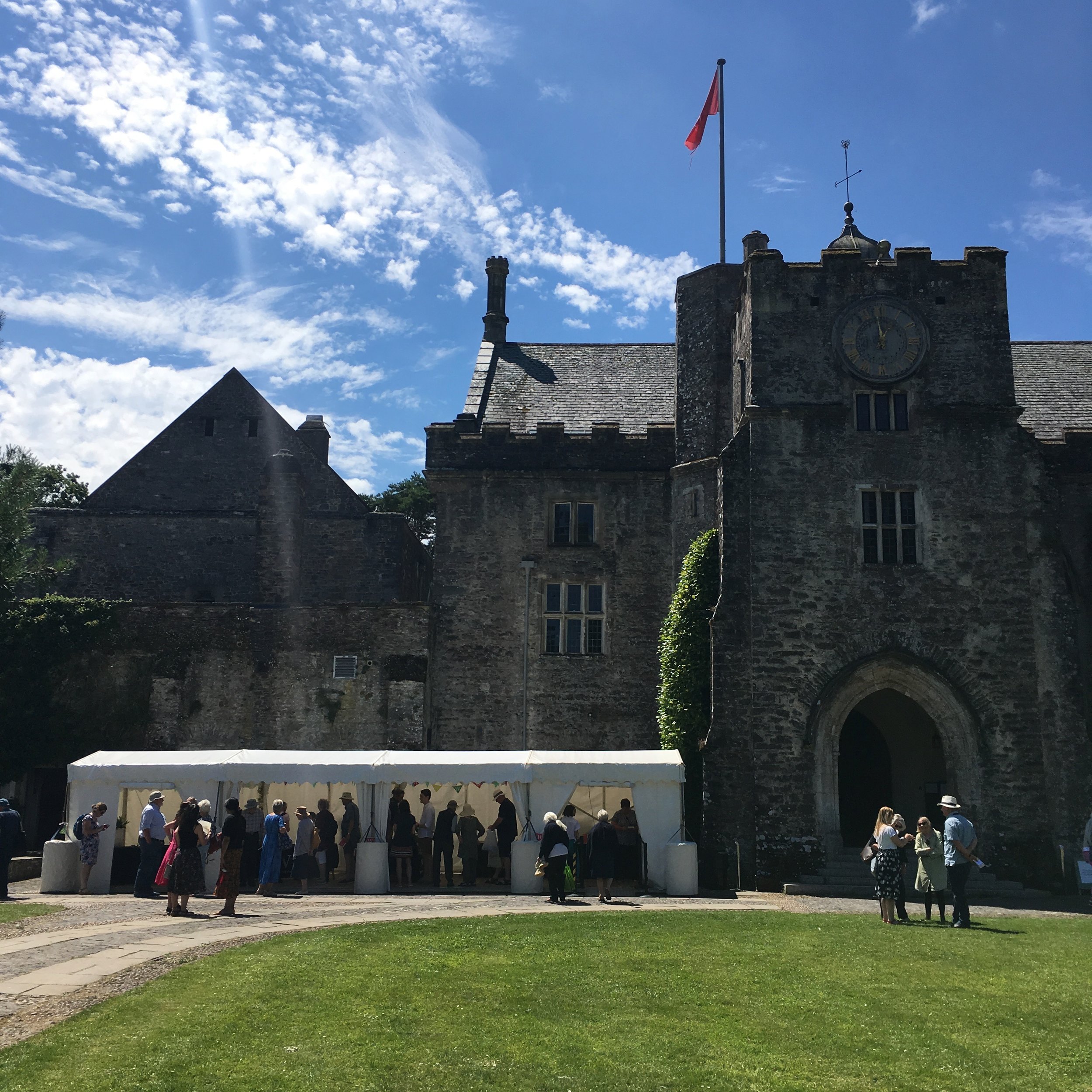
Dartington, we found out, is one of those special places that are many different things to many different people, some of which we’d guessed at, and many of which we hadn’t. It’s like a polymath of a place. Covering 1200 acres just outside of similarly independently spirited Totnes, Dartington is all the things that it would take to put thought into practice. It’s the thinking piece brought together with the doing piece of living a multifaceted life in a multifaceted world.
You know all that talk of ideas changing the world, that we hear about again and again. Well here that actually happened. Way back in 1925 when Dorothy and Leonard Elmhirst bought the house, the conversations and the connections that they nurtured amongst leading thinkers, politicians, and creatives of that day had real-world, lasting impact. The NHS, The Arts Council and Open University all had their start here. That’s a pretty impressive heritage. It’s also a progressive, forward-focused experiment that continues today.
Dartington is not an anachronism. That spirit of innovation and exploration, of bringing together change makers and thinkers, of nurturing creative entrepreneurs and impactful practices—is still as urgent given the ever-pressing realities of our modern lives. Now though the focus is brought across several categories— identified as arts and culture, agriculture and architecture, learning and making, socially minded business, social justice and sustainability— that ultimately interconnect and inform one another. Dartington is still pushing its agenda forward to a public that seems ready and very much willing to participate within it.
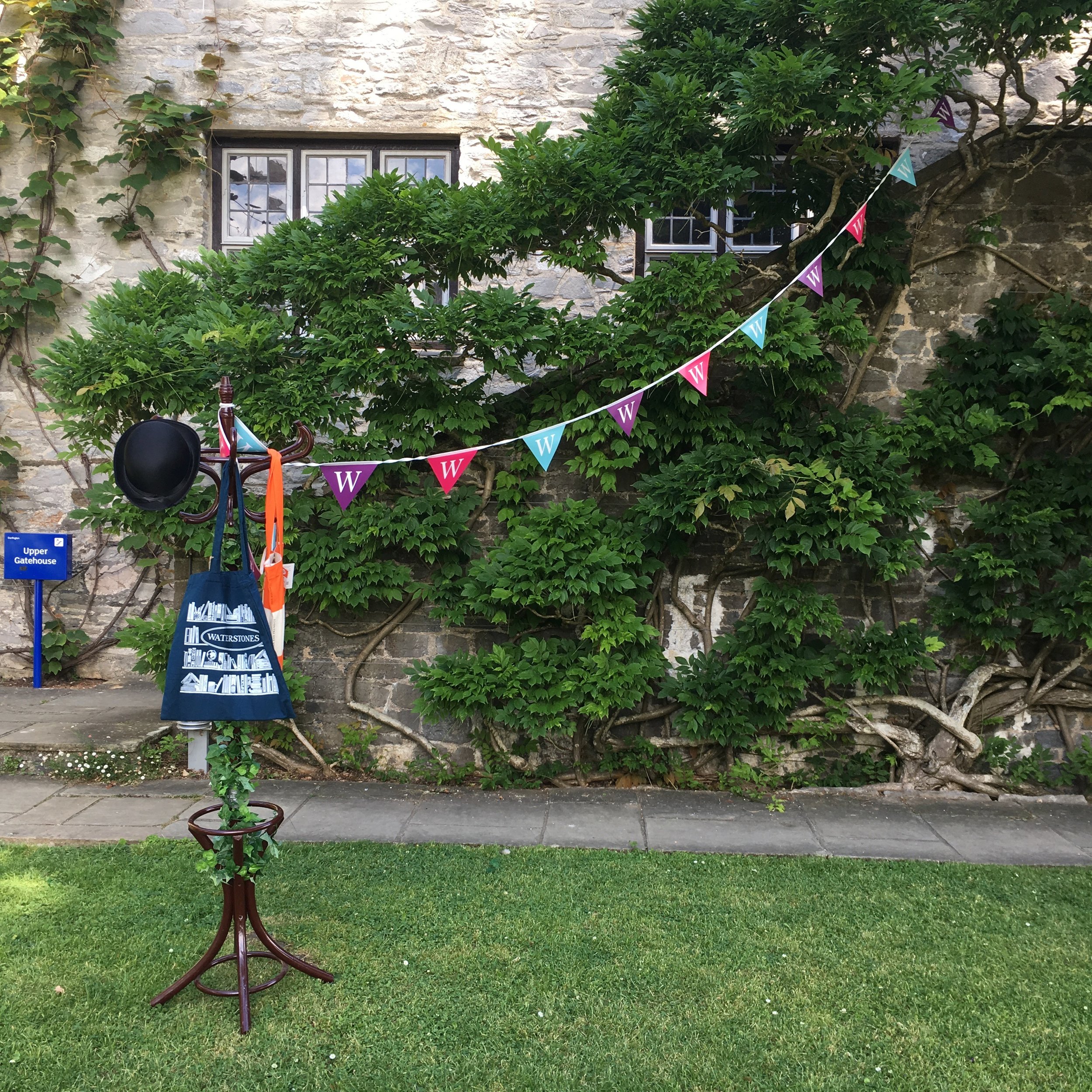
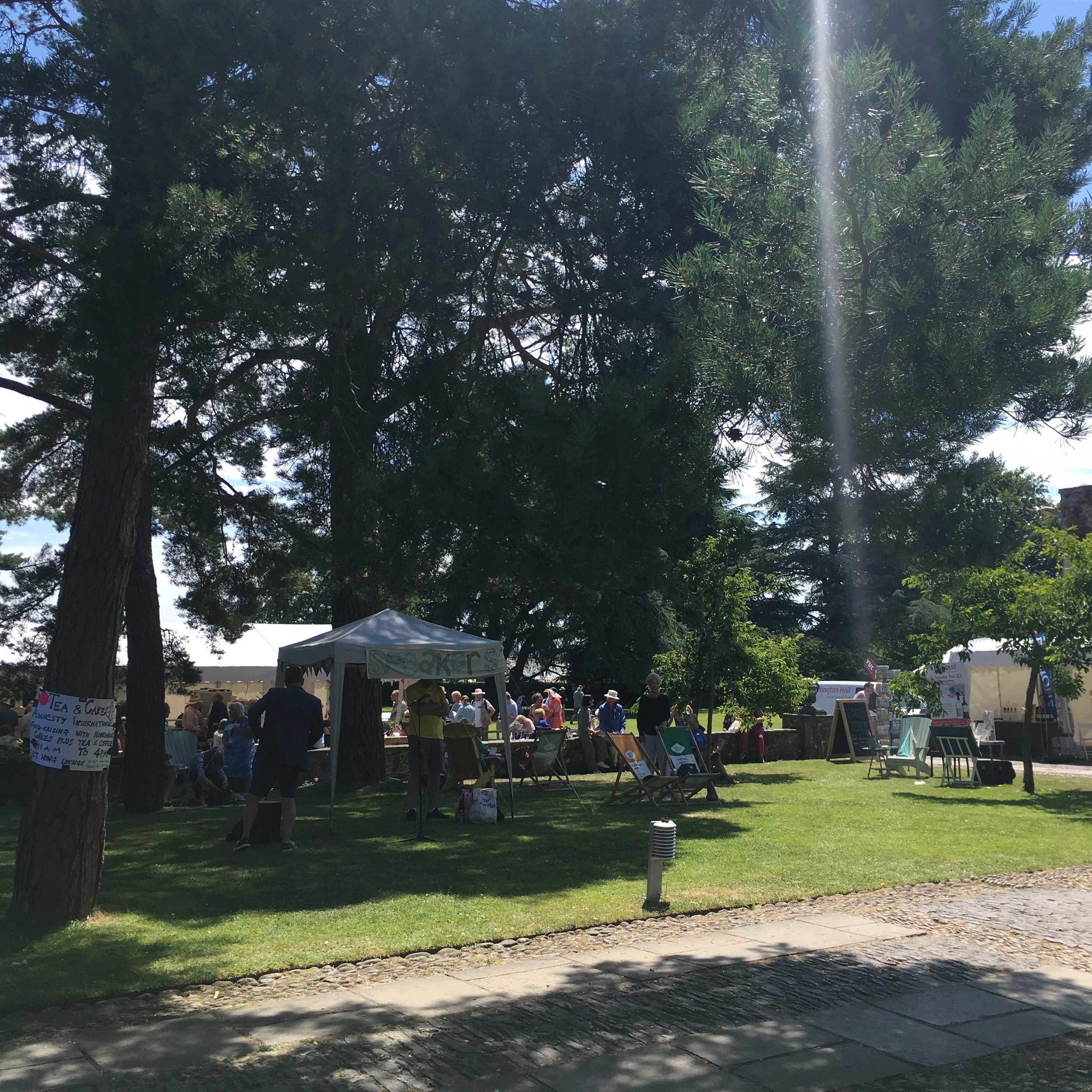
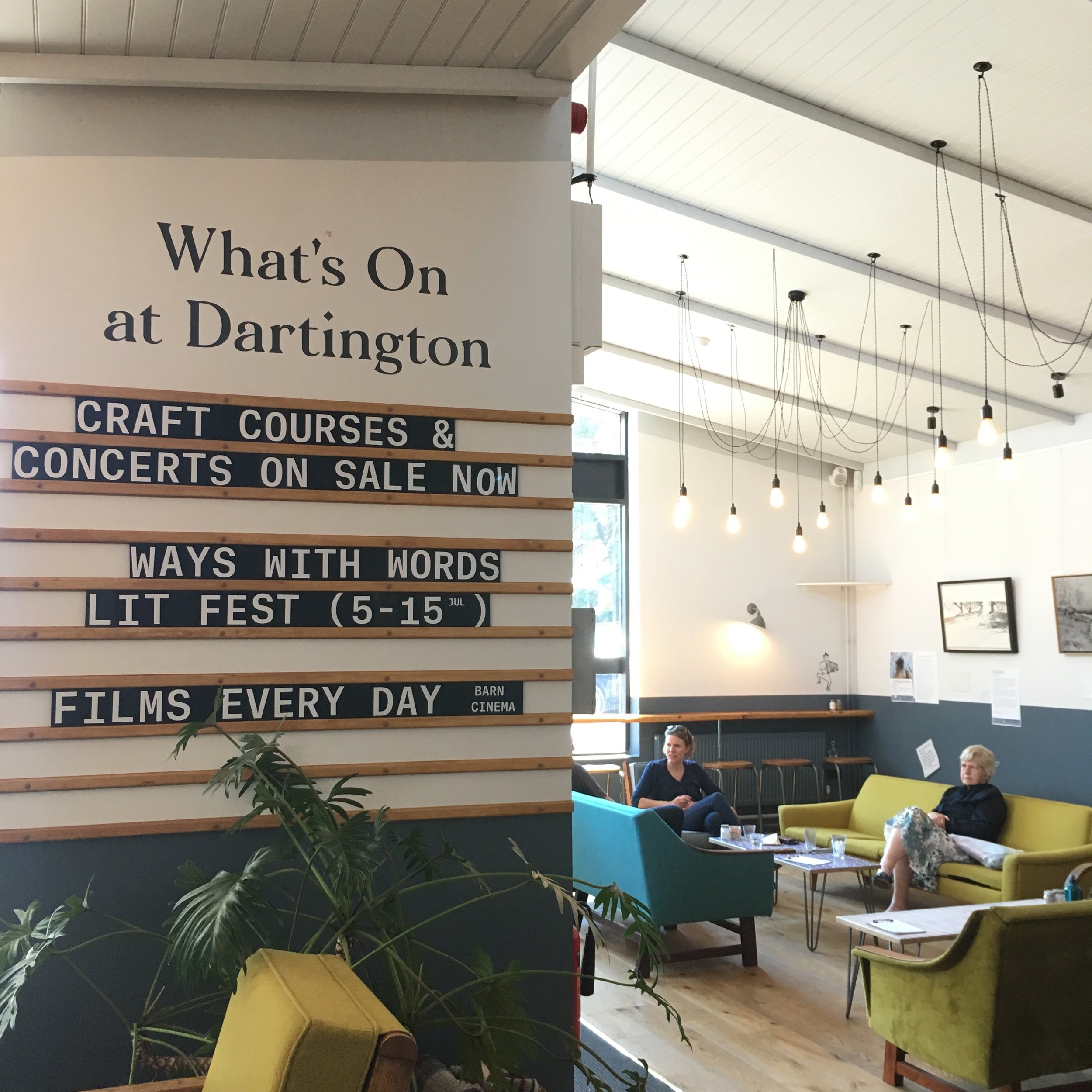
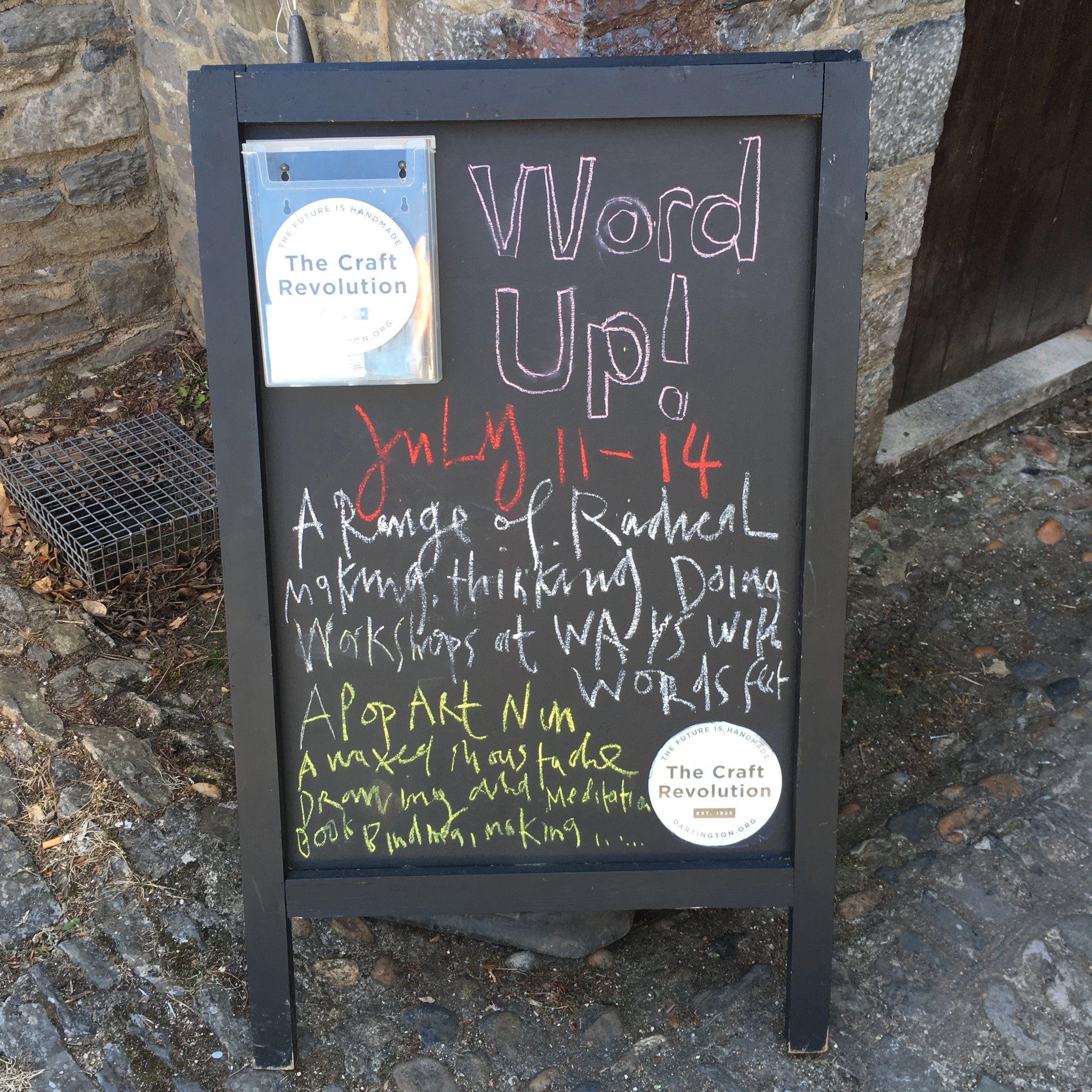
There are multiple ways to engage: Dartington offers programs, classes, workshops, and events that take myriad forms and can shape ‘a many-sided life’ that is really the goal at its heart. The appeal is looking through its strands and finding your thing, maybe even your Self, within it. Bringing its disparate elements into play in your own life as Dartington evolves and shapes the wider world. Whether that’s a slight dip with an indie movie at The Barn Cinema, a vegan lunch at The Green Table, or even a wild swim in the actual River Dart that flows through the estate. Or a longer engagement with a course, or mentorship, or partnership. Here you’ll find the brilliantly named The Craft Revolution, the School of Social Entrepreneurs, the summer literary festival Ways with Words. You can volunteer in the walled garden, attend the acclaimed Summer School that partners amateur musicians with professionals, and even camp within the grounds.
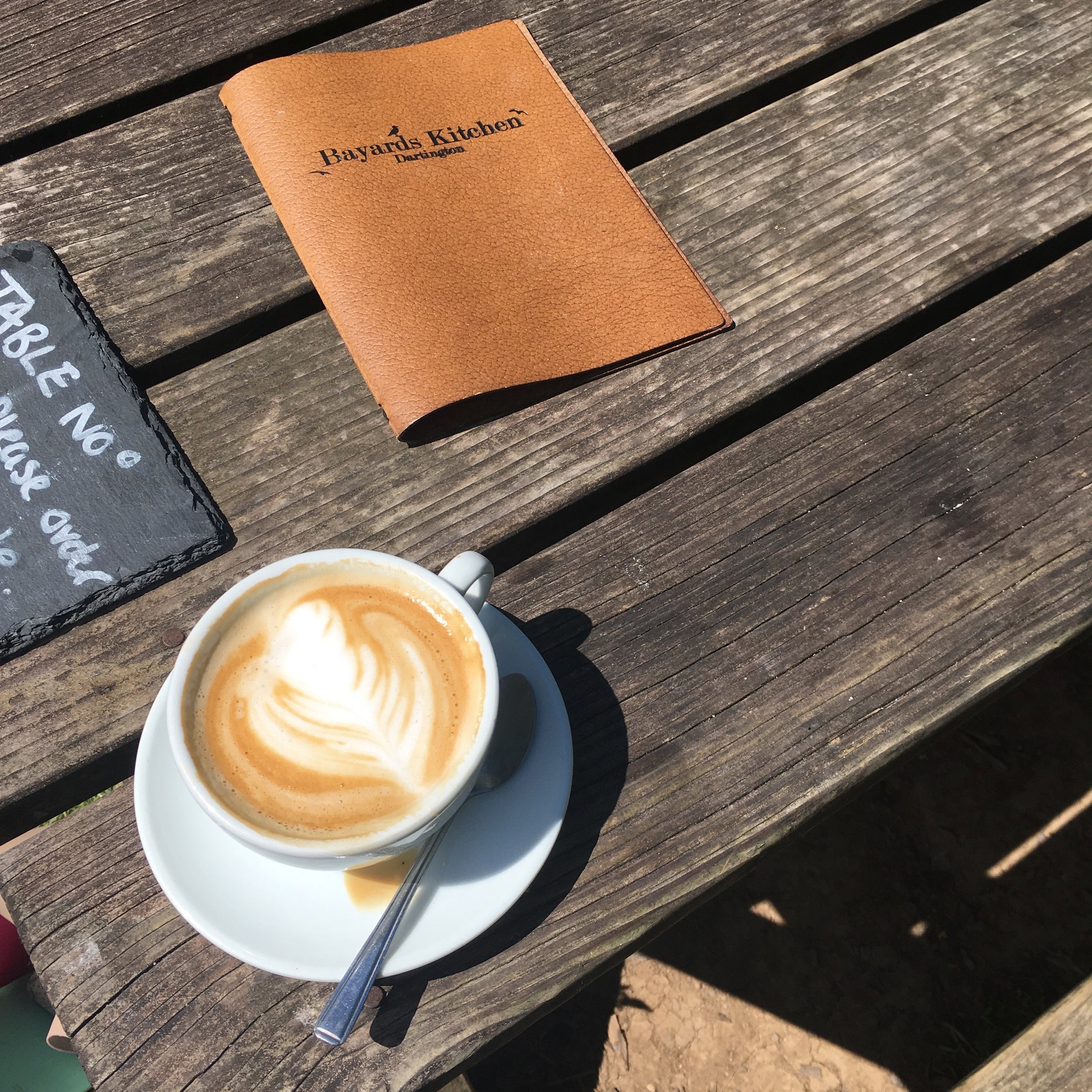
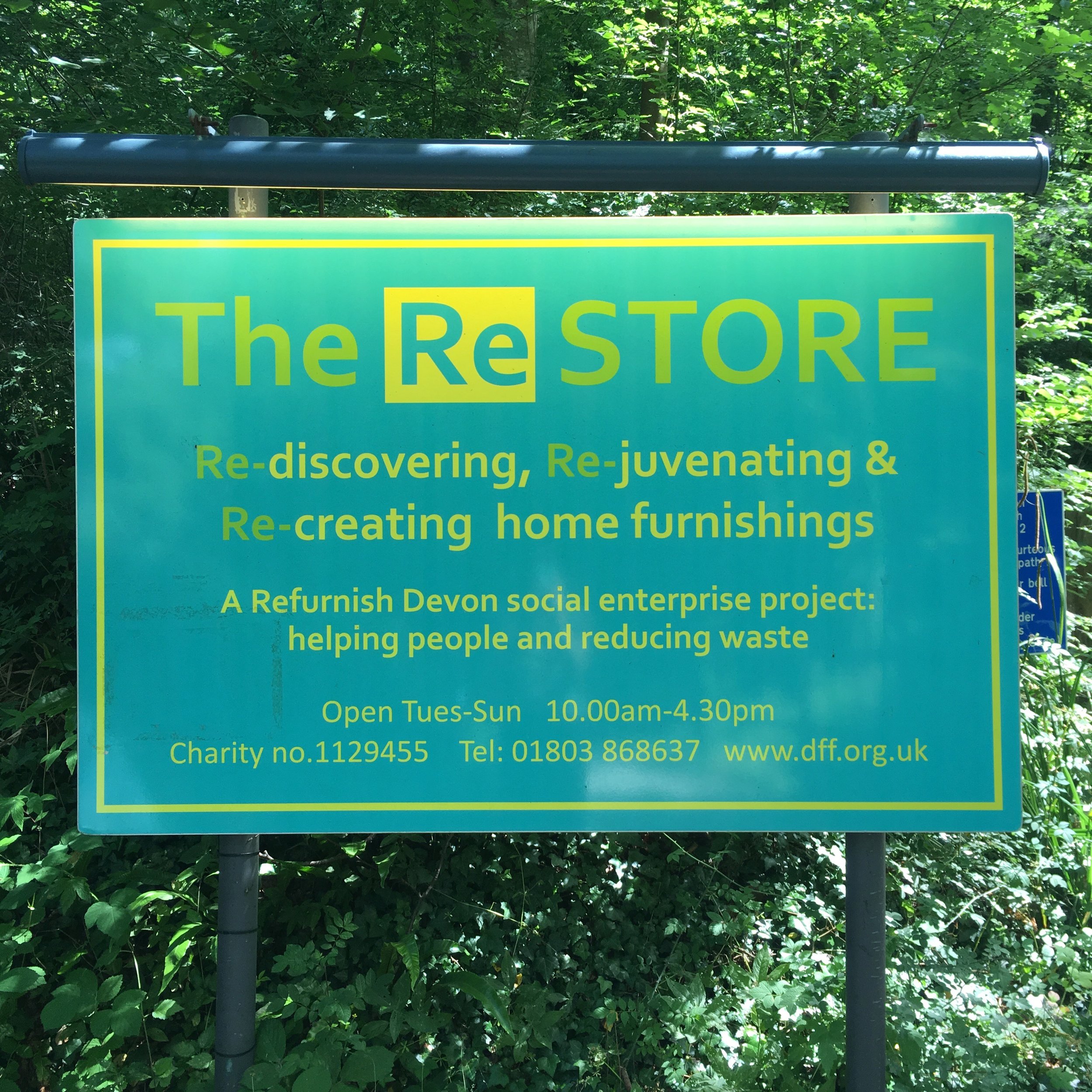
You can also just day trip, and seek out The Shops of Dartington, itself an experiment in social enterprise and community renewal. We recommend coffee at Bayards Kitchen and the quirky The Re-Store. Don’t let the many coaches belie its innovative intent.
We’re convinced that places can change the world. Dartington proves this theory in practice. What will it do for you?
To find out more: Website www.dartington.org / Facebook @dartingtonhall / Twitter @Dartington / Instagram @dartingtonhall

The Saviors We Never Knew We Needed
But the beauty in this moment, if there is any to be found, is that we’re beginning to accept that mental health isn’t just something to be addressed within the stark walls of our therapist’s office. We’re beginning to look to more than the typical health care provider to carry us through. We’re beginning to see that, maybe, there is healing to be found elsewhere? Maybe there are solutions and connections and answers in our everyday lives? Maybe music is here to save us, after all.
The sun is setting in San Francisco and I’m roaming the streets barefoot (again).
It’s the summer of 2004 and I’ve just lost my shoes for the fourth time. Seeing as I’ve spent the last hour fighting to stay alive amidst a sea of people, rioting and screaming, it feels like a relatively small casualty.
You might be imagining that I’d just witnessed a burgeoning political movement take shape, that I was standing (shoeless) at the precipice of some groundbreaking revolution (and, now that I think of it, maybe I was...but I certainly didn’t realize it at the time). You may *also* be thinking I was very drunk, tripping my way down the crowded streets of the Tenderloin (which is certainly a strong possibility, but I honestly can’t recall the details.) In reality, I was simply ambling back to my car after a night at The Fillmore...manically happy (albeit a bit bruised)...feeling more alive than I’d ever felt.
I often think back to this time, the early 2000s, coming of age just as the California music scene was coming alive with a new wave of emotionally-charged sounds. (Emo, Screamo, Pop-Punk, Hardcore ... whatever the distinction, there were lots of feelings, and everyone was yelling.)
While I’ve never fully fleshed out the true impact, this much, I know, is true: Packing into a small, hot venue, with all the focus and intensity funneling in one direction is a powerful, communal experience and arguably more cathartic than most other experiences we’re afforded as adults. (Truly, if you have never been allowed to push someone really hard and then sob next to that *same person* whilst swaying, let me tell you, friends: It does NOT disappoint!)
For someone lacking any sort of formal religion, rock shows became my church.
If you were to create a Venn-diagram outlining the commonalities between the two, there probably is a pretty sizable overlap.
(you should draw this)
It makes sense, then, that, in moments of struggle, we look to these idols for direction and guidance, that we take their words as gospel and apply them to our lives; that we pour over their lyrics in search of answers; that we try to align our experiences with their teachings; that we seek connection with other believers; that we stand and chant, screaming their words back to them hoping, this time, that we’ll finally hear them.
Because the truth of the matter is, the reason that we love music is that it offers us a safe place to process and feel—a necessity we’ve, historically, been completely starved for.
We’re a nation of young people being ravaged by mental health issues. Suicide rates and depression and anxiety are all on a steady rise.* But the beauty in this moment, if there is any to be found, is that we’re beginning to accept that mental health isn’t just something to be addressed within the stark walls of our therapist’s office. We’re beginning to look to more than the typical health care provider to carry us through. We’re beginning to see that, maybe, there is healing to be found elsewhere? Maybe there are solutions and connections and answers in our everyday lives? Maybe music is here to save us, after all.
For teens, specifically, there is a power in seeing the people we idolize, respect and trust bringing a vulnerability and openness around these difficult conversations.
Emerging at the same time as this early 2000s emo and punk scenes, To Write Love on Her Arms (TWLOHA) was established to reach this demographic of young people.
“TWLOHA is a non-profit movement dedicated to presenting hope and finding help for people struggling with depression, addiction, self-injury, and suicide. TWLOHA exists to encourage, inform, inspire, and also to invest directly into treatment and recovery.”
Traveling with The Warped Tour, TWLOHA brought mental health awareness to a massive audience and served as a springboard for other similarly impactful initiatives. “Wanting to support existing professional help organizations rather than replace them, TWLOHA has invested directly into causes such as Hopeline, InTheRooms.com, S.A.F.E. Alternatives, Minding Your Mind, and (in Australia) Kids Helpline."
The incredible thing about TWLOHA was seeing how it affected not just the fans, but the bands as well. It became clear that fame and success were no more protective against mental illness than anything else. The truth that we all struggle was brought fully, and literally, to center stage.
Working in the music industry over the last few years, I’ve noticed an uptick, not just in the vulnerability bands bring to their live shows, but in the intentional messaging that is expressed, both through their lyrics and through their on-stage admissions. There is a real drive to reach out and let listeners know that they are not alone.
This year alone:
We saw Lovely The Band frontman Mitchy Collins open up about losing friends to suicide , encouraging listeners to reach out, find help, and check in on one another.
We watched K.Flay release an entire album full of deeply personal stories from her childhood with topics ranging from her ever-present mental health struggles to her strained relationship with her father.
Blue October frontman Justin Furstenfeld’s Open Book tour exposed us to his addiction, how he found hope, accepted help and eventually saved himself.
Rainbow Kitten Surprise floored us with their groundbreaking video for “Hide” (please go watch it immediately) and their resolve to secure equal rights and protections for LGBTQ community members by donating a portion of ticket sales directly to Equality NC.
Billie Eilish took the world by storm by bringing an entirely new sound to the world of alternative and pop music, but she also brought stories of living with Tourette’s syndrome, normalizing the condition for sufferers across the world.
Whether they realize it or not, these bands are shifting the way we orient ourselves to mental health.
I remember the early days of attending shows, being lost in a sea of people, hoping, simply, to hold on to my shoes. I remember the days when “HOW THE FUCK ARE YOU GUYS?!” was the requisite level of interest a band was expected to pay you. I remember how, sometimes, I’d find myself being crushed against the barriers in front of the stage, how the band would stop playing to say something about loving and protecting each other before launching back in to their set. I remember, in that moment, however brief, after fighting for space and gasping for breath, the palpable feeling of relief.
Today’s bands are doing more than offering brief moments of reprieve from the pain... they’re creating a space where the pain can sit and live as we breathe our way through, creating a space where we can come together in recognition of our brokenness and in awe of our strength, creating a space where, yes, we might lose some shoes...but one where we might find some hope, as well.
* In the United States, the suicide rate has jumped 24 percent since 1999, to 13 per 100,000 people, with the steepest growth in the years since 2006, according to a new report from the Centers for Disease Control and Prevention.

The Centre de Danse du Marais
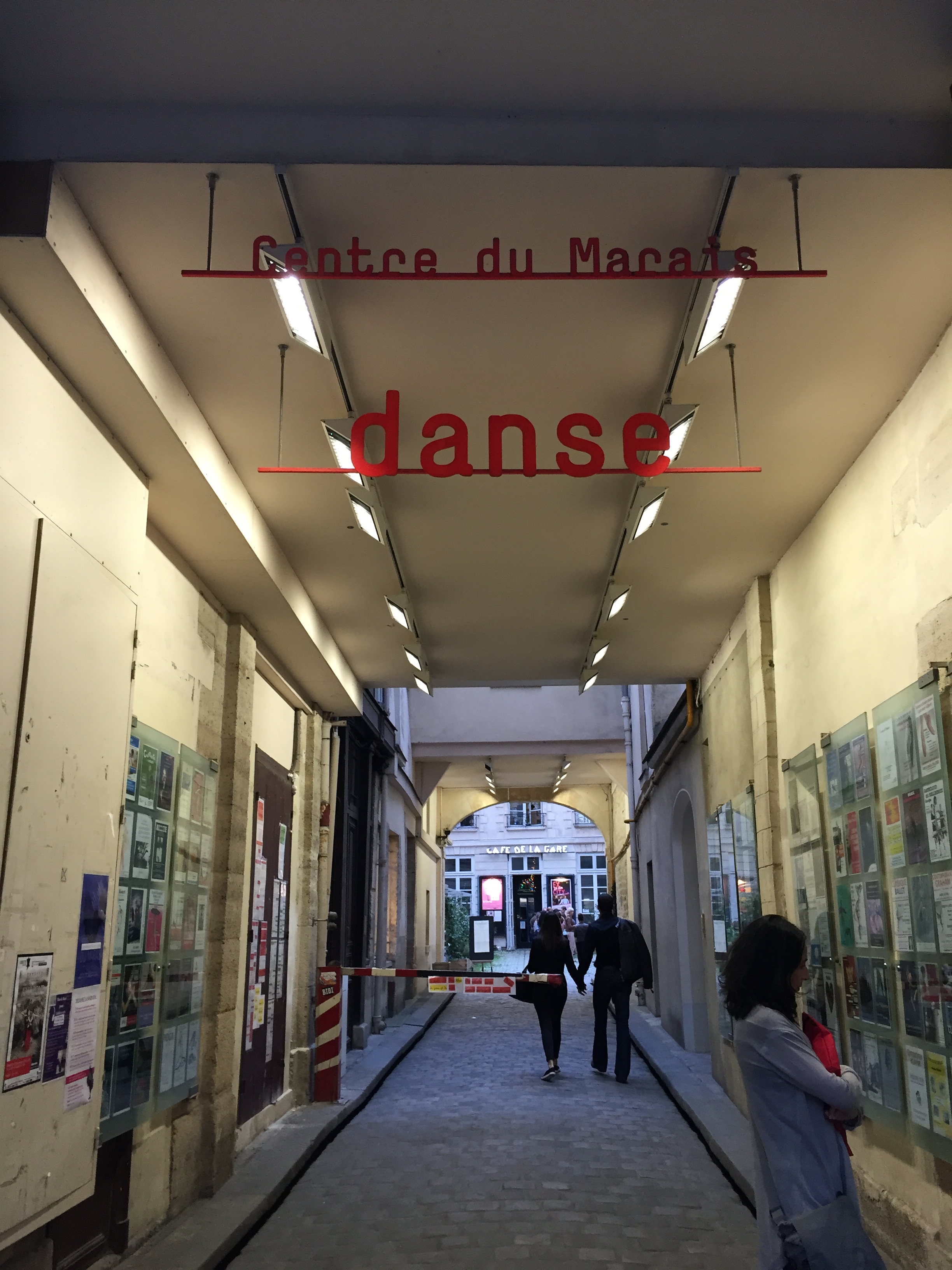
When you step off Rue du Temple, under the arches, and down the cobbled path to the central courtyard, known as “la coeur”, the heart of the Centre, you can feel the significance of this sacred space.
Steal away from the hustle and bustle of Paris to one of the city’s finest gems, a refuge that is only steps from the popular Centre Pompidou in the 4th arrondissement: The Centre de Danse du Marais, a mecca for dance.
Many types of classes and workshops are offered daily to people of all ages and abilities, including yoga, music, and other performing arts, but dance is the focus, and classes are available to fit any skill level, from beginner to professional.
When you step off Rue du Temple, under the arches, and down the cobbled path to the central courtyard, known as “la coeur”, the heart of the Centre, you can feel the significance of this sacred space. The beautiful old classic stone structure houses many uniquely shaped studios, each with its own personality and named for famous composers, like Debussy, Chopin, and Beethoven.
Magic is created every day here: Magic in the way that the light flows through the window into the room; magic in the way the floor creaks when embodied dancers move across it; magic in the way the drums make the sacred walls vibrate; magic in the way the vibration overflows, spilling into the courtyard, filling “the heart” with rhythms of the soul, rhythms that can be understood in all languages.
Studies have proven that dance is one of the best forms of exercise for health, wellbeing and longevity. It improves memory, balance, depression, anxiety, weight loss, sleep, sex, youthfulness, and overall happiness. But you don’t need studies to encourage you to dance. We’re betting that the smile on your face while you’re dancing will be evidence enough.
So do yourself a favor: Wherever you are in the world, find a way to dance! Try a few different styles and teachers. See what you like. Be open. Be vulnerable. Go for it.
But if you find yourself in Paris, you simply MUST visit the Centre de Danse du Marais. Yes, there’s the Eiffel Towel and the Louvre, but there’s this too. And where your body, your life, your sense of self is concerned, you will not regret an afternoon spent dancing here.
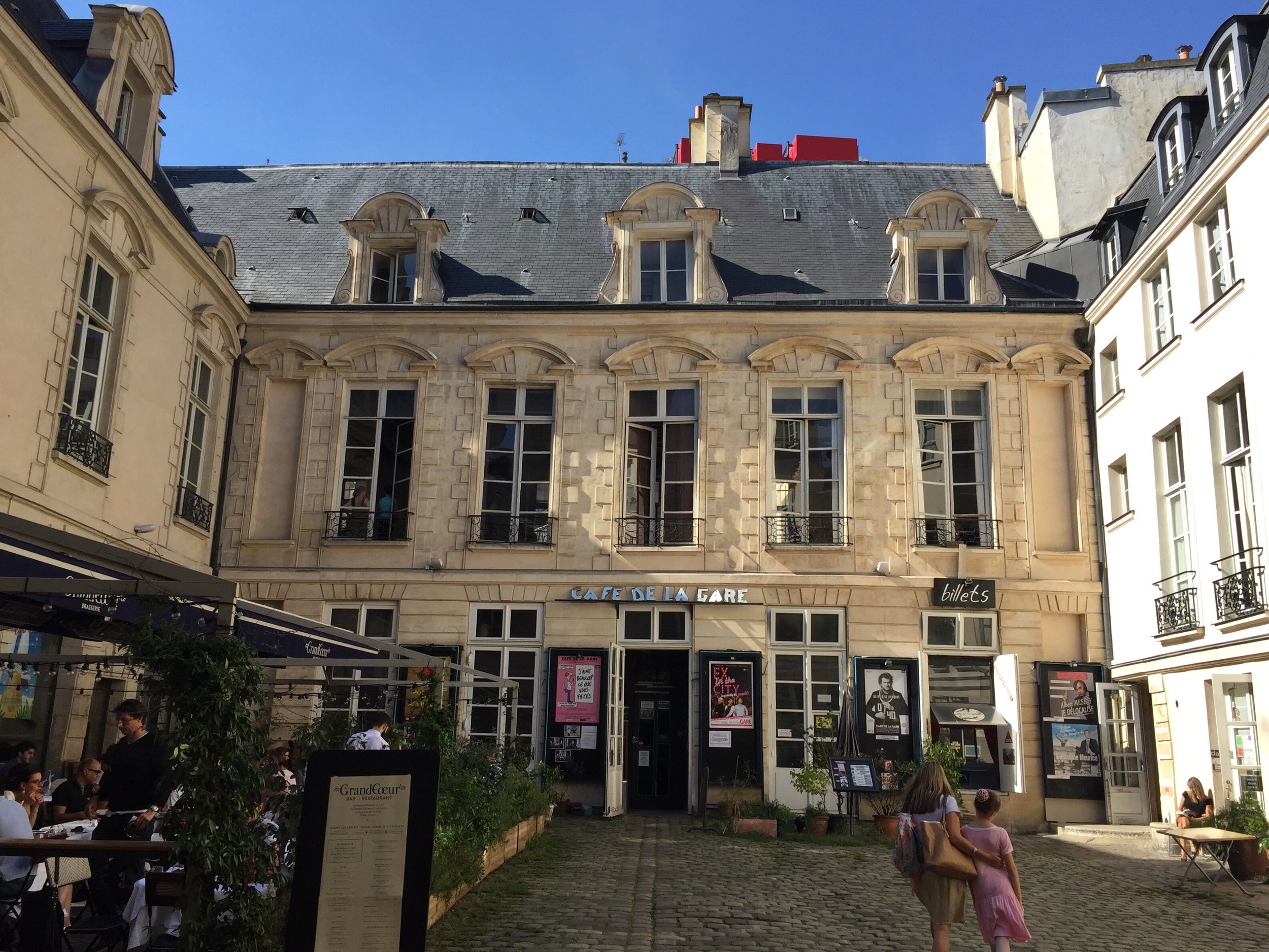
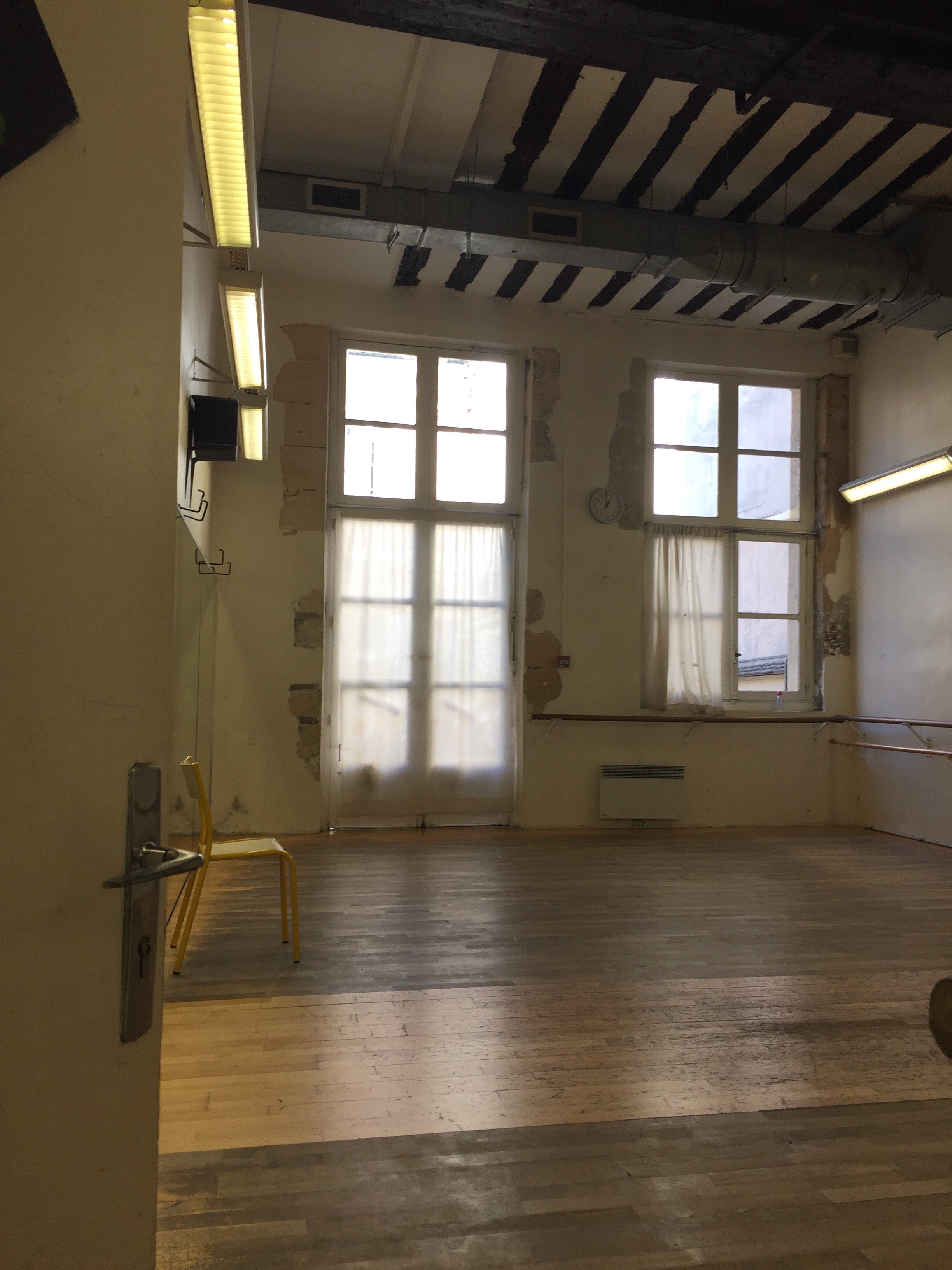
To find out more: website www.centrededansedumarais.fr / Instagram @centredansemarais / Facebook @centre.de.danse.du.marais

The Codfish Cowboy x Angela Skudin
What makes the beachy Codfish Cowboy unique is that it's filled with pieces made by local residents. There's a very low chance you'll be able to find the item on Amazon later.
It's not the wine country that is the North Fork, it's not the exclusive soiree scene of the Hamptons, nor is it quite the suburban sprawl that takes up much of the rest of Long Island. Long Beach, New York is a two square mile city of 30,000 people whose lives revolve around the 3.5 miles of beautiful beaches and 2.2 mile long boardwalk. Surfing, sunny days, and stiff drinks are certainly themes you’ll see thriving in the Long Beach’s West End, but scratch a little deeper and you’ll find so much more to this little community.
In the West End, where the bay and ocean are separated by two blocks, an impressive amount of restaurants, bars, and boutiques bring West Beech Street to life. In the midst of the action is an independent shop that draws you in with earthy smells and a friendly chalkboard whale letting you know they're open. This is The Codfish Cowboy. It’s the kind of store where you are guaranteed to find the perfect gift you went in to buy, and also sure to come out with your new favorite thing. Clever home items, a selection of clothing, unique jewelry, adorable kids stuff and more - it's all the vision of Angela Skudin, its founder and owner.
What makes the beachy Codfish Cowboy even more unique is that it's filled with pieces made by local residents. There's a very low chance you'll be able to go in and then find the item on Amazon later. Skudin prides herself on the fact that when you purchase one of her beautifully curated products, you are supporting a Long Beach maker. At the heart of her ethos is the notion of giving back; bringing something lovely into your life or home while supporting others, it's a win-win.

Here I talk to founder Angela Skudin for If Lost Start Here about what drove her to start The Codfish Cowboy:
What is The Codfish Cowboy and how did the idea for it come about?
I’m classic for my impulsive “great ideas” that fully lack any research, plan, or thought. If you put a visual perspective to it, imagine it like being a squirrel in a cage. The Codfish Cowboy was an impulsive idea that came from the desire to have a shop in my current hometown that reminded me of the shops I love visiting in my original hometown in Tulsa, Oklahoma. I’ve always been “the best gift giver” in my family. I’m told I have the ability to choose the perfect gift for anyone. At the Codfish Cowboy you can find something for a newborn baby, a bachelorette party, housewarming, 80-year-old Aunt Betty.
Why did you decide to open the store in the West End of Long Beach?
When I moved from Tulsa to Long Beach 16 years ago, I lived in the West End with my now-husband. The West End has a vibe and energy that’s undeniable. The Codfish Cowboy is now part of that vibe.
You are very supportive of various causes, from local makers to crucial environmental issues. Can you talk about how you decide whose work to display and sell and how those two passions intersect?
My mother is an immigrant from Germany. My grandfather was a maker. He owned his own furniture-making business. My family still has the original couches he made with his own two hands half a century ago. You can’t get quality like that from a factory. That business made my family who they are today. It paid for private school for all 3 of his children and allowed my family to own a home in America. It’s important to support makers. In turn, we get handcrafted quality items that have a story and help a family.
When I curate, I want to know that story. I want to pass that story on to my customers. We can spend our money anywhere we chose. It feels good to spend it on a piece of handmade art from Long Beach high school’s art teacher whose family lives 3 blocks away and rolls by in their beach wagon waving hello as they pass the store.
Growing up, my family focused on helping others and making sure my sister and I knew what paying it forward felt like. We were a middle-class average family with 2 hard-working parents. Every Thanksgiving my family adopted a family in need and brought Thanksgiving to that family. Every Christmas we adopted a family in need and brought wrapped gifts and Christmas dinner to that family. I’ll never forget those moments. When you are a kid, everyone is equal. When we dropped off the presents and food, my parents would converse with the parents and my sister and I played with those kids like they were our long-time friends. There was no Rich vs Poor, no sense of entitlement. We were all equal. I carried that feeling with me and it’s never left.
As far as environmental issues go, I have always been that person that’s picking up trash in a field, grabbing rogue plastic bags in the ocean or making sure all the soda can rings were cut so a duck doesn’t get strangled. I’m the crazy lady that washes plastic straws and reuses them. I have had the same bag from Ikea for 8 years now. To me it’s common sense….we only have one Earth and it’s our responsibility to make sure she is around for the comfort of the next generation.
What inspired you to begin your apothecary line, “tribal life alchemy”?
Karen Michel, one of my partners, was the inspiration and soul of Tribe Life. One day she said to me, “we should do our own pure essential oil product line,” and I said, “absolutely not.” Fast forward 2 months later we had Tribe Life. Karen is a basically a wizard and can do anything. I give her my ideas for graphics and she can read my crazy brain. With Tribe Life, we really wanted to ensure the quality of the products we were offering to our customers. We live in a toxic world. If I can offer pure products that have therapeutic properties to our customers, I’m going to be able to rest easier. That’s what Tribe Life Alchemy is about.
How would you say The Codfish Cowboy has evolved over the years?
I wanted to build our audience organically. No paid ads (because there simply was no budget for that). I started The Codfish Cowboy with $25,000. The build was done by myself and my awesome handy FDNY husband Casey. The materials were repurposed. I did a lot of dumpster dives to get the wood for the walls and molding. There are pieces of Long Beach homes on the walls of The Codfish Cowboy and I think that’s pretty cool. We are up to right around 3k on our Instagram followers and we are looking to launch our online sales this fall. I’m excited to see that number grow.
What has been the most surprising thing about running the store?
The perception other people have about your business. Just because you have a store does not mean you are rich and just because I’m not physically standing in the store does not mean I’m not working. When you own a brick and mortar your job never ends. There’s a ton of back end work, vendor meetings, research, buying, etc. I’m one person. I can’t be everywhere all the time, but I try.
What is your favorite way to spend a day in Long Beach, aside from being behind the counter?
Shopping local, eating local, riding my beach cruiser on the boardwalk, and soaking in the sun on our beautiful beaches.

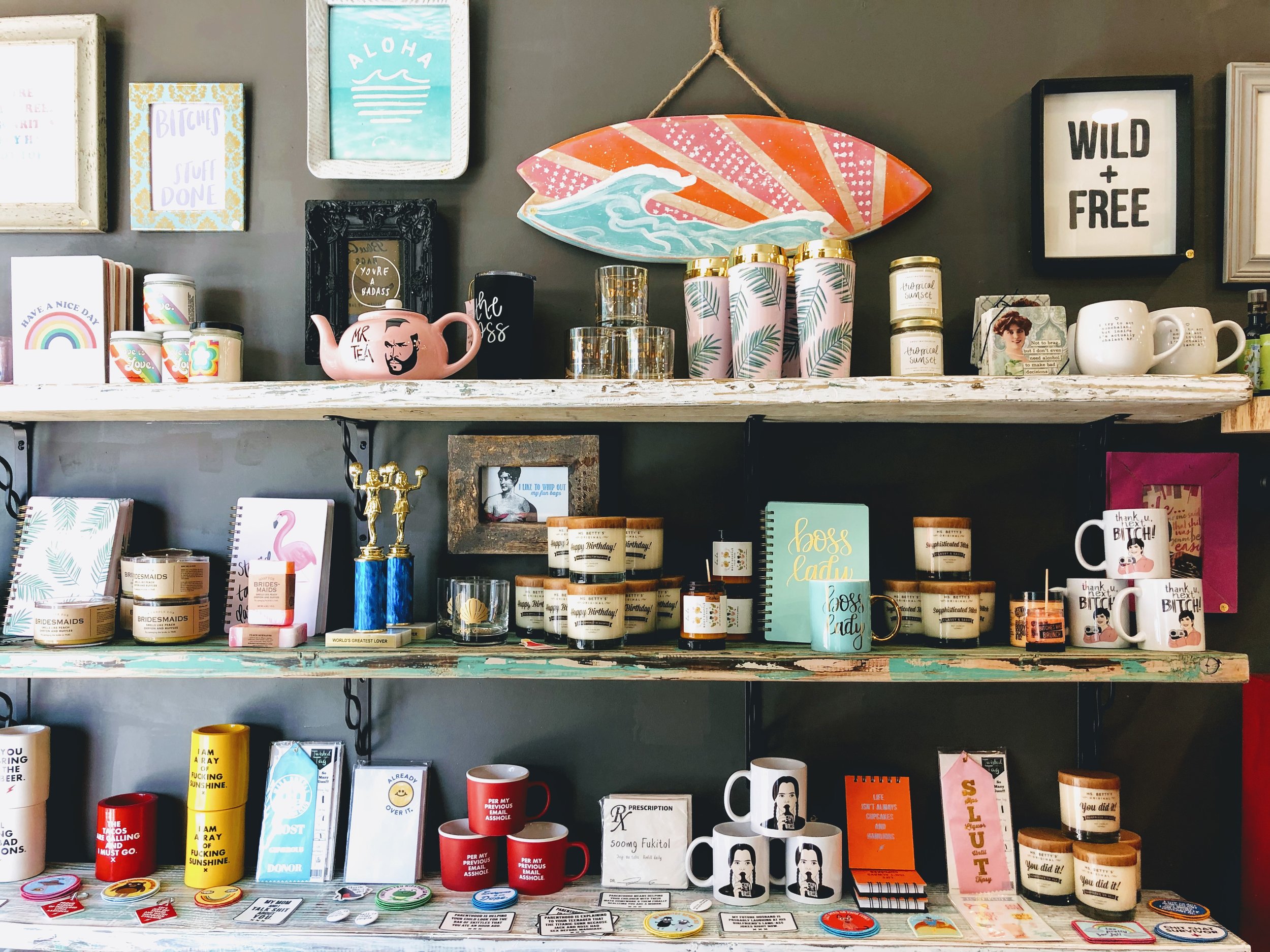


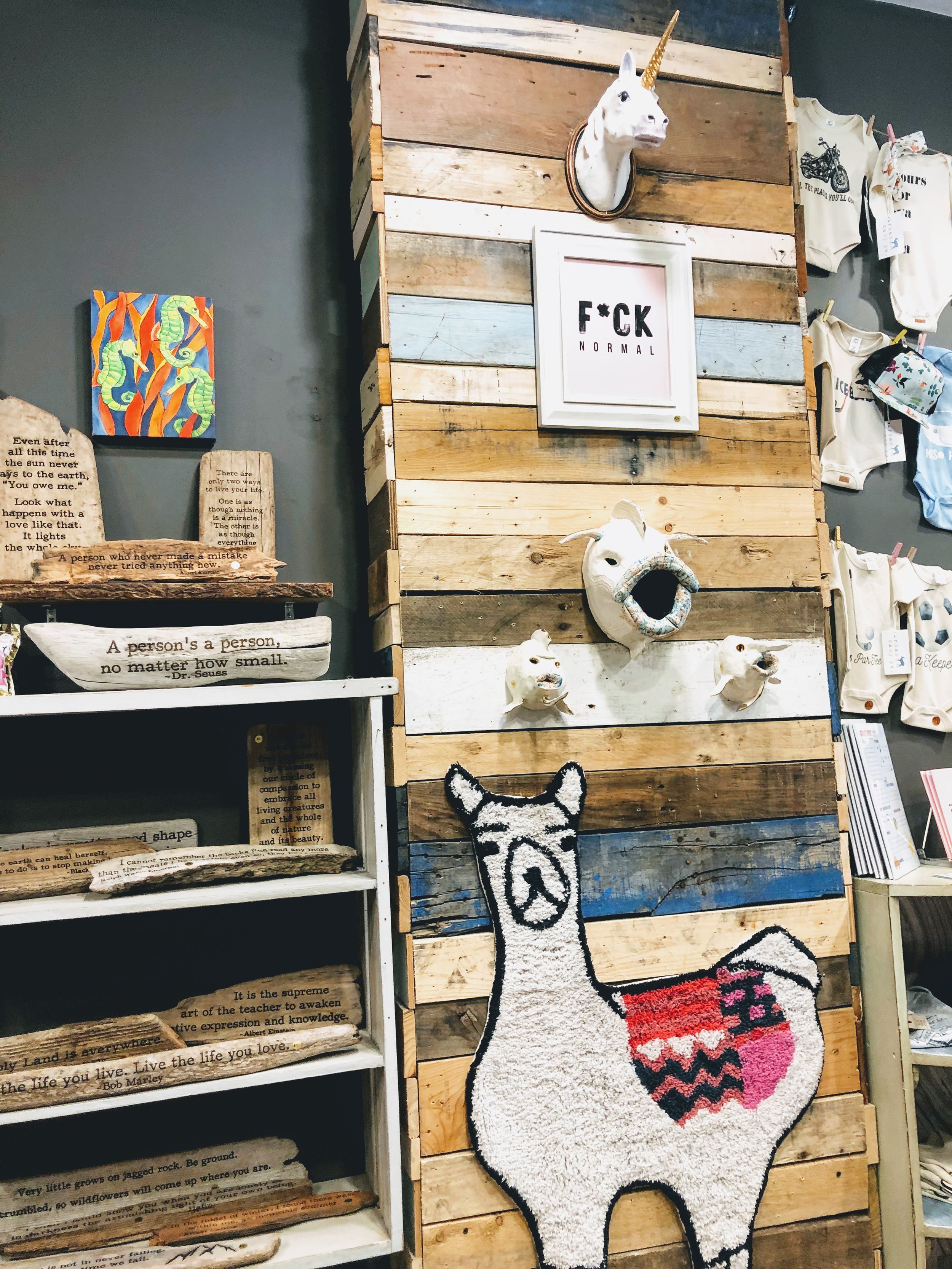
Follow TheCodfishCowboy on Instagram and visit them at 891 W Beech Street Long Beach, NY
& visit my other West End Picks:
Blacksmith’s Breads 870 W Beech street
Dough Hut (right next door) 891 W Beech Street
Island Thyme 780 W Beech Street
Jetty Bar and Grill 832 W Beech Street
Lost at Sea 888 W Beech Street
RaKang 895W Beech Street
Shine’s Bar 55 California Street
Speakeasy 1032 W Beech Street

Lucky Penny Parlor & the World's Smallest Postal Service x Lea Redmond
Maria Popova, a similar collector of interesting (in ideas rather than things) encourages: “Be curious. Be constantly, consistently, indiscriminately curious.” We had that quote in mind talking to Lea and wandering through Lucky Penny Parlor.
“Lea’s storefront project is a place where matter and meaning meet through found object conversations and storytelling.”
At times of darkness, what do we reach for? What do we try to bring into our lives? Our go-to’s are probably around activism, around self-care, around community. But wonder? Curiosity? Sometimes we put them in the ‘superficial’ bucket, the one reserved for whimsy, for frivolity, for later. We leave them alone. They are coping strategies LITE.
Spending a morning with artist Lea Redmond at Lucky Penny Parlor in Oakland you realize you’ve got it all wrong. Finding wonder is deeply purposeful. To abandon it now is to abandon something of our humanity, of our possibility.
It’s ok to not feel entirely comfortable when you come into Lucky Penny Parlor. What is it really? How do you engage? Can you touch this? You’ll have these questions and others. And Lea is fine with this – she’ll lead you through it, spend time with you so you can reach for understanding, bring your experiences into hers. There’s a beauty in questioning, a kindness in the suggestion of clarity. Lea did this with my daughter and I – as we touched things on display, grasped for information as we tried to orientate ourselves, she provided the scaffolding for a connection. Over mint tea, in carefully chosen cups, we found our way in.
There’s a therapy of sorts to be found here in Tea Cup Consultations in which Lea choses a cup from her extensive collection and you bring something from your own life to discuss over tea, and the staged Tabletop Shows, dioramas that encapsulate narratives and even the universe (upcoming shows are about hummingbirds and a choose-your-own-adventure through the solar system). These intimate services provide the framework for poetic conversations, exploratory meanderings and immersive play.
Lea is interested in the material that’s in front of us of another kind though, of what’s available to us in the ordinary and every day that has a tangible quality, the concrete items that are all around us, all the time, and that we no longer see. Look through the hundreds of tiny drawers that make up Lea’s Wonder Cabinet and which contain the detritus of our everyday lives – tags, bottle tops, flea market finds, and household artifacts. Here you are taken right back into the space of seeing again, of living in the pause. Meaning here sneaks up on you, revealed by delight and humor and amusement.
Maria Popova, a similar collector of interesting (in ideas rather than things) encourages: “Be curious. Be constantly, consistently, indiscriminately curious.” We had that quote in mind talking to Lea and wandering through Lucky Penny Parlor which houses her personal collection of curios and from which she curates her own singular world.
Two doors up from Lucky Penny Parlor, is a work in process, the very soon to be first outpost of Lea’s World’s Smallest Post Service and the latest iteration of her 10-year tiny mail project. A space of serendipity – Lea happened upon the perfect-sized vintage post office front to pull it all together. From here Lea and her team will send out tiny – as in seriously tiny – packages into the world.
It’s a truly magical space that captures our love of the absurd and the cute, as well as our need for connection, our longing for the analogue. With this project, Lea is returning to something long lost – our wonder at receiving things in the mail that are not in the form of a bill or bulk entreaties. Can you imagine finding one of these tiny letters or parcels in your mailbox. Can you imagine that moment being in your day? Aren’t you smiling now just thinking about it? Or maybe you are thinking about who you can send something to?
For Lea the World’s Smallest Post Service is all about bringing not just ‘tiny mail magic’ but ‘more wonder into the world’: “We propose to create an enchanting, museum-like, open-to-the-public brick & mortar home for our World's Smallest Post Service. We want to make a place, a magical coordinate on the globe where people can count on wonder and kindness.”
Lea has constructed her world too so that we can reach for it wherever we are – with products by her design company Leafcutter Designs. Like Lively Matter a deck of prompt cards to encourage creativity and play through ‘a grand adventure of the ordinary’, and that provide a much-needed break from our screens, and the Letters to My Series, which we’ve handed to grandparents and friends, to capture the stories they may want to tell but have had no format to do so. Most recently, Lea created Everyday Offerings, which holds a way forward in our daily lives.
From the outside, all this, these storefronts and projects, Lea’s vision for crafting this magical way of living, look fun but it takes hard work, a serious and keen drive, to sustain this creative space. It looks easy because whimsy is a kind of sleight of hand, a magic of sorts that leads you out of the mundane and into belief. You don’t see the trickery (read commitment and focus) that makes it happen, that makes non-obviously functional spaces, exist in the world.
Yes, we need independent cafes and bakeries, coworking spaces and stores. But we need this other non-definable space on our high streets – of inspiration, wonder and play. Of something else. That’s a need that is not being fulfilled in our grown-up lives. We’re losing our joy, and we need to badly capture it again. We’re lucky in that we get to visit this world of Lea’s creation. For a short while. To walk within this vision of what light existing in darkness can actual be, the physical form it can take and its importance in sustaining our lives. There’s nothing superficial in that.
To find out more: website www.leafcutterdesigns.com / Instagram @lucky_penny_parlor / Facebook @LeafcutterDesigns

neve & hawk x Kris Galmarini
At a moment when we’re all being pushed to do more and more online—more apps, more sharing, more webinars—neve & hawk founder, Kris Galmarini is making the case that actual brick-and-mortar spaces matter.
At a moment when we’re all being pushed to do more and more online—more apps, more sharing, more webinars—neve & hawk founder, Kris Galmarini is making the case that actual brick-and-mortar spaces matter. In many ways, she doesn’t need her brand’s flagship location in Marin County. Neve & hawk has a thriving online presence for its super cute California- inspired, family-loving clothing line. But Kris, herself, does need it, in a very personal way, because community matters (like really matters) to her.
Neve & hawk’s storefront goes beyond just selling something (though we totally want to buy EVERYTHING they create), to actually building something. “We want it to be a place people want to come. We want people to come into the store, and feel better than when they walked in. We want them to interact, to feel inspired, to leave the store feeling better about shit. We’re in this community and we want people to feel good.”
Kris’ mission to bring people into the space has led to a new use for the back section, a café headed by the female-backed coffee brand Lady Falcon. From mid-August, the flagship will be the site of pour-overs, crafted coffees and a reason to hang out. It’s “another way to have people in there and to bring out the community.” This builds on other offerings: a monthly workshop teaching screen printing and chain stitching where people can learn how to sew, or mend, or distress something, as well as a Quarterly Artist series, which gives creatives a start and someone who believes in their work.
This focus on human interaction and holding physical space goes hand-in-hand with who Kris is as a person. Yes, she’s an introvert who might just be hiding in her studio when you visit the store, but she also believes deeply in people, in their worth, in their authenticity, in their talents.
This starts with the design and production process around the clothes themselves: which are made and sourced (from the inks to the manufacturing process) in San Francisco, Sonoma and Marin and are given a fair market price which reflects this intentionality. At all these steps, Kris never forgets that “there are humans who are making it”, that they have value too, creatively and monetarily. “Shopping can be a thought-process”.
The sentiment extends to Kris’ sense of responsibility to her clients: “Community and loyalty go hand in hand.” Both on and offline she has actively fostered a community that people can be part of and has allowed it to grow organically.
And it absolutely extends to how Kris presents (or rather doesn’t) as a person. She doesn’t play the game we’re all being pressed into playing. At a moment, when we’re collapsing our brands with our personhood, when our sense of self is tied up with clicks, when our lives need post-production effects to make them good enough, Kris is working hard to push back. And we are so grateful for that perspective: for someone who is allowing the masks to drop, for her soul to show, and proving this idea that who we are matters much more than what we know (borrowing from two of Kris’ go to quotes).
If places can be a person, and a person can be a place, neve & hawk’s flagship would be it.
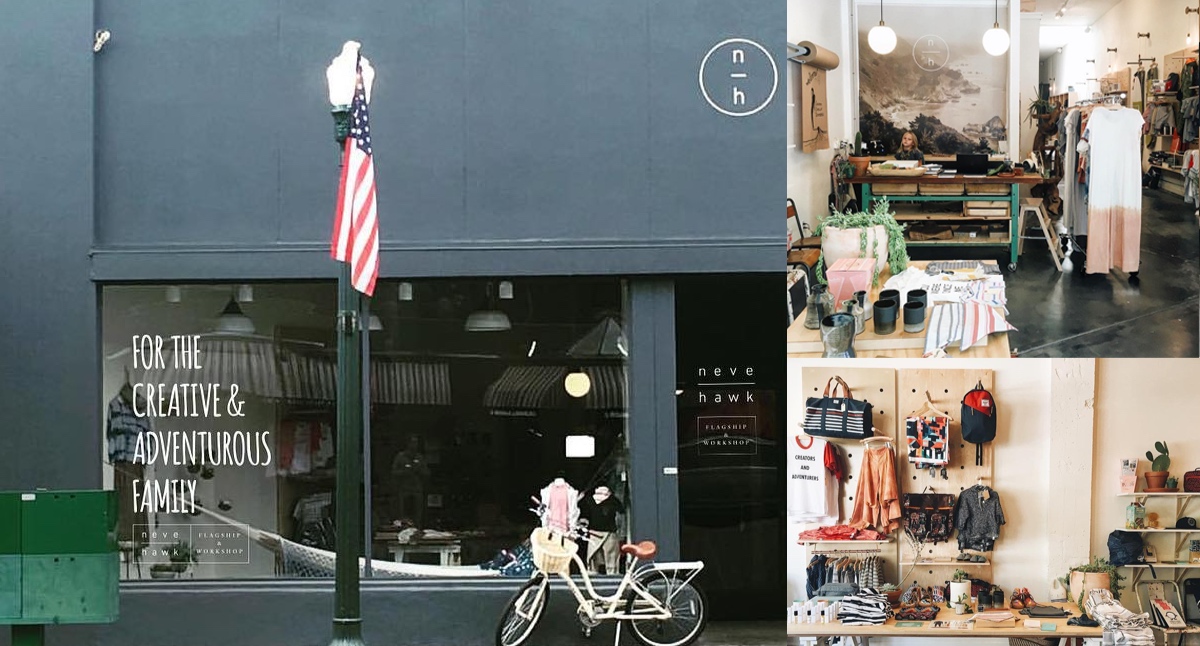
To find out more: website www.neveandhawk.com/ Instagram @neveandhawk / Facebook @neveandhawk

NOIR CITY | Dark City Wanderings
It’s like a religious revival tent meeting, but for cynics. Instead of their Sunday best, they wear their vintage 1940s finest. Rather than speaking in tongues, they wax on and on about who played what character in whatever desperately underrated classic. And Communion comes in the form of a big dose of black and white on the Castro Theatre’s massive screen.
It’s like a religious revival tent meeting, but for cynics. Instead of their Sunday best, they wear their vintage 1940s finest. Rather than speaking in tongues, they wax on and on about who played what character in whatever desperately underrated classic. And Communion comes in the form of a big dose of black and white on the Castro Theatre’s massive screen. You’ll leave sated, exhausted, but you’ll be back tomorrow night for another double feature, day-job alertness be damned. If you’re a true acolyte, you’ll see all twenty-some movies over the ten days of NOIR CITY, the annual film festival of the Film Noir Foundation.
I’ve always loved film noir. My parents apparently never thought it odd that an eleven-year-old couldn’t get enough of The Maltese Falcon; was inviting her (probably confused but at least good-humored) friends over to watch Rear Window; and once VCRs became a thing was trotting home from the movie rental shop with whatever sounded dark: Double Indemnity, Out of the Past, The Third Man. My dad had a particular soft spot for Philip Marlowe and Sam Spade, and together we tried in vain to piece together the plot of The Big Sleep, which even having read the book multiple times is incredibly hard to follow (Raymond Chandler himself allegedly said the same). But it looks superb.
Eddie Muller, founder of the Film Noir Foundation and organizer of NOIR CITY since its inception, has summarized film noir thus: “The men and women of this sinister cinematic world are driven by greed, lust, jealousy, and revenge—which leads inexorably to existential torment, soul-crushing despair, and a few last gasping breaths in a rain-soaked gutter. But damned if these lost souls don’t look sensational riding the Hades Express.”
So... Did noir make me a cynic, or did something already in Young Me gravitate toward this material, finding there something that made sense of the Evil That Men Do (or, in my case, that mean junior-high-school girls do)? My experience in the music world leads me to suspect the latter—that I was born this way, and that noir gave my imaginings form. And what a form!! Colossal glamour, pithy wit, underworld allure... Who wouldn’t want to live in a world where you could be sparklingly eloquent, successfully self-employed, adept in a fistfight, and irresistible to the ladies even if on the looks scale you’re more Fred MacMurray than Kirk Douglas?
Seeing these movies at the Castro Theatre, alongside fourteen hundred fellow travelers, takes the thing to a whole new dimension. Each evening opens with live music on the fabulous Castro Wurlitzer (recently replaced with an even more elaborate pipe/digital hybrid organ), then an acutely articulate, written-note-less introduction by the Czar of Noir (the aforementioned Mr. Muller), then the dramatic opening of the curtain to start the first feature. Each year has a theme (my personal fave so far was “international noir”), and Muller and his fellow programmers do their best to balance a few better-known titles that most people still will never have seen on the big screen, lesser-known titles that extremely few will have witnessed on the big screen, and one or two that have been saved from actual oblivion, often through a restoration directly funded by last year’s festival ticket sales. This is the goal of the nonprofit that is the foundation: to save noir films on 35mm, as they were meant to be seen. Say what you will about the viability of actual film as a medium for mass exposure to “film”—Eddie’s got a counterargument ready for you.
At this point there are numerous satellite NOIR CITY fests around the country, but San Francisco is where it all started, and where Muller grew up. He still lives here, and treats the SF iteration as the mother ship that steers the rest of the fleet. I’ve read Muller’s introduction to film noir, Dark City: The Lost World of Film Noir (1998), and have for the last couple of decades made little pencil checks next to the titles I’ve personally seen. Dark City Dames: The Wicked Women of Film Noir (2001) is the clearest manifestation of Muller’s career-long vendetta to bring the femmes of noir, fatale or otherwise, from the clichéd sidelines into the spotlight. I dutifully enrolled in Muller’s “continuing studies” course at Stanford University, “The Politics, Passions, and Personnel of Film Noir,” and I even successfully muscled my way into the gang’s inner circle, helping with the ticketing for the annual SF fest.
But at the end of the day, after you’ve completed all the reading and pondered all the theorizing and copied all the fashions and cut way too much school to watch Dialing for Dollars, the point is the theater experience. This is the “why” of the foundation: to save the films, and to show the films, at venues like the Castro. There’s got to be a really compelling reason why we keep coming back to a joint that holds 1,400 seats, puts on shows that last four or five hours, and has less than ten toilets total.
I’ve got a lot of NOIR CITY memories, but a couple stand out. The first is actually from NOIR CITY XMAS, a teaser show that happens a couple of weeks before the holidays, also at the Castro, as a kind of appetizer for the main fest coming in January. It usually features a bleak Christmas movie (I know, right?!) but this year it was Holiday Affair, a mostly-comedy with the odd bleak moment. I remember laughing so hard I was crying, right along with the crowd, fully realizing that if I’d been watching the thing at home on DVD, I would have been bored, maybe even wouldn’t have finished. I described it to Eddie the next day and he said of course that was right, that’s the power of experiencing movies in the theater. You’re physically, logistically committed, which makes you give yourself over to the larger emotive sense in the room. Sadness, injustice, intrigue, romance, glamour, and, yes, comedy are massively, massively magnified. See my religious-revival-tent metaphor that opened this piece.
This is what will be lost if the old-fashioned moviegoing experience evaporates.
Another very powerful memory of NOIR CITY is not even of being in the theater, but of reviewing the pictures taken by the photographer one year. I scrolled through crowd shot after crowd shot—hipsters, non-hipsters, old people, the occasional celeb (Chris Isaak and Jello Biafra have been noted attendees), and views of the stage showing Muller doing his thing. What stopped me in my tracks was a shot of what Eddie sees from the stage. There must be no sight on earth more satisfying than an ocean of folks who’ve paid their money and made the trek to love and support your dream, and gain something soul-satisfying that could be delivered, for us dark cynical believers, no other way.


Photographs by Rachel Walther © 2019
To find out more: website www.noircity.com / Instagram @Noir.City / Facebook @filmnoirfoundation / Twitter @noirfoundation

Paranoia | Like, The Worst Soup Ever
Sometimes I think back to the mash-up of issues I was facing as a perfectly concocted soup. (But less like a regular, hearty soup, set to warm your soul on a cold night…and more like one of those soups they’d serve cold in a school cafeteria: thick and mysterious and generally unpalatable.)
The worst thing about living with paranoia is my inability to trust my own instincts and intuition.
The second worst thing about living with paranoia is that my neighbors are probably going to kill me.
For many years, I simply thought I’d found myself on the unfortunate receiving end of a steady stream of lunatics—some sort of strange manifestation after so many years of obsessively fearing people. If the teachings of The Secret were to be believed, my thoughts were *actively* creating my destiny, a prospect so terrifying I’d opted to stop thinking all together. (Alcohol problem: commence!) But, of course, the damage was already done. My chakras were fucked. Something about metaphysical reactivity (?) or past life regression (?) or crystal disharmony (?) had gone horribly awry. I’d created my destiny, and now I had to see it through. (Great.)
On the nights when I’d peered out my windows 1000 times and noted all of the strange men tracking me, I’d usually remove the grates on my heating system to be sure I’d disabled the cameras. (A violent punch into the vent and a wild wave of my hand should do the trick!) Sometimes, of course, the cameras would be too small so I’d have cover the openings with duct tape. Other times, the men would be circling my house so rapidly that I could scarcely keep an eye on them. Occasionally they’d be plotting with people I knew or driving cars I swear I’d seen earlier in the week. How long had they been following me, and when were they going to make their move?
The interesting phenomenon here was that I had become so adept at justifying these theories, that even the people closest to me didn’t question them. I can almost assure you that it came as a shock to my friends and family when I, of all people, began to wonder if maybe all of these things weren’t happening to me. After all, there seemed to be so much build up…but no real action.
At my worst, I was certain that the build up was simply an attempt to drive me mad, to knock me off my guard, to render me incapable of fighting back. At my best, I agreed that these impending-death scenarios were improbable, but still, despite my best attempts to shake them, believed them to be true.
So, my mission was clear. It was my job to remain vigilant. To fight. To flee. To curl in a small ball behind the couch and play dead.
You’re likely thinking that I must have been under some sort of psychological care throughout this time, acutely aware that I was suffering from a combination of Anxiety, Depression, PTSD and Paranoia. To that, I’d respond with a sort of maniacal laughter that would haunt you for a lifetime. Therapy was for crazy people, angry people, people who didn’t have white picket fences and 2.5 kids and nice husbands and 401ks. Not me, bro. I’m cool. (*sunglasses emoji*)
Sometimes I think back to the mash-up of issues I was facing as a perfectly concocted soup. (But less like a regular, hearty soup, set to warm your soul on a cold night…and more like one of those soups they’d serve cold in a school cafeteria: thick and mysterious and generally unpalatable.)
It is so easy to get trapped in this feeling that mental illness defines us, or has broken us, but I’ve gone to therapy now (*pats self on the back VERY HARD*) and read lots and lots of inspirational quotes on instagram (*abruptly stops patting self on back*) and I realize now, that these are not the things that define us. Even the way we stumble through is not what defines us.
We’re allowed to break down and fuck up and do it all wrong. We don’t always have to overcome our setbacks gloriously with the sun bursting through dark clouds. Sometimes we just wake up and try a little harder not to suck, try to not peak out the windows looking for well-disguised murderers, try not to ruin our probably-expensive heating and air system with 16 layers of duct-tape…we wake up and take one little baby step towards healing/recovery/self-care and that’s ok.
I truly have to believe that what defines us is who we are in between these broken times. What defines us, if we even need defining, is the person we are when we have perspective, and coffee in-hand, and all the stars are aligned and we feel like we can shower and converse and meet opposition with something other than hysterical crying. I’d like to believe that who I am is the person I’m able to be when at my best. Anything else is just too much damn pressure.
Now, that I’ve largely overcome my paranoia (again, *emphatically* PAINFULLY patting myself on the back) now that I’m here making soup analogies and talking about sunlight bursting through clouds, I can hardly believe what my life once looked like. And while it’s easy to joke about now…in those moments, it felt absolutely insurmountable. Here I was, trapped in this self-imposed prison, unable to escape, probably destined to die there. I could not leave the house, could not forge new relationships, could not trust, could not love, could not function normally in the world. I was lost, and didn’t know where to turn.
If you’d have told me then that there were answers, that there were services, solutions, resources, support, people struggling in the same way, I’m not sure I would have believed you. In those moments, I needed that place, and I didn’t know where to start.
For me, If Lost, Start Here is a small step in the right direction. With so much of the world operating under the assumption of wellness, If Lost Start Here is a resource for people who are just unapologetically struggling, or at least those of us who accept that self-care is hard, and self-realization even harder, and self-compassion maybe the most difficult of all.
So many of the solutions offered for “wellness” or “recovery" can feel unattainable to people who are struggling. (How am I supposed to book a "Heavenly Weekend Getaway” when I can’t even go to the grocery store without having a panic attack?)
If Lost Start Here is less about “Resetting Your Wellness At This Jaw-Dropping Bali Retreat” and more about “700 Places Where You Can Openly Sob Without Judgement”. And for me (huddled in my bed, with my duct tape, thinking about soup) that feels just about right.

Street Wisdom
Street Wisdom is prefacing a way of being that feels critical now. It’s untethering us from devices, it’s getting us back into our heads and bodies, it's making us sit with ideas again, and it’s offering us the space, time and tools to allow new perspectives in.
“Answers are everywhere.”
OK technically this is not a place, but it is everywhere and there’s something to be said for that.
Street Wisdom was founded by David Pearl in 2013 with the mission to ‘make every street in every city a free source of inspiration for everyone, every single day.’ That reach is spreading. Their bespoke problem-solving walks are now worldwide from York to Utrecht, Paris to Wellington, and you can even take part in a World Wide Wander this coming September.
So what exactly is it and how does it work?
Volunteers lead short urban walks – each about three hours – over the course of which they set up a different kind of scenario for engaging with the world around you. Rather than casually and blindly walking familiar and even unfamiliar paths, participants like you are invited to notice everything that is around them. But this isn’t just an observation exercise, it’s also founded on inquiry because you are invited to ask these streets (aka the universe) a question - maybe around a career change, a relationship ending, or professional and personal conundrum of some other kind. But something meaty, and concrete, that needs a straight-forward enough answer. This is not metaphysical deliberation.
That means that as you wander the streets, they are going to respond to you in a metaphorical conversational way; the magic starts to happen in the form of a sign, a place name, a chance encounter, something unseen before and observed now. It’s all information, its all material to be used and processed. These guided walks are designed to help you find answers in the environment that is all around you. There’s no need to escape your life to get insight into it.
There’s some training built into these walks to do this: during the first part, before this wandering with some intent starts, participants are invited to tune into their bodies, to become aware of their instincts, their sense of self, their openness. The guides create the structure for these sessions, even if they are not the ones who are going to give you the answers. There’s also that moment of collective reflection; each session ends with participants coming together again as a group, of sharing what was discovered that might make meaning in their lives.
Sounding hokey? It’s funny, because really what Street Wisdom is doing is prefacing a way of being that feels critical now. It’s untethering us from devices, it’s getting us back into our heads and bodies, it's making us sit with ideas again, and it’s offering us the space, time and tools to allow new perspectives in. That means if you want to repress anything by wearing headphones as you walk down the street, if you want to avoid people and any chance encounters, if you want to keep your head down and your goal in mind, you can’t. You can’t do any of that. Which is pretty much our default way of negotiating our world and it probably doesn’t serve us so well. Because we no longer wander, or roam, or stroll, or kinda just be – or any of those wonderful things without a definite purpose that might get us approaching our own lives differently.
Try it. Being your body, in the streets, in your life – that’s a powerful trifecta. No avoidant behaviors here.
If you can’t get to a walk, there’s tons of material on their website to DIY one of their sessions, including an audio session, or you can read Pearl’s book Wanderful:Sat Nav for the Soul. There is wise material to be had all around us if we try to seek it.
To find out more: Website www.streetwisdom.org / Twitter @street_wisdom / Facebook @streetwisdom1 / instagram @street.wisdom

MOAB | Feeling Beloved
Moab is a place to discover yourself in the present, but with a deep sense of being cradled by the past. A place to feel beloved on the earth.
“And did you get what
you wanted from this life, even so?
I did.
And what did you want?
To call myself beloved, to feel myself
beloved on the earth.”
Moab, in Southern Utah, is an enchanting town full of contrasts. Nestled in the Southwest desert, it is an area of stark but ethereal beauty. Red cliffs rise dramatically out of the flattest of plains, as if sculpted by some other-worldly hand.
As a land where dinosaurs once roamed, where the Wild West played out, markers of the past are everywhere. Serene hikes among stunning, primitive, red rock formations compete with modern, high-octane adventures, tempting the senses. Moab is a place to discover yourself in the present, but with a deep sense of being cradled by the past. A place to feel beloved on the earth
The town is the gateway to two national parks, The Arches and Canyonlands. The former has over 2,000 Arches, with the iconic Delicate Arch drawing endless streams of visitors. The park is a mystical wonderland of gigantic sandstone structures, eroded monoliths, spires and colossal rocks, balancing precariously; somehow daring you to approach, to wander among them, but forever imprinting a deep awe and respect for this ancient ecosystem upon you. For indeed, over 65 million years of intense geological forces created this surreal, fragile land.
A visit to the Canyonlands is equally as mesmerising. The Colorado River and Green River combine here, dramatically carving out the land. Majestic canyons, mesas and buttes formed over millions of years invite the visitor deeper into the desert. It is a place of reflection, a place where solitude can be found among its vast, primitive deserts. Traces of the past hang in its atmosphere. Rock art from hunter-gatherers from the Late Archaic period (2,000-1,000 BC) is found alongside petroglyphs from the Ancestral Puebloans, and some images are dated to after 1540 AD, when the Spanish re-introduced horses into America; a veritable gallery of mankind’s visions unfolding over time.
Moab is a land of awe and wonder, where dinosaur tracks are as ubiquitous as Native American petroglyphs. Time transcends. As the desert sun burns intensely overhead, you can somehow feel the ground shake as a gigantic Brontosaurus tears trees from the land.
As the night sky falls, a curtain of black dramatically descending, you are drawn into the thundering hooves of the Wild West days, debauchery and gunfights escalating in the town squares. Ultimately though, it is a magical place where time loses relevance, a place to feel beloved on earth.
To find out more: website www.discovermoab.com / Instagram discovermoab / Facebook @discovermoab / Twitter @Visit_Moab_Utah

Culture Therapy | Part 1 Connection
We’re kicking off a new series on ‘Culture Therapy’ — the books, podcasts, music, magazines, and other media that we turn to when in need. First up how to get more connection into your life without leaving your house.
“In reality, every reader, while he is reading, is the reader of his own self. The writer’s work is merely a kind of optical instrument, which he offers to the reader to permit him to discern what, without the book, he would perhaps never have seen in himself. The reader’s recognition in his own self of what the book says is the proof of its truth.”
“Art is a social practice that helps people to locate their truth.”
We’re kicking off a new series on ‘Culture Therapy’ — the books, podcasts, music, magazines, and other media that we turn to when in need. Recently we realized that we’re the kind of people that often turn inward as much as outward when we need help (points for knowing ourselves!). We look to all kinds of things that we can do alone to shift our moods and our perspectives.
Here’s where that piece of being ‘a travel guide but for people who don’t want to actually go anywhere’ sits. There’s no pressure to get out of the house, there’s no pressure to Instagram a perfect life or enviable days, there’s no pressure to fill schedules instead of your heart and mind.
We’ll arrange our Culture Therapy posts according to the same categories of approach you’ve seen with our places, so there’s always somewhere to go — either physically or in the imaginary, whenever and wherever you need it.
We’re starting with the idea of connection, of the importance to our mental wellbeing of being around other people, which we know is kind of ironic. Yes, there are ways of pursuing connection in real time and space, in the actual world of humans; but then there’s ways of connecting through the shared experience of someone else’s life, exploring someone else’s point of view, of being consumed by the narrative of others for a while.
Writer Elizabeth Day believes in connection so much that she has ‘Only Connect’ tattooed on her wrist, because for her “that’s the whole essence of life, you need to connect.” So here goes, a Prescription for Everyday Life around the idea of connection:

Repeatedly on Best of Lists for 2018 (just see this list over on Amazon), Tara Westover’s memoir has stunned people with its true tale of a seventeen-year-old Westover entering a classroom for the first time after growing up in a Survivalist family in the mountains of Idaho. Though a deeply personal and moving account of one’s person’s struggle to navigate the reality of their own life, the universals of family, home and courage speak to all of us.
“Everything I had worked for, all my years of study, had been to purchase for myself this one privilege: to see and experience more truths than those given to me by my father, and to use those truths to construct my own mind. I had come to believe that the ability to evaluate many ideas, many histories, many points of view, was at the heart of what it means to self-create. If I yielded now, I would lose more than an argument. I would lose custody of my own mind. This was the price I was being asked to pay, I understood that now. What my father wanted to cast from me wasn’t a demon: it was me.”
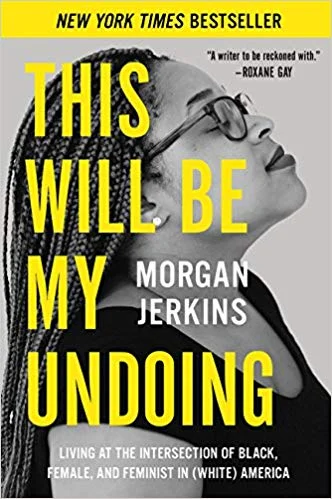
THIS WILL BE MY UNDOING
This book blew us away. It’s courageous and open and raw and brave. It unsettles, and challenges, and moves, and awakens. Morgan Jenkins gives voice to her experiences of being a black woman growing up and living in today’s America. She talks openly in a series of essays about her experiences in contexts such as cheerleading, Ivy League college, and international travel, her take on figures such as Michelle Obama and Beyonce, the politics of black women’s hair, and how to have and sustain relationships, within ideas of identity politics and personal beliefs.
“We cannot come together if we do not recognize our differences first. These differences are best articulated when women of color occupy the center of the discourse while white women remain silent, actively listen, and do not try to reinforce supremacy by inserting themselves in the middle of the discussion.”

OK, Caitlin’s Moran’s book isn’t a memoir, but we fell in love with it and it has all the insight of one. Follow 19 year old music journalist Dolly Wilde as she deals with unrequited love for an actual pop star, the enmity of the all-male staff of a leading music magazine, and dealing with fame, London, and very, very bad sex.
“Think about how brave it is, to do this: to queue up, and meet your hero. There’s something incredibly intimate about reading, or listening, or looking at someone else’s art. When it truly moves you—when you whoop when Prince whoops in Purple Rain; or cry when Bastian cries in The NeverEnding Story, it is as if you have been them, for a while. You traveled inside them, in their shoes, breathing their breath. Moving with their pulse. A faint ghost of them imprinted, inside you, forever—it responds when you meet them, as if it recognizes its own reflection.”

CONVERSATIONS WITH FRIENDS
Sally Rooney’s stunning debut novel feels like its keeping itself in check while trying not to fall into the intimacy abyss of female friendship and love relationships. Frances, a millennial beholden only to herself, but who is really in thrall to the self-possessed Bobbi and confusingly charming Nick, works at figuring it all out with a cool detachment that she certainly doesn’t feel. People, yup, they are complicated. It will make you question why you think what you think about people, and how your ego sometimes needs to slide right out of the way.
“Things and people moved around me, taking positions in obscure hierarchies, participating in systems I didn’t know about and never would. A complex network of objects and concepts. You live through certain things before you understand them. You can’t always take the analytical position.”

Russian Doll
Really? Connection? The Netflix comedy-drama created by Natasha Lyonne (who also stars), Amy Poehler, and Lesyle Headland, is about many things. We’ll allow you to debate that endlessly. But we think this twisted Groundhog Day-style series — where Nadia keeps reliving the day that she heads to an NYC party to celebrate her 36th birthday and dies, in various ways, again and again — is about figuring out that people bit. At its heart, its about learning that not being alone in life is maybe enough to solve even the most mysterious of problems.
“In the ‘60s, you would see people dropping like flies at 27 and you felt, ‘Oh that must be a drug thing. But as you move into modern times, we’re realizing that it’s very adult and very accomplished people who find that life is simply too much to bear. That’s a very real thing that we need to remove a cloak of shame around. I think we need to be discussing freely and openly the underlying brokenness of the human experience.”
How to Human has become one of our default listens with its raw, open questioning, as much of host Sam Lamott as his guests. Sam is not afraid to face his past, and his present struggles, publicly and sincerely, and he’ll admit to feeling kind of afraid or crap or lost as he does so. That’s unusual in the highly polished storytelling of most of today’s podcasts. It’s an approach that has drawn in guests as wide-ranging as sometimes controversial lawyer Gloria Allred and wise person in the world Bryron Katie.
“If you believe what you see, you believe we look like our cherry-picked profile pictures we curate, that our life is the polished story we present. But our truth, our quirky, messy, actual human experience, is captivating and magnetic, because we see our true self in the story.”

We want to tell you that everything we learned about people we learned from listening to Terry Gross interview everybody of note, ever. But we didn’t. Though we did feel smarter and more understanding after listening to her conversations. Gross somehow doesn’t push her guests to reveal too much, but she does somehow sensitively and expertly allow for their vulnerability and for them as real people to show up, whether that’s Phoebe Waller-Bridge or Zadie Smith.
“I also often ask my guests about what they consider to be their invisible weaknesses and shortcomings. I do this because these are the characteristics that define us no less than our strengths. What we feel sets us apart from other people is often the thing that shapes us as individuals. This may be especially true of writers and actors, many of whom first started to develop their observational skills as a result of being sidelined from typical childhood or adolescent activities because of an infirmity or a feeling of not fitting in. Or so I’ve come to believe from talking to so many writers and actors over the years.”

We don’t believe in must-reads (who has the time) only loved-reads, and we’d add the literary magazine American Chordata into that pile. Fiction, non-fiction, poetry, art and photography approached with a beautiful design sensibility and brave emotional tenor. Make this your company for a while and it will be interesting company at that. This is a magazine that captures the ‘plurality of human experience.’
“We want to be a really good literary and arts magazine that celebrates sophisticated design and earnest expression on the same page… What interests us most is work that’s new but not smug, that’s brave enough to give us emotional detail and skilful enough to do it without melodrama.”

LOST IN TRANSLATION
We still go back to this movie, which to us defines a certain innocence of its stars Bill Murray and Scarlett Johansson, and of our times, when just hanging out in Tokyo and finding oneself and someone else to brush against seemed enough. Because what really happens here? Two people hang out, slight confused but content to be seen for a while as they are, maybe falling in love, maybe just holding each other for a while in time and space outside of their regular lives. Plus that karaoke scene?
“More than this, you know there’s nothing. More than this, just tell me one thing.”

Susan O’Malley was a SF-based artist who used the materials of our human connectedness to create meaningful works that engaged and inspired. This book centers on a single question — ‘What advice would your 80-year old self give to you?’ — that O’Malley asked people aged 7 to 88. Turns out you should listen to that voice. There are wise words to be heard from your future self if you listen.
“In every conversation I’ve had for this project, I’m reminded how we all are looking for similar things in our lives: meaning, security, happiness, community, and love. Your heart has reasons your head does not know; love is everywhere, look for it; do the things that matter to your heart. The words of others often express what I’m thinking but haven’t yet found words for. It’s these moments of hearing what I recognize that makes me feel alive, connected and understood. Yes, we are all in this together.’”

Amanda’s playlist for connection over on spotify. Listen to this if you don’t want to see people, or want to be inspired to be around them again! Either works.
Let us know what we’re missing, what you’d add and what you turn to when in need of more connection in your life. One note, this is not a list of everything ever written on the subject. Its our take, from what we’ve been consuming over the last few months. Its our prescription for your life for where we are, and you might be, right now. Enjoy!

MARFA | Land of the Lost
The great irony of Marfa is that it isn’t really trying to be anything other than what it is: a tiny, dusty Texas town. The city of Marfa website pitches it as “more than just a place. . . . It’s a state of mind,” but my mom and I agreed that that gives the wrong idea.
“Don’t drop it!!” I yelled in mock alarm.
I’d just mentioned to the proprietor of Many Stones, the rock shop in Terlingua, Texas, that my mom and I had driven down from Marfa. Mostly in good fun, but also with a healthy dose of genuine mockery, he was holding up a work of contemporary art for our admiration and possible purchase—which was, of course, imaginary. He’d likely perfected the joke over many years: a rock shop owner, selling empty air! These rubes will believe anything!
Grizzled locals ribbing the art crowd who helicopters in, lingers just a while, and jet-sets out: Is it a cliché if that’s what they genuinely think? And who are art tourists to fling around words like “cliché,” hmm?
My mom and I spent three days in Marfa, and we saw most of what it has to offer the out-of-towners. Most tourists come to see the art—expansive installations by Donald Judd, Robert Irwin, Dan Flavin, and other confrères of 1960s minimalism, most of the works permanent and overseen by Judd’s Chinati Foundation. Almost everything is advance-ticketed in order to keep the crowds similarly minimalistic. Other tourists come to see the famous Marfa Lights, a ghostly atmospheric effect. Yet other tourists, for instance Anthony Bourdain, come for the food and continue on to Big Bend National Park, which is even deeper in, on the Mexico border. Bourdain would be dead before that episode aired. Judd died before his time, too.
The great irony of Marfa is that it isn’t really trying to be anything other than what it is: a tiny, dusty Texas town. The city of Marfa website pitches it as “more than just a place. . . . It’s a state of mind,” but my mom and I agreed that that gives the wrong idea. The folks who run the town and the art foundation really do want to keep Marfa a smallish, authentic (in the true-to-itself sense of the word, not the external-culture-police sense) place where tourism doesn’t make life insufferable for the locals. Donald Judd left New York for Marfa because he dug it as it was: small, remote, cheap. It’s the outsiders who insist on projecting onto it all sorts of loco imaginings.
My initial trip research turned up these two young ladies who sought it out as a backdrop for their fashion show:
http://livvyland.com/2017/02/02/texas-road-trip-marfa-big-bend-national-park/
Then there’s this, which makes me think “ugh”:
I have no words for this:
I mean, if you’ve spent many a summer in tiny midwestern towns, as both my mom and I have, there’s nothing . . . magical and transformative about being back in one. In fact, it’s familiar, comfortable. People wave at you when you’re out for a run. Shop owners have time to chat.
And now that we’re on the subject, I’m actually highly suspicious of art people who profess too much astonishment at experiencing a remote place. How many art hotshots in New York or L.A. or San Francisco actually grew up in the metropolis, hmm? And indeed, while waiting around for our tour of The Block, Judd’s former home/compound, I struck up a conversation with a guy, who turned out to be a Local Kid Made Good: grew up nearby, cut his teeth as a Chinati tour guide, now is employed at the Smithsonian in DC, and was back in town for the holidays to see his family. He was taking the tour as an excuse to jaw with old coworkers.
Of course now that I’ve debunked the place, it’s time to admit that I did have a transcendent moment in Marfa. As a lifelong James Dean acolyte (who even made the long, lonely drive to Cholame on one milestone death anniversary to linger at the fateful spot on the highway, at the exact time of day of the crash, with the similarly besotted), I’d known for years that his last film, the epic Giant, was filmed in Marfa. He died just days after principal photography wrapped. What I hadn’t realized was that the Hotel Paisano, where my mom and I stayed, was where the cast had lived for the month-plus of on-location filming. Massive production stills plastered the lobby, and the hallways were filled with little gems for the inquisitive guest with time on her hands, for instance a photo essay by some guy who’d visited the remains of the train station in Maryland where Elizabeth Taylor’s character was shown embarking for Texas with Rock Hudson, her new husband.
It was decrepit now, and that made him sad.
At least there was still something to see. Nothing at all remains of the Reata mansion, which was only ever a facade to begin with—time and tide, fires and looters have disappeared it all—but the spirits of those film legends, all gone now, hovered everywhere for me in Marfa.
As you leave town, for sure stop to take a photo at Elmgreen & Dragset’s Prada Marfa (I bet the rock shop guy secretly loves the idea of that place! so snarky!). But also linger a while in the desert just outside of town and commune with the ghosts of the big ones—and I’m talking about Judd and Bourdain here, too—who likewise stayed a moment or longer, and for some of whom it was more or less a last stop.

City Lights Books | behind the truth
City Lights Bookstore is a literary landmark and a magical meeting place for intellectual inquiry.
“City Lights is a landmark independent bookstore and publisher that specializes in world literature, the arts, and progressive politics.”
City Lights Bookstore is a literary landmark and a magical meeting place for intellectual inquiry. Open until midnight daily since 1953, City Lights is internationally known for its expert selection of books and for its impact on the history of free speech in America with the publication of Allen Ginsberg’s Howl and the subsequent trials. City Lights continues to publish avant-garde work, host regular events and readings, and be a beacon of inspiration for all writers and lovers of the written word.
Lawrence Ferlinghetti, the primary founder and caretaker of City Lights, turned 100 years old this year and San Francisco celebrated his incredible contribution to both this city and literary culture across the globe. Ferlinghetti is a widely read, published, and cherished poet and activist who continues to create and paint mystical worlds of the imagination.
Inspired by Ferlinghetti and City Lights, I wrote a poem to pay homage to this singular place of multi-faceted truth:
behind the truth
after ‘behind the cape’ by david larsen
behind the truth,
and growing numb,
fear floods
the misled head.
men of power
trick fear from
silence.
from
knowing
something
to
knowing
nothing.
now
the work of
untangling
knots of
misplaced, misused
lies
i start again.
To find out more about City Lights Books: Website www.citylights.com / Facebook @citylightsbooks / Instagram @citylightsbooks/ Twitter @citylightsbooks

The Sheppey
The Sheppey rewards those who seek it out with character in abundance, and music to pay attention to, thoughtful rooms to suit your different moods and barrels of cider on the bar to blurry away your day.
“Five minutes from Glastonbury and ten minutes from Wells, England’s smallest city, The Sheppey is a pub out in a world of its own, amongst the peat beds and murmurating starlings of the Somerset Levels. We offer brilliant modern European food, a constantly changing roster of beers and ales, and a bar covered in casks of local ciders that’ll knock your socks off.”
Sometimes when it feels like there is nothing there, we stumble on something. Driving down narrow single lanes across the Somerset Levels, the feeling is very much of absence – of being lost on the flatness of it all, of peet moors and dairy farms and not much more. But then you arrive, at an unassuming white fronted building and you are here, in someplace. Which here means a location of eccentricity and bustle, and a pub called The Sheppey.
We’re huge believers in the good ole English pub to hold us as people, but it takes a special kind of pub to hold us beyond the pint. The Sheppey rewards those who seek it out with character in abundance, and music to pay attention to, thoughtful rooms to suit your different moods and barrels of cider on the bar to blurry away your day.
There’s whimsey to be found here: the fish wallpaper, signs declaring LOVE, the plastic horror dolls (or is that just our reading of those things!), the vintage finds, retro furniture and Hockney prints. You get to self-select where you want to be: cute cubbies for lounging, a more traditional pub bar, an outside courtyard to soak in the hoped for sun and a more grown-up light filled indoor space conducive to conversation. And let’s get back to that music which is built into the tongue-in-cheek DNA of this place: the DJ sets, the different music for different decades (yes, that includes an 80s dance party where you get to dress up in that rara skirt you’ve been holding onto) and an eclectic line up of live bands ranging from folk, soul, jazz funk and, err, poaching music.
Bought by Mark Hey and Liz Chamberlain in 2010, The Sheppey has been lauded for a while as one of the best of the west, its pull equivalent, maybe, to that famous site of pilgrimage, The Glastonbury Tor, that sits within its sights. Ok, maybe that’s going too far, but this is a place that has draw. We came with kids and cousins, and probably wrongly used the flea market toys on display to distract them while we munched on our ale battered fish and chips on the sun-filled balcony beside a round shiny ball that said appropriately ‘Globe’. For an afternoon, seated beside a river, with food and family, that was our whole world. That was enough.
By pouring their commitment and personality into this space, Hey and Chamberlain have created a context where magic of a different kind can happen too. Yes, they have manifested a situation of welcome and hospitality, a context that invites joy and relationships, an environment that is cosy in its crammed arrangements. But when this all gets out of the way, when you are seated or dancing or eating amongst its glory, there’s that other spark that can happen, the one where we come together as people and help make The Sheppey sing too.
To find out more: Website www.thesheppey.co.uk / Facebook @sheppey
[Oh and if you need more of this and want to stay longer, there are three bedrooms on site and two cottages close by.]

ARoS Aarhus Kunstmuseum
ARoS refers to itself as a ‘mental fitness center’ which we just love. We’re very much on board with that approach to our museums.
“ARoS is the perfect place for social interaction. It is a place where visitors are presented with new perspectives and opportunities to broaden their outlook. In all its diverse activities, ARoS wants to radiate attractiveness, relevance, and integrity. ARoS, therefore, is an outstanding universe appealing to both the heart and the brain. Looking at art is very like standing on a trampoline. You need to be moving in order to gain something from it and, after a time, you find yourself jumping higher and seeing more of the world. This is what art is about at ARoS. It is mental fitness. ”
Usually, when an art museum decides it wants to be one of the top 10 in the world, it focuses on building a stellar collection of masterpieces. ARoS Aarhus Kunstmuseum is doing it differently by focusing on its connections with the local community and society at large. That means it’s committing to us as people not just us as an audience.
Take its latest exhibition, Tomorrow is the Question, which faces our possible futures as humans given the crises we're in and is one of the many initiatives at the museum inspired by the UN seventeen sustainable development goals (others include Hunger and Poverty). There’s the awe-inspiring rooftop work by Olafur Eliasson, Your rainbow panorama, as well as James Turrell’s wondrous expansion of the museum with the Next Level, and the ARoS Triennial, which in 2017 looked at nature and environmental issues in contexts beyond the museums walls. Plus there’s Art & Yoga, artists in residence, and an emphasis on local food and craftsmanship in its culinary offerings. It is this commitment to 'experience, insight and reflection' that is making ARoS, one of Europe’s largest museums, also maybe one of its most relevant.
In fact Director Erlend Hoyersten is explicitly making good health and well-being a goal for this contemporary arts institution:
'A good life is a life full of meaning and social relations. We humans need to commit ourselves, to know things, and to mean something to others. Joy is not about predictability, control or absence of pain. Joy is often about something we cannot be quite sure of. Art disrupts. Art asks questions. Art helps us to see what does not yet exist. Only by imagining a better world can we actually get a better world. If you can think it, you can do it.’
ARoS refers to itself as a ‘mental fitness center’ which we just love. We’re very much on board with that approach to our museums. Here we get to reach as people for whatever it is we need in our lives: curiosity, connection, awe and wonder amongst these. Giving ourselves over to new ideas, to new ways of being, to new visual languages, means we also get to give ourselves over to an expanded sense of ourselves, of our worlds and of each other.
Watch this video: it will give you shivers for how our museums can function differently. Campfires for today? Absolutely.
To find out more: Website https://en.aros.dk / Instagram @arosartmuseum / Facebook @ARoSArtMuseum / Instagram @arosartmuseum

Fiber Circle Studio: A conversation with Alisha Reyes on how making saved her
Some of us know our purpose right from the get-go; many of us don’t, we stumble on it. For Alisha Reyes, founder of Sonoma County’s Fiber Circle Studio, it took knitting a pair of socks at age 17 for her life to light up.
“Fiber Circle Studio, located in Sonoma County, CA, focuses on offering fiber related workshops, and equipment in the areas of weaving, spinning, fiber processing, sewing, dyeing, knitting, crocheting and felting. Our goal is to provide all levels of fiber artists, from new to expert, with all the resources, tools, knowledge and equipment to explore one’s creative journey in a place of community, support and inspiration.”
Some of us know our purpose right from the get-go; many of us don’t, we stumble on it. For Alisha Reyes, founder of Sonoma County’s Fiber Circle Studio, it took knitting a pair of socks at age 17 for her life to light up. Literally. At that time she was struggling with depression and ideas around self-worth, and it was that one seemingly tiny act that gave her hope.
Since that moment, Alisha has actively pursued workshops, mentors and teaching experiences to gain mastery of knitting. As she did so, she found she was good at it, like really good. When that pursuit wasn’t quite enough, Alisha headed to a farm in upstate Washington to understand the entire process of fiber, like from the sheep stage on, including spinning and dyeing. She was that committed! Alisha is now a prophetess of the fiber arts but she’s also super approachable and down-to-earth and gets that even if you don’t self-identify as a maker, you get to do it too.
About 18 months ago, at the beginning of 2018, all Alisha’s knowledge got poured into a bricks and mortar space in Cotati, called Fiber Circle Studio. For months before the opening, Alisha collected weaving looms, spinning wheels, sewing machines and drum carders, which all got stored in her 700 square foot home (there’s that commitment showing up again) and which now fill this space instead. She faced down all those barriers to starting an actual space for creatives: like insurance, rent, parking, licenses, you know all the scaffolding that can make our dreams but sometimes make the kind of walls that we don’t want to be building instead. Then there were, and still are, those more personal issues to contend with like money, time, experience, self-value and family time, as well as the reality of being only 28 years old and a mother of two.
Alisha’s getting it done though despite these hurdles. Fiber Circle Studio is a sweet wonderland of making. There are areas for all the fiber arts, like weaving, fiber processing, dyeing, crochet, and knitting, a kitchen station for dyeing, a couple of tables to gather and workshop, even a library of books about process available for members. As Alisha will tell you, “It’s a busy life, but to have all of these incredible things going on in my life is so fulfilling!’
Fiber Circle Studio is designed to support people however they come to the fiber arts. Sometimes that’s with a workshop that starts someone weaving, trying something new, and using their hands again. Building confidence and interest. Or offerings for people at the intermediate and advanced levels, who have exhausted other retail and book-based resources. Recent workshops have brought in fiber artists from Indonesia to explore batik and New Mexico to learn about inkle weaving.
There’s also a membership option, where people get to use the space and tools however and whenever they need, returning again and again to work on their pieces, share their skill, and maybe even collaborate with the person on the loom over. This is a space that works across breadth and at depth, and one of the few places in the US that operates this way in the area of the fiber arts.
And there’s also that community piece, that goes beyond nurturing a potential talent, such as tapestry weaver Keyaira Terry who got her start here, but is also about nurturing us as people and us in community. Fiber Circle Studio isn’t about making in isolation, it’s about making in community and in relation to yourself. That’s evident in programs like Craftaholics Anonymous, but also in the very DNA of this space – it’s all relational, to self and to others. The strands of a life sit here; Fiber Circle Studio exists to help you weave them together, however that makes sense to you.

MAKING SPACE:
With Alisha Reyes, Founder, Fiber Circle Studio
Why was a physical space important to you?
To have a place of engagement and interaction. To provide space and equipment for people to explore a creative journey in an inspiring and supportive environment.
What advice would you give to other creatives thinking of starting a bricks and mortar?
Set a budget, list your absolute needs as well as negotiable desires. Envision, plan and do it!
What does community mean in the context of Fiber Circle Studio?
Community is about sharing knowledge, inspiring others and being inspired, growing and evolving on a creative journey alongside others. Making connections and providing opportunities!
To find out more: Website www.fibercirclestudio.com / Facebook @fibercirclestudio / Instagram @fibercirclestudio

Sunday Assembly
What makes Sunday Assembly distinct, and widely compelling, is the basic belief system of ‘Live Better, Help Often, Wonder More’. Who could not find themselves getting behind that?
“Celebrating life together. Inspiring events and caring communities in 70+ cities worldwide.”
A Sunday Assembly. What are your associations with this? You probably already have some. Maybe your mind goes to Church. Maybe it goes to Religion. Maybe it’s just thrown back to some gathering, or school, or choir thing you had to attend when you were a kid. But does it go to singing Snow Patrol (‘Light Up, light up / As if you have a choice / Even if you cannot hear my voice / I’ll be right beside your dear’), or eating donuts and drinking coffee, or hearing someone’s story of how they couldn’t quite get their life to do what it needed to do that week?
Since it was launched in 2013 by two comedians Sanderson Jones and Pippa Evans, as the punch-line that didn’t have a joke, Sunday Assembly has morphed into 70 chapters in 8 countries. The most recent chapter opened in Plymouth, England in the past month. We’ve attended the monthly meet-ups in the San Francisco Bay Area. There are others, many others, in places like Cape Town, Sydney, Amsterdam, Paris, Detroit and Las Vegas. If there isn’t one near you, you get to start one with 9 of your friends, following this pathway. There’s a reason it’s the fastest growing secular community in the world.
What makes Sunday Assembly distinct, and widely compelling, is the basic belief system of ‘Live Better, Help Often, Wonder More’. Who could not find themselves getting behind that? Each Chapter is built around a Manifesto that includes things like ‘Is 100% a celebration of life. We are born from nothing and go to nothing. Let’s enjoy it together.’ And ‘Is radically inclusive. Everyone is welcome, regardless of their beliefs—this is a place of love that is open and accepting.’ And ‘We won’t tell you how to live but will try to help you do it as well as you can.’ (There are 10 points that make lots of sense, read them all here)
But this is making it all sound horribly serious. The Assemblies themselves are open and playful, and delightfully human. They speak to our needs as people – the simple ones of laughter, storytelling, friendship, singing, music, sharing food and spending time together. Things happen at them, some expected like the inspirational speakers saying wise words on themes like human aging, or happiness, or body positivity, but some things that may take you out of your comfort zone (or not, depending on how you are inclined) like err dance breaks. Bands play, spoken word artists perform, poets take the podium. Each Assembly is different though the foundation of the mission permeates even the most unique among them.
Maybe because they all speak to our more complex needs, those of wanting to be heard and needing to listen, of getting beyond ourselves and into a wider purpose, of realizing that our emotional lives can have a place in the days of our weeks, that there’s a graspable value system within our reach. Maybe the most important thing here is around belonging – at a time when we’re more and more disconnected, more lost, more lonely, Sunday Assembly opens its doors and says just ‘hi, come in.’
That’s the beautiful simplicity of the whole thing. When you walk into one of the congregations, you can feel it. That openness, that sense of welcome, that feeling of being ok. As you sing along, as you reflect, as you boogie just a little, even as you catch the eye of the person next to you in the fab recognition of it all, you get to be a person in the world, and that can feel good, even if you are out of tune or a stranger or slightly befuddled by it all. This is your chance to revel in the feeling of truly belonging, even if it’s just for a little while.
To find out more: Website www.sundayassembly.com / Instagram @sundayassemblylondon

Descanso Gardens
Most city gardens are well manicured and pretty to visit, but Descanso maintains a unique kind of messiness that instantly transports you into a magical world of plants, trees, and flowers.
“Descanso Gardens is an urban retreat of year-round natural beauty, internationally renowned botanical collections and spectacular seasonal horticultural displays. Visit for a stroll, a concert or a class — there are so many ways to explore.”
Nestled in the mountains just a short drive from the urban landscape of Los Angeles you’ll find Descanso Gardens. Walking among the winding paths and hidden trails, you can’t help but feel transported into a global nature experience spanning the world. One moment you’re in a Japanese garden, and the next you find yourself in the midst of California redwoods.
Most city gardens are well manicured and pretty to visit, but Descanso maintains a unique kind of messiness that instantly transports you into a magical world of plants, trees, and flowers. It’s unique design and layout organically encourage curiosity, and instill a felt sense of wild freedom. Descanso has a way of washing away worry while generating a new perspective on life.
We’re learning more and more how essential nature is to our mental health, and visits to places like Descanso Gardens offer a perfect prescription when difficult feelings like overwhelm and loneliness surface. Providing an opportunity to easily escape and connect at the same time, Descanso is a place to wander alone, or to generate a strong sense of belonging and community.
Your spirits will be lifted by the special beauty of Descanso Gardens, and you’ll immediately feel a sense of calm when you journey into these gardens. This is the perfect place to get the peace of mind you crave in the city of angels.
Website: www.descansogardens.org / Facebook @descansogardensLA / Twitter @descansogardens / Instagram @descansogardens
teamLab Planets
There are the obvious jokes one can make about the plethora of experiential pop-up museums that have emerged in our new Instagram-able world, but perhaps there is a kind of beauty that would not have been dreamed nor experienced had social media not been invented.
“teamLab Planets is a museum where you move through water. It consists of 4 vast exhibition spaces at its center, and 7 works of art. The artworks are based on art collective teamLab’s concept of “Body Immersive”.
The massive Body Immersive space consists of a collection of installations in which the entire body becomes immersed in the art, and the boundaries between the viewer and the work become ambiguous.
Visitors enter the museum barefoot, and become immersed with other visitors in the vast installation spaces.”
I know there are the obvious jokes one can make about the plethora of experiential pop-up museums that have emerged in our new Instagram-able world, but today’s visit to *Planets* had me re-thinking my own cynicism.
Perhaps there is a rare beauty in these new creations that we ought to be grateful for, a kind of beauty that would not have been dreamed nor experienced had social media not been invented. I have only ever gone to these *museums* because I know it’s an hour my kids will thank me for. But today’s visit turned out to be something entirely different for me.
Unlike the highly commercial, soulless stateside pop-ups, this museum experience was wildly sensual, surprisingly dreamy and inevitably personal. Over and over again I kept asking myself, “Is this what the approach to heaven feels like?” I kept thinking of my father in his last days weeping, “If I’d known dying was such a beautiful experience, I wouldn’t have spent my entire life fearing it.” I know this is some heavy feelings-stuff for this venue, but really - it was beautiful and powerful.
Head to their website, turn-up the volume and walk with us through an Olympic sized pool of warm, milky water with calming projections of cherry blossoms and koi fish. The music was absolutely everything.
In the end, we lay on a floor for an eternity, observing the vibrant visions of petals falling and butterflies ascending, and the whole time I kept thinking: “Yes. This is exactly what heaven will be like.”

Yerba Buena Center for the Arts
Shaping itself very much as a ‘citizen institution’ in diverse and ambitious ways, YBCA is more than an arts institution, it is a container for all our lives.
“At Yerba Buena Center for the Arts (YBCA), we are driven by the belief that art and creativity are essential to healthy lives and communities. Every day, we work with artists who are tapping into the wonder, creativity, and imagination that fuels our perception of what is possible. This sense of possibility and potential is the foundation of our well-being.”
San Francisco’s Yerba Buena Center for the Arts excels at making it’s cool taglines real. Like ‘Center for the Art of Finding Beautiful Truths Amidst Ugly Realities’. Or ‘Center for the Art of Expressing Optimism Against Unfathomable Odds’. And even ‘Center for the Art of Exposing a Needle of Insight in a Haystack of Confusion.’
These often lyrical insights are woven throughout YBCA’s mission and are activated within the diverse communities in which it consciously operates.
Yes, there’s still an active exhibitions program but one that orientates itself around social change and that promotes discussion around participation, reflection and awareness. With exhibitions by socially engaged artists such as Suzanne Lacey, Futurefarmers and Tania Brugera, YBCA goes beyond the standard solo show format to interactive installations that process our everyday realities at depth and within clear contexts.
But YBCA as a real, impactful and needed platform also manifests beyond it’s white walls and into the public realm, onto the streets, in the neighborhoods and within the urban lives surrounding it’s downtown location. YBCA’s public artworks, for instance, advocate for change. Like the partnership with the Tenderloin Healthy Corner Store Coalition, in which artists replace existing neon signs advertising liquor and cigarettes with new ones selling fresh produce. Other sited works are designed to capture our public imagination like Ana Teresa Fernández’s Dream.
With it’s moment defining YBCA 100, YBCA surveys and amplifies the people, initiatives and movements affecting social change. 2018’s wide-ranging list included the ‘me too’ movement, the students of Majory Stoneman Douglas High School, comedian Luna Malbroux, activist Naomi Klein and poet Chinaka Hodge. While YBCA’s Fellowship Program brings together creative citizens across the Bay Area to collectively interrogate a single urgent question that culminates in an inclusive day-long Public Square event, of performances, installation, workshops, and presentations.
Then there’s the partnership with Blue Shield that builds on the ‘growing evidence that art, creativity, and culture have measurable impacts on individual and community health.’ Culture Bank, co-founded by YBCA Director Deborah Cullinan, which actively invests in artists who are cultivating the hidden assets of our communities. And now YBCA has become home to the Curatorial Research Bureau, a bookstore, learning site, exhibition and public programs space that opens up who gets to learn about the discourse impacting culture.
Shaping itself very much as a ‘citizen institution’ in all these many ambitious ways, YBCA is more than an arts institution, it is a container for all our lives. It’s public service ambition is most eloquently summed up in the words of Cullinan:
“Today, as public trust in our institutions and our leaders continues to erode, there may be no role that is more important for our cultural organizations to play than to be places for people from all walks of life to come together in dialogue. In fact, I believe that the arts organizations that will survive and thrive over the next several decades will be those that embrace a radical inclusivity; set free structures that privilege certain perspectives and exclude others; encourage dialogue and debate; and, expand definitions of what art is, who makes it, and who it is for. These organizations will fuel the public imagination and catalyze collective action. These organizations will hold our democracy accountable.”
Across the cultural field, people are starting to build frameworks for engagement, transformation and participation, often through the filter of culture, and creating the structures to help negotiate our lives, from multiple perspectives. It’s a very different approach to what culture was supposed to do previously and how our institutions have been conceived and constructed. YBCA is a lead player in this field: reconfiguring what it means to be an arts institution today, the role that cultural spaces can actively take to affect our everyday lives, and what a center for doing something about it can actually look like.
Visit. Engage. Participate. Because what YBCA makes happen matters to us.
Website: www.ybca.org / Facebook @YBCA / Instagram @ybca / Twitter @YBCA