

On Cycle Class
I appreciate so many things about cycle class—the exercise, of course, but also the mental equanimity it brings. I have one of those brains that speeds, and when it’s not speeding it’s caught in a loop.
She wasn’t my first. There were others before, and there’ve been others since.
But she was my favorite. I suspect she always will be.
Circumstances kept us apart most of the time, but for a few hours a week, I was entirely hers. And when we were together, an hour went by like an instant.
She was funny, but she could also be tough. Very tough. I worked so hard, trying to make her happy. When her lips would curve into a smile of approval, it made my day.
Sometimes she would invite others to come watch us, to get new ideas.
Our song was “Sandstorm” by Darude. She could even make the song shrink or lengthen, depending on her mood. She was tiny in stature, but she was that powerful. I still think about her often, and fondly. Even though I no longer remember her name.
She was the group exercise manager at the 24 Hour Fitness at El Camino and Hwy 92, and when she led a cycle class, you could count me present and accounted for, ma’am. She often climbed off her bike and prowled around the room, never making eye contact with any one individual but letting us know she was watching, always watching, as she barked orders. “Sprint!” “Jumps!” “Hill climb!” The aforementioned others who came to watch were her fellow cycle instructors; she insisted they sample one another’s classes to keep everyone at the top of their game.
I’ve been attending cycle classes for almost twenty years now, and I’ve encountered dozens of instructors. The worst are the throwback dudes who play Aerosmith and Guns ’n’ Roses—two bands I love dearly, thank you very much—but then expect the music (not them) to lead the class, and we all plod, plod, plod away at the same BPM for an hour. Actually, no, I stand corrected, the worst is when they command us to pump away at some other BPM than the music. Would a Zumba teacher ever tell you to dance faster or slower than the music? No!
I appreciate so many things about cycle class—the exercise, of course, but also the mental equanimity it brings. I have one of those brains that speeds, and when it’s not speeding it’s caught in a loop. Cycle makes the needle jump its groove and gives me some relief. I’m not overly sporty, and I’m about as adept with choreography as I am with, say, brain surgery, but I can do jumps on fours and eights like nobody’s business. I’m competition-averse, but eagerly imagine that I’m racing the guy next to me. And likely winning, considering how easy he seems to be taking things today, the slacker.
For an hour in cycle I get to think deep thoughts about the structure of music. Even pop music has a lot of structure, and a really skilled instructor will leverage it to make us work hard and make the time streak by. I also get to muse on personality types. In the old, less trusting days, the gyms would keep the bike seats in a padlocked locker between classes, and there was that one guy who never took a seat so he’d have to stand for the whole class. Hmm.
I became a freelancer so I’d never have to attend a meeting I didn’t myself schedule, but two or possibly three thousand times over the last twenty years I’ve gotten up at the crack of dawn, or snuck out of work early, or otherwise dragged my sorry ass to the gym for cycle class at some weird hour someone else decided on. And even when Mr. Guns ’n’ Roses is at the helm, it’s always felt like time utterly well spent mentally, not just physically. I’m sure others, sweating alongside me in the dark, trouncing me in their own imaginary races, think the same.
———
And for another take on cycle class, Jimmy Fallon (thanks Lindsey for the suggestion)!

Jodrell Bank
Jodrell Bank is one of those truly special places for a spectacular, constant, reason. Right here is one of the biggest and most powerful radio telescopes in the world.
“Take new and exciting approaches to presenting the wonders of science in a way that engages our visitors emotionally as well as intellectually, evoking wonder, surprise, humour and, above all, curiosity.”
We’ve been coming to Jodrell Bank Discovery Center since we were kids. And now we take our own kids. That sense of awe and wonder that we experienced way back then (even though we went there on school trips which somehow make everything boring), that hasn’t gone away for us, and now it captures our younger generation too.
Since we came in our school uniforms (we won’t say exactly when that was), Jodrell Bank has undergone a bit of a revamp. Our kids get a much nicer café then we ever had, though we get the benefits of that too, as well as majorly remodeled visitor buildings. The striking Planet Pavilion contains the world’s largest clockwork Orrery (a to-scale working model of the solar system) and in the Space Pavilion you now get to hear the Big Bang.
But Jodrell Bank is one of those truly special places for a spectacular, constant, reason. Right here is one of the biggest and most powerful radio telescopes in the world. The giant, Grade-1 listed, Lovell Telescope. This monumental white bowl has been sat in the green fields of Cheshire since 1957. Positioned right beside the Manchester-Crew train line, I’d pass it every day on my way to school, and it has never ceased to blow my mind. Looking out of a train window, the Lovell Telescope would denote an escape from the quotidian, from the banal, from our diminutive human lives. It would signify space and the universe, the capacity for us to know the unknowable, mysteries of an astronomical scale. It would communicate escape.
At a distance, the Lovell Telescope is symbol of authority for what man-made science can do. Much, much closer —you can walk right up to its base—it maintains that sense of awe, but it also conveys our humility, our very much non-man-made place in the universe. As it transcends time, the Lovell Telescope is beginning to show the wear and tear of its own life, it begins to feel fragile. When we last visited, the train-track base was covered in scaffolding, which seemed surprisingly prosaic when you think about what this thing can do. It felt oddly like it might break if moved [sorry all those Uni of Manchester science hearts that just died when I typed that]. And it does move – it’s one of the largest steerable telescopes in the world, with the bowl changing position depending on which part of the sky it needs to track.
Jodrell Bank is a place full of these kind of dichotomies. It’s an analogue escapees dream: while here, you are asked to switch off all devices, so that they don’t interfere with the powerful radio observations. Which is a permission giving of a kind we like. There’s a sense of play, of curiosity, in the exhibits on display, and the grounds that allow free-roaming, but there’s also the weighty responsibilities and ambitions of the science authored here to further our knowledge and capacity to get beyond dreaming. And now there’s even camping, bringing the vast imaginative possibilities of this place to a 4-day annual summer festival, appropriately called bluedot. With an audience of 25,000, science just got way more accessible, as it plays with music, art and culture, and bands like The Chemical Brothers, Flaming Lips and Elbow, as well as Manchester’s own Halle Orchestra, get to drop by. But best of all—we think anyway—bluedot takes place right next to that giant telescope (sometimes incorporating it into the show) and you get to unzip your tent, probably on a frosty Mancunian morning, and be right there with it.
We can majorly lose our minds on that. As we always have done, a bit, just being here with the Lovell Telescope and its universal pull.
Website www.jodrellbank.net/ Twitter @jodrellbank/ Facebook @JodrellBankOberservatory

The Chapel
The Chapel pulls people together, over food, over wine, over conversation, over ideas. That is does so in a space long held for purpose and meaning, gives the idea of the communal a modern finish.
“Warm and friendly place to shop, meet, drink and eat the very best seasonal, local food. ”
This was not the place that we thought we’d find in a gorgeous village in Somerset. But then Bruton is not defined by its countryside location or its picturesque look. There’s a lot going on within these country lanes. You might even, sometimes, think a tiny piece of London has just got off the train. Hey, even John Steinbeck said of Bruton: ‘I feel more at home here than I have ever felt in my life in any place.’
So maybe it makes sense to find The Chapel right at the center of it all. We want to write lots of naff sentences saying things like worship at the culinary altar of the chapel, or bread is our gospel, or a church for modern life, but though it threads a desirable religiosity through its space, the Chapel is very much to the side of that. Yes, it’s a serene update of a Grade II Listed, 19th-century space, which is itself a remodel of an 18th century former congregational chapel. And yes, you very much sense that history within its walls. But it’s also much less ethereally focused in its update of the purpose for these spaces: it now contains all the things we need to build the modern good life.
There’s the artisan bakery headed by Tom Hitchmough using a traditional long fermented process. We’re bread believers: bakeries can be the souls of our communities. Just think about the hours involved in creating a loaf, that nighttime toil, the scents and bustle created around the storefront, the taking home of packages of warmth, and the mindful in the moment-ness of breaking bread.
Then there’s the award-winning all day-restaurant which though is buzzes with conversation and contemporary needs (a bar where the altar would be) somehow manages to instill tranquility (and even quiet our kids) with its high ceilings and windows, streaming natural light, and figurative sculpture looking down on the dining congregates. It holds us in our days: somehow moves from loungey to kitchen table to posh restaurant, and from solo coffee to dinner for two to group dining, depending on where you are seated, what you need, and the time you are there.
More behind the scenes are the clubhouse, a private resident’s lounge from which to work (free Wifi) and relax. And the eight bedrooms that offer a tranquil pause. Oh, and there’s a carefully curated wine store that focuses on local producers.
But the thing we’re struck by is that The Chapel also offers this, public events for the curious that attract some big names and introduce some life-changing ideas: like a talk by Ed Bullmore, author of The Inflamed Mind, connecting the mind and the body through inflammation, an evening with Martin Shaw, a storyteller of ancient myths for modern times, and a film screening with campaigner Nimco Ali discussing female genital mutilation.
The Chapel pulls people together, over food, over wine, over conversation, over ideas. That is does so in a space long held for purpose and meaning, gives the idea of the communal a modern finish.
Website www.atthechapel.co.uk / instagram @thechapel / Facebook @thechapel / Twitter @thechapel
While you are here: For that creativity piece, head to Hauser & Wirth, an internationally renowned gallery that brings major art world players to a converted rural farm. For Nature + Wonder, visit The Bishops Place, where history is being interwoven with play in the cathedral town of Wells. And for spirituality of a pagan kind, walk to the top of Glastonbury Tor, and allow the legend and views to sweep over you. And you can do this from anywhere, buy a Mad Girl / Mad Boy sweatshirt by Bruton based Selfish Mother in collaboration with Bryony Gordon / Mental Health Mates.

Psychology Fringe Festival
The Psychology Fringe Festival is giving us some much needed alternatives for ways forward and ways of being. They are bringing to the fore increasingly urgent conversations created by the circumstances of our rapidly evolving world by the people who understand them most. That’s a new kind of festival that we all need to exist.
“The more we can talk about mental health – and the more ways we find to talk about it, sing about it, rap, act, paint, photograph and so much else then the more chance we have of improving wellbeing more generally. Mental health isn’t something that belongs behind the clinic-room door or in the professor’s office. It belongs to all of us. ”
A small team of clinical psychologists established the Psychology Fringe Festival and the accompanying Beyond the Therapy Room Conference to present ‘different voices, opinions and perspectives on mental health’ and to ask how we can create a more psychologically caring society. That’s a perspective that we badly need.
Though it operates alongside the Division of Clinical Psychology’s annual conference, The Psychology Fringe Festival is very much publicly orientated. Its aim is to explore clinical psychology and mental health in a broader way, to think about how we relate to one another as human beings rather than focusing on a purely medicalized approach to difficulty and distress which we’re maybe more familiar with.
In that spirit, the festival uses art-based formats, such as dance, theatre, poetry, comedy, philosophy, art and workshops, and has touched on poverty, LGBT issues and the media as well as mental health. Programs and performances are often delivered by people with lived experience of mental health services, such as DanceSyndrome, Heart to Heart Theatre, and Neural Knitworks.
Its sister program, The Beyond the Therapy Room conference similarly focuses on celebrating innovative ways of working, highlighting what we can do beyond one-to-one therapy to engage with wider issues affecting people’s mental health, including the social and political climate.
Following successful events in London, Liverpool, Cardiff, and Manchester, the Psychology Fringe Festival is giving us some much needed alternatives for ways forward and ways of being. They are bringing to the fore increasingly urgent conversations created by the circumstances of our rapidly evolving world by the people who understand them most. That’s a new kind of festival that we all need to exist.
Alternatives for supporting us through our everyday lives are popping up, but as clinical psychologist and one of the festival’s cofounders Will Curvis advises, we need to engage: “Show up at the conference and festival. Coming to events, meeting like-minded people, getting involved in these services - there’s a lot of opportunity to be active.” See you there next year?
To find out more: www.psychologyfringe.com / Twitter @ClinPsychFringe / Facebook @psychologyfringe
Case for Making
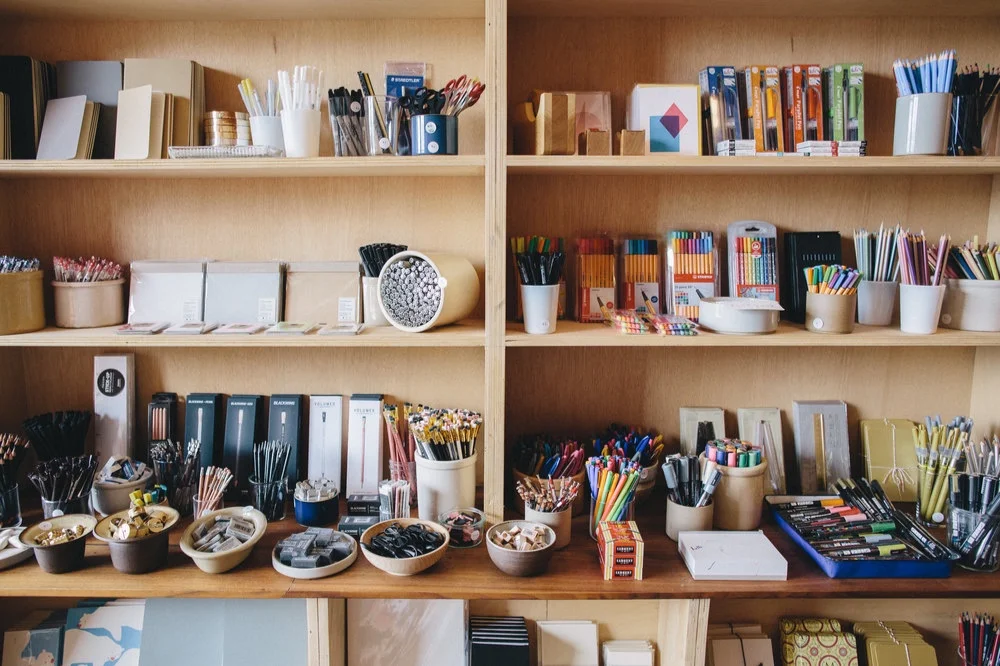
An emporium for the curious, for searchers and explorers of the page and white space. San Francisco’s Case for Making has been thoughtfully designed to ‘push our collective ideas further about what creativity can be’.
“Case for Making is a storefront offering creative supply basics, raw materials, and workshops, selected and designed to encourage process-focused exploration. Our practice is to recognize the presence of creative inquiry in multiple forms, and to provide space for engaging in and valuing this work.”
Right in a pocket of community in San Francisco’s Outer Sunset neighborhood, sits Case for Making, its creative beating heart. Founded by Alexis Joseph and Lana Porcello in 2014, because ‘the potential of humans doing projects makes them very happy’, this sweet storefront stakes a mark in the ground for the importance of making in our lives. Its an artist’s store for all of us.
Browse their products (you can do this online too). Take time in the store to just figure out what appeals to you and what makes you want to play at the process of it all. For us, its usually the handmade watercolors and indigo inks, and the special paper goods, particularly their fill-in-the-blank greeting cards.
This is an emporium for the curious, for searchers and explorers of the page and white space. Its a place designed to ‘push our collective ideas further about what creativity can be’.
Maybe this is best captured by the workshops on offer. Through classes led by local makers they admire, you are invited to produce your own pigments, learn how to draw, or paint with watercolors (their current offerings). These practical explorations sit closely to a spirit of guided inquiry, about how we show up as people in our worlds.
Case for Making takes down the idea that art is precious a notch or two, and opens the door to whatever it is that creativity means to each of us. We get to decide what we want to make and why it matters. They get to help us to do that. That’s why we love them.
*There’s a sister store at The Aesthetic Union too that you should check out!
Website www.caseformaking.com / Instagram @caseformaking

LA Central Library x Susan Orlean
It’s when Susan Orlean writes of the multipurpose function of libraries now to be the spaces that can reflect our public imagination that we feel like signing up to be a librarian right now.
“The publicness of the public library is an increasingly rare commodity. It becomes harder all the time to think of places that welcome everyone and don’t charge any money for that warm embrace.”
The Los Angeles Central Library? Wait, what, is this the right place for this? Its just a library afterall.
Yeah, we think so. We just finished reading Susan Orlean’s The Library Book and she wrote of this one library in all the terms that we consider fundamental to If Lost… places. She lyrically, and realistically, captures what this library in particular, and libraries more widely, mean to us. She knows in the heart and her own experience, how libraries hold a unique space in our lives, sometimes across generation, how they allow us spaces to just be, how they create a way into our communities that might not otherwise be there.
The Library Book captures the unique history of the LA Public Library itself - the fire that almost took it down, the women who first shaped its mission, and the current social conditions and expectations that it must now negotiate. Its also just a building. Albeit one that makes magic on a daily basis. On the LA Public Library itself, Orlean’s writes:
“The ground floor has the same traffic pattern as Grand Central Station in Manhattan. Both places are animated by a hurrying flow that surges in and out of the doors all day long. You can bob along in that flow, unnoticed. The library is an easy place to be when you have no place you need to go and a desire to be invisible.”
It’s when she writes of the multipurpose function of libraries now to be the spaces that can reflect our public imagination that we feel like signing up to be a librarian right now. Since their development in the 1800s libraries have acted as critical focal points for our communities, but The Library Book, also captures the shift in libraries from “a gigantic, groaning, fusty pile of books” to “a sleek ship of information and imagination.” Our libraries now contain not just text and voices, but services and programs that serve diverse populations, including the homeless, low income population and families. Today, libraries have a critical civic role, a pubic facing responsibility. They are sanctuaries, our town square, our community hub, our places of learning, or as Orlean’s writes “a place that is home when you aren't at home”.
We need libraries. We need these spaces to thrive, and they are.
“By most measures, this optimistic cohort seems to be right. According to a 2010 study, almost thee hundred million Americans used one of the country’s 17,078 public libraries and bookmobiles in the course of the year. In another study, over ninety percent of those surveyed said closing their local library would hurt their communities. Public libraries in the United States outnumber McDonald’s; they outnumber retail bookstores two to one. In many towns, the library is the only place you can browse through physical books.
Libraries are old-fashioned, but they are growing more popular with people under thirty. This younger generation uses libraries in greater numbers than older Americans do, and even though they grew up in a streaming, digital world, almost two thirds of them believe that there is important material in libraries that is not available on the Internet. Unlike older generations, people under thirty are less likely to have office jobs. Consequently, they are always looking for pleasant places to work outside their homes. Many end up in coffee shops and hotel lobbies or join the booming business of coworking spaces. Some of them are also discovering that libraries are society’s original coworking space and have the distinct advantage of being free.
Humankind persists in having the desire to create public places where books and ideas are shared.”
But libraries are also something else aren't they? They have this critical place in our communities, but they hold as equally a powerful place in our imaginations. When Orlean’s writes of the nostalgia around libraries, who cannot be taken back to that place of refuge or respite that they themselves experienced at some stage in their life? For her, it was like this:
“Decades had passed and I was three thousand miles away, but I felt like I had been lifted up and whisked back to that time and place, back to the scenario of walking into the library with my mother. Nothing had changed—there was the same soft tsk-tsk-tsk of pencil on paper, and the muffled murmuring from patrons at the tables in the center of the room, and the creak and groan of book carts, and the occasional papery clunk of a booked dropped on a desk. The scarred wooden checkout counters, and the librarians’ desks, as big as boats, and the bulletin board with its fluttering, raggedy notices were all the same. The sense of gentle, steady busyness, like water on a rolling boil, was just the same. The books on the shelves, with some subtractions and additions, were certainly the same.
It wasn’t that time stopped in the library. It was as if it were captured here, collected here, and in all libraries—and not only my time, life, but all human time as well. In the library, time is damned up—not just stopped but saved. The library is a gathering pool of narratives and of the people who come to find them. It is where we can glimpse immortality; in the library, we can live forever.”
When my son was born the first thing my husband did was get him a library card. He’s now 10, and has a sister in tow, and he has come to know very closely the capacity of libraries to enchant and educate. From the time his then stay-at-how dad bounced him on his knee during library story times to his amazement at experiencing Virtual Reality during a preteen takeover, the library has been a constant. Its one of the few places left where all of us with our different ages and needs finds something. We all find our way in their together, even if we spend our time separately when we’re in there.
If you don’t know your public library seek it out. And if its under threat like we know many are, campaign for its survival. These are places we need, so we don’t become untethered from our pasts or each other.

Fox + Kit | Tumbling Towards Joy
Entering the play space was like entering another world; a world where quality design meets functionality, a world where the color palette doesn’t send your eyes darting back and forth seeking reprieve, a world where kids slide happily down hills with nothing more than pirate hats, books and one another to entertain them.
“Coffeehaus + Playground”
When I first entered Fox + Kit, my two children in tow, I quickly placed a mental bet with myself: How long would it take us to (1) break something beautiful, or (2) be kicked out entirely?
The cafe felt, distinctly, like somewhere grown-ups like me weren’t allowed to enjoy anymore. Live plants, marble tables, swinging rattan chairs, gorgeous modern furniture in dusty pinks and deep blues. They must not know how sticky we are (?), must not know that I have a 3-week-old banana in my purse, just waiting to tumble out.
The baby-pink-clad barista (a detail I would be remiss to overlook) standing beside a bevy of drool-worthy pastries (another key fact) didn’t appear to share my hesitation. With a smile, he asked if we’d been in before, if he could get a coffee started for me, and if the kids would be heading into the play space.
And, that’s when I saw it … a giant glass wall cordoning off what can safely be considered the most aesthetically-pleasing play area I’d ever seen. Custom woodwork, faux-grass, plush stones, stackable cushions, cozy corners and caves, space for reading and running and dress-up (and whatever other weird things kids do when they are loosely-supervised). We were awestruck, our feet moving forward before our brains could catch up.
So, I stumbled through my coffee order and we continued toward the play space. “We’ll put it in a tumbler for you, so you don’t have to worry about spills in there,” they called after me. I didn’t know exactly what a tumbler was, and the kind, pink barista clearly didn’t know that I’d fully resigned myself to any discomfort associated with spilling things in public (but I was very excited for a special cup). I wanted to drop into my most gravelly voice and tell him, “You don’t know the things I’ve seen…” but I already had the rotten banana to deal with, so I thought it best not to press my luck. (It was the kid’s job to get us kicked out, after all. Wouldn’t want to steal their glory.)
Entering the play space was like entering another world; a world where quality design meets functionality, a world where the color palette doesn’t send your eyes darting back and forth seeking reprieve, a world where kids slide happily down hills with nothing more than pirate hats, books and one another to entertain them. Miraculously, my kids (ages 5 and 10) were both instantly hooked. I grabbed my coffee (a cool, copper tumbler, with a spill-proof lid that I still can’t quite understand the dynamics of), gave them kisses, told them I’d be in the cafe, then left.
Walking back in to the cafe felt illegal.
Can I sit here? Are these swinging chairs for the VIPs? When my kids come running out, loudly-insisting that I come see their half-heartedly executed tumbles, is that when the jig is up? When does the shame part start???
But…it never came.
The kids played, ran in and out, insisted that I meet their new friends and watch their questionable gymnastics feats, took a short break for croissants and chocolate milk (their little mini-tumblers even cuter than mine)…and they played, and I worked (and breathed, and relished in the beauty of the space).
The novelty of this might be lost on someone who hasn’t spent the better part of a decade feeling excluded from the spaces they once found comfort and solace in. And, of course, no one is really *actively* telling you that you can’t enjoy the spaces you once occupied (that would be discrimination) but there is certainly an air of “your crying baby is ***really*** fucking up the vibe and if you don’t leave on your own volition, we might be forced to hipster-stare you into oblivion.” Sometimes just because you’re “allowed” to be somewhere, doesn’t mean you’re welcome there.
When husband and wife designers David and Kyoko Westberg set out to create a space for parents and children, they considered every detail, most notably, a way to make guests feel comfortable, content and accepted for what they are: very nice people (with very loud smaller people, in tow) who all just want some good coffee and yummy snacks.
At Fox and Kit, we’ve found a space that makes us feel both welcome and at ease, even productive. (No one even mentioned the banana.)
Website www.foxandkit.com / Facebook @foxandkitmarin / Instagram @foxandkitcafe

The Bear Trail
The Bear Trail gives you full nature immersion in the up-to-your-knees/waist/neck mud version. This is an outdoor adventure assault course for adults and kids that starts with things to scramble over and ends in the showers!
“Love mud. Love life.”
We know that being in nature does good things for us like making us less stressed and more balanced in our everyday lives. The Bear Trail takes this idea and runs with it by giving you full nature immersion in the up-to-your-knees/waist/neck mud version. This is an outdoor adventure assault course for adults and kids that starts with things to scramble over and ends in the showers!
We got lucky, in a way. We went at the tail-end of a heatwave, so those deep pools of mud were still there but maybe not as abundant as at other times of the year. You can decide how much you are all in so to speak. You get to take the course at its own pace, and choose the risks that you are willing to take. If you’ve brought flip-flops (don’t) and are feeling kind of quesy about mushy wetness you can probably half-arse a few of the obstacles.
Regardless of your timidity level around dirt, its joyful scrambling, jumping, zip-lining, balancing, bouncing and climbing your way around the 28 obstacles. There’s no judgement if you don’t get anything right, actually no tuition to even tell you that. Adults are given as much credibility for being here as kids, there’s no feeling stupid for wanting to do what your 9 year old is doing. Just an open field to play in for everyone. As they say here, “Remember, mud washes off… experiences stay forever!”
Website: thebeartrail.co.uk / Facebook @thebeartrail / Twitter @trail_bear

Anaheim Packing House
From the sign above the entrance door that states ‘Cooking is Love Made Visible’, this is a place that has been designed to feed people. Metaphorically and quite literally.
“A walkable culinary collection of 35+ artisans in the ❤ of Anaheim”
If you are visiting Anaheim, my guess is that you are at Disneyland. That’s where we were, spending a couple of days at the Happiest Place on Earth (which maybe we should feature here somebody to test that assumption?). We’d built in a day in-between Theme Park days to recover, and though we thought Corona del Mar would be the break we needed, it turned out that the Anaheim Packing House became the surprise find of our trip.
From the sign above the entrance door that states ‘Cooking is Love Made Visible’, this is a place that has been designed to feed people. Metaphorically and quite literally. This former citrus warehouse has been completely overhauled to become a tightly curated food hall, though its definitely no standard food court. There’s some fun, playful choices to be had — we chose a Rainbow Cloud (i.e. a cotton-candy topped bubble tea) from Mini Monster — as well as more grown-up Poke bowls from Orange Tei, nostalgic grilled cheese from Black Sheep GCB and our beloved Fish n Chips from The Chippy. And that’s all good. But we’re about a bit more than that, and the Packing House delivers on that amorphous people-y bit.
It serves the people who come here beyond what they just consume. There’s multiple seating options for you to find the right spot, from cozy lounge cushions (perfectly placed to enjoy that day’s musicians), swinging benches, outdoor nooks, bar stools for people-watching. There’s an abundance of natural light and plants streaming down which belie the fact that this place can get crazy busy. Even SEED Peoples Market (‘Products with a Purpose’) the cute boutique has a chair for ‘patient husband’ and a former safe that now houses a ‘Film Farm’. And woven in to all this gorgeousness are community events some of which take place in the Cooks Chapel (‘Pray for Food’) like an Alzheimer’s Association Volunteer Brunch, workshops by the likes of Scratch Cooking School and live music that takes in Jazz, R&B, Indie and Blues.
The Packing House is part of the whole Packing District Area. Step beyond its walls and there’s a Honey & Butter macaroon AirStream trailer with its own parklet, called Farmers Park. Adjacent is MAKE, featuring Unsung Brewery and their occasional Bend and Beer Sessions (that’s yoga with a pint!). Plus don’t forget Center Street Promenade a few blocks walk away which has revitalized the city centre of Anaheim with a new district that brings together vintage and food storefronts, a Farmer’s Market, signature community events like their Halloween Parade, the Carnegie Library, Muzeo Museum and, get this, a Frank Gehry designed ice-rink!
But start at Parking House. Wander the space. Find your nourishment. Then your place.
Website: anaheimpackingdistrict.com / Twitter @packingdistrict / Facebook @packingdistrict / Instagram @packingdistrict

Mind Food
As MindFood’s motto goes, “Gardening is cheaper than therapy and you get tomatoes.” The Ealing-based social enterprise has this idea at its core: it’s founded on nature and uses food as the framework for figuring out our mental health concerns.
“We support people to improve their wellbeing through growing and selling food.”
Did you know that as you grow your tomatoes or tend that cabbage patch, you are also doing something deeply therapeutic?
The Ealing-based social enterprise MindFood has this idea at its core: its founded on nature and uses food as the framework for figuring out our mental health concerns, whether we’re struggling with common conditions like depression, anxiety, and stress, including PTSD, or we’re just curious about plotting and planning our own psychological health and wellbeing. As their motto goes, “Gardening is cheaper than therapy and you get tomatoes.”
Chatting to co-founder and director, Ciaran Biggins, he points out that, “An environment of nature and growing food is a perfect way to practice the Five Ways to Wellbeing as identified by the New Economics Foundation”. So if we break that down, you get connection in the form of the community around you. You are able to take your time and pay attention whether that’s to changing seasons or to something you planted. You take on the role of an active learner, specifically here about horticulture. You get to give back through the systems of sharing and support that MindFood is grounded in. And lastly, you get to be physically active, getting those wellies on and hands dirty.
Drawing from the evidence base of nature’s calming effect and the restorative practice of planting, cultivating and selling food, Biggins created a program that involved “spending more time learning about food, building community, and being in nature in a supportive environment.”
Want to get involved? MindFood offers a starter program: a free six-week course, Growing Wellbeing, which covers the theoretical and practical relationship of nature and wellbeing. It’s all “action orientated to encourage behaviour change.”
And for those who want to continue their involvement, there’s Plot to Plate, 12 weeks of working to cultivate the produce in their allotment, then selling it from their Market Stall in Acton (which inscribes a whole other level of value and purpose for what you’ve just achieved).
To find out more: www.mindfood.org.uk / Twitter @MindFoodCIC / facebook.com/MindFoodCIC

Regional Assembly of Text
When faced with the possibility of a blank page and a typewriter, what would you say, and to whom would you write. An apology, a confession, a declaration of affection?
“A lovely little stationery shop.”
On a trip to Vancouver, I found myself in The Regional Assembly of Text thinking of sending a letter home. Established by the artists and Emily Carr graduates Brandy Fedoruk and Rebecca Ann Dolen to explore “text as a theme”, this is a store/ printing press/ design studio that offers quirky cards, tiny books, papers and printed materials. It also contains the Lowercase Reading Room, a cosy reading library of self-published books and Zines housed in a former storage closet. The Vancouver store has its duplicate in beautiful downtown Victoria, British Colombia, in a second store which has been open since March 2013.
The Regional Assembly of Text is gorgeous, with witty and heartfelt messages in abundance. It just feels good to be in it. But the reason I was really drawn to this space is that once a month they also offer The Letter Writing Club. Since September 2005, out have come the Remingtons and Coronas, with the invitation for people to type, or handwrite, letters to whomever they want, about whatever they want, whether letters to governors or girlfriends. No drafts on Word first, no time to mull over. There’s just the page and a postage stamp, old school style. The Regional Assembly of Text provides supplies, snacks and the space to compose.
As I won’t be here for their next session in a week, I chose a sheet to take away, titled “Heartfelt Letter to Follow”. The last (paper) letter I had written was to a friend when I was in High School. We were separated for the summer and pre-email, so we shared cute teenage girl letters of missing each other even though she lived a short car journey away.
This being Vancouver, I have a rainy day ahead of me, a coffee on the table, and now a pencil in hand, composing a note, but to whom? When faced with the possibility of a blank page and a typewriter, what would you say, and to whom would you write. An apology, a confession, a declaration of affection?
People talk about letter-writing as a lost art form, but perhaps the key part of that sentence is that which is lost. And maybe that’s what letters inevitably connect us back to, and why these sessions at The Regional Assembly of Text are so popular; we get to reach out again to those people, that feel like home, but aren’t where we are at the moment.
As it has rained every day the week that I was in Vancouver, we’ll end with the message on one of their greeting cards:
“Things to do:
In order to increase your level of accomplishment on a rainy day of your choice:
Answer the phone using only verbs beginning with M
Count all the books you own that have one word titles
Choose between elbows and knees
Practice drawing polar bears (mail the best one to your oldest friend, ask for one in return)
Squint every time you hear the word tomorrow
Feel accomplished.”
To find out more: www.assemblyoftext.com / Instagram @assemblyoftext

Creative Mornings
It’s a Friday morning. You have 30 minutes before work. You could be anywhere in the world. It’s time to get inspired. You are at a Creative Mornings Session.
“Breakfast lecture series for the creative community.”
It’s a Friday morning. You have 30 minutes before work. You could be anywhere in the world. It’s time to get inspired. You are at a Creative Mornings Session.
Started in 2008 in New York by Tina Roth Eisenberg, who goes by Swissmiss (who incidentally has an awesome email link pack), as an inspiring way for people in the creative community to meet, Creative Mornings has blossomed into a global phenomenon.
We’ve attended Creative Mornings in San Francisco for our blast of connection. They are sweetly hosted, with baked goods and coffee on arrival, name badges if you are ready to network at that hour, and efficient timing, you are straight into the talk because time matters when you have somewhere to be straight after.
It’s just enough time to get a perspective on a Big Picture issue. Each month, the Creative Mornings community selects a global thematic, and these have been ambitious signifiers of our times, from their first lecture subject of Art + Technology though to their 76th of Water (others have included #12 Bravery, #54 Serendipity, #67 Craft). The voices of speakers are equally as wide-ranging, from local thought-leaders to widely recognized names. These talks should give you an idea of that breadth: The Art of Gathering by Priya Parker (NYC) , From Chaos to Creativity with Danny Kim (San Diego) and Craft: The Antidote to Perfectionism with Jen Hewitt (San Francisco).
Creative Mornings give just enough thinking space and a roomful of chattering people for us freelancers to feel part of a community. That’s maybe the bit that almost matters more, that you get out of your head and off your laptop, into a room with likeminded humans who are open to knowing more and are actively willing to get out of their mental comfort zones. Just being in the room recharges. Sitting next to someone who may be chasing down the same curiosity oddly comforting.
We haven’t mentioned that these talks are free (which is incredible when you think about what people charge usually for these inspiration consumables). Which means its popular. Which means you need to sign up for your spot fast. Pre-registering is essential.
If you are not near a Creative Mornings talk, you have a couple of options: you can catch them online (all sessions are recorded and there’s an extensive - read over 6000 - archive to spend some time with) or you could even do this, start your own by applying to launch a Chapter here.
Creative Mornings has now evolved into an extensive community of support online too. Check out their recently launched Creative Guild, a global directory of creative companies, professionals and jobs.
Creative Mornings are now in 194 cities and 65 counties. Attend one and aspire to their mantra: ‘More connected. More human. More heart.’
Website: www.creativemornings.com / Instagram @creativemorning / Twitter @creativemorning / Facebook @creativemornings

Magalleria
At a time when we’re driven more and more into the informational world of our phones, Bath’s Magalleria stakes physical/ actual space for the recent resurgence of independent magazines.
“Welcome to Magazine Heaven.”
At a time when we’re driven more and more into the informational world of our phones, Magalleria stakes physical/ actual space for the recent resurgence of independent magazines. It goes way beyond the newsagents of old with their chocolate buttons and Hello magazines, and that High Street staple W.H. Smith, that feels like it has everything but misses so much.
Since the storefront opened in 2015, owners Daniel McCabe and Susan Greenwood have refined their truly global selection of fine, independent and specialist mags that you’d probably need expensive subscriptions to even get your hands on. Plus there are mags here you’ve never heard of and want to, as well as exclusives to this store only. They’ve created one of the few places where anybody can get access to this kind of printed material:
“When we started planning Magalleria we found there wasn’t any ‘world of magazines’ the ordinary consumer could simply enter. Sure, there were seductive looking magazines draped around numerous halls and galleries across the internet that proved not to be real places but facades for vague, non-accessible or defunct commercial entities.”
Don’t worry about feeling overwhelmed when you first walk in. They will happily help you find what you are looking for. When I visited, I was looking for something specific. Any magazines that were doing interesting things in the mental health space. And they had those in piles with all the paper-based and perfectly bound perspectives that I had been searching out: Doll Hospital, frankie, Oh Comely and Flow. I also picked up Good Trouble, The Idler, The Happy Reader and Another Escape. I would have picked up more, but I had a baggage allowance to think about.
Magazines are not just to adorn your coffee table. They are for life, deeply embedded into who we are and who we might be. There’s therapeutic value in finding your publication of choice and finding yourself, your interests, your world, amongst its pages.
If you are not in the UK, you can order online but as we’re all about feet on the ground, if you are anywhere near Bath, get yourself here.
To learn more: www.magalleria.co.uk / twitter @MagalleriaBath / Facebook @Magalleria / Insta @MagalleriaBath

Mental Health Mates
Bryony Gordon launched Mental Health Mates as “a sort of walking/running group for the people for whom it is perfectly normal to feel weird”. Right from its start in London a few years ago people have consistently shown up, with outings now throughout the UK and abroad.
“A safe space for you to walk and talk about your problems without fear of judgment.”
We love Bryony Gordon - let’s just get that out of the way now. We listened to her podcast Mad World (including the Harry one), followed her in awe as she ran the London Marathon (twice - once in her underwear), and hugely appreciated her openness in the books Mad Girl, The Wrong Knickers and Eat, Drink, Run.
But we’re not here to tell you about our love for Byrony. Nope, we’re here to tell you about Mental Health Mates, the organization that she started as “a sort of walking/running group for the people for whom it is perfectly normal to feel weird”. Right from its start in London a few years ago people have consistently shown up, with outings now throughout the UK and even abroad (walks have taken place in Melbourne, San Francisco, New York and Dubai).
Mental Health Mates hosted walks are led by local people who have their own mental health issues, rather than therapists or medics. “It's all peer support, without the pressure and draining feeling that can come from group therapy,” says Polly Allen of the organization. In fact, people can bring their dogs, or their kids, family, friends and colleagues. Rest assured, Polly tells me “there's no pressure to talk about mental health unless you want to. You can just talk about TV or politics if you want.” And as it’s hosted and run by local people, it can feel more like a community get-together: “it’s designed to build links with the community and helps you meet like-minded people who live nearby—people you could pass on the street and not realise they were suffering just like you, with anxiety or OCD or depression.”
Though most walks end up about 60-70% female, Mental Health Mates has hosted a special walk aimed at men, as well as special events for the LGBT community and for mums. In the future, it is hoping to organise a special event for carers. The walks are designed to be easy and accessible to everyone who needs them, and they are best of all free. Thank you Bryony! We love you even more!
To find out more: mentalhealthmates.co.uk/ Twitter @findyourwe / Instagram @mentalhealthmates / and Facebook (type 'mental health mates')

The School of Life
The distinct yellow pop of this life-managing brand has found infinite ways to weave itself into our lives. And this has all been done without ever really talking directly about our mental health - which is maybe the most genius thing of all.
“The School of Life is designed to help you live a calmer, wiser, more fulfilled life.”
Heads up, I have a work connection with The School of Life - I helped put on their three-day Conference at Yerba Buena Center for the Arts in San Francisco in the spring of 2018. It was kind a personal dream come true as I’d followed and obsessed over the brand for years, so this entry is going to be unabashedly in the direction of loving what they do.
I’ve known about The School of Life since they first got going over a decade ago in 2008 as a single bricks-and-mortar location in London. But now The School of Life has developed into something else: a multi-platform cultural enterprise with outlets across the world. Their initial store/classroom/therapy room now has its duplicate in multiple international locations which include Amsterdam, Berlin, Sydney and Taipei, while the distinct content developed in London now fills the twice-yearly Conferences that have so far been hosted in Los Angeles, Lisbon, Zurich and SF.
But let’s not forget the YouTube channel, the crazily popular off-site events, the gorgeous publications and products, the community app, an architectural serene retreat, even marriages and a Book of Life (which has all the thoughts on all the things). The distinct yellow pop of this life-managing brand has found infinite ways to weave itself into our lives. And this has all been done without ever really talking directly about our mental health - which is maybe the most genius thing of all.
All of this, the crazily ambitious web of physical locations and online supports, is all guided by the philosophical wisdom and cadence of writer and thinker Alain de Botton. The School of Life was, and is still, very much his own passion project, aiming to extend emotional intelligence into our everyday lives. His ambition seemingly to shape how we think about all aspects of who we are and how we interact in all the main areas of potential concern, which he’s identified as work, relationships, sociability, self-knowledge, and calm.
At the core of this mission are the roster of classes, the first step of doing something in real-space with The School of Life. These classes are approachable How-To’s for schooling us in well, umm, our lives, with subjects that we all need like How To Find Love, How to Identify Your Career Potential, and How to Fail (believe me, you need to know how to do this).
I took the class at the London school in How to be More Confident, a mixture of practical techniques and the latest research, with an undertow of stoicism (which I know is having a moment but can be sort of a downer sometimes, less grounding more annoying). Over an afternoon, we were invited to think about what confidence is, practice it by interacting with our fellow students, and learn the techniques to deploy it in our lives. All in a comfortable classroom that made it feel like learning about yourself was as natural as learning about History, or Art, or some other capital letter subject heading. That’s quite an achievement in a country that does this kind of thinking typically behind closed doors of a home kind.
The School of Life is not a bad place to start if you are looking for a very accessible journey into who you are and how you might best function. Choose a class, build a curriculum for yourself, book a bibliotherapy session, and dive deeper and deeper into the gorgeous wisdom of this brand.
To find out more: www.theschooloflife.com / Twitter @TheSchoolOfLife / Instagram @theschooloflifelondon / Facebook @theschooloflifelondon

Mental Wellbeing
Just think about how this usually plays out:
You’ve been feeling a bit off, something’s not quite right in your life. You are not sure what it is but you’re becoming less interested in life, you are heading to bed early, you’ve started to turn down invites to go out.
Or you are stuck. Your career isn’t what you thought it would be. That marriage isn’t so full of love and happiness anymore. Your family life is making it hard to breathe, your Pinterest boards and schedule of playdates are looking shoddy.
Or you are just so bloody lonely. You haven’t had a decent conversation in months. You’ve thought about calling someone but who? You watch shows with groups of friends and cry at the credits because it’s so heartbreakingly distant from where you are. Your PJs are becoming day clothes.
Or you are fed up. Or terrified of everything. Or shutting down. Or grumpy as hell. Or just urgh.
So, what to do to about it – well you could do nothing. That probably feels about right.
Or you could do something – you’ve heard about some pill that might help so you head to the doctor’s surgery. You know a friend who once went to therapy and thought it was kind of great, so maybe you could try that. Either would be fine. And for many people that really is.
And / Or maybe you could do something else. Really what we’re trying to do here is find the thing that works for you. Everyone is different.
Anxiety and depression are rapidly rising in the UK and US, and our ability to talk about and treat these conditions is changing. What’s available to us is shifting. Beyond the usual suspects, medication and talk therapy, there’s more, much more – initiatives, spaces and people that can help us in new and creative ways. There are brilliant, inspiring and creative things that are available to us around connection, and meaning, and purpose, that might make you feel better, and good, and valued. If you feel any of these conditions, others feel it too, and people are doing great, non-stigmatizing things about it.
Many of these draw from people’s own frustrated experiences finding the help they need. Whether in the case of Ciaran Biggins of MindFood talking to people and realizing that the day centers that they attended weren’t giving them the sense of purpose and connection they were looking for; or Ali Strick, founder of Arts Sisterhood, who tried to find art therapy groups in London, but found instead “programs within medium-security mental hospitals that needed a doctor’s referral, art therapy for children or the mentally/physically disabled or extremely expensive one-on-one art therapy.” Or with Bryony Gordon of Mental Health Mates who wanted “a kind of regular meet-up that other organizations have, such as Alcoholics Anonymous, but aimed at people with mental health issues, and for that to be combined with getting out the house and doing some gentle exercise: in our case, walking.”
We’re including here some of these places, and more, that you can head to when you’re wobbling, struggling, plummeting, or just drowning and not really waving at all. Just search for ‘mental wellbeing’ in the categories and find your place.

The Criteria
So what does it take to be listed here beyond those categories? What are we looking for?
Sometimes its a feeling. A thank-god-this-exists-in-the-world lifting of our spirits. We know it when we see it. We get that instant hit of wanting to know more, to experience it ourselves, to get there if we can. The best thing is to take a look at some of our entries and see if you can catch that vibe.
But that sounds kinds of woolly and you probably want a little more direction, so we’ll go with this. What we’re looking for needs to touch on some of the following things (though we may break our own rules sometimes if we think a place has something particularly relevant to say to how we experience modern life):
Physical Location: We’re interested in places that you can actually go to or something you can do in a space with other people. We’re all about getting people together, about creating places to contain the different aspects of ourselves and our lives, and about making the world more people-y. So that’s a storefront, or a garden, or a museum, an actual physical space. There are great things happening on the internet (like this), but we don’t search for those things here. Maybe that can be a companion piece later.
Mental Wellbeing: There’s a mental wellbeing component built in there somewhere, even if its adjacent to what you think a place does. Like a coffee shop that also supports its local community and social justice projects. Or a stationary store, that prizes human communication alongside their cute designs. Maybe an arts space that thinks that supporting who we are as people is as important as what we produce. There’s something woven into a space’s mission, maybe sometimes covertly, that helps us be people in our worlds.
Design Matters: There’s some nod to great design principles. Because we trip into wellbeing territory doesn’t mean it has to use bad imagery (butterflies and blue, head in the hands portraits). We look for initiatives that think about their audience in ways that are engaging, immediate, even playful.
New Thinking: We’re always searching for the innovative, which is something bounced around a lot but not so much in the therapeutic space. Are there approaches that speak in new ways to our current needs? If there are, we’re interested in what these places say about what we’re looking for as people today - more untethering, less tech, more nature, less busyness. Something in direction.
Accessible and Inclusive: Our picks have to be democratic and open to all. There’s so much in the wellness space that can be unattainable, maybe even elitist. Expensive retreats, exclusive seminars, consumerist off-sites. We’re not about experiences as trophies but about finding the things that we all can do, because we all in some way need it. We’re in this together, still, aren’t we?
Public: With that in mind, we’ve tried to avoid the corporate/wellness world. Yes, your employer might have found a great program for you but if its a benefit that only you and your coworkers have experienced, with no reach beyond that, then it needs to stay there. We’re happy though that you had a great experience; we’re not trying to knock that.
Independent: We’re all about supporting Independent initiatives, things started by individuals to make our world a better place. We privilege the mom-and-pop over the chain, so though you may love WeWork for Co-working or a BlueBottle for Coffee, we probably won’t get to that here.
Realistic: We work to identify places that have the potential for transformative change or acceptance for what is. What does that actually mean? We’re searching for places that have a realistic platform for engagement. No crazy promises, no suggestion of needs that can’t be met, no banner headings that are about scale and sales only.
Global: We’re starting with where we know, the UK and the US, because this is where we find ourselves quite literally, but we’d love to hear about places globally. With If Lost Start Here we want to create a map of the world as we are shaping it for ourselves, in real space and time.
Read all the above and still have a place to pitch, head to our contributors page and let us know what you are thinking. If we like it, we’ll list it!

The Categories
We are learning that we know very little about how our minds function. And we’re also learning at the same time a huge amount about how our minds function. That doesn’t quite make sense does it? But really what’s starting to happen is that we’re beginning to see the gaps in our understanding as we’re incrementally filling the spaces around those gaps.
We’re nowhere near where we need or want to be with our treatments and diagnoses of our mental wellbeing, but there’s an increasing amount of information that indicates that who we are and how we can best function is situated within a complicated, and highly individualist, web of situational, environmental, social, and physical aspects, plus let’s throw epigenetics in here now.
With that in mind, If Lost Starts Here takes an expansive view about how to approach our mental wellbeing. Each place or initiative can be fitted into one of the following categories which we’ll indicate on each post:
Anxiety and depression are rapidly rising in the UK, and our ability to talk about and treat these conditions is shifting. There’s DIY art therapy, frazzle cafes, people to walk with and grow food with; all ideas that are non-stigmatising, that bring people out of their heads and let them connect with others who share their experience.
British author Ruth Whippman argues in her book America the Anxious that the most important idea for combating modern ills is connection. She claims that ‘the most significant and most reliable source of happiness for human beings is our relationships with other people: friends, family and the wider community. Our happiness, or lack of it, is almost entirely dependent on the quantity and quality of our social connections.’ That’s a huge shift in emphasis for how we live or aim to live our lives.
The focus here is simple, how to be in contact with other people. It seems so blindingly obvious but we’ve lost contact with this idea. We now spend an absurdly small amount of time with actual real people and we’re suffering because of that. These initiatives are all about ways we can connect with each other, whether that’s dropping into a pop-up dinner and spending an evening with others, or a weekend in a Cornish Estate meeting like-minded individuals and boogying under mirror balls in the trees.

There’s connection – getting to spend time with other people – and there’s community – getting to spend time with the same people. We know we’re loosing this too. That our communities are fragmenting, that there are now distances between us caused by moving for work, or long hours at our computer screens, or just having our energy sapped by day-to-day living. We’re not getting the opportunities, or giving ourselves them, to show up in our communities anymore. But have you wondered why you love coffee shops – it’s often not the coffee. It’s being around other people, just brushing against them. And those Third Spaces, those bits between home and work, are popping up and getting our attention. Whether that’s an actual place near home that we go to again and again, or a pub that grabs our attention and time beyond the microbrews on offer.
There’s an explosion of interest around creativity and all the quite brilliant things creativity can do for your everyday life and personal wellbeing. And it’s now easier than ever to participate in creative communities and environments, as well as to get yourself making and doing. This could be in the form of a monthly talk where you get insight into what inspiring creatives are doing (and meet other creatives over free croissants and beer – though not at the same event / time); or a new place that reimagines what galleries can offer the public and how you can participate in the art world; or a network of people making something that gets them thinking about how their brains work; or a poet who uses her own craft to cure. Creativity isn’t just for the arts professionals, its for everyone.
Curiosity is a profoundly wonderful thing, but sustaining an engagement with the world of ideas and keeping a life-long interest around learning can be tricky. Places now exist to spark our imaginations, to inspire and teach, and to above all encourage our curiosity. We need to keep ideas alive and meaningful in our own life, at whatever stage we might be in.
There’s a twin approach to being a person in the world – one side looks out, to how you can connect, be part of a community, find purpose beyond yourself; the other goes inward to who you are and how you function. Here’s that emotional resilience bit, the part we’re now getting in school, but if you’re a grown-up you might have missed that piece. Places like the Empathy Museum, The School of Life and Street Wisdom have us on catch-up about those social and emotional intelligence skills.

Happiness is a term that is much derided, but it’s a serious business to get to a place of being, well, umm, you know, happy. With the burst of interest in positive psychology, and an abundance of support now for self-care and self-actualisation and all those other self-thingy’s, this category is all about those shiny in an innovative way places that can get us to our happy place. Table your natural cynicism and surrender yourself to the joy bit.
This category is all about the search for meaning. We’re finding that identifying with something beyond yourself can bring perspective and meaning into your life. We’re not talking about traditional church though- this is all about the non-secular ways we can connect to something greater. We’re finding the places, maybe a Sunday Assembly of a different kind or a forest bath in a local park or some place to get outside yourself and feel – in a good way – small. This is all about bringing back that sense of awe and scale.

As if life isn’t complicated enough—relationships, family, work, meaning—the whole upheaval of technology, social media, rapid social change also now get thrown in. If you are, like us, feeling lost amongst all those shifts, there are ways to reorientate yourself, whether that’s by getting back to basics, slowing down, or untethering yourself from tech and residing in the analogue life for a while.
This could also be labelled “distraction sickness”, writer Andrew Solomon’s wonderful term for this.
We now know that just looking at pictures of nature can help us feel good. Getting into nature as often as possible is key to our wellbeing, but somehow we’re not yet doing that. We’re lost in our minds, or our urban/suburban spaces. We no longer integrate green and blue places into our everyday lives. This section is about raising our relationship to nature up the agenda; making it something vital to us again.
When things go wrong in our heads or in our lives, we tend to prioritise an individual, private, and removed from the world way of dealing with it. But what can actually help us the most is getting outside of ourselves and helping others. When we give back, it does wonderful things to our minds and emotional health. When we raise other people on our personal agendas, we start to feel better. Doing good, does us good.

We spend an enormous amount of time at work, and yet many of us have very complicated relationships with the way we earn our keep. That’s not helped by shifts in what we can expect from a job: we move around tons in our professional lives and no longer have the stability of jobs for life, our expectations around work have skyrocketed, there’s a pressure on us to find ‘the one’ career in the same way we need to find ‘the one’ person, and the work-economy is shifting at a fast and furious pace, rendering some jobs obsolete and bringing in whole new sectors. How to deal with the shifting carpet tiles of the work-place? New co-working spaces and teaching institutions are helping us rethink our messy relationship with our working lives.
Experiences of awe and wonder can provide a corrective to the everyday challenges that we all face. According to Dacher Keltner at Berkeley’s Greater Good Science Center who led a multi-year research project on the universality of awe, its effects are wide-ranging. Our experience of awe has many pro-social impacts, like community integration and improvements in physical health (it’s the only emotion that has been found to reduce inflammation), impacting our curiosity and sense of purpose, and awakening our mind, taking us from self-interest to a collective one. In this category, we’re looking for those places that help us build awe in our everyday lives.

Exercise your body, exercise your mind. Moving releases stress, improves sleep, helps your overall mood, decreases tension, improves self-esteem and combats anxiety and depression. We’ve traditionally separated the mind/body, but now we’re realizing the importance of rebalancing the connection and hierarchy between the two.

Our cultural institutions already offer the possibilities for creating spaces for personal as much as social change. This category teases out how the two – our mental wellbeing and our cultural spaces - might work differently together. It asks how as visitors we might also shift our role, our way of engaging, even our why for showing up at museums, galleries and other types of arts venues in the first place. If you feel lost, lonely, depressed, even anxious, would this be the first place you would come? Maybe not, but maybe it could be?

With all the above to think about, what else could you possibly need? Well, sometimes we need to find those places that don’t just help us get through the generic blah but help us get through the specific blah. You know those situations that some of us find ourselves in - like divorce, aging, addiction, bereavement, you know the stark adults bits. The events rather than just the conditions of someone’s life. The universals that we all have to deal with on a a personal basis, the life confusions and challenges that we often pathogise rather than acknowledge and work through.

Wow, that’s a lot (isn’t it?) but maybe we’re still missing some categories. If there’s an area that’s pressing that you think we should cover, let us know in the comments or by email, and we’ll find a way to bring it in. Remember we’re just getting started to and will add to this list as we get going.

Navigate from here.
Have you ever been lost? Totally stuck? Grasping for something? So much so that you’ve sat in front of your computer, not knowing what to type into Google, not knowing where to look, so you’ve simply typed ‘help’. You had no idea how to square that work situation that was escalating, you didn’t know how to get beyond the heartbreak of losing someone you love, you didn’t have a clue how to get your aging parents to listen to any of your well-thought out advice, your boss was driving you crazy, your kids equally so, and you were knackered beyond compare. So, you just typed ‘help’. And really what you were doing was looking for the answer to a really simple question: ‘What can I do?’ But the answer still didn’t come.
If Lost Start Here attempts to answer that question by exploring each week exactly what you can do. We’ll cover a café that deals with anxiety, a museum that can teach us about empathy, a group of blokes hanging out in their sheds. We’ll get to an organization that offers mental health walks, another that focuses on getting out of our heads and into nature. We’ll feature a festival that encourages creativity, a community allotment project that takes on aging, and a collaborative art project that invites participants to make connections, material and otherwise.
This platform will focus on what we believe is an emerging new sector that’s all about how to be a person in the world. This includes initiatives that range from inspired classes and smart idea sessions, to hands-on practice studios and maker sessions. Initiatives that have arisen across different sectors, away from just wellness to the domains of culture, science, and the humanities. Initiatives that are people-centered, have a deep appreciation of experience and design, are open and accessible to all, and are often playful. Initiatives that represent something that people can return back to, again and again, and offer a longer-term relationship to making something work better (so not the quick-fixes).
Other people, or maybe you, are building the frameworks and creating the structures to help people negotiate their lives, from multiple perspectives and in very different ways than what went before. There’s a sector developing that’s aims at helping our emotional and psychological well-being, but it hasn’t yet been pulled together as an effective and necessary response to all our life’s problems.
If Lost Starts Here attempts to do just that, to respond to the conundrum of tons of advice, shifting evidence and approaches, and the very real question of where and how you can actually do this. As you read through, your bit is to find the thing that appeals to you, to show up to something and see how it goes. To engage.
So, let’s get started…