

Little Free Diverse Libraries
A movement born on social media changing the narratives that make up our neighborhoods.
What is it: A movement born only six months ago on social media that is having real-world impacts, Little Free Diverse Libraries aim to amplify and share stories of Black, Indigenous, and People of Colour.
What you need to know: You may have seen Little Free Libraries in your community: those cute wooden boxes around since 2009 where you are invited to take a book and leave a book. But have you thought about the books that make-up those libraries? Do they represent the community, country, or context in which you live? Do they represent you, your voice, and your life? Do they include a breadth of voices, diverse backgrounds, and inclusive stories?
On a walk, through her home neighborhood of Arlington, Massachusetts where she was sitting out the pandemic, New York School Counsellor Sarah Kamya noticed that those in her own neighborhood didn’t do any of those things. As a daughter of a black father and a white mother, they didn’t reflect her. Neither did they speak to the Black Lives Matter Movement that was taking hold across the county.
With $150 donated from her family, Kamya brought books from black authors and began placing them in the Little Free Libraries in her neighborhood. This tiny gesture grew and grew: boxes of books by BIPOC authors began arriving at her home, as did donations from people to buy more books from diverse authors, all of which were to be distributed in other Free Libraries. Kamya bought directly from black-owned bookstores and opened her own Little Free Diverse Library.
Over 2,200 books have now been distributed to Little Free Libraries across 50 states, over 15 Little Free Diverse Libraries have been installed, $16,000 of books have purchased from Black-Owned bookstores, and the movement has inspired 20 LFDL Instagram accounts.
Why we think it matters: The stories that we are exposed to shape our understanding of the world and our place in it, not just in terms of whose lives we get to see represented but in terms of who gets to even tell those stories. Growing up, Kamya didn’t see herself in the characters or the narratives of the books she loved to read. Little Free Diverse Libraries aims to change that by widening the books that we are all exposed to so that we can increase our empathy, understanding, and kindness towards others, and think differently about issues such as social justice, systemic racism, and gender inequality.
As Kamya says: “I find books to be such an important place where one can build their self-confidence and self-worth, start conversations, and create change. I believe that Black and brown children deserve to see themselves represented in books and that if you cannot see it, you cannot be it. Some of my favorite books have been discovered in Little Free Libraries, and I am so excited for others to discover books they may have never seen, books they wish they had seen, and books that create conversations and change for years to come.”
The project has since expanded to include books about LGBT+ issues, people with disabilities, and who have different religious beliefs.
How to bring this into your life: Read widely, from diverse authors. Kamya is generous with her knowledge of books, and you can find recommendations for both adults and children on the Little Free Diverse Libraries Instagram. Among her recommendations are: Hair Love by Matthew A. Cherry, illustrated by Vashti Harrison; Of Thee I Sing by Barack Obama, illustrated by Loren Long; Talullah the Tooth Fairy CEO by Tamara Pizzoli, illustrated by Federico Fabiani; and Amazing Grace by Mary Hoffman, illustrated by Caroline Binch.
In her own words: “Having conversations regarding race with children and youth is extremely important to me. I truly believe that we have to teach about race and differences and a lot of that starts at home, and through books. I also find it important for books to represent diverse characters because if you can’t see it, you can’t be it. This project has allowed me to show Black and brown children that they deserve to have themselves represented, celebrated, and portrayed in literature. For Black authors, this project has allowed me to bring their work to the forefront. For so long Black authors have not had the recognition they deserve and this project has allowed me to highlight their work, as well as the Black-owned bookstores who have made it their mission to amplify Black voices.”
To find out more (or even start your own): Instagram

Shop Small Special | Rare Device
“Beautiful Things to Hold in Your Hands”: a San Francisco store bringing year-round joy.
What is it: A shop of bold and beautiful things in San Francisco’s Nopa neighborhood.
Why you’ll love it: We always find something when we visit Rare Device: the exhibitions of local artists often lure us here, but we stay to browse the selection of stationery, prints, and tabletop objects, that bring something playful to the creative process.
What you need to know: The original Rare Device was founded by cultural entrepreneur and designer Rena Tom (of the now-defunct but once beloved Makeshift Society) in New York, before she focused on the SF (and now only) store with creative inspiration to many Lisa Congdon. In 2011 they sold the store to Giselle Gyalzen, who moved Rare Device to a bustling strip of Divisadero and kept the creative integrity going by bringing in useful, well-made, and modern things made by artists mostly near but some far.
How to bring this into your life: If the storefront is open, check out the monthly rotating exhibitions in the backroom – such as one of our favorites The Friendship Project by Erin Fong, or the exhibition of work from Creativity Explored artists. Rare Device has an open door to the community with kid storytimes, workshops, book signings, and creative pop-ups. During closed pandemic times, the store is still open for pickups and deliveries, and online projects like color meditation (follow along on Insta).
Why we’re happy it exists in the world: What we surround ourselves with matters. We think of that thing over there as just an object but it’s one that can make us feel a certain way, that might make an emotional connection to a time or place, or that might even support a local creative who is trying to make a living. Rare Device gives a platform for makers worldwide (though often they are SF based) who have something to say or something to offer the world. Like…
In our Holiday Gift Guide: … Gemma Correll’s Pep Talk, Taylor Reid’s Mixed Emotions watercolor, and Field Notes.
In their own words: “The storefront is filled with lovely, approachable designed items for your home, yourself, and your family. Every object in the store has its own story and has been chosen because it is either handmade, well-designed, useful, beautiful, or all of the above. The aesthetic is modern and whimsical while remaining warm and inviting. Influences range from the natural world to the interaction between humans and things, be it their clothes or what they choose to use in their homes.”
Something to inspire: Read the Coleridge poem Kubla Khan that inspired this pleasure dome of Rare Device… Then seek out what gives you pleasure – could be that the California bear or a candle that smells of Laurel Canyon or a pin that just says Stay Positive (though in a non-toxic way). Tiny gestures of loving for when we need more joy in our lives (like right now).

The Color Factory
Is sitting in a ball pit allowed anymore? Why The Color Factory is making the argument that it is.
What is it: Founded by Jordan Ferney of Oh Happy Day with fellow creatives and artists as a temporary participatory exhibition in San Francisco, The Color Factory now takes the form of two locations in NYC and Houston that capture each cities unique color stories.
Why you’ll love it: Yes, experiential museums have gotten some flack for their Insta-heavy ways, but we like how The Color Factory works with local artists, illustrators, designers, and makers to envisage its color-loving environments: like our favorite Christine Wong Yap, whose Complementary Compliments room invites visitors to sit across from one another, Emmanuelle Moureaux’s colorful paper ribbon ceilings and Carnovsky’s perspective-shifting NYC corridor. Also, note the jet black ice cream available to try.
What you need to know: Is sitting in a ball pit allowed anymore? Is it ok for rainbow confetti to sprinkle down on you? Can you really draw with giant markers on the wall or boogie on a giant light-up dance floor? Apparently yes you can. After months of being closed (and maybe even again), The Color Factory has brought in some serious cleaning techniques – just note how they clean those plastic balls. One reminder: wear a mask for those selfies.
How to bring this into your life wherever you are: You can extend your visit to The Colour Factory by following a neighborhood map to seek out more colors, and we’d suggest creating something similar where you are. Which colors can you see in your immediate environment? How often do they occur? Can you create the color palette of your home, your street, whatever your world geographically consists of? Photograph the different shades, sketch them, paint them out, even arrange them in a print. We’re inspired by the work of Leah Rosenberg, one of the founding Color Factory artists and eternal explorer of color.
Why we think it still matters: Anyone else longing for joy? For play, for escapism, for (can we whisper it here) fun? At a moment when many of us are fatigued or despondent or a little bit lost, that spirit of play that before felt frivolous in its Insta-centric approach now feels like a much-needed respite from the world. And maybe it's needed now in a not just a running-away-from-it-all-through-mirrored-ceiling-rooms way, but in a physiological sense: when we find the joy in our lives, we benefit from a release of happy hormones dopamine and serotonin. Though the impact of specific colors is changeable depending on culture (white = calm here, = mourning over there, for instance) and their specific mental health effects unproven, finding small gestures of joy in our days can contribute to an overall sense of happiness.
It may have felt like the color has drained out of our lives recently and we’re all existing in that sluggish brown that is created when kids mix all the colors together, but somewhere like The Colour Factory can remind us of the rainbow they were hoping to create when they did that.
In their own words: ‘Color Factory embraces child-like imagination, while expanding boundaries of perception and understanding.’

Outlet PDX
An intimate maker space in Portland printing above its weight.
What is it: Artist Kate Bingaman-Burt opened Outlet PDX in April 2017 as an experiment in making, community, and retail. It’s a combination studio space (Bingaman-Burt works from the semi-open mezzanine level) and public education, retail, library, and event space (accessible on the lower level).
Why you’ll love it: During normal times (we can discuss what that means another time), Bingaman-Burt extends her love of print across the space hosting small-scale workshops and pop-up projects. In-house Risographs Baraba, Janet, Lill’Tina, and Corita are available to experiment with posters and zine formats. During the closed times, you can still remotely print posters, flyers, and zines and attend workshops virtually, on zine-making, the basics of riso printing, and working with watercolors amongst others.
Why we think it’s kind of special: Though a pop of color, a spirit of play, and walls heaving with handdrawn creative expression, Outlet has also made a serious commitment as a white-owned business to support Black, trans, queer, Latinx, Indigenous, and disabled communities with action. Over 2020, Bingaman-Burt has pushed Outlet PDX to respond to the wider public conversation, around Black Lives Matter, gender expression, our current reckoning with our colonial past, and political divisiveness, including that stoked by the recent election. Words, and the dissemination of the messages they carry, matter here; Outlet PDX has created protest posters, de-escalation zines, and its 2021 calendar is aimed at creating more just and equitable futures.
This space has supported the work of local community organizations such as People’s Crisis Line PDX, and Agencies of Change, raised $10k for local BIPOC artists and community organizations through the exhibition 5x5, and donates what they can to local BIPOC organizers and mutual aid projects in the printing and distribution of flyers and zines. That’s no small feat at a time when independent and community spaces such as Outlet PDX are themselves struggling to survive.
In their own words: “We believe print is power and an important medium for elevating marginalized voices and disseminating information, which is vital to any kind of resistance. We want to do our part to work to create equity in printmaking and will be offering workshop scholarships for marginalized and disenfranchised folx wanting to take our workshops, as well as discounted print services and assistance.
Something to do from wherever you are: Consider which words you’d want to disseminate into the world. Which messages of support would you want to create for those within your community? Learn the skill of printing and give form to these words. You don’t need to be an artist, just a thoughtful person in the world hoping to counter messages of hate, division, and isolation that we’re now bombarded with. Or if that makes you tired, learn to draw your coffee mug.

Utah Olympic Park
Between the setting and the breathtaking view, it’s difficult to leave here without a newfound sense of awe and wonder - a feeling we could all use, at the moment.
What is it? A state-of-the-art Olympic training facility, and home to the US Ski and Snowboard Teams, located in Park City, Utah. “The nearly 400 acre venue houses one of only four sliding tracks in North America, six Nordic ski jumps, a 2002 Winter Games museum, and a multitude of adventure activities.”
Why you’ll love it: Set in the picturesque mountainside of Park City Utah, Olympic Park offers year-round access to winter sports activities. In addition to their museum, extreme sports simulators and (absolutely terrifying) bobsled experience, Olympic park also allows you to sit in on the US Olympic Ski and Snowboard Team practices. For someone who is not an olympic sports enthusiast (which, how dare you) this may not seem exciting, but, we assure you, you WILL be impressed when you see the aerial skiers fly off a massive ramp, propelling them 20 meters into their air (!!!) where they land expertly in a (very deep) pool below. To see these athletes articulating every movement (in a setting where we would likely just be flailing to our deaths) is truly something to behold!

Aerial Skiers at Utah’s Olympic Park
What you need to know: While restrictions are ever-changing, because Olympic park boasts wide open outdoor viewing spaces across it’s 400 acres, it’s easy to remain distanced while watching aerial practice or checking out the freestyle ski and snowboard teams. (As a bonus, you’re nestled right up in one of the country’s most beautiful canyons) For the time being, the Alf Engen Ski Museum is open from 9am-6pm, daily. On weekends, for the low low price of $195 dollars, you are invited to risk your life (and possibly your dignity) as you scream your way down an actual bobsled track piloted by an actual bobsled professional. (Can you even fathom how much that guy loves his job?) For the slightly less death-inclined, the park also offers tubing, zip-lines, a ropes course and other season-and-covid-dependent activities.
Why we think it matters: At a time when it can be difficult to feel patriotic (re: our would-be dictator refusing to concede an election he clearly lost) Olympic Park brings us closer to a feeling of pride in our country than we’ve had in a long time. Seeing athletes whirl through the air at top speed while the flag flies high over the olympic rings is the like the reset we never knew we needed. Between the setting and the breathtaking view, it’s difficult to leave without a newfound sense of awe and wonder - a feeling we could all use, at the moment.
In their own words: Inspired by the success and momentum of the 2002 Salt Lake Olympic Winter Games, the (Utah Olympic Legacy) Foundation has turned its focus toward embracing, engaging and involving Utah’s youth in winter sport. From community-based recreational camps and progression-oriented development programs to its official designation as an official U.S. Olympic Training Site at the Utah Olympic Oval and Utah Olympic Park – the Foundation represents the future of winter sports in North America.

Herbivore Clothing Co.
A cruelty-free clothing store that proves that shopping small and shopping ethically can make you feel good too.
What it is: Cruelty-free clothing store (but really so much more) located in Portland's Vegan Mini Mall (yes, this is real).
What sets them apart: Herbivore Clothing Co has always been more than just a shop. Founded in 2002 by Michelle Schwegmann and her partner, Josh, Herbivore got its start as a modest operation with a simple purpose: "We wanted good looking clothes, ethically made, that would show the world we believed animals deserved respect, love, and to be free from harm. We wanted to spread the word about living cruelty-free." With designs featuring phrases like "Eat Like You Give A Damn", "I'm Vegan and I Love You" and "Humane Meat Is Yuppie Bullshit" their messages act as catalysts for reflection and, in our experience, are great conversation starters, as well!
Why we think it matters: From hosting events, speaking at veg-fests, donating time to sanctuaries, and co-founding an animal rights conference, Herbivore has made a name as a company with a conscience. In addition to the work they've done to further the animal rights movement, they've also donated time and funds to human rights and social justice movements, believing that dismantling oppression, at every level, is the only way forward. "Our approach has always been to show veganism as a positive choice that gives you back so much more than you give up. Compassion Is Invincible!"
Why you’ll love it: We know from research (and being people in the world) that aligning our lives with our values is one of the quickest ways to feel good. The choices we make have an impact, not just on the world, but on ourselves. Whether it’s for shopping small, shopping ethically, shopping cruelty-free, or simply for supporting some amazing people who work every day fighting the good fight, choosing Herbivore, and all of their amazing offerings, is a choice that makes us feel good. That, and, they have some incredible designs. Whether you’re shopping for graphic tees, books, shoes, wallets, purses, buttons, or snacks, Herbivore has got you covered.
In their own words: (in reference to their Vegans Are Radical tee, but we feel like the sentiment carries) “Vegans. Are. Radical. Living with the intention to cause the least harm is radical. Though Veganism has become more popular, real change for animals is a challenge that requires work from the ground up, systemic change. Yes, let’s all eat plants, not animals. And let’s talk about radicalizing our food system to be more compassionate, to animals & people & the planet.”
How to bring this into your life wherever you are: In addition to their incredible online store (re: high-quality vegan versions of everything you’ve ever wanted), you can also follow @Herbivoreclothingco on Instagram (where you’ll see their kindness, activism, and lockdown cooking skills shine through in every post). When the world is not in lockdown, you can also meet Michelle and Josh at veg fest across the US!

Friends Work Here
A Brooklyn coworking space that brings friendship together with purpose.
What is it: Coworking for Brooklyn creatives brought to you by Swiss Miss aka Tina Roth Eisenberg of some of our favorite endeavors: Creative Mornings, Tattly, Creative Guild, and the TeauxDeux app.
Why you’ll love it: This is not your usual coworking space. It very much embraces our lives in the round, the heart and the head, or applied to our working lives, relationships as much as purpose.
Situated on the third floor of a former factory building, it’s a 3,000 sq foot open plan space that ticks off all the design boxes: exposed brick, wooden floors, light strewing windows, as well as playful pillows, colorful magazine racks, indoor swing, and outdoor deck. There’s even occasionally live music on the fire escape. But it’s not just for hanging out, the other aspect of the space is dedicated to the needs of the professional freelancer with dedicated workstations, a conference room, phone booths, and the ubiquitous whiteboard.
Actually, scratch that, though this space is divided into the loungy and the worky, the ethos is very much that magic happens everywhere – over potluck lunches, in the kitchen making coffee, accidental conversations between meetings. Those interactions build relationships, but also create a web of inspiration and motivation in which to work.
What you need to know: Since 2015 when Friends Work Here morphed from Studio Mates, this has become a co-working community targeted at creatives — designers, illustrators, filmmakers, developers, authors, writers, photographers, and the professionally multi-hyphenated. The fact that it's situated in the same building as The Invisible Dog Art Center and the HQ of Creative Mornings, means there’s a close ecosystem of talented people to be inspired by.
Why we think it's special: Coworking that puts its people at its core. That shouldn’t be unusual but often the business model and need to scale take over, and members become another cog in the purpose-finding wheel. Friends Work Here does not take a one size fits all approach but rather prides itself on bringing together people who fit in with its values — amongst these collaboration, curiosity, kindness. The friends in its name is no accident; Members are carefully chosen to give themselves and the rest of the community the best chance of flourishing. Calling itself ‘a seriously heart-forward community’, competition and ego are not going to work well here, but that doesn’t mean you can’t be talented and invested in what you and the others around you are working on. Just that the work doesn’t get in front of being a person, even if the work is the reason you are there.
In their own words: “We welcome new members who are curious, take their side projects seriously, and who believe that collaborating is good for the soul. We love individuals who love what they do and continuously strive to grow and get better. We appreciate people who love the internet as much as we do. We want doers and kind souls.’
Something to take away from this space: Work doesn’t have to mean competition. Creativity can play nice. Both your practice and your life may better from it.

Everything is Schitt
Escapism is not the answer for so many reasons…except for when it is totally the answer, because everything is shit and sometimes you just need to feel better. This is not often the way forward, and hardly ever what we’d recommend, but sometimes a show comes along with the potential to make us feel so good, that we’re pretty sure it would be recommended by our therapists (or at the very least, our astrologists). In this case, Schitt’s Creek is that show.
Picture this: Your country is under lockdown in the midst of a global pandemic. It’s an election year and the people whose voices need to be heard most are being actively suppressed. The leader of the free world has never actually lived in the real world (or paid federal taxes in this world) nor does he have any grasp for what it means to be an active member of this world, yet he’s somehow become the voice of the “average American man”. *shudder*
Now imagine that storms are ravaging half the country while the other half literally burns to the ground. Imagine being stuck at home, realizing that you aren’t qualified to assist with 3rd-grade math. Imagine that you are one of the 2.65 million women forced out of the workforce as you return to 1950s America while your partner continues to “support you”. (#blessed) Or worse, you are out of work completely, on your own as you search for a job or any level of assistance, and there is no funding available to help you through. Imagine that you, like our country, are a flaming mess of tears and fire and rage, a vibe that is echoed throughout your life and home…but you still have to find a suitable corner to display to literally every person you’d want to hide your home from. Imagine thinking you were on mute.
*deep breath*

Now imagine giving up and watching TV all day.
Ok, ok, ok, we know - escapism is not the answer (and hardly ever what we’d recommend) but sometimes the world feels so shitty and a show comes along with the potential to make us feel so good that we’re pretty sure it would be recommended by our therapists (or at the very least, our astrologists). In this case, that show is: Schitt’s Creek.
If you still remain unconvinced as to why Schitt’s Creek is the best show on television and why you should watch every episode in rapid succession as soon as possible, please enjoy this rundown of relevant quotes and responses to our current woes.
This was all of us (circa mid April):

Then again in slightly later mid-April:

Our children every day of distance learning:

Getting back on Tinder in the midst of a pandemic when you know you really shouldn’t, like:

Trump to his supporters:

Biden explaining to Trump how he is going to win the presidency:

Our friends when we suggest they wear their masks when we hang out:

Casually trying to interact with our friends/co-workers on a crowded zoom session:

When the internet suggests we be more productive with our newfound “free” time:

Our friends after we’ve depression-ghosted them for months then finally text them back:

Us, spending money we do not have on skincare products we don’t need:

The world right now:

Us, feigning hope for the future:


Miyoko's Creamery
Miyoko’s Creamer is making “doing good” feel very easy for the rest of us.
Doing Good From Home with Miyoko’s Creamery
What is it: Founded by celebrity chef Miyoko Shinner, Miyoko’s is a California-based vegan cheese company whose mission is to shift the dairy industry from animal to plant-based. They call this the Evolution of Dairy and it is all very exciting!
Why you’ll love it: More than being one of the most delicious dairy replacement items we’ve ever had (and, truly, we’ve tried it all) we love Miyokos because it stands for something. While their mission is partially to help you make an out-of-this-world mac n cheese that will blow the minds of your very non-vegan friends, it is, equally, to shift our world completely, by inspiring more people to go vegan. (They even run a farm animal sanctuary!)
What you need to know: If the world stopped consuming meat and dairy, global farmland use would be reduced by over 75 percent. That’s the equivalent of the United States, China, the European Union, and Australia combined reverting their farmland back to a natural environment. Buying an electric car, lowering your thermostat, and taking quick showers all pale in comparison to simply eating less meat and dairy. The way we produce, consume, and waste food is unsustainable. Every person has the power to effect change just by their daily food choices. (Source: The Guardian)
What they offer: Literally: Vegan cheeses, butter and spreads made by skilled cheesemakers, using traditional cheesemaking cultures and processes resulting in a line of products so good that we actually can’t even understand how it is possible. (It also makes all the dishes we bring to Thanksgiving instant hits with our otherwise skeptical families). Figuratively: hope for a sustainable world that does not depend on the exploitation of animals.
Why we think it’s different: If you were vegan over a decade ago, you might remember the floppy American-cheese-esque slices that once sat on the outskirts of the produce section, near the tofu. They were, putting it lightly, a travesty. (Though we thank them for a stepping stone in the dairy-free evolution.) Miyokos is different because its products are aged and processed in a way that mimics the dairy industry processes. In short: we’re able to make mac and cheese and lasagna and brown butter sauce without feeling like we’ve sacrificed anything in regard to flavor or texture. More than that, we feel GOOD about ourselves when we make this switch. This. . .is a game-changer.
In their own words: “Our mission is: Phenomenally Vegan. What do we mean by that? It’s the new gold standard for the future of food that emphasizes artistry, integrity, ethics and conviviality. It's the credo that drives everything we do from the creation of our products to inspiring others to try this phenomenal lifestyle. Phenomenally Vegan is how we change the world. Together.”
Why we love them: In addition to their wonderful products, lovely founder, and ambitious mission, we love Miyokos because of their dedication, honesty, and adherence to their values. In 2015, Miyoko founded Rancho Compassion, a farmed-animal sanctuary based in west Marin County. Here, over 70 (otherwise slaughter-bound) animals have the chance to live out their days in peace and comfort. Visitors are encouraged to come and interact with the animals, receive education into humane living and maybe even cuddle a cow. (All offerings are virtual for now, but the sanctuary is still very much in operation!) We love Miyokos because they’ve found a way to take their passion for all living beings and put it into products that are actually capable of freeing those same beings. They make “doing good” feel very easy for the rest of us.


Chapter 510 and the Department of Make Believe
Need permission to dream? The Department of Make Believe gives you, and kids in Oakland, exactly that.
“I am rooted here
because this city reminds me of who I want to be
is the only place that accepts me for me
provides my tension as well as my release
lets me be all of my selves.”
What is it: A writing, bookmaking, and publishing center for Oakland’s youth fronted by a rather fantastic magical bureaucracy.
Why you’ll love it: Words matter. They give us pathways, allow for hope, shape the sense of our lives, and of ourselves. Through writing, bookmaking, and publishing workshops and camps, Chapter 510 brings words to those aged 6 to 18 living in Oakland. Here poetry is used to imagine better futures, storytelling to explore Black Joy, and songwriting to address racial injustice and the impacts of the pandemic.
Why we think it matters: By providing access to creativity, Chapter 510 also teaches confidence, joy, and courage. Through authoring essays and stories and magazines, Chapter 510 creates eager learners and leaders, future change-makers and creatives. By establishing a learning center led by teaching artists, volunteers, and educators, Chapter 510 makes a safe and supportive space for the youth in their community. It’s a place that invites all people to make-believe, whether shopping their magical products or attending one of the programs.
In their own words: “Chapter 510 is a Made in Oakland literacy project focused on developing creative and expository writing skills for students. Founded by parents, educators, writers, and youth-serving organizations, Chapter 510 shares a vision for Oakland as a place where we make our children and their perspectives visible; where teachers are honored and supported; and where we expand our community’s belief in its own possibilities.”
Something to do: If you live locally, volunteer to teach, tutor, or mentor. Or volunteer your design skills, your time, your other abilities (they are very open about who they need to support their mission - if you can help and want to help, you can apply to volunteer here). Even as classes go online during the pandemic, there are opportunities to help continue the work of Chapter 510 remotely.
How to bring this into your life wherever you are: You can now dream virtually from home with capsules of dehydrated courage and liquid procrastination.
To find out more: Website // Facebook // Twitter // Instagram
If you’ve visited Chapter 510 and the Department of Make Believe let us know about it. Things change all the time and we want to make sure we’re bringing you the most up to date information.

Therapy for Black Girls
From providing access to therapists who understand the experiences of Black Women to offering products and publications that destigmatize common mental health issues, Therapy for Black Girls is an online space dedicated to encouraging the mental wellness of Black women and girls.
“ Stigma is probably a primary reason why lots of people of color struggle with seeking help for mental health concerns. Historically, it’s not something that has been done in our community. Lots of us were raised to feel like what goes on in this house, stays in this house. ”
Go here: For therapy specifically and mental wellness more generally that takes on the unique life experiences and social contexts of Black women and girls.
What you need to know: From providing access to therapists who understand the experiences of Black Women to offering products and publications that destigmatize common mental health issues, Therapy for Black Girls is an online space dedicated to encouraging the mental wellness of Black women and girls. It was founded in 2014 as a blog by licensed psychologist (and Oprah Magazine resident) Dr. Joy Harden Bradford after watching the positive energy created in the TV show Black Girls Rock and wanting to apply that same uplifting feeling to Black women’s experience of therapy. With the addition of a directory of Black therapists and a popular podcast in 2017, Therapy for Black Girls has since been recognized by Solange Knowles as the place for Black women to prioritize their own mental health.
Why it matters so much now: Therapy for Black Girls aims to contend with the stigma and mistrust around the practice that has been felt within the Black community. Similarly, therapy has traditionally neglected the specific realities of Black women and girls or reinforced their oppression. The mental wellness sector has similarly failed to contend with issues of collective trauma, systemic racism, and social inequalities of Black Americans. At a moment that Black Lives Matter is advocating for justice and equality, the one profession that needs to take this on is the one that speaks to healing, transformation, and wellbeing, that of therapy.
How to bring this into your life: In addition to their online directory of ‘culturally competent therapists’ that now has over 800 listings (some of whom offer virtual therapy sessions), Therapy for Black Girls also offers an entire online community for Black women called The Yellow Couch Collective: a space for Black women to support one another, connect, learn and thrive (with off-line events that have included a Netflix watch party for Michelle Obama’s Becoming).
In their own words: “So often the stigma surrounding mental health issues and therapy prevents Black women from taking the step of seeing a therapist. This space was developed to present mental health topics in a way that feels more accessible and relevant.”
One piece of advice, something to inspire, to do: Listen to the popular weekly mental health podcast (with one million downloads in its first year!), Therapy for Black Girls, hosted by Dr. Joy.
To find out more: Website / Instagram / Twitter / Facebook
If you’ve experienced Therapy for Black Girls or have other resources directed at the mental health of people of colour that you would recommend tell us about them at hello@ifloststarthere.com so we may bring these into our guide.

Spirit Rock
As the ground shifts beneath our feet, we’re looking more for solace and self-compassion. Enter Marin’s Spirit Rock.
“When one thought ends, right before the next thought begins, there is a tiny gap called ‘now.’ Over time we learn to expand that gap.”
What is it: An open-to-the-public insight meditation center inspired by Buddhist teachings tucked away in West Marin, California.
Go here if: you’re curious about meditation, seeking to practice loving kindness, or looking to connect to something as yet undefined.
Why you’ll love it: There’s nothing intimidating here just warmth and openness to meeting you wherever you are. If like us a 10-minute meditation once a year is all you can manage, you’ll feel ok walking through these doors. You can take the programs at your own pace, from morning sessions through to month-long silent retreats.
What you need to know: Monday Nights with Jack Kornfield (co-founder of Spirit Rock) and friends is a great non-committal way to get to know the place and the practice. Join one of Kristin Neff’s sessions on self-compassion.
How to bring this into your life where you are: During stay-at-home times, Spirit Rock operates its programs online and on a donation basis, so you don’t need to be in the San Francisco area to benefit from its teachings.
In their own words: “People come to Spirit Rock for many reasons, but they all amount to essentially the same thing — wanting a more easeful relationship with life. The spaciousness and stillness of Spirit Rock and the caring teachers, staff, and volunteers, create a supportive environment for turning inward and letting go of the struggles that get in the way of experiencing the freedom and joy that are inherent in every moment of life.”
To find out more: Website / Instagram / Facebook / Twitter
If you’ve visited Spirit Rock, or if you have another Meditation Center that you’d recommend, tell us about it on social media or by emailing hello@ifloststarthere.com

Austin
Finding the spiritual amongst the abstract in Austin.
“ I hope visitors will experience Austin as a place of calm and light.
Go there and rest your eyes, rest your mind. ”
Search this out: If art for you can be a sanctuary.
What is it: American artist Ellsworth Kelly’s only building. Permanently installed at Texas’ Blanton Museum, Austin is the culmination of Kelly’s seven-decade long career. This immersive artwork is a modern interpretation of a traditional Christian Chapel; all the elements we’d anticipate are there but rendered in a secular, modernist way — like awe-inspiring stained-glass windows, Stations-of-the-Cross marble geometric panels, and a central redwood curved totem, all installed in a monumental 2,715 square foot stone structure. Not your grandmother’s church — at least not ours.
Why you’ll love it: The play of color, form, and light through the three stained glass windows that change through the seasons, the placement of the sun, and the natural environment. It’s a truly time-based work that emphasizes the life-giving qualities of light. Kelly was finely attuned to color: the Tumbling Squares window (itself inspired by Chartres cathedral) and the Starbust windows span through careful gradations of color.
What you need to know: Kelly first conceived of this modern chapel in the 1980s but it took decades to realize the work in Austin and the artist never saw it finished (though he witnessed the beginning of the 18-month construction). Though Kelly himself was not religious, he was fascinated by how spirituality could be conveyed through both art and nature and had a life-long interest in Judeo-Christian forms.
How to bring this into your life from wherever you are: Though the Blanton Museum is closed during stay-at-home orders, you can experience Austin through a live-stream of two of the stained glass windows, and the Happy Hour curated conversation by the team who realized the work as part of their #MuseumFromHome series.
Why we think it matters: Spirituality comes in all shapes and forms. Even abstraction.
In their own words: “Kelly himself was constantly inspired by the natural world and was deeply aware of how perception can transform ordinary things into extraordinary–even spiritual–experiences, if we open ourselves to that possibility.

Tilden Regional Park
At a moment when many of us are turning to nature, guest writer Kat Vellos finds her calm at Tilden Regional Park
Whenever I need a hearty serving of peace and contentment, I head to Tilden Regional Park, which sits on Ohlone land on the border of what we commonly refer to as Berkeley and Oakland, California.
As you arrive, the smell of pine and eucalyptus trees welcomes you, with their spicy and bright aroma. If you’ve chosen one of the many hiking trails or picnic areas, you might be rewarded with wide views across expanses of green that roll over hills and ravines towards Mount Diablo. Within minutes of arriving, I can feel a drop in the tension and stress that I’ve been holding. If you’re lucky, you’ll get to cross paths with a pack of shimmering, prehistoric-looking wild turkeys. And I’ve heard — but never seen — that deer and goats pass through in the summer.

If you are drawn to water like I am, wend your way over to Lake Anza. Swimming’s not usually allowed due to an algae that grows on the water. But on a clear day, you’ll find the sun glittering across its surface, as it sparkles like a sapphire set atop a tiny mountain. Just being near it deepens my breathing and allows quiet peace to wash over me. The shore of the lake even has sand near the entrance gate, so if you bring a blanket, you get to pretend that you’re laying on a very quiet, very hidden, secret beach.

Around the lake, there’s a small walking path that will take you past bigleaf maples, manzanitas, and graceful peeling eucalyptus trees that remind you to shed whatever you no longer need. At the north end of Lake Anza, a fallen eucalyptus juts from the shade into the water’s edge — a perfect perch for reflecting on the impermanence of all things.

Tilden Regional is a huge park. Admittedly, I’ve only ever explored a tiny sliver of it, having a preference for the regions surrounding Lake Anza. It has everything I need: it provides an unbroken view of the sky, the warmth of the sun, and a quiet place to walk or lay down and feel the energy of the earth rising up from deep below. If you come here, please try to maintain the tranquility that this special enclave offers. Shrill exclamations and even the volume of normal conversation carry easily across the water and will disturb the peace for everyone around you.

This special park has multiple facets and a long history that stretches back to the early 1900s.Tilden’s land originally belonged to the native Ohlone Indians. According to Wikipedia, Spanish explorers and Mexican ranchers drove the Ohlone off the land when ranchers infiltrated Wildcat Canyon. The land was turned into a park when it was purchased by the East Bay Regional Park District in 1936.
After World War II a number of attractions were added to the park, including tennis courts, a model airplane field, a miniature train, and a merry-go-round near the lake. There’s also a botanic garden and a banquet hall and event venue. If you want to stay longer, there are picnic and camping sites. Or, you can do what I do, which is simply to drop by for an hour or two whenever you need some peace and quiet and want to make the stressful rush of the city feel very, very far away.


Eureka Hall & School of the Alternative
Illustrator Chelsea Ragan captures how past, present and future creative minds sit comfortably together at Eureka Hall.
Have you ever been to a place and felt like you have been there before? Something deep in your soul knows that the location holds more than wildlife, plants, and man-made structures. Can you sense something in the air? Maybe it’s the spirits of those who have come before, or is it the feeling that all of the stars have lined up for you to be in this moment? Time feels like it stops and you are in this place fulfilling your destiny.
This is the feeling that I experience every time I step foot onto the grand porch of Eureka Hall, formerly “Lee Hall” at YMCA Blue Ridge Assembly in Black Mountain, North Carolina.
Years ago, I was traveling with my now-husband Adam Void, passing through the Appalachian Mountains. He noted that we were just a hop and a jump away from the historic Black Mountain College Campus and we should check it out. Entering the town of Black Mountain was something special. Surrounding us were the mountains that had been inhabited by the Eastern Band of Cherokees for generations. The feeling of peace is evident and the desire to be immersed in nature immediately takes over.

Photos: Bronwyn Walls (left) and Rita Kovtun (right)

Once we made our way up the winding rhododendron filled, one-way mountain road, we saw the historic building standing high on the hilltop. This was something we had seen in pictures and dreams, but never before in the flesh. When we walked up those steps and turned around, we were awestruck by the view. The Appalachian mountains “Seven Sisters” are lined up perfectly like they were ready for a photoshoot, standing tall as they have for generations. Yes, the view is extraordinary but something else is there; something unspoken.
One explanation for this feeling of spirits is the incredible history of those who have stood countless times in exactly the same place. The many native Americans that found this oasis and treated it as gold. Fast forward thousands of years to the early 1900s when the YMCA Blue Ridge Assembly started operating as a fully functional conference center and meeting place for people all over the globe. It has since housed summer camps, yoga retreats, youth groups, and many other gatherings.
In 1933 Black Mountain College began its legacy on this porch by using these grounds to change the course of art education and to house some of the leading artists of the 20th century. On this very same porch Joseph Albers taught painting classes, faculty met to discuss the future of education, and students danced the night away. These leaders, and soon-to-be leaders, of creative thought, looked over the mountains while passing the hours, soaking up the sublime possibilities.


Even today, the porch of Eureka Hall supports budding creative minds from all across the globe. Every Summer in the month of May, School of the Alternative creates a live-in, passion-driven education experience that functions in the spirit of Black Mountain College. At SotA, anyone can take classes in the same rooms that once held Albers office and the old BMC library. On a hot summer day, you can lay in the grass in front of Eureka Hall and feel the decades fade away. This grand porch still houses late night debates of contemporary literature, plein air painting classes, DIY movie shoots, and general creative shenanigans.
I feel like I’m one of the lucky ones. I live less than five miles away from this creative hub. On days when I feel lost, insignificant, and creativity confused, I find myself drawn to those steps. A couple of months after the birth of my second child I came to sit on these steps wondering if I’ll ever make art again. “Did I lose it? Is my mojo gone?”
Sitting on those steps I reminded myself that destiny can’t be erased or lost. That no matter how treacherous the journey and the amount of times we feel lost we will always find our way to what we’re destined to do. Whatever that is. I felt the comfort of knowing that if my heart is in it, I will always have a guide. This is just one example of how this place, these steps, this view, has changed me.

Photos: Adam Void. Cover image: John Engelbrecht


Headlands Center for the Arts
A seemingly hidden away creative escape, ready to be discovered again and again.
Sometimes self-care isn’t a practice it’s a place. We’ve felt this about the Headlands Center for the Arts for a while.
Located in what seems like the middle of nowhere, the Headlands Center is really just 30 minutes from the city of San Francisco across the Golden Gate Bridge. The tiny one-way tunnel to get there (or you can take the winding, treacherous feeling high-road), and the oftentimes bleak former military surroundings of Fort Barry, throws you off. Also, there’s sandy Rodeo beach and the vast Pacific Ocean right there when you step out of its doors. It’s not the place that you expect to find a cluster of artist-renovated buildings hosting art residencies, exhibitions and workshops. But the Headlands Center attracts an international roster of creatives seeking the time and space to make work in its renowned residency program, as well as a committed local art crowd who make the pilgrimage when it does open its doors to the public.

Time your visit carefully as the Headlands Center is something different at different times of the day/week/year. This is no static exhibition venue — rather it’s a place that shifts with its participating artists, writers, and other creatives and programmatic themes. You’ll need to pay some attention to the calendar for the things you can see and do here. On the Open Days — a handful a year — the place comes alive with a buzz of activity and many people wandering its rooms. The Project Space now offers sometimes Sunday-to-Thursday shows to visit and there’s the occasional intervention on-site, like Wall Space in the outdoor Commons area. Want a more intimate experience? Attend a dinner in the Mess Hall by Headlands chefs and invited guests or a walk, conversation, talk, performance or another public event. Whenever you visit try to grab a coffee in the Ann Hamilton designed Mess Hall.
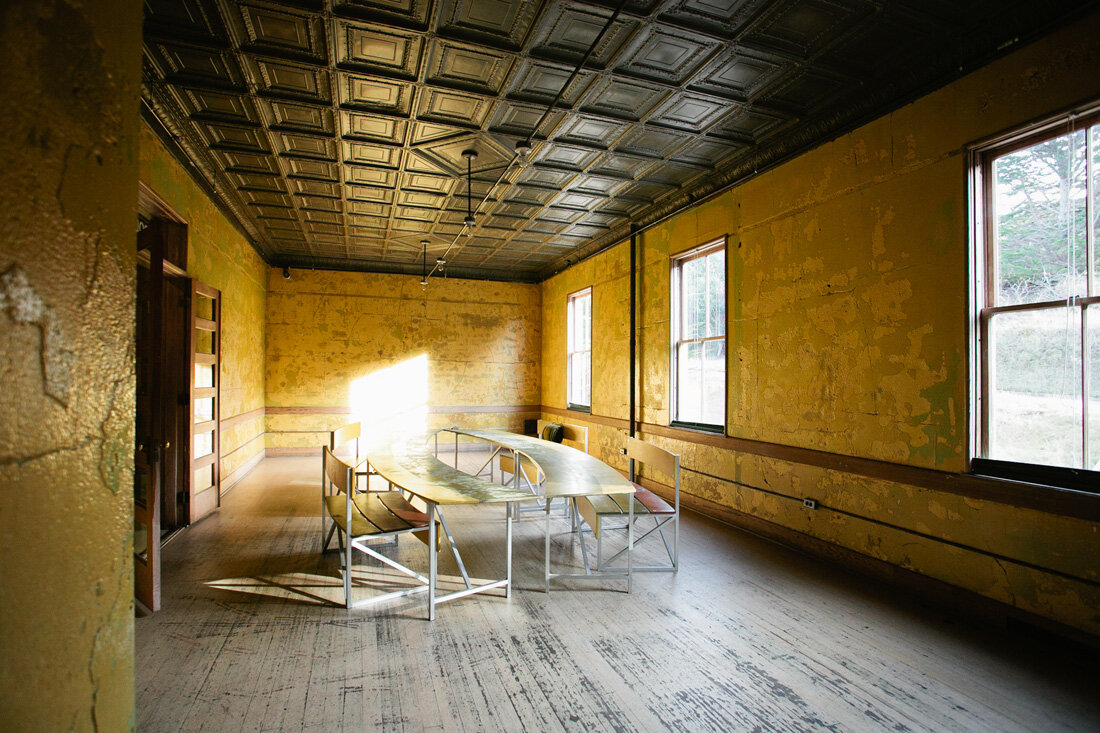

We all have our favorite places to go to when we want to run away, maybe also when we want to run towards something. They are the ones we sink into when you get there, even if it means we don’t turn off our minds but open them instead. The Headlands Center has become that place for us. One of seeming retreat but also a restorative connection to people, to what they create and the ideas they get to explore whilst here.
Mouse-Shaped Misery or Picture-Perfect Family Fun: Disneyland Observations
Our take on whether Disneyland is really “The Happiest Place on Earth”.
I spent the last week of my life in Disneyland trying to figure out if I was a sucker for loving it so much. (I think I’ve landed on “probably yes”.) Here are my observations.
Observation 1: Everyone is better at doing make-up than I am.
Is there, like, an onsite class available somewhere? (Can I come?!) Why is everyone so luminous and poised here? I must have seen 17 thousand women, with their rose-gold Mickey ears glinting in the warm afternoon sun, their customized Etsy t-shirts clinging perfectly to their (clearly) cross-fitted bodies and their winged eyeliner looking like it was applied 6 seconds ago. Meanwhile I take one glance in the direction of Splash Mountain and I turn around in full Jafar cosplay, shocking both my group and all of the low-key Jafar fanatics.
Maybe it’s that my youth has slipped away subtly in the night, or that I don’t actually know how to use all the things the nice girls at Sephora have suggested I buy. Or maybe it’s that everyone here is Mormon and, as such, blessed with abundant, inexplicable beauty. (Having lived in Salt Lake City, I can confirm that they are, I am all but certain, God’s chosen people). But I digress. Everyone is beautiful here. (Maybe it’s the magic?) Someone please come airbrush me before I leave the house again.
Observation 2: There is an abundance of children wearing shirts with phrases like “best day ever” and “happiest vacation on earth” who are being aggressively shamed by their parents.
Hello Parents, have you ever met a child? They have small legs, need ample sleep, and are easily overwhelmed by blinking lights. They go absolutely fucking nuts when exposed to sugar and food coloring. Why, then, would we expect them to exhibit perfect behavior at 11pm on a Tuesday night while sat on the ground picking hours-old cotton candy off of their sleepy faces as Mickey Mouse shoots fireworks from his eyeballs?
Please understand that I am, in no way, exempt from the Disney-induced lapse in parenting judgement and performance. I wanted to abandon my family and drown myself in the shallow waters of It’s A Small World just as many times as the next parent, but I internalized those resentments and whisper reprimanded my children through gritted teeth (like a grown-up).
Observation 3: I am infinitely grateful for my mobility and health and I remain ever-impressed by the people who push through theirs in the name of fun.
One of the greatest things I observed on this trip were people pushing through physical setbacks, getting out there in the name of fun. There were two women (had to be 100 years old) zipping around on rascal scooters like they owned the place. (Maybe they did?) One had brace on her ankle and the other had multiple tanks of oxygen (maybe jetpacks?) affixed to her chair. They laughed and zigged and zagged through the lines of the roller coasters and the teacups and almost-never ran into small children. They didn’t have young people pulling them along, or passes that granted them access to the front of the lines. They were just there, living their best lives, for themselves.
Observation 4: Vegan food is EVERYWHERE.
From plant-based sheppard’s pie and cauliflower street tacos to vegan gumbo and oat milk mochas, I was in near-constant awe at the food selection available in the Disneyland parks. More than being impressed, I was relieved, to see the world changing in ways that feel meaningful. I understand that veganism isn’t relevant to everyone, but I think it is fair to say that adding 400 vegan menu items to the parks is indicative of a greater shift in the world, a shift that means more mindfulness in regard to the way we’re consuming food, utilizing animals and protecting our planet. Sure, Disney is primarily interested in catering to their consumers and making more money…but the implications of this shift are far greater than that. And when a massive corporation brings a once-taboo lifestyle choice into the mainstream, it opens the doors for more people to enter that space. More plant-based options = less animals harmed, and that’s an equation I can get behind.
Observation 5: There is something that happens when you spend lots of money to be happy - you’re really fucking set on being happy.
There is a lot to be said about the downfalls of the positive psychology movement (we’re very-much over the days of faking it until we make it) but there is some mystical concoction that exists at Disneyland. Something about spending an obscene amount of money, the overly-friendly staff who are there to cater to your every need, endless access to sugar/salt/fat, your belief that you should be having fun and your awe-struck children whose expectations you’ve spent MONTHS bolstering. I don’t know exactly what it is, but I actually feel happier there. Sure this could be a recipe for the letdown of the century. Unrealistically high expectations are, in our experience, almost always ill-advised. But what about when all those expectations converge in a place that is actually pretty fun? What about when Disney releases interactive apps that allow your family to play games together in line (apps that help you to start conversations about things like gratitude, favorite memories and finding magic in the everyday.) What happens when you’re really expecting to have a good time and you put all of your energy into bringing that experience to fruition? Like any person with a conscience, I struggle to look past the rampant wealth disparity in Anaheim (the home to Disneyland Park), I struggle to accept the messaging of some of their films, struggle to accept that I’ve bought into a very well-branded consumer trap that thrives on manufactured-emotions and poor impulse control…but you’d be hard-pressed to visit this place, and not fall (at least a tiny bit) into the magic of it all. Concentrated time with family, activities that are fun for all-ages and messaging that screams “YOU ARE HERE TO HAVE FUN!” are really difficult points to deny. Yes, I know I’m a sucker…my back aches and I am desperate need of a post-vacation vacation, but every night, I cuddled with my kids while watching fireworks, and I laughed and ran with my 11-year-old (whose years of wanting to connect with me are feeling more fleeting by the day) and I watched my 6-year-old hug Minnie Mouse with tears rolling down her exhausted face. Yes I know it’s all a bit contrived. I know we could have gone to Yosemite, or the Museum of Modern Art, or, like, our great aunt martha’s house(?). But sometimes it feels good to turn your brain off and sink into the magic that’s unfolding around you.

Parnassus Books
In Nashville author Ann Patchett gives bookstores the happy ending that they deserve.
“An Independent Bookstore for Independent People.”
At the precise moment that it felt like the end of bookstores and the victory of Amazon, author Ann Patchett jumped into the void. In 2011 when the last bookstore in Nashville closed, together with business partner Karen Hayes, Patchett somewhat counterintuitively opened a bookstore. She couldn’t quite stomach the fact that there would no longer be a place in her hometown to buy books. She was also banking on the fact that others would feel the loss and feel the same. And there was that niggling memory from long ago of wandering around Mills bookstore and finding magic within its walls. There’s a happy ending here that runs counter to the narrative that we’ve been sold; her bookstore has since thrived. The business model that we thought was broken, maybe it isn’t.
Parnassus Books is all the things you’d hope for in an independent bookstore. Shelves (perversely from closed-down Borders) of books chosen not by algorithms but by people who know, love and can recommend them, the staff who work here. Author events (a massive 250 a year) to build the connections between people who read and those who write. Storytime for children to develop a lifelong love of the printed word. Chairs to lounge in, a store dog to pet. Such was its success, that there’s a spin-off, Parnassus Books on Wheels.
Parnassus Books attests to the fact that bookstores are more than books; they go beyond words on pages to other things like getting us off screens and getting us into space with other people whether we know them or not. They allow our minds and curiosity to wander, creating safe environments to emotionally sink into. They are also community centers and empathy makers. Bookstores give us other people; books give us compassion within their pages.
The question at the heart of Parnassus Books is this: Do you want to live in a city without an independent bookstore? It’s all about choice. We have the agency to shape the towns in which we live, to share in the co-creation of the spaces that we love to spend time in. As Patchett says: “Amazon doesn’t get to make all the decisions; the people can make them, by choosing how and where they spend their money. If what a bookstore offers matters to you, then shop at a bookstore. If you feel that the experience of reading a book is valuable, then read a book. This is how we change the world: We grab hold of it. We change ourselves.”
We get to write the ending.

Choose Love
This holiday season support pop-up stores Choose Love by gifting everyday items to refugees who urgently need them.
“‘The world’s first store that sells real products for refugees.’”
Holiday Fatigue. Compassion Fatigue. Everyday life fatigue.
At this time of year, as the days get darker and our schedules more frantic, many of us find ourselves exhausted, overwhelmed, maybe also panicked. We’re under pressure to consume, to shop, to scramble for all the things that we don’t need and that we probably won’t even remember in January. Some of us are starting to realize that we don’t love this Black Friday to January Sales treadmill, that it benefits someone’s bottom line but not us. We’re starting to look for ways to do the holidays differently.
Like Choose Love. No, that is not just a cute Instagrammable aphorism (though it does take a covetable merchandise form). It is an urgently needed pop-up that takes that holiday spending money and uses it for good, not seasonally appropriate greed. The Choose Love stores brought to us by Glimpse design collective—there are now 3, in London, New York, and Los Angeles—only sell things that refugees vitally need that you get to gift to them. The stores are arranged by the different stages and shifting requirements of displaced people. There’s ‘Arrival’, ‘Shelter’, and ‘Future’. A life jacket. Children’s boots. A hot shower. Safe spaces for women. A Bundle of Warmth. Think about these things for a second. Think about how and why they are needed. We defy your heart not to break just a little.
As CEO of Help Refugees (the NGO behind Choose Love), Josie Noughton sums it up: "It's easy to forget how lucky we are to have a bed, a blanket and a roof over our heads. For thousands of refugees this winter, these basic human needs are completely out of reach. This shop is all about one simple idea: that we should all Choose Love and help those in need."


Choose Love stores fill that compassion gap between the moment that we’re shocked by the news and the horrors that refugees fleeing climate change, war and persecution face, and the moment that we don’t know what to feel and what to do about it. By holding everyday items in our hands that people need, it returns essential humanity to the stories that we’ve become numb to and the headlines that we learn to forget. Simple things like baby items, clean and safe water, a bag of school supplies, restore the idea that these are real people, not just statistics, who need our help and deserve our kindness.
Though these brightly colored stores feel like a boutique gift shop, they are designed for you to leave with nothing except the knowledge that whatever it is you purchased is now finding its way to one of 120+ partners who support displaced people. You may be empty-handed, but you’ll definitely feel big-hearted. This is gift-giving as its best: we now know that doing something for someone else has a more lasting impact than doing something just for yourself. And beyond the 40,000 customers that it has to date served, Choose Love has a significant impact on the recipient too.


Since Choose Love launched in 2017, these pop-ups with a purpose have sent 1.5 million items to refugees, assisted one million displaced people in Europe, the Middle East, and the US-Mexico border, and raised 3 million pounds. Those statistics are staggering, particularly when you think that Choose Love is a relatively new concept on our High Streets. As brick-and-mortar retail is supposedly dying, they indicate a way forward for how our stores can change the world. Needs on both sides are now being met through something we’re overly familiar with, shopping and a place that has lost its own way, our High Streets.
Choosing Love matters; at a time when we’re divided across borders and beliefs, this simple mantra, and the enterprise behind it reminds us that we have options. We can choose to help people who really need it with our purchases this holiday season. And if you need any more encouragement, let’s give Banksy the last say: “For the person who has everything, buy something for someone who has nothing.’
(Also to look out for: You can also shop Choose Love for a Holiday gift – the recipient will receive a downloadable gift card with details of your item. Also, as these stores are staffed entirely by volunteers – you can gift your time.)


The Sketchbook Project at Brooklyn Art Library
At Brooklyn Art Library spend time with a living sketchbook museum.
“A crowd-funded sketchbook museum and community space.”
For the Lost: ‘A Lovely Wander NYC’ by Sara Boccaccini Meadows
For the Curious: ‘Come Travel with Me’ by Jill Macklem
For the Lonely: ‘somewhere across the sea’ by Michael Elizabeth Zimmerman
For the Anxious: ‘Anxiety Sucks’ by Suzie Deplonty
But you could equally be looking for ‘A story worth telling’, ‘Pocket-size memories’, or ‘Trivial retrospectives’. The floor to ceiling shelves of The Sketchbook Project at Brooklyn Art Library contain all those themes and more in thousands upon thousands of identical 5 x 7” sketchbooks. In fact, this Williamsburg storefront houses the largest collection of sketchbooks in the world: 45,000 in all (with 24,000 in its digital library). And most are made by amateurs: 30,000 different people in over 130 countries have so far contributed to this over a decade-old project. Anyone can submit a sketchbook irrespective of background, perspective and, here’s the key, ability. These drawn-out and doodled narratives can be made by a granny in Croatia, a mum in California, a child in England. Even you.
We’re a little in love with it.
This is how it works: you order one of their custom designed, Scout-made sketchbooks online and receive along with it a list of thematic prompts: recent calls included: ‘One last chance’, ‘Fearful faces’ and ‘Lamppost Limericks’. Choose one or discard them entirely. It’s up to you. You get to fill 36 pages with whatever you want—abstract squiggles, detailed portraits, maps and landscapes, diary entries, poems, fragments of images and memories, secrets and declarations of lost love—anything that can be contained within its pages (so no glitter or messy embellishments).


Here’s the genius part—your sketchbook has a barcode, so you’ll upload some details to an online catalog, like search terms and your bio. Then you’ll mail it back to The Sketchbook Project for the next part of its life: most likely it will be part of one of the traveling exhibitions which take place in a custom made Mobile Library (‘like a food truck, but instead of tacos you get sketchbooks’) that tours to schools, music festivals, art fairs, museums, and blue-chip companies, in such places as Melbourne, Chicago, Atlanta, Toronto, San Francisco, and even Rapid City, South Dakota. But your sketchbook will definitely find its permanent home on one of those shelves in that storefront in Brooklyn. All sketchbooks are cataloged and kept. There’s no jury, no judgment.
Founded in 2006 by Steven Peterman and Shane Zucker, The Sketchbook Project questions who gets to create, who gets to be good and whether that idea has any currency, and why creativity still matters. By giving people a blank page, it also gives them the impulse to make and the platform to share. This is art for everyone, and artist as anyone. As Peterman attests: “I wanted to create an informal outlet for anyone to create art, with a purpose. I believed and still believe in the notion that a creative community is stronger than its individual artists and that a project can be impactful in a way that is different than a traditional gallery.”
All these sketchbooks—made and mailed in from all over the world, collectively form a library of sorts. Visitors to the storefront, which has a very unlibrary feel—yes, there’s check-out cards, but there’s also music, art supplies and memorabilia on sale—can view any of these sketchbooks in its cozy space. Remember that barcode? That makes the in-store librarian’s job way easier: now visitors just search the catalog by theme, figure out what they want to view, and the librarian will pull it from the shelves. As the artist/maker/author you can get updates on how many times it been viewed—you can even get texts when your sketchbook-baby leaves its home on the shelves. The beauty in all this is that the person who made and then the person who viewed the sketchbooks are now in conversation; the sketchbooks forming physical testimonies of lives lived, documented and shared.


The Sketchbook Project gives analog form to some of our most basic needs, namely to tell stories and to connect. As we’re increasingly driven online to spill and share, it’s a real-world kickback. These shelves express myriad lives and ways of being in the world that you can flick through and digest over time and in physical space. It’s collectively made, with all the contributors expressing themselves very differently while working within exactly the same parameters. And it’s collectively understood; visitors can search for what they need amongst the pages or maybe even chance upon something unexpected. Plus it's permanent. These sketchbooks are designed to last, to be an archive of global creativity that endues longer than the time it takes to scroll through your feed.
(See also the workshops in the community space, on such things as bookmaking and journaling, and other interactive global art projects that aim to connect and dispel some fundament myths around creativity like the Pen Pal Exchange).