

LOST: Myself | FOUND: A limited edition of one
How do you find yourself when you’ve become lost even to yourself? Here coach Amanda Blair helps us navigate our way again.
Once upon a time, every single human being on the planet was born as a limited edition of one. We began to crawl about on a pioneering discovery tour, taking in our new world with curiosity and amazement. The gift of walking enhanced our spirit of adventure. Then, step-by-step, we began to imitate others. That was how we learned life-changing skills, from speaking to cleaning our teeth.
The less fun side of this mirroring came when we started to paddle in the sea of sameness. There was pressure to have a certain appearance, from a slender body to ripped jeans. Perhaps we were encouraged to pursue a career path that carried an externally applied success label. That would magically mean that we could purchase the dream homes, kitchens, and holidays that yelled at us from ads.
Then there was the layer of “shoulds” related to adhering to social, gender-specific, and cultural norms. The sea of sameness can get scary and ultimately swallow us up. The temptation to fit in and measure up to standards we didn’t set ourselves endangers our mental and physical wellbeing. We get lost.
So how can we return to factory settings and start to use our onboard uniqueness to achieve the happiness, success, and wellbeing WE define? Spoiler Alert. It’s not actually that hard. The answer is to explore, express, and enjoy our “daily differentness”, the everyday behaviors, actions, and thoughts that make us who we are and nobody else can ever be. This is an easily accessible, playful tool with the potential to develop into a helpful default mindset.
Your daily differentness inputs can be gathered in a variety of forms. You can write down examples of your onboard uniqueness in a journal or notebook. Maybe it’s more your thing to record them on your phone. Or you can take photos, or even do some quick sketches, to make sure they don’t escape you. Another possibility is simply to reflect on them during a walk, meditation, or coffee break. Anything goes, because this authentic proof of your uniqueness belongs 100% to you and nobody else.
Your map
Take time to think about the path you took to get to where you are today. It’s a guaranteed limited edition of one from the very start. What comes up for you when you think of the place where you spent a significant part of your childhood? Focus on associations that only you would have – memories of weddings, birthdays, or other events you experienced or your favorite hangouts… What did the place give you? Moving on from there, where were you when some of the turning points or highlights of your life to date happened? Revisit them in your mind and try to remember how they made you feel. Think of three places where you felt or feel good and go there in your mind, via a Google search, or even physically. What surroundings would you like to be in right now if feasibility wasn’t an issue? This is YOUR map and you are the only person who needs to find their way around it.
Your language
Your one-off route through life will of course have an original script. Every human being has their own unique vocabulary. Furthermore, no two people have been part of exactly the same repertoire of conversations during their life. We are all affected by different words spoken by others. Try scan-reading a block of text on your phone, tablet, or computer screen. What words jump out and what thoughts or images do they trigger? What does silence mean to you? In which situations has it been positive and in which ones has it been negative? How did you behave in these moments? What secret code words do you have? For instance, have you invented a nickname for yourself or someone else? Do you use a particular word in a way that would be foreign to a person with the same native language? By discovering how rich and diverse our own language is, we are nurturing our voice, the voice that we need in order to speak our truth.
Your equipment
Each of us has a unique combination of perceptions, strengths, skills, connections, and likes. What was your favorite childhood food? Do you still have access to it? If so, try it and see what it evokes now. Go for a walk, no matter how short. Commit to looking out for something that will not have caught anyone else’s eye, be that an animal shape you see in a cloud, or a stranger wearing an item of clothing that reminds you of someone you know or have known in the past. Bring to mind a small gesture or action that reflects who you really are and how you see the world. Think of someone who has had a positive impact on your life. What characteristic of theirs do you appreciate most and why? No one can steal what belongs 100% to you.
Your reward
So how can developing the daily differentness muscle and mindset serve you?
· It reveals who you really are and can flourish being.
· It highlights the unique contribution you make to the situations, communities and relationships that make up your everyday life.
· It opens your mind to the differentness of others, enabling you to live diversity rather than just talk about it.
Some Resources:
Limited Edition of One: The Book
The Cloud Appreciation Society
The Power of Diversity Within Yourself, Rebecca Hwang for TED

SoberIRL | In Conversation wtih Karla Carolina
In conversation with soberIRL founder Karla Carolina on the power of connection in sobriety.
We spoke with SoberIRL founder Karla Carolina about her journey to sobriety and her realization about the role connection can play in helping people to maintain their alcohol-free lifestyle (and overall mental well-being).
How long have you been sober? Can you tell us a bit about yourself and your journey?
I celebrated 2 years on 12/31/20. I started drinking at 19 when I was studying abroad in college and knew I was a problematic drinker from the get-go. Binge drinking was normal in my circle of friends so even though I was blacking out and acting in ways I didn't like, they were too so it was normal. I also was getting great grades, got into a master’s program, and started my career so it was easy to rationalize away my fears that I had a problem. After 13 years and seeing how much my life was changing for the worse because of drinking, I finally accepted sobriety was the right choice for me.
What is the most important component to maintaining your sobriety and overall well-being?
Community is everything to me, which feels so odd because I felt very strongly against socializing with other sober people in the beginning. I was 8 months in when I started feeling lonely and mourned the loss of my party buddies. I decided to go to a sober retreat and holy guacamole — I felt myself come alive! I made deep connections with people I still talk to regularly. Having a network of people who get me, who understand what I've gone through, and don't judge me for it, is incredibly healing. I have people I can count on when I need some encouragement, need to vent, or want to celebrate. Essentially my real, true, authentic friendships keep me going.
What was the catalyst behind starting soberIRL? Did you ever struggle to be social without alcohol? If so, how have you worked to move past that?
When I went to a sober retreat at 8 months, I became friends with so many amazing people but they lived all over the country. I also made great connections with people I met through Instagram but they didn't live near me either. I struggled to find where I could meet other women locally who were also sober/sober-curious in a casual setting. Since I couldn't find it I decided to create what I wanted. I was equally part scared shitless and excited about the possibilities!
Alcohol had always been part of the equation when I socialized and the idea of meeting new people without it terrified me. What I learned at the sober retreat is: the awkwardness lasts for a short time and as long as you push past it, everything will be ok. Each time I put myself in a situation to socialize without alcohol it has gotten easier, like any other skill.
How has COVID affected your mission?
After doing 2 meetups pre-pandemic, I was heartbroken when we couldn't meet up anymore especially when IRL is part of the name! The coolest thing happened though — I started getting DMs and messages from people asking if we could just do virtual meetings in the meantime. By keeping the virtual meetups for local people, we were still able to foster our connections so when we could do social-distanced hangouts outside. We were so excited to be in each other's company!
COVID has also made me think through what virtual offerings I'd like to make permanent for soberIRL, especially for people with accessibility concerns or those who don't live nearby. A virtual community is still important and can bring lots of value to someone's life. I think after being cooped up for a year, people will want to socialize more than ever but also want to be very intentional about who and what they spend their time on.
What is your dream for soberIRL? How has it been going starting new chapters?
I want to get lofty with this, I'd love for soberIRL to be as ubiquitous as AA! For a long time, it's been the main resource people know, even if they don't have issues with alcohol. I am doing my part to co-create a world where people understand there are multiple pathways to recovery and they have the opportunity to choose what feels right for them. And for those who want to explore what it’s like to socialize and participate in life without alcohol, soberIRL will be there.
After a year of hosting meetups in San Francisco and sharing it with people through Instagram, I decided to partner with women to bring soberIRL to their local community. Right now my biggest challenge is spreading awareness that soberIRL is no longer just a Bay Area thing. I almost feel like I'm getting people set up to start their own franchise! It's been great as a forcing function to be very clear about the mission, vision, and vibe of the community.
What are some of your favorite sobriety resources? Products?
The resources I am forever grateful to:
Podcasts: Recovery Happy Hour and Recovery Elevator
Books: This Naked Mind by Annie Grace and Quit Like A Woman by Holly Whittaker
NA Drinks: CLEAN Cause, Curious Elixirs, Siren Shrubs
Places: Ocean Beach Cafe
What would you say to someone who might be sober-curious but afraid to take the leap?
You know where alcohol leads you, why not see where cutting it out for a bit takes you? Part of what kept me stuck was feeling I had to quit forever and to make that decision on Day 1. Because I couldn't commit to forever I kept drinking. You don't have to worry about forever right now.
The other thing I would say is...get first-hand experience of what sober life is like. Just imagining it (like I did for years!) is not sufficient. Immerse yourself in it. Read some quit lit, listen to podcasts, check out some blogs, and/or scroll through sober IG for inspiration — it will help you see people who are empowered by their sobriety, not ashamed of it.
What are some of your favorite quotes?
“I understood myself only after I destroyed myself. And only in the process of fixing myself, did I know who I really was.” ― Sade Andria Zabala.
"I would rather go through life sober, believing I am an alcoholic, than go through life drunk, trying to convince myself that I am not" -unknown
You can learn more about SoberIRL, find a local chapter or sign-up for a virtual meet-up by reaching out on instagram or their website!

When Friendship Saves Us (Part 3): Our Take on Modern Love
This weekend, we’re celebrating our female friendships, the people who really help us find our way when we are lost. For our co-founder Claire, that’s Amanda, our other co-founder. Here’s some of our story.
I imagine getting comfortable before take-off on the plane back to England. Putting electronics in flight mode. Fastening my kids’ seat belts. Looking over the in-flight entertainment options with my husband. And then fleeing down the aisle. Stop, wait, don’t close the doors. Then running, running through the airport, the soundtrack kicking in, grabbing a taxi (after someone steals the one I want), to get to her. Amanda. Like the last scene in the romantic comedy, but this time I’m running to my best friend, and like a movie, I know that this is a fiction too.
Watching the end of Book Smart recently, I had a thrill of recognition. About to leave on a gap year to Africa, Amy comes back from Departures to her best friend Molly, for one last pancake, before getting on the flight late. I texted Amanda, “That’s us!!!” And although we’ve never eaten pancakes together and despite the fact that I arrive at the airport three hours in advance and couldn’t possibly be late, we thought that sounded about right.
In my final weeks in California before returning home after 13 years away, I seek out time with Amanda. She overrides my not-yet-filled bucket list. I choose her over the Golden Gate Bridge, over Napa wineries, over Stinson Beach sunsets. I choose barista-style coffee made by her 11-year-old, socially distanced in her garden, over Blue Bottle pulled by hipsters in San Francisco’s Ferry Building. I choose meeting her down by the creek in our little town over a road trip to Lake Tahoe, crossing stepping-stones over a quiet stream rather than riding jet-skis on alpine-fed horizons. In our last days together, I’m aware of making the promises a teenage girl would make to a best friend. “I will love you forever, we will grow old together, our kids will be best friends always.” But this time I mean them with the sincerity of a middle-aged woman who knows what commitment is and what true love can be.
When I met Amanda, the friendship that was designed to blossom was between our sons, both aged five and about to enter the same kindergarten class. It was a practical arrangement and it resulted in the connection we’d hope for our boys. But it was the two of us—with our new baby girls in slings and relentless nursing habits—who found a friendship neither knew we needed. For my daughter Ottilie, now aged 6, Amanda has become her second mum, though she calls her ‘Grandma,’ which befuddles us. Amanda’s daughter Willa is of course her sister-friend and they fight and love each other accordingly. Six years later our sons are like cousins, affectionate but sometimes confused by what connects them, aware only that it has something to do with family. My husband calls Amanda my real partner; she calls herself his wife’s wife.
I’d seen Amanda around town before that first blind playdate. I saw her when she toured the preschool where my son went, but she was Nikki’s friend, unattainably beautiful, and she chose not to go there, so our relationship never began. I saw her again when I was playing in the park and she was walking by, in labor, with her mum. To me, several months pregnant and puking every day, terrified of childbirth and ready to check myself into hospital weeks in advance in case something happened, she seemed a nonchalant goddess who would drop the baby and make magic happen. I felt fumbling and unsure, she looked resolute and dreamy.
In that unexpected way of life, it was Amanda that I would come to share the next years with. We would raise our girls and our boys together—navigating schools and relationships, work and shifting bodies. She taught me how to text with emojis: “It hurts my feelings when you don’t use them.” I learned that nature wasn’t terrifying and that hiking a trail alone did not mean instant murder. She showed me that kind could also mean strong, that humor didn’t need sarcasm, that the fears I had, she had too. I became vegetarian, because she’s vegan and I can get closer to that (though not quite that far). I know now that maple syrup makes everything taste better. I’ve become an unembarrassed fan of all things Disney. She sends me texts at night that I answer in the morning, because I go to bed early and she seems unoffended by that. She takes me to concerts, though live music makes me feel awkward; it’s her happy place and she wants to share it. We tell each other that “we are amazing,” without irony and with joy. Amanda was the first person I hugged post-lockdown.
In our last couple of weeks together during this odd coronavirus-threaded summer, I tread carefully in conversations about home. My husband and I had long contemplated the move back to England after too many trips home ended in tears at Heathrow. My best friend and I had known this was coming; it hung around us like a diagnosis we tried to put aside and that we often forgot. In what we thought would be our last year in San Francisco, the pandemic put paid to our plans and Amanda and I relaxed again into our time together. I realized that I could endure everything that lockdown had removed, except seeing her. That realization hit hard. Then my husband lost his job in the theater, which meant we had nothing to tie us to California. The decision to return home came quickly and forcefully. Moving back to England took on an urgency that neither of us has been prepared for and that I can’t ignore, much as I want to. We’re now down to three weeks and counting, no longer in the maybes and perhapses that chased our time together.
Together yesterday—the girls on the trampoline, the boys wondering what shared activity they could find—I try not to flinch when Amanda mentions a new friend she’s taking daily walks with. Past my house, up through the winding paths of our hill. I imagine them walking by when new people are here in my newly-sold home, saying, “I knew someone who lived there once.” I start to cultivate bruises of loss. But Amanda has taught me in our years together that love is boundless, to be shared. I allow myself to be the better person she believes me to be. “I like Hilary,” I say, “That sounds nice.”
Because I know this too. We are golden: she’s my Anne Parker, my Christina Yang, my Abby Wambach, my Rayya, my Farly, my person. Like women before me, I love my best friend. We have filled a space, begun a story, that women have navigated for centuries: Bringing up children together, finding support through our anxieties, spending hours in whispers and laughs. Making the in-between times count for more than the major moments of our lives.
Sitting on a packed suitcase in what will be my old bedroom with too many things that don’t fit and yet have nowhere to go, I hesitate. Why leave? But I know there is nothing I can do to stay here, in this moment, with her.
I have chosen: my home country that I left when I was 30. I will return there with two children whom I want to experience that home too. I’ve chosen grandparents and brothers and cousins that I’ve never quite learned to live without. I’ve chosen green fields and cozy pubs and heavy coats and clearer seasons and self-deprecating humor and supermarket shelves speak my language.
On paper, the decision makes sense. The conversations justifying our move make all the sense. The plotting—yearly plans with schools and budgets and careers and timing—makes sense too. Leaving Amanda makes no sense. And it matters nothing because I can’t get off the plane and unbuckle my children and walk down the airplane aisle with my husband to run to her and say, I love you. You are my home and I will stay with you forever. Let’s build something that will hold us and a future we can name.
When I imagine that plane ride home—now with wipes for the seats, premade snacks, stickers and coloring pads in Ziploc bags—I imagine listening as the flight attendant instructs us about what to do in an emergency. “First put on your own mask,” he’ll say. “Take care of yourself first.” But like everyone else on this plane, I know that if it came down to it, we’d put on our family’s oxygen first and save ourselves last.

Silent Book Club | In Conversation with Laura Gluhanich
We talked to Silent Book Club co-founder Laura Gluhanich about how a simple night of reading with a friend became a global phenomenon.
We recently discussed with co-founder Laura Gluhanich all the ways that Silent Book Club offers community and a space to unplug, both vital to our mental health and emotional wellbeing as we negotiate these uncertain times.
What compelled you to start reading together, silently?
One night out to dinner at a favorite local spot in San Francisco my friend Guinevere de la Mare and I shared our frustration with traditional book clubs, and our joy of reading at restaurant bars. The next time we met for dinner, we planned to sit at the bar and read together. We continued meeting up, and as friends heard about our “silent book club” they asked to join. Everything today comes from that.
How do you get over that initial need to chat, to make noise, to fill the silence? We’re so unaccustomed now to filling the spaces between us.
Our format includes some planned conversation at the start. Typically a silent book club meeting starts off with everyone saying hello and sharing what they are reading. It creates a shared space and connects folks over shared books or genres. I think our members appreciate that when they start reading they know they don’t have to worry about anything else at that moment. We set an alarm and wrap up the session, so they can just dive into whatever they are reading.

Book club selections can be very particular to a group or the situation of coming together to talk about one. Are there certain books that lend themselves to Silent Book Club? Like, don’t read conversation-inducing books such as anything by Glennon Doyle or Three Women?
What surprises me more is that at every in-person meet-up, I’d venture we have a minimum of five genres represented in a group of ten. It is a very welcoming group, and if someone isn’t into what you happen to be reading, it’s not taken personally. And in our Facebook group, just about everything goes, though we choose to not offer a platform to white supremacists, misogynists, and the like.
Have you ever thought of Silent Book Club as an anti-tech space?
Yes! My co-founder and I both work full time in tech, so providing a time to ignore notifications is a benefit we recognize.
Or maybe even an anti-loneliness initiative?
Yes! I love that Silent Book Club can provide community in a really low-key way. Beyond the minimal conversation, it is super low stakes, so especially if people are less extroverted it’s a great opportunity to connect. And while there are lots of book lovers in the community, particularly the Facebook group regularly gets posts from folks who are getting into reading for the first time or rediscovering their love.
You have chapters globally now. Have you noticed differences between how these book clubs meet or how they are received locally?
Not really! Shout-out to our Genoa chapter for being super photogenic and fun. There’s a ton of variety throughout our chapters but I don’t see a difference based on location.
What kind of setting is conducive to a Silent Book Club?
As you can see from that Genoa link, lots of places work to meet up and read. We recommend cafes and bars (hotel lobby bars can be chic and have the perfect level of background noise). Bookstores, ice cream shops, community centers, parks, beaches, and backyards have all been successful. We’ve even seen them at conferences — a great option for introvert attendees to chill out.
Do you have any favorite meetup anecdotes?
We’ve had a couple of chapters see people meet at their events (ready for that meet-cute to happen in a movie). We definitely hear more about books getting discovered than soulmates.
One fun thing that has happened with the virtualization of Silent Book Clubs is the ability for anyone to join any virtual meetup. Our Denver chapter has had guests from Mexico City, Guinevere has said hi to Italian chapters, and I sat in on a meetup based in South Korea. It’s a fun way to explore!
How are Silent Book Clubs adapting to the shifting situation of the pandemic?
We’ve seen dozens of chapters shift to an online format. A number have hosted outdoor meetups globally. Of course, plenty of countries have had competent pandemic leadership, so they have been able to meet far ahead of us here in the US.

Why do you think the idea of Silent Book Club has taken off so much?
I think there are two primary reasons people have responded to Silent Book Club. The first is broadly the mental wellbeing aspects that I’ve already mentioned. And in conjunction, we are all so over-productive, Silent Book Club is an antidote to that.
What is your vision for Silent Book Club going forwards?
We’d love to see its continued growth, supported by brands or organizations that share our mission of encouraging reading. We plan to continue our author series in 2021, and have an idea of a global Silent Book Club week, promoting literacy in public.
Any places out in the world or books that you seek out to support you in uncertain times?
We’re big fans of independent bookstores and libraries, and while there is broad uncertainty, we encourage folks who have the resources to support their local cultural institutions in an ongoing way. The mutual aid movement reflected in Little Free Libraries and the Community Fridge network gives me hope.
What should people do if they are curious about Silent Book Club?
Find a local chapter on our website or a virtual meetup. We welcome you whether you are looking for the time to get through a few chapters for another book club, or just for fun.
“If you are finding it hard to find space for reading, joining Silent Book Club gives you that time back. It prioritizes reading in your life again. It gives books back to you. ”
Discover more ways to connect

Content Care Package: Edition 3
Now we’re in the Holiday Season, we’ve pulled together a Content Care Package to keep us all together.
As we’re now in the Holiday season, we have to admit to finding this Content Care Package an odd one to write. Uncertainty is swirling around us again as we continue to live with the pandemic, forcing us apart from those we love and filling our days with anxiety and fatigue. Over the past couple of weeks, we’ve definitely been displacing with some Netflix watching as you’ll see below, but we’ve also been finding some gems to keep us feeling good and even just that little bit grateful in spite of it all. We’ve pulled together the places, the prompts, and the cultural events that are helping us and which we hope will help you too.


Mental Wellbeing:
We’re obsessed with The Queen’s Gambit on Netflix, Matt Haig’s The Midnight Library, Charlie Mackesy’s The Boy, the Mole, the Fox, and the Horse, and podcasts Goodnight Stories for Rebel Girls, Decoder Ring (particularly this episode on the Cabbage Patch Kids) and Reply All (see Happiness Calculator and the Case of the Missing Hit).
For a guide that’s all about getting to ok, we’d recommend these wellbeing focused magazines: Rising Issue – 01 // Mental Health Matters; What Do People Do? – Issue 2; Anxiety Empire – Issue 1, Positive Wellbeing — A Zine for Mums, Seed, and perennial favorite Flow. Even better, buy them from an independent magazine store.
Is it safe to see your therapist in-person anymore?
“Over the past decade, resilience has become a buzzword – touted as a protective talisman against the effects of trauma, which individuals, communities, and whole economies are told to cultivate.”
Open Door is a new initiative by Making Space in Stockport, which opens up free mental health support to those living in the Stockport area.
We’re huge fans of Meghan Markle for finding her own way through one of the trickiest family’s in the world (have you see The Crown), not least for her heartbreaking recent piece on her miscarriage in The NYT
Connection & Community:
How a small town in England is teaching us the value of community.
An introvert Happy Hour that we can get behind. Find a chapter of The Silent Book Club
Nature:
All the wisdom for living a nature-centered lifestyle at home is captured in ”Fforest: Being, Doing, and Making in Nature.” Create a tiny bit of the magic at home with star walks, wild swims, and den building. Planning something for 2021? Head to the book’s source material, Fforest.
New Zealand gets a new butterfly sanctuary courtesy of The Hobbit.
Forest Bathe Wales is finding a way to deepen our connection with nature.


Mind/Body Connection:
We’re on board with the millions of people who discovered yoga with Adriene Mishler during lockdown. No judgment about bad downward dogs or falling over trees, or even working out in our PJ’s.
As the seasons change, we’re looking to Red January to keep us motivated.
Follow Loom as it launches its campaign to #protectblackbirth and develops resources for women’s health from periods to menopause.
Modern Life:
In Culture Therapy, we’ve been thinking about How to Stay Sane in an Age of Division and how to navigate The Social Dilemma.
Pair with digital detox resources from It’s Time to Log Off
Culture and Creativity:
Inspired by Outlet PDX, consider which words you’d want to disseminate into the world. Which messages of support would you want to create for those within your community? Learn the skill of printing and give form to these words. You don’t need to be an artist, just a thoughtful person in the world hoping to counter messages of hate, division, and isolation that we’re now bombarded with. Or if that makes you tired, learn to draw your coffee mug.
One of our favorite Studio Ghibli movies Kiki’s Delivery Service gets the museum treatment in Tokyo.
‘Art, architecture and music have proven health benefits from alleviating pain, improving wellbeing and shortening recovery periods."‘ New online platform AORA by up-and-coming architecture studio EBBA, aims to instill a sense of calm and wellbeing through art, architecture, and food.
Is sitting in a ball pit allowed anymore? Why The Color Factory is making the argument that it is.


Doing Good:
How I Built This Host Guy Raz interviews Varshini Prakash co-founder of the Sunshine Movement on how to build an idea into a movement for change in the climate space.
You can still virtually attend KindFest even though it’s past. Standard tickets will give you access to the recordings into the next month.
We’re inspired by Counterpart Chef Almitra “Mimi” Williams who brings fresh food from her vegan restaurant to the homeless camps in Echo Park. From where you are, and if you are able to, volunteer or donate to Feeding America this Holiday Season.
Spirituality & Meaning:
We know that saying meditate is like saying eat your kale, but San Francisco’s Within has ways of making it seem doable with its classes now going online.
Awe & Wonder:
Discover Scarfolk: “a town you’re not permitted to visit, with sights you’re not allowed to see.”
Take a masterclass with Another Place artist Antony Gormley: choose between Zabludowicz Collection talk, BBC’s quarantine drawing class or National Saturday Club’s body sculpting exercise.
New podcast Ask Biq Questions has Bill Gates and Rashida Jones asking the things that are on our minds like wil be the COVID vaccines be safe or what’s the answer to widening social inequalty?
Purpose:
We’ve been pouring over Riposte magazine which is full of smart interviews with women who are figuring things out in ways we can relate to.
Do send us your recommendations for our next Content Care Package so that we can feature them in our next edition. Together we can build a better world to hold us.
Btw we wanted to let you know that we’ve changed all the links to the books we mention to Bookshop, which supports both our own work and that of independent bookstores, which is particularly crucial as many of them are struggling to survive.
Until next time, x Amanda & Claire

Content Care Package: Edition 2
As everything shifts, yet again, we’ve pulled together our second Content Care Package with all the places we’re turning to, the resouces getting us through, and just the fascinating things we just learned and had to share.
With much of Europe back in Lockdown and the US both celebrating and resisting the outcome of the recent election, we’ve pulled together our second Content Care Package. We’ve searched for the podcasts that make us run a little further just to keep listening, the online and offline initiatives that give us ways to feel better, the neuroscience that’s making us think differently about ourselves, the sources of support that have our backs through uncertain times, the books that capture all the things we’d want to say, and the big and small ways to feel more curious and less anxious. Let’s get lost together.

Connection & Community:
One of our favorite reads of recent times Together makes the argument that being with one another matters, though it was launched ironically at the beginning of a pandemic that found us locked in our homes and crossing streets to avoid one another. Now we’re excited that its author, Dr. Vivek Murthy has been appointed to President-Elect Joe Biden’s Coronovirus Task Force.
Already looking for something for post-lockdown life? Birch is the staycation you may be looking for (along with every creative in London)
Pop-up Magazine is hosting virtual suppers with recipes and chat. We sat down for the one with Cord Jefferson of The Good Place and the writer Jia Tolentino hosted by chef Priya Krishna.
Live in Bath and ready to enter The Dream Space. It’s an experimental project for sharing people’s stories around racism, the climate and ecological crises, and the social inequalities revealed through Covid-19.
Solitude: we all end up there eventually. Some willingly, some not.
“In these times of social distancing, business closures, and the constant questioning of why we live in this city at all, this is my weekly reminder that San Francisco is still somewhere special.” A Pop-Up Market in our beloved city taking us back to SF’s recent olden times.
Nature:
If you need a starting point to get back into nature, or if you are looking to deepen your knowledge of the greenery around you, we recommend Bloom Magazine.
Bringing greenery into our home is an act of conscious self-care. Having houseplants around us has been connected to a better sense of calm and well-being, reduced anxiety, and a happier mood. Our go-to houseplant shop is Frome’s Pilea.
Living Streets is finding ways to get us walking.
A Veteran’s Healing Farm opens in North Carolina.
Mind/Body Connection:
“I often say, the psyche as well as the body can, you know, stretch and come back into shape…But sometimes it doesn’t.”
The world’s first Vagina Museum is more than a display of gynecological anatomy. It’s dedicated to a serious discussion of women’s health, feminism, and sexuality
“We can use this medicine to start closing the health disparity gaps that exist because melanated humans in the United States live unnaturally stressed lives.”

Modern Life:
Esther Perel on The Sway Podcast brings her wisdom from relationships to the post-election world, the interpersonal costs of the pandemic, and finding freedom in confinement.
Are we allowed to plan ahead yet? If so, booking a slot at The Good Life Experience is high on our list of things to do for making 2021 nothing like 2020. In the meantime, you can participate in the new project Lockdown Radio and an All Day Communion, a partnership with writer Mark Shayler.
Watched The Social Dilemma? We did, with our kids, utterly terrifying. Sign up for the Center for Humane Technology to use technology more humanely.
Purpose:
This is all too familiar: “Many scholars, such as the psychologist Barbara Killinger, have shown that people willingly sacrifice their own well-being through overwork to keep getting hits of success.”
Work doesn’t have to mean competition. Creativity can play nice. Both your practice and your life may better from it.
Spirituality & Meaning:
The host of our new podcast find Unholier Than Thou, Philip Picardi is like a good friend holding your hand and bringing you along. He’s curious and open to all as he explores how faith can “fit into our lives today when the secular doesn’t feel like enough and the spiritual doesn’t always feel like a home”.
Looking to slow down and find new stories in these uncertain times, Emergence Magazine is a long-read for this moment that follows threads that link ecology, culture, and spirituality (the same interests of its publisher The Kalliopeia Foundation).

Mental wellbeing:
When a mid-life crisis doesn’t shape up to be the thing you believe it will be.
Having gone through this, we applaud this again and again and again. Make Birth Better
Preparing for the Holidays. Book Virtual Christmas Carols that support mental health charity Charlie Waller
Listening to the podcast Ten Things That Scare Me always reminds us that we’re not alone and that we all have fears, some of which we share. There are the tiny, seeming inconsequential concerns that stymie people, and the monumental, overarching themes of our lives that cause someone to catch their breath.
Recent advice from Headspace: Start your day with something positive (not the news). It will transform the rest of your day.
Awe & Wonder:
Our brains have two-distinct centers for beauty. Amazing.
Need more of Glennon Doyle. Or maybe Caitlin Moran. Or Deborah Frances-White. The How-to-Academy can bring them (or rather their insights) into your home.
When doomscrolling becomes too much, and the world becomes an even heavier burden than usual to carry, escape into stories, into time spent curled up with a good read, into the simple pleasures of holding something in your hands that doesn’t send push notifications.
Creativity & Culture
Seek out London’s Institute of the Imagination to let your imagination run free (even during a stay-at-home order)
Lionheart is a little gem of a magazine, something to sink into with a cuppa in hand (and a roar in that heart of yours). It’s been designed specifically to make you feel good, though it's more handmade than self-help.
Looking for creativity at home: workshops and kits from Stitch School (also loving their Supper Cloth for when the world starts back up again).
Ready to play in the analog world? Head to Berlin’s Clayground or purchase one of their clay kits to do at home, with all the tools and materials you need to get your hands muddy.
Doing Good:
Whether it’s for shopping small, shopping ethically, shopping cruelty-free, or simply for supporting some amazing people who work every day fighting the good fight, choosing Herbivore is a choice that makes us feel good.
Reading the magazine Positive News is reassuring: that the world isn’t entirely falling apart, that people aren’t demons in disguise running amok, that humanity isn’t doomed to endlessly flail (all thoughts that may have crossed our minds in the past curiosity of a year).
And leaving you with Obama and his enduring belief that America can become a place that aligns with the best of us.
We also wanted to let you know that our thoughtful guide to life is now back. Since March, we’ve hesitated on writing about places in the world as they close and open then close and open again, but we’ve come to believe strongly that in times of need we all need somewhere to go — even if it’s saved for later, or engaged with online, even as it can be bookmarked in the imaginary or supported from afar. The hope of bookstores, departments of make-believe, festivals, bakeries, cafes, museums, independent stores, maker studios, pop-up markets, school of emotions, sculpture parks, all existing still keeps us going. As our collective mental health is spiraling, the world out there, the collective world of our making, still has something to offer: ideas, nature, people, comfort, meaning, purpose, and wonder. We hope you enjoy our recent guide entries. We’re working on posting one a day and building out our guide, so we can truly make the mental health map that we believe we need.
One note: This platform is built by us but made by and for you. Let us know which sources of joy, wisdom, and connection you are looking to wherever you are by writing with us. Head here to know how to do this.
And also Schitt’s Creek is making the world a better place, still.

Solitude
Solitude is the latest place to be, whether we choose to go there or not.
As seekers of places in the world that contain us, there is nowhere that captures our imagination as much as that of Solitude. As commonplace as Costa (or Target for American readers), and as divisive as Goop, that state of being alone is one that we all may experience, but only some of us willingly seek out.
As Lockdown 2.0 is with us in much of Europe, we’re having to confront once again how Solitude can show up in our lives and how it stakes territory around us. This time though, from where I’m sitting alone at my kitchen table, it doesn’t feel like we’re all starting our frantic self-improvement projects again, but rather, as the color drains out of our newly returned worlds, we’re just trying to make stays against depression, loneliness, and loss.
When Solitude works, when it asserts itself as the Scandinavian design of our self-care worlds, it offers clarity, an opportunity to hear our inner voices, it gives us a chance to reconnect with ourselves. Silent meditations, forest bathing, wild swims, epic walks, even sitting reading in a favorite chair and lying a little longer in bed in the morning, whatever form Solitude can take, can capture that sense of being alone, but in a resoundingly positive way. Solitude holds the world back so that we may come in again. It’s a wall we can build around ourselves or the boundary that can set us apart for a while — even if you use it to connect with something bigger than yourself and to untether your mind to get to that universal ‘om’.
For some of us, Solitude is a place of comfort we deliberately seek out in our days. As with many introverts, for me, it’s the place I find to recharge. It was in a group lesson with a meditation teacher on how to get out of our minds, that I realized that wasn’t where I wanted to go. Getting into my mind, being able to play inside, that’s a place of comfort and retreat, a way to lose myself. In the first lockdown, my struggle was that I carried everywhere with me this potential for solace and comfort, but I couldn’t access it because I was never alone. With two children to homeschool, a business to run, and a husband no longer commuting, my life became crowded, my days full, and Solitude a place that I dreamt of.
I recognize that it’s a beast though, Solitude, if we allow it to grow, to take over, to become the only place we ever get to. Solitude can sit on us, it can hold us down, it can make us struggle for ways out that we can never find. When imposed and not chosen, Solitude does something very different to us. It calls in loneliness, it shines a light on our failings, it cultivates our anxiety, it can even bring on madness. Alone in our homes (even as the husband puts the kettle on beside us), separated from those we love by a pandemic and maybe also politics now (the post-election US is very much the context here), with our purpose confined to laptops and zoom calls, we can feel like we’re in a place no longer of our choosing. And with ever-shifting regulations and news bulletins, we’re told it’s one that we can’t easily leave.
Solitude as the storefront of our emotional lives starts to present differently, too. It can be a covetable indie café or an anonymous dollar store. Our Solitude over here can start to look much worse than your Solitude over there. Your neighbor, friends, or Insta-acquaintances can seem to be giving Solitude a Lockdown makeover. They’ve gone heavily into Hygge — their candles are burning, and sheepskins are carelessly draped on artisan benches beside outside firepits. Or they’ve become the creatives we envy and aspire to be, developing new but highly successful practices in screen-printing or photographic still lives. Or they are filling their days with awe and wonder, taunting us with complicated dance routines and planetariums built in the backyard.
We’re looking over Insta shoulders and neighbors’ walls wondering why Solitude looks so good for them, but so suffocating for us. How are they living in the better version? How are they shaping it rather than it them? But we know by now that styling a life, is not the same as living a life, or indeed telling the truth about a life (even though we forget that we know that all the time). Our coping strategies take all forms — and, indeed, have to, for we are all different, and so Solitude too is a shape-shifter.
However, you feel about Solitude — whether it’s a place you run towards or from — know this: Solitude has closing hours, too. It’s a temporary destination with a month-by-month (maybe even minute to minute) lease. There are ways out if that is what we are looking for (see Connection) and if it’s not, there are ways to nestle deeper into it (and extend its run). I know people who avoid Solitude with the passion of someone on a restrictive diet: they busy themselves, reach out to people widely and carelessly, fill days with things to do, spend time always with all the people, avoid its dark spaces.
I know others who crave it like new love, get itchy to spend time with it, fall into its comforts, and neglect the open arms of their human companions. Either approach works until it falls out of balance and then doesn’t. There is no judgment that Solitude should show up a certain way, but rather a recognition that we are in relationship to Solitude because we are in relationship to ourselves. After all, isn’t that the reality of Solitude, it’s the one place we can never avoid, because we are always there.
When our world shifts again, which we know now that it must, you can choose to stay in Solitude a bit longer. You may have found, like some the first time around, that they rather liked it. Or you may leave it behind, car tires screeching as you drive to new sunsets. Because by then hopefully, the destination of Solitude will be a choice and not an imposition. No one should be forced to go anywhere, especially here. Solitude can be life’s respite but also our greatest torture. It contains multitudes. There are very few places like it.

Learning to Count to 100
This week we’re learning to count to 100, listing the things we value, we need, we’ve lost and gained. What would your list include?
As we’ve both been homeschooling our Kindergarten girls (one of us by choice, the other by necessity), we’ve also been learning to count to 100. You know, 100 Lego pieces, a hundred marbles, a hundred Fruity ‘O’s — anything we can find at home to make this very serious academic lesson a bit more concrete.
And it made us think about — stay with us here — what as adults we might want to count at this time. Less shiny plastic objects and tiny snacks, more the things we rely on and reach for. The things that we’re grateful for and that bring us joy or make us laugh or give us that warm feeling in our chests. The things that energize our minds, the things we are desperate to share because they are so good, the things that linger once they are over. And the things, maybe most importantly, that help displace our fears and anxieties, pause the endless loop of overthinking and help us manage our own mental wellbeing through this pandemic.
So it is with that in mind, that we’re bringing you a very adult list of counting to 100. Yes, it’s super idiosyncratic. Yes, it roams widely across subjects. Yes, you may have no idea why something is included or left out. And if you want to analyze this, yes, this is probably a way of us asserting some control in uncertain times, by grounding 100 things that do make sense to us.
It’s maybe an odd exercise, but in writing this list we found that it captured not just a need to organize but a way of marking where we are right now. Last week this list would have been very different. Next week it certainly will be. For now, right now, this is what the threads of our life and attention look like. Some of it may resonate or inspire; some of this may leave you wondering about the legitimacy of how we’re spending our time. But the key thing here is that we all do lockdown differently, and we all need to approach our mental health in ways that fit us.
We’ve arranged our list — because if you know us by now you know we love lists — into our four modern life conditions that we might all find ourselves in, particularly as life is being played out for many of us: Curiosity, Loneliness, Anxiety and that complex feeling of being Lost wherever we are. See it like a gratitude journal, but totally random and super reflecting the very personal choices that we’re all learning to make to survive life under lockdown.
As an extra gold star bonus (can you tell, homeschooling brain is taking over) you can make your own list of counting to 100.

1. Kitchen micro-discos
2. The Happiness Lab special episodes on approaching our wellbeing during the lockdown
3. Taking just a little too long to come out of the bathroom (we all need to take our pauses when we can)
4. Going to Holland when you could have been going to Italy
5. The Getahead Virtual Festival
7. Be Kind magazine making its issues free
8. Rediscovering jigsaw puzzles
9. Watching every rom-com we can find on Netflix and starting Parasite on Hulu thinking it was a comedy
10. Eating all the cookies, brownies, and cakes that we’re baking with our kids (ok, we try to bake with our kids until they lose interest and we do all the work) and then wondering why we’re piling on the pounds.
11. Every Mind Matters Campaign and William & Kate talking it up this month
12. Snack Cleanse (we only have so many options in our kitchens right now, don’t judge)
13. The calming voice of Andy from Headspace
14. Being ok with a messy house because no-one will be visiting soon
15. The game Bears vs. Babies
16. A toolbox for living with worry and uncertainty
17. Bike rides to nowhere
18. In contradiction to number 14, keeping our houses very clean for one day, even though no one else will see it.
19. Winged eyeliner. (Why now? Why ever? Who knows.)
20. Tele-therapy (I know you can see me crying in my car but I DON’T CARE)
21. Deciding now is the time to get super new-age and find a spirit guide
22. Making at-home music videos
23. Morning meetings with Glennon Doyle (helping us to feel less alone, and MUCH less shitty for our subpar parenting)
24. Focusing on the relationships that matter most.
25. Doing slow-deep breathing out of necessity, but taking the opportunity to explain the value to our children.

26. Listening to Ted Connects with Elizabeth Gilbert: on the gentler stakes of following a journey of curiosity rather than passion
27. Create a list of 100 dreams from the Before Breakfast podcast
28. Rob Walker’s book The Art of Noticing: 131 Ways to Spark Creativity, Find inspiration and Discover Joy in the Everyday
29. A new love of the theater: National Theater Live weekly plays, Andrew Lloyd Weber’s Friday night Musicals The Show Must Go On, and the original theater version of Fleabag now on Amazon Prime as a fundraiser
30. Taking the bins out in our ballgowns
31. All the animals: Going On Safari / Beluga Whales at Georgia Aquarium / Koala bears and chubby unicorns (read Rhinos) at San Diego Zoo
32. Discovering our libraries at home and finding books to read amongst our own shelves
33. Histfest Lockdown edition
34. Mo Willems’ drawing residency and lessons in pigeon drawing
35. Watching Rolly Pollies cross the road
36. The Sunday Read: The Woman Who Might Find Us Another Earth
37. Skill Share classes!
38. Picking wildflowers along the side of the road.
39. Online dog training courses for our whole family! (We’ll probably start a circus soon. YOLO!)
40. Khan Academy for teaching us how to do math the right way.
41. This collection of research assuring us that all the video games our kids (and, yeah, maybe we) are playing, might actually work to ease anxiety and depression.
42. This “make-up” tutorial that had us crying laughing!
43. This Spotify playlist we made.
44. Unexpected gifts from friends left on our front porch.
45. Jen Gotch’s book The Upside of Being Down (there really is an upside, guys).
46. Global Citizen’s Together at Home concert series.
47. Gary Vee
48. Tip Your Waitstaff (and everything Mike Birbiglia has ever done).
49. Taking the time to find all of the automatically renewing things we’ve signed up for over the years and CANCELING ALL OF THEM.
50. Realizing if it weren’t for societal pressure we would probably wear the same seven items on repeat.

51. Phone calls with friends 80s style.
52. A new research paper suggesting that however we fill our social tank — yes, even with non-traditional social strategies like listening to music or watching a favorite TV show — works just as well as the traditional ones like spending time with a friend.
53. Carissa Potter of People I’ve Loved sharing her essay On Love in Confinement
54. Paper Profanities from Erica Frances George
55. Making friends with the people who go out for daily exercise at the same time — even though all you do is exchange a wave at six-feet apart. These relationships however tentative make our mornings most days (also to the lady who walks her dog each day and witnesses our red-faced runs each morning thanks for the silent encouragement)
56. Hello (from the Inside) An Adele Parody by Chris Mann
57. The Rime of the Ancient Mariner Big Read
58. Female friendships getting us through
59. The High Low being back on podcasting air
60. Organizing a Zoom Scavenger hunt with our extended family - ‘go find an elephant / something important to you / favorite thing, etc’
61. This song which contains a certain amount of irony
62. Anything Hamilton but particularly The Zoom Where It Happens
64. Kat Vellos new book Connected from Afar
65. 8pm Daily Howl, 7pm weekly clap for carers, and however you are singing into the empty streets with your neighbors
66. Hearing piano playing on our daily walks, a guitar player in town, kids playing in their yards
67. Spike Jonze, Her
68. Esther Perel’s podcast on couples under lockdown
69. Wondering what we can send in a package and why our handwriting is so bad
70. The Social Distancing Festival
71. Knowing your neighbors for the first time
72. Connecting and falling in love with small businesses (local and otherwise)
73. Being endlessly thankful for social media for…maybe the first time?
74. Basking in the glow and glory of everything Serious Mom Fun says/does.
75. Reveling in the beauty of missing things and taking note of the things we don’t. [Though we’re currently longing to go grocery shopping (without a mask and gloves) so our judgments can hardly be trusted.]

76. Foldall in Bath
77. Indhi Rojas’ spreadsheet for organizations that need our donations now
78. Some Good News with John Krasinski
79. French Fry Burritos (a real thing that you need to put in your face immediately)
80. Learning to make a decent latte at home (and also teaching our kids to make them for us cause you know #homeschool)
81. Battersea Power Station Community Choir paying tribute to NHS carers by singing ‘Something Inside So Strong’
82. Reading The Salt Path by Raynor Winn
83. Living hyper-locally (and using that exact buzz word so that it sounds much more intentional/chic.)
84. Bookstores counting as essential services in Europe.
85. The concept of practice days (if there was a time to do it all over again tomorrow but a little bit better that’s now)
86. A visit to a Pet Food Store feeling like a bad sci-fi movie
87. Looking at photos from just two months ago feeling like they were another age
88. This Human Moment — looking forward to these Friday sessions
89. Making new routines / realizing we’re bad at routines / accepting a life free of routines!
90. Mentally dedicating ourselves to ‘vision boarding’ but then forgetting to actually make the thing.
91. Keeping all the cookie ingredients on the counter so we can easily bribe our children and/or convince them that we’re fun and crafty and/or consume only cookie dough between the hours of 11am and 6pm.
92. The vulnerability and honesty of some of our favorite creative women in the world, including Megan February of For Women Who Roar
93. Distraction Tactics with Dan Smith from Bastille
95. Playing charades with our kids.
96. Following creative prompts from places like Sketch Appeal
97. Daily walks without time constraints or destinations.
98. Slowly making our way through the Top 50 Teen Movies of All Time and understanding why we are the way we are. (Spoiler alert: even if you remembered them being good, they are almost always inconceivably horrible.)
99. Looking for the helpers and finding them everywhere.
100. This quote from Jane Eyre: “I see at intervals the glance of a curious sort of bird through the close set bars of a cage: a vivid, restless, resolute captive is there; were it but free, it would soar cloud-high.”
Now that you have a glimpse into our lockdown life, let us know what your ‘Learning to Count to 100’ list would look like. Even better, make one of your own, tag us on social media, and we’ll spread the joy of the unique ways we are all finding to negotiate this as we’re very much alone and very much together at the same time.

Scrappy adventures at home
This weekend we brought the outside world indoors. Now we’re trying to bring the magic of the undomestic world home.
In a creative outburst (or desperation on day 40 of lockdown), we pitched a tent in our living room and went camping. We blew up the deluxe mattress, brought down our duvets, and hung a super bright lantern. The six-year-old asked for spooky stories, the eleven-year-old asked for more bouncing on that deluxe mattress, the forty-four-year-old husband gave up and headed for an actual bed, alone. As I fell asleep with the kids, we looked at the sky and trees through windows, snuggling into the warmth of indoor camping and our even cozier imaginations.
As we’re increasingly longing to be out in the world, we’ve also starting to think about how we can bring our favorite places indoors. We’re learning in our very scrappy way how to recreate a little of our former world’s magic in our domestic unbliss. Thrown together with whatever we have lying around the house, our manifestations at home are ungainly, un-Pinterest worthy recreations, but somewhere in our souls, they are filling an ever-growing need to be somewhere else, with you in the world outside.
We’ve noticed on social media the creeping in of festivals, discos, museums, into our living rooms, gardens, kitchens. We’re seeing a blending together of before and now, and a relentless hope that once was will come back again. For now, our attempts at capturing the spirit of where we once gathered will have to do.
Here’s our rundown of what we’re missing and how we’re, and you perhaps, are bringing places out there in here.
Cafes: Missing, missing, missing. We admit to buying a coffee maker as Step 1 of our lockdown journey (not sure there was a Step 2) and have since spent way too much time working out how to make an oat milk latte with froth (who needs to write the next NYT bestseller?). Add in Spotify’s Coffeehouse playlist, find a quirky chair at home, and nurse that coffee for 3-4 hours while trying not to make eye contact with anyone else. Maybe even throw $7 in the bin if you live in the Bay Area. You are almost, almost there.
Festivals: Can of wine, loud music, and deck chair on whatever outside space we can find. Kids running wild. We’ve nearly nailed it. The only things left are to throw mud at our tent, find the wellies, and start smoking.
Bakeries: A friend is baking cookies and cakes for distraction. Actually, everyone is baking cookies and cakes for distraction. There’s a run on flour and yeast and cultivating a sourdough starter has just become the new learning a language of lockdown. We’re also opening cookbooks like “50 most calorific things you can cook today with real sugar”, rather than “The Joy of Kale and Brown Rice”. Scents of bread baking, old school achievement, something to eat that isn’t from a can or cereal. Also comfort eating – it is a requirement to comfort eat right now. Pairs well with white wine at the end of the day. This is not the moment to diet, numb feelings yes with carbohydrates and alcohol. No one can see you anyway.
Coworking: If you live alone, sorry this one is going to be tough; you could make cut out figures as today’s art project and prop them next to your laptop while smiling at them occasionally. If you live with other people, just find any table, crowd around it, write an aspirational saying like ‘We work best together’ somewhere on a wall, and occasionally high-five each other. Points for adding name tags.
Indie cinema: Just switch out Netflix for National Theater Live, add in posh popcorn and a vodka tonic, and you’ve got the vibe.
Museum: Entry-level efforts, hang all the new creations you’ve been working on with everyone else on a wall in a pretty way. Add wall labels with cute names and give the whole thing a title (no, “Untitled” is cheating). Even better hang them on a wall outside and call it ‘Public Art’. But if you want to take it seriously, and you do, because you know ‘Art’, then follow the lead of New Jersey resident Teresa Mistretta. If you want to get super fancy, make your home into one of those experiential museums – paint your walls candy-colored (you need a DIY project right now). Even better, make merchandise in said theme to sell back to yourself.
Library / Bookstore: Those books on your shelves at home you’ve been meaning to read, now is the time to actually read them, not just wave at them. That might mean pulling I Could Pee on This off your shelves, but hopefully, you have something lying around like Joan Didion’s The Year of Magical Thinking. If going for the library vibe, post them back through your front door for added return affect. If indie bookstore, make cute piles randomly around your house. For either, go crazy and curate subject areas, that only you understand – brave princesses who’ve learned to say no, self-help for the days you hate everyone, chick-lit which you basically see as the great American novel but are too ashamed to say so. You could also print a cool Indie Store name on the side of a paper bag and shop your shelves. We always wanted to own a bookstore.
Lecture series: You can be inspirational too. Watch something by Brene Brown or Elizabeth Gilbert or Glennon Doyle, then hold forth at dinner about the value of vulnerability, creativity, love. Your co-lockdown companions will appreciate your Ted Talk at the kitchen table. They might even take notes.
Safari: If you have pets, just follow them around the house for an hour, narrating their escapades. Maybe even give them a backstory that adds drama – you need an arc for this one to work. Make sure to practice a Megan Markle narrating Elephants range of emotion.
Retreat: Basically, lockdown with some sort of epiphany and hiding alone in your bedroom trying not to talk to anyone.
Places in the world – we miss you. And though our attempts to make you real in our living rooms and gardens may be naff, they’ll have to do for now. One day when we visit you again, we will shower you with love and attention and never take you for granted again. We Promise.

Why bother? // Self-care in a time of uncertainty with pioneering author Jennifer Louden
Before the impacts of the current pandemic began to be so keenly felt, we were lucky to talk to one of the original pioneers of the self-care movement, Jennifer Louden. Posting this now, we’re finding that Jen’s wisdom here and in her forthcoming book Why Bother can be a helpful guide for approaching our current situation.
“Why Bother? is a reclamation. With curiosity, wisdom, reverence, and grace, Jennifer Louden shows us how to transform two simple words from the ultimate expression of futility into a path back to desire and, eventually, meaning. Read it, then live it.”
In times of uncertainty — both personal and collective — it’s easy to struggle with the question Why Bother? Pioneering self-care author Jennifer Louden answers this complex call to both complacency and action in her new book, Why bother? Discover the Desire for What’s Next.
We had the opportunity to talk to Jennifer before the devastating impacts of the global Coronavirus pandemic started to be widely felt. But her wisdom on how to continue to feed our desires, create small moments of activism and live our lives in the gap gives us hope for how we might adapt to our current moment.
The following interview is an edited version of our original conversation. We hope you enjoy it, and benefit from it, as much as we have.

We sometimes talk about If Lost Start Here as a guidebook for people who don’t want to go anywhere. Let’s start by talking about the idea of that stuck place, where many of us have found ourselves and which is as real as any other location in the world.
I know that when I was in my why bother times — which started in my 20s and periodically showed up every decade except my 50s — I always imagined the stuck place as having glass walls, though the top was open. There was a way out but there was no way to get traction, or as my grandmother would say purchase, on those glass walls.
I think the thing that makes this location — this prison, this place, this swamp, however people describe their stuck place — so real is that we think we have already answered the question that we are asking. We think we’ve answered the question of why bother, or “What’s the point?”. We think that there’s not going to be anything new, or that “I’ve already tried that”, or whatever version that we’re asking and then answering in the negative.
This kind of thinking just creeps up on us and convinces us to remain where we are (though sometimes there are a lot of real reasons to believe something). A lot of the ways that our brain works keep reinforcing an idea. The thing that I look back on and realize is that I kept bouncing up against and trying to climb those slippery glass walls using the same outlook, the same tools, trying to get to the same place.
What makes stuck feel so real is what we believe about why we have to stay there, and why we can’t get out.
What did that concept of being lost mean to you? You write about being "in the land of the lost”, finding yourself there after your divorce, your father’s death, your mother’s Alzheimer’s, a close friend's suicide and a creatively insecure period.
Being lost to me means what I can say and see now, but which I couldn’t at the time: that I only could conceive of the same “found” that I had experienced before, the same kind of success, like writing a successful book and having a successful teaching business. Part of what kept me lost is that I kept going back and trying the same things over and over again. That not only kept me lost but it also meant that I didn’t have the energy or the imagination to find my way through.

I’m really interested in the moment that comes before going, before doing. How did you overcome your own sense of inertia and start to take steps forward?
God knows it took me long enough and there are stories in the book of people who figured it our much faster or had a lightbulb moment early on, or really listened to a sense of inner prompting. I’m very stubborn and I’m incredibly slow to learn so those moments had to come a lot!
One of the biggest things I did to overcome my own sense of inertia is really what became the thesis of the book: when I could stop repeating the same ineffectual things, I could then explore with openness and a lack of attachment an experience of desire, a desire that had nothing to do with figuring anything out or achieving something for me.
That’s what’s so important to know about these why bother / “What’s the point?” lost times. That there is desire bubbling up even if its super faint. I’ve noticed though that we deny it. We’re afraid of it. We stamp on it because it triggers fears in us, it doesn’t work well for our brain. That’s what keeps us in a sense of inertia. But if we can cultivate our sense of desire like we would embers in a campfire we can make space for it. Imagine that moment when you are about to get up on water-skis, that moment when you get pulled out of the water – it feels like that. It’s not perfect, and to get us going requires some efforts on our part.
Let’s linger for a moment on that concept of desire. You make a distinction between the outward kind — about things and status that we’ve been told to pursue — and a more inward, self-defining kind.
Desire, the flow of desire, a relationship with it, a curiosity about it, is how we open the door to life. The image that always comes to me is of a spring. If you’ve ever seen a spring bubbling up out of the ground, or the rocks, it’s amazing to see what feeds it. Where is it coming from? I think desire is that bumbling up spring. It feeds our curiosity. It feeds our ability to do hard things. It gives us resiliency. It gives us pleasure.
But that spring gets mucked up. It gets mucked up with culture and trauma and fear and images of what it is supposed to be to desire and what we’re supposed to desire and our needs to make money. We have to keep cleaning out that spring — not because it’s going to make us money, not because it’s going to get us someone’s love, not because it’s going to get us likes on social media, but because it’s a flow of life, it feeds everything. The movement created by desire helps us to be here, to be present, to show up and develop the gifts that we want to. When we stamp on that, when we judge it, when we twist it, eventually we fall into really, the worst kind of why bother.
A lot of things that happen in the world come back to some form of desire and what I see, especially in western women which is the population that I know, is that desire has gotten completely messed up and with it so much of our sense of what we want our life to look like and the permission we give ourselves to make decisions. There’s so much exhaustion and burn out. We revive desire once it's dormant by paying attention to what we want and even if we can’t have those things, we need to still allow that feeling of want and curiosity to flow and then trying to understand it in different ways.

Your new book finds its pivot point on the question of Why bother — which can be both a call for change and an admission of defeat. How did your interpretation of that question change in writing the book?
I didn’t know for so much of those different lost periods in my life, those different stuck periods including the longest and darkest one, that I was asking even why bother. What I really discovered when people started reading the book is that they didn’t even know that they were in a why bother phase either. A couple of people who endorse the book wrote back that reading it was so good for them because they didn’t realize that they were trapped in this why bother phase and reacting in all these unhelpful ways. One person was just hustling their way through it, working harder, which I think we can all relate to. The question in and of itself can be such a pivot point, but the first thing that we have to recognize is that we’re asking it.
Even though it has its dark side, its flawed side, its done side, we still need this question of why bother. If someone is asking why bother to date again after a partner has died, they also need to acknowledge that that relationship, that past, that love is gone. You can’t go back to it. In some ways even asking why bother to keep trying is really, really important. But if we can’t embrace what’s done, what’s not working, what’s been taken from us, we can’t start to ask the question of “What do I want to bother about now?” and “What’s possible about bothering about now?”
What I saw myself doing, what I saw the people I interviewed and who I work with doing, is trying to go back to what’s known or familiar. We keep replaying the past and complaining about it. We keep being sad about it. That’s what keeps us from asking the generative why bother? Because we can’t embrace it, we can’t come to terms with it, we can’t face what is no longer ours to bother about. There’s a lot of hanging on it.
You write about why bother as not just a response to personal life circumstances, but as a response to such overwhelming situations as climate change, political upheaval, and social injustice. We’ve certainly felt the pull-down of those issues and the weight of what to do has kept us stuck. How have you found ways to negotiate overwhelm and feelings of futility?
It is buying into overwhelm and futility where we lose our ability to take any action. It’s buying into cynicism.
I had a friend say to me that it’s too late to do anything about the climate crisis, that there’s nothing to do, that they are going to be dead before it gets really bad. I had a conversation with friends at a party a couple of weekends ago who said that, “Trump is going to win, it’s too late, it’s already over”.
It’s that kind of thinking that we have to stop in ourselves and, if we can and it’s appropriate, in conversations with people who we’re in community with. It drags all of us down. It stops our brains from being creative. It stops us from wondering what is possible. I love what some climate activists are saying now, that we have to stop the conversation that this is impossible, that this is overwhelming, and that we can’t do anything.
The first thing that we need to do is to find reasons to be optimistic and to reclaim our agency. Without agency, there is nothing that can happen. It’s just bullshit to believe in futility. It is not what history shows us. History shows us a lot of things, but it also shows us the possibility of change. It’s not always the change that we like or in the direction we want, but there’s nothing about history that shows us that things don’t change. And so why can’t we believe that our actions can be a force for change?
The flip side is that we have to negotiate our own lives, our own passions. We have to embrace our own human-scaled life. I have it on my list to take one action a day on the climate crisis. Sometimes that’s reading a couple of articles at lunch. Yesterday it was buying a book and sharing something on Facebook. Sometimes it's calling or tweeting something to my senator. It can be really small, but I refuse not to do anything. I want to keep learning where I can be a voice, where I can be useful.

One of your six ideas for getting your bother on is “become by doing”. We love the idea of “staying in the gap”.
Yes, this has been something I have been curious about, practicing and writing about forever. Given how our brains and our nervous system is built, we do not like to not know. We would rather have certainty that sucks then live in the question, the uncomfortableness of reaching forwards and exploring more. So, the key to living in the gap between what’s stirring in us and where we currently are is to recognize and find ways to be curious, awake and comfortable, even if it's only for moments at a time. But we need to stay in that curious, uncomfortable place, without freaking out because when we do that we make decisions, we numb out and we get busy with all kinds of things that ultimately obscure our discomfort.
How do you think the self-care landscape has shifted since you first wrote The Woman’s Comfort Book: A Self-Nurturing Guide for Restoring Balance in Your Life?
Its shifted as far as you can imagine. When I first wrote that book nobody talked about self-care. It was quite a foreign concept. I remember I taught a workshop early on and a woman looked at me and said, “I take care of myself. I get my nails done.” It’s now a multibillion-dollar industry.
What I discovered pretty early on in talking and teaching after The Woman’s Comfort Book was published is that self-care is how we recharge in order to do the hard things in life. It’s how we claim the courage and energy to have agency for ourselves to speak up for what we want. Self-care is intimately tied to creating a life we want. It’s not intimately tied to what we buy. It’s not intimately tied to some of the hoo-ha that I see out there. That stuff can be really fun, we don’t have to make it wrong, but I think it so often becomes an arms war of pashmina blankets and unicorn tear face cream. It can really trivialize the deeply feminist stance, that Audre Lorde first spoke about long before I did in the context of her work.

Something I love about your book is that you work against the narrative of self-care: that if you meditate enough, pray enough, have enough therapy, eat clean enough, become successful, you can create some happy ending for yourself and that's Life Done. But what you offer here is something more flexible, something foundational.
Yes, the narrative of self-care for me became an idea that if I just did everything right, I wouldn’t suffer anymore. It’s really ludicrous when you say it out loud, but I really, really believed it. And sometimes it still creeps in. I have some food allergies and the thought occurred to me that maybe this autoimmune response is my body reacting to what I still tell myself: if I’m a good person, I should eat these foods and I’ll feel great. It’s so much more foundational to realize that we fall into why bother, “what’s the point?”, and swamps of feeling lost, no matter what kind of self-care we practice because it’s part of being human.
How does it feel to be someone who writes about self-help concepts, facing your own life and struggles head-on? Did you feel pressure as "a self-help author" to be happy and to keep with narratives of promise and fulfillment?
I used to. It almost did me in and made me quit. I tried to run away from the self-help business numerous times. I felt like a fake so often because I couldn’t always take care of myself. I wasn’t getting better or “having my best life”. Can I just tell you how much I hate that phrase? I have no idea what my best life is! It feels like such a pressure. I don’t want my best life. I want real life.
If I was going to get a tattoo it would say, “Be here for it all.” I don’t feel the same pressure anymore. I feel the pressure to be here and to share ideas and stories and create community and spaces where we can be here for it all. I really do believe that once our basic needs are met — which for several billion people on the earth is not happening — the question really is how much can I be here for it. How awake can I be? And how compassionate can I be with myself and everyone else? There’s nothing to fix. When I realized that there’s nothing to fix, when I realized that fixing things is not my job in life, everything changed.

All quotes are taken from Why Bother? You can pre-order Jennifer’s book today (head to IndieBound if you can and support small bookstores).
About the author: Jennifer Louden is a personal growth pioneer who helped launch the concept of self-care with her 1992 bestselling debut book The Woman’s Comfort Book. She is the author of five additional books, including The Woman’s Retreat Book, The Life Organizer and Why Bother? With close to a million copies of her books in print in nine languages, Jennifer is a sought-after speaker, addressing audiences across the USA, Canada and Europe. She is a former columnist for Whole Living, a Martha Stewart magazine, and has appeared on a number of television and radio shows and podcasts—including The Oprah Winfrey Show. Her work has been featured in People, USA Today, CNN, and Brené Brown’s books Daring Greatly and Dare to Lead.

Isolation Inspiration: 5 Times The Internet Really Pulled Through This Week
Comedians are performing, children’s authors are reading their books, musicians are putting on concerts in their living rooms (!!) people are CONNECTING in any way that they can, all in the name of banding together to protect the most vulnerable members of our communities. (I know it’s the internet, and social media at that, but there is a real beauty here and I hope it is not lost on us.)
Ok, we know that this pandemic has been terrifying and overwhelming and inconvenient. Even under the best of conditions, we’ve been thrown from our regularly scheduled lives into some no-mans-land where no one knows what day it is or what is important or how they should be spending their time. I’m personally sticking with a 25-25-50 breakdown, toggling between (1) eating (2) trying to teach my kids literally anything and (3) re-watching every late-90s romantic movie I can remember. (While everyone else in the world is flipping out over Tiger King, I’m just over here like: Armageddon, Con Air, Titanic. Repeat). So yes, things are a bit wacky in our worlds, BUT, through all of this madness, something magical is happening, as well….
EVERYONE ELSE IS STUCK AT HOME, TOO!!
Yes, nearly everyone in the US and UK is sheltering in place at this point. Which, from one angle, might seem like a pretty bleak prospect…but with the existence of the internet, can actually be quite exciting. That’s because the people we love, the people we depend on for escape, the artists and writers and musicians, who so often feel so distant from us, now feel closer than ever. (The playing field has been leveled. All of us live in sweatpants now.)
Maybe you’ve noticed that every time you head to instagram you’re hit with a zillion notifications that people you are following are “going live”. (It is possible that I am technologically inept and need to adjust my settings, but I digress.) Under normal conditions, I wouldn’t really be apt to click on these live videos, assuming there might be some produced/commercial feel to whatever they were doing. This week, however, I started seeing new names pop up, creatives I admire, authors I live for, bands I’d never noticed on instagram…all suddenly “going live”. Hm. My interest was piqued. So I started clicking when they popped up…and you guys…hold onto your hats. (Or, your phones? Or whatever the modern day equivalent to that sentiment might be.) These people are putting on workshops and holding live readings and playing fucking concerts in their living rooms!!!
Please stop what you’re doing (YES STOP READING THIS) and go follow everyone you love on instagram! Comedians are performing, children’s authors are reading their books, people are CONNECTING in any way that they can—all in the name of banding together to protect the most vulnerable among us. (I know it’s the internet, and social media at that, but there is a real beauty here, and I hope it is not lost on us.)
I am sure you have all sorts of strange obsessions and specific tastes, but this is what we’ve loved this week, and we think you’d love it, too. (Also, we REALLY want to know how you pulled through this week and what helped you to get there? Was it a movie or a podcast or a book or a friend? Tell us about it!)
Here are a few of the things that made our life bearable this week.
5 Times The Internet Really Pulled Through

This acoustic set from Yoke Lore was like the coziest, sweetest performance ever. He was just sitting on the floor of his living room with all of his plants behind him. (We’re probably best friends now.) If you don’t know who this is, please go watch the video for his song “Beige” and fall in love. In his live performance he explains that the song is about finding a way to tell someone how you feel about them in a very specific way. (example: Let me go under your skin // Let me find the demon that drives those heavenly limbs). I’d tell you more but I’m sobbing just thinking about it. His next set will be in support of MusicCares (which provides a safety net of critical assistance for music people in times of need), so stay tuned!

We also loved Distraction Tactics with Dan Smith, lead singer of the band Bastille (who, interesting fact, would almost-definitely be my boyfriend if I weren’t married.) This new series is like a book club, but for films. (Wait, is a film club a thing?) Either way, here we come together to talk about movies from around the world. This week, we started in the UK with cult-classic Shaun of the Dead, complete with a pre-recorded interview with Simon Pegg (amazing) and a new jingle, written by Dan (equally as amazing). It was a bit like watching your best friend pull of a really great presentation at school. There’s something so sweet about the home-made authenticity in instagram live posts. (I say we get into it before the influencer destroy it.) Stay tuned for next week’s episode where we’ll head to a new country and breakdown another film! What film will it be? I can’t remember!

Glennon Doyle and Abby Wambach had an argument about “popcorn chewing volume” and cabinet doors remaining open for too long, in real time. (It was a very validating and cathartic experience for anyone who was able to catch a glimpse, I’m sure.) Glennon also stepped up as interim kindergarten teacher and read books to my six year old daughter while I lazed nearby. (This was via Instagram live…I don’t usually hang out with Glennon. I’m very busy.) She also prompted kids to ask dinnertime questions like: “How do you get your ickies out?” which is phrased so adorably that I’m maybe crying again. (She is officially raising my child now.)
**We also received our copies of Glennon’s new book Untamed! Who else is reading it?!

Lumineers singer Wesley Shultz performed a collection of original and cover songs from what looked like his kitchen? (But rich people have huge houses with tons of unnecessary rooms so it’s hard to say definitively.) In the performance he pleads with us to all take this virus seriously and do what we can to slow its spread. He also admits that some of his best lyrics were actually taken from things his wife has said to him over the years. So, you know, just typical stuff. #whoRunTheWorld?

BJ Novak read his hilarious children’s book, The Book With No Pictures and it was, again, like, do we even have to do anything? Can the internet just teach our kids?? (I, of course, am only joking. I am a homeschool mom and wrote allllll about our riveting days earlier this week.) If you watched this live reading we hope hearing BJ say “Boo Boo Butt” was the salve you needed to soothe whatever aches and pains this isolation may have conjured.
**And, as a bonus, we just wanted to mention #togetherAtHome, a virtual concert series and campaign of Global Citizen (a movement of engaged citizens who are using their collective voice to end extreme poverty) created in conjunction with the WHO. If you’ve got some time (and lets be real, you’ve got some time) scroll through the hashtag and see what’s coming up. This week, we’re excited to check out Jimmy Eat World and probably other people but we don’t know how to search upcoming events so we are simply welcoming whatever is meant to come to us, which might seem like something a highly enlightened person would say…or at least someone who possesses more crystals than we do…but for our purposes just means spending extra time on the internet, maniacally clicking on everything that pops up. 🤗
We know this time is full of so much uncertainty, but we hope you’re finding creative ways to move through and come together. Even in isolation, connection is possible. We want to hear how you’re connecting, or where you’re struggling. If you feel so inclined, please reach out.
And, if you are struggling, please consider heading to our guide to find more resources. Everyday, we’re adding and editing in the hopes that we’ll all come through this time with our mental well-being intact. To learn more about the mission of If Lost, Start Here and to stay connected, please sign up for our newsletter!
Collaborative Action in Self-Isolation
Share how we can come together to support community spaces and independent businesses through this unprecedented time, and help them keep the lights on.
We've been chatting about what we can do about what's happening in our world right now and our belief — shared we know with many of you — that we need to come together to take small actions to support the spaces we love.
We often feature indie stores, cafes, coworking spaces, bookshops, bakeries, unique storefronts, and cultural venues in our guide. All places that attract people and which are starting to feel the changes in attendance, balance sheets, and engagement. As we go day by day now, we're acutely aware of the need to find ways to help them keep the lights on. We have some ideas for how we might do this, whether that's just buying those much-needed groceries locally, seeing if a local restaurant has started delivery, getting books and stay at home activities from an indie store rather than the big guys, buying gift vouchers to use later. Small gestures to keep their worlds going even if we're stepping away for a while.
Here are a few quick ways to offer support. Please do share so that we can continue to offer concrete tips about how to help small businesses continue through unusual times.



If you are a small business or if you are someone who is finding ways to engage with businesses differently, to still support them as we're social-distancing, use the hashtag #iflostkeepthelightson on social media to share advice about how people can help through these ever-evolving times.

Give Yourself a Break: A Homeschool Mom’s Guide to Loving Your Kids and Lowering Your Expectations
My friends keep asking me: “How do you homeschool ALL the time?! I am going crazy!! What’s your secret?!”
To which I keep responding:“You do realize that ‘homeschooling’ is much harder in the midst of a global pandemic when we are all panicked and locked indoors, right? Have you considered just doing a completely mediocre job??”
It should be noted, before we dive in, that there are truly unlimited ways to “homeschool” or “unschool” or “free-school”, unlimited ways to follow curiosity and to experience passion-driven, joyful education. This is just one mom’s path, in the midst of a world-altering crisis and in no way speaks to the path of any other homeschool family or system. I am posting this not to say: give up, do nothing. But rather, to say: give in, keep loving. I hope this perspective helps you to give yourself a tiny break and encourages you to find your way through, in any way that works for you and your family. You are doing a good job. You’ve got this.
In the wake of the coronavirus outbreak, rapidly intensifying shelter-in-place orders and now-mandated home-based education for many, my friends keep asking me:
“How do you homeschool ALL the time?! I am going crazy!! What’s your secret?!”
To which I keep responding:
“You do realize that ‘homeschooling’ is much harder in the midst of a global pandemic when we are all panicked and locked indoors, right? Have you considered just doing a completely mediocre job??”
This, I realize now, is not what the good parents of the world want to hear. They want the real shit. The ins-and-outs of our day. They want to know how we know that our kids are learning and well-adjusted and challenged and engaged. We do not nervously laugh-cry when we are asked this. We deliver.
So, here is everything I did today (which may be yesterday to you, or multiple days ago at this point..but does anyone even know what day of the week it is anymore? Let’s assume the construct of time will be dismantled soon.)
Ok…here we go.
It’s after 9am, but likely before 10. (Ok, it may also be after 10. I am not sure. These are trivial details now.)
We eat breakfast, pausing to be thankful that we have food and access to supermarkets (and that coffee is still allowed).
We flip through State Capital cards which happen to be strewn across the table and decide we could all really use a road trip around the continental US. (I feel like I’ve maybe never even heard of Frankfort, Kentucky before, but this must not be true?)
We make juice (convinced that ginger will save us). Kids cut fruits and veggies and craft and press their own concoctions. (This is probably science? Is “potions” a class?)
We eat chocolate because it’s delicious and this is self-care. (Also science.)
Stop everything! A package has arrived with massive blankets that look like tortillas. A photo shoot is necessitated!!
Now we’re dragging the blankets everywhere we go. (“No you can’t take it in the bathroom.” “Fine don’t let it fall in the toilet!” “No I don’t want to drag you around the house in it!” “Ok, last time! Wheeee!”)
The magic of the moment is waning.
The 11-year-old and I escape to watch Watch Harry Potter 5 (younger child reads Captain Underpants with homebound-husband then watches the movie...I’m assuming they watch other things after this as their movie is shorter but I am enraptured and intermittently sobbing so really cannot be sure.)
There are cuddles for all.
Movies are done and a “we should really do something productive” feeling surfaces. (I try to quell it but cannot.)
We Watch a 6 minute math tutorial on Khan Academy before deciding...“meh.”
We Read Harry Potter 7. It is the last book in the series and we are 81% of the way through. (I know this because my Kindle app is actively torturing me. #crucio) I’m doling out pages slowly, a seasoned addict, fully aware of the withdrawals we are all about to experience. I am sob-reading now and it’s time for a change of pace.
Still in HP-mode, we decide to watch Voldemort Make-Up Tutorials.
We do our own special effects make up. (Warning: hide your “good” make up.) (Pro tip: GO OUTSIDE)
Stop everything! Our large dog is licking our small dog and it is ADORABLE. He looks embarrassed by our laughter and we decide that he is a dog who holds himself to People Standards which is a very very complicated space to occupy. We feel for him but continue laughing. (The human experience is highly nuanced.) I think we are teaching empathy and humility but maybe we are just teaching that dogs are funny?
It’s feeling tired-y as it nears the “you’re either going to get ready for the day or you’re destined to eat an entire sleeve of Oreos at some point” threshold. (Getting ready still feels a bit too hard.)
We play charades. The kids choose things like “washing machine” and “pants”. (They are not good actors...but we do not let them in on this secret because there is still ample time to hone-in on their theatrical skills.)
We move on to play a game where you get to throw burritos at each other. (They are very good burrito throwers.)
It is lunch time. We eat at a table that some people would use for learning but that we mostly just use for eating (and burrito-related games). It used to be a nice table but is currently covered in paint...so I guess it is art now? (In a 900sf house with two dogs and two children it is very important to have functional pieces like this.)
While we’re at the table, we draw pictures of each other with our eyes closed. The 6-year-old cheats (but results suggest otherwise). The 11-year-old might be a prodigy.
We tour The Museum of Modern Art online and tell him we’ll love him even if he spends all of our (now) imaginary money on Art School. He assures us that YouTube tutorials will suffice.
We celebrate the news with a Lizzo dance party - the regular, unedited version because the Kidz Bop version is garbage (and we will not settle for anything less than “100% that bitch”.) We answer follow-up questions about “DMs” and the lure of spending time with professional football players. This is probably social studies? Maybe health, too?
Stop everything! Our snake has shed! The aftermath must be examined!! Muffin looks like a brand new man and we are all here to encourage him to be his shiniest, most noodle-y self.
It is now time for second lunch. In these strange times I’ve decided that I should not be eating food without utilizing the large bottle of buffalo wing sauce that I panic-bought at Target three weeks ago. Second Lunch is spicy and reminiscent of something you might find at an Applebees. This is self-care, now. (Unprecedented times, indeed.)
Kids disappear with boxes and scissors and tape. I am asked to cut yarn but I DO NOT ASK why because I don’t want to impede on this newfound independence. Also, I do not want to help and asking questions makes me complicit in the outcome of this project. (Plus, I need to stare at my phone.)
One child emerges from the bedroom as a dancing cardboard robot. He has painted on abs and a butt made of aluminum foil. We laugh hysterically because these are “buns of steel” and their execution is magnificent.
Child two has designed a remote control car and is operating as, I don’t know what (?) I wasn’t totally listening but something like the engine, or some sort artificial intelligence system??? Either way, she hands us the remote and it is, quite literally, the only time we’ve been in control of anything all day. Her override system is powerful, though, and she ends up going rogue. It’s ok because she is almost instantly back in the bedroom with the boxes and the scissors and her brother and all is silent for 10 glorious minutes.
Stop everything. The creativity has run out in all of us.
Everyone is lobbying for more TV (but we’re saving that for later when we’ll need to fully ignore them and get some work done.)
We lay around and listen to the Poetry Unbound podcast. (It’s possible that I am the only one listening but I mumble something about “osmosis” to myself and carry on.)
We pull out first grade spelling flash cards (despite the fact that no one here is in the first grade). We agree that English is nonsense and tentatively plan to learn Latin. The six-year-old assures us all that Spanish makes more sense and walks us through her app where she expertly clicks through pictures of corn and horses and airplanes as words the rest of us don’t understand come tumbling out of the phone.
It’s 5 now (maybe?) and we have determined that if we do not leave the house that we will literally suffocate.
We’ve heard about a project where kids go around town leaving delightful little chalk rainbows in their wake, a sign of hope and connection in otherwise unstable, disconnected times. Our neighbors are elderly so the kids make the rainbows big and extra-bright outside of their homes. We tell them that other kids may have left rainbows behind, too, and to see if they can count them on their journey around the block. They find “zero” but draw “probably 55”. The adventure is a success.
On the way home the kids find an empty basketball court and design giant chalk homes complete with rooftop decks and “more than 2 bedrooms” (an obvious slight to us, but we let it go).
Back at our tiny home, it is time for a bath.
I need to do some work, which feels pressing, but will have to wait until we’re back on dry land. For now a half-hearted mermaid impression is all I can be expected to produce.
Ok, out of the water. Kids are hungry because they didn’t eat second lunch. (Feels like their problem...but, fine, we will feed them.)
We eat dinner. It is pasta again, because we don’t understand how to save our food stores (and pasta is delicious).
We queue ANOTHER movie.
I, mostly-unapologetically, ignore them for two hours so that I can write hard hitting pieces like this. Except for the nine times I pop in to say “Sorry guys, almost done! Are you having fun? (Am I a good enough mom?) Anyway, cool cool cool, back to business! I love you!” I wish the head of the journalism program I dropped out of in college could see me now. (Except, no, not really see me as I’m still in yesterday’s PJs…which are actually PJs from TWO yesterdays ago, but who’s counting?)
We throw burritos again.
It is feeling dark enough to sleep now. We implore the children to brush their teeth (a process that spans multiple lifetimes but somehow we do not visibly age), then there are the meltdowns (whoops we missed our window), then hugs, mini-dance party, cuddles, everyone in our bed, circle back to Harry Potter and accidentally read for two hours which means we all wake up late again tomorrow.
Finally, I look around and let my eyes fall upon their little faces…faces with remnant make-up and rosy cheeks, faces that have hurled forth insults and uttered accidental poetry. Maybe it’s some mixture of gratitude that they are healthy (and silent) and the coziness of our too-small bed, or maybe it’s the realization that, holy shit, this all goes by so quickly, but, somehow, amidst the pressure to do it all right (and the fear that I’m doing it all wrong) there is really no where else I’d rather be.
Are you in search of connection and support through this time? Head to our guide for inspiration or navigate from our home page: If Lost, Start Here

Lost at Home: Prompts for thriving while social-distancing
We’ve put together a quick guide for how to maintain your mental wellbeing while social-distancing.
We all have the same basic needs — even when we’re stuck at home. While If Lost Start Here generally focuses on the *places* we go to meet these needs, we’re pivoting and reassessing to find ways to meet them from home. From finding community and connection to discovering your own creative potential, we’ve collected some of our ideas for thriving while social distancing. Have something to add? Feel free to share ideas in the comments below! This is in no way an exhaustive list! (And of course, please share with anyone who may need a boost of inspiration!)
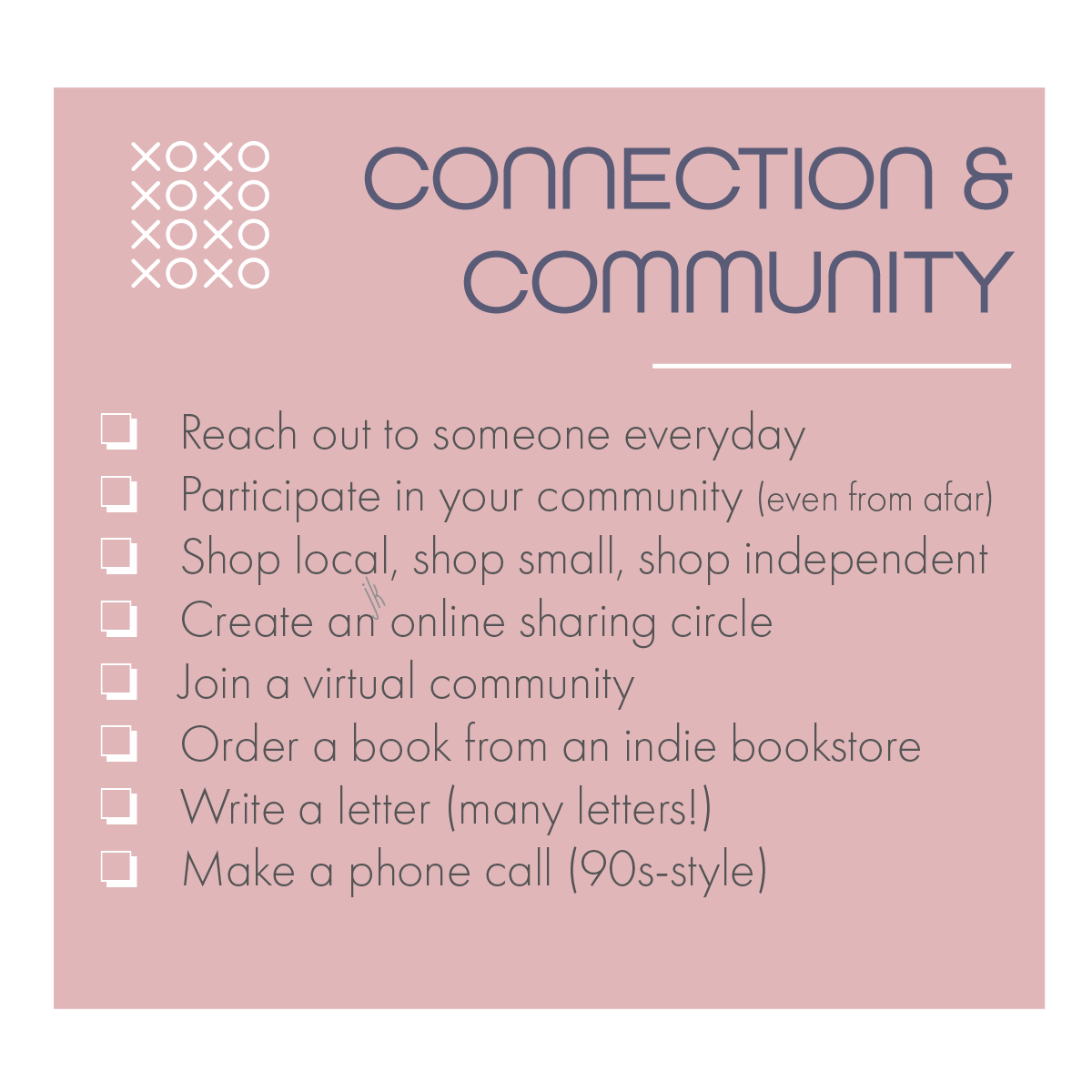


When Friendship Saves Us (Part 2) : Our Take On Modern Love
As our problems gain significance and gravity and weight, we are no longer confident that our friends can bear their burden, no longer confident that they’ll be able to see us through the wreckage of our flaws. Maybe that’s why, when we find someone who does see us and loves us still…maybe that’s why we hold so tight?
Believe me when I tell you that nothing sounds more terrifying to me than a posh British girl who has just transitioned out of her successful career as a modern art curator to focus more fully on our societal responsibility to address mental well-being. (For reference: I am insane, and 50% of the “art” in my house is from TJ Maxx.)
But a few months after our second babies were born, it was time for our firstborn children to start Kindergarten, and by some stroke of luck, or destiny (or the fact that there was actually only one school in our town) our children ended up being placed in class together.
I sometimes wonder what these days would have been like if I’d understood at that time who she was…who’d she’d be to me. If I’d have felt less lost? Less alone? If we both would have? But maybe that’s the beauty of friendship? There is simply no rush to force its unfolding, no timetable that stipulates where things ought to be; a freedom that allowed us to bumble through the initial unfolding in spit-up ridden fits and starts, baby slings flapping unceremoniously in the breeze as we realized: being together through all of this was just better than being apart.
There was a time when I thought of friendship as an immature pursuit, that all of these minor relationships were simply buying time until the real relationships began. Surely I’d outgrow the need to spill forth all of the pieces of my life in the hopes that my poor, unsuspecting friends would put them back together. Surely slumber parties and impromptu ice cream binges would lose their appeal? Surely I’d feel increasingly more inclined to hide who I was in the hopes that I’d remain protected, collected, secure. And maybe that’s true. Maybe we do start holding ourselves together more as we age. We smile and respond “I’m great!”, and we shift our conversations to inconsequential topics and we occasionally pop in to therapy when things get bad…but by and large, more often than not, we choose to suffer alone. As our problems gain significance and gravity and weight, we are no longer confident that our friends can bear their burden, no longer confident that they’ll be able to see us through the wreckage of our flaws. Maybe that’s why, when we find someone who does see us (really sees us) and loves us still…maybe that’s why we hold so tight?
Claire was the first person I opened up to fully (partially because she made me feel safe, and partially because I was breaking down before her very eyes and there was no longer a polite way to brush off her concerns).
“Yes I babysat your daughter today!” (You’re welcome!)
Yes, I also stayed at the park the whole time because I thought a murderer was hidden in my attic.“Yes, we rode our bikes to school pick-up today!” (What a fun and active mom!)
Yes, I also believe a bomb has been planted in my car and will explode at any moment in some sort of Speed-esque fashion (but minus the uniformly-sweaty-and-bronzed Keanu Reeves.)“Yes, my eyes are very puffy because I’m tired!” (#momLife amirite?)
Yes my eyes are also puffy because I’ve been crying constantly/hysterically/desperately wondering how to escape the confines of my body.
Due, in part, to a series of traumatic events and in part to a less-than-ideal genetic composition, I’d found myself locked in the jaws of anxiety and paranoia, once again — a constant gnawing that quickly escalated to a violent, thrashing attack. And when everyone else saw the smiles and the bikes and the requisite puffy-eyes…Claire saw the bite marks. When everyone else was happy to accept the ‘I’m fine!’s, happy to accept the facade I’d so expertly constructed (and who could blame them?) Claire was the type of friend who was brave enough to look beyond the poorly-bandaged wounds to the disaster that lay beyond. And when she saw me there (the real and broken me) the ‘me’ who had no jokes or quips or excuse left; when anyone would have been justified in their rapid fleeing ... She stayed.

When Friendship Saves Us (Part 1) : Our Take On Modern Love
Friendship offers a purity that is complicated only by the fact that there is nothing legally binding you to one another. Nothing to say, “if you leave you’ve got to give me a house or a boat or half of your grandmother’s jewelry.” Just this love that lingers in space, vulnerable, subject to the whims of men.
She’s moving back to England and I can’t come. (Obviously.)
Because the thing about friendship is: you don’t plan your life around people that you’re not having sex with. (Which honestly feels a bit barbaric, to me, but ok.)
Finding romantic love has long been considered the gold-standard of human achievement, evidence that we are worthy of a lifetime of devotion, or, at the very least, that we are tolerable enough to withstand for the better part of a lifetime. Romantic love is a precisely choreographed dance, the steps of which will never be revealed; a high-stakes game with loosely-defined rules and a massive potential for loss. On the one hand we’re expected to foster an impossible level of comfort and security. (We hurl forth our hopes and dreams, crossing our fingers that we’ve found someone who will see them and share them and keep them safe … someone who won’t be sent fleeing wildly in the opposite direction.) On the other, we’re implored to maintain a similarly-impossible level intimacy, eroticism and mystery. (If you’re not popping out from behind the dresser in a French-maid costume or developing a new mental health disorder every month, are you even trying???)
Friendship does not exist on this same playing field, or within this same town, or even within this same earthly realm. Friendship is an ever-available gift from the gods. An opportunity for connection and closeness without ever having to talk about mortgages or school districts or pills for sad penises.
Friendship is unburdened by such trite matters. Friendship does not care about flaccidity, or project-based learning or “interest rates we should really capitalize on.”
Friendship offers a purity that is complicated only by the fact that there is nothing legally binding you to one another. Nothing to say, “if you leave you’ve got to give me a house or a boat or half of your grandmother’s jewelry.” Just this love that lingers in space…vulnerable…subject to the whims of men.
When I first met Claire, she was sailing a paper boat down a stream, giggling with her young son in a fashion that suggested she was probably a nanny and almost definitely a little bit drunk. (She denies both claims.) I fell for her her all the same. Her lightness, her ease, the way she smiled and laughed, the way I could see her walls…the way I knew before she did that they’d start to fall.
We first bonded over the fact that we both had children. Not that they were similar or that we were raising them in the same way or that they even liked each other, just that they existed and that we had birthed them within the same relative time frame. (This, I’ve discovered, is as good a reason as any to develop an adult friendship.)
The unfolding was slow. I forgot her name multiple times and was forced to introduce her to some unsuspecting acquaintance who found himself lingering nearby so that she’d have to tell them her name). We had no real reason to meet so we’d just happen upon each other, at the houses of mutual friends, at the park, by a stream. (Stalker stuff.)
Years later, when it came time for us to produce our requisite second children, both of us managed to hold out for an ungodly 5 years. While the rest of the world went on to space their children perfectly, precisely, methodically, 2.6 years apart, here we were, bucking the norm, starting over after half-a-decade. (Her, because she’d had a successful career and seemingly unlimited ambition…me, because my body wasn’t very cooperative and that I was busy stock-piling mental and physical health disorders.)
The first time I saw her after having the baby, I forgot to ask the baby’s name, or when she’d had her, or if she was so tired she might die. We just sort of stood there on the sidewalk making small-talk, smiling vaguely … each of us pretending to be ok.

Shelf Help | In conversation with Toni Jones
We talk to the British journalist Toni Jones, Founder of Shelf Help about the bookclub that became a global movement and why its her mission to make self-help accessible, collaborative and cool.
When we first found out about Shelf Help, we felt like we had found our people. It’s a book club, built around self-help books, that also builds community in real-life. Isn’t that the ultimate combination?
OK, you’re hesitating, and we’re guessing it might have something to do with the genre because let’s face it, self-help can be a bit naff. You probably already have your biases, unconscious or otherwise.
Don’t worry, in the conversation that follows with Founder Toni Jones, we’ll cover that uncool factor and all the other reasons why Shelf Help is something you might need in your own life. Prepare to change your mind.

Claire: What led you to start Shelf Help?
Toni: I had just left my full-time job as a journalist to become a freelance writer, which meant suddenly spending a lot of time by myself. I was 36 and I’d never spent any time alone. It should have been the dream. I’d quit a job that I hated. I was busy and getting work. But it wasn’t that easy being by myself and getting to know myself. I realized I had spent a long time just ignoring my needs, and as soon as the job wasn’t there as a distraction, it was all back down to me.
I spent a lot of that time not unravelling but definitely in a bit of a mental health black hole. I was transitioning from this high-octane life to having a lot of time to think about whether I had done the right thing. I didn’t know how to deal with any of it. I knew I didn’t want to go back. I knew that wasn’t the right thing to do but I wasn’t sure which way to go.
I just started reading a lot of self-help. I started taking care of myself in other ways too; going to therapy for the first time (which I found really hard and amazing), doing yoga, attending retreats, and participating in a few support groups like Al Anon. I was also writing more about wellbeing because it was a trend that was coming in. In a way, in trying all these things, I was approaching my own life like I was writing a feature.
Claire: What was the first self-help book that you read?
Toni: Paul McKenna’s Change Your Life in Seven Days, which people thought was hilarious and really weird, because you don’t think of him as a self-help guru. To many people he’s that weird hypnotist on tele but he’s well-trained in positive psychology and NLP.
Because it was the first self-help book that I read, it really resonated. All these light bulbs went off. I read it slowly; I’d read a concept in that book and then I’d go away and research it. I’d go deep into the black hole of a certain author or self-help concept. Suddenly I was learning all this stuff and I literally could not get enough of it. I was devouring all these self-help books. I was fascinated by it particularly when I started reading about positive psychology and neuroscience and things like Dr Joe Dispenza (he talks about the power of your brain to change and it’s kind of the Law of Attraction but with all the science behind it).
But I was boring my actual friends with it. They were seeing a change in me—and that does spike people’s curiously—but they were like: ‘we get that you are into self-help, but it’s not our thing but good for you that it’s working.’ I started Shelf Help to find new friends who I could talk to about it. Also, as a journalist, I’m the kind of person who, when I find something good, I just want to share it.
Claire: Tell me about the first meet-up. Was it what you expected?
Toni: Shelf Help started as a local book club at a little wine-bar in west London. The first couple of meet-ups were a bit more earnest than they are now, because I started off thinking I needed to be super serious to be able to offer good support, but I’ve learned—as I’ve got better at running groups and also sharing my own story—that you can talk about the big stuff and still have fun.
Meet-ups today cover all kinds of heavy things; purpose, grief, breakups, fertility, friends, fear, careers…but we end up laughing a lot. They are actually really fun! We don’t just sit there and talk about our problems. People do bring up things that are bothering them and things that they are struggling with but there is usually someone in the room who can help them, someone who can say that happened to me and I did this. The idea is that we can all come together because everyone is fragile. We’re probably going through the same old shit and it’s nice to know other people have gone through it and that they have survived. Everyone leaves feeling positive.
Shelf Help has gone from me saying let’s talk about our problems, and that its ok to share, to a place to move forwards. Now I say we celebrate self-help. It’s about inspiring positive change. We advocate that it’s totally ok to not be ok and that people’s feelings are valid, but there’s a lot we can do to feel better, and so we focus on what’s next and how can we help each other.
Claire: As Shelf Help isn’t therapy but is to the side of therapy, how do you create an environment that is safe and purposeful?
Toni: What I do is create a space to give people tools to empower themselves. It’s self-help, so I’m never saying that I’m a therapist and that I have all the answers. At each meet-up, we use a different book but the same format. I’ll pull out 5-6 quotes or exercises from the book and every host around the world and on-line will use those questions for discussion. That gives us the framework as we’re going through the session.
For instance, let’s take a recent book Designing Your Life, which focuses on working out different versions of who you can be. I’ll say ‘The authors say… ‘ and ‘This is how they say it will work…’ Then I’ll ask, ‘Who has experience of this...’
I’m not saying that’s my advice or opinion, though I’ll share something usually based on my own experience. People understand that I’m not trying to direct anyone in any way. If you have chosen to read this book and come along to a meet-up, it’s because you are interested in the topic and meeting like-minded people. I’m pretty sure the attendees aren’t just there to see me or listen to what I have to say about something. I’m just the host: I bring people together and create an environment. But very much people are coming with their own stories to share.

Claire: It sounds like the book itself is giving you the safe container?
Toni: Yes, the expert in the room is the book. Sometimes we have the author there but not always. In a way, it is like a regular book club where you get together to chat about the different characters and chapters and everybody has a different opinion.
Also, I’m quite clear that confidentiality, kindness and no judgement are our code of conduct. That’s on our printed materials that we put out. Hosts also read out the manifesto at the beginning of each meet-up, which explains what we are and what we’re not.
We do have different levels of people at different levels of pain or need. Some people have gone to the doctor and they are going to therapy. They are using this as another tool. There are a million experts that people can google but what they are looking for with Shelf Help is a way to connect to others and a way to connect with themselves.
Claire: The self-help genre has been promoted as being so individualistic, as something you do alone. There’s this idea that you read a book alone and have all these epiphanies alone. With Shelf Help what you are saying is that actually self-help is not solitary, but rather it can be in understood as a collective experience and can be experienced in a social environment.
Toni: My mission with Shelf Help is to make self-help accessible, collaborative and cool. The idea of self-help is a bit of a misnomer. Yes, you do need to do a bit of that work on yourself, but you also need help to take that work forward. It’s much more powerful when we come together.
If you’ve got used to sitting at home by yourself, with just those stories that go around your head, often just saying something out loud to someone else can give you a different perspective. Shelf Help gives people access to different perspectives, and entirely different life experiences
When we did Susan Jeffer’s Feel the Fear and Do It Anyway at our meet-up in London, we had an Indian grandma who had the original copy from the 80s that she’d been given when she first moved to London. She was sitting next to a Gen-Z girl, 22 years old, clutching her brand-new edition of the book. Though it’s a bit of a worry that we’re still dealing with the same old stuff, it was amazing to watch them connect over the same material. They probably would never have met or talked to each other otherwise, but these are universal themes that can easily see three generations apart talking about the same eternal topics.
Claire: As an advocate for self-help books, going to therapy and going on this deep dive into personal wellness, how do you negotiate some of the cynicism that can come into play? There’s definitely an undertone that says that stuff you are doing over there, that wellbeing stuff, isn’t credible or serious.
Toni: Yes, I see that. But it started working for me, and for others, and as soon as something starts working, people want more of it.
My dream with Shelf Help is that people are not scared to read self-help, that it gets people talking about this genre and connecting, rather than thinking you must be a mess because you are reading a certain book. I believe that the audience is everyone and that’s the whole point. I want people who maybe don’t think they are self-help readers to maybe read an interesting quote or a passage on our Instagram and to go, “oh wow, that’s what’s that book is about.”
Claire: It’s interesting to see that shift, that there is a real thirst for it. That people are going towards it.
Toni: What something like Shelf Help does, and what I realize that I do for my friends and my family, is to give them permission to get curious about self-help. Yes, some people do still see it as naff and cringey, but quietly people will come along to a meet-up. They’ll have read the book and they will want to talk to me about it but maybe not in front of everyone. The interest is definitely there.
Shelf Help is all about accessibility. We make it accessible by organizing free or affordable meet-ups and events as well as via the content we share across various social media. That’s why I now call Shelf Help a platform—the book club is always going to be a big part of it—but we can share all kinds of content too. One day I hope we will be creating online courses, better digital meet-ups, and more events, like author workshops—which means you don’t have to have read any of the books to come along.
The way that people consume content now works to our favor; we don’t necessarily just have to read a book to be helped by self-help. People can also watch a Ted talk delivered by the author, listen to a podcast or follow them on social media and still connect to the strategies and ideas.

Claire: There’s a criticism that I’ll paraphrase here, that 100% of people who have read a self-help book will read another one. This means in effect that they don’t work. But really the point is not that they are buying another one because the last one didn’t work, but that they are buying another one because it is working.
What you are saying in effect with Shelf Help is that your relationship to yourself and to other people is a life-long one. That people can have a growth mindset around their own learning. That’s something positive that people can sustain in their lives. You are shifting the perception that self-help is failing if you need more to its working if you need more. It becomes a form of ongoing mental nutrition in a way instead of an ineffectual crutch.
Toni: I think the more that you learn the more you realize you have to learn. If you are looking to a book to fix you, you are missing the point because most self-help comes back to the same finding: you need to start with you. All these books and tools will help guide you but ultimately you need to know yourself, to meet yourself and then start that work.
People say to me how can you read all this self-help and not be fixed? They have this idea that if it’s so great you only need one book. But we’re always learning. That’s what we are here to do, to grow. You are never going to be complete and how boring would that be if you were? What you learn along the way is amazing and is probably the best bit.
Claire: How do you get over self-help overwhelm/ fatigue (you know that feeling where the 11 things to do to better your life feels like 1000 things to do)? How to do you go from reading self-help to actioning it?
Toni: After feedback from members we’ve slowed down the reading process, to one book of the moment (BOTM) every two months (instead of one book every month). These books require that you delve into yourself or peel off these layers. You need to do the exercises and read it at a pace that allows you to process.
Claire: You give a reading schedule?
Toni: Yes, for accountability and so people can follow along with what we’re doing. Everyone is so busy, and I have to appreciate that reading can be a luxury. We need to allocate proper time to get through these books. It’s very much about reading, processing and then acting on it. In Crazy Good, one of the books we have covered, author Steve Chandler says: “Once for information and twice for transformation.”
Claire: Do you choose all the books that you cover? How do you go about that?
Toni: Yes, I’ve done that so far. I’ve gone on books that I’ve loved and that have made a big difference to me and that I know. People seem to like the fact that they are directed to what to read. Not that I know everything about self-help, but I do get a good vibe for what most people want to know about at the moment, whether that’s happiness or habits or purpose. I also get a sense from everything that I’ve read that this particular book is one that we can dissect together. Now, it has to be available globally cause we’re a global book club and we have loads of engagement in Canada and Australia.
Claire: I saw that you are now worldwide, including Amsterdam and Los Angeles. Why did you decide to make Shelf Help a worldwide movement?
Toni: I want to make the conversation as big as possible and to get as many people as possible talking about these subjects.
I think these things affect you in San Francisco the way they affect someone here in London: Feeling lonely, and just wanting to connect. We’re so connected and so disconnected. People are just looking for things to do that bring them together. I started Shelf Help at a time that I really needed it, but I underestimated how much everyone else needed it as well.

Claire: Shelf Help fits in this cultural moment, this global phenomenon of being disconnected, and searching for something to fill the void. We’re all going through it. For me, Shelf Help covers those universal longings: how do we connect, how do we come together, how do we help ourselves?
Toni: People do want to connect online but people ultimately want to go to or even start a meet-up. We’re able to create this amazing network and that’s what technology is allowing us to do but really its feeding people’s need to connect in real life as well.
People want to catch-up or go to events with each other. Most hosts are starting to organize social events in-between book clubs where they’ll go for dinner or a yoga class or a workshop.
At the meet-up in Farnham UK, they seem to bond over their love of cake as much as the books they read. In central London, the meet-ups typically focus on purpose, career and burn out. The one in Pembrokeshire takes place at lunch-time because it is made up mostly of mums.
I want the hosts be as autonomous as possible. If you want to host a meet-up for me and for Shelf Help, then that’s brilliant. We want you on board. We want as many people as we can get, but applicants have to understand that there’s a certain level of commitment (hosts need to commit to a minimum of 6 bi-monthly meetups, and are responsible for the venue and local members, with some support from Toni/Shelf Help). To scale this movement, I know that it can’t be about me; I can’t be everywhere.
Claire: You don’t have to be the person in the room, you can create the system for it, but it doesn’t have to be you?
Toni: I absolutely don’t want it to me about me. I’m happy to be the figurehead and I’m glad that people relate to my story. I love organizing the events and managing the network of hosts, but, ultimately, I want to empower people to help themselves and build a community that helps each other.
Claire: You’re 2 years old (congratulations!). How has the idea for and realization of Shelf Help shifted from when you started to where you are now?
Toni: Two years ago, it was just a book club in Chiswick, west London. Now, I talk about Shelf Help as both a platform and community. We’re all about connecting people to ideas through both the books and other types of content that we share. We’re creating spaces on-line and off-line, with lots of events and meet-ups, and an active digital community. The community is a massive part of it
A lot of Shelf Helpers who are assisting with our second birthday party, are people who are either hosts or come to a lot of meet-ups. I didn’t know many of them a year ago. Now they’re really good friends who are all giving up their time for this celebration.
I’m finding that people want to be part of what we’re doing. They want to do what they can to help us grow. We seem to call on people who can see a huge value in focusing on their mental wellbeing and who then want to share that message.
Claire: If someone is interested in getting involved, what’s the best way for them to engage with you?
Toni: You can come to a meet-up, an event or a retreat. Or join the Facebook group, follow us on Instagram, sign up to the newsletter or even host your own local book club. There are lots of ways to get involved.
Claire: And finally, what’s the one message you take away from reading so much self-help.
Toni: At its most simple, Shelf Help is about helping people to like themselves more. Because I think that too many of us don’t like ourselves enough (maybe don’t even know how to?) and that everything in life can be made better when we improve the relationship we have with ourselves.
To find out more about Shelf Help, head to the Website, Instagram, or Facebook.


Cafes for Life: Are Cafes Good for our Mental Wellbeing?
On cafes and why my love for them is maybe not just a personal one, but part of a wider universal longing.
Last night my daughter Ottilie ended up in the ER. It wasn’t serious. That’s not this story. As we walked off the beach, my son threw a stone at her and though she was supposed to duck behind the boogie board, she didn’t. It punctured her eyebrow and off we went to get it glued and pulled back together.
This morning, at Kindergarten drop-off, Ottilie wobbled. She was worried about the plaster getting wet, worried about the rain forecast, worried about it being Monday morning and that she would be away from me again.
And I wobbled too. I felt her anxiety—felt it with my own, seeping through my body. I carried all of it into the beginning of my week too: The moment I saw the blood streaming down the left side of her face and my son screaming ‘it’s her eye, it’s her eye’. The fear of what might have happened, of washing away all that red to figure out how serious it was, the anger that my son had caused this and that my daughter was in pain.
I felt it keenly this morning when I awoke, that long evening in the ER waiting room, with kind doctors and nurses paying attention to this little girl still in her beach wetsuit, trying to stay calm and positive as I wanted to vomit into the trash can. And I felt too the effects of that very large glass of rose I used to dull my nerves on an empty stomach when I got home, and the kids finally slept. I felt it again and again, the vulnerability that is our world with children, and the times our lives smash into pauses of the non-self-care kind, but of the nothing-else-matters-because-my-kid-is-hurt-and-I-do-not-care-in-this-or-any-other-moment-how-many-followers-I-have-on-Instagram kind.

But we’re here now. On a Monday morning. With all the feelings. In need of pulling it all back together, to similarly glue the opposing sides of myself. To get back to work, to life. I know I’m supposed to do this: drop off the kids, walk home to my study, sit down and work. But instead I do this: drop off the kids and drive to a café. Sit down and work. Because this, getting myself to a café, feels good to me.
Here, in this bustling space, with the sound of the espresso machine, and frankly quite horrible music playing, here is my solace. This café is the balm, these people I don’t know sitting next to me, are the answer that I’ve found to sitting also with the sometimes ickyness of life. It’s cafés that I turn to for something, some cossetting. I don’t go for a run, I don’t go to the gym, I head here. To cradle a large latte and to feel ok again.
Home represents something else: maybe a spiraling down, an empty space to fill with feelings, the weight of family needs that populate it. But here, there’s no empty something to fill, it’s already filled to the brim with chatter and other people lives, adjacent to my own. None of this belongs to me, but I get to witness and to brush against other people’s stories, to be distracted from my own.
Maybe I’m avoidant. But I know I’m not running away. I still bring the crap with me, it just sits better here, perched on a stool looking out at the world. It’s not a ‘let’s not do this’, more of a ‘let’s do this’ but with a blanket of cafeness. Can that be a word? What’s does that even mean here—warmth, people, place?
My life is a long-read in cafes—my coming-of-age story happened not at the Hacienda in Manchester in a period of music that was to become quite defining (Happy Mondays, Inspiral Carpets, Stone Roses, you know), but at the now defunct Cornerhouse café (since morphed into Home) a pretentious enough place that reflected my tendency to rave in my own mind and happily alone. Attending University in Edinburgh it was the Elephant House where JK Rowling wrote some book. In London, actually Caffé Nero (sorry - there’s a nice one in Chiswick). In San Francisco, there were too many to count—this was the polyamorous part of my café love (in a pinch we’d go for Ritual, The Mill, Coffee Bar and the Equator locations). This was when I could get lost in a neighborhood, and find its people lounging in some carefully designed caffeinated environment.
Then came one of the blows to being a new parent: realizing that toddlers don’t do well in fancy, artisan places—which is why Blue Bottle’s takeaway counter at San Francisco’s Ferry Building does so well for us, and Sightglass doesn’t. And also, the realization, if I could not do anything else in my day with a baby in the sling, too knackered to function in the sleep deprivation months, I could get myself to a café where I knew the barista and a handful of people. They would be kind enough to acknowledge me as a person, not just a mama, and I could have that sensation that I was still a grown up, because going for coffee was something only real adults got to do, right? A little older, my kids now know the equation, playground + coffee shop (the brits do this best: see Bath’s Alice Park Cafe). When we travel, our sight-seeing comes with best guides to coffee shops as much as things to do with kids (thanks The Almond Thief, Moo and Two, Society Café, The Hobo Co, the Hairy Barista, The Hatch and Cargo Coffee – our favourite places that dotted our summer holidays).

Maybe I’m weird. Maybe this is an unusual anomaly to put out there in self-care (which autocorrects to self-café btw, which makes no sense at all). But there’s some science behind this. And it’s all around ‘minimal social interactions’, which are vital to our mental wellbeing. The NPR podcast Life Kit put me on to this, a study by Dr. Gillian Sandstrom at the University of Essex that she conducted on whether people were happier even through weak ties, i.e. connections with people that we barely know and with whom we have limited contact. In short, she studied the impact on people of their interaction with a barista. She defined two groups, one that had just a functional interaction with the barista, and the other who chatted a little more with them. Then she asked them some questions on the way out of the cafe. Her study concluded that people were more satisfied, connected and happier, if they had engaged the barista, even for just a little while.
Cafes do this work. The work of connection, of putting people in front of us, with our nods and their smiles, our how are you's and what about the weathers. They helps us. I know that, less scientifically, because for my dad who cares full-time for my mum, a cup of coffee in a café means he’s less lonely. A few words exchanged and he’s a person again not just a carer.
Cafes are our third spaces, that mythical place between work and home. Sometimes they are even our work locations as I type away on my laptop. As high streets fall apart and our communities fragment, cafes are becoming one of the few places we can actually go to be with others. They are vital to our wellbeing.
Real-world initiatives are building on this, like the Chatter & Natter tables now in over 1000 cafes across the UK (including at Costa and piloted this year in Sainsbury’s) that sets aside a table for strangers to chat and aims to combat loneliness. This scheme brilliantly responds to two very contradictory things: that 75% of us would like more real-life conversations and that we don’t know how to do this. Ever found yourself sat in a cafe and looking around at all the other people sat alone too who you might be able to chat with if you didn’t feel so uncomfortable about approaching them? Chatter & Natter tables make it easy: if you want to talk to someone, you choose to sit at one of these tables. You don’t need to forge forever friendships, but you can make your day better by talking to a person for the time it takes to drink your coffee, maybe even for longer. It’s an ingenious, and super simple, way of making the world less lonely. Even the guinea-pig themed café in FleaBag had Chatty Wednesdays.

Cafes for us are the main way we get to be in the world while deciding how and if we interact with other people. Some cafes are really getting this by actively building connection into what they do or finding ways to provide sustaining spaces of comfort and intimacy. Some are just making sure they exist beyond the beverages on offer. London’s Drink Shop Do has built connection (and craft and bottomless brunches) into their space with an active program of events and a welcoming style. Brooklyn’s IXV promotes a no-waste, people-first ethos. New Jersey’s The Peccary gets the central role baristas play, and puts their wellbeing, their knowledge of the product and their interactions with customers, at the heart of what they do.
Sometimes it’s in an even more direct response to our mental health needs: In Chicago, Sip of Hope is one of the first cafés where 100% of their profits go towards suicide prevention and mental health education. Wallers Coffee Shop in Atlanta was founded to take on the stigma of depression, through offering music, mental health first aid, even a wall of resources. Dear M&S has been getting in on the act for a while: select cafes have for the past few years been used after-hours for Ruby Wax’s Frazzled Cafes. And there’s even a network of Happy Cafes worldwide, realized in association with Action for Happiness, that count our psychological wellbeing next to the lattes on their menus.
Self-care takes many forms. Being in a cafe is one of them for us. Maybe even for you too?
Tell us about cafes you know that are your respite from the world, or make space for something you need, or that make mental wellbeing part of their impact. Over the next few weeks we'll look more at some of these places and bring them into our guide for in real-life locations that help us better live our lives.
Discover more places to feel connected

The Saviors We Never Knew We Needed
But the beauty in this moment, if there is any to be found, is that we’re beginning to accept that mental health isn’t just something to be addressed within the stark walls of our therapist’s office. We’re beginning to look to more than the typical health care provider to carry us through. We’re beginning to see that, maybe, there is healing to be found elsewhere? Maybe there are solutions and connections and answers in our everyday lives? Maybe music is here to save us, after all.
The sun is setting in San Francisco and I’m roaming the streets barefoot (again).
It’s the summer of 2004 and I’ve just lost my shoes for the fourth time. Seeing as I’ve spent the last hour fighting to stay alive amidst a sea of people, rioting and screaming, it feels like a relatively small casualty.
You might be imagining that I’d just witnessed a burgeoning political movement take shape, that I was standing (shoeless) at the precipice of some groundbreaking revolution (and, now that I think of it, maybe I was...but I certainly didn’t realize it at the time). You may *also* be thinking I was very drunk, tripping my way down the crowded streets of the Tenderloin (which is certainly a strong possibility, but I honestly can’t recall the details.) In reality, I was simply ambling back to my car after a night at The Fillmore...manically happy (albeit a bit bruised)...feeling more alive than I’d ever felt.
I often think back to this time, the early 2000s, coming of age just as the California music scene was coming alive with a new wave of emotionally-charged sounds. (Emo, Screamo, Pop-Punk, Hardcore ... whatever the distinction, there were lots of feelings, and everyone was yelling.)
While I’ve never fully fleshed out the true impact, this much, I know, is true: Packing into a small, hot venue, with all the focus and intensity funneling in one direction is a powerful, communal experience and arguably more cathartic than most other experiences we’re afforded as adults. (Truly, if you have never been allowed to push someone really hard and then sob next to that *same person* whilst swaying, let me tell you, friends: It does NOT disappoint!)
For someone lacking any sort of formal religion, rock shows became my church.
If you were to create a Venn-diagram outlining the commonalities between the two, there probably is a pretty sizable overlap.
(you should draw this)
It makes sense, then, that, in moments of struggle, we look to these idols for direction and guidance, that we take their words as gospel and apply them to our lives; that we pour over their lyrics in search of answers; that we try to align our experiences with their teachings; that we seek connection with other believers; that we stand and chant, screaming their words back to them hoping, this time, that we’ll finally hear them.
Because the truth of the matter is, the reason that we love music is that it offers us a safe place to process and feel—a necessity we’ve, historically, been completely starved for.
We’re a nation of young people being ravaged by mental health issues. Suicide rates and depression and anxiety are all on a steady rise.* But the beauty in this moment, if there is any to be found, is that we’re beginning to accept that mental health isn’t just something to be addressed within the stark walls of our therapist’s office. We’re beginning to look to more than the typical health care provider to carry us through. We’re beginning to see that, maybe, there is healing to be found elsewhere? Maybe there are solutions and connections and answers in our everyday lives? Maybe music is here to save us, after all.
For teens, specifically, there is a power in seeing the people we idolize, respect and trust bringing a vulnerability and openness around these difficult conversations.
Emerging at the same time as this early 2000s emo and punk scenes, To Write Love on Her Arms (TWLOHA) was established to reach this demographic of young people.
“TWLOHA is a non-profit movement dedicated to presenting hope and finding help for people struggling with depression, addiction, self-injury, and suicide. TWLOHA exists to encourage, inform, inspire, and also to invest directly into treatment and recovery.”
Traveling with The Warped Tour, TWLOHA brought mental health awareness to a massive audience and served as a springboard for other similarly impactful initiatives. “Wanting to support existing professional help organizations rather than replace them, TWLOHA has invested directly into causes such as Hopeline, InTheRooms.com, S.A.F.E. Alternatives, Minding Your Mind, and (in Australia) Kids Helpline."
The incredible thing about TWLOHA was seeing how it affected not just the fans, but the bands as well. It became clear that fame and success were no more protective against mental illness than anything else. The truth that we all struggle was brought fully, and literally, to center stage.
Working in the music industry over the last few years, I’ve noticed an uptick, not just in the vulnerability bands bring to their live shows, but in the intentional messaging that is expressed, both through their lyrics and through their on-stage admissions. There is a real drive to reach out and let listeners know that they are not alone.
This year alone:
We saw Lovely The Band frontman Mitchy Collins open up about losing friends to suicide , encouraging listeners to reach out, find help, and check in on one another.
We watched K.Flay release an entire album full of deeply personal stories from her childhood with topics ranging from her ever-present mental health struggles to her strained relationship with her father.
Blue October frontman Justin Furstenfeld’s Open Book tour exposed us to his addiction, how he found hope, accepted help and eventually saved himself.
Rainbow Kitten Surprise floored us with their groundbreaking video for “Hide” (please go watch it immediately) and their resolve to secure equal rights and protections for LGBTQ community members by donating a portion of ticket sales directly to Equality NC.
Billie Eilish took the world by storm by bringing an entirely new sound to the world of alternative and pop music, but she also brought stories of living with Tourette’s syndrome, normalizing the condition for sufferers across the world.
Whether they realize it or not, these bands are shifting the way we orient ourselves to mental health.
I remember the early days of attending shows, being lost in a sea of people, hoping, simply, to hold on to my shoes. I remember the days when “HOW THE FUCK ARE YOU GUYS?!” was the requisite level of interest a band was expected to pay you. I remember how, sometimes, I’d find myself being crushed against the barriers in front of the stage, how the band would stop playing to say something about loving and protecting each other before launching back in to their set. I remember, in that moment, however brief, after fighting for space and gasping for breath, the palpable feeling of relief.
Today’s bands are doing more than offering brief moments of reprieve from the pain... they’re creating a space where the pain can sit and live as we breathe our way through, creating a space where we can come together in recognition of our brokenness and in awe of our strength, creating a space where, yes, we might lose some shoes...but one where we might find some hope, as well.
* In the United States, the suicide rate has jumped 24 percent since 1999, to 13 per 100,000 people, with the steepest growth in the years since 2006, according to a new report from the Centers for Disease Control and Prevention.

NOIR CITY | Dark City Wanderings
It’s like a religious revival tent meeting, but for cynics. Instead of their Sunday best, they wear their vintage 1940s finest. Rather than speaking in tongues, they wax on and on about who played what character in whatever desperately underrated classic. And Communion comes in the form of a big dose of black and white on the Castro Theatre’s massive screen.
It’s like a religious revival tent meeting, but for cynics. Instead of their Sunday best, they wear their vintage 1940s finest. Rather than speaking in tongues, they wax on and on about who played what character in whatever desperately underrated classic. And Communion comes in the form of a big dose of black and white on the Castro Theatre’s massive screen. You’ll leave sated, exhausted, but you’ll be back tomorrow night for another double feature, day-job alertness be damned. If you’re a true acolyte, you’ll see all twenty-some movies over the ten days of NOIR CITY, the annual film festival of the Film Noir Foundation.
I’ve always loved film noir. My parents apparently never thought it odd that an eleven-year-old couldn’t get enough of The Maltese Falcon; was inviting her (probably confused but at least good-humored) friends over to watch Rear Window; and once VCRs became a thing was trotting home from the movie rental shop with whatever sounded dark: Double Indemnity, Out of the Past, The Third Man. My dad had a particular soft spot for Philip Marlowe and Sam Spade, and together we tried in vain to piece together the plot of The Big Sleep, which even having read the book multiple times is incredibly hard to follow (Raymond Chandler himself allegedly said the same). But it looks superb.
Eddie Muller, founder of the Film Noir Foundation and organizer of NOIR CITY since its inception, has summarized film noir thus: “The men and women of this sinister cinematic world are driven by greed, lust, jealousy, and revenge—which leads inexorably to existential torment, soul-crushing despair, and a few last gasping breaths in a rain-soaked gutter. But damned if these lost souls don’t look sensational riding the Hades Express.”
So... Did noir make me a cynic, or did something already in Young Me gravitate toward this material, finding there something that made sense of the Evil That Men Do (or, in my case, that mean junior-high-school girls do)? My experience in the music world leads me to suspect the latter—that I was born this way, and that noir gave my imaginings form. And what a form!! Colossal glamour, pithy wit, underworld allure... Who wouldn’t want to live in a world where you could be sparklingly eloquent, successfully self-employed, adept in a fistfight, and irresistible to the ladies even if on the looks scale you’re more Fred MacMurray than Kirk Douglas?
Seeing these movies at the Castro Theatre, alongside fourteen hundred fellow travelers, takes the thing to a whole new dimension. Each evening opens with live music on the fabulous Castro Wurlitzer (recently replaced with an even more elaborate pipe/digital hybrid organ), then an acutely articulate, written-note-less introduction by the Czar of Noir (the aforementioned Mr. Muller), then the dramatic opening of the curtain to start the first feature. Each year has a theme (my personal fave so far was “international noir”), and Muller and his fellow programmers do their best to balance a few better-known titles that most people still will never have seen on the big screen, lesser-known titles that extremely few will have witnessed on the big screen, and one or two that have been saved from actual oblivion, often through a restoration directly funded by last year’s festival ticket sales. This is the goal of the nonprofit that is the foundation: to save noir films on 35mm, as they were meant to be seen. Say what you will about the viability of actual film as a medium for mass exposure to “film”—Eddie’s got a counterargument ready for you.
At this point there are numerous satellite NOIR CITY fests around the country, but San Francisco is where it all started, and where Muller grew up. He still lives here, and treats the SF iteration as the mother ship that steers the rest of the fleet. I’ve read Muller’s introduction to film noir, Dark City: The Lost World of Film Noir (1998), and have for the last couple of decades made little pencil checks next to the titles I’ve personally seen. Dark City Dames: The Wicked Women of Film Noir (2001) is the clearest manifestation of Muller’s career-long vendetta to bring the femmes of noir, fatale or otherwise, from the clichéd sidelines into the spotlight. I dutifully enrolled in Muller’s “continuing studies” course at Stanford University, “The Politics, Passions, and Personnel of Film Noir,” and I even successfully muscled my way into the gang’s inner circle, helping with the ticketing for the annual SF fest.
But at the end of the day, after you’ve completed all the reading and pondered all the theorizing and copied all the fashions and cut way too much school to watch Dialing for Dollars, the point is the theater experience. This is the “why” of the foundation: to save the films, and to show the films, at venues like the Castro. There’s got to be a really compelling reason why we keep coming back to a joint that holds 1,400 seats, puts on shows that last four or five hours, and has less than ten toilets total.
I’ve got a lot of NOIR CITY memories, but a couple stand out. The first is actually from NOIR CITY XMAS, a teaser show that happens a couple of weeks before the holidays, also at the Castro, as a kind of appetizer for the main fest coming in January. It usually features a bleak Christmas movie (I know, right?!) but this year it was Holiday Affair, a mostly-comedy with the odd bleak moment. I remember laughing so hard I was crying, right along with the crowd, fully realizing that if I’d been watching the thing at home on DVD, I would have been bored, maybe even wouldn’t have finished. I described it to Eddie the next day and he said of course that was right, that’s the power of experiencing movies in the theater. You’re physically, logistically committed, which makes you give yourself over to the larger emotive sense in the room. Sadness, injustice, intrigue, romance, glamour, and, yes, comedy are massively, massively magnified. See my religious-revival-tent metaphor that opened this piece.
This is what will be lost if the old-fashioned moviegoing experience evaporates.
Another very powerful memory of NOIR CITY is not even of being in the theater, but of reviewing the pictures taken by the photographer one year. I scrolled through crowd shot after crowd shot—hipsters, non-hipsters, old people, the occasional celeb (Chris Isaak and Jello Biafra have been noted attendees), and views of the stage showing Muller doing his thing. What stopped me in my tracks was a shot of what Eddie sees from the stage. There must be no sight on earth more satisfying than an ocean of folks who’ve paid their money and made the trek to love and support your dream, and gain something soul-satisfying that could be delivered, for us dark cynical believers, no other way.


Photographs by Rachel Walther © 2019
To find out more: website www.noircity.com / Instagram @Noir.City / Facebook @filmnoirfoundation / Twitter @noirfoundation