

Sometimes you just need to start (In memory of Carol)
On the many reasons why not If Lost Start Here, and the many (actually one) reason why, by co-founder Claire Fitzsimmons.
There are many reasons for not doing this project, for not starting If Lost Start Here. Want to hear a selection of them?
We are not ‘Experts’.
It makes us want to vomit.
Do projects like this pay?
Husband is doubtful.
Time to get a ‘proper’ job.
Don’t only perfectly-formed people start projects like this?
Someone, maybe many people, will laugh at us.
We are terrified of putting our ideas out there.
When? Like seriously when? And how? Maybe these are the same thing.
But there are many reasons why to work on If Lost Start Here:
We believe in it.
It wakes us up at 2am and gets us to the coffee shop to work on it by 5am.
More about mental wellbeing = matters hugely
It feels so good and right and necessary.
Good things might come of it, for us and others.
It might make people look differently at something, value their own thoughts, to notice who and what’s around them.
So many things in our lives led us to exactly this place.
We’d be moving forwards on one of our major life ambitions: mental health advocacy
Vomit can be cleaned and we’ll be ok even if we blush a little.
We get to decide what we do and where we put our attention, even if we have limited resources.
Not to, would be one of life’s big regrets
We love doing this together.
AND
This is the big one: because of my mum (this is a photo of her from sometime in the 70s—I love how she looks here). For many of us, it always comes back to our mums, doesn’t it?
There was a very clear ‘Before’ for me: I used to be a curator, in a former art world life, creating exhibitions in museums and galleries that I could have only dreamt of, like Tate Modern, the Serpentine and the ICA in London. It was an incredibly exciting career for a northern girl: I wore a lot of black.
Then something happened that forced me to reassess everything. My mum, who had been my best friend and constant in my life, started to lose her mind. Slowly, then completely. Now she struggles to function in the world. No, I don’t know her diagnosis. No-one does. We’re still trying to figure that out, after years and years of appointments, and ER visits, and specialists, and reading. Lots and lots of reading.
But the loss of my mum, even as she’s very much in this world, did this to me: it forced that question of the After, of what comes next. After I dropped my mum off at a psychiatric ward for the first time, as I drove to my childhood home, I made a promise to whatever entity we want to call it, that this would not all be for nothing, that I would work in any capacity I could to change whatever this situation was in which we were finding ourselves now lost. There is only After when you’ve been through something like this.
I’d quit the art world to train as a therapist. My experience with my mum’s mental health, and let’s add here my own, put the question of how we function as people front and center in my life, and it made me feel that this reified environment of conceptually-oriented art exhibitions didn’t connect with my life anymore. I would become the person in the room. I’d seek out a very clear role for myself.
My year at CCPE completing a Foundational Counseling & Psychotherapy course taught me that I was sincerely drawn to this world of therapeutic thinking. But I also wanted to bring that learning together with my curator brain—that roaming, search for thematics on which that profession is built. There’s always that tension in my mind between ideas and how they take their form in the world, in other words, the human piece. That’s the point of interaction that fascinates me the most. Could I make that into that something?
If Lost Start Here began to percolate when I realized that people were starting to do some fascinating things with that tension point. They were starting to build brick-and-mortar places around things like community and emotional intelligence, anxiety and depression, and even the end of relationships and end of life. They were starting to make places that hold our mental well-being in ways that the museums that I’d worked in held contemporary art.
I also realized that was nowhere to go to find all those different things. There were, and are, incredible platforms for great interior design, or travel off the beaten path, or well-being trends, but there’s nowhere to think about all the different places in the world that are now being kind to our minds and making for better lives. I realized that we needed a guide to this new sector, one that combines well-being with curiosity, travel and lifestyle, place-making and socially engaged art, independent cafes, and mom-and-pop stores—all approaches directed at making our lives better, and easier, and more fulfilling.
We’re hoping that If Lost Start Here will become the platform that curates the best places that support us as actual people in our worlds. It’s about that practical search for something else, for whatever it is that represents the gap in your life, for the thing that you need. My hope is that you’ll find what you are looking for and what you need. As I’m trying to do for my mum and me. Maybe we can do this together?
There are various ways for you to engage. By reading our online guide of those places that help with our sanity and our everyday lives, and supporting them as and when you need them in your life. By participating in our guide, contributing the places that you know prioritize our mental wellbeing in new and interesting ways. And of course, by sharing—help us get the word out that this platform exists, that there is help out there. Sometimes, we, you, and I just have to find it.
x Claire
My mum passed away unexpectedly last month. We’re reposting this piece now in her memory. This month, we’re supporting a place dear to mum’s heart, Sandbach Art Room. It helped my mum immensely over the last few years. You can also contribute to our Just Giving Page.

Two Chairs | A Conversation about Thoughtful Therapy with Alex Maceda
Two Chairs is doing therapy differently. We spoke to its Director of Brand Strategy about why the model of delivery has been so broken but also why therapy itself isn’t.
I’ve sat in uncomfortable chairs in rooms with badly painted walls. I’ve awkwardly handed over a cheque or counted out cash at the end of a session. I’ve missed weeks of help because scheduling hadn’t worked out with the shape of my week. I’ve stumbled down stairs afterwards crying and fled to my car for solace. I’ve found people, then dropped them when it didn’t work, but made sure that I felt like I was the cause of the ending and not them. All of the above, all of it is wrong, but all of it is what can happen in our experience of therapy.
We are huge advocates of the practice of therapy and have been in and out of it (between us) for most of our adult lives. Sitting with a therapist has saved us again and again. We’re happy to spread the cause that #therapyiscool, and we’re in the business of making all our mental health tools, including talk therapy, more present in our lives.
But as we do this, we also need to acknowledge that the model of how therapy is given—not the content or the relationship parts—but all those things around it such as booking, payment, design, and fit, make it really, really hard to have a good experience at best and to get the help we need at worst. We pay more attention to how we go for a haircut, then how we go for therapy, and that makes no sense at all.
That’s why we were relieved to discover Two Chairs, a San Francisco start-up (hold the judgement) that’s making therapy all about you in all the ways that it hasn’t been so far and really needed to be. That means when you step into one of their seven therapy clinics across the Bay Area, you enter a setting that actually has your back as a person in the world.
Here the design of the spaces matters, not just in terms of beautiful furnishings with yellow (brand color) flourishes amongst the muted tones, or the LaCroix stocked in the fridge, and carefully chosen Phaidon art books on the coffee tables, but in psychologically impactful ways too. How the chairs are arranged affects how comfortable you might feel as a therapy go-er depending on your life situation. The art on the walls can subtly shift your mood. The presence of plants actually makes for a calmer environment.
Yes, therapy here is given the modern makeover it so, so badly needed, but it’s also been given one that takes into account what science is telling us about the environments and processes we need to best function as people. This is all Two Chairs Therapy’s Alex (Amac) Maceda’s domain. As the Director of Brand Strategy, Amac is responsible in her remit for interior design and client experience, working through all these details with not just operations and designers, but also clinicians and clients, who are folded into the process of what goes on before and after, as well as during a therapy session.
We had the opportunity to talk to Amac about why the model of delivery has been so broken but also why therapy in itself isn’t.


Claire: Let’s start with what Two Chairs is changing about the experience of therapy from the client’s side. Although we’re huge believers in therapy, we know that it’s really hard to just get the help that’s needed. How are you responding to this?
Amac: At Two Chairs, it’s all about access. We think of access as all the barriers that the system puts in front of you when you want to start care. The most classic example is that you are probably in crisis and you know that you want to go to therapy. You go online and Google. You maybe find 10 names. All of them are phone numbers only. Three of them call you back. Two of them don’t have availability. One of them can see you 30 minutes away at 2pm. Even when you’re opted-in, the system makes it so hard for you to get care. It’s such a disheartening experience, especially when you are engaging with it for the first time.
Claire: It’s hard to say,“I need to go to therapy,”and it’s even harder when you are trying to do this, and it’s still not coming together.
Amac: For a lot of people by the time they are asking for help, they have probably gone through quite a bit. Also, a lot of people are afraid to ask for help that first time. Whether they don’t know where to start or fear the stigma, there are so many things that you find yourself up against. Imagine that after taking so long to get to that realization, there’s still 20 barriers that they didn’t even know existed. When Two Chairs first started, that was the problem that we were trying to solve: How can we make engaging in high-quality care as easy as possible for those seeking it.
Claire: Can you talk me through how you are doing that in practice?
Amac: Some of the things we are doing are so simple, and take inspiration from different consumer brands, but are not typical in a health care setting. Things like online scheduling—it takes less than five minutes to schedule an appointment—and convenient locations—all of our clinics are located near major transit hubs. We want clients to be able to get in and out. We want clients to get on with their day and have the experience of therapy be as seamless as possible in daily routines.
Claire: You also have a unique offering in how the therapy journey starts way before clients are physically in a room with someone. Can you tell me about that intake piece?
Amac: We have a really dedicated care coordination team, and see them as a helping hand before clients even start care. They help clients think through questions like, “I don’t know if therapy is right for me, but someone recommended it,” to “how much can I expect to be covered with my insurance plan?”
What I think is really unique with Two Chairs compared to private practice or other group practices is our emphasis on matching. It’s clinically proven that the strength of the alliance between the therapist and the client is the biggest predictor of success, rather than the therapeutic approach taken by the therapist. However, the current system is not set up to match well.
Choosing a therapist can be really intimidating for anyone, and at Two Chairs, we try to make that as easy as possible. What that looks like from a client perspective is: you book an appointment online, receive a series of emails about what to expect in your appointment and then we send you a client profile to fill out.
The profile is a detailed intake form asking what some of your goals are for therapy, some demographic information, and questions that try to get at what modality might work for you, including,“How structured of a thinker are you?” from very structured to not structured, and,“How much do you want to be challenged in therapy?” from pushing back to I want a therapist who listens more. We’re not asking you to choose a modality, but rather we’re getting at some of the qualities that might move you towards one type of care or another.


Claire: That’s an interesting technology-driven part of your approach that hasn’t had a place previously in therapy. How important is the personalized data-driven piece to the Two Chairs model?
Amac: The self-reported data from the client goes into a matching algorithm that has been built in-house by our engineering team, and is founded on the latest data science. But our approach is not founded on data only. That information forms a hypothesis that a consult clinician (a position unique to Two Chairs) uses for a first consult. They prep with all the intake data, but they use their clinical expertise in that first in-person appointment to move the data around and to form a recommendation based on this human interaction. It is that person who then matches you with an ongoing clinician.
We match on so many different factors, from demographics, lived experience, and any specific preferences, like, “I can only come in at 8am in Oakland and I want to see a female who is middle aged.” We take this all into account when matching.
Claire: So, they take what they understand as you as this person on paper and you as this person in space, then put you in contact with the person who would be your therapist? If someone then goes to that therapist, and that’s not a good match, do you then rematch them? That’s one of those broken parts of classic therapy, that bad matches do happen and then someone drops out of therapy because of this even though they still need help.
Amac: Yes, that is where the consult clinician is so powerful—they become that point of contact throughout the process if anything is wrong. But we do have an over 90% success rate with the first match. Clients tend to be in therapy for quite a long time, though our goal is not to keep you in therapy forever. We’re now just over two years old, and at this stage, we’re seeing clients come back for new courses of care, and to work on new issues in more proactive ways versus more reactive ways.
Claire: I’m interested in this narrative of therapy positioned within life maintenance, like something you fit in on a regular basis. I’ve noticed that in the language of Two Chairs, that you are positioning therapy as a self-care tool rather than just as crisis management.
Amac: We have a good mix of clients who are brand new to therapy, and also those who are returning to therapy. On the new to therapy side, it’s been so powerful to see clients coming in for the first time who are telling us that they’ve been looking for a therapist, but that it had felt too intimidating, and that Two Chairs made it so easy. And on the flip side, we’ve had clients who have been in therapy for years who are coming more proactively, and treating therapy as a tool that is part of their life.
Claire: Do you approach those two needs differently in the intake process given that therapists have their own specialisms, such as trauma or situational issues, or work more generally, in a style that can be more holistic and generalized?
Amac: Yes, there’s all this self-reported data on the client side but I think what people don’t think about as much with Two Chairs is that we also have all this self-reported data on the clinician side too. Our matching tool includes their clinical expertise in session and the data we have about the clinicians about how they self-report their stylist preferences, their studies and research backgrounds.
Claire: How do you deal with the inclusivity piece? Therapy has been charged with being very narrow in its focus.
Amac: There’s a few different aspects to inclusivity, and certainly one of the hardest is financial. We’re still an Out-of-Network provider and we charge $180 for a session. That’s under market in San Francisco. But we aspire to be In-Network which we know will help a lot in terms of that financial piece. We know that the bigger we get the more power we have to be in network and then we can open access to more people.
On the other side, one of the narratives around therapy is that traditionally minority communities are less served within therapy and that gets back to our matching system. A big part of what we hear from clients is that we have a very diverse population of therapists across demographic and lived experience, qualities like gender, race, and sexual orientation. We consciously build for that. The feeling that someone understands your lived experience is very important, so we hire against that.


Claire: What happens after a therapy session? I always had this issue with therapy where I would sit in this non-descript room, see my therapist, and then come out with whatever raw feeling that I had, but then I have to go on the tube and get myself home. Can people hang out? Can they linger in the waiting room or sit with a cup of tea before heading back out into their non-therapy worlds?
Amac: I personally feel so passionately about this. Imagine that you cried during therapy and then you have to go to the bathroom to check your face and then sit in your car doing breathing exercises to collect yourself before going back to work. It doesn’t happen always, but for many of us, myself included, we’ve been there once or twice. For much of therapy, there’s no after. We think a lot about how you enter, but no one ever thinks about how you leave.
That’s something we’re addressing in all of our newest clinics and bringing that concept into the space. We’re introducing decompression areas to the extent that we can where you have separate exits and semi-private areas where you can sit and journal. We have essential oils and rocking chairs, so you can take a few moments if you need to. Each of our therapy rooms have a small mirror right before you exit so you can check how you look. These are all the little thoughtful details that we know from experience or from our clients speak to where they are at in that moment and we try to pull that into the design of the space.
Claire: Two Chairs didn’t go down the route of becoming an app but has invested in bricks and mortar and that in-person piece. Why is that aspect of just being in the room with someone so important. I know Two Chairs Founder Alex Katz has talked about Sherry Turkle’s Reclaiming Conversation: The Power of Talk in a Digital Age as a foundational text, and I wonder how this folds into your approach?
Amac: We know it’s clinically proven that in person is better. You lose so much when you are not in the room: like body language, tone, how a person is presenting, and how they seem to feel.
We also know that we are in a generation where we keep talking about how much digital is taking over our lives, and how much interaction is going through a screen. To be able to interact in person, especially around topics that are so deeply personal and that a lot of clients are talking about for the first time, allows us to bring a lot more empathy and understanding to the experience.
Claire: You have all the science backing up therapy, but you also have the science backing up the in-person piece. We’re at this moment that those two pieces are coming more and more together.
Amac: Yes, there’s so much care and attention paid understandably to the clinical setting. The hard part goes on in the therapy room. But there’s so much across the whole experience that matters—being able to be in person, to walk into a space and to feel a sense of calm, to have a cup of tea and to sit there for a moment, to take an hour out of your day in a beautifully designed setting that addresses our needs as a person.
Claire: Do you find that therapy is as stigmatized as when you started even a couple of year ago?
Amac: I certainly feel the stigma has decreased—but we have a long way to go. I find myself in a lot more open conversations about it, but know it’s a self-selecting group of people around me saying they go to therapy and that they love it. Even then, they are sharing in small conversations but not necessarily projecting it in public.
As someone who has worked in brand and marketing at different companies, I find it to be a very unique and specific reflection of where we’re at culturally with mental health. I used to work in fashion, and we had tons of user generated content on social media—people were posting pictures and tagging our brand, being advocates for our sustainability efforts, sharing our mission with friends—they wanted to be publicly associated with us. That’s not quite the same at Two Chairs—yet. We had our first tag from a client testimonial for Two Chairs only a couple of months ago, which was so powerful and exciting. Even two years ago, it would be hard to imagine someone posting about their experience with therapy on Instagram and thanking their mental health provider. It’s happening, but it’s still rare. Which makes sense—how many people do you know are going to therapy and taking a selfie and saying, “I had a great therapy session?”
There’s still a little bit of a ‘coming out’ that people do when they start to publicly associate themselves with mental health, mental illness, and therapy. Even people who are very mental health positive are not necessarily saying I’m going to therapy every week.
I was there six years ago, when I told a friend that I was in therapy and I remember feeling so scared. When they just said, “that’s great”, this relief washed over me. But even that makes such a big difference. It can be so powerful.
Everyone is on their own journey with telling their personal mental health story, but we hope that the work we’re doing at Two Chairs is making therapy a little more approachable, and creating more space so that you can talk to people about your experience with therapy when you’re ready. We want to humanize therapy more. In the past couple years there have been more and more mental health stories of famous people, often with this narrative of a grand fall from grace and then rise, which is inspiring, but not representative of most people’s experience. We’ve introduced an initiative called #TalkTherapy on our blog where we put more stories out there to show there’s a breadth of experience, that it’s positive or that it’s negative, sometimes life changing and sometimes it’s not, but we try to normalize the breadth of what happens to people in therapy.
Claire: How has Two Chairs been received on both sides, client and therapist, since launching?
Amac: We’ve seen over 2000 clients in the San Francisco Bay Area over the past two years. Last month we opened our fourth clinic in two years within San Francisco. We are one of the biggest group providers in the Bay Area at this point.
We are creating demand for therapy—we know this because a large percentage of our clients are coming to therapy for the first time, but there’s still a lot of latent demand for therapy. We’re the first consumer brand in a space that has existed for a long time and what we’re offering is a high-quality version of a something that is already there. We’re not trying to create something new that people don’t understand; we’re a better-quality version of what’s out there and we’re adding new aspects to it that make it more compelling for clients. In San Francisco there’s an emphasis on wellbeing, wellness, and self-improvement, and it’s really exciting to be in the generation that’s opening the conversation around mental health.
To learn more about Two Chairs visit their Website, Instagram, and Facebook

When Friendship Saves Us (Part 2) : Our Take On Modern Love
As our problems gain significance and gravity and weight, we are no longer confident that our friends can bear their burden, no longer confident that they’ll be able to see us through the wreckage of our flaws. Maybe that’s why, when we find someone who does see us and loves us still…maybe that’s why we hold so tight?
Believe me when I tell you that nothing sounds more terrifying to me than a posh British girl who has just transitioned out of her successful career as a modern art curator to focus more fully on our societal responsibility to address mental well-being. (For reference: I am insane, and 50% of the “art” in my house is from TJ Maxx.)
But a few months after our second babies were born, it was time for our firstborn children to start Kindergarten, and by some stroke of luck, or destiny (or the fact that there was actually only one school in our town) our children ended up being placed in class together.
I sometimes wonder what these days would have been like if I’d understood at that time who she was…who’d she’d be to me. If I’d have felt less lost? Less alone? If we both would have? But maybe that’s the beauty of friendship? There is simply no rush to force its unfolding, no timetable that stipulates where things ought to be; a freedom that allowed us to bumble through the initial unfolding in spit-up ridden fits and starts, baby slings flapping unceremoniously in the breeze as we realized: being together through all of this was just better than being apart.
There was a time when I thought of friendship as an immature pursuit, that all of these minor relationships were simply buying time until the real relationships began. Surely I’d outgrow the need to spill forth all of the pieces of my life in the hopes that my poor, unsuspecting friends would put them back together. Surely slumber parties and impromptu ice cream binges would lose their appeal? Surely I’d feel increasingly more inclined to hide who I was in the hopes that I’d remain protected, collected, secure. And maybe that’s true. Maybe we do start holding ourselves together more as we age. We smile and respond “I’m great!”, and we shift our conversations to inconsequential topics and we occasionally pop in to therapy when things get bad…but by and large, more often than not, we choose to suffer alone. As our problems gain significance and gravity and weight, we are no longer confident that our friends can bear their burden, no longer confident that they’ll be able to see us through the wreckage of our flaws. Maybe that’s why, when we find someone who does see us (really sees us) and loves us still…maybe that’s why we hold so tight?
Claire was the first person I opened up to fully (partially because she made me feel safe, and partially because I was breaking down before her very eyes and there was no longer a polite way to brush off her concerns).
“Yes I babysat your daughter today!” (You’re welcome!)
Yes, I also stayed at the park the whole time because I thought a murderer was hidden in my attic.“Yes, we rode our bikes to school pick-up today!” (What a fun and active mom!)
Yes, I also believe a bomb has been planted in my car and will explode at any moment in some sort of Speed-esque fashion (but minus the uniformly-sweaty-and-bronzed Keanu Reeves.)“Yes, my eyes are very puffy because I’m tired!” (#momLife amirite?)
Yes my eyes are also puffy because I’ve been crying constantly/hysterically/desperately wondering how to escape the confines of my body.
Due, in part, to a series of traumatic events and in part to a less-than-ideal genetic composition, I’d found myself locked in the jaws of anxiety and paranoia, once again — a constant gnawing that quickly escalated to a violent, thrashing attack. And when everyone else saw the smiles and the bikes and the requisite puffy-eyes…Claire saw the bite marks. When everyone else was happy to accept the ‘I’m fine!’s, happy to accept the facade I’d so expertly constructed (and who could blame them?) Claire was the type of friend who was brave enough to look beyond the poorly-bandaged wounds to the disaster that lay beyond. And when she saw me there (the real and broken me) the ‘me’ who had no jokes or quips or excuse left; when anyone would have been justified in their rapid fleeing ... She stayed.

Frazzled Cafes
With Frazzled Cafes, our mental wellbeing has hit the High Street. Comedian Ruby Wax has created safe spaces to talk at M&S locations across the UK.
“We live in a time where to have a life crammed to the hilt is considered a success story. But with all this pressure, so many of us have nowhere to go to meet and talk about it. Frazzled Cafe is about people coming together to share their stories, calmly sitting together, stating their case and feeling validated as a result. Feeling heard, to me, has always been half the cure.”
Modern life burn-out is as ubiquitous as M&S but we have this idea that we have to be all in with therapy or medication to deal with it. And we’re not knocking either (we have been and sometimes still are there), but sometimes we just need access to what we see as mental health maintenance, safe spaces to talk it out and talk it over. That’s where the network of Frazzled Cafes come in. They fill that gap between sitting alone with something, with the struggle and the frankly frazzled feelings that infiltrate our lives and our days, and pouring resources like money and time into talking cures, to committing to sessions and schedules. We need both. In fact we need all the different things, the different kinds of spaces and initiatives that might meet us where we are and hold us for the time that we’re there in whatever way we need, without judgment and with compassion.
Frazzled Cafes were launched a couple of years ago by the comedian Ruby Wax, who has recently become known as the popular author of books that include How to be Human, in which she discusses with a monk, and a neuroscientist the fundamentals of how we function as people, and A Mindfulness Guide for the Frazzled, an approachable and funny course in mindfulness. During the tour for her books, Wax had people again and again come up to her needing to talk and that was her lightbulb moment—that we all are running on empty and still finding our way through, and that we all need a way of expressing that feeling while connecting with others who are probably experiencing the same thing.
On why that word ‘Frazzled’, Wax explains: “A neurobiologist might say that someone is ‘stuck in a state of “frazzle”. They mean that, for this person, constant stress is overloading the nervous system, flooding it with cortisol and adrenaline; their attention is fixed on what’s worrying them and not the job in hand, which can lead to burn-out.”
The genius of the idea though is that Wax reached out to M&S, the widely beloved British High Street institution, to host these talk gatherings. And with that one call, you are in seriously stigma busting territory. If the venerable M&S is in that space of talking about our emotional and psychological lives, then surely that’s ok and allowed. Plus, who doesn’t want to spend time in an M&S after hours where the sessions are held?
Frazzled Cafes now take place in M&S locations across the UK, in their cafes and sometimes community rooms. Recently the idea was also tested at High Street Bakery Le Pain Quotidien. People are invited to RSVP beforehand and some weight is given to those who have attended before. Each session lasts 75-90 minutes and starts with a meditation to bring people into the room and ground their experience. The meetings are run according to the rules of therapeutic spaces, with a set of guidelines that promotes ideas of confidentiality, kindness and support.
If you interested in joining one of these meet-ups, sign-up for the newsletter which announces dates and venues and will link you to the RSVP for each cafe session. Just note that Frazzled Cafes are keen to point out that this is not designed to replace therapy but rather fills a need that most of us have just to be heard.
In our busy, often overwhelming lives, sometimes all we need is a safe space to talk. Frazzled Cafe is that space. And with that the issue of our mental wellbeing has now hit our high-street. Let’s keep it there.
To find out more: Website www.frazzledcafe.org / Twitter @frazzledcafe / Facebook @frazzledcafeuk / Instagram @frazzled_cafe

Culture Therapy | Mental Wellbeing
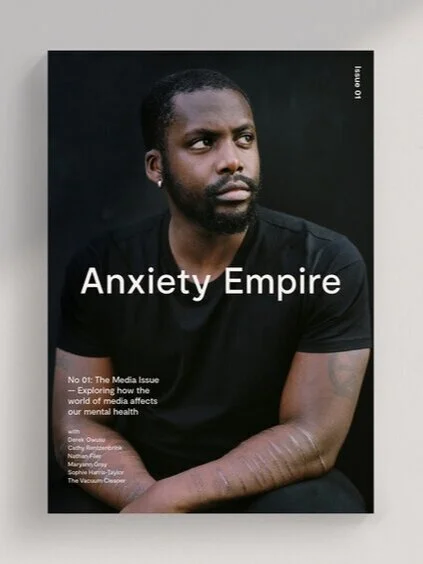
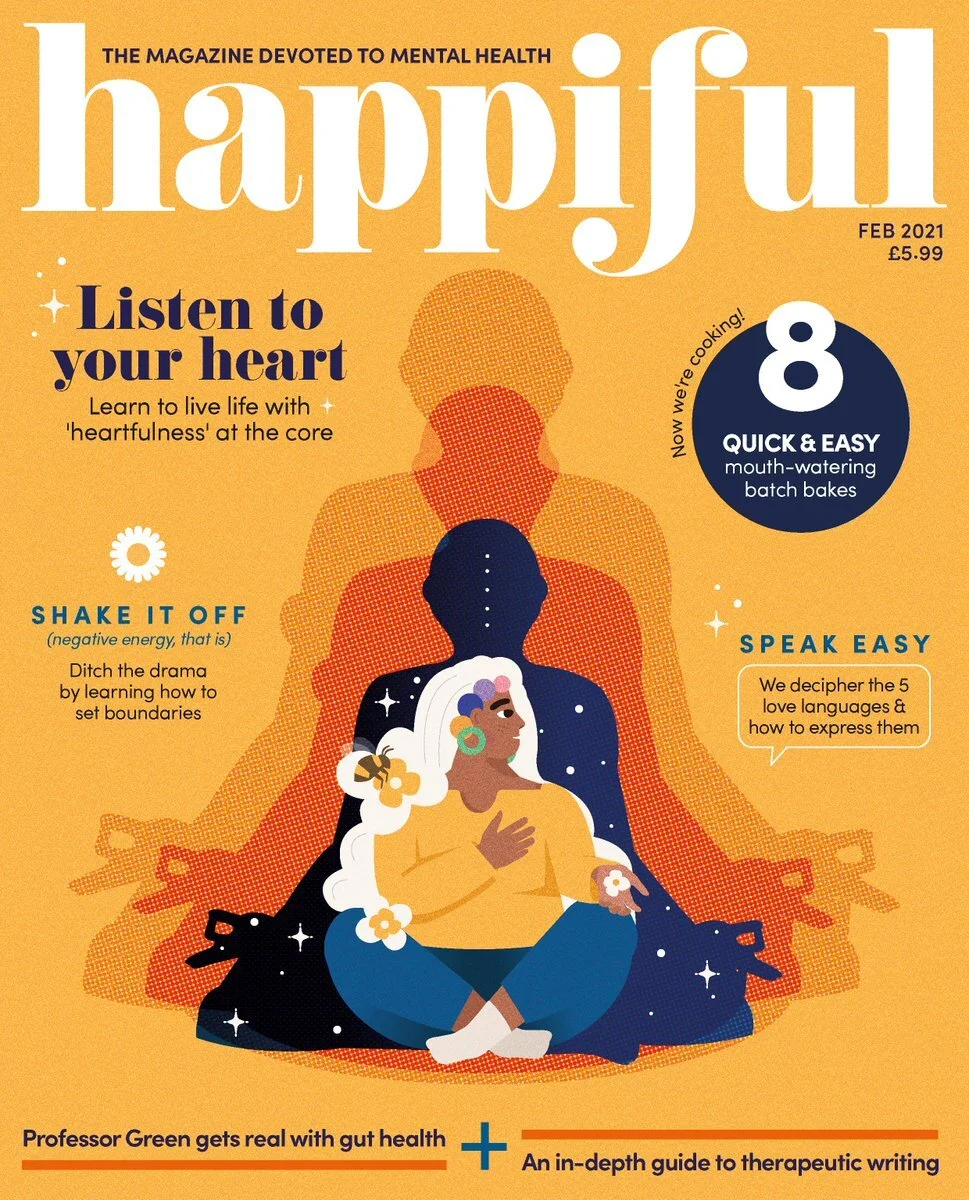
Here’s our Prescription for Mental Wellbeing: you will find in these pages and in these narratives, lives lived within, or touched by, consumed or imploded, maybe even adjacent to, issues around mental wellbeing. Our culture is now holding this space in a very different way than before for issues around depression, anxiety and mental health more widely. We recommend you check these out.
We went through a period of reading mental health memoirs: The Center Cannot Hold, Touched With Fire, Darkness Visible, My Age of Anxiety. We sought them out for information, for resources, for shared experiences. We held onto Andrew Solomon’s The Noonday Demon and Elizabeth Wurtzel’s Prozac Nation. We returned again and again to The Bell Jar. We looked to something outside ourselves that made sense of what was happening in our own minds, in our own lives, and with friends, colleagues and family also impacted by depression, anxiety, and other diagnosed and undiagnosable conditions. Through reading we found a way forward that wasn’t yet being spoken about; admittedly we sat alone with our books trying to locate ourselves and others we loved.
Thinking about this, our Prescription for Mental Wellbeing, we’ve realized that there’s been a huge shift in how we now get to talk about our mental health. There are now what seems to be an abundance of publications, podcasts, films and programs which to us collectively say no to that stigma that had previously left us alone with our experiences. There’s been a huge surge in positive media that has created a very real platform for our very real stories. Narratives that are now out there which take ownership of the conversation; that take someone’s experience and throw it out into the world so that we too can shift our relationship with what mental health means and how it shapes us and those around us.
These examples don’t glamorize mental health as bohemian or creative, rather they allow for truth and pain and joy and loss and connection, and for a deep, sometimes lifelong search for equilibrium and understanding. You will find in these pages and in these narratives, lives lived within, or touched by, consumed or imploded, maybe even adjacent to, issues around mental wellbeing. Our culture is now holding this space in a very different way than before for issues around depression, anxiety and mental health more widely. Messy, and unresolved sometimes. Hopeful and self-aware always. And for that we are very, very grateful.
Take up a book, head to Netflix, listen to something on your way to work. Support this shift and these very brave voices. Acknowledge that there are humans behind these stories putting themselves out there so that we may have a way to live our own situations outwardly. Make this openness last. Because we can not go back to not talking, to not reaching out, to being hidden and confused. To being alone with our books and our questions and our lives which didn’t have a place in the world and now very much do.








The Saviors We Never Knew We Needed
But the beauty in this moment, if there is any to be found, is that we’re beginning to accept that mental health isn’t just something to be addressed within the stark walls of our therapist’s office. We’re beginning to look to more than the typical health care provider to carry us through. We’re beginning to see that, maybe, there is healing to be found elsewhere? Maybe there are solutions and connections and answers in our everyday lives? Maybe music is here to save us, after all.
The sun is setting in San Francisco and I’m roaming the streets barefoot (again).
It’s the summer of 2004 and I’ve just lost my shoes for the fourth time. Seeing as I’ve spent the last hour fighting to stay alive amidst a sea of people, rioting and screaming, it feels like a relatively small casualty.
You might be imagining that I’d just witnessed a burgeoning political movement take shape, that I was standing (shoeless) at the precipice of some groundbreaking revolution (and, now that I think of it, maybe I was...but I certainly didn’t realize it at the time). You may *also* be thinking I was very drunk, tripping my way down the crowded streets of the Tenderloin (which is certainly a strong possibility, but I honestly can’t recall the details.) In reality, I was simply ambling back to my car after a night at The Fillmore...manically happy (albeit a bit bruised)...feeling more alive than I’d ever felt.
I often think back to this time, the early 2000s, coming of age just as the California music scene was coming alive with a new wave of emotionally-charged sounds. (Emo, Screamo, Pop-Punk, Hardcore ... whatever the distinction, there were lots of feelings, and everyone was yelling.)
While I’ve never fully fleshed out the true impact, this much, I know, is true: Packing into a small, hot venue, with all the focus and intensity funneling in one direction is a powerful, communal experience and arguably more cathartic than most other experiences we’re afforded as adults. (Truly, if you have never been allowed to push someone really hard and then sob next to that *same person* whilst swaying, let me tell you, friends: It does NOT disappoint!)
For someone lacking any sort of formal religion, rock shows became my church.
If you were to create a Venn-diagram outlining the commonalities between the two, there probably is a pretty sizable overlap.
(you should draw this)
It makes sense, then, that, in moments of struggle, we look to these idols for direction and guidance, that we take their words as gospel and apply them to our lives; that we pour over their lyrics in search of answers; that we try to align our experiences with their teachings; that we seek connection with other believers; that we stand and chant, screaming their words back to them hoping, this time, that we’ll finally hear them.
Because the truth of the matter is, the reason that we love music is that it offers us a safe place to process and feel—a necessity we’ve, historically, been completely starved for.
We’re a nation of young people being ravaged by mental health issues. Suicide rates and depression and anxiety are all on a steady rise.* But the beauty in this moment, if there is any to be found, is that we’re beginning to accept that mental health isn’t just something to be addressed within the stark walls of our therapist’s office. We’re beginning to look to more than the typical health care provider to carry us through. We’re beginning to see that, maybe, there is healing to be found elsewhere? Maybe there are solutions and connections and answers in our everyday lives? Maybe music is here to save us, after all.
For teens, specifically, there is a power in seeing the people we idolize, respect and trust bringing a vulnerability and openness around these difficult conversations.
Emerging at the same time as this early 2000s emo and punk scenes, To Write Love on Her Arms (TWLOHA) was established to reach this demographic of young people.
“TWLOHA is a non-profit movement dedicated to presenting hope and finding help for people struggling with depression, addiction, self-injury, and suicide. TWLOHA exists to encourage, inform, inspire, and also to invest directly into treatment and recovery.”
Traveling with The Warped Tour, TWLOHA brought mental health awareness to a massive audience and served as a springboard for other similarly impactful initiatives. “Wanting to support existing professional help organizations rather than replace them, TWLOHA has invested directly into causes such as Hopeline, InTheRooms.com, S.A.F.E. Alternatives, Minding Your Mind, and (in Australia) Kids Helpline."
The incredible thing about TWLOHA was seeing how it affected not just the fans, but the bands as well. It became clear that fame and success were no more protective against mental illness than anything else. The truth that we all struggle was brought fully, and literally, to center stage.
Working in the music industry over the last few years, I’ve noticed an uptick, not just in the vulnerability bands bring to their live shows, but in the intentional messaging that is expressed, both through their lyrics and through their on-stage admissions. There is a real drive to reach out and let listeners know that they are not alone.
This year alone:
We saw Lovely The Band frontman Mitchy Collins open up about losing friends to suicide , encouraging listeners to reach out, find help, and check in on one another.
We watched K.Flay release an entire album full of deeply personal stories from her childhood with topics ranging from her ever-present mental health struggles to her strained relationship with her father.
Blue October frontman Justin Furstenfeld’s Open Book tour exposed us to his addiction, how he found hope, accepted help and eventually saved himself.
Rainbow Kitten Surprise floored us with their groundbreaking video for “Hide” (please go watch it immediately) and their resolve to secure equal rights and protections for LGBTQ community members by donating a portion of ticket sales directly to Equality NC.
Billie Eilish took the world by storm by bringing an entirely new sound to the world of alternative and pop music, but she also brought stories of living with Tourette’s syndrome, normalizing the condition for sufferers across the world.
Whether they realize it or not, these bands are shifting the way we orient ourselves to mental health.
I remember the early days of attending shows, being lost in a sea of people, hoping, simply, to hold on to my shoes. I remember the days when “HOW THE FUCK ARE YOU GUYS?!” was the requisite level of interest a band was expected to pay you. I remember how, sometimes, I’d find myself being crushed against the barriers in front of the stage, how the band would stop playing to say something about loving and protecting each other before launching back in to their set. I remember, in that moment, however brief, after fighting for space and gasping for breath, the palpable feeling of relief.
Today’s bands are doing more than offering brief moments of reprieve from the pain... they’re creating a space where the pain can sit and live as we breathe our way through, creating a space where we can come together in recognition of our brokenness and in awe of our strength, creating a space where, yes, we might lose some shoes...but one where we might find some hope, as well.
* In the United States, the suicide rate has jumped 24 percent since 1999, to 13 per 100,000 people, with the steepest growth in the years since 2006, according to a new report from the Centers for Disease Control and Prevention.

Mind Food
As MindFood’s motto goes, “Gardening is cheaper than therapy and you get tomatoes.” The Ealing-based social enterprise has this idea at its core: it’s founded on nature and uses food as the framework for figuring out our mental health concerns.
“We support people to improve their wellbeing through growing and selling food.”
Did you know that as you grow your tomatoes or tend that cabbage patch, you are also doing something deeply therapeutic?
The Ealing-based social enterprise MindFood has this idea at its core: its founded on nature and uses food as the framework for figuring out our mental health concerns, whether we’re struggling with common conditions like depression, anxiety, and stress, including PTSD, or we’re just curious about plotting and planning our own psychological health and wellbeing. As their motto goes, “Gardening is cheaper than therapy and you get tomatoes.”
Chatting to co-founder and director, Ciaran Biggins, he points out that, “An environment of nature and growing food is a perfect way to practice the Five Ways to Wellbeing as identified by the New Economics Foundation”. So if we break that down, you get connection in the form of the community around you. You are able to take your time and pay attention whether that’s to changing seasons or to something you planted. You take on the role of an active learner, specifically here about horticulture. You get to give back through the systems of sharing and support that MindFood is grounded in. And lastly, you get to be physically active, getting those wellies on and hands dirty.
Drawing from the evidence base of nature’s calming effect and the restorative practice of planting, cultivating and selling food, Biggins created a program that involved “spending more time learning about food, building community, and being in nature in a supportive environment.”
Want to get involved? MindFood offers a starter program: a free six-week course, Growing Wellbeing, which covers the theoretical and practical relationship of nature and wellbeing. It’s all “action orientated to encourage behaviour change.”
And for those who want to continue their involvement, there’s Plot to Plate, 12 weeks of working to cultivate the produce in their allotment, then selling it from their Market Stall in Acton (which inscribes a whole other level of value and purpose for what you’ve just achieved).
To find out more: www.mindfood.org.uk / Twitter @MindFoodCIC / facebook.com/MindFoodCIC