

Mood & Moves Dance Co.
Explore your mood through dance at Mood & Moves, a creative studio in San Francisco. Founded in 2020 by Marcella Palazzo, the studio promotes creativity, self-expression, and well-being through empowering and fun dance experiences.
Go here if: You’re curious about exploring your mood through dance and having fun as you do so.
What is it: Mood & Moves is a dance studio and creative space in the heart of San Francisco founded in 2020 by Marcella Palazzo. They offer dance classes and host monthly workshops as well as pop-up classes in various styles of dance. They also provide 1:1 and group private lessons for a customized experience.
Why you need it: Mood & Moves inspires creativity and individuality. Classes are empowering and promote dancing as self-expression, passion, and self-enjoyment for better overall well-being
What else do they offer: Their studio is a blank canvas for creatives of all kinds to bring their vision to life. Whether you're a photographer, dancer, artist, or filmmaker, the studio is a big open space for you to turn your idea into reality. Studio rentals are available 7 days a week for all things creative! You can rent the space by the hour for rehearsals, photoshoots, video shoots, fitness, workshops, and more.


What makes it different: Whether you're renting the studio space or taking a class, you will feel like a star. The facilities are inviting, stylish, and clean. Need a costume change? Step into their Hollywood-themed dressing room. Hosting an event with refreshments? Take advantage of the kitchenette. Ready for your video? Take one in front of their marquee letters. Dancing for the first time ever? Their instructors are ready to take your hand!
How Mood and Moves Dance Co can inspire you, wherever you are: Founder Marcella Palazzo and her group of advanced dancers create concept videos in all styles of dance. The Mood & Moves signature style is featured in these videos, and can be enjoyed by people watching anywhere in the world! You’ll get to experience their passion for creating a performance that makes you feel something, and hopefully become inspired to dance/create as well wherever you may be!
Behind the space
We asked Founder Marcella Palazzo for the story behind Mood and Moves Dance Co.
“Before opening my studio, dance has always been my passion and form of self-expression. I always feel the most like myself when I'm dancing.

As I got older I developed an even greater passion for choreography and watching the ideas in my head come to life. It is my main goal to provide a space for other creatives to dance and bring their visions to life in a world that doesn't always prioritize the arts.
At the end of the day, I lead my art and business with my heart. Whether I'm creating choreography, teaching a class, or prepping for a rental, I give it my all.
If something doesn't feel authentic, I won't do it. I care about the quality of learning my students are receiving, choreography that reflects who I am, and a studio that is always ready to make other people's visions happen.
I hope that through my videos, classes, and studio people can feel my passion for the industry and the art!”
Where inspires you?
“When I'm not feeling like myself I take a break from creating and allow myself to just be.
I usually spend time in nature, read a fictional book, watch a new movie, or go see an artistic performance. I let my mind wander and become inspired by something I experienced doing these activities.”
Mood and Moves Dance Co.
264 Dore Street
San Francisco, CA 94103
USA
The monthly Heels/Burlesque Workshop takes place every second Sunday of the month.
Pop Up Classes with guest instructors are always updated/posted on the website, Instagram, & newsletter
The studio is available for rent 8 am-10 pm 7 days a week.

Queer LifeSpace
Discover San Francisco’s Queer LifeSpace which offers safe, affordable and accessible support for the queer community. We invited them to tell us about their approach and how people can access their services from wherever they are.
“Evidence-Based Training & Mental Health Services for the LGBTQ+ Community. For Queer People. By Queer People.”
What is it? We are a small, mental health non-profit based in the Castro neighborhood of San Francisco. We specifically focus on providing low-cost therapy to people in the queer community.
Why do people need it? There is a huge need for mental health support in the queer community. We also recognize that the cost of living in the Bay Area is challenging for many so we strive to create a safe, welcoming, and affordable place for our fellow queer people to find the help they need to navigate life's challenges.
What do you offer? We often participate in community events such as the Castro Street Fair. Our website has descriptions of our services, including individual, couples, and group therapy sessions. We just celebrated our 10-year anniversary with a fundraising daytime brunch and drag show Gala.
What makes it different? Our rates are sliding scale and start at $30 for an hour-long session, which, in the Bay Area, is very hard to find. Our organization is also a training site for emerging queer therapists. Because we are a small nonprofit, we have the freedom to create and run our own programming as we see fit. For example, we have a brand new program called EQUARTY, which supports up-and-coming queer artists in the Bay Area. We have another program called Rural Youth Outreach which offers free therapy to queer youth in remote and rural areas of California who may not have easy access to therapy due to their location. There are more plans to expand our programming beyond just therapy.
What do people need to know? We are now seeing clients on Zoom or in person, depending on client preference and therapist availability.
Tell us a little about your story: We understand how important it is to cultivate a space where people can be themselves. As a result, we make great efforts to pair our therapists with clients that share similar life paths. Because of the way we are structured, we aren't limited to a certain number of therapy sessions per client. Clients can attend sessions at QLS for as long as they need.
How can people be inspired by your space wherever they are? Queer mental health could always use more attention in mainstream society. We encourage anyone to talk about the need for mental health support, whether personally or as a culture.
Where inspires you? The strong queer community of the Bay Area is an incredible source of support. We draw upon the wisdom of the queer ancestors who have paved the way for us to do what we do today.
Main Image: Photo by Shingi Rice on Unsplash

How therapy is being redesigned for modern times
Therapy has changed. We’ve rounded up some of the new places and platforms bringing this practice into our modern world.
Finding a therapist can be difficult, particularly in a moment when people are feeling most anxious or lost. Figuring out who to see, and then checking in with yourself about whether they are the right fit, can feel bewildering, even exhausting.
We’ve been there: looking over lists of names, arranging the first meet-up, wondering whether something was off in your relationship or whether it was just your material, ending an ill-fitting arrangement, and then having the energy to find someone new to work with. Many times we gave up until the issue that pushed us to seek therapy could no longer go unheeded and we tried again. We knew when we’d found the right therapist, we knew who we wanted to work with, but there were some dead-ends and frustrations on the way there.
Often it's exactly this match-making piece that is the barrier to entry for someone seeking help. There are others — around cost, cultural sensitivity, access, and belief systems — but here we’re going to focus on how you can find the right therapist and how they can find you. Over the last few years entrepreneurs, mental health practitioners, and even the tech industry have noticed this issue too. Below we’ve pulled together some of the new services that have been emerging, ones designed to get you to the right person when you most need it, and in ways that feel very different to what has gone before.
Frame, Los Angeles

“Therapy looks different on everyone. We help you find your fit.”
Based out of Los Angeles, recent start-up Frame is approaching therapy with a modern consumer in mind. Forbes has called it the Bumble of Therapy. Long-time friends and founders Kendall Bird, a tech marketer, and Sage Grazer, a licensed clinical therapist, launched Frame to both serve the therapy-curious and the therapists themselves. Frame matches people with therapists through an algorithm, asking ten questions to best identify the six therapists that they could work with. These matches then each offer an introductory session. There’s no wasted money or awkward endings as you try to find the right person to work with. Frame is also currently offering digital workshops for the therapy-shy or for people who aren’t quite ready to commit to the one-on-one work of the therapeutic relationship. For therapists, Frame figures out all the back-end stuff too (therapists are effectively small business owners) — like billing and appointments, which in turn helps clients (who wants to take out cash and calendars at the end of a session?). Currently based in Los Angeles, Bird and Grazer plan to expand the service to San Francisco, New York, and Chicago within the next year.
Alma, New York

“Alma makes it easy to find high quality, affordable mental health care.”
New York-based Alma, approaches modern therapy from a completely different angle, that of the therapist. As founder Dr. Harry Ritter has said, “Great therapists need to be taken care of too.” Alma’s first space opened in 2018 in Manhatten’s midtown as a co-practicing space — or what CNN has called “WeWork for therapists” — providing a carefully designed environment in which mental health professionals – which also includes acupuncturists and nutritionists — can practice, a community in which their own learning and wellbeing is supported, and a suite of digital tools to make the business side of things easier. But the experience on the client-side is similarly thought through. Alma offers a searchable — including in terms such as race, ethnicity, gender, and sexuality — of its member therapists and a Client match-making team for more advice on finding the right person. Alma’s space is also not the environment of your typical therapy session with meditation stations in the lobby that offer Headspace while you wait for your appointment, check-in on iPad stations, chairs carefully positioned so clients can feel comfortable seated next to one each other, and a member’s library of books for browsing. Each therapy room also shares identical décor to make the experience consistent should sessions need to move spaces. Venture capitalist funded, named one of the most innovative companies of 2019 by FastCo, and with Ester Perel as a clinical adviser, Alma is in the process of expanding nationally. See their announcements for further cities in the US.
Black Female Therapists, USA

“Black Female Therapists (BFT) is the #1 lifestyle and empowerment platform for women of color.”
After Licensed Professional Counsellor Amber Dee struggled to find a therapist for herself, she established Black Female Therapists as a safe space to support the work of other black female therapists and to create a positive site for exploring mental health, self-care, and #blackgirlmagic for women of color more widely. The resulting Directory connects people across the US with therapists of color for both in-person and online sessions. It’s searchable in terms that include specialty, insurance, and Loveland coupons. With its focus on positivity and cultural sensitivity, BFT goes beyond just therapy though to include a range of wellbeing resources that aim to break the stigma around the practice of therapy within the black community. By promoting tools for thinking about mental wellness including the podcast 15 Minutes on the Couch, a daily affirmation service, and weekly classes, BFT also helps those not quite ready for therapy but in need of support through their everyday lives.
Additionally, try:
San Francisco and New York. The Silicon Valley funded one.
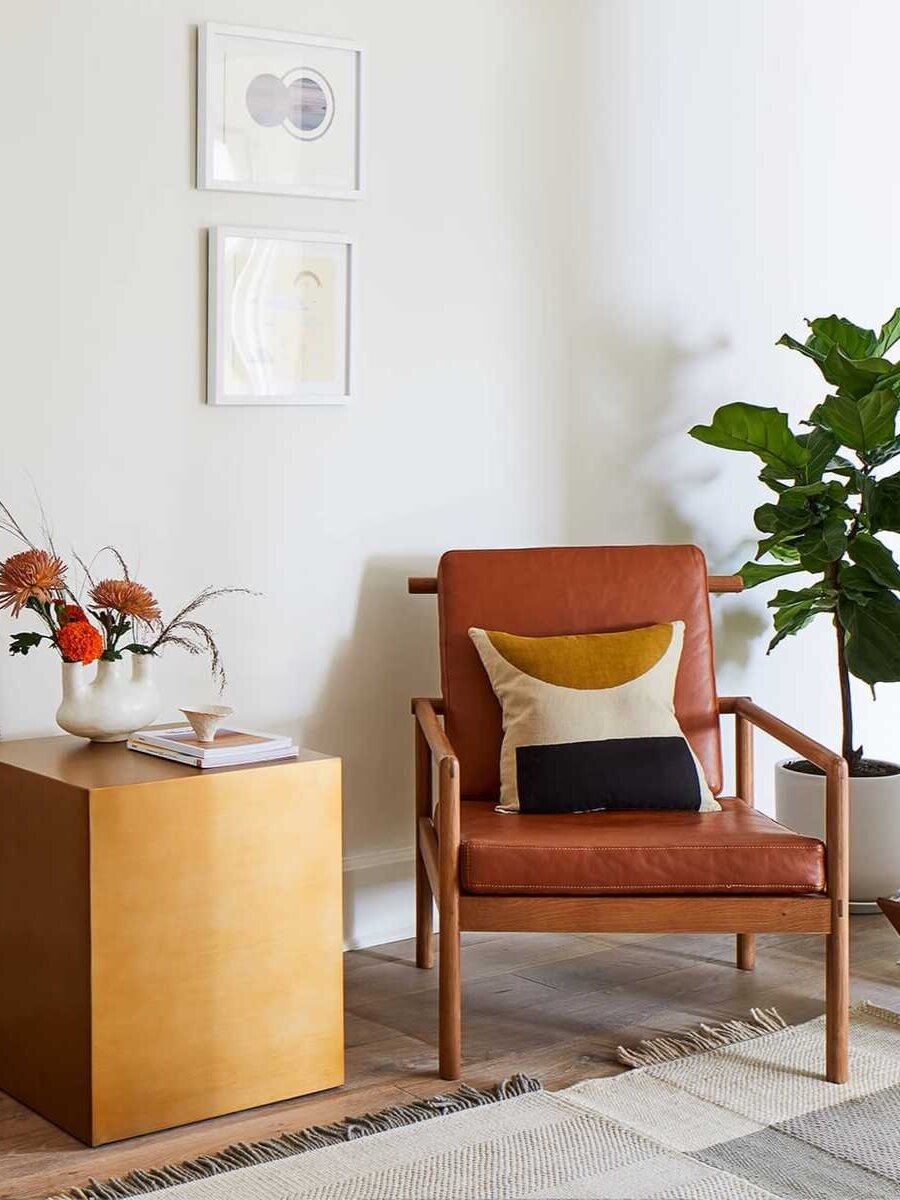
New York. Specializes in gender, sexual and racial issues

Online while NY space on hold.“The Wing of mental health”

You can also check out our conversation with San Francisco-based Two Chairs and our feature on Therapy for Black Girls.
As we’re all about the face-to-face, we’ve favored the in-person piece here, but there’s also a handful of digital therapy resources to explore like Talk Space, The Circle Line, Wysa and Mindler (now in the UK).
We’d love to hear your experiences of finding therapy online or off. Have you tried the new digital platforms or found someone to work with in analog spaces?. Let us know your experiences, what you’ve loved, what you haven’t, how things have improved, and what’s still missing. And if there are other resources that you’ve been turning to, tell us about those too, so we can include them in our guide for life and share with others who need them too.
The person who can help you is out there. Hopefully, these resources will help you find them.

The Civic Kitchen
A civic-minded kitchen classroom in San Francisco to get you cooking whether it scares or excites you.
What is it: A purpose-built kitchen classroom in the city of San Francisco designed for home cooks to master culinary skills. The Civic Kitchen will get you cooking.
What you need to know: Co-founders Chris Bonomo and Jen Nurse opened The Civic Kitchen in 2018 with a belief that anyone can learn to cook. Their Mission Street space has a program of accessible cooking classes taught by knowledgeable local chefs in a supportive and welcoming environment. The roster of classes, which in person never go about 14 attendees, cover the basics like knife skills and baking, through to more in-depth studies like a recent evening on sweet and savory souffles. The schedule goes beyond just making food though, to also talking about it (with Salt + Spine Cookbook Club), documenting it (with lessons on food styling and photography), and writing about it (a current offering is how to pitch a Cookbook of your own).
Why you’ll love it: This is not your typical classroom. This light-filled space feels like a home cook’s playground, from its brightly colored 20ft long floor-to-ceiling Cookbook Library through to a fully kitted out kitchen with its three ranges, double oven, and all the ingredients you could possibly need. The Civic Kitchen is all about practical hands-on learning and connecting with others as you sharpen those skills. During class, you’ll don an apron, get chopping and mixing, and make a meal to be enjoyed with your classmates on its central communal table.
What they offer online and off: Refresh those cooking skills during the pandemic with online workshops and wine tastings. Rather than the one-way of YouTube, learning from a kind person who is there with you in your own kitchen (albeit via a screen), can help instill more confidence and even joy in your cooking.
Why we think it matters: Vulnerability binds, but food connects us. With a motto of “Kindness in the kitchen”, The Civic Kitchen makes preparing a meal as much about bringing us together as about assembling ingredients. Co-founder Nurse encourages civility in all encounters with cooking, from learning about other cultures — along with the respect that must go with that — and finding a common language in preparing a shared meal. By taking the fear factor out of food, and giving us a much-needed alternative to food delivery apps, The Civic Kitchen is also creating a path back to nourishing ourselves and supporting a better ecosystem around food and how and where we get our daily meals.
In their own words: “We have built The Civic Kitchen from the ground up to be the perfect place for home cooks to learn.”
What next: Learn one meal that you can prepare for yourself, and one meal you can share with others. Something that you love to eat, and something you think others will. Two meals. That’s a start. Then keep going. A brunch for Sunday mornings. A lunch to break up WFH days. A grabbable snack as you race out the door. Something to make with kids, or grandparents. A classic that you’d choose in a restaurant. A dish to pack in a picnic basket. We much prefer this approach to selecting starters, mains, and desserts that you find in typical cookbooks. Give life boundaries around the food you make to make it relevant, accessible, and meaningful again.
To find out more: Website / Instagram / Facebook / Twitter
Additionally, try: 18 Reasons / Bite Unite

Black Bird Bookstore
San Francisco’s Black Bird Books sits on the edge of the world while being resolutely of its place.
“a community bookstore for all”
What is it: Black Bird Bookstore is exactly how an independent bookstore located a couple of blocks from the Pacific Ocean should look. It brings the outdoors very much in. Hinting at Cali Cabin chic, Black Bird is wooded out (in reclaimed oak and cypress) coziness — perfect for a neighborhood that in San Francisco is known for its non-warming fog blanket. There’s even an indoor treehouse reading nook complete with a twisting oak branch that our kids love to spend time in.
Why you’ll love it: Opened by Kathryn Grantham, formerly the owner of feminist bookstore Bluestockings in New York, this is a place driven by curiosity: all titles face out, are regularly changed, and tightly curated from an inclusive selection of writers. It’s all about discovery with thought out selections made from the 1000 titles across just 900 square feet of space.
What they offer (online and off): Even during shifting times, this sense of discovery is still there, only its also happening online: chose from a monthly box of curated picks such as the Bay Area Box, Poetry Box, or Cooking Box. You can also currently book a 30-minute appointment to shop alone (from 6 pm to 8 pm), which sounds like a book lover's fantasy date.
Why we think it's special: Opening an independent bookstore feels counter to all the claims that both storefronts and books don't work anymore. But Black Bird makes the case that as our lives are pushed to be experienced more and more online, physical spaces for books and people matter. It’s a bookstore driven by both curiosity and community. Leading book lovers through its titles while supporting those who share this community.
Black Bird is so much an expression of its neighborhood (there’s a high-end garden shed by local artist Jesse Schlesinger and the shelving and counter space have been designed by Luke Bartels). Even the name was inspired by one of Kathryn’s kids who noted the awe-inspiring presence of Black Birds in the neighborhood. Books connect us to worlds on the page; the bookstores that contain them to the wider world outside their doors.
In their own words: We’re borrowing the words from Ocean Vuong that Kathryn has quoted: “The way I see it, whenever someone walks into a bookstore, they are walking into the future of their cultural and intellectual life… Amazon, with its algorithms, can only show you where you’ve been, can only give you a calcified mirror of your past. In a bookstore, you get a human being who is also a mapmaker of possibility. As booksellers, you are practicing, to my mind, one of our species’ oldest arts, the art of fostering, sharing and shepherding our most vital stories into the future.”
Something to do: Be driven by curiosity about where you live. Now is the moment to spend time in one place – the place where you are. Books can take you there in ways that go beyond your local commute, your working days, the school drop off. We recently sought out guidebooks to our county, and though it's hard for us to visit the places we’re learning about, we’re layering on history that we probably wouldn’t have connected with if we didn’t need to live hyper-locally. Our block is holding our world: our social connections, our daily outings, new discoveries and narratives that haven’t involved us. What’s really around you? Who has shaped your community and how is it evolving. Where are you really? Even when doors close, lives are still open.
While there: Black Bird Bookstore sits in the middle of our favorite SF block: Stop by Trouble next door for toast and coffee, the General Store, Case for Making, and Outerlands. Then head to the sand dunes for fast runs down to the ocean.

Shop Small Special | Rare Device
“Beautiful Things to Hold in Your Hands”: a San Francisco store bringing year-round joy.
What is it: A shop of bold and beautiful things in San Francisco’s Nopa neighborhood.
Why you’ll love it: We always find something when we visit Rare Device: the exhibitions of local artists often lure us here, but we stay to browse the selection of stationery, prints, and tabletop objects, that bring something playful to the creative process.
What you need to know: The original Rare Device was founded by cultural entrepreneur and designer Rena Tom (of the now-defunct but once beloved Makeshift Society) in New York, before she focused on the SF (and now only) store with creative inspiration to many Lisa Congdon. In 2011 they sold the store to Giselle Gyalzen, who moved Rare Device to a bustling strip of Divisadero and kept the creative integrity going by bringing in useful, well-made, and modern things made by artists mostly near but some far.
How to bring this into your life: If the storefront is open, check out the monthly rotating exhibitions in the backroom – such as one of our favorites The Friendship Project by Erin Fong, or the exhibition of work from Creativity Explored artists. Rare Device has an open door to the community with kid storytimes, workshops, book signings, and creative pop-ups. During closed pandemic times, the store is still open for pickups and deliveries, and online projects like color meditation (follow along on Insta).
Why we’re happy it exists in the world: What we surround ourselves with matters. We think of that thing over there as just an object but it’s one that can make us feel a certain way, that might make an emotional connection to a time or place, or that might even support a local creative who is trying to make a living. Rare Device gives a platform for makers worldwide (though often they are SF based) who have something to say or something to offer the world. Like…
In our Holiday Gift Guide: … Gemma Correll’s Pep Talk, Taylor Reid’s Mixed Emotions watercolor, and Field Notes.
In their own words: “The storefront is filled with lovely, approachable designed items for your home, yourself, and your family. Every object in the store has its own story and has been chosen because it is either handmade, well-designed, useful, beautiful, or all of the above. The aesthetic is modern and whimsical while remaining warm and inviting. Influences range from the natural world to the interaction between humans and things, be it their clothes or what they choose to use in their homes.”
Something to inspire: Read the Coleridge poem Kubla Khan that inspired this pleasure dome of Rare Device… Then seek out what gives you pleasure – could be that the California bear or a candle that smells of Laurel Canyon or a pin that just says Stay Positive (though in a non-toxic way). Tiny gestures of loving for when we need more joy in our lives (like right now).

Headlands Center for the Arts
A seemingly hidden away creative escape, ready to be discovered again and again.
Sometimes self-care isn’t a practice it’s a place. We’ve felt this about the Headlands Center for the Arts for a while.
Located in what seems like the middle of nowhere, the Headlands Center is really just 30 minutes from the city of San Francisco across the Golden Gate Bridge. The tiny one-way tunnel to get there (or you can take the winding, treacherous feeling high-road), and the oftentimes bleak former military surroundings of Fort Barry, throws you off. Also, there’s sandy Rodeo beach and the vast Pacific Ocean right there when you step out of its doors. It’s not the place that you expect to find a cluster of artist-renovated buildings hosting art residencies, exhibitions and workshops. But the Headlands Center attracts an international roster of creatives seeking the time and space to make work in its renowned residency program, as well as a committed local art crowd who make the pilgrimage when it does open its doors to the public.

Time your visit carefully as the Headlands Center is something different at different times of the day/week/year. This is no static exhibition venue — rather it’s a place that shifts with its participating artists, writers, and other creatives and programmatic themes. You’ll need to pay some attention to the calendar for the things you can see and do here. On the Open Days — a handful a year — the place comes alive with a buzz of activity and many people wandering its rooms. The Project Space now offers sometimes Sunday-to-Thursday shows to visit and there’s the occasional intervention on-site, like Wall Space in the outdoor Commons area. Want a more intimate experience? Attend a dinner in the Mess Hall by Headlands chefs and invited guests or a walk, conversation, talk, performance or another public event. Whenever you visit try to grab a coffee in the Ann Hamilton designed Mess Hall.
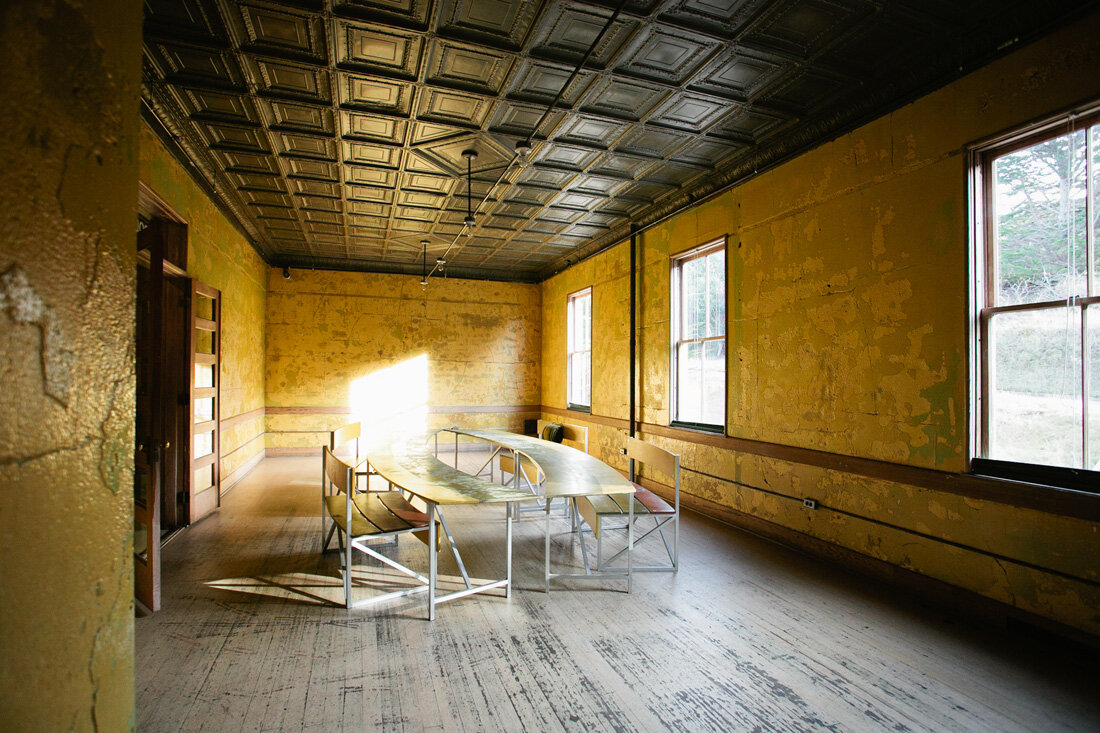

We all have our favorite places to go to when we want to run away, maybe also when we want to run towards something. They are the ones we sink into when you get there, even if it means we don’t turn off our minds but open them instead. The Headlands Center has become that place for us. One of seeming retreat but also a restorative connection to people, to what they create and the ideas they get to explore whilst here.

Two Chairs | A Conversation about Thoughtful Therapy with Alex Maceda
Two Chairs is doing therapy differently. We spoke to its Director of Brand Strategy about why the model of delivery has been so broken but also why therapy itself isn’t.
I’ve sat in uncomfortable chairs in rooms with badly painted walls. I’ve awkwardly handed over a cheque or counted out cash at the end of a session. I’ve missed weeks of help because scheduling hadn’t worked out with the shape of my week. I’ve stumbled down stairs afterwards crying and fled to my car for solace. I’ve found people, then dropped them when it didn’t work, but made sure that I felt like I was the cause of the ending and not them. All of the above, all of it is wrong, but all of it is what can happen in our experience of therapy.
We are huge advocates of the practice of therapy and have been in and out of it (between us) for most of our adult lives. Sitting with a therapist has saved us again and again. We’re happy to spread the cause that #therapyiscool, and we’re in the business of making all our mental health tools, including talk therapy, more present in our lives.
But as we do this, we also need to acknowledge that the model of how therapy is given—not the content or the relationship parts—but all those things around it such as booking, payment, design, and fit, make it really, really hard to have a good experience at best and to get the help we need at worst. We pay more attention to how we go for a haircut, then how we go for therapy, and that makes no sense at all.
That’s why we were relieved to discover Two Chairs, a San Francisco start-up (hold the judgement) that’s making therapy all about you in all the ways that it hasn’t been so far and really needed to be. That means when you step into one of their seven therapy clinics across the Bay Area, you enter a setting that actually has your back as a person in the world.
Here the design of the spaces matters, not just in terms of beautiful furnishings with yellow (brand color) flourishes amongst the muted tones, or the LaCroix stocked in the fridge, and carefully chosen Phaidon art books on the coffee tables, but in psychologically impactful ways too. How the chairs are arranged affects how comfortable you might feel as a therapy go-er depending on your life situation. The art on the walls can subtly shift your mood. The presence of plants actually makes for a calmer environment.
Yes, therapy here is given the modern makeover it so, so badly needed, but it’s also been given one that takes into account what science is telling us about the environments and processes we need to best function as people. This is all Two Chairs Therapy’s Alex (Amac) Maceda’s domain. As the Director of Brand Strategy, Amac is responsible in her remit for interior design and client experience, working through all these details with not just operations and designers, but also clinicians and clients, who are folded into the process of what goes on before and after, as well as during a therapy session.
We had the opportunity to talk to Amac about why the model of delivery has been so broken but also why therapy in itself isn’t.


Claire: Let’s start with what Two Chairs is changing about the experience of therapy from the client’s side. Although we’re huge believers in therapy, we know that it’s really hard to just get the help that’s needed. How are you responding to this?
Amac: At Two Chairs, it’s all about access. We think of access as all the barriers that the system puts in front of you when you want to start care. The most classic example is that you are probably in crisis and you know that you want to go to therapy. You go online and Google. You maybe find 10 names. All of them are phone numbers only. Three of them call you back. Two of them don’t have availability. One of them can see you 30 minutes away at 2pm. Even when you’re opted-in, the system makes it so hard for you to get care. It’s such a disheartening experience, especially when you are engaging with it for the first time.
Claire: It’s hard to say,“I need to go to therapy,”and it’s even harder when you are trying to do this, and it’s still not coming together.
Amac: For a lot of people by the time they are asking for help, they have probably gone through quite a bit. Also, a lot of people are afraid to ask for help that first time. Whether they don’t know where to start or fear the stigma, there are so many things that you find yourself up against. Imagine that after taking so long to get to that realization, there’s still 20 barriers that they didn’t even know existed. When Two Chairs first started, that was the problem that we were trying to solve: How can we make engaging in high-quality care as easy as possible for those seeking it.
Claire: Can you talk me through how you are doing that in practice?
Amac: Some of the things we are doing are so simple, and take inspiration from different consumer brands, but are not typical in a health care setting. Things like online scheduling—it takes less than five minutes to schedule an appointment—and convenient locations—all of our clinics are located near major transit hubs. We want clients to be able to get in and out. We want clients to get on with their day and have the experience of therapy be as seamless as possible in daily routines.
Claire: You also have a unique offering in how the therapy journey starts way before clients are physically in a room with someone. Can you tell me about that intake piece?
Amac: We have a really dedicated care coordination team, and see them as a helping hand before clients even start care. They help clients think through questions like, “I don’t know if therapy is right for me, but someone recommended it,” to “how much can I expect to be covered with my insurance plan?”
What I think is really unique with Two Chairs compared to private practice or other group practices is our emphasis on matching. It’s clinically proven that the strength of the alliance between the therapist and the client is the biggest predictor of success, rather than the therapeutic approach taken by the therapist. However, the current system is not set up to match well.
Choosing a therapist can be really intimidating for anyone, and at Two Chairs, we try to make that as easy as possible. What that looks like from a client perspective is: you book an appointment online, receive a series of emails about what to expect in your appointment and then we send you a client profile to fill out.
The profile is a detailed intake form asking what some of your goals are for therapy, some demographic information, and questions that try to get at what modality might work for you, including,“How structured of a thinker are you?” from very structured to not structured, and,“How much do you want to be challenged in therapy?” from pushing back to I want a therapist who listens more. We’re not asking you to choose a modality, but rather we’re getting at some of the qualities that might move you towards one type of care or another.


Claire: That’s an interesting technology-driven part of your approach that hasn’t had a place previously in therapy. How important is the personalized data-driven piece to the Two Chairs model?
Amac: The self-reported data from the client goes into a matching algorithm that has been built in-house by our engineering team, and is founded on the latest data science. But our approach is not founded on data only. That information forms a hypothesis that a consult clinician (a position unique to Two Chairs) uses for a first consult. They prep with all the intake data, but they use their clinical expertise in that first in-person appointment to move the data around and to form a recommendation based on this human interaction. It is that person who then matches you with an ongoing clinician.
We match on so many different factors, from demographics, lived experience, and any specific preferences, like, “I can only come in at 8am in Oakland and I want to see a female who is middle aged.” We take this all into account when matching.
Claire: So, they take what they understand as you as this person on paper and you as this person in space, then put you in contact with the person who would be your therapist? If someone then goes to that therapist, and that’s not a good match, do you then rematch them? That’s one of those broken parts of classic therapy, that bad matches do happen and then someone drops out of therapy because of this even though they still need help.
Amac: Yes, that is where the consult clinician is so powerful—they become that point of contact throughout the process if anything is wrong. But we do have an over 90% success rate with the first match. Clients tend to be in therapy for quite a long time, though our goal is not to keep you in therapy forever. We’re now just over two years old, and at this stage, we’re seeing clients come back for new courses of care, and to work on new issues in more proactive ways versus more reactive ways.
Claire: I’m interested in this narrative of therapy positioned within life maintenance, like something you fit in on a regular basis. I’ve noticed that in the language of Two Chairs, that you are positioning therapy as a self-care tool rather than just as crisis management.
Amac: We have a good mix of clients who are brand new to therapy, and also those who are returning to therapy. On the new to therapy side, it’s been so powerful to see clients coming in for the first time who are telling us that they’ve been looking for a therapist, but that it had felt too intimidating, and that Two Chairs made it so easy. And on the flip side, we’ve had clients who have been in therapy for years who are coming more proactively, and treating therapy as a tool that is part of their life.
Claire: Do you approach those two needs differently in the intake process given that therapists have their own specialisms, such as trauma or situational issues, or work more generally, in a style that can be more holistic and generalized?
Amac: Yes, there’s all this self-reported data on the client side but I think what people don’t think about as much with Two Chairs is that we also have all this self-reported data on the clinician side too. Our matching tool includes their clinical expertise in session and the data we have about the clinicians about how they self-report their stylist preferences, their studies and research backgrounds.
Claire: How do you deal with the inclusivity piece? Therapy has been charged with being very narrow in its focus.
Amac: There’s a few different aspects to inclusivity, and certainly one of the hardest is financial. We’re still an Out-of-Network provider and we charge $180 for a session. That’s under market in San Francisco. But we aspire to be In-Network which we know will help a lot in terms of that financial piece. We know that the bigger we get the more power we have to be in network and then we can open access to more people.
On the other side, one of the narratives around therapy is that traditionally minority communities are less served within therapy and that gets back to our matching system. A big part of what we hear from clients is that we have a very diverse population of therapists across demographic and lived experience, qualities like gender, race, and sexual orientation. We consciously build for that. The feeling that someone understands your lived experience is very important, so we hire against that.


Claire: What happens after a therapy session? I always had this issue with therapy where I would sit in this non-descript room, see my therapist, and then come out with whatever raw feeling that I had, but then I have to go on the tube and get myself home. Can people hang out? Can they linger in the waiting room or sit with a cup of tea before heading back out into their non-therapy worlds?
Amac: I personally feel so passionately about this. Imagine that you cried during therapy and then you have to go to the bathroom to check your face and then sit in your car doing breathing exercises to collect yourself before going back to work. It doesn’t happen always, but for many of us, myself included, we’ve been there once or twice. For much of therapy, there’s no after. We think a lot about how you enter, but no one ever thinks about how you leave.
That’s something we’re addressing in all of our newest clinics and bringing that concept into the space. We’re introducing decompression areas to the extent that we can where you have separate exits and semi-private areas where you can sit and journal. We have essential oils and rocking chairs, so you can take a few moments if you need to. Each of our therapy rooms have a small mirror right before you exit so you can check how you look. These are all the little thoughtful details that we know from experience or from our clients speak to where they are at in that moment and we try to pull that into the design of the space.
Claire: Two Chairs didn’t go down the route of becoming an app but has invested in bricks and mortar and that in-person piece. Why is that aspect of just being in the room with someone so important. I know Two Chairs Founder Alex Katz has talked about Sherry Turkle’s Reclaiming Conversation: The Power of Talk in a Digital Age as a foundational text, and I wonder how this folds into your approach?
Amac: We know it’s clinically proven that in person is better. You lose so much when you are not in the room: like body language, tone, how a person is presenting, and how they seem to feel.
We also know that we are in a generation where we keep talking about how much digital is taking over our lives, and how much interaction is going through a screen. To be able to interact in person, especially around topics that are so deeply personal and that a lot of clients are talking about for the first time, allows us to bring a lot more empathy and understanding to the experience.
Claire: You have all the science backing up therapy, but you also have the science backing up the in-person piece. We’re at this moment that those two pieces are coming more and more together.
Amac: Yes, there’s so much care and attention paid understandably to the clinical setting. The hard part goes on in the therapy room. But there’s so much across the whole experience that matters—being able to be in person, to walk into a space and to feel a sense of calm, to have a cup of tea and to sit there for a moment, to take an hour out of your day in a beautifully designed setting that addresses our needs as a person.
Claire: Do you find that therapy is as stigmatized as when you started even a couple of year ago?
Amac: I certainly feel the stigma has decreased—but we have a long way to go. I find myself in a lot more open conversations about it, but know it’s a self-selecting group of people around me saying they go to therapy and that they love it. Even then, they are sharing in small conversations but not necessarily projecting it in public.
As someone who has worked in brand and marketing at different companies, I find it to be a very unique and specific reflection of where we’re at culturally with mental health. I used to work in fashion, and we had tons of user generated content on social media—people were posting pictures and tagging our brand, being advocates for our sustainability efforts, sharing our mission with friends—they wanted to be publicly associated with us. That’s not quite the same at Two Chairs—yet. We had our first tag from a client testimonial for Two Chairs only a couple of months ago, which was so powerful and exciting. Even two years ago, it would be hard to imagine someone posting about their experience with therapy on Instagram and thanking their mental health provider. It’s happening, but it’s still rare. Which makes sense—how many people do you know are going to therapy and taking a selfie and saying, “I had a great therapy session?”
There’s still a little bit of a ‘coming out’ that people do when they start to publicly associate themselves with mental health, mental illness, and therapy. Even people who are very mental health positive are not necessarily saying I’m going to therapy every week.
I was there six years ago, when I told a friend that I was in therapy and I remember feeling so scared. When they just said, “that’s great”, this relief washed over me. But even that makes such a big difference. It can be so powerful.
Everyone is on their own journey with telling their personal mental health story, but we hope that the work we’re doing at Two Chairs is making therapy a little more approachable, and creating more space so that you can talk to people about your experience with therapy when you’re ready. We want to humanize therapy more. In the past couple years there have been more and more mental health stories of famous people, often with this narrative of a grand fall from grace and then rise, which is inspiring, but not representative of most people’s experience. We’ve introduced an initiative called #TalkTherapy on our blog where we put more stories out there to show there’s a breadth of experience, that it’s positive or that it’s negative, sometimes life changing and sometimes it’s not, but we try to normalize the breadth of what happens to people in therapy.
Claire: How has Two Chairs been received on both sides, client and therapist, since launching?
Amac: We’ve seen over 2000 clients in the San Francisco Bay Area over the past two years. Last month we opened our fourth clinic in two years within San Francisco. We are one of the biggest group providers in the Bay Area at this point.
We are creating demand for therapy—we know this because a large percentage of our clients are coming to therapy for the first time, but there’s still a lot of latent demand for therapy. We’re the first consumer brand in a space that has existed for a long time and what we’re offering is a high-quality version of a something that is already there. We’re not trying to create something new that people don’t understand; we’re a better-quality version of what’s out there and we’re adding new aspects to it that make it more compelling for clients. In San Francisco there’s an emphasis on wellbeing, wellness, and self-improvement, and it’s really exciting to be in the generation that’s opening the conversation around mental health.
To learn more about Two Chairs visit their Website, Instagram, and Facebook

826 Valencia
826 Valencia is keeping space for our kids’ imaginations in our cities, and crafting magical spaces for our communities and for ourselves as it does so.
“826 Valencia is a non-profit organization dedicated to supporting students ages 6 to 18 with their creative and expository writing skills, and to helping teachers inspire their students to write.”
Yes, you might think you have just found yourself in a quirky pirate store or an octopus’ playground or a secret spy society, but what you’ve done is landed right at the heart of a non-profit organization that exists to support the writing skills of under-resourced kids. Maybe purpose is like medicine and you need some sugar to help it go down (not sure who does that other than Mary Poppins and her charges but it’s an association that’s stuck). For 826 Valencia and its network of storefront chapters across the US, the sugar takes the form of magic and the imagination: each of their much-needed writing centers are fronted by spaces of whimsy and curiosity.
From its start in San Francisco’s Mission District in 2002, a delightful sense of wonder has been built into how the organization has crafted itself: the first flagship that opened at 826 Valencia Street by educator Ninive Calegari and author Dave Eggers took the form of a pirate store mostly as a workaround for a local zoning issue that demanded some retail component. So of course, pirates need stores too. That model of locating the idiosyncratic in the everyday has inspired further storefront locations across the US; there’s the secret agent supply store (Chicago), a magic shop (Washington), a time travel mart (LA), a robot supply and repair shop (Michigan), a Haunting supply store (New Orleans), a Super Hero Supply Store (NYC), and maybe our favorite the Bigfoot Research Institute (Boston).
The original SF location has since been joined by two more in the city that capture this same spirit of make-believe: the wonderful Enchanted Forest and Learning Center in Mission Bay and the King Carl Emporium in the Tenderloin. In whatever shape-shifting form it takes across the US, 826 Valencia cultivates places of the imaginary and places of very real need, sitting quite naturally next to each other

Photo Interstice Architects
826 Valencia is one of the few places holding space for the imagination on our city streets and in our children’s lives. Think about its latest iteration in the Tenderloin in which a liqueur store associated with drug trafficking and anti-social behavior was converted into a playful apothecary of sorts and a light-filled writing space (also note the brightly colored, game-changing ocean-themed painted exterior). A space that might feel simply enchanting is actually a crucial vehicle for revitalizing a street corner, a community, and a child’s life.
And it also might do this. 826 Valencia might put a spell on your own. Because you get to come in, not just to purchase unicorn horn’s polish, an eye patch or Lumber Jack Repellant, but to participate, to be one of the grown-ups bringing writing to kids who need it. This is where the magic of a different kind starts to happen. Because the core belief running through all these spaces is that kids benefit greatly in confidence, pride and ability from dedicated, focused time on their writing skills—that’s in obvious ways like crafting a personal essay and helping with homework but in other more exploratory ones like working out how to express themselves in poetry and the written word.
826 Valencia is run on volunteers like you who get to tutor in their writing programs or to donate services such as illustration, design, photography and audio editing in order to create the books, magazines, and newspapers that take the students' words beyond their schools and these storefronts.
With 826 Valencia, we can have magic on our streets again and in our kids’ imaginations. We even get to have it back in our own very grown-up lives.


The Museum of Ice Cream
The Museum of Ice Cream might seem like it’s about sugary confections, and equally as sweet images, but approach it as a place of connection and then it becomes something else entirely different.
Ok, you probably have your assumptions about the Museum of Ice Cream that has been popping up in locations in San Francisco (now permanent), New York (very new and permanent), Miami, and Los Angeles. We had ours. We imagined it as an Instagram mecca, a hyperreal pink (that’s Pantone 1905C) paradise of shine and shimmer. Froth and frolics. And it was that: when we visited the SF version, we took photos with everyone else against backdrops of floating cherries and giant popsicles, made impermanent messages with pink magnets, crawled into mirrored rooms and climbed pink walls, and swam deep in the famous pit of colors. We hadn’t gone as far as some; we hadn’t coordinated our outfits and we hadn’t posed again and again for the perfect shot. But we had image-laden fun: we consumed a ton of sugar, visual and edible. We laughed and interacted and just spent a silly afternoon with our kids actually sharing in their joy and not watching from the sidelines as is sometimes the condition of modern parenting.
Though we did all this and came away feeling great (maybe slightly sick also), we have since realized we kind of missed the point. And maybe we weren’t, or aren’t, the only ones. See the Museum of Ice Cream is not really about ice cream (though there’s now a Target branded line that includes such things as Impeach-Mint so this argument might get a bit blurry). It’s also not about taking out your phone to capture the perfect image. It’s also not about screeching through oblivious of those around you as you try to craft the perfect time. What we have since learned is that that it is fundamentally about connection. That’s right, this experience, this museum, now handily rebranded by its founders as an ‘experium’, has been engineered to bring people together, to be a kind of social glue, albeit of the creamy vanilla kind.
It was this episode of Yale associated podcast The Happiness Lab by Dr. Laurie Santos that started to shift our perspective, and as we dug deeper into the motivation of co-founders Maryellis Bunn and Manish Voramotivation, we found more and more that spoke to The Museum of Ice Cream as a counterpoint to our current epidemic of disconnection and the loss of spaces in our worlds that give us the opportunities to just be people together.


Here’s the irony: The Museum of Ice Cream was intended to be so spectacular that we wouldn’t be driven into the world of image-making on our phones, but rather we would be driven away from them. We’d want to immerse ourselves more in this fantasy world, for a short time tangibly all around us, because it was more real, more compelling, than those pixels. We would want to share that experience with those following a similar journey through the joyful labyrinthine spaces, as that would heighten our own experience for us. We’d want to escape our isolation and run into a place of collective joy.
The Museum of Ice Cream has since pivoted and like all new concepts iterated on its theme. Yes, it’s a huge phenomenon that you may have visited, probably most likely have an opinion on, or are in the process of imitating (see the idiosyncratic experiential museums that it has since spawned), but it’s also still figuring itself out. Like Solo Nights (where you get in free if you turn up alone) and the phone free sessions; the Museum of Ice Cream concept is truly working when people connect within this fantasy palace, when they notice what’s actually around them and each other, and when the conversations started within the shininess go outside its walls, and sometimes that needs a phone-free helping hand.
The Museum of Ice Cream is a pop-up experience that’s meant to last more than the sugar high even as it gives you that high. It’s a careful line to tread, but we’re betting that as long as it's as much about the people it buoys up as the abundance of ice cream (or whatever the framework may become) that is consumed then this will stay a place of comfort that continues to soothe our disconnected lives.


Bite Unite | A cook and share community
Bite Unite is one of the co-working cooking spaces popping up in the new world of shared kitchens.
“Modern facilities, a fully equipped commercial kitchen, business support, and a neighborhood cafe for foodie folk.”
We’re all now fully on board with the idea of co-working, of sharing work space for our laptop lives, but there’s a new idea in town, for co-working kitchens, shared cooking spaces for entrepreneurs who are happier holding a whisk and making creations of the edible kind.
The concept behind Bite Unite was first launched by amateur chef Patta Arkaresvimunin in Hong Kong in 2014, and four years later she brought it to San Francisco. Her co-working kitchens in both cities respond to a really pressing need: the huge cost barrier to creating commercial food enterprises. The set-up of just the cooking area can be prohibitive and rents, particularly in these cities, are in the make-up-numbers realm.
Bite Unite offers food entrepreneurs the chance to give it a low-risk-go by providing all the things: a licensed, insured and fully-equipped kitchen, as well as crucial software, business and community support to go along with this.
Kitchen Memberships—which work exactly like co-working ones with full-time, part-time and day pass access (there are even food storage options)—also offer a readymade community in which to test out products, dishes and techniques.


At the SF location, there’s a pick-up service, with chefs making to order options like lunch and cookie sets and anti-inflammatory veg soup, and they get to host community dinners and pop-up events in the space—like Hawaiian food, Borek rolls, and sushi making. Current chef members we have our eye on include Prep School, a wellness cooking club and Kristie Chow of Sip Therapy
But Bite Unite extends its work beyond that of the incubator kitchen: it offers more on the public facing side too, like a pop-up series of eating focused events such as that recently offered by A Hard Pill to Swallow, a roaming dinner series that supports people of color in the culinary space. And Bite Unite functions quite simply as a community café: you can stop by the light filled space for the tastiest of mini-donuts and matcha nitro.
There’s a ton going on mostly behind the scenes but some of it is visible through light-filled windows and while seated at the central farm-table; with Bite Unite you get to choose how far you go on this food journey, all the way from creation to consumption.
To find out more: Website www.biteunite.com / Facebook @biteunite / Instagram @biteunite

18 Reasons
18 Reasons is no ordinary cookery school. Even that vague bucket of a place holder doesn’t entirely encompass what this storefront is.
“18 REASONS - EMPOWERING OUR COMMUNITY WITH THE CONFIDENCE AND CREATIVITY TO BUY, COOK, AND EAT GOOD FOOD EVERY DAY.”
The Community Cooking School 18 Reasons has been a staple of San Francisco’s foodie Mission district for over a decade. Founded by Sam Mogannam as a non-profit extension of his popular family-run grocery store Bi-Rite Market to further his interests in food and community, 18 Reasons is now part of an esteemed community of businesses that includes one of the best ice-cream shops in the city and a 3-acre Sonoma farm.
18 Reasons is no ordinary cookery school though. Even that vague bucket of a place holder doesn’t entirely encompass what this storefront is. Yes, there’s the classroom at the 18th Street space that has a family-style dinner table set-up and a fully equipped teaching kitchen. It offers hands-on lessons on everything from eating more meatless and fish butchery, to food as medicine and mini-culinary boot camps on whatever it is you long to cook. It was here that I learnt how to really wash and prep leeks as well as how to eat mindfully. Both of equal value.
If you want to go on a deeper dive into food culture you can attend their 6-month Farm School at Bi-Rite’s wine country outpost, which gets you into the nitty gritty of the food system including planting and harvesting and is taught by the company’s own buyers and farmers. For a more cerebral though equally as fun take (past programs have included the seminal question: ‘what if Wes Anderson made s’mores’), in October, there’s the Annual Food + Farm Food Fest, that has been running since 2013 and this year takes place at the Roxie Theater.
What most excites us though about 18 Reasons is how it situates food within community, at every practical level. There’s the cookbook lending library – an inspired idea as we cycle through multiple volumes each year and sheepishly hand them back splattered and floured to our local, maybe less understanding, civic library. Communal dinners are convened on the last Wednesday of every month, on open invitation to gather with friends and strangers alike over a dinner cooked by a guest chef.
The jewel of their community crown though is the Cooking Matters program, which brings issues of food equity into the purview of what we consume, how we shop, and what we get to make for ourselves and our families. It’s a six-week series made available to low-income communities across the Bay Area on how to buy, cook and eat good food. Reaching 3,500 people each year and located within school programs, community centers, clinics, shelters, housing sites, and health centers, this free course covers nutrition as well as cooking skills. Anyone can volunteer to assist with this program – you just need an interest in food to apply. So, if you are looking for more meaning in your life, this might be the way to go.
What we eat matters. Food matters. To our bodies, to our minds. To the people around us – our neighbors, our communities. To those who grow, harvest it and distribute it. To the environment with which we’re in a Faustian pact to produce it. On every level and in every way, though we often take each of these aspects for granted, food matters. 18 Reasons is the perfect corrective to our narrow way of approaching food; it tells all the stories that there are around it, many in ways that we’ve yet to hear but so badly need to.
To find out more: Website www.18reasons.org / Twitter @18reasons / Instagram @18reasons / Facebook @18reasons
NB: If you are not local, take a look at Feed Your People: Big-Hearted Big Batch Gatherings and the Food We Gather Around, co-authored by the people at 18 Reasons.
The Interval
As humans we’re obsessed by time, with running through our days while also being in the moment. We’re a little confused about it. To get a more balanced, holistic view head to San Francisco’s The Interval.
“Fostering long-term responsibility.”
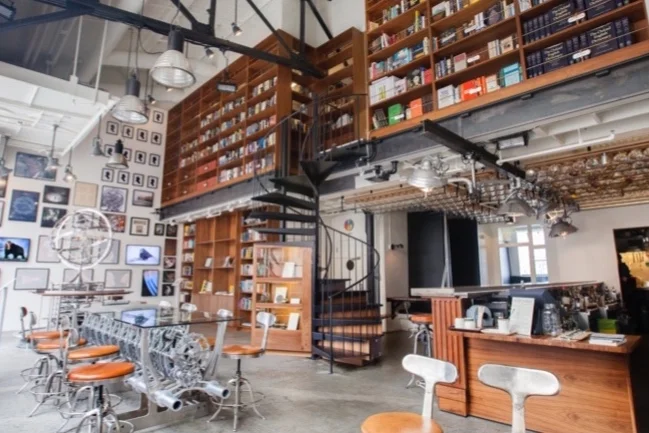
As humans we’re obsessed by time, with running through our days while also being in the moment. We’re a little confused about it. To get a more balanced, holistic view head to San Francisco’s The Interval, a unique blend of a café, salon, museum, and the home of The Long Now Foundation. Here time is very much slowed down and experienced for what it really is: infinite. Well that’s the hope anyway: Those books you’ll find on the floor-to-ceiling height shelves contain the wisdom to rebuild civilization.
The Interval is playing the longest of long games. Mechanical prototypes for a 10,000 year clock (yep, that blows our mind too) sit next to more contemporary, transient art exhibitions. Even the menu of bespoke drinks and food is time-inspired (see the perfectly named cocktail I’ve Grown to Love Life Too Much). But this is no gimmicky, temporal theme park. Rather this is a location that is thoughtfully (and maybe essentially) holding space for the idea that the long view matters.
This is made manifest most clearly in the program of conversations and lectures with scientists, technologists, creatives and entrepreneurs across subjects that take in climate, astronomy, psychology, the arts, any discipline really that intersects with an idea of the long-term (an approach that maybe encompasses everything, or should at least if we’re wise about it). Recent talks, available to watch online, have included primatologist Elizabeth Lonsdorf talking about how evolution and human behavior can be understood through studying primates, former NASA astronaut Ed Lu speaking to the importance of mapping our solar system, and historian Caroline Winterer on the idea of “deep time”, the billions of years we humans struggle to get our heads around.
You’ll find The Interval on one of our favourite sites in San Francisco, Fort Mason Center—which itself has evolved and shifted over its lifespan from military base to its latest iteration of culture center. Nab the coveted nook room for a coffee or drink, and you’ll also get a spectacular view of the city’s prized bay and the famous bridge that marks it entrance—testaments themselves to the natural and human forces that have shaped this region’s recent history. Then feel the awe of it all, the years past and those to come, while sipping on an in-the-moment latte and pulling one of those books, like Jorge Luis Borges’ Funes the Memorious or Angela Carter’s The Bloody Chamber, from the shelves. Then just be here right now.
To find out more: Website www.theinterval.org/ Twitter @interval / Facebook @longnowinterval / Instagram @theinterval

NOIR CITY | Dark City Wanderings
It’s like a religious revival tent meeting, but for cynics. Instead of their Sunday best, they wear their vintage 1940s finest. Rather than speaking in tongues, they wax on and on about who played what character in whatever desperately underrated classic. And Communion comes in the form of a big dose of black and white on the Castro Theatre’s massive screen.
It’s like a religious revival tent meeting, but for cynics. Instead of their Sunday best, they wear their vintage 1940s finest. Rather than speaking in tongues, they wax on and on about who played what character in whatever desperately underrated classic. And Communion comes in the form of a big dose of black and white on the Castro Theatre’s massive screen. You’ll leave sated, exhausted, but you’ll be back tomorrow night for another double feature, day-job alertness be damned. If you’re a true acolyte, you’ll see all twenty-some movies over the ten days of NOIR CITY, the annual film festival of the Film Noir Foundation.
I’ve always loved film noir. My parents apparently never thought it odd that an eleven-year-old couldn’t get enough of The Maltese Falcon; was inviting her (probably confused but at least good-humored) friends over to watch Rear Window; and once VCRs became a thing was trotting home from the movie rental shop with whatever sounded dark: Double Indemnity, Out of the Past, The Third Man. My dad had a particular soft spot for Philip Marlowe and Sam Spade, and together we tried in vain to piece together the plot of The Big Sleep, which even having read the book multiple times is incredibly hard to follow (Raymond Chandler himself allegedly said the same). But it looks superb.
Eddie Muller, founder of the Film Noir Foundation and organizer of NOIR CITY since its inception, has summarized film noir thus: “The men and women of this sinister cinematic world are driven by greed, lust, jealousy, and revenge—which leads inexorably to existential torment, soul-crushing despair, and a few last gasping breaths in a rain-soaked gutter. But damned if these lost souls don’t look sensational riding the Hades Express.”
So... Did noir make me a cynic, or did something already in Young Me gravitate toward this material, finding there something that made sense of the Evil That Men Do (or, in my case, that mean junior-high-school girls do)? My experience in the music world leads me to suspect the latter—that I was born this way, and that noir gave my imaginings form. And what a form!! Colossal glamour, pithy wit, underworld allure... Who wouldn’t want to live in a world where you could be sparklingly eloquent, successfully self-employed, adept in a fistfight, and irresistible to the ladies even if on the looks scale you’re more Fred MacMurray than Kirk Douglas?
Seeing these movies at the Castro Theatre, alongside fourteen hundred fellow travelers, takes the thing to a whole new dimension. Each evening opens with live music on the fabulous Castro Wurlitzer (recently replaced with an even more elaborate pipe/digital hybrid organ), then an acutely articulate, written-note-less introduction by the Czar of Noir (the aforementioned Mr. Muller), then the dramatic opening of the curtain to start the first feature. Each year has a theme (my personal fave so far was “international noir”), and Muller and his fellow programmers do their best to balance a few better-known titles that most people still will never have seen on the big screen, lesser-known titles that extremely few will have witnessed on the big screen, and one or two that have been saved from actual oblivion, often through a restoration directly funded by last year’s festival ticket sales. This is the goal of the nonprofit that is the foundation: to save noir films on 35mm, as they were meant to be seen. Say what you will about the viability of actual film as a medium for mass exposure to “film”—Eddie’s got a counterargument ready for you.
At this point there are numerous satellite NOIR CITY fests around the country, but San Francisco is where it all started, and where Muller grew up. He still lives here, and treats the SF iteration as the mother ship that steers the rest of the fleet. I’ve read Muller’s introduction to film noir, Dark City: The Lost World of Film Noir (1998), and have for the last couple of decades made little pencil checks next to the titles I’ve personally seen. Dark City Dames: The Wicked Women of Film Noir (2001) is the clearest manifestation of Muller’s career-long vendetta to bring the femmes of noir, fatale or otherwise, from the clichéd sidelines into the spotlight. I dutifully enrolled in Muller’s “continuing studies” course at Stanford University, “The Politics, Passions, and Personnel of Film Noir,” and I even successfully muscled my way into the gang’s inner circle, helping with the ticketing for the annual SF fest.
But at the end of the day, after you’ve completed all the reading and pondered all the theorizing and copied all the fashions and cut way too much school to watch Dialing for Dollars, the point is the theater experience. This is the “why” of the foundation: to save the films, and to show the films, at venues like the Castro. There’s got to be a really compelling reason why we keep coming back to a joint that holds 1,400 seats, puts on shows that last four or five hours, and has less than ten toilets total.
I’ve got a lot of NOIR CITY memories, but a couple stand out. The first is actually from NOIR CITY XMAS, a teaser show that happens a couple of weeks before the holidays, also at the Castro, as a kind of appetizer for the main fest coming in January. It usually features a bleak Christmas movie (I know, right?!) but this year it was Holiday Affair, a mostly-comedy with the odd bleak moment. I remember laughing so hard I was crying, right along with the crowd, fully realizing that if I’d been watching the thing at home on DVD, I would have been bored, maybe even wouldn’t have finished. I described it to Eddie the next day and he said of course that was right, that’s the power of experiencing movies in the theater. You’re physically, logistically committed, which makes you give yourself over to the larger emotive sense in the room. Sadness, injustice, intrigue, romance, glamour, and, yes, comedy are massively, massively magnified. See my religious-revival-tent metaphor that opened this piece.
This is what will be lost if the old-fashioned moviegoing experience evaporates.
Another very powerful memory of NOIR CITY is not even of being in the theater, but of reviewing the pictures taken by the photographer one year. I scrolled through crowd shot after crowd shot—hipsters, non-hipsters, old people, the occasional celeb (Chris Isaak and Jello Biafra have been noted attendees), and views of the stage showing Muller doing his thing. What stopped me in my tracks was a shot of what Eddie sees from the stage. There must be no sight on earth more satisfying than an ocean of folks who’ve paid their money and made the trek to love and support your dream, and gain something soul-satisfying that could be delivered, for us dark cynical believers, no other way.


Photographs by Rachel Walther © 2019
To find out more: website www.noircity.com / Instagram @Noir.City / Facebook @filmnoirfoundation / Twitter @noirfoundation

City Lights Books | behind the truth
City Lights Bookstore is a literary landmark and a magical meeting place for intellectual inquiry.
“City Lights is a landmark independent bookstore and publisher that specializes in world literature, the arts, and progressive politics.”
City Lights Bookstore is a literary landmark and a magical meeting place for intellectual inquiry. Open until midnight daily since 1953, City Lights is internationally known for its expert selection of books and for its impact on the history of free speech in America with the publication of Allen Ginsberg’s Howl and the subsequent trials. City Lights continues to publish avant-garde work, host regular events and readings, and be a beacon of inspiration for all writers and lovers of the written word.
Lawrence Ferlinghetti, the primary founder and caretaker of City Lights, turned 100 years old this year and San Francisco celebrated his incredible contribution to both this city and literary culture across the globe. Ferlinghetti is a widely read, published, and cherished poet and activist who continues to create and paint mystical worlds of the imagination.
Inspired by Ferlinghetti and City Lights, I wrote a poem to pay homage to this singular place of multi-faceted truth:
behind the truth
after ‘behind the cape’ by david larsen
behind the truth,
and growing numb,
fear floods
the misled head.
men of power
trick fear from
silence.
from
knowing
something
to
knowing
nothing.
now
the work of
untangling
knots of
misplaced, misused
lies
i start again.
To find out more about City Lights Books: Website www.citylights.com / Facebook @citylightsbooks / Instagram @citylightsbooks/ Twitter @citylightsbooks

Yerba Buena Center for the Arts
Shaping itself very much as a ‘citizen institution’ in diverse and ambitious ways, YBCA is more than an arts institution, it is a container for all our lives.
“At Yerba Buena Center for the Arts (YBCA), we are driven by the belief that art and creativity are essential to healthy lives and communities. Every day, we work with artists who are tapping into the wonder, creativity, and imagination that fuels our perception of what is possible. This sense of possibility and potential is the foundation of our well-being.”
San Francisco’s Yerba Buena Center for the Arts excels at making it’s cool taglines real. Like ‘Center for the Art of Finding Beautiful Truths Amidst Ugly Realities’. Or ‘Center for the Art of Expressing Optimism Against Unfathomable Odds’. And even ‘Center for the Art of Exposing a Needle of Insight in a Haystack of Confusion.’
These often lyrical insights are woven throughout YBCA’s mission and are activated within the diverse communities in which it consciously operates.
Yes, there’s still an active exhibitions program but one that orientates itself around social change and that promotes discussion around participation, reflection and awareness. With exhibitions by socially engaged artists such as Suzanne Lacey, Futurefarmers and Tania Brugera, YBCA goes beyond the standard solo show format to interactive installations that process our everyday realities at depth and within clear contexts.
But YBCA as a real, impactful and needed platform also manifests beyond it’s white walls and into the public realm, onto the streets, in the neighborhoods and within the urban lives surrounding it’s downtown location. YBCA’s public artworks, for instance, advocate for change. Like the partnership with the Tenderloin Healthy Corner Store Coalition, in which artists replace existing neon signs advertising liquor and cigarettes with new ones selling fresh produce. Other sited works are designed to capture our public imagination like Ana Teresa Fernández’s Dream.
With it’s moment defining YBCA 100, YBCA surveys and amplifies the people, initiatives and movements affecting social change. 2018’s wide-ranging list included the ‘me too’ movement, the students of Majory Stoneman Douglas High School, comedian Luna Malbroux, activist Naomi Klein and poet Chinaka Hodge. While YBCA’s Fellowship Program brings together creative citizens across the Bay Area to collectively interrogate a single urgent question that culminates in an inclusive day-long Public Square event, of performances, installation, workshops, and presentations.
Then there’s the partnership with Blue Shield that builds on the ‘growing evidence that art, creativity, and culture have measurable impacts on individual and community health.’ Culture Bank, co-founded by YBCA Director Deborah Cullinan, which actively invests in artists who are cultivating the hidden assets of our communities. And now YBCA has become home to the Curatorial Research Bureau, a bookstore, learning site, exhibition and public programs space that opens up who gets to learn about the discourse impacting culture.
Shaping itself very much as a ‘citizen institution’ in all these many ambitious ways, YBCA is more than an arts institution, it is a container for all our lives. It’s public service ambition is most eloquently summed up in the words of Cullinan:
“Today, as public trust in our institutions and our leaders continues to erode, there may be no role that is more important for our cultural organizations to play than to be places for people from all walks of life to come together in dialogue. In fact, I believe that the arts organizations that will survive and thrive over the next several decades will be those that embrace a radical inclusivity; set free structures that privilege certain perspectives and exclude others; encourage dialogue and debate; and, expand definitions of what art is, who makes it, and who it is for. These organizations will fuel the public imagination and catalyze collective action. These organizations will hold our democracy accountable.”
Across the cultural field, people are starting to build frameworks for engagement, transformation and participation, often through the filter of culture, and creating the structures to help negotiate our lives, from multiple perspectives. It’s a very different approach to what culture was supposed to do previously and how our institutions have been conceived and constructed. YBCA is a lead player in this field: reconfiguring what it means to be an arts institution today, the role that cultural spaces can actively take to affect our everyday lives, and what a center for doing something about it can actually look like.
Visit. Engage. Participate. Because what YBCA makes happen matters to us.
Website: www.ybca.org / Facebook @YBCA / Instagram @ybca / Twitter @YBCA
Case for Making
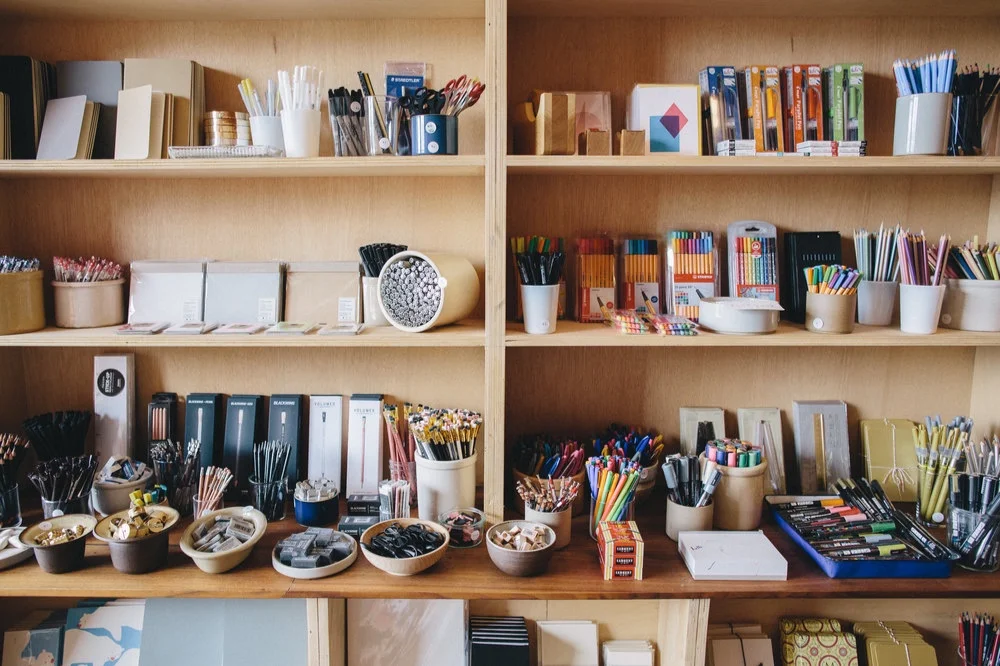
An emporium for the curious, for searchers and explorers of the page and white space. San Francisco’s Case for Making has been thoughtfully designed to ‘push our collective ideas further about what creativity can be’.
“Case for Making is a storefront offering creative supply basics, raw materials, and workshops, selected and designed to encourage process-focused exploration. Our practice is to recognize the presence of creative inquiry in multiple forms, and to provide space for engaging in and valuing this work.”
Right in a pocket of community in San Francisco’s Outer Sunset neighborhood, sits Case for Making, its creative beating heart. Founded by Alexis Joseph and Lana Porcello in 2014, because ‘the potential of humans doing projects makes them very happy’, this sweet storefront stakes a mark in the ground for the importance of making in our lives. Its an artist’s store for all of us.
Browse their products (you can do this online too). Take time in the store to just figure out what appeals to you and what makes you want to play at the process of it all. For us, its usually the handmade watercolors and indigo inks, and the special paper goods, particularly their fill-in-the-blank greeting cards.
This is an emporium for the curious, for searchers and explorers of the page and white space. Its a place designed to ‘push our collective ideas further about what creativity can be’.
Maybe this is best captured by the workshops on offer. Through classes led by local makers they admire, you are invited to produce your own pigments, learn how to draw, or paint with watercolors (their current offerings). These practical explorations sit closely to a spirit of guided inquiry, about how we show up as people in our worlds.
Case for Making takes down the idea that art is precious a notch or two, and opens the door to whatever it is that creativity means to each of us. We get to decide what we want to make and why it matters. They get to help us to do that. That’s why we love them.
*There’s a sister store at The Aesthetic Union too that you should check out!
Website www.caseformaking.com / Instagram @caseformaking