
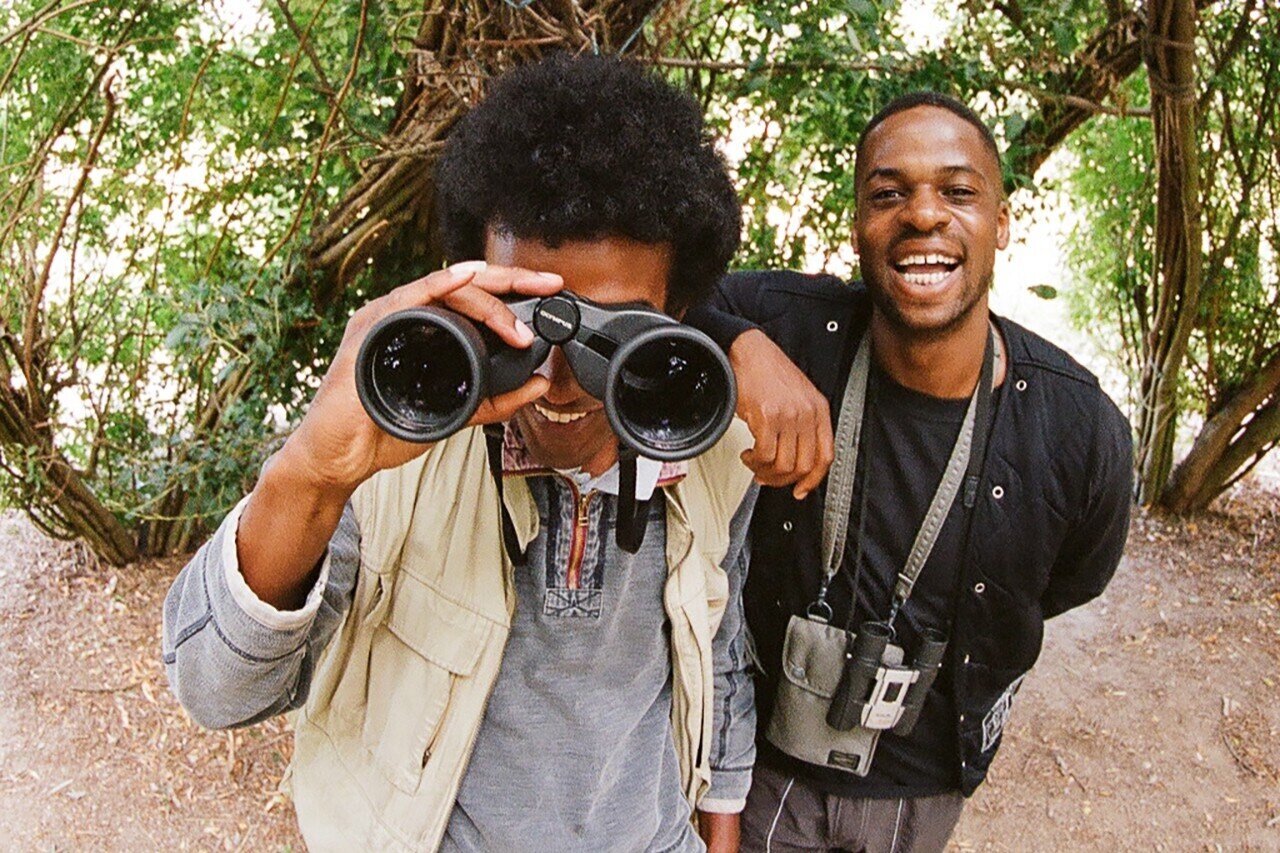
Flock Together
A birdwatching collective founded by and for people of colour that’s as much about mental health, creativity, ecology and community as ornithology.
What is it: A birdwatching collective for people of colour started in London by Ollie Olanipekun and Nadeem Perera (who met each other on Instagram over their shared love of birdwatching). From its first walk on Walthamstow Wetlands last year, Flock Together now has chapters worldwide, including in Toronto, New York, Milan and Paris.
Why you’ll love it: Join one of the monthly birdwatching walks — don’t worry, no experience is needed and beginners, as well as experienced birdwatchers, are very much welcome. So that no one is left out, Flock Together has developed brand partnerships, with binoculars and equipment donated. Although the walks are built around how to spot birds and what they are when you do — is that a jay, a wood pigeon, a robin? — they also build a supportive community, that understands the circumstances that might have brought you here.
What you need to know: New initiative Flock Together Academy makes sure kids get into nature, start to see the birds around them, and begin to understand ecological issues. Nature has been shown to have huge benefits to our kids — a year of being glued to Zoom classrooms and disconnected from the outdoors has been a desperately sad indicator of this. These classes in green spaces make nature visible, accessible, and vital again to young minds ready to learn outside the classroom what’s really important.
How to bring this into your life: Interested in the mission of Flock Together? Reach out to them to open a chapter wherever you are.
Why it matters: Think birdwatching and what’s the image that comes to mind? Maybe the media painted picture of a middle-aged khaki-wearing white man sat with their triangle sandwiches in a bird hide deep in the English countryside. That’s the history and that’s the misrepresentation problem, right there. Flock Together began during both lockdown – when the connection between nature and mental health became clearer — and the Black Lives Matter movement when who had access and who didn’t to this form of support also became more apparent. Similarly, birdwatching hasn’t been equitable, or diverse. This became acutely known when a white dog walker called the police on a black birdwatcher Chris Cooper in Central Park. Also, birdwatching hasn’t exactly been cool, but Flock Together is shifting that too. And those mental health benefits, Olanipekun and Perera are building this into their mission developing therapeutic sessions for participants.
In their own words: “Nature is a universal resource. For too long black, brown and POC have felt unwelcome and marginalised in spaces that should be for everyone. Together we are reclaiming green spaces and rebuilding our relationship with nature — one walk at a time.”
Something to do: We’re very new to noticing the birds around us. During the lockdown, we learned to identify the birds in our garden for the first time. And though we learned their rhythms, their colours and their songs, we also learned that we play a role in looking after them. Read this post from Flock Together, which shows us all how to take care of our feathered friends: by feeding them, cultivating wildflowers, putting out water, and looking after the insects — the birds need them too.
Lead photo credit: Zaineb Abelque
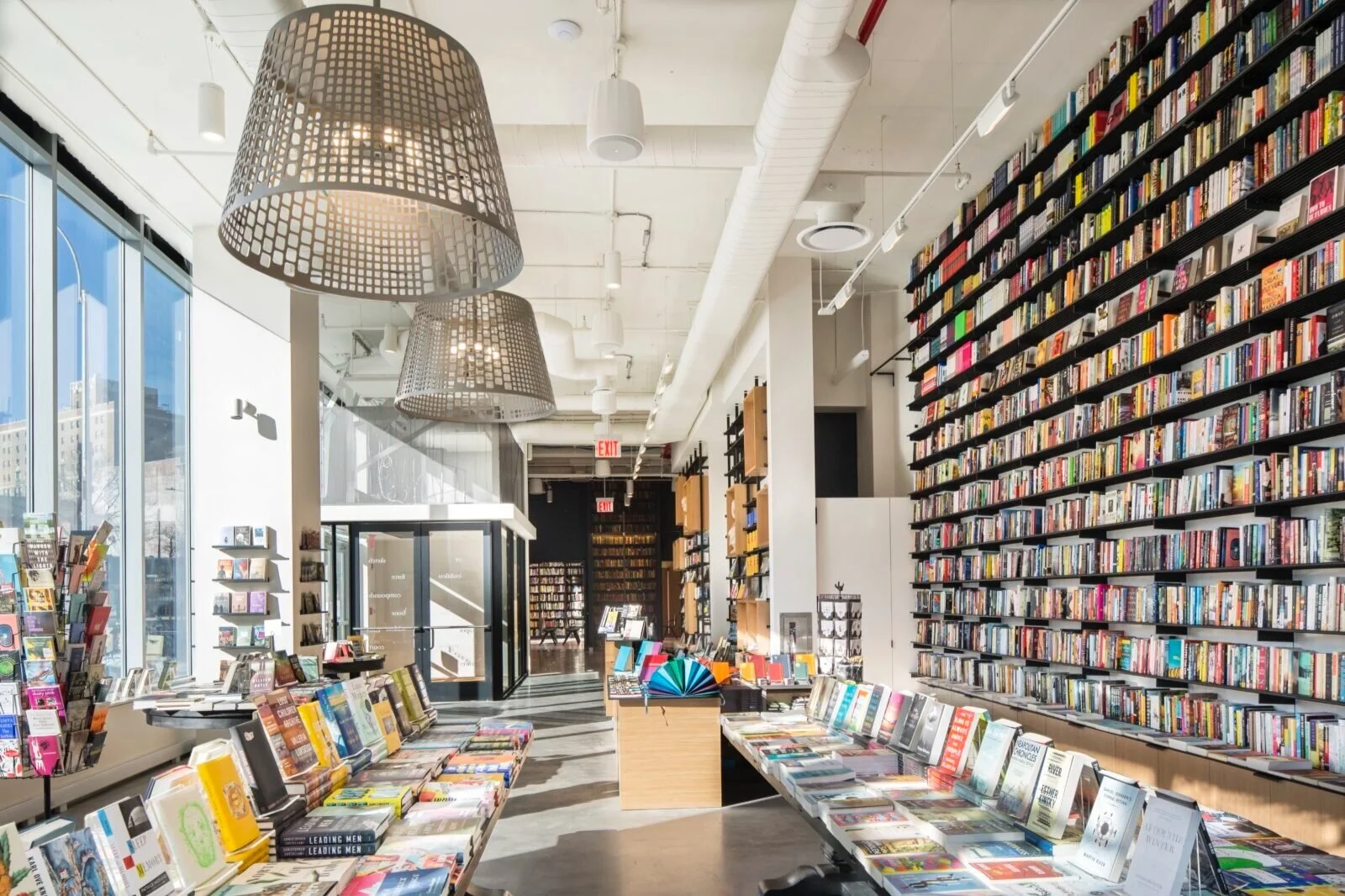
The Center for Fiction
A space dedicated to bringing fiction into the world, that supports our real lives as it does so.
What is it: For book lovers of all ages, whether those who love to read or those who love to write, The Center for Fiction celebrates fiction in all its stages, from first imaginings to beloved reads. Over 200-years after it was founded — originally as the Mercantile Library — the non-profit moved into its public-facing home in Brooklyn’s Cultural District in February 2019. Over 18,000 square feet across three floors, architects BKSK have created the conditions to make words come alive and to enter our lives in a multitude of ways.
Why you’ll love it: Browse the independent bookstore (with a focus on fiction, works in translation, and independent publishers), chat books in the café and terrace bar, attend workshops, events, writing groups, and seminars, or sit at a writing station to get down to the actual work of crafting your own story.
The Center is a living organization that grows both readers, from the youngest kids exposed to its workshops (see its Kids Read and Kids Write programs), and writers, from the earliest stages of their careers, such as the Emerging Writers Fellowship and First Novel Prize. Within its quote-strewn walls, books can be experienced at every point in their realization.
What you need to know: The Center is also home to a circulating library of over 70,000 books focused entirely on fiction, including a prominent crime fiction collection that goes back to the early twentieth century.
How to bring this into your life: Recently retired Executive Director Noreen Tomassi started a bibliotherapy program, that is still going strong, called A Novel Approach, which prescribes a year’s worth of fiction reading depending on your situation, your interests, your longings.
Why we think it matters: Though books are read alone, often they come alive when experienced together. The Center pivots on this duality. It offers a place of solace and reflection, a retreat, or maybe just a pause, from the noise and encroachments of modern living. And it sets up the connections between readers, to not just enliven narratives through discussion but to offer an antidote to our loneliness, and a comfortable excursionon for introverts. Books can take us inwards while opening up our worlds. We can hold fiction in our minds, and those stories can have a life that exists in conversation. The Center for Fiction attests to the importance of making physical space in the world that supports our imaginary one, bringing people together over words that connect.
In their own words: “The Center for Fiction, founded in 1820 as the Mercantile Library, is the only organization in the United States devoted solely to the vital art of fiction. The mission of The Center for Fiction is to encourage people to read and value fiction and to support and celebrate its creation and enjoyment.”
Something to inspire: How can you lift words off the page and live them in company, wherever you are? Seek out a writing community, a book club, an author’s talk, a book festival, an independent book store, a library. The Center is a one-stop-shop for the craft of fiction, but parse out its functions and you’ve got a version of your own making, slightly spread out but highly tailored to your world.

How therapy is being redesigned for modern times
Therapy has changed. We’ve rounded up some of the new places and platforms bringing this practice into our modern world.
Finding a therapist can be difficult, particularly in a moment when people are feeling most anxious or lost. Figuring out who to see, and then checking in with yourself about whether they are the right fit, can feel bewildering, even exhausting.
We’ve been there: looking over lists of names, arranging the first meet-up, wondering whether something was off in your relationship or whether it was just your material, ending an ill-fitting arrangement, and then having the energy to find someone new to work with. Many times we gave up until the issue that pushed us to seek therapy could no longer go unheeded and we tried again. We knew when we’d found the right therapist, we knew who we wanted to work with, but there were some dead-ends and frustrations on the way there.
Often it's exactly this match-making piece that is the barrier to entry for someone seeking help. There are others — around cost, cultural sensitivity, access, and belief systems — but here we’re going to focus on how you can find the right therapist and how they can find you. Over the last few years entrepreneurs, mental health practitioners, and even the tech industry have noticed this issue too. Below we’ve pulled together some of the new services that have been emerging, ones designed to get you to the right person when you most need it, and in ways that feel very different to what has gone before.
Frame, Los Angeles
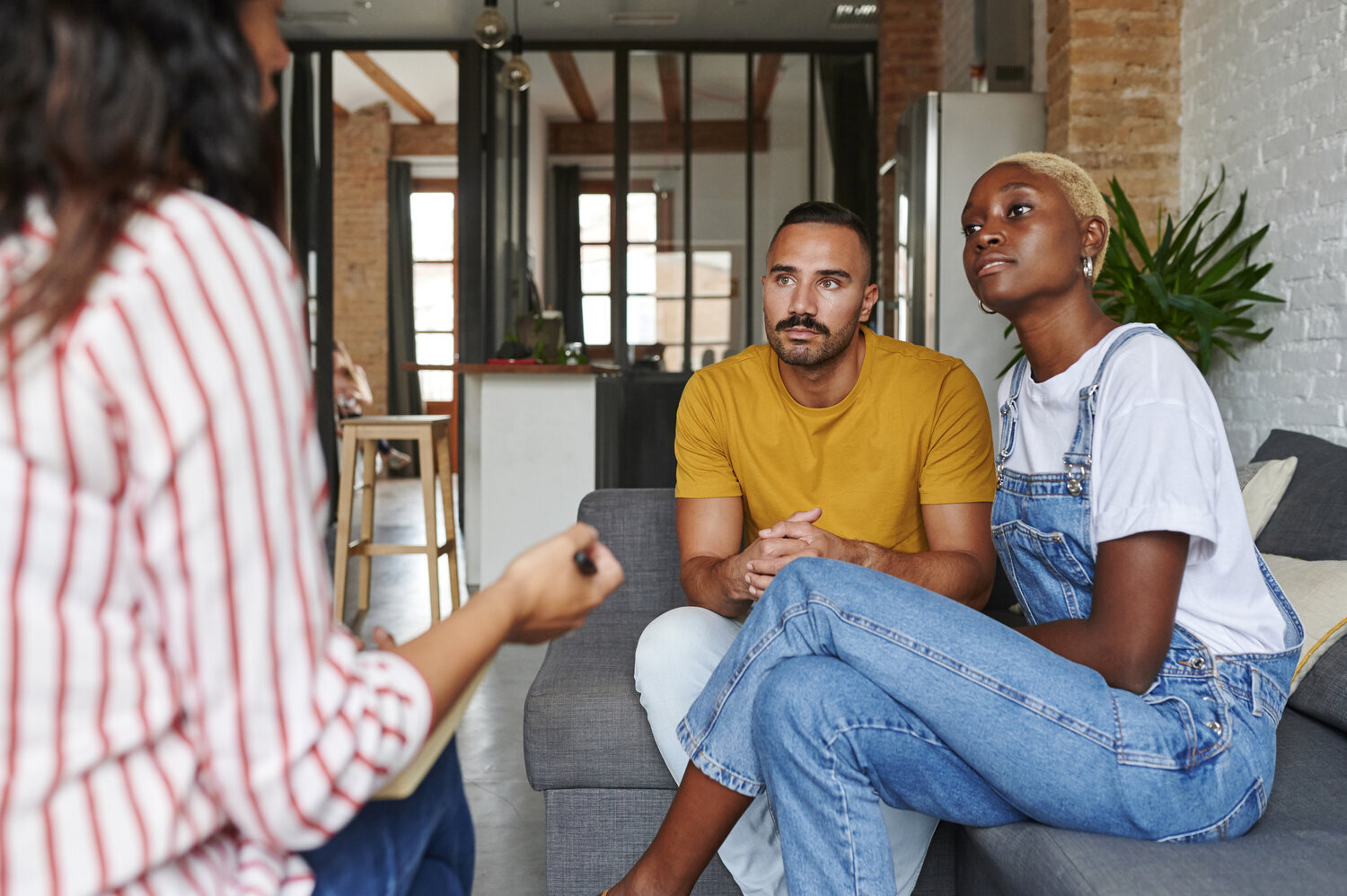
“Therapy looks different on everyone. We help you find your fit.”
Based out of Los Angeles, recent start-up Frame is approaching therapy with a modern consumer in mind. Forbes has called it the Bumble of Therapy. Long-time friends and founders Kendall Bird, a tech marketer, and Sage Grazer, a licensed clinical therapist, launched Frame to both serve the therapy-curious and the therapists themselves. Frame matches people with therapists through an algorithm, asking ten questions to best identify the six therapists that they could work with. These matches then each offer an introductory session. There’s no wasted money or awkward endings as you try to find the right person to work with. Frame is also currently offering digital workshops for the therapy-shy or for people who aren’t quite ready to commit to the one-on-one work of the therapeutic relationship. For therapists, Frame figures out all the back-end stuff too (therapists are effectively small business owners) — like billing and appointments, which in turn helps clients (who wants to take out cash and calendars at the end of a session?). Currently based in Los Angeles, Bird and Grazer plan to expand the service to San Francisco, New York, and Chicago within the next year.
Alma, New York

“Alma makes it easy to find high quality, affordable mental health care.”
New York-based Alma, approaches modern therapy from a completely different angle, that of the therapist. As founder Dr. Harry Ritter has said, “Great therapists need to be taken care of too.” Alma’s first space opened in 2018 in Manhatten’s midtown as a co-practicing space — or what CNN has called “WeWork for therapists” — providing a carefully designed environment in which mental health professionals – which also includes acupuncturists and nutritionists — can practice, a community in which their own learning and wellbeing is supported, and a suite of digital tools to make the business side of things easier. But the experience on the client-side is similarly thought through. Alma offers a searchable — including in terms such as race, ethnicity, gender, and sexuality — of its member therapists and a Client match-making team for more advice on finding the right person. Alma’s space is also not the environment of your typical therapy session with meditation stations in the lobby that offer Headspace while you wait for your appointment, check-in on iPad stations, chairs carefully positioned so clients can feel comfortable seated next to one each other, and a member’s library of books for browsing. Each therapy room also shares identical décor to make the experience consistent should sessions need to move spaces. Venture capitalist funded, named one of the most innovative companies of 2019 by FastCo, and with Ester Perel as a clinical adviser, Alma is in the process of expanding nationally. See their announcements for further cities in the US.
Black Female Therapists, USA

“Black Female Therapists (BFT) is the #1 lifestyle and empowerment platform for women of color.”
After Licensed Professional Counsellor Amber Dee struggled to find a therapist for herself, she established Black Female Therapists as a safe space to support the work of other black female therapists and to create a positive site for exploring mental health, self-care, and #blackgirlmagic for women of color more widely. The resulting Directory connects people across the US with therapists of color for both in-person and online sessions. It’s searchable in terms that include specialty, insurance, and Loveland coupons. With its focus on positivity and cultural sensitivity, BFT goes beyond just therapy though to include a range of wellbeing resources that aim to break the stigma around the practice of therapy within the black community. By promoting tools for thinking about mental wellness including the podcast 15 Minutes on the Couch, a daily affirmation service, and weekly classes, BFT also helps those not quite ready for therapy but in need of support through their everyday lives.
Additionally, try:
San Francisco and New York. The Silicon Valley funded one.
New York. Specializes in gender, sexual and racial issues

Online while NY space on hold.“The Wing of mental health”

You can also check out our conversation with San Francisco-based Two Chairs and our feature on Therapy for Black Girls.
As we’re all about the face-to-face, we’ve favored the in-person piece here, but there’s also a handful of digital therapy resources to explore like Talk Space, The Circle Line, Wysa and Mindler (now in the UK).
We’d love to hear your experiences of finding therapy online or off. Have you tried the new digital platforms or found someone to work with in analog spaces?. Let us know your experiences, what you’ve loved, what you haven’t, how things have improved, and what’s still missing. And if there are other resources that you’ve been turning to, tell us about those too, so we can include them in our guide for life and share with others who need them too.
The person who can help you is out there. Hopefully, these resources will help you find them.

Emma's Torch
A beacon of light for refugees in Brooklyn is forging a way forwards through culinary education.
What is it: A not-for-profit Brooklyn restaurant and culinary school offering paid training and job placement for refugees, people granted asylum, and survivors of human trafficking.
What you need to know: Founded by Kerry Brodie in 2016 after she completely shifted her career focus from public policy — she previously worked at the Human Rights Campaign and has a Masters degree in government from John Hopkins University — to the restaurant industry, completing her studies at the Institute of Culinary Education in New York.
The impetus for this shift and the inspiration for Emma’s Torch: the possibility of food to do more than nourish, an idea that came to Brodie while she was volunteering in a Washington homeless shelter. Food can connect disparate people, bringing them together around the table, while the cultures that shape our understanding of food remain foundational no matter where people find themselves. But Brodie also saw a way to solve the difficulty that restaurants had of hiring line cooks in New York and the struggles of people newly arrived in the US to find employment.
Brodie now works with refugee resettlement agencies, homeless shelters, and social service providers to identify candidates for Emma’s Torch’s signature 10-week training program for refugees that covers everything from knife skills to job readiness. After graduation, Emma’s Torch has placed 97% of job-seeking graduates and as many as 100 trainees have secured permanent employment in the restaurant industry since it was founded.
With the COVID pandemic and the devastating impacts on the hospitality industry, Brodie has pivoted to a new partnership, becoming a Rethink Food certified organization with the aim of reducing food insecurity by donating 600 meals a week to the Nutrition Kitchen Food Pantry.
What they offer online and off: During pandemic closures, take a virtual cooking class, buy pantry provisions made by students and partners – there’s also own-brand goods such as Hawij Hot Cocoa Mix – or order pick-up and delivery. Donate to secure the future of this organization, if you are able.
Why we think it matters: Emma’s Torch has at its heart a belief that refugees can be welcomed into their new home country. Its name is taken from the poet Emma Lazurus, whose famous line is etched into the Statue of Liberty: “Give me your tired, your poor / Your huddled masses yearning to breathe free”. But this historical precedent stands in contrast with present-day experiences of xenophobia and prejudice around refugees, the difficulties displaced people have of finding employment or housing, and the fatigue and barriers that come with negotiating an ever-evolving political context that often characterizes them as a burden. But Emma’s Torch builds on the positive impacts of NYC’s large population of refugees, their contribution to the local economy, particularly in the borough of Brooklyn where it is located. As Brodie has said: "We engage in this work not simply because our students are people less advantaged than ourselves; we do this because, as Americans, we believe that when we are at our best, this is how we behave, simply because it’s the right thing to do. There is no ‘us’ and ‘them’, but if there was, I would argue that ‘they’ make ‘us’ stronger and better. What our students bring to the table has value, and we are fortunate to be able to work with them to ensure that they are welcomed by their new community."
In their own words: “We find comfort in the diversity in our classrooms and kitchens. Refugees, asylees, and survivors of human trafficking from over 35 countries have passed through our kitchen. Not only has this pushed us to be more sensitive and aware of culinary traditions from across the world, but it also reaffirms that there is so much binding us all together. Our menu reminds us of this common ground, and draws from both our students’ cultures and our team’s culinary upbringing. As we grow, we hope our menu continues to not only be a learning tool for our students, but also a unique conversation between the almost 100 students and graduates who now have a home at Emma’s Torch.”
We’re inspired to: As the hospitality industry is severely impacted by the consequences of the pandemic, support your local restaurants if you are able and you’ll be supporting the jobs that they provide. Whether that’s a burger night that your local café has pivoted to, a finish-at-home delivery box, or eating in the cold outside, find ways to support the independents so they, and the people they in turn support, can get through this time. As Emma’s Torch can attest, what you eat goes beyond food.
To find out more: Website / Instagram / Facebook
Additionally, try: Social Bite / Brigade Bar + Kitchen / Luminary Bakery

Cafe Con Libros
A feminist bookstore making vital space for the stories of women and girls.
What is it: An intersectional feminist independent bookstore and coffee shop in Brooklyn’s Crown Heights neighborhood.
Why you’ll love it: Café Con Libros was founded by Kalima DeSuze in December 2017 when she made real the space that she wanted to see in the world, one that could hold the stories of womxn and girls – stories which have overwhelmingly been sidelined in favor of those of male voices – for those who want, need and are open to hearing them. Though intimate, the reach of the store is wide, bringing together on its physical and virtual shelves an abundance of books by female authors (99% of the selections are books by, for, or about womxn), including those beyond the continental US and by LGBTQAI+ writers.
Why we think it matters: During normal times, Café Con Libros is very much a community space for female-identifying folx; it's somewhere to hang out and be as much as it’s a bookstore. As Kalima says, the spaces that we create are political. Who holds physical space, what that space is used for, and even the stories these places are allowed to tell has meaning on a personal and collective level. Bookstores like Café Con Libros hold not just the stories within pages that we need to hear, but stories within a place that allow for all possible futures, for nurturing relationships, for community action, and for extending our learning together. As Kalima notes: “It’s time that womyn’s stories be prioritized and that a space exists explicitly for and about womyn. So many of our spaces are male-dominated; even the ones that are created solely to be for and about womyn. My womyn only spaces have served as a healing tonic and, a reminder of whose shoulders I stand on. It’s important that more of our girls and womyn have access to such warmth and mirroring.”
How to bring this into your life: As mothers of young daughters, we’re excited by the monthly subscription boxes, which include an option for baby feminist board books for the zero to fives and emerging feminist books for kids aged five to nine. There are also subscription boxes focusing on womxn of color and for the feminists among us. You can also join one of two book clubs that meet monthly (on zoom during shut-door times): either the Feminist Book Club which focuses on a book by, for, and about womxn, or The Womxn of Colour Book Club, a reading space and conversation for womxn of color. There are also virtual read-a-longs and a monthly podcast Black Feminist & Bookish, hosted by Kalima.
In their own words: “ We value: family. community. justice. art. transparency. accountability. equity. equality. authenticity. joy. solidarity. earth. the brilliance and possibility of imperfection. love.
We respect and value the contentious history womxn of color have with the word "feminist;" the tension hold us to account to live our Black Feminist and Womanist principles in real and measurable ways. We were born from and are guided by the lush cannon of Black Feminist thought producers and activists; the space endeavors to be intersectional, inclusive and welcoming of all who stand with and on behalf of the full human rights of womxn and girls. We seek to advance and uplift stories of womxn and girls around the globe who are redefining the word feminist and feminism with every day, ordinary culturally informed acts of resistance and love.
Something to inspire: Try a reading challenge: purchase, support, and read books only by womxn, or womxn of color, or by LGBTQIA+ writers for 3, 6, or 12 months. Change your knee-jerk choices in what you’d ordinarily see or consume. Extend this challenge even further to include podcasts, TV shows, films, and music that are by, for, and about womxn. This not only helps our own understanding of the ongoing pursuit for gender equality but the choices you make in where you put your attention and your money indicates to the industries behind them – the entertainment, publishing, and culture industries – what it is you really want to see.

The Color Factory
Is sitting in a ball pit allowed anymore? Why The Color Factory is making the argument that it is.
What is it: Founded by Jordan Ferney of Oh Happy Day with fellow creatives and artists as a temporary participatory exhibition in San Francisco, The Color Factory now takes the form of two locations in NYC and Houston that capture each cities unique color stories.
Why you’ll love it: Yes, experiential museums have gotten some flack for their Insta-heavy ways, but we like how The Color Factory works with local artists, illustrators, designers, and makers to envisage its color-loving environments: like our favorite Christine Wong Yap, whose Complementary Compliments room invites visitors to sit across from one another, Emmanuelle Moureaux’s colorful paper ribbon ceilings and Carnovsky’s perspective-shifting NYC corridor. Also, note the jet black ice cream available to try.
What you need to know: Is sitting in a ball pit allowed anymore? Is it ok for rainbow confetti to sprinkle down on you? Can you really draw with giant markers on the wall or boogie on a giant light-up dance floor? Apparently yes you can. After months of being closed (and maybe even again), The Color Factory has brought in some serious cleaning techniques – just note how they clean those plastic balls. One reminder: wear a mask for those selfies.
How to bring this into your life wherever you are: You can extend your visit to The Colour Factory by following a neighborhood map to seek out more colors, and we’d suggest creating something similar where you are. Which colors can you see in your immediate environment? How often do they occur? Can you create the color palette of your home, your street, whatever your world geographically consists of? Photograph the different shades, sketch them, paint them out, even arrange them in a print. We’re inspired by the work of Leah Rosenberg, one of the founding Color Factory artists and eternal explorer of color.
Why we think it still matters: Anyone else longing for joy? For play, for escapism, for (can we whisper it here) fun? At a moment when many of us are fatigued or despondent or a little bit lost, that spirit of play that before felt frivolous in its Insta-centric approach now feels like a much-needed respite from the world. And maybe it's needed now in a not just a running-away-from-it-all-through-mirrored-ceiling-rooms way, but in a physiological sense: when we find the joy in our lives, we benefit from a release of happy hormones dopamine and serotonin. Though the impact of specific colors is changeable depending on culture (white = calm here, = mourning over there, for instance) and their specific mental health effects unproven, finding small gestures of joy in our days can contribute to an overall sense of happiness.
It may have felt like the color has drained out of our lives recently and we’re all existing in that sluggish brown that is created when kids mix all the colors together, but somewhere like The Colour Factory can remind us of the rainbow they were hoping to create when they did that.
In their own words: ‘Color Factory embraces child-like imagination, while expanding boundaries of perception and understanding.’

Ride with Me | Drawing Bike Lines Together
For Roos Stallinga riding a bike is both an art and therapy, making ourselves, and the world around us, a better place. Ride with Roos in Barcelona, Amsterdam and New York.
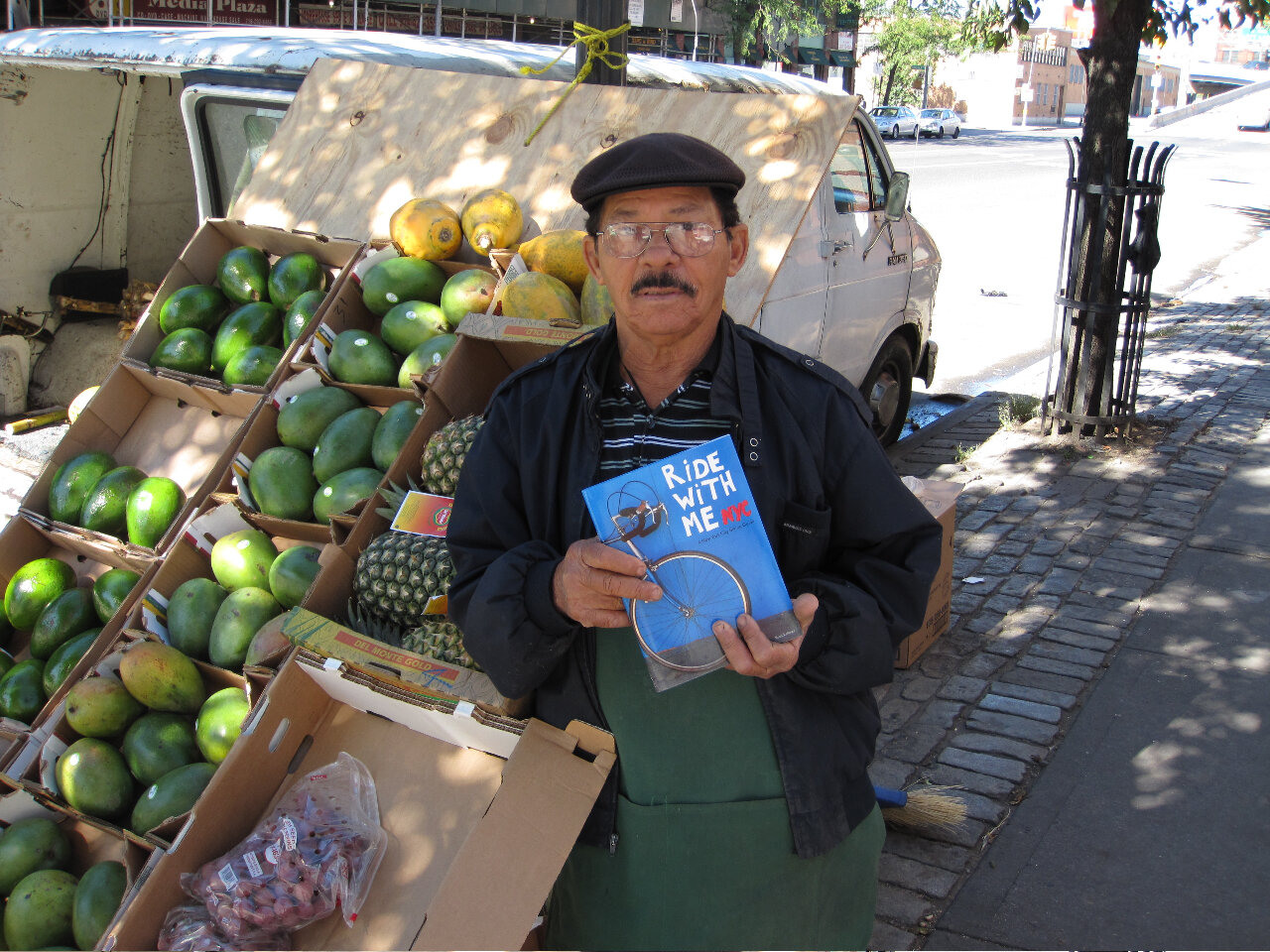
When I lived in New York City (between 2002-5) and studied Art Therapy at NYU, I met with a therapist as part of my training. At some point, she asked what made me most happy. I answered, “When I ride my bike around NYC!” The woman, American and in her fifties, could visibly not relate. She blinked a few times, and then kind of ignored my remark. Like, “Right, but now for something real, like work or study, something in the actual world.” At that time it was indeed really strange to bike in New York. Almost no one was doing it. But to me, I later realized, this really WAS essential — so much that I turned it into my profession.
Riding my bike in New York made me feel free, strong, alive, and right at home (maybe it helped that being Dutch I was basically brought up on a bike). I got so much inspiration and energy from riding around the city, absorbing the sights, sounds, smells, and stories. It was never boring and I got to know the city really well. The bicycle opened up new neighborhoods and parts of the city I wouldn't have come to otherwise.
At times, I would feel slightly scared, exploring new ground, not knowing anyone. Sometimes I would meet people and have a chat. Other times I would just sit in a café, writing in my diary, enjoying just being there and grateful for getting a peek into another world. Even though I was usually alone on my adventures, I somehow always felt connected, to the city, and its inhabitants. There would be eye contact with a fellow biker, laughs from a random stranger on the street. And even the occasional angry driver, who would tell me to get out of the way, or off the road. I would try to stay calm, strong, and smile. “Just smile” Another NYC cyclist once told me “You’ve got a right to be here, too”.
Now I explore cities for RIDE WITH ME, discovering the best biking routes, coffee, art, parks, hills, beaches, bars, and restaurants on the way. In 2009, I created RIDE WITH ME NYC, out of my experiences and insights, as well as conversations with fellow bikers. I wanted to share the joy, and the beautiful places and people I discovered on my way. I used my bike as my pen, to draw lines in the city. And as a key to open the city. I wanted more people to experience this, to ride these routes, and even better, to create their own adventures!
RIDE WITH ME guides are like cookbooks, with recipes for urban adventures. Some of my favorite recipes and ingredients are listed here:

AMSTERDAM is my hometown and base; I think it’s the best place in the world to bike. And so beautiful! It’s an easy place to ride, once you get beyond the chaos and amount of other people on bikes. My advice: just go with the flow, stay on the right, make eye contact, and don’t stop in the middle of the road. You will be fine!
Ride to the ‘Noord’ (North) side, taking your bike on the free ferry behind Central Station, and explore the area around the old NDSM ship wharves, with street art and artist studios, and some nice cafés, like Noorderlicht or Pllek (here’s a city beach too). Continue along the water, passing by freshly built neighborhoods, warehouses, car garages, and find another special place on a dead-end alley called De Ceuvel. Old boats lying on land are turned into creative offices, a polluted area that is slowly being cleaned by using innovative methods. There’s a nice cafe as well, and in the summer, people go swimming.

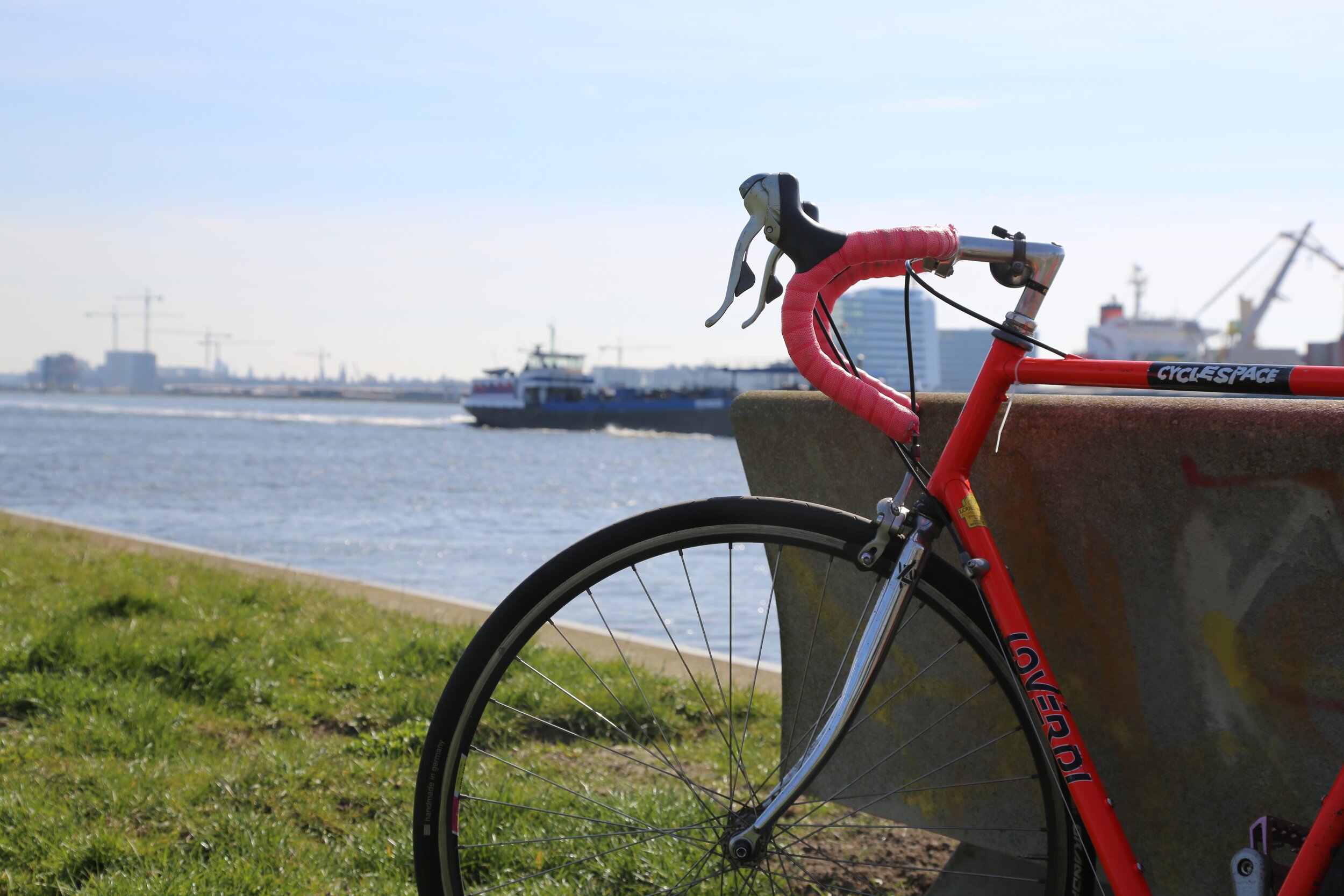
Further on, if you keep heading east, crossing the ‘Noord-Hollandsch’ canal, you will pass small workers homes, more warehouses with creative offices, a brewery called Oedipus, a local winemaker and co-working place called Chateau Amsterdam and find a couple of delicious destinations, like the Mexican taqueria called Coba, and a huge and welcoming restaurant named Hotel de Goudfazant. Ah! And if you want, you CAN also just stay and go dancing at the Skate Café. Or keep riding, all the way to Durgerdam, a quaint fishing village along the IJ lake, amongst green fields and cows.


Ride around the old city center, and its Red Light District, early in the morning, possibly on a Sunday. When most people are still asleep, you can really sense the soul of this place, rich with history, and its share of drugs, sex and rock ‘n roll.


Head West on your bike, exploring the old gas factory site called ‘Westergas’ in Westerpark, now filled with cultural happenings and culinary destinations. Through the park, you can ride even further west, towards ‘Bos en Lommer’ neighborhood — or BoLo — a diverse and upcoming area. There’s a super sweet book shop called ‘De Nieuwe Boekhandel’, and kick-ass coffee place called Friedhats Fuku Cafe founded and run by star barista Lex Wenneker and friends.

BARCELONA soothes my soul. I just love residing in this city, with its beautiful light, buildings, and nature, the people, the way of life. It always relaxes me. How wonderful being able to ride your bike to the beach, dive in, dry in the sun, and ride on. Then enjoy a long and lazy lunch, for example at Sala Beckett, which is inside a beautiful theater building, or LEKA, for deliciously local and sustainable food, both in the Poblenou neighborhood (in general a great area to explore by bike).


Barcelona is relatively easy to ride in, just go easy and accept the occasional counter-intuitive bike infra, AND the fact that as a person on a bicycle you are basically at the bottom of the mobility food chain here (after the car, the moped, the pedestrian, and maybe also the electric scooter).


Photo: Gregor van Offeren
I love riding up the Montjuic hill, a magical place filled with plants, art, culture, and sports facilities — the Olympic Games were hosted here in 1992. At the back of the mountain, there is an impressive cemetery (many famous Barcelonians were buried here) with views of the industrial port, which makes for a surreal setting. If you continue to ride up here you will pass the botanical gardens and finally get to a semi-secret ‘mirador’ (outlook post) and bar La Caseta, with beers, music, and bbq ‘en plein air’. It’s the perfect bike stop, after which you can just roll down that hill and maybe end the day at the lovely Poble Sec neighborhood.
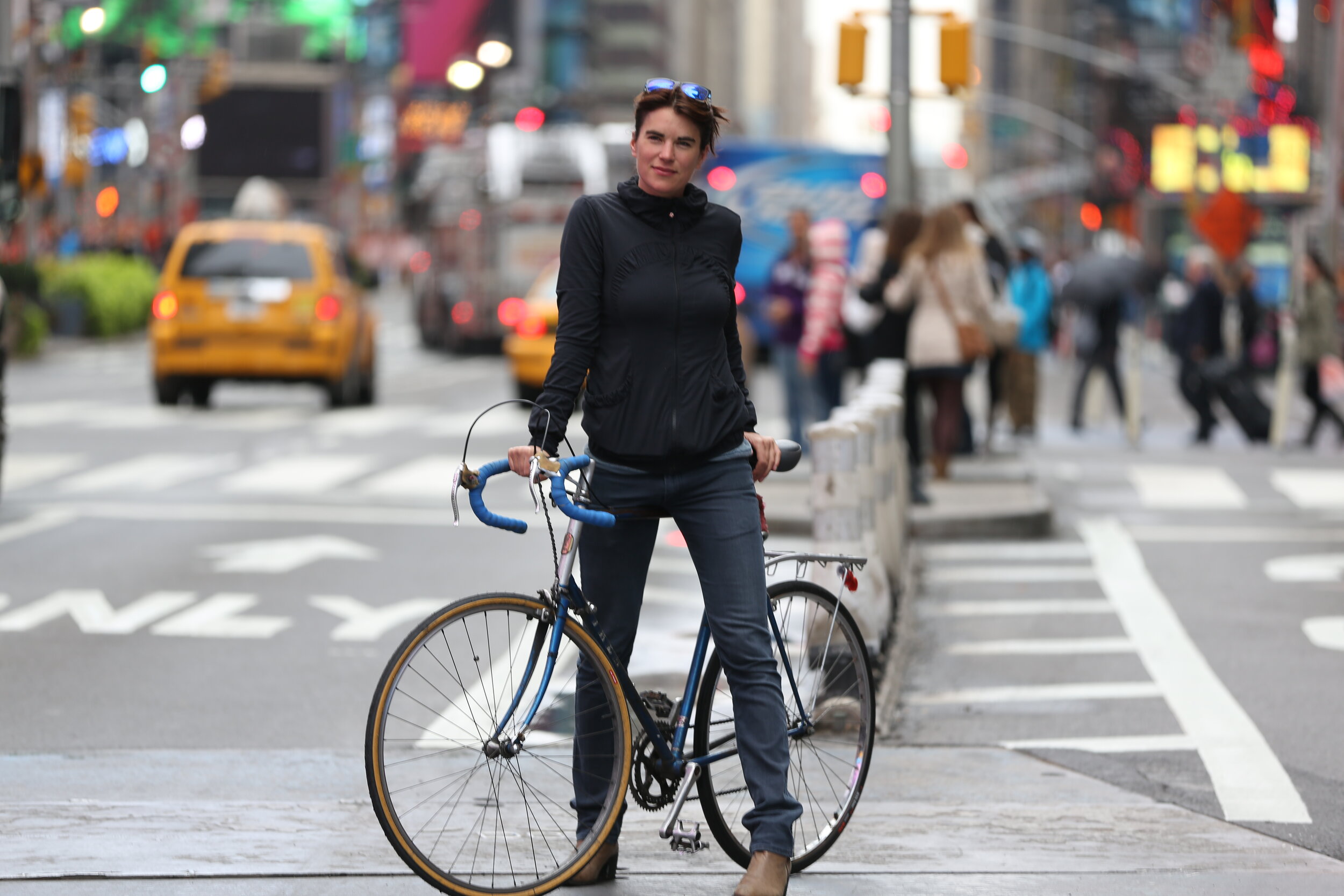
Photo: Lisa Smidt
NEW YORK CITY gives me courage and inspiration. Riding around on my bike here feels like I am surfing the waves of the city. There is so much energy! Of course, you do have to be alert at all times, focused and relaxed at the same time, kind of like a Zen monk on two wheels. Oh, and on a practical note: the blue bike-share system Citibike works great if you don’t have your own bike!
Ride to Red Hook in Brooklyn, over the Manhattan Bridge, landing in Dumbo (neighborhood Down Under the Manhattan Bridge Overpass). Along the East River, through industrial wastelands, and discover at the end of the road this old village that used to be a Dutch settlement called ‘Roode Hoek’. You’ll find you can look Lady Liberty right into the eyes, amongst red-brick warehouses, fishermen, and boats. Maybe have a Key lime pie (!) at Steve’s Key Lime Pies, or a special dinner at The Good Fork. There’s a bar called Sunny’s, straight from a Tom Waits song, rundown, smokey, with a bartender cracking jokes.

Or ride down along the Hudson River over the greenway — no cars just skaters, runners and cyclists — until you see the Statue of Liberty and Ellis Island. Maybe take a ferry to Governors Island, a historical military base transformed into a car-free, green, and arty play zone.
Ride from Dumbo all the way to Greenpoint, Brooklyn, riding through the Hasidic Jewish area, feeling like you are back in time, with the men wearing black fur hats and the women long skirts and wigs, pushing vintage strollers down the street. Hit the Brooklyn Roasting Company for a pitstop (either in Dumbo or on the way to Williamsburg). In Williamsburg and Greenpoint are tons of nice shops, cafes, and restaurants. Just riding around on your bike, watching the street life and art, is a pleasure too.
If you want more, make a detour to East Williamsburg/Bushwick, still a bit rough, with many murals, warehouses, artist spaces, and many cool bars and restaurants. A weird and wonderful place — completely hidden at the end of a tiny alley — is the Australian restaurant Carthage Must Be Destroyed. Here, they painted everything pink and serve super fresh and original dishes.


Maybe it all makes sense after all. I lived in Barcelona when I was 18, studied Psychology in Amsterdam, Art Therapy in New York City, traveled a lot, and kept a diary to write and draw in. I look at the city as a psychologist, using my bike to be free and get a grip at the same time. To get inspired, and connected to the people and places around me. Riding a bike is both an art and therapy, making ourselves, and the world around us, a better place.
Ride on!
xxxRoos

Photo of Roos: Chris Prins
Additional Photo Credits: Cover image of Roos on the Brooklyn Bridge in NYC: Theo Westenberger
All other photos/artworks/illustrations: Roos Stallinga

Choose Love
This holiday season support pop-up stores Choose Love by gifting everyday items to refugees who urgently need them.
“‘The world’s first store that sells real products for refugees.’”
Holiday Fatigue. Compassion Fatigue. Everyday life fatigue.
At this time of year, as the days get darker and our schedules more frantic, many of us find ourselves exhausted, overwhelmed, maybe also panicked. We’re under pressure to consume, to shop, to scramble for all the things that we don’t need and that we probably won’t even remember in January. Some of us are starting to realize that we don’t love this Black Friday to January Sales treadmill, that it benefits someone’s bottom line but not us. We’re starting to look for ways to do the holidays differently.
Like Choose Love. No, that is not just a cute Instagrammable aphorism (though it does take a covetable merchandise form). It is an urgently needed pop-up that takes that holiday spending money and uses it for good, not seasonally appropriate greed. The Choose Love stores brought to us by Glimpse design collective—there are now 3, in London, New York, and Los Angeles—only sell things that refugees vitally need that you get to gift to them. The stores are arranged by the different stages and shifting requirements of displaced people. There’s ‘Arrival’, ‘Shelter’, and ‘Future’. A life jacket. Children’s boots. A hot shower. Safe spaces for women. A Bundle of Warmth. Think about these things for a second. Think about how and why they are needed. We defy your heart not to break just a little.
As CEO of Help Refugees (the NGO behind Choose Love), Josie Noughton sums it up: "It's easy to forget how lucky we are to have a bed, a blanket and a roof over our heads. For thousands of refugees this winter, these basic human needs are completely out of reach. This shop is all about one simple idea: that we should all Choose Love and help those in need."


Choose Love stores fill that compassion gap between the moment that we’re shocked by the news and the horrors that refugees fleeing climate change, war and persecution face, and the moment that we don’t know what to feel and what to do about it. By holding everyday items in our hands that people need, it returns essential humanity to the stories that we’ve become numb to and the headlines that we learn to forget. Simple things like baby items, clean and safe water, a bag of school supplies, restore the idea that these are real people, not just statistics, who need our help and deserve our kindness.
Though these brightly colored stores feel like a boutique gift shop, they are designed for you to leave with nothing except the knowledge that whatever it is you purchased is now finding its way to one of 120+ partners who support displaced people. You may be empty-handed, but you’ll definitely feel big-hearted. This is gift-giving as its best: we now know that doing something for someone else has a more lasting impact than doing something just for yourself. And beyond the 40,000 customers that it has to date served, Choose Love has a significant impact on the recipient too.


Since Choose Love launched in 2017, these pop-ups with a purpose have sent 1.5 million items to refugees, assisted one million displaced people in Europe, the Middle East, and the US-Mexico border, and raised 3 million pounds. Those statistics are staggering, particularly when you think that Choose Love is a relatively new concept on our High Streets. As brick-and-mortar retail is supposedly dying, they indicate a way forward for how our stores can change the world. Needs on both sides are now being met through something we’re overly familiar with, shopping and a place that has lost its own way, our High Streets.
Choosing Love matters; at a time when we’re divided across borders and beliefs, this simple mantra, and the enterprise behind it reminds us that we have options. We can choose to help people who really need it with our purchases this holiday season. And if you need any more encouragement, let’s give Banksy the last say: “For the person who has everything, buy something for someone who has nothing.’
(Also to look out for: You can also shop Choose Love for a Holiday gift – the recipient will receive a downloadable gift card with details of your item. Also, as these stores are staffed entirely by volunteers – you can gift your time.)


The Sketchbook Project at Brooklyn Art Library
At Brooklyn Art Library spend time with a living sketchbook museum.
“A crowd-funded sketchbook museum and community space.”
For the Lost: ‘A Lovely Wander NYC’ by Sara Boccaccini Meadows
For the Curious: ‘Come Travel with Me’ by Jill Macklem
For the Lonely: ‘somewhere across the sea’ by Michael Elizabeth Zimmerman
For the Anxious: ‘Anxiety Sucks’ by Suzie Deplonty
But you could equally be looking for ‘A story worth telling’, ‘Pocket-size memories’, or ‘Trivial retrospectives’. The floor to ceiling shelves of The Sketchbook Project at Brooklyn Art Library contain all those themes and more in thousands upon thousands of identical 5 x 7” sketchbooks. In fact, this Williamsburg storefront houses the largest collection of sketchbooks in the world: 45,000 in all (with 24,000 in its digital library). And most are made by amateurs: 30,000 different people in over 130 countries have so far contributed to this over a decade-old project. Anyone can submit a sketchbook irrespective of background, perspective and, here’s the key, ability. These drawn-out and doodled narratives can be made by a granny in Croatia, a mum in California, a child in England. Even you.
We’re a little in love with it.
This is how it works: you order one of their custom designed, Scout-made sketchbooks online and receive along with it a list of thematic prompts: recent calls included: ‘One last chance’, ‘Fearful faces’ and ‘Lamppost Limericks’. Choose one or discard them entirely. It’s up to you. You get to fill 36 pages with whatever you want—abstract squiggles, detailed portraits, maps and landscapes, diary entries, poems, fragments of images and memories, secrets and declarations of lost love—anything that can be contained within its pages (so no glitter or messy embellishments).


Here’s the genius part—your sketchbook has a barcode, so you’ll upload some details to an online catalog, like search terms and your bio. Then you’ll mail it back to The Sketchbook Project for the next part of its life: most likely it will be part of one of the traveling exhibitions which take place in a custom made Mobile Library (‘like a food truck, but instead of tacos you get sketchbooks’) that tours to schools, music festivals, art fairs, museums, and blue-chip companies, in such places as Melbourne, Chicago, Atlanta, Toronto, San Francisco, and even Rapid City, South Dakota. But your sketchbook will definitely find its permanent home on one of those shelves in that storefront in Brooklyn. All sketchbooks are cataloged and kept. There’s no jury, no judgment.
Founded in 2006 by Steven Peterman and Shane Zucker, The Sketchbook Project questions who gets to create, who gets to be good and whether that idea has any currency, and why creativity still matters. By giving people a blank page, it also gives them the impulse to make and the platform to share. This is art for everyone, and artist as anyone. As Peterman attests: “I wanted to create an informal outlet for anyone to create art, with a purpose. I believed and still believe in the notion that a creative community is stronger than its individual artists and that a project can be impactful in a way that is different than a traditional gallery.”
All these sketchbooks—made and mailed in from all over the world, collectively form a library of sorts. Visitors to the storefront, which has a very unlibrary feel—yes, there’s check-out cards, but there’s also music, art supplies and memorabilia on sale—can view any of these sketchbooks in its cozy space. Remember that barcode? That makes the in-store librarian’s job way easier: now visitors just search the catalog by theme, figure out what they want to view, and the librarian will pull it from the shelves. As the artist/maker/author you can get updates on how many times it been viewed—you can even get texts when your sketchbook-baby leaves its home on the shelves. The beauty in all this is that the person who made and then the person who viewed the sketchbooks are now in conversation; the sketchbooks forming physical testimonies of lives lived, documented and shared.


The Sketchbook Project gives analog form to some of our most basic needs, namely to tell stories and to connect. As we’re increasingly driven online to spill and share, it’s a real-world kickback. These shelves express myriad lives and ways of being in the world that you can flick through and digest over time and in physical space. It’s collectively made, with all the contributors expressing themselves very differently while working within exactly the same parameters. And it’s collectively understood; visitors can search for what they need amongst the pages or maybe even chance upon something unexpected. Plus it's permanent. These sketchbooks are designed to last, to be an archive of global creativity that endues longer than the time it takes to scroll through your feed.
(See also the workshops in the community space, on such things as bookmaking and journaling, and other interactive global art projects that aim to connect and dispel some fundament myths around creativity like the Pen Pal Exchange).

Governors Island
Rawly Bold Founder Pamela Delgado on why New York’s Governors Island is the place she turns to when she needs some balance in her life.
You know when you’ve reached that overwhelming point and you’re in dire need of an escape? It happens to all of us. For me, on those occasions when I can’t take the vacation that I would like, thankfully I can escape to a local New York City gem: Governors Island. As soon as the weather permits I’m on the first ferry there.
This little historic island (172 acres to be exact) is located off the southern tip of Manhattan and depending on where I’m standing I can see Brooklyn, Staten Island, New Jersey or the Big Apple. Once used as military installation, Governors Island is now a seasonal destination which gets around 800,000 visitors per year.
With ample park space, I often just set up my own little picnic and just be. For these escapes I don’t need to take much. I may pack a book or a magazine, but on Governors Island I get to dine, snack and support local food vendors too. Being a small business owner I’ve learned the value of support and I’m happy to do so whenever I can. Island Oyster is my favorite. I will usually indulge in oysters and a glass of champagne while watching the hustle and bustle of the city. During the hot summer days, I’ll hang out near Little Eva’s Beer Garden before frolicking over to see the Statue of Liberty. After living here for eight years New York is still surreal to me. I used to dream of living here.

Having alone time is so very rare and I take full advantage when I get it. Being here makes me feel peace. I’m a lover of the sun and water and although there is no beach, it’s close enough and gives me the fuel I need to keep on trucking. When was the last time you walked barefoot on grass? I consider that to be a luxury. The last time I did was on one of my visits here in July.
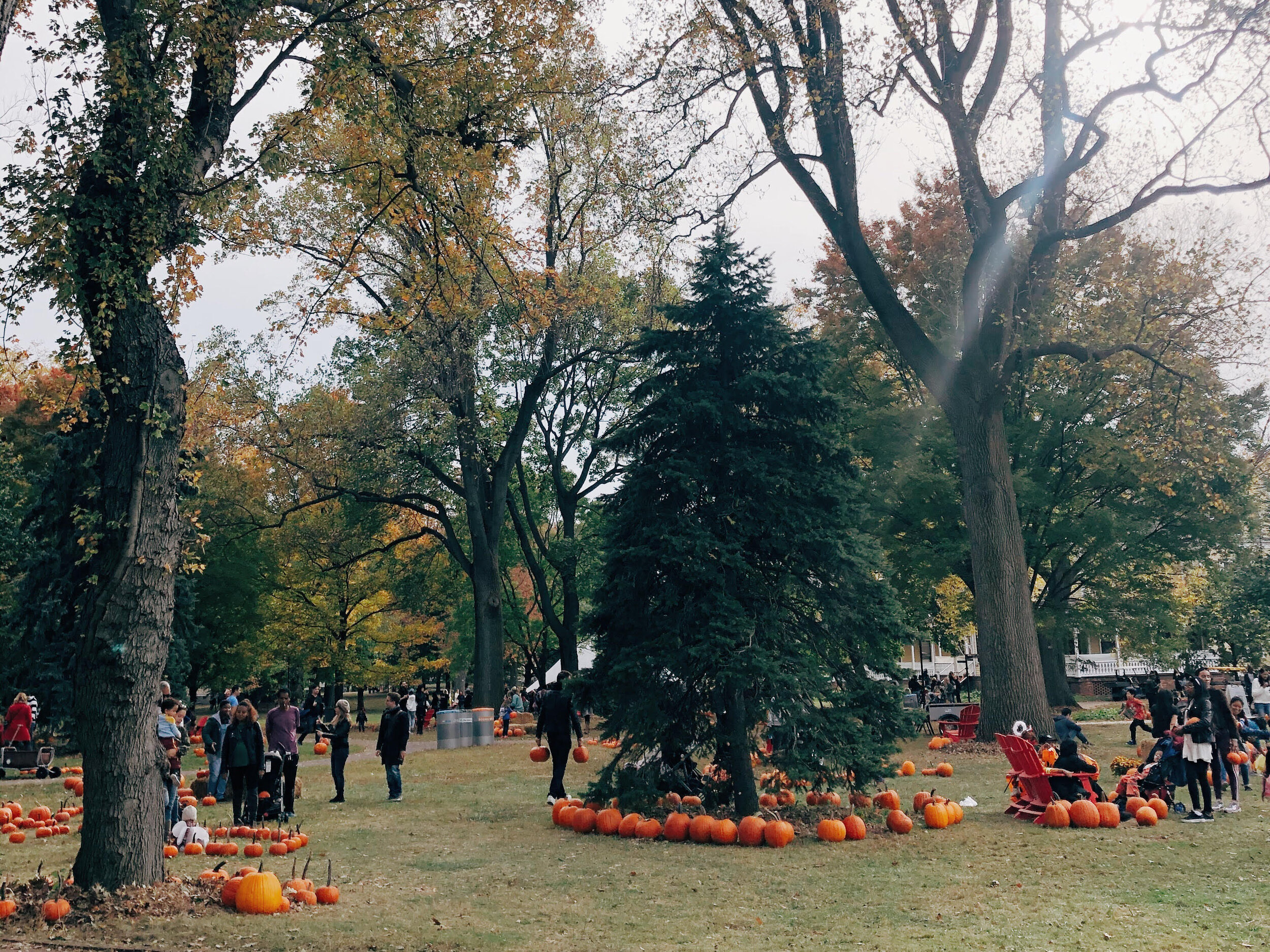
It’s now November and I’ve loved this past season! It was my first time visiting during the Fall and it won’t be my last. I felt like there was always something different or new to discover. I visited their incredible pumpkin patch: cider stations, pumpkin decorating for the kids, pumpkins for purchase, and fall foods to nosh on.


Governor’s Island gives me the opportunity to let go, of all the stress I may have experienced prior to my visit or whatever issue is coming up for me. It gives me the space to regain my clarity and prepare to face things that may require my attention or make me feel uncomfortable. Problems don’t disappear overnight, but taking a step back can help. I can be silly. I can get out of my comfort zone and meet new people if I feel like it. On occasions when I need to release pent up energy or ease my anxiousness I put my sneakers on and go for or a run. This island is the perfect track. There have been times where I turn on my yoga app and dive right into a pose with no worries in the world. It never fails to transform me. I head home feeling like a brand new person.
Living in such a fast paced city, sometimes all I need is just time to be alone with my thoughts or have a moment to meditate while the breeze from New York City harbor hits my face. As the mother of two very energetic toddler boys, I escape here to feel grounded and centered. And as someone who is multi-passionate, finding down time is required to nurture this journey of life. Governors Island has become that place for me; it will always have my heart.
To find out more, Website, Instagram, Facebook, and Twitter (Please note that Governors Island is closed for the season and will reopen in Spring 2020)

Caveat
A smart speakeasy to get your curiosity peaked while having a laugh.
“Caveat makes smart entertainment for smart people.”
With New York’s Caveat, speakeasies just got smart. A non-descript black door with a ‘c’ logo leads down a staircase and a basement space that looks like the kind of nighttime-entertainment setting you are probably familiar with: an intimate theater with chairs and round café tables facing a stage and a bar backdrop. But there are hints of something else – a library and gallery also feature within the space, and a program that includes things like this: Chaos Theory: An Off-The-Rails TED Talk On The Underlying Chaos Of Our Lives and The Nerds & The Bees: Comedy And Data — What’s Really Happening In Modern Dating.
If you like anything produced by NPR, listen to podcasts and Audible on your commute, and get excited about deep heady dives into ideas, then Caveat, a performance venue in New York’s Lower East Side, might just be your spiritual home. Here you’ll always find the kind of material that gets your brain working, unashamedly so. There is nothing even slightly uncomfortable here about knowledge, maybe because its positioned in ways that are ‘fucking funny’ by co-founders Ben Lillie (a particle physicist and co-founder of science podcast, The Story Collider) and Kate Downe (who has directed opera and Shakespeare, and led renegade museum tours). Nerdy stuff is made cool, high concepts accessible, and the esoteric absurdly wonderful.
Caveat produces its own shows, a combination of storytelling, interactive games, music, comedy and performance that range across science, philosophy, literature and academia and are hosted by university professors, anthropologists, philosophers, academics, neuroscientists and other brainy types. Live podcasts are also recorded here, authored both in-house like Nevertheless she existed and out-of-house like Monica McCarthy’s The Happier Hour. If you are finding this is your thing, you can also become a Member.
And its all with booze. Drinking kills brain cells, but here it supports the making of new ones (kind of), through smart programs designed to get your mind working and your belly laughing. Like a night of college all over again, but this time around it really is about that learning part and not just the drinking.

826 Valencia
826 Valencia is keeping space for our kids’ imaginations in our cities, and crafting magical spaces for our communities and for ourselves as it does so.
“826 Valencia is a non-profit organization dedicated to supporting students ages 6 to 18 with their creative and expository writing skills, and to helping teachers inspire their students to write.”
Yes, you might think you have just found yourself in a quirky pirate store or an octopus’ playground or a secret spy society, but what you’ve done is landed right at the heart of a non-profit organization that exists to support the writing skills of under-resourced kids. Maybe purpose is like medicine and you need some sugar to help it go down (not sure who does that other than Mary Poppins and her charges but it’s an association that’s stuck). For 826 Valencia and its network of storefront chapters across the US, the sugar takes the form of magic and the imagination: each of their much-needed writing centers are fronted by spaces of whimsy and curiosity.
From its start in San Francisco’s Mission District in 2002, a delightful sense of wonder has been built into how the organization has crafted itself: the first flagship that opened at 826 Valencia Street by educator Ninive Calegari and author Dave Eggers took the form of a pirate store mostly as a workaround for a local zoning issue that demanded some retail component. So of course, pirates need stores too. That model of locating the idiosyncratic in the everyday has inspired further storefront locations across the US; there’s the secret agent supply store (Chicago), a magic shop (Washington), a time travel mart (LA), a robot supply and repair shop (Michigan), a Haunting supply store (New Orleans), a Super Hero Supply Store (NYC), and maybe our favorite the Bigfoot Research Institute (Boston).
The original SF location has since been joined by two more in the city that capture this same spirit of make-believe: the wonderful Enchanted Forest and Learning Center in Mission Bay and the King Carl Emporium in the Tenderloin. In whatever shape-shifting form it takes across the US, 826 Valencia cultivates places of the imaginary and places of very real need, sitting quite naturally next to each other

Photo Interstice Architects
826 Valencia is one of the few places holding space for the imagination on our city streets and in our children’s lives. Think about its latest iteration in the Tenderloin in which a liqueur store associated with drug trafficking and anti-social behavior was converted into a playful apothecary of sorts and a light-filled writing space (also note the brightly colored, game-changing ocean-themed painted exterior). A space that might feel simply enchanting is actually a crucial vehicle for revitalizing a street corner, a community, and a child’s life.
And it also might do this. 826 Valencia might put a spell on your own. Because you get to come in, not just to purchase unicorn horn’s polish, an eye patch or Lumber Jack Repellant, but to participate, to be one of the grown-ups bringing writing to kids who need it. This is where the magic of a different kind starts to happen. Because the core belief running through all these spaces is that kids benefit greatly in confidence, pride and ability from dedicated, focused time on their writing skills—that’s in obvious ways like crafting a personal essay and helping with homework but in other more exploratory ones like working out how to express themselves in poetry and the written word.
826 Valencia is run on volunteers like you who get to tutor in their writing programs or to donate services such as illustration, design, photography and audio editing in order to create the books, magazines, and newspapers that take the students' words beyond their schools and these storefronts.
With 826 Valencia, we can have magic on our streets again and in our kids’ imaginations. We even get to have it back in our own very grown-up lives.


The Museum of Ice Cream
The Museum of Ice Cream might seem like it’s about sugary confections, and equally as sweet images, but approach it as a place of connection and then it becomes something else entirely different.
Ok, you probably have your assumptions about the Museum of Ice Cream that has been popping up in locations in San Francisco (now permanent), New York (very new and permanent), Miami, and Los Angeles. We had ours. We imagined it as an Instagram mecca, a hyperreal pink (that’s Pantone 1905C) paradise of shine and shimmer. Froth and frolics. And it was that: when we visited the SF version, we took photos with everyone else against backdrops of floating cherries and giant popsicles, made impermanent messages with pink magnets, crawled into mirrored rooms and climbed pink walls, and swam deep in the famous pit of colors. We hadn’t gone as far as some; we hadn’t coordinated our outfits and we hadn’t posed again and again for the perfect shot. But we had image-laden fun: we consumed a ton of sugar, visual and edible. We laughed and interacted and just spent a silly afternoon with our kids actually sharing in their joy and not watching from the sidelines as is sometimes the condition of modern parenting.
Though we did all this and came away feeling great (maybe slightly sick also), we have since realized we kind of missed the point. And maybe we weren’t, or aren’t, the only ones. See the Museum of Ice Cream is not really about ice cream (though there’s now a Target branded line that includes such things as Impeach-Mint so this argument might get a bit blurry). It’s also not about taking out your phone to capture the perfect image. It’s also not about screeching through oblivious of those around you as you try to craft the perfect time. What we have since learned is that that it is fundamentally about connection. That’s right, this experience, this museum, now handily rebranded by its founders as an ‘experium’, has been engineered to bring people together, to be a kind of social glue, albeit of the creamy vanilla kind.
It was this episode of Yale associated podcast The Happiness Lab by Dr. Laurie Santos that started to shift our perspective, and as we dug deeper into the motivation of co-founders Maryellis Bunn and Manish Voramotivation, we found more and more that spoke to The Museum of Ice Cream as a counterpoint to our current epidemic of disconnection and the loss of spaces in our worlds that give us the opportunities to just be people together.


Here’s the irony: The Museum of Ice Cream was intended to be so spectacular that we wouldn’t be driven into the world of image-making on our phones, but rather we would be driven away from them. We’d want to immerse ourselves more in this fantasy world, for a short time tangibly all around us, because it was more real, more compelling, than those pixels. We would want to share that experience with those following a similar journey through the joyful labyrinthine spaces, as that would heighten our own experience for us. We’d want to escape our isolation and run into a place of collective joy.
The Museum of Ice Cream has since pivoted and like all new concepts iterated on its theme. Yes, it’s a huge phenomenon that you may have visited, probably most likely have an opinion on, or are in the process of imitating (see the idiosyncratic experiential museums that it has since spawned), but it’s also still figuring itself out. Like Solo Nights (where you get in free if you turn up alone) and the phone free sessions; the Museum of Ice Cream concept is truly working when people connect within this fantasy palace, when they notice what’s actually around them and each other, and when the conversations started within the shininess go outside its walls, and sometimes that needs a phone-free helping hand.
The Museum of Ice Cream is a pop-up experience that’s meant to last more than the sugar high even as it gives you that high. It’s a careful line to tread, but we’re betting that as long as it's as much about the people it buoys up as the abundance of ice cream (or whatever the framework may become) that is consumed then this will stay a place of comfort that continues to soothe our disconnected lives.


The Codfish Cowboy x Angela Skudin
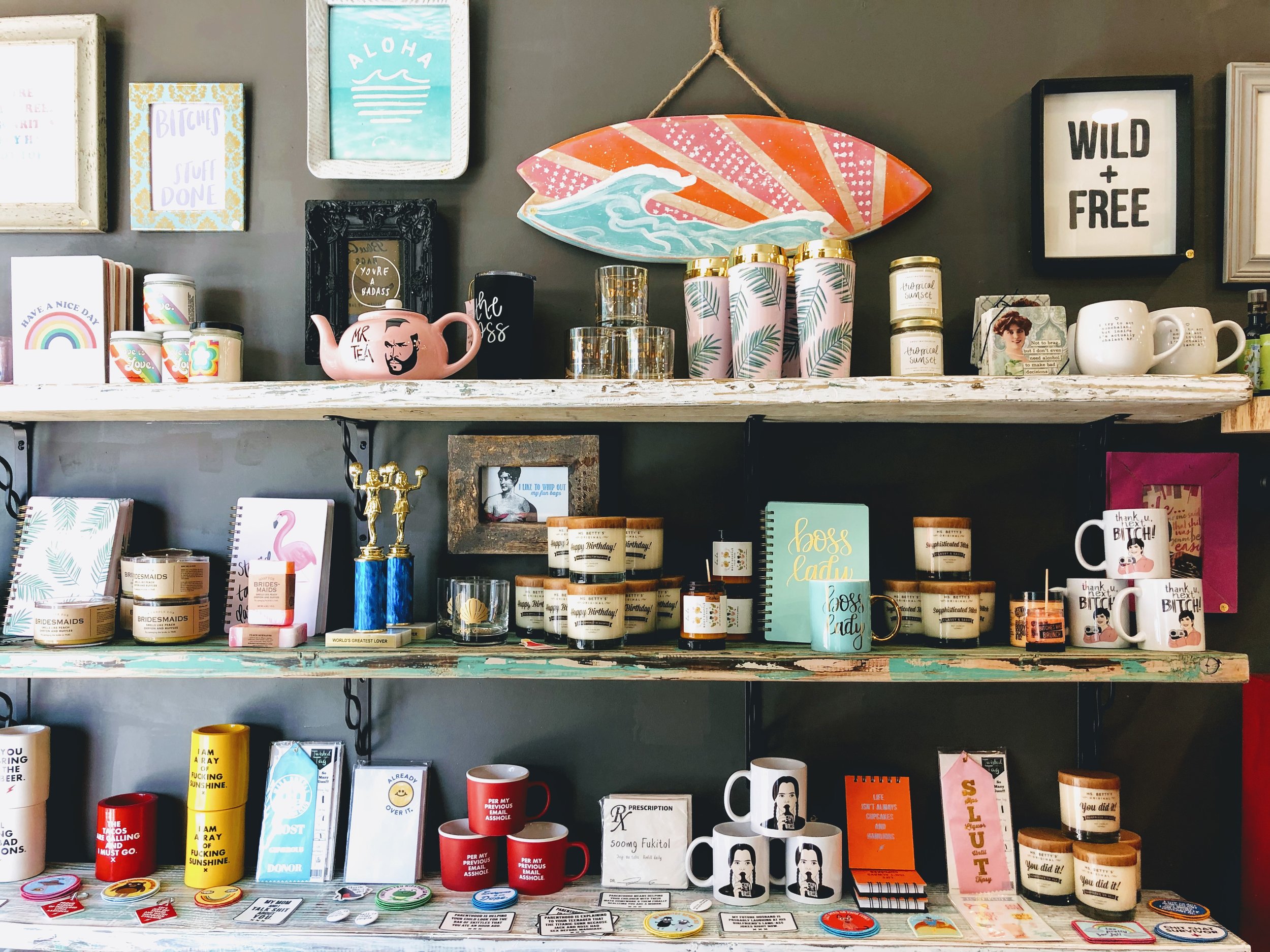
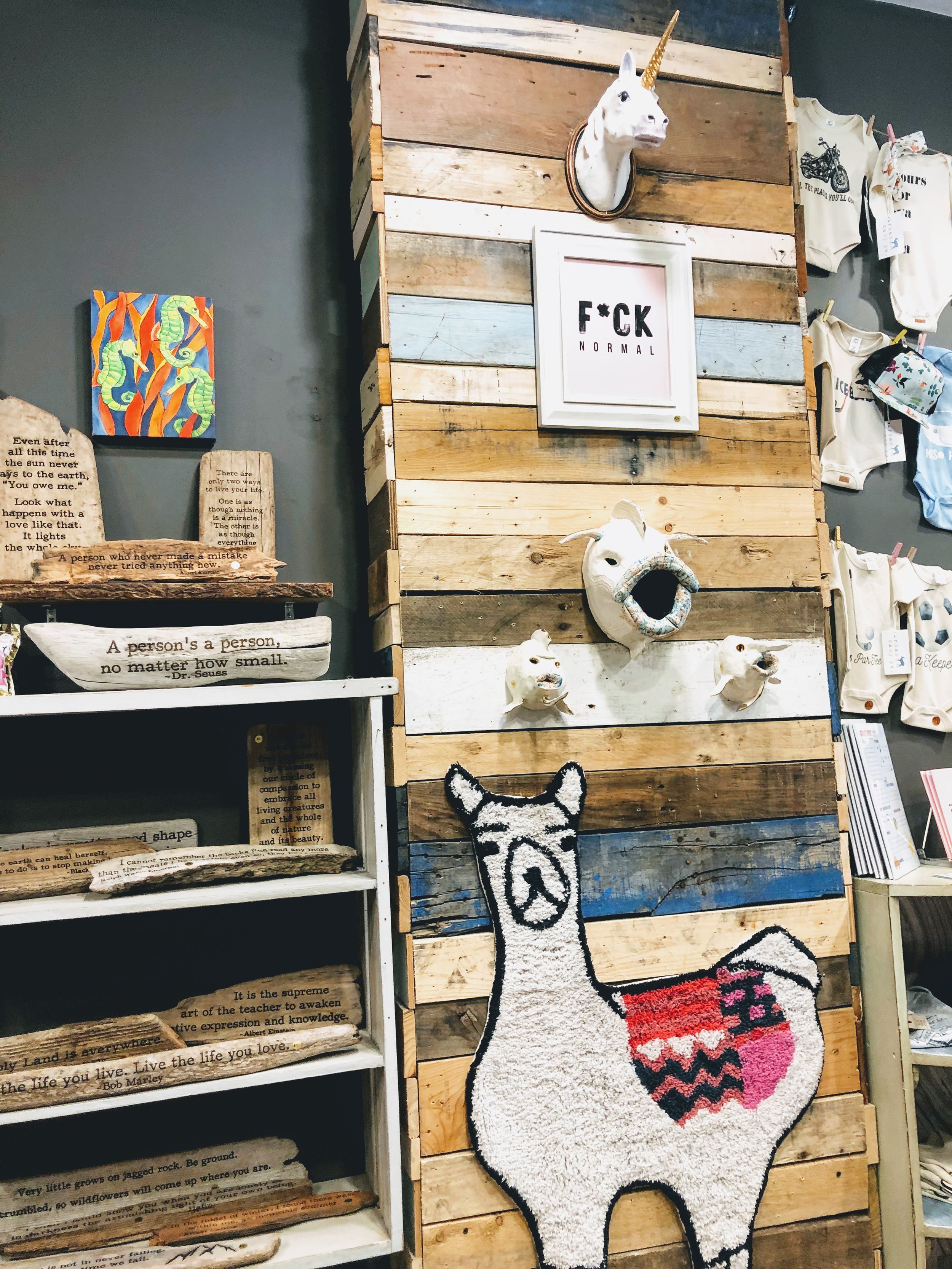
What makes the beachy Codfish Cowboy unique is that it's filled with pieces made by local residents. There's a very low chance you'll be able to find the item on Amazon later.
It's not the wine country that is the North Fork, it's not the exclusive soiree scene of the Hamptons, nor is it quite the suburban sprawl that takes up much of the rest of Long Island. Long Beach, New York is a two square mile city of 30,000 people whose lives revolve around the 3.5 miles of beautiful beaches and 2.2 mile long boardwalk. Surfing, sunny days, and stiff drinks are certainly themes you’ll see thriving in the Long Beach’s West End, but scratch a little deeper and you’ll find so much more to this little community.
In the West End, where the bay and ocean are separated by two blocks, an impressive amount of restaurants, bars, and boutiques bring West Beech Street to life. In the midst of the action is an independent shop that draws you in with earthy smells and a friendly chalkboard whale letting you know they're open. This is The Codfish Cowboy. It’s the kind of store where you are guaranteed to find the perfect gift you went in to buy, and also sure to come out with your new favorite thing. Clever home items, a selection of clothing, unique jewelry, adorable kids stuff and more - it's all the vision of Angela Skudin, its founder and owner.
What makes the beachy Codfish Cowboy even more unique is that it's filled with pieces made by local residents. There's a very low chance you'll be able to go in and then find the item on Amazon later. Skudin prides herself on the fact that when you purchase one of her beautifully curated products, you are supporting a Long Beach maker. At the heart of her ethos is the notion of giving back; bringing something lovely into your life or home while supporting others, it's a win-win.

Here I talk to founder Angela Skudin for If Lost Start Here about what drove her to start The Codfish Cowboy:
What is The Codfish Cowboy and how did the idea for it come about?
I’m classic for my impulsive “great ideas” that fully lack any research, plan, or thought. If you put a visual perspective to it, imagine it like being a squirrel in a cage. The Codfish Cowboy was an impulsive idea that came from the desire to have a shop in my current hometown that reminded me of the shops I love visiting in my original hometown in Tulsa, Oklahoma. I’ve always been “the best gift giver” in my family. I’m told I have the ability to choose the perfect gift for anyone. At the Codfish Cowboy you can find something for a newborn baby, a bachelorette party, housewarming, 80-year-old Aunt Betty.
Why did you decide to open the store in the West End of Long Beach?
When I moved from Tulsa to Long Beach 16 years ago, I lived in the West End with my now-husband. The West End has a vibe and energy that’s undeniable. The Codfish Cowboy is now part of that vibe.
You are very supportive of various causes, from local makers to crucial environmental issues. Can you talk about how you decide whose work to display and sell and how those two passions intersect?
My mother is an immigrant from Germany. My grandfather was a maker. He owned his own furniture-making business. My family still has the original couches he made with his own two hands half a century ago. You can’t get quality like that from a factory. That business made my family who they are today. It paid for private school for all 3 of his children and allowed my family to own a home in America. It’s important to support makers. In turn, we get handcrafted quality items that have a story and help a family.
When I curate, I want to know that story. I want to pass that story on to my customers. We can spend our money anywhere we chose. It feels good to spend it on a piece of handmade art from Long Beach high school’s art teacher whose family lives 3 blocks away and rolls by in their beach wagon waving hello as they pass the store.
Growing up, my family focused on helping others and making sure my sister and I knew what paying it forward felt like. We were a middle-class average family with 2 hard-working parents. Every Thanksgiving my family adopted a family in need and brought Thanksgiving to that family. Every Christmas we adopted a family in need and brought wrapped gifts and Christmas dinner to that family. I’ll never forget those moments. When you are a kid, everyone is equal. When we dropped off the presents and food, my parents would converse with the parents and my sister and I played with those kids like they were our long-time friends. There was no Rich vs Poor, no sense of entitlement. We were all equal. I carried that feeling with me and it’s never left.
As far as environmental issues go, I have always been that person that’s picking up trash in a field, grabbing rogue plastic bags in the ocean or making sure all the soda can rings were cut so a duck doesn’t get strangled. I’m the crazy lady that washes plastic straws and reuses them. I have had the same bag from Ikea for 8 years now. To me it’s common sense….we only have one Earth and it’s our responsibility to make sure she is around for the comfort of the next generation.
What inspired you to begin your apothecary line, “tribal life alchemy”?
Karen Michel, one of my partners, was the inspiration and soul of Tribe Life. One day she said to me, “we should do our own pure essential oil product line,” and I said, “absolutely not.” Fast forward 2 months later we had Tribe Life. Karen is a basically a wizard and can do anything. I give her my ideas for graphics and she can read my crazy brain. With Tribe Life, we really wanted to ensure the quality of the products we were offering to our customers. We live in a toxic world. If I can offer pure products that have therapeutic properties to our customers, I’m going to be able to rest easier. That’s what Tribe Life Alchemy is about.
How would you say The Codfish Cowboy has evolved over the years?
I wanted to build our audience organically. No paid ads (because there simply was no budget for that). I started The Codfish Cowboy with $25,000. The build was done by myself and my awesome handy FDNY husband Casey. The materials were repurposed. I did a lot of dumpster dives to get the wood for the walls and molding. There are pieces of Long Beach homes on the walls of The Codfish Cowboy and I think that’s pretty cool. We are up to right around 3k on our Instagram followers and we are looking to launch our online sales this fall. I’m excited to see that number grow.
What has been the most surprising thing about running the store?
The perception other people have about your business. Just because you have a store does not mean you are rich and just because I’m not physically standing in the store does not mean I’m not working. When you own a brick and mortar your job never ends. There’s a ton of back end work, vendor meetings, research, buying, etc. I’m one person. I can’t be everywhere all the time, but I try.
What is your favorite way to spend a day in Long Beach, aside from being behind the counter?
Shopping local, eating local, riding my beach cruiser on the boardwalk, and soaking in the sun on our beautiful beaches.



Follow TheCodfishCowboy on Instagram and visit them at 891 W Beech Street Long Beach, NY
& visit my other West End Picks:
Blacksmith’s Breads 870 W Beech street
Dough Hut (right next door) 891 W Beech Street
Island Thyme 780 W Beech Street
Jetty Bar and Grill 832 W Beech Street
Lost at Sea 888 W Beech Street
RaKang 895W Beech Street
Shine’s Bar 55 California Street
Speakeasy 1032 W Beech Street