

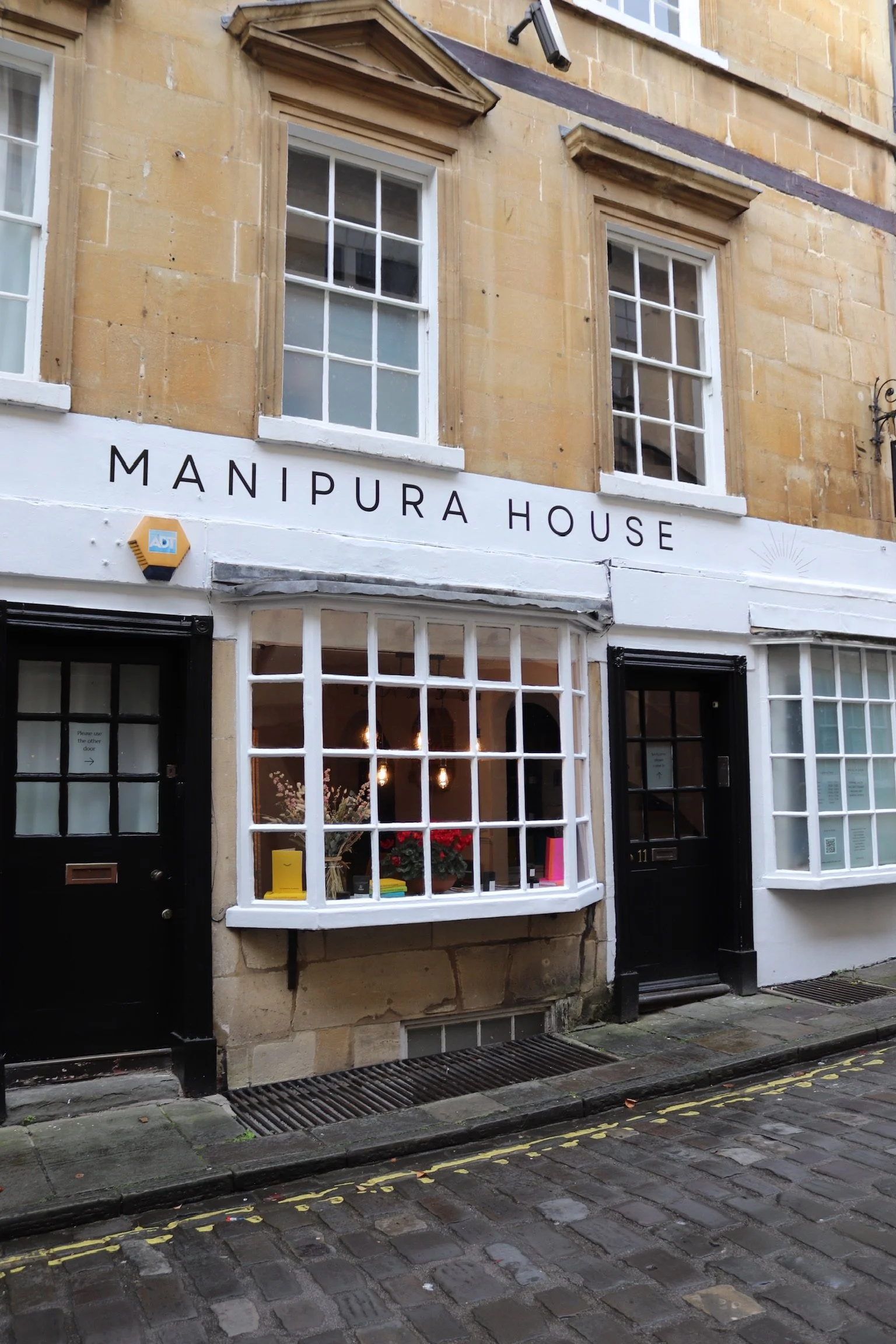
Manipura House, Bath
Explore Manipura House, a mind-body wellness hub in central Bath offering massage therapy, wellbeing workshops and expert bodywork in a stunning setting.
Perfect For
Anyone interested in looking after their long term physical and mental health, supporting fitness and recovery from trauma. This is also the ideal place for anyone who understands that massage therapy is more than just a one-off treat, but an essential partner for a healthy lifestyle.
Why You’ll Love It
Manipura House is a centre that takes care of your physical and mental wellness and that’s on a mission to elevate your health and restore your energy.
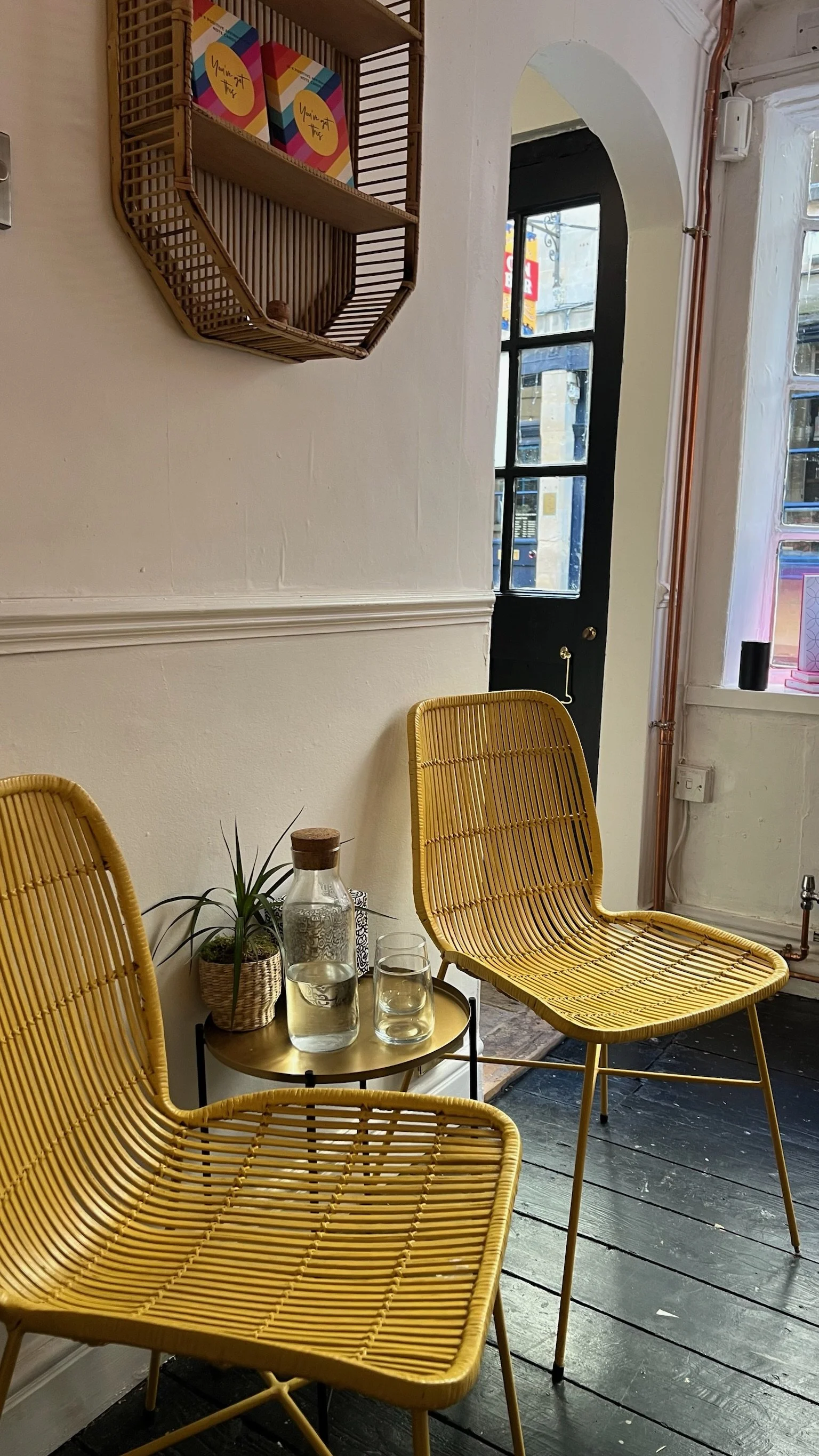
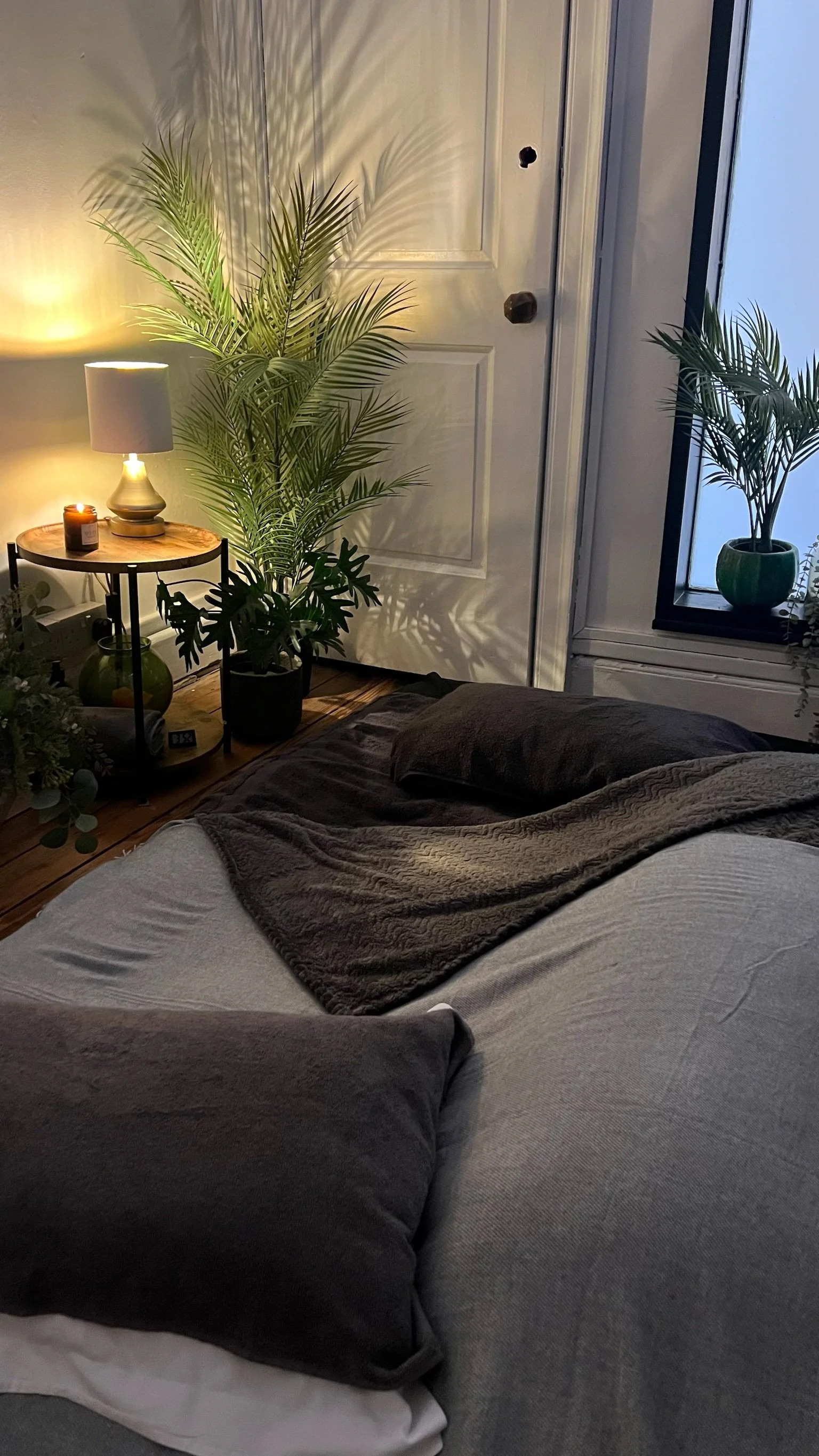
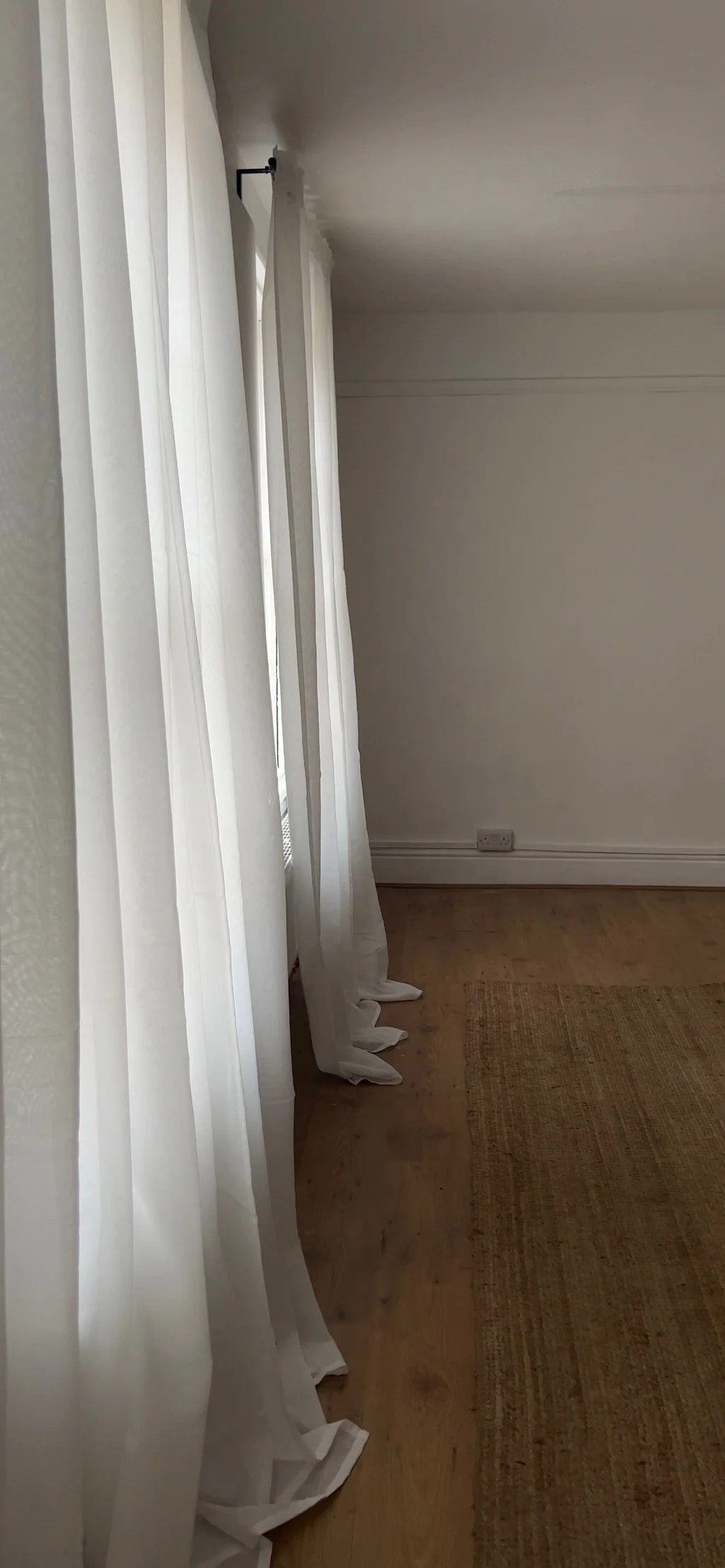
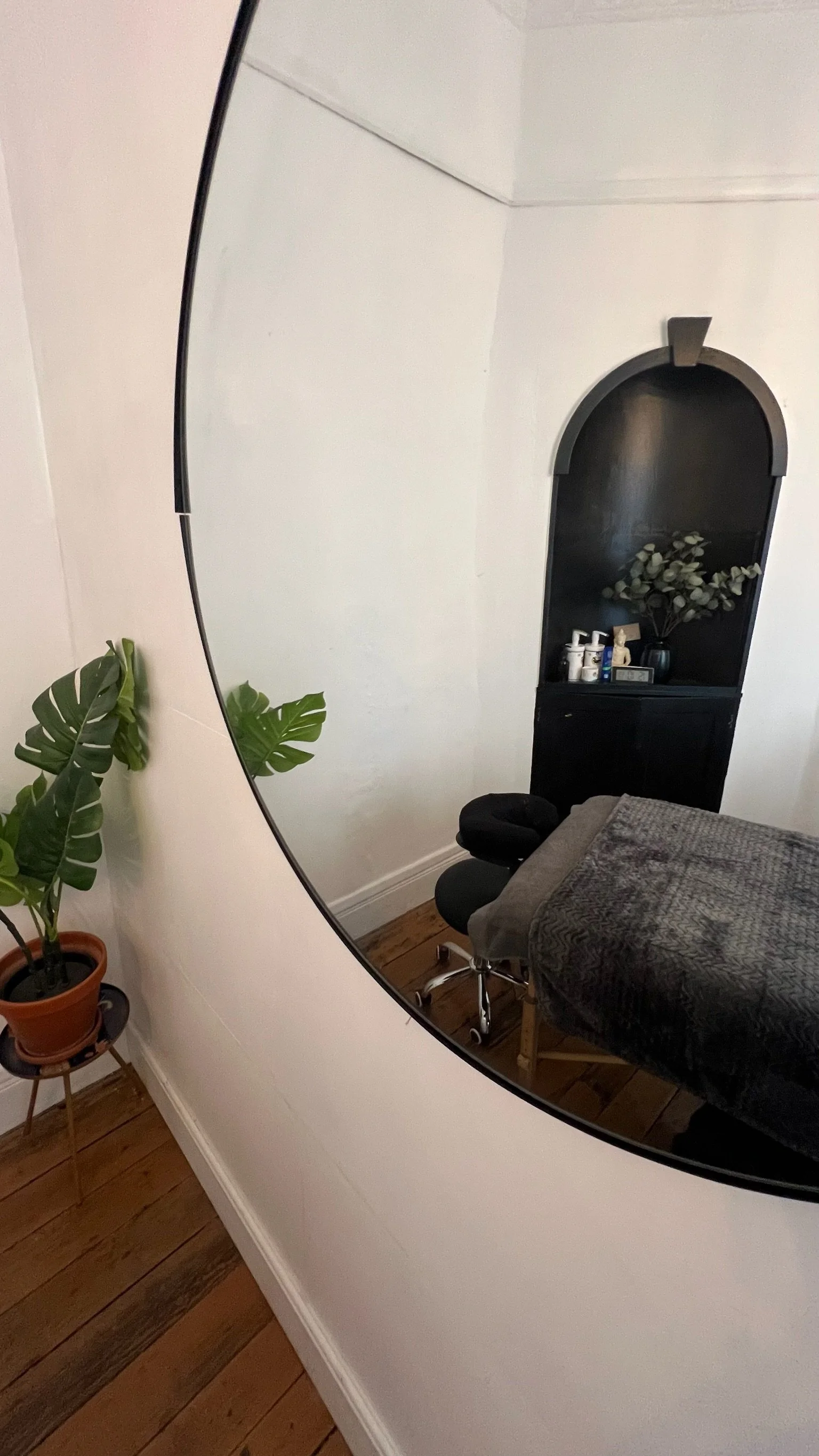
Hosted in a stunning Grade II Listed building in the heart of Bath, you will find exceptional bodywork, clinical massage, therapeutic massage therapy, wellbeing workshops and accessible recovery tools plus a range of wellness services, to help transform your ability to connect mind and body.
The name Manipura refers to your solar plexus, a bundle of nerves in the abdomen that regulates the body’s stress response. As co-founder Lynsey Keyes explains: “It is the centre of our identity and energy, and the key to unlocking our personal power. By tapping into this nerve centre in a variety of ways we can build a strong, confident foundation from which to grow, empowering ourselves with knowledge and awareness of our mind and body to take charge of our own health.”
What Makes It Special
Located on a stunning street, the space hosts a range of highly trained and skilled expert bodywork therapists, who understand and work with your individual needs. It’s a one-stop health hub connecting wellness practitioners through workshops and coaching sessions as well as a curated wellbeing retail offering.
The If Lost Take
One of the hardest things to do when you’re ready to take care of your physical and mental wellbeing is finding the right practitioners to support you. Manipura House takes away the guess work. Under one roof, you’ll find the people and the space you need to help you better move through everyday life.
We’ve handpicked Manipura House for our Wellbeing Guide to Life because it perfectly reflects what we look for in a wellness space: expert-led, beautifully designed, and truly grounded in whole-person care.
Whether you’re seeking to reconnect with your body, manage stress, or explore long-term support for your physical and mental health, this is a place where expert knowledge and compassionate care come together. Expect evidence-based therapies, bespoke treatments, and a deep respect for the mind-body connection.
Founder’s Go-To Wellbeing Advice:
“Our approach to healthcare should move beyond a reactive approach, to a more sustainable and enjoyable one. A holistic approach not just in name, but in the 360 degree services we engage with.”
Some Practical Details
Therapy sessions are all in person on site. Their partner therapists may have online offerings.
Gift vouchers are available
You can book directly on the website.
11 Queen Street, Bath, BA1 1HE, United Kingdom
hello@manipurahouse.com
Tel: 0122 5984379

Daybreakers
Daybreaker is a global community hosting early-morning dance parties and wellness experiences focused on joy, connection, and conscious movement. With events in iconic spaces—from museums to rooftops—it offers a fresh, fun way to connect mind and body.
Perfect For
Anyone who wants to move their body, feel amazing, and start their day with a serious spark of joy. Ideal for people craving connection, ritual, and something different before 9am.
Why You’ll Love It
What if your morning started with a DJ set, a dance floor, and a room full of strangers moving like no one’s watching—completely sober?
Welcome to Daybreaker: a global movement that turns wellness on its head.
Equal parts early-morning rave, mindful movement practice, and joy experiment, Daybreaker events are designed to wake up your body, uplift your spirit, and reconnect you with fun.
What Makes It Special
Sober, high-vibe dance parties – No alcohol, no late nights—just sunrise dancing in iconic locations, from rooftops to museums.
Movement: Without the pressure to get it right or look good while doing so.
Community without dressing up– No velvet ropes, no staying awake beyond 9pm—just people who are there to feel good and connect.
The Story Behind It
Founded by Radha Agrawal in 2013, Daybreaker was born out of a desire for joyful connection and conscious community.
Radha, frustrated with traditional nightlife and craving something deeper, imagined a new way to gather: one rooted in wellness, intention, and playfulness.
What began as a 6am rooftop party in NYC has now grown into a global movement across 30+ cities—and counting.
Something Else We Love
We love how Daybreaker’s heart-led energy doesn’t stop at the dance floor—through its sister platform, the Belong Center, it’s creating deeper spaces for connection.
With courses, community gatherings, and creative initiatives like Belong Circles and Belong Benches, it’s all about helping people feel seen, supported, and part of something bigger.
The If Lost Take
We love Daybreaker because it reminds us that joy is a wellbeing practice. That dance floors can be about more than sticky surfaces. That community can be felt in a great song to dance to.
This is movement as a medium for joy, self-care as something done together and mornings reimagined as about more play rather than more productivity.


Finding Purpose: The Story Behind If Lost Start Here
Discover how a personal promise sparked a mission to guide those who feel lost.
Have you ever felt like you’re trying to navigate life without a map? Maybe you’ve been searching for answers, or just a simple sense of direction in a world that feels more chaotic by the day.
We get it—because we’ve been there too. That’s why we built this company, not just for ourselves, but for you, and anyone else feeling lost and looking for guidance.
What began as a deeply personal vow to help others has grown into a company with a big social mission.
It all began with a promise. Claire, one of our co-founders, had just dropped her mum off at yet another mental health ward. Her mum’s long struggle with clinical depression and anxiety had reached a point where Claire felt powerless to help. But in that moment of deep frustration and sadness, she made a vow: if she couldn’t fix things for her own mum, then she would do everything in her power to help others who felt equally lost.
That personal story is at the heart of If Lost Start Here—a wellbeing company that stands for much more than just offering advice or selling products. We exist because, like so many others, we know what it’s like to be overwhelmed by life’s challenges, and we wanted to create a place where people could start finding their way back to themselves.
Our mission is rooted in five reasons—five guiding ‘whys’ that shape everything we do
Simon Sinek talks about finding your 'why'—the core purpose that drives everything you do. For us, that purpose is crystal clear. Every action we take, every product we develop, is rooted in five fundamental reasons:
1. Because Claire promised to help.
After that heartbreaking day at the psychiatric ward, she knew she had to create something that would offer real, meaningful support for those who feel lost.
2. Because we’re tired of the noise.
In today’s world, we’re bombarded with messages about how we need to change, improve, and be 'better' versions of ourselves. But sometimes, what we really need is to just accept ourselves as we are—and tune out the noise.
3. Because support matters.
We believe that to be truly self-guided, we also need collective support. Community and connection aren’t just nice-to-haves; they’re essential.
4. Because where we live matters.
Our environment—both the physical world around us and the inner world within us—shapes who we are. Exploring both is key to our wellbeing.
5. Because we follow curiosity.
We’re on a constant journey, always asking questions, always seeking new ways to support our community. Curiosity is the engine that drives us forward.
From feeling overwhelmed to feeling supported—If Lost Start Here is about helping you find your way
At If Lost Start Here, we don’t just want to inspire you—we want to help you take real steps toward a better life. Our purpose is to guide you from feeling overwhelmed to feeling supported, from feeling lost to finding your way.
Whether you’re new to us or have been with us for a while, we’re committed to walking alongside you on this journey of self-discovery and wellbeing. We invite you to explore more on our website, sign up for our Well-ish newsletter, and let curiosity guide you, just as it does for us.
Let’s Get Started.
Feeling lost in the world of wellness? Join our Well-ish newsletter for monthly insights, tips, and real stories to help guide you back to yourself. Sign up today and get our latest edition straight to your inbox!
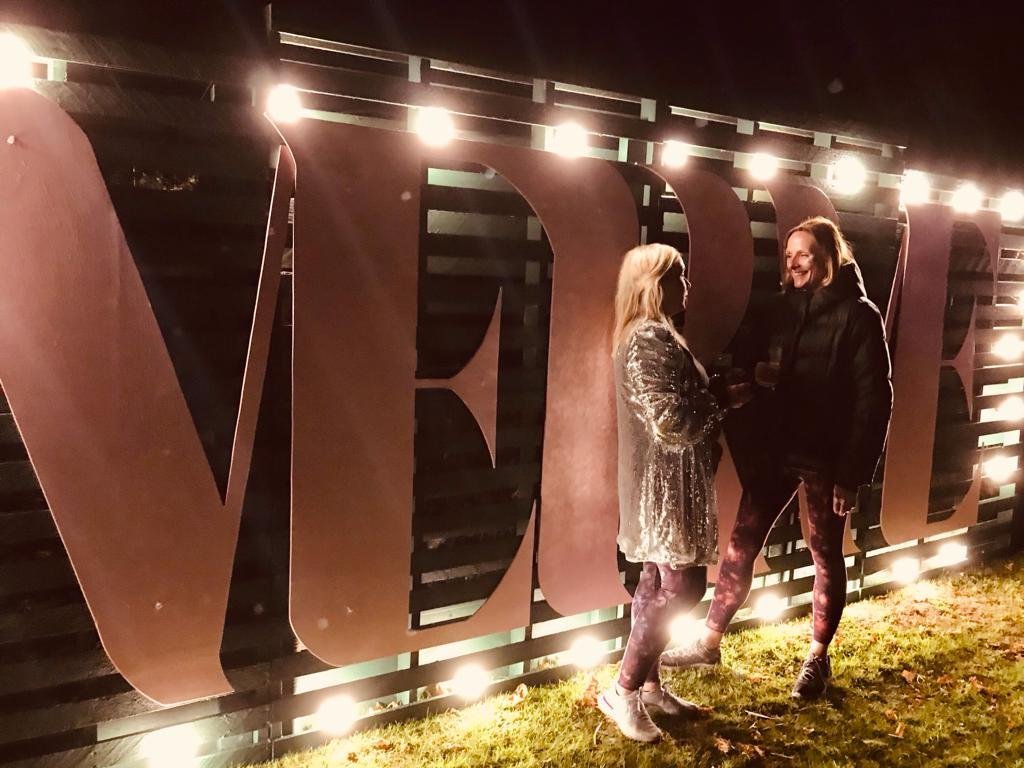
VERVE Festival | A conversation with co-founder Anna Hayward
One of Conde Nast Traveller’s “Woodstocks of Wellness”, we interviewed co-founder Anna Hayward about how doing what you love is at the heart of any well-being practice
“Wellness can be whatever makes you feel better.”
We talk to Anna Hayward, the co-founder of VERVE Festival— a weekend wellness reset located in the heart of the Wiltshire countryside — about why you don’t need to be a wellness warrior to attend and how we can all shape a practice that reflects who we are, rather than who we think we need to be.
Where once there were music festivals, literary festivals, and ideas festivals, it now feels like there’s a movement toward wellness festivals. Why do you think we are now drawn to them?
I think that’s true although there are still only a handful of wellness festivals.
It feeds into our current moment. I know from feedback how much people appreciate just having a real me-day and not everyone these days wants to go out to a festival and drink till 4 am. We’re all starting to care a bit more about our health and well-being.
We celebrate healthy hedonism; we still have a bar, we still have cocktails, and we’ve got DJs in the evening, but it’s more of a balance.

Do you think the perception of wellness has shifted? We’re noticing how wellness has become something of an unachievable goal, ironically given its intention.
I feel like the version of wellness that you offer is more accessible; that it’s ok to be messy about it (wellness doesn’t have to be this pristine thing anymore – it’s ok to fit it in when your kids are crawling on you).
I think so too. I think the idea of wellness is for everybody and it’s for all shapes and sizes and ages and it doesn’t matter. We get all kinds of people at VERVE Festival – we had a man in his seventies and older ladies with grey hair and bigger girls and skinny girls and everything in between and that’s what it should be. It shouldn’t have ego; it shouldn’t be about anything other than just trying to be better to yourself.
Wellness is different for everyone. It can just be about having a big burger and a glass of wine (that’s what makes me happy). That’s just as good for you, isn’t it? Wellness can be whatever makes you feel better.

What do you hope people experience with the festival?
It’s different for everybody. People were coming up to me at the end of the last festival – complete strangers – hugging me and saying what an amazing time they’d had. Many people said: “I can’t believe I’ve never done this before. I’m going to go home and carry on with it.” And quite a lot of people said they were going to make changes. They’d listened to a talk, or something had happened during the day, and it was going to be a little catalyst for change in their lives.
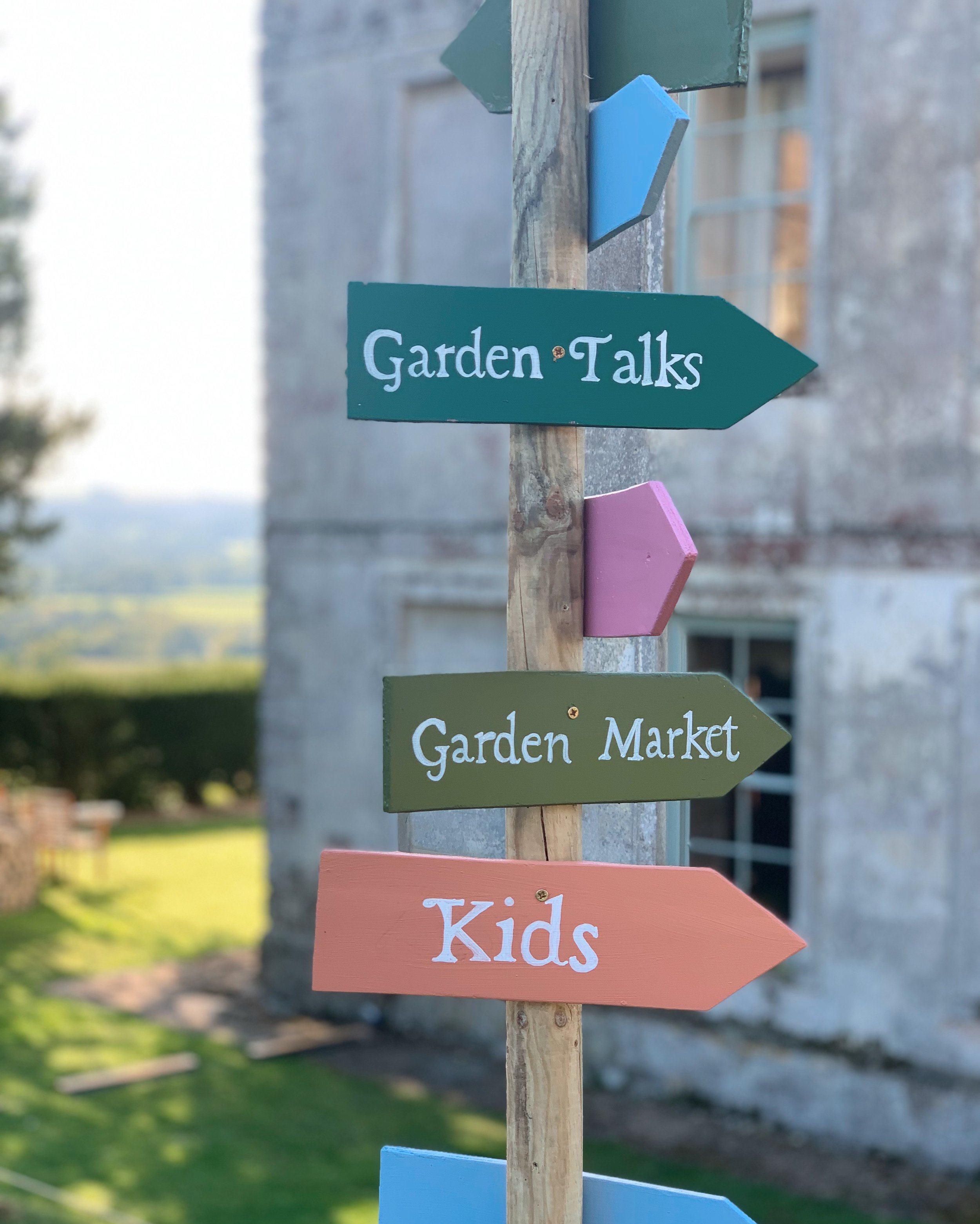
The timetable allows people to do their own thing and most things are free once you are at the festival, so people just drift around and everyone has their own way of approaching the day.
We enable people to try some things that are different, that they may never have thought of doing in a million years. While some people literally want a day away from their children, or to sit with their friends and drink cocktails and listen to some music. That’s great too.
There’s been a huge surge of interest in nature since you started, but you built that in from the beginning.
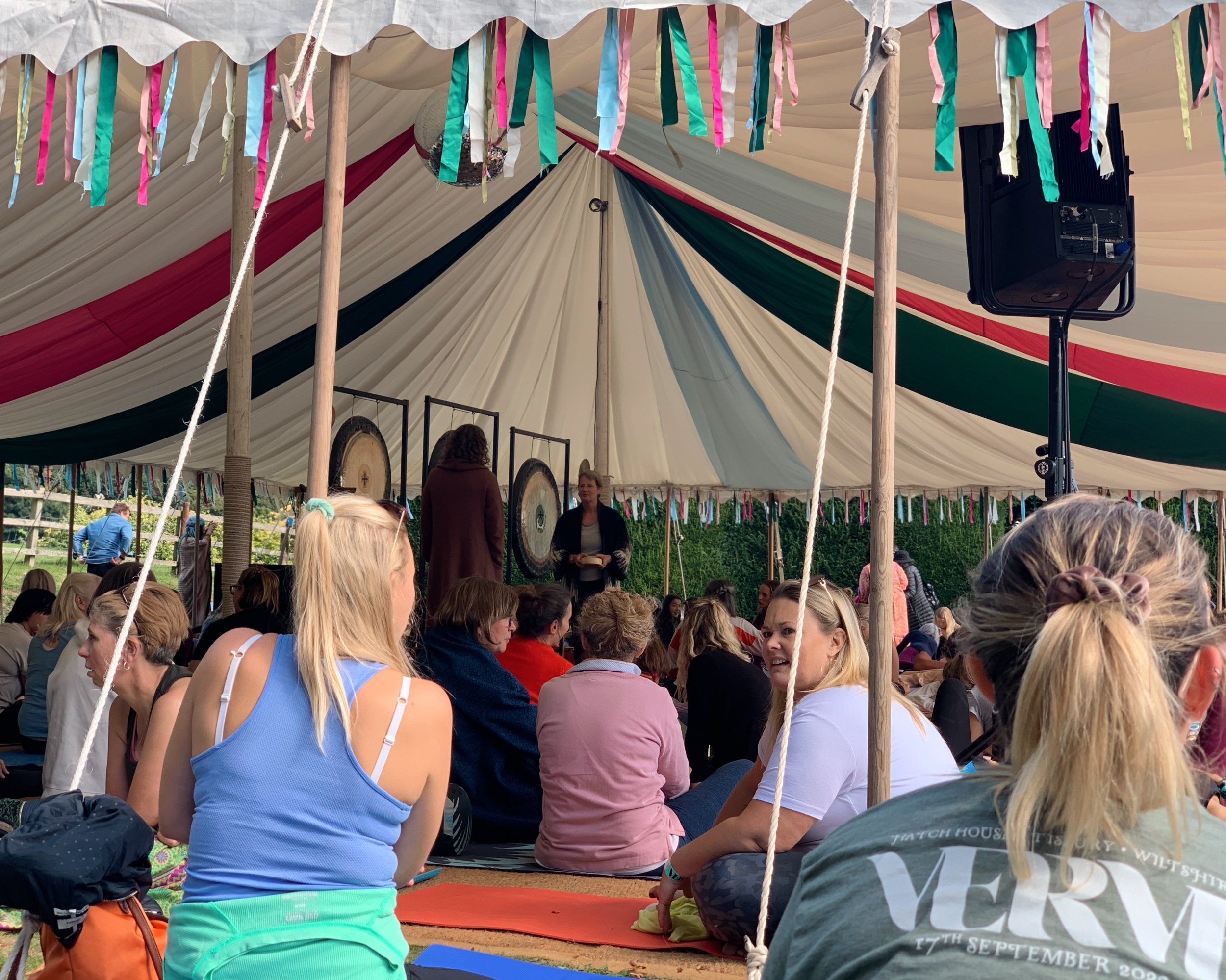
Yes, the whole idea is health, wellness, and nature. We live in an area of natural beauty, a dark skies reserve, and the farm we hosted on the first year was so beautiful. We realized that’s our Unique Selling Point. There are other wellness festivals, but no one has got this natural space, this greenery and this beauty quite frankly. We’ve done star gazing, we once got the AONB to come along with their astronomers, we had runs along the farm, we offered forest bathing, and everything was just to celebrate being outside and being in nature.
Even a few years ago, when we held our first festival, no one really talked about nature but obviously, with the pandemic — when people were going out walking and that’s the only thing they could do in a way — people realized how important it is to their lives.
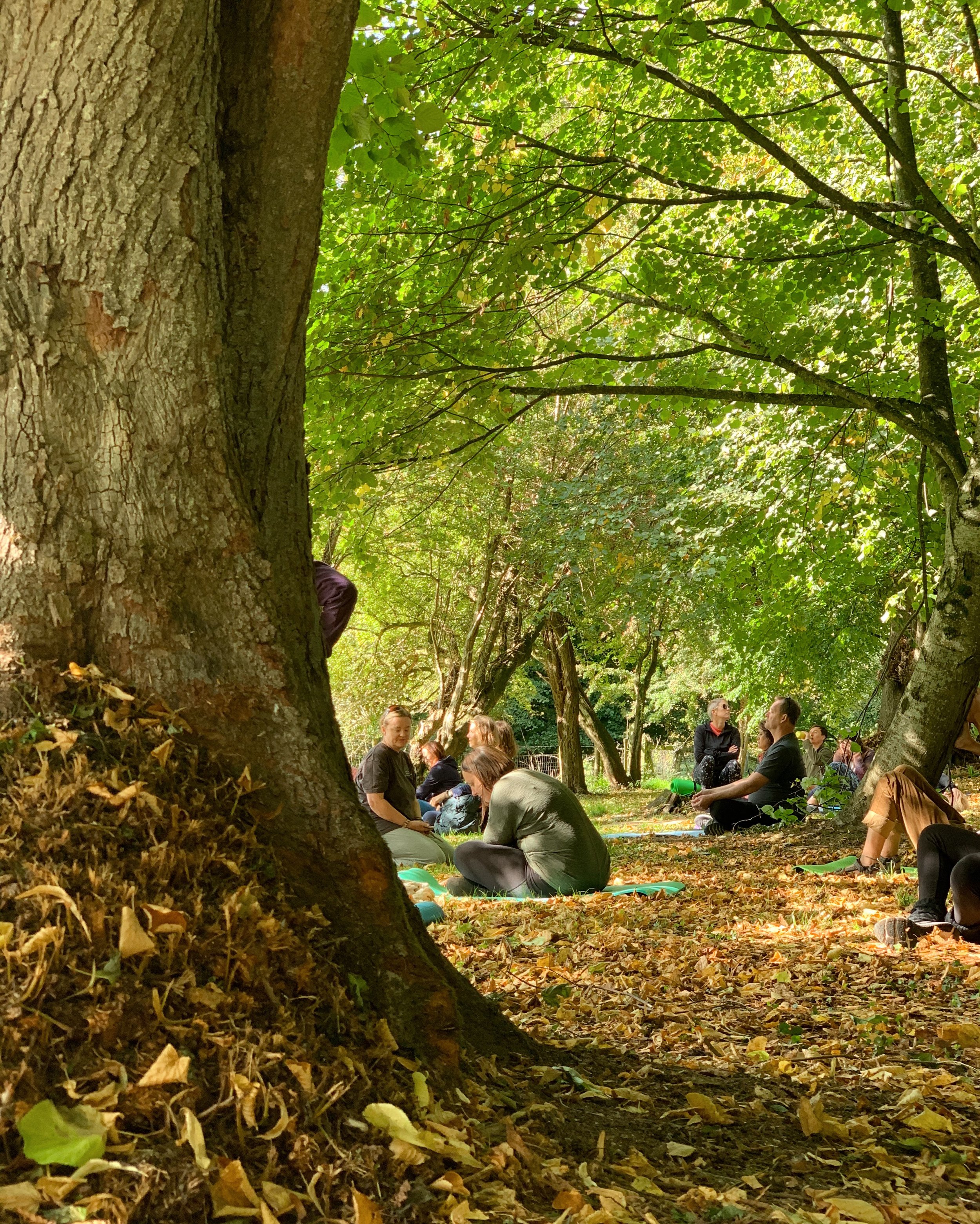
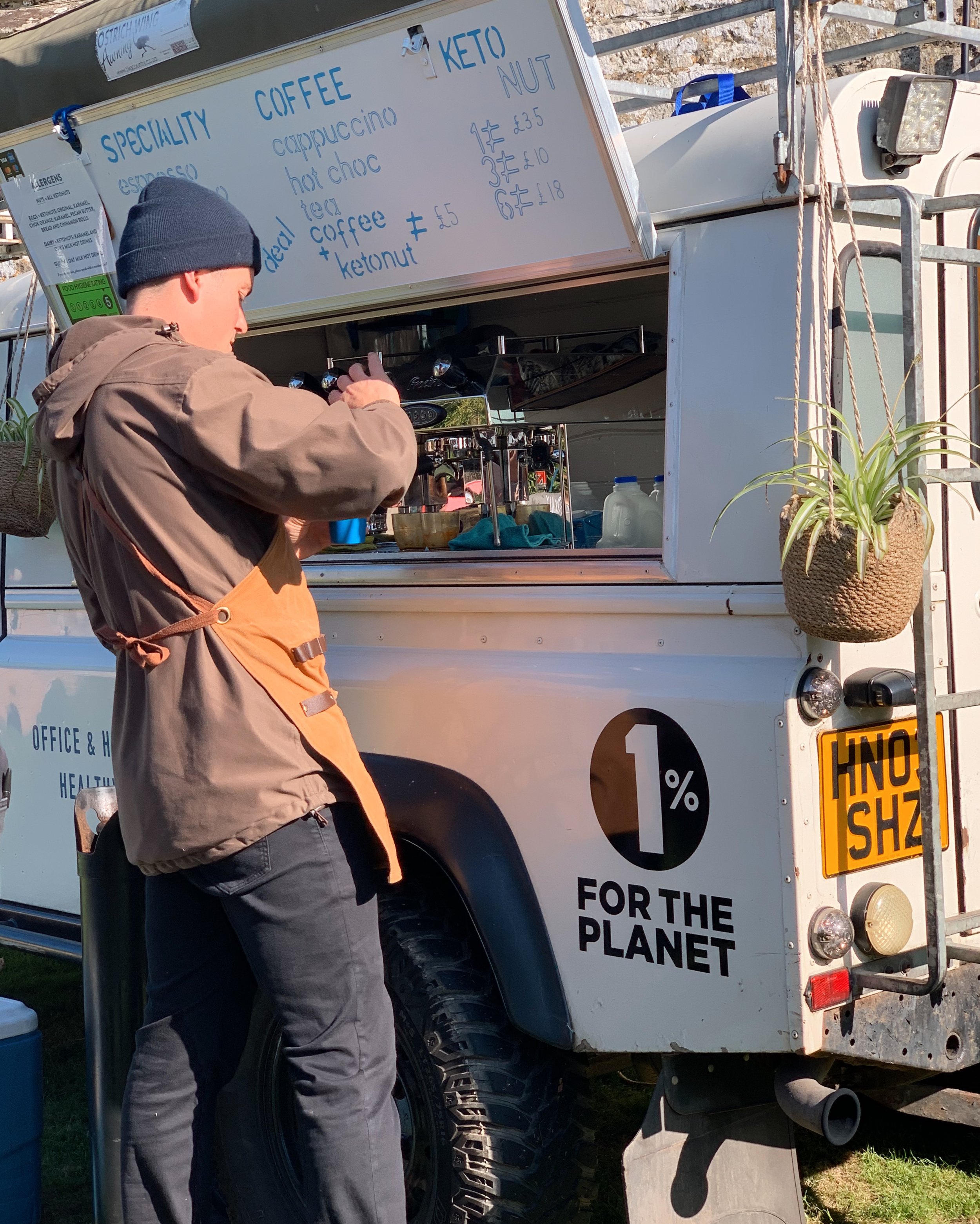
What advice do you have for someone starting a wellness practice wherever they are?
Do what makes you happy. I’m lucky I’m a glass-half-full person, but my advice would be don’t force yourself to do something if you are not going to enjoy it because whatever you do it’s got to make you happy.
Don’t do something because you think you should or someone else is doing it. Do something that is true to you. Which is what we’re doing with Verve.
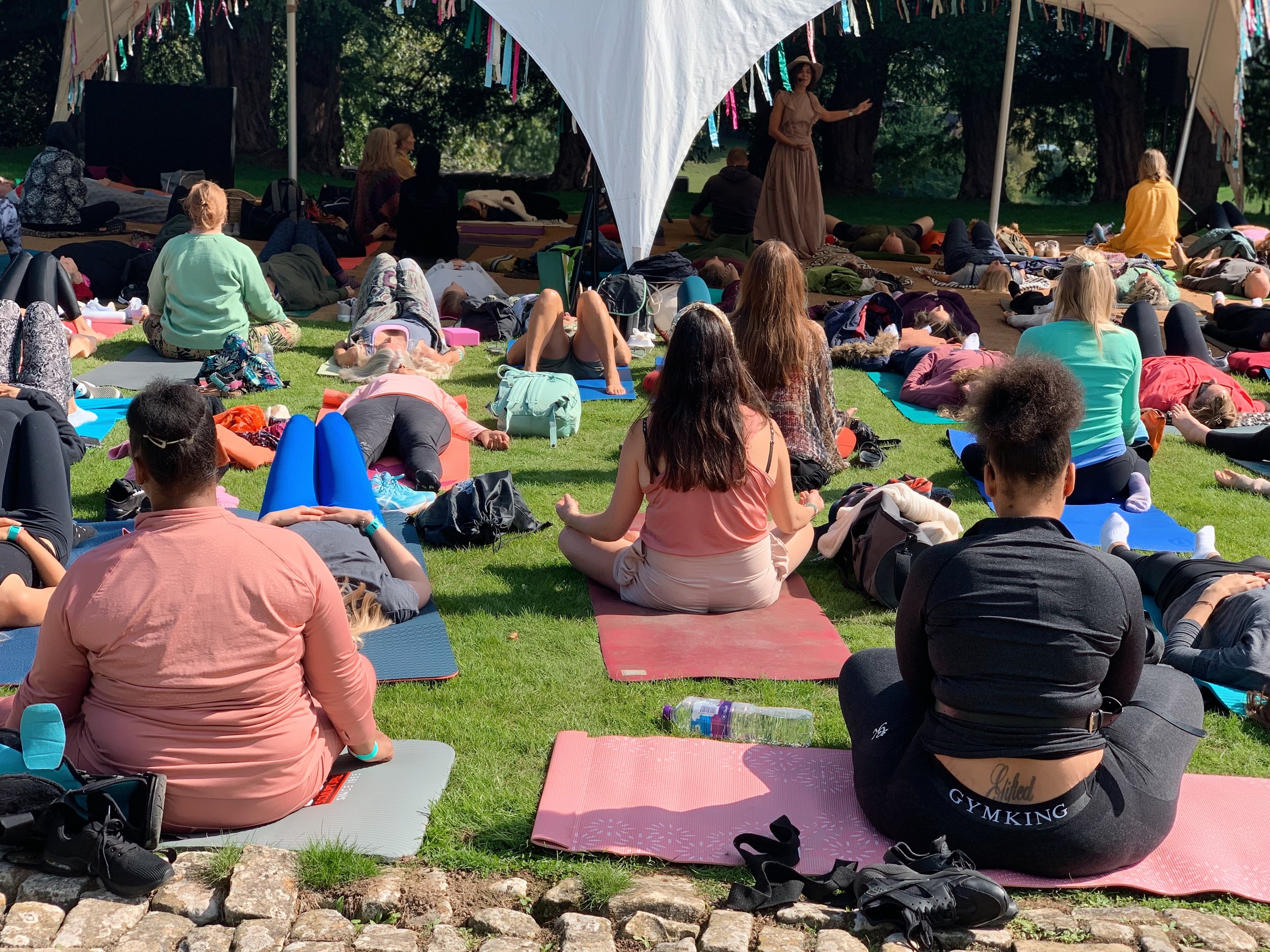
We’re excited be participating in VERVE Festival this year. Find out more here.

Okay Humans
With Okay Humans, founder and LMFT Christy Desai is modernizing and destigmatizing therapy to help more people feel better, stronger, and more alive.
We are constantly on the lookout for modern therapy that holds great design with great practice. We’ve sat in one too many uncomfortable waiting rooms, following frustrating booking systems, that came after equally as frustrating searches for someone we actually wanted to work with.
When we discovered LA’s Okay Humans, we knew we’d found a way of offering therapy that made sense to us, and how we live our modern lives. Founder (and LMFT therapist herself) Christy Desai tells us how she has designed a new client experience and environment around therapeutic practice. (We now just need one on every High Street and in every neighborhood).
Tell us about Okay Humans:
Okay Humans is a modern therapy practice from the founders of Drybar. We have a group of qualified and diverse therapists with degrees from places like Pepperdine, USC, Smith College, and more.
We’re all about making it easier to get to therapy. Before you even visit Okay Humans, we've simplified the process for you. Finding your therapist, booking your session, and filling out "paperwork" is all done at your fingertips through our industry-leading app or on okayhumans.com.
It was important to us that Okay Humans be on a visible street so we opened our flagship location in the Brentwood neighborhood of Los Angeles on 11710 San Vicente Blvd.
When you arrive at our brick-and-mortar location, you'll notice we've designed a space that makes you start to feel okay the minute you walk through the door – beautiful architecture, a wellness shop, mentali-tea bar, and sound diminishing therapy suites to ensure a feel-good experience from start to finish. We also built an industry-leading app that makes scheduling, booking, and paying a seamless experience.

What inspired you to start this space and app?
After unsuccessfully trying to outrun the stress of life, I finally looked for a therapist in hopes of catching my breath. What started as “3-5 sessions” turned into years of deep inner work. I learned how to be okay with conflict, curveballs, and growth, just to name a few things. My own experience turned into a personal mission to help other people feel better, stronger, and more alive so I went back to school to get my master’s in clinical psychology and become a licensed marriage and family therapist.
From my experience on both sides of the couch, I realized how antiquated and prohibitive the entire experience around therapy was. I knew that changes needed to be made to remove the barriers of entry so therapy could be more readily available and accessible.
Prior to becoming an LMFT, I was the franchise owner of a kids’ indoor playspace where I learned the ins and outs of building and operating a small business. Coupling these two experiences together, the idea of Okay Humans was born.
What do you offer?
We have a brick-and-mortar location where we see teens, adults, and couples for in-person therapy sessions and have a virtual option available for California residents.
To take even more of the headache out of the experience, we’re now in-network with Aetna & Cigna to help guests save up to 100% of their session costs. Even if guests aren’t covered by our in-network partners, we’ll submit insurance claims on their behalf so they can still save up to 80% on session costs, without the hassle.


What makes Okay Humans different?
We know therapy works. It changes lives and helps people thrive. The magic that happens between you and your therapist in session and the relationship you build together is key in accomplishing that. Our therapists at Okay Humans will provide a framework and a safe space, but there is no right or wrong way for the session to go - the important part is showing up. We make it easier for people to do that, and that’s what I’m most proud of.
With insurance benefits, an app-based booking and payment platform, qualified therapists, and a beautiful, safe space - it's the best way to prioritize your emotional wellbeing.
Our long-term goal is to continue modernizing and destigmatizing therapy so more and more people can reap the benefits. We plan to expand across the country to reach even more people and make going to therapy feel okay in every way.
What keeps you motivated?
The impact that we’re making on people’s lives each and every day is what keeps me excited about building Okay Humans. Building a business is certainly not easy but if you can wake up every morning and know that you’re making a meaningful difference in the world, then it’s worth it. You don’t need to be the smartest, loudest, or most educated person in the room to build a successful business. But you do need to believe wholeheartedly in what you’re doing. If you’re doing something you love and something you’re passionate about, the triumphs supersede the trials.
Next (or first) steps?
To book an appointment, download the Okay Humans iphone app or go to okayhumans.com. To stay in the loop and access mental wellness tips, follow @okayhumans on social media.


Kelechnekoff Studio
A pole-dance studio that has diversity at its core that’s changing the shape of the wellness industry.
Nigerian-born Londoner Kelechi Okafor (recently named a Wellness Visionary to watch by Vogue) opened her pole-fitness and twerk studio space in 2016 to offer a more diverse space for women to get into their bodies and a more authentic approach to the dance styles that she teaches. Kelechnekoff Studio has since become a place of welcome to all, irrespective of body shape, ability, or background, restoring confidence to women who have been told one story of how they should look, and kindness in an industry that can seem anything but compassionate. Here the studio tells us more about their approach:
What is it? Kelechnekoff Studio is a pole dance studio in Peckham that offers classes of different levels, as well as classes in yoga, Wing Chun self defence, and handstands and flexibility.
Why do people need it? Kelechnekoff Studio is a place for all bodies to explore different types of fitness that have the power to make them feel sexy, powerful and confident. The space was started at a time when in the UK there were few fitness spaces that had inclusivity at their core and hardly any Black-owned pole dance studios.
What do you offer? The studio offers a range of pole dance classes — that include spinning pole, sexy pole, pole flow, pole dance inverts and climbs — from absolute beginners to intermediate levels. There are also sessions in Wing Chun self-defence, yoga flow, vinyasa yoga, and handstands and flexibility.
What makes it different? Our studio is based in the heart of Peckham and honours the origins of the dance styles we teach. Kindness and how people feel in their bodies are more important than appearance to us. We also strive to keep our classes as affordable as possible and create a caring community within our studio.
What do people need to know? We have classes every day of the week and even offer pole hire sessions for £5 during the week. In addition to this, you can buy a party package and have a pole dance or twerk party with us!
Tell us a little about your story: Our studio founder Kelechi Okafor is a trailblazer; she is an actress, personal trainer, pole instructor, director, author, and award-winning podcaster. Kelechi opened her studio in September 2016 to create a space for those who are often erased from mainstream fitness culture. These classes aim to nurture the relationship between mind and body and to be a safer space for people to enjoy fitness whilst exploring their sensuality with guidance and without judgment.
Kelechnekoff Studio Peckham
Sojourner Truth Centre
161 Sumner Road
London, SE15 6JL
Contact: info@kelechnekoff.com

Pages of Hackney
A bright blue beacon on Lower Clapton Road, Pages of Hackney is one of our favourite bookstores for reading advice. Founder Eleonor Lowenthal talks to us about what makes Pages of Hackney so unique and why independent bookstores matter so much to our neighborhoods.
A bright blue beacon on Lower Clapton Road, Pages of Hackney is one of our favourite bookstores for reading advice. It’s welcoming not just in how customers are greeted and the bookstore arranged (no intimidating, fusty-ness here), but also in terms of which books get to sit on its shelves and whose stories get to be told. Founder Eleonor Lowenthal talks to us about what makes Pages of Hackney so unique and why independent bookstores matter so much to our neighborhoods.
What is it? Pages of Hackney is a small award-winning bookshop on the Lower Clapton Road selling an eclectic mix of books. Our priority is to be a friendly, community bookshop that is accessible and inclusive, supporting the issues we believe in and giving a platform to marginalised voices in publishing.
Why do people need it? Everyone should have the opportunity to have books in their lives. When I started the bookshop in 2008, there hadn't been one in the local area for 30 years and we had both children and adults coming in who weren't sure what a bookshop even was. We do our best to reflect the local community in our diverse stock choices and through our Pay it Forward scheme to also make it affordable for everyone.
What do you offer? We sell books in the areas of literary fiction, politics, feminism, essays and life writing as well as philosophy, psychology, nature writing, music and children’s books. Our priority is for each customer to feel that the bookshop is for them, and we do our best to give our customers individually as much time and thought as we can. We put on lots of events, both in-person and online, addressing issues including gender, sexuality, race and current events as well as platforming novels from established and debut authors.
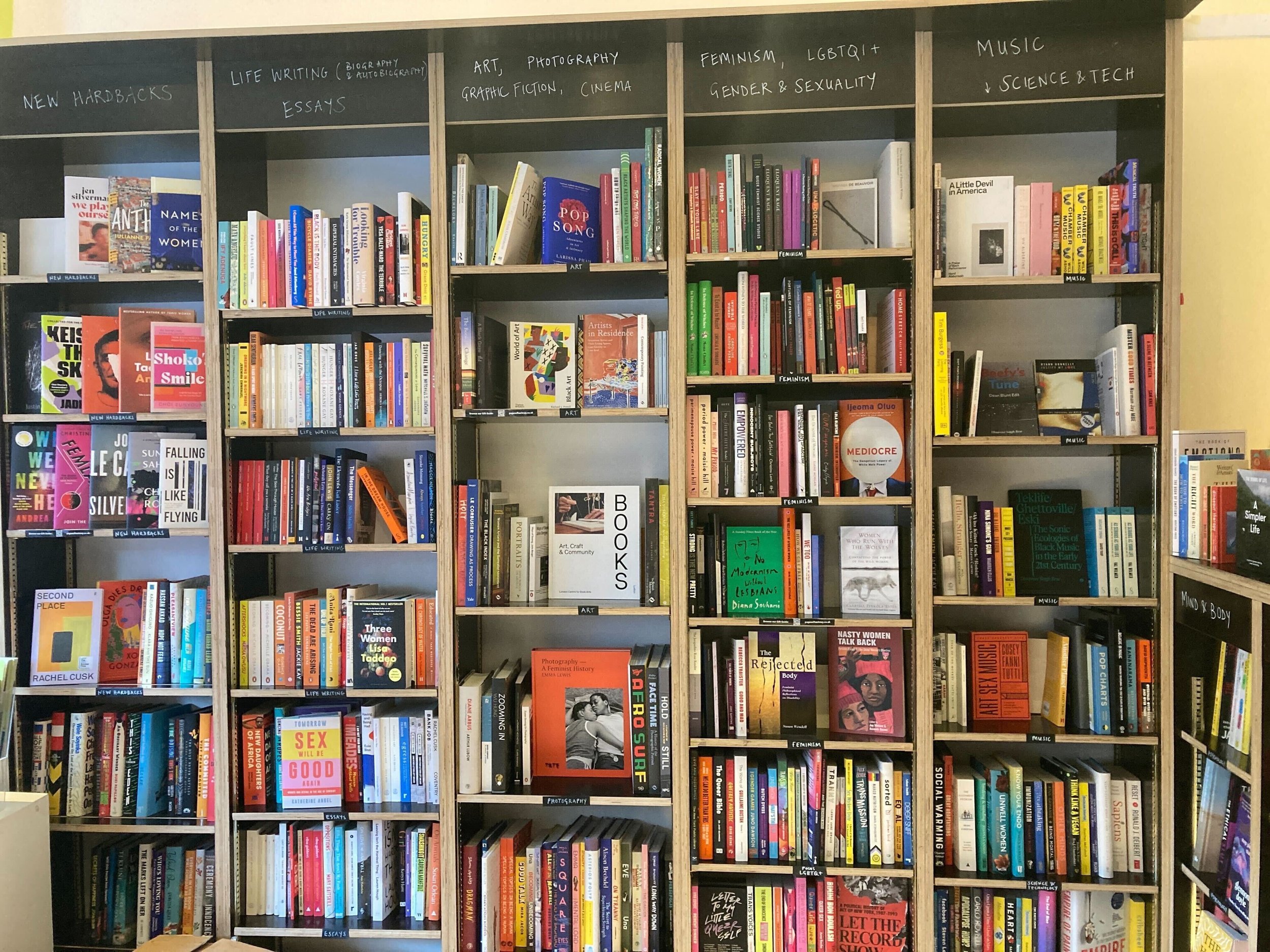
What makes it different? The space is designed to feel like a sanctuary from the busy life of the High Street. Once you step inside, you're free to browse in a quiet space, talk to us and ask for specific recommendations, or simply sit in our cosy basement. What makes us different is that we aren't simply invested in selling a book to every customer, but in making everyone feel welcome and as if the shop belongs to them and is a part of their community.
What do people need to know? We are open every day for in-person browsing, but you can also order all our books online, or request anything you don't see there. We can get most books we don't have in stock in 1-2 days and can also post books and gift wrap if required.
Tell us a little about your story: Books are an excellent way to unwind, escape into, and learn about how to cope with anything people might be struggling with. Our books reflect this and the bookshop itself is a safe space in which people can reconnect with themselves and consider what is important to them.
How can people be inspired by your space wherever they are? Simply browsing our shelves, online or in person, should be inspirational, connecting people to authors and ideas that they haven't heard of, or that they might want to explore more deeply. In addition to the usual categories, we have shelves dedicated to specific subjects that might be of interest (including the Black Britain series, both Japanese and Korean writing shelves, Afrofuturism) and authors we're currently inspired by (like Joan Didion and Toni Morrison).
Where inspires you? I get inspired by talking to new people every day in the shop and exchanging thoughts, ideas and feelings.


The Soul Spa | A conversation with founder Madeline Blackburn
How do you make time to pause? We talked to Madeline Blackburn, founder of Bath’s The Soul Spa, about how we can rethink how we treat our modern-day ailments and create better spaces to hold us on our high streets.
A center dedicated to the mind-body-soul connection, The Soul Spa was founded on a site of healing — legend has it that King Bladud was cured of leprosy from the hot springs that the building, one of the oldest in Bath, is situated on. For years people have come to this location to get well (the energy of Sulis Minerva has even been felt in its rooms).
We talk to founder Madeline Blackburn about how The Soul Spa is providing ways to treat our modern-day ailments and creating the space for people to just pause.
The Soul Spa feels like a new model for the mind/body/spiritual in our communities.
When I was thinking about how to create this space, I knew I didn’t want to be the church hall, because the environment matters so much to me. I was in a flotation tank in Colorado, and I literally sat up in the dark and the idea of “soul centers” came into my head. I went home and wrote and wrote and wrote. I noticed that there were workshops in spaces, nice retreats, and meditation and mindfulness classes. But what’s unique to The Soul Spa is that we’re in one building and have a permanent offering. Though workshops and courses might change, our practitioners and team of people are here all the time and here for you if you need them.
Often practitioners can be quite siloed but maybe, for instance, a client who comes in for psychotherapy finds it won’t work for them and that they would do better with a reiki healer. You offer a more client-led model, giving possibilities for accessing healing in different ways.
Absolutely. From a holistic physiotherapist and an astrologer to a shamanic healer and nutritionist, we try to foster a collaborative nature between us. We know what each other does. All the therapists say how refreshing it is to feel part of something, rather than just renting a room. That’s quite unique about us. Also what I understand of the human brain is where your beliefs are, if you believe in something, that’s probably going to work for you better than something that you don’t believe in. I’m here, not to make any comment or judgment about what anyone’s beliefs are, but to give them the smorgasbord of choices that will fit in with their view of the world. And then maybe even open people up to new ways that they haven’t thought of.
We don’t want to make people feel like it’s going to be work or difficult though but approach from a place of relaxation and calm, peace, and time out. We have a Quantum Field room, so people can just drop in and tune in to one of our guided meditations or bring their own.


There’s a shift in wellness now: it felt like before it was something you did over there, there was a certain audience for it and that audience looked a certain way. But with The Soul Spa and the other places we cover in this guide, we’re finding that where we locate wellness is more fluid. It’s shifting in how people are bringing it more into their everyday lives.
We’ve also noticed how people in the UK now talk about wild swimming or forest bathing, or other activities that are right there in their communities, and actively reach for something locally. It feels like people want to be doing these things and your space, and the others that we feature, give us permission to bring more of what we need into our lives.
Because you don’t do it. Most of us don’t do it at home. It’s hard to do it at your desks. Summertime yes you might sit in a park. But where is there to go in winter? I was brought up Catholic and the other week I just sat in a church for a bit, just to defrag for a few moments and calm my head down. We do need spaces that give you that permission to hang whatever is happening in life up in the cloakroom and just come and be for a bit. For The Soul Spa, I want people — whether they are shopping or a tourist or a local worker — to know there’s a space they can go for twenty minutes or half an hour where they don’t need to think about anything else.
I think we all need that space.
So many people say that they wish they had something like this in our town. Every High Street needs one.
If there was intentionality about it, the High Street would look so different, and serve us as people. What we’re really craving are these spaces that hold us differently and not on our own but together. Somehow to be around one another in positive, more human-minded ways.
I think The Soul Spa is that. I’m not a shopper but I love the energy of the High Street. That’s why it was important to be situated in a quiet place near the center of the city. I would love to think we could prove this as a model and then bring it into other places, just like how the idea of gyms developed before when they’d never existed previously.
I also like that we’d be for everyone, children and old men, fat and thin, every color and creed. Everybody. What we do here is a human thing. It’s fantastic that it appeals to people who already do yoga or meditation: they are intrinsically very interested in their health and more likely to do this, but I want other people who have never done anything like this to know it’s for then too


Why do you think wellness can be associated with being aspirational, a commodity, an appearance, and not for everybody? Is that cynicism, money, equity? Why do you think it has that weight to it?
I think it’s partly cultural because I don’t think it’s in every culture like that. There are cultures that do see it as intrinsic. But here, before the 80s, everyone was just trying to survive. My mum was born at the beginning of the war, and for her generation there was nothing. It really felt like a luxury to even consider looking after yourself. As we were growing up that was still in the mix. Then we had the 80s which just became uber materialistic and we’re still in the back end of that somehow.
It’s very natural for people to try and make themselves feel better. It’s just where you look for the thing that’s going to make you feel better that’s shifts so much. In our culture now it’s getting lots of likes, social media shaping our self-perception, and that’s not working so well.
I really think that people are going to want places like The Soul Spa more. It’s all life though. And I absolutely love life so even the bumps are kind of interesting when you can view them from that perspective.
Our model for mental wellness has been one around crisis management. For a long time, when we’ve thought about accessing therapy and medication, it’s about quickly reaching out, finding resources in the moment of high need. But what I’m seeing from you and your work at The Soul Spa is that there’s a different way of navigating our wellbeing, by developing a practice that people can build and access every day before they get to that stage. That means that when a crisis happens there’s that foundational piece, tools that people know work for them and they can use. It’s the other way around.
Most of us know now how to look after ourselves physically, and most do a bit of the right thing. We know how we should eat, and about exercise. We do all of that so that we don’t get ill and if we do, our bodies are stronger to cope with that. It’s the same thing for the mind. But I think that’s what puts so many people off, is that they think they can’t do it. Like with meditation, people often worry that they will think about what to have for tea and getting the shopping…
… they worry about getting it wrong. For many people meditation comes with the perception that their mind needs to be empty to get it right…
…and they say but my mind is too busy. But welcome to being human beings. That’s not that special, it’s not unique to them. Everybody has this experience and it’s learning that’s ok that might get someone to try it.
I come from a hypnotherapy background, and it’s all about your deep-down beliefs, where they’ve come from, and how they drive all your automatic behaviors, reactions, and thoughts. When I’m helping people relax, I’m thinking about the brain state, and about getting them into an alpha state, and potentially into the theta state because I know that in that state the rest of their body can go off the sympathetic into the parasympathetic nervous system. It can rejuvenate, it can heal. That’s the state you need to be in for your body to be well, for your mind to take a minute, to take a break.
For people who find it harder, my method is much more spoken and guided. I’ll use little hacks from hypnotherapy like a countdown or an eye-roll, or something for people to get into the alpha state a bit faster so that their neurons then fire together. The more they do that, the more they practice it, it becomes automatic, like a habit. Instead of responding when someone cuts you up on the road with adrenaline and anger, you can be more chilled out about it, understanding that maybe they are having a bad day and need a bit of love.
Just a bit of compassion
I just feel like positive things could happen if we can get more people responding like that or at least seeing or understanding why they are responding the way they do, looking at it, and being willing to shift. Instead of looking at the external world and blaming it for everything but wondering actually how can I change because I’m probably not going to change that external thing. Though in reality the more we can all change the more that can change too.


Need more mind-body connection in your life, visit our guide for more places, prompts and ideas for how and where to find it.
Let us know where you go when you are looking for more spirituality and more mind/body connection in your life.

The London Lonely Girls Club
Looking for connection in one of the world’s busiest cities? Holly Cooke talks to us about why she started The London Lonely Girls Club and how it can inspire you wherever you are.
“Stepping outside of your comfort zone, saying yes to every opportunity to meet others, being bold.”
We talk to Holly Cooke, founder of The London Lonely Girls Club about why she started these IRL meet-ups for women looking for connection and how this idea can inspire you wherever you are.
What is it? The London Lonely Girls Club is a community in London, created to help women in the city meet up, hang out, build friendships and make London life a little less lonely.
Why do people need it? As an adult, it can be really difficult to meet new people, make new friends or simply find others with similar interests or hobbies. And so The London Lonely Girls Club was created to meet this need and help women across one of the busiest cities in the world connect with each other!
What do you offer? We are both an online and physical community. We have an active Facebook group of over 10.5k women. Within this forum our members can post, engage and get to know each other at their own pace. Alongside this, we run meet-ups multiple times a month where our members can get to know each other IRL whilst visiting some of London’s loveliest places or doing fun activities together.
What makes it different? The London Lonely Girls Club was specifically created to help women connect, make friends and beat loneliness. It’s as simple as that, no strings attached!
What do people need to know? LLGC, as we call it, is an inclusive, supportive, fun community that any woman in London can engage with in their own way. Whether they’re just looking to find someone to go on weekend walks or theatre trips with, advice on the best place to get their hair done in a specific part of northwest London, or to build lifelong friendships, everyone is welcome!
What’s your story? Before founding The London Lonely Girls Club, I was a very lonely girl living in London. I’d moved to the city for work and to fulfill a lifelong dream of living in the best city in the world. But very quickly moving to a city where you know absolutely no one can be both isolating and terrifying. From this The London Lonely Girls Club was born, a community created to bring the women of this incredible city together under the flag of unity, connection, and friendship. With meet-ups each month that allow people to connect in person, rather than just via a screen.
How can people be inspired by your initiative wherever they are? Every day the members of LLGC teach me about bravery and courage, whether it is sharing their story in our group’s main feed and looking for others who share a similar struggle or journey, stepping outside their comfort zone by coming along alone to our monthly IRL meet-ups and connecting with others in person over a coffee, burger or glass of wine, or simply revealing themselves by joining a community with lonely in the name.
I think this is something that can inspire everyone, no matter where you live, how you identify, or what your social situation is. Stepping outside of your comfort zone, saying yes to every opportunity to meet others, being bold. Just one small decision of courage really can change your life, I should know, it did mine!
Where inspires you? The women of our community and the incredible city that we live in. They’re both so inclusive and diverse and vibrant and loud and unapologetic, but also kind and supportive and beautiful. It is inspiring to get to be just a small part of these things.
Anything we’re missing? If a woman in London is reading this, then we’d love to have you be part of our community! Whether you’ve lived here your whole life or you moved a day ago, feeling lonely is the worst. As humans, we’re built to be in community, surrounded by others who can lift us and love us and support us during both our triumphs and challenges and that is what The London Lonely Girls Club aims to do.
To find out more visit: Our website | The LLGC FB community | Our social media


Discover more places to feel connected

FOLDE: A Conversation with Co-founder Karen Brazier
We spoke with Karen Brazier about how Dorset’s FOLDE is connecting more people with nature and how this contributes to their, as well her own, wellbeing.
Let’s start with, what FOLDE is. It feels like a bookstore that goes beyond just books. One for curiosity seekers and nature lovers.
That’s a pretty good description. FOLDE doesn’t really fit neatly into your typical shop categories, e.g. bookstore or gallery. Our starting point is our theme - the nature and landscape of our home county of Dorset - and everything else tends to follow from that. In addition to our core collection of nature-writing books, we sell art and traditional craft from local artists and makers that in some way celebrate our county’s nature, lore or landscape. That could be through subject matter or the use of locally sourced materials. We also sell a carefully curated range of items that enhance your experience of being outdoors, from field kettles for making a fresh cup of tea when you’re out on a walk, to quick-dry towels for use after wild swimming.
What led you to start FOLDE and create a space in your community?
We jokingly call FOLDE our pandemic-induced midlife crisis but its origins began long before the first lockdown. We met over the garden fence (quite literally, our gardens back onto each other) and, as our friendship developed, we discovered that we had both reached a point in our corporate careers where we wanted to make a change. It wasn’t just work-life balance; our jobs were taking us away from Shaftesbury, our beautiful hilltop town, physically and mentally, just as we were waking up to the fact that regularly spending time outdoors in the Dorset countryside was vital to our wellbeing. We wanted to find a way of rooting ourselves in the heart of the place that had given us so much, of celebrating it and protecting it, whilst also giving ourselves more time just to be here.
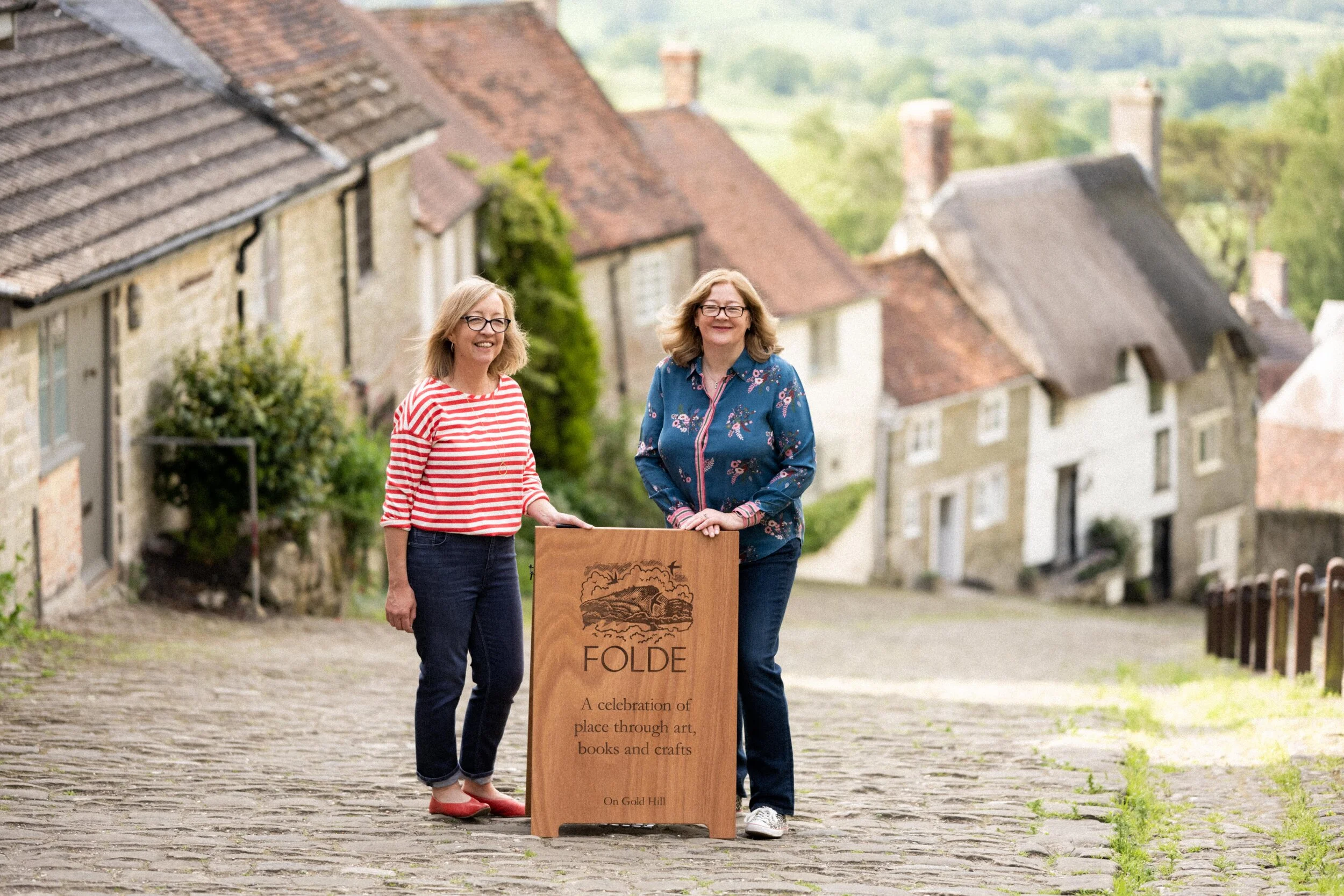
All Photos: Matt Austin
Tell us about your three themes: Land. Sea. Self.
Quite simply, these are the things that make us tick, from swimming in salty waters to striding across the Dorset hills. The products we sell are broadly grouped around the ‘land’ and ‘sea’ themes, while ‘self’ addresses our central aim of helping more people to discover how a greater connection with nature can contribute significantly to their own wellbeing.
What has been your own experience of the therapeutic value of nature?
It’s fair to say that we had both experienced a degree of burnout in our previous careers, which had taken its toll on our mental and physical health. For me (Karen), it took some years to discover that there was a sanctuary to be found in getting outside; in my twenties and early thirties, I used to think the answers I sought were waiting in a shopping mall. My partner has always been an outdoorsy sort of person and when I was at my lowest ebb, he knew that it would help me to get outside, even on those days when all I wanted was to stay under the duvet. His persistence paid off and gradually, over a period of years, I grew to truly love walking, on the Dorset coast in particular, and I became better at managing my stress levels. I found that being outside gave me the tools I needed to recalibrate as well as a deeper connection with nature that helped me to make sense of my place in the world. Regular walks are now essential to my wellbeing, supplemented by year-round sea-swimming, and I border on the evangelical about the therapeutic benefits of both.
As for Amber, she had spent her childhood growing up in various small villages in West Dorset, and found that the sense of community, nature and belonging had become something of a beacon to her through her adult years. Travel was a big part of her previous working life and, while she enjoyed the experiences, she found she always yearned for the green hills and vales of Dorset. It keeps her grounded and connected to the earth, and it’s home to the footpaths she treads when she needs time to think. It also helps her to appreciate the seasons, and the changes that come with them.

During the pandemic many of us turned to nature for our mental wellbeing? Were you surprised by that? Do you think this is sustainable as something in people’s lives now?
No, we weren’t entirely surprised. Over the past decade or two, we had both found great comfort in noticing the rhythms of nature. No matter what else is going on, the sun always rises and sets, the seasons come and go; these rhythms are a constant among the more chaotic aspects of life. But in order to notice these things, you have to allow yourself to experience nature, and this can sometimes push people out of their comfort zones.
In recent generations, so many of us have come to live and work in a context that is entirely separate from nature. It doesn’t help that until relatively recently, the outdoor recreation industry was heavily geared towards white men dressed in Gore-Tex and if you didn’t look like that, it was easy to think, ‘well, that’s not for me.’ However, when our options for entertainment, exercise and socialising were suddenly and so dramatically curtailed by lockdown, it was not surprising that the simple act of taking a daily walk outside brought nature into closer focus for so many of us and, in so doing, allowed us to discover our fundamental human need to connect with it.
Whether it is sustainable is a good question. We like to think it is, and if the burgeoning number of nature-writing titles being published is anything to go by, we don’t think people’s interest in the subject shows any signs of waning, whether that’s wild swimming or planting a bee-friendly garden. That said, we are acutely aware that it is largely dependent on people’s access to green space, and the pandemic highlighted that there are significant societal inequalities in this regard.
On returning to the UK after 14 years away, we’ve been struck by how outdoorsy it’s become here, from wild swimming and camping to coastal hikes and paddleboarding. What do you think has accounted for this shift and where do you see it going next?
There’s definitely a much greater awareness in the UK of the physical and mental health benefits of outdoor pursuits and, to a certain extent, social media has glamorised the appeal of these activities: we can’t be the only ones to have looked at a photo of a dreamy coastal clifftop at sunset and thought ‘I want to be there’. Instagram in particular has effectively become a wanderlust travel brochure in terms of its ability to present aspirational images of beautiful outdoor experiences, and it is often said that Millennials prefer to collect experiences rather than tangible goods. It’s more than that, though. We think it also has much to do with the speed and relentless distractions of the digital age; spending time actively engaged with the outdoors is a brilliant antidote to that.
In terms of where it’s going, we hope that there will be a greater focus on diversity and inclusivity, as well as sustainability, although the sector still has some way to go in these areas.

What’s been your experience of starting a space in your community? What have been your joys and challenges? Anything unexpected?
It has been almost entirely a complete and utter joy. Shaftesbury is a close-knit town of largely independent businesses, which are greatly valued by the people who live here, particularly since the pandemic when they pivoted overnight to provide for the community at a time of great uncertainty. Support for local businesses has never been greater, and recognising this helped us to take the leap of faith and open FOLDE. We had tested the proposition online first and, when a space became available right here on the iconic Gold Hill, we took it as a sign that we should go for it. True to Shaftesbury form, we were met with a very warm reception by our community and, although we are in a good spot for tourists, it is our local customers who keep us going.
There are so many joys to doing what we do, from building relationships with the many talented artists and makers right here on our doorstep to having a presence at the heart of the town we love. The biggest joy, undoubtedly, has been growing our FOLDE community, both online and in-person, i.e. the people who share our love for this beautiful part of the world and want to swap stories about the places they’ve been and the outdoor experiences they’ve had. We’re aware that we don’t look like your typical outdoor action women and we think that this might sometimes help our customers to try something they haven’t done before, such as cold water swimming; very much a case of ‘if they can do it, so can I.’
As far as the challenges are concerned, sometimes it can be hard to find certain products that fit with our ethos without compromising on our sustainability standards. And given that it’s just the two of us, we’ve had to learn quickly about many different aspects of running a clicks-and-mortar business, from till systems to packaging to payroll. Perhaps the biggest challenge is knowing when to leave it alone; we’re having a lot of fun and we’re brimming with ideas about where we can take FOLDE but we have to remind ourselves that we don’t have to do everything in year one. Luckily, our other halves are good at reining us in.

We have a series called Culture Therapy, where we list the podcasts, books, TV shows, films, etc. that people can seek out in our different pathways. Which books probably (though if you have other media that relate let us know) would you recommend for people wanting to bring more nature into their lives?
Almost every book we sell helps people to find a closer connection with nature in one way or another but the ones we would specifically recommend are:
The Salt Path and its follow-up The Wild Silence by Raynor Winn. These are obviously very well-known titles but we recommend them because they speak volumes for the power of nature to heal and restore, and they remain among our bestselling books.
The Forager’s Calendar by John Wright. There’s no shortage of interest in foraging among our customers but John Wright’s often humorous book is by far our most popular title on the subject. Foraging is a great way to reconnect with the natural world: it makes you slow down, notice and engage with everything that’s going on in the hedgerows, all year round.
Grounded: How Connection with Nature Can Improve Our Mental and Physical Wellbeing by Ruth Allen. We are both avid followers of outdoor psychotherapist Ruth Allen’s Instagram account (@whitepeak_ruth) and were delighted when she published her first book. She is wise beyond measure, and the book is a visually appealing, soul-nourishing mix of practical exercises and mindful activities interspersed with personal stories and thought-provoking questions. You will often find yourself nodding in agreement.
In music, we are huge fans of British folk singer and conservationist Sam Lee. His most recent album, Old Wow, is a spellbinding love letter to nature but one that contains stark warnings about all that we stand to lose. Earlier this year, we took part in Sam’s ‘Singing With Nightingales’, an unforgettable, immersive and profoundly moving experience that highlights through music the threat to the nightingale and other endangered species.
We would also recommend Lost in the Cedar Wood, a collaborative, lockdown project between folk singer Johnny Flynn and nature writer Robert Macfarlane that brilliantly melds myth, poetry, landscape and music. The opening track, Ten Degrees of Strange, is a rambunctious song about trying to outrun anxiety by seeking joy and strength in landscape and movement.

What are your favorite places to reconnect with nature?
We both love to explore Dorset’s Jurassic Coast, which offers an embarrassment of riches for anyone who likes walking or swimming against some breathtaking backdrops. There’s something about walking through fields to a clifftop or beach that can make you feel as if you’re the first person to discover it. While the honeypot attractions such as Durdle Door and Old Harry Rocks can be unbearably busy in high season, there are still plenty of other lesser known places, particularly if you’re prepared to walk a little, or go earlier or later in the day.
For our daily fix, we are fortunate that our commute to the shop takes us along a wooded path known as Pine Walk, which is lined with soaring beech and pine trees, punctuated with views across to Melbury Beacon. This is the hill that features in the wood engraving that we commissioned from Dorset printmaker Robin Mackenzie to use as our logo.
How can people engage with FOLDE from wherever they are?
Our website offers an edited selection of our products for purchase online as well as journal articles about our favourite artists, books, walks and outdoor experiences. On Instagram, we share the daily goings-on in the shop as well as many of our outdoor adventures when we’re not behind the counter.
Anything we’ve missed? Anything that you’re excited to share?
FOLDE will be appearing as a pop-up at Planted Cities at King’s Cross from 23 to 26 September, which is an event that aims to bring people and spaces closer to nature. We’re also working on a series of readings and workshops with some of our authors and makers, such as basket-making with local willow weaver Yanina Stockings. In spring 2022, we plan to launch FOLDE Out, a series of walking retreats for people who are looking to explore Dorset whilst widening their outdoor experiences as part of a small and supportive group.

Ready to bring more nature into your life, wherever you are?


The Little Retreat & The Big Retreat Festival | A Conversation with founder Amber Rich
We speak to Amber Rich, founder of The Little Retreat and The Big Retreat Festival about how she arrived at these projects, how wellness is now something that we all reach for, and her role as a curator of discovery and awe.
To call The Little Retreat in Pembrokeshire glamping is like calling Glennon Doyle a blogger. Staying in one of the wood-furnace heated domes (with furniture you’d find in a boutique hotel), warming up in your own Scandi hot tub, or roasting smores by a private fire pit after a day at the beach or walking in the Preseli Hills, you’ll sink into what life could be if we stopped for a while to notice its possibilities.
The Little Retreat was founded by Amber Rich, who also curates The Big Retreat “feel-good festival” that takes place on these grounds (2022 tickets are already on sale), and from which it takes its cue. Where the festival has a Darwin den, campfire stage, cold water swims in The Cleddau, a talk tent curated by Shelf Help director Toni Jones, and creative workshops, its weekend away counterpart has sustainability woven through its design, foraging workshops about to start, stargazing tents with views of dark skies, and curated programs focusing on such practices as breathwork, yoga, arts and craft. The festival and retreat overlap, exchange ideas, and share their approach, with both offering a slowed-down lifestyle and collective experiences that get you closer to a vision of how you might shape your own life when you return back to it.
After a few days at The Little Retreat, we had the chance to speak with Amber about how she arrived at this place, how closely the festival and the retreat are connected, and how wellness is now something that we all reach for:
Let’s start with the connection between The Big Retreat and The Little Retreat. Why did you start them and how do they connect? If the core value of the festival is one of ‘discovery’, how would you describe the retreat?
I used to own my own gym and ran fitness and wellbeing classes to improve mental and physical health. After the birth of my daughter Bea (who is now 7) I decided that I wanted to utilise the family land to create a sanctuary where people could come to escape their busy lives, pause and reconnect. This was the start of the original "Little Retreats".
I found that these retreats were having such a profound effect on people’s lives and making a real difference: One lady who attended had not been able to sleep for years. After our retreat, she learnt how to pause and use those skills to have her first good night’s sleep in 7 years! It was feedback like this that spurred me on to create The Big Retreat Festival.
I wanted to create a space where people could come and discover breath work, fire walking, gong baths, yoga, wild swimming, forest bathing — literally anything and everything that allowed people to "find their feel good". It also included festival favourites such as gin workshops and music to enhance people’s experience and wellbeing.
I realised that giving people time and space in a beautiful setting to discover all of these wonderful life-enhancing experiences could really make a positive change in people’s lives.
Discovery and "finding your feel good" still remains the core value to this day.
What do you think people are looking for who stay with you or attend one of your events?
I think people are looking for time to reflect on themselves, to unplug from daily life and to find out what makes them feel good. We are perfectly poised in the heart of the Pembrokeshire National Park on the banks of the "Secret Waterway". The stunning location inspires awe and wonder every time and we think the unique setting coupled with a sanctuary and safe space to discover is the catalyst for change.

What do you hope people experience with the projects that you create? What do you hope they take away and bring into their everyday lives?
I hope that people’s appreciation for nature and the outdoors grows and they are able to reconnect and utilise outdoor space to improve their wellbeing. I think it’s important with the complexity of modern living that people are reminded that sometimes it’s the simple things that bring us the most happiness.
If you attend one of our Feel Good Retreats you will learn skills that you can take away with you and implement straight away in your everyday life. The goal is to inspire people to reset and to really connect with themselves and the great outdoors.
I see my role as a curator of discovery and awe, allowing people the opportunity to reset, rethink and equip themselves with a host of skills and experiences — a toolkit that they can take home and continue to use to ultimately change their path and enhance their lives.
How do you think the idea of wellness has shifted since you started The Little and Big Retreats?
When I first began The Little Retreat the words wellbeing and wellness were quite niche and only appealed to a select few. Today looking after your mental and physical health is much more mainstream and in the public psyche. With the Covid pandemic more and more people are realising just how important nature and mental as well as physical health are to enhance our lives. That is one positive we can take away from the Covid pandemic.

What motivates you to create these spaces in the world? What kept you going during recent challenges?
My key motivation is to provide a sanctuary that allows people to discover not only nature but how to unwind and reconnect for their physical and mental health. A safe space where people are free to discover and pause.
The design of the space at The Little Retreat was about focusing on ways for people to connect with the outdoors without necessarily having to "rough it" to experience the joys of being close to nature. A key focus was also to have a minimal impact on the surrounding ecology and landscape.
The pandemic has actually given me the time and space to take ecology and planning into focus and look at ways for nature to thrive. We noticed during the pandemic the return of otters on the river banks and native oysters that had previously been wiped out due to human impact. This rewinding of our natural space showed me just how important it is to tread lightly on the site and in everything we do. We have worked to encourage nature in the planning — from bat boxes, swallow bricks, hedgehog runs, planting native species and harvesting the rainwater. We are really hoping to reduce our carbon footprint at both The Little Retreat and The Big Retreat Festival.
Over the pandemic, I realised that conserving the area was so important for nature and our own wellbeing that I set up the nonprofit arm "The Big Retreat Community". This is geared at enhancing and protecting nature as well as giving welsh artists a platform at our next festival.
In our guide for life, we roam across ten different pathways in the places that we feature and I’m curious about where you’d position your projects and why?
After looking through your Ten Pathways it is extremely difficult to choose one. All of them are intertwined intrinsically in everything we do from untethering upon arrival, to reconnecting mind and spirit right through to purpose and doing good. All of your pathways align exactly with our mission and how we conduct our projects.

How do you bring the values of the places you create into your own life?
I am constantly trying new things and discovering not only the latest external wellbeing practices but rediscovering the landscape. I make sure I set aside time every day to do this. Whether it’s a cooling wild swim in the Cleddau or a mindful walk through the woodland set around our site. I make sure that at least once a day I allow time for myself to reconnect and discover. I think it is so important to schedule this time into your diary in the same way you would an appointment at the doctor’s.
As we emerge from the lockdowns and are maybe feeling more hopeful about our worlds, is there anything that you’re particularly excited about going forwards?
There is so much going on at The Little Retreats this year it’s actually really really exciting. We have the addition of wild food workshops offering a foraging course and a 12-course dinner, the release of our Find Your Feel Good In Pembrokeshire guide, wild swimming sessions, forest bathing, and breathwork. We are currently building the space for the new stargazer tents with outdoor hot baths — a perfect opportunity to make the most of our stunning location in an official UK Dark Sky reserve. There are so many things that are organically falling into place.
We want both The Little and The Big Retreat to be a sanctuary and a beacon for anyone and everyone who wants to set aside time to find out just what it is that makes them tick and "find their feel good".
While there: we recommend pastries and bread from the micro bakery in the village Hugtasty, the award-winning beach shack Café Mor at Freshwater West (also the site of Dobby’s resting place), the stunning beaches, hikes, and paddle-boarding at Stackpole, and cafe with a mission Get the Boys a Lift.
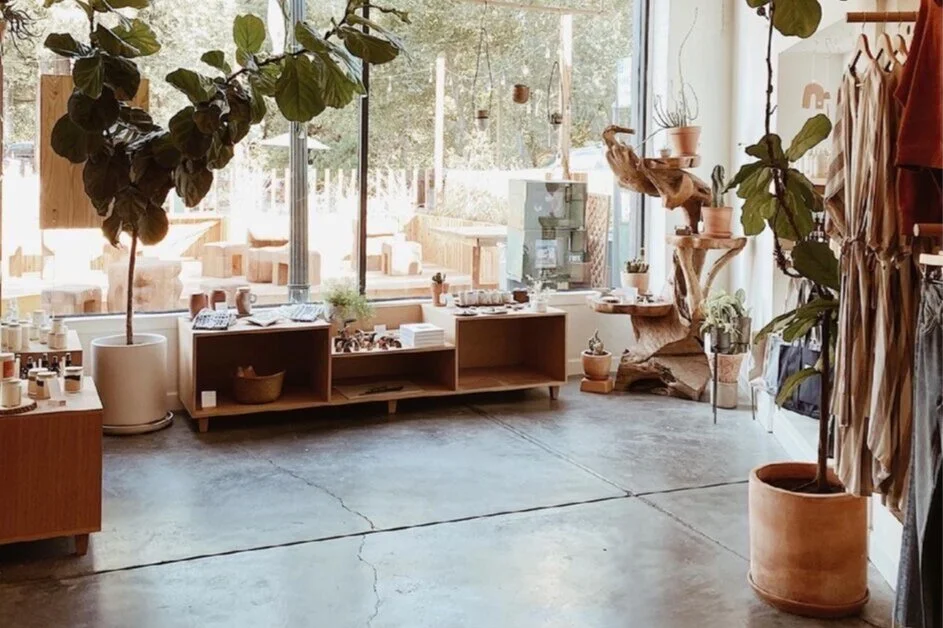
Longway California
Slow fashion meets community and connection at this California-based clothing store and cafe.
“We celebrate slow creation. The people who make things and ideas. The people who spend their lives imagining and dreaming in the same way that we do. We look to take the road with more curves, but also more thought - where a difference can be made and adventures found.”
For: anyone who values taking the backroads, those who cherish slow and thoughtful. This is the anti-thesis of fast fashion.
What is it: A California-based sustainable clothing brand and coffee shop whose dedication to building community rests at the forefront of their mission.

What you need to know: Originally opened under the name Neve and Hawk (a moniker inspired by the first and middles names of their daughter and son, respectively) Longway was, at one time, nothing more than a master bedroom turned screen printing studio. Founder Kris Galmarini and husband Bob took a passion for graphic tees and turned it into one of the most beautifully designed and highly sought-after clothing brands in California, featuring small-batch and handmade pieces that appeal to the dreamer in all of us.
How to bring this into your life: Bay Area locals can stop by their San Anselmo storefront to peruse their collection of women’s, men’s, and children’s clothing along with home goods, books, and gifts, featuring a curated selection of treasures from other artists, designers, and small businesses. While there, be sure to head to the back to find the hidden gem of Marin— an adorable cafe serving SF’s own Lady Falcon Coffee and a selection of seriously delicious treats. We cannot stress enough that this is THE BEST COFFEE IN MARIN COUNTY.
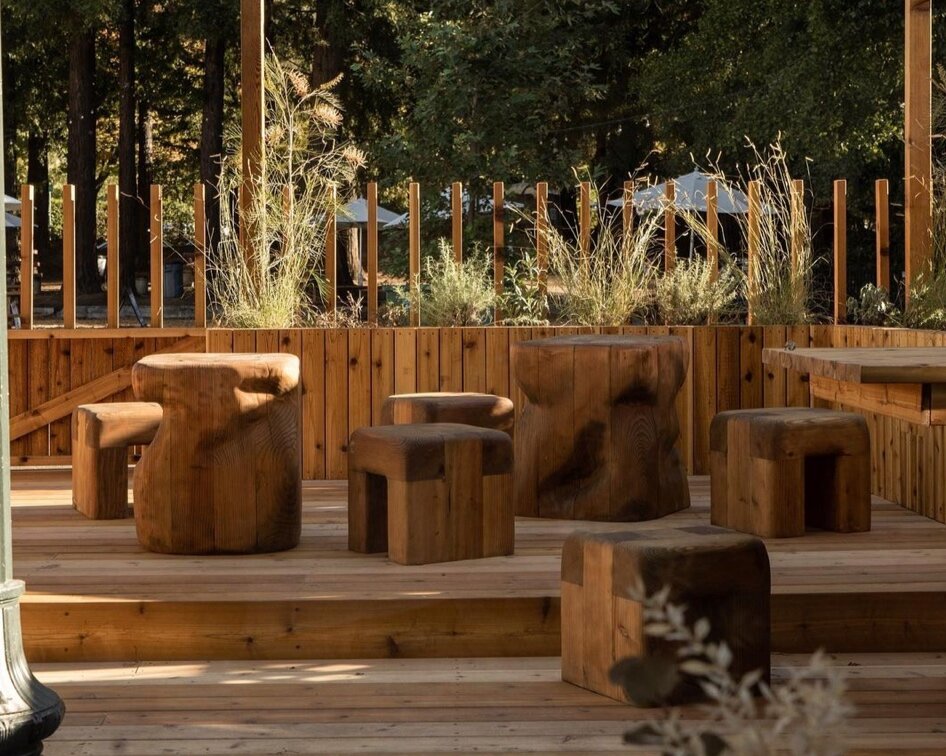
In addition to ample inside seating, which will remain closed/limited through the duration of the covid-pandemic, Longway has partnered with Orca Living to expand their dreamy vibe with the creation of a front patio that is straight out of our Pinterest dreams. Carved wooden stools and thoughtful corners designed for community, connection, and fresh air, greet visitors as they sit to sip on their coffee and give in to the feeling of slow.
For anyone who is not California-based, the Longway Instagram is a great place if you’re looking to redefine your relationship to fashion and start building towards a slower more thoughtful wardrobe, or life, in general. As a bonus, founder Kris Galmarini often graces us with her incredible dance moves and we are very much here for it! She also pops on to give followers a behind-the-scenes look at how the brand is built and the relationships she holds with the people who work so hard to bring her beautiful designs to life. From seamstresses in San Francisco and Peru to her in-store team, to her late-night stories delving into setbacks (both personal and production-related) you cannot help but feel connected to Longway. Their mission to foster community and sustainability shines through everything they do.
We can still recall when the pandemic hit and Kris jumped on Instagram to say something to the effect of. “People are struggling and it feels ridiculous to ask you to buy a new sweater right now.” There was something to her realness and understanding of privilege, that made us love Longway just a little more. At the end of the day, this is the type of brand and space we want to see existing in the world. This is the type of place we are dedicated to supporting in any way we can because it’s the type of place that pushes our world to operate at a higher standard, to value people over profit, to help us redefine consumerism.
Why we think it’s different: Longway’s storefront goes beyond just selling something (though we totally want to buy EVERYTHING they create), to actually building something. “We want it to be a place people want to come,” says founder Kris Galmarini. “We want people to come into the store, and feel better than when they walked in. We want them to interact, to feel inspired, to leave the store feeling better about shit. We’re in this community and we want people to feel good.”
In their own words: “We celebrate slow creation. The people who make things and ideas. The people who spend their lives imagining and dreaming in the same way that we do. We look to take the road with more curves, but also more thought - where a difference can be made and adventures found.”

Something to inspire: Whether fighting for racial justice or the end to family separations at the border, or the normalization of mental health struggles, or the value of slow fashion, Longway is a brand that is not afraid to speak out or to take action, raising awareness, funds and the vibrations of a community who look to them for inspiration. We appreciate Longway for their beautiful selection of goods, but we stay because we know at their heart, they are not a brand, they are a family, one that grows and changes overtime to ensure that they continue to push forward towards a kinder, more just world.
Also their Denim Sunset Jumper is literally the perfect item of clothing. (Don’t even try to change our minds.)
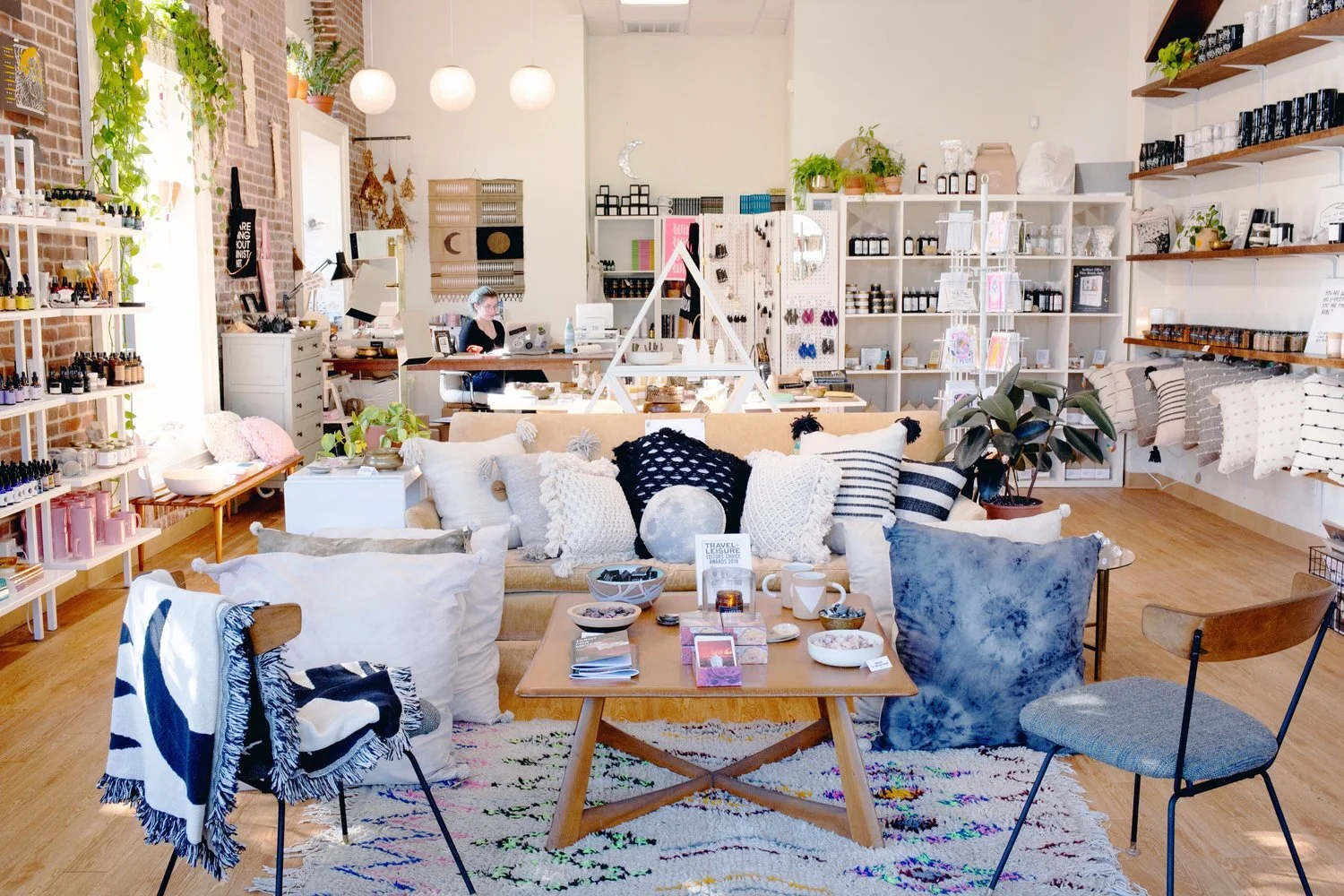
HausWitch
Think you know witchcraft? Think again with this space in Salem redefining Witchcraft for modern times.
Go here if: you are seeking strategies for self-care, are ready to push against some social boundaries, and want to make your home the sanctuary you need it to be.
What is it: A metaphysical lifestyle store for the modern witch, or those curious about what that even means, in Salem – yes, that Salem.
Why you’ll love it: Founder Erica Feldmann opened HausWitch in 2015 after completing her graduate studies in the sacred feminine and witchcraft at Simmons College and as a positive space to bring magic into our everyday lives and homes. This isn’t the version of witchcraft told in fairytales or Halloween stories or even those witch trials: it’s not black peaked hats, cauldrons, and evil incantations. Rather its more Scandi design and modern twists: the storefront is light-filled, combining a keen eye for interior decoration with products that reframe witchcraft for contemporary times, bringing in ideas of self-knowledge, empowerment, healing, intuition, mindfulness, and nature-inspired spirituality.
What you need to know: The Treasure Palace as Feldmann refers to the storefront holds minimally designed items for the modern witch (some serious, some playful): incense, spell kits, candles, and potions as well as throw pillows, cleaning products (from own brand LightHaus) and ceramics (‘Witches are the Future’ ). HausWitch also hosts workshops for developing intuitive skills, such as tarot reading or astrology, and that offer safe spaces for women to share, learn and support one another.
How to bring this into your life: HausWitch has just opened up again after a year of being closed due to the pandemic but you can still shop the collection from wherever you are, attend an online workshop or even bring in some magic to your home with Feldmann’s book, HausMagick.
Why we think it's different: Witchcraft is being reframed; we’re increasingly curious about what it represents, what it can provide, and how we can bring it into our lives. In a moment when we’re struggling to live within the constraints of our modern-day world, for the curious and the seekers, witchcraft offers alternative ways into healing and reflection. Its rituals can ground our days, its practices offer self-care to orientate us in spiraling lives. But witchcraft is also about empowerment, about resistance. HausWitch offers ways to slow down, tune in, recognize, but it also offers ways to push against, make space, be heard.
When you get beyond the narrative that has represented witches as outsiders, you get to one that reveals that witches are often those who have pushed against patriarchy, social norms and spiritual expression denoted narrowly. As Feldmann has said: "It's more about feeling empowered, wanting to change the world and connecting to your own intuition."
Witchcraft here sits closely with feminism, with women no longer silenced, reclaiming their powers and making space for themselves in a world that better reflects who they really are (Also shop: “A simple spell against the cis hetero white supremacist patriarchy”. ) For Feldmann, the meaning of witch is ‘Women in Total Control of Herself’ — with women here meaning all gender identities. HausWitch is an intersectional space that is consciously open to “all genders, sexualities, ethnicities, abilities, and anyone who feels like they are in need of a truly supportive and safe environment in this ever-changing world.” Feldmann’s wife Melissa Nierman teaches workshops here (currently offering Past Life and Clairvoyant Energy Readings) and runs NowAge Travel.
In their own words: “HausWitch Home + Healing is a modern metaphysical lifestyle brand and shop, providing Salem locals and visitors with a selection of witchy and handmade products from independent makers from around New England and the US! HausWitch combines the principles of earth magic, meditation, herbalism, and interior decorating to bring magic and healing into everyday spaces.”
Inspired to: We’ve all been tied to our homes this year in ways that may have made us love our spaces slightly less than usual. This spring, find a way to reconnect to where you are. In her book HausMagik, Feldmann suggests rebuilding our relationship to our own space by decluttering, being attuned to what feels good and what doesn’t, bringing in greenery and crystals, and burning sage to reset the energy of a room. Our homes are the spaces that can hold and sustain us through the less cozy outer world; this spring find a way to make it your own again, restorative and replenishing for whatever comes next.

Hackney Herbal
A garden and studio in Hackney promoting the well-being benefits of herbs and our connection with nature.
Go here if: you are curious about the potential for herbs and nature to impact your day-to-day life, you are looking for connection with others, or you are looking for strategies to improve your physical and mental wellbeing.
What is it: A social enterprise that promotes the wellbeing potential of herbs — growing them, cultivating them, using them as teas and remedies — founded in Hackney by Natalie Mady. Since its start in 2015, the community-minded business has gone on to collaborate with organizations such as Tate, Stella McCartney, and Kew Gardens.
What you need to know: From its garden space and studio, Hackney Herbal offers hands-on workshops that take a broad view of herbs – from practical skills that include how to grow and dry herbs for self-care purposes, and how to make herbal teas and remedies, to wider subjects like how to urban garden and how to connect with nature. Herbs here serve both as a practical remedy and a framework for thinking about our health and the environment
How to bring this into your life right now: Though Hackney Herbal is fundamentally about being together and working within nature, it has managed to put a selection of their workshops online. You can book classes in growing food on the windowsill, identifying wild herbs, and using essential oils for the mind. Also, they make handcrafted herbal tea blends from their own gardens and other organic growers that are available to buy, with profits funding initiatives that serve the local community.
Why we think it matters: By booking a workshop or an event or purchasing their teas and products, you are also supporting free nature-based programs that apply the therapeutic benefits of herbs to communities who need them such as the 6-week Herbal Craft Course at the Center for Better Health, and mental health orientated classes at Recovery College and the local chapter of the charity Mind.
In their own words: “We connect people, plants and place to:
1. Share knowledge and skills relating to horticulture, food growing, and nature
2. Inspire people on their own journeys with plants
3. Nurture the health and resilience of people and the land in Hackney
We use nature-based activities to allow people to come together, share ideas and collaborate. We provide a preventative intervention to the onset of poor mental health as well as a pathway to recovery for those already suffering. Our key outcomes follow the themes of health, education and community resilience.”
Something to do from wherever you are: Can’t wait to get started, Hackney Herbal offers tons of advice on their website and social media channels about making herbal remedies and growing herbs at home, as well as downloadable seasonal journals full of recipes (like this on making a solar infused oil or this on making a body scrub from coffee grounds), sales of which support their mission of increasing access to green spaces in the borough of Hackney and helping people improve their physical and mental health through herbs.

M.Y.O (Make Your Own)
A London studio designed for grown-ups to discover their own creativity, with all the wellbeing benefits of making.
Go here if: you’re wondering how to bring more creativity into your life, you are feeling lonely and looking for more connection, or you need to find a strategy for destressing, learned here, then taken home with your creation.
What is it: M.Y.O. (Make Your Own) is a space where grown-ups can play around with materials and making. The creative studio was launched in 2017 by Sam Lehane and Diana Muendo, both chartered accountants who were coming into their own creativity but could not find the environment that they needed to support their new interests.
Why you’ll love it: M.Y.O. gives you permission to be creative because Sam and Diana believe that everyone is. There’s no worrying about outcomes, or getting it wrong, or that you’re not really ‘Arty’ or an ‘Artist’. Just the space to explore and find the medium or practice that works for you.
What you need to know: Small classes take place in a two-level studio in Borough that has all the materials you could possibly imagine to get you making things and a space where it feels ok to get messy. There’s a huge variety of classes (refreshed every few months) on everything from watercolor painting to macrame plant hangers. Adults get a break from it all and a chance to explore arts and crafts skills without judgment or prior experience.
How to bring this into your life wherever you are: In parallel to the bricks-and-mortar space, M.Y.O. hosts a similarly wide array of virtual class options hosted with sister company Creative Jungle Co (which also offers Virtual Team Building with teams across the world).
Why we think it matters: The well-being benefits of creativity are becoming ever clearer (anyone who has picked up a watercolor brush or taken up baking in a lockdown can probably now attest to this). M.Y.O. is increasingly thinking about creativity in terms of how it helps us function in the world, helping reduce stress and loneliness. The classes offered by the studio give you an easy way into figuring out if creativity can have a place in your life and what shape that might take for you.
In their own words: “An art gym for your creative muscles.”
Something to do: You don’t need to be good at art to do it. You don’t have to make perfect pots to mold clay. All you need is the willingness to try, and an openness to seeing where it takes you. What would you try creatively if no one was watching and it’s really just for you? Start there.

Rochester Brainery
A community classroom space in Rochester teaching what really matters in life.
Go here if: you’re a seeker, of knowledge, skills, experiences, and connections.
What is it: A community classroom and event space in Rochester’s Neighborhood of the Arts founded by local Danielle Raymo.
Why you’ll love it: Rochester Brainery is a classroom driven by curiosity. Since it launched in 2013, it has hosted over 2500 classes. Before the pandemic, 70-80 classes were being held each month. Subjects are not limited but roam widely across interests from hand lettering to cocktail making, improvisation to mindfulness. Many of the lessons are co-created with local community partners, makers, artists, authors, and entrepreneurs reflecting everything and anything that someone would want to teach and someone would want to learn.
How to bring this into your life from wherever you are: At the time of writing the Rochester Brainery is open for in-person classes – a Shibori dye workshop, a History Happy Hour, and blacksmithing caught our eye. Outdoor classes have been added with popular geology field trips planned for the spring. If you are based outside the area, the Rochester Brainery is also offering its classes on zoom – a business development class for makers and creatives, and macaroon making looked particularly interesting and fun.
Why we think it matters: Learning sustains us, connecting to new subjects can expand our days, whether that is picking up a new skill or finding a life-long passion. Often as grown-ups, we forget this impulse for discovery; if we follow our curiosity it can be into the rabbit holes of scrolling, rather than meaningful searches in our analog lives. The Rochester Brainery makes it ok to learn again, to connect with subjects that just pique our interest, from history to cooking, and to make space for pursuing something just because we want to. It does so by bringing people together to share new experiences, enabling connections beyond the material and to those with one other. Within this classroom, new friendships have evolved, new business concepts tested (in events and pop-ups), and a community educated in what makes life most important, the people we get to share it with.
In their own words: “Learn from local authors, actors, artists, chefs, graphic designers, distillers, and more who share their smarts in single and multi-session classes.”
Something to try: Push your learning boundaries. We tend to sit within the subjects we feel comfortable with: maybe it's psychology for you, maybe it’s the arts. We may find it hard to wander into a different section of the bookstore, a different theme in podcasts, a different field to our own. Look outside of your world, try on another one. Even if just for a moment. The awe and wonder that can come with being somewhere else, might make it ok to be wherever you are again.
Photo: Rachel Liz Photography

London Terrariums
When you can’t leave the house, bring tiny worlds indoors with London Terrariums.
Go here if: space and time for gardening is limited but your interest in it isn’t
What is it: London’s first terrarium shop and studio in New Cross Gate is an entry into these magical ecosystems under glass.
What you need to know: London Terrariums was started by Emma Sibley in 2014, just before the houseplant movement really took off and potted plants went from dusty in the corner relics to central pieces in interior design. Ever since, attendees to the terrarium workshops, visitors to the brightly colored store which stocks bespoke creations and gardening tools, and clients from the V&A to The Hoxton Hotel, have become enraptured with these tiny self-sustaining worlds (the plants photosynthesize in the enclosed space, living off the condensation so there’s no need for watering). The practice of terrarium making and design stretches back to the Victorian era, and though particularly popular in the 1960s, it fell out of favor. Until now, when we’re looking for ways to reconnect with nature, to bring more of the outside into our lives, and to nurture something beyond ourselves.
What they offer (online and off): During current closed times, you can purchase a terrarium kit or attend an online workshop for at-home terrarium making. If you love subscriptions, check out their London Terrariums Plant Club for a monthly dose of greenery. LT ‘s bespoke terrariums can also be bought on the site if you are looking for a ready-made one.
Why we think it's special: As our awareness of the benefits of plants – for our mental wellbeing, productivity, and creative inspiration as well as the air quality in our homes – is increasing, making sure that everyone has access to green spaces matters more than ever. And yet the realities of urban lives often translate to no gardens, small spaces in which to live, and little time, distancing us from the natural world even more. Terrariums though striking are low maintenance taking up little space and fitting small apartments and overscheduled lives. As we’re also able to shape them ourselves, we have the added benefit of working with our hands and the pride that comes with making something. Creating terrariums gets our fingers muddy as we figure out designs with moss, orchids, and succulents within glass containers that range from huge carboys to quirky domes. As Emma has said: “ “It’s horticultural therapy. Working with the soil and the plants is meditative and calming.” They become objects of creation and reflection.
In their own words: “Terra- Meaning Earth. Arium- A suffix denoting a place. This is is the basics of what a terrarium is, we are creating a landscape protected from the outside elements, in which the plants and minerals used can interact and grow as if they are in their natural ecosystems.”
Something to inspire: Our relationship with nature doesn’t have to be monumental – like planting millennial forests – but can be realized as tiny worlds set on kitchen counters that make us smile as we pass them. House plants give us tiny ways for nature to take up space in our lives and for us to cultivate something beyond ourselves.

Sidewalk Talk
Sidewalk Talk takes the psychotherapist’s couch outdoors, creating the space for anyone to be heard.
Seek this out if: you want to refine your listening skills or just feel listened to.
What is it: A community-listening project, Sidewalk Talk offers a place of belonging within everyday surroundings. Just pull up a chair for the chance to be heard or volunteer to be the one listening. Connection doesn’t have to be complicated. It can happen right here in the streets around us by people who want to be there for us.
What you need to know: When San Francisco-based psychotherapist Traci Ruble noticed a surge in gun violence in her neighborhood, as well as increasing disengagement from each other due to tech and politics, she wondered whether she could place her therapist’s chair on the sidewalk and just listen. Curious about what was happening to society, Traci invited 28 psychotherapists to set up “listening chairs’ around the city, giving people an opportunity to just talk, to share their stories, to feel heard, and to find a connection. That was in 2015. Sidewalk Talk has since grown into a global movement and is now a non-profit operating in over 50 cities and in 15 countries, with over 8000 volunteers.
What they offer online and off: Sidewalk Talk is driven by its volunteers, 50% of whom have a background in therapy, though that’s not essential. Find out how to be trained as a listener or how to start your own chapter. Traci also hosts a podcast, Sidewalk Talk with invited guests discussing the breadth of issues creating loneliness and impacting our emotional wellbeing today.
New for 2021: The consequences of the pandemic – the stay-at-home orders, the focus on home at the expense of everything else, the pressures piling on – have strained some of our relationships like never before. Traci is also now offering a 12-week couples listening skills community, which is science-based, three-year tested, and heart-centered.
Why we think it’s special: In a moment when face-to-face contact has us feeling like we’re breaking rules or under threat, we’re looking forward to the time when that in-person piece is restored in our worlds. Sidewalk Talk recognizes the power of connection, how human it is just being together and how important it is just to feel heard. The organization also offers a much-needed counterpoint to the narrative that we need to do everything alone, including wellness, that being with each other, helping each other through, offers ways forward that going more and more inwards doesn’t. We need more kindness, more support, more togetherness; Sidewalk Talk steps into the “empathy deserts” we’re now living in and creates space for belonging and connection.
In their own words. “The world loves to talk - but words aren't enough. Listening helps people open up, share more, and reconnect in an increasingly lonely world. At Sidewalk Talk, our mission is to create communities of listeners who return to the same public spaces to practice heart-centered listening all over the world.”
More of a reflection: Learn to listen, not to fix, or give advice, or make sure someone knows absolutely what’s on your mind too. Learn to hear what someone is saying, reflect back to them the ways in which you understand, and be with them without judgment or preconceived direction. We’ve almost forgotten how to allow space for someone else and to show up to relationships with kindness. A language of listening can be learned, just as much as social media algorithms or cultural trends. Start with being aware of how you can listen better today. Then keep going, actively building positive relationships of trust and support.

Book-ish
For curiosity seekers, book lovers, and those looking for an escape into ideas, Crickhowell’s Book-ish makes a community out of reading.
“Reading gives us somewhere to go, when we have to stay where we are.”
What is it: An award-winning bookstore – Independent Bookshop of the Year Award 2020 — situated in an award-winning town — Crickhowell officially has one of Britain’s best High Streets, Book-ish was founded by an award-winning local high street hero Emma Corfield-Walters in 2010. Likes all good bookstores there’s a person behind it who believes in its capacity to be the heart of a community.
What you need to know: When the pandemic closed the store, Corfield-Walters (aka Mrs. Bookish) quickly got together with the female-founders of three other leading independent bookstores — Helen Stanton from Forum Books, Carrie Morris from Booka Bookshop, and Sue Porter from Linghams Booksellers — to start 4Indies, an online space that hosts author events for at home times.
How to bring this into your life: Book-ish has one of the widest range of book clubs that we’ve seen, including The Throw Away Your Television Society that delves into ever-changing themes, and The Underground for teen readers. You can sign up for a subscription service, with a book pick — non-fiction, fiction, poetry, picture book — sent out each month. (One option includes a monthly candle). Book-ish still runs an active online events calendar for when in-person is on hold.
Why we think it matters: Our favorite bookstores are those that go beyond books into the lives of our communities, enriching not only our minds and imaginations but also the relationships that bind us together. During non-pandemic times, the bookshop, with its bar, café, and events space, is a critical place to come together, to chat, to make space for ourselves. But its work goes outwards too. Corfield-Walters is a local advocate, bringing books into schools, hosting pop-ups at local festivals such as Green Man and HowTheLightsGetIn (when they are running), and serving as the co-director of the Crickhowell Literary Festival. She’s also an active supporter of community-building campaigns like Totally Locally, Fair Tax Town, and the community Corn Exchange Program. Book-ish makes space for books, but it also makes space for the people who love them too.
What next: If your pandemic fatigue now comes with reading fatigue, seek out Corfield-Walters’ recommendation to get you back to books: My Sister The Serial Killer by Oyinkan Braithwaite for “its short chapters and wickedly dark characters”.
To find out more: Website / Instagram / Facebook / Twitter
Additionally, try: Mr. B’s Emporium of Reading Delights / Pages of Hackney

The DEN Meditation
Los Angeles’ DEN Meditation helps find a way to make guided meditation part of your everyday life.
Go here if: you are looking for a space to deepen your understanding of meditative practices.
What is it: A drop-in studio for guided meditation with two Los Angeles locations founded by Tal Rabinowitz, former VP of Comedy Development at NBC (think The Mindy Project and Unbreakable Kimmy Schmidt).
What you need to know: Burned out on the entertainment business, Rabinowitz started meditating for all the reasons we now associate with the practice like destressing and finding calm. But she also found that it helped her get to know herself better and brought clarity about decisions going forwards. When Rabinowitz struggled to find the time to fit in her daily practice, she looked for a place that she could go – where she could be held accountable, experience the social benefits of a community, and learn a range of practices. When she couldn’t find the space that she needed, she started The DEN Meditation to be that place for herself and others.
What they offer online and off: During closed times, live and on-demand classes and workshops can be found at DENAnywhere. You can also listen to the DENtalks Podcast in which Rabinowitz hosts conversations with inspiring guests who share their experiences of how they found their way.
Why we think it’s different: Amongst the first of LA’s guided meditation studios, The DEN Meditation is designed to make the practice accessible to everyone and to make it easier to bring into people’s everyday lives. Classes are designed to fit within daily routines, many are just 30 minutes long. The studio feels universal, it's secular in its approach, with guided meditations from all styles and no specific lineage or spiritual practice. The space is intended to feel more like a home, comfortable for whoever walks through the door, as welcoming as a living room. That means brick walls, chenille, natural floors, and fabrics from India, rather than buddhas, lotus flowers, and mandalas. As Rabinowitz has said: “No one should feel they have to be a certain way to show up.”
In their own words: “Whether you want to learn how to meditate, find a home for your meditation practice, or just want to give yourself peace of mind in this fast-paced world, join us at The DEN. Come as you are. Leave feeling better.”
One piece of advice: Meditation can be intimidating, particularly if our idea of it might be 3-day silent retreats in monastic settings. But start small, really small, if you are new to the practice. Like two minutes. Be kind to yourself. Go slowly. Build up to 10 minutes, then 20-minute daily sessions. Make meditation an Atomic Habit – try it at the moment before you wake up and before you check your phone, or when you’re about to get into bed and have just brushed your teeth. Find ways to stack it on another habit, it will make finding the time to meditate easier.
To find out more: Website / Instagram / Facebook / Twitter
Additionally, try: Re:Mind / Spirit Rock