

Feeling Stuck Until You’re “More Confident”? Curiosity Might Be a Better Place to Start
If you’re waiting to feel confident before making a change, curiosity can help you move forward.
“I’ll do this when I feel more confident.”
We tell ourselves we’ll speak up, make the change, apply for the role, take ourselves seriously, or move forward once confidence arrives. Once we feel braver, clearer, more certain about who we are and what we want.
But confidence has a habit of staying just out of reach.
Not because there’s something wrong with us, but because confidence is rarely the starting point we imagine it to be. For most people, confidence grows through experience, not before it. The problem is that waiting to feel confident can keep us stuck, circling the same questions, postponing decisions, and quietly reinforcing the idea that we need to become someone else before we’re allowed to act.
This is where curiosity offers a different way in.
Curiosity doesn’t ask you to believe in yourself. It doesn’t require certainty or bravery. It simply invites you to explore. What would happen if you tried this? What might you notice if you took one small step, not to prove anything, but to learn?
When you approach change with curiosity, the stakes are lower. You’re not asking yourself to succeed; you’re allowing yourself to gather information. A conversation becomes an experiment rather than a test. A new direction becomes something you’re exploring rather than committing to forever.
This shift matters because it changes how we relate to ourselves. Instead of measuring every move against an imagined ideal, curiosity keeps us in contact with our actual experience. Each step, however small, offers insight rather than judgement. Over time, that insight builds self-trust — and confidence follows.
Many people who want to feel more confident are really looking for something deeper: a sense that they can trust themselves, that they’re allowed to make choices without constant second-guessing, that they don’t need to have it all worked out in advance. Curiosity supports that kind of confidence because it stays close to what’s real. It helps you learn what fits, what doesn’t, and what feels meaningful in your own life.
If you’re feeling stuck, unsure, or waiting for confidence before you move forward, curiosity can be a more accessible starting point. It allows movement without demanding certainty. It gives you permission to begin where you are, rather than where you think you should be.
If confidence, decision-making, or feeling stuck are recurring patterns for you, coaching can be a supportive space to explore them more deeply. Coaching isn’t about fixing you or telling you what to do; it’s about understanding what’s going on beneath the surface and finding ways to move forward that feel steady, realistic, and impactful.
You don’t need to wait until you feel confident. You can start by getting curious.
If You’re Not Ready for New Year’s Resolutions, Try This Instead
If New Year’s resolutions leave you feeling pressured or unsure, curiosity offers a gentler way to start the year without changing everything about yourself.
January has a way of making people feel behind before the year has properly begun. Even if you resist it, there’s a low hum of expectation in the background — conversations about goals, questions about what you’re changing this year, lists forming almost by default. The start of a new year is meant to feel like the thrill of new beginnings, but for many people it lands more like a dulling pressure.
A lot of people arrive here in January wondering whether New Year’s resolutions ever really worked for them. Whether it’s worth writing them down again. Whether this is the year they finally follow through — or whether they’re already tired of trying to become a better version of themselves before the year has even settled.
If that sounds familiar, it’s worth saying this clearly: not feeling ready doesn’t mean you’re unmotivated. It often means you’re paying attention to where you really are right now.
Resolutions are built on an idea of certainty that most of us don’t actually have at the start of a year. They assume we know what needs changing, that we’re ready to commit to it, and that progress happens best when we draw a sharp line between who we were and who we’re supposed to become. But life doesn’t tend to work in clean breaks. We carry the previous year with us — its questions, its fatigue, its unfinished business — and January doesn’t erase any of that.
That’s one reason resolutions can feel fragile. They ask us to decide too much, too soon, at a moment when many of us are still finding our footing, and in the middle of the grey days of winter too.
There’s another way to begin, one that doesn’t require reinvention or resolve. Curiosity.
Curiosity doesn’t ask you to map the year ahead. It doesn’t demand a plan or a promise. It invites you to notice what’s already happening and stay in relationship with it. Instead of asking what you should change this year, curiosity asks what’s worth paying attention to right now. Instead of pushing for answers, it allows you to explore.
This matters because curiosity works with real life, not an idealised version of it. You can be curious about when you feel most yourself and when you feel depleted. You can notice patterns in how you spend your time, what you avoid, what you keep returning to. You can start to understand what supports you and what quietly drains you, without turning those observations into a verdict on who you are.
For many people, the desire behind a resolution is something simple and human: to feel more confident, to enjoy life more, to feel steadier or more successful in a way that actually fits. Curiosity doesn’t get in the way of those hopes. It gives them room to grow.
One of the most freeing things about curiosity is that it removes the pressure to be ready. You don’t need a word for the year. You don’t need a perfect starting point. You don’t need to know where you’ll end up. You can begin with interest instead of intention, learning as you go rather than judging yourself for not having it all figured out.
That’s often where meaningful change starts — not from fixing yourself, but from understanding yourself better. From noticing what matters, what’s shifting, and what might need a little more care.
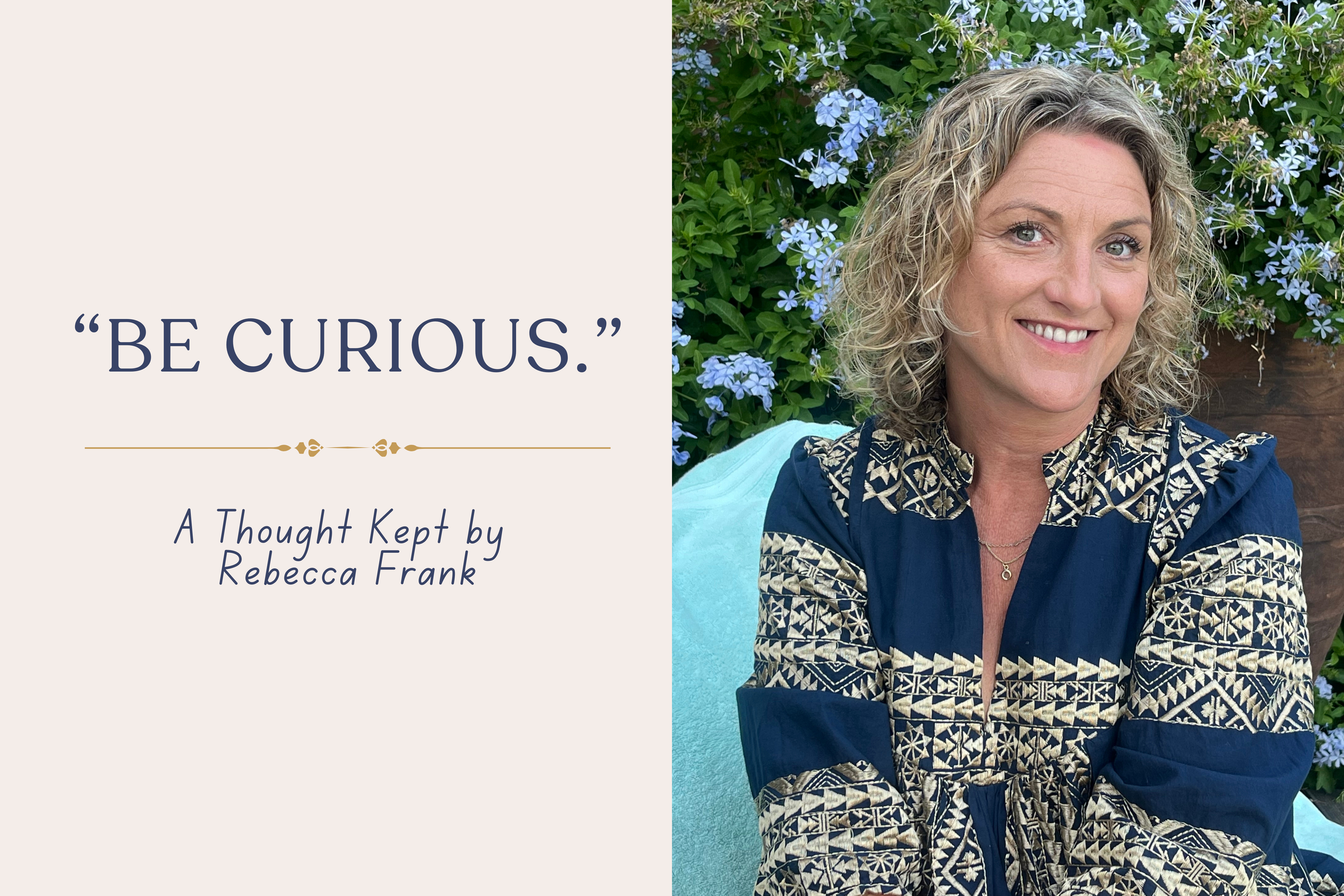
If you’re questioning whether New Year’s resolutions work, or whether there’s a gentler way to start the year, this week’s episode of A Thought I Kept explores curiosity as a way of approaching life without pressure. In this conversation with Rebecca Frank, wellbeing editor of The Simple Things, we talk about navigating January without having to change everything about yourself — and how curiosity might offer a different, and steadier, place to begin.

How to End the Year with Intention (Before the New One Begins)
December doesn’t have to be a sprint to the finish line. Here's a slower, more intentional way to reflect on the year behind you and quietly begin the next one with clarity and care.
December is often framed as a finish line: A final push. A test. A moment to evaluate everything and rework yourself before the clock strikes midnight. But what if we made space for something different?
What if the end of the year wasn’t a judgment point but a waypoint?
A natural pause to notice, gather, and begin again, without rushing?
This isn't though about anticipating resolutions. It’s more about recognising what this year asked of you and how you met it. It’s about taking stock of what mattered, what’s changed, what still hurts, and what you want to carry forwards (or quietly leave behind).
So here’s an invitation to end the year on your terms, whatever that means to you.

Step 1: Reflect Without the Pressure to Perform
This time of year can stir up all kinds of emotions — joy, grief, gratitude, burnout — often tangled together. So the first thing to do is simple:
Pause and notice. Instead of listing wins or judging what you “did enough of,” try asking:
What did I learn about myself this year?
Where did I feel most like me?
What surprised me, softened me, challenged me?
These are the kinds of reflections that grow self-trust, rather than self-criticism.
You could:
Write a “reverse bucket list” — things you experienced, even if small, that mattered
Map your year by seasons or quarters and list one lesson or moment from each
List three things you coped with or made space for, even if they don’t “look impressive” on paper
Growth isn’t always visible. This is the season to witness it anyway.
Step 2: Begin Again Without Reinventing Yourself
January can come with a lot of noise. New habits. Fresh starts. Big goals. But most meaningful change is quiet and ongoing.
So instead of asking, “What do I need to fix about myself?”, try this:
What do I want to protect, grow, or honour more in the year ahead?
A few questions that can help:
What helped me feel steady this year and how can I make space for more of that?
What small boundary, rhythm or mindset actually worked?
What’s something I’m curious about right now?
And one of our favourite ideas:
Choose a word — not as a resolution, but as a companion. Something that gently anchors your direction, without pressure. Words like ease, play, curiosity, rooted, or enough can be guideposts.
Yours doesn’t need to be “clever”. It just needs to feel like a hand on your shoulder, reminding you of what matters.
Step 3: A Gentle Reflection Practice (That Won’t Overwhelm You)
If you’re unsure where to start, try this 10-minute reflection ritual:
→ Write a letter to yourself from the end of next year.
Write as if it's already happened.
What moments are you grateful for?
What did you let go of?
What surprised you in the best ways?
What would you thank yourself for doing (or not doing)?
This isn’t about setting fixed goals. It’s about listening to what your life might want to become.
You can keep the letter, hide it in a book, or revisit it this time next year.
Or Try This: Your End-of-Year Clarity Toolkit
If journaling isn’t your thing, try choosing one of the following prompts to explore this December — in a voice note, a walk, or a conversation with a friend:
What are you proud of that no one else saw?
What helped you come back to yourself this year?
What do you know now that you didn’t in January?
Where did your energy feel most alive and how can you follow that in 2025?
Sometimes clarity doesn’t come through strategy but through honesty.
When This Season Feels Tender
Not everyone loves this time of year. For some, December brings exhaustion. Loss. Isolation. Or the sense that you’re not where you “should” be.
So here’s your permission slip:
You don’t have to optimise December.
You don’t have to write a perfect wrap-up post or choose a guiding word.
You are allowed to be in progress — unfinished, unsure, still becoming.
A different year is coming. But you don’t need to earn it. You only need to arrive in it as yourself.
This year has already shaped you. You’ve likely grown in ways you didn’t expect. And the new year? It’s not a blank slate you have to earn — it’s just the next page.
Take what you need from this season. Leave the rest. You’re already enough to begin again.
Want to Step into the New Year With Support?
If you're ready to approach 2025 with more clarity, confidence, or simply a better relationship with yourself, I’m now opening up a small number of coaching spots for the new year.
This isn’t about fixing you. It’s about creating space to explore:
What you actually want next — beyond the noise
How to hold boundaries without guilt
How to reconnect with energy, meaning and emotional steadiness
And how to live your life in a way that works for you, not just around you
We’ll work at your pace, with tools and reflections tailored to you.
If that sounds like something you're curious about, you can read more here and book a free discovery call here or drop me a message with any questions.

What Coaching Really Is (and Isn’t): A Q&A for Curious People
Curious about coaching but not sure what it actually is? A gentle, myth-busting Q&A that explains what coaching really means — and how it can help you reconnect with yourself.
Maybe you’ve been reading along for a while now. Nodding, recognising something in yourself, slowly starting to feel seen again. And maybe, you’ve wondered: Would coaching help me? Is it for someone like me? Do I even know what it really is?
We hear those questions a lot. So here are our non-sales-speak answers (because there’s already too much hustle in this industry).
Q: Is coaching just life advice?
Not at all. In fact, coaching isn’t advice-giving. It’s not someone telling you what to do. It’s not a checklist or a five-step plan or a quick fix.
Coaching is a conversation where you get to hear yourself more clearly. It’s space to think. It’s being asked the kinds of questions that help you untangle what’s really going on beneath the surface, in a way that feels safe, not exposing.
Q: But I’m not trying to “transform my life.” Would coaching still be useful?
Absolutely. Coaching doesn’t have to be about big reinventions.
In fact, the most powerful work often starts in the smallest moments: when you notice what you’re tired of carrying, or what you’ve been quietly craving, or what part of you you’ve been ignoring.
Q: I’ve seen a lot of shiny coaching online. I’m not sure that’s for me.
Us too. And this isn’t that. Our coaching isn’t about perfection or even performance. It’s about being human, and finally having a space where you don’t have to keep holding it all together.
There’s no hype here. No positive vibes only. Just grounded, clear, thoughtful support for the real version of you, the one who’s doing her best, even when she’s unsure what that looks like anymore.
Q: Do I need a goal to bring to coaching?
No. You just need to bring yourself. You don’t need a mission statement or a project plan. Sometimes the goal is simply: to feel like yourself again. To hear your own thoughts. To name your own needs. To feel something.
That’s more than enough to begin.
Q: What even happens in a session? What do we actually do?
We talk. We pause. We ask better questions. We listen.
Sometimes there are tears. Sometimes laughter. Sometimes we sit in silence for a moment because something lands, and that alone is a shift.
We might name what you’re carrying. We might explore what’s underneath the overwhelm. We might simply ask: Where do you want to feel more like yourself again?
It’s not therapy. It’s a gentle, guided space for self-connection at your pace.
Q: Who is this really for?
It’s for the woman who’s wondering what happened to her spark.
The one who feels emotionally full but strangely flat.
The one who wants to feel seen, not just by the world (that would be nice too), but by herself.
It’s for the woman who’s quietly tired of being the person everyone relies on… but doesn’t know where to put her own feelings.
It’s for you, if something in you has whispered:
I want more space. I want to feel more real. I want to come back to myself.
It’s for you if you have questions and you’re living in the space between.
It’s for you if you just need to press pause on life for an hour.
If this sounds familiar, we think you’ll find these sessions exactly what you need right now.
There is nothing we love to do more then hold the space for you and to ask the big questions that hold the shifts you need.


Creating Space to Pause in Your Everyday Life
Feeling overwhelmed and exhausted? Learn how to create an Everyday Retreat that fits into your daily life. Discover easy ways to find rest and reconnect with yourself, no getaway required.
Everyone we talk to is exhausted—completely, overwhelmingly exhausted. Maybe it's the never-ending bad weather, or the pressure to do, be, and have everything at once. Maybe it’s the constant stream of notifications, the never-ending WhatsApp messages that make us feel like we might just break. Whatever the cause, we’re all longing for a pause.
We dream of running away, retreating to some far-flung destination where we can breathe deeply and reconnect with ourselves. But what if we could build that pause into our everyday lives, without booking a flight or waiting three months for a weekend away?
Why Wait for a Retreat? Finding Peace in Everyday Moments
For years, we’ve wondered how we can bring those feelings of peace and connection into our daily routines, so we don’t have to wait for a retreat to feel better. What if we could design our own “Everyday Retreat”—something that fits into our lives as they are, right now?
Imagine creating moments of rest and self-care, not just when life allows, but amid the daily chaos. You don’t need to wait for the perfect conditions. You can make this happen even after a hectic Monday and even in the darker months of the year.
Let’s start designing your Everyday Retreat today. Ready to join us?
5 Simple Ways to Create Your Own Everyday Retreat
Today we’re sharing part of our Manifesto for Your Everyday Retreat. Let it inspire you to find ways to make each day a little more restorative, starting now:
Make it your own:
Whether it’s blasting your favorite song or doing a quick workout, design your retreat around what makes you feel good. This is your time—use it to bring a little joy into your day.Hit key well-being areas:
Yes, yoga and mindfulness are great, but don’t forget to spark your creativity or nurture your emotional health by reaching out to friends. Retreats are more than just relaxation—they’re about paying attention to often neglected areas of our lives.Know your tone:
Is your retreat cozy and comforting with tea and blankets, or energizing with fresh juice and movement? Tailor the vibe to what you need in the moment.Prep your retreat, but don’t get stuck there:
Clear a small space for yourself—a corner of the room or even just your favorite chair. But remember, it doesn’t need to be perfect. You don’t need an Instagram-worthy setup; you just need a place where you can pause and reconnect with yourself.Set boundaries:
Even though your retreat is happening in your everyday life, you still need to create space for it. Set a boundary with those around you. Put up a metaphorical “do not disturb” sign so you can truly step away and be present.
Feel Calm and Connected—Without the Need for a Getaway
An Everyday Retreat doesn’t need to be a big production—it can be as simple as carving out a few minutes to breathe, move, or listen to something that lifts your spirits. When you make small moments like these a regular part of your life, it’s like creating a well of calm that you can draw from whenever you need it.
Ready to build more of these restorative moments into your day?
Want to start building your Everyday Retreat? Join as a paid Substack Member and get access to this course from April 7 for free.

The Benefits of Journaling: How to Start (and Stick With) a Journaling Practice for Better Wellbeing
Discover the benefits of journaling for mental and emotional well-being. Learn how to start and maintain a journaling practice with 5 easy prompts to improve your everyday life.
Feeling lost in the chaos of daily life? Maybe you’ve heard that journaling can help you slow down and tune in, but you’re not quite sure how to get started. Or maybe you’ve started a journal once or twice, only to abandon it after a week of blank pages staring back at you. Wherever you’re at, journaling can be a simple, meaningful way to bring clarity, calm, and connection into your life—if you know how to make it work for you.

Discover How Journaling Can Help You Find Clarity and Calm in Everyday Life
Journaling has long been celebrated as a powerful tool for mental and emotional well-being. But what if it could be more than that? Not just a place to vent or reflect, but a daily practice that helps you make sense of the world around you, and more importantly, your own needs and desires.
At If Lost, we’ve seen firsthand how a journaling practice can bring relief from the constant noise of life. By putting pen to paper, you create space to reconnect with yourself. No judgment, no pressure—just an honest exploration of where you’re at and where you want to go.
It doesn’t have to be complicated. The key is to start small and keep it simple. Once you get past the idea that journaling has to look a certain way, you can discover how it helps you tap into your voice, gain clarity, and feel a little more grounded in your everyday life.
How to Start—and Stick With—a Journaling Practice
Ready to start? Here’s how you can begin and maintain a journaling practice, no matter how busy life feels. Plus, we’re sharing 5 easy journaling prompts that will help you improve your everyday well-being.
1. Start where you are
The biggest barrier to journaling is often thinking it has to be perfect. It doesn’t! There’s no ‘right way’ to journal. You don’t need a fancy notebook or an hour of quiet time. Grab whatever you have on hand and start writing. The key is simply to start.
2. Make it easy and doable
If journaling every day feels like too much, aim for once or twice a week. Set aside 5–10 minutes at a time that works for you—whether that’s over your morning coffee, during lunch, or right before bed. The goal is to make journaling part of your routine, but without pressure.
3. Let go of expectations
Some days, your journaling will feel insightful and deep. Other days, it might feel scattered or surface-level—and that’s okay! The process is about showing up for yourself, not writing something profound every time.
4. Experiment with what works for you
You don’t have to stick to one style of journaling. Some days, you might prefer stream-of-consciousness writing. On other days, you might enjoy responding to specific prompts or focusing on gratitude. Give yourself permission to explore what feels right on any given day.
5. Keep going, even if it’s not ‘perfect’
Journaling is a long-term practice, not a quick fix. You might miss a day or a week—that’s normal! Just pick up where you left off. Consistency will build over time, and you’ll start to see the benefits in how you feel and navigate your days.
5 Journaling Prompts for Everyday Wellbeing
Not sure what to write about? These simple prompts can help you get started:
1. What’s one thing I’m grateful for today?
Starting with gratitude can instantly shift your mindset, helping you focus on what’s going well—even if it’s something small.
2. How am I feeling right now?
This is a great check-in prompt to help you notice and acknowledge your emotions, without needing to ‘fix’ them.
3. What’s one thing I can let go of today?
Whether it’s a worry, a task, or a feeling, writing about what you can release helps you focus on what really matters.
4. What’s one thing I want to create more space for in my life?
This prompt encourages you to think about what you need—whether it’s more rest, joy, or time with loved ones.
5. What do I want my day to feel like?
Journaling about your intentions for the day can help you feel more purposeful and grounded, even amidst life’s chaos.
Reconnect with Yourself: The Benefits of Journaling for Better Mental and Emotional Health
By weaving journaling into your everyday routine, you’ll notice how it helps you slow down, reconnect with yourself, and navigate life’s challenges with more clarity. It’s a tool you can return to whenever you need it—whether you’re feeling lost or simply want to stay connected with yourself.

Curious to try journaling? Join our Everyday Retreat on Substack, where we offer weekly journaling and writing prompts for better wellbeing.

The Creativity Cure | How creativity can positively impact your well-being
Learn how to fold more creative activities into your everyday life, so that you can feel happier.
In the moments when we feel most stuck or disconnected, we can overlook how turning to creative practices could help us feel better.
Engaging in creative activities has been found to boost mental health, improve our mood, and help us feel more connected to ourselves and the world around us.
Sometimes though the routine of work, chores, and responsibilities can leave little room for creativity and self-expression. We can get caught in a cycle of endless tasks and relentless deadlines.
If we also have a natural interest in creative pursuits, we can find this lack of an outlet leads us to feel blocked and uninspired. We can start to miss the joy of creating for the sake of creating.
5 Ways to access the well-being benefits of creativity
If you’re curious about exploring your own creativity for well-being purposes, or you long to reconnect with your artistic side, here are some steps to get you started.
1. Try New Creative Outlets:
Experiment with different creative activities, such as painting, writing, dancing, or playing a musical instrument. Trying new things can spark your creativity and open up new possibilities.
2. Set Aside Creative Time:
Make time for creativity in your daily routine. Set aside a specific time each day or week for creative activities, and treat it as a non-negotiable part of your schedule.
3. Join Creative Communities:
Connect with others who share your creative interests. Join local art classes, writing groups, or online communities where you can share your work and get inspired by others.
4. Embrace Imperfection:
Don't worry about creating something perfect. Allow yourself to experiment, make mistakes, and have fun with the creative process. The goal is to enjoy the activity itself, not just what it produces.
5. Seek Inspiration:
Surround yourself with inspiration by visiting museums, attending concerts, reading books, or exploring nature. Inspiration can come from anywhere, and exposing yourself to new experiences can fuel your creativity.
Creativity offers numerous ways to reconnect with yourself, other people, and the world around you.
How could you fold more creative activities into your everyday life, so that you can feel happier?
Find your way to more creativity
Creativity is one of our company’s core values. It’s also one of the areas of our lives that we explore in our online well-being course Find Your Way.
Here’s just a glimpse into how we’ll help you explore more creativity in your everyday life so that you can feel good.
If you’re curious about how to bring more creativity into your life for better well-being, learn more about Find Your Way here.

Emotional Well-being Series | Learn how to cultivate positive emotions to improve well-being
Discover how to understand and enhance positive emotions to improve your emotional wellness. This guide explores the science behind positive emotions, their impact on mental health, and practical strategies to cultivate joy, contentment, and resilience in everyday life. Boost your well-being and reduce anxiety by embracing positive emotions.
Do you ever feel like joy is fleeting and hard to grasp? You're not alone. Many of us now find it challenging to maintain positive emotions amidst life’s demands. But what if understanding positive emotions better could help us experience them more often?
Positive emotions are one of the most enjoyable parts of being alive. But what exactly are positive emotions? What effect do they have on our lives? And how can we experience more of them?
What are positive emotions?
Positive emotions are more than just fleeting moments of happiness; they are vital to our overall well-being. They encompass a wide range of experiences from joy and excitement to contentment and love.
Positive emotions exist on a continuum with negative emotions on one end and positive emotions on the other. However, the words we use to describe positive emotions generally lead us to think that positive emotions are discrete entities, separate from negative emotions. For example, “happy” and “sad” might be on two ends of one continuum but we think of them as different things.
Positive emotions can also be either high-energy (e.g., excitement, joy) or low-energy (e.g., calm, content).
The importance of positive emotions on our well-being
Research shows that positive emotions not only make us feel good but also contribute to longevity, improved immune function, and greater resilience. Positive emotions may even be considered synonymous with happiness (but happiness may also include things like meaning or purpose).
Here are some examples of positive emotions:
● Excitement. A feeling of great enthusiasm and eagerness.
● Delight. To take great emotional pleasure in something.
● Astonishment. A feeling of great surprise and wonder.
● Happiness. Feeling or showing pleasure or contentment.
● Pleased. A feeling of pride or satisfaction.
● Content. A state of happiness and satisfaction.
● Relaxed. A state of being at rest or ease.
● Calm. Not excited or upset.
Imagine how your life could change if you could tap into these emotions more frequently and deeply.
How positive emotions differ from moods and why it matters
Understanding the nature of positive emotions can be a game-changer. Unlike moods, which are more prolonged and diffuse, positive emotions are typically short-lived and arise from specific experiences. They bring about changes in our nervous system, hormones, facial expressions, and even our thoughts. By learning to recognize and cultivate these emotions, we can enhance our mental and physical health.
Engage, explore, and enjoy: Ways to increase positive emotions
1. Identify Positive Emotions
Start by recognizing different positive emotions such as excitement, delight, astonishment, happiness, and contentment. Each of these emotions has unique triggers and effects on our well-being.
2. Embrace Emotional Granularity
Develop the skill of emotional granularity, which means being able to identify and differentiate between a wide range of emotions. This can help you understand your emotional experiences more clearly and respond to them more effectively.
3. Cultivate Positive Experiences
Engage in activities that naturally evoke positive emotions. For example, joyful play, exploring new interests, savoring moments of contentment, and nurturing loving relationships can all help broaden your emotional repertoire.
4. Apply the Broaden and Build Theory:
According to Barbara Fredrickson's Broaden and Build Theory, positive emotions broaden our thought-action repertoire and build lasting personal resources. This means that by cultivating positive emotions, you can enhance your creativity, resilience, and social connections.
Embrace positive emotions for a healthier, happier you
Positive emotions are powerful tools for enhancing your well-being. By identifying and cultivating these emotions, you can experience greater joy, resilience, and fulfillment in everyday life.
Ready to enhance your emotional wellness and experience greater joy and contentment?
Our specialized emotions coaching sessions at If Lost Start Here can help you understand and cultivate positive emotions for a healthier, happier life.
Click the link to learn more and book your first session today!