
When You’re Told You’re Too Emotional at Work
Been told you’re too emotional at work? Discover Hannah Wilson’s approach to criticism, emotional intelligence and choosing which feedback you carry forward.
There are certain words that can follow us around at work long after the person who said them has moved on. Difficult. Sensitive. Intimidating. Emotional. They can be delivered as feedback, an observation or sometimes almost casually, but if they touch something we are already conscious of in ourselves, they can become much bigger than the original conversation.
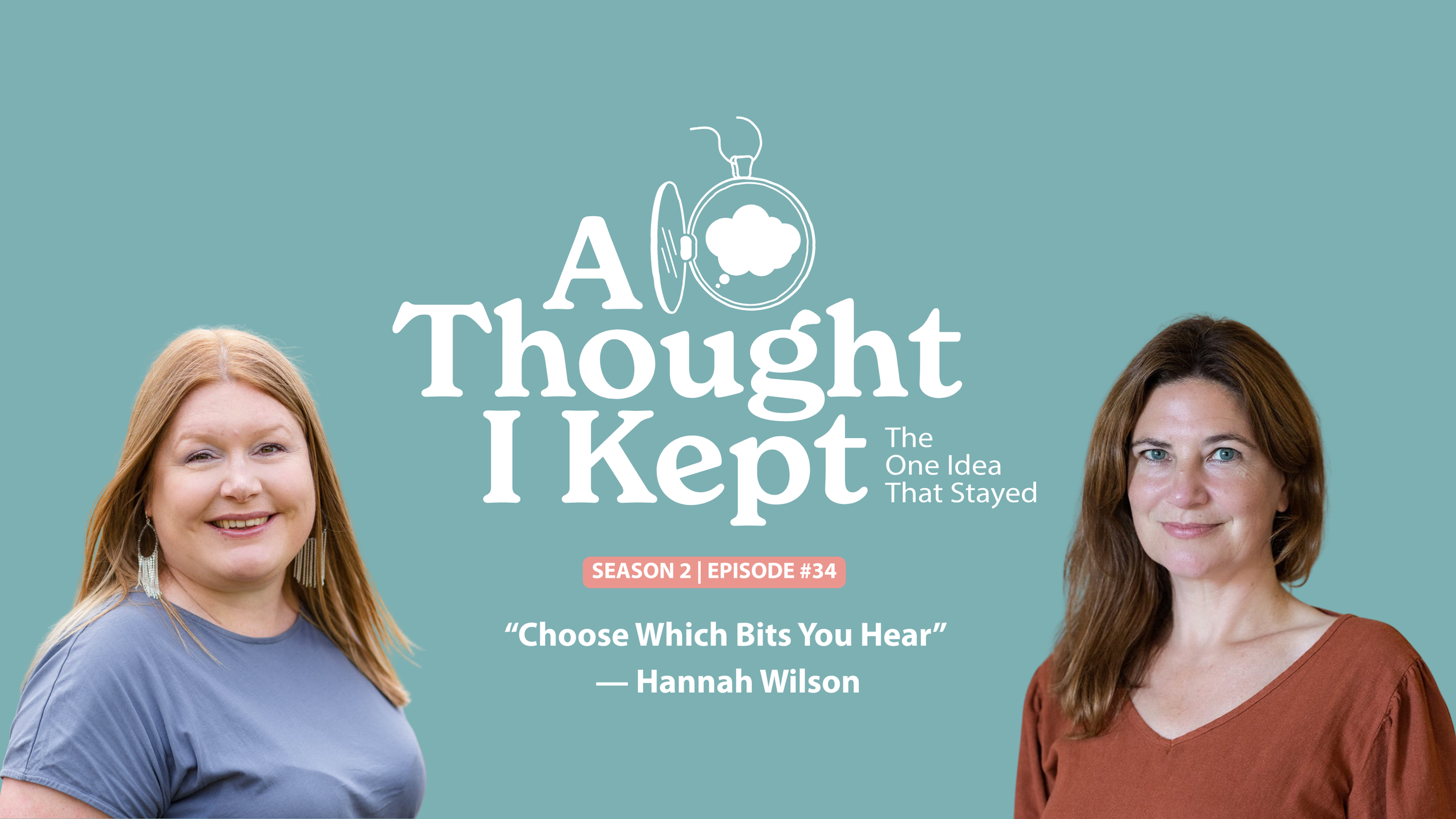
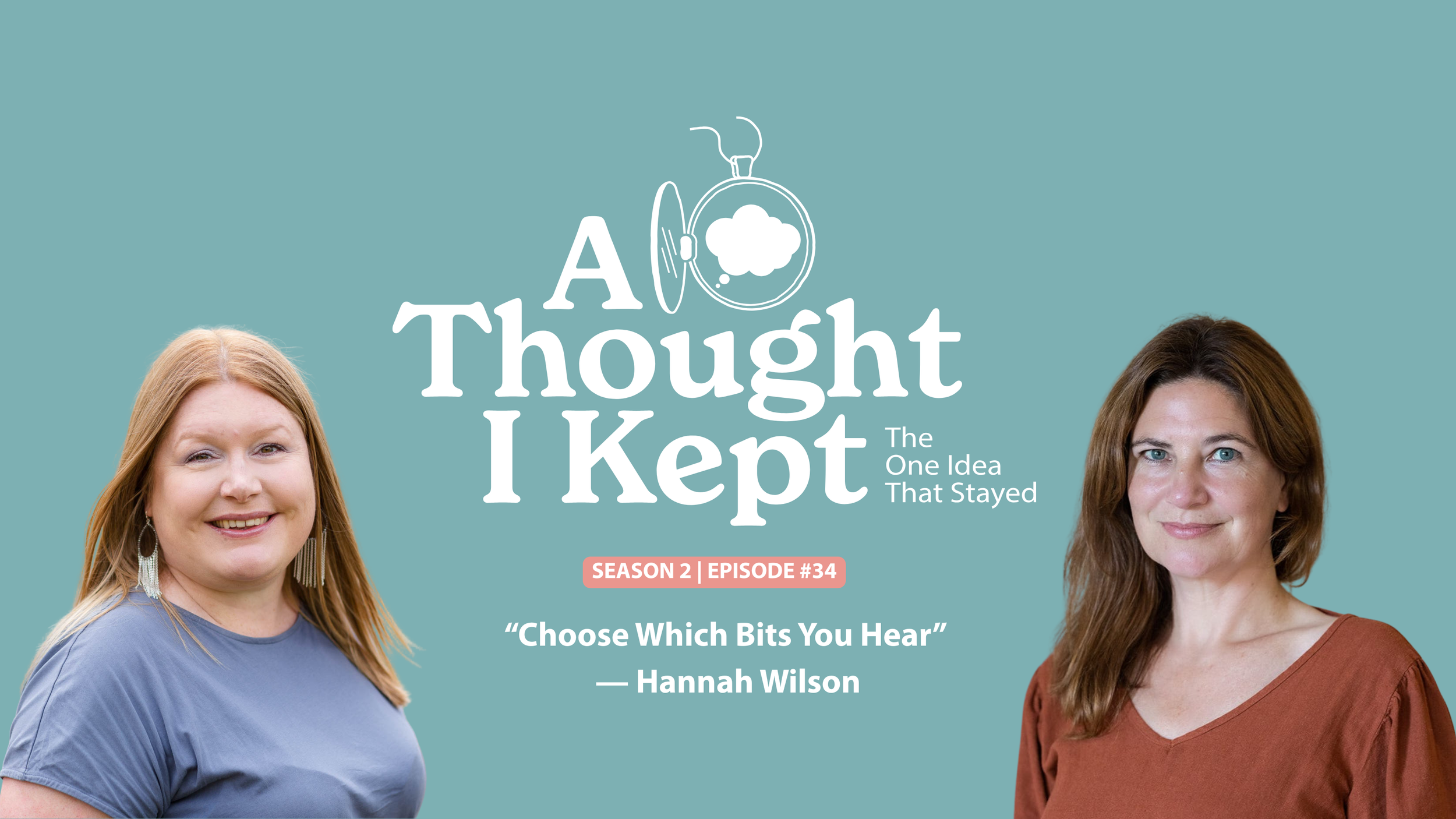
I see this particularly with women who have been told that they are “too emotional” at work. Perhaps you cried in a meeting. Perhaps you showed frustration when something mattered to you. Perhaps you noticed the emotional temperature in a room when everyone else seemed determined to ignore it. Or perhaps, as my guest Hannah Wilson experienced, what somebody else called emotional was actually something rather different: emotional intelligence.
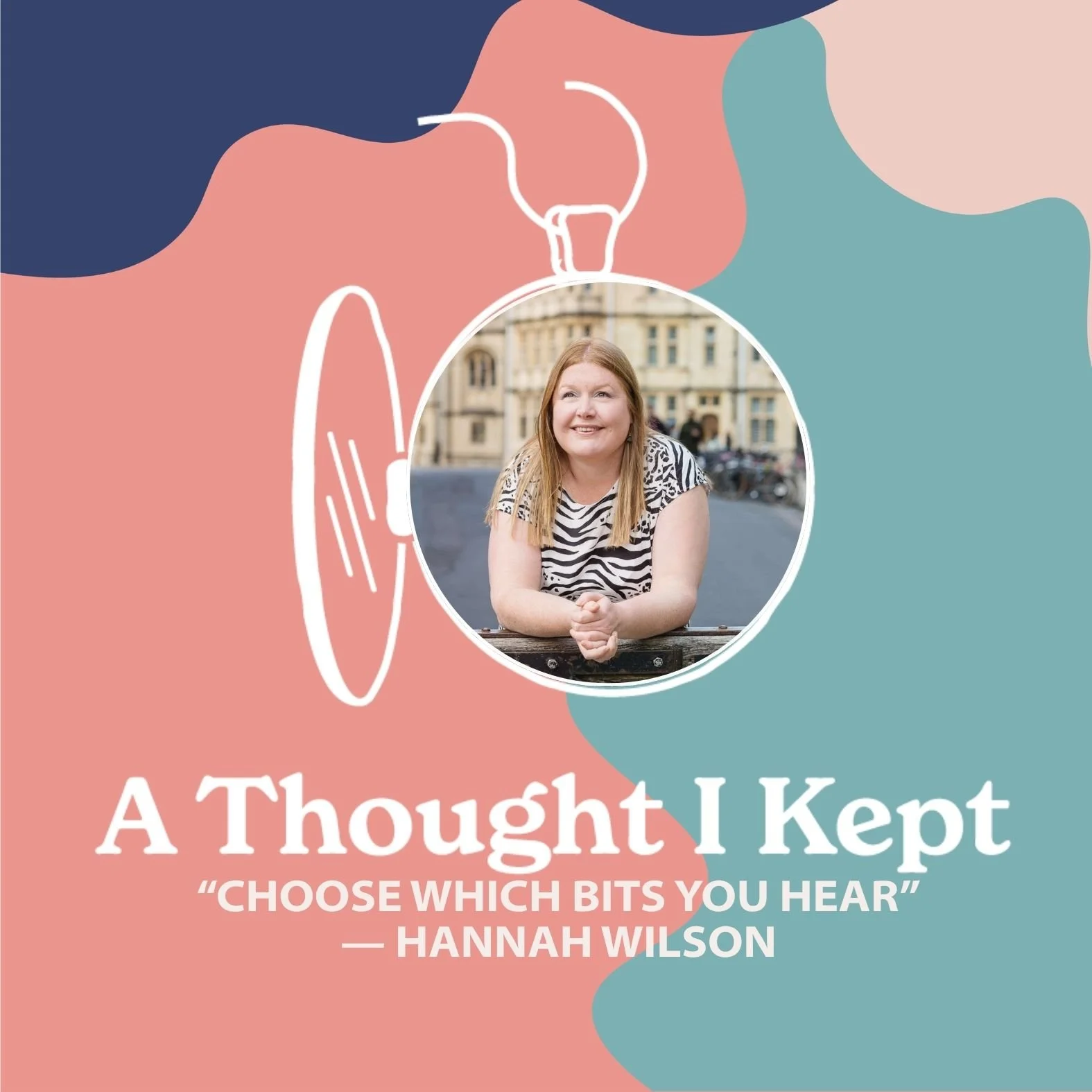
Hannah is a leadership development coach, trainer, former teacher and school leader, co-founder of #WomenEd and #DiverseEd, and author of Cultivating Belonging in Schools. When she joined me on A Thought I Kept, she brought with her a piece of advice she was given about 15 years ago, when she was the youngest and only woman on her senior leadership team. She had received criticism she thought was deeply unfair and went to see her line manager feeling, in her words, “really quite annoyed.”
His advice changed the way she thought about criticism. Becoming more senior and more visible, he told her, meant putting her “head above the parapet.” People were going to critique her. She couldn’t necessarily control that, but she did have a choice about what happened next: “You need to choose which bits you hear and which bits you leave or choose to reframe it, so it helps you.”
What if “too emotional” isn’t the whole story?
Hannah gives a brilliant example of what that reframing can look like. She was working within what she describes as quite an “alpha male leadership culture” and received criticism from male colleagues that she was emotional. Rather than simply absorbing that description as evidence of something she needed to change, she started questioning the premise.
“I don’t think I actually am emotional,” she remembers thinking. “I think I’m emotionally intelligent, and there’s a difference.”
That distinction matters. Because sometimes feedback can sound objective when it is actually tangled up with expectations about how we are supposed to behave at work, what leadership is supposed to look like, and which qualities we have collectively decided to value.
Hannah could see that the criticism she received was gendered. She could also see that some of her male colleagues who showed qualities perceived as more nurturing were criticised too. What was being presented as a weakness might actually have been a different way of leading.
As Hannah puts it, “We are emotional beings.” Being emotional isn’t automatically a weakness. Our emotions are part of our humanity, and centring that humanity can make us better leaders, colleagues and people.
You don’t have to accept every piece of feedback
I think this is where Hannah’s thought becomes particularly useful. “Choose which bits you hear” does not mean refusing criticism, surrounding yourself with people who agree with you or deciding that every uncomfortable piece of feedback is somebody else’s problem.
Hannah does almost the opposite. She talks about having a circle of supporters and “critical friends” who can hold a mirror up to her. She actively asks her team whether she has got something wrong. She describes herself as a work in progress and talks about responding to feedback and changing what she does when she needs to.
But she makes an important distinction between feedback offered within a relationship of trust and what she calls unsolicited critical feedback. Not every opinion deserves equal weight simply because somebody has decided to give it to us.
When criticism arrives, then, we might borrow Hannah’s approach and ask: Is there something useful here? Does this come from someone whose judgement I trust? Is this feedback about my behaviour, or an expectation of how someone like me should behave? What could I learn from it? And what might say more about the person giving it than it does about me?
The aim isn’t to become impervious. It’s to become more discerning.
What are you already doing well?
There is another side to this that I loved in my conversation with Hannah. If we are going to become more thoughtful about the criticism we accept, perhaps we also need to become better at accepting affirmation.
Hannah sees women brush compliments aside all the time. In her coaching, when someone immediately starts listing everything they’re getting wrong, she stops them. Before they talk about what needs work, she asks them to name three things they are doing well or three of their strengths.
There’s something wonderfully corrective about this. Many of us have become incredibly accomplished at noticing evidence for our supposed inadequacies while being strangely suspicious of evidence that suggests we might actually be doing rather well.
And perhaps that’s particularly important when someone has called you “too emotional.” Instead of immediately asking How do I become less emotional?, there are other questions available. What does my emotional awareness allow me to notice? How does it help me connect, communicate or lead? Is there something I need to work on here — or is there a strength that someone else has failed to see?
You can listen to my full conversation with Hannah Wilson on A Thought I Kept, where we talk about criticism, emotional intelligence, visibility, likability, belonging, courageous conversations and why Hannah would rather be “Marmite than vanilla.” Her thought — “Choose Which Bits You Hear” — feels like one worth keeping, particularly the next time someone else’s words threaten to become the story you tell yourself about who you are.
And if criticism at work has become tangled up with anxiety, overwhelm, confidence or how you feel about yourself, you don’t necessarily have to think your way through it on your own. In my 1:1 emotions coaching sessions, we can make some space for what you’re feeling, understand what it might be telling you, and work out what you want to carry forward — and, perhaps just as importantly, what you’re ready to leave behind.

A Thought I Kept… About Connection
Feeling disconnected, overwhelmed, or emotionally exhausted? Explore why human connection matters most in difficult times. Inspired by conversations from our podcast, A Thought I Kept.
There are moments when the world can feel too loud to properly hear yourself think. You wake up already behind. The news is unbearable again. Somebody somewhere is shouting online. The food shop costs more than you thought it would. Your phone keeps filling with reminders, requests, headlines, notifications. Work spills into evenings. Even rest starts to feel strangely performative. We scroll instead of pausing. We cancel plans because we’re tired. We tell ourselves we’ll reply properly tomorrow.
And slowly, often without noticing, many of us begin retreating from one another. Not dramatically. Quietly.
We stop reaching out first. We stay home more. We become suspicious of people who think differently to us. We compare ourselves. We convince ourselves everyone else is coping better. We move through life slightly armoured — overstimulated, emotionally exhausted, and unsure how to find our way back to each other again.
But one of the thoughts I’ve kept from making A Thought I Kept is this: human connection matters most precisely in the moments when we’re tempted to withdraw from it.
Not because connection fixes everything. Not because friendship erases grief or anxiety or burnout or uncertainty. But because being with other people — really being with them — can remind us that we are still here. Still human. Still part of something larger than our own spiralling thoughts.
As I pulled together conversations with Cathy Rentzenbrink, Tanya Lynch, Hiroko Yoda, Laurence McCahill, Suzy Reading, Liana Fricker and Lauren Barber, I realised that although these episodes explored very different corners of life — grief, spirituality, creativity, burnout, friendship, books, business, midlife, rest — they kept circling back to the same idea. Connection is not an optional extra to wellbeing. It might be the thing holding so much of it together.
1. We Retreat When Overwhelmed But Isolation Deepens the Feeling
One of the strange things about difficult periods is how quickly they can make us disappear from our own lives. You stop texting back properly. You feel too tired to explain how you are. Going out starts to feel like effort. You tell yourself you’ll reconnect when you feel calmer, less overwhelmed, more yourself again.
But listening back to these conversations, I kept noticing how often people found their way back through other people. Not through becoming shinier or more productive or more emotionally “together,” but through being alongside somebody else long enough to soften a little.
In my conversation with Laurence McCahill, we talked about how growth and change so rarely happen in isolation. We can read the books and underline the quotes and listen to the podcasts and still feel strangely stuck. Sometimes what’s missing isn’t another idea. It’s other people. Someone sitting opposite you saying, “Yes, I know exactly what you mean.” A room where you don’t have to explain yourself quite so much. A gathering that reminds you life can feel different to this.
I think modern wellbeing culture sometimes forgets this. So much advice is aimed at the individual: your morning routine, your mindset, your habits, your healing, your optimisation. And while solitude can absolutely be restorative, there is also something profoundly regulating about being witnessed by another human being. The friend you voice note while unloading the dishwasher. The person who notices you’ve gone quiet. The neighbour you always end up chatting to longer than intended. The group chat that suddenly becomes honest at 11pm. These moments can seem tiny from the outside, but emotionally they can be enormous.
2. Connection Doesn’t Have to Look Big or Impressive
What struck me listening back to these episodes was how often connection appeared in ordinary forms. Not grand gestures or perfectly curated social lives, but cups of tea, shared books, walks, retreats, conversations that drift unexpectedly from logistics into longing.
In my conversation with Tanya Lynch, we spoke about the feeling of being gathered — of spaces where people are allowed to arrive exactly as they are, whether that’s hopeful or grieving or emotionally threadbare. There was something in that conversation that stayed with me because I think so many of us are craving precisely that kind of space right now. Not networking. Not performance. Just moments where we can stop pretending to be fine for a minute.
I think many of us accidentally make connection feel harder than it needs to be. We imagine thriving social lives and elaborate dinner parties and huge friendship circles maintained through impeccable emotional availability and perfectly colour-coded calendars. But often connection is much quieter than that. It’s somebody saving you a seat. Somebody remembering what you said last week. Somebody sending you a photo because it made them think of you.
These tiny gestures matter because they remind us we exist in other people’s minds and lives. That we are held somewhere beyond our own stress and self-criticism.
3. Being Witnessed Changes Us
There’s a moment in my conversation with Cathy Rentzenbrink where we talk about books and grief and the relief of feeling recognised by somebody else’s words. I think that’s one of the deepest forms of connection there is: the feeling that someone else has inhabited something adjacent to your own experience and survived long enough to describe it.
Loneliness is not only physical isolation. It’s also the feeling that your inner world is somehow unshareable, too strange or messy or contradictory to be understood by anyone else. Which is why it can feel so unexpectedly emotional when somebody articulates the thing you haven’t been able to say yourself.
This is part of why art matters so much to me. Why conversations matter. Why podcasts matter. Why books matter. Not because they solve life, but because they make our inner worlds feel more shareable. Somebody else has also sat in the car park crying. Somebody else has also felt lost at a dinner party or uncertain in midlife or disconnected from themselves after years of coping. Somebody else has also stared at the ceiling at 3am wondering what on earth they’re doing with their life.
Being witnessed doesn’t remove pain, but it can make pain feel survivable. Sometimes another person’s honesty becomes a bridge back to our own.
4. Rituals and Shared Experiences Help Us Feel Human Again
I kept thinking about this during my conversation with Hiroko Yoda, where we explored Japanese spirituality and the way it can live quietly inside ordinary rituals and everyday life. Shared meals. Seasonal practices. Returning to certain places. Moments of pause and reverence that tether people back to each other and to the world around them.
It made me realise how many of us are quietly searching not only for connection with other people, but connection with meaning itself. Something beyond productivity and algorithms and constant consumption. Something that helps us feel part of a wider human experience again.
Maybe this is why small rituals can feel so unexpectedly important during difficult seasons. Cooking for somebody. Reading in bed beside another person. Returning to the same café every Saturday morning. Listening to a familiar voice on a podcast while commuting home in the dark. These things can seem insignificant until you realise they are helping hold you together.
There’s comfort in repetition. In familiarity. In tiny practices that remind us we belong somewhere — to a person, a community, a season, a place, a version of ourselves we’re trying not to lose.
5. Other People Help Us Remember Who We Are
Perhaps this is the thought I’ve kept most strongly from these conversations: we do not become ourselves entirely alone.
Other people reflect us back to ourselves all the time. A friend remembers the version of you that existed before burnout. Someone notices your excitement returning before you do. A conversation unlocks a part of yourself you thought had disappeared. A community helps you imagine a different future.
We are constantly shaped by what we share, what we witness, and what we allow ourselves to receive from one another. Which feels particularly important in a culture that simultaneously encourages hyper-independence while exhausting us emotionally.
Maybe wellbeing was never supposed to be something we carry entirely alone. Maybe part of feeling better is allowing ourselves to be held — by conversations, friendships, rituals, stories, books, communities, shared meals, and moments of recognition that arrive unexpectedly in ordinary life.
Putting together this playlist reminded me that connection rarely arrives looking cinematic. More often it appears quietly. A message sent at the right moment. A conversation that stays with you for weeks afterwards. Somebody making you laugh when everything has felt unbearably heavy. A voice in your headphones helping you feel a little less alone as you move through another complicated Tuesday.
And maybe, for now at least, that’s enough.
If you’d like to listen to the full A Thought I Kept… About Connection playlist, you can find it here:
Why Nothing Changes Even When You Try Everything: The Missing Role of Connection
Feeling stuck even after trying all the advice? This piece explores why real change often happens through connection, not more ideas, and how being with others can help you move forward.
Do you ever feel so frustratingly stuck? And it’s not because you haven’t tried things. If anything, you’ve tried a lot. You’ve read the books, listened to the podcasts, saved the quotes, maybe even written things down in a notebook with the hope that this time something might land. And for a moment, it does. Something resonates. Something makes sense. And then, somehow, nothing really changes.
You’re still in the same patterns. Still circling the same questions. Still feeling that low-level sense that something isn’t quite shifting in the way you hoped it might.
It can be easy, in those moments, to assume the problem is you. That you haven’t understood it properly. That you haven’t applied it well enough. That you need to try harder, or find the right framework, or finally come across the one idea that will make everything click into place.
But what if that’s not what’s missing?
In a recent episode of A Thought I Kept, I found myself returning to a simpler idea. That sometimes it isn’t another piece of insight we need. It’s other people.
Not in a dramatic or overwhelming way. Not in the sense of needing a whole new community or a complete change of life. But in the small, often overlooked ways that we are with each other. The conversations that go a little deeper than expected. The moments where someone really listens. The feeling of being alongside someone rather than trying to work it all out alone.
Because so much of what we are trying to understand about ourselves doesn’t fully emerge in isolation.
We can think about something for weeks, months even, and still feel unsure. And then, in the space of a single conversation, something becomes clearer. Not because the other person has the answer, but because they’ve asked a question we hadn’t considered. Or reflected something back to us that we couldn’t quite see on our own.
There’s something about being witnessed that changes the shape of things.
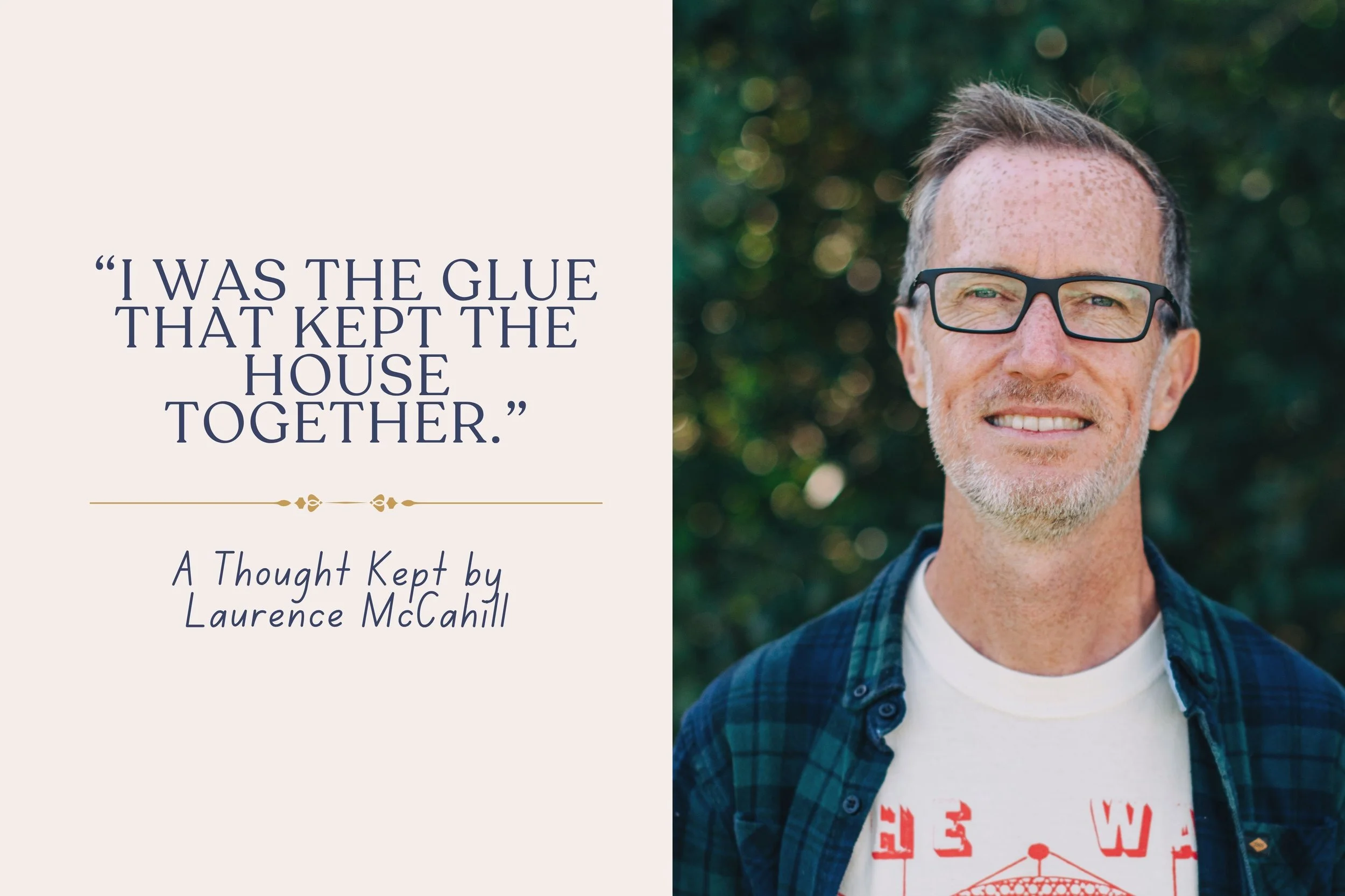
In my conversation with Laurence McCahill, we talked about the role he plays in bringing people together. A friend once told him that he was the glue in a group, the person who connected people who might not otherwise have found each other. It wasn’t something he had consciously set out to be. It was something he recognised in hindsight, something that had always been there.
And I think there’s something important in that too.
That the things that help us feel more connected, more ourselves, are often not the things we need to learn from scratch. They are the things that already exist in us, but only really come into focus in relationship with other people.
Listening. Noticing. Making space. Asking a question at the right moment. Sitting with someone without needing to fix what they’re going through.
These are not grand gestures. They are small, human ones. But they create the conditions for something else to happen. They create the conditions for change.
It also made me think about how much of modern life encourages us to do things on our own. To self-reflect alone. To improve alone. To figure things out internally before we share them with anyone else. Even our versions of connection can become structured or transactional. Networking rather than relating. Updating rather than opening up. And in all of that, we can lose something essential.
The in-between spaces where things unfold more naturally. The conversations that aren’t heading anywhere in particular. The moments where we’re not trying to get something out of the interaction, but simply being in it. Those are often the places where something shifts. Not because we’ve found a better answer, but because we’re no longer holding everything on our own.
If you’ve been feeling stuck, or like you’re circling the same thoughts without anything really changing, it might be worth gently asking a different question.
Not “what haven’t I figured out yet?” But “who might I need to be in conversation with?”
That might look like reaching out to someone you trust. Sitting with a friend a little longer than usual. Joining something where the intention is simply to be with other people, rather than to achieve or fix anything.
It might even be noticing where, in your own life, you are already the one who brings people together. The one who listens. The one who creates space for others. And considering what it would mean to allow that to be something you receive as well as give.
There isn’t a neat formula for this. And it won’t always feel comfortable, especially if you’re used to holding things on your own. But there is a different kind of steadiness that can come from it.
The kind that doesn’t come from having all the answers, but from not having to find them alone.
If this idea resonates, you might want to listen to the full conversation with Laurence on A Thought I Kept, where we explore connection, community, and what becomes possible when we do life together.
And if you’re looking for somewhere to begin, we’ve created a series of wellbeing prescriptions at If Lost Start Here that gently centre connection in everyday life. Not as another thing to get right, but as a way of finding your footing again, alongside other people.
When Grief Changes You But Doesn’t Define You: Finding Your Way Through Loss
Feeling lost after grief or life changes? Explore how loss can change you without defining you, and find a steadier way to navigate difficult emotions and feeling lost.
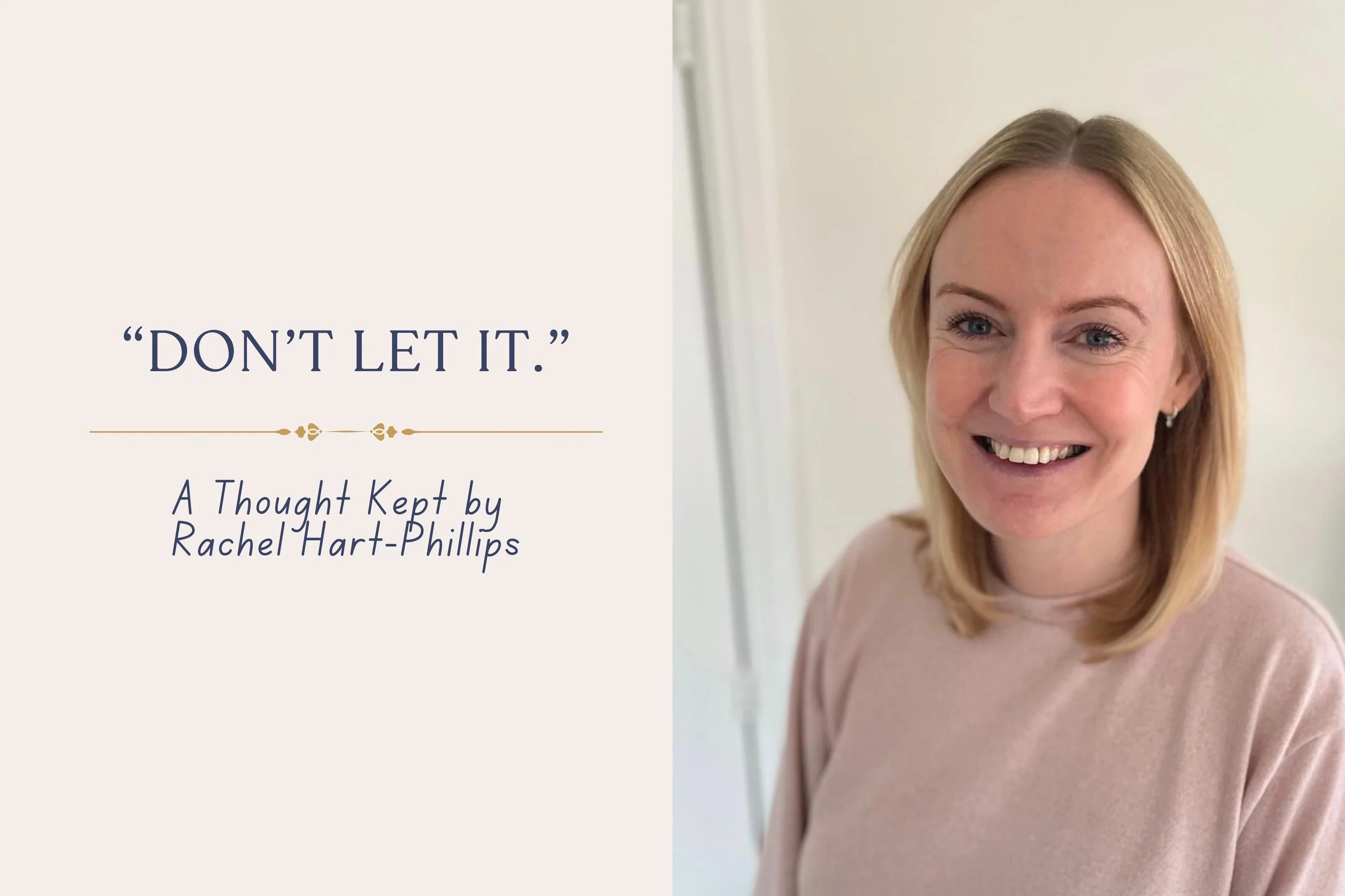
Rachel Hart-Phillips is in the car, driving away from the hospital mortuary. It is one of those days that feels almost impossible to hold — the kind where everything is too much, too raw, too real. She has just seen her husband. The future she thought she had is no longer there. And alongside the shock and the grief, there is another feeling beginning to take shape.
Fear.
Not just of what has happened, but of what it might mean. That this could be the thing that defines her. That from this moment on, she might always be “the person this happened to.” That her life might narrow around this one experience, this one loss, this one story.
She says it out loud to the friend driving her home. And he responds, simply and almost casually, “don’t let it.”
It isn’t a solution. It isn’t even something she can fully take in at the time. How could you, in the middle of something so overwhelming? But she keeps it. She carries it with her, even when it feels impossible to believe. And over time, it becomes something she can return to. Not as an instruction to be okay, but as a way of orienting herself inside something that has changed everything.
There is something in that moment that many of us will recognise, even if our circumstances are different. That quiet, often unspoken fear that the hardest thing we go through might become the thing that defines us. It might not be grief. It might be anxiety, burnout, a loss of confidence, a period of feeling lost or stuck. But the shape of the fear is often the same. That this is who I am now. That this is how it will always be.
And yet, life is rarely that singular. It is not one thing, even when one thing feels overwhelming. What Rachel’s story holds, gently and without forcing it, is the idea that we can be shaped by what happens to us without being entirely defined by it.
This is not about dismissing the impact of what we go through. Loss does change us. Grief changes us. The experiences that stop us in our tracks — the ones that make us question who we are and how we go on — they leave their mark. Rachel speaks about the many emotions that came with her grief: sadness, of course, but also anger, guilt, fear, even moments of something like joy returning in unexpected ways And perhaps one of the hardest parts is that these emotions don’t arrive neatly. They don’t follow a clear path. They can feel contradictory, confusing, and sometimes even shameful.
We are not always given space to experience that fully. There is often a subtle pressure, from the world around us and from within, to be strong, to hold it together, to find a way through as quickly as possible. Rachel described being told she was strong after earlier loss, and how that became something she felt she had to live up to — as if showing her grief might mean she was doing it wrong But over time, she came to understand that strength, in this context, looks very different. It is not about holding everything in. It is about allowing what is there to be there.
This is a different kind of orientation to the one many of us are used to. Rather than asking “how do I fix this?” or “how do I stop feeling like this?”, it becomes something more like “how do I stay with this, without losing myself inside it?” It is slower. Less certain. But also, perhaps, more human.
Rachel spoke about grief as something that lives in the body, not just the mind. Something that needs to be felt and moved through, rather than thought away And that might look like very ordinary things. A walk. A song. A moment of crying that comes out of nowhere. A small flicker of light that catches you by surprise. None of these are solutions. But they are ways of staying connected to yourself, even as everything shifts.
There was something else in our conversation that stayed with me, and it sits alongside that original thought. The idea that when something hard happens, we don’t just struggle with what we’re feeling — we also struggle with how to be around each other. The not knowing what to say. The fear of getting it wrong. The way we can sometimes back away, even when we care deeply.
Rachel has built her work around this space — around helping us find words when words feel impossible. And what she returns to, again and again, is that it doesn’t need to be perfect. Often, it is the simplest expressions that matter most. A message. A card. A “I’m here.” A “love you.” Not to fix anything, but to sit alongside it.
Because when life becomes difficult, what we are often looking for is not a solution, but a sense of not being alone in it.
And maybe this is where that original thought — don’t let it — becomes something softer, something more spacious. Not a demand to overcome or to move on. But a quiet reminder that even when something changes you, it doesn’t have to take everything with it. There can still be other parts of you. Other moments. Other possibilities that sit alongside the hard.
Rachel speaks about the metaphor of a disco ball — something made up of broken pieces that still reflects light. Not in spite of what it’s been through, but because of how those pieces come together. It feels like a more honest image of how we live. Not perfectly put back together. Not untouched by what has happened. But still capable of reflecting something back into the world.
If you are in a moment where things feel uncertain, or heavy, or difficult to name, it might not be about finding a way to change yourself. It might be about staying close to yourself, even here. Allowing what is present to be present. And trusting, even if only a little, that there is more to you than the thing that has happened.
If this feels close to home, you can listen to the full conversation with Rachel on A Thought I Kept.
And if you’re looking for a steadier way to navigate what you’re feeling, or to find your footing again, you’re always welcome to explore the coaching and resources here at If Lost Start Here.
For now, perhaps just this thought to carry gently with you:
What is the thing you’re afraid might define you?
And what might it mean, in your own time, not to let it?
When No One Is Coming to Save You: Finding Self-Trust in Midlife
Often we can feel lost in midlife without knowing why. This week we’re exploring self-trust, confidence, and what might be keeping you stuck.
Sometimes feeling lost doesn’t look as dramatic as we think it might.
Rather it looks like getting through the day, doing what needs to be done, being relied on — and still having a sense that you’re not quite where you thought you’d be. Or that life feels oddly paused, even though everything is moving. You might not be unhappy, exactly. Just a little unheld. A little disconnected from yourself.
I notice this often when I talk to women in midlife. There’s competence there. So much experience. Caring for everyone and everything. And underneath it all, a feeling that something is meant to shift but absolutely no clear sense of how or when.
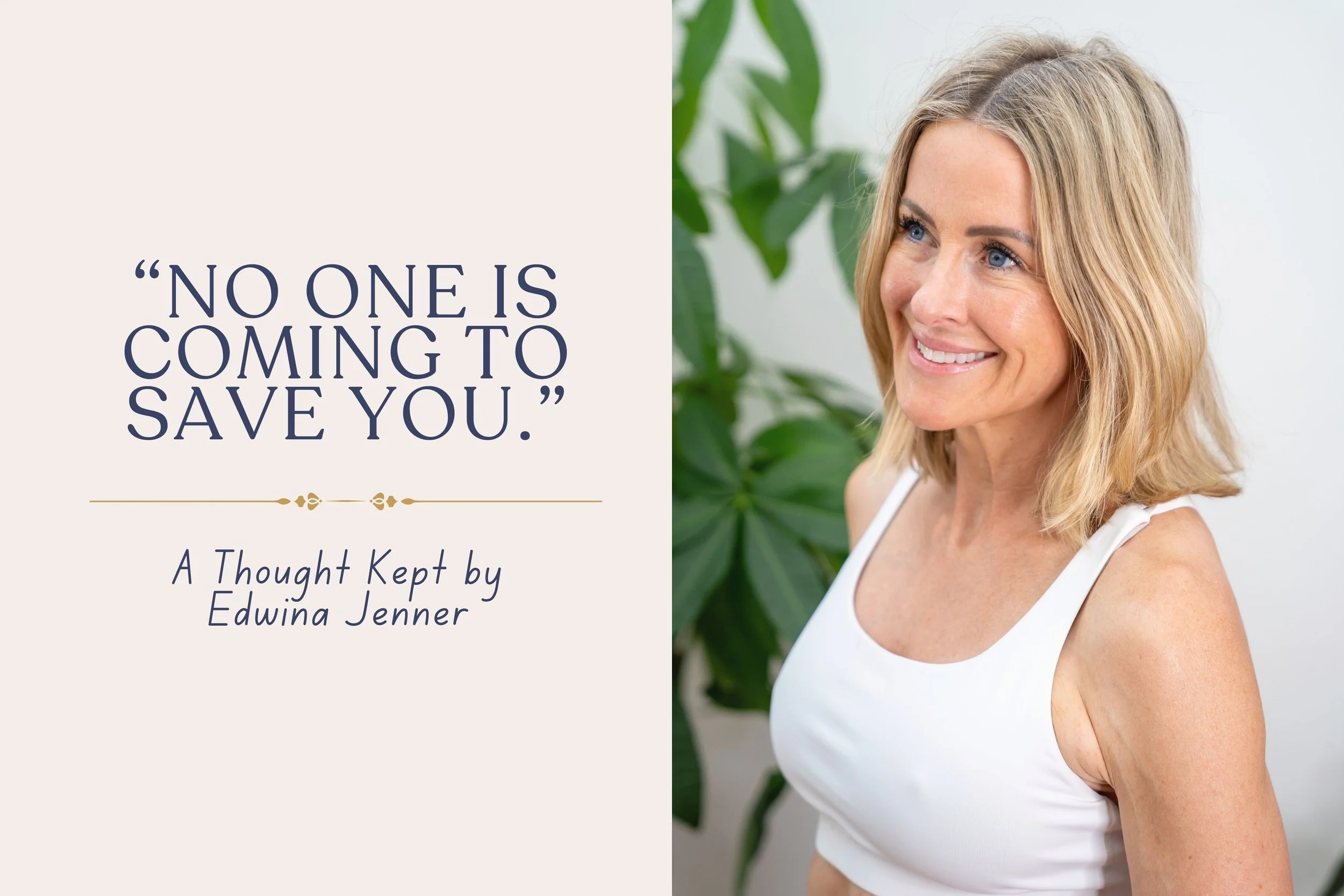
That feeling came up strongly for me in a recent conversation on A Thought I Kept with Edwina Jenner. As we talked, Edwina shared an idea that had stopped her in her tracks because it named something she hadn’t realised she was carrying.
The sense that, quietly, she had been waiting.
Waiting for things to feel easier. Waiting for confidence to arrive. Waiting for someone — or something — to step in and make life feel more manageable, more certain, more settled.
When she finally noticed that belief, it wasn’t crushing. It was clarifying.
Because alongside it came another realisation: no one else was coming to save her. She already had more agency than she’d been giving herself credit for.
Many of us arrive here having spent years responding to what’s needed — children, work, relationships, family, emotional labour. We learn to be capable. Reliable. Adaptable. And somewhere along the way, it can become easy to lose touch with our own pull. Not what’s expected of us, but what matters now.
Waiting can feel sensible. Responsible. Even kind. We tell ourselves we’ll come back to ourselves when things calm down. When there’s more space. When we feel more confident. When life gives us a clearer signal. But often, that signal never arrives.
Instead, what we notice are small signs of disconnection. Putting off caring for our bodies because we’re tired. Dismissing creative ideas because they feel indulgent. Ignoring rest, curiosity, or desire because other things seem more important.
In the conversation, Edwina spoke about strength, not as something performative or punishing, but as something built slowly, through attention and consistency. She talked about learning to trust herself again by doing what she said she would do. By listening to what pulled her, even when it felt uncomfortable. By recognising that motivation comes and goes, but self-trust is built through action.
What struck me most was how impactful this actually was.
Believing that no one is coming to save you doesn’t have to mean doing everything alone. It doesn’t mean hardening yourself or becoming self-sufficient at all costs. It can mean releasing an expectation that has unconsciously kept you waiting and turning back toward yourself instead.
There can be a kind of relief in that. Relief in realising you don’t need to become someone else to move forward. You don’t need a dramatic overhaul or a better version of yourself. You need permission to take yourself seriously. To listen more closely to what your body, your energy, and your inner life are already telling you.
When self-trust begins to rebuild, it rarely announces itself loudly. It shows up in small decisions. In boundaries that feel steadier. In caring for your body not as a project, but as a relationship. In choosing what supports you, even when it doesn’t look impressive from the outside.
If you’re feeling lost right now, it might not be because you’re “behind” or “broken”. It might be because you’re between ways of being. No longer able to live on autopilot, but not yet clear about what comes next.
That in-between can feel uncomfortable. But it’s also where attention returns. Where curiosity starts to replace pressure. Where you begin to notice that you already know more than you think.
At If Lost Start Here, we don’t believe that confidence or wellbeing come from fixing yourself or forcing change. They come from reconnecting — slowly and openly — with what matters to you now. From trusting that the things pulling at you are worth listening to.
If this resonates, you might like to listen to the full conversation with Edwina on A Thought I Kept.
And if midlife feels like a threshold you’re standing in — unsure, but ready for something to change — we’ve created a great resource to support that moment.
You can download our free midlife resource here.

When You Think You Need to Know More… But Really Just Need to Begin
When you're feeling lost or stuck, it's tempting to keep learning more. But what if all that knowledge is just a very clever way to avoid starting? Here's how to notice—and gently shift.
We get it. When you're feeling lost, the world starts to look like one big advice column.
Buy this book.
Sign up for that course.
Follow this expert.
Click here, scroll there.
And you? You’re trying to find your way. So you do what you’ve always done: you gather. You research. You prepare.
You stack up ideas like blankets to keep out the cold.
It feels useful. Smart, even. You're learning, right?
But here’s the thing: sometimes the impulse to “know more” isn’t clarity-seeking. Sometimes it’s a very well-disguised form of procrastination.

When Ideas Keep Us Safe (But Still Stuck)
We recently spoke to Emma Lightfoot on our podcast A Thought I Kept, and she shared something that stopped us in our tracks. A friend had gently pointed out that when Emma gets a new idea, she doesn’t immediately start it—she starts learning about it. Endlessly. Widely. Sideways.
Sound familiar?
It’s a common habit, especially for people who care deeply. Who want to get it right. Who fear failure (or being seen as someone who hasn’t got it all together).
Emma called it “learning sideways.” It gave her the comfort of movement, without the risk of failure. And we’ve all done it. Bought the book instead of opening the journal. Signed up for the challenge instead of going for the walk. Listened to another podcast on boundaries instead of actually saying no.
Awareness, Not Shame
Let’s be clear though: we love ideas. Everyday we explore what learning, growth and guidance can look like. We create courses, coach clients, share resources. But we design them with this reality in mind. That people like you might already be overwhelmed. That you don’t need another guru. That you might just need a little spark that helps you begin—right where you are.
So this isn’t a post about stopping learning.
It’s a post about noticing when you’re gathering as a form of safety… and gently asking yourself:
Am I preparing? Or am I avoiding?
What might happen if I just began?
What do I already know that I can trust?
What If You Trusted Yourself?
Emma made a pledge for 2025: no more buying books or courses on self-help. Instead, she wrote herself a list of 25 small things to do this year. She made a mini-zine as a daily reminder. And she started moving forwards—not perfectly, but consistently.
Not because she doesn’t believe in learning. But because she believes in herself now, too.
That’s something we wish more of us were taught.
That wellbeing isn’t something you acquire—it’s something you tend to.
That starting imperfectly is often more powerful than preparing forever.
That sometimes the next best step isn’t another social media scroll, course or quote—it’s a cup of tea, a deep breath, and the first 10 minutes of actually doing the thing.

A Thought to Keep
If you’re waiting to feel ready… maybe ready is a myth.
Start where you are. Begin anyway.
Write the first line. Go for the walk. Cook the simple meal.
Be in motion—imperfectly, bravely, beautifully.
You can always return to the resources later (we’ve got some good ones for when you’re ready).
But maybe the knowing you need isn’t out there.
Maybe it’s already inside you.
You can listen to this episode on Substack or wherever you get your episodes.

When You're Caught Between Seasons and Burnout
How to let yourself slow down, even when everything says speed up. This conversation with Lyndsay Kaldor will help if you’re feeling burnout or disconnected from yourself right now.
It’s the last stretch of August. The air feels heavier. There’s a nudge toward routine, productivity, “back to it” energy — even if your soul’s not quite ready.
There’s that quiet panic that says I’m not ready to go again.
That creeping guilt because you’re not full of plans or energy or goals for the season ahead.
That lingering hold of summer you don’t yet want to shake off.
If you feel this way right now, this week's episode of A Thought I Kept where I interview Lyndsay Kaldor is for you.
Lyndsay is a writer, mother and creative whose life changed when her yoga teacher shared something simple but radical:
““Flowers don’t bloom all year round.””
It landed at a time in her twenties when she was living what she calls a “summer existence” — always outwards, productive, performing, never pausing. That line became a turning point — an invitation into rest, seasonality, and a whole new way of living.

In this week’s episode, Lyndsay and I talk about:
Why burnout often looks like numbness, sameness, or disconnection
How to tell when it’s time to stop pushing and start tending
What seasonal living actually means (no picture-perfect routines required)
How to mother, work, create or just exist without being always “on”
The quiet power of letting growth be unseen, slow, and small
Maybe your life doesn't look seasonal.
Maybe you’re in a job that doesn’t change pace, or a home that feels full of noise and needs.
Maybe you're tired of trying to change things — and just need to know you're not doing it wrong.
This conversation won't tell you to quit it all and start over.
But it will remind you that it’s OK to rest. To reset slowly. To resist the pressure of the algorithm, the to-do list, the inner critic who tells you to keep up.
This episode is for the part of you that needs permission.
To be quiet. To not know. To not be blooming right now.
We are not machines. We are living things. We shift. We fade. We return.
And just like the natural world, we’re allowed to move in cycles.
Burnout isn’t always dramatic. Sometimes it’s just the weariness of being endlessly outward when what you need is inward.
So if you’re in that messy, in-between moment — not quite summer, not quite autumn, not quite ready — this is for you.
Are you feeling a shift right now?
What season are you in — internally — even if the world’s moving on?
Listen to this episode of A Thought I Kept on Substack or wherever you get your podcasts.
“The Quiet Rebellion of Honouring Your Inner Seasons” with Lyndsay Kaldor.
Subscribe on your favourite podcast app so you don’t miss future episodes.

Why Good Coaching Starts with Space — and the Thinking That Happens There
In this wellbeing podcast conversation, educational psychologist and coach Sarah Philp explores the link between thinking, action, and the spaces that make transformation possible. Perfect for anyone curious about coaching or feeling lost, burned out, or disconnected from themselves.
What if you can’t rush a thought into something useful.
That’s one of the learnings that emerged in my recent short-form podcast conversation with Sarah Philp, an educational psychologist and coach who’s built her work on the belief that:
“The quality of everything human beings do depends on the quality of the thinking that we do first.” — Nancy Klein
It sounds simple. But think about your week so far — how often have you given yourself, or someone else, uninterrupted space to follow a thought to its end?
For many of us, the answer is almost never.

On why coaching isn’t advice — it’s space
If you’ve ever wondered what coaching really is, just know that it’s not someone telling you what to do.
Good coaching is the art of creating space — a physical, mental, and emotional container where you can think more deeply than you might on your own. It’s presence without pressure. It’s being witnessed in your thinking, without being hurried toward a solution before you’re ready.
In Sarah’s words, it’s “following the thread” of a thought. And in our busy, interrupted lives, that’s a rare thing.
Why thinking and action need each other
Coaching is often misunderstood as being only about action — setting goals, hitting targets, ticking boxes. But action without clear thinking can be reactive, scattered, even counterproductive.
On the other hand, thinking without movement can keep us stuck in loops of over-analysis.
The power is in the relationship between the two. The right kind of thinking — spacious, supported, fully explored — naturally leads to clearer, more aligned action. And action, in turn, gives thinking something to respond to.
The role of space in wellbeing
Space isn’t just about coaching sessions. It’s also about the environments and practices that help you reset — whether that’s a walk in nature, a few minutes of stillness before starting your day, or, in Sarah’s case, cold water swimming and time on the Isle of Skye.
These moments aren’t indulgences; they’re essential to wellbeing. They give you a vantage point outside the noise, where you can reconnect to yourself and what matters most.
If you’re feeling lost, burned out, or disconnected
You don’t have to fix everything at once. Sometimes, the first step is simply to create a little more space — in your day, in your conversations, in your head.
That’s where coaching can help. It’s not about having all the answers. It’s about having the time, attention, and support to find the ones that fit you.
If that sounds like something you need, we think you’ll love this latest episode of A Thought I Kept. It’s thoughtful and full of insights that might just shift the way you think — and act.
Listen now to on Substack, Spotify or wherever you get your podcasts.

Are Your Strengths Helping You… or Draining You?
Discover how to identify strengths that truly energise you, why being good at something isn’t the same as loving it, and how this connects to your sense of purpose.
If you’ve ever been told you’re really good at something but secretly wished you never had to do it again, you’re not alone. Many of us mistake competence for calling — and that can leave us stuck in roles that don’t energise us or move us closer to the life we want.
Being good at something doesn’t always mean it’s a strength worth building your career or purpose around.
This is exactly what we explore in the latest episode of our podcast, A Thought I Kept, where I speak with my friend Irena Meštrović Štajduhar about rethinking strengths and finding joy in the things that truly light you up.

Rethinking What “Strength” Means
Traditionally, strengths are defined as the skills and qualities you excel at — often reflected back to you by teachers, managers, and peers. This sounds straightforward, but it’s flawed:
It prioritises what’s visible to others over what’s valuable to you.
It can trap you in roles or habits that no longer fit.
Research by Marcus Buckingham, a leading strengths researcher, flips this definition on its head. He defines a strength as:
“Any activity that strengthens you. Before you do it, you look forward to it. While you do it, time flies. After you do it, you feel energised and you’ve learned something new — even if you’re not yet good at it.”
This shift matters. It means a true strength isn’t just about performance — it’s about energy, engagement, and personal fulfilment.
Why We Get Stuck in the Wrong Strengths
Irena describes this as a byproduct of internalised capitalism: the belief that our value comes from producing measurable outcomes. If a skill can be easily quantified — spreadsheets balanced, deadlines met, reports delivered — it’s more likely to be praised, promoted, and prioritised, regardless of how it makes us feel.
Over time, we start identifying with these externally recognised strengths, even when they leave us flat or burnt out.
This isn’t just anecdotal. Gallup’s State of the Global Workplace 2024 report found that only 21% of employees worldwide are engaged in their work — and one key driver of engagement is the opportunity to “do what you do best” regularly. But if “what you do best” isn’t aligned with what you love, engagement and purpose both suffer.
How to Identify Your Energising Strengths
If you’re wondering whether your strengths are the right ones to build your next career step around, start here:
1. Notice your “energy spikes.”
Over the next two weeks, jot down activities you look forward to, lose track of time doing, or feel energised by afterwards.
2. Separate skill from joy.
List the things you’re good at — then circle only the ones that also make you feel alive. (The others may be “competencies,” but they aren’t necessarily strengths to nurture.)
3. Test your curiosity.
If you weren’t paid for it, would you still choose to do it? If the answer’s yes, you’ve found a clue to your real strengths.
4. Look for patterns.
Are your energising strengths about creating, connecting, problem-solving, teaching, organising, or something else? These patterns can point toward your purpose.
5. Connect them to your future.
Ask: “How could I bring more of these strengths into my current role — or into the next chapter of my career?”
Strengths, Purpose, and Career Next Steps
Finding your strengths isn’t just about self-knowledge — it’s about creating a more purposeful direction in your work and life. According to Harvard Business Review, people who use their strengths daily report higher job satisfaction, resilience, and overall well-being.
That doesn’t mean quitting your job tomorrow to chase a passion project. It might mean redesigning parts of your role, volunteering for projects that energise you, or exploring side ventures that let you lean into these strengths.
Over time, the more you align what you’re good at with what you love, the closer you get to a career and life that feel both meaningful and sustainable.
Listen to the Full Conversation
In our latest podcast episode, Irena and I go deeper into:
Why personality tests can limit rather than liberate you
How to spot the difference between learned skills and true strengths
The role of internalised capitalism in shaping our self-worth
Practical ways to reconnect with joy in your work
Listen to The Strengths Paradox: What We Love Vs. What We’re Good At on Substack, Spotify or wherever you get your podcasts.

How to Reignite Creative Joy When You're Burnt Out
Feeling burnt out or disconnected from your creativity? Discover how reconnecting with joy and creating for love—not likes—can restore your sense of purpose, peace, and play. Featuring insights from our podcast conversation with Emily Charlotte Powell on new wellbeing podcast A Thought I Kept.
If you’re feeling creatively numb, worn down by algorithms, or like you’ve lost your way with the work you used to love — you're not alone. So many of us are asking how to keep going when creativity feels like just another demand, another item on the to-do list, another thing to optimise.
Recently, I had a conversation with artist and illustrator Emily Charlotte Powell on the A Thought I Kept podcast that helped me remember something essential — something I didn’t even realise I’d let slip:
“I will create what I love. I will love what I create. And that will be enough.”
What would shift if that were your starting point too?

Why Burnout Can Sneak Up on Creative People
Creative burnout doesn’t always look like collapse. Sometimes it shows up quietly — a reluctance to return to the page, a growing resentment of the posting schedule, a dullness where there used to be a spark.
We start out making something because we feel something. But over time, it’s easy to swap that inner compass for external cues:
What performs well
What grows fastest
What’s currently trending
In the episode, Emily and I unpack how this shift slowly disconnects us from our original why. We move from making things we love, to making things we think we should.
And that’s when joy leaves the room.
Joy Isn’t Frivolous — It’s Can Be Fuel
This conversation reminded me that joy isn’t a luxury or a frivolous extra — it’s part of the glue that holds our creative selves together.
It’s what makes us want to sit down again tomorrow.
It’s what helps us navigate the rejection, the unread work, the projects that didn’t quite land.
It’s what keeps us tethered to the core of why we started.
Emily speaks about making things she genuinely enjoys and how reconnecting with this playful spirit helped her fall back in love with her practice.
She didn’t wait for permission. She didn’t check what the market wanted first. She just let herself love what she was making.
Creating for Your Wellbeing — Not Just Your Feed
There’s so much content telling us how to create for growth. But what if your creativity was a tool for wellbeing?
What if:
Writing a paragraph you love is its own reward
Drawing something softens your day
Re-reading an old blog post and smiling at your own words is reason enough
Creating what you love and loving what you create can be an act of care — not just for the audience, but for you
It’s okay to pause. It’s okay to make what delights you, even if no one ever sees it. And it’s more than okay to step away from “relevance” to reconnect with resonance — that feeling that this matters to me and that’s enough.
What If Joy Was the Point?
After this episode, I’ve been asking myself:
What would I make if no one else ever saw it?
What would I love to return to?
What kind of work makes me want to begin again?
If you’re burnt out, blocked, or just quietly bored, maybe don’t start with a productivity tip. Start with a feeling. Start with joy. That could be your way back in.

Want More?
This journal post was inspired by my conversation with the wonderful Emily Charlotte Powell on the latest episode of A Thought I Kept.
Listen in for more on:
How to navigate creative pressure without losing your spark
Why feeling something while you create matters
How to protect joy as part of your process
The emotional reality of being a creative person in a content-driven world
Listen now on Substack with bonus video content or find us wherever you get your podcasts.
Let this episode be the quiet nudge that helps you find your way back to what you love.
Sign up for my Substack More Good Days, where I share gentle thoughts on creativity, emotions, and everyday wellbeing — always with the aim of helping you feel better, not more pressure.
Or check out our wellbeing courses designed to help you reconnect with what matters to you.

How to Move Through Creative Self-Doubt and Reconnect With Your Purpose
Feeling stuck or creatively disconnected? Here's how to rebuild your confidence, find meaning in the uncertainty, and return to the creative work that matters.
Have you ever felt like you’ve lost your spark?
Like the ideas that once lit you up have dimmed, or that the thing that used to matter doesn’t quite land the same way anymore?
Maybe you’ve asked yourself: What am I doing this for?
If you're here, chances are you’re navigating your own season of doubt. And if that’s true, then let me offer you this:
You’re not doing it wrong. This is part of it.
The creative process isn’t linear. It’s a stretch and a return. A leap, and then a grounding. A brave “yes” to something new, followed (often quietly) by the decision to come back home to what really matters.

What’s for you won’t go by you.
That phrase—shared by brand designer and creative mentor Sarah Robertson on a recent episode of A Thought I Kept—has been looping in my head since we spoke. It was something her Scottish grandmother used to say, sometimes just in passing. But it landed.
It became an anchor for Sarah in all kinds of moments:
When her business changed direction
When launching a new product stirred up old fears
And when self-doubt made her question whether she was going in the right direction
In each of those moments, that phrase whispered back to her: If it’s for you, it won’t pass you by.
What happens when creativity starts to feel fragile?
Sarah spoke about the delicate emotions that come up when we make something new—especially something that asks a lot of us. When she launched her Brand Seasons card deck (a beautiful, soul-filled strategy tool), it wasn’t just a product launch. It was a creative stretch.
She worried about whether she still had it. She worried whether it was worth it. And in all of that, she still trusted enough to try.
Because sometimes, the bravery is just in showing up for what might be possible.
If you're in a stretch season...
...it might look like saying yes to something that scares you. A project you’re not sure will land. A conversation you don’t feel ready for.
But then there’s the other half of the rhythm—the return.
Sarah shared how, after all the brave leaping, she’s now back in her creative comfort zone: working one-on-one with clients, doing deep brand work, mentoring creatives who are trying something new.
And she’s realised:
It’s okay to let go of the things that aren’t for you too.
Even the things you poured your heart into.
This is permission to release the pressure to make every project the thing.
It can just be a thing. A moment. A stretch.
Then you come back to what fills you up.
If you're in a return season...
...let it be enough.
You don’t have to reinvent everything. You don’t have to push.
Returning to what feels good—what feels like you—can be the most creative act of all.
As Sarah put it:
““There’s definitely been something about learning that the creativity is always there. I can access it, I can tap into it.””
So how do you find your way back to creativity?
Here’s what this conversation reminded me of (and maybe it will help you too):
Self-doubt doesn’t mean you’re not creative. It means you care.
You don’t have to push all the time. Sometimes the letting go is the power move.
A creative pause doesn’t erase your purpose. Your creativity is still there.
The process matters as much as the outcome. Trust what you're learning in the doing.
Not everything is yours to carry. What’s truly for you will stay. What isn’t, can go.
Want to feel more connected to your creativity again?
Take a breath. Come back to yourself.
And ask: What feels like mine to hold right now?
Not what’s trending. Not what’s shiny. Just… what’s true?
If it’s for you, it won’t go by you.
Let that be the anchor.
Want more like this?
Listen to Sarah’s full episode on A Thought I Kept on Substack, Spotify or wherever you get your podcasts

A Thought I Kept: A New Wellbeing Podcast About the One Idea That Stayed
Introducing A Thought I Kept — a new wellbeing podcast about the ideas that last. Listen for real conversations, gentle insight, and the life advice we actually remember.
I’ve always loved a good idea.
A reframe.
A quiet insight that makes me pause mid-scroll, or scribble something in the notes app at 11:37 p.m. so I don’t forget it.
I love podcasts too. The kind that hold space. That shift something. That say the thing I didn’t know I needed to hear.
But lately I’ve been wondering:
Out of all the life advice, wellbeing strategies, and “you-have-to-listen-to-this” podcast moments… what actually stays with us?
What do we carry into our everyday lives, long after the episode ends or the book gets returned to the library?
We’re surrounded by incredible knowledge — how to be calmer, healthier, more grounded, more curious.
The science is smart. The frameworks are helpful. The tips are endless.
But when life happens — the real, messy, school-pick-up, half-asleep-on-the-couch life — what idea do we remember?
What thought do we keep?

A podcast about the ideas that last
So I made a podcast. It’s called A Thought I Kept.
Each short episode takes the form of a conversation with someone about the one thought they couldn’t forget.
Not because it was the most profound, or went viral, or solved everything.
But because it stuck. It mattered. It shaped something in how they moved through the world.
It might have come from a book.
Or a late-night conversation.
Or a stranger on a train.
Or a friend’s voice note, recorded mid-walk and slightly out of breath.
These are stories about the ideas that landed. The ones that felt personal. Sometimes private. Always real.
This podcast is for you if:
You collect ideas, but want to know which ones are worth keeping
You love good conversation but feel tired of overproduced advice
You’re a fan of wellbeing podcasts that center women’s voices, and the magic of “me too” moments
You’re curious, but craving softness
You’ve underlined a sentence and wondered why it hit so hard
You love wellbeing podcasts but crave something more human.
This isn’t a podcast about how to fix your life.
It’s about how we live with the ideas that gently shape it.
The trailer will be out next week with episodes going out on Mondays after that.
Subscribe to Substack to follow and listen.
I hope this podcast offers you something that stays.
x Claire