
Why Mothering Is a Radical Act
One of the things that surprised me when I first became a mum was how interested I suddenly became in my own maternal history.
I wanted to know everything. What had my mother's pregnancies been like? How had she felt holding me for the first time? What had motherhood given her, and what had it taken away? What had she loved about it? What had she struggled with? The boredom. The exhaustion. The joy. The parts she might never have said out loud. Questions that had barely crossed my mind before pregnancy suddenly felt deeply important.
Looking back, I think I was searching for reassurance, but also for connection. I wanted to know that other women had been here before me. That the confusion and intensity I felt were not signs that I was doing something wrong. That I belonged to something larger than my own experience.
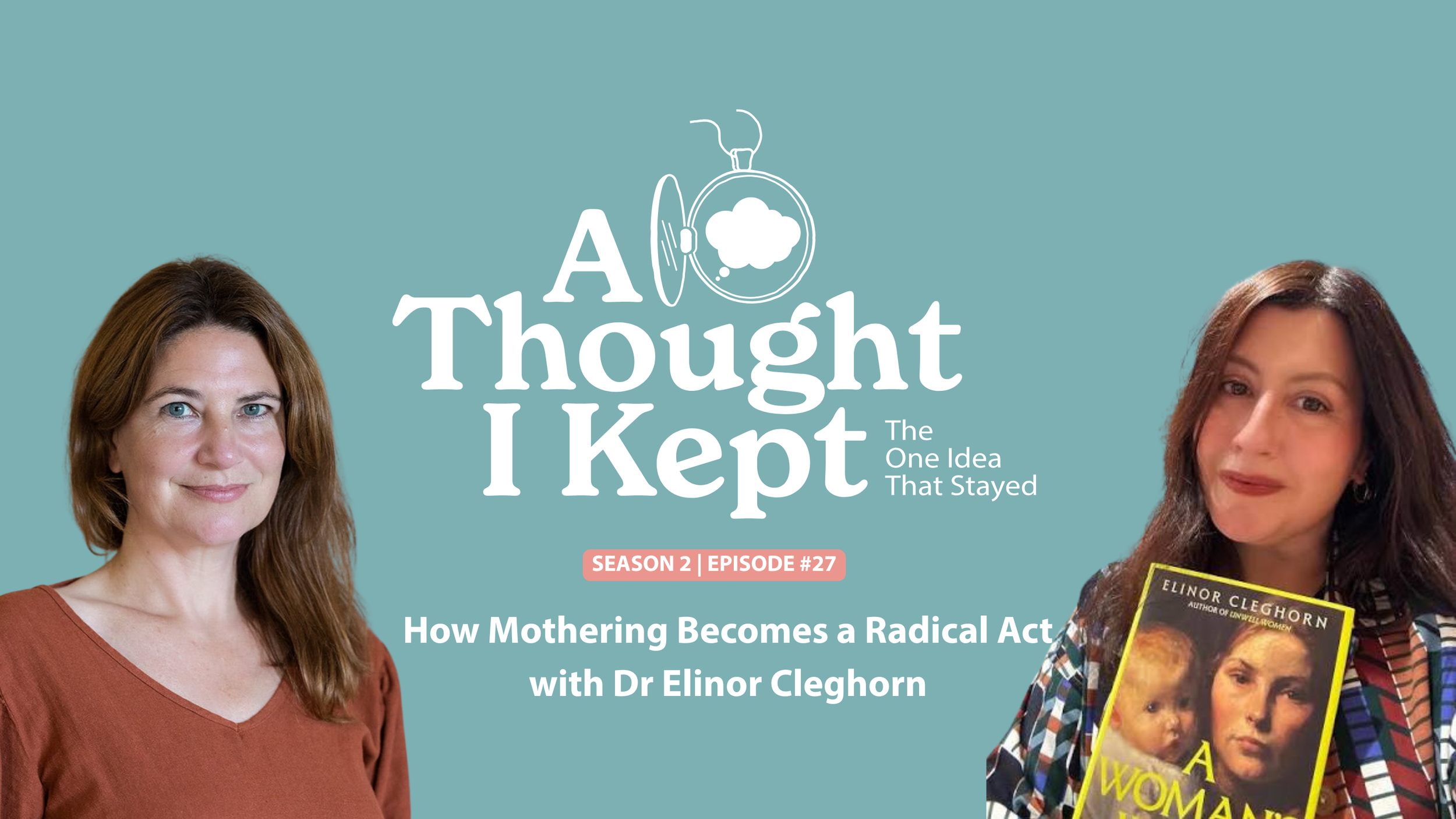
It's one of the reasons I was so excited to talk to feminist cultural historian Elinor Cleghorn on my podcast recently. Her remarkable book, A Woman's Work: Reclaiming the Radical History of Mothering, traces motherhood across centuries, uncovering stories that have often been pushed to the edges of history or omitted from it entirely.
What stayed with me most was not simply what I learned about the past. It was how differently I began to think about motherhood itself.
The Stories We Inherit
For so long, motherhood has been presented as something natural. Instinctive. Automatic. As though women simply know how to do it because they are women. As though care arrives fully formed. As though mothering is somehow separate from intelligence, creativity, skill, knowledge or work. But what if that story is wrong?
Throughout our conversation, Elinor returns again and again to the idea that mothering is not simply an instinct. It is a practice. It is labour. It is ingenuity. It is resilience. It is thought. It is decision-making. It is adaptation. It is often extraordinary acts of love performed under less-than-ideal circumstances.
And perhaps most importantly, it is work that has helped shape human history.
That might sound obvious. Of course mothers matter. Of course children need care. Yet when we look at the stories we preserve and celebrate, motherhood has often been treated as background scenery rather than a force in its own right.
History tends to remember wars, political movements, scientific discoveries and powerful leaders. It is much less comfortable recording the work of feeding children, holding families together, passing on knowledge, sustaining communities and helping life continue. Yet without those things, none of the others would exist.
One of the things Elinor does so beautifully is reveal that motherhood itself is a thought kept. Not simply an experience, but a collection of beliefs and expectations, myths and fears, rituals and instructions that have been passed from generation to generation. Some of those stories have offered care and connection. Others have constrained women, diminished mothers' experiences, and reduced complex human beings to ideals that they could never fully inhabit.
The Hidden Expertise of Mothering
One of the ideas that stayed with me most from Elinor's book is how often motherhood has been framed as instinct rather than expertise.
We are surrounded by stories that suggest women simply know how to mother. That care emerges naturally. That nurturing is somehow built into our biology. Yet anyone who has spent time caring for a child knows that this version of motherhood bears very little resemblance to reality.
Mothering asks us to become observers, interpreters, negotiators, organisers, advocates and problem-solvers. It asks us to adapt constantly to a human being who is changing almost daily. It requires creativity, flexibility, emotional intelligence and endurance. It involves practical decisions, emotional labour, long-term thinking and often an extraordinary capacity to hold uncertainty.
As Elinor points out, one of the great tricks of patriarchy has been to dismiss this work as natural rather than skilled. To suggest that because women perform it, it somehow requires less thought, less knowledge or less expertise. Yet the reality is that mothering involves an enormous amount of wisdom, much of which has been passed from woman to woman, generation to generation, often outside the institutions that traditionally determine what counts as knowledge.
The result is that many mothers find themselves carrying immense responsibility while simultaneously living in cultures that struggle to recognise the value of what they do.
Mothering as Resistance
One of the reasons I found A Woman's Work so moving is that it refuses to tell a simplistic story. This is not a history of women as passive victims. Nor is it a story about inevitable progress. Instead, it is a story about women finding ways to mother, care, nurture and protect within the constraints of the worlds they inhabited.
Again and again, Elinor introduces us to women who insisted on their right to love and care for their children despite extraordinary obstacles. Women who documented their experiences when few believed those experiences mattered. Women who preserved family histories, maintained connections, fought for custody, challenged expectations and refused to disappear quietly into the background.
The story of Sojourner Truth particularly stayed with me. Born into slavery, denied ownership of her own children, she nevertheless insisted on her right to mother. She fought for her son. She preserved her family stories. She made visible experiences that powerful systems were determined to erase. In Elinor's telling, her story becomes something larger than a historical account. It becomes an example of what it means to understand mothering as an act of resistance.
There was another story that stayed with me too. Elizabeth Jocelyn, writing in the seventeenth century, became convinced she would die in childbirth. In response, she wrote a book for the child she feared she would never meet. It was a private act, hidden away in a desk drawer, and yet it survives centuries later as a testament to a mother's determination to remain present in her child's life, even in her absence.
What emerges throughout the book is a profound sense that motherhood has never simply happened in private. It has always been bound up with power, freedom, rights, visibility and whose lives are deemed worthy of attention.
The Conditions of Care
Towards the end of our conversation, Elinor reflects on her own experience of motherhood and the immense gratitude she feels for the conditions that allowed her to mother. Not simply her love for her children, but the wider circumstances around that love. Family and friendship. Economic security. Safe housing. Supportive relationships. Access to education. A community around her. The practical and social structures that make care possible.
Listening to her, I found myself thinking about how often conversations about motherhood become focused on individual women. Are we coping? Are we organised enough? Resilient enough? Present enough? Grateful enough?
Yet history repeatedly reminds us that motherhood has never been solely about individual effort. The conditions surrounding mothers matter. They always have.
The question is not only whether mothers love their children. The question is whether societies value mothers enough to create conditions in which care can flourish.
That feels particularly important right now. At a moment when public conversations often celebrate motherhood in the abstract while doing far less to support the people living it. At a moment when many mothers are carrying enormous emotional, financial and practical burdens while being told that motherhood itself should be enough.
Elinor's work offers a different perspective. It asks us to look beyond individual mothers and towards the structures around them. It asks us to recognise that care is not merely a private concern but a social one.
Mothering Makes History
Perhaps the most powerful shift this book offers is a simple one. It invites us to stop seeing motherhood as something that happens on the sidelines of history. Mothering is not a footnote to the story of human civilisation. It is one of the ways that story is written.
Every generation has been shaped by women who cared for children, sustained families, passed on knowledge, preserved stories and created the conditions for life to continue. Much of that work has been overlooked because it happened in kitchens rather than parliaments, in nurseries rather than boardrooms, in conversations rather than official records. Yet that does not make it less significant. If anything, Elinor's work reveals just how central mothering has always been. Not because motherhood is the only way a woman can live a meaningful life. Not because all women should become mothers. Not because mothering is always joyful or uncomplicated. But because whenever people choose to mother, the work deserves visibility. It deserves value. It deserves care.
And perhaps that is the truly radical idea running through this history. Mothering does not sit outside history. Mothering makes history.
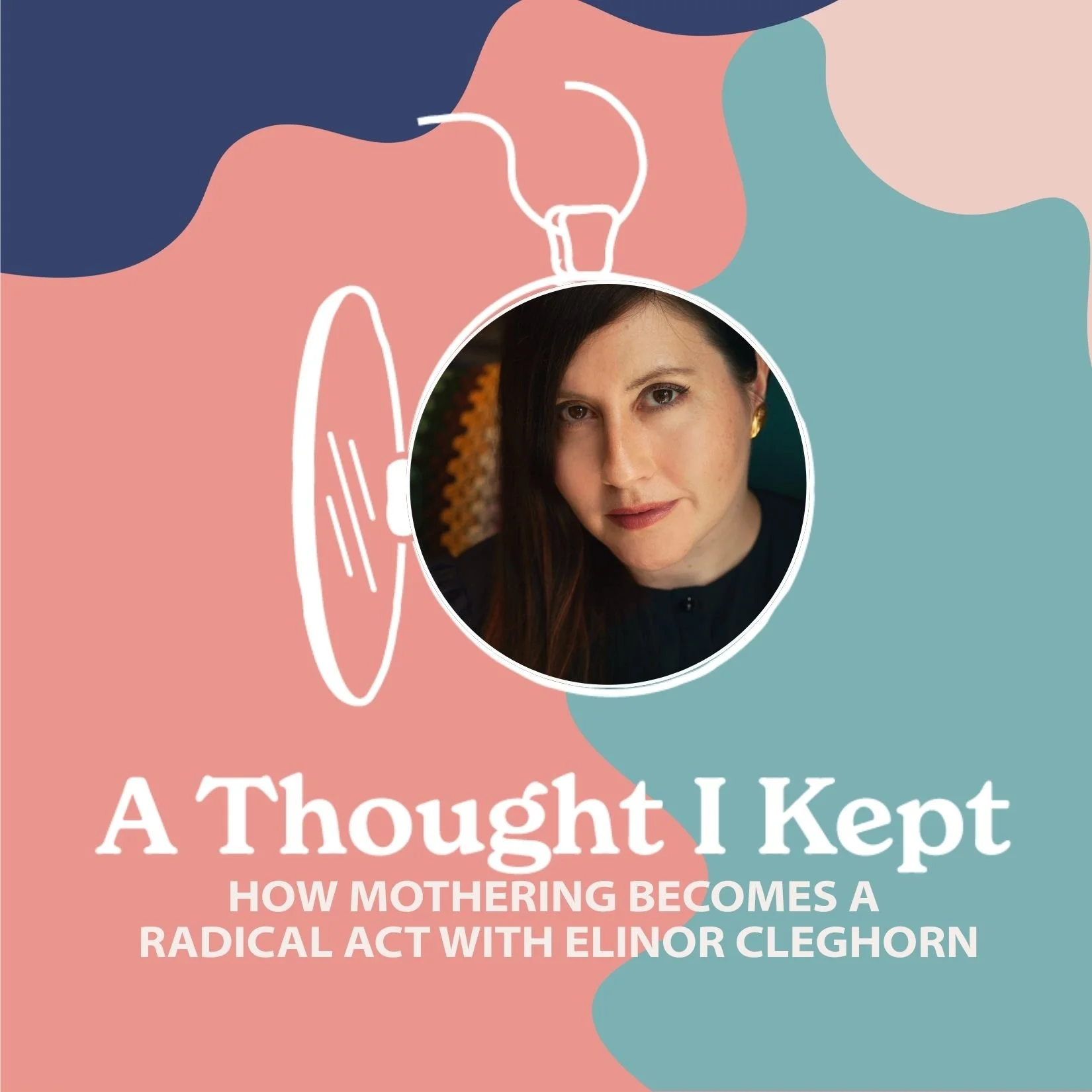
If this conversation resonates with you, you can listen to my full episode with Elinor Cleghorn on A Thought I Kept.
And if you're navigating the complexities of motherhood - and with that identity, overwhelm or change — you can also explore our coaching sessions. Book now for space to just be, support to think more clearly, and hope for what’s ahead..