
When Wellbeing Becomes Another Thing to Get Right
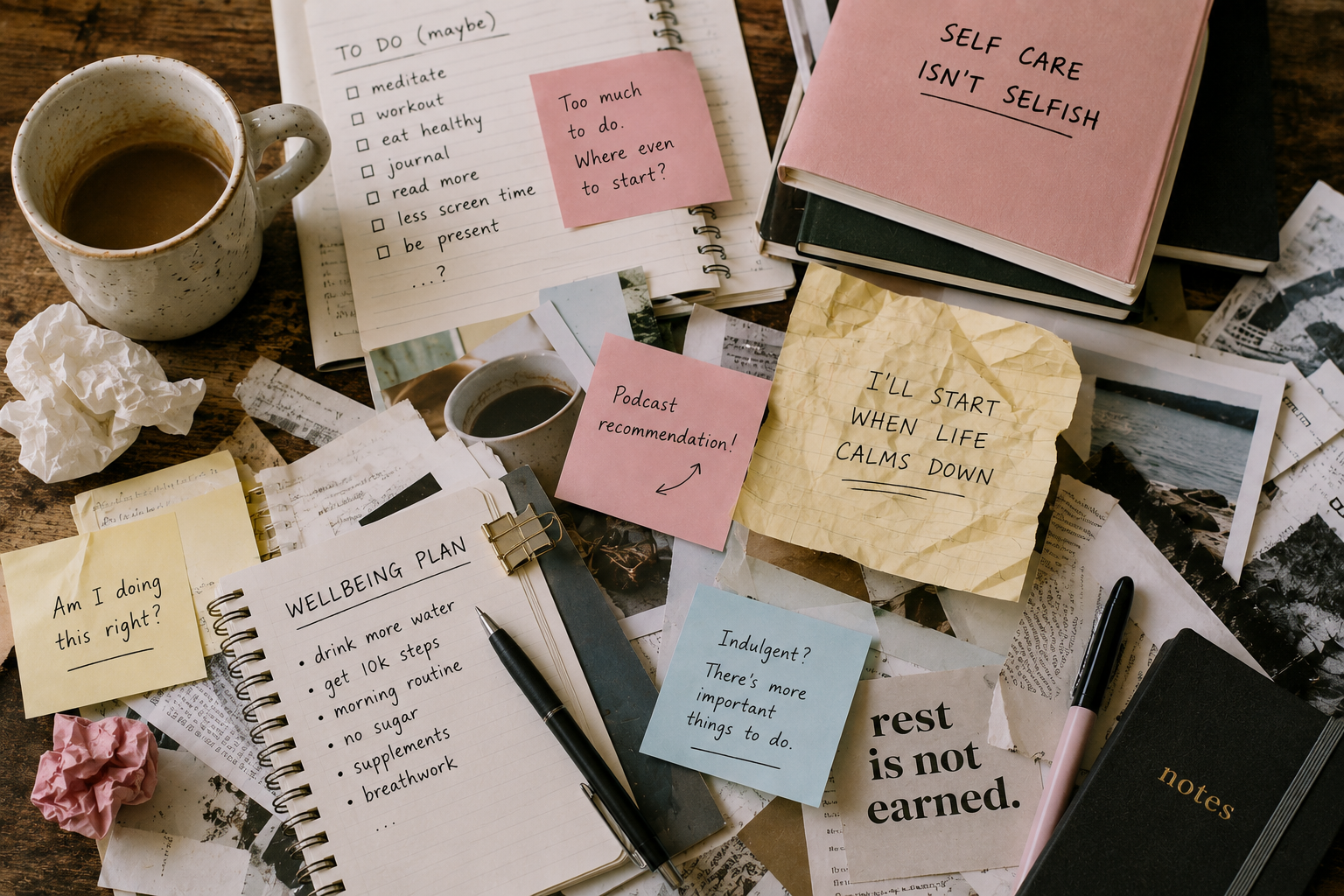
I saw a trend forecast this week that predicted that anti-optimization is the new direction wellbeing is taking. Which is an irony in itself: the not doing of the thing we're supposed to be doing becoming the thing we're now supposed to be doing.
I also feel like we're surrounded by countless maxxing articles right now: summermaxxing, productivitymaxxing, communitymaxxing, even joymaxxing. The drive towards more, more, more. But most of the women I talk to aren't looking to optimise their lives. They mostly just want to get to some state of being okay, a general sense of enoughness and a stronger belief that it will all work out, especially when it feels like it very much won't.
There's a real push and pull around wellbeing right now, so I became curious about what happens when we know all the things, yet it can still feel impossible to do the things, because we're not even sure if, or why, we'd want to.
Talking to clients and podcast guests, friends and workshop attendees, I've pulled together some of the most common narratives I'm hearing around wellbeing itself.
1. Starting: "I know I need something but have no idea where to start."
Okay, something is off. Something needs to change. We no longer want to feel, think or be like this. But now where do we start? Which of all those incoming messages is most relevant to us? Of all the possibilities available, which one works best? Which bits do we feel confident enough to take on, and which should we let fall away?
There is so much information, and some of it is contradictory. Are we falling for trends? Has the science shifted? What's the right thing to do with the information we have available to us right now? Before we've even begun, there's a whole wall of stuff to get through.
We go sideways into rabbit holes of research. We decide to go running, then spend the time we could have been running researching how to run. We consider a walk and wonder what speed, how long, which environment. We choose to nourish ourselves and suddenly there are question marks around fruit and Greek yogurt. We have three minutes while the kettle boils: should we stand on one leg or journal?
So we stay. Waiting to start. Hoping to start. Not starting.
2. Outsourcing ourselves: "Ahhh, I just want someone to tell me what to do."
When we're utterly lost, it makes sense that we turn to experts. We want them to make everything all right. We ask them, "Give me the list and I'll do that." We'll follow their ten-step plans. We'll learn all their hows for our whys.
This makes absolute sense because we have access to people who genuinely do know things, who have answers about overwhelm, burnout and productivity.
And they haven't travelled your life, the paths you've already taken or the ones you hope to take. They don't know the shape of your energy, your values or the systems you operate within. So there's some tempering here. I'll learn what you know, and I'll tailor it to what works within my very real, even messy, life over here.
3. Disconnecting from it all: "That version of magazine wellness doesn't represent my life right now."
We become desensitised to it all. We shrug. We become cynical. We roll our eyes at gratitude journaling and reject it outright. We push back against the very things that might help us. Wellbeing is a bit boring, no? It's just not fun. Or perhaps it doesn't feel serious enough. It becomes something for someone else, with a more photogenic life and a more abundant bank balance.
No one talked about wellbeing when I was growing up. No one talked about wellbeing in the toxic workplaces I found myself in. No one talked about wellbeing in the fast-paced city life that left me holding on and not much more. But it was there all along, in every moment when I longed to feel better, yearned for connection and hoped for purpose. It just looked different from what I imagined.
Maybe that's the same for you.
4. Procrastination: "When I'm in Majorca on that retreat in a few months' time, then I'll take care of myself."
That shiny life, the perfect practice, doesn't connect with the messy, imperfect lives we actually occupy. Washing piles don't sit well beside yoga mats. Bills to pay alongside affirmations to write. So wellbeing becomes something that happens over there, or not at all. If only we could get to that retreat, that calm space, that beach at sunset, then we'd finally have the capacity to do the thing that would make life better right now.
Our hope is that we'll get there while somehow holding onto here. But there are things we need here, in this life, as we wake up exhausted again, trying not to freeze when we look at our WhatsApp messages yet again, feeling so flooded that the only option is to sob in the car at school pick-up.
"Later." Later can become a mantra, when what we're really asking is, "Okay, now, what do I need?"
5. Distancing: "Oh, I totally understand. I'll send you a podcast."
We turn all those messages outwards. Maybe even as a shield against connection. We ask a friend whether they've listened to that podcast rather than offering a hug. We suggest a bestselling non-fiction book on the very subject they're struggling with.
I love a good recommendation. I see it as a love message when someone shares an episode they loved. And there's timing here.
Listen first. Connect first. Then share the thing.
6. Deciding it's not for us."But it's indulgent..."
This is where we turn it on ourselves. We believe wellbeing is indulgent, that we're not the kind of person who... We have more important things to think about than what we perceive as bubble baths and self-care. We may have learned somewhere along the way that taking time for ourselves, which often simply means time away from someone else, is selfish. We do a cost-benefit analysis, and our own column quietly disappears.
This often connects more deeply with self-worth than anything else. There's a pull towards what wellbeing might offer us, alongside a story that it's somehow not for us. There's guilt in considering our own needs when someone else has it worse. Shame when there are more important things to do. A belief that everyone else must come first.
Do any of these sound familiar? Is there a story here that gets in the way of your own wellbeing? What helps you move through it? And what do you hope wellbeing might become, so that it genuinely supports you in the ways you need?

Where to start
If any of these stories resonate, you're exactly who Amanda and I had in mind when we wrote If Lost, Start Here. We didn't want to create another wellbeing book full of things you should be doing. We wanted to create something more playful, more practical and more human. A guide to help you find your own way forward, one small step at a time.
If you're looking for a place to begin, you can find out more about the book and order your copy today.