
When Movement Starts Feeling Like Something You Have to Earn
There was a point in my life when I no longer entirely trusted my body. It happened slowly, through a period of chronic pain and fatigue that changed the way I moved through the world. Without consciously deciding to, I found myself becoming more cautious. I was restricting what I did, avoiding certain movements and quietly absorbing some of the messages about ageing and decline that seem to surround us.
At the same time, I was consuming all the usual wellbeing advice. Walk more. Strength train. Improve your mobility. Increase your step count. Some of it was undoubtedly useful, but much of it left me feeling as though wellbeing had become another job, another set of expectations to meet, another area of life where I wasn't quite doing enough.
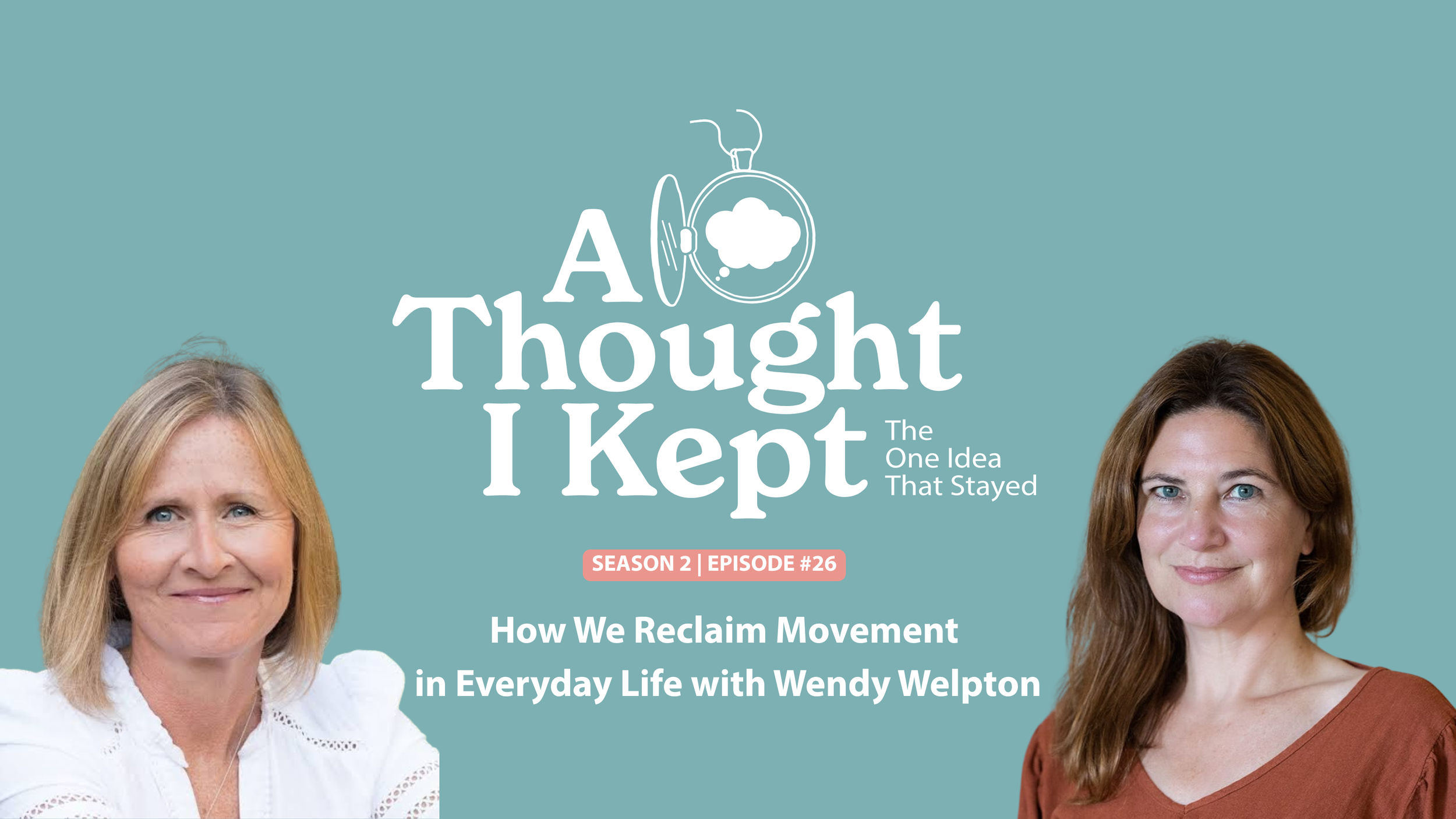
That's why I was so relieved when I came across Wendy Welpton's work. Wendy is the founder of Reclaim Movement and author of Move Well for Life. When she joined me on A Thought I Kept, she brought a simple idea that has stayed with her for more than a decade: everyday movement is just as important as exercise.
At first, that might not sound particularly radical. Yet the more we talked, the more I realised how much of our thinking about movement has become tied up with workouts, achievements, measurements and goals. We have become so accustomed to counting, tracking and optimising that we can easily forget movement exists outside of exercise altogether.
Many of us have come to believe that movement only counts if it looks a certain way. A walk becomes something to optimise rather than enjoy. Exercise becomes something to complete rather than experience. We start looking for the ideal routine, the perfect number of steps, the optimum pace, the right time of day. Somewhere along the way, movement stops being something we do naturally and becomes something we perform.
Wendy's story began there too. She was doing all the things she thought she should be doing. Running. Exercising. Ticking every box. Yet she found herself living with chronic pain for four years. It was only when she began paying attention to how she moved during the rest of her day that something started to shift.
That distinction feels important because when most of us say we want to move more, what we often mean is that we think we should be exercising more. Those are not necessarily the same thing. One of the things I loved most about this conversation was Wendy's invitation to widen the frame. Movement is not just a run, a gym session or a yoga class. It is getting up from the floor. It is reaching for something on a shelf. It is taking the stairs. It is changing position after sitting for too long. It is walking because you enjoy walking rather than because your watch tells you to. It is all the small interactions we have with our bodies throughout the day, many of which have become so automatic that we barely notice them anymore.
The more we talked, the more I found myself wondering whether the problem is not that we are moving too little, but that we have narrowed our definition of movement so dramatically. We celebrate the workout while ignoring the twenty-three hours around it. We count the walk but overlook the ways we have stopped bending, reaching, balancing, squatting and playing.
And perhaps most importantly, we forget that movement affects much more than our physical health. It influences our mood, our confidence, our sense of capability and our relationship with ourselves. For Wendy, the journey out of pain was not about forcing her body to do more. It was about rebuilding trust. It was about becoming curious again, playful again and gradually rediscovering a sense of confidence in what her body could do.
If this conversation resonated, you can listen to my full episode with Wendy Welpton on A Thought I Kept, where we explore chronic pain, ageing, body trust, self-compassion and why everyday movement might matter just as much as exercise.
And if you're feeling anxious, disconnected, uncertain or simply stuck in a pattern that no longer feels helpful, our wellbeing sessions and wellbeing prescriptions offer space to understand what's really going on beneath the surface. Together, we explore where you are, what you need and the small shifts that can help you move forward with more confidence, clarity and ease.