How Poetry Can Help When You’re Feeling Lost
Feeling lost or uncertain? Discover how poetry can help us live with uncertainty, find meaning, notice what matters and reconnect with possibility.
When we’re feeling lost, we tend to go looking for answers. We ask what we should do next, which direction we should take, what needs to change. We make lists. We ask other people what they think. We search online. Sometimes we search so hard for a way forward that being lost starts to feel like another problem we ought to be able to solve. But what if, sometimes, we didn’t need an answer? What if we needed a poem?
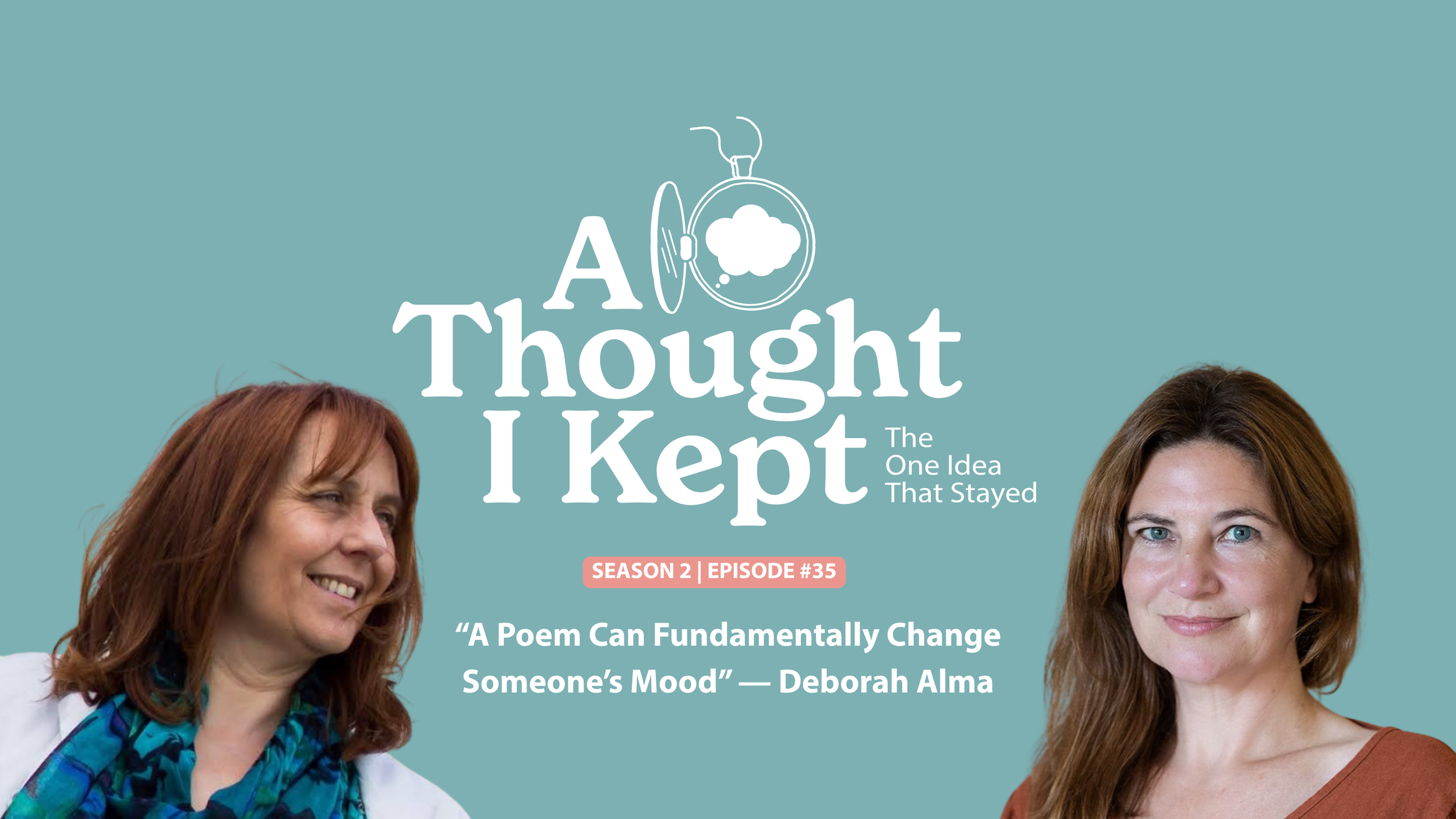
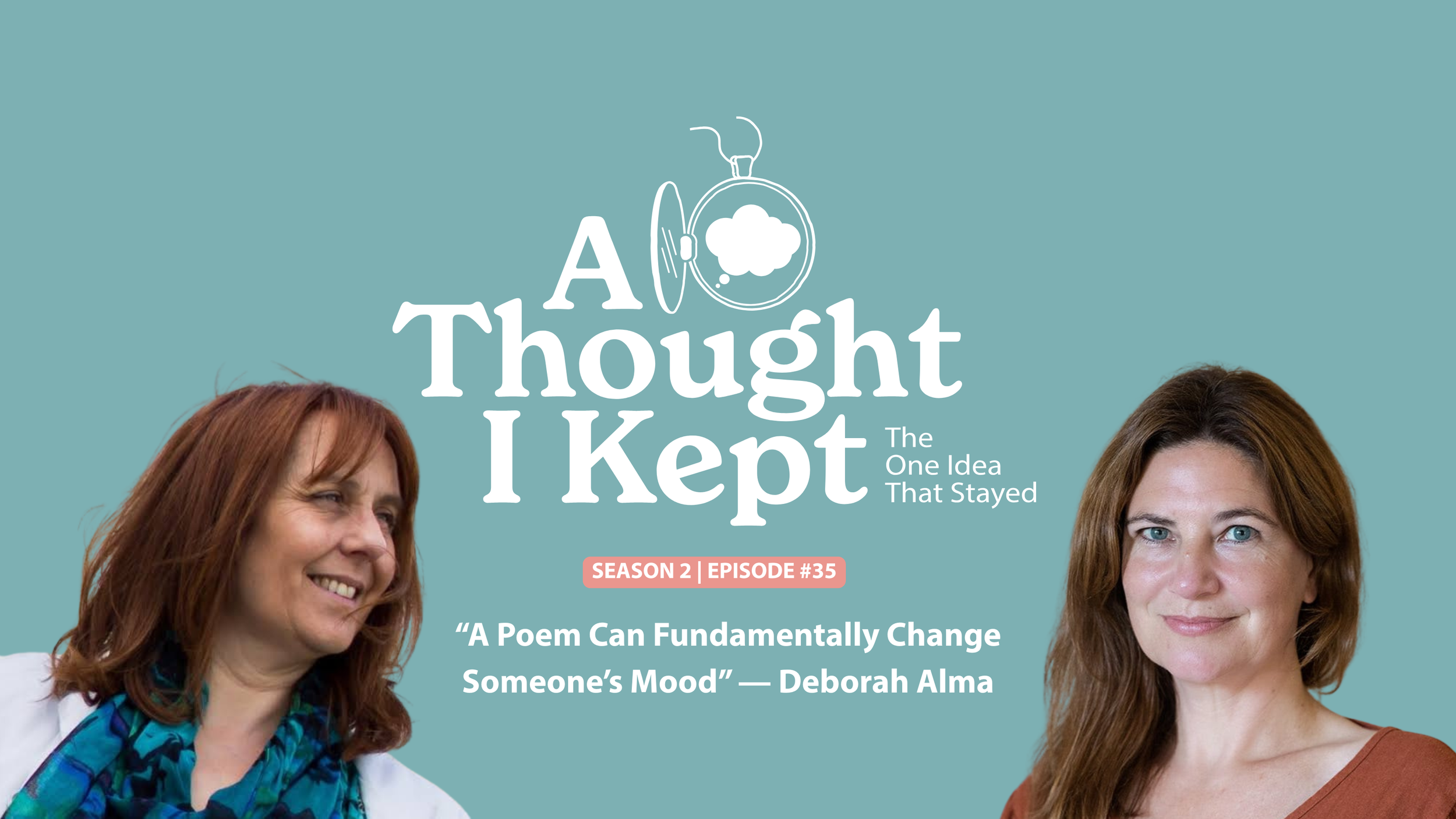
I’ve been thinking about this since my conversation with Deborah Alma, poet, editor and founder of The Poetry Pharmacy, for A Thought I Kept. Deborah has spent years prescribing poetry for the emotional ailments of everyday life, and the thought she brought to our conversation was beautifully simple:
“A poem can fundamentally change someone’s mood.”
Deb first understood the power of this while working with people living with profound dementia. Through a poem, she could take someone to the sea, fly a kite with them or go on an imaginary picnic. They might not remember afterwards where the poem had taken them, but Deborah saw that the feeling it created could remain for hours.
I love this idea of a poem as somewhere we can go. That we can seek them out to experience something different for a moment as well as to find answers. To step outside the moment we’re in. To remember the sea. To notice sunlight. To find ourselves somewhere else in our imagination when our actual lives feel particularly difficult to navigate. Perhaps that is also why poetry can help us when we feel lost.
Deborah told me that increasingly the people coming to her for poetry prescriptions are living with a more general anxiety about the world. They’re trying to work out how to live with uncertainty. And poetry, she believes, is particularly good at this because uncertainty is a place poets already know how to inhabit.
So much of feeling lost is about wanting to get out of where we are. We want certainty back. We want to know what happens next. We want the new job, the decision, the relationship to resolve itself, the grief to become more manageable, the sense of possibility to return. We want to find ourselves again. Poetry doesn’t necessarily give us any of those things. Instead, it can help us stay for a moment with what we don’t yet know.
There is something almost spiritual in that for me. Not spiritual in the sense that we have to believe anything in particular, but in the way poetry asks us to pay attention to what it means to be here.
Deborah talked about this beautifully. She believes we all have the poetic in us. We notice a bird landing in a tree while we’re grieving and wonder if, somehow, we’ve been visited by the person we’ve lost. We see that the sea is exactly the same colour as a flower in front of us. We notice strange coincidences, beauty, juxtapositions, things that seem to mean something even when we can’t quite explain what. For Deborah, those moments are already poems. We just haven’t written them down.
Maybe poetry is akin to a spiritual practice in this way: a practice of noticing. A way of interrupting the scrolling, doing and busyness long enough to see what is actually around us. A way of making contact with beauty, meaning, mystery and our own humanity without needing to pin any of it down.
I know that I have reached for poetry most instinctively when I haven’t had the words myself. When my mum died, I found myself looking through the Norton anthologies I had studied at university. I have a literature degree and a longstanding love of John Donne, so perhaps I thought I was supposed to find something suitably literary and profound. But my mum would never have chosen John Donne. She loved Pam Ayres.
So at her funeral I read Ayres’ poem These Hands, about all the often invisible things a mother’s hands have done throughout a life. It managed to hold something I couldn’t quite hold myself: what we had overlooked while Mum was here and what her absence now meant. The poem didn’t resolve my grief but it filled a space where my own words failed me.
Towards the end of our conversation, I asked Deborah to prescribe a poem for someone feeling lost. She thought about lostness as uncertainty and stuckness, but also as losing contact with possibility and hope.
The poems that came to her were about stillness, finding your own centre and noticing the small and beautiful things around you. One was Lost by David Wagoner, which imagines being lost in a forest and, rather than continuing to wander frantically in search of the way out, becoming still. She also suggested Denise Levertov’s Variation on a Theme by Rilke and Esther Morgan’s Grace, poems that offered her a sense of hope and possibility.
Perhaps this is what we so often miss about being lost. We assume our task is to find the path as quickly as possible. But perhaps there are moments when we need to become still enough to notice where we already are.
A poem can help us do that. You don’t need to understand all of it. You don’t need to analyse it as you once did at school. You don’t even need to become someone who “reads poetry.” Deborah’s invitation is much simpler: find a poem. Sit with it. Notice what happens.
Maybe it changes your mood. Maybe it gives you words for something you couldn’t name. Maybe it makes you notice the light coming through the window or remember somewhere you once felt more like yourself. Maybe it offers no answers at all, but makes the uncertainty a little easier to inhabit.
And when you’re lost, that might be somewhere to start.
Listen to my full conversation with Deborah Alma on A Thought I Kept: “A Poem Can Fundamentally Change Someone’s Mood.”
And if you are feeling lost, explore emotions coaching with me.
Connecting While Human
When something shifts in your relationships, it can feel confusing and lonely. This piece explores how to stay connected while being yourself, even when it’s messy.
You’re halfway through a conversation and realise you’re not really in it. You’re nodding, saying the right things, keeping the tone light enough, agreeable enough. You hear yourself laugh at something that isn’t quite funny. You offer an explanation you’ve offered before, one that lands just well enough to move things on. And at the same time, there’s something else happening underneath — a more insistent feeling that says: this isn’t quite it.
You might notice it later, when you’re walking home or making dinner, replaying the conversation in your head. The bit you didn’t say. The way you softened something. The way you tried, once again, to explain yourself into being understood. And then, almost reluctantly, the thought arrives: I don’t think this is about explaining anymore.
It’s a subtle shift, but once it’s there, it tends to stay.
This is the place Jacky Power and I found ourselves in during our conversation — not just the moment of clarity that so many wellbeing conversations promise, but in what comes just after it. The part where you realise something about yourself or your relationships, and then very messily try to do something about it.
Jacky described believing, for a long time, that if she could just say things the right way, people would meet her there. That the gap between her and others was something she could bridge with better words, more careful explanations, a little more effort. It’s such a human instinct — to assume that understanding is something we can earn if we try hard enough.
And sometimes that’s true. But not always.
Sometimes what we’re up against isn’t a lack of clarity, but a difference in direction. A difference in how we see things, what we value, what we’re willing to hold or not hold anymore. And that’s much harder to resolve, because it doesn’t bend as easily.
What follows that realisation isn’t a clean decision. It’s more like learning to walk again on uneven ground.
You say something you’ve been meaning to say, and it comes out slightly wrong. Or it lands in a way you didn’t expect. You question yourself almost immediately. Was that too much? Too blunt? Not quite right? You tell yourself you’ll try again next time, maybe in a softer way, a clearer way. You adjust, you retreat, you step forward again.
Jacky described it as “stumble, trip, stumble, trip.” And it’s exactly that. Not a confident stride into a new way of being, but a series of attempts, some of which don’t go to plan.
There’s a kind of vulnerability in this stage that doesn’t get talked about much. Because from the outside, it might look like growth — becoming more self-aware, more aligned, more boundaried. But from the inside, it can feel uncertain and exposing. You’re no longer fully comfortable in the old way of relating, but you’re not yet steady in the new one either.
And that can feel lonely.
Not necessarily in the obvious sense of being alone, but in the quieter sense of not quite being met. Of noticing that the ways you’re beginning to show up don’t always fit neatly into the relationships you’ve had before. Of realising that not everyone will come with you, or understand you in the way you hoped.
Jacky spoke about this without dressing it up. That there can be grief in it. That choosing your own direction — even gently, even kindly — can create a kind of separation. Not because you want it to, but because something has shifted, and you can’t quite go back to not knowing that.
And still, there was something else in what she said that felt just as important.
That the alternative — ignoring what you’ve noticed, continuing to override yourself for the sake of keeping things smooth — comes at a cost too. A quieter one, perhaps, but one that builds over time. A sense of being slightly out of step with yourself. Of saying yes when you mean maybe, or maybe when you mean no. Of slowly losing touch with what feels true.
This is where connection becomes more complicated than we often allow it to be.
Because it isn’t just about being close to other people. It’s also about how close you are to yourself within those relationships. Whether there is space, even in small ways, to be honest about what you feel, what you need, what you see differently now.
And that honesty doesn’t have to arrive all at once.
One of the things I took from this conversation is that connection doesn’t depend on getting it perfectly right. It might be something much smaller than that. A moment where you say a little more than you usually would. A conversation where you don’t immediately tidy up your feelings. A pause where you notice the urge to explain, and choose, just for a second, not to.
It might be noticing where you feel able to do that, and where you don’t.
Because not every space will hold it. And that, too, is information.
Jacky talks about “human tricky things” — the parts of being alive that don’t resolve easily. The feelings we don’t always have words for. The experiences that sit somewhere between connection and disconnection, between being seen and staying hidden. And what struck me is that learning to connect while human isn’t about smoothing those things out. It’s about finding ways to stay with them.
To stay with yourself when you’re unsure. To stay in relationship where you can, without forcing it where you can’t. To allow for the possibility that connection might look different now — less about being perfectly understood, and more about being real in the places that can hold it.
If you’re in that space at the moment — noticing something has shifted, but not yet sure how to live it — it might help to know that this part doesn’t need to be rushed.
You’re not behind. You’re not getting it wrong. You’re in the middle of learning something about yourself that takes time to settle.
And there is a kind of steadiness that can grow here, even if it doesn’t feel like it yet. Not from having all the answers, but from beginning to trust what you notice. From allowing that to matter, even when it complicates things.
If you’d like to hear more of this conversation, you can listen to my episode with Jacky Power on A Thought I Kept, where we explore emotions, loneliness, and what it means to stay connected — to ourselves and to each other.
And if you’re looking for somewhere to think about your own relationships or feelings a little more gently, explore our coaching and resources here If Lost Start Here.

The Poetry Pharmacy | A conversation with Founder Deborah Alma about why poetry still matters
We talked to the founder of the world’s first Poetry Pharmacy about why poetry still matters.
When we first heard about The Poetry Pharmacy, we thought it was a kind of dream. A shopfront dispensing poetry for modern day ailments. It’s something from a children’s book, or a gorgeous idea of a place developed over excited conversations. But just last month, in the town of Bishop’s Castle in Shropshire, poet Deborah Alma (with her partner Dr James Sheard) opened the world’s first Poetry Pharmacy. And she readily admits its dream-like quality even as it now exists as a reality for her, and the people it serves. In the first months of opening, we were lucky to grab some time with Deborah to talk about why real-life places and poetry matter more than ever.
Claire: We’re enthralled by The Poetry Pharmacy, as I think are many people who are reaching out to you. Can you talk us through the space?
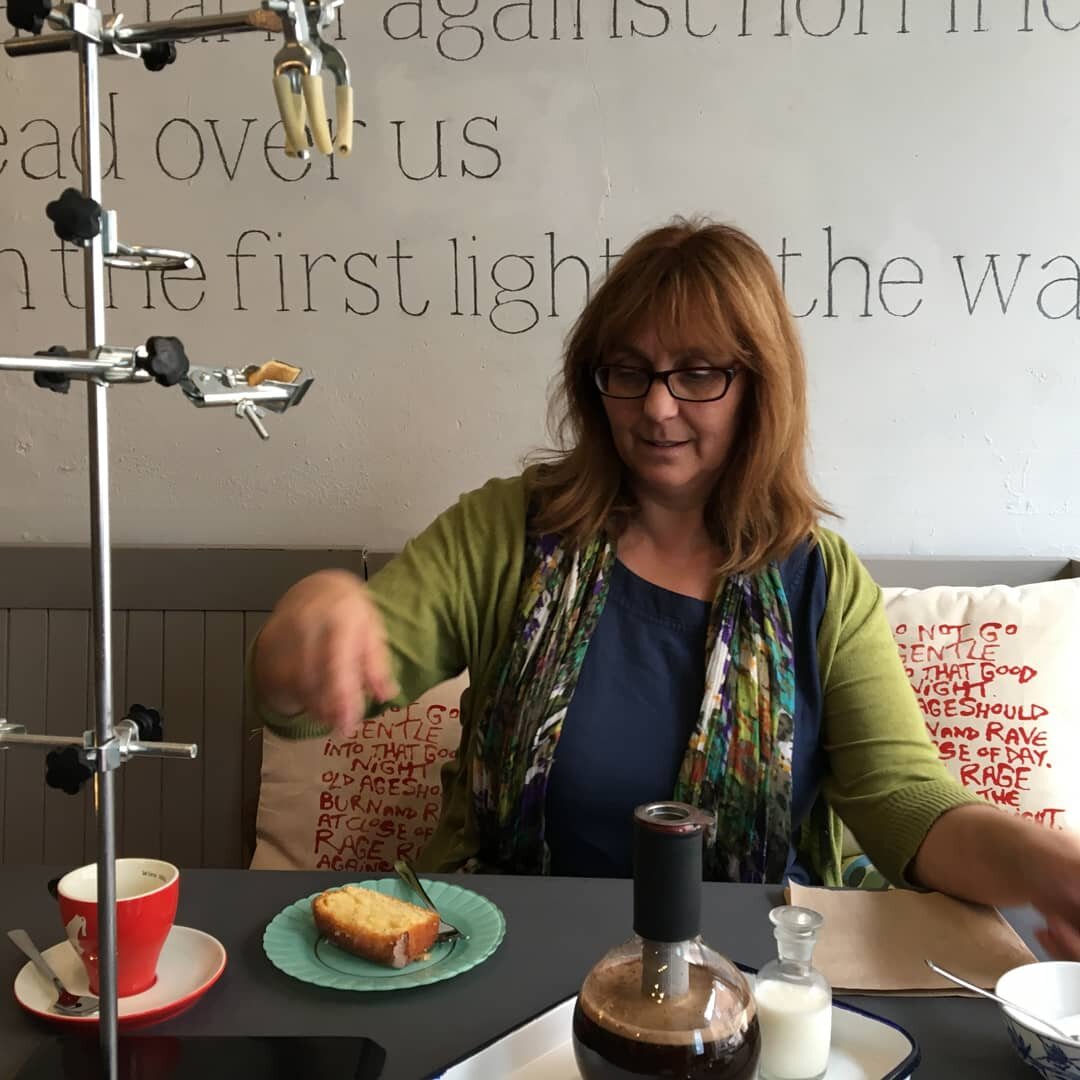
Deborah: We’ve converted a beautiful Victorian shop that had been closed for 13 years into an apothecary from which to dispense poems. It’s located in a small town on the wild west borders between England and Wales that’s full of writers and artists.
When people come into The Poetry Pharmacy, they’ll find books of poetry face up and filling the shelves. We’ve designed it so that people can browse by ailment — like ‘Matters of the Heart’, ‘Carpe Diem’, ‘Now I Become Myself’, ‘Be Alive Every Minute of Your Life’, and ‘Hope is the Thing with Feathers’ — and shop accordingly. We offer free one-on-one consultations on Friday afternoons, or people can make an appointment outside of that. We’re also happy for people to just come in and chat.
We also have a Dispensary Café which serves tisane, teas, coffee and cakes, as well as a shop that offers poems-in-pills for different needs such as a Bottle of Hope and Existential Angst Pills. Upstairs, we have The Distillery space from which we host book launches, workshops and other writing events.
We’ve kept the original architectural details like the old mahogany counter and till. We’ve allowed for as much natural light as possible (there are no neon lights). We’ve also painted the walls in muted paint colors.
There’s definitely something about the space that appeals to people in and of itself; a kind of therapy in not having technology everywhere. We’ve explicitly designed The Poetry Pharmacy for people to sit longer over coffee. There’s no pressure to move on and people are encouraged to talk to each other. It’s a place also for people to come to read and write.

Claire: Why in this moment when we’re rushing more and more of our everyday lives online and our High Streets are sadly struggling was opening a physical space important to you?
Deborah: I see the Ambulance as a physical space too; for years I operated as an ‘Emergency Poet’ from a converted vintage ambulance, prescribing poems to people at festivals, conferences, hospitals, libraries and schools around the country. But I felt like I was getting too old for all that travelling around, and it was often cold working outside in the UK. As the editor of four books and the writer of two of my own, I felt like enough people had heard of me, that if I set up a permanent location, they would already know what I was doing.
I do believe that people still want to touch something real. To be in a place that feels like it might last. The online world has a terrible power to cut connections with people in real places. The Poetry Pharmacy offers nothing like we can replicate when we are online. I also feel like if it’s there then it’s not hard for people to engage. People here are so delighted to find this place open; a place they can drift into and have a coffee and chat
I’m aware that it’s a gamble though. It’s an experiment, that comes with a certain degree of optimism and maybe even self-indulgence.
Claire: What need in the world do you think The Poetry Pharmacy responds to?
Deborah: We offer a therapy in slowness and a nostalgia for something lost: old fashioned service, friendliness, even listening.
People can come in feeling miserable and we give them a free ‘pill’ as well as the chance to talk about what they need. Then we prescribe a poem.
Claire: Why poetry? What’s the value that you see in it when applied to people’s lives?
Deborah: I realized a long time ago that most people are frightened of literature and poetry within that. And that the people who create or understand that art can be possessive. I used poetry in my work with people living with dementia. From that experience, I saw first-hand how you can change someone’s mood by taking them somewhere with a poem and that I could share the intimacy inherent in this form. This underpinned the Emergency Poet idea; I wanted to stop poetry from being intimidating and I wanted to show that it can literally be a vehicle for talking to people. That project effectively bypassed how poetry usually gets to people and how they then get to use it.
I’m aware that the Poetry Pharmacy idea is a bit mad. That putting poetry on the High Street is unusual. We keep hearing that poetry doesn’t sell, and this is a quiet town, but I’ve done it because I really do believe that poetry is a good thing. It’s beautiful. We’re putting it front and center instead of in the corner. Why not have piles of poetry books and say that has a value equivalent to other genres? With The Poetry Pharmacy we’re bringing poetry to the forefront and there’s an art in curating it — picking out the ones that speak to certain subjects, putting them with other things, and saying,“Take a look!”


Claire: And they are. People are enamored with this idea. Why do you think that’s happening?
Deborah: When I first started, it was a mad faith thing. People said, “you know why there is no other Poetry Pharmacy in the world? Because no one wants it.” But we’re finding differently; the idea of it even existing in the world seems to be a nice thing in the middle of all this darkness — BREXIT, Trump and just continuous bad news. It’s a piece of optimism and faith in something. It’s a positive thing, and light-hearted in lots of ways
It’s lovely that The Poetry Pharmacy exists in the world. It’s like a piece of fiction and reminds me of The Little Paris Bookshop by Nina George. In that novel Monsieur Perdu opens a floating bookstore on the Seine from which he prescribes books for a broken heart.
We’re only in week six and it’s been busier than I thought it would be. People get in touch across the world, we’ve had BBC News in here, the local Bishop’s Castle / Shropshire or West Midlands community is delighted, and people are seeking us out from outside of town and even from outside the UK.
We need all the elements though for it to work: the coffee shop to have a treat and a good coffee or tea that is nicely presented, like a ceremony; music that is welcoming and low-key, that makes people feel comfortable; a shop of desirable items, the consulting room and workshop space; and lots of events going on.
Claire: Would you place The Poetry Pharmacy within the world of mental wellbeing?
Deborah: I shy away from the word therapy, but I do say that it’s therapeutic. When I prescribe poetry to people, poems that I know and love, then people can make a poem their own; just reading it will take them to another place. What poetry is doing is taking you somewhere else in your head when you are busy. It’s telling you things that you may not be hearing from other people. It underlines something to yourself. Even imagining it, is a moment of benefiting from it.
At The Poetry Pharmacy we also include material for how to look after our lives in other ways beyond poetry. There’s a section ‘For days when the world is too much with us’, where we have Wordsworth next to psychotherapy and self-help books. We have another section that’s the ‘Best Medicine’ which includes gardening and nature — like counting butterflies, sitting in a patch of sunlight, and going for a walk.
Claire: When I think of The Poetry Pharmacy, I think of it as helping people with their anxieties, but I also think of it as supporting people in their loneliness. Is that fair?
Deborah: Yes, the poetry community has traditionally been good for the lonely as often people come to things on their own. People don’t have to be in a couple or with a friend to attend these events, like they might for say a dinner party or other social gatherings. It’s easy for people to come here on their own. Most of our events are on Sundays and quite a lot of people have said that Sundays are always difficult when they live on their own, but now they can come here for company. Rural isolation can also be a problem. This can be a place that people can come on their own and still feel comfortable.


Claire: Now we’ve established the life-affirming magic of the place, can we talk a little about the practical side? Like how you made it happen?
Deborah: We ran a successful Kickstarter campaign and I was amazed at the response. The crowdfunding raised money to pay for the build-out, including things like wiring the shopfront! We found that strangers turned up and said we love this idea and want to support it, because they don’t want closed-down shops on the High Street. We also received a small Arts Council grant.
We were very resourceful. As much as we could, we turned The Poetry Pharmacy into a project for both the local community and the literary/poetry one. We had many people volunteering their time and expertise.
Claire: What advice would you give to other creatives thinking of starting a bricks-and-mortar endeavor?
Deborah: It’s difficult, which I think is why so few people do it. But for me, it was huge just knowing that there’s a community of support behind me. I think it’s critical to have a few key people to support you in the first instance, and other people believing in you. The doubters are also quite useful because they test your resolve. Maybe they are right, and you don’t do it. But for me it was: ‘Bloody Hell, I’m going to prove you wrong matey.’ You’ll know in that fierce moment whether to do it or not.
Claire: How else has The Poetry Pharmacy impacted you? How does being front and center sit with the more private practice of writing poetry?
Deborah: Yes, there is that dilemma of reconciling this public project with the country mouse part of me. I do think (without overgeneralizing) that people who write who are novelists tend to be introverted, while poets tend to need to connect with other people more often. They work on a poem, then go out because they need to talk to people. For me, I crave being on my own and periods of time to write, and I’m aware that that’s not in balance at the moment. There are two sides of me; they don’t exist in the same place, but they do need to communicate, all the same. I hope that will settle down.
I do believe in The Poetry Pharmacy and it seems to be working in the way that I hoped. Also, for me too. Because I’m now so busy, I’m not online so much. What I wanted to do — and needed to do — was to have an open door and to welcome people in. To say: “Come in. Who are you?” To say. “ I’m interested in you. “
Discover more places for a happier life

Culture Therapy | Mental Wellbeing
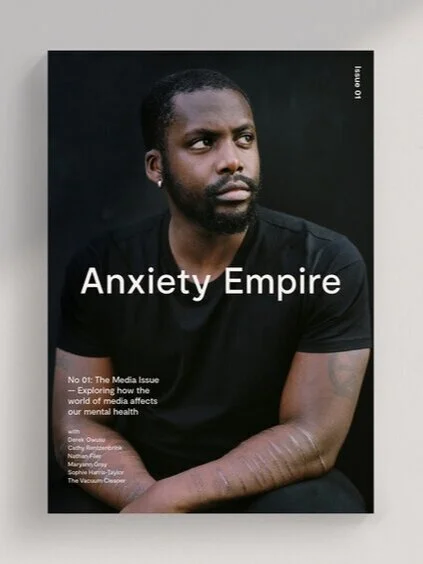
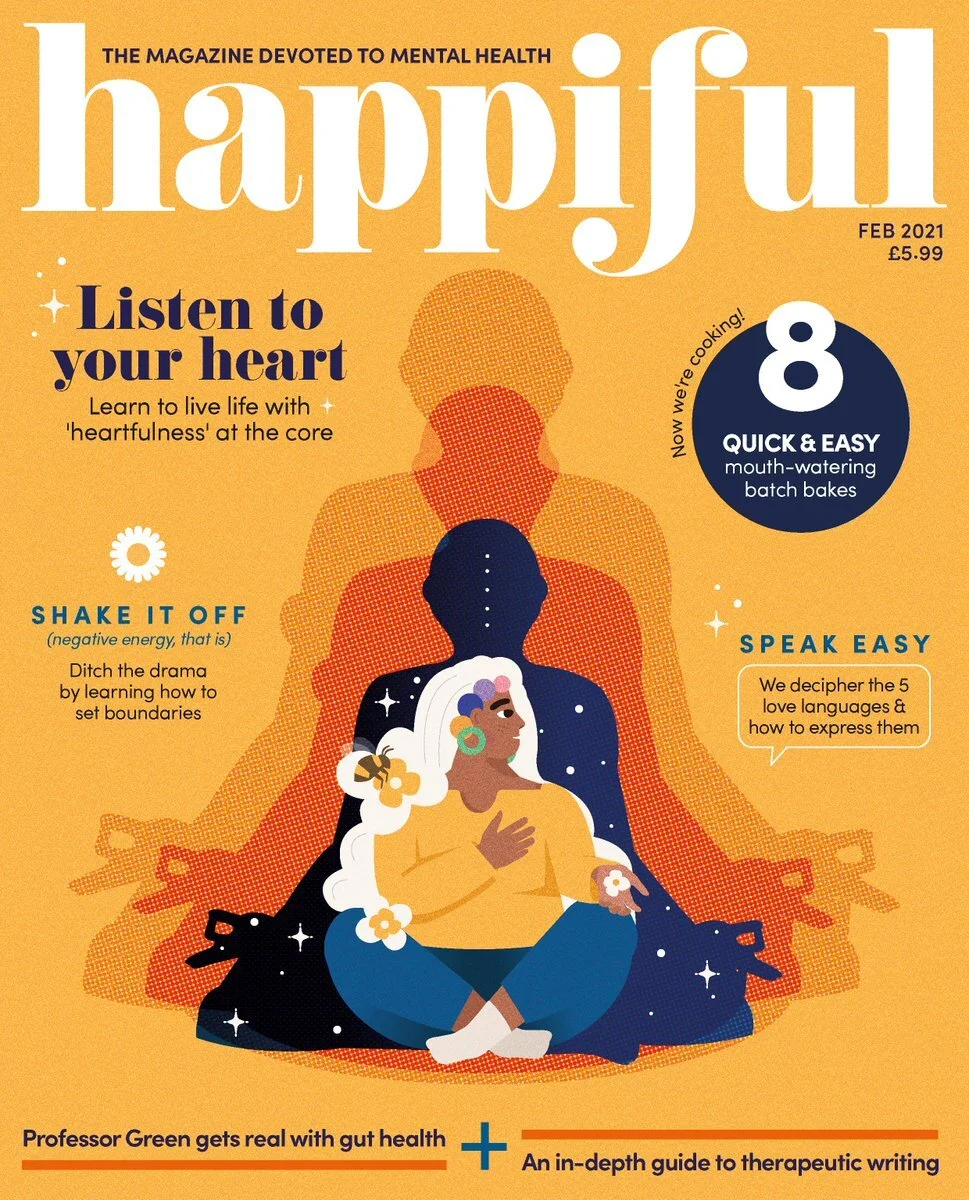
Here’s our Prescription for Mental Wellbeing: you will find in these pages and in these narratives, lives lived within, or touched by, consumed or imploded, maybe even adjacent to, issues around mental wellbeing. Our culture is now holding this space in a very different way than before for issues around depression, anxiety and mental health more widely. We recommend you check these out.
We went through a period of reading mental health memoirs: The Center Cannot Hold, Touched With Fire, Darkness Visible, My Age of Anxiety. We sought them out for information, for resources, for shared experiences. We held onto Andrew Solomon’s The Noonday Demon and Elizabeth Wurtzel’s Prozac Nation. We returned again and again to The Bell Jar. We looked to something outside ourselves that made sense of what was happening in our own minds, in our own lives, and with friends, colleagues and family also impacted by depression, anxiety, and other diagnosed and undiagnosable conditions. Through reading we found a way forward that wasn’t yet being spoken about; admittedly we sat alone with our books trying to locate ourselves and others we loved.
Thinking about this, our Prescription for Mental Wellbeing, we’ve realized that there’s been a huge shift in how we now get to talk about our mental health. There are now what seems to be an abundance of publications, podcasts, films and programs which to us collectively say no to that stigma that had previously left us alone with our experiences. There’s been a huge surge in positive media that has created a very real platform for our very real stories. Narratives that are now out there which take ownership of the conversation; that take someone’s experience and throw it out into the world so that we too can shift our relationship with what mental health means and how it shapes us and those around us.
These examples don’t glamorize mental health as bohemian or creative, rather they allow for truth and pain and joy and loss and connection, and for a deep, sometimes lifelong search for equilibrium and understanding. You will find in these pages and in these narratives, lives lived within, or touched by, consumed or imploded, maybe even adjacent to, issues around mental wellbeing. Our culture is now holding this space in a very different way than before for issues around depression, anxiety and mental health more widely. Messy, and unresolved sometimes. Hopeful and self-aware always. And for that we are very, very grateful.
Take up a book, head to Netflix, listen to something on your way to work. Support this shift and these very brave voices. Acknowledge that there are humans behind these stories putting themselves out there so that we may have a way to live our own situations outwardly. Make this openness last. Because we can not go back to not talking, to not reaching out, to being hidden and confused. To being alone with our books and our questions and our lives which didn’t have a place in the world and now very much do.