

How to Create an Everyday Retreat at Home: Small Ways to Care for Yourself Each Day
Wellbeing doesn’t have to mean retreats or perfect routines. Discover small, realistic ways to create moments of calm and care throughout an ordinary day.
Retreats, holidays, or even a quiet weekend away can be wonderful and exactly the reset we need. And for a little while everything softens. We sleep more deeply. We notice things again. We remember what it feels like to move through the day without quite so much pressure.
And then we come home. The inbox fills up again. The washing basket mysteriously multiplies. Work, care, responsibilities and the endless small decisions of modern life return to their usual volume.
That contrast can make wellbeing feel like something that lives somewhere else. Somewhere beautiful, slower, quieter — somewhere we occasionally visit rather than something that belongs inside our real lives. But what if the question isn’t how to recreate retreat conditions perfectly at home? What if it’s simply about making a little more room for ourselves inside the life we already have. Not through grand gestures or perfect routines, but through small moments that gently interrupt the pace of the day.
Sometimes that might look like taking a few breaths before you open your laptop in the morning. Or stepping outside for ten minutes of air and sky between meetings. It might be writing a few lines in a notebook before bed, or sitting in the quiet of the house before everyone else wakes up.
None of these things are dramatic. But they are ways of reminding ourselves that our days can hold small pockets of steadiness, even when life is full. At If Lost Start Here we often think of this as an everyday retreat. Not something that requires travel, time off, or a perfect environment, but something we create in ordinary spaces — kitchens, gardens, desks, walks around the block.
Moments where we pause long enough to reconnect with ourselves. Because wellbeing rarely arrives all at once. More often it grows slowly through the small ways we choose to care for ourselves inside the lives we’re already living.
One way to think about an everyday retreat is simply this: small moments of care woven through an ordinary day. The kind of day where the alarm goes off earlier than you’d like, the kettle needs refilling again, and someone has already asked you a question before you’ve even had your first sip of coffee.
Sometimes the retreat begins there. A few slow breaths before you open your email. A page of journaling while the house is still quiet. Or simply drinking your tea without doing three other things at the same time.
Later in the day it might appear as a small corner of calm. Not a perfectly styled meditation space, just a chair by the window, a step outside the back door, or five minutes sitting on the edge of the bed before the next thing begins.
Technology tends to follow us everywhere now, so another small act of care can be letting parts of the day remain screen-free. Leaving your phone on the kitchen counter while you walk around the block. Eating lunch without scrolling. Letting your mind wander for a few minutes rather than filling every space with information.
And then there are the tiny resets that help us keep going when the day becomes full again. A stretch between meetings. Fresh air after too long indoors. A quick walk where you remember that the world is larger than your to-do list.
By the evening, when the house is quieter again or the day finally loosens its grip, another small moment can appear. Writing a few lines about the day. Noticing something that went well. Letting yourself acknowledge that you carried a lot and made it through.
None of this is dramatic. It’s simply a way of remembering that wellbeing doesn’t have to live somewhere else. It can move with us through the ordinary, messy, human shape of our days.
Over time, these small daily actions will build up to create lasting wellbeing. You’ll feel more grounded, less overwhelmed, and better able to handle life’s challenges. It’s about making wellbeing part of your everyday life.
Want help making these changes stick? Join the Everyday Retreat, where we’ll explore these practices together through daily lessons and community-meet ups.

A Different Way to Well: Reimagining Wellness Without the Rules
What if wellness wasn’t about doing more, but about doing what feels good?
We’re overwhelmed with advice about how to live well.
Drink less. Eat more fibre. Get better sleep. Lift heavy. Walk outside. Meditate. Journal. Cold plunge. Biohack.
If you’ve ever felt like wellness has become a never-ending to-do list, you’re not alone.
That’s exactly where we began in the latest episode of A Thought I Kept — in a conversation with the journalist, author, and Substack writer Rosamund Dean. And what unfolded was a candid, open reframe on how we might give ourselves permission to do wellbeing differently?

Wellness Without the Pressure
Rosamund and I both come from backgrounds where “wellness” was something we didn’t feel part of. The green juice crowd. The sanctimonious language. The quiet implication that if you weren’t waking at 5am to train and sip mushroom coffee, you were failing.
But what stood out in our conversation — and what I’ve been thinking about ever since — was this idea of choice.
For Rosamund, that shift began not with a life overhaul, but a single comment overheard at a sobriety conference:
““The only thing I’ve given up is hangovers.””
That offhand remark reframed everything. It wasn’t about giving something up. It was about getting something back — joy, clarity, energy, connection.
And that opened the door to a very different kind of wellbeing. One that asks:
What makes me feel like me?
What am I ready to reclaim?
What am I tired of pretending to enjoy?
The Wellness Fatigue Is Real
We talked about that too — how the shoulds are so loud right now.
We should sleep better.
We should go alcohol-free.
We should wild swim, eat kale, and somehow find joy in weighted lunges.
And the truth is: many of us want to live better, but we’re also exhausted by the sameness of it all.
Rosamund put it beautifully: that it’s not the what anymore — it’s the how that we need.
So What Is a Different Way to Well?
Here’s what emerged from our chat — and what I hope will land with you today:
1. Start with Joy, Not Judgment
Let go of the wellness rules you don’t connect with. If you hate mushrooms, don’t eat them. If wild swimming fills you with dread, skip it. There are other ways.
2. See Wellbeing as a Practice, Not a Fix
You don’t have to become a non-drinker or a 5am person overnight. Ask instead: “What would it be like if I tried this today?”
3. Make It Social
Walking with friends. Cooking with kids. Chatting over kombucha. These are valid, vibrant acts of wellness.
4. Expand the Definition
Wellbeing isn’t just nutrition and movement. It’s awe. Laughter. Rest. Boundaries. It’s knowing yourself enough to ask what you actually need today.
This Isn’t About Perfection. It’s About Permission.
It’s about remembering that your version of “well” can look very different from anyone else’s. That taking care of yourself doesn’t have to mean subscribing to a whole new identity.
Maybe it means:
Drinking less because you want to feel sharper in the morning.
Strength training because you’re curious about feeling strong.
Going to bed earlier — not to optimise yourself — but because you’re tired.
Or maybe it means going out with friends, eating pizza, and laughing for hours. That counts too.
Want More?
This conversation with Rosamund Dean was full of honest insights, hard-earned learnings, and laugh-out-loud moments about mushroom coffee and kale guilt.
Listen to the full episode of A Thought I Kept here or search for it wherever you get your podcasts.
If wellness has felt a bit meh lately — this one’s for you.
Some questions to leave you with:
What part of wellness feels most alive for you right now?
What are you tired of pretending to like?
What’s your different way to well?

Postcards from a Happy Place
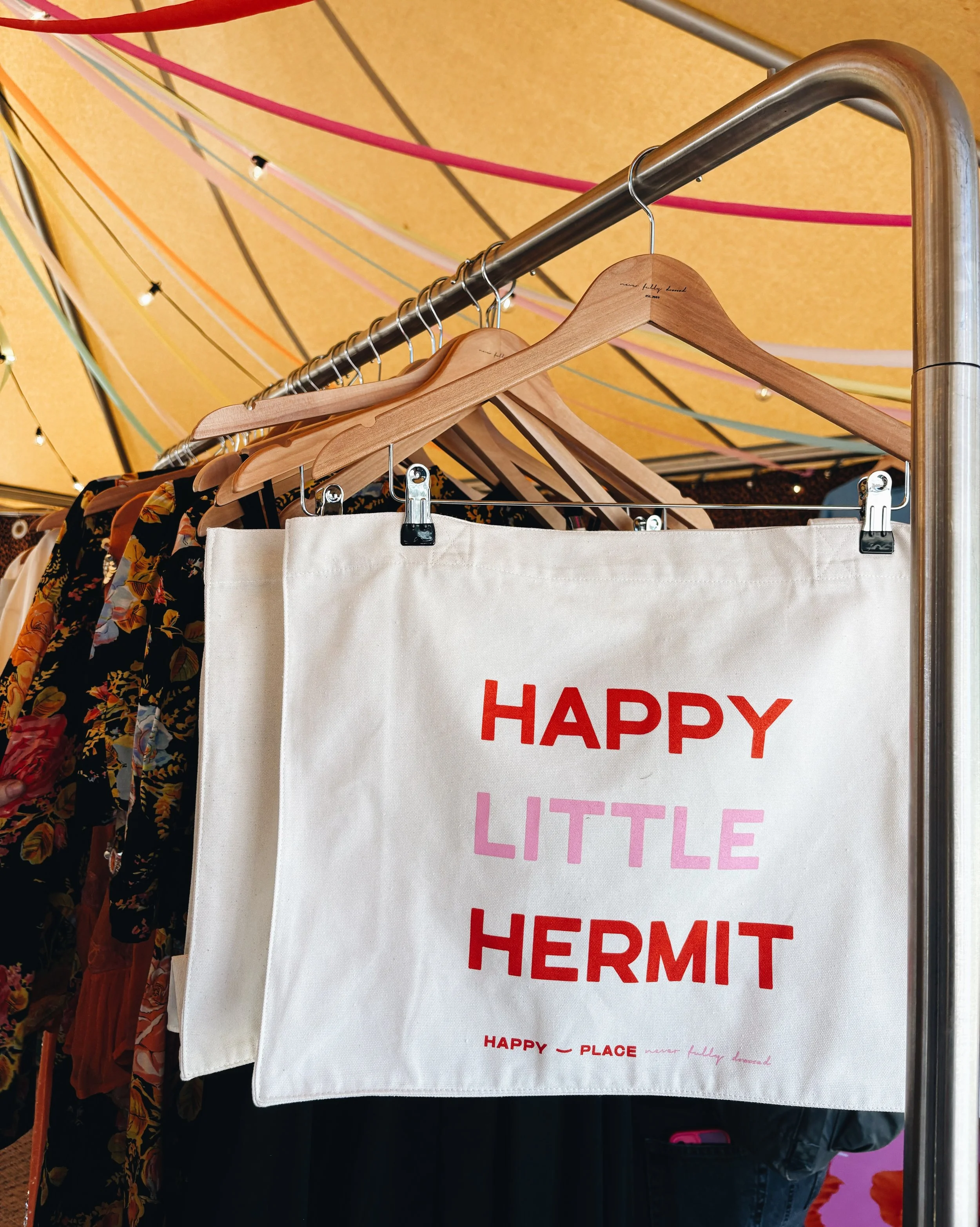
A day at The Happy Place wellbeing festival — and the ideas I brought home with the tote bag
I’m sitting under the shade of a 100-year-old tree in a west London park, the kind with branches that creak when the breeze moves through them. I’ve claimed one of the bright bean bags scattered across the lawn and wedged it against the bark. It’s quieter here than in the big open-sided marquee where the talks are held. I almost left earlier — the heat was stifling — but this patch of dappled light invited me to stay.
This is the Happy Place Festival, Fearne Cotton’s annual celebration of all things wellbeing. Held in Gunnersbury Park, the event feels relaxed despite the crowds. There’s a sound bath tent, hormone talks, yoga happening under awnings, iced lattes for a quick pick-me-up, and a hum of voices talking about nutrition, breathwork, sleep, and happiness.
I wander a little, swap my trainers for sandals, browse the book tent, and eventually drift towards the Talk Tent — where the ideas start to land.
What Wellbeing Looks Like When You Do It at Your Own Pace
There’s a clawfoot bathtub painted bright yellow on the lawn. Giant HAPPY PLACE letters. Pink phone booths for Instagram moments.
People move slowly, or not at all. Some stretch into yoga poses. Others lounge with notebooks. I’m surrounded mostly by women. An older woman in a navy wrap dress stands near a mother and daughter in yoga pants. And I start to wonder: What are we all here for?
A day of self-care? A search for clarity? A break from decision fatigue?
For me, it became about gathering small, meaningful insights or the big ideas that I hope might stick. Here's what I took home from a single day of getting away from it all (so I could get back to it all).
5 Takeaways from The Happy Place Festival
1. Midlife Is for Beginning Again
“Everyone has something.” — Donna Ashworth
Poet Donna Ashworth shared that she didn’t begin writing until her mid-40s. “It was either me… or it,” she said. There was something inside her that needed to be expressed — even if it emerged messily.
Holly Tucker, founder of Holly & Co, echoed this. She shared that 75% of the small businesses they support were started by people aged 40–60. Midlife isn’t an ending. It’s the start of something else.
2. Listen to the Whispers of the Soul
The idea of tuning inward came up again and again. Katy Hill spoke of following the “whispers of the soul.” Kelly Holmes said she’s living not in the “if onlys” but the “maybes.”
What if we don’t need to have the whole plan — just enough of a nudge to start?
3. Time Is Measured in Moments, That Become Years
“Life is 80 summer holidays.” — Julia Bradbury
Oliver Burkeman’s 4000 Weeks was cited more than once. It’s a reminder that life is not endless. Julia Bradbury put it plainly: "You only get about 80 summers." She advocates for nature snacks as the way to reset her days — stepping outside every couple of hours to widen your gaze, regulate your nervous system, and remember you’re alive. The evidence backs her up. A University of Exeter study found that if 1.2 million people took part in a green prescribing project that would save the NHS £635.6 million.
4. Start Imperfectly, Stay Imperfect
“Just begin.” — Donna Ashworth
Donna’s talk — and the reading of her poem “Just Begin” — was a balm for the overthinkers. “Someone here needs this,” she said before reading. She was right. That someone was me. And maybe it’s you too.
Start before you’re ready. Begin without knowing the outcome. Let the thing live in the world. That’s where the magic happens — not in the editing, but in the doing.
5. Small Impacts Matter
“What’s my impact?” — Holly Tucker
Holly said she grounds herself daily in one question: What will my impact be today? Not in a pressure-filled way, but as an invitation. She believes we all have the potential to lift others — to support their dreams in small, significant ways.
And if you don’t know your answer yet? Ask yourself: What lit you up when you were 10?






Wellbeing That Feels Possible
There’s a lot out there right now about how to live better. Some of it’s helpful. A lot of it is loud. What this day reminded me is that you can be curious without committing to a complete reinvention.
Wellbeing isn’t a fixed destination or a 12-step plan. It’s something you get to define. Something you can build, imperfectly. Slowly. Softly. On your own terms.
Your happy place might not be mine. And that’s more than okay.
So, what’s your Version of a Happy Place?
Maybe it’s not a festival. Maybe it’s a book, or a walk, or a quiet cup of tea. The point is not to do more. It’s to tune in.
Here’s a gentle question to leave you with:
What whispers have you been ignoring?
And what might shift if you started to listen?
Want to explore this further?
We’re creating spaces for the wellbeing curious — people who want better days, not busier ones.

When Wellness Isn’t Working: A Few Small Things That Might Actually Help
Self-Care Feeling Like A Chore? Here’s What Might Actually Help.
Or: A Wellbeing Prescription for People Who Are a Bit Tired of Self-Care
There’s this moment that happens, usually when you’re standing in your kitchen at 9 pm, surrounded by unopened supplements, a meditation app you never use, and a wilting bag of spinach you meant to juice.
And you catch yourself thinking:
When? And how? And maybe why?
You might even ask this: What is going on with this wellness thing anyway? Is it really helping me feel better, or has it become another thing that I feel like I’m failing at?
Maybe you’ve tried the things. The early mornings. The gratitude lists. The wild swimming trend. Maybe you have six lists in the notes app on your phone with titles like “Things That Might Help”.
And maybe none of them have really helped in the way you hoped. Or they did for a moment, but you couldn’t sustain them beyond the three days that you managed to fit them in before life took over again.
Wellness might have once felt simple. Now it can tend to feel like homework.
There’s always something new to do. Another morning routine to master. Another life hack to implement. Another hot take about gut health or cold plunging or celery juice, or which milk you should actually be drinking.
And all of it — somehow — starts to feel like work.
Which is wild, really, when you think about what wellness is supposed to be: care, comfort, restoration, return.
But this is where so many of us seem to have landed — in a place where self-care feels like another thing to get right.
So what do we do when wellness starts to feel like a chore? When it’s not that we want to abandon caring for ourselves — but we definitely want to care differently?
We look somewhere else.
We step sideways.
We get messier, softer, smaller.
We look for things that feel less like a regime, and more like a reminder — of what feels human. What feels good. What feels possible.

In this month’s Wellbeing Prescription, we curated a handful of books, podcasts, ideas, and places that won’t ask you to be better or do more.
They won’t tell you to wake up at 5 am or optimise your sleep cycle.
But they might just make you feel a little more like yourself again.

Books for Wellbeing Confusion
Real Self-Care by Dr Pooja Lakshmin — for redefining what care really means
I Didn't Do The Thing Today by Madeleine Dore — for gentle rebellion against productivity culture
I Haven’t Been Entirely Honest With You? by Miranda Hart — for humour and humanness in equal measure
Wellness by Nathan Hill — for recognising yourself (for better or worse) in fiction
Browse more of our edit of the books that can help you navigate the sometimes overwhelming world of wellness.

Podcasts to Walk With
Everything Happens with Kate Bowler — for kindness + complexity
Maintenance Phase — for myth-busting wellness culture
The Happiness Lab — for the science of what actually matters
Discover more podcasts that can help you find a more real-life approach to wellness here.

TV to Watch Without Guilt
Ted Lasso — for joy and simplicity
White Lotus— for sharp, biting wellness satire
Nine Perfect Strangers — a wellness resort offers more than it says in the brochure
Shrinking — what happens after your therapist says that’s time
Loot — for when wellness means a water bed filled with camomile tea and a koi pond filled with fish you are slightly scared of (the billionaire kind then)

Places To Go (or Imagine Going)
Self Space — therapy without clinical vibes
The School of Life — for thoughtful people being thoughtful
The Happy Place Festival — for connecting with others around what feels-good
A bench. Any bench. Sit. Breathe. Watch the pigeons.

An Alternative Daily Practice
Do less, without feeling guilty about it.
Be curious, not perfect.
Look for life-giving things, not life-hacking things.
Optional Side Effects
Reduced panic at the phrase wellness routine
A new fondness for Miranda Hart
Increased compassion for literally everyone just trying to get through the day
Lowered expectations (in the best possible way)
Tiny, steady improvement in your relationship with your own wellbeing

Join In
What would you add to this prescription?
A book that soothed you. A podcast that helped. A small thing that felt like magic (or relief) in the middle of a very ordinary day.
Join this discussion on Substack and Instagram.
And while you’re at it, what should go in the next Wellbeing Prescription? What small, everyday things feel like they need their own remedy?
Because maybe wellness isn’t broken.
Maybe it’s just due for a rewrite.
Curious about your unique way to well? Learn more about our wellbeing sessions.

7 Ways to Disconnect and Recharge Without Taking Time Off
Discover small and practical ways to disconnect and recharge without needing a vacation. If you can't get away right now, learn how to feel better right where you are.
Sometimes taking a vacation or retreat just isn’t possible. But that doesn’t mean you can’t find ways to disconnect and recharge right where you are. With a few small changes, you can bring moments of peace and calm into your daily life, without needing to book time off work or escape your routine.
We all need breaks, but let’s face it: taking time off can be tricky, whether it’s due to a busy schedule, financial limitations, or life’s constant demands. The good news is you don’t need a week off to feel refreshed. By incorporating these small practices into your daily routine, you can create moments of calm no matter how hectic your life feels.
Here are 7 ways to disconnect and recharge without needing a vacation:
Unplug for 15 Minutes a Day:
Whether it’s during your lunch break or just before bed, set aside a few minutes to step away from screens. Use this time to breathe, reflect, or simply sit in silence.
Create a Soothing Space at Home:
Designate a spot in your home that feels calming—a cozy chair, a corner of your bedroom, or a peaceful nook where you can retreat for a few moments.
Take a Nature Break:
If you can’t get away, bring nature to you. Sit outside for a few minutes, open a window, or tend to a plant. Nature’s calming effect is immediate, even in small doses.
Practice Mindful Breathing:
Whenever stress creeps in, pause for a moment to focus on your breath. Deep breathing can help calm your mind and reduce anxiety.
Stretch or Move Your Body:
A few minutes of stretching or light movement can help release tension and recharge your energy levels.
Gratitude Check-In:
At the end of each day, write down three things you’re grateful for. This practice shifts your focus from stress to appreciation.
Meditate or Journal:
Spend 5 minutes reflecting on your thoughts or doing a quick guided meditation to clear your mind.
By building these practices into your daily life, you’ll feel less drained and more recharged—even without taking a full vacation. And if you want a structured, supportive approach to making these habits stick, our Everyday Retreat can help.
With just a few mindful moments each day, you’ll feel more grounded, energized, and ready to take on whatever life throws at you. It’s about finding balance without stepping away from your responsibilities.
Ready to disconnect and recharge without the need for time off? Join our Everyday Retreat for daily lessons that will help you build these practices into your routine.

When Trying to Feel Better Starts to Feel Like Pressure
Learn more about midlife wellbeing, emotional burnout, and why real self-care starts with less pressure and more kindness.
There’s a strange irony in midlife:
You start trying to take care of yourself just at the moment you feel most disconnected from yourself.
You read the books. You save the Instagram posts. You sign up for the newsletters, download the meditation apps and promise yourself that this week you’ll really do it.
You’ll stretch. Journal. Eat better. Rest more. Be present. Meditate. Cut out caffeine. Maybe even finally take those supplements you bought months ago and keep forgetting to open.
You try.
But somehow, even the trying feels heavy. Like it’s yet another thing you’re not doing quite right.
You start to wonder if self-care is just another version of self-judgment — a performance you’re meant to keep up, while secretly wondering if you’ve missed some essential instruction manual that everyone else seems to have read.
And maybe, beneath all the pressure, you start to feel something even harder to admit:
> That trying to feel better is making you feel worse.
I remember a moment — not so long ago — when I stood in the kitchen staring at half-opened supplements and wondering if I even had the energy, or time, to blend that green smoothie I believed would help. I was tired. Not just physically, but soul-tired. And somewhere in me, a voice whispered: What are you doing this for, really? Who are you trying to be right now?
Because the truth was — I didn’t want a smoothie (even though I really love them).
I wanted stillness.
I wanted to feel something again that didn’t feel like a task.
I wanted to feel myself again — not the version of me who ticked all the boxes, but the one who could sit down in the quiet and still recognize her own thoughts.
And that’s what I’ve come to believe:
Wellbeing isn’t something we’re meant to achieve.
It’s something we can tend to. Gently. Kindly. Imperfectly.
Not through someone else’s morning routine or a podcast’s list of non-negotiables. But through our own noticing. Our own honest relationship with ourselves. Our own tiny, ordinary acts of kindness — not as a means to optimize ourselves, but simply to meet ourselves where we actually are.
Some days that might look like journaling.
Some days it might look like making toast and sitting down for five minutes while it’s still warm.
Some days it might look like doing nothing at all.
And that’s enough. Truly.
Because you don’t need the perfect wellness plan.
You need more permission to be human in your own life.
You’re not failing at self-care.
You’re just exhausted from trying to do it in a way that was never designed for your actual days.
So here’s a suggestion, if you need one today:
> What if well-being didn’t need to be a routine you follow, but a relationship you build — slowly, kindly, intuitively?
One that’s shaped by your own rhythm. Your own energy. Your own life as it actually is — not the life you wish you were living.
Maybe it starts with making a really great coffee before you check your email.
Or choosing that latest fiction blockbuster over one more scroll.
Or simply asking yourself: What do I need today — not in theory, but in reality?
Maybe you don’t need more effort.
Maybe you just need less pressure.
And maybe, just maybe, that’s the beginning of feeling better — not as something you achieve, but something just to keep you connected to yourself even in the most wobbly of days.


Well-being Prescriptions for Midlife
We don’t believe that well-being is one thing to all people. We’ve found that we all need something different from it — some of us to feel calmer, others more energized; some to deal with the overwhelm, others with the disconnection; and some of us to reach for our purpose, others for a paintbrush.
Learn more about our well-being prescriptions here. Find out more about what you need it to be, and do, for you.
Midlife can look different for each of us. Write your own plan for a way through it that works for you.
Not sure if coaching is for you? We get it; it took us experiencing coaching to understand what it really is. That’s why we offer a free coaching consultation to see how talking through where you are might help with where you want to go.



Curious how to find your own way to well during these midlife days? Subscribe to our newsletter here.

Embracing Messy Emotions: 5 Steps to Feel, Not Fix
Discover how embracing your messy emotions can reduce anxiety, boost self-confidence, and improve overall wellbeing. Learn 5 practical steps to feel, not fix, your emotions and live more authentically.
We all experience messy emotions—those uncomfortable feelings like anxiety, anger, or sadness. But what if instead of trying to fix them, you allowed yourself to feel them? Today, we’re exploring how embracing your emotions can help reduce stress, improve self-esteem, and nurture your overall wellbeing.
What Are Messy Emotions, and Why Do They Matter?
Emotions that you might interpret as messy—like fear, frustration, and grief—aren’t “negative.” They’re essential signals that help us understand our needs and values.
Examples of messy emotions and their messages:
Anxiety: Highlights uncertainty or a fear of failure.
Anger: Signals that a boundary has been crossed.
Sadness: Indicates a sense of loss or unmet needs.
By leaning into these emotions, rather than suppressing them, you can gain valuable insights into your inner world and how you can better relate to the outer one too.
Why do we try to fix our emotions then?
Modern life promotes quick fixes: “stay positive,” “think happy thoughts,” or “power through.” While this mindset feels productive, it can lead to stress, burnout, and a disconnection from yourself.
5 Steps to Embrace Messy Emotions
1. Identify What You’re Feeling
Start by naming the emotion you’re experiencing. Research shows that simply labelling an emotion can reduce its intensity and help you process it.
2. Get Curious About Your Emotions
Ask yourself: Why is this emotion showing up? What need or boundary is being highlighted? This step fosters emotional clarity and self-awareness.
3. Allow Yourself to Feel It Fully
Instead of suppressing emotions, practice sitting with them. Notice how they feel in your body—like a tight chest or a knot in your stomach—and breathe through the sensation.
4. Reflect on the Lessons
Once you’ve sat with your emotions, consider what actions they might inspire. Do you need to set a boundary, communicate your feelings, or make a change in your environment?
5. Let Go Without Judgment
Embrace the idea that emotions are temporary. Once you’ve processed them, let them pass naturally instead of clinging to guilt or self-criticism.
Journal Prompt: Connecting with Your Messy Emotions
Take 10 minutes to reflect on a recent emotional experience:
What were you feeling?
What might that emotion have been trying to tell you?
How can you respond with self-compassion?
Why Feeling, Not Fixing, is Key to Self-Connection
Messy emotions aren’t problems to solve; they’re guides to understanding yourself. When you embrace your feelings, you reduce emotional overwhelm, boost your confidence, and create deeper connections with others.
Emotions coaching can help you explore your emotional patterns, process feelings constructively, and build resilience. This process isn’t about suppressing what you feel but rather understanding which emotions are showing up and why.
Embracing messy emotions is a powerful way to improve your mental well-being, strengthen relationships, and live with greater clarity.
Instead of fixing your emotions, try leaning into them. You might discover that the feelings you once avoided are the key to living a more balanced, fulfilling life.
If you’re curious about how to better understand what you’re feeling (and why you’re feeling it), subscribe to our newsletter. You’ll get to explore all the feels.

3 Things to Say “No” to This Holiday Season (Without the Guilt): A Q&A Guide
Reduce holiday stress by setting gentle boundaries. Learn how to say “no” to overcommitting, perfection, and self-criticism with this Q&A guide for a more balanced, guilt-free season.
The holidays can be a joyful time, but they can also bring pressure – from packed schedules to high expectations. It’s easy to get caught up in saying “yes” to everything, only to end up feeling exhausted and overwhelmed. But what if you could set a few gentle boundaries and say “no” to what doesn’t serve you, without the guilt?
In this Q&A guide, we’ll explore three common holiday challenges and share ways to gracefully say “no” to them so you can focus on what truly matters.
Q: How Do I Say “No” to Overcommitting My Schedule?
A: It can feel difficult to decline invitations and gatherings, especially when you want to be there for everyone. However, overcommitting leaves little time for rest and self-care, and often leads to burnout. Setting healthy boundaries is essential for reducing stress and staying emotionally balanced during high-demand seasons.
Try This:
1. Set an Event Limit: Decide in advance how many events you can realistically attend each week. Communicate this boundary with friends and family early on.
2. Use “Thank and Decline”: Practice saying, “Thank you so much for inviting me! I won’t be able to make it this time, but I’d love to connect soon.” Expressing gratitude makes it easier to say no without guilt.
Bonus Journal Prompt: “How does my schedule reflect my holiday priorities? What can I let go of to feel more present?”
Q: How Can I Let Go of the “Perfect” Holiday Decor?
A: Holiday decor can be a fun way to celebrate the season, but aiming for a Pinterest-perfect setup often adds unnecessary stress. Instead, think about what makes your space feel festive to you, and let go of the pressure to make everything look flawless. Perfectionism is often a barrier to joy, especially during high-stakes times like the holidays
Try This:
1. Choose a Signature Element: Pick one decor element you love (like twinkle lights or a favourite ornament), and let that set the tone. Focus on what you truly enjoy rather than a “perfect” overall look.
2. Embrace Minimalism: Simplifying your decor can actually enhance its impact. Select a few meaningful pieces, and allow yourself to skip or scale back on the rest.
Bonus Journal Prompt: “What does a meaningful holiday atmosphere look like to me? Which traditions can I simplify?”
Q: How Do I Say “No” to Self-Criticism This Season?
A: Self-criticism can sneak in during the holidays, especially when you’re trying to keep up with expectations or feeling the effects of comparison. Research on self-compassion by Dr. Kristin Neff suggests that treating yourself with kindness and understanding can significantly improve mental and emotional well-being
Try This:
1. The “Friend Check”: When you catch yourself in a cycle of self-criticism, pause and ask, “Would I say this to a friend?” Often, we’re kinder to others than to ourselves. Shifting this perspective can help soften critical thoughts.
2. Create a “Self-Care Mantra”: Choose a comforting phrase, like “I’m doing my best” or “It’s okay to be well-ish.” Use this mantra whenever self-criticism starts creeping in.
Bonus Journal Prompt: “What am I grateful for in myself this season? How can I nurture a sense of compassion?”
Gentle Actions for a Boundaries-Based Holiday Season
Here are three simple actions you can try to help reinforce these boundaries and make this season feel calmer and more aligned with your well-being:
1. Create a “Holiday Well-being List”: Instead of a to-do list, make a list of small things that bring you joy or calm. Keep it somewhere visible as a reminder to prioritise these throughout the season.
2. Set a “Self-Compassion Break” Reminder: Use your phone or calendar to set daily reminders to take a self-compassion break. Even a few minutes each day can make a difference.
3. Visualise Your Ideal Holiday: Before diving into holiday preparations, take a moment to imagine your ideal holiday season. Picture it in detail: What are you doing (or not doing)? Who are you spending time with? Use this vision as a guide when making decisions.
Embrace a Holiday that Feels Right for You
This holiday season, saying “no” doesn’t have to be difficult or guilt-inducing. By setting gentle boundaries and focusing on what truly matters, you can create a season that’s joyful, calm, and fulfilling. Let go of the need to be everywhere, decorate perfectly, or criticise yourself for small missteps. Instead, celebrate the moments that bring you peace and presence.
If you’re ready for more ways to simplify the season and focus on what matters most, sign up for our Well-ish Guide to Feeling Better this Holiday Season! Discover gentle, meaningful tips for a holiday that feels just right.

Feeling “Well-ish” is Enough: Embracing a Balanced Holiday Season
Forget perfection this holiday season and embrace “well-ish.” Discover practical ways to feel good enough, from setting boundaries to focusing on small wins, plus gentle journal prompts for a holiday that feels balanced and meaningful.
With the holiday season often comes the expectation to be our “best selves,” but striving for perfection can be overwhelming and, frankly, exhausting. Rather than aiming for perfection, what if we allowed ourselves to be just “well-ish”? This idea isn’t about lowering standards – it’s about finding joy and meaning in what feels genuinely achievable. By embracing a “well-ish” approach, we can let go of pressure and create a holiday that is kind, balanced, and nourishing.
In this post, we’ll explore how to make “well-ish” your seasonal mantra and offer some gentle prompts and actions to help you feel grounded and at ease.
1. Reframe Wellbeing as “Good Enough”
Letting go of perfection can be challenging, especially when it comes to family gatherings, decor, and gift-giving. Yet setting realistic expectations can reduce stress and increase satisfaction. Accepting “good enough” doesn’t mean you don’t care – it simply means you’re focusing on what matters most to you this season.
Try This:
- Journal Prompt: “What does a ‘good enough’ holiday look like for me? What parts of the season can I enjoy without striving for perfection?”
- Gentle Action: Choose one holiday tradition and simplify it. For example, if cooking an elaborate dinner is daunting, consider a simpler menu or make it a potluck. Let the focus be on connection rather than presentation.
Letting go of perfect frees you to be present. By reframing “good enough” as a positive choice, you’re embracing a more intentional way to celebrate.
2. Small Wins for a Well-ish Holiday
Small, achievable actions can go a long way in creating a sense of well-being. The science behind positive psychology shows that small, manageable changes can significantly boost our mood and resilience, especially when we’re busy. Instead of big resolutions or overwhelming to-do lists, think about small wins that bring you a moment of joy or peace.
Try This:
- Journal Prompt: “What small action could bring me joy or calm today?”
- Gentle Action: Start a “small wins” list, noting one little thing each day that brings you joy, whether it’s taking a short walk, listening to your favourite song, or enjoying a hot drink without multitasking. These small wins build up over time, creating a sense of accomplishment and balance.
By focusing on small actions, you’ll find that well-being feels more accessible. This approach aligns with the “well-ish” mindset, making it easier to enjoy the season without feeling overwhelmed.
3. Give Yourself Permission to Be Imperfect
The holiday season can make us feel like everything should be “just so,” but aiming for perfection in every area can sap our energy and joy. Research on self-compassion shows that treating ourselves with kindness – especially when we’re not meeting ideal standards – can reduce anxiety and improve our emotional well-being. By embracing our imperfect selves, we allow for more authentic, meaningful experiences.
Try This:
- Journal Prompt: “Where am I being hard on myself this season? How can I bring more compassion to these areas?”
- Gentle Action: Practice a “self-compassion break.” When you catch yourself being overly self-critical, pause and ask: “What would I say to a friend in this situation?” Often, we’re much kinder to others than we are to ourselves, and shifting that perspective can help ease the pressure.
Embracing imperfection isn’t about giving up; it’s about recognising that our worth isn’t tied to doing things flawlessly. This shift makes room for real joy and connection.
Journal Prompts for a “Well-ish” Holiday
Here are three prompts to help you dive deeper into what a “well-ish” holiday means for you:
1. “What does a ‘well’ holiday feel like to me?”
- Describe what “well” means to you in the context of the holidays. Is it calm? Connected? Balanced? This prompt helps clarify your priorities and intentions.
2. “What expectations am I holding onto that I could release?”
- Reflect on traditions or pressures you feel obligated to follow. Do they bring joy, or are they simply habits? Identifying what you can let go of can free up space for what truly matters.
3. “What small moments bring me peace during the holiday season?”
- Think about moments that bring you a sense of calm – a morning coffee, a walk, or a favourite song. Recognising these moments can help you add intentional breaks to your days.
3 Gentle Actions to Embrace “Well-ish” This Season
If you’re ready to create a holiday that feels balanced and manageable, here are three actions to try:
1. Set a “Good Enough” Boundary:
- Choose one area where you’ll consciously decide to aim for “good enough” instead of perfection. Whether it’s holiday cards, decorating, or event planning, see if you can let go of some pressure.
2. Make a “Not To-Do” List:
- Just as powerful as a to-do list, a “not to-do” list helps you identify things you can skip this season. For example, if holiday baking feels like a chore, give yourself permission to buy cookies instead!
3. Focus on Feeling Intentions, Not “To-Do’s”:
- At the start of each week, pick one feeling you want to cultivate – such as “relaxed” or “connected.” Let that feeling guide your choices, helping you say “yes” to things that align with it and “no” to things that don’t.
Research Insights: Why Embracing “Well-ish” Can Improve Your Wellbeing
Studies from the field of positive psychology show that perfectionism is often linked with anxiety and burnout, particularly during high-stress periods like the holidays. According to Brené Brown, an expert in vulnerability and self-compassion, the drive for perfection can keep us disconnected from what truly matters and make us more self-critical.
By focusing on achievable goals and self-compassion, we support our mental and emotional well-being more sustainably. As Dr. Kristin Neff, a self-compassion researcher, says, self-kindness is a proven method for reducing stress and improving our ability to navigate life’s challenges. So by embracing “well-ish,” you’re not just making the season easier – you’re building resilience for the year ahead.
A Holiday Season That Feels Like “You”
This holiday season, give yourself permission to be “well-ish.” Rather than perfect, aim for a holiday that feels good enough – one that brings joy without adding stress. By letting go of expectations, focusing on small wins, and embracing your imperfect self, you create space for a more meaningful celebration.
If you’re ready for more gentle tips like these, sign up for our free Well-ish Guide to Feeling Better this Holiday Season. Discover simple ways to create a holiday season that truly feels like you.

Feeling lost in the wellness world? Here’s how to find your way back.
Feeling overwhelmed by wellness trends? Discover how a personalized well-being prescription can help you reconnect with yourself and thrive in your everyday life.
The wellness world can feel like an endless cycle of "shoulds" — wake up early, meditate, run five miles, eat perfectly clean, and somehow stay balanced. But what if all those routines don’t fit into your life? What if, instead of feeling better, you feel even more overwhelmed by the pressure to do more?
Well-being Isn’t One-Size-Fits-All: Here’s What Really Matters
We’ve all been there — staring at the screen, scrolling through endless wellness advice that promises to change everything, only to feel discouraged when we can’t seem to keep up. It’s hard not to compare ourselves to others and feel like we’re falling short. The truth is, that the wellness industry has created an unattainable standard for many of us. It suggests that wellness is only for those with time, energy, and resources to spare, and it forgets that real people have real — often messy, unpredictable, and busy — lives.
But here’s the thing: wellness shouldn’t make you feel like you’re failing. True well-being isn’t about working your way through someone else’s routine. It’s about reconnecting with yourself, finding balance, and doing what works for you. Whether it’s carving out time for a walk in the park, engaging in creative activities, or simply taking a deep breath amidst the chaos of daily life, well-being is deeply personal.
A Personalized Well-being Prescription: Tailored to Your Life
That’s why we’ve developed Bespoke Well-being Prescriptions. Instead of a one-size-fits-all approach, we focus on creating a personalized well-being practice that works for you. This isn’t about keeping up with wellness trends — it’s about understanding what truly makes you feel good and building that into your daily life.
With our program, you’ll receive a Bespoke Prescription for Everyday Life, which includes practical tools, emotional support, and Culture Therapy recommendations. These sessions are designed to explore what well-being means to you personally, and how you can create space for it in your unique reality.
We start with a free call to get to know you and your needs. From there, you can choose a 90-minute starter session or dive into our twelve-session program, where we’ll guide you step-by-step to craft a sustainable well-being practice that fits your life. Whether you’re searching for emotional balance, creative fulfillment, or just more peace, this program will help you get there.
From Overwhelm to Balance: Your Well-being, Your Way
Imagine waking up feeling like you have a handle on your day — not because you’ve mastered the perfect routine, but because you’ve crafted a well-being practice that fits into your life effortlessly. You feel more grounded, more connected to yourself, and more capable of handling life’s ups and downs.
With your Bespoke Well-being Prescription, you’ll have the tools and insights you need to feel better, not just today, but every day. You’ll experience the benefits of a life that feels good to you — one where you’re thriving emotionally, mentally, and physically, without the pressure to be someone you’re not.
Ready to begin your journey? Find your unique way to better well-being today with a free call and see where life can take you.