
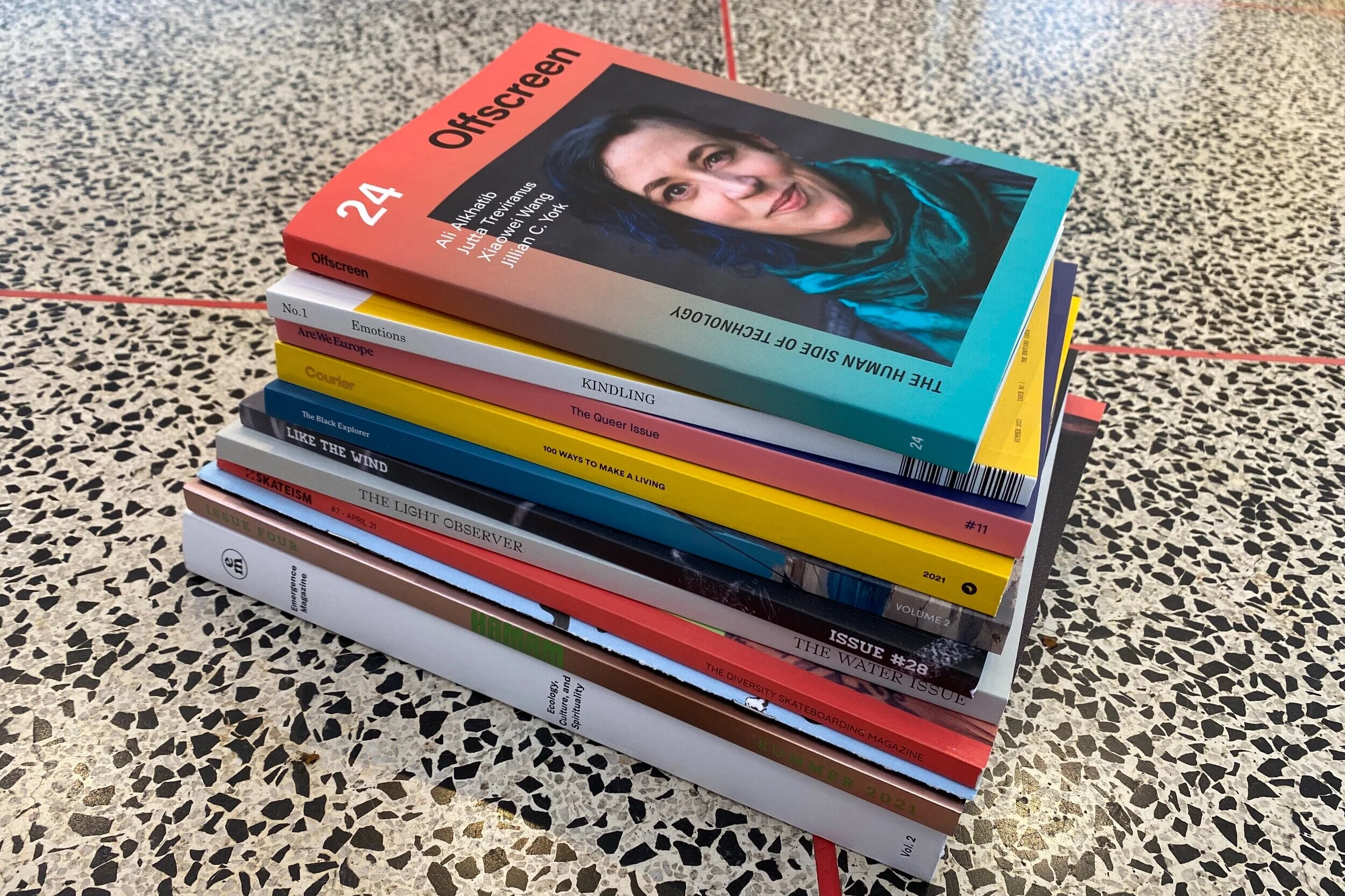
A Magazine Prescription from Danielle Mustarde at London's magCulture
Award-bagging writer Danielle Mustarde writes her prescription for the independent magazines to seek out in uncertain times.
For the second in our Culture Therapy Series, we invited award-bagging writer and shop manager at London's magCulture, Danielle Mustarde to write a prescription for independent magazines to seek out in these uncertain times.


Looking for more suggestions, magCulture now offers a quarterly boxset.
We hope you find many new discoveries amongst these selections for whatever ails you.
Subscribe to our newsletter for more ways to connect with what matters in your everyday life.

A Magazine Prescription from Magalleria
Magalleria founder Daniel McCabe’s recommendations for the magazines to seek out when we’re lost, lonely, anxious, or just curious. There are some new discoveries to be had here.
When we first started If Lost, Start Here, we knew that we wanted to take a broader view of the things that make us feel good in life. Wellness can mean yoga and spa retreats, but it can also mean finding connection dancing to live music, planting your own magical terrarium to find your way back to nature, and refining your emotional intelligence at a School of Life.
Restoring our own equilibrium, and helping others find their balance, has meant searching far and wide for the therapeutic in the everyday. That’s where Bath’s Magalleria has stepped in for us, particularly during the lockdowns. For me, losing myself in a store dedicated to independent magazines has been a crucial form of respite. It has helped me find ways to get off my phone and reconnect with the analogue, get out of my head to access different points of view, and push against assumptions of what printed material is, what creative expression can be and who gets to live a purposeful life.
Over the past few months as we couldn’t get out into the world, we’ve folded some of our go-to independent magazines into our Culture Therapy series but what we’ve really wanted to do for a while is bring in the expertise of Magalleria founder Daniel McCabe. So we invited him to write his own Culture Therapy prescription based on the magazines he knows so well and he very kindly agreed. Below are Daniel’s recommendations for all the things we need when we’re lost, lonely, anxious, or just curious, in his own words for why these choices matter.
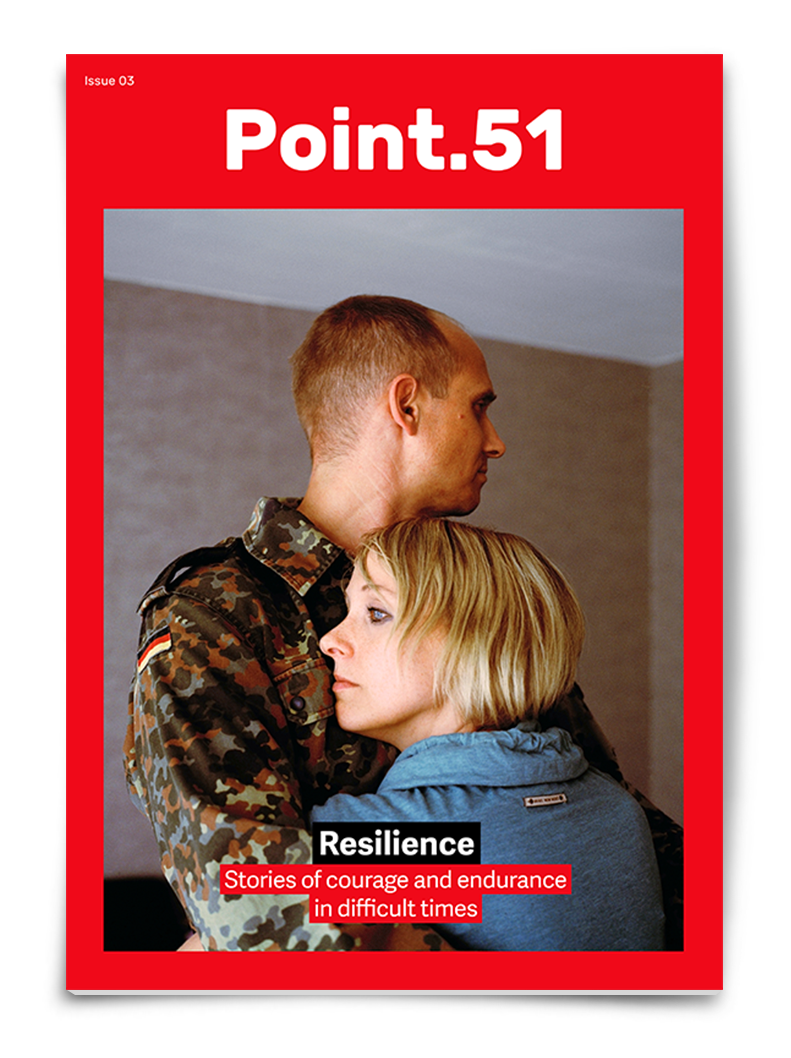
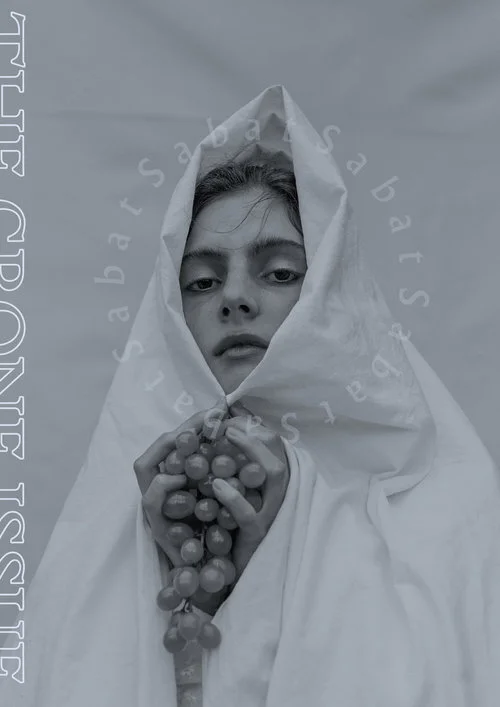
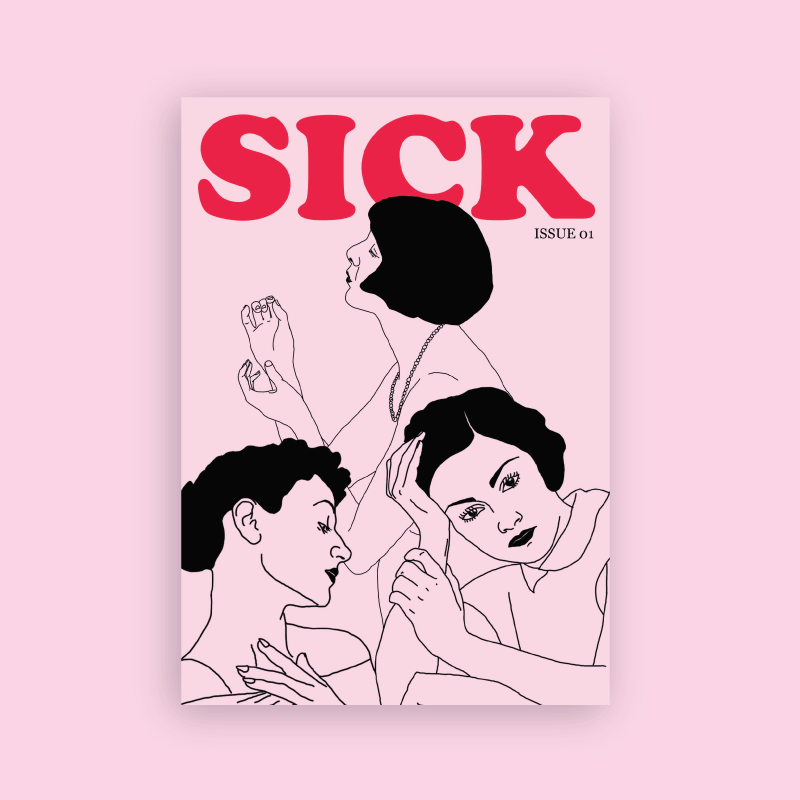
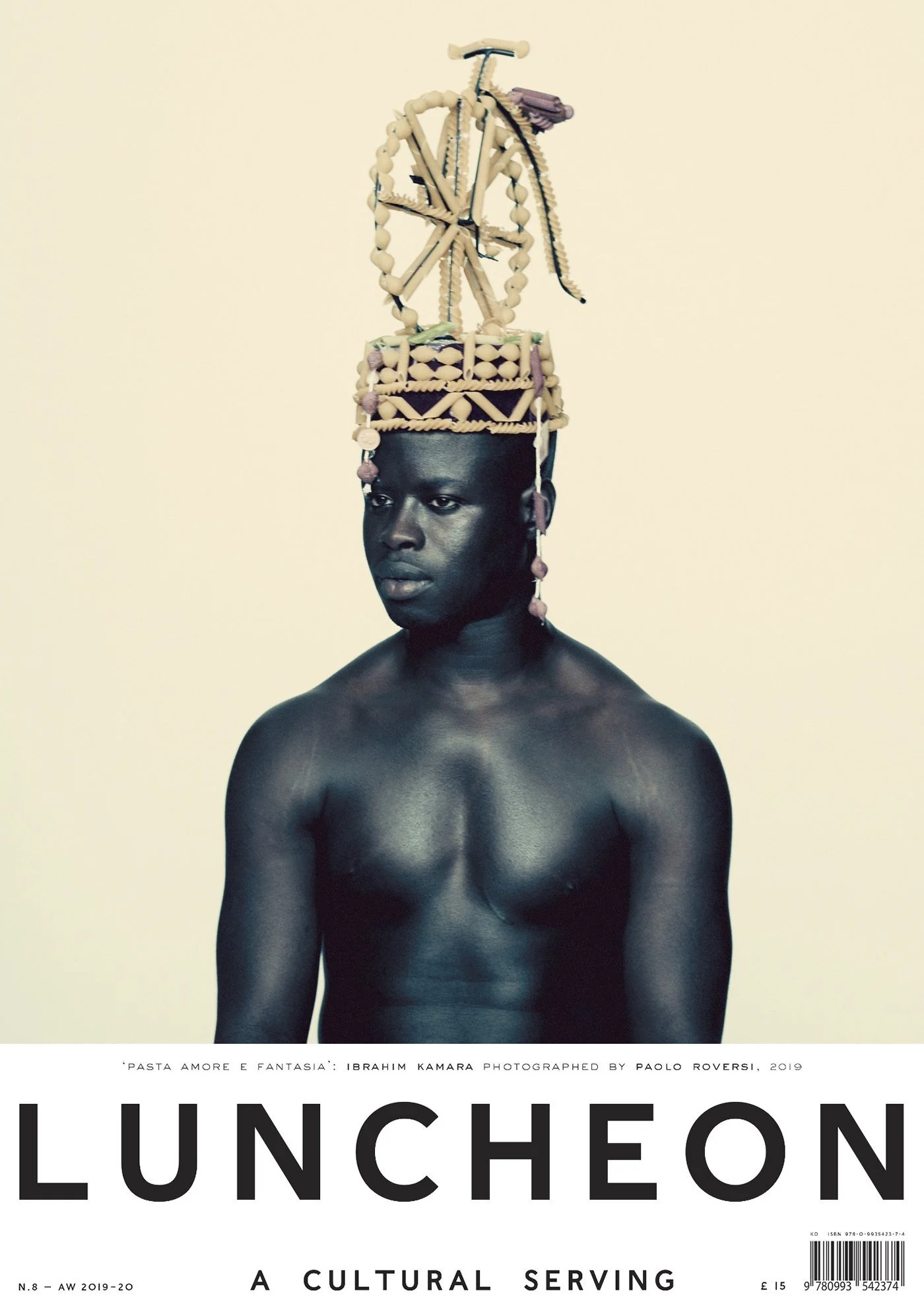

The Magazine Stores We're Escaping To
Looking for some inspiration for where to shop for those indie magazines you love? Here are just a handful of our favorites. Let us know yours.
Over the pandemic, some of us have turned to magazines for connection when we couldn’t turn to people. With glimpses of other lives and different times, with stories of inspiration and creative possibilities, with images of places we can’t get to and people we aren’t allowed to meet, independent magazines to some of us have become the escape that we needed. But today, instead of featuring our favorite reads (head over to our Culture Therapy section for some ideas), we’re going to travel to our favorite places to find those reads. Hopefully, in one of these stores, you will find the magazine for whatever you need, wherever you are.

Shop. Journal. Podcast. Events. Consultancy. A magazine loving empire created by graphic designer and veteran of the magazine industry Jeremy Leslie: he worked on City Limits, Time Out and Blitz, titles by companies like Waitrose and Virgin Atlantic, and in 2018 was awarded the Mark Boxer Award for his contribution to magazines by the British Society of Magazine Editors.
The Clerkenwell flagship store opened in 2015, suitably in an old Squires Newsagents and in a neighborhood closely associated with the printed word — just up the road are both the first place where the word ‘magazine’ was used ( in 1731 referring to The Gentleman’s Magazine) and the University of London’s Journalism school. The space – described by Creative Review as ‘The spiritual home of independent publishing’ — has been designed to showcase the magazines themselves and to allow people to feel comfortable browsing the 500 or so titles sourced from around the world. You are encouraged to linger over the finely curated selections that are “based on gut instinct” and the right mix of great design, imagery, and content. You’ll find stalwarts like Interview and Zoetrope and newcomers like Baggage – travel for solo parents – and The World Needs Magic – transforming workplaces. A visit will have you falling down analog rabbit holes of the kind we’d like more of in our everyday lives.
If Lost recommends: Disquiet focusing on men’s perspective on their mental health, Friends on the Shelf, a conversation within its covers, and The Delicate Rebellion, inspiration for those going it alone as creatives, makers, and entrepreneurs.

In a town just outside of Manchester now undergoing a one billion pound regeneration (and where I went to school), locals Holly Carter (a designer and maker) and Martin Wilson (a graduate of Manchester School of Art) opened Rare Mags after a successful Kickstarter campaign. The bright blue storefront heralds an interior that holds a carefully edited selection of independent magazines and a true passion for the printed page, all in a definite northern tone. Stocking hard to find and international titles – and going deep on personal interests like indie titles for cyclists (Carter is an avid fan of the sport) and art & photography — this is a place to seek out if you want to find new and much-loved titles. There are magazines we’ve never come across. Like did you know there was an indie Scottish soccer periodical called Nutmeg, a wine magazine like no other called Noble Rot and a food history magazine named Eaten? There are also books, stationery and coffee (by local Hard Lines Coffee). Wish this one had been around when I’d been going to school just up the road. Would have made journeys on the A6 way more interesting.
If Lost recommends: Standart, Courier, Grimoire Silvanus, bilingual les others, this issue on Period, thematic ‘Lost’, and the most beautifully titled Where the Leaves Fall. In need of even more inspiration, choose one of Rare Mags Subscriptions.

Between a Card Factory and a Holland & Barrett in outdoor shopping center Rushden Lakes, you’ll find not WHSmith but Magazine Heaven. Why the name? It’s the size and breadth of titles on offer. Amongst its 3000 titles — the largest selection of magazines under one roof — you’ll find High Street staples like the Vogues and Tatlers of the world, newcomers like bathing magazine Hamam, niche culture magazines like Mayday and Soffa and even self-published magazines, Wonk, Scorchin and Explorations. Founder Bill Palmer has said the store embraces “a wide range of hobbies, passions, and interests within an environment that will encourage exploration and browsing’, its aim to “become a destination for magazine lovers.” With locally sourced coffee and blended teas at Artisan café, this is one place to linger – maybe for hours rather than minutes. Magazine Heaven also functions as a community hub, hosting Yoga, Jazz and Tapas Evenings, Games Nights, Book Clubs, and Art Events, amongst other programs.
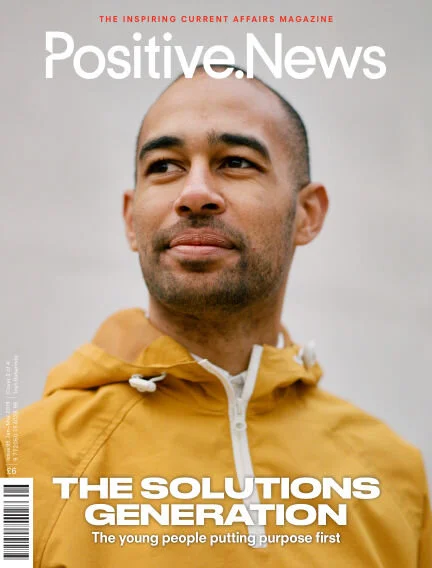
If Lost Recommends: Bloom, Positive News, The Homeworker and Womankind. Magazine Heaven also stocks books such as Kazuo Ishiguro’s highly anticipated new novel Klara and the Sun.
Additionally try, previously featured If Lost places:
Let us know where you go to source indie magazines. Tell us about the stores that you love that feature a range of indie titles, the shopfronts that do for magazines what bookstores do for books. You can email us or fill in this form so that we can include them in our guide for life and bring more awe and wonder into our worlds.


Magazine Brighton
Lost at home? Bring the world in with Magazine Brighton.
What is it: A renowned independent magazine store founded by long-term (since the age of 6) print-lover Martin Skelton.
Why you’ll love it: It’s a store with just thoughtfully selected indie magazine titles. Hundreds of them. Stacked on the floors, arranged on tables, front-facing on wall-shelves. Since it opened in 2014, the choice of titles has grown three-fold, which reflects both the stores growing audience and the growing indie publishing sector.
What you need to know: After years of traveling internationally and finding this very kind of store abroad, Skelton bet it all by bringing the concept to his adopted home town of Brighton. Keep in mind the context: people were more used to WH Smith for their magazines and London as the kind of place to position such an idea.
What they offer if you can’t get to Brighton (which is all of us at the moment): The online site now aims to replicate the density of the store, with lessons learned from the first and now second lockdowns on how to make things easily browsable (maybe too easily as we deposited way too many magazines in our cart while writing this). Magazine Brighton also posts the latest arrivals to their Instagram if you need inspiration and some new discoveries. Like Oh Mag and Openhouse.
Why we think it matters: Magazines were almost (almost) made for this moment. The push against the digital, the celebration of creativity in print, and the small-batch focus, all speak to our collective longing for less digital interfacing, less homogenized products, and less corporate gain. But for us, the reason we think magazines matter as much as they do, particularly now, is that they bring other voices into our homes and different stories into our lives. They are all about engagement.
When our worlds shrink to just four walls and that same world insists that we pay attention to its diversity, magazines hold space for lives lived differently, experiences outside of our comfort zones, and ideas previously unconsidered. This is particularly crucial when you realize that there is no algorithm in this bookstore, or within the pages themselves, shifting what you get to see. There is no dominant narrative. There is no ‘them’ and ‘us’ in curating these titles. Collectively this amalgamation of stories, images, and design, lends something of the normal again in how we’re able to converse and interact and be with one another.
Somewhere like Magazine Brighton is putting you back in control again of the content you get to consume and giving you an entry to connect with the world no matter what state it's in.
In their own words: “Al, my son-in-law, described our shop as ‘Like vinyl, but print’ and it’s a great phrase. Without trying to sound like one of those old intelligence tests, indy magazines are to conventional magazines as vinyl is to digital, artisan bread is to Wonderloaf, microbreweries are to the big brewers, farm-made cheese is to factory-made cheese, and so on. There’s nothing wrong with any of those things in their place but I think there’s enough people out there who want a balance as well.’ – Skelton talking to Mag Culture
Something to read: For a guide that’s all about getting to ok, we’d recommend these wellbeing focused magazines: Rising Issue – 01 // Mental Health Matters; What Do People Do? – Issue 2; Anxiety Empire – Issue 1, Positive Wellbeing — A Zine for Mums, Seed, and perennial favorite Flow.

Culture Therapy | Part 1 Connection
We’re kicking off a new series on ‘Culture Therapy’ — the books, podcasts, music, magazines, and other media that we turn to when in need. First up how to get more connection into your life without leaving your house.
“In reality, every reader, while he is reading, is the reader of his own self. The writer’s work is merely a kind of optical instrument, which he offers to the reader to permit him to discern what, without the book, he would perhaps never have seen in himself. The reader’s recognition in his own self of what the book says is the proof of its truth.”
“Art is a social practice that helps people to locate their truth.”
We’re kicking off a new series on ‘Culture Therapy’ — the books, podcasts, music, magazines, and other media that we turn to when in need. Recently we realized that we’re the kind of people that often turn inward as much as outward when we need help (points for knowing ourselves!). We look to all kinds of things that we can do alone to shift our moods and our perspectives.
Here’s where that piece of being ‘a travel guide but for people who don’t want to actually go anywhere’ sits. There’s no pressure to get out of the house, there’s no pressure to Instagram a perfect life or enviable days, there’s no pressure to fill schedules instead of your heart and mind.
We’ll arrange our Culture Therapy posts according to the same categories of approach you’ve seen with our places, so there’s always somewhere to go — either physically or in the imaginary, whenever and wherever you need it.
We’re starting with the idea of connection, of the importance to our mental wellbeing of being around other people, which we know is kind of ironic. Yes, there are ways of pursuing connection in real time and space, in the actual world of humans; but then there’s ways of connecting through the shared experience of someone else’s life, exploring someone else’s point of view, of being consumed by the narrative of others for a while.
Writer Elizabeth Day believes in connection so much that she has ‘Only Connect’ tattooed on her wrist, because for her “that’s the whole essence of life, you need to connect.” So here goes, a Prescription for Everyday Life around the idea of connection:

Repeatedly on Best of Lists for 2018 (just see this list over on Amazon), Tara Westover’s memoir has stunned people with its true tale of a seventeen-year-old Westover entering a classroom for the first time after growing up in a Survivalist family in the mountains of Idaho. Though a deeply personal and moving account of one’s person’s struggle to navigate the reality of their own life, the universals of family, home and courage speak to all of us.
“Everything I had worked for, all my years of study, had been to purchase for myself this one privilege: to see and experience more truths than those given to me by my father, and to use those truths to construct my own mind. I had come to believe that the ability to evaluate many ideas, many histories, many points of view, was at the heart of what it means to self-create. If I yielded now, I would lose more than an argument. I would lose custody of my own mind. This was the price I was being asked to pay, I understood that now. What my father wanted to cast from me wasn’t a demon: it was me.”
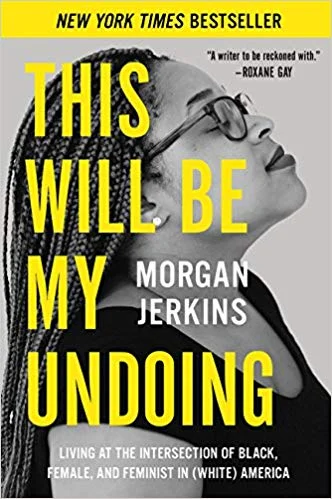
THIS WILL BE MY UNDOING
This book blew us away. It’s courageous and open and raw and brave. It unsettles, and challenges, and moves, and awakens. Morgan Jenkins gives voice to her experiences of being a black woman growing up and living in today’s America. She talks openly in a series of essays about her experiences in contexts such as cheerleading, Ivy League college, and international travel, her take on figures such as Michelle Obama and Beyonce, the politics of black women’s hair, and how to have and sustain relationships, within ideas of identity politics and personal beliefs.
“We cannot come together if we do not recognize our differences first. These differences are best articulated when women of color occupy the center of the discourse while white women remain silent, actively listen, and do not try to reinforce supremacy by inserting themselves in the middle of the discussion.”

OK, Caitlin’s Moran’s book isn’t a memoir, but we fell in love with it and it has all the insight of one. Follow 19 year old music journalist Dolly Wilde as she deals with unrequited love for an actual pop star, the enmity of the all-male staff of a leading music magazine, and dealing with fame, London, and very, very bad sex.
“Think about how brave it is, to do this: to queue up, and meet your hero. There’s something incredibly intimate about reading, or listening, or looking at someone else’s art. When it truly moves you—when you whoop when Prince whoops in Purple Rain; or cry when Bastian cries in The NeverEnding Story, it is as if you have been them, for a while. You traveled inside them, in their shoes, breathing their breath. Moving with their pulse. A faint ghost of them imprinted, inside you, forever—it responds when you meet them, as if it recognizes its own reflection.”

CONVERSATIONS WITH FRIENDS
Sally Rooney’s stunning debut novel feels like its keeping itself in check while trying not to fall into the intimacy abyss of female friendship and love relationships. Frances, a millennial beholden only to herself, but who is really in thrall to the self-possessed Bobbi and confusingly charming Nick, works at figuring it all out with a cool detachment that she certainly doesn’t feel. People, yup, they are complicated. It will make you question why you think what you think about people, and how your ego sometimes needs to slide right out of the way.
“Things and people moved around me, taking positions in obscure hierarchies, participating in systems I didn’t know about and never would. A complex network of objects and concepts. You live through certain things before you understand them. You can’t always take the analytical position.”
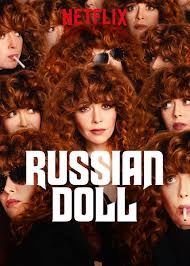
Russian Doll
Really? Connection? The Netflix comedy-drama created by Natasha Lyonne (who also stars), Amy Poehler, and Lesyle Headland, is about many things. We’ll allow you to debate that endlessly. But we think this twisted Groundhog Day-style series — where Nadia keeps reliving the day that she heads to an NYC party to celebrate her 36th birthday and dies, in various ways, again and again — is about figuring out that people bit. At its heart, its about learning that not being alone in life is maybe enough to solve even the most mysterious of problems.
“In the ‘60s, you would see people dropping like flies at 27 and you felt, ‘Oh that must be a drug thing. But as you move into modern times, we’re realizing that it’s very adult and very accomplished people who find that life is simply too much to bear. That’s a very real thing that we need to remove a cloak of shame around. I think we need to be discussing freely and openly the underlying brokenness of the human experience.”
How to Human has become one of our default listens with its raw, open questioning, as much of host Sam Lamott as his guests. Sam is not afraid to face his past, and his present struggles, publicly and sincerely, and he’ll admit to feeling kind of afraid or crap or lost as he does so. That’s unusual in the highly polished storytelling of most of today’s podcasts. It’s an approach that has drawn in guests as wide-ranging as sometimes controversial lawyer Gloria Allred and wise person in the world Bryron Katie.
“If you believe what you see, you believe we look like our cherry-picked profile pictures we curate, that our life is the polished story we present. But our truth, our quirky, messy, actual human experience, is captivating and magnetic, because we see our true self in the story.”

We want to tell you that everything we learned about people we learned from listening to Terry Gross interview everybody of note, ever. But we didn’t. Though we did feel smarter and more understanding after listening to her conversations. Gross somehow doesn’t push her guests to reveal too much, but she does somehow sensitively and expertly allow for their vulnerability and for them as real people to show up, whether that’s Phoebe Waller-Bridge or Zadie Smith.
“I also often ask my guests about what they consider to be their invisible weaknesses and shortcomings. I do this because these are the characteristics that define us no less than our strengths. What we feel sets us apart from other people is often the thing that shapes us as individuals. This may be especially true of writers and actors, many of whom first started to develop their observational skills as a result of being sidelined from typical childhood or adolescent activities because of an infirmity or a feeling of not fitting in. Or so I’ve come to believe from talking to so many writers and actors over the years.”

We don’t believe in must-reads (who has the time) only loved-reads, and we’d add the literary magazine American Chordata into that pile. Fiction, non-fiction, poetry, art and photography approached with a beautiful design sensibility and brave emotional tenor. Make this your company for a while and it will be interesting company at that. This is a magazine that captures the ‘plurality of human experience.’
“We want to be a really good literary and arts magazine that celebrates sophisticated design and earnest expression on the same page… What interests us most is work that’s new but not smug, that’s brave enough to give us emotional detail and skilful enough to do it without melodrama.”

LOST IN TRANSLATION
We still go back to this movie, which to us defines a certain innocence of its stars Bill Murray and Scarlett Johansson, and of our times, when just hanging out in Tokyo and finding oneself and someone else to brush against seemed enough. Because what really happens here? Two people hang out, slight confused but content to be seen for a while as they are, maybe falling in love, maybe just holding each other for a while in time and space outside of their regular lives. Plus that karaoke scene?
“More than this, you know there’s nothing. More than this, just tell me one thing.”

Susan O’Malley was a SF-based artist who used the materials of our human connectedness to create meaningful works that engaged and inspired. This book centers on a single question — ‘What advice would your 80-year old self give to you?’ — that O’Malley asked people aged 7 to 88. Turns out you should listen to that voice. There are wise words to be heard from your future self if you listen.
“In every conversation I’ve had for this project, I’m reminded how we all are looking for similar things in our lives: meaning, security, happiness, community, and love. Your heart has reasons your head does not know; love is everywhere, look for it; do the things that matter to your heart. The words of others often express what I’m thinking but haven’t yet found words for. It’s these moments of hearing what I recognize that makes me feel alive, connected and understood. Yes, we are all in this together.’”

Amanda’s playlist for connection over on spotify. Listen to this if you don’t want to see people, or want to be inspired to be around them again! Either works.
Let us know what we’re missing, what you’d add and what you turn to when in need of more connection in your life. One note, this is not a list of everything ever written on the subject. Its our take, from what we’ve been consuming over the last few months. Its our prescription for your life for where we are, and you might be, right now. Enjoy!

Magalleria
At a time when we’re driven more and more into the informational world of our phones, Bath’s Magalleria stakes physical/ actual space for the recent resurgence of independent magazines.
“Welcome to Magazine Heaven.”
At a time when we’re driven more and more into the informational world of our phones, Magalleria stakes physical/ actual space for the recent resurgence of independent magazines. It goes way beyond the newsagents of old with their chocolate buttons and Hello magazines, and that High Street staple W.H. Smith, that feels like it has everything but misses so much.
Since the storefront opened in 2015, owners Daniel McCabe and Susan Greenwood have refined their truly global selection of fine, independent and specialist mags that you’d probably need expensive subscriptions to even get your hands on. Plus there are mags here you’ve never heard of and want to, as well as exclusives to this store only. They’ve created one of the few places where anybody can get access to this kind of printed material:
“When we started planning Magalleria we found there wasn’t any ‘world of magazines’ the ordinary consumer could simply enter. Sure, there were seductive looking magazines draped around numerous halls and galleries across the internet that proved not to be real places but facades for vague, non-accessible or defunct commercial entities.”
Don’t worry about feeling overwhelmed when you first walk in. They will happily help you find what you are looking for. When I visited, I was looking for something specific. Any magazines that were doing interesting things in the mental health space. And they had those in piles with all the paper-based and perfectly bound perspectives that I had been searching out: Doll Hospital, frankie, Oh Comely and Flow. I also picked up Good Trouble, The Idler, The Happy Reader and Another Escape. I would have picked up more, but I had a baggage allowance to think about.
Magazines are not just to adorn your coffee table. They are for life, deeply embedded into who we are and who we might be. There’s therapeutic value in finding your publication of choice and finding yourself, your interests, your world, amongst its pages.
If you are not in the UK, you can order online but as we’re all about feet on the ground, if you are anywhere near Bath, get yourself here.
To learn more: www.magalleria.co.uk / twitter @MagalleriaBath / Facebook @Magalleria / Insta @MagalleriaBath