
How Japanese Spirituality Can Help Us Feel Less Lost
What Japanese spirituality can teach us about wellbeing, grief and uncertainty from everyday rituals and noticing beauty to finding comfort in living between belief and doubt.
The park was the same one Hiroko Yoda had walked through countless times before. Same paths. Same trees. Same shrine tucked quietly amongst the landscape. But after her mother died, she could barely see any of it. She describes walking with her head down, shuffling through the park and back home again, where she would cry. Then repeat it the next day. And the next. Until one day she looked up.
She noticed the birds first. Then the maple trees. The shifting light through the leaves. A shrine she must have passed hundreds of times before. And in that moment, something changed. Not because her grief disappeared or because she suddenly understood everything about life or death or spirituality, but because she no longer felt entirely alone inside the world.
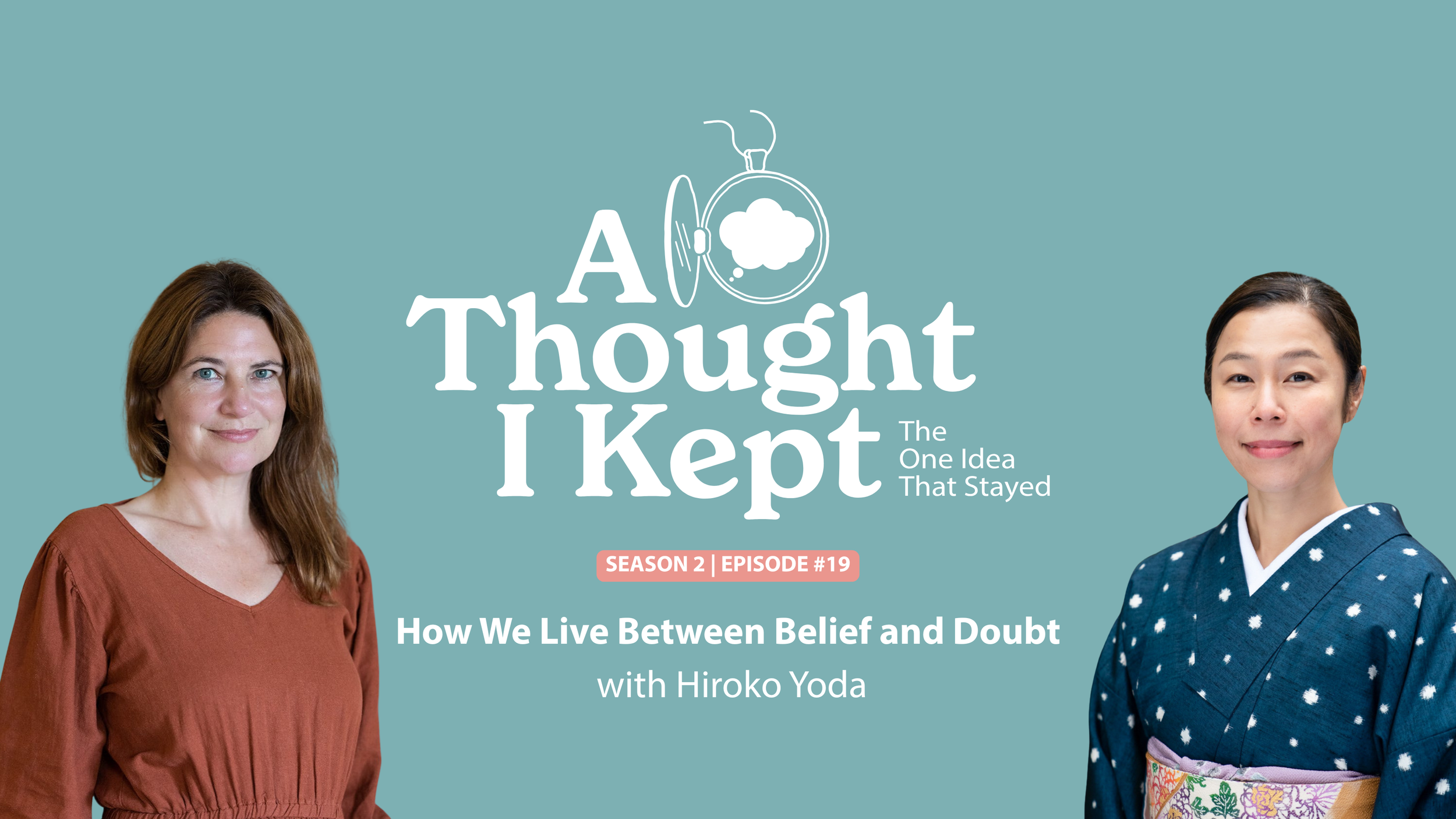
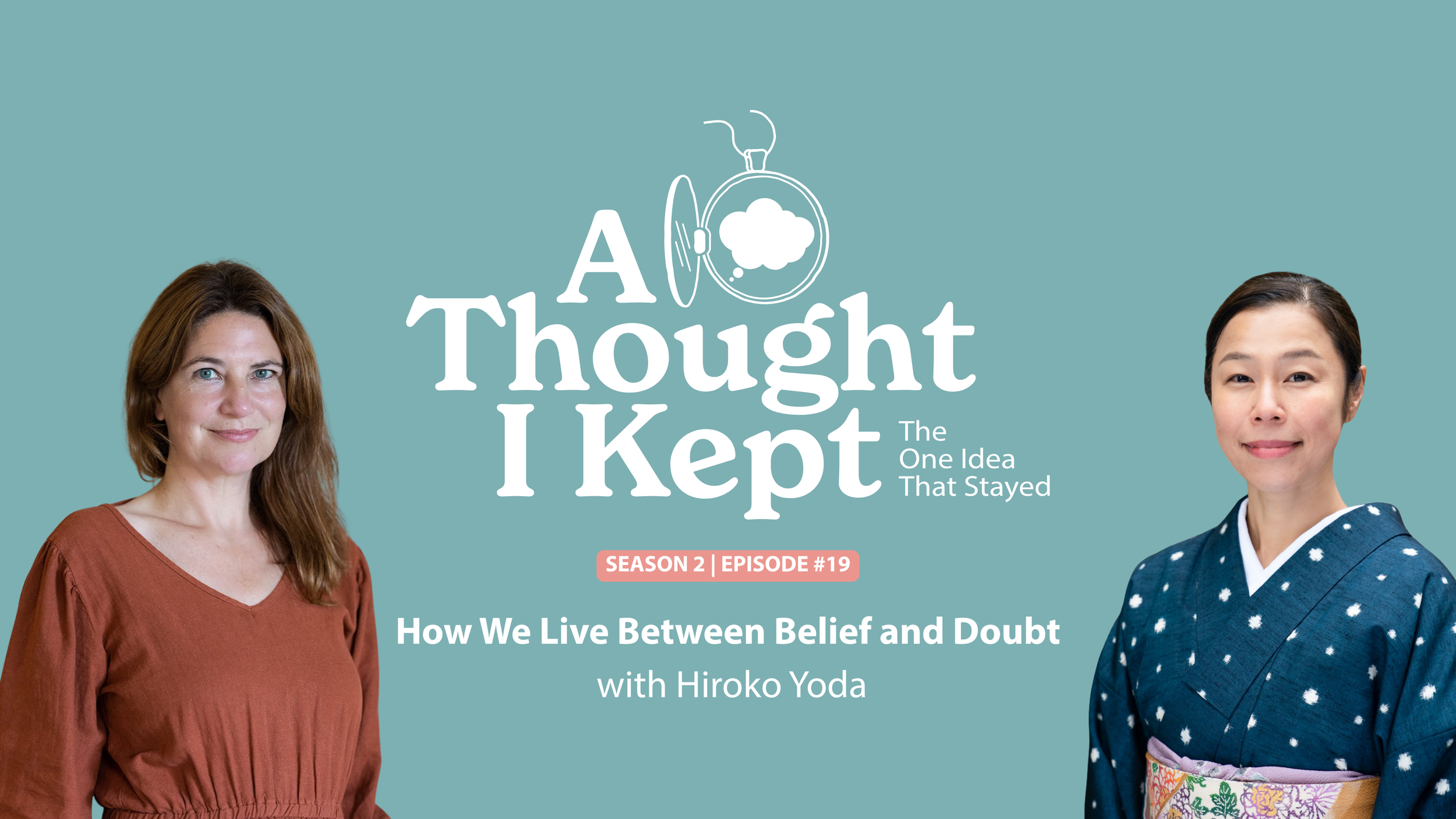
I haven’t stopped thinking about that since we recorded our conversation for A Thought I Kept.
Partly because I think many of us know what it is to move through life with our heads down. To become so overwhelmed by grief, anxiety, burnout, uncertainty or simply the sheer weight of being human that the world narrows around us. Our lives become logistical. Functional. We focus on getting through the day, answering messages, making dinner, remembering appointments. We stop noticing what is around us because we are working so hard to hold ourselves together within it.
And yet so much of what Hiroko shared in our conversation was about exactly that: noticing.
Noticing what remains. Noticing what connects us. Noticing the things that quietly hold us when we feel lost.
Her book, Eight Million Ways to Happiness, explores Japanese spirituality not as a rigid belief system but as something lived alongside everyday life. Something woven into nature, rituals, food, language, grief, playfulness and community. In Japanese spirituality, kami — spiritual presences — exist not just in shrines or sacred spaces, but in trees, rivers, mountains, words, objects and everyday acts of care.
I think what struck me most was how different this felt from the way spirituality is often discussed in wellbeing spaces. So much modern wellbeing culture seems obsessed with certainty. Morning routines that promise transformation. Manifesting practices that suggest we can think ourselves into a better life. The pressure to optimise, improve, transcend.
But Hiroko kept returning to something much softer and more spacious than that.
The Japanese idea of hanshin hangi — half belief, half doubt. The permission to remain somewhere in the grey zone. To not fully know. To allow uncertainty to exist without rushing to resolve it.
Honestly, it felt like a relief.
Because I suspect many of us already live there, whether we admit it or not.
We carry objects that mean more to us than they logically should. We talk to people we’ve lost. We feel calmer by the sea. We light candles. We keep rituals we cannot entirely explain. We sense that some places hold energy. We wonder whether there might be more to life than what we can immediately see or prove.
And then, often, we dismiss ourselves. We tell ourselves we’re being silly. Irrational. Dramatic.
What I loved about Hiroko’s perspective was that it made space for both curiosity and scepticism. Both wonder and uncertainty. Both grief and joy.
At one point in the conversation she talks about eating a banana at breakfast and saying itadakimasu beforehand — “I humbly receive.” And suddenly the banana stops being just a banana. It becomes the people who grew it, transported it, stocked it, bought it. It becomes weather and soil and labour and unseen connection.
That stayed with me because I think many of us are searching for meaning whilst overlooking the small moments where meaning already exists.
Noticing can become a kind of spiritual practice.
Making coffee in the morning. Opening the curtains. Walking the dog. Watering plants. Speaking kindly. Taking the long route home. Sitting quietly before the rest of the house wakes up.
Not because these things solve our lives, but because they return us to relationship with them.
And perhaps that matters especially when we feel lost.
Often when we feel uncertain, we assume we need dramatic change. A new version of ourselves. A breakthrough. A complete reinvention. But sometimes what we actually need is a gentler way of relating to where we already are.
Hiroko spoke beautifully about how Japanese spirituality allows opposites to coexist. Joy and sadness. Gratitude and anger. Light and darkness. She talked about how grief changed shape over time, how writing about her mother softened certain memories and complicated others, how healing was not neat or linear but layered.
I think there’s comfort in that too.
Because many people arrive at wellbeing feeling as though they are failing at it. Failing at being positive enough, resilient enough, healed enough, grateful enough. But perhaps wellbeing is not about eliminating darkness or uncertainty. Perhaps it is about learning how to stay connected to ourselves and the world around us whilst those things exist.
To look up occasionally, even when life feels heavy.
To notice the shrine amongst the trees.
To let a cup of coffee become a moment of connection rather than simply fuel.
To allow for half belief and half doubt.
If this resonates with you, you might enjoy my conversation with Hiroko Yoda on A Thought I Kept. We talk about grief, spirituality, uncertainty, belonging, rituals and the unseen threads that connect us to each other and the world around us.
And if you’re navigating your own season of uncertainty or emotional overwhelm, you can also explore coaching and support through If Lost Start Here. Not to fix yourself or become someone new, but simply to have somewhere to think things through more honestly and openly.

Moving Gently Beyond “Fine”
“I’m fine” can hide what we’re really feeling. Learn gentle, practical ways to understand your emotions, reconnect with your body, and express what’s true without overwhelm.

You’re replying to a message. “How are you?” they’ve asked, and your thumbs hover for a moment before typing, “I’m fine, how are you?” It’s already sent before you’ve really checked in. You notice it though, that slight pause afterwards, that sense that something more could have been said, but didn’t quite make it into words.
This is often how “fine” works. Not as a deliberate decision, but as a well-practised reflex. And once you start noticing it, it can be hard to unsee. Not because it’s wrong, but because you can feel both sides of it — what it’s doing for you, and what it might be costing you.
So the work isn’t to stop saying “fine.” It’s to start relating to it differently. Instead of treating it as something to correct, you can begin by treating it as information. A question, asked internally: what is “fine” doing for me right now?
Sometimes it’s protecting you from a conversation you don’t have the energy for. Sometimes it’s holding together a version of yourself that still feels important. Sometimes it’s simply buying you time — a way of saying, not now. And alongside that, another question can sit gently beside it:
What would become more complicated if I wasn’t fine?
Because that’s often where the truth lives — in the complication. The conversation you might have to have. The need you might have to express. The change you might have to consider.
You don’t have to go there all at once. Often, the smallest shift is enough. Instead of replacing “fine” entirely, you can add a little more specificity, a little more truth, while keeping the safety that “fine” was giving you.
It might sound like:
“I’m okay, but I’m carrying quite a lot.”
“I’m functioning, but I feel a bit tender.”
“I’m not in crisis, but I’m not feeling great.”
“I’m managing, but I could use some support.”
Or even more simply, noticing where “fine” is and isn’t true:
Fine at work, not fine at home.
Fine in the morning, not fine at night.
Fine physically, not fine emotionally.
These are small translations, but they begin to reconnect you with what’s actually there. And often, the quickest way into that isn’t through language, but through the body. A moment of pausing. A hand resting somewhere steady — your chest, your stomach. A question that doesn’t require explanation:
What’s here?
Tight. Heavy. Buzzing. Numb.
And alongside it, perhaps, a need:
Rest. Space. Reassurance. Warmth.
Even this — just naming a sensation and a need — can begin to shift “fine” into something more alive.
Because underneath “fine” there’s often a mix of feelings that don’t always separate themselves neatly. Grief that hasn’t had time. Anger that hasn’t had space. Fear about what might change. Longing for something more spacious, more connected, more yours.
You don’t have to untangle all of it. You can start with the smallest true thing.
And alongside that, you can begin to make small repairs — not dramatic changes, but deliberate acts that meet you where you are.
A short walk outside.
Water and something nourishing before the next coffee.
A message to someone safe saying I’m not great today.
A boundary you’ve been circling but haven’t yet set.
Because often “FINE” — the version that feels tight and effortful — comes from cumulative depletion.
You can cope, but you can’t receive.
You’re productive, but not nourished.
You’re calm on the outside, but internally braced.
A helpful shorthand can be:
Healthy fine = I’m okay, and I’m connected.
FINE = I’m okay, and I’m disconnected.
And the movement between those two states isn’t dramatic. It’s made up of small moments of noticing, naming, and meeting yourself a little more honestly. Not all at once. Just enough to feel the difference.
Healthy “fine” (when you’re genuinely okay)
Stable mood most days.
Problems feel solvable; you can ask for help.
You have access to pleasure, rest, and connection.
Your “yes” and “no” feel real.
You feel present in your life (even if tired).
Unhealthy “FINE” (a kind of functional numbness)
You can cope, but you can’t receive.
You’re productive, but not nourished.
You’re calm on the outside, but internally braced.
You’re “fine” because you’ve stopped expecting support.
Your life is organized around avoiding collapse.
If you’re ready to move beyond “fine,” even just a little, having someone alongside you can make that feel safer and more possible.
Coaching offers a space to find the words, reconnect with what’s going on beneath the surface, and take small, steady steps towards something that feels more like you.
You can start with a free call and see if it feels like the right kind of support.

What “I’m Fine” Really Means
We say “I’m fine” every day—but what’s really behind it? Explore how emotional numbing, people-pleasing, and hidden feelings shape this common response, and what it might be protecting.

You’re standing in the kitchen, phone wedged between your shoulder and ear, stirring something that doesn’t need stirring quite so vigorously. Someone asks how you are — a colleague or a friend, or maybe it’s your partner calling from another room — and you answer without thinking, “I’m fine.” The words arrive quickly, almost before the question has fully landed. You keep moving. There’s dinner to finish, emails to send, a message you haven’t replied to yet. Nothing stops.
That “fine” didn’t come from checking in. It came from knowing what’s easiest. What keeps things smooth. What doesn’t require you to explain why you’ve been waking at 3am, or why that small comment earlier stayed with you longer than it should, or why you feel both exhausted and strangely wired at the same time.
“I’m fine” is often less a feeling and more a kind of agreement. A socially acceptable, low-friction answer that says: please don’t ask more right now.
And in that sense, it works beautifully. It protects relationships, keeps conversations moving, and allows you to stay in the role you know how to play — the capable one, the calm one, the one who can handle things. But when you stay with it a little longer, “fine” starts to reveal itself as something more layered.
It can be a survival strategy — a way of minimising your needs, your visibility, your inconvenience to others. A way of keeping everything steady, even if it means gradually stepping away from yourself.
It can be a kind of freeze state — not falling apart, but not fully alive either. You’re functioning, showing up, doing what needs to be done, but there’s a slight distance from what you feel. A flattening. A sense that you’re operating without full access to yourself.
And often, it’s a negotiation. Between what you can handle, what you are handling, and what you’re not quite letting yourself admit you’re handling.
Because there’s usually something underneath it.
“Fine” can sit over disconnection — from your body, your emotions, your desires, your fatigue, your anger, your grief. It can sit over roles you’ve come to inhabit so fully they feel indistinguishable from who you are: the caretaker, the peacekeeper, the high performer, the low-maintenance one, the strong friend.
If you wanted a shorthand for it, you could think of “FINE” as an internal status message:
System running on emergency power.
You’re neither broken nor in crisis. But you’re also not resourced enough to feel, to pause, to shift.
Fine shows up for good reasons. It protects your place in relationships, where being “too much” might feel risky. It protects identity, especially if you’ve been the one who copes, the one who gets things done. It protects you from truths that feel too big to open all at once — grief, loneliness, resentment, the ever louder question of whether something needs to change. It even protects your nervous system, when things have been too much for too long, and numbness feels safer than overwhelm.
So “fine” isn’t something to dismantle or push past. It’s something to understand. Because from the outside, it can look like everything is working — calm, organised, capable. But inside, it can feel like holding everything in place at once, a subtle bracing that never quite releases.
And that’s where a different kind of question becomes useful.
Not: Is this true? But: What is this doing for me?
Because when you start to see “fine” as information rather than a fixed state, it opens up something else.
A little more awareness. A little more choice. A little more room to move.
How to recognize FINE
The emotional / mental kind
You say “fine” quickly and automatically.
You minimize: “It’s not a big deal,” “Other people have it worse.”
You feel flat, bored, cynical, or strangely blank.
You feel easily irritated—like the smallest thing is too much.
You can’t access desire (“I don’t know what I want”).
The physical kind
Tension in jaw/neck/shoulders, shallow breath, clenched belly.
Exhaustion that sleep doesn’t fix.
“Wired but tired,” or heavy/foggy.
Frequent headaches, gut issues, inflammation flare-ups.
The behavioral kind
Over-functioning: fixing, managing, planning, caretaking.
Under-functioning in private: scrolling, zoning out, procrastination.
Increased people-pleasing or emotional withdrawal.
You stop initiating joy: hobbies, intimacy, creativity, movement.
If reading this has made you pause and wonder what might sit underneath your own “I’m fine,” you don’t have to figure that out alone.
In emotions coaching, we create space to gently explore what’s there — at your pace, in your own words — so you can begin to understand what you’re feeling and what you might need.
Start with a free discovery call and see what support could look like for you.
When Grief Changes You But Doesn’t Define You: Finding Your Way Through Loss
Feeling lost after grief or life changes? Explore how loss can change you without defining you, and find a steadier way to navigate difficult emotions and feeling lost.
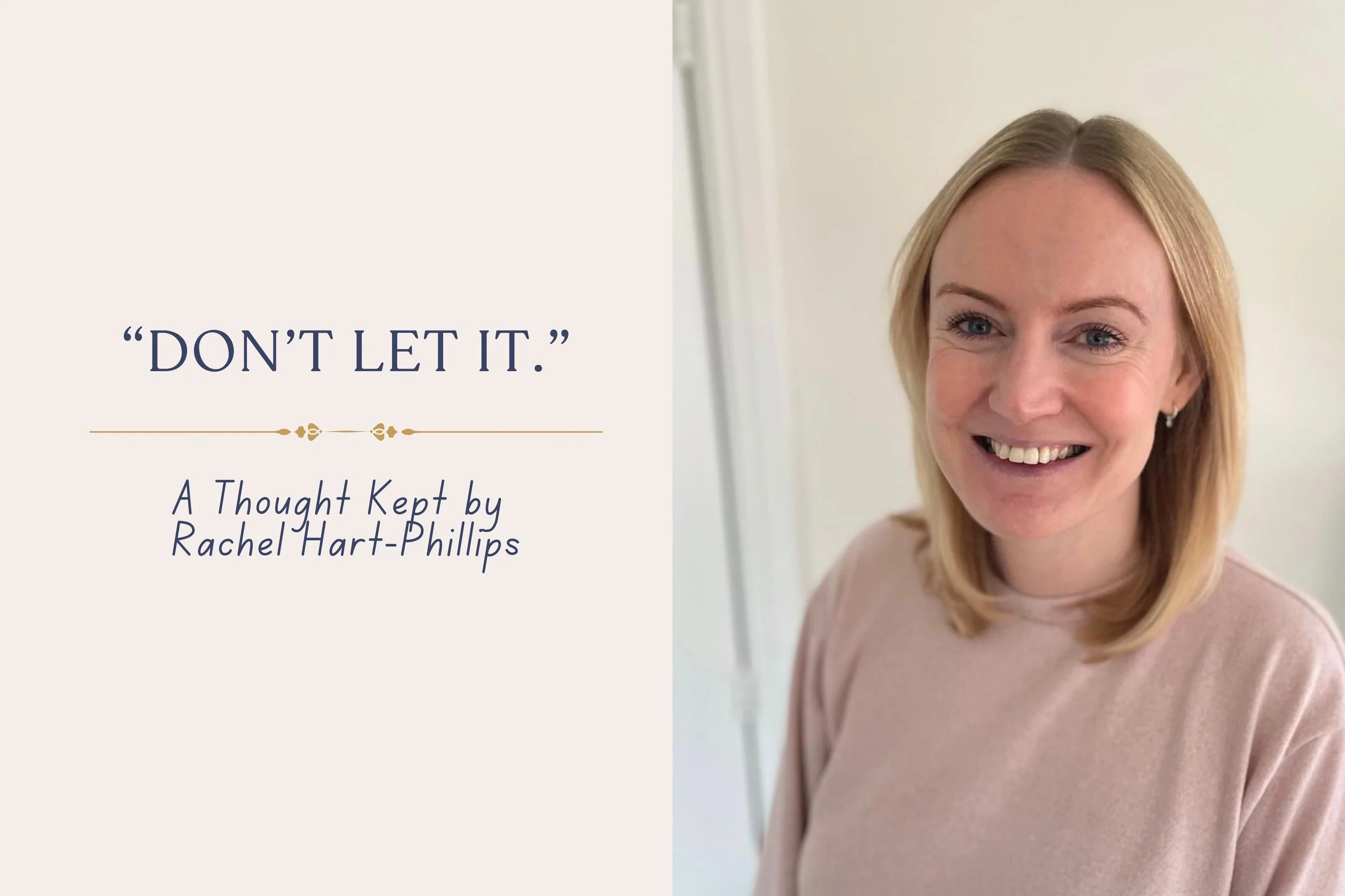
Rachel Hart-Phillips is in the car, driving away from the hospital mortuary. It is one of those days that feels almost impossible to hold — the kind where everything is too much, too raw, too real. She has just seen her husband. The future she thought she had is no longer there. And alongside the shock and the grief, there is another feeling beginning to take shape.
Fear.
Not just of what has happened, but of what it might mean. That this could be the thing that defines her. That from this moment on, she might always be “the person this happened to.” That her life might narrow around this one experience, this one loss, this one story.
She says it out loud to the friend driving her home. And he responds, simply and almost casually, “don’t let it.”
It isn’t a solution. It isn’t even something she can fully take in at the time. How could you, in the middle of something so overwhelming? But she keeps it. She carries it with her, even when it feels impossible to believe. And over time, it becomes something she can return to. Not as an instruction to be okay, but as a way of orienting herself inside something that has changed everything.
There is something in that moment that many of us will recognise, even if our circumstances are different. That quiet, often unspoken fear that the hardest thing we go through might become the thing that defines us. It might not be grief. It might be anxiety, burnout, a loss of confidence, a period of feeling lost or stuck. But the shape of the fear is often the same. That this is who I am now. That this is how it will always be.
And yet, life is rarely that singular. It is not one thing, even when one thing feels overwhelming. What Rachel’s story holds, gently and without forcing it, is the idea that we can be shaped by what happens to us without being entirely defined by it.
This is not about dismissing the impact of what we go through. Loss does change us. Grief changes us. The experiences that stop us in our tracks — the ones that make us question who we are and how we go on — they leave their mark. Rachel speaks about the many emotions that came with her grief: sadness, of course, but also anger, guilt, fear, even moments of something like joy returning in unexpected ways And perhaps one of the hardest parts is that these emotions don’t arrive neatly. They don’t follow a clear path. They can feel contradictory, confusing, and sometimes even shameful.
We are not always given space to experience that fully. There is often a subtle pressure, from the world around us and from within, to be strong, to hold it together, to find a way through as quickly as possible. Rachel described being told she was strong after earlier loss, and how that became something she felt she had to live up to — as if showing her grief might mean she was doing it wrong But over time, she came to understand that strength, in this context, looks very different. It is not about holding everything in. It is about allowing what is there to be there.
This is a different kind of orientation to the one many of us are used to. Rather than asking “how do I fix this?” or “how do I stop feeling like this?”, it becomes something more like “how do I stay with this, without losing myself inside it?” It is slower. Less certain. But also, perhaps, more human.
Rachel spoke about grief as something that lives in the body, not just the mind. Something that needs to be felt and moved through, rather than thought away And that might look like very ordinary things. A walk. A song. A moment of crying that comes out of nowhere. A small flicker of light that catches you by surprise. None of these are solutions. But they are ways of staying connected to yourself, even as everything shifts.
There was something else in our conversation that stayed with me, and it sits alongside that original thought. The idea that when something hard happens, we don’t just struggle with what we’re feeling — we also struggle with how to be around each other. The not knowing what to say. The fear of getting it wrong. The way we can sometimes back away, even when we care deeply.
Rachel has built her work around this space — around helping us find words when words feel impossible. And what she returns to, again and again, is that it doesn’t need to be perfect. Often, it is the simplest expressions that matter most. A message. A card. A “I’m here.” A “love you.” Not to fix anything, but to sit alongside it.
Because when life becomes difficult, what we are often looking for is not a solution, but a sense of not being alone in it.
And maybe this is where that original thought — don’t let it — becomes something softer, something more spacious. Not a demand to overcome or to move on. But a quiet reminder that even when something changes you, it doesn’t have to take everything with it. There can still be other parts of you. Other moments. Other possibilities that sit alongside the hard.
Rachel speaks about the metaphor of a disco ball — something made up of broken pieces that still reflects light. Not in spite of what it’s been through, but because of how those pieces come together. It feels like a more honest image of how we live. Not perfectly put back together. Not untouched by what has happened. But still capable of reflecting something back into the world.
If you are in a moment where things feel uncertain, or heavy, or difficult to name, it might not be about finding a way to change yourself. It might be about staying close to yourself, even here. Allowing what is present to be present. And trusting, even if only a little, that there is more to you than the thing that has happened.
If this feels close to home, you can listen to the full conversation with Rachel on A Thought I Kept.
And if you’re looking for a steadier way to navigate what you’re feeling, or to find your footing again, you’re always welcome to explore the coaching and resources here at If Lost Start Here.
For now, perhaps just this thought to carry gently with you:
What is the thing you’re afraid might define you?
And what might it mean, in your own time, not to let it?

How to Approach Grief (When Life Doesn’t Stop for It)
Grief often arrives while life keeps going. A compassionate guide to understanding grief, honouring loss, and finding support while managing everyday responsibilities.
Grief has a way of arriving while everything else keeps going.
There are lunches to make, emails to answer, people who still need you. Bills still come. The world doesn’t pause, even when something inside you has fractured.
For many people—especially if this is your first experience of loss—grief can feel not only overwhelming, but disorienting. You might wonder: Am I doing this right? Why don’t I feel how I thought I would? How do I keep living a normal life while carrying this?
This is not a guide to “getting over” grief. It’s an invitation to approach it differently—with more space, less judgement, and a little more support for the reality of living a full life alongside loss.

Start by noticing what you believe about grief
If you’re able to, one gentle place to begin is here:
What do you believe about grief?
Do you see it as:
a natural process?
something dangerous or overwhelming?
a sign of weakness?
a way of honouring the person you’ve lost?
Most of us carry beliefs about grief long before we ever experience it ourselves. These beliefs shape how we meet our emotions. If grief feels frightening or “too much,” it’s often because we’ve been taught that it should overwhelm us—or that we should hurry it along.
There’s no right belief to hold. Simply noticing what you already think about grief can soften your relationship with it.
Make space for how you actually feel (not how you think you should)
Grief often comes with a quiet internal conflict.
There can be a gap between:
how you think you should feel
and
how you do feel
Cultural narratives, other people’s opinions, and unspoken expectations all seep in. You might feel pressure to be strong, to “cope well,” or to move forward. Or you might feel guilty if your grief doesn’t look dramatic enough.
Simply becoming aware of this disconnect can be relieving. You don’t need to correct your emotions. Letting them exist as they are—without comparison—creates more room to breathe.
Different people grieve in different directions
One idea that can ease a lot of judgement (both towards ourselves and others) is this:
Some people are past-focused in grief.
They need to remember, revisit, and keep a strong connection with the person who has died.
Others are future-focused.
Loss reminds them of life’s fragility, and they feel pulled to engage more fully with what’s ahead.
Neither response is better or more “correct.” This understanding can help loosen harsh labels we sometimes place on grief—wallowing, cold, insensitive, stuck. Often, we’re simply grieving in different directions.
Grief is solitary—and deeply relational
Grief can feel intensely lonely. And yet, it is strangely relational.
We carry expectations about how we want to be supported. Others carry assumptions about what “appropriate” grief looks like, or how long it should last. Sometimes people retreat because they don’t know what to say. Sometimes the person grieving pulls away because explaining feels exhausting.
And yet, the moments that often help most are small and connective:
someone saying, “Tell me about her.”
flowers arriving without explanation
a genuine “How are you?” that makes space for the real answer
Grief doesn’t disappear in company but it can feel lighter when it’s shared.
Seeing grief as a form of honouring
Over time, I came to see my own grief as a way of honouring the people I’d lost.
It kept me connected. It felt like I was still holding space for them in my life. That shift mattered. Instead of seeing grief as something to push away, I began to welcome it as a sign of love still present.
This reframing doesn’t remove pain but it can change how hostile grief feels.
You are not your grief
One of the hardest moments for me was realising how easily grief can become an identity.
“I am grief.”
“I am sadness.”
“I am regret.”
One of the core principles of emotions coaching helped here:
We are not our emotions.
“I am feeling sad”
“I am experiencing grief”
Those phrases create just enough distance to remember that grief is something you are in, not something you are. That space matters. It allows the emotion to move, rather than define you.
Joy and loss can exist together
Grief does not cancel joy.
After my mum died, there were moments when my family laughed together through tears. I’ve crumpled on the kitchen floor one moment, then found myself laughing at a story my daughter told me the next.
These moments are not a betrayal. Feeling love, gratitude, or even joy alongside grief doesn’t diminish loss—it reflects the complexity of being alive.
Two things can be true at once.
Practical ways to live alongside grief
Keep the connection in your own way
We all honour loss differently. My mum and I were readers. After she died, the most precious thing I received wasn’t jewellery—it was two bags of her books. Seeing where she’d folded down pages, the note she’d written inside the cover, felt like continuing a conversation.
Are there places, habits, words, or rituals you could revisit—or even begin—that keep a sense of connection alive?
Capture stories (if you can)
When someone dies, we often lose not only them, but their stories—and the stories of those who came before them. There’s a growing movement around recording life stories, wisdom, or memories in anticipation of loss. It can be comforting to have that continuity across generations.
Move your body
Walking became essential for me. Grief lives in the body, and movement helped me feel like I was doing something with the emotion. Walking side by side also made conversations easier—less intense than sitting face-to-face, more spacious.
Let awe support you
When my mum died, the emotion that steadied me most was awe.
Inspired by Dacher Keltner’s writing on awe and loss, I intentionally sought experiences that connected me to something larger than myself. For me, that meant museums—spaces that offered wonder, perspective, and a sense of being part of a much bigger story.
Awe can come from nature, big ideas, the night sky, acts of moral courage, or creativity. It doesn’t erase grief, but it can help meaning return, gently.
Find the people who understand
Grief doesn’t end when the funeral does.
If you can, find people who understand that. Check whether you have the support you need—and allow yourself to ask for help. We’re often taught to handle grief alone, but shared grief is lighter to carry.
How emotions coaching can help
Emotions coaching doesn’t try to fix grief or rush it away. Instead, it offers a space to:
explore what you’re feeling without judgement
understand your emotional patterns
create distance between you and the emotion
learn how to live a full life alongside loss
If you’re navigating grief for the first time—or finding that it’s touching every part of your life—coaching can help you feel less alone and more supported as you move through it.
If you’d like to explore this together, emotions coaching is here to support you.
You don’t need to have the right words. You just need a place where what you’re feeling makes sense.

Navigating Grief When It Doesn’t Look How You Thought It Would
Discover a gentler, more human way to navigate grief — especially when it doesn’t look the way you thought it would — with Georgina Jones, founder of The Grief Disco
What does grief look like?
If we’re honest, many of us have a picture in our minds. Tears. Silence. Perhaps someone wearing black, speaking softly, saying “I’m fine” when they’re clearly not. Or maybe someone who’s angry, messy, falling apart. We expect grief to look dramatic — or dignified — but either way, we expect to recognise it when it arrives.
So what happens when it doesn’t look the way we thought it would?
What happens when we’re grieving and we’re… still functioning? Still laughing? Still showing up for the school run? Or what if we can’t cry but know we’re holding something enormous inside?
And what if someone else is grieving and we misjudge them, because we think they should be more upset, or more together, or more like us?
That’s the quiet heartbreak of grief: not only the loss itself, but the confusion about how it’s “meant” to be.

In a recent episode of A Thought I Kept, I spoke to Georgina Jones, founder of The Grief Disco — a woman whose work lives at the intersection of grief, music, dance, and joy.
Her story challenged so much of what we think we know about grief. Georgina lost her son in 2023, and has experienced what many would describe as profound, unimaginable loss. And yet, she dances. She laughs. She connects. She creates spaces where people can cry and dance at the same time.
It’s not about ignoring grief or sugar-coating it. It’s about making space for the full spectrum of it — especially when it doesn’t come wrapped in the behaviours we’ve been taught to expect.
Georgina spoke about how grief lives in the body. That there are things music can unlock that words can’t reach. That sometimes we can be sobbing and laughing in the same breath. And that joy isn’t something that betrays grief — it’s something that supports it.
What struck me most was this: grief doesn’t always look the way we think. And that misunderstanding can create more pain, not just for the person grieving — but for those around them, too.
We’ve inherited a lot of strange stories about how we’re supposed to grieve.
We think:
Grief has “stages” (it doesn’t — it has cycles, spirals, waves).
It’s meant to be quiet and tearful — or explosive and visible.
There’s a right way to do it.
It’s only valid if someone has died.
It ends.
But grief is far more expansive than that. It can be:
The silent, confusing ache after a miscarriage no one knew about.
The slow unraveling of identity in a job or relationship loss.
The anticipatory grief of watching someone change before they’re gone.
The quiet guilt of feeling relief — and wondering what that says about you.
And crucially: grief doesn’t always look “sad”.
You might feel numb. Or angry. Or completely disconnected. Or wildly creative. You might crack jokes at a funeral, or scream into your pillow a year later when you least expect it. That’s grief too.
So how do we navigate grief — especially when it surprises us?
Here’s what I’m learning, from Georgina and others, and through the work I do in emotions coaching:
1. Let go of the script
There is no one way grief should look. There is only the way it shows up in you. That’s enough. And it’s valid — even if it makes no sense.
2. Name what’s true
Maybe you’re grieving someone still alive. Maybe you’re mourning a version of yourself. Maybe you feel like your grief isn’t “big enough” to count. It does count. Language helps. Start with small truths. “This is hard.” “I feel strange.” “I miss something I never really had.”
3. Move it through the body
Grief isn’t just cognitive — it’s visceral. Breath, movement, music, crying, stillness — these aren’t indulgences. They’re how your body integrates the experience. As Georgina said, “We are so heady. But there is so much knowledge in the body.”
4. Let joy have a seat at the table
Joy doesn’t replace grief. It companions it. Finding joy again isn’t a betrayal of your sadness — it’s part of what sustains you. You’re allowed to laugh. To sing. To dance. Even while you’re broken-hearted.
5. Ask for support from someone who gets it
You don’t have to figure this out alone. Talking to someone trained in emotional literacy, regulation, and compassionate witnessing can help you feel seen — especially when your grief doesn’t look “typical.” That’s what emotions coaching is for.
Grief doesn’t come with a rulebook. But it can come with support.
If this resonates with you — if your grief feels different, or hard to name, or hard to carry — I’d love to invite you to:
Georgina shares her story of loss, joy, dancing through grief, and why your energy — even in the darkest moments — is your currency.
If you’re navigating something tender, tangled, or hard to name — this is the space for you. Emotions coaching is not about fixing you. It’s about helping you meet what’s here with more understanding, care, and clarity.
You don’t have to go it alone.
And your grief doesn’t have to look like anyone else’s.

Grieving the Self You Haven’t Met Yet
How identity loss and emotional burnout are connected to the quiet grief in midlife — and how to reconnect with the version of you that’s still waiting to be seen.
There’s a grief no one really prepares you for. It doesn’t come after a loss you can name. It doesn’t have rituals or casseroles or sympathy cards. No one asks how you’re doing, because, on the surface, everything looks fine. But inside, you know something’s missing. Something quiet. Something tender. Something hard to articulate.
It’s the grief of the self you haven’t met yet.
The version of you that never had enough space to fully arrive. The one who got set aside while you held everything together for everyone else. The one who existed in flickers — in daydreams, in glimpses, in brief moments before someone needed something again.
Maybe you’ve felt her before — in the quiet that rises when you’re alone for a rare hour, or the sudden ache that comes when someone asks, what do you want for yourself?
Maybe you’ve spent years being who you needed to be — for your family, your work, your roles, your responsibilities — and somewhere along the way, forgot how to hear the parts of you that weren’t being asked for.
Maybe it’s only now, in midlife, that you’re beginning to notice the gap. The ache for a version of yourself you never fully became. The unspoken longing for the life you didn’t live — not because you weren’t capable, but because you were busy surviving. And that ache… it’s grief. Quiet, invisible, valid grief.
Not because something went wrong. But because you’re human. And somewhere deep inside, you’re still holding a hope for the woman you haven’t quite become yet — but still might.
We often talk about burnout like it’s purely exhaustion. But so often, it’s this:
Grief for the self who’s been muted. Hidden. Delayed. Postponed.
And the most painful part? You might not even be sure who she is. You just know you miss her. You miss feeling like yourself — even though you’re not sure what that means anymore. You miss desire — even though you don’t know what you want. You miss joy — even though you can’t quite remember how it felt. You miss being inside your own life, not just managing it.
And that’s not something for a quick fix or a rushed to-do list. That’s something only nurturing can touch. Only time. Only honesty.
So what do we do with this grief?
We don’t solve it. We honor it. We let it speak. We let ourselves write the letters we didn’t know we needed to write. We let our tiredness be a message, not a flaw.
We stop asking how to fix ourselves and start asking how to meet ourselves — here, in this middle part of life, where things are not broken, but simply asking for attention.
And in doing that, maybe we begin to create space — not to become someone new, but to finally become ourselves. The version of you that’s been waiting in the wings, quietly. Not perfect. Not fully formed. But real. Ready. Whole in her own unfinished way.
And that’s not the end of something.
It’s the beginning.

Our Midlife Coaching Sessions
If you’re wondering how to reconnect with yourself when you feel like you’ve forever lost your way, let’s talk.
Learn more about how our midlife coaching sessions can give you the time and space to hear yourself again.
Midlife can be a challenging time for women as we navigate through a multitude of changes.
As things – sometimes it feels like all the things – shift in this midpoint, so too does how we see ourselves, how we think about our lives, and how we consider what’s next. Discover how our midlife coaching sessions can help you.
If you’re not sure what you’re looking for or if this is for you, let’s talk.
Curious about how to reconnect with yourself more in midlife? Subscribe to our newsletter.


In midlife, “I’m fine” can mask burnout, hormonal shifts, and emotional overload. Explore why this response changes and how to reconnect with what you really need.