
Why Nothing Changes Even When You Try Everything: The Missing Role of Connection
Feeling stuck even after trying all the advice? This piece explores why real change often happens through connection, not more ideas, and how being with others can help you move forward.
Do you ever feel so frustratingly stuck? And it’s not because you haven’t tried things. If anything, you’ve tried a lot. You’ve read the books, listened to the podcasts, saved the quotes, maybe even written things down in a notebook with the hope that this time something might land. And for a moment, it does. Something resonates. Something makes sense. And then, somehow, nothing really changes.
You’re still in the same patterns. Still circling the same questions. Still feeling that low-level sense that something isn’t quite shifting in the way you hoped it might.
It can be easy, in those moments, to assume the problem is you. That you haven’t understood it properly. That you haven’t applied it well enough. That you need to try harder, or find the right framework, or finally come across the one idea that will make everything click into place.
But what if that’s not what’s missing?
In a recent episode of A Thought I Kept, I found myself returning to a simpler idea. That sometimes it isn’t another piece of insight we need. It’s other people.
Not in a dramatic or overwhelming way. Not in the sense of needing a whole new community or a complete change of life. But in the small, often overlooked ways that we are with each other. The conversations that go a little deeper than expected. The moments where someone really listens. The feeling of being alongside someone rather than trying to work it all out alone.
Because so much of what we are trying to understand about ourselves doesn’t fully emerge in isolation.
We can think about something for weeks, months even, and still feel unsure. And then, in the space of a single conversation, something becomes clearer. Not because the other person has the answer, but because they’ve asked a question we hadn’t considered. Or reflected something back to us that we couldn’t quite see on our own.
There’s something about being witnessed that changes the shape of things.
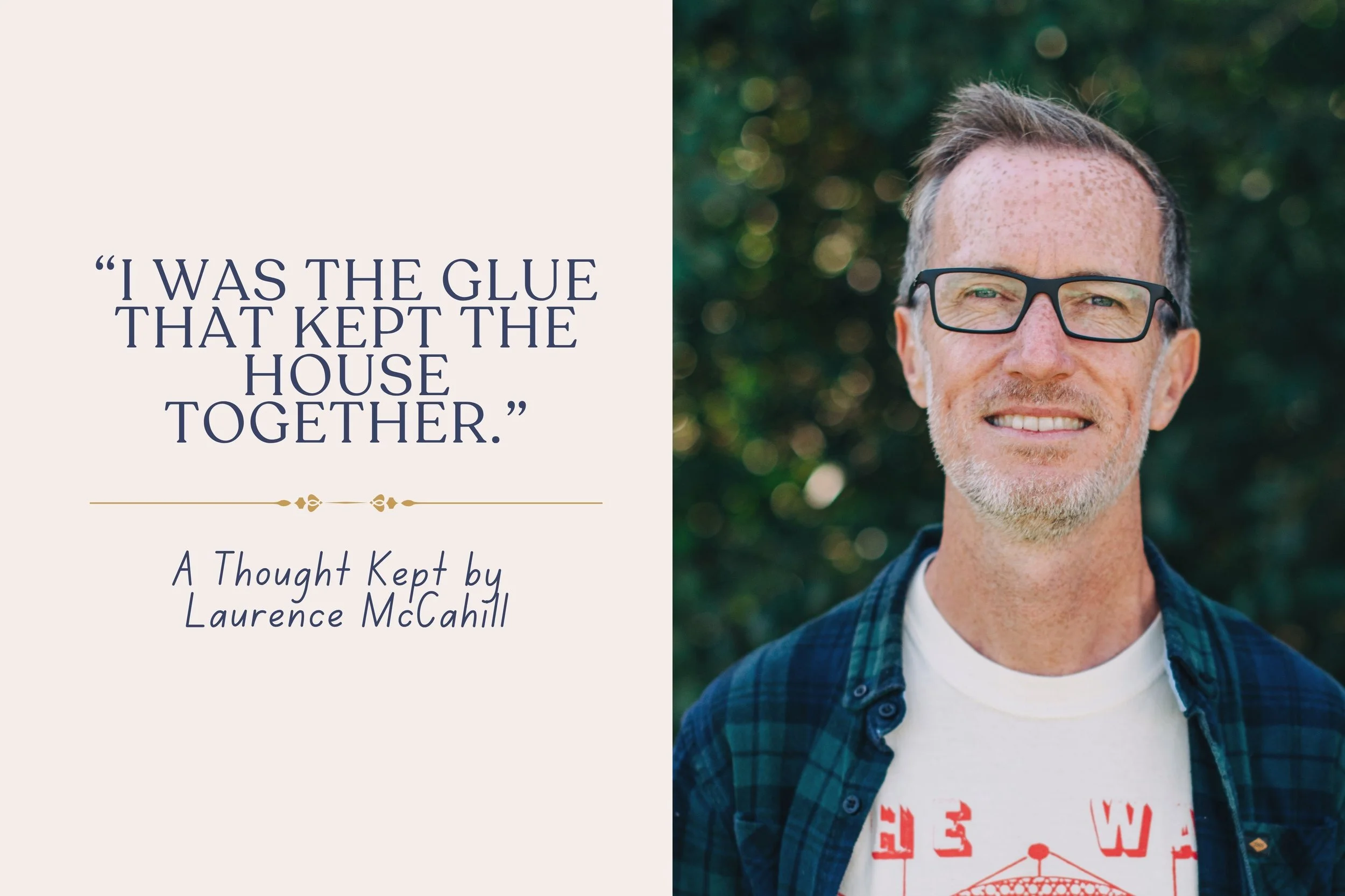
In my conversation with Laurence McCahill, we talked about the role he plays in bringing people together. A friend once told him that he was the glue in a group, the person who connected people who might not otherwise have found each other. It wasn’t something he had consciously set out to be. It was something he recognised in hindsight, something that had always been there.
And I think there’s something important in that too.
That the things that help us feel more connected, more ourselves, are often not the things we need to learn from scratch. They are the things that already exist in us, but only really come into focus in relationship with other people.
Listening. Noticing. Making space. Asking a question at the right moment. Sitting with someone without needing to fix what they’re going through.
These are not grand gestures. They are small, human ones. But they create the conditions for something else to happen. They create the conditions for change.
It also made me think about how much of modern life encourages us to do things on our own. To self-reflect alone. To improve alone. To figure things out internally before we share them with anyone else. Even our versions of connection can become structured or transactional. Networking rather than relating. Updating rather than opening up. And in all of that, we can lose something essential.
The in-between spaces where things unfold more naturally. The conversations that aren’t heading anywhere in particular. The moments where we’re not trying to get something out of the interaction, but simply being in it. Those are often the places where something shifts. Not because we’ve found a better answer, but because we’re no longer holding everything on our own.
If you’ve been feeling stuck, or like you’re circling the same thoughts without anything really changing, it might be worth gently asking a different question.
Not “what haven’t I figured out yet?” But “who might I need to be in conversation with?”
That might look like reaching out to someone you trust. Sitting with a friend a little longer than usual. Joining something where the intention is simply to be with other people, rather than to achieve or fix anything.
It might even be noticing where, in your own life, you are already the one who brings people together. The one who listens. The one who creates space for others. And considering what it would mean to allow that to be something you receive as well as give.
There isn’t a neat formula for this. And it won’t always feel comfortable, especially if you’re used to holding things on your own. But there is a different kind of steadiness that can come from it.
The kind that doesn’t come from having all the answers, but from not having to find them alone.
If this idea resonates, you might want to listen to the full conversation with Laurence on A Thought I Kept, where we explore connection, community, and what becomes possible when we do life together.
And if you’re looking for somewhere to begin, we’ve created a series of wellbeing prescriptions at If Lost Start Here that gently centre connection in everyday life. Not as another thing to get right, but as a way of finding your footing again, alongside other people.
The Day You Realise You’ve Been Living With Your Eyes Closed
Feeling lost, restless, or unsure about your career or direction? We explore more quiet life changes, self-trust, and how small moments of awareness can help you find clarity without reinventing who you are.
We tend to think confidence arrives fully formed. A clear decision. A bold move. A moment where everything clicks into place. But often it begins with something far less impressive.
It begins with discomfort that doesn’t quite have a name. A low hum of restlessness that follows you through meetings, through conversations, through evenings on the sofa. You might not be able to point to anything that’s broken. You might even feel slightly ungrateful for questioning it. And yet the question lingers.
Am I actually choosing this?
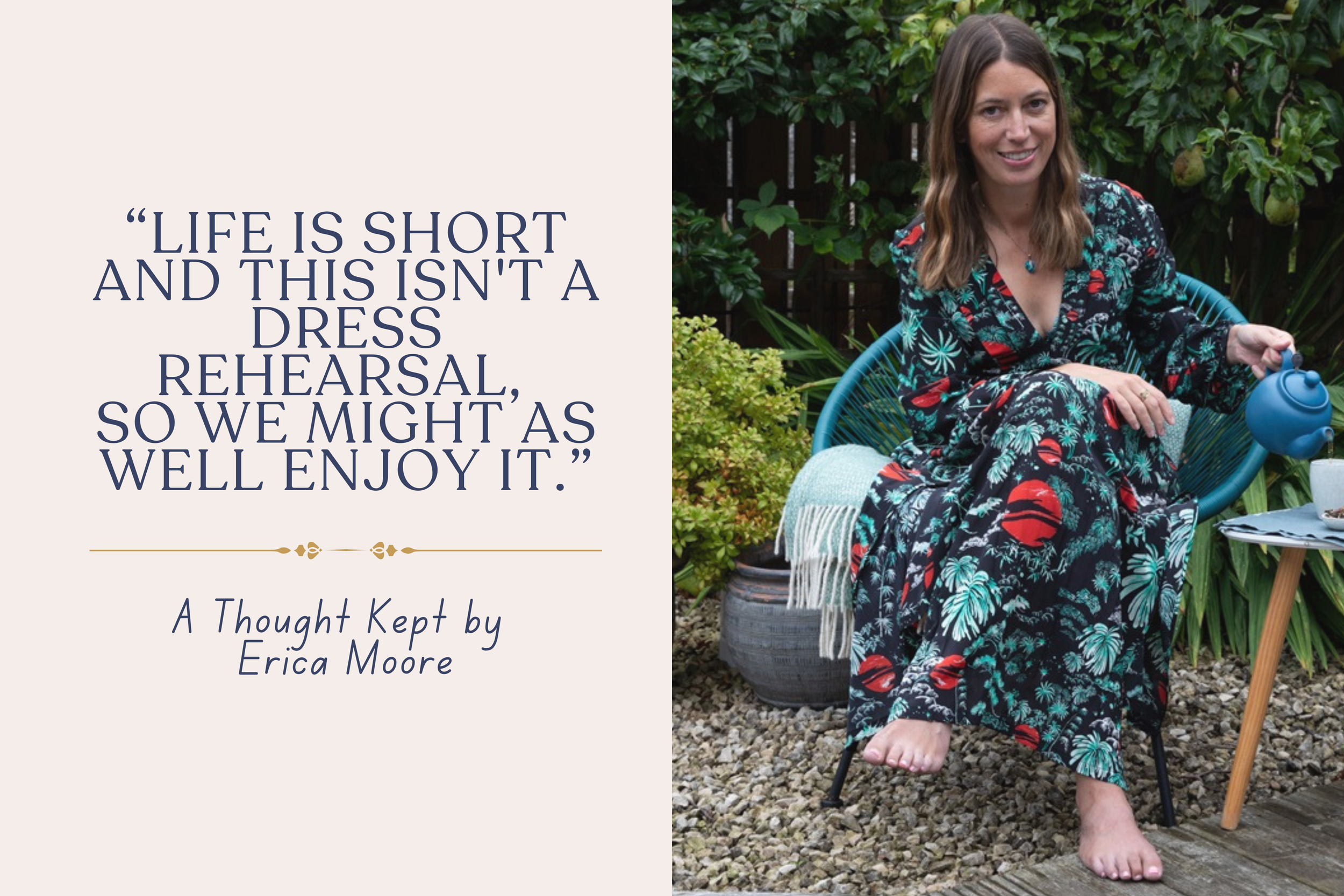
That was the pivot in my conversation with Erica Moore, founder of speciality tea brand eteaket on the podcast this week. Not a dramatic exit. Not a grand reinvention. Just a quiet noticing that she had been progressing through a life she hadn’t consciously shaped. She had been capable, competent, successful but not fully awake.
There’s something unsettling about realising you’ve been living slightly on autopilot. It can feel like you’ve missed something. Like you should have known sooner. But I don’t think that’s what’s happening.
I think sometimes we simply reach a point where the life that once fitted us begins to feel tight around the edges. We outgrow ways of coping. We outgrow expectations we once accepted without question. And because the outside world still sees us as “fine,” it can be hard to admit the internal shift.
This is often where people arrive here. Not because they want to become someone new. But because they want to feel more like themselves. And that’s a different thing entirely.
In the episode of the podcast, we talked about tea as a container — a small moment in the day where you can pause without having to justify it. I’ve been thinking about that a lot. How rare it is to have moments that aren’t productive, reactive, or outward-facing. How easy it is to move from task to task without ever checking whether the direction still feels right.
When you’re feeling lost, the instinct can be to find a bigger answer. A plan. A strategy. A reinvention.
But sometimes what’s needed is smaller. A little more space. A little more honesty. A little more willingness to sit with what’s true before deciding what to do about it.
Uncertainty doesn’t always mean something is wrong. It can mean something inside you is ready to be heard.
And the steadiness I come back to — in my own life and in coaching conversations — is this: you do not need to dismantle who you are in order to move forward. You do not need to be more disciplined, more confident, more impressive. You need to feel safe enough to notice.
When you allow yourself to notice what feels heavy, what feels enlivening, what feels misaligned, you begin to orient yourself again. Not through force. Through awareness. The work is not becoming someone else. It’s coming back to yourself, gently and repeatedly, until your choices begin to reflect who you actually are.
That’s not dramatic. It won’t make a good headline. But it does create a steadier life. And if you’re in that space right now — questioning quietly, searching for clarity, wanting change but not chaos — you are not behind. You are not broken. You may simply be opening your eyes.
You can listen to the full conversation with Erica on A Thought I Kept wherever you get your podcasts, and sit with the idea a little longer.
If you’re in a season of questioning or change and would value support as you find your way forward, our coaching sessions offer space for clarity, self-trust, and meaningful direction — at your pace.

When Change Feels Like Too Much (or Not Enough)
A note for anyone feeling a little lost, a little tired, or quietly done with being told to “just push through.”
Change has become a bit of a cultural obsession. We’re told to embrace it, manifest it, optimize it, and if nothing else, get ahead of it. But what if you’re not ready for change?
What if you don’t even know where to begin — or worse, you’re so tired that even thinking about beginning feels like too much?
What if your to-do list is buried under feelings you can’t quite name, and change feels like another thing you're supposed to “achieve”?
Change can be powerful, but a lot of the time, it just feels hard.
It can feel like you’re supposed to reinvent your life, quit your job, start journaling, meditate, heal your nervous system, launch something meaningful, and find inner peace… all before breakfast.

In this week’s episode of A Thought I Kept, I spoke with Eleanor Tweddell — author of Another Door Opens and someone who has spent years thinking about how we navigate the murky middle of change.
Not the TED Talk version. The real version. The one where you feel uncertain, messy, and nothing is falling neatly into place.
And we kept circling back to one idea that feels worth offering here:
You don’t have to make change happen.
Sometimes, the most powerful thing you can do is make space for it.
So what do you do when you feel…lost?
When you’re feeling lost, it’s tempting to look for a map. A mentor. A checklist.
But when you’ve lost your sense of direction, what you often need most is stillness, not movement.
Try this:
Sit with the question: “What do I know to be true about me today?” Even if the answer is small. Even if it’s “I’m tired,” or “I love my morning coffee.”
Take the pressure off needing big answers. Instead, track what gives you a spark of energy or a softening in your body. These are breadcrumbs that you can tentatively start to follow.
We don’t often start with clarity. Sometimes we arrive with better questions — and that’s enough.
What to do when you feel…burned out
When you’re burned out, everything feels like another task — even things that are meant to help you.
But change doesn’t have to be action. Sometimes, the bravest, most radical thing you can do is nothing.
Instead of asking: “What should I do next?”
Try asking: “What would it look like to stop trying so hard today?”
Then let yourself off the hook — completely.
Ideas to try:
Take a tech-free walk with no goal.
Cancel something that doesn’t matter as much as your wellbeing.
Let your brain idle — yes, even with a box set or a nap.
As Eleanor shared, the most productive thing she did on the launch day of her book was make coffee and sit in the sun. That was enough.
What to do when you feel…overwhelmed
Overwhelm is often less about how much we have to do, and more about how much we’re holding in our heads and hearts without release.
Your nervous system doesn’t need another productivity hack.
It needs a moment of exhale.
Try this 3-step reset:
Name it: “I feel overwhelmed because…”
List it: Brain-dump everything that’s buzzing in your mind. No filtering.
Choose ONE: What’s one thing you could do today that would make you feel 5% more in control?
And if even that’s too much?
You’re allowed to press pause. You’re allowed to say “not today” to change.
Sometimes, the most generous act is letting go of urgency.
What to do when you feel… disconnected
When we’re disconnected, it can feel like we’re moving through life on autopilot.
We say yes when we want to say no. We scroll instead of feeling. We forget what brings us joy.
This is where a values check-in can bring you back to yourself.
Ask: What actually matters to me right now — not what used to, not what “should”? Where in my life am I living out of alignment with that?
You don’t need to overhaul everything. Just start by noticing.
If you’re a Wellery Member, you’ll find our full Values Check-In exercise here
And if that’s too much today?
Do one small thing that feels like you — not your “best” self, not your productive self, just your real self.
Maybe that’s:
Cooking a meal you love, just for you
Putting on music and dancing in the kitchen
Saying no to something you don’t want to do
The first step doesn’t have to bring clarity. Sometimes it’s more about connection. And that often starts with listening inward again.
You’re not doing it wrong. You’re just in it.
Navigating change isn’t about always knowing the next step.
Sometimes, it’s about standing still long enough to hear yourself think.
And in this week’s episode, Eleanor Tweddell makes the case for something both radical and restorative:
“Always hold space for magic. ”
Even when you’re tired. Even when you’re uncertain. Even when you don’t believe in it yet.
Because sometimes, what’s next arrives when you stop trying so hard to find it.
Listen to the full episode:
If you’ve ever felt like the idea of change is just too much, you’re not alone.
In our 1:1 sessions and The Wellery community, we see this again and again:
Some people are stuck in jobs that no longer feel right, but can’t imagine where else to go.
Some are depleted from caring for others and don’t know how to care for themselves.
Others are done with self-development and just want to feel like themselves again.
So instead of forcing clarity or making a five-year plan, here’s a better question:
What if you’re not utterly lost — just in a moment of in-between?
And what if that space could be a beginning, not a failure?
Want more thoughtful support that fits with your real-life?
Join The Wellery for deeper reflections, journaling prompts, and tools to help you stay connected to yourself while navigating change.

Recognizing the Moment Change Arrives
Feeling stuck? Learn how to recognize when it's time to change, what to do next, and how to take small steps forward with clarity and confidence.
You might not notice it at first.
The pivot point of life isn’t always dramatic. It doesn’t always come as a bolt of lightning or a cinematic moment of clarity. Often, it’s quieter—a realization whispered in the stillness, a feeling that won’t let go, a sentence you catch yourself saying under your breath:
"Something has to shift."
Maybe it’s exhaustion from a situation you can’t tolerate anymore. Maybe it’s a spark of curiosity about what else could be possible. Maybe it’s simply that tiny flicker of okay—the moment you stop resisting and start allowing yourself to see a different way forward.
The question is: How do you recognize it? And what do you do when you do?
How to Know When Change is Calling for Your Attention
If you’re standing at the edge of something different but unsure if it’s time, consider these signs:
You feel restless, even when everything looks fine on the surface.
Your current life doesn’t quite fit anymore, like a sweater that has shrunk in the wash.
You keep circling the same thoughts, sensing that what worked before isn’t working now.
You find yourself drawn to new ideas, places, or people who reflect a version of yourself you haven't fully stepped into yet.
You hear yourself saying “I can’t do this anymore” or “There has to be another way.”
If any of this resonates, change might already be in motion—even if you can’t see the full picture yet.
What to Do When You Know It’s Time
Start Small:
The biggest misconception about change is that it has to be sudden or drastic. It doesn’t. Sometimes, the most profound shifts begin with one small step—a conversation, a decision, a quiet commitment to yourself.
Embrace Discomfort:
Change is rarely easy. The moment right before transformation often feels the most uncertain. But discomfort doesn’t mean you’re on the wrong path; it means you’re cultivating something new.
Get Clear on Your “Why”:
What are you moving toward? If the answer is “I don’t know yet,” that’s okay. Sometimes, all you need to know is what no longer fits. The clarity about what comes next will follow.
Reframe Setbacks:
Feeling stuck or taking a step backward doesn’t mean you’re failing. It means you’re learning. Every moment of hesitation or doubt is part of the process—it’s data, not defeat.
Surround Yourself with Support:
You don’t have to navigate change alone. The people, spaces, and resources around you influence your ability to step forward. Find those who help you move in the direction you want to go.
You Don’t Have to Have It All Figured Out—You Just Have to Begin
Here’s what we know:
The best time to change isn’t when you feel completely ready—it’s when you recognize the need for change.
Every significant transformation begins with a single decision to explore what’s next.
If you’re at that pivot point—standing at the threshold but unsure how to step through—we’re here to help.
Explore our coaching sessions.
This isn’t about forcing a transformation. It’s about clearing just a little more space—so you can finally see what might be ahead.