

Kelechnekoff Studio
A pole-dance studio that has diversity at its core that’s changing the shape of the wellness industry.
Nigerian-born Londoner Kelechi Okafor (recently named a Wellness Visionary to watch by Vogue) opened her pole-fitness and twerk studio space in 2016 to offer a more diverse space for women to get into their bodies and a more authentic approach to the dance styles that she teaches. Kelechnekoff Studio has since become a place of welcome to all, irrespective of body shape, ability, or background, restoring confidence to women who have been told one story of how they should look, and kindness in an industry that can seem anything but compassionate. Here the studio tells us more about their approach:
What is it? Kelechnekoff Studio is a pole dance studio in Peckham that offers classes of different levels, as well as classes in yoga, Wing Chun self defence, and handstands and flexibility.
Why do people need it? Kelechnekoff Studio is a place for all bodies to explore different types of fitness that have the power to make them feel sexy, powerful and confident. The space was started at a time when in the UK there were few fitness spaces that had inclusivity at their core and hardly any Black-owned pole dance studios.
What do you offer? The studio offers a range of pole dance classes — that include spinning pole, sexy pole, pole flow, pole dance inverts and climbs — from absolute beginners to intermediate levels. There are also sessions in Wing Chun self-defence, yoga flow, vinyasa yoga, and handstands and flexibility.
What makes it different? Our studio is based in the heart of Peckham and honours the origins of the dance styles we teach. Kindness and how people feel in their bodies are more important than appearance to us. We also strive to keep our classes as affordable as possible and create a caring community within our studio.
What do people need to know? We have classes every day of the week and even offer pole hire sessions for £5 during the week. In addition to this, you can buy a party package and have a pole dance or twerk party with us!
Tell us a little about your story: Our studio founder Kelechi Okafor is a trailblazer; she is an actress, personal trainer, pole instructor, director, author, and award-winning podcaster. Kelechi opened her studio in September 2016 to create a space for those who are often erased from mainstream fitness culture. These classes aim to nurture the relationship between mind and body and to be a safer space for people to enjoy fitness whilst exploring their sensuality with guidance and without judgment.
Kelechnekoff Studio Peckham
Sojourner Truth Centre
161 Sumner Road
London, SE15 6JL
Contact: info@kelechnekoff.com
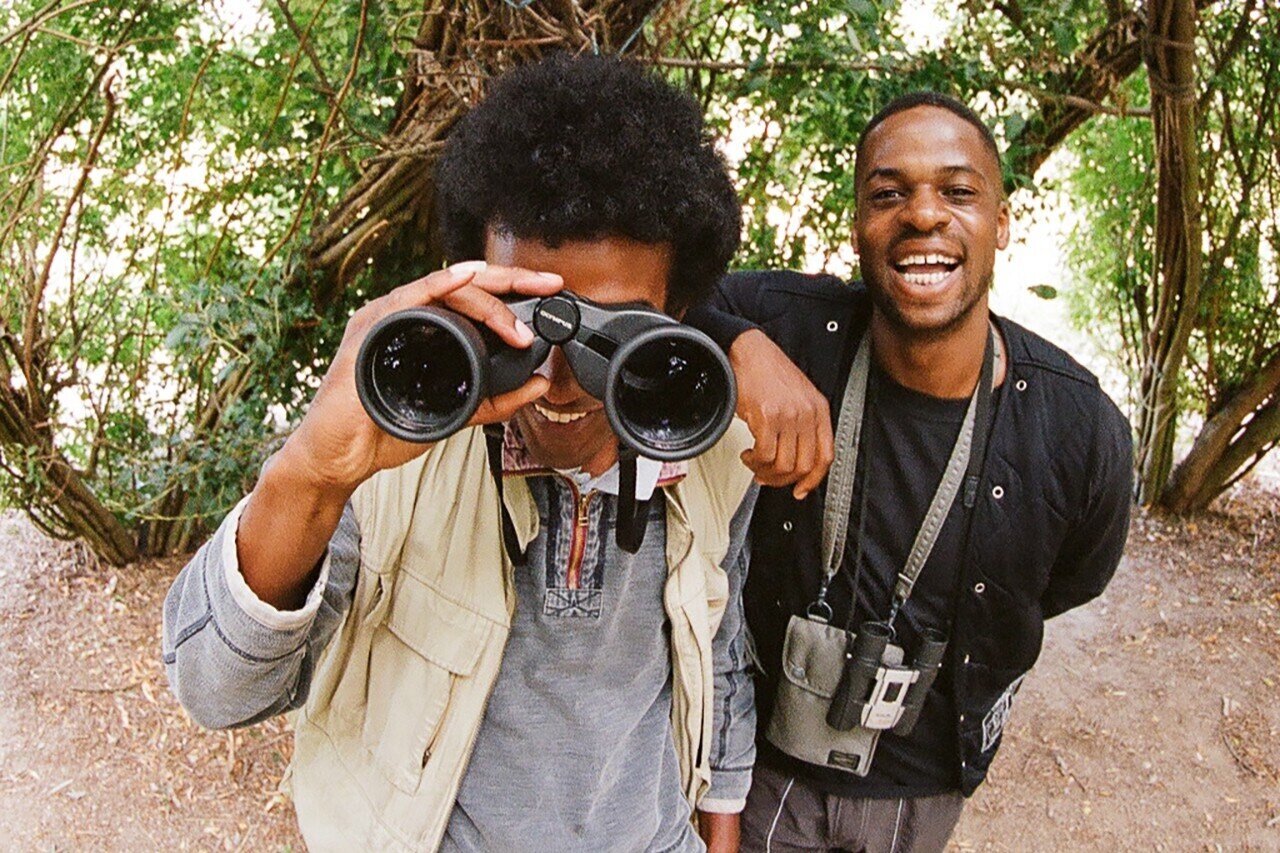
Flock Together
A birdwatching collective founded by and for people of colour that’s as much about mental health, creativity, ecology and community as ornithology.
What is it: A birdwatching collective for people of colour started in London by Ollie Olanipekun and Nadeem Perera (who met each other on Instagram over their shared love of birdwatching). From its first walk on Walthamstow Wetlands last year, Flock Together now has chapters worldwide, including in Toronto, New York, Milan and Paris.
Why you’ll love it: Join one of the monthly birdwatching walks — don’t worry, no experience is needed and beginners, as well as experienced birdwatchers, are very much welcome. So that no one is left out, Flock Together has developed brand partnerships, with binoculars and equipment donated. Although the walks are built around how to spot birds and what they are when you do — is that a jay, a wood pigeon, a robin? — they also build a supportive community, that understands the circumstances that might have brought you here.
What you need to know: New initiative Flock Together Academy makes sure kids get into nature, start to see the birds around them, and begin to understand ecological issues. Nature has been shown to have huge benefits to our kids — a year of being glued to Zoom classrooms and disconnected from the outdoors has been a desperately sad indicator of this. These classes in green spaces make nature visible, accessible, and vital again to young minds ready to learn outside the classroom what’s really important.
How to bring this into your life: Interested in the mission of Flock Together? Reach out to them to open a chapter wherever you are.
Why it matters: Think birdwatching and what’s the image that comes to mind? Maybe the media painted picture of a middle-aged khaki-wearing white man sat with their triangle sandwiches in a bird hide deep in the English countryside. That’s the history and that’s the misrepresentation problem, right there. Flock Together began during both lockdown – when the connection between nature and mental health became clearer — and the Black Lives Matter movement when who had access and who didn’t to this form of support also became more apparent. Similarly, birdwatching hasn’t been equitable, or diverse. This became acutely known when a white dog walker called the police on a black birdwatcher Chris Cooper in Central Park. Also, birdwatching hasn’t exactly been cool, but Flock Together is shifting that too. And those mental health benefits, Olanipekun and Perera are building this into their mission developing therapeutic sessions for participants.
In their own words: “Nature is a universal resource. For too long black, brown and POC have felt unwelcome and marginalised in spaces that should be for everyone. Together we are reclaiming green spaces and rebuilding our relationship with nature — one walk at a time.”
Something to do: We’re very new to noticing the birds around us. During the lockdown, we learned to identify the birds in our garden for the first time. And though we learned their rhythms, their colours and their songs, we also learned that we play a role in looking after them. Read this post from Flock Together, which shows us all how to take care of our feathered friends: by feeding them, cultivating wildflowers, putting out water, and looking after the insects — the birds need them too.
Lead photo credit: Zaineb Abelque

M.Y.O (Make Your Own)
A London studio designed for grown-ups to discover their own creativity, with all the wellbeing benefits of making.
Go here if: you’re wondering how to bring more creativity into your life, you are feeling lonely and looking for more connection, or you need to find a strategy for destressing, learned here, then taken home with your creation.
What is it: M.Y.O. (Make Your Own) is a space where grown-ups can play around with materials and making. The creative studio was launched in 2017 by Sam Lehane and Diana Muendo, both chartered accountants who were coming into their own creativity but could not find the environment that they needed to support their new interests.
Why you’ll love it: M.Y.O. gives you permission to be creative because Sam and Diana believe that everyone is. There’s no worrying about outcomes, or getting it wrong, or that you’re not really ‘Arty’ or an ‘Artist’. Just the space to explore and find the medium or practice that works for you.
What you need to know: Small classes take place in a two-level studio in Borough that has all the materials you could possibly imagine to get you making things and a space where it feels ok to get messy. There’s a huge variety of classes (refreshed every few months) on everything from watercolor painting to macrame plant hangers. Adults get a break from it all and a chance to explore arts and crafts skills without judgment or prior experience.
How to bring this into your life wherever you are: In parallel to the bricks-and-mortar space, M.Y.O. hosts a similarly wide array of virtual class options hosted with sister company Creative Jungle Co (which also offers Virtual Team Building with teams across the world).
Why we think it matters: The well-being benefits of creativity are becoming ever clearer (anyone who has picked up a watercolor brush or taken up baking in a lockdown can probably now attest to this). M.Y.O. is increasingly thinking about creativity in terms of how it helps us function in the world, helping reduce stress and loneliness. The classes offered by the studio give you an easy way into figuring out if creativity can have a place in your life and what shape that might take for you.
In their own words: “An art gym for your creative muscles.”
Something to do: You don’t need to be good at art to do it. You don’t have to make perfect pots to mold clay. All you need is the willingness to try, and an openness to seeing where it takes you. What would you try creatively if no one was watching and it’s really just for you? Start there.
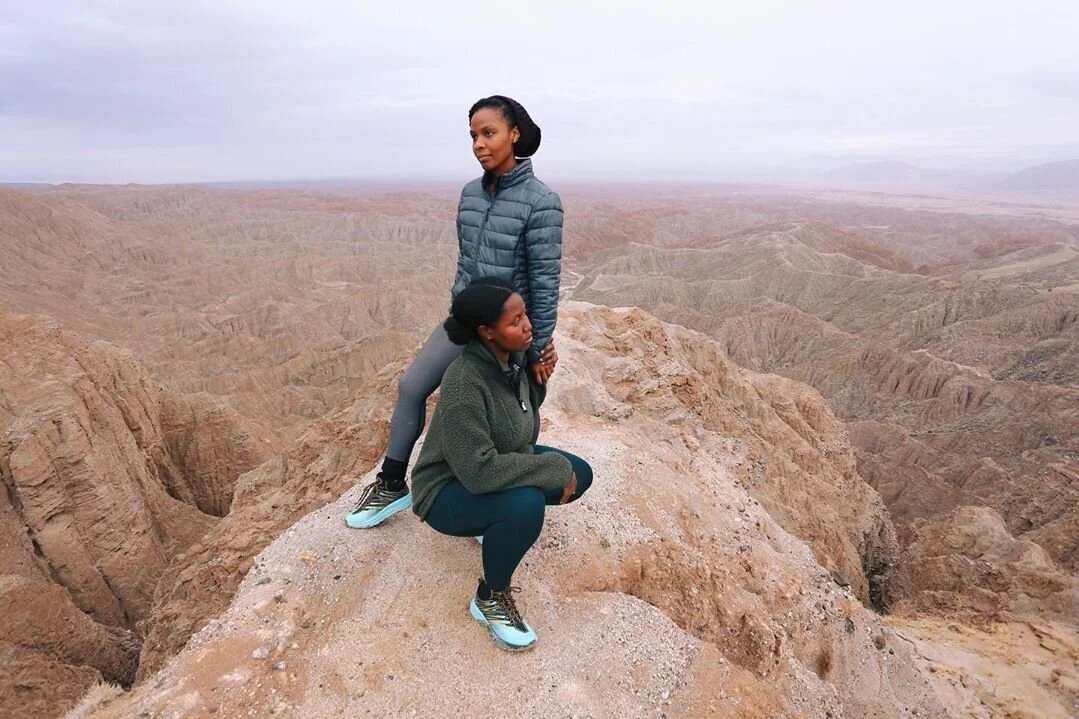
Black Girls Trekkin
How two friends in Los Angeles are working to make the outdoors more diverse.
What is it: A community and advocacy organization based in LA with a goal of making the outdoors more inclusive.
What you need to know: Friends Tiffany Tharpe and Michelle Race started the group three years ago with the goal of increasing the representation of Black women in the outdoors. Both share a love of hiking the trails around their home city of Los Angeles — a way to escape the urban hustle and a form of wellbeing in their everyday lives — which they wanted to share with other like-minded Black women and girls while shifting the narrative of who gets to even be outdoors. From inclusive group hike meet-ups to a range of outdoor activities like camping, backpacking, and nature adventures (kayaking, rock climbing, outdoor yoga) as well as education and conservation programs that focus on caring for the planet as much as understanding its history (particularly that of displaced native Americans), Black Girls Trekkin is making the outdoors safe, accessible and inclusive.
How to bring this into your life: Though it’s on pandemic pause, BGT’s group hikes around LA will hopefully be back soon. In the meantime, BGT is continuing its support of hiking for everyone in its online spaces.
Why it matters: We’ve written often of the benefits of nature for our wellbeing (there’s a whole category dedicated to the impacts of our green and blue worlds on our mental health), but we’re also conscious that access to nature is neither equitable, in how it is accessed or received. An understanding of the natural world, what it represents, who gets to connect with it and how, and its impacts on our psychological health, is deeply woven with issues of racial injustice.
Just a handful of studies that attest to this fact: A study of the 4,600 photos of people within Outside Magazine from 1991-2001, depicted just over 100 images with Black Americans. Data from the National Parks tell a story of deep racial inequality: with non-White Hispanics comprising between 88 and 95% of visitors to national lands and African Americans 1 to 1.2 percent. While another study showed that people of color were three times as likely to live in nature deprived neighborhoods.
Black Girls Trekkin works against the stereotype that Black girls and women don’t go outdoors. The co-founders' experience speaks to the biases that came with their own experience of the natural world: As a kid, Tiffany’s understanding of nature came from watching PBS, Discovery, and Animal Planet – exploring was just something that her family didn’t do. When Tiffany did start hiking in her twenties, she realized how few other Black people were on the trails, an insight shared by a Yosemite National Park Ranger. Similarly, Michelle was the only Black person to graduate in her class of marine biologists, a subject and area of interest that wasn’t “something black people do”. The narrative of who gets to explore our natural world has been primarily focused on the experiences of white people.
BGT also works against the judgment and condescension that can occur when Black women do head onto the trails, from stares to offers of help to outright hostility, advocating safety and respect for everyone who enjoys the outdoors. Alluding to a history of the natural world entangled with persecution in the minds of black people, Michelle has said this of the perceived barriers to the outdoors: “It might also come from the story we inherited, from a time when venturing out into the woods alone could end in violence and when certain spaces were literally off-limits due to racial segregation. As these well-founded words of caution have been passed down, the aversion has persisted even as the original reason has fallen out of the story we tell.” BGT is shifting this narrative, creating new stories of the Black experience of the natural world.
In their own words: “We’re here to show the world that not only do black girls and women hike, we also run, climb, swim, and have a thirst for adventure that is too often underrepresented or unacknowledged. We’re beautiful, black women who trek it out in the great outdoors!”
Something to inspire: Interested in forming a local chapter, reach out to BGT or seek out one of the other organizations listed below:
Outside the US? Let us know about other groups active in making access to nature more equitable and diverse.
To find out more about Black Girls Trekkin: Website / Instagram / Facebook

Freedom Apothecary
A holistic wellness space and boutique for radical self-care in Philadelphia puts women at the center of all it does.
What is it: A holistic wellness boutique in the Northern Liberties neighborhood of Philadelphia that’s all about empowering women.
What you need to know: Co-founded and led by women, the inspirational Morissa Jenkins and Bonkosi Horn, Freedom Apothecary stocks female-owned brands that they trust and that share their same values around clean living, many of which are by women of color.
Why you’ll love it: Opened in the summer of 2019, Freedom Apothecary reflects Jenkins and Horn’s shared aim of a place that goes beyond just products, to one that also holds women in community, fostering connections, and sustaining relationships, with themselves and others. The light-filled corner store space with its calming arrangement of products on natural wooden shelves, dried moss wall behind the register over which the words FREEDOM are set, and the abstract mural by local artist Dora Cuenca, set a tone of welcome and openness, a space for self-care and in which to pause.
How to bring this into your life: We all need some self-care right now. During closed times when their in-person treatments and their blend bar for personalized products are on hold, you can still shop Freedom Apothecary’s selection of skincare, cosmetics, and wellness products. Favorites include the Green Tea Body Butter, Gleaux Body Balm, and Rose Face Oil – all made by Morissa – as well as brands Botnia and Noto. Or book an at-home botanical customizable facial. During open times, Freedom Apothecary offers a range of workshops in its event space that make wellness an attainable priority in our everyday lives.
Why we think it matters: Morissa and Bonkosi take the idea of “radical self-care” – in short (there’s a long history here – see below) caring for yourself first before you care for others — and gives it foundational support in holistic wellness and a physical space. Freedom Apothecary is targeted at “anyone who has skin”, with the belief that anyone can practice self-care, including black women and women of color for whom the concept of their own healing has historically (and still) been pushed aside for their healing and support of others in their family and community. Wellness here is a political act, one of resistance and empowerment.
Morissa and Bonkosi set out to consciously create a place of support and safety, to extend inclusivity in concepts of wellness and the industry that supports it (often itself whitewashed), and to provide access to clean, non-toxic products (shifting who has access to them and who gets to make them). Freedom Apothecary is ultimately about helping all women find themselves, to give space for whoever they can be, and allowing for whatever it is they need.
Freedom Apothecary contains in its name the ethos they hope to promote, both freedom from toxic products that actually harm our bodies, our selves and our planet, and freedom as it pertains to choice, to live our lives in our own way, one that allows ourselves to be nurtured and to support ourselves in ways that we need.
In their own words: “ We create space for women to empower women. We are women-founded, women-led; we provide a platform for female-founded brands; and ultimately, we foster dynamic, inclusive and brave healing spaces for all women.”
Inspired by Freedom Apothecary to: Read activist and feminist writer Audre Lorde’s A Burst of Light: “Caring for myself is not self-indulgence, it is self-preservation, and that is an act of political warfare.” Wellness means something very different from wherever it is we are standing, it's affected by race, gender, and class. Even the idea of self-care has become shaped by privilege and inflected with insta quotes and spa days. Reconnect with its activist history: How people (and particularly people of color) are able to look after ourselves is navigated within how the world allows us to do so and the importance it puts (or doesn’t put) on our own health and wellbeing.

Cafe Con Libros
A feminist bookstore making vital space for the stories of women and girls.
What is it: An intersectional feminist independent bookstore and coffee shop in Brooklyn’s Crown Heights neighborhood.
Why you’ll love it: Café Con Libros was founded by Kalima DeSuze in December 2017 when she made real the space that she wanted to see in the world, one that could hold the stories of womxn and girls – stories which have overwhelmingly been sidelined in favor of those of male voices – for those who want, need and are open to hearing them. Though intimate, the reach of the store is wide, bringing together on its physical and virtual shelves an abundance of books by female authors (99% of the selections are books by, for, or about womxn), including those beyond the continental US and by LGBTQAI+ writers.
Why we think it matters: During normal times, Café Con Libros is very much a community space for female-identifying folx; it's somewhere to hang out and be as much as it’s a bookstore. As Kalima says, the spaces that we create are political. Who holds physical space, what that space is used for, and even the stories these places are allowed to tell has meaning on a personal and collective level. Bookstores like Café Con Libros hold not just the stories within pages that we need to hear, but stories within a place that allow for all possible futures, for nurturing relationships, for community action, and for extending our learning together. As Kalima notes: “It’s time that womyn’s stories be prioritized and that a space exists explicitly for and about womyn. So many of our spaces are male-dominated; even the ones that are created solely to be for and about womyn. My womyn only spaces have served as a healing tonic and, a reminder of whose shoulders I stand on. It’s important that more of our girls and womyn have access to such warmth and mirroring.”
How to bring this into your life: As mothers of young daughters, we’re excited by the monthly subscription boxes, which include an option for baby feminist board books for the zero to fives and emerging feminist books for kids aged five to nine. There are also subscription boxes focusing on womxn of color and for the feminists among us. You can also join one of two book clubs that meet monthly (on zoom during shut-door times): either the Feminist Book Club which focuses on a book by, for, and about womxn, or The Womxn of Colour Book Club, a reading space and conversation for womxn of color. There are also virtual read-a-longs and a monthly podcast Black Feminist & Bookish, hosted by Kalima.
In their own words: “ We value: family. community. justice. art. transparency. accountability. equity. equality. authenticity. joy. solidarity. earth. the brilliance and possibility of imperfection. love.
We respect and value the contentious history womxn of color have with the word "feminist;" the tension hold us to account to live our Black Feminist and Womanist principles in real and measurable ways. We were born from and are guided by the lush cannon of Black Feminist thought producers and activists; the space endeavors to be intersectional, inclusive and welcoming of all who stand with and on behalf of the full human rights of womxn and girls. We seek to advance and uplift stories of womxn and girls around the globe who are redefining the word feminist and feminism with every day, ordinary culturally informed acts of resistance and love.
Something to inspire: Try a reading challenge: purchase, support, and read books only by womxn, or womxn of color, or by LGBTQIA+ writers for 3, 6, or 12 months. Change your knee-jerk choices in what you’d ordinarily see or consume. Extend this challenge even further to include podcasts, TV shows, films, and music that are by, for, and about womxn. This not only helps our own understanding of the ongoing pursuit for gender equality but the choices you make in where you put your attention and your money indicates to the industries behind them – the entertainment, publishing, and culture industries – what it is you really want to see.

Prick
Beyond the best name for a store dedicated to cacti, Prick is making wider access to the greenery we all need part of its mission.
What is it: London’s first store dedicated entirely to cacti and succulents on Dalston’s Kingsland Road.
Why you’ll love it: With their geometric forms and unusual presentations, the plant life here read as nature’s aesthetic conjurings. Nominated for High Street Shop of 2020, the store feels more like a boutique than a garden center, with white walls, sculptural plinths, shelves of ceramics — “prick pots” – many of which have been commissioned by local artists and books on the subject rounding out the interior landscape. Even the wood here is sourced from the Natural History Museum’s Reading Rooms.
What you need to know: Prick was founded by Gynelle Leon, who at the age of 30 on a quest for a different story of happiness than the one she’d been sold retrained as a florist. Her love of plants had started to edge out an early career in finance and fraud prevention (her degree was in Forensic Science). A 2011 visit to Yves Saint Laurent’s Jardin Majorelle in Marrakesh led her to fall for cacti’s diverse forms and set her on a global search to become an expert taking in the epic desert plant-life of the United States. Leon now sources unusual specimens (the shop stocks over 150 types) throughout the UK and Europe, forging relationships with auctions, nurseries, and collectors to curate the store’s collection of cacti and succulents.
In the summer, Prick expanded from just the plant shop to a new space which according to Gynelle “is not a shop but our event space for workshops, talks, panel discussions lectures, book clubs, coffee mornings… I love community and have always dreamt of a space where we can celebrate and enjoy plant culture.” Due to shifting COVID rules, we suggest checking social media for updates on this new stage of Prick.
Why we think it matters: As we spend more time at home – and we can all feel differently about that – those little pops of green around us start to matter. Plants have a direct impact on our wellbeing: seeing them reduces stress, caring for them gets us out of our heads, and even the air we breathe improves. Gynelle has been open about her own experiences of depression, stress, and anxiety and how “being around nature and especially caring for my houseplants provides me with moments of calm and allows me to be in flow.”
And yet, who has access to green spaces and those green pots, indeed who can cultivate them, hasn’t been historically equal. On researching and developing Prick, Gynelle found that she was one of the few people of color in horticulture, a field dominated by middle-class white men. She has since made it part of her mission to bring plants to everyone. That’s part of the appeal of houseplants – they can be for all — there’s no need for outdoor spaces, or vast amounts of experience, or expensive tools. Hardy, needing very little attention, cacti and succulents are the perfect companions for busy city dwellers and everyone who wants to tend to them. As Leon says: “We all should have the right to a connection with nature and the ability to make a career out of it. The representation in gardening media and the large horticultural bodies must change to inspire those of all walks of life and race.”
In their own words: “Prick sees cacti and succulents as living sculptures that take years to fully develop…A succulent plant has the potential to live for many years, sometimes even outliving its owners. Investing in plants is like gaining new flatmates or family members; a break away from our modern disposable culture.”
Gift edit: The shop is now in book form, Prick, but we’re also coveting this one and this one.
Something to do: Participate in Black Pound Day, started by Swiss of So Solid Crew, and now backed by Google, which takes place on the first Saturday of the month to encourage people to support black-owned businesses.

Little Free Diverse Libraries
A movement born on social media changing the narratives that make up our neighborhoods.
What is it: A movement born only six months ago on social media that is having real-world impacts, Little Free Diverse Libraries aim to amplify and share stories of Black, Indigenous, and People of Colour.
What you need to know: You may have seen Little Free Libraries in your community: those cute wooden boxes around since 2009 where you are invited to take a book and leave a book. But have you thought about the books that make-up those libraries? Do they represent the community, country, or context in which you live? Do they represent you, your voice, and your life? Do they include a breadth of voices, diverse backgrounds, and inclusive stories?
On a walk, through her home neighborhood of Arlington, Massachusetts where she was sitting out the pandemic, New York School Counsellor Sarah Kamya noticed that those in her own neighborhood didn’t do any of those things. As a daughter of a black father and a white mother, they didn’t reflect her. Neither did they speak to the Black Lives Matter Movement that was taking hold across the county.
With $150 donated from her family, Kamya brought books from black authors and began placing them in the Little Free Libraries in her neighborhood. This tiny gesture grew and grew: boxes of books by BIPOC authors began arriving at her home, as did donations from people to buy more books from diverse authors, all of which were to be distributed in other Free Libraries. Kamya bought directly from black-owned bookstores and opened her own Little Free Diverse Library.
Over 2,200 books have now been distributed to Little Free Libraries across 50 states, over 15 Little Free Diverse Libraries have been installed, $16,000 of books have purchased from Black-Owned bookstores, and the movement has inspired 20 LFDL Instagram accounts.
Why we think it matters: The stories that we are exposed to shape our understanding of the world and our place in it, not just in terms of whose lives we get to see represented but in terms of who gets to even tell those stories. Growing up, Kamya didn’t see herself in the characters or the narratives of the books she loved to read. Little Free Diverse Libraries aims to change that by widening the books that we are all exposed to so that we can increase our empathy, understanding, and kindness towards others, and think differently about issues such as social justice, systemic racism, and gender inequality.
As Kamya says: “I find books to be such an important place where one can build their self-confidence and self-worth, start conversations, and create change. I believe that Black and brown children deserve to see themselves represented in books and that if you cannot see it, you cannot be it. Some of my favorite books have been discovered in Little Free Libraries, and I am so excited for others to discover books they may have never seen, books they wish they had seen, and books that create conversations and change for years to come.”
The project has since expanded to include books about LGBT+ issues, people with disabilities, and who have different religious beliefs.
How to bring this into your life: Read widely, from diverse authors. Kamya is generous with her knowledge of books, and you can find recommendations for both adults and children on the Little Free Diverse Libraries Instagram. Among her recommendations are: Hair Love by Matthew A. Cherry, illustrated by Vashti Harrison; Of Thee I Sing by Barack Obama, illustrated by Loren Long; Talullah the Tooth Fairy CEO by Tamara Pizzoli, illustrated by Federico Fabiani; and Amazing Grace by Mary Hoffman, illustrated by Caroline Binch.
In her own words: “Having conversations regarding race with children and youth is extremely important to me. I truly believe that we have to teach about race and differences and a lot of that starts at home, and through books. I also find it important for books to represent diverse characters because if you can’t see it, you can’t be it. This project has allowed me to show Black and brown children that they deserve to have themselves represented, celebrated, and portrayed in literature. For Black authors, this project has allowed me to bring their work to the forefront. For so long Black authors have not had the recognition they deserve and this project has allowed me to highlight their work, as well as the Black-owned bookstores who have made it their mission to amplify Black voices.”
To find out more (or even start your own): Instagram