

Okay Humans
With Okay Humans, founder and LMFT Christy Desai is modernizing and destigmatizing therapy to help more people feel better, stronger, and more alive.
We are constantly on the lookout for modern therapy that holds great design with great practice. We’ve sat in one too many uncomfortable waiting rooms, following frustrating booking systems, that came after equally as frustrating searches for someone we actually wanted to work with.
When we discovered LA’s Okay Humans, we knew we’d found a way of offering therapy that made sense to us, and how we live our modern lives. Founder (and LMFT therapist herself) Christy Desai tells us how she has designed a new client experience and environment around therapeutic practice. (We now just need one on every High Street and in every neighborhood).
Tell us about Okay Humans:
Okay Humans is a modern therapy practice from the founders of Drybar. We have a group of qualified and diverse therapists with degrees from places like Pepperdine, USC, Smith College, and more.
We’re all about making it easier to get to therapy. Before you even visit Okay Humans, we've simplified the process for you. Finding your therapist, booking your session, and filling out "paperwork" is all done at your fingertips through our industry-leading app or on okayhumans.com.
It was important to us that Okay Humans be on a visible street so we opened our flagship location in the Brentwood neighborhood of Los Angeles on 11710 San Vicente Blvd.
When you arrive at our brick-and-mortar location, you'll notice we've designed a space that makes you start to feel okay the minute you walk through the door – beautiful architecture, a wellness shop, mentali-tea bar, and sound diminishing therapy suites to ensure a feel-good experience from start to finish. We also built an industry-leading app that makes scheduling, booking, and paying a seamless experience.

What inspired you to start this space and app?
After unsuccessfully trying to outrun the stress of life, I finally looked for a therapist in hopes of catching my breath. What started as “3-5 sessions” turned into years of deep inner work. I learned how to be okay with conflict, curveballs, and growth, just to name a few things. My own experience turned into a personal mission to help other people feel better, stronger, and more alive so I went back to school to get my master’s in clinical psychology and become a licensed marriage and family therapist.
From my experience on both sides of the couch, I realized how antiquated and prohibitive the entire experience around therapy was. I knew that changes needed to be made to remove the barriers of entry so therapy could be more readily available and accessible.
Prior to becoming an LMFT, I was the franchise owner of a kids’ indoor playspace where I learned the ins and outs of building and operating a small business. Coupling these two experiences together, the idea of Okay Humans was born.
What do you offer?
We have a brick-and-mortar location where we see teens, adults, and couples for in-person therapy sessions and have a virtual option available for California residents.
To take even more of the headache out of the experience, we’re now in-network with Aetna & Cigna to help guests save up to 100% of their session costs. Even if guests aren’t covered by our in-network partners, we’ll submit insurance claims on their behalf so they can still save up to 80% on session costs, without the hassle.


What makes Okay Humans different?
We know therapy works. It changes lives and helps people thrive. The magic that happens between you and your therapist in session and the relationship you build together is key in accomplishing that. Our therapists at Okay Humans will provide a framework and a safe space, but there is no right or wrong way for the session to go - the important part is showing up. We make it easier for people to do that, and that’s what I’m most proud of.
With insurance benefits, an app-based booking and payment platform, qualified therapists, and a beautiful, safe space - it's the best way to prioritize your emotional wellbeing.
Our long-term goal is to continue modernizing and destigmatizing therapy so more and more people can reap the benefits. We plan to expand across the country to reach even more people and make going to therapy feel okay in every way.
What keeps you motivated?
The impact that we’re making on people’s lives each and every day is what keeps me excited about building Okay Humans. Building a business is certainly not easy but if you can wake up every morning and know that you’re making a meaningful difference in the world, then it’s worth it. You don’t need to be the smartest, loudest, or most educated person in the room to build a successful business. But you do need to believe wholeheartedly in what you’re doing. If you’re doing something you love and something you’re passionate about, the triumphs supersede the trials.
Next (or first) steps?
To book an appointment, download the Okay Humans iphone app or go to okayhumans.com. To stay in the loop and access mental wellness tips, follow @okayhumans on social media.


The Lake Shrine
Neuroscientist Dr. Daya Grant discovers a sanctuary in Los Angeles for reflection and a moment of respite from it all.
“Live each present moment completely and the future will take care of itself. Fully enjoy the wonder and beauty of each instant.”
What is it: The Lake Shrine is a sanctuary in the heart of Los Angeles. The beautiful grounds have a small lake (with turtles, koi fish, and two exquisite swans) surrounded by a walking path, pristine plants, flowers, and trees, as well as benches for reflection.
Why You'll Love It: As soon as you step onto the grounds, you can't help but exhale. It is peaceful and inclusive, and every time I visit I can't help but feel that "All is OK". The setting is absolutely gorgeous, but there's also an energy there that is grounding, uplifting, and hopeful. It's a place where you're encouraged to slow down and take your time.
What They Offer: Pre-COVID, the Lake Shrine offered beginner meditation classes in the charming windmill chapel right on the lake. Now, all inspirational presentations and meditations have shifted online. At the Lake Shrine itself, there is a small gift shop with gifts from India, as well as a small bookstore with thoughtful readings.
What Makes It Different: The Lake Shrine invites you to just be — to breathe deep and surrender to the present moment and the beauty all around. While it is on the grounds of a spiritual organization, inclusivity is paramount.
What You Need to Know: During COVID, reservations are required. A limited number of parking permits are available and can be reserved (for free) at a particular time the week prior. It does sell out each week within five minutes, so jump on your computer early and prepare to hit refresh! It is open from Wednesday to Sunday from 1 pm to 4 pm.
In Their Words: "Lake Shrine is part of Self-Realization Fellowship founded by Paramahansa Yogananda. Dedicated in 1950, he envisioned a spiritual environment where people from all over the world could come and experience peace of heart and mind. Today, Lake Shrine offers a lakeside Meditation Garden with shrines and waterfalls, a hilltop Temple with weekly inspirational services and meditations, a retreat for silent renewal, and an ashram for monks of Self-Realization Fellowship."

The DEN Meditation
Los Angeles’ DEN Meditation helps find a way to make guided meditation part of your everyday life.
Go here if: you are looking for a space to deepen your understanding of meditative practices.
What is it: A drop-in studio for guided meditation with two Los Angeles locations founded by Tal Rabinowitz, former VP of Comedy Development at NBC (think The Mindy Project and Unbreakable Kimmy Schmidt).
What you need to know: Burned out on the entertainment business, Rabinowitz started meditating for all the reasons we now associate with the practice like destressing and finding calm. But she also found that it helped her get to know herself better and brought clarity about decisions going forwards. When Rabinowitz struggled to find the time to fit in her daily practice, she looked for a place that she could go – where she could be held accountable, experience the social benefits of a community, and learn a range of practices. When she couldn’t find the space that she needed, she started The DEN Meditation to be that place for herself and others.
What they offer online and off: During closed times, live and on-demand classes and workshops can be found at DENAnywhere. You can also listen to the DENtalks Podcast in which Rabinowitz hosts conversations with inspiring guests who share their experiences of how they found their way.
Why we think it’s different: Amongst the first of LA’s guided meditation studios, The DEN Meditation is designed to make the practice accessible to everyone and to make it easier to bring into people’s everyday lives. Classes are designed to fit within daily routines, many are just 30 minutes long. The studio feels universal, it's secular in its approach, with guided meditations from all styles and no specific lineage or spiritual practice. The space is intended to feel more like a home, comfortable for whoever walks through the door, as welcoming as a living room. That means brick walls, chenille, natural floors, and fabrics from India, rather than buddhas, lotus flowers, and mandalas. As Rabinowitz has said: “No one should feel they have to be a certain way to show up.”
In their own words: “Whether you want to learn how to meditate, find a home for your meditation practice, or just want to give yourself peace of mind in this fast-paced world, join us at The DEN. Come as you are. Leave feeling better.”
One piece of advice: Meditation can be intimidating, particularly if our idea of it might be 3-day silent retreats in monastic settings. But start small, really small, if you are new to the practice. Like two minutes. Be kind to yourself. Go slowly. Build up to 10 minutes, then 20-minute daily sessions. Make meditation an Atomic Habit – try it at the moment before you wake up and before you check your phone, or when you’re about to get into bed and have just brushed your teeth. Find ways to stack it on another habit, it will make finding the time to meditate easier.
To find out more: Website / Instagram / Facebook / Twitter
Additionally, try: Re:Mind / Spirit Rock
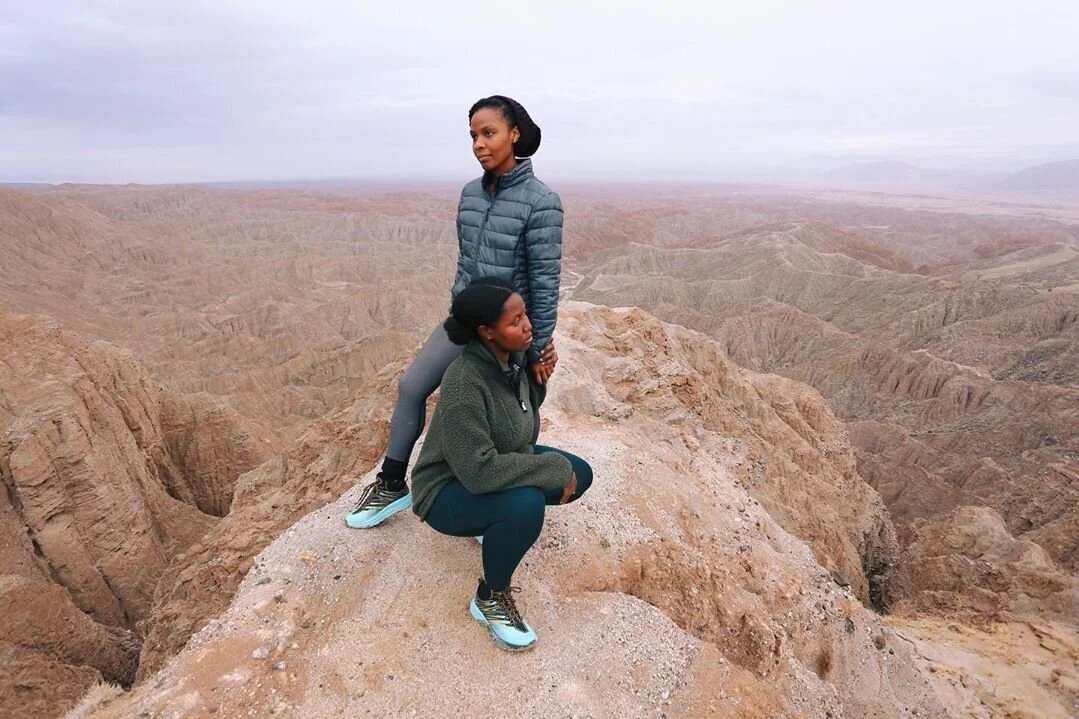
Black Girls Trekkin
How two friends in Los Angeles are working to make the outdoors more diverse.
What is it: A community and advocacy organization based in LA with a goal of making the outdoors more inclusive.
What you need to know: Friends Tiffany Tharpe and Michelle Race started the group three years ago with the goal of increasing the representation of Black women in the outdoors. Both share a love of hiking the trails around their home city of Los Angeles — a way to escape the urban hustle and a form of wellbeing in their everyday lives — which they wanted to share with other like-minded Black women and girls while shifting the narrative of who gets to even be outdoors. From inclusive group hike meet-ups to a range of outdoor activities like camping, backpacking, and nature adventures (kayaking, rock climbing, outdoor yoga) as well as education and conservation programs that focus on caring for the planet as much as understanding its history (particularly that of displaced native Americans), Black Girls Trekkin is making the outdoors safe, accessible and inclusive.
How to bring this into your life: Though it’s on pandemic pause, BGT’s group hikes around LA will hopefully be back soon. In the meantime, BGT is continuing its support of hiking for everyone in its online spaces.
Why it matters: We’ve written often of the benefits of nature for our wellbeing (there’s a whole category dedicated to the impacts of our green and blue worlds on our mental health), but we’re also conscious that access to nature is neither equitable, in how it is accessed or received. An understanding of the natural world, what it represents, who gets to connect with it and how, and its impacts on our psychological health, is deeply woven with issues of racial injustice.
Just a handful of studies that attest to this fact: A study of the 4,600 photos of people within Outside Magazine from 1991-2001, depicted just over 100 images with Black Americans. Data from the National Parks tell a story of deep racial inequality: with non-White Hispanics comprising between 88 and 95% of visitors to national lands and African Americans 1 to 1.2 percent. While another study showed that people of color were three times as likely to live in nature deprived neighborhoods.
Black Girls Trekkin works against the stereotype that Black girls and women don’t go outdoors. The co-founders' experience speaks to the biases that came with their own experience of the natural world: As a kid, Tiffany’s understanding of nature came from watching PBS, Discovery, and Animal Planet – exploring was just something that her family didn’t do. When Tiffany did start hiking in her twenties, she realized how few other Black people were on the trails, an insight shared by a Yosemite National Park Ranger. Similarly, Michelle was the only Black person to graduate in her class of marine biologists, a subject and area of interest that wasn’t “something black people do”. The narrative of who gets to explore our natural world has been primarily focused on the experiences of white people.
BGT also works against the judgment and condescension that can occur when Black women do head onto the trails, from stares to offers of help to outright hostility, advocating safety and respect for everyone who enjoys the outdoors. Alluding to a history of the natural world entangled with persecution in the minds of black people, Michelle has said this of the perceived barriers to the outdoors: “It might also come from the story we inherited, from a time when venturing out into the woods alone could end in violence and when certain spaces were literally off-limits due to racial segregation. As these well-founded words of caution have been passed down, the aversion has persisted even as the original reason has fallen out of the story we tell.” BGT is shifting this narrative, creating new stories of the Black experience of the natural world.
In their own words: “We’re here to show the world that not only do black girls and women hike, we also run, climb, swim, and have a thirst for adventure that is too often underrepresented or unacknowledged. We’re beautiful, black women who trek it out in the great outdoors!”
Something to inspire: Interested in forming a local chapter, reach out to BGT or seek out one of the other organizations listed below:
Outside the US? Let us know about other groups active in making access to nature more equitable and diverse.
To find out more about Black Girls Trekkin: Website / Instagram / Facebook
Mouse-Shaped Misery or Picture-Perfect Family Fun: Disneyland Observations
Our take on whether Disneyland is really “The Happiest Place on Earth”.
I spent the last week of my life in Disneyland trying to figure out if I was a sucker for loving it so much. (I think I’ve landed on “probably yes”.) Here are my observations.
Observation 1: Everyone is better at doing make-up than I am.
Is there, like, an onsite class available somewhere? (Can I come?!) Why is everyone so luminous and poised here? I must have seen 17 thousand women, with their rose-gold Mickey ears glinting in the warm afternoon sun, their customized Etsy t-shirts clinging perfectly to their (clearly) cross-fitted bodies and their winged eyeliner looking like it was applied 6 seconds ago. Meanwhile I take one glance in the direction of Splash Mountain and I turn around in full Jafar cosplay, shocking both my group and all of the low-key Jafar fanatics.
Maybe it’s that my youth has slipped away subtly in the night, or that I don’t actually know how to use all the things the nice girls at Sephora have suggested I buy. Or maybe it’s that everyone here is Mormon and, as such, blessed with abundant, inexplicable beauty. (Having lived in Salt Lake City, I can confirm that they are, I am all but certain, God’s chosen people). But I digress. Everyone is beautiful here. (Maybe it’s the magic?) Someone please come airbrush me before I leave the house again.
Observation 2: There is an abundance of children wearing shirts with phrases like “best day ever” and “happiest vacation on earth” who are being aggressively shamed by their parents.
Hello Parents, have you ever met a child? They have small legs, need ample sleep, and are easily overwhelmed by blinking lights. They go absolutely fucking nuts when exposed to sugar and food coloring. Why, then, would we expect them to exhibit perfect behavior at 11pm on a Tuesday night while sat on the ground picking hours-old cotton candy off of their sleepy faces as Mickey Mouse shoots fireworks from his eyeballs?
Please understand that I am, in no way, exempt from the Disney-induced lapse in parenting judgement and performance. I wanted to abandon my family and drown myself in the shallow waters of It’s A Small World just as many times as the next parent, but I internalized those resentments and whisper reprimanded my children through gritted teeth (like a grown-up).
Observation 3: I am infinitely grateful for my mobility and health and I remain ever-impressed by the people who push through theirs in the name of fun.
One of the greatest things I observed on this trip were people pushing through physical setbacks, getting out there in the name of fun. There were two women (had to be 100 years old) zipping around on rascal scooters like they owned the place. (Maybe they did?) One had brace on her ankle and the other had multiple tanks of oxygen (maybe jetpacks?) affixed to her chair. They laughed and zigged and zagged through the lines of the roller coasters and the teacups and almost-never ran into small children. They didn’t have young people pulling them along, or passes that granted them access to the front of the lines. They were just there, living their best lives, for themselves.
Observation 4: Vegan food is EVERYWHERE.
From plant-based sheppard’s pie and cauliflower street tacos to vegan gumbo and oat milk mochas, I was in near-constant awe at the food selection available in the Disneyland parks. More than being impressed, I was relieved, to see the world changing in ways that feel meaningful. I understand that veganism isn’t relevant to everyone, but I think it is fair to say that adding 400 vegan menu items to the parks is indicative of a greater shift in the world, a shift that means more mindfulness in regard to the way we’re consuming food, utilizing animals and protecting our planet. Sure, Disney is primarily interested in catering to their consumers and making more money…but the implications of this shift are far greater than that. And when a massive corporation brings a once-taboo lifestyle choice into the mainstream, it opens the doors for more people to enter that space. More plant-based options = less animals harmed, and that’s an equation I can get behind.
Observation 5: There is something that happens when you spend lots of money to be happy - you’re really fucking set on being happy.
There is a lot to be said about the downfalls of the positive psychology movement (we’re very-much over the days of faking it until we make it) but there is some mystical concoction that exists at Disneyland. Something about spending an obscene amount of money, the overly-friendly staff who are there to cater to your every need, endless access to sugar/salt/fat, your belief that you should be having fun and your awe-struck children whose expectations you’ve spent MONTHS bolstering. I don’t know exactly what it is, but I actually feel happier there. Sure this could be a recipe for the letdown of the century. Unrealistically high expectations are, in our experience, almost always ill-advised. But what about when all those expectations converge in a place that is actually pretty fun? What about when Disney releases interactive apps that allow your family to play games together in line (apps that help you to start conversations about things like gratitude, favorite memories and finding magic in the everyday.) What happens when you’re really expecting to have a good time and you put all of your energy into bringing that experience to fruition? Like any person with a conscience, I struggle to look past the rampant wealth disparity in Anaheim (the home to Disneyland Park), I struggle to accept the messaging of some of their films, struggle to accept that I’ve bought into a very well-branded consumer trap that thrives on manufactured-emotions and poor impulse control…but you’d be hard-pressed to visit this place, and not fall (at least a tiny bit) into the magic of it all. Concentrated time with family, activities that are fun for all-ages and messaging that screams “YOU ARE HERE TO HAVE FUN!” are really difficult points to deny. Yes, I know I’m a sucker…my back aches and I am desperate need of a post-vacation vacation, but every night, I cuddled with my kids while watching fireworks, and I laughed and ran with my 11-year-old (whose years of wanting to connect with me are feeling more fleeting by the day) and I watched my 6-year-old hug Minnie Mouse with tears rolling down her exhausted face. Yes I know it’s all a bit contrived. I know we could have gone to Yosemite, or the Museum of Modern Art, or, like, our great aunt martha’s house(?). But sometimes it feels good to turn your brain off and sink into the magic that’s unfolding around you.

Choose Love
This holiday season support pop-up stores Choose Love by gifting everyday items to refugees who urgently need them.
“‘The world’s first store that sells real products for refugees.’”
Holiday Fatigue. Compassion Fatigue. Everyday life fatigue.
At this time of year, as the days get darker and our schedules more frantic, many of us find ourselves exhausted, overwhelmed, maybe also panicked. We’re under pressure to consume, to shop, to scramble for all the things that we don’t need and that we probably won’t even remember in January. Some of us are starting to realize that we don’t love this Black Friday to January Sales treadmill, that it benefits someone’s bottom line but not us. We’re starting to look for ways to do the holidays differently.
Like Choose Love. No, that is not just a cute Instagrammable aphorism (though it does take a covetable merchandise form). It is an urgently needed pop-up that takes that holiday spending money and uses it for good, not seasonally appropriate greed. The Choose Love stores brought to us by Glimpse design collective—there are now 3, in London, New York, and Los Angeles—only sell things that refugees vitally need that you get to gift to them. The stores are arranged by the different stages and shifting requirements of displaced people. There’s ‘Arrival’, ‘Shelter’, and ‘Future’. A life jacket. Children’s boots. A hot shower. Safe spaces for women. A Bundle of Warmth. Think about these things for a second. Think about how and why they are needed. We defy your heart not to break just a little.
As CEO of Help Refugees (the NGO behind Choose Love), Josie Noughton sums it up: "It's easy to forget how lucky we are to have a bed, a blanket and a roof over our heads. For thousands of refugees this winter, these basic human needs are completely out of reach. This shop is all about one simple idea: that we should all Choose Love and help those in need."


Choose Love stores fill that compassion gap between the moment that we’re shocked by the news and the horrors that refugees fleeing climate change, war and persecution face, and the moment that we don’t know what to feel and what to do about it. By holding everyday items in our hands that people need, it returns essential humanity to the stories that we’ve become numb to and the headlines that we learn to forget. Simple things like baby items, clean and safe water, a bag of school supplies, restore the idea that these are real people, not just statistics, who need our help and deserve our kindness.
Though these brightly colored stores feel like a boutique gift shop, they are designed for you to leave with nothing except the knowledge that whatever it is you purchased is now finding its way to one of 120+ partners who support displaced people. You may be empty-handed, but you’ll definitely feel big-hearted. This is gift-giving as its best: we now know that doing something for someone else has a more lasting impact than doing something just for yourself. And beyond the 40,000 customers that it has to date served, Choose Love has a significant impact on the recipient too.


Since Choose Love launched in 2017, these pop-ups with a purpose have sent 1.5 million items to refugees, assisted one million displaced people in Europe, the Middle East, and the US-Mexico border, and raised 3 million pounds. Those statistics are staggering, particularly when you think that Choose Love is a relatively new concept on our High Streets. As brick-and-mortar retail is supposedly dying, they indicate a way forward for how our stores can change the world. Needs on both sides are now being met through something we’re overly familiar with, shopping and a place that has lost its own way, our High Streets.
Choosing Love matters; at a time when we’re divided across borders and beliefs, this simple mantra, and the enterprise behind it reminds us that we have options. We can choose to help people who really need it with our purchases this holiday season. And if you need any more encouragement, let’s give Banksy the last say: “For the person who has everything, buy something for someone who has nothing.’
(Also to look out for: You can also shop Choose Love for a Holiday gift – the recipient will receive a downloadable gift card with details of your item. Also, as these stores are staffed entirely by volunteers – you can gift your time.)


Second Home
Second Home is stretching the definition of what coworking can be and what it can look like.
“Second Home is a social business with a mission to support creativity and entrepreneurship in cities around the world.”
Coworking is no longer just about finding a place to plonk your laptop. Now it’s about so much more: finding alignment with your values, finding your tribe, finding the brightest people and the shiniest ideas, and yes, finding ways to support your mental wellbeing in ways that fold into such things as design, community and culture. That’s where Second Home steps it. It’s coworking as more than the seat you occupy; it’s coworking for a better-designed life.
We’re been in thrall to Second Home since we visited London’s Spitalfields branch with our kids, who thought it was a play space—which in a way it is. Maybe it’s the colors (that blazing brand orange), the fun textures, the transparent curvilinear walls, the sunken lounge space, the wavy ceiling. Maybe it’s the table that drops down when needed or the rooftop terrace where you can stand amongst ponds while taking in the cityscape. Maybe it’s all the green on green on green in the thousands of plants, the attempts to bring in natural light, the mix-mash of different furniture. It doesn’t feel like the kind of office space that you know, and my kids got that as they rushed through its spaces wanting to climb the chairs rather than the corporate ladder.


But it’s all been very, very intentionally designed to be this way—the playful appearance is its serious intent—to create the most positive environment for our wellbeing and productivity. The Spitalfields branch (Second Home’s earliest, opened in 2014)– and all but one of its other outposts—are the work of architect SelgasCano whose approach is deeply influenced by biophilia and evolutionary psychology.
SelgasCano also designed the recently opened, template-shifting Hollywood coworking space, which has a cacophony of yellow islands (that top tubular pods), a magic ballroom and a dense urban forest. The firm was behind the brightly colored Serpentine Pavilion purchased by Second Home and moved to La Brea Tarpits to be a pop-up/love letter/ ‘Coming Soon’ announcement to Los Angeles. At the Holland Park branch, the firm designed a space where trees grow out of the floor and a courtyard roof fills with bubbles; at Clerkenwell Green there’s a subterranean event space; in the Lisbon space an Yves Klein Blue ceiling and signature 1,000 indoor plants and trees. Only the London Fields space is designed by someone else, and then by sister company Cano Lasso, but it shares the same bold design credentials—see its impossible to miss futuristic façade – and maybe equally as radical on-site nursery and childproof café?


But beyond the outward design co-founders, Rohan Silva and Sam Aldenton had two other major principles in play: community and culture. The people who get to populate this environment are as important as the pot plants and pops of color. Second Home curates its community, aiming for a mix of start-ups, not-for-profits (it offers charity memberships), corporates, creatives, and entrepreneurs. Each inspiring, supporting, and collaborating with each other. Then there’s the culture piece, the third angle to this design-community triad; Second Home gets how ideas sustain us as much as people and place. Overlapping its space as workplace is space as creative venue, with an active cultural program that puts authors, podcasters, thought leaders, entrepreneurs, and innovators in front of its members and the public.
Collectively that greenery, the doing good piece, the feeding of curiosity and connection, are all about sustaining our wellbeing, in the same ways as the yoga sessions, running clubs, and even surf lessons on offer depending on the venue. Second Home weaves in all the multiple threads of our working lives—the design of our environment, the people we get to connect with, the culture that gets to feed us—and throws them out into as much as a real-world context as its principles allow. But there’s some fantasy at play too when you enter its doors.
(NB: There’s a special place in our heart for Second Home’s tightly curated bookstore Libreria (in Spitalfields & LA) and the poetry bookstore at the Holland Park branch. Check them out too. They probably shouldn’t be in brackets.)


826 Valencia
826 Valencia is keeping space for our kids’ imaginations in our cities, and crafting magical spaces for our communities and for ourselves as it does so.
“826 Valencia is a non-profit organization dedicated to supporting students ages 6 to 18 with their creative and expository writing skills, and to helping teachers inspire their students to write.”
Yes, you might think you have just found yourself in a quirky pirate store or an octopus’ playground or a secret spy society, but what you’ve done is landed right at the heart of a non-profit organization that exists to support the writing skills of under-resourced kids. Maybe purpose is like medicine and you need some sugar to help it go down (not sure who does that other than Mary Poppins and her charges but it’s an association that’s stuck). For 826 Valencia and its network of storefront chapters across the US, the sugar takes the form of magic and the imagination: each of their much-needed writing centers are fronted by spaces of whimsy and curiosity.
From its start in San Francisco’s Mission District in 2002, a delightful sense of wonder has been built into how the organization has crafted itself: the first flagship that opened at 826 Valencia Street by educator Ninive Calegari and author Dave Eggers took the form of a pirate store mostly as a workaround for a local zoning issue that demanded some retail component. So of course, pirates need stores too. That model of locating the idiosyncratic in the everyday has inspired further storefront locations across the US; there’s the secret agent supply store (Chicago), a magic shop (Washington), a time travel mart (LA), a robot supply and repair shop (Michigan), a Haunting supply store (New Orleans), a Super Hero Supply Store (NYC), and maybe our favorite the Bigfoot Research Institute (Boston).
The original SF location has since been joined by two more in the city that capture this same spirit of make-believe: the wonderful Enchanted Forest and Learning Center in Mission Bay and the King Carl Emporium in the Tenderloin. In whatever shape-shifting form it takes across the US, 826 Valencia cultivates places of the imaginary and places of very real need, sitting quite naturally next to each other

Photo Interstice Architects
826 Valencia is one of the few places holding space for the imagination on our city streets and in our children’s lives. Think about its latest iteration in the Tenderloin in which a liqueur store associated with drug trafficking and anti-social behavior was converted into a playful apothecary of sorts and a light-filled writing space (also note the brightly colored, game-changing ocean-themed painted exterior). A space that might feel simply enchanting is actually a crucial vehicle for revitalizing a street corner, a community, and a child’s life.
And it also might do this. 826 Valencia might put a spell on your own. Because you get to come in, not just to purchase unicorn horn’s polish, an eye patch or Lumber Jack Repellant, but to participate, to be one of the grown-ups bringing writing to kids who need it. This is where the magic of a different kind starts to happen. Because the core belief running through all these spaces is that kids benefit greatly in confidence, pride and ability from dedicated, focused time on their writing skills—that’s in obvious ways like crafting a personal essay and helping with homework but in other more exploratory ones like working out how to express themselves in poetry and the written word.
826 Valencia is run on volunteers like you who get to tutor in their writing programs or to donate services such as illustration, design, photography and audio editing in order to create the books, magazines, and newspapers that take the students' words beyond their schools and these storefronts.
With 826 Valencia, we can have magic on our streets again and in our kids’ imaginations. We even get to have it back in our own very grown-up lives.


Descanso Gardens
Most city gardens are well manicured and pretty to visit, but Descanso maintains a unique kind of messiness that instantly transports you into a magical world of plants, trees, and flowers.
“Descanso Gardens is an urban retreat of year-round natural beauty, internationally renowned botanical collections and spectacular seasonal horticultural displays. Visit for a stroll, a concert or a class — there are so many ways to explore.”
Nestled in the mountains just a short drive from the urban landscape of Los Angeles you’ll find Descanso Gardens. Walking among the winding paths and hidden trails, you can’t help but feel transported into a global nature experience spanning the world. One moment you’re in a Japanese garden, and the next you find yourself in the midst of California redwoods.
Most city gardens are well manicured and pretty to visit, but Descanso maintains a unique kind of messiness that instantly transports you into a magical world of plants, trees, and flowers. It’s unique design and layout organically encourage curiosity, and instill a felt sense of wild freedom. Descanso has a way of washing away worry while generating a new perspective on life.
We’re learning more and more how essential nature is to our mental health, and visits to places like Descanso Gardens offer a perfect prescription when difficult feelings like overwhelm and loneliness surface. Providing an opportunity to easily escape and connect at the same time, Descanso is a place to wander alone, or to generate a strong sense of belonging and community.
Your spirits will be lifted by the special beauty of Descanso Gardens, and you’ll immediately feel a sense of calm when you journey into these gardens. This is the perfect place to get the peace of mind you crave in the city of angels.
Website: www.descansogardens.org / Facebook @descansogardensLA / Twitter @descansogardens / Instagram @descansogardens

LA Central Library x Susan Orlean
It’s when Susan Orlean writes of the multipurpose function of libraries now to be the spaces that can reflect our public imagination that we feel like signing up to be a librarian right now.
“The publicness of the public library is an increasingly rare commodity. It becomes harder all the time to think of places that welcome everyone and don’t charge any money for that warm embrace.”
The Los Angeles Central Library? Wait, what, is this the right place for this? Its just a library afterall.
Yeah, we think so. We just finished reading Susan Orlean’s The Library Book and she wrote of this one library in all the terms that we consider fundamental to If Lost… places. She lyrically, and realistically, captures what this library in particular, and libraries more widely, mean to us. She knows in the heart and her own experience, how libraries hold a unique space in our lives, sometimes across generation, how they allow us spaces to just be, how they create a way into our communities that might not otherwise be there.
The Library Book captures the unique history of the LA Public Library itself - the fire that almost took it down, the women who first shaped its mission, and the current social conditions and expectations that it must now negotiate. Its also just a building. Albeit one that makes magic on a daily basis. On the LA Public Library itself, Orlean’s writes:
“The ground floor has the same traffic pattern as Grand Central Station in Manhattan. Both places are animated by a hurrying flow that surges in and out of the doors all day long. You can bob along in that flow, unnoticed. The library is an easy place to be when you have no place you need to go and a desire to be invisible.”
It’s when she writes of the multipurpose function of libraries now to be the spaces that can reflect our public imagination that we feel like signing up to be a librarian right now. Since their development in the 1800s libraries have acted as critical focal points for our communities, but The Library Book, also captures the shift in libraries from “a gigantic, groaning, fusty pile of books” to “a sleek ship of information and imagination.” Our libraries now contain not just text and voices, but services and programs that serve diverse populations, including the homeless, low income population and families. Today, libraries have a critical civic role, a pubic facing responsibility. They are sanctuaries, our town square, our community hub, our places of learning, or as Orlean’s writes “a place that is home when you aren't at home”.
We need libraries. We need these spaces to thrive, and they are.
“By most measures, this optimistic cohort seems to be right. According to a 2010 study, almost thee hundred million Americans used one of the country’s 17,078 public libraries and bookmobiles in the course of the year. In another study, over ninety percent of those surveyed said closing their local library would hurt their communities. Public libraries in the United States outnumber McDonald’s; they outnumber retail bookstores two to one. In many towns, the library is the only place you can browse through physical books.
Libraries are old-fashioned, but they are growing more popular with people under thirty. This younger generation uses libraries in greater numbers than older Americans do, and even though they grew up in a streaming, digital world, almost two thirds of them believe that there is important material in libraries that is not available on the Internet. Unlike older generations, people under thirty are less likely to have office jobs. Consequently, they are always looking for pleasant places to work outside their homes. Many end up in coffee shops and hotel lobbies or join the booming business of coworking spaces. Some of them are also discovering that libraries are society’s original coworking space and have the distinct advantage of being free.
Humankind persists in having the desire to create public places where books and ideas are shared.”
But libraries are also something else aren't they? They have this critical place in our communities, but they hold as equally a powerful place in our imaginations. When Orlean’s writes of the nostalgia around libraries, who cannot be taken back to that place of refuge or respite that they themselves experienced at some stage in their life? For her, it was like this:
“Decades had passed and I was three thousand miles away, but I felt like I had been lifted up and whisked back to that time and place, back to the scenario of walking into the library with my mother. Nothing had changed—there was the same soft tsk-tsk-tsk of pencil on paper, and the muffled murmuring from patrons at the tables in the center of the room, and the creak and groan of book carts, and the occasional papery clunk of a booked dropped on a desk. The scarred wooden checkout counters, and the librarians’ desks, as big as boats, and the bulletin board with its fluttering, raggedy notices were all the same. The sense of gentle, steady busyness, like water on a rolling boil, was just the same. The books on the shelves, with some subtractions and additions, were certainly the same.
It wasn’t that time stopped in the library. It was as if it were captured here, collected here, and in all libraries—and not only my time, life, but all human time as well. In the library, time is damned up—not just stopped but saved. The library is a gathering pool of narratives and of the people who come to find them. It is where we can glimpse immortality; in the library, we can live forever.”
When my son was born the first thing my husband did was get him a library card. He’s now 10, and has a sister in tow, and he has come to know very closely the capacity of libraries to enchant and educate. From the time his then stay-at-how dad bounced him on his knee during library story times to his amazement at experiencing Virtual Reality during a preteen takeover, the library has been a constant. Its one of the few places left where all of us with our different ages and needs finds something. We all find our way in their together, even if we spend our time separately when we’re in there.
If you don’t know your public library seek it out. And if its under threat like we know many are, campaign for its survival. These are places we need, so we don’t become untethered from our pasts or each other.

Anaheim Packing House
From the sign above the entrance door that states ‘Cooking is Love Made Visible’, this is a place that has been designed to feed people. Metaphorically and quite literally.
“A walkable culinary collection of 35+ artisans in the ❤ of Anaheim”
If you are visiting Anaheim, my guess is that you are at Disneyland. That’s where we were, spending a couple of days at the Happiest Place on Earth (which maybe we should feature here somebody to test that assumption?). We’d built in a day in-between Theme Park days to recover, and though we thought Corona del Mar would be the break we needed, it turned out that the Anaheim Packing House became the surprise find of our trip.
From the sign above the entrance door that states ‘Cooking is Love Made Visible’, this is a place that has been designed to feed people. Metaphorically and quite literally. This former citrus warehouse has been completely overhauled to become a tightly curated food hall, though its definitely no standard food court. There’s some fun, playful choices to be had — we chose a Rainbow Cloud (i.e. a cotton-candy topped bubble tea) from Mini Monster — as well as more grown-up Poke bowls from Orange Tei, nostalgic grilled cheese from Black Sheep GCB and our beloved Fish n Chips from The Chippy. And that’s all good. But we’re about a bit more than that, and the Packing House delivers on that amorphous people-y bit.
It serves the people who come here beyond what they just consume. There’s multiple seating options for you to find the right spot, from cozy lounge cushions (perfectly placed to enjoy that day’s musicians), swinging benches, outdoor nooks, bar stools for people-watching. There’s an abundance of natural light and plants streaming down which belie the fact that this place can get crazy busy. Even SEED Peoples Market (‘Products with a Purpose’) the cute boutique has a chair for ‘patient husband’ and a former safe that now houses a ‘Film Farm’. And woven in to all this gorgeousness are community events some of which take place in the Cooks Chapel (‘Pray for Food’) like an Alzheimer’s Association Volunteer Brunch, workshops by the likes of Scratch Cooking School and live music that takes in Jazz, R&B, Indie and Blues.
The Packing House is part of the whole Packing District Area. Step beyond its walls and there’s a Honey & Butter macaroon AirStream trailer with its own parklet, called Farmers Park. Adjacent is MAKE, featuring Unsung Brewery and their occasional Bend and Beer Sessions (that’s yoga with a pint!). Plus don’t forget Center Street Promenade a few blocks walk away which has revitalized the city centre of Anaheim with a new district that brings together vintage and food storefronts, a Farmer’s Market, signature community events like their Halloween Parade, the Carnegie Library, Muzeo Museum and, get this, a Frank Gehry designed ice-rink!
But start at Parking House. Wander the space. Find your nourishment. Then your place.
Website: anaheimpackingdistrict.com / Twitter @packingdistrict / Facebook @packingdistrict / Instagram @packingdistrict